Sky companion
Moon phases
A quiet lookup for observation journaling. Today’s phase loads by default; pick any calendar day from 2001 onward (or up to a year ahead) to see that day’s approximate phase.
No location set. Moonrise, moonset, and cloud cover need a location.
Range: 1 January 2001 through about one year from today. Phase and illumination work without a location. Rise, set, and NWS cloud cover need coordinates (saved only on this device).
Loading...
...
- Illumination (approx.)
- ...
- Moon age
- ...
- Moonrise
- Set a location to see this
- Moonset
- Set a location to see this
- Cloud cover
- Set a location to see this
- Next new moon
- ...
- Next full moon
- ...
Phases are computed in your browser from a mean synodic month and a known new-moon epoch. Expect the phase name within about a day, and illumination within a few percent, of more precise sources. Good enough for field notes beside The Moon Journal.
Moonrise and moonset use a mean lunar orbit approximation (ecliptic longitude and latitude from mean anomaly and argument of latitude, then altitude at your coordinates with a simple parallax correction). Times are approximate and can differ by several minutes from precise ephemerides; fine for journaling, not for navigation. Some days the moon is circumpolar (always up or always down), or only rises or only sets within that calendar day.
Cloud cover for US locations comes from the National Weather Service API (evening sky cover from the forecast grid when available, otherwise a short reading of the hourly forecast text). Forecasts cover today and roughly the next six days; older dates are not fetched. Location stays in this browser only.
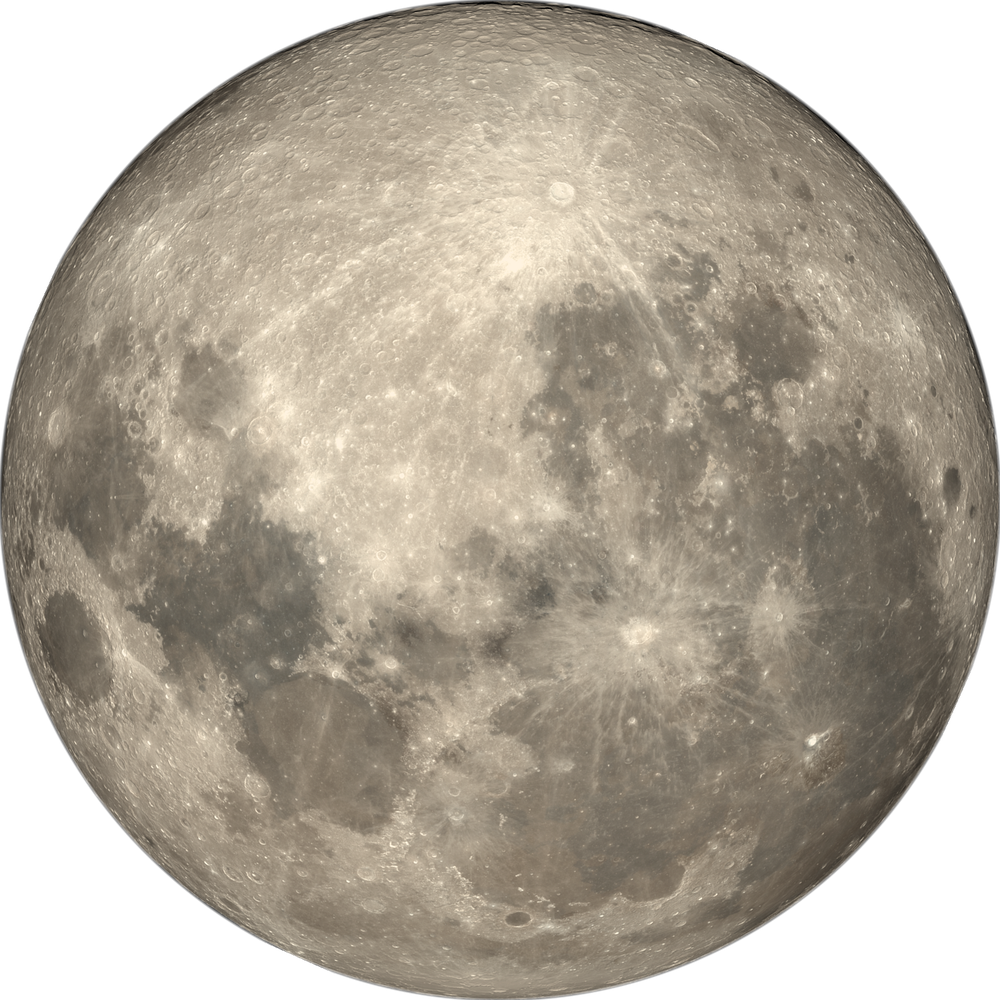
The moon disc is from the same NASA Scientific Visualization Studio stills used in The Moon Journal (LRO LOLA + LROC WAC data; visualizer Ernie Wright, USRA; planetary scientist Noah Petro, NASA/GSFC). Each day shades that full disc for the approximate phase. Image courtesy of NASA; use does not imply NASA endorsement.