What to look for in nature in Kentucky this April
April is when Kentucky goes from bare to green in about four weeks, and it does so noisily. Toads trill day and night in flooded fields, the first hummingbirds reach the western counties, waterthrushes bob along rocky streams, and woodland floors turn white and blue with trillium and Virginia bluebells while redbud and dogwood bloom overhead. It is also the month the last freezes finish, the trout catch-and-release rules lift, and the spring storms begin to build. Below we list what to look for, roughly when, and where the sources say to go.
Other months in Kentucky: October, November, December, January, February, March.
Start here
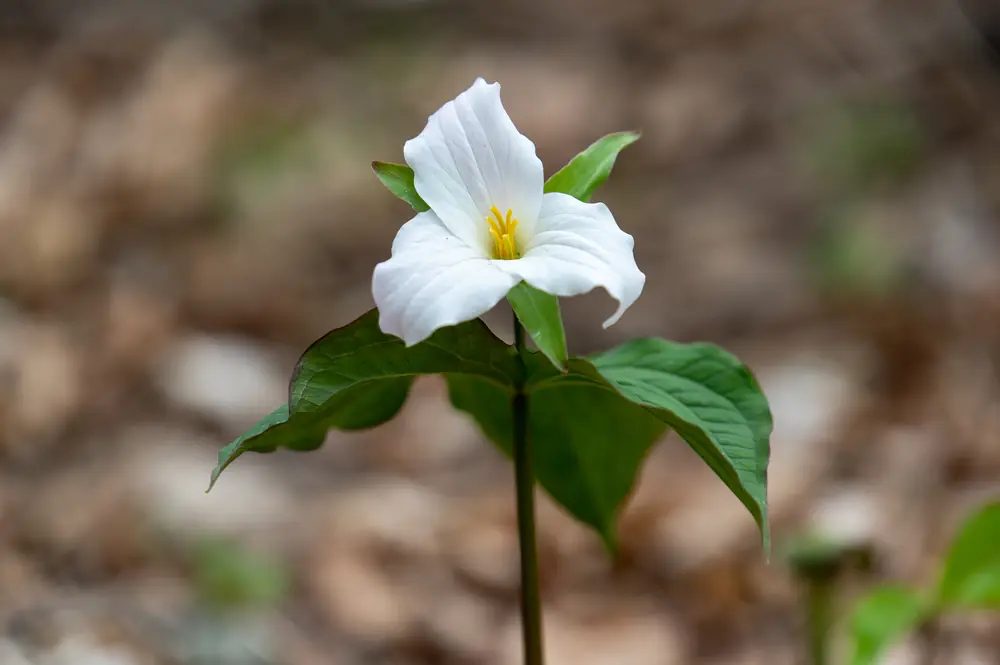
- A trillium and bluebell walk. Choose a shaded wooded slope in a state park or nature preserve, and aim for the first two weeks of April. Look low for the white, three-petaled trillium and for hanging clusters of blue-lavender Virginia bluebells, and keep to the trail so the plants come back next year.
- A toad night. Go out on a warm, damp evening to a pond margin or flooded field and tune your ear to the long sustained trill of American toads. As the month goes on, add the first cricket frogs and gray treefrogs to the chorus.
- The first hummingbird. Hang a clean feeder in the first half of April and watch nearby flowers, then tell Journey North the day your first bird shows up. Males arrive ahead of the females.
In the Naturalist’s Field Journal, the plate called a tree through the seasons suits the day a redbud or dogwood opens, a map of sounds suits each frog and toad that joins the evening chorus, and birds I have seen suits your first hummingbird and waterthrush. A same place twice plate, begun in March and repeated now, shows the green-up better than words.
Regions used below: Western Kentucky and the Purchase; South Central and Cave Country; Louisville and the Ohio River; The Bluegrass and Northern Kentucky; Eastern Kentucky and the Appalachian coalfields.
Which birds return to Kentucky in April?
April brings the first long-distance migrants to Kentucky, but it is the warm-up, not the main show. Kentucky birders treat May as the peak of spring migration, when the warblers stream through. April gives you the early arrivals, and they are easier to spot while the trees are still half bare.
The state wildlife agency lists more than 350 bird species recorded in Kentucky, with about 150 breeding here and the rest wintering or passing through. April is when the passing-through group begins to take over the dawn chorus.
-
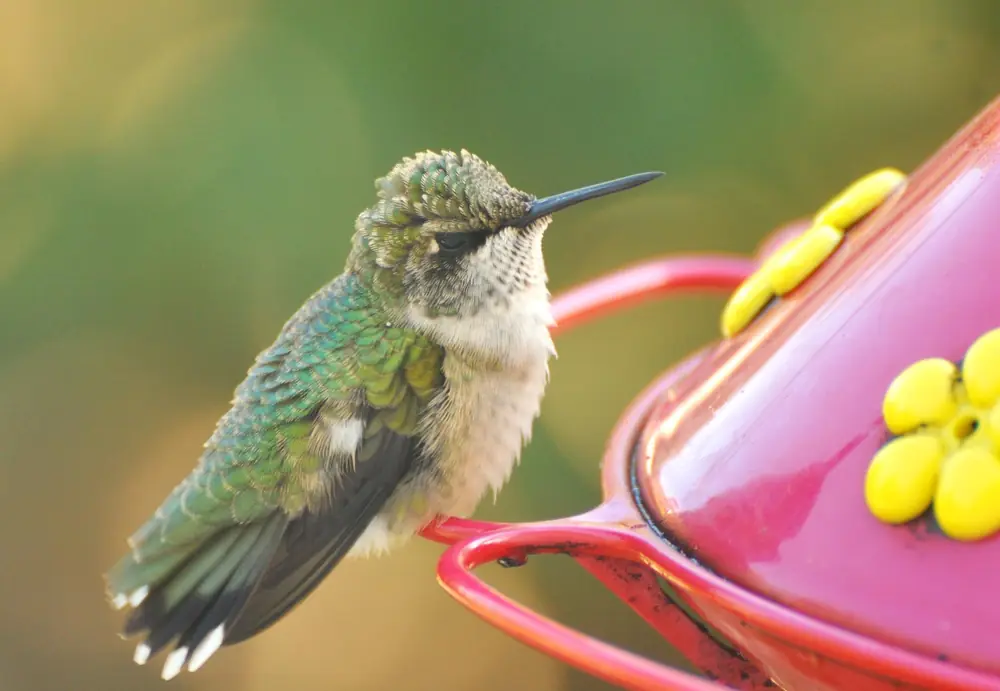
Ruby-throated hummingbird
From early April at the earliest, in the far west first, and spreading through the month · Flower borders, woodland edges and feeders, statewide
Journey North, the citizen science project that maps the northward flight, posted a Paducah sighting from April 4 in 2026, among the early reports that spring. Males arrive first and stake out territories, and females follow a week or two later. Audubon advises hanging feeders away from cats and windows, cleaning them often and skipping red dye in the sugar water. You can report your first bird at Journey North.
-
Louisiana waterthrush
Arrives on its nesting grounds in March and April · Rapid, gravel-bottomed streams in hilly woods, and wooded bottomlands farther south
This streamside warbler picks its way along the edge of the water and over stones, bobbing its hindquarters as it goes. Audubon says it reaches its nesting grounds in March and April, which makes it an early warbler, and a quiet stream walk before the leaves open is a good time to find one.
-
Land Between the Lakes, spring birding
Late March to mid-June, with the peak in late April and early May · Hematite Trail, Woodlands Nature Station, Twin Lakes, Long Creek and the Elk and Bison Prairie
The recreation area’s own viewing guide names the Elk and Bison Prairie for wild turkeys and for grassland songbirds such as blue grosbeaks and indigo buntings, and Fort Henry Trails for wildflowers and migrating songbirds. More than 250 bird species have been recorded there. Audubon notes that indigo buntings migrate at night and can navigate by the stars, so a bunting singing on a wire in late April may have arrived only the night before.
-
Bald eagle fledglings
Young leave the nests from April through July · Near large reservoirs and rivers; nest locations are not published
According to the wildlife agency, eagle eggs are laid in winter, and the chicks take their first flights between April and July. Kentucky had 187 occupied territories in 2019, up from just one in 1986. If you come across a nest, stay at least 330 feet away.
For a sense of what May holds, an ornithologist’s day-long survey at Bernheim Forest on May 3, 2017, found 115 species, including 29 warblers. Use April to learn the early songs and save the big day for early May. Our March page covers the last cranes and the first nesters.
Which frogs and toads are calling in Kentucky in April?
One set of voices fades and another takes over. The department puts the main season for chorus frogs and spring peepers “through March and well into April,” with calling falling off by early May, while toads and treefrogs are just starting. For a stretch in mid-month you can hear most of them on a single evening.
-
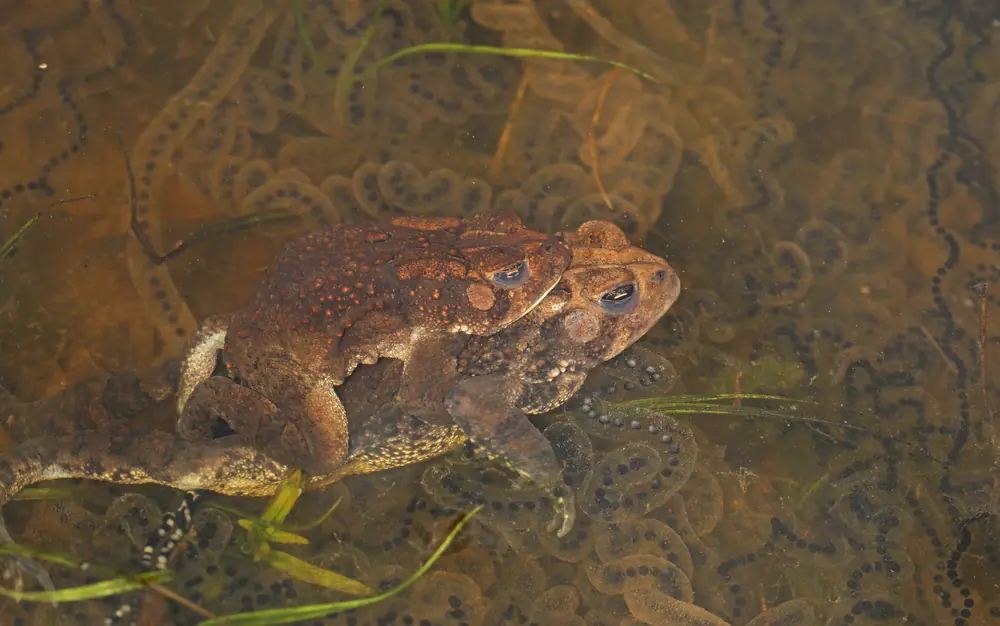
American toad
Mid-March through May, day and night · Shallow, still water: flooded fields, ditches, pond edges
The department describes a long, drawn-out musical trill that a male can hold for up to half a minute; every male in a group sings at a slightly different pitch, which makes a pond sound like a chord. Choruses carry on day and night. Toad eggs are laid in long strings in the shallows.
-
Eastern and Cope’s gray treefrogs
Cope’s from April; Eastern from mid-April, both into August · Ponds and wetlands near woods; males sometimes call from trees
The department notes that males of both kinds can call from trees well away from the breeding pond, so a trill may seem to come from the branches overhead.
-
Northern and Blanchard’s cricket frogs
Mid-April through mid-August, day and night · Shallow edges of ponds, slow streams and wet ground
The department describes cricket frogs as warty, with huge hind legs for their size. They begin later than the peepers, and their choruses run day and night through mid-August.
-
Fowler’s toad and the eastern spadefoot
Fowler’s from late April or early May; spadefoots mostly April through August after heavy rain · Sandy, well-drained ground; the spadefoot in upland woods with sandy soil
Fowler’s toad gives a deep, nasal trill lasting one to several seconds. The spadefoot floats in shallow water after heavy rain and delivers a mournful bawl every 5 to 10 seconds; it is an excellent burrower and rarely seen at other times.
-
Spring peeper and chorus frogs, the tail end
Peepers into early summer; chorus frogs fading by early May · Wet meadows, pond edges, low woods
The peeper wears a small dark X on its back and gives a loud, clear “preep.” By April most of its singing comes in the evening, and the chorus frogs grow quieter each week.
Choose a mild evening after rain, listen before you shine a light, and then keep the light dim. Look but do not collect: Kentucky has 57 amphibian species, 22 of them frogs and toads, and the department monitors about 40 percent for conservation reasons. Notes in a field journal will show the chorus changing over three weeks.
What wildflowers bloom in Kentucky in April?
April is peak wildflower time. The Kentucky Native Plant Society sorts spring ephemerals into early and mid-spring bloomers, and most of the mid-spring group opens in April. These plants flower for only a few weeks, before the leaf canopy closes and shades the forest floor, so go early and go often. Mammoth Cave National Park says blooms there run from early March into October, starting with harbinger-of-spring.
-
Large white trillium and red trillium
Mid-spring, which in most years means April · Rich, shaded slopes and ravines
The native plant society lists large white trillium, red trillium, toadshade and yellow wakerobin among the mid-spring bloomers, and says prairie trillium blooms mid to late spring. Look for the three-leaved whorl with one flower above it.
-
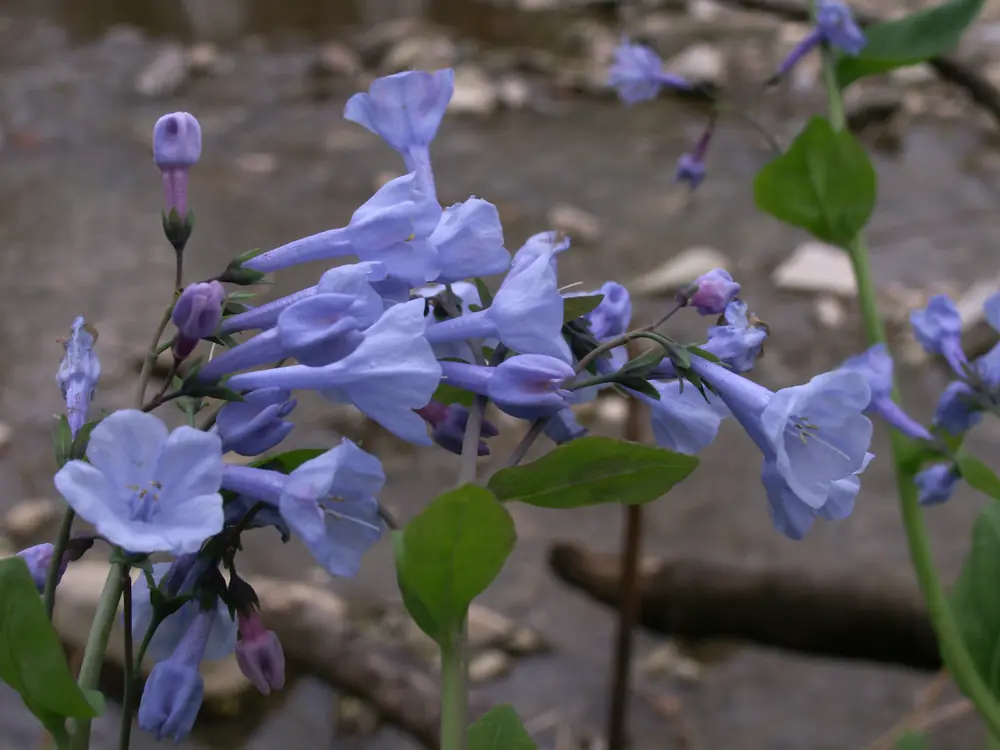
Virginia bluebells
Mid-spring · Moist woods and floodplains
The society lists the flowers as emerging in mid-spring. Pink buds open into hanging bells of blue-lavender.
-
Eastern shooting star and azure bluet
Mid-spring · Open woods, glades and moist meadows
The same plant society article lists both as mid-spring bloomers, so look for them in open woods and in short grass beside the trails.
-
Early flowers still open
Early spring, tapering off in April · Woodland floors
Virginia spring beauty, rue anemone and cut-leaved toothwort are listed as early-spring bloomers. By April they may be past their best in warmer places, but you can still catch them where it stays cool.
-
Wildflower Weekend, moved to Pennyrile Forest State Resort Park
April 16 to 18, 2027, per the organizer’s update · Pennyrile Forest State Resort Park, western Kentucky
The Kentucky Native Plant Society’s update says the original host, Pine Mountain State Resort Park, begins renovations on April 1 and can no longer take the event, so it moved to Pennyrile. The update says nothing about registration, so watch the society’s website. For scale, the 2026 weekend at Natural Bridge State Resort Park offered 31 hikes on wildflowers, birds, fungi, geology and pollinators, with pre-registration required and $10 adult admission.
-
Wildflower Day at Mammoth Cave
Annual in April; the 2027 date had not been posted when we checked · Mammoth Cave National Park, free
In 2026 the park held it on Saturday, April 11, with exhibits, guided walks, children’s crafts, a bird walk and visitor center displays, all free. The park asks visitors to leave wildflowers unpicked. Ask the park for the 2027 date.
A wildflower slope also suits the naturalist’s journal: sketch one flower with its leaf, date the page and return a week later.
When do redbud and dogwood bloom in Kentucky, and when is Arbor Day?
The tree bloom is April’s big signal. The wildlife viewing guide for Land Between the Lakes, in the far west, puts the peak of the spring bloom, dogwoods and redbuds among it, at April 1 to 15. The sources we found give no statewide date, so expect the bloom to come later in the cooler east and north.
-
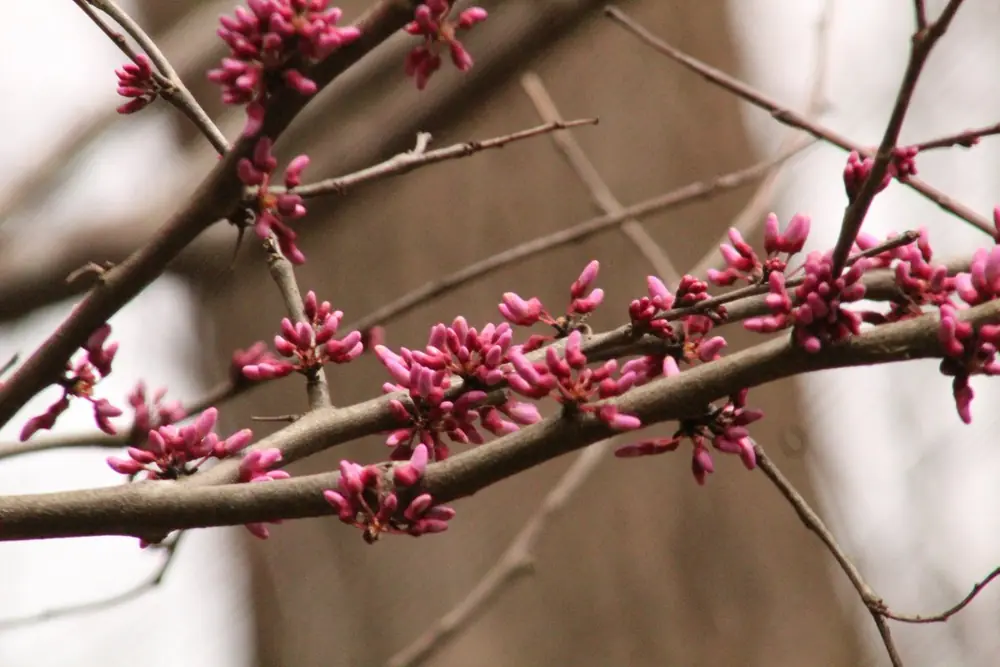
Eastern redbud
Peak April 1 to 15 at Land Between the Lakes · Woodland edges, roadsides and old fields
The University of Kentucky’s extension forester features this native tree in her Tree of the Week video series. Redbuds flower early, so watch for the pink-purple bloom on bare twigs.
-
Flowering dogwood
Peak April 1 to 15 at Land Between the Lakes · Woodland understory and edges
The same series features the dogwood. The white “petals” are really bracts around a cluster of tiny flowers.
-
Kentucky Arbor Day
Friday, April 2, 2027 · Statewide
Kentucky adopted Arbor Day as a state holiday in 1887, when it fell on April 2, and now observes it on the first Friday in April. In 2027 that is April 2. Schoolchildren were central to the early plantings.
-
Nature’s Notebook
All spring · A tree you can visit weekly
This program of the USA National Phenology Network lets anyone log the timing of seasonal events such as flowering and leaf-out. Pick one redbud or dogwood and check it every few days.
Sketch the same branch in March and again now. Then compare your first-bloom date with the last-freeze dates in the table below.
What can you catch or forage in Kentucky in April?
Several seasons turn over in April. Trout streams that were catch-and-release all winter reopen for harvest, crappie head for the shallows, morels may appear, and paddlefish snagging continues below Kentucky Dam. Rules change, so read the current guide before you go.
-
Trout harvest reopens
The no-harvest, artificial-bait-only period runs October 1 to March 31 · Fourteen streams with a seasonal catch-and-release section in 2026
In these sections, the department’s trout program document bars harvest from October 1 through March 31 and allows only artificial bait, so April is when you may keep fish again. Limits and rules change each year, so check the 2027 guide.
-
White and black crappie
April, when the water passes 60 degrees · Shallows near brush, rocky banks and creek mouths; the department names Kentucky Lake, Lake Barkley, Barren River Lake and Green River Lake, and small state lakes such as Beaver and Dewey
A department fisheries biologist says white crappie move shallow as days lengthen and the water warms, and the agency calls April an excellent month for large white crappie. It describes spawning anglers as flocking to the big reservoirs, and recommends small lakes as an easy alternative from a bank or small boat.
-
White bass runs
Spring; the department gives no dates · Salt, Dix and Big South Fork Cumberland rivers
The department says the fish gather in flowing water over rocky bottoms in spring on some rivers. With no dates given, ask at a local bait shop when the run is on.
-
Paddlefish snagging below Kentucky Dam
Open 24 hours a day January 1 through May 31 in the area from Kentucky Dam to the U.S. 62 bridge · The Tennessee River tailwater at Kentucky Dam
The department’s waterbody page adds that snagged paddlefish may not be released or culled and that the daily limit is 8 fish in aggregate. Read that page and the current guide first.
-
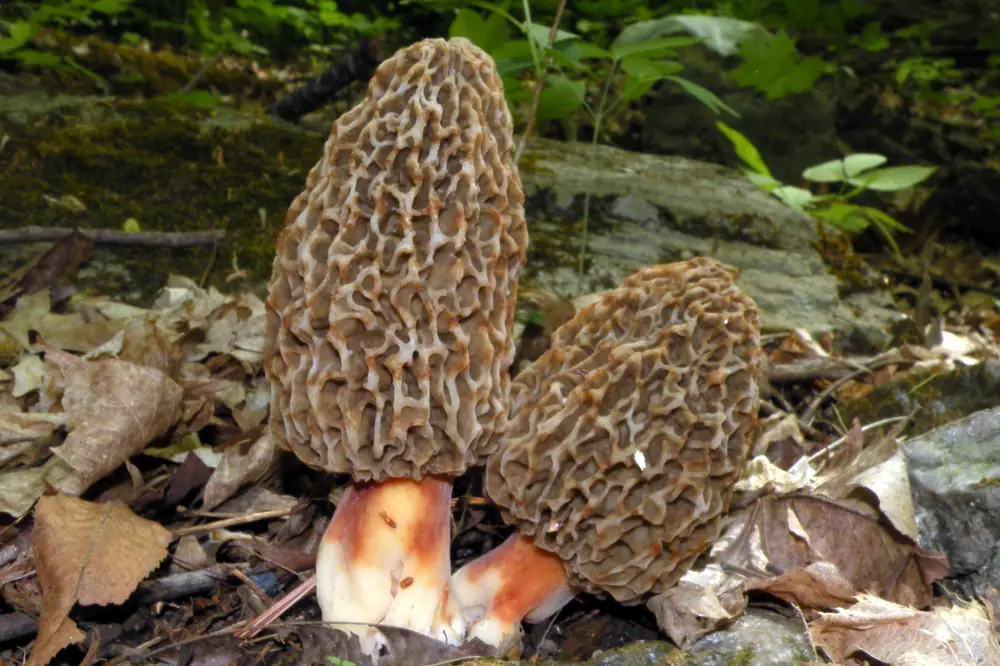
Morel mushrooms
Spring, as soil warms; one local newspaper column quoting a University of Kentucky extension horticulture agent said March and April in western Kentucky · Undisturbed forest and fencerows, often near ash, hickory, elm or old apple trees
That column says morels favor daytime temperatures of 60 to 70 degrees, nights above 40 and soil of 50 to 60. They can develop in two or three days and last only a couple, so you may need to revisit a spot. False morels resemble true ones. Ask permission on private land and check that a public area allows harvest. The University of Kentucky guide FOR-171 covers foraging practice.
Never eat a wild mushroom you cannot identify with certainty.
Can you see the Cumberland Falls moonbow in April?
Cumberland Falls State Resort Park is known for its moonbow, a rainbow made by moonlight in the mist of the falls. It takes a full moon, a clear sky and mist from the falls.
The April full moon, the Pink Moon, arrives Tuesday, April 20, at 6:27 p.m. EDT. The state tourism office says the effect can show on the nights just before and after the full moon, with a viewing window of about two hours that opens when the moon clears the hillside behind you and closes when it climbs past 42 degrees.
-
Planning the night
Around April 19 to 21 if skies are clear · Cumberland Falls State Resort Park
The park posts viewing times month by month, and we had not seen a 2027 schedule, so call the park desk at 606-528-4121 or check the state parks website before you drive. The tourism office advises choosing another night if haze, fog, clouds or rain are forecast.
SeaSky links the name Pink Moon to moss pink, an early-blooming phlox. Our moon phase page has other dates.
When is the last spring freeze in Kentucky?
The last freeze comes earliest at Louisville and in the west and south, and latest in the Bluegrass and northern Kentucky. In the table, the median date runs from March 31 at Louisville to April 18 at Covington. At Louisville, nine springs in ten have had their last freeze by April 16, while Covington waits until May 7. A late freeze after the redbuds open can blacken the blooms, so wait for the “nine years in ten” date before you set out tender plants.
| Station | One year in ten | Median | Nine years in ten |
|---|---|---|---|
| Paducah | Mar 19 | Apr 5 | Apr 21 |
| Bowling Green | Mar 20 | Apr 5 | Apr 21 |
| Louisville | Mar 14 | Mar 31 | Apr 16 |
| Lexington | Mar 30 | Apr 13 | May 1 |
| Covington | Apr 3 | Apr 18 | May 7 |
| Somerset | Mar 21 | Apr 5 | Apr 25 |
| Jackson | Mar 21 | Apr 6 | Apr 25 |
Your own town may differ from these stations; the Kentucky frost page lets you check yours.
How much daylight does Kentucky gain in April?
The days keep stretching all month, with sunrise a little earlier and sunset a little later each day, and clocks on daylight time throughout. The table gives day length at seven cities, and the daylight page covers your own town. Remember that the Central time zone covers the west, so the same sun position shows on the clock an hour earlier there.
| City | Apr 1 | Apr 30 | Gained | Per day |
|---|---|---|---|---|
| Paducah | 12 h 37 m | 13 h 42 m | 65 min | 2.2 min |
| Bowling Green | 12 h 36 m | 13 h 41 m | 65 min | 2.2 min |
| Louisville | 12 h 38 m | 13 h 45 m | 67 min | 2.3 min |
| Lexington | 12 h 38 m | 13 h 45 m | 67 min | 2.3 min |
| Covington | 12 h 39 m | 13 h 49 m | 70 min | 2.4 min |
| Somerset | 12 h 37 m | 13 h 42 m | 65 min | 2.2 min |
| Pikeville | 12 h 37 m | 13 h 43 m | 66 min | 2.3 min |
What is April weather like in Kentucky, and how bad can the storms get?
April normals are mild by day and cool at night, with 4.4 to 5.2 inches of rain at the seven stations below and almost no snow left. That warmth also feeds storms. Weather Service records show April can bring some of the worst the state has had, and recent springs show how fast the water can rise.
Tornadoes. On April 3, 1974, during the Super Outbreak, an F5 tornado began about five miles southwest of Hardinsburg and tore through Brandenburg, destroying 140 buildings and killing more than 30 people, before it ended in Harrison County, Indiana, 32 miles on, according to NWS Louisville. More recently, the Kentucky Climate Center records an EF-3 tornado with 145 mph winds at Jeffersontown on April 2, 2025.
Floods. Across April 1 to 6, 2025, rounds of storms dropped 15.64 inches at Mayfield, per the Weather Service (the Kentucky Climate Center cites 15.86 inches at a Marshall County station), and 13.11 inches at Bowling Green, a new four-day record. The Kentucky River at Camp Nelson crested at 47.04 feet on April 6, a record, and the Frankfort crest of 48.27 feet was the second highest. Seven people died in the flooding, there were more than 90 water rescues, and over 500 roads closed.
Late freezes and dry, windy days that spread brush fires are the other April hazards. The latest 90-day maps come from the Climate Prediction Center, which refreshes them once a month; they are posted at its outlook page. Our weather and clouds pages cover day-to-day watching.
| Station | Average high | Average low | Precipitation | Snowfall |
|---|---|---|---|---|
| Paducah | 70.4 °F | 47.6 °F | 5.17 in | 0.0 in |
| Bowling Green airport | 70.7 °F | 47.3 °F | 4.81 in | 0.1 in |
| Louisville airport | 69.6 °F | 48.5 °F | 4.80 in | 0.1 in |
| Lexington airport | 67.2 °F | 45.2 °F | 4.42 in | 0.2 in |
| Northern Kentucky airport | 65.5 °F | 43.7 °F | 4.53 in | 0.4 in |
| London-Corbin airport | 69.3 °F | 44.9 °F | 4.65 in | n/a |
| Jackson | 69.2 °F | 47.3 °F | 4.54 in | 0.4 in |
What can you see in Kentucky’s night sky in April?
Daylight time is in force all month, and Kentucky’s two zones are Eastern (EDT) and Central (CDT). All times below are given in both.
-
The Pink Moon
Full Tuesday, April 20, at 6:27 p.m. EDT (5:27 p.m. CDT) · Anywhere with an open eastern horizon
A full moon climbs over the eastern horizon near sunset, so April 20 is the evening to watch, and the nights before and after look nearly as round.
-
The Lyrids, in a bright moon
Predicted peak on the night of Thursday, April 22 (about 9:41 p.m. EDT, 8:41 p.m. CDT) · Any dark site, looking east and then overhead
Moonlight spoils the show this year. The Moon is roughly 95 percent lit and comes up near 10 p.m. across most of the United States, which leaves just the early evening dark, while Lyra sits low in the northeast. SeaSky puts the best rate near 20 meteors an hour; with this much moon, plan on only a few an hour.
-
Venus before dawn, Jupiter in the evening
All month · Low in the east before sunrise; high in the south in the evening
Before dawn, Venus is still the brightest point in the east, but it is sliding toward the Sun’s glare, so look for it about 75 minutes ahead of sunrise early in April (our estimate for Kentucky's latitude), shrinking to about an hour by the first of May. In the evening, Jupiter rides high, and the Moon glides close to it on April 14 and 15. On April 7 Saturn lines up with the Sun and drops out of sight, then does not return to the dawn sky until about early May.
-
Dark skies at Mammoth Cave
Any clear night, best around the April 6 new moon · Mammoth Cave National Park
The park was certified an International Dark Sky Park in 2021 after it reviewed more than 700 outdoor light fixtures, and it offers a Junior Ranger Night Explorer program. Ask the park about star programs.
-
The Milky Way before dawn
April 1 to 14 and April 28 to 30, by our calculation for the latitudes near Kentucky · A dark site with a clear southeast horizon
The bright core of our galaxy returns before dawn, up to about two hours on the best mornings. It needs a moonless sky, so the days around the new moon are best.
| Phase | Date | Time |
|---|---|---|
| New moon | Tuesday, Apr 6 | 7:51 p.m. EDT; 6:51 p.m. CDT |
| First quarter | Tuesday, Apr 13 | 6:56 p.m. EDT; 5:56 p.m. CDT |
| Full moon, the Pink Moon | Tuesday, Apr 20 | 6:27 p.m. EDT; 5:27 p.m. CDT |
| Last quarter | Wednesday, Apr 28 | 4:18 p.m. EDT; 3:18 p.m. CDT |
What are good April nature outings for Kentucky families?
- Wildflower Weekend or Wildflower Day. The Native Plant Society’s weekend is set for April 16 to 18, 2027, at Pennyrile Forest State Resort Park. Mammoth Cave’s free Wildflower Day is annual, with its 2027 date still to come.
- Arbor Day, April 2. Plant a tree on the state’s Arbor Day and log its first leaves in Nature’s Notebook.
- Earth Day, April 22. Earth Day Network has named “Food for Our Planet” as the 2027 theme, so a bed of native flowers for pollinators fits.
- City Nature Challenge. The organizers list April 30 to May 3, 2027, as the window for recording wild species with a phone or camera, followed by a period for identifications. We could not confirm which Kentucky cities join in 2027; Floracliff Nature Sanctuary ran Lexington’s count in 2025, so ask them.
- NestWatch. Cornell’s project shows you how to find nests and record them without disturbing the birds.
- Project FeederWatch. Its counting season ends in April, so a few more feeder counts still help.
- Journey North. Report your first hummingbird.
- Skywarn. NWS Louisville offers spotter training free, by webinar or video modules; its page showed no 2027 sessions when we looked.
Children tend to love a toad night best. Our nature pages cover other months.
Safety notes for April in Kentucky
- Spring turkey season. Last spring’s youth weekend fell on April 4 and 5 and the general season ran April 18 through May 10. We found no 2027 dates, so check the department’s turkey page. A hunter may take two bearded turkeys in a spring season, no more than one a day, and legal shooting time starts 30 minutes ahead of sunrise and ends 30 minutes past sunset. Hunter orange is not required in the spring seasons. If you hike in the woods at dawn during the season, wear something bright.
- Forest fire hazard season. It runs February 15 through April 30. Within 150 feet of woodland or brushland, burning is illegal from 6 a.m. until 6 p.m., with fines of $1,000 to $10,000 for intentionally setting fires on another’s land, and county burn bans can be stricter.
- Severe weather. Know your safest room and have a way to get warnings overnight. April storms can spin up tornadoes, and a slow-moving system can bring flooding.
- Floods. According to the Weather Service, a foot of rushing water is enough to carry off most cars, half that depth can topple a standing adult, and more than half of flood drownings follow a drive into hazardous water. Do not drive through a flooded road, and keep young children well away from swollen creeks.
- Ticks. Lone star and American dog ticks are out from March through September, University of Kentucky entomologists report, and adult blacklegged ticks keep moving whenever the temperature tops 40 degrees. They advise repellent with 20 to 30 percent DEET, permethrin on clothes, pants tucked into socks and a tick check every two to three hours.
- Snakes. Only four of Kentucky’s 32 snake species are venomous: the copperhead, timber rattlesnake, northern cottonmouth and western pigmy rattlesnake. The department’s advice is to leave any snake alone.
- Bats and eagles. Female bats usually leave hibernation before males. Do not touch a bat, and report a sick or injured one to the department. Stay 330 feet from any eagle nest.
- Night outings. On toad nights, wear something reflective, carry a dim light and stick to quiet roads.
Sources (52)
- KDFWR: Birds in Kentucky
- Journey North: Hummingbird migration moves along with sightings in Kentucky, Virginia and Missouri (2026)
- Audubon: Ruby-throated hummingbird field guide
- Audubon: Louisiana waterthrush field guide
- Audubon: Indigo bunting field guide
- Land Between the Lakes: Wildlife viewing guide
- KDFWR: Bald eagles in Kentucky
- Bernheim Arboretum and Research Forest: Brainard Palmer-Ball’s successful day of birding
- KDFWR: Amphibians of Kentucky
- KDFWR: Frogs and toads of Kentucky
- KDFWR: True toads and spadefoots
- KDFWR: Chorus frogs, spring peepers, cricket frogs and narrow-mouthed frogs
- KDFWR: Treefrogs
- KDFWR: Bats of Kentucky
- KDFWR: Snakes of Kentucky
- Kentucky Native Plant Society: Native spring ephemerals of Kentucky
- Kentucky Native Plant Society: Wildflower Weekend 2027 update
- Kentucky Native Plant Society: Wildflower Weekend 2026 registration
- National Park Service: Wildflower Day at Mammoth Cave National Park
- National Park Service: Wildflowers at Mammoth Cave National Park
- University of Kentucky Agriculture and Natural Resources: Tree of the Week
- Kentucky Woodlands Magazine: Arbor Day in Kentucky
- USA National Phenology Network: Nature’s Notebook
- KDFWR: Trout streams program in Kentucky for 2026
- KDFWR: Kentucky hunting and fishing seasons planner, 2026–27
- KDFWR, Kentucky Afield: Crappie time is here
- KDFWR, Kentucky Afield: Remember small lakes this crappie season
- KDFWR: White bass
- KDFWR: Kentucky Lake tailwater (paddlefish snagging rules)
- University of Kentucky Extension: Morel mushroom foraging (Hendersonian column)
- University of Kentucky Forestry and Natural Resources: FOR-171, Best practices for mushroom foraging in Kentucky
- KDFWR: Spring turkey hunting
- KDFWR: Turkey hunting
- Kentucky tourism: The moon, the mist and look at this (Cumberland Falls moonbow)
- NOAA NCEI: 1991–2020 monthly normals for seven Kentucky stations
- NWS Louisville: Ten worst tornadoes in the Louisville forecast area
- NWS Louisville: Historic rainfall and flooding, April 2–6, 2025
- Kentucky Climate Center: 2025 recap
- National Weather Service: Turn around, don’t drown
- NWS Louisville: Skywarn spotter training
- NOAA Climate Prediction Center: 90-day outlooks
- University of Kentucky Entomology: Tick seasonality in Kentucky
- Kentucky Division of Forestry: Wildland fire management and forest fire hazard seasons
- U.S. Naval Observatory: Moon phases, 2027
- SeaSky: Astronomy calendar 2027
- National Park Service: Mammoth Cave International Dark Sky Park
- City Nature Challenge
- Floracliff Nature Sanctuary: City Nature Challenge 2025, Lexington
- Earth Day Network
- Cornell Lab of Ornithology: NestWatch
- Project FeederWatch: Project overview
- Photos via Wikimedia Commons; licenses and photographers are credited under each picture
.jpg)