What to look for in nature in Kentucky this February
February closes out meteorological winter, and in Kentucky it is the month winter’s grip starts to loosen, a little at a time and never in a straight line. On a mild, wet evening, chorus frogs and spring peepers call from flooded fields while sleet can still be on the way. Sandhill cranes gather by the thousand at Barren River Lake and then leave for the north, woodcocks begin their twilight flights, black bear cubs are a few weeks old in their dens, and maple sap runs on freezing nights and thawing days. Here is where and when to find each of them.
Other months in Kentucky: October, November, December, January.
Start here

- The first frog chorus on a mild night. When a soaking rain is followed by an evening near 50 degrees, head for a flooded field edge, ditch or woodland pool and listen. Upland chorus frogs sound like a thumbnail run along a comb, and spring peepers, which the state wildlife department says begin in mid-February, give a high, clear peep.
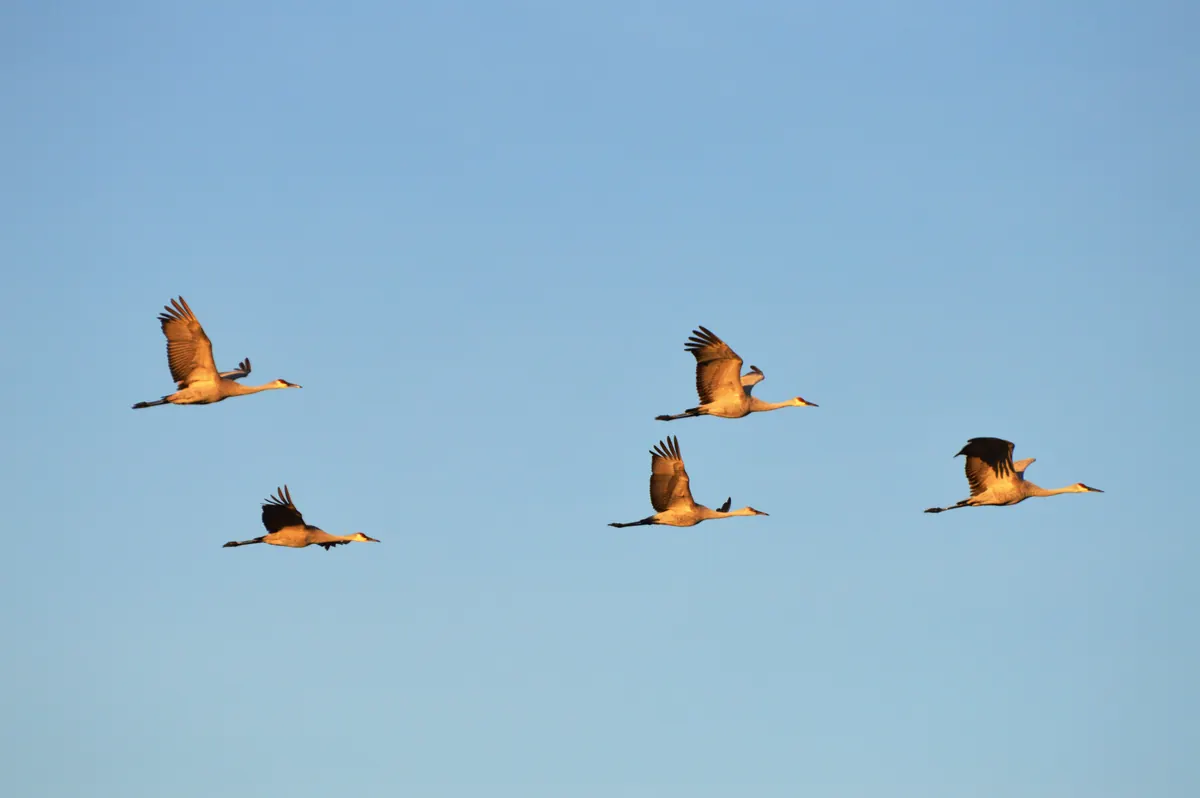
- Cranes on their way north. Sandhill cranes are still at Barren River Lake in early February, sometimes in bigger numbers than in January, but most leave during the month. Watch the roost at dusk (Central time) in the first two weeks, and look up when you hear rolling calls overhead on a warm southwest wind.
- Jupiter at its brightest. Jupiter reaches opposition on Wednesday, February 10, rising at sunset and staying up all night. It is the brightest point in the evening sky, and binoculars held steady against a post will pick out its brightest moons, tiny sparks strung along a line.
For the Naturalist’s Field Journal: the first night you hear chorus frogs or peepers goes on a map of sounds, with the date and the temperature, and a woodcock’s twilight flight on the dusk and dawn watch. Log the crane flocks heading north on birds I have seen, and begin a tree through the seasons page with a red maple in bloom; return to it in April to see the leaves open.
Regions used below: Western Kentucky and the Purchase; South Central and Cave Country; Louisville and the Ohio River; The Bluegrass and Northern Kentucky; Eastern Kentucky and the Appalachian coalfields.
When do sandhill cranes leave Kentucky?
Mostly in February. The cranes that spend the winter at Barren River Lake, south of Glasgow, and around Cecilia in Hardin County are eastern-population birds bound for nesting marshes around the Great Lakes, and they start back north as soon as the weather allows. The state wildlife department’s weekly ground counts show how the month goes: big flocks can still be on the lake in the first half of February, and then they pour out.
The pattern changes every year. In February 2026 the count dropped to 1,702 on the 2nd, with the lake frozen and the fields under ice and snow, then jumped to 12,767 a week later, when surveyors described many pairs staging, much calling and birds about to head north. In 2024 counters at the lake watched thousands of cranes flying northwest in waves on February 14, and the department called that week its last survey of the season there. In early February 2025 only three cranes were left at the roost, after most had flown north and bird flu had reached the stragglers, as January’s page describes.
-
Staging and departure
First half of February in most years; earlier in a mild winter · Barren River Lake WMA, Barren and Allen counties, and the farm country around Cecilia, Hardin County (Central and Eastern time respectively)
Before leaving, cranes gather on the roost in large numbers and spend the day in nearby fields, calling a great deal. On a morning with a warm wind from the south or southwest, flocks rise on thermals and drift out of sight to the north. Watch from public roads and pull completely off the pavement.
-
Cranes overhead anywhere
Warm, clear days in February and March · A broad band over central Kentucky, between the wintering areas and Indiana
Migrating cranes often fly very high, in loose lines or ragged V’s that circle as they climb. Hear the bugling first, then search the sky; they are often higher than you expect.
-
Snow geese heading out
Late February into March · The Purchase, the lower Ohio River and the big western lakes
The tens of thousands of snow geese that winter in western Kentucky also turn north in late winter. Kentucky’s regular goose season ends February 15, and the light goose conservation order, a special season meant to thin overabundant light geese that damage Arctic nesting grounds, runs from February 16 to March 31, 2027. Expect shooting near the big flocks.
| Count date | Site | Cranes | Notes from the report |
|---|---|---|---|
| Feb 1, 2022 | Barren River Lake | 123 | Roost had moved out of the survey area before the count |
| Feb 1, 2022 | Hardin County | 1,158 | Most seen flying over and landing in nearby fields |
| Feb 5, 2024 | Barren River Lake | 1,058 | Warmer week, highs in the 60s, no rain |
| Feb 14, 2024 | Barren River Lake | 574 | Thousands flying in waves to the northwest; last lake survey of the season |
| Feb 14, 2024 | Hardin County | 2,723 | Roost full of water, some feeding fields flooded |
| Feb 4, 2025 | Barren River Lake | 3 | About 20 dead cranes found; avian influenza confirmed nearby |
| Feb 2, 2026 | Barren River Lake | 1,702 | Lake frozen, creeks open, 2 inches of ice and snow on the fields |
| Feb 9, 2026 | Barren River Lake | 12,767 | Many pairs staging and calling, about to head north |
Crane hunting season closed January 31, so February birds are undisturbed by hunters at the roost. If you find a dead or sick crane, leave it alone and report it to the wildlife department. The January peak is on Kentucky in January.
When do frogs start calling in Kentucky?
In February, and sometimes January, on the first mild, wet spells. Kentucky has 22 kinds of frogs and toads and 35 salamanders, by the state wildlife department’s count, and the earliest breeders use shallow pools that hold water in late winter and dry up later, where no fish can eat their eggs. A warm rain after a cold snap is the signal; a hard freeze can silence them again for a week.
-
Upland chorus frog
January or February through mid-April, day and night · Wet meadows, flooded pastures and shallow pools; the department singles out the Purchase and southeastern Kentucky
The department calls these the first promise of spring in those regions. The males are barely an inch and a half long, and their call is a rising, rasping trill, the sound of a fingernail run slowly over a pocket comb. A big chorus from a flooded field can be heard from a car with the windows down.
-
Wood frog
Mid-January into early March, during warm fronts · Woodland pools, mostly in forested country
Wood frogs breed in a burst on a few warm nights, and the department notes they lay their eggs in looser clusters than the leopard and pickerel frogs that follow later. If you find a pool full of them, come back a week later to look for the egg masses.
-
Spring peeper
From mid-February into early summer · Ponds and wetlands near woods statewide, especially in eastern and central Kentucky
Tan, tiny and marked with a dark cross on the back, the peeper gives a loud, piercing “preep” that becomes almost painful up close. Early in the season it calls by day as well as by night; by April mostly after dark.
-
Salamander nights
Rainy nights from late winter into early spring · Wooded roads and trails between hillsides and breeding pools
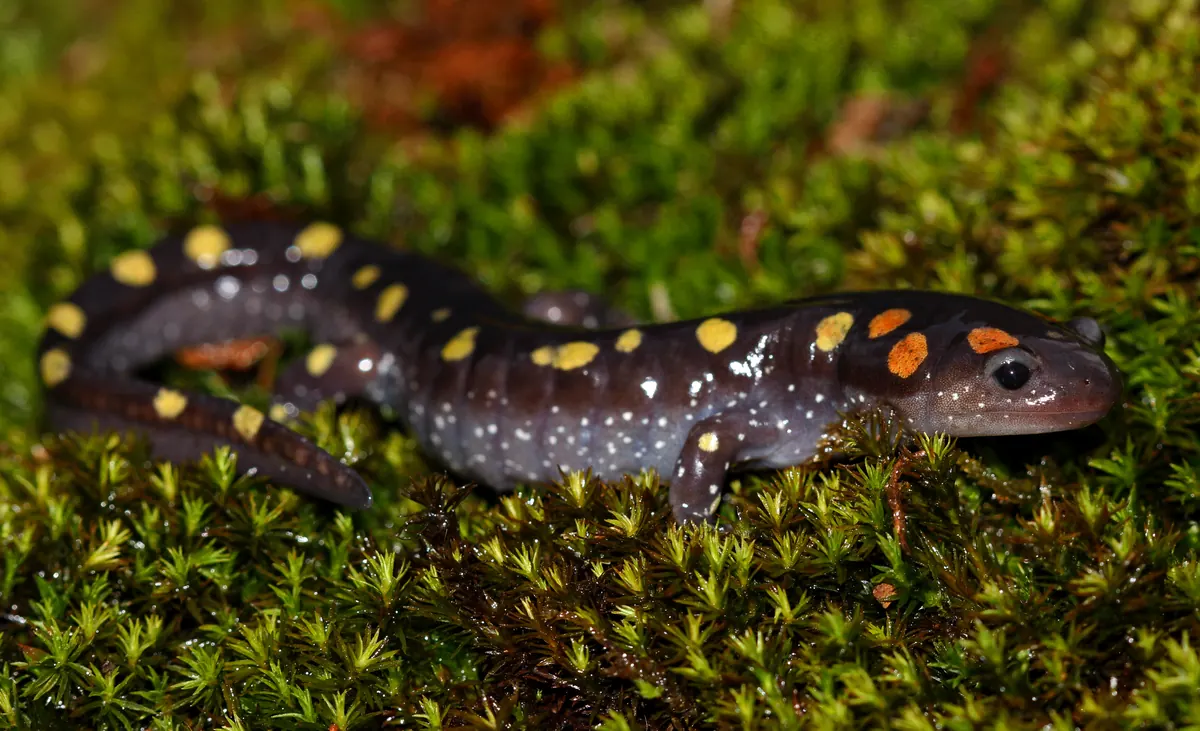
Spotted salamanders, inky dark and dotted with yellow down the back, live hidden in burrows most of the year and trek to the pools where they were born on a few rainy nights. On those nights they cross wooded roads, so drive slowly on rainy late-winter evenings near woodland pools and give them room when you can. If you go looking, wear a headlamp, keep to the edges of quiet roads, and handle animals only with wet hands, if at all.
Record the first night you hear each species. A list kept year after year in the same place shows whether spring is coming earlier.
When do woodcocks start their sky dance in Kentucky?
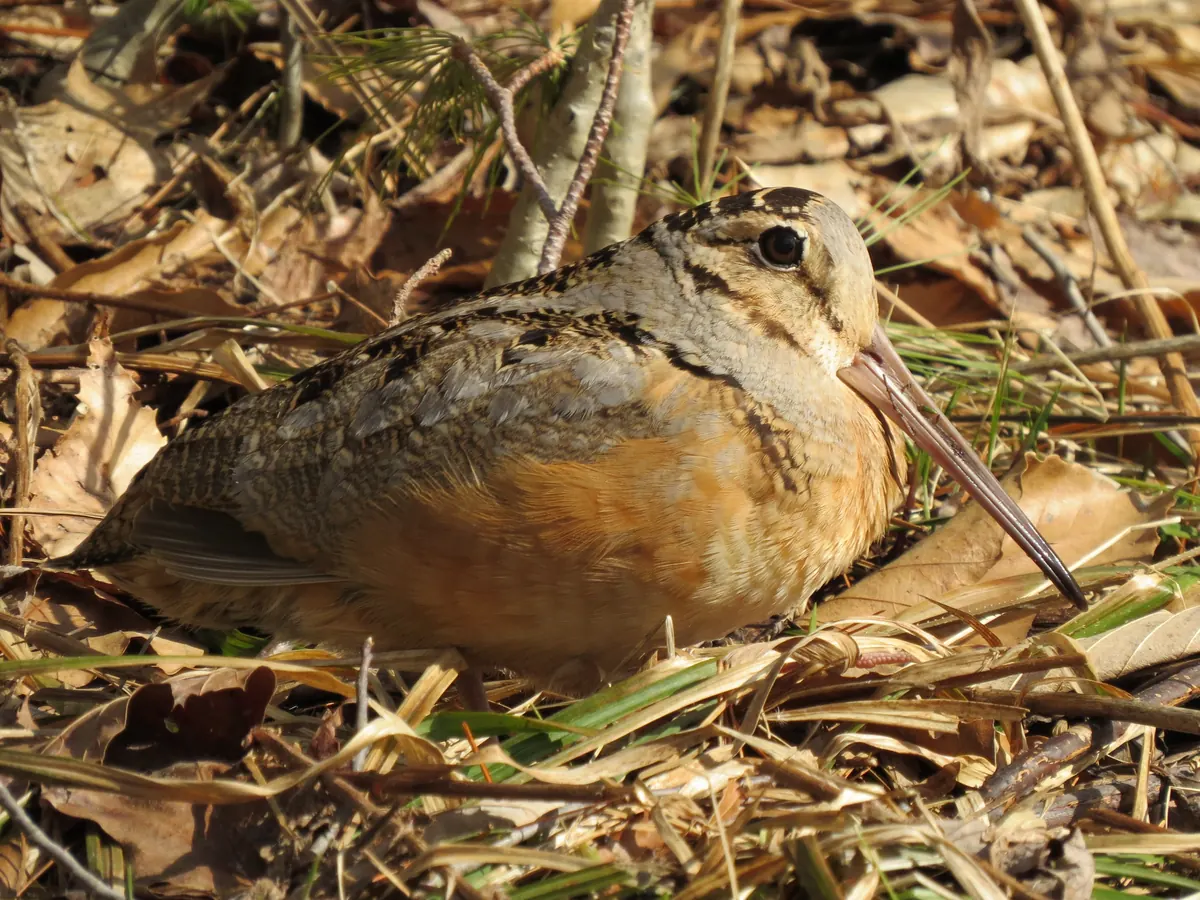
As early as February. Kentucky’s woodcock is a stocky, round-bodied relative of the sandpipers that lives in damp thickets and brushy fields that probes for earthworms with a long bill. Males perform a twilight courtship flight in spring, and a longtime Kentucky outdoors columnist, writing in March 2025, put the start of the displays here in February with a peak in mid-March. Audubon, drawing on a woodcock biologist, places the peak in Kentucky and Virginia later, in early April, so the safest advice is that February brings the first performances and March and April the most.
-
How to watch
Starting 15 to 20 minutes after sunset; all night under a bright moon · Old fields with brushy edges and open patches, wet meadows, reclaimed farmland
Pick a spot along a field edge and wait, quietly, as dusk deepens. The male gives a buzzy, nasal “peent” from the ground, then flies up in a wide spiral with a twittering sound made by air through his wing feathers, then zigzags down chirping and lands close to his takeoff spot. Several males may display in the same brushy field. The full Snow Moon of February 20 is a good night for a late show.
-
Nests to come
Mostly late March and April · Open woods and overgrown fields with dead leaves on the ground
The female lays about four eggs in a scrape among dead leaves, and her plumage is nearly invisible there. If you flush one in spring, walk away the way you came.
Are bald eagles nesting in Kentucky in February?
Yes. Egg laying here runs from January into March, so in February many pairs are sitting tight, taking turns on the eggs while the other hunts or stands guard on a nearby limb. Pairs that laid in early January may have small chicks by the end of February. At the same time, northern eagles that wintered on the western lakes are still around; the department lists December through March as the prime months for eagle watching, with Land Between the Lakes its winter hot spot.
-
Finding an active nest
All month · Tall trees near lakes, rivers and big ponds statewide
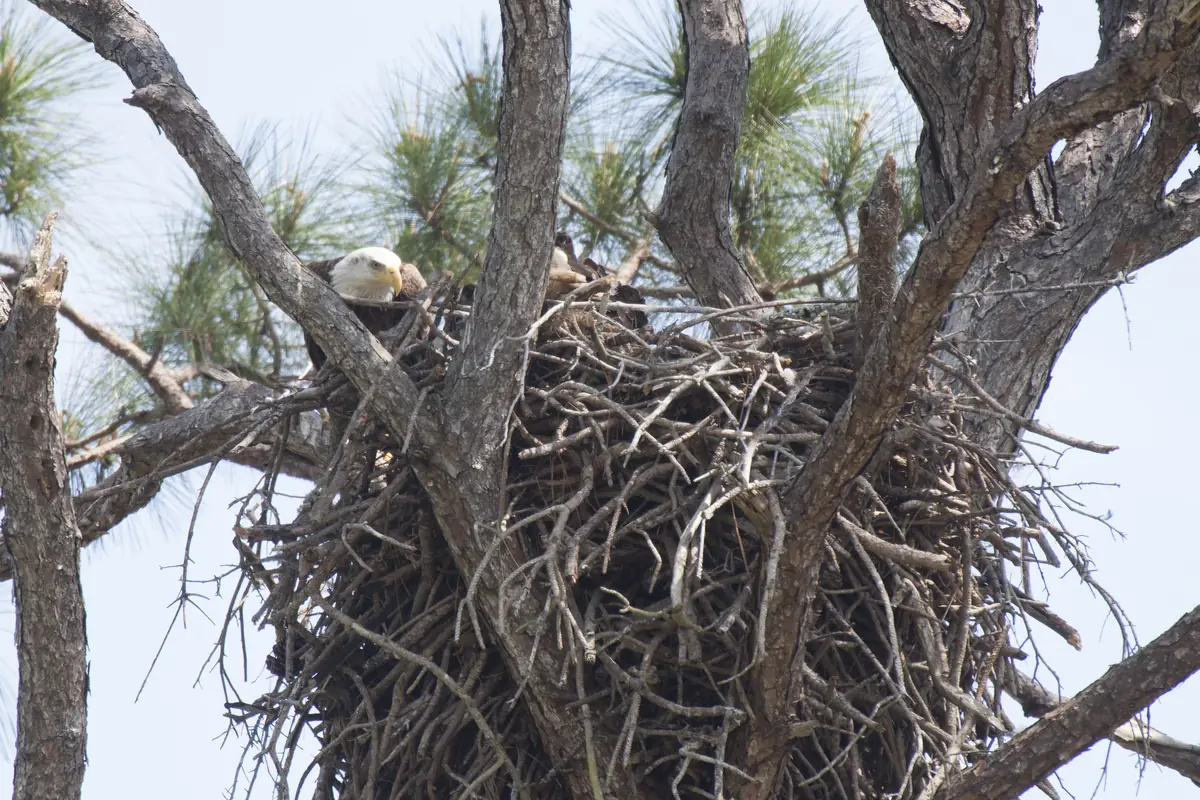
A bulky stick nest in the fork of a big tree, with a white head barely showing over the rim, means an adult is incubating. The department’s nest tallies show how far the birds have come: one known nesting territory in 1986, 43 in 2006 and 187 by 2019. Use binoculars and stay 330 feet or more from the tree, as the department advises for anyone on foot, and don’t go closer even if the bird seems calm.
-
Eagle Watch at the western parks
Annual, in January and February; 2027 dates not yet posted · State resort parks on Kentucky Lake and Lake Barkley
Kentucky State Parks, the wildlife department and the U.S. Army Corps of Engineers hold guided Eagle Watch events in western Kentucky every winter, in some years by boat and by van caravan, with lodging packages. The parks had not listed 2027 dates when we checked; watch parks.ky.gov.
Eagle eggs and young are protected by federal law. Disturbing a nest during incubation can make the adults abandon it, so the rule of thumb is simple: if the bird reacts to you, you are too close.
When are black bear cubs born in Kentucky?
In the den, in midwinter. Black bear cubs are born in the winter den, typically in January or early February, so this month Kentucky’s cubs are tiny and nursing while their mother sleeps. Bears live mainly in the eastern part of the state, and the department says they usually leave their dens in late March or early April.
-
What the biologists find
Den visits in late winter · The mountains of southeastern Kentucky
Department and University of Kentucky researchers track radio-collared female bears to their dens each winter to count and check the cubs. The first such visit, on February 18, 2005, found a seven-year-old female with three cubs in Letcher County. By the winter of 2012 researchers had examined 77 dens, and those with cubs held an average of 2.4.
-
Leaving dens alone
All winter · Rock ledges, hollow trees, brush piles, and sometimes crawl spaces under houses
A mother bear woken in her den may leave and not come back for the cubs. If you stumble on a den, back away quietly and tell the wildlife department, not social media. In bear country, keep bird seed, pet food and garbage locked away well before bears leave their dens in spring.
When is maple syrup season in Kentucky?
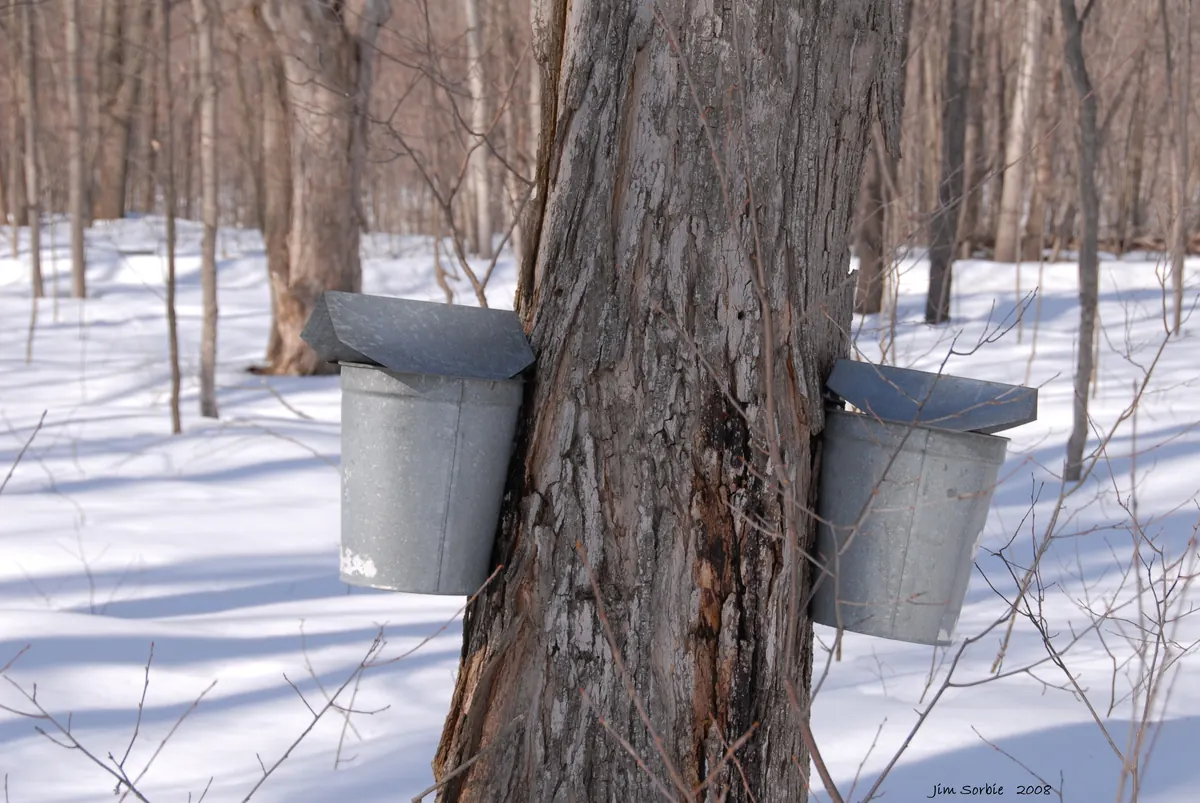
Late winter, whenever freezing nights alternate with thawing days. University of Kentucky Extension’s guide to syrup making suggests a simple rule for northern Kentucky: tap between Valentine’s Day and St. Patrick’s Day, and start earlier farther south. The run usually lasts only four to six weeks. Sap moves when the trees thaw after a hard frost, and the guide gives 40 to 1 as the industry standard ratio of sap boiled to syrup bottled.
Sugaring is having a revival here. The state agriculture commissioner declared February 2026 Maple Syrup Month and counted more than 100 producers; the Kentucky Maple Syrup Association has about 50 members, from Pike County in the east to Graves County in the west.
-
Kentucky Maple Days
Annual, on Saturdays in February; 2027 dates not yet posted · Sugarhouses and county Extension offices across the state
The association and UK Extension open sugarhouses to visitors, with boiling demonstrations, tours of sap lines and syrup for sale. In 2026 the open days were February 7 and 21. Check the Kentucky Maple Syrup site for the 2027 dates and a map of participating farms.
-
Which trees
During a sap run · Woodlots, especially in eastern Kentucky
The Extension guide names sugar maple and black maple as the best producers, with the sweetest sap, and recommends tapping only trees more than 10 inches across. Red maple, abundant in Kentucky, also makes good syrup.
-
Maple flowers
Silver maple from February; red maple in late winter · Stream banks and bottomlands (silver), yards and woods everywhere (red)
Maples bloom before their leaves come out. Silver maple, a tree of river bottoms, opens greenish-yellow to red flower clusters as early as February, and red maple follows with clusters of small red flowers that tint whole hillsides from a distance.
What are the first wildflowers to bloom in Kentucky?
A handful of small, tough plants on the floor of rich woods. They often open in February in a mild year, weeks before the big spring wildflower show of late March and April, and they are easy to miss without getting down on your knees.
-
Harbinger of spring
February to March, depending on the weather · Rich, moist woods
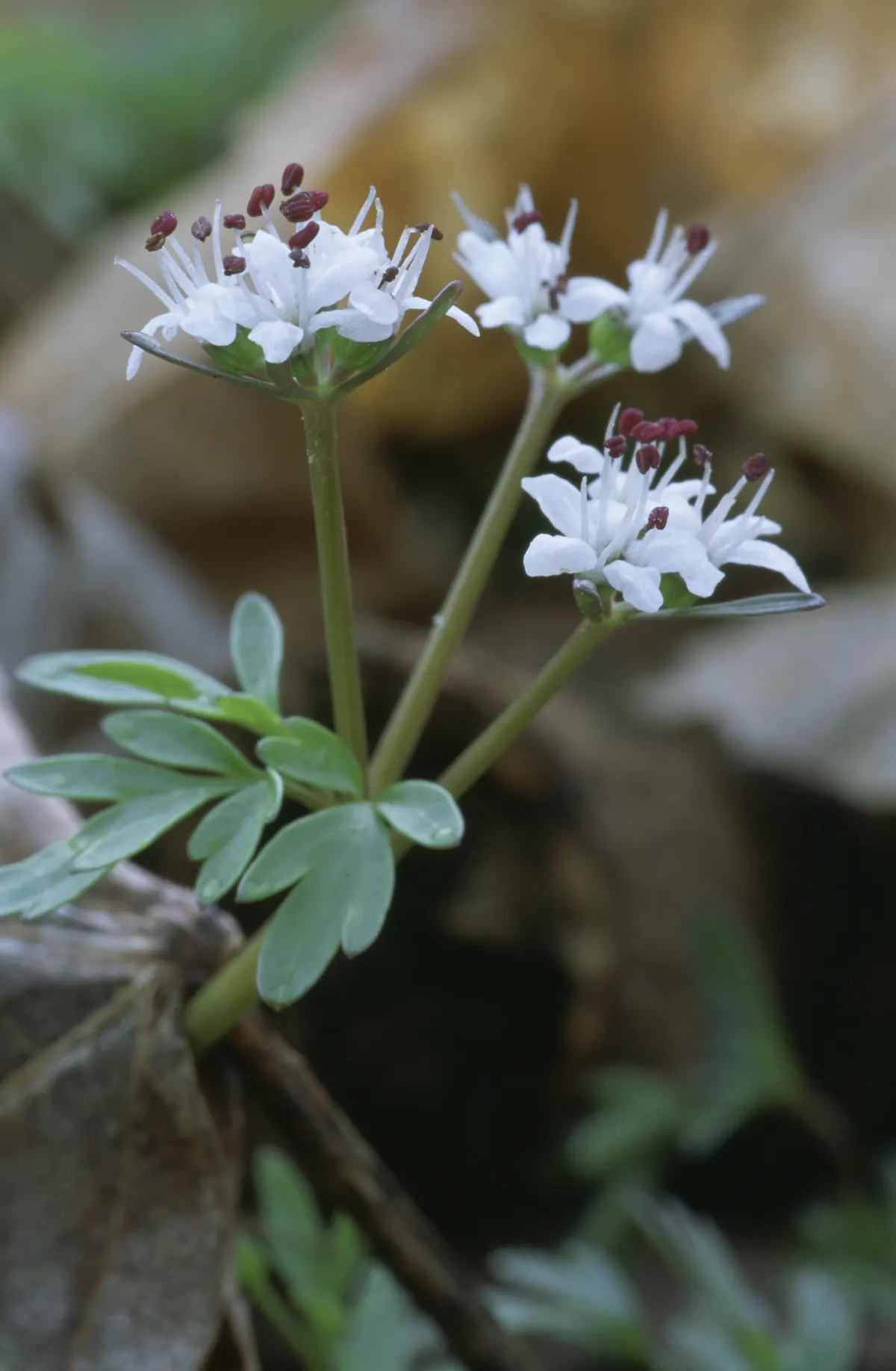
Also called salt-and-pepper, it stands only a few inches tall, with a flat cluster of tiny white petals and dark reddish-brown anthers. The Kentucky Native Plant Society’s early-season iNaturalist roundup names it with spring beauty and purple cress as the first flowers to watch for as the days warm.
-
Spring beauty and purple cress
From a mild spell in winter onward · Lawns, woods edges and stream valleys
In 2022 the society tracked Kentucky’s first flowers on iNaturalist: a spring beauty was photographed in bloom at Hancock Biological Station on December 31, 2021, and the first purple cress on February 15, 2022, at Floracliff Nature Sanctuary near Lexington. Spring beauty has pink-striped white petals; purple cress has small white to pale purple four-petaled flowers.
Upload your first-flower photos to iNaturalist; the society’s projects there track how early each species opens. Keep to trails in nature preserves, where many of these plants grow.
How much daylight does Kentucky gain in February?
About an hour. Every town in the table gains between 58 and 63 minutes of daylight from February 1 to February 28, roughly two minutes a day; on February 28 each of them sees more than 11 hours 15 minutes of daylight. Covington, the northernmost, gains the most, going from 10 hours 14 minutes to 11 hours 17 minutes; Paducah and Bowling Green, farther south, gain 58 minutes.
Unlike January, when nearly all the gain came at the end of the day, February’s is split between both ends. By the Naval Observatory’s tables, Louisville’s sunrise moves from 7:48 a.m. on February 1 to 7:17 a.m. on the 28th, and its sunset from 6:06 p.m. to 6:35 p.m. (Eastern). In Paducah, on Central time, the sun sets at 5:19 p.m. on the 1st and 5:47 p.m. on the 28th. The gains speed up week by week and keep accelerating until the equinox in March.
Daylight saving time starts on Sunday, March 14, 2027, so dusk outings jump an hour later two weeks after this month ends.
| City | Feb 1 | Feb 28 | Gained | Per day |
|---|---|---|---|---|
| Paducah | 10 h 22 m | 11 h 20 m | 58 min | 2.1 min |
| Owensboro | 10 h 19 m | 11 h 19 m | 60 min | 2.2 min |
| Bowling Green | 10 h 23 m | 11 h 21 m | 58 min | 2.1 min |
| Louisville | 10 h 18 m | 11 h 18 m | 60 min | 2.2 min |
| Lexington | 10 h 19 m | 11 h 19 m | 60 min | 2.2 min |
| Covington | 10 h 14 m | 11 h 17 m | 63 min | 2.3 min |
| Ashland | 10 h 17 m | 11 h 18 m | 61 min | 2.3 min |
| Corbin | 10 h 22 m | 11 h 21 m | 59 min | 2.2 min |
Look up the hours of light for any Kentucky town, any date, with our daylight calculator.
How snowy is February in Kentucky, and what could El Niño bring?
Usually a little milder than January, with sharp swings either way. NOAA’s 1991–2020 normals, below, put average February highs between about 44 degrees in Northern Kentucky and 51 at Bowling Green, and average lows between about 26 and 31. Normal February snowfall is 3 inches or less at Paducah and Bowling Green, about 4 to 4.5 inches at Louisville and Lexington, and close to 7 inches at Jackson and the Northern Kentucky airport. Paducah is the one station in the table where February’s normal snowfall is higher than January’s.
Single storms can do much more. The Louisville weather office lists 11.6 inches at Louisville and 11.0 inches at Lexington on February 4, 1998, the biggest February snowfall in both records, and 13.0 inches at Bowling Green on February 12, 1910. That 1998 storm struck during the very strong El Niño of 1997–98, a coincidence worth noting but no proof of a pattern.
This winter, El Niño is very likely to be strong. Odds of a very strong event by winter topped 90 percent in NOAA’s El Niño update of September 10, 2026. The Louisville weather office’s guide to El Niño says its effects on the Ohio Valley tend to be weak and show up mostly from midwinter into spring. In El Niño winters it favors below normal precipitation and near normal temperatures across much of Kentucky, with a greater risk of extremely dry spells, especially from January through March. Put simply, the odds lean toward a drier late winter, though not one free of snow. Such tendencies are not a forecast, and other patterns, such as the Arctic Oscillation, can swamp El Niño for weeks at a time.
NOAA issues its winter outlook in mid-October with fresh versions monthly, all posted on the seasonal outlook page. For a shorter look ahead, see our weather page; for how far off the last spring freeze usually is, see our Kentucky frost dates.
| Station | Average high | Average low | Precipitation | Snowfall |
|---|---|---|---|---|
| Paducah | 49.7 °F | 30.5 °F | 3.94 in | 3.0 in |
| Bowling Green | 51.0 °F | 31.1 °F | 4.07 in | 2.9 in |
| Louisville airport | 48.3 °F | 30.7 °F | 3.41 in | 4.1 in |
| Lexington airport | 46.8 °F | 28.3 °F | 3.64 in | 4.5 in |
| Northern Kentucky airport | 43.7 °F | 25.8 °F | 3.17 in | 6.7 in |
| London-Corbin airport | 49.7 °F | 29.7 °F | 4.02 in | n/a |
| Jackson | 48.8 °F | 30.5 °F | 4.06 in | 6.7 in |
What can you see in Kentucky’s night sky in February?
Two planets at opposition in the same month, the Snow Moon with a faint eclipse at moonrise, and Mercury’s best evening showing of the winter. Times are Eastern Standard Time; subtract an hour for the Central time zone, which covers the western half of the state from Paducah to Bowling Green.
-
Jupiter at opposition
Wednesday, February 10, at 7:21 p.m. EST (6:21 p.m. CST) · Rising in the east at sunset, high in the south around midnight, in Leo
With Earth lined up between the Sun and Jupiter, the giant planet stays above the horizon all night and at its brightest for the year, about 405 million miles away. Any small telescope shows its cloud belts. Late on the 19th, Kentucky watchers will find the fat gibbous Moon parked almost on top of Jupiter.
-
Mars at opposition
Friday, February 19; closest to Earth on the 20th · Rising in the east at dusk, also in Leo
Mars glows a strong orange-red, but its closest pass this time is a modest 63 million miles or so, since Mars itself is swinging out toward the far end of its oval path. Still, Earth and Mars won’t be this near each other again before 2029. On the evening of the 20th, look for the full Moon, Jupiter, Mars and the star Regulus grouped together in Leo.
-
The Snow Moon and a faint eclipse
Full on Saturday, February 20, at 6:23 p.m. EST (5:23 p.m. CST) · Rising in the east around sunset
Kentucky gets the Snow Moon already dimmed by a penumbral eclipse when it clears the horizon. Only the faint fringe of Earth’s shadow touches the Moon, and the shading is deepest at 6:13 p.m. EST, or 5:13 p.m. CST; nothing is left after 8:13 p.m. Eastern (7:13 p.m. Central). By the Naval Observatory’s tables the Moon rises that evening at about 6:12 p.m. in Ashland and 6:25 p.m. in Louisville, and about 5:29 p.m. in Bowling Green and 5:38 p.m. in Paducah, so eastern Kentucky catches it near greatest eclipse and the west a little after. Expect, at most, a slight gray shading along one limb of the rising Moon, set against bright twilight; most people will not notice it. A few almanacs call it a supermoon, though it is well short of January’s.
-
Mercury, and the real middle of winter
Evenings from late January to about February 10 · Low in the west-southwest, 30 to 45 minutes after sunset
Mercury is at its greatest distance from the Sun on February 3. On Sunday evening, February 7, look for a hairline crescent Moon just beside the planet in the twilight; binoculars help. Groundhog Day, on Tuesday the 2nd, comes a little ahead of winter’s true astronomical halfway mark, which falls on February 3 to 4. The February 6 solar eclipse belongs to South America, Antarctica and parts of Africa; no part of it reaches Kentucky or any other state.
| Phase | Date | Time |
|---|---|---|
| New moon | Saturday, Feb 6 | 10:56 a.m. EST; 9:56 a.m. CST |
| First quarter | Sunday, Feb 14 | 2:58 a.m. EST; 1:58 a.m. CST |
| Full moon, the Snow Moon | Saturday, Feb 20 | 6:23 p.m. EST; 5:23 p.m. CST |
| Last quarter | Sunday, Feb 28 (EST); Saturday, Feb 27 (CST) | 12:16 a.m. EST; 11:16 p.m. CST |
Moonless skies for the winter Milky Way and faint star clusters return for several evenings once the Moon is new on the 6th. See our moon phase calendar for moonrise in your town, and our cloud-cover forecast before you head out.
What are good February nature outings for Kentucky families?
- Bird counting with the whole family. Audubon and Birds Canada set the 30th count for Friday the 12th through Monday the 15th. A quarter hour at a window or a park bench is enough to take part; birdcount.org explains how to send in a list. A kitchen-window count is fine.
- A lodge hike at Barren River. Barren River Lake State Resort Park has offered a free guided hike from the lodge on the second Saturday of the month; no 2027 dates had been listed as of early October, so confirm with the park on its events calendar before you drive. Staying for dusk gives you a chance at the last cranes.
- Eagle Watch weekends. An annual winter program at the parks on Kentucky Lake and Lake Barkley; the 2027 schedule had not been posted when we checked.
- Kentucky Maple Days. Usually two Saturdays in February at sugarhouses around the state; the 2027 dates and farms will be posted by the Kentucky Maple Syrup Association and UK Extension.
- A frog night. Pick a drizzly evening in the 50s, drive or walk to a flooded field and roll the windows down; children are often better than adults at picking out the different calls.
- Through April: Project FeederWatch. The Cornell Lab’s winter feeder survey continues; a February tally of juncos, titmice and cardinals counts as much as any other.
Weather changes plans fast in February; call ahead before driving to a program. Other states and months are collected on our nature pages. Children can log first-frog dates in a naturalist’s journal.
Safety notes for February in Kentucky
- Hunting seasons and hunter orange. No deer, elk or bear seasons are open in February, so Kentucky’s hunter orange rule, which covers only the firearm deer, elk and bear seasons, does not apply this month. Plenty else is open. Canada goose, white-fronted goose, brant and snow goose seasons run through February 15, with a youth-only waterfowl day on February 13 and a day for military members and veterans on February 14. After that, the light goose conservation order runs from February 16 to March 31. Squirrel, grouse, crow, raccoon and opossum, bobcat and furbearer trapping seasons last through February 28. Rabbit season in the western zone closes February 10. Coyotes may be hunted all year, and at night with lights from December 1 to May 31, except where a deer or elk firearm season is open. Wear something bright on public land, and keep dogs close near traps.
- Ice on ponds and lakes. February cold snaps can freeze ponds and the coves of lakes, as at Barren River Lake in early February 2026, but the ice is rarely thick enough to trust. Admire it from the bank and leash dogs near frozen water.
- Floods. Late winter rain falling on frozen or saturated ground runs off fast. Turn around at any water over a road, on foot or in a car, and stay back from swollen creeks on trails.
- Cold rain and wind. A wet 35-degree evening at a frog pond can chill you faster than a dry, frosty one. Bring dry layers and a hat, and check the weather service’s wind chill chart on windy days.
- Night walks. On salamander and frog nights, wear reflective clothing, carry a light, and stay off busy roads. Leave amphibians where you find them.
- Dead or sick birds. Avian influenza has killed cranes and waterfowl in recent winters. Don’t touch dead birds, keep pets away, and report them to the state wildlife department.
Sources
- KDFWR: Waterfowl and sandhill crane reports and surveys
- KDFWR: Weekly sandhill crane ground count reports, 2025–26
- KDFWR: Sandhill crane ground counts, 2024–25
- KDFWR: Sandhill crane ground counts, 2023–24
- KDFWR: Sandhill crane ground counts, 2021–22
- KDFWR: Kentucky hunting and fishing seasons planner, 2026–27
- KDFWR: Hunting regulations (hunter orange for modern gun, muzzleloader and youth deer, firearm elk and firearm bear seasons)
- KDFWR: Rabbit hunting seasons
- KDFWR: Waterfowl hunting seasons, youth and military days, and light goose conservation order
- KDFWR: Amphibians of Kentucky
- KDFWR: Chorus frogs, spring peepers, cricket frogs and narrow-mouthed frogs
- KDFWR: Spring peeper
- KDFWR: True frogs (wood frog)
- KDFWR: Wildlife water holes (pond-breeding amphibians)
- Northern Kentucky Tribune, Art Lander’s Outdoors: American woodcock (March 2025)
- Audubon: Go see the American woodcock’s sky dance
- KDFWR: Bald eagles in Kentucky
- KDFWR: Black bears
- Kentucky Afield: A decade of research on Kentucky’s bears (Winter 2012)
- Kentucky Living: The bear facts (2021)
- University of Kentucky Extension: Maple syrup production (FOR-118)
- Kentucky Department of Agriculture: Maple syrup puts sweet stamp on February (2026)
- University of Kentucky: Kentucky Maple Day
- University of Kentucky: Kentucky Maple Days offers premiere maple sugaring event (2024)
- NC State Extension plant toolbox: Acer rubrum (red maple)
- NC State Extension plant toolbox: Acer saccharinum (silver maple)
- Kentucky Native Plant Society: Become part of BotanyBlitz 2022
- Kentucky Native Plant Society: Community science
- NOAA NCEI: 1991–2020 monthly normals for seven Kentucky stations
- NWS Louisville: Snow climatology for Louisville, Lexington and Bowling Green
- NWS Louisville: El Niño and La Niña impacts on Kentucky and southern Indiana (winter precipitation and dry extremes)
- NOAA Climate Prediction Center: ENSO diagnostic discussion, September 10, 2026
- NOAA Climate Prediction Center: 90-day outlooks
- National Weather Service: Wind chill chart
- U.S. Naval Observatory: Moon phases, December 2026 to March 2027
- U.S. Naval Observatory: Sun and Moon rise and set, Louisville, February 20, 2027
- U.S. Naval Observatory: Sun and Moon rise and set, Louisville, February 1, 2027
- U.S. Naval Observatory: Sun and Moon rise and set, Paducah, February 28, 2027
- U.S. Naval Observatory: Earth’s seasons, 2027
- NASA: Lunar eclipses, 2021–2030
- NASA: Solar eclipses, 2021–2030
- Fred Espenak: Sky Event Almanac 2027
- EarthSky: Jupiter at opposition
- SEDS: Mars at opposition, 2027
- Old Farmer’s Almanac: Eclipses
- Audubon: Great Backyard Bird Count
- Birds Canada: Great Backyard Bird Count
- Great Backyard Bird Count
- Kentucky State Parks: Events calendar
- Kentucky State Parks: Eagle Watch Weekends announcement (2020)
- Project FeederWatch: Project overview
- Photos via Wikimedia Commons; licenses and photographers are credited under each picture
