What to look for in nature in Kentucky this November
November is when Kentucky turns from fall color to the first hints of winter, and it does a few things in a way worth driving for. Over the week of Thanksgiving the Beaver Moon, a modest supermoon this year, lights up the spray below Cumberland Falls on five scheduled moonbow nights. In the far west, mallards and gadwall pour into the flooded fields of Ballard County until state biologists are counting them by the ten thousand. The first sandhill cranes drop onto the drawn-down mudflats of Barren River Lake, bucks chase does through every woodlot, and the beeches keep their pale copper leaves long after the oaks have dropped theirs. Below: where to look, when, and what the records say.
Other months in Kentucky: October, December.
Start here

- A Thanksgiving-week moonbow. Cumberland Falls State Resort Park has five November moonbow nights on its 2026 schedule, Sunday the 22nd through Thanksgiving night. The park puts Tuesday, November 24, in bold: the Beaver Moon turns full that morning, and the window runs from about 7:00 to 9:00 p.m. Eastern. All the park’s times are approximate, and a cloudy evening cancels the show.
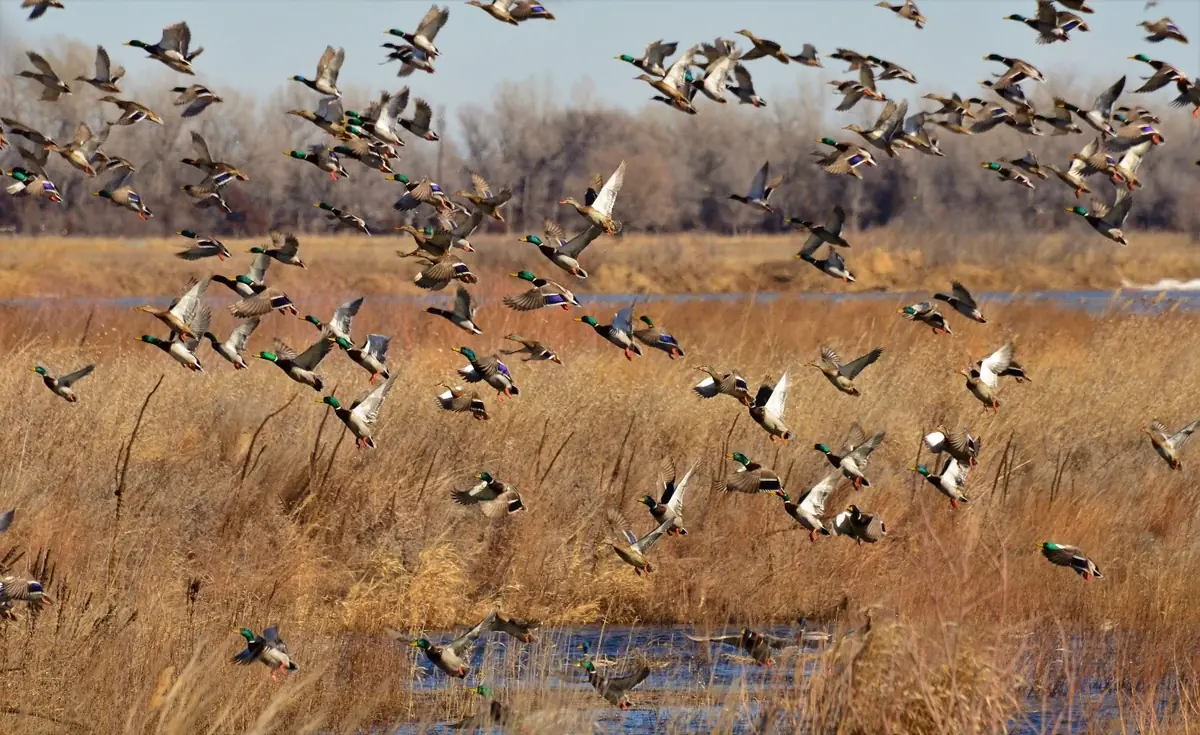
- Ducks by the thousand in the west. State biologists counted 19,315 ducks on Ballard Wildlife Management Area on November 26 last year, four in five of them mallards, along with 700 white-fronted geese. The flocks build behind each cold front, so the days after a sharp north wind are the ones to watch the sky over the Purchase and the lower Ohio.
- Planets and meteors before dawn. Step out before sunrise on November 15 or 16 to find Mars and Jupiter barely a degree from each other in the southeast, with brilliant Venus lower down. The Leonids peak around the morning of November 18; wait until the half-lit moon has set, a little past midnight, and watch until dawn.
For the Naturalist’s Field Journal: a skein of cranes or a raft of ducks on the birds I have seen page, a beech twig still holding its leaves on the tree-through-the-seasons page, a coffeetree pod or a sweetgum ball on seeds, pods and cones, and deer rubs and scrapes on reading the signs. Write down the morning of your first snowflakes, too.
Regions used below: Western Kentucky and the Purchase; South Central and Cave Country; Louisville and the Ohio River; The Bluegrass and Northern Kentucky; Eastern Kentucky and the Appalachian coalfields.
When can you see a moonbow at Cumberland Falls in November?
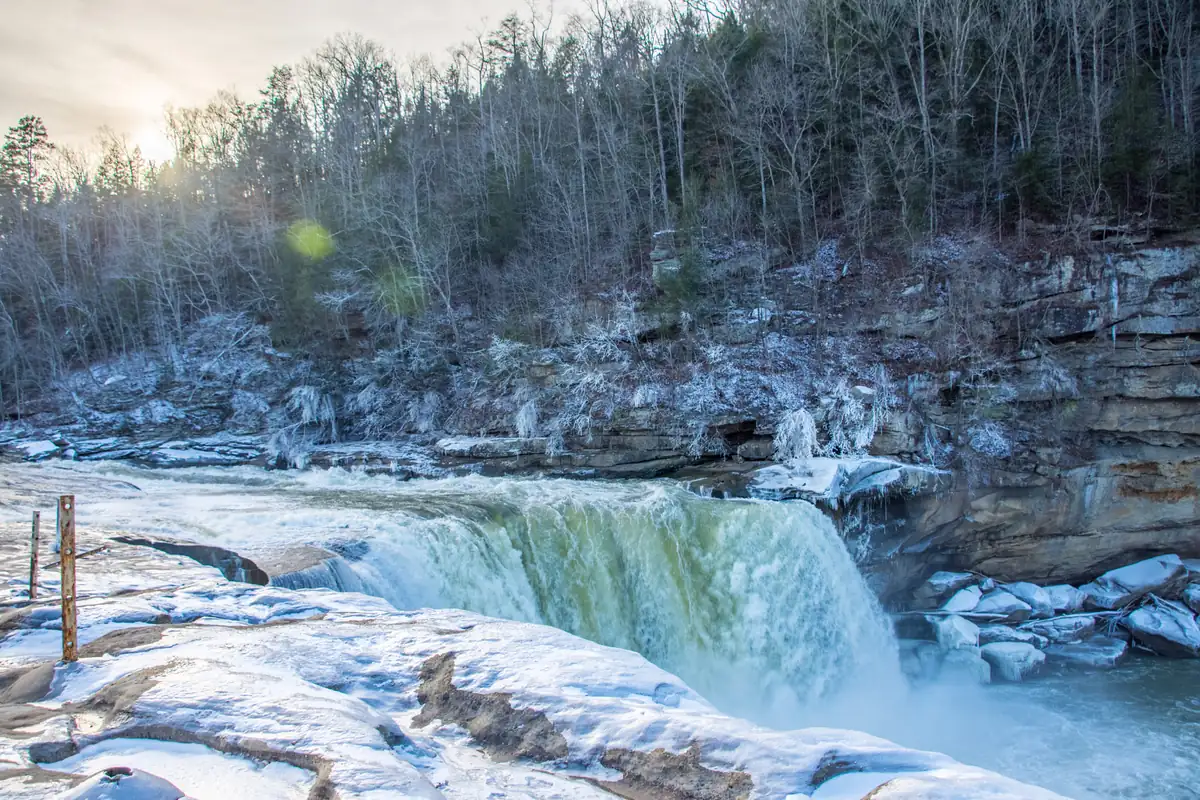
Cumberland Falls, where the Cumberland River spills over a broad sandstone ledge southwest of Corbin, is the place in Kentucky to see a rainbow made by moonlight. The bow appears in the mist downstream of the falls on clear nights when the moon is near full and has risen high enough to shine into the gorge. Each November the timing slides a little earlier in the evening than in summer, because the long nights let the full moon climb over the trees soon after dark.
This year the November run falls over Thanksgiving week and lines up with the Beaver Moon, which is full at 9:53 a.m. Eastern on Tuesday, November 24. That moon comes about 30 hours before its closest point to Earth for the month, so it counts as a supermoon on the lists EarthSky uses, though only a modest one. The park’s posted windows are below; they are keyed to the evening you arrive, and the park calls every time approximate.
| Night of | Viewing window | Moon |
|---|---|---|
| Sunday, Nov 22 | 6:00–8:00 p.m. | Waxing gibbous |
| Monday, Nov 23 | 6:30–8:30 p.m. | Looks full |
| Tuesday, Nov 24 | 7:00–9:00 p.m. | Full that morning; the night in bold on the park’s schedule |
| Wednesday, Nov 25 | 8:00–10:00 p.m. | Just past full |
| Thursday, Nov 26 (Thanksgiving) | 9:30–11:30 p.m. | Waning gibbous |
November evenings at the falls are cold and damp; the normal low at the London-Corbin airport, the nearest long-running station, is about 35 °F, and the spray makes it feel colder. Dress for an hour of standing still, bring a headlamp for the walk to the overlooks, and look at our cloud-cover map before you leave home, since thin high cloud can wash the bow out even when the moon shows. A camera on a tripod with a few seconds of exposure picks up the colors the eye misses.
Where do ducks, geese and sandhill cranes gather in Kentucky in November?
Kentucky’s waterfowl season on the ground starts in November. Every week from mid-November into February, state wildlife biologists post counts from its wildlife management areas, with notes on water levels and weather. Read in order, they show the birds arriving: a few hundred wood ducks and gadwall early in the month, then a surge after each strong front, with the biggest numbers in the bottomland fields of Ballard County near the confluence of the Ohio and Mississippi rivers.
The counts below come straight from those reports. They are not a forecast for 2026, since water, crops and weather change every year, but they show how fast the flocks can build and where to point your binoculars.
-
Mallards and gadwall in the Purchase
Building from mid-November into December · Ballard WMA, Ballard County; the flooded fields and sloughs of the lower Ohio
On Ballard WMA the count rose from 9,710 ducks on November 14, 2024, to 16,758 on November 27 that year. In 2025 it reached 19,315 by November 26, and the next two weekly counts that winter topped 24,000 and 27,000. Mallards dominate, with gadwall and ring-necked ducks next. Much of a wildlife management area is managed as a refuge or hunting units in this season, so check the area’s rules with the department before you go, and watch from roads and public overlooks.
-
Geese, including snows and white-fronts
Late November onward · Sloughs WMA and Ballard WMA along the Ohio River; big lakes statewide
Canada geese are here all year, but late November brings the northern visitors. On November 24, 2025, Sloughs WMA held 175 Canada geese, 100 snow geese and 100 white-fronted geese, and Ballard had 700 white-fronts two days later. White-fronted geese show orange legs, a white band at the base of the bill and dark bars on the belly; they give a high, laughing call in flight.
-
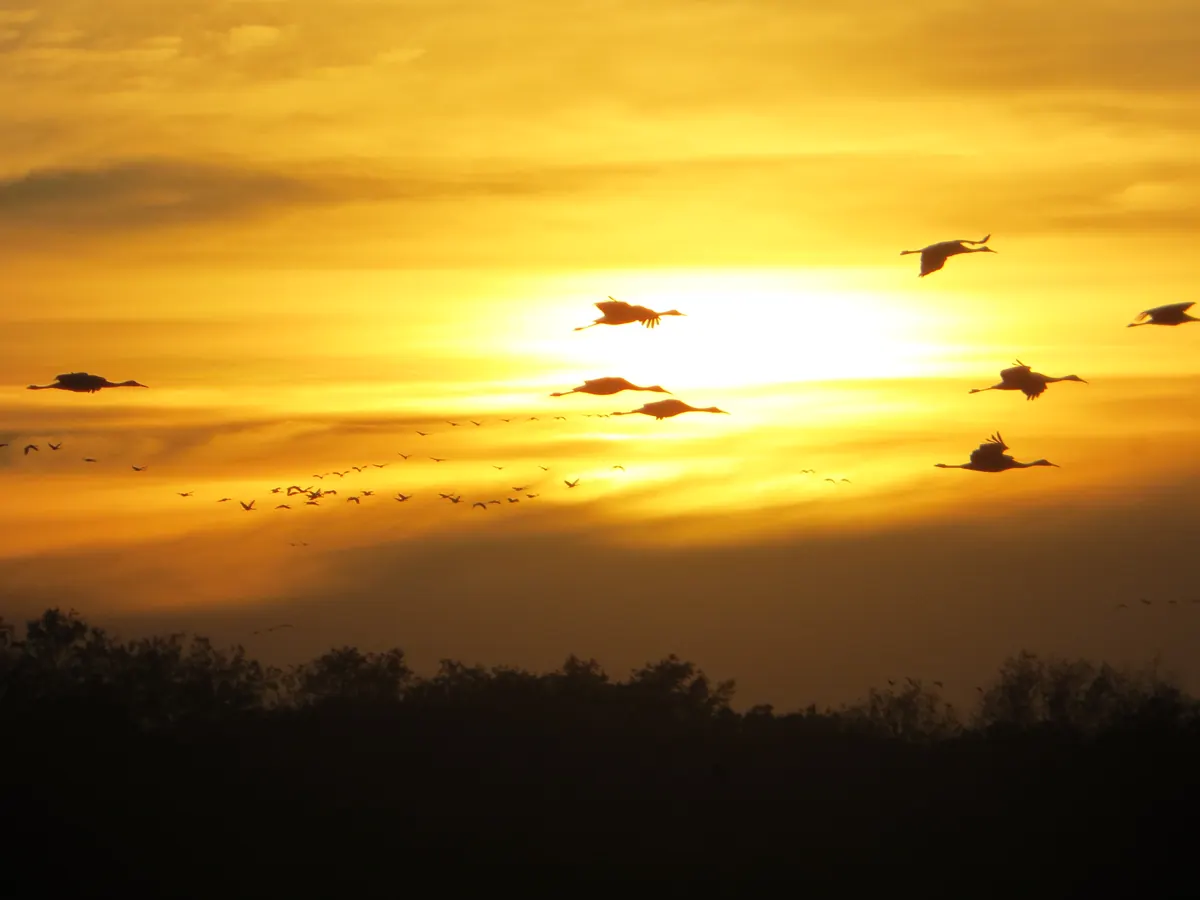
The first sandhill cranes
First arrivals in late November; larger flocks December into February · Barren River Lake, south of Glasgow; spring-fed ponds in Hardin County
Cranes of the eastern flock cross Kentucky between the Great Lakes and their wintering grounds farther south, and two spots draw them down. At Barren River Lake the winter drawdown exposes wide mudflats where the birds roost in shallow water. The department’s weekly crane survey notes that the cranes counted there in late November tend to be early arrivals that soon move on; in the 2023–24 season the count went from none on December 5 to 438 six days later. Listen for their rolling, bugling calls overhead on clear days, often well before you can pick out the flock. Barren River Lake State Resort Park schedules its guided crane weekend for January 29 to 31, 2027.
| Wildlife management area | Count date | Ducks counted | Notes from the report |
|---|---|---|---|
| Ballard WMA | Nov 14, 2024 | 9,710 | 89% mallards; numbers rising as a front came through |
| Duck Island WMA | Nov 17, 2025 | 3,114 | Mallards, gadwall, pintail, ring-necked ducks; about 4,000 a week earlier |
| Blue Grass Army Depot | Nov 20, 2025 | 259 | Ten kinds, led by ring-necked ducks; most arrived that week |
| Sloughs WMA | Nov 24, 2025 | 2,293 | Also 375 geese, including snow and white-fronted |
| Ballard WMA | Nov 26, 2025 | 19,315 | 80% mallards; 700 white-fronted geese, 200 coots |
| Ballard WMA | Dec 4, 2025 | 24,888 | Still building into December |
Bald eagles follow the ducks, and the same reports ask hunters to bag and bin the remains of cleaned birds, because eagles and other raptors are especially vulnerable to the avian influenza that has turned up in Kentucky in recent winters. If you find a sick or dead wild bird, leave it alone and tell the department.
Which birds settle into Kentucky for the winter in November?
By November the summer birds have gone and the winter community has moved in. The changes are easiest to see at a feeder and along a brushy fencerow, but the most striking bird of the month is the one already living here: the bald eagle, back from near-extinction as a Kentucky nester and busy at its nest long before the eggs.
-
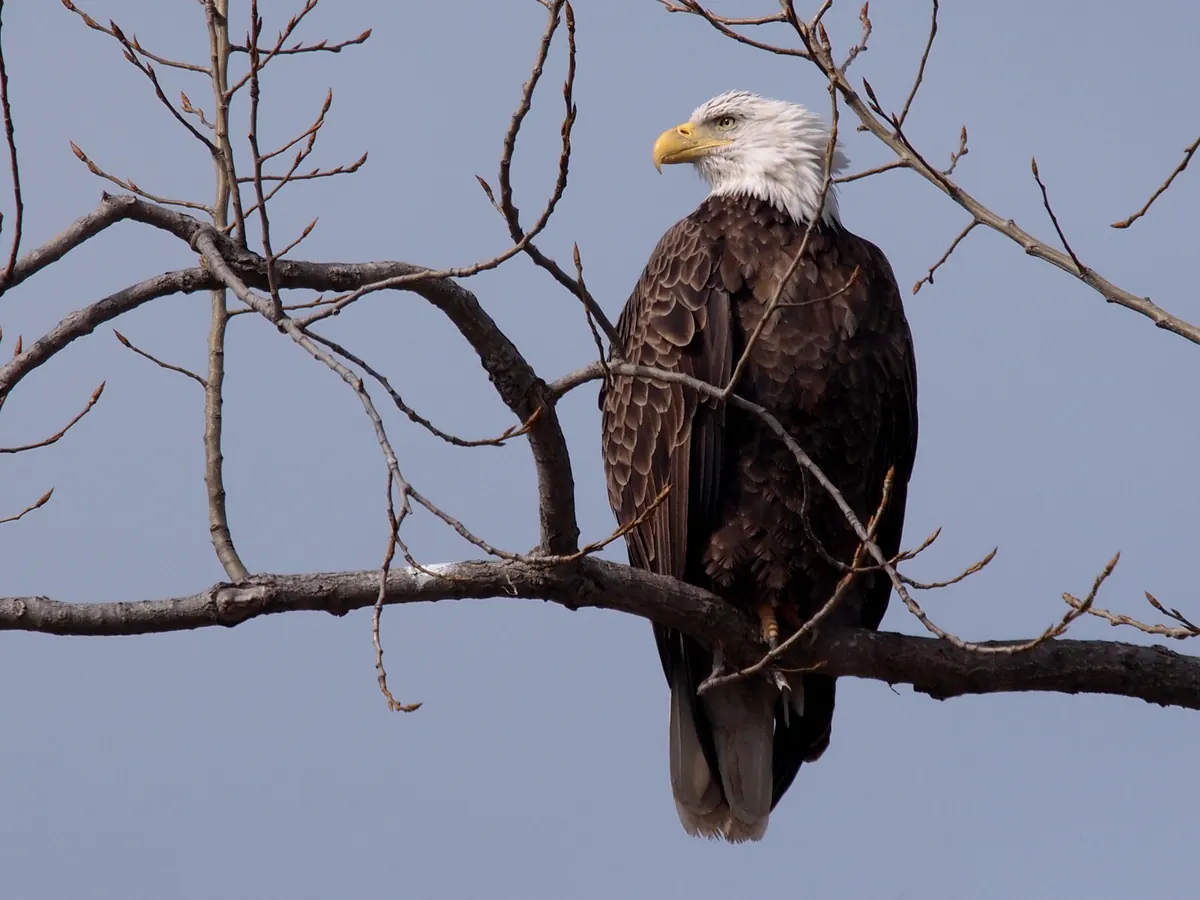
Bald eagles fixing their nests
Nest repair from October; winter visitors from December · Big rivers and reservoirs, especially Kentucky Lake and Lake Barkley
Kentucky had a single known eagle nest in 1986. The department counted 43 occupied territories in 2006 and 187 by 2019. Resident pairs start adding sticks to their nests as early as October, and eggs follow between January and March, so a big nest in a riverside sycamore is worth checking from a distance through the winter. Eagles from farther north join them from December to March wherever there is open water to fish, and the department names the Land Between the Lakes area as a winter hot spot.
-
Juncos, sparrows and the feeder crowd
All month · Yards, field edges and brushy fencerows statewide
Dark-eyed juncos hop under the feeders, white-throated sparrows scratch in the leaf litter, and yellow-rumped warblers, the one warbler that stays the winter in numbers, work the cedars and poison ivy berries. Carolina wrens, titmice and chickadees lead mixed flocks through the woods; a pishing noise often brings the whole group in for a look.
-
A quiet year for northern finches
Through the winter · Feeders and conifers
The Finch Research Network’s winter finch forecast for 2026–27 expects no big irruptions of northern finches into the southeastern states, because cone crops in the northeastern forests are good enough to hold most birds there. Small numbers of pine siskins or purple finches could still trickle south, and a late flight of purple finches is possible. Report any you see; an off year is still useful data.
-
Project FeederWatch begins
November 1, 2026, to April 30, 2027 · Your own yard, porch or schoolyard
Cornell Lab of Ornithology’s FeederWatch asks volunteers to choose a pair of back-to-back count days, up to weekly, and record the highest number of each species seen together. Counting less often is fine; even a single count adds to a record that now spans decades.
When is the deer rut in Kentucky, and what are the elk doing?
November belongs to the white-tailed deer. Bucks that spent October rubbing saplings and pawing scrapes now travel widely by day and night in search of does, and the department times the modern gun season to fall in the middle of it: in announcing an earlier season it noted that pre-rut, peak rut and post-rut all fit inside the 16 days. This year the season runs November 14 to 29. With more than 130,000 deer taken in a typical year Kentucky’s herd is large and widespread.
-
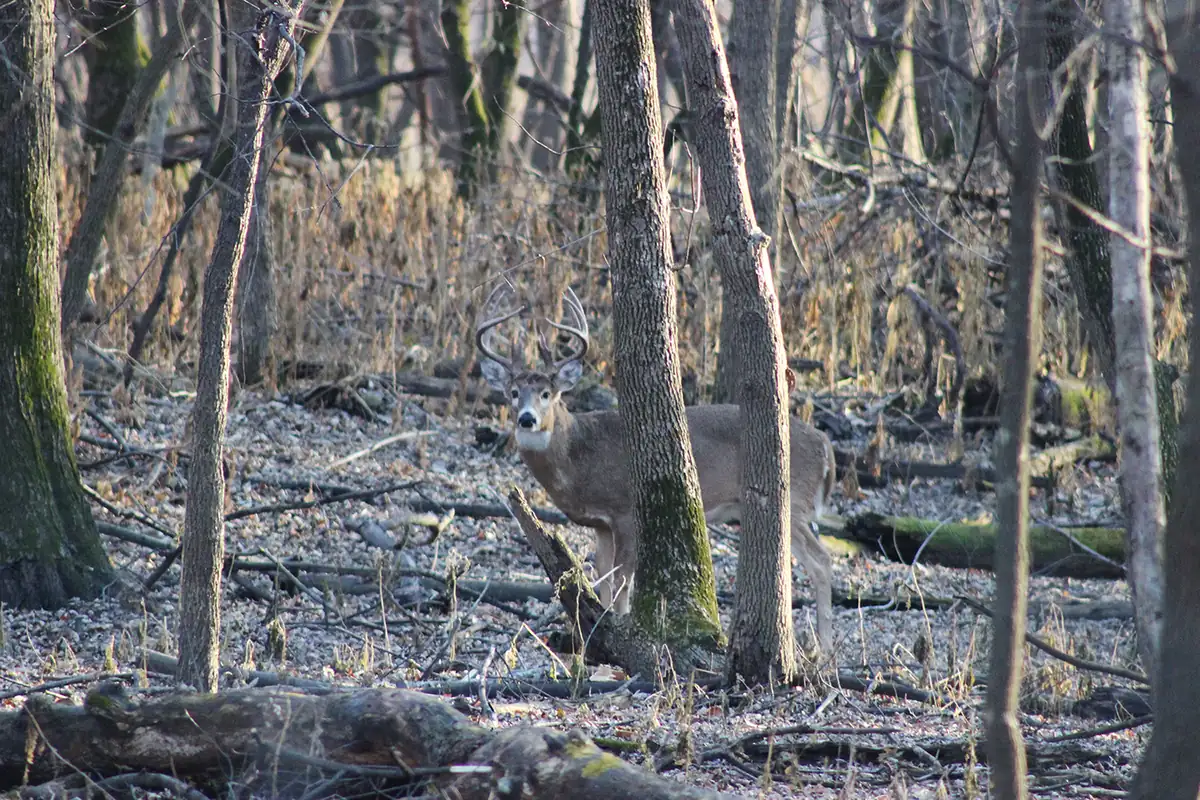
Signs of the rut
Through November · Field edges, woods roads and creek bottoms statewide
Two signs give a buck away: saplings stripped of bark at knee to waist height, which hunters call rubs, and scrapes, patches of bare dirt he paws out beneath an overhanging branch and marks with scent. A buck with his nose to the ground, trailing a doe across an open field at midday, is the classic November sight. Treat every wooded curve at dawn and dusk with suspicion; one deer crossing is often followed by another.
-
Elk after the rut
All month · Reclaimed mine lands of the eastern coalfields
With the bugling over, Kentucky’s elk gather in larger mixed herds on the grassy benches of old strip mines and feed hard before winter. Prestonsburg’s tourism office says guided elk tours from Jenny Wiley State Resort Park run from September into early March; call the park for dates. The antlerless elk firearms season opens November 28, so wear orange on public land in the elk zone that week.
When do the last leaves fall in Kentucky?
By early November the maples of the eastern ridges have mostly dropped, but the season is not over. The Knobs south of Louisville and the bottomland forests of the west hold color into the month, and the oaks go last, in deep reds and leathery browns. Bernheim Forest’s ColorFest, on November 7 and 8, has long been timed to that late show near Louisville.
-
Bernheim’s last ColorFest
Saturday and Sunday, November 7 and 8, 10 a.m. to 4 p.m. · Bernheim Forest and Arboretum, Clermont
Bernheim is marking 30 years of ColorFest, held since 1996, and calls this year’s the final one. Expect giant slides, a mud pie kitchen, pumpkin rolling, music and hands-on nature activities, with $30 a carload for everyone. A week earlier, volunteer naturalists lead a 3-mile hike on Rice Orchard Ridge, billed for peak color, on Sunday, November 1, 12:30 to 4 p.m.
-
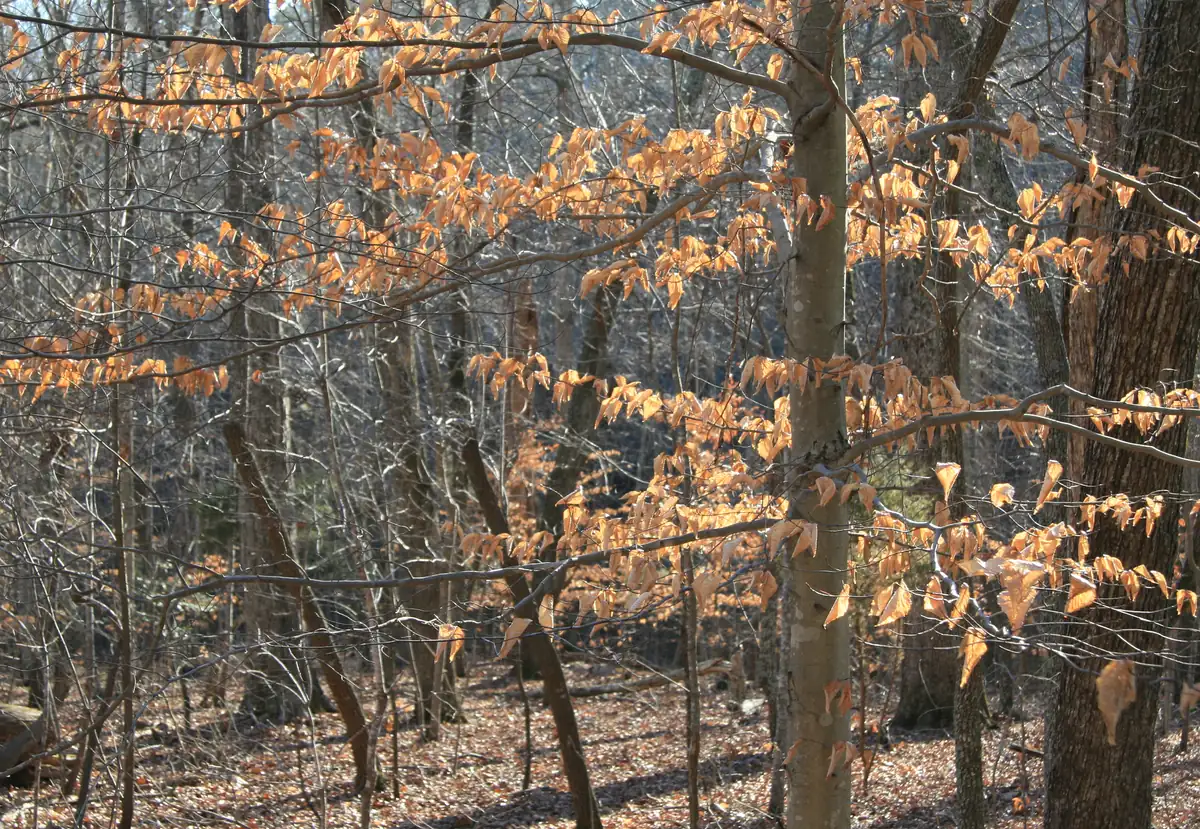
Beeches that won’t let go
Late fall through winter · Moist slopes and ravines statewide
American beech turns a golden bronze in fall, and on young trees and lower branches the dry leaves often hang on all winter, pale and papery, rattling in the wind. North Carolina State Extension’s plant guide notes the habit. A beech understory glowing in low November sun is one of the best sights of a bare woods, and an easy way to pick the species out from a distance.
-
Pods on the Kentucky coffeetree
Through the winter on female trees · Bottomlands, old farmsteads and parks
The tree that carries the state’s name sheds its leaves early and spends months almost leafless, which is where its Latin name, meaning naked branch, comes from. Female trees hold thick, reddish-brown pods up to 10 inches long through the winter. The hard seeds inside are mildly toxic raw; leave them for your seeds, pods and cones page rather than the kitchen.
Has Kentucky had its first freeze by November?
Over most of the state, yes. NOAA’s 1991–2020 normals put the median first 32 °F night before Halloween at nearly every station: Oct 16 in the cold valley at West Liberty, Oct 23 at Ashland, Oct 25 both at London and at the Northern Kentucky airport, Oct 28 for Paducah and Lexington alike, and Oct 31 at Bowling Green. Two stations in the table usually start November still waiting. The ridgetop airport at Jackson, where cold air drains away downhill, has a median of Nov 1, and Louisville, warmed by the city and the Ohio River, holds out to Nov 7.
A mild fall can push that wait well into the month. Read across to the last column: in one year in ten Louisville still has not frozen by Nov 23, and Bowling Green and Jackson can go to mid-November. By Thanksgiving, though, almost every garden in Kentucky has had its killing frost.
| Station | One year in ten | Median | Nine years in ten |
|---|---|---|---|
| Paducah (the Purchase) | Oct 15 | Oct 28 | Nov 10 |
| Bowling Green Warren County Airport | Oct 20 | Oct 31 | Nov 11 |
| Louisville International Airport | Oct 28 | Nov 7 | Nov 23 |
| Lexington Bluegrass Airport | Oct 16 | Oct 28 | Nov 8 |
| Cincinnati Northern Ky Airport (Boone County) | Oct 12 | Oct 25 | Nov 5 |
| Ashland (Ohio River, northeast) | Oct 11 | Oct 23 | Nov 3 |
| London Corbin Airport (Cumberland Plateau) | Oct 13 | Oct 25 | Nov 6 |
| Jackson (ridgetop airport, Breathitt County) | Oct 18 | Nov 1 | Nov 17 |
| W Liberty 3 NW (valley, Morgan County) | Oct 3 | Oct 16 | Oct 31 |
Find your nearest station on our Kentucky frost dates page. Once the first hard freeze comes, it is time to drain hoses, pull the last peppers and mulch the perennials; note the date, since next year’s will differ by days or weeks.
How much daylight does Kentucky lose in November?
Close to fifty minutes, and it feels like far more, because the clocks change on the first morning of the month. Daylight saving time ends at 2 a.m. on Sunday, November 1; by Sunday evening, sunset arrives a full hour earlier on the clock than on Saturday. Between November 1 and 30, Paducah and Bowling Green each give up 48 minutes of daylight, Lexington 50, Louisville 51, and Covington and Ashland, in the north and northeast, 52.
The loss slows as the month goes on and the solstice approaches, but the evenings keep darkening. The earliest sunsets of the year come in early December, before the shortest day, a quirk of Earth’s tilted, elliptical orbit.
| City | Nov 1 | Nov 30 | Lost | Per day |
|---|---|---|---|---|
| Paducah | 10 h 38 m | 9 h 50 m | 48 min | 1.7 min |
| Owensboro | 10 h 36 m | 9 h 46 m | 50 min | 1.7 min |
| Bowling Green | 10 h 38 m | 9 h 50 m | 48 min | 1.7 min |
| Louisville | 10 h 34 m | 9 h 43 m | 51 min | 1.8 min |
| Lexington | 10 h 35 m | 9 h 45 m | 50 min | 1.7 min |
| Covington | 10 h 31 m | 9 h 39 m | 52 min | 1.8 min |
| Ashland | 10 h 34 m | 9 h 42 m | 52 min | 1.8 min |
| Corbin | 10 h 39 m | 9 h 50 m | 49 min | 1.7 min |
For sunrise, sunset and twilight times at your own address, try our daylight calculator, and plan afternoon hikes so you are back at the car with light to spare.
What is November weather like in Kentucky, and what could a strong El Niño mean?
November is the month Kentucky’s weather turns. By NOAA’s 1991–2020 normals, average highs fall to between 53.8 °F at the Northern Kentucky airport and 59.2 °F at Bowling Green, and average lows sit between 35.1 °F at the Northern Kentucky airport and 39.4 °F at Louisville. Precipitation runs from 3.23 inches in Northern Kentucky to 4.09 at Paducah, with Lexington at 3.37 and Louisville at 3.42. Snow is still a rarity: normal November totals are a tenth of an inch at Bowling Green, 0.3 at Louisville and 0.8 in Northern Kentucky.
This winter brings an unusual backdrop: a Pacific warm event that federal forecasters, in their September 10 discussion, judged more than 90 percent likely to grow very strong by winter. NOAA’s climate.gov links El Niño with drier conditions in the Ohio Valley, and the National Weather Service in Louisville finds that strong events favor near-normal temperatures over most of Kentucky and raise the risk of very dry weather, especially from January through March. For a naturalist, a dry winter would show in low creeks and shallow wetlands; this fall’s waterfowl reports already describe managers pumping wells to hold water in some wildlife areas.
October 15 is the day NOAA puts out its official winter outlook, and Kentuckians can read those maps among the CPC seasonal outlooks; for the week ahead in your county, see our weather page.
When does Kentucky usually see its first snow?
The first flakes usually fly in November, but the first snow you can measure takes longer, and the gap between the two is wider than most people guess. The National Weather Service office in Louisville keeps the averages for its main climate sites. A trace, flakes in the air or a dusting too thin to measure, typically arrives first at Lexington, on November 13, and at Louisville around November 15; Bowling Green waits until November 29.
A tenth of an inch on the ground, the weather service’s measurable snow, comes on average by November 29 at Lexington, December 7 at Louisville and December 24 at Bowling Green. The first inch is a December event in the Bluegrass and Louisville and usually waits until January 2 at Bowling Green. In the mountains it comes sooner: the weather service office in Jackson puts the average first measurable snow there on November 28, and the earliest on its 1981–2015 list fell on October 20, 1989.
Volunteers with CoCoRaHS, a national network of backyard weather observers, measure snow with a white board and a ruler, and new observers can sign up before winter. Write down the first flakes and the first measurable snow on your daily field log; the two dates make a good pair to compare year to year.
What can you see in Kentucky’s night sky in November?
-
The Beaver Moon, a mild supermoon
Evenings of Monday, November 23 and Tuesday, November 24 · Rising in the east-northeast around sunset
The moon is full at 9:53 a.m. Eastern (8:53 a.m. Central) on November 24, so both evenings show a round, bright moon. Overnight from the 23rd to the 24th the moon slides across the Pleiades, though moonlight drowns the little cluster. Bernheim calls its November 24 night hike a Frost Supermoon walk; Beaver Moon is the better-known name.
-
The Leonids
Before dawn on November 17, 18 and 19; best on the 18th · Anywhere overhead; the radiant in Leo rises around midnight
The International Meteor Organization expects a normal return, with a ceiling near 15 meteors per hour for an observer far from town lights, and no outburst predicted. Wait for the half-lit moon to go down, shortly past midnight; Leo then climbs until dawn, and the rates climb with it.
-
Taurid fireballs
Southern Taurids near November 5; Northern Taurids near November 12 · High in the south and east during the evening and night
Both Taurid branches come from dust shed by Comet Encke. Rates stay low, a handful per hour, yet these meteors are known for slow, brilliant fireballs. The new moon on November 9 leaves dark skies around both peaks; for the Southern Taurids, watch before the thin crescent rises around 3 a.m.
-
Mars meets Jupiter; Venus at its brightest
Before dawn, all month; Mars and Jupiter closest November 15 and 16 · South and southeast before sunrise
Jupiter and fainter, reddish Mars come up around midnight among the stars of Leo; on the mornings of the 15th and 16th only 1.2 degrees separate them. Venus, outshone at night only by the moon itself, climbs higher in the east each morning and reaches its peak brilliance around November 24 to 27. Mercury joins the line low in the east-southeast on the mornings of about November 18 to 25.
-
Saturn in the evening
All month after dusk · South to southwest
After dark, look for one steady, pale-yellow point in the south: Saturn, the lone bright planet of the November evening. A small telescope shows its rings.
| Phase | Date | Time |
|---|---|---|
| Last quarter | Sunday, Nov 1 | 3:28 p.m. EST (2:28 p.m. CST) |
| New moon | Monday, Nov 9 | 2:02 a.m. EST (1:02 a.m. CST) |
| First quarter | Tuesday, Nov 17 | 6:48 a.m. EST (5:48 a.m. CST) |
| Full moon, the Beaver Moon | Tuesday, Nov 24 | 9:53 a.m. EST (8:53 a.m. CST) |
| Last quarter | Tuesday, Dec 1 | 1:08 a.m. EST (12:08 a.m. CST) |
Check moonrise and moonset for your own town on our moon phase calendar before planning a Leonid watch or a moonbow trip. The Golden Pond Planetarium at Land Between the Lakes and Bernheim’s night programs are the easiest places to look through a telescope with a guide.
What can Kentucky families do outdoors in November?
- Sunday, November 1: FeederWatch starts. Hang a feeder where children can see it from a window and count on two days in a row. That afternoon Bernheim’s volunteer naturalists lead their First Sunday Nature Hike at 2 p.m.
- November 7 and 8: ColorFest at Bernheim. The 30th and final one, 10 a.m. to 4 p.m. both days, $30 a carload. That evening at 7, Bernheim hosts a talk on the Nancy Grace Roman Space Telescope.
- Saturday, November 14: a dark-sky night hike. Bernheim’s Ashlock Hollow Forest Road hike, 7:30 to 11 p.m., is a 1-mile walk on a gravel road to a remote prairie with a telescope; $15 for members, $20 for others, register by 4 p.m. the day before at (502) 215-7155. The same morning, Barren River Lake State Resort Park’s free monthly Second Saturday hike leaves the lodge at 10 a.m. Central; the park lists it for the second Saturday of every month, so check with the park before you go.
- Thursday, November 19: Cubs Club at Barren River. The park’s free monthly program for children 13 and under, with an adult, meets on the third Thursday of each month, through December 17 on the park’s listing, with a small adventure, craft or story; check with the park before you go.
- Saturday, November 21: trees by day, owls by night at Carter Caves. Jr. Naturalist Day: All About Trees, for ages 6 to 13, starts at 10 a.m. in the Lewis Caveland Lodge lobby; $15 a child, bring a packed lunch, and register at (606) 286-7009. At 6 p.m. the free Owl Prowl begins in the same lobby with a live owl, a craft or a $5 owl pellet dissection, and a guided walk on Mulligan Trail listening for calls. At Bernheim that day, Birding for Beginners runs 8:30 to 11:30 a.m. and ECO Kids Discovery Day starts at 1 p.m.
- November 22 to 26: the moonbow. See the schedule above. The early windows on the 22nd and 23rd suit younger children.
- Tuesday, November 24: a full-moon hike. Bernheim’s night walk around Lake Nevin runs 5:30 to 8 p.m.; $15 for members, $20 for others, registration required.
- Saturday, November 28: a wreath from the woods. Bernheim’s Winter Wreath Workshop at 1 p.m. uses foraged material on a grapevine base; $35 for members, $40 for others.
Programs sometimes change or fill, so call ahead. To keep a record of the month, give each child a page from the Naturalist’s Field Journal, and browse the rest of the season on our nature by month pages.
Safety notes for November in Kentucky
- Gun season and hunter orange. Modern gun deer season runs November 14 to 29, and deer archery and crossbow seasons continue all month. Fall turkey crossbow season opens November 14, the antlerless elk firearms season opens November 28, a youth-only waterfowl day falls on November 21, and duck season opens on Thanksgiving for four days, November 26 to 29, with goose seasons opening the same day. Grouse, and rabbit and quail in the eastern zone, open November 1, close on the 14th and 15th for the gun opener, and reopen on the 16th, the day the western-zone rabbit and quail seasons begin. During the modern gun, muzzleloader and youth firearm deer seasons, and whenever a firearm elk or bear season is open, state rules require every hunter and every companion to show solid hunter orange on the head, back and chest, visible from every side, during daylight hours; archers hunting during those seasons must wear it too, and waterfowl and dove hunters are exempt. Hikers are not required to wear orange, but on public land from mid-November a bright hat and vest are wise, and dogs should wear orange as well.
- Short days. Sunset comes an hour earlier by the clock after November 1, so a mid-afternoon start can mean finishing on the trail by flashlight. Pack a headlamp and an extra layer even when the day feels mild.
- Cold water. Lakes and rivers cool quickly now, and a fall from a kayak or duck boat into 50 °F water is dangerous within minutes. Wear a life jacket and tell someone your plan.
- Burning. Kentucky’s fall forest fire hazard season lasts until December 15. Until then, no open burning within 150 feet of woods or brush between 6 a.m. and 6 p.m.; dry leaves and wind can turn a brush pile into a wildfire.
- Deer on the roads. Mid-November brings the most deer onto the pavement. Ease off on wooded roads in the half-light, use high beams when no one is coming, and brake rather than swerve.
- Ticks. Adult blacklegged ticks stay active on any day warmer than about 40 °F. Check for them after a walk in brushy woods, even in late November.
Sources
- Kentucky State Parks: Cumberland Falls State Resort Park
- Kentucky State Parks: Cumberland Falls 2026 moonbow dates (PDF schedule)
- Kentucky State Parks: Owl Prowl, Carter Caves, November 21, 2026
- Kentucky State Parks: Jr. Naturalist Day: All About Trees, Carter Caves, November 21, 2026
- Kentucky State Parks: 2nd Saturday Hike, Barren River Lake
- Kentucky State Parks: B.E.A.R. Cubs Club, Barren River Lake
- Kentucky State Parks: Nature Watch Weekend sandhill crane tours, Barren River Lake, January 29–31, 2027
- Bernheim Forest: ColorFest, November 7–8, 2026
- Bernheim Forest: Rice Orchard Ridge Discovery Hike, November 1, 2026
- Bernheim Forest: Ashlock Hollow Forest Road Night Hike, November 14, 2026
- Bernheim Forest: Birding for Beginners, November 21, 2026
- Bernheim Forest: Full “Frost Supermoon” Night Hike, November 24, 2026
- Bernheim Forest: event calendar, November 2026
- Bernheim Forest: event calendar, late November 2026
- Kentucky Department of Fish and Wildlife Resources: waterfowl hunting, 2026–27 season dates
- Kentucky Department of Fish and Wildlife Resources: waterfowl reports and surveys
- KDFWR: weekly waterfowl ground counts, 2025–26 (PDF)
- KDFWR: waterfowl ground counts, 2024–25 (PDF)
- KDFWR: sandhill crane ground counts, 2023–24 (PDF)
- Mammoth Cave Area Birds: sandhill crane
- Kentucky Department of Fish and Wildlife Resources: bald eagles in Kentucky
- Finch Research Network: Winter Finch Forecast 2026–2027
- Project FeederWatch: how to participate
- Kentucky Ornithological Society
- Kentucky Department of Fish and Wildlife Resources: deer hunting
- Kentucky Department of Fish and Wildlife Resources: modern gun deer season and the rut (news release, 2019)
- Prestonsburg Tourism: elk watching and Jenny Wiley elk tours
- NC State Extension: American beech (Fagus grandifolia)
- NC State Extension: Kentucky coffeetree (Gymnocladus dioicus)
- NC State Extension: American witch hazel (Hamamelis virginiana)
- NOAA NCEI: 1991–2020 monthly normals for Louisville, Lexington, Paducah, Jackson, Bowling Green, Northern Kentucky and London
- NOAA NCEI: U.S. Climate Normals
- National Weather Service Louisville: snow climatology
- National Weather Service Jackson: first and last measurable snow at Jackson
- NOAA Climate Prediction Center: ENSO diagnostic discussion, September 10, 2026
- NOAA Climate Prediction Center: seasonal outlooks
- NOAA climate.gov: United States El Niño impacts
- National Weather Service Louisville: El Niño and La Niña information for Kentucky and Indiana
- CoCoRaHS: Community Collaborative Rain, Hail and Snow Network
- U.S. Naval Observatory: moon phases
- U.S. Naval Observatory: sun and moon rise and set data
- International Meteor Organization: 2026 meteor shower calendar
- EarthSky: what is a supermoon (2026 list)
- NASA JPL Horizons: solar system ephemerides
- EarthSky: Uranus at opposition
- Land Between the Lakes: Golden Pond Planetarium and Observatory
- Kentucky Department of Fish and Wildlife Resources: hunting and fishing seasons planner, 2026–27
- Kentucky Department of Fish and Wildlife Resources: hunting regulations (hunter orange)
- Kentucky Division of Forestry: wildland fire management and forest fire hazard seasons
- University of Kentucky Entomology: ticks in Kentucky (ENTFACT-618)
- Photos via Wikimedia Commons; licenses and photographers are credited under each picture
