What to look for in nature in Kentucky this May
May is Kentucky at its fullest. The woods are leafed out, the warblers are passing through in numbers, bison calves arrive at Land Between the Lakes, bats gather in nursery roosts, fawns lie hidden in the grass and the first fireflies begin to rise at dusk. The last freezes are nearly done, but this is also the month storms can turn deadly. The sections that follow set out what to watch for, about when, and the places the sources name.
Other months in Kentucky: October, November, December, January, February, March, April.
Start here
- A warbler morning. Choose a wooded park or forest within a few hours of sunrise in the first half of May, stand still, and listen for songs from the treetops. Check BirdCast the evening before for a heavy night of migration.
- A bison evening. At Land Between the Lakes, drive the Elk & Bison Prairie an hour before dusk with the windows up and look for calves. The area’s wildlife guide lists May as calving season.
- A dusk watch for the first fireflies. Sit at the edge of a lawn or meadow after sunset on a warm night and count the flashes. Turn off porch lights and add what you see to iNaturalist.
Each new warbler earns a line on the journal’s birds I have seen page, while nightjars and thrush songs fit a map of sounds. Use nest observed for a nest you watch from far off, dusk and dawn watch for the first firefly night, and finish the same place twice pair you began in March.
Regions used below: Western Kentucky and the Purchase; South Central and Cave Country; Louisville and the Ohio River; The Bluegrass and Northern Kentucky; Eastern Kentucky and the Appalachian coalfields.
When is peak bird migration in Kentucky, and which birds arrive in May?
For Kentucky birders no month is busier than May. The state wildlife department counts more than 350 bird species documented in Kentucky, about 150 of which breed here, and it notes that warblers, flycatchers, orioles and swallows are among the long-distance migrants that winter in Central or South America and return to nest. Most of them travel at night, so a woodlot that was quiet at dusk can be full of singing birds by sunrise. BirdCast, the weather-radar project of Cornell and partners, states that over 80% of migratory species in North America travel at night, and it runs forecast and live maps from March 1 to June 15.
-
A warbler day in the Knobs
The first half of May is the usual high point; Bernheim’s birders called May “peak spring migration” · Bernheim Arboretum and Research Forest, south of Louisville, and similar wooded hills
On Wednesday, May 3, 2017, a group of birders tallied 115 species in one day at Bernheim, including 29 kinds of wood warbler: black-throated green, Cape May, Blackburnian, bay-breasted, chestnut-sided, Magnolia and blackpoll, with a male black-throated blue singled out as the prize. The same walk found Swainson’s and gray-cheeked thrushes, a veery and a blue-headed vireo, plus nesting blue-winged and cerulean warblers and wood thrushes. That is one day in one year, not a promise, but it shows what the first week or two of May can hold when the winds are right. Land Between the Lakes gives a wider window: its wildlife guide lists late March to mid-June for spring birding, with the high point in late April and early May; more than 250 species have been documented there.
-
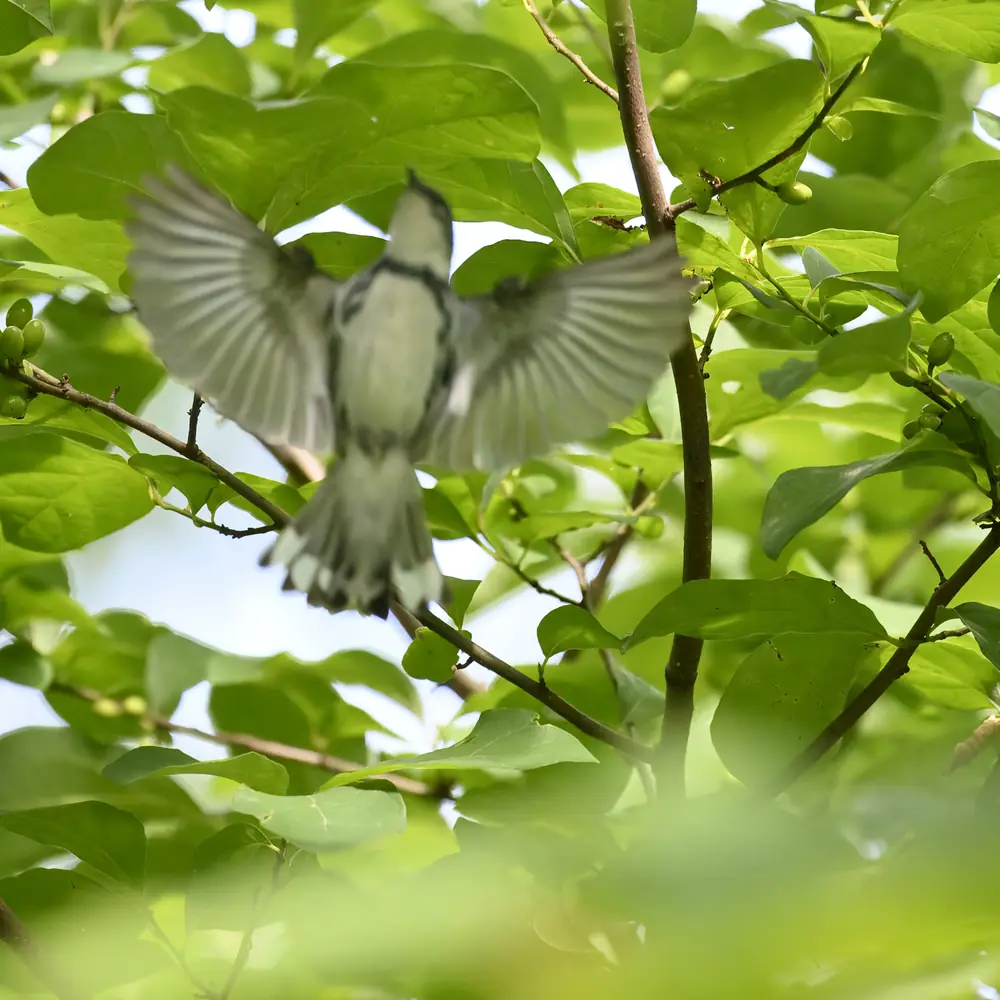
Cerulean warbler
Males arrive near the middle of May, according to Audubon · Tall, mature forest in river valleys and uplands
This small sky-blue warbler lives in the tops of big trees, which is why it is heard far more often than seen. Audubon describes the species as strongly declining in recent surveys and rates it Vulnerable, with cowbird parasitism of nests in small forest patches and loss of tropical wintering habitat among the pressures. The state wildlife department publishes a habitat guide for it and cites the cerulean warbler among the songbirds it manages for. If you hear one, stand still and look straight up into the canopy.
-
Kentucky warbler
Singing through the nesting season · Shaded ravines, bottomlands and thickets with dense, humid cover
The bird that shares the state’s name spends its time on or near the ground, flipping dead leaves to find insects. Audubon says males sing persistently in the breeding season, as often as once every 12 seconds, so a ravine with a ringing, rolling song is a good place to stand still. The Clarks River National Wildlife Refuge in western Kentucky uses a Kentucky warbler to illustrate its bottomland forest, and runs a banding study of breeding and migrating songbirds.
-
Wood thrush and scarlet tanager
On territory and nesting through May and June · Damp deciduous woods; tall oaks for the tanager
The wood thrush sings flute-like phrases from the understory and is listed Near Threatened, with Audubon pointing to forest fragmentation and cowbird parasitism. The scarlet tanager forages among leaves high in oaks and builds its cup nest 20 to 30 feet up on a horizontal branch. Audubon notes that many of each cross the Gulf of Mexico on their way north.
-
Evening voices: nightjars
Dusk and dawn · Rural clearings and open forest edges
Kentucky has three nightjars: the chuck-will’s-widow, the common nighthawk and the whip-poor-will. The department says their numbers may be falling but that little data exists, and it points volunteers to the Nightjar Survey Network. A porch at dusk away from town lights is the easiest way to listen.
Cloudy, rainy nights can drop migrants out of the sky in unusual numbers, and BirdCast’s Turn Lights Out page asks people to switch off unneeded lights and shield windows during migration. Write each new species into your field journal; the clouds page explains how to read the weather that moves them.
Are bison calves born in Kentucky in May, and what should I do if I find a fawn?
Late spring is when Kentucky’s large mammals have their young, and the best advice for people is a simple one: look, enjoy, and leave them be.
-
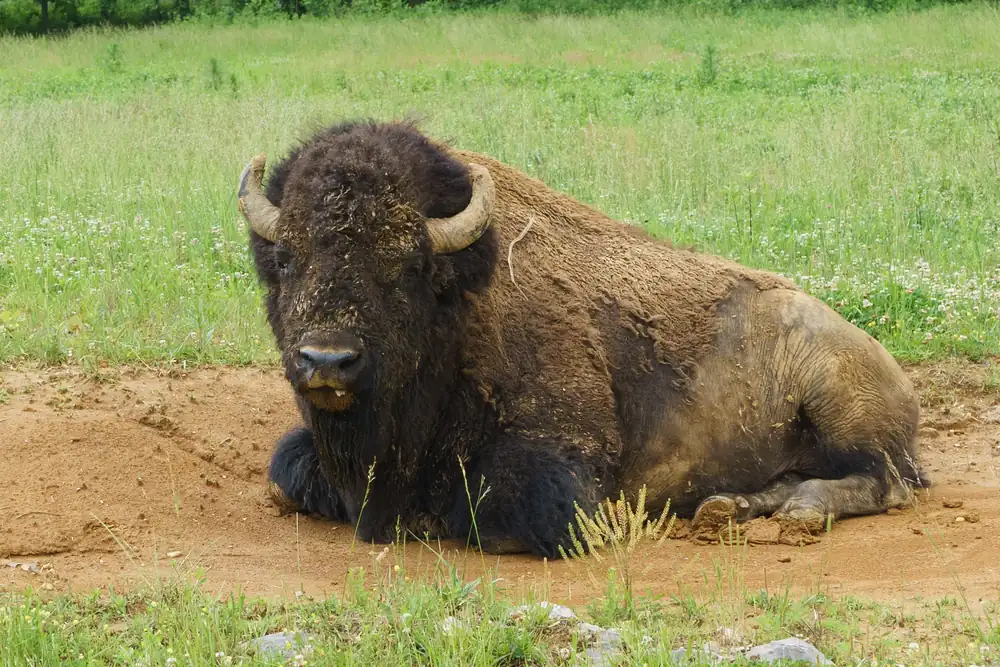
Bison calving at Land Between the Lakes
May, per the Forest Service guide · Elk & Bison Prairie and the South Bison Range, Land Between the Lakes National Recreation Area
The Land Between the Lakes wildlife viewing guide names May as the bison calving season at both of the Land Between the Lakes bison areas. The Elk & Bison Prairie is open to enclosed vehicles only; the guide suggests going an hour before dusk or an hour after dawn and avoiding the heat of midday, and says elk are best seen in the fall rut, so May is a bison month. Stay inside your vehicle and let the animals set the distance. For hours and current conditions, call 800-525-7077.
-
The restored elk of eastern Kentucky
Year-round; calves arrive in late spring · The 16-county elk restoration zone of eastern Kentucky
Between 1997 and 2002, 1,541 elk were released in Kentucky’s restoration zone, which now takes in 16 counties and more than 4.1 million acres, according to the Department of Fish and Wildlife Resources. We could not find a department page with a calving date or a current herd count, so check with the department or the Elk Management Plan before planning a trip. Whatever the season, watch elk from your vehicle or a good distance.
-
White-tailed deer fawns
Late spring and early summer · Fields, lawns and woodland edges
A fawn alone in tall grass is almost certainly not abandoned. The department says fawns lie hidden in fields for roughly the first two weeks while the doe is away feeding, and it asks people to keep children and pets back and not to touch them. If you mow, flag the spot or wait. Contact a permitted rehabilitator only if the mother is dead nearby or the fawn is visibly hurt. Removing young wildlife from the wild is illegal under 301 KAR 2:081, and the same advice covers lone baby rabbits and feathered fledglings hopping on the ground.
Sick or dead wildlife can be reported by phone at 1-800-858-1549, weekdays 8 a.m. to 4:30 p.m. Eastern.
When do bats have their pups in Kentucky, and what should I do if I find one?
Kentucky’s bats leave the caves where many of them spend the winter, and by May females are gathering into maternity colonies. The department reports 16 species documented in the state, 14 of them residents, three federally endangered (Virginia big-eared, Indiana and gray bats) and the northern long-eared bat federally threatened.
-
Pups in the roost
Born in May and June; colonies with flightless young are present from mid-May to mid-August · Caves, loose tree bark, and buildings such as attics, shutters and gutters
Each female bears one to four pups, per the department. Because the young cannot fly, the department says people generally cannot exclude a colony from a building until August 15. Mammoth Cave’s own bat page adds that most of its species use the cave mainly in winter and switch to trees or structures in summer, that gray bats are the only species there that use caves year-round, and that females favor high-domed maternity caves.
-
White-nose syndrome
A continuing concern · Caves statewide
The fungal disease was first confirmed in Kentucky in 2011 and first detected at Mammoth Cave in 2012; the National Park Service says some species have seen mortality above 90 percent there. Cave tours at the park ask visitors to clean their shoes on a biosecurity mat when leaving.
-
A bat on the ground
Any time · Porches, sidewalks and yards
The department’s steps are to keep children and pets away, never handle the bat, cover an uninjured one with a shoebox-sized container, slide cardboard underneath and set it on a tree, and report it if it is still there after 24 hours. Injured or sick bats go to a licensed rehabilitator or its online Report a Bat form.
When do fireflies appear in Kentucky?
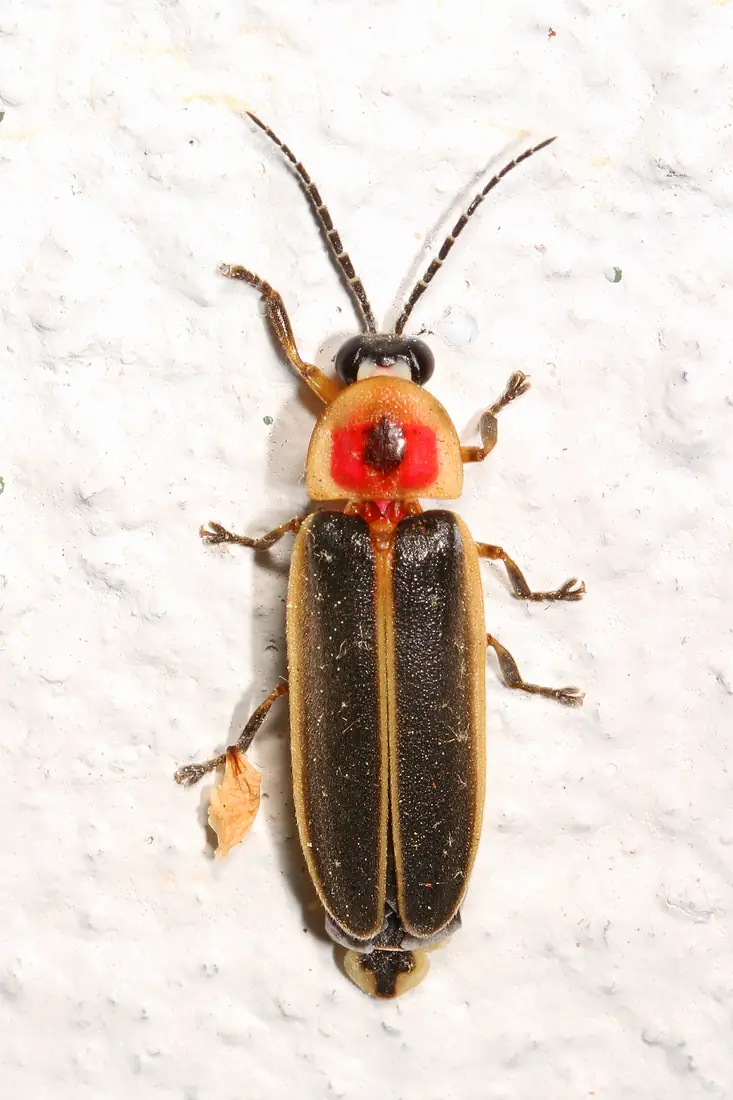
Fireflies start to appear early: Firefly.org says they begin showing “as early as April and May” in the United States, and the common Big Dipper firefly (Photinus pyralis) is the one most people will see rising from lawns and fields at dusk. North America has an estimated 270 species, and many do not flash at all. We did not find a Kentucky source that dates the first flashes, so treat May as a time to start watching and expect the real peak later.
-
A firefly evening
The hour after sunset on warm, still nights · Meadow edges, lawns and creek bottoms with tall grass
Firefly.org names four things fireflies need: undisturbed cover, a variety of plants, little light pollution and few pesticides. Turning off porch lights helps, as Xerces also advises. Xerces cites IUCN assessments suggesting a third of assessed North American firefly species could face extinction, with habitat loss, light pollution and pesticides among the threats. You can add your sightings to iNaturalist and the firefly sightings page at Firefly.org.
A first-firefly date is a good entry for the Naturalist’s Field Journal.
What is blooming in Kentucky in May, and what has already finished?
By May the woods have leafed out, and the story moves from the forest floor to the canopy and the meadows. The Kentucky Native Plant Society explains that the spring ephemerals flower and seed before summer shade arrives, each blooming for just a few weeks before its leaves wither and it goes dormant. Land Between the Lakes puts its spring ephemeral peak at April 1 to 15, and its summer peak around July 4, so May sits in between.
-
What to look for under the new canopy
May, with the timing varying by elevation and year · Wooded slopes in state parks, Mammoth Cave and Land Between the Lakes
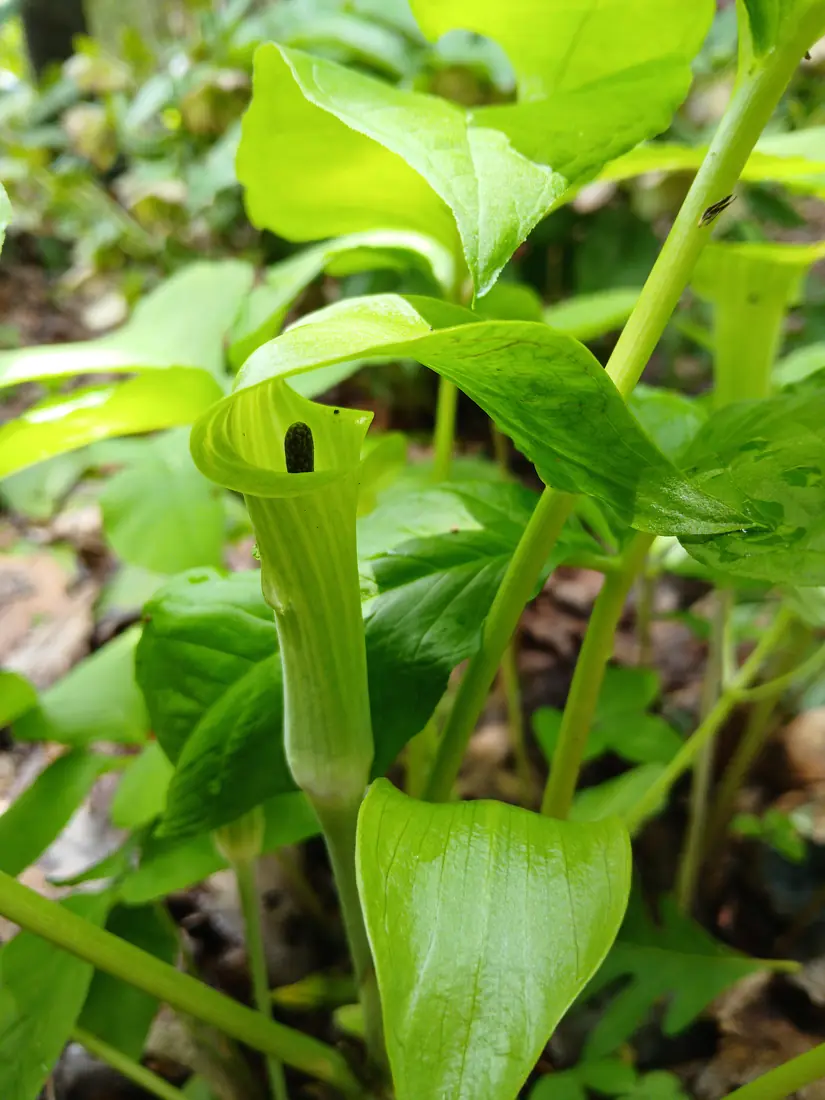
Mayapple and jack-in-the-pulpit are on the society’s list of native ephemerals, though it gives no bloom date for either. Prairie trillium, which it describes as blooming mid to late spring, is one to look for early in the month. The society holds its 2027 Wildflower Weekend at Pennyrile Forest State Resort Park on April 16 to 18, which means a May walk is the quieter sequel. Mammoth Cave’s wildflower page covers a season from early March to October and names prairie coneflowers, pink blazing stars and passionflower as the summer bloomers to wait for.
-
Milkweed and monarchs
All growing season · Sunny gardens and field edges
The department’s Monarch Conservation Plan aims to increase the quantity and quality of monarch habitat statewide and links a Monarch Waystation planting brochure for home gardens. Native milkweed is the plant to ask for.
What can you catch or hunt in Kentucky in May?
The seasons below come from the department’s published seasons planner, which lists 2026 dates and no 2027 dates for May. Treat them as the usual pattern and check the department’s Season Dates lookup before you go.
- Spring turkey. In 2026 the general season ran April 18 to May 10; no 2027 dates had been published when we looked.
- Gigging and snagging rough fish. This ran February 1 to May 10 in 2026.
- Spring squirrel. It ran May 16 to June 19 in 2026.
- Bullfrog. The planner lists noon on May 15 through October 31 and shows no year, under its 2026-27 heading.
- Night coyote hunting with lights. It ran May 16 to June 30 in 2026; daytime coyote hunting is open year-round.
- Trout and other fishing. Designated trout streams are open year-round, and the catch-and-release, artificial-lure-only rule applies only from October 1 to March 31. Traditional pole-and-line fishing is open year-round.
-
Bluegill and channel catfish
Warm-water fishing builds through late spring · Ponds, reservoirs and rivers statewide
The department calls the bluegill common and abundant in nearly every water body except polluted or high-gradient headwater streams, with most 6 to 11 inches. The channel catfish is common in medium streams to large rivers and is routinely stocked in ponds and reservoirs, typically 12 to 32 inches. For crappie, a department piece points anglers to creek mouths and backwaters on the Kentucky and Ohio rivers; check its fishing forecasts for May conditions.
-
White bass runs
Spring; the page gives no month · Salt, Dix and Big South Fork of the Cumberland rivers
The department says spring spawning runs are common in some rivers, with fish gathering over rocky bottoms in flowing water.
When is the last spring freeze in Kentucky?
By May the freeze danger is nearly over. The median last-freeze date in the table runs from March 31 (Louisville) to April 18 (Covington). The “nine years in ten” column reaches into May at only two stations, May 1 at Lexington and May 7 at Covington. Gardeners who keep to the “nine years in ten” date for their own station are rarely caught, but in a cold year frost can still come in the first days of May at the northern edge and at higher ground.
| Station | One year in ten | Median | Nine years in ten |
|---|---|---|---|
| Paducah | Mar 19 | Apr 5 | Apr 21 |
| Bowling Green | Mar 20 | Apr 5 | Apr 21 |
| Louisville | Mar 14 | Mar 31 | Apr 16 |
| Lexington | Mar 30 | Apr 13 | May 1 |
| Covington | Apr 3 | Apr 18 | May 7 |
| Somerset | Mar 21 | Apr 5 | Apr 25 |
| Jackson | Mar 21 | Apr 6 | Apr 25 |
These stations are only samples; the Kentucky frost page has dates for your own town. Our earlier pages for April and March cover the stretch before.
How much daylight does Kentucky gain in May?
Daylight keeps lengthening through May, by about 48 to 51 minutes over the month in the table below, or roughly a minute and a half to a minute and three-quarters a day. The pace has slowed from April as the June solstice nears. All of Kentucky is on daylight time all month, and the western third of the state is on Central time, so the same sunrise appears an hour earlier on a Paducah clock than on a Lexington clock. Check the daylight page for your own town.
| City | May 1 | May 31 | Gained | Per day |
|---|---|---|---|---|
| Paducah | 13 h 43 m | 14 h 31 m | 48 min | 1.6 min |
| Bowling Green | 13 h 43 m | 14 h 31 m | 48 min | 1.6 min |
| Louisville | 13 h 47 m | 14 h 38 m | 51 min | 1.7 min |
| Lexington | 13 h 47 m | 14 h 36 m | 49 min | 1.6 min |
| Covington | 13 h 51 m | 14 h 42 m | 51 min | 1.7 min |
| Ashland | 13 h 48 m | 14 h 39 m | 51 min | 1.7 min |
| Corbin | 13 h 43 m | 14 h 31 m | 48 min | 1.6 min |
What is May weather like in Kentucky, and when do the worst storms strike?
May normals are warm by day and mild at night: afternoon highs run from 74.5 °F at the Northern Kentucky airport to 79.1 °F at Paducah, and the seven stations below average between 4.67 and 5.44 inches of rain. Snow is gone from the normals. Rain is the main hazard, and so are storms.
Tornadoes. The Weather Service in Louisville lists one May event among the worst tornadoes in its forecast area: an F-4 that began near dusk southwest of Tompkinsville on May 9, 1933, and ran about 60 miles northeast into Russell County, killing 18 people at Tompkinsville and 14 at Russell Springs. More recently, the Kentucky Climate Center records a long-track EF-4 tornado that cut a 60-mile path through Russell, Pulaski and Laurel counties late on May 16, 2025, with the heaviest damage on the south side of London. It killed 19 people, with winds up to 170 mph, and was the strongest tornado in the state’s eastern mountains since April 3, 1974. The same outbreak brought an 82 mph gust at Louisville’s airport.
Floods. Weather Service notes on the April 2025 flood list May 2 to 4, 2010 as the previous four-day rainfall record at Bowling Green, and May 3, 2010 as the previous Kentucky River crest record at Camp Nelson; both were broken by the April 2025 flood. Rain heavy enough to flood can arrive at any time in the month.
The Climate Prediction Center posts new seasonal maps each month near mid-month at this address; we leave their contents to the agency. Our weather page covers day-to-day watching.
| Station | Average high | Average low | Precipitation | Snowfall |
|---|---|---|---|---|
| Paducah | 79.1 °F | 57.7 °F | 4.87 in | 0.0 in |
| Bowling Green airport | 78.7 °F | 57.2 °F | 5.03 in | 0.0 in |
| Louisville airport | 77.8 °F | 58.7 °F | 5.18 in | 0.0 in |
| Lexington airport | 75.8 °F | 55.0 °F | 5.44 in | 0.0 in |
| Northern Kentucky airport | 74.5 °F | 53.7 °F | 4.67 in | 0.0 in |
| London-Corbin airport | 76.7 °F | 54.1 °F | 5.04 in | n/a |
| Jackson | 75.7 °F | 55.6 °F | 5.17 in | 0.0 in |
What can you see in Kentucky’s night sky in May?
Clocks stay on daylight time all month. The state straddles Eastern (EDT) and Central (CDT) time, so each time here appears in both. Nights are short by now, so darkness comes late.
-
The Eta Aquariids at the new moon
Best mornings May 5, 6 and 7, in the last hours before dawn · A dark site with a clear eastern horizon
The shower has dark skies this year, because new moon comes on May 6 and only a 1 to 2 percent crescent is up. The American Meteor Society expects roughly 10 to 30 an hour in the pre-dawn darkness, a rate that applies from the equator northward; Aquarius, the shower’s radiant, comes up barely one to two hours before sunrise this far north, so expect the low end. Give your eyes 20 minutes to adjust.
-
The Flower Moon, a seasonal Blue Moon
Full Thursday, May 20, at 6:59 a.m. EDT (5:59 a.m. CDT) · Anywhere with an open eastern horizon
Full arrives around dawn on May 20, which makes the evening of Wednesday, May 19 the best one for watching it climb above the horizon; the evenings flanking it are also bright. This is the Flower Moon. The older seasonal rule makes it a Blue Moon in some almanacs, since this spring (March 20 to June 21) contains four full moons and May’s is the third. By the modern rule of two in one calendar month there is no Blue Moon this year.
-
A moonbow at Cumberland Falls
The nights around the full moon; look to the park for the schedule · Cumberland Falls State Resort Park near Corbin
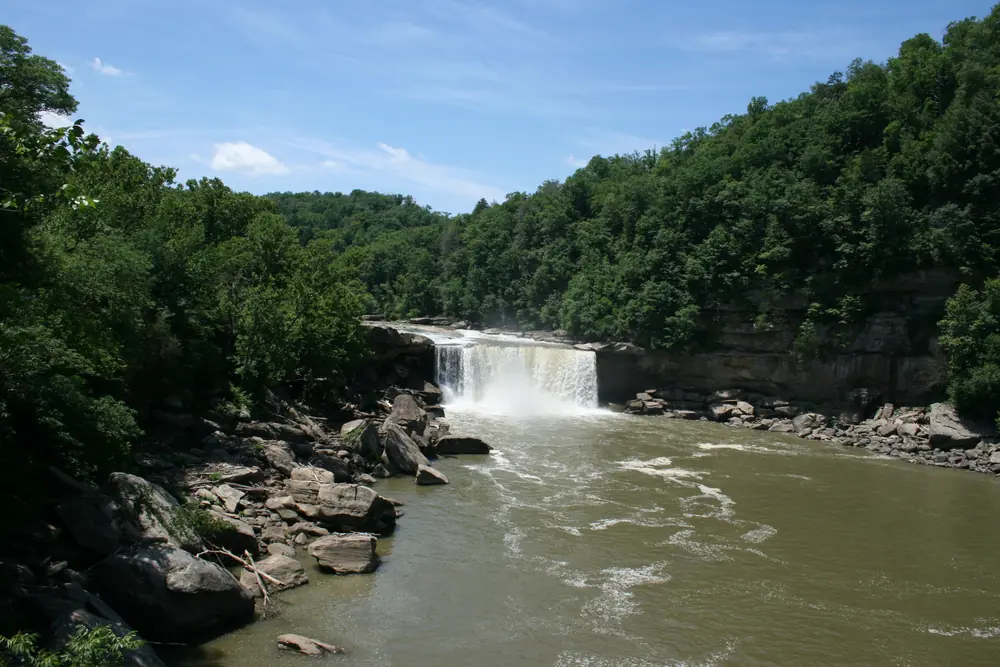
Kentucky Tourism says the moonbow can be viewed a couple of nights on either side of the full moon, on a clear night, for about two hours once the Moon clears the hillside behind the viewing spots. The best places are the overlook at the falls’ edge and the first lower deck, and the mist is thicker when more water is going over. Choose another night if haze, fog or rain is in the forecast, the park desk (606-528-4121) and parks.ky.gov can give you viewing times, and keep phone screens and flashlights off so others can see.
-
Mercury in the evening
Greatest elongation on Friday, May 28; look from about May 12 to early June · Low in the west-northwest, 45 to 90 minutes after sunset
This is the best evening showing of Mercury this year for the northern United States. Our calculation for the middle of the country has Mercury setting roughly 97 minutes behind the Sun on May 15, then 105 minutes behind on June 1, so a flat western horizon helps. It is at its farthest from the Sun at 9:14 a.m. EDT on May 28, which makes the evenings of May 27 and 28 about the best.
-
Jupiter, Mars and a quarter Moon
Jupiter and the Moon in the evening of May 12; Mars and the Moon on May 13 · The southern and western sky after dark
Jupiter and Mars are both still in the evening sky, in Leo, setting in the small hours of the morning by early May. Computed positions, not a published almanac entry, put the first-quarter Moon about 1.2 degrees from Jupiter on the evening of May 12 and roughly three degrees from Mars the next night. Mars has dimmed a great deal since winter.
-
Venus and Saturn before dawn
Around May 6 to 8 · The east, very low, about half an hour before sunrise
Computed figures put the two planets less than a degree apart, 0.6 degrees on May 7, with both only a few degrees above the horizon in the half hour before sunrise. You need a clear flat horizon and binoculars, and the sight is a modest one. Venus is the brighter of the pair by far.
-
The Milky Way before dawn
May 1 to 14 and May 25 to 31, by our calculation for 40 degrees north · A dark site with a clear southeast to south horizon
The bright core returns in the dark hours before dawn, up to nearly four hours on the best mornings, and it needs a moonless sky. Mammoth Cave National Park has been certified an International Dark Sky Park since 2021, after it reviewed and retrofitted more than 700 outdoor light fixtures, and offers a Junior Ranger Night Explorer program.
| Phase | Date | Time |
|---|---|---|
| New moon | Thursday, May 6 | 6:58 a.m. EDT; 5:58 a.m. CDT |
| First quarter | Thursday, May 13 (Wednesday, May 12 in Central time) | 12:44 a.m. EDT; 11:44 p.m. CDT |
| Full moon, the Flower Moon | Thursday, May 20 | 6:59 a.m. EDT; 5:59 a.m. CDT |
| Last quarter | Friday, May 28 | 9:58 a.m. EDT; 8:58 a.m. CDT |
Our moon phases page has the full calendar.
What are good May nature outings for Kentucky families?
- City Nature Challenge. For 2027 the organizers set April 30 to May 3 for photographing or recording wild plants and animals, May 4 to 16 for naming them, and May 20 for results. We could not confirm which Kentucky cities take part, so look up the local organizer.
- World Migratory Bird Day. It is observed twice a year, and in 2026 the spring date was May 9. No 2027 dates were listed on its site when we looked, so check there.
- A bird walk with BirdCast. Look at its forecast the evening before, then take a morning walk in the nearest wooded park and note each warbler you hear.
- NestWatch. The Cornell Lab project lets families record nests following its code of conduct.
- A firefly count. Count flashes in your yard for ten minutes at dusk and add what you see to iNaturalist.
- Bison at Land Between the Lakes. Go in the evening, stay in your car and look for calves.
- Mammoth Cave. The park does not publish its full tour schedule until one to three months ahead, so call 270-758-2180. Its Wildflower Day is in April.
- Memorial Day, May 31. The weekend is a good one to take a first hike of summer, with repellent packed.
Our nature pages list the other months.
Safety notes for May in Kentucky
- Spring turkey season. Last year the general season ran through May 10, and no 2027 dates had been published when we looked, so use the department’s turkey page. Orange clothing is not mandatory for spring turkey hunters, so if you walk wooded trails at first light, dress brightly.
- Ticks. University of Kentucky entomologists list lone star and American dog tick adults and nymphs as active March through September, blacklegged nymphs May through August and blacklegged adults October through June, so May is busy for all three. They recommend DEET at 20 to 30 percent, permethrin on boots and clothes, pants tucked in, and a body check every two or three hours.
- Severe weather. May tornadoes have killed people in Kentucky before. Know your safest room, and keep alerts on at night.
- Floods. The Weather Service says six inches of fast water can knock over an adult, a foot can carry away most cars and two feet can carry away SUVs and trucks, and the CDC says over half of flood drownings involve driving into hazardous water. Turn around.
- Snakes. Kentucky has 56 reptile species, including 32 snakes. Leave any snake alone.
- Bears. Cumberland Gap National Historical Park lists black bears among the animals visitors may see. Give them room and never feed them.
- Young animals. Do not move fawns, fledglings or other young, and do not pick up a bat.
- Caves. Follow the posted biosecurity rules, and stay out of closed caves that shelter bats.
Sources (58)
- KDFWR: Spring turkey hunting
- KDFWR: Kentucky hunting and fishing seasons planner, 2026–27
- World Migratory Bird Day
- Kentucky Tourism: The moon, the mist and look at this (Cumberland Falls moonbow)
- KDFWR: Bats of Kentucky
- National Park Service: Bats at Mammoth Cave National Park
- KDFWR: Bluegill
- KDFWR: Channel catfish
- National Park Service: Birds at Mammoth Cave National Park
- National Park Service: Big South Fork National River and Recreation Area
- National Park Service: Cumberland Gap National Historical Park
- Land Between the Lakes: Wildlife viewing guide
- Kentucky Native Plant Society: Wildflower Weekend 2027
- Audubon: Cerulean warbler field guide
- BirdCast
- Audubon: Kentucky warbler field guide
- KDFWR: Injured and orphaned wildlife
- Audubon: Scarlet tanager field guide
- Audubon: Wood thrush field guide
- National Park Service: Nature at Mammoth Cave National Park
- National Park Service: Wildflowers at Mammoth Cave National Park
- NWS Louisville: Ten worst tornadoes in the Louisville forecast area
- Kentucky Climate Center: 2025 recap
- Journey North: Hummingbirds
- KDFWR: Nongame wildlife
- University of Kentucky Entomology: Tick seasonality in Kentucky
- National Park Service: Wildflower Day at Mammoth Cave National Park
- KDFWR: Monarch butterflies
- KDFWR: Reptiles of Kentucky
- KDFWR: Mammals of Kentucky
- KDFWR: Birds in Kentucky
- Firefly.org
- Xerces Society: Fireflies
- National Park Service: Mammoth Cave calendar
- KDFWR: Elk program history
- KDFWR: Elk hunting information
- NWS Louisville: Historic rainfall and flooding, April 2–6, 2025
- Kentucky Division of Forestry: Wildland fire management
- Kentucky Native Plant Society: Native spring ephemerals of Kentucky
- KDFWR, Kentucky Afield: Crappie time is here
- KDFWR: White bass
- University of Kentucky Agriculture and Natural Resources: Tree of the Week
- Bernheim Arboretum and Research Forest: Brainard Palmer-Ball’s successful day of birding
- U.S. Fish and Wildlife Service: Ohio River Islands National Wildlife Refuge
- U.S. Fish and Wildlife Service: Clarks River National Wildlife Refuge
- National Park Service: Nature at Cumberland Gap
- National Park Service: Animals of Cumberland Gap
- National Park Service: Plants of Cumberland Gap
- National Weather Service: Turn around, don’t drown
- Cornell Lab of Ornithology: NestWatch
- City Nature Challenge
- NOAA Climate Prediction Center: 90-day outlooks
- National Park Service: Mammoth Cave International Dark Sky Park
- NOAA NCEI: 1991–2020 monthly normals for seven Kentucky stations
- U.S. Naval Observatory: Moon phases, 2027
- SeaSky: Astronomy calendar 2027
- American Meteor Society: Meteor shower calendar
- Photos via Wikimedia Commons; licenses and photographers are credited under each picture
