What to look for in nature in Kentucky this October
Kentucky’s October has a few things nobody else has. On the clear nights around the Hunter’s Moon, a pale arc of moonlight hangs in the spray below Cumberland Falls. Bull elk still bugle on the old strip mines of the eastern coalfields, a herd that did not exist here thirty years ago. Bats file back into the caves of Carter County and Mammoth Cave for the winter, and the sandstone arches of the Red River Gorge light up late in the month. Valley farms can see the first freeze by mid-October, while Louisville often waits until November. Below: what to watch, where, and on which dates.
Start here

- Moonbow nights at Cumberland Falls. Kentucky State Parks lists five October moonbow nights, October 24 through 28, beginning with an 8:00–10:00 p.m. Eastern window on the 24th and ending with 10:30 p.m.–12:30 a.m. on the 28th. It needs a clear sky and a moon near full; the 26th, just after the Hunter’s Moon turns full, is the night the park sets in bold.
- Elk in the coalfields, bison at LBL. The elk rut runs from early September into late October, so the first half of the month is still good for bugling at dawn and dusk on the reclaimed mines of eastern Kentucky. In the far west, the 700-acre Elk & Bison Prairie at Land Between the Lakes is open every day from sunrise to sunset for a 3.5-mile drive-through loop.
- Jupiter slips behind the moon on October 6. Early on Tuesday, October 6, well before sunrise, the crescent moon covers Jupiter. From Louisville, Jupiter vanishes at about 4:18 a.m. Eastern and comes back out about 5:18 a.m.; in the Central-time west it happens an hour earlier by the clock and very low in the east, so find a flat horizon.
For the Naturalist’s Field Journal: an elk morning or a moonbow night belongs on the dusk and dawn watch, one sugar maple or sassafras on your street on the tree-through-the-seasons page, a pawpaw seed and a witch hazel capsule on seeds, pods and cones, and the last warm evenings on the cricket thermometer. Note the first frost on the windshield, too.
Regions used below: Western Kentucky and the Purchase; South Central and Cave Country; Louisville and the Ohio River; The Bluegrass and Northern Kentucky; Eastern Kentucky and the Appalachian coalfields.
When can you see the moonbow at Cumberland Falls in October?
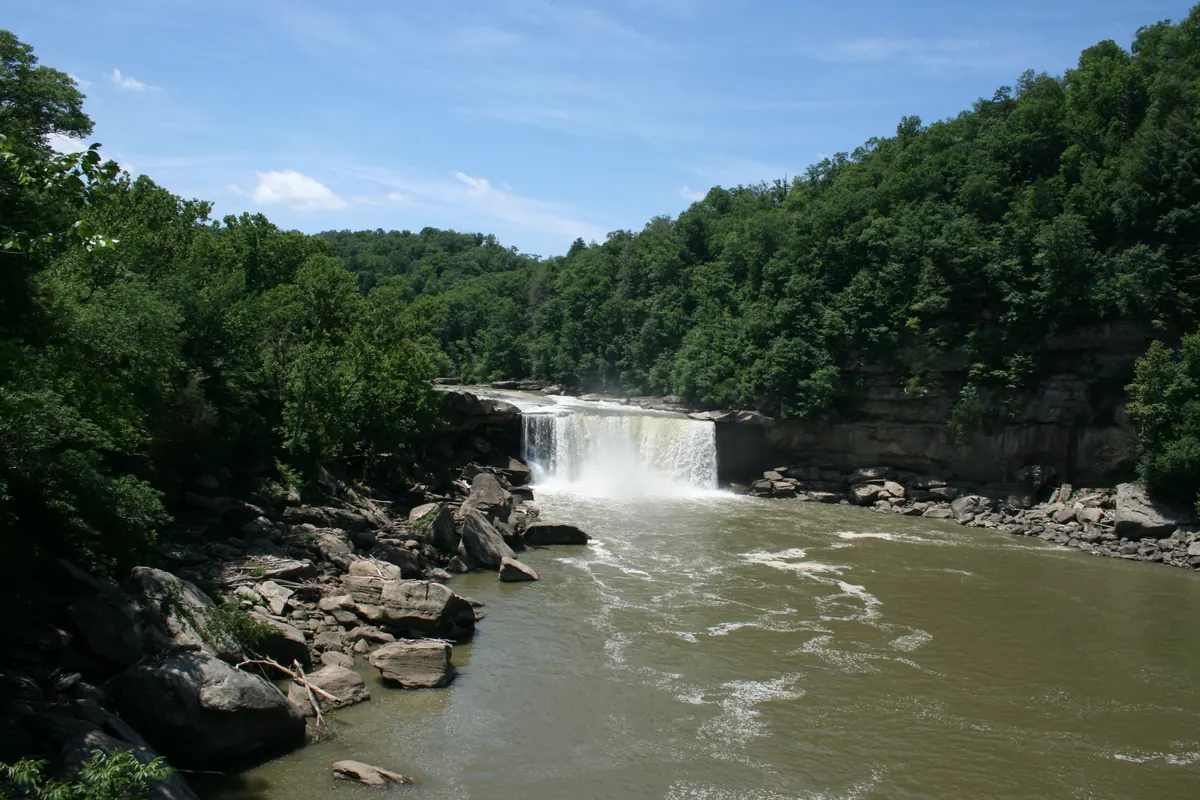
Cumberland Falls, on the Cumberland River between Corbin and Whitley City, drops about 60 feet over a sandstone ledge roughly 125 feet wide. On clear nights near full moon the mist below it catches moonlight the way a garden hose catches sun, and a faint arc appears: a lunar rainbow, or moonbow. The park calls it a phenomenon found nowhere else in the Western Hemisphere; whatever the global tally, no place in the country shows one more dependably, and the park publishes a schedule every year.
The October windows are below. The park says they are approximate and keyed to your evening of arrival. Each lasts about two hours and slides later every night as the moon rises later; the bow forms opposite the moon, downstream of the falls, once the moon has climbed over the gorge wall behind you.
| Night of | Viewing window | Moon |
|---|---|---|
| Saturday, Oct 24 | 8:00–10:00 p.m. | Waxing gibbous, two nights before full |
| Sunday, Oct 25 | 8:30–10:30 p.m. | Looks full |
| Monday, Oct 26 | 9:00–11:00 p.m. | Full early that morning; set in bold on the park’s schedule |
| Tuesday, Oct 27 | 9:30–11:30 p.m. | Just past full |
| Wednesday, Oct 28 | 10:30 p.m.–12:30 a.m. | Waning gibbous |
To the eye a moonbow usually looks white or silver, because color vision fades in dim light; a camera on a tripod, exposing for a few seconds, brings out the red and violet. Clouds end the show, so check our cloud-cover map the afternoon before you drive. Bring a headlamp and a layer for the spray, and expect crowds on the weekend nights.
When do the leaves change in Kentucky?
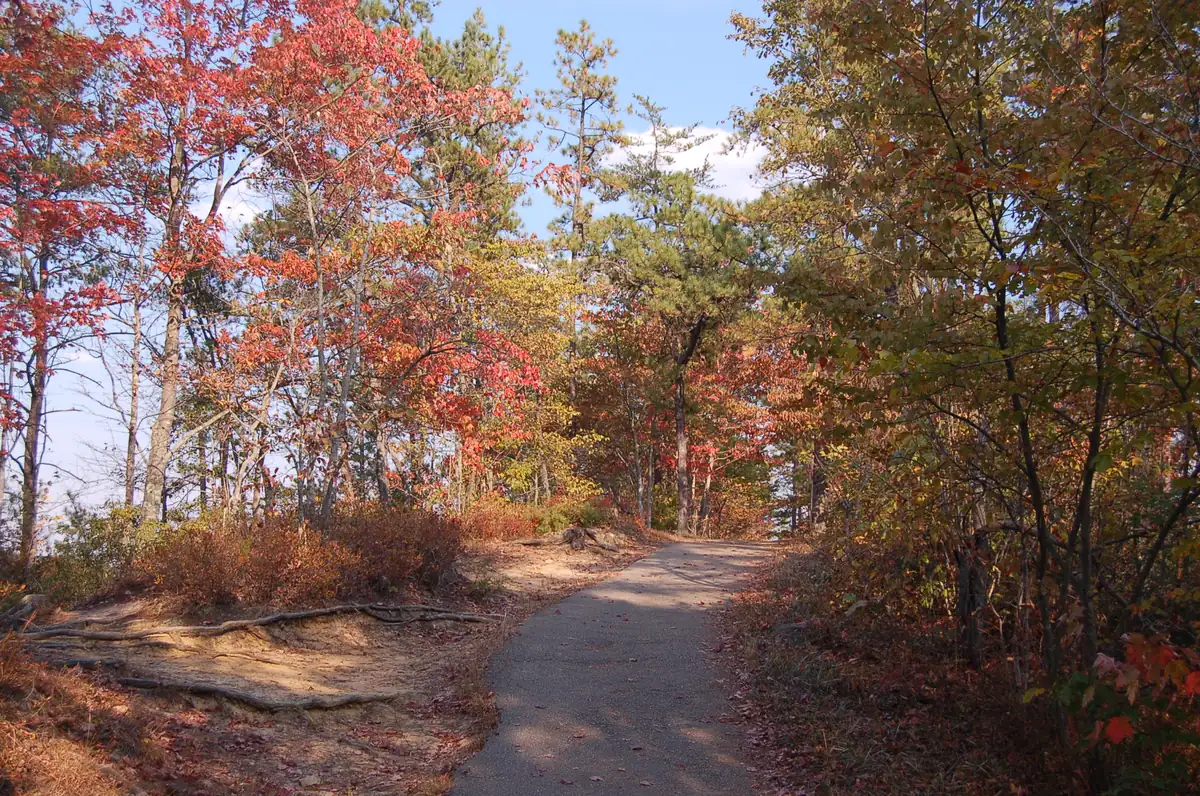
Color comes first to the high ground of the east and last to the river bottoms of the west. In the Red River Gorge, the local tourism commission says the ridgetops begin to turn in the first two weeks of October and the valleys and lower trails usually peak in the last week. The Bluegrass, the Knobs south of Louisville and the Pennyroyal generally follow a week or so behind, and the bottomland forests of the Purchase often stay green into November.
Kentucky starts this fall mostly out of drought. On the U.S. Drought Monitor map of September 22, about 75 percent of the state showed no dryness, about 25 percent was abnormally dry, and only about 3.5 percent had reached moderate drought. A dry spell can brown leaves early and leave color patchy, so watch whether that small dry area spreads.
-
Red River Gorge and Natural Bridge
Ridges from early October; valleys peak in the last week of the month · Daniel Boone National Forest, Powell, Wolfe and Menifee counties
Sky Bridge, Chimney Top and the Natural Bridge overlooks give the long views. Sugar and red maples, sassafras, sourwood and black gum make the reds and oranges; hickories and yellow-poplar go gold; the oaks close the season in russet into November.
-
Bernheim Forest and the Knobs
Late October; ColorFest is November 7 and 8 · Bernheim Arboretum and Research Forest, Clermont, south of Louisville
Volunteer naturalists lead a fire tower tour and hike on Wednesday, October 21, from 10 a.m. to noon, with a climb into the old tower for the view over the Knobs. Bernheim holds its ColorFest the first weekend of November, a fair guide to when the Louisville area peaks.
Where can you see elk and bison in Kentucky in October?
Elk vanished from Kentucky in the 1800s. Between 1997 and 2002 the Kentucky Department of Fish and Wildlife Resources released 1,541 of them, brought from six western states, into a restoration zone that now covers 16 eastern counties and more than 4.1 million acres, and the department counts it among the most successful wildlife restorations in the East. Much of the best elk country is reclaimed surface mine: grass on the old benches with forest all around.
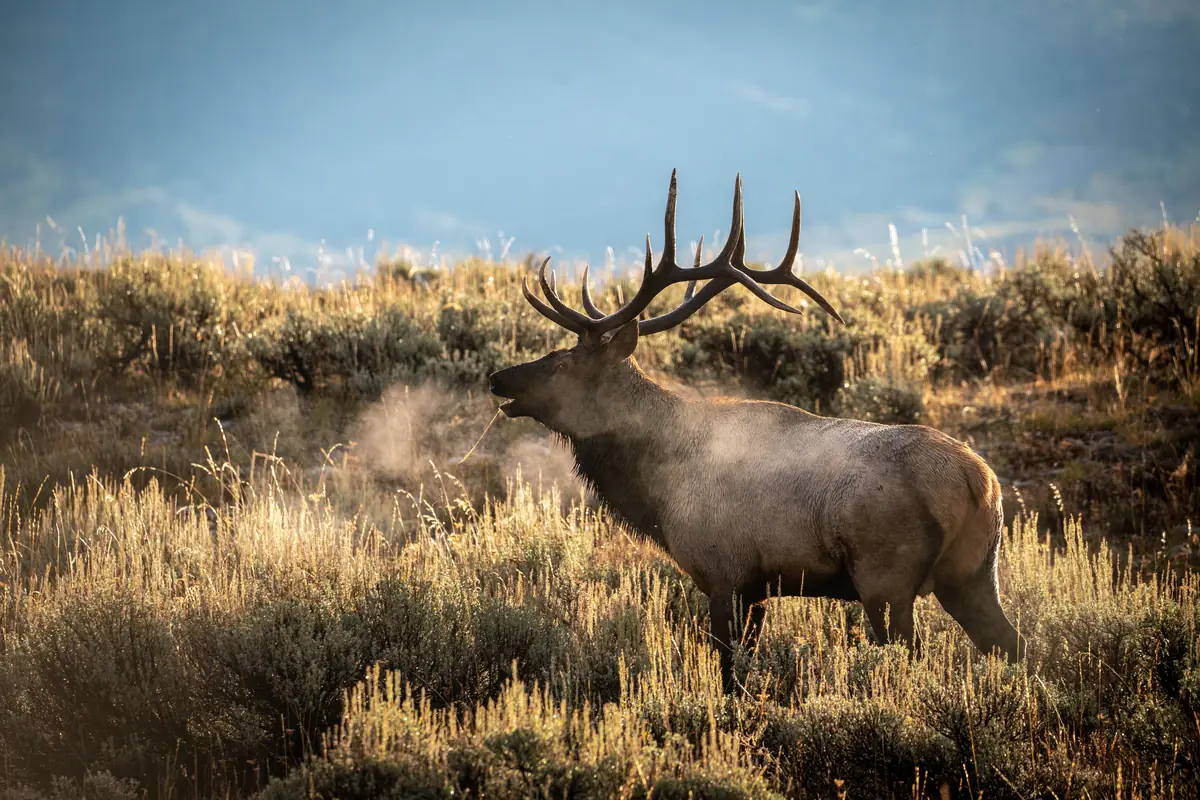
In the eastern herds the rut lasts from early September to late October, by the National Park Service’s account for the Smokies. Bulls round up cows, bugle at rivals and spar, and a bugle can carry over a mile on a still morning. Look in the first and last hour of daylight, or on an overcast day.
-
Guided elk tours in the coalfields
Fall into winter; call for October dates · Jenny Wiley State Resort Park, Prestonsburg; Buckhorn Lake State Resort Park, Perry County
State resort parks in the elk zone have long run early-morning van trips to the reclaimed mines. Prestonsburg’s tourism office says Jenny Wiley’s tours run from September to early March, with reservations at (606) 889-1790. This season’s dates and prices were not posted when we checked, so call before planning a trip around one.
-
Watching elk on your own
Dawn and dusk, all month · Public land and roadsides in the 16-county elk zone
Pull fully off the road, stay by the car, and use binoculars; a rutting bull is unpredictable, and the Park Service’s 25-yard minimum in the Smokies is a sensible floor here too. Most mine land is private. Bull elk firearms season is open October 3 to 7, so wear a bright hat on public land that week.
-
The Elk & Bison Prairie at Land Between the Lakes
Open daily, sunrise to sunset · Golden Pond, Trigg County, Central time
In the far west, the Forest Service keeps a 700-acre fenced prairie of native grasses where elk and bison roam free, seen from a 3.5-mile paved loop you drive yourself. Go early or late, when the bison are grazing and the bluestem glows.
What birds and butterflies are moving through Kentucky in October?
October trades one set of birds for another. Most hummingbirds and chimney swifts are gone or going by early October, warblers thin out, and sparrows, kinglets and juncos from the northern forests settle into Kentucky’s fencerows for the winter. The big sandhill crane flocks are a winter story here: Barren River Lake’s crane-viewing weekend is set for January 29 to 31, 2027.
-
Sparrows, kinglets and the first juncos
Through October; juncos by late month · Brushy edges, weedy fields, fencerows statewide
White-throated sparrows whistle from the thickets, song and swamp sparrows work the wet edges, and both kinglets flick through the treetops. Dark-eyed juncos typically start turning up under feeders late in the month. A patch of goldenrod and asters left standing pulls in more sparrows than any feeder.
-
A Lake Nevin bird walk and the October Big Day
Saturday, October 10 (Big Day); Saturday, October 24, 8–11 a.m. (Bernheim) · Anywhere, with eBird; Bernheim Forest, Clermont
On Saturday, October 10, eBird’s October Big Day asks birders everywhere to log every species they see, from a window or a trail, and submit the list. On October 24, two longtime volunteer naturalists lead an easy bird walk around Bernheim’s Lake Nevin.
-
Monarchs: stragglers only
Main flight past by early October · Asters and goldenrod in sunny fields
Monarch Watch puts peak numbers at 39° N, the latitude of Covington, on September 14 to 26, and at 37° N, near Bowling Green and Paducah, on September 19 to October 1. After that you are seeing latecomers, feeding hard on New England aster before the next front pushes them south. Report them to Journey North.
Write the first junco and the last hummingbird, with dates, on your “birds I have seen” page; both dates drift from year to year.
When is the first frost and freeze in Kentucky?
In Kentucky the first freeze depends as much on where the thermometer sits as on latitude. On a clear, calm night cold air slides off the ridges and pools in the hollows, so a valley can freeze weeks before a ridgetop a few miles away. The station northwest of West Liberty, in the Licking River country, has a median first freeze of Oct 16; the Jackson airport, on a ridge above the North Fork of the Kentucky River, waits until Nov 1. Cities hold heat too: Louisville International Airport’s median, Nov 7, is the latest in the table.
Elsewhere the typical first 32 °F night falls in the last ten days of October: Oct 23 at Ashland, Oct 25 in Northern Kentucky and at London, Oct 28 at Lexington and Paducah, Oct 31 at Bowling Green. Frost on the grass can come a week or two sooner, on a still night with the porch thermometer in the mid-30s.
| Station | One year in ten | Median | Nine years in ten |
|---|---|---|---|
| Paducah (the Purchase) | Oct 15 | Oct 28 | Nov 10 |
| Bowling Green Warren County Airport | Oct 20 | Oct 31 | Nov 11 |
| Louisville International Airport | Oct 28 | Nov 7 | Nov 23 |
| Lexington Bluegrass Airport | Oct 16 | Oct 28 | Nov 8 |
| Cincinnati Northern Ky Airport (Boone County) | Oct 12 | Oct 25 | Nov 5 |
| Ashland (Ohio River, northeast) | Oct 11 | Oct 23 | Nov 3 |
| London Corbin Airport (Cumberland Plateau) | Oct 13 | Oct 25 | Nov 6 |
| Jackson (ridgetop airport, Breathitt County) | Oct 18 | Nov 1 | Nov 17 |
| W Liberty 3 NW (valley, Morgan County) | Oct 3 | Oct 16 | Oct 31 |
Every station in the state is on our Kentucky frost dates page; then adjust for your own ground, since a garden in a hollow freezes sooner and one on a slope or near a big lake later. Bring in the tender plants, pick the last tomatoes green, and log the first white roof.
How much daylight does Kentucky lose in October?
A little over an hour. From October 1 to 31, Paducah and Corbin each lose 68 minutes of daylight, Louisville and Lexington 70, and Covington, farthest north, 73. The clock tells a different story on each side of the time-zone line: Lexington’s sunrise moves from 7:34 to 8:03 a.m. Eastern, Bowling Green’s from 6:41 to 7:09 a.m. Central, and by the last week Louisville does not see the sun until after 8. Clocks fall back at 2 a.m. on November 1, a Sunday, and sunrise and sunset both jump an hour earlier.
| City | Oct 1 | Oct 31 | Lost | Per day |
|---|---|---|---|---|
| Paducah | 11 h 48 m | 10 h 40 m | 68 min | 2.3 min |
| Owensboro | 11 h 47 m | 10 h 38 m | 69 min | 2.3 min |
| Bowling Green | 11 h 48 m | 10 h 40 m | 68 min | 2.3 min |
| Louisville | 11 h 47 m | 10 h 37 m | 70 min | 2.3 min |
| Lexington | 11 h 47 m | 10 h 37 m | 70 min | 2.3 min |
| Covington | 11 h 46 m | 10 h 33 m | 73 min | 2.4 min |
| Ashland | 11 h 47 m | 10 h 36 m | 71 min | 2.4 min |
| Corbin | 11 h 48 m | 10 h 40 m | 68 min | 2.3 min |
Enter your town in our daylight calculator for its sunrise, sunset, twilight and weekly loss.
What is October weather like in Kentucky, and what might El Niño bring this winter?
October is mild and usually pleasant. By NOAA’s 1991–2020 normals, average highs run from about 67 °F at the Northern Kentucky airport to 72 °F at Bowling Green and Paducah, and average lows from about 45 °F at London to 50 °F at Louisville. Rain totals 3.29 inches at London, 3.66 at Lexington, 3.72 at Louisville and 3.99 at Paducah, mostly delivered by a few cold fronts, each followed by clear, cool mornings when fog fills the river valleys. Terrain matters more than latitude: Jackson’s ridgetop airport has a normal October low of 48.5 °F, three degrees milder than London’s, though it lies farther north.
The wild card is the Pacific. A strengthening El Niño sits behind every winter forecast this year: in mid-September NOAA put better than nine-in-ten odds on it growing very strong by winter, and three-in-four odds that its late-fall reading tops anything measured since 1950. The Weather Service office in Louisville says El Niño’s influence on the Ohio and Tennessee valleys is usually weak and matters most from late fall into spring. In the nine strongest El Niño winters since 1950, November-to-March temperatures over most of Kentucky came out near normal and precipitation leaned below normal, with better-than-usual odds of a very dry month between January and March. October itself hardly notices.
The winter outlook comes out in mid-October and the next El Niño update on October 8. Our weather page has this week’s local forecast.
What can you see in Kentucky’s night sky in October?
-
The moon covers Jupiter
Tuesday, October 6, before dawn · Low in the east; a flat horizon matters in the west
The crescent, about 18 percent lit, climbs out of the east in the small hours with Jupiter just beside it. Seen from Louisville, according to predictions from the International Occultation Timing Association, the planet disappears behind the moon’s bright edge at about 4:18 a.m. EDT, with the moon 10 degrees high, and reemerges at the dark edge around 5:18 a.m., the moon then 22 degrees up and dawn still two hours off. For the Central-time west, the Nashville and Memphis predictions put the disappearance near 3:16 a.m. CDT and the return near 4:15 to 4:17; at Paducah the moon rises only at 2:32 a.m., so it will be very low when Jupiter goes behind it.
-
The Hunter’s Moon
Evenings of Sunday, October 25 and Monday, October 26 · Look east around sunset
Western Kentucky gets the exact moment at 11:12 p.m. Central on the 25th; the Eastern-time part of the state at 12:12 a.m. on the 26th. Either way, both evenings show a round moon. Louisville sees it rise at 6:19 p.m. on the 25th, ahead of the 6:52 sunset, and at 6:53 p.m. on the 26th, just after sunset; Paducah’s moonrises are 5:33 and 6:08 p.m. Central. Ads may bill it as a supermoon, but this year’s Hunter’s Moon doesn’t qualify.
-
Orionid meteors
Before dawn on October 21 and 22 · A dark sky, looking anywhere overhead
Meteors of the Orionid stream, grit left behind by Halley’s Comet, turn up between October 2 and November 7, and rates top out in the predawn hours of October 21 and 22. The gibbous moon is up much of the night, so wait for it to set: about 3:00 a.m. EDT on the 21st and 4:04 a.m. on the 22nd in Louisville, 2:14 and 3:17 a.m. CDT in Paducah. That leaves a few dark hours before dawn, with perhaps 10 to 20 fast meteors an hour under a country sky in a good year.
-
The Draconids
Evening of Thursday, October 8 · High in the north after dark
A slow, usually sparse shower that is best in early evening, so children can watch before bed. The moon is nearly new and sets before the sun. Expect a handful an hour, with the small chance of a surprise burst.
-
Saturn all night; Jupiter and Mars before dawn
Saturn at opposition October 4; moon near Saturn October 23 and 24; Mars by the Beehive October 11 · Saturn in the east at dusk; Jupiter and Mars in the east before sunrise
Saturn reaches opposition on October 4, rising around sunset and setting around sunrise, a steady pale-gold point in a dim part of the sky; its rings show in even a modest telescope. The moon sits near Saturn on the 23rd and 24th. Venus drops out of the dusk after the month’s first few days, heading for inferior conjunction on the 23rd. Before dawn, Jupiter owns the eastern sky, and Mars glides by the Beehive cluster in the early hours of the 11th; use binoculars.
-
Star parties
Golden Pond: after the 4 p.m. Central show on October 1 and 3, weather permitting; Bernheim: October 10 and 26 · Golden Pond Planetarium, Land Between the Lakes; Bernheim Forest, Clermont
The Golden Pond Planetarium follows its afternoon “Discover the Stars” show with a free star party at the observatory when skies allow. At Bernheim, a NASA/JPL Solar System Ambassador talks about the Hubble Space Telescope on Saturday, October 10, 7 to 10 p.m., and volunteers lead a full-moon night hike around Lake Nevin on Monday, October 26, 7 to 9:30 p.m. Bernheim calls it a “Harvest Supermoon” walk; astronomically it is the Hunter’s Moon, and no supermoon, but the walk is the same.
| Phase | Eastern time (Louisville, Lexington, the east) | Central time (Bowling Green, Owensboro, Paducah) |
|---|---|---|
| Last quarter | Saturday, Oct 3, 9:25 a.m. EDT | Saturday, Oct 3, 8:25 a.m. CDT |
| New moon | Saturday, Oct 10, 11:50 a.m. EDT | Saturday, Oct 10, 10:50 a.m. CDT |
| First quarter | Sunday, Oct 18, 12:12 p.m. EDT | Sunday, Oct 18, 11:12 a.m. CDT |
| Full moon, the Hunter’s Moon | Monday, Oct 26, 12:12 a.m. EDT (looks full the evenings of Oct 25 and 26) | Sunday, Oct 25, 11:12 p.m. CDT (looks full the evenings of Oct 25 and 26) |
| Last quarter | Sunday, Nov 1, 3:28 p.m. EST | Sunday, Nov 1, 2:28 p.m. CST |
The moonbow and the Orionids both hang on moonrise and moonset; our moon phase calendar gives both for your own town.
What is ripening, blooming and dropping in Kentucky in October?
-
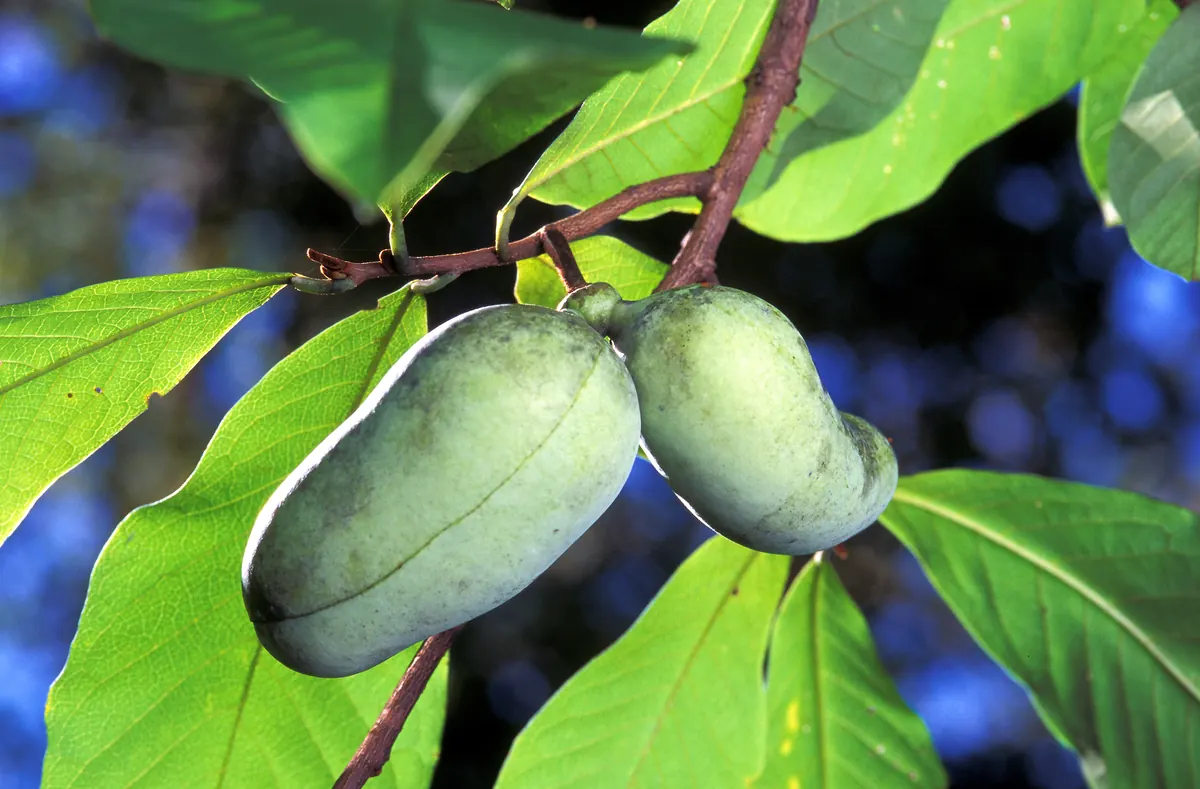
The last pawpaws
August into October · Moist bottomland woods and creek banks statewide
The pawpaw, a small understory tree, bears what is often called the largest native fruit in North America: a green, custardy berry that tastes of banana and mango and can top three inches. North Carolina State Extension lists the fruit from August to October, and in Kentucky the last good ones usually fall early in the month.
-
Persimmons
September through December · Old fields, fencerows, woods edges
Small orange persimmons hang on the female trees from September into winter. Unripe, they turn your mouth inside out; the old rule to wait for frost really means wait until they are soft and wrinkled.
-
Witch hazel, the year’s last flower
October to December · Wooded hillsides and ravines, especially in the east
American witch hazel opens small, spidery yellow flowers with four crinkled petals from October on, after almost everything else has finished. At the same time the woody capsules from last year’s flowers split and fling their two shiny black seeds across the leaf litter.
-
Goldenrods and asters
Until the first hard freeze · Roadsides, pastures, glades and old fields
Goldenrod, Kentucky’s state flower, and the purple and white asters feed late monarchs, bumblebee queens and honeybees building winter stores. Leave a patch unmowed until spring and its seed heads feed sparrows all winter.
-
Mushrooms
After every soaking fall rain · Oak and hickory woods, stumps, lawns
Fall rains bring out hen of the woods around old oak trunks, chicken of the woods on logs, puffballs, and many small brown species no one should eat without an expert. Cumberland Falls State Resort Park’s Kentucky Untamed series holds a two-hour mycology hike with a park naturalist on Saturday, October 10, at 10 a.m., from the visitor center in the falls area. On Thursday, October 15, 11 a.m. to 1 p.m., Bernheim’s nursery staff lead a citizen-science walk collecting native seed in the arboretum.
What are Kentucky’s bats, deer, bears and bugs doing in October?
-
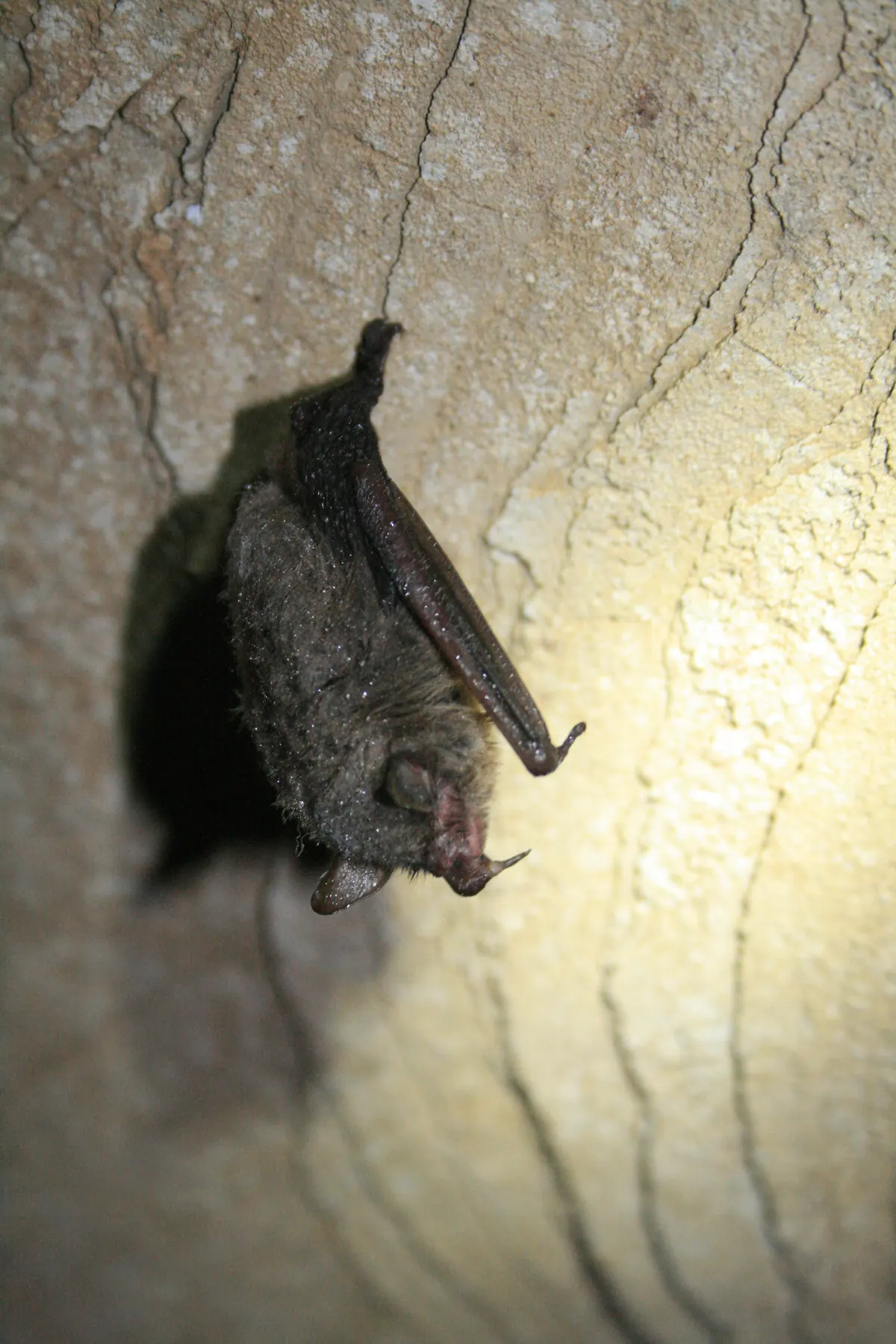
Bats heading underground
Swarming at cave mouths in early fall; hibernation from October · Mammoth Cave, Carter Caves and caves across the karst belt
Mammoth Cave National Park has confirmed 13 bat species, and eight or nine use the cave to raise young or hibernate. Three are federally listed: the endangered Indiana and gray bats and the threatened northern long-eared bat. Before hibernating, bats gather at cave entrances at night to mate and fatten, which biologists call swarming; federal wildlife biologists put the Indiana bat’s hibernation at roughly October through April. White-nose syndrome, found at Mammoth Cave in 2012, has killed more than 90 percent of some species, which is why tours end on a shoe-cleaning mat. On Saturday, October 3, at 6:30 p.m., Carter Caves State Resort Park and Kentucky Fish and Wildlife hold a free “Bedtime for Bats” program at the Welcome Center, watching bats enter Saltpeter Cave with monitoring gear.
-
Deer: rubs and scrapes
Building through late October toward the November rut · Field edges and woods statewide
Bucks are rubbing saplings bare and pawing scrapes under low branches as breeding season approaches. Deer move and cross roads more at dusk and dawn as the month goes on.
-
Black bears fattening
All month; some pregnant females den by late October · Eastern Kentucky, especially the southeastern counties
Bears have returned to Kentucky’s mountains, and in fall they eat nearly around the clock; BearWise, the regional bear program, says they may search for food as much as 20 hours a day now. The Daniel Boone National Forest has food storage rules for campers, and at home in bear country bird feeders, trash and pet food should be locked up.
-
Lady beetles on the south wall
Mostly October, on warm, sunny days after a cold spell · Sunlit house walls, especially light-colored ones
University of Kentucky entomologists say most of the multicolored Asian lady beetles’ flight to buildings in Kentucky happens in October, heaviest on sunny afternoons after cooler weather once it warms back into the mid-60s. Seal gaps around windows and siding now, and vacuum the ones that get in rather than crushing them.
-
Woolly bears and the last crickets
Until the first hard freeze · Roads and trail edges on warm afternoons; any lawn at night
Banded woolly bears, the caterpillars of the Isabella tiger moth, cross roads looking for a sheltered spot to spend the winter frozen; their rusty band reflects the caterpillar’s age and summer, not the coming winter. Snowy tree crickets keep singing until the nights turn cold; the count over 14 seconds plus 40 gives a rough Fahrenheit reading for the cricket thermometer page.
What are good outdoor outings for Kentucky families in October?
- Saturday, October 3: bats at Carter Caves. “Bedtime for Bats,” 6:30 p.m. Eastern at the Welcome Center, free. Earlier that day, Bernheim’s ECO Kids Discovery Day runs 1 to 4 p.m.; it repeats October 17.
- Thursday, October 8: the Draconids. A moonless early evening; spread a blanket and look north after dark.
- Saturday, October 10: birds, mushrooms and pumpkins. eBird’s October Big Day, the 10 a.m. mycology hike at Cumberland Falls, and Autumn Adventures at Rough River Dam State Resort Park from noon Central, with pumpkin painting and games.
- Saturday, October 17: a night at a fire tower. The campout at the 1937 Pinnacle Knob Fire Tower near Cumberland Falls meets at the visitor center at 4:30 p.m. and hikes out after daybreak; $50 a person with gear and a campfire dinner; register by October 10.
- October 23 and 24: Jack-o’-Lantern Cave. Hundreds of carved pumpkins in Cascade Cave at Carter Caves, 4 to 8 p.m. Friday and 1 to 8 p.m. Saturday; $15 adults, $10 children 12 and under, or one free ticket per pumpkin donated October 21 or 22.
- October 24 to 28: the moonbow. See the Cumberland Falls schedule above; bring a headlamp and a warm layer.
- October 25 and 26: paddle under the Hunter’s Moon. Barren River Lake State Resort Park’s naturalist leads a sunset and moonrise canoe and kayak trip both evenings, launching at 6:00 p.m. Central from the campground cove and back by about 8:30. Boats and life jackets are provided, space is limited, anyone under 16 needs an adult along, and you must register by 5 p.m. that day at (270) 646-2151.
To keep going through winter, Project FeederWatch starts in November and asks families to count feeder birds on a couple of days a week, and CoCoRaHS volunteers read a backyard rain gauge each morning. Print a Naturalist’s Field Journal plate for each child, and see other states on our nature this month index.
Safety notes for October in Kentucky
- Hunters in the woods, and the orange rule. Deer archery opened September 5 and crossbow September 19, both running to January 18. The bull elk firearms week is October 3 to 7, youth-only firearms deer season is October 10 to 18, early muzzleloader is October 17 and 18, and modern gun deer season is November 14 to 29. Fall turkey shotgun season is October 24 to 30, woodcock opens October 24, and bear seasons with dogs and archery fill the second half of the month in the bear zones. During the youth, muzzleloader and modern gun deer seasons and any firearm elk or bear season, Kentucky Fish and Wildlife requires every hunter, and anyone with them, to wear solid hunter orange visible from all sides on the head, back and chest in daylight, whatever the quarry; dove and waterfowl hunters are exempt. Hikers are exempt, but orange is cheap insurance on public land.
- Cliffs in the Red River Gorge. The sandstone rims drop off with little warning, and wet leaves on rock are slick. Stay on marked trails, finish cliff-top hikes before dark, and keep children close at overlooks. Alcohol is banned on the Daniel Boone National Forest, as are camping and fires in rock shelters.
- Burning. Kentucky’s fall forest fire hazard season runs October 1 to December 15; during it, burning within 150 feet of woodland or brushland between 6 a.m. and 6 p.m. is illegal.
- Ticks. UK entomologists list adult blacklegged ticks as active from October through June, on any day above about 40 °F. Use repellent, tuck pants into socks, and check everyone, dogs included.
- Snakes. Of Kentucky’s 32 snake species, four are venomous: copperhead, timber rattlesnake, cottonmouth and pygmy rattlesnake, the last two mainly in the west. On sunny October afternoons they bask on rocks and trails before going underground; leave them be and watch where you put your hands on ledges.
- Caves. Stick to guided tours in caves open to the public, and never wear boots or clothing from one cave into another.
- Roads at dusk. Deer, and bears in the east, cross most around dusk and dawn, which by late October is the commute. Slow down along wooded stretches; if a deer appears, brake firmly without swerving.
Sources
- Kentucky State Parks: Cumberland Falls State Resort Park (moonbow, falls, Moonbow Trail)
- Kentucky State Parks: Cumberland Falls 2026 moonbow dates (PDF schedule)
- Kentucky State Parks: Kentucky Untamed mycology hike, Cumberland Falls, October 10, 2026
- Kentucky State Parks: Fire Tower Campout, Pinnacle Knob, October 17–18, 2026
- Kentucky State Parks: Bedtime for Bats, Carter Caves, October 3, 2026
- Kentucky State Parks: Jack-o’-Lantern Cave, Carter Caves, October 23–24, 2026
- Kentucky State Parks: Full Hunter’s Moon Paddle, Barren River Lake, October 25, 2026
- Kentucky State Parks: Full Hunter’s Moon Paddle #2, Barren River Lake, October 26, 2026
- Kentucky State Parks: Autumn Adventures, Rough River Dam, October 10, 2026
- Kentucky State Parks: Nature Watch Weekend sandhill crane tours, Barren River Lake, January 29–31, 2027
- Red River Gorge Tourism: when to see fall leaves in the Red River Gorge
- U.S. Drought Monitor: Kentucky state statistics (map of September 22, 2026)
- U.S. Drought Monitor: Kentucky current map
- USDA Forest Service: Red River Gorge, Daniel Boone National Forest
- USDA Forest Service: Daniel Boone National Forest safety and regulations
- Bernheim Forest: event calendar, October 2026
- Bernheim Forest: event calendar, late October 2026 (fire tower, Lake Nevin bird walk, full-moon hike)
- Kentucky Department of Fish and Wildlife Resources: elk history in Kentucky
- National Park Service, Great Smoky Mountains: elk (rut timing, viewing distance)
- Prestonsburg Tourism: elk watching and Jenny Wiley elk tours
- Land Between the Lakes: Elk & Bison Prairie
- Land Between the Lakes: Discover the Stars and star party, Golden Pond Planetarium, October 3, 2026
- eBird: October Big Day, 10 October 2026
- Monarch Watch: peak migration dates by latitude
- Journey North: monarch butterfly sightings
- Kentucky Ornithological Society
- NOAA NCEI: 1991–2020 monthly normals for Louisville, Lexington, Paducah, Jackson, Bowling Green, Northern Kentucky and London
- NOAA NCEI: U.S. Climate Normals
- NOAA Climate Prediction Center: ENSO diagnostic discussion, September 10, 2026
- National Weather Service Louisville: El Niño and La Niña information for Kentucky and Indiana
- U.S. Naval Observatory: sun and moon rise and set data
- U.S. Naval Observatory: moon phases, 2026
- International Occultation Timing Association: occultation of Jupiter, October 6, 2026
- EarthSky: meteor shower guide
- American Meteor Society: meteor shower calendar
- NC State Extension: pawpaw (Asimina triloba)
- NC State Extension: American persimmon (Diospyros virginiana)
- NC State Extension: American witch hazel (Hamamelis virginiana)
- National Park Service, Mammoth Cave: bats
- U.S. Fish and Wildlife Service: Indiana bat
- BearWise: what bears do in October
- University of Kentucky Entomology: multicolored Asian lady beetle (ENTFACT-416)
- University of Kentucky Entomology: ticks in Kentucky (ENTFACT-618)
- Kentucky Department of Fish and Wildlife Resources: snakes of Kentucky
- Kentucky Department of Fish and Wildlife Resources: hunting and fishing seasons planner, 2026–27
- Kentucky Department of Fish and Wildlife Resources: hunting regulations (hunter orange)
- Kentucky Department of Fish and Wildlife Resources: deer hunting
- Kentucky Division of Forestry: wildland fire management and forest fire hazard seasons
- Project FeederWatch
- CoCoRaHS: Community Collaborative Rain, Hail and Snow Network
- Photos via Wikimedia Commons; licenses and photographers are credited under each picture
