What to look for in nature in Kentucky this December
Meteorologists reckon winter from December 1, grouping it with January and February as the cold heart of the year, and Kentucky starts the season with a short list of things worth a cold walk. Cumberland Falls schedules moonbow nights from the solstice through Christmas, lit by the nearest full moon of 2026. Sandhill cranes gather on the mudflats of Barren River Lake by the hundred and then the thousand, northern bald eagles settle along the big lakes, and great horned owls hoot through the longest nights as they pair up to nest. Below: what to look for, where, and when.
Other months in Kentucky: October, November.
Start here
- A solstice moonbow at Cumberland Falls. The park lists five December moonbow nights, the 21st through Christmas night. Wednesday, December 23, is in bold: the Cold Moon reaches full at 8:28 p.m. Eastern, right in the middle of that evening’s 7:00 to 9:00 p.m. window. All times are approximate, and clouds cancel the show.
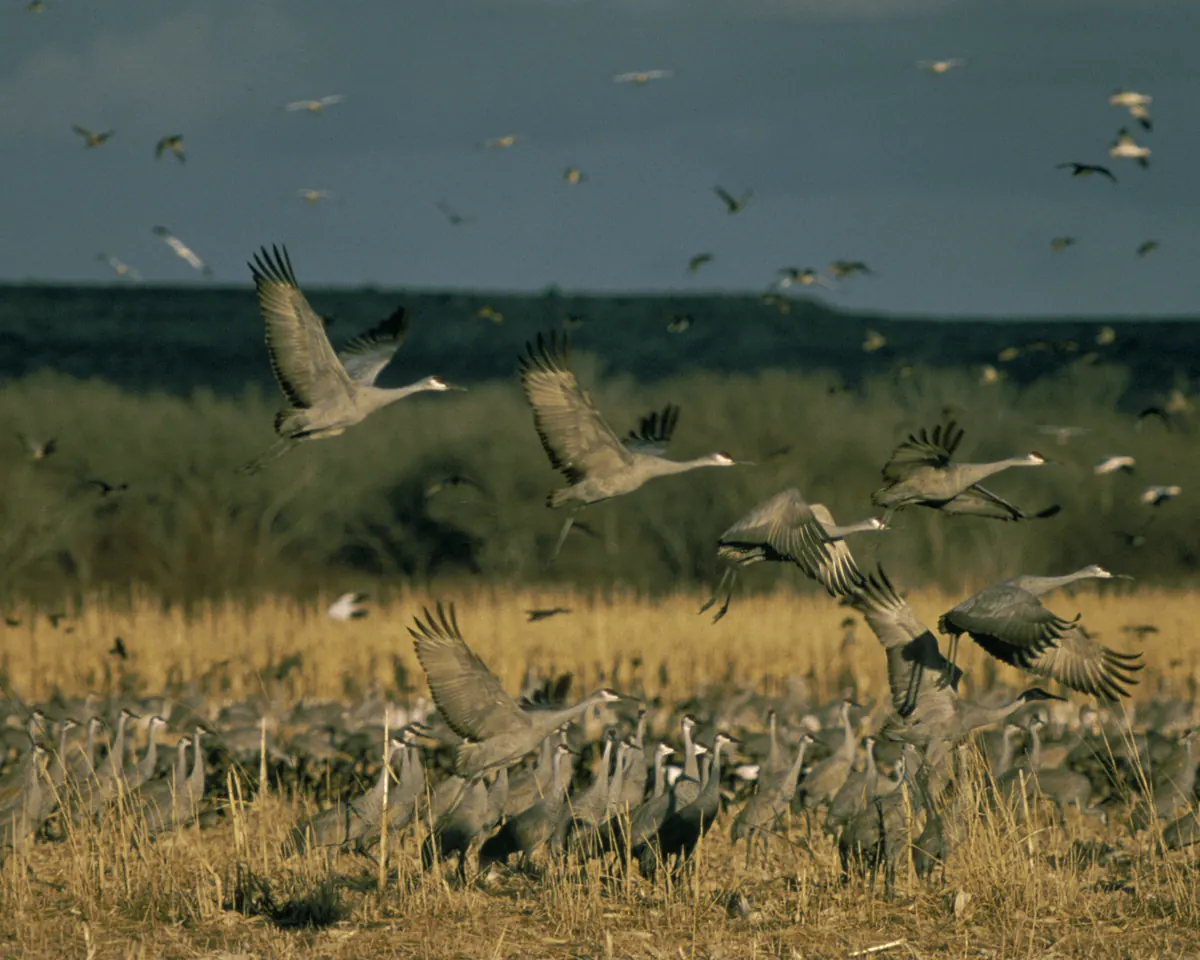
- Cranes at dusk on Barren River Lake. State biologists have counted from a few hundred to more than 2,000 sandhill cranes at Barren River Lake in the first half of December, and the flocks usually grow into January. Watch the drawn-down mudflats in the last half hour of light and listen for rattling calls as they come in to roost.
- The Geminids on December 13. Kentucky’s best meteor night of the year comes after dark on Sunday, December 13, and runs until dawn Monday. The crescent moon sets in mid-evening, and the shower’s radiant in Gemini is highest around 2 a.m., when the most meteors fall.
For the Naturalist’s Field Journal: the solstice sunset and the Geminid night belong on the dusk and dawn watch, a holly sprig or a redcedar cone on seeds, pods and cones, and the crane flocks and your count-day tally on birds I have seen. When a creek bank shows otter, raccoon and heron prints together, turn to tracks to know.
Regions used below: Western Kentucky and the Purchase; South Central and Cave Country; Louisville and the Ohio River; The Bluegrass and Northern Kentucky; Eastern Kentucky and the Appalachian coalfields.
Can you see the moonbow at Cumberland Falls in December?
Yes, and this year’s December run is unusual. A moonbow is a rainbow made by moonlight: on clear nights near full moon, moonlight shines into the spray below Cumberland Falls, in the Daniel Boone National Forest of southeastern Kentucky, and a pale arc forms over the river. Kentucky State Parks publishes the expected windows each year, dated by the evening you arrive, and the December set runs from the winter solstice to Christmas night.
Because the solstice brings the longest night of the year, the windows open early in the evening, convenient hours for families. And the Cold Moon reaches full on December 23 about seven hours before the moon’s nearest point to Earth that month, making it 2026’s closest full moon and a supermoon by the usual definition.
| Night of | Viewing window | Moon |
|---|---|---|
| Monday, Dec 21 (solstice) | 5:00–7:00 p.m. | Waxing gibbous, two days before full |
| Tuesday, Dec 22 | 6:00–8:00 p.m. | Almost full |
| Wednesday, Dec 23 | 7:00–9:00 p.m. | Full at 8:28 p.m. Eastern; set in bold on the park’s schedule |
| Thursday, Dec 24 (Christmas Eve) | 8:00–10:00 p.m. | Just past full |
| Friday, Dec 25 (Christmas night) | 9:30–11:30 p.m. | Waning gibbous |
Frozen spray can glaze the rocks and overlook paths on a cold night, so wear boots with grip and bring a headlamp, switched off once you are in place. To the eye the bow looks gray-white; a camera held steady for several seconds shows its colors. Even thin overcast erases it, so look at our cloud-cover map before you set out.
Where can you see sandhill cranes in Kentucky in December?
Cranes of the eastern population, which nests around the Great Lakes, now stop in Kentucky for weeks on their way south, and December is when the stop fills up. November’s birds tend to be early migrants that move on; the December flocks are the start of the winter crowd. Cold fronts push them out of staging areas in Indiana. In its December 19, 2025, report the state Department of Fish and Wildlife Resources described waves of cranes over Frankfort, Lexington, Richmond and Henderson, after Muscatatuck National Wildlife Refuge in southern Indiana had tallied 76,044 the week before.
The department counts cranes most weeks at two roost sites. Its December numbers, below, show how much one winter differs from the next and how fast a flock grows after a front.
-
Barren River Lake at roosting time
Late afternoon to dusk, all month; numbers usually climb into January · Barren River Lake WMA and the state resort park, south of Glasgow (Central time)
Each fall the lake is drawn down to its winter pool, and the mud and shallows of the creek arms, especially Skaggs, Beaver and Peters creeks, become safe roosts. The cranes feed by day in harvested corn and soybean fields and fly in around sunset; surveyors have seen birds still landing a quarter hour after the sun went down. Watch from public roads and the park, and listen for their far-carrying bugle. By mid-January 2025 the count topped 12,000, and the park’s guided crane weekend is at the end of January.
-
Cecilia, in Hardin County
December into February, in wet years · Farm ponds and fields around Cecilia, west of Elizabethtown
The second site is farmland, and it depends on rain. In a dry December the department has found the roost reduced to a mudflat with a few dozen cranes or none; on December 15, 2025, it counted 480. All of it is private land, so watch from the road shoulder. In 2021 a whooping crane, among the scarcest birds on the continent, fed with the sandhills here, so look twice at any tall white bird.
-
Crane season
December 7, 2026, to January 31, 2027 · Statewide
The hunting season runs with the second segment of duck season, and the department reminds hunters that whooping cranes sometimes travel with sandhills.
| Site | Count date | Cranes | Notes from the report |
|---|---|---|---|
| Barren River Lake WMA | Dec 15, 2021 | 0 | Then 3,266 on December 29, after a late-month influx |
| Hardin County | Dec 14, 2021 | 21 | 58 a week later |
| Barren River Lake WMA | Dec 11, 2023 | 438 | Many came in to roost a quarter hour after sunset |
| Barren River Lake WMA | Dec 19, 2023 | 454 | No rain that week; lake drained slowly |
| Barren River Lake WMA | Dec 2, 2024 | 619 | Feeding on all sides of the lake |
| Barren River Lake WMA | Dec 11, 2024 | 795 | An adult bald eagle flying with a second-year bird |
| Barren River Lake WMA | Dec 2, 2025 | 311 | Four cranes standing with great blue herons |
| Barren River Lake WMA | Dec 9, 2025 | 2,265 | 2,028 in Skaggs and Beaver creeks, 237 in Peters Creek |
| Hardin County (Cecilia) | Dec 15, 2025 | 480 | Most farm ponds frozen; 125 roosting on the ice |
Water and weather change these numbers every year; the department posts new reports through the winter.
When is the Christmas Bird Count in Kentucky, and can anyone join?
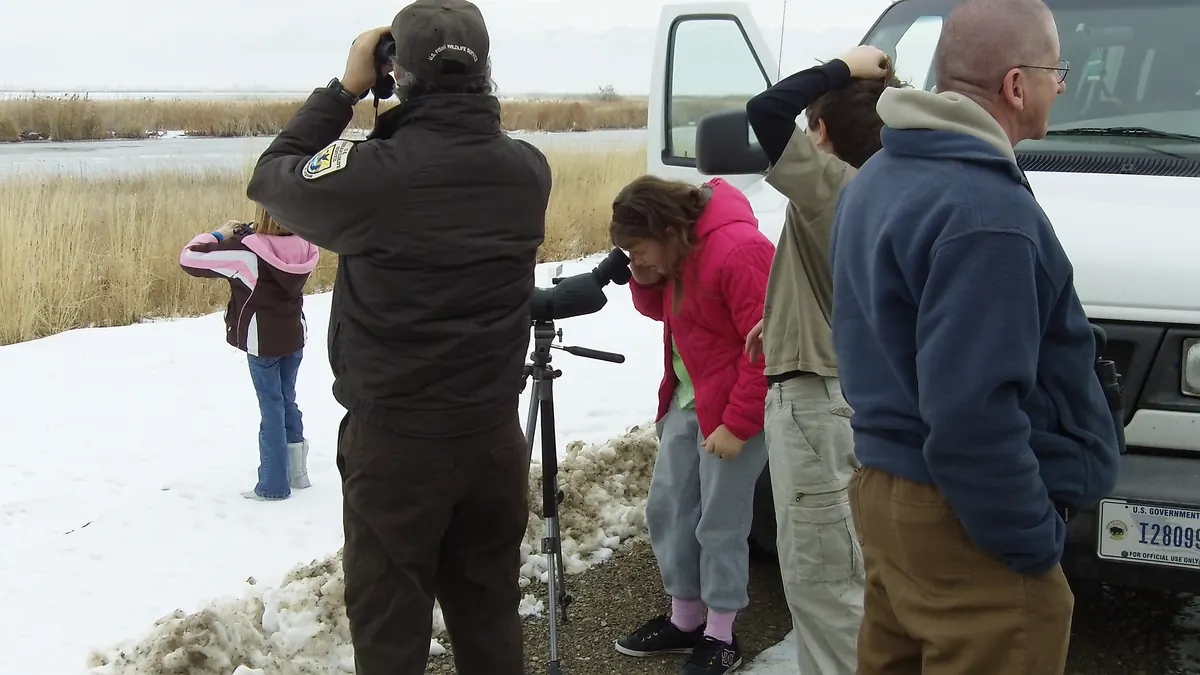
The National Audubon Society has run the Christmas Bird Count since 1900. Volunteers survey a circle 15 miles wide on one chosen day within the count period, which this season, the 127th, starts on Monday, December 14, and ends on Tuesday, January 5. Kentucky had 42 circles last winter, from Ballard County and Land Between the Lakes to Paintsville and Ashland.
The Kentucky Ornithological Society posts the state schedule and a compiler for each circle, usually in late fall. Last season Frankfort and Louisville counted first, on December 14; Lexington, London, Richmond and Land Between the Lakes shared the Saturday before Christmas; and Bernheim Forest and Somerset counted on New Year’s Day. Beginners are welcome; a compiler will place you with an experienced team.
-
What the counts find
Count days, December 14 to January 5 · 42 count circles statewide
Audubon’s summary of the 2024–25 count reported 139 species and 339,198 birds in Kentucky, found by 528 participants. Lexington set its own record with 96 species. Starlings, grackles and red-winged blackbirds topped the totals, while the highlights included golden eagles, 11 Ross’s geese and 21 short-eared owls on eight counts.
-
How to join
Contact a compiler a few weeks ahead · The Kentucky Ornithological Society’s CBC page
Choose the nearest circle, write to its compiler through the society’s page, and say whether you would rather walk, drive a route or watch a feeder. Bring binoculars, warm layers and a thermos; the team leader keeps the official tally, and there is no fee.
Can’t join one? Count your own yard on a count day and list every species in the Naturalist’s Field Journal, then repeat it next December.
Where can you see bald eagles in Kentucky in December?
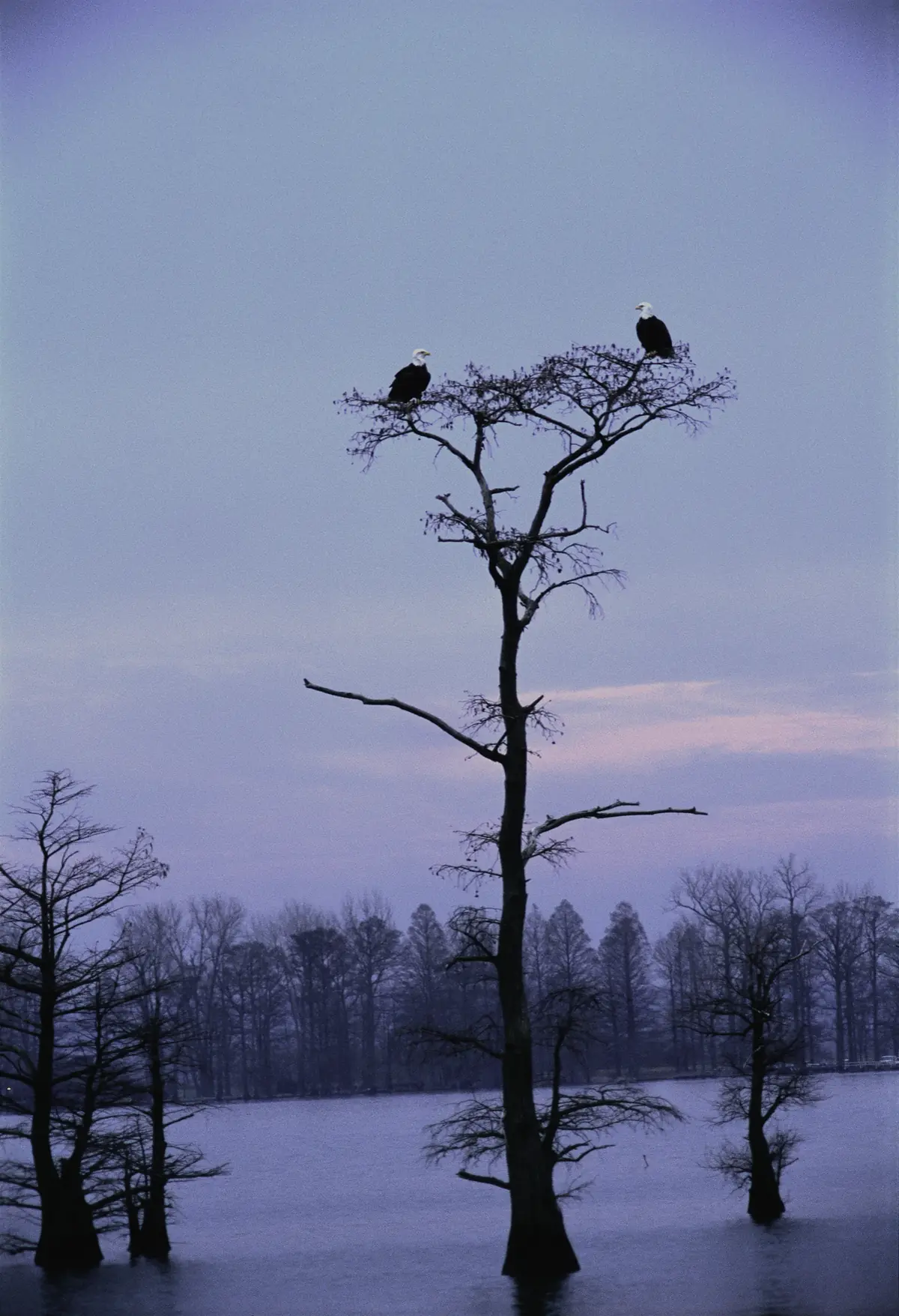
Near open water with fish and waterfowl. Kentucky’s nesting pairs stay all year, and from December through March eagles from farther north join them as northern lakes freeze. The state wildlife department says winter surveys have found 150 to 400 eagles in a typical year, and it singles out the country around Land Between the Lakes as the best place to look.
-
The western lakes
December through March; mornings are best · Kentucky Lake, Lake Barkley and the tailwaters below their dams (Central time)
Scan dead snags along the shore for a white head, and check the edges of rafts of ducks and coots, where an eagle may wait for a weak bird. Young eagles stay mottled brown for several years. An eagle soars on flat wings; a turkey vulture holds its wings in a shallow V and rocks.
-
Eagles elsewhere
All winter · The Ohio River and big reservoirs such as Barren River, Green River and Cave Run lakes
The crane surveyors at Barren River Lake have logged adult and young eagles there in recent Decembers. Resident pairs are adding sticks to their nests now, and eggs follow from January to March. If you find a nest, the department recommends staying about 330 feet away on foot.
-
Guided eagle tours
January and February · State resort parks on the western lakes
Kentucky State Parks has a long tradition of guided winter eagle tours on the western lakes, but they run in January and February, not December. Watch the parks’ events calendar for 2027 dates.
Which owls can you hear in Kentucky in December?
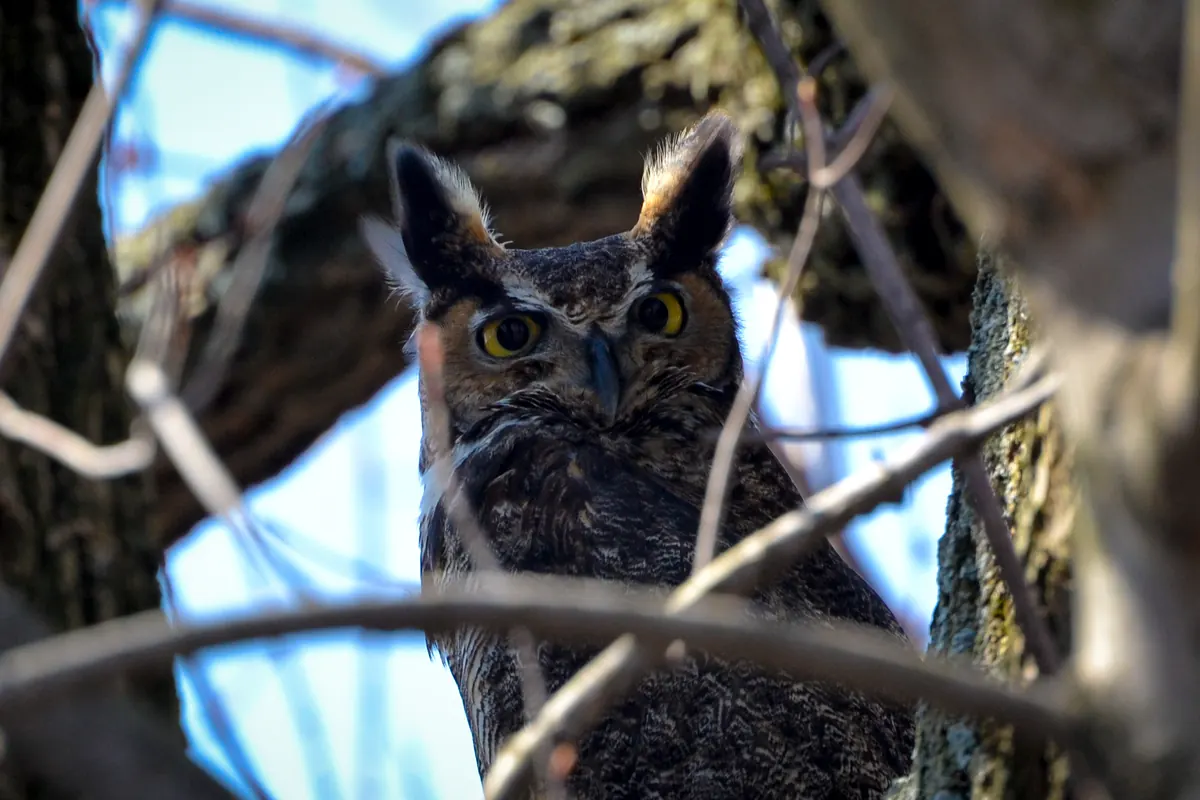
Long, still December nights make this the easiest month to hear owls, and one of Kentucky’s three common residents is already starting a family.
-
Great horned owls courting
All month, especially early evening and before dawn · Woodlots, farm edges, parks and suburbs statewide
Great horned owls are among the earliest nesters in Kentucky. Raptor Rehabilitation of Kentucky, in Louisville, says they breed here in December and have eggs by January, often in an old hawk nest or a hollow tree. The male’s deep hoo-h’HOO-hoo-hoo is answered by the female’s higher voice, and a pair trading calls on a frosty night is a sound of the season.
-
Barred and screech owls
Year-round; loud on calm winter nights · Barred owls in creek and bottomland woods; screech owls in yards and farm groves
Across wooded valleys the barred owl’s eight-note “who cooks for you, who cooks for you-all” rings out, and pairs sometimes break into a wild, cackling chorus. The robin-sized eastern screech-owl, gray or reddish, gives a descending whinny and a long, even trill from any big tree with a cavity.
-
Short-eared owls over the grasslands
December through early spring, at dusk · Reclaimed surface mines, big hayfields and grasslands, especially in the Western Coalfield
Short-eared owls come for the winter and hunt low over open grass at dusk with a floppy, moth-like flight, often beside northern harriers. A study on a reclaimed surface mine in Muhlenberg and Ohio counties found old strip-mine grasslands make good winter hunting ground for both. The department lists the species as an uncommon to rare winter visitor and asks birders to report any group of five or more roosting together.
Raven Run in Lexington leads an owl walk on December 11 (see the families section). If you try calling owls with a recording, play it only briefly, so a bird is not drawn away from hunting on a cold night.
How do Kentucky’s animals get through the winter?
Some sleep deeply, some doze, and some stay busy all season. December is when those strategies take over.
-
Bats in deep hibernation
October to April · Mammoth Cave, Carter Caves and caves and old mines across the karst belt
Thirteen kinds of bats are confirmed at Mammoth Cave National Park, and eight or nine of them use its caves for raising young or for the winter sleep. A hibernating bat lives on fat stored in fall, and each time it is woken it spends some of that reserve; the U.S. Fish and Wildlife Service names human disturbance as a threat to the endangered Indiana bat. White-nose syndrome, a fungal disease that has killed over 90 percent of some species, reached Mammoth Cave in 2012, which is why tour groups there cross a cleaning mat. Leave wild caves and mine openings alone until spring.
-
Black bears in their dens
Through winter; out again in late March or April · Eastern Kentucky, especially the southeastern mountains
The department says Kentucky’s bears den for the winter and come out in late March or early April. BearWise, the bear-awareness program of the southeastern state wildlife agencies, notes that bears sometimes den, and even give birth, under decks and in crawl spaces. In bear country, put away bird seed, pet food and garbage and close up sheds before a bear chooses your place.
-
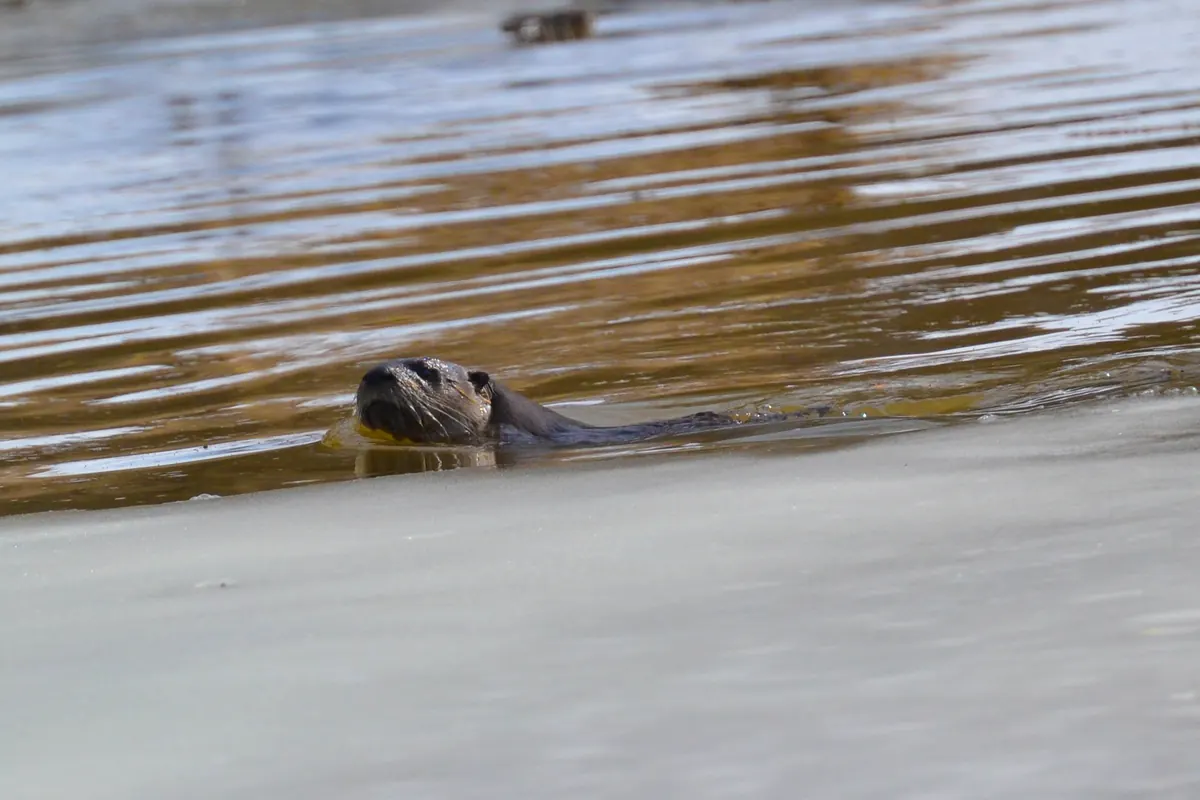
River otters wide awake
All winter, most active at dawn and dusk · Rivers, lakes, sloughs and beaver ponds statewide
Otters were nearly gone from Kentucky when the department released 355 at 14 sites between 1991 and 1994, on the Barren, Big Sandy, Green, Kentucky, Licking and Salt rivers. A 2010 study found them in every major watershed in the state. They fish all winter and leave signs on the banks: five-toed, partly webbed tracks, mud slides, and piles of fish scales and crayfish shells on a log or point.
-
Tracks in the mud
After rain, a thaw or a light snow · Creek banks, farm-pond edges, puddles on trails
Kentucky’s snow seldom lasts, but its mud records the night. Raccoons leave small hand-shaped prints, opossums a splayed thumb on the hind foot, deer paired split hearts and coyotes neat ovals with claw marks.
What is still green or in berry in the Kentucky woods in December?
With the hardwoods bare, the plants that keep leaves or fruit stand out. These four are native and easy to learn.
-
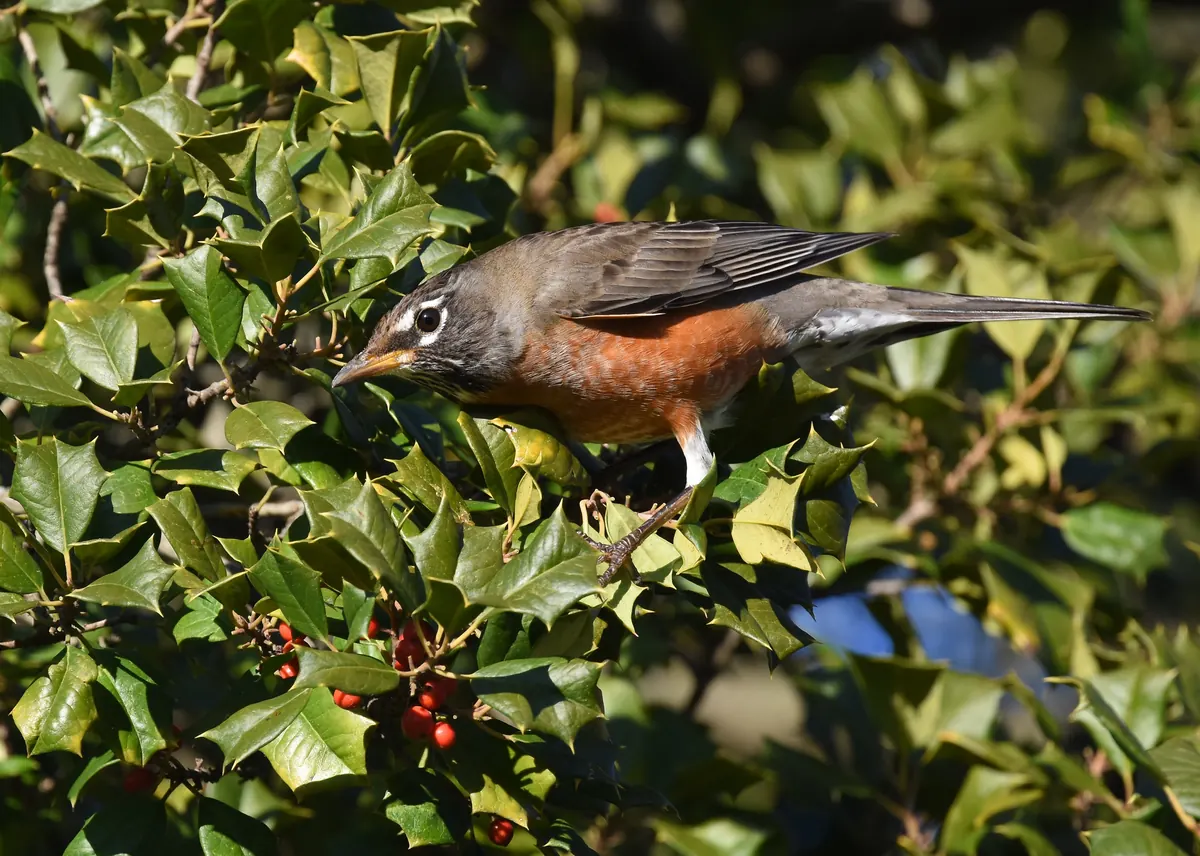
American holly
Red berries from fall through February · Moist woods and ravines; planted widely
Kentucky’s native holly keeps its prickly, leathery leaves all winter, and only the female trees bear red fruit, which needs a male tree nearby. Robins, bluebirds, waxwings and mockingbirds strip the berries through the winter, often after a hard freeze softens them. The fruit is mildly toxic to people and pets.
-
Eastern redcedar
Blue cones all winter on female trees · Old fields, fencerows, limestone glades and roadcuts, especially in the Bluegrass and Pennyroyal
The cedar of so many central Kentucky fencerows turns a bronzy brown-green in winter. Female trees carry dusty blue, berry-like cones eaten by cedar waxwings, robins and yellow-rumped warblers, and the dense branches shelter roosting birds.
-
Christmas fern
Green all winter · Shady slopes, ravines and stream banks statewide
This common woodland fern keeps its glossy fronds all winter, lying flat on the leaves by January. Each leaflet has a small lobe at its base, like the toe of a stocking, one reason for the name; the other is that it is still green at Christmas.
-
Mistletoe
Easiest to spot when the trees are bare · High in the crowns of maples, oaks and other hardwoods, often along streams
American mistletoe is a half-parasite that makes its own sugar but draws water and minerals from its host. Its round green clumps show up in leafless trees, and its sticky white berries ripen in winter. Birds eat them and wipe the seeds onto branches, starting new plants. Keep any sprigs brought indoors away from children and pets, since the berries are toxic.
Bernheim Forest’s Winter Tree Mysteries walk on December 12 practices naming trees by bark and buds. Sketch one bare tree now on the tree-through-the-seasons page and return to it in April.
When is the shortest day and the earliest sunset in Kentucky?
The winter solstice comes on Monday, December 21, at 3:50 p.m. Eastern (2:50 p.m. Central), when the noon sun stands lower over Kentucky than on any other day. Daylight that day runs 9 hours 25 minutes at Covington, on the Ohio across from Cincinnati, 9 hours 30 minutes at Louisville and 9 hours 37 or 38 minutes at Paducah, Bowling Green and Corbin.
The earliest sunsets come sooner, in the first week of December, because the clock and the sun drift apart in early winter; the latest sunrises wait until early January. Louisville’s earliest sunset is 5:23 p.m., centered on December 7, and Lexington’s 5:18 p.m., centered on December 6, while west of the time-zone line Owensboro and Bowling Green bottom out at 4:29 p.m. around December 6. Sunset holds on that same minute for several days either side. By New Year’s Eve every town in the table has already won back two to four minutes of daylight.
| City | Dec 1 | Dec 21 | Dec 31 | Earliest sunset |
|---|---|---|---|---|
| Paducah | 9 h 49 m | 9 h 37 m | 9 h 39 m | 4:37 p.m., Dec 6 |
| Owensboro | 9 h 45 m | 9 h 33 m | 9 h 35 m | 4:29 p.m., Dec 6 |
| Bowling Green | 9 h 49 m | 9 h 38 m | 9 h 40 m | 4:29 p.m., Dec 6 |
| Louisville | 9 h 42 m | 9 h 30 m | 9 h 33 m | 5:23 p.m., Dec 7 |
| Lexington | 9 h 44 m | 9 h 32 m | 9 h 34 m | 5:18 p.m., Dec 6 |
| Covington | 9 h 38 m | 9 h 25 m | 9 h 28 m | 5:15 p.m., Dec 7 |
| Ashland | 9 h 41 m | 9 h 29 m | 9 h 32 m | 5:09 p.m., Dec 7 |
| Corbin | 9 h 49 m | 9 h 37 m | 9 h 41 m | 5:19 p.m., Dec 6 |
Look up your street’s winter sunrise and sunset in our daylight calculator.
What is December weather like in Kentucky, and what might El Niño mean this winter?
Usually cold, gray and damp rather than snowy. By NOAA’s 1991–2020 normals, average December highs run from 43.3 °F at the Northern Kentucky airport and 45.9 °F at Lexington to 47.2 °F at Louisville and 49.4 °F at Bowling Green, and average lows from 27.9 °F in Northern Kentucky to 32.1 °F at Louisville. Precipitation is 3.73 inches in Northern Kentucky and 4.13 to 4.47 inches at Louisville, Lexington, Paducah, Bowling Green and the Jackson airport. Normal snowfall is 0.8 inch at Bowling Green, about 2 inches at Louisville, Lexington and Paducah, and 4.1 inches in Northern Kentucky and at Jackson.
The records show the range. The weather service office in Louisville lists 15.0 inches on December 8, 1917, as Louisville’s largest December snowfall and 9.5 inches on December 6, 1910, as Lexington’s. Its Christmas history runs from 75 °F at Louisville in 2021 to 7 below zero there in 1983, the year Lexington hit 9 below; Lexington’s snowiest Christmas, in 1935, brought 6.5 inches.
This winter opens with El Niño building in the Pacific: federal forecasters, in their ENSO discussion of September 10, rated a very strong event by winter as better than 90 percent likely. In the nine biggest El Niño events on its books, the Louisville weather office found Kentucky winters with temperatures near normal across most of Kentucky and below-normal precipitation, while warning that such averages are not a forecast; climate.gov also ties El Niño to a drier Ohio Valley. A dry winter shows in low creeks, shallow sloughs and, as the crane surveys have recorded in dry years, bare mud where Hardin County’s roost pond should be.
Mid-October brings NOAA’s winter forecast maps (the 15th is the scheduled date); they will sit with the Climate Prediction Center’s 90-day outlooks. Check our weather page for the week ahead, and our Kentucky frost dates for when hard freezes usually begin and end.
What can you see in Kentucky’s night sky in December?
The longest nights, a top meteor shower and the closest full moon of 2026. Most of Kentucky keeps Eastern Standard Time; the western third, including Bowling Green, Owensboro and Paducah, is on Central, an hour earlier.
-
The Geminids
Active December 4 to 20; best on the night of Sunday, December 13, into Monday, December 14 · Anywhere overhead, away from lights
The International Meteor Organization expects a peak with only a slim crescent moon, which sets in mid-evening. Under a truly dark sky the Geminids can top 100 meteors an hour; from a Kentucky backyard a few dozen is more likely. The radiant is highest around 2 a.m. Dress for a deer stand and recline.
-
The Cold Moon, nearest of the year
Full Wednesday, December 23, at 8:28 p.m. Eastern (7:28 p.m. Central) · Rising in the northeast at dusk
A December full moon climbs high at midnight, the reverse of the low winter sun at noon. This one falls just hours before the moon’s monthly perigee, so it looks slightly larger than any other full moon this year. On the solstice evening the moon passes near the Pleiades.
-
Planets
All month · Saturn in the south and southwest at dusk; Venus, Jupiter and Mars before dawn
Saturn is the lone bright evening planet, setting about four hours after the sun by late December. In the hour before sunrise, Venus shines low in the southeast, and keeps climbing into January. Jupiter, bright and cream-colored, rises in mid-evening by Christmas and rides high in the southern sky by dawn, reddish Mars nearby. The thin old moon pairs up with Venus and Spica low in the dawn twilight of December 4 and 5.
-
The Ursids, then a January bonus
Ursids around December 22; Quadrantids the night of January 3 into 4 · Northern sky
The small Ursid shower is drowned this year by a nearly full moon. The Quadrantids, due to peak late on Sunday evening, January 3, when the Moon is just a sliver that rises in the small hours, are the better bet; look northeast in the hours before dawn on the 4th.
| Phase | Date | Time |
|---|---|---|
| Last quarter | Tuesday, Dec 1 | 1:08 a.m. EST; 12:08 a.m. CST |
| New moon | Tuesday, Dec 8 | 7:52 p.m. EST; 6:52 p.m. CST |
| First quarter | Thursday, Dec 17 (Eastern); Wednesday, Dec 16 (Central) | 12:42 a.m. EST; 11:42 p.m. CST |
| Full moon, the Cold Moon | Wednesday, Dec 23 | 8:28 p.m. EST; 7:28 p.m. CST |
| Last quarter | Wednesday, Dec 30 | 1:59 p.m. EST; 12:59 p.m. CST |
Moonrise and moonset for any Kentucky town are listed in our moon phase calendar.
What are good outdoor outings for Kentucky families in December?
- December 5 and 6: Christmas Cave at Carter Caves. Cascade Cave is decorated with lights for a walk-through, Saturday from 3 to 8 p.m. and Sunday from 1 to 5; tickets at the cave are $15 for adults, $10 for children 12 and under and $12 for Carter County residents. At Bernheim Forest near Clermont that Saturday, the children’s ECO Kids Discovery Day goes from 1 to 4, and at 7 p.m. a NASA program on the astronomer Vera Rubin ends with stargazing.
- Sunday, December 6: Bernheim’s First Sunday Nature Hike, with volunteer naturalists, from the Visitor Center at 2 p.m.
- Friday, December 11: birds and owls at Raven Run. Lexington’s nature sanctuary has a free bird walk at 9 a.m. (ages 10 and up; loaner binoculars) and an Owl Prowl at 6 p.m., a 1.5-mile night walk for ages 8 and up, $8 with online registration.
- Saturday, December 12: trees and eBird. Bernheim’s Become a Birding Citizen Scientist runs 9 a.m. to noon ($15 members, $20 others), and Winter Tree Mysteries starts at the Rock Run Trailhead at 1 p.m. Barren River Lake State Resort Park lists a free lodge hike at 10 a.m. Central every second Saturday; confirm with the park first.
- Sunday, December 13: the Geminids. An hour outside after the moon sets usually brings a few bright meteors.
- Thursday, December 17: Cubs Club at Barren River, a free story, craft or short adventure for kids 13 and under with an adult; it is the last date on the park’s current listing.
- Saturday, December 19: winter wildlife for young naturalists. McConnell Springs Park in Lexington holds Junior Naturalist: Winter Wildlife for kindergarten through fifth grade at 10 a.m., free; registration opens November 19. Bernheim repeats ECO Kids Discovery Day that afternoon.
- December 21 to 25: moonbows at Cumberland Falls. The 5 to 7 p.m. solstice window suits small children best.
- A count day between December 14 and January 5. Many compilers welcome families, and a kitchen-window feeder count is part of the census too.
- New Year’s Day, 2027: a First Day Hike. At Carter Caves State Resort Park a naturalist leads the 0.8-mile Box Canyon Trail, with stairs and some climbing, from the Cascade Cave parking lot at 1 p.m. Other state parks usually add hikes; America’s State Parks lists them nationwide in December.
Call ahead; programs fill or change with the weather. Last month’s ducks, cranes and leaves are on Kentucky in November, and every state and month is on our nature pages.
Safety notes for December in Kentucky
- Hunting seasons and hunter orange. Late muzzleloader deer season is December 12 to 20 and the free youth deer weekend December 26 and 27; archery and crossbow deer seasons last until January 18. Bear firearm seasons run December 12 to 14 in bear Zone 1 and December 12 to 16 in Zones 2 and 3. The cow elk firearm season ends December 2, and elk archery and crossbow season is December 5 to 11. Fall turkey shotgun season is December 5 to 11, duck and sandhill crane seasons open December 7, and geese, rabbit, quail, squirrel and grouse are in season all month. In daylight during any modern gun, muzzleloader or youth firearm deer season, or any firearm elk or bear season, every hunter, and anyone tagging along, must by Kentucky law wear solid orange outer garments covering head, back and chest, visible all around, archers included; duck, goose and dove hunters are the exception. Hikers are exempt, but blaze orange for you and your dog is smart on public land.
- Thin ice. Kentucky’s cold spells rarely last long enough to make ponds or lakes safe to walk on, and ice that looks solid near shore can be thin over a spring or inlet. Keep children and dogs off it; if a dog falls through, call for help instead of going in.
- Cold and wet. Wind and damp clothing pull heat away far faster than still, dry cold, so a raw, rainy day can be riskier than a frosty clear one. Wear layers that stay warm when wet and turn back if anyone shivers hard or stumbles.
- Early dark. Near the start of the month the sun sets about 4:29 p.m. in Owensboro and Bowling Green and 4:37 in Paducah. Begin a walk by early afternoon and pack a headlamp.
- Burning. Fall forest fire hazard season lasts through December 15; until it ends, burning within 150 feet of woodland or brush is legal only from 6 p.m. to 6 a.m.
- Icy roads and steps. In Kentucky, freezing rain and black ice are often more dangerous than snow. Bridges, shaded mountain roads and stone steps near waterfalls ice up first.
Sources
- Kentucky State Parks: 2026 moonbow dates, Cumberland Falls State Resort Park
- Kentucky State Parks: Cumberland Falls State Resort Park
- KDFWR: Waterfowl and sandhill crane reports and surveys
- KDFWR: 2025–26 weekly sandhill crane ground count reports
- KDFWR: Sandhill crane ground counts, 2024–25
- KDFWR: Sandhill crane ground counts, 2023–24
- KDFWR: Sandhill crane ground counts, 2021–22
- Kentucky State Parks: Nature Watch Weekend, sandhill crane tours, Barren River Lake
- Kentucky Ornithological Society: Annual Christmas Bird Count
- National Audubon Society: The 125th Christmas Bird Count in Kentucky
- National Audubon Society: Christmas Bird Count
- KDFWR: Bald eagles
- Kentucky State Parks news release: Eagle Watch Weekends (January 2020)
- KDFWR: Identifying Kentucky’s owls
- Raptor Rehabilitation of Kentucky: Great horned owls
- Foraging behavior of short-eared owls and northern harriers on a reclaimed surface mine in Kentucky
- National Park Service: Bats of Mammoth Cave
- U.S. Fish and Wildlife Service: Indiana bat
- KDFWR: Black bears
- BearWise: Will bears find a good winter den at your place?
- SEAFWA Journal (2010): Recovery of the river otter to Kentucky
- NC State Extension: Ilex opaca (American holly)
- NC State Extension: Juniperus virginiana (eastern redcedar)
- NC State Extension: Polystichum acrostichoides (Christmas fern)
- NC State Extension: Phoradendron leucarpum (American mistletoe)
- NOAA NCEI: 1991–2020 monthly normals for Kentucky stations (data service)
- NOAA NCEI: U.S. Climate Normals
- NWS Louisville: Snow climatology
- NWS Louisville: Christmas weather history
- NWS Louisville: Louisville Christmas weather (PDF)
- NWS Louisville: Lexington Christmas weather (PDF)
- NOAA CPC: ENSO diagnostic discussion, September 10, 2026
- NOAA CPC: Seasonal (90-day) outlooks
- NWS Louisville: El Niño and La Niña impacts
- NOAA Climate.gov: United States El Niño impacts
- U.S. Naval Observatory: Moon phases
- U.S. Naval Observatory: Earth’s seasons, 2026
- International Meteor Organization: 2026 meteor shower calendar (archived copy)
- EarthSky: What is a supermoon?
- Bernheim Forest and Arboretum: events, early December 2026
- Bernheim Forest and Arboretum: events, mid-December 2026
- Kentucky State Parks: Christmas Cave, Carter Caves
- Kentucky State Parks: New Year’s Hike 2027, Carter Caves
- Kentucky State Parks: B.E.A.R. Cubs Club, Barren River Lake
- Kentucky State Parks: 2nd Saturday Hike, Barren River Lake
- Lexington Parks and Recreation: Owl Prowl, Raven Run, December 11
- Lexington Parks and Recreation: Second Friday Bird Walk, December 11
- Lexington Parks and Recreation: Junior Naturalist, Winter Wildlife, December 19
- America’s State Parks: First Day Hikes
- KDFWR: Hunting and fishing seasons planner
- KDFWR: Deer hunting
- KDFWR: Black bear hunting
- KDFWR: Rabbit hunting
- KDFWR: Hunting regulations (hunter orange)
- Kentucky Division of Forestry: Wildland fire management and forest fire hazard seasons
- Photos via Wikimedia Commons; licenses and photographers are credited under each picture
