What to look for in nature in Tennessee this April
April is when Tennessee fills in. The wood thrush returns to the shaded woods, the first tanagers glow in bare treetops, and a handful of warblers settle into bottomland swamps and mountain forests. The Smokies reach their peak of wildflower bloom at the lower elevations, redbud gives way to dogwood, and black bear cubs follow their mothers out of the dens. The weather is quick to change: afternoon showers in the mountains, a late freeze on the plateau, and the state’s most active stretch for severe storms. Two time zones cross the state, so each clock time below says Central or Eastern, and daylight time applies all month.
Other months in Tennessee: October, November, December, January, February, March.
Start here
- A tanager or thrush at dawn. TWRA places the wood thrush in the state from the first half of April and the scarlet tanager from mid-April. Go to a large, shaded woodland at first light and listen for a flute-like song and a hoarse, robin-like one, before the canopy fills in.
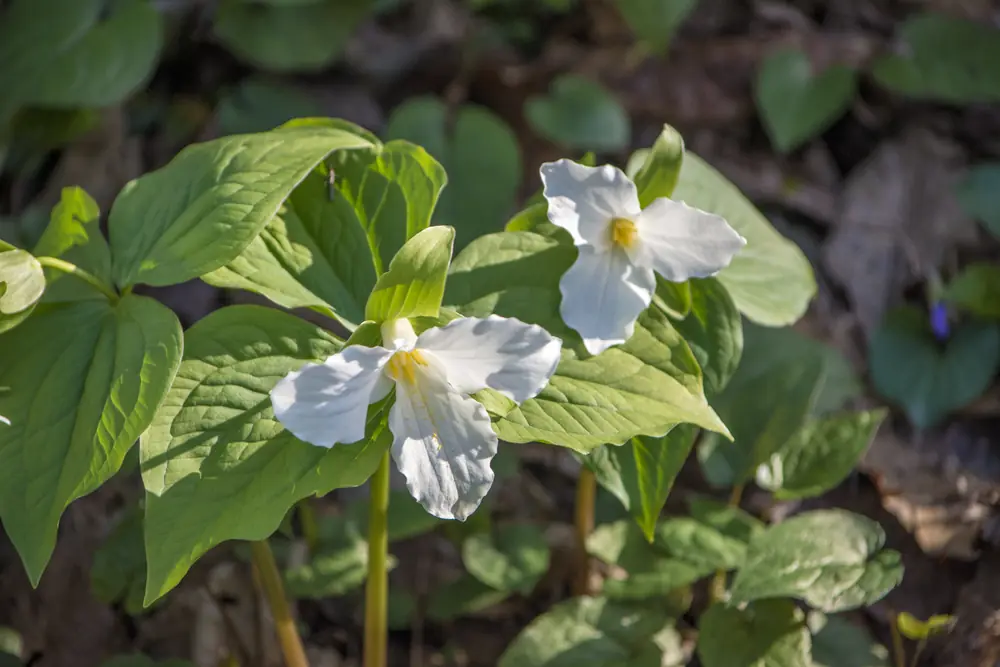
- Trillium on a damp slope. Great Smoky Mountains National Park says spring wildflowers usually peak in mid- to late April at low elevations. Choose a north-facing slope or creek bank, stay on the trail and count how many kinds you can name.
- Dogwood and the Pink Moon. Watch the dogwoods open after the redbud fades, and on Tuesday evening, April 20, find a clear eastern horizon around 8 p.m. for the rising of the Pink Moon.
Room in the Naturalist’s Field Journal exists for a first wood thrush or tanager on its birds I have seen plate, a dogwood followed from bud to open leaf under tree through the seasons, an evening of treefrogs and toads goes on the map of sounds, a distant bluebird box belongs under nest observed, and one patch of woods seen at the start of April and again at the end makes a same-place-twice entry.
Regions used below: West Tennessee; Middle Tennessee; The Cumberland Plateau; East Tennessee and the Valley; The Smokies and Blue Ridge.
Which birds arrive in Tennessee in April?
April is the month the woods fill with song. The Tennessee Wildlife Resources Agency (TWRA) gives arrival windows for each species, and they stack up neatly: a few warblers and a vireo in the first days, the thrushes and tanagers in the middle of the month, and a second wave in the last week. Real arrivals shift from year to year with the weather, so read each window as typical rather than exact, and make use of the bare branches while they last, since birds are much easier to spot before the leaves open.
-
White-eyed vireo
TWRA says it arrives in early April and leaves around mid-October · Brushy places statewide: old fields, overgrown pastures, wood margins and streamside thickets
This bird is more often heard than seen. The song is a quick, sharp run of five to seven notes, opening and closing with an emphatic chik. The nest hangs from a twig, usually within 8 feet of the ground. TWRA says the species appears to be declining in Tennessee, likely because hedgerows and brushy habitat are disappearing from farmland, so a singing bird along a fencerow is worth a note.
-
Northern parula
TWRA says early April to late September · Bottomland, riverside and ravine woodlands
The song is a buzzy trill that climbs and then ends on an abrupt lower note, which TWRA calls a typical sound of bottomland and ravine forests in spring. The bird forages high at the tips of branches, so a view takes patience. Nests are built in hanging tangles of lichen or moss, between 9 and 95 feet up, averaging 51 feet in Tennessee.
-
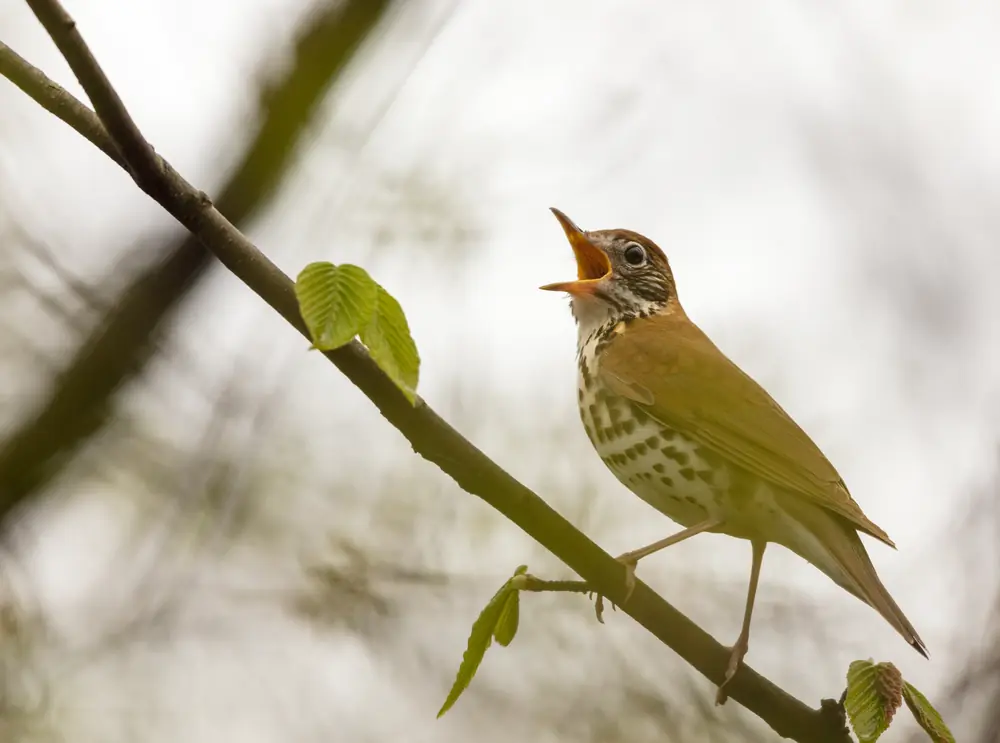
Wood thrush
TWRA says present from the first half of April to mid-October · Larger, shaded woodlands, with the highest densities recorded in the Smoky and Cumberland mountains
The song is a flute-like phrase that finishes in a trill. The bird needs a shaded understory and an open, leaf-littered floor. Nests sit 5 to 25 feet up, averaging about 10 feet. TWRA notes a significant decline in the breeding population since 1966, and the National Audubon Society lists the species on its Watch List.
-
Scarlet tanager
TWRA says mid-April to mid-October · Large blocks of mature hardwood or hardwood and pine forest, fairly common in the east and rare in the west and middle of the state
The male is a vivid red with black wings. TWRA describes the song as a robin with a sore throat and says the best time to look is spring, before the canopy fills in. The population has been increasing in Tennessee since 1966, according to the Breeding Bird Survey.
-
Cerulean warbler
TWRA says mid-April to the end of August · Tall, mature deciduous forest, concentrated in the Cumberland Mountains
TWRA calls this sky-blue warbler the fastest-declining eastern songbird and says about 80 percent of the population breeds in a region running from Tennessee’s Cumberland Mountains to West Virginia. The agency adds that Tennessee holds the highest breeding densities ever recorded for the species. The male’s song has three parts (buzzy notes, a higher buzzy phrase and a closing trill), and the nest is placed high on a horizontal branch, so most people get only a flash of blue overhead.
Give each first-of-year bird its own line in the Naturalist’s Field Journal: the day, the spot and the bird’s behavior. If you are still seeing the March arrivals, the Tennessee March page lists them.
What is nesting at Reelfoot Lake and along the Mississippi in April?
West Tennessee has its own April. Cypress swamp, flooded bottomland and big river corridors host birds that are rare or absent in the east, and some are on territory before the month begins.
-
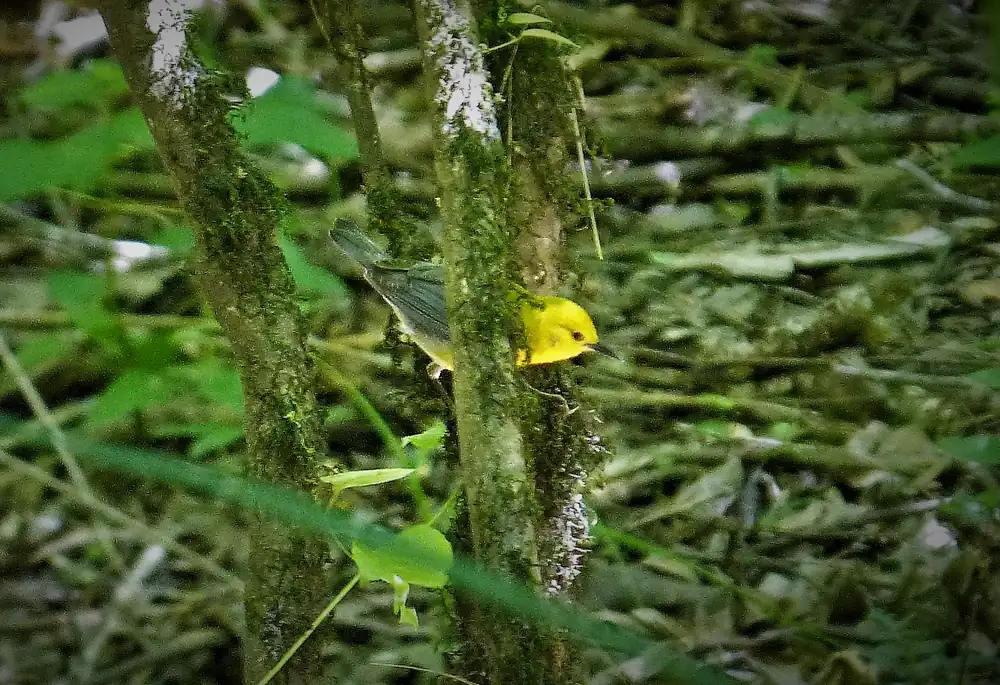
Prothonotary warbler
TWRA says it is present from early April to early August, typically arriving from late March through early April · Wooded swamps, flooded bottomland forests and slow rivers; TWRA names the Reelfoot Lake area and Meeman-Shelby Forest State Park among the best places
This golden-yellow warbler is the only eastern warbler that nests in a cavity. It prefers old downy woodpecker holes and will use nest boxes, lining them with moss and liverworts about 6.5 feet up. Scan low over still water, where the yellow stands out against the shadow.
-
Mississippi kite
TWRA says late April to early September · Mature woodland and bottomland near the Mississippi River; fairly common in West Tennessee, a rare migrant elsewhere
The kite is a slim gray hawk that hunts insects on the wing and gathers in flocks of 15 or more where food is plentiful. Between 1983 and 2008, wildlife managers moved more than 400 young kites from Kansas to Memphis, Hatchie National Wildlife Refuge and Paris Landing State Park, and TWRA says breeding populations in these areas have dramatically increased. Pairs lay two eggs in a crow-sized nest near a treetop. TWRA also warns that kites are known to attack people who walk too close to a nest.
The same bottomland forests flood after heavy rain, so a trail that was dry in March can be under water in April. Look at the forecast before you drive far.
Where is the best April wildflower bloom in Tennessee?
April belongs to the forest floor. Great Smoky Mountains National Park says the peak of spring wildflower bloom usually comes in mid- to late April at lower elevations and a few weeks later on the highest peaks, and the park is home to more than 1,500 kinds of flowering plants. Because bloom climbs the mountains like a tide, a single weekend can show you early flowers at the bottom of a valley and buds near the top.
-
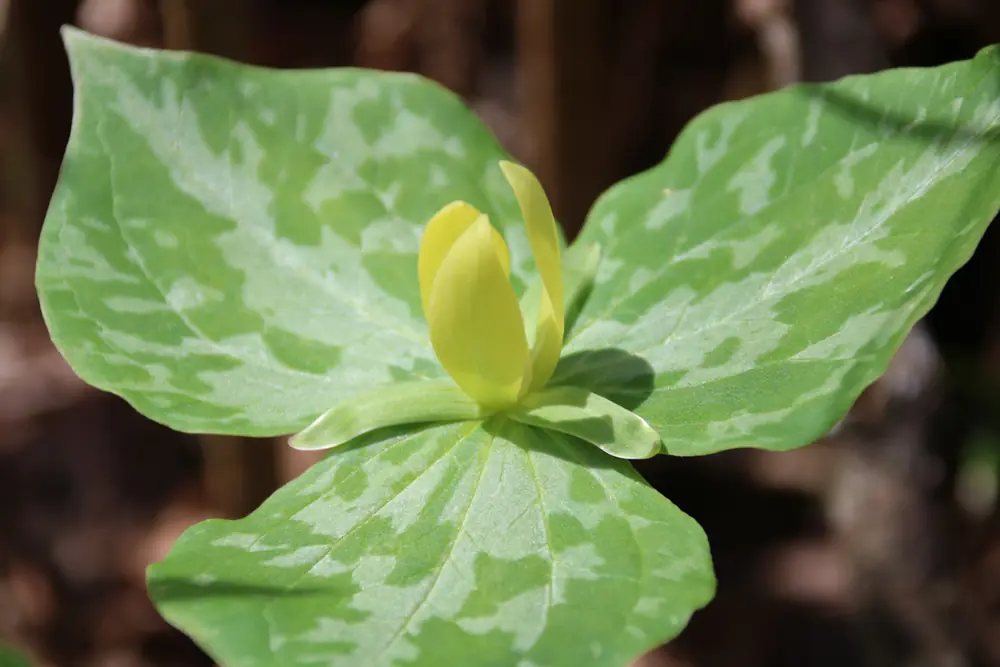
Trilliums and the Smokies’ spring ephemerals
Mid- to late April at low elevations in the Smokies, according to the park · Great Smoky Mountains National Park, including the roadsides and trails near the base of the mountains
The park counts 10 species of trillium. It names lady slipper orchids, showy orchis, crested dwarf iris, fire pink, columbine, bleeding heart, phacelia, jack-in-the-pulpit, little brown jugs and violets among its spring ephemerals. The white trillium turns pink as its flowers age. They are called ephemerals because they bloom and fade quickly, ahead of the leaves overhead. Keep to the path and leave blossoms where they grow.
-
Collins Gulf and the South Cumberland Plateau
Spring; the state page gives no bloom dates · Collins Gulf, part of Savage Gulf State Natural Area, Grundy and Sequatchie counties (Central time)
The state natural areas program says Collins Gulf is noted for a spectacular display of spring wildflowers. The natural area spans 15,590 acres, includes old-growth forest in the gorge and holds the Stone Door, a crevice 10 by 100 feet. Bring a plant guide and check with the park about trail conditions before you go.
-
Cedar glades of Middle Tennessee
Spring; the state’s natural areas page gives no bloom dates, so go when a local group or park says the glades are in flower · Cedars of Lebanon State Natural Area and State Park, Wilson County (Central time)
Thin soil over limestone and open patches among red cedars give glades their own community of plants. The state natural areas page lists the federally endangered leafy prairie clover and the Tennessee coneflower, along with Tennessee milkvetch, limestone flame flower and yellow sunnybell. A Middle Tennessee State University news release calls the Tennessee coneflower the first Tennessee plant on the Endangered Species List and says many glade plants occur nowhere else in the world. The natural area has no developed parking or trails, so many visitors head to the state park instead. Tread lightly, because the soil is thin and easy to damage.
The Elsie Quarterman Cedar Glade Wildflower Festival, held each spring at Cedars of Lebanon, has not posted 2027 dates on the center’s website, so check with the organizers. For what blooms before this, read Tennessee in March.
When do Tennessee’s redbud and dogwood bloom, and when do the leaves open?
The spring tree show runs from pink to white to green. The University of Tennessee Gardens says eastern redbud blooms from mid- to late March through mid-April, before its leaves emerge, and slightly before the dogwoods, so April is the tail end of redbud and the heart of dogwood season.
-
Eastern redbud, finishing
The UT Gardens give mid- to late March through mid-April · Woodland edges, roadsides and yards statewide
The UT Gardens’ window ends in mid-April, so by the middle of the month most redbuds are finishing. If you are following one tree, record the day its petals fall and the day its first leaf unfolds.
-
Flowering dogwood
After redbud; a specific date varies with elevation and weather · Understory of woodlands statewide; East Tennessee marks the bloom with Knoxville’s Dogwood Arts Festival
The UT Gardens explain that the four showy white, pink or red parts of the flower are not petals but bracts, scales that grow large and bright, and that the tree feeds more than 40 species of birds in winter. The University has bred disease-resistant selections because dogwood anthracnose and powdery mildew harm the species.
The USA National Phenology Network’s Nature’s Notebook accepts leaf and flower dates from anyone and lists a Redbud Phenology Project among its campaigns, so a single tree can add to the science. The journal’s tree plate gives you a place to keep the dates.
Which frogs, toads and salamanders can you find in Tennessee in April?
The earliest breeders have finished, and the next group is taking over. Rain still sets the schedule, and a mild, wet night is better than any date on the calendar.
-
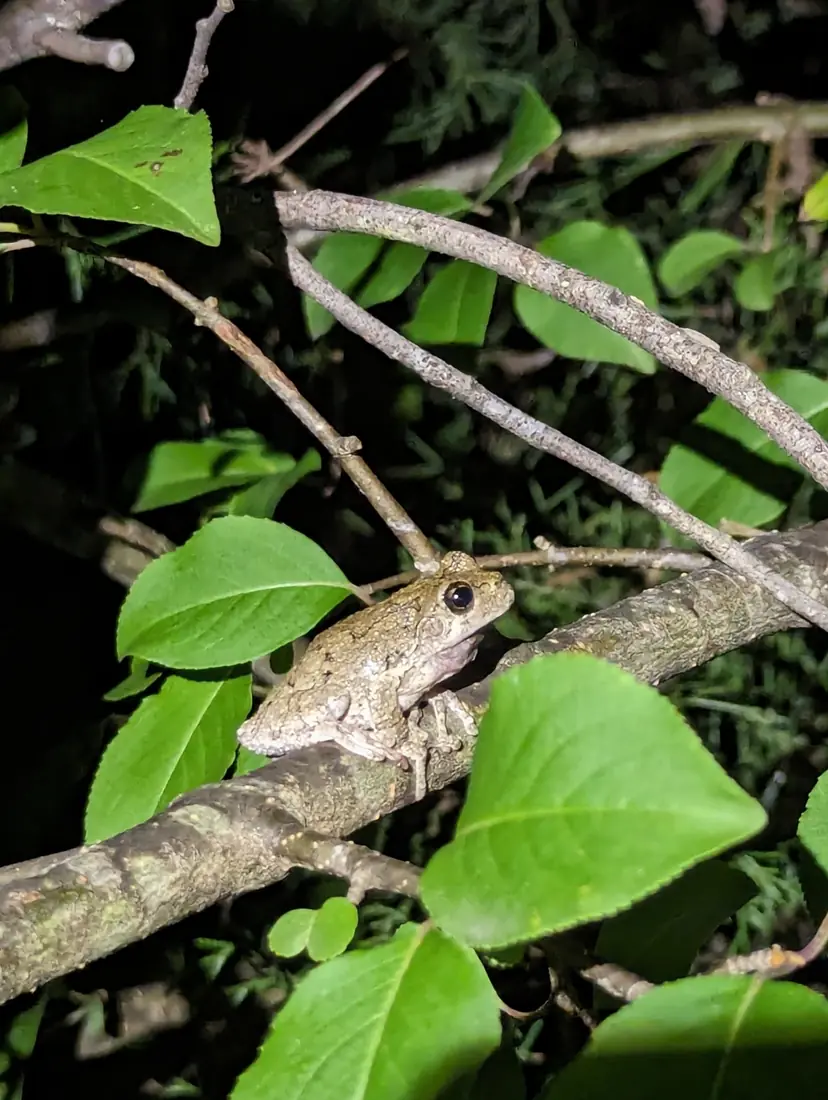
Cope’s gray treefrog
TWRA says calls are heard from late March through October, peaking May through July · Treetops statewide; small pools, rain barrels and swimming pools when breeding
The call is a short, raspy trill on one pitch, faster than the gray treefrog’s. An egg mass of 1,000 to 2,000 eggs breaks into small clusters of 10 to 40 almost at once. The tadpoles hatch in three to seven days and change into frogs in about six weeks.
-
American toad
TWRA says breeding typically takes place in March or April and can run into July · Statewide, around shallow fishless water
TWRA describes the male’s call as a long trill lasting 4 to 20 seconds, growing insistent, loud and frequent in the breeding season. The Fowler’s toad, with a short, unmusical waaah, typically breeds in May or June, so a trill at a pool in April is more likely an American toad.
-
Smokies salamanders
Year-round; spring rain is the time to look · Streams and forest floors of Great Smoky Mountains National Park
The park counts 31 salamander species, of which 25 are lungless, and four new species were found between 2020 and 2024. It says that salamanders make up the majority of the vertebrate animals by weight in the park on a given day. Jordan’s salamander and the Cherokee black-bellied salamander live only in the Smokies region. Look rather than handle, and put back any rock or log you turn.
Use a phone to record a call, and then match it against the TWRA frog and toad pages. The map of sounds in the journal suits the task.
What are Tennessee’s bears, turkeys, elk and fish doing in April?
Large animals are easier to find in April than in winter and easier to disturb. Give every one of them room.
-
Wild turkeys
TWRA says males begin vying for mates in late winter or early spring · Every county, in woods and along their edges
A tom puffs his feathers and fans his tail in a strut and gobbles to attract hens. The hen builds a shallow, leaf-lined nest on the ground at the base of a tree or bush, lays 7 to 14 eggs (11 on average) and incubates for 27 to 28 days. TWRA says wild turkeys are now found in every county in the state.
-
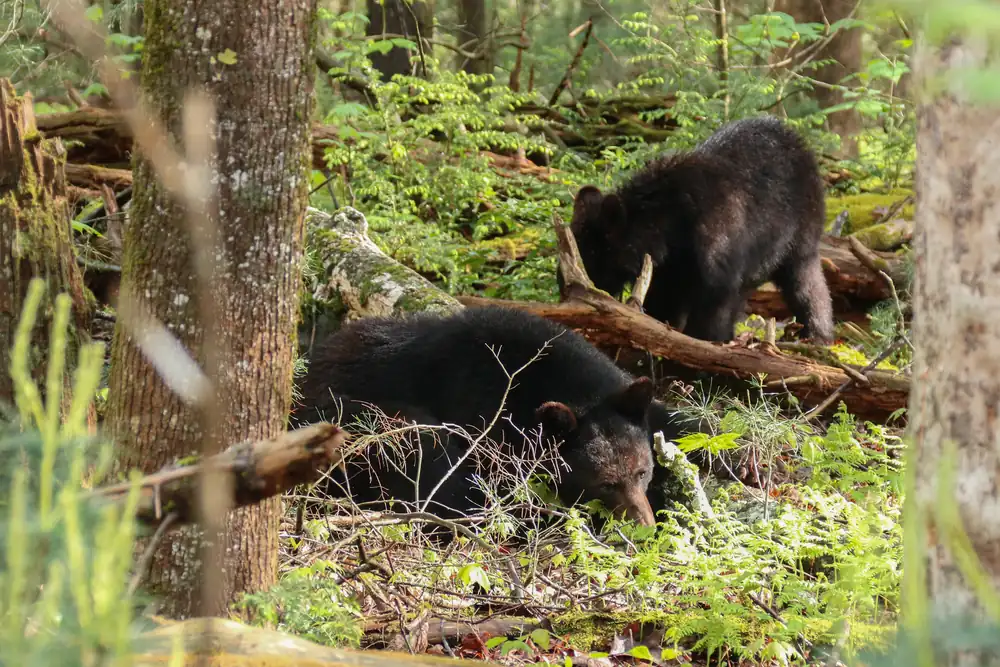
Black bears and cubs
The Smokies park says cubs leave the den in late March or April, at about five pounds · Great Smoky Mountains National Park and the mountains of East Tennessee
Cubs stay with their mother for about 18 months. The park estimates roughly 1,900 bears live inside it, about two per square mile, and says approaching within 50 yards (150 feet), or any distance that disturbs a bear, is illegal. If a bear changes its behavior because of you, you are too close: back away slowly, facing it.
-
Elk regrowing antlers
TWRA says bulls shed antlers in February or March, so those you see now are growing new ones; calves are born from late May through June · North Cumberland Wildlife Management Area; the Hatfield Knob viewing tower in Campbell County (Eastern time)
TWRA released 201 elk between 2000 and 2008 into a restoration zone of 670,000 acres in Scott, Morgan, Campbell, Anderson and Claiborne counties. A University of Tennessee study found about 16,000 people visit the tower each year, and a live camera is online if the weather is poor.
-
White bass and crappie
TWRA says white bass and yellow bass gather in upstream reaches in March and April, and that crappie move shallow to spawn in early April · The Stones River arms of J. Percy Priest Reservoir; the headwaters of Douglas Reservoir, where TWRA gives January through April for the white bass run
At Percy Priest the fish stack up in the East and West forks of the Stones River and in Stewart Creek, where TWRA lists several boat and bank access points. Douglas Reservoir is called the best crappie reservoir in East Tennessee, with February through early May the best time. Watching a run from a bank is simple; fishing needs a license and attention to current size and creel limits.
Store trash, pet food and bird feeders where a bear cannot reach them, and never feed wildlife.
How warm, wet and stormy is April in Tennessee?
April is the end of the hard freezes and the start of the stormiest stretch of the year. NOAA’s normals put average highs between 69.4 °F at Bristol and 73.6 °F at Chattanooga, but only 63.5 °F at Crossville on the plateau, and the Smokies show how much height matters: the National Park Service lists 71 °F at Gatlinburg against 49 °F on Kuwohi. The park says nights below freezing are uncommon at low elevations but still occur higher up, and that April brings over 4 inches of rain, usually as afternoon showers.
-
Tornado season
Spring is Tennessee’s most active severe-weather season; April 27, 2011 is the reminder · Statewide
The National Weather Service office in Nashville says the April 2011 outbreak produced at least 28 mostly weak tornadoes in Middle Tennessee, with no deaths there, and that rain-cooled air from an earlier squall line helped protect the area from the devastating storms that hit Alabama and East Tennessee later that day. The Morristown office lists three EF-4 tornadoes in its area, including the Collegedale tornado, which killed 13 people. The state’s emergency agency lists tornadoes, flash flooding, damaging winds and lightning among the state’s threats, which can develop quickly.
-
Late freezes, not gone yet
The last-freeze table in the next section shows the nine-in-ten date reaching late April or early May on the plateau and in the northeast · The Cumberland Plateau, Bristol area and mountains
Crossville averages 4.0 nights at or below 32 °F in April, and Bristol 3.5. Flowers, fruit blossoms and garden seedlings in those places can still be caught.
| Station | Average high | Average low | Nights at 32 °F or colder | Precipitation | Snowfall |
|---|---|---|---|---|---|
| Memphis | 73.4 °F | 53.0 °F | 0.2 | 5.87 in | 0.0 in |
| Jackson | 72.1 °F | 48.4 °F | 1.5 | 5.12 in | – |
| Nashville | 72.6 °F | 48.9 °F | 0.9 | 4.72 in | 0.0 in |
| Crossville | 63.5 °F | 43.5 °F | 4.0 | 6.07 in | 0.2 in |
| Chattanooga | 73.6 °F | 49.9 °F | 0.4 | 4.87 in | 0.0 in |
| Knoxville | 71.2 °F | 48.0 °F | 1.0 | 4.71 in | 0.0 in |
| Bristol | 69.4 °F | 43.3 °F | 3.5 | 3.79 in | 0.1 in |
| Gatlinburg (park) | 71 °F | 42 °F | – | 4.5 in | 0 |
| Kuwohi (park) | 49 °F | 34 °F | – | 6.5 in | 5 in |
NOAA’s Climate Prediction Center puts out a fresh 90-day outlook around the middle of every month, at cpc.ncep.noaa.gov, and the newest one is worth a look before you plan a trip. Our weather page covers reading a forecast, and the cloud guide pictures the tall cumulus that builds ahead of a storm.
When is the last spring freeze in Tennessee?
By April the typical last freeze has already passed in Memphis, Chattanooga and Nashville, while Crossville and Bristol wait until the middle of the month. The normals come from NOAA and use the same main stations as the October page: Bristol Tri-City Airport, Knoxville Experiment Station, Chattanooga Lovell Airport, Crossville 7 NW, Clarksville No. 2, Nashville International Airport, Jackson 4 NE and Memphis WFO.
| Station | One year in ten | Median | Nine years in ten |
|---|---|---|---|
| Memphis | Mar 9 | Mar 29 | Apr 13 |
| Jackson | Mar 18 | Apr 4 | Apr 21 |
| Nashville | Mar 13 | Mar 31 | Apr 16 |
| Clarksville | Mar 26 | Apr 10 | Apr 26 |
| Crossville | Apr 2 | Apr 20 | May 9 |
| Chattanooga | Mar 6 | Mar 24 | Apr 8 |
| Knoxville | Mar 26 | Apr 11 | Apr 29 |
| Bristol | Mar 30 | Apr 16 | May 5 |
A freeze after the nine-in-ten date still happens in about one spring in ten. To check your own town, open the Tennessee frost page before you set out tender plants.
How much daylight does Tennessee gain in April?
About an hour, at a little over two minutes a day. Nashville begins April with 12 h 35 m between sunrise and sunset and finishes with 13 h 38 m, a gain of 63 minutes, and the other seven cities in the table gain between 60 and 64. Chattanooga, farthest south, adds the least, and Clarksville and Bristol, farthest north, add the most. Clarksville and Bristol finish April at 13 h 40 m, and even Chattanooga reaches 13 h 34 m.
| City | Apr 1 | Apr 30 | Gained | Per day |
|---|---|---|---|---|
| Memphis | 12 h 34 m | 13 h 35 m | 61 min | 2.1 min |
| Jackson | 12 h 35 m | 13 h 36 m | 61 min | 2.1 min |
| Nashville | 12 h 35 m | 13 h 38 m | 63 min | 2.2 min |
| Clarksville | 12 h 36 m | 13 h 40 m | 64 min | 2.2 min |
| Crossville | 12 h 35 m | 13 h 37 m | 62 min | 2.1 min |
| Chattanooga | 12 h 34 m | 13 h 34 m | 60 min | 2.1 min |
| Knoxville | 12 h 35 m | 13 h 38 m | 63 min | 2.2 min |
| Bristol | 12 h 36 m | 13 h 40 m | 64 min | 2.2 min |
Clocks stay on daylight time through April, so the day lengths read the same whatever the date. For sunrise and sunset at a particular address, use the daylight tool.
What can you see in Tennessee’s night sky in April 2027?
April offers a bright Venus in the dawn, a stately Jupiter and a fading Mars in the evening, a Pink Moon on the 20th and a poor year for the Lyrid meteors. Times are Central, which suits Memphis, Nashville and Crossville, with Eastern in parentheses for Chattanooga, Knoxville and the Tri-Cities; the whole state keeps daylight time all month.
-
The Pink Moon
Full on Tuesday, April 20; best seen that evening as it rises · Anywhere with a clear eastern horizon at dusk
The Old Farmer’s Almanac names April’s full moon the Pink Moon for the early-blooming moss pink, or creeping phlox, not for any color in the sky. The moon is full at 5:27 p.m. Central, before it has risen, so look for it on the horizon around 8 p.m. local time. By our own calculation moonrise that evening is about 7:50 p.m. in Chicago, 7:58 p.m. in Houston and 8:19 p.m. in Atlanta, so expect roughly the same hour in Tennessee.
-
Venus in the dawn
All month, in the east before sunrise · Low in the east-southeast to east
Venus shines at about magnitude -3.9. At the start of the month Venus is up well ahead of dawn (about 75 minutes, by our own computation), a head start that shrinks week by week. On the mornings of Saturday the 3rd and Sunday the 4th a slim old crescent Moon hangs close by.
-
Jupiter and Mars after dark
All month; the Moon passes both on the evenings of April 14 and 15 · High in the south and southwest in the evening, in the region where Leo meets Cancer
Jupiter stays up late all month; on April 1 it sets roughly nine hours after the sun does. Mars, fading to about magnitude 0.0 by mid-month, sits nearby. The Moon, 68 percent lit and waxing, drifts past Jupiter on the 14th and 15th (closest on the 15th) and stands about 3 degrees from Mars on the 15th.
-
The Lyrid meteors, a poor year
Peak on the night of Thursday, April 22, at about 8:41 p.m. Central (9:41 p.m. Eastern) · Open sky away from lights, looking east to northeast
The Lyrids are active from about April 14 to April 30, and the American Meteor Society and SeaSky put the best rate near 20 an hour in a dark sky. This year the Moon, just three days past full and almost round, comes up around 10 p.m. in cities near Tennessee, so only the first hours of night are moonless, with Lyra still hugging the eastern horizon. Plan on a few meteors an hour at most. The shower now and then throws a short burst nobody can forecast.
| Phase | Date | Time |
|---|---|---|
| New moon | Tuesday, Apr 6 | 6:51 p.m. CDT (7:51 p.m. EDT) |
| First quarter | Tuesday, Apr 13 | 5:56 p.m. CDT (6:56 p.m. EDT) |
| Full moon, the Pink Moon | Tuesday, Apr 20 | 5:27 p.m. CDT (6:27 p.m. EDT) |
| Last quarter | Wednesday, Apr 28 | 3:18 p.m. CDT (4:18 p.m. EDT) |
Phase dates for any other place are on the moon phases page. All times above come from the U.S. Naval Observatory. The zone line crosses the Cumberland Plateau close to Crossville, so go by the zone your own clock follows.
What can Tennessee families do outdoors in April 2027?
- Go to the Dogwood Arts Festival. The organizer lists the 2027 festival for April 23 to 25 in downtown Knoxville. Call or check the festival’s site for admission and the dogwood trails.
- Join the City Nature Challenge. The organizer says the 2027 observation period runs April 30 to May 3, with identification time through May 16 and results on May 20. Check the participant list for your city.
- Mark Earth Day on April 22 and National Arbor Day on April 30. National Arbor Day falls on the last Friday in April. Tennessee’s own Arbor Day falls on the first Friday in March, according to the Department of Agriculture, so the national date is a second chance to plant or measure a tree.
- Visit the Smokies for wildflowers. Great Smoky Mountains National Park describes a week-long Spring Wildflower Pilgrimage each spring, with programs and guided walks, but we found no 2027 dates, so confirm with the organizers before booking. Also watch for the lottery for the synchronous firefly viewing; the park’s page showed only the 2026 window of May 20 to 27, so look for the 2027 details in the spring.
- Report the hummingbirds. TWRA gives mid-April as the start of the ruby-throated hummingbird’s stay, and the female builds a walnut-sized nest. Journey North maps first sightings, so post yours.
- Follow a nest. Anyone can join the Cornell Lab of Ornithology’s NestWatch, and a backyard bird box is an easy first project.
- Find a monarch. Journey North collects sightings of monarch eggs, larvae and adults, with an emphasis on first sightings in each category in spring.
Note each sighting in the Naturalist’s Field Journal; its plates match the kinds of watching above. You can also look at other states’ guides or go back to Tennessee in March. When you photograph something for iNaturalist, name the place in the note.
Safety notes for April in Tennessee
- Spring turkey season. TWRA lists the general spring season as April 3 to May 16, 2027. The limit is two male turkeys for the season, only one of them a jake, and no hens, including bearded hens, may be taken. Hours run from 30 minutes before legal sunrise to sunset, and a bird must stay intact until it is tagged and checked in. Electronic calls, baiting and live decoys are banned. Expect hunters in the woods near dawn, and check the rules for any wildlife management area you visit.
- Blaze orange. TWRA requires 500 square inches of orange or pink for big-game hunters, but the rule does not extend to archery-only seasons or turkey hunts, so a turkey hunter in camouflage is legal. Hikers on public land in spring should wear bright colors anyway.
- Tornadoes and flash floods. TEMA’s advice is to know your risk, make a plan, gather supplies to last at least three days and line up more than one way to receive alerts, NOAA Weather Radio among them. Never drive into floodwater.
- Burning. The Department of Agriculture requires a burn permit, obtained through BurnSafeTN.org or by phone on the day of the burn, from October 15 through May 15 in counties that allow open burning. Burning without one is illegal and can bring a fine or up to 30 days in jail; local rules may be stricter.
- Bears. Inside the Smokies park, getting within 50 yards of a bear, or close enough to disturb it, breaks the rules. Keep food and trash secured.
- Kites. Mississippi kites are known to attack people who go too close to a nest, so back away if a bird dives at you.
- Snakes. TWRA says four venomous snakes live in Tennessee, and copperheads occur statewide and court and mate in spring and fall. The agency advises checking before you put your hands in cracks and crevices, being careful in rocky areas and leaving any snake alone.
- Ticks. A guide from the Oak Ridge research park counts at least 15 tick species in Tennessee and recommends treating clothing, not skin, with permethrin, checking often and removing attached ticks promptly with tweezers.
Sources (52)
- TWRA: 2027 spring turkey season (dates, limits, hours, check-in)
- TWRA: 2026–27 hunting and trapping season dates
- TWRA: big game hunting, fluorescent orange or pink requirement
- TWRA: wild turkey
- TWRA: white-eyed vireo
- TWRA: northern parula
- TWRA: wood thrush
- TWRA: scarlet tanager
- TWRA: cerulean warbler
- TWRA: Swainson’s warbler
- TWRA: summer tanager
- TWRA: prothonotary warbler
- TWRA: Mississippi kite
- TWRA: ruby-throated hummingbird
- TWRA: Cope’s gray treefrog
- TWRA: Fowler’s toad
- TWRA: elk
- TWRA: copperhead
- TWRA: safety tips and a code of ethics for wildlife watching
- TWRA: J. Percy Priest Reservoir fishing (white bass and crappie)
- TWRA: Douglas Reservoir fishing (white bass run, crappie)
- TWRA: American toad
- Tennessee Department of Agriculture: Governor proclaims Arbor Day in Tennessee (2021)
- National Park Service: wildflowers of Great Smoky Mountains
- National Park Service: amphibians of Great Smoky Mountains
- National Park Service: black bears in Great Smoky Mountains
- National Park Service: synchronous fireflies in Great Smoky Mountains
- National Park Service: weather in Great Smoky Mountains National Park
- Tennessee Department of Environment and Conservation: Savage Gulf State Natural Area
- Tennessee Department of Environment and Conservation: Cedars of Lebanon State Natural Area
- MTSU Center for Cedar Glade Studies
- MTSU News: cedar glade wildflower festival preview, 2026
- Tennessee Aquarium: spring wildflowers are nature’s hidden treasures
- University of Tennessee Gardens: March plant of the month, eastern redbud
- University of Tennessee Gardens: flowering dogwood
- Dogwood Arts: Dogwood Arts Festival 2027
- City Nature Challenge
- Arbor Day Foundation: history of Arbor Day
- NOAA NCEI: 1991–2020 monthly normals for Tennessee stations (data API)
- NWS Nashville: April 27, 2011 event summary
- NWS Morristown: April 27, 2011 tornado outbreak summary
- TEMA: preparing for spring severe weather (February 2026)
- Climate Prediction Center: 90-day outlooks
- Tennessee Department of Agriculture: debris burn permits required through May 15 (April 2025)
- Oak Ridge National Environmental Research Park: ticks (PDF)
- U.S. Naval Observatory: moon phases, 2027 (data API)
- Old Farmer’s Almanac: full moon names
- Journey North: hummingbirds
- Journey North: monarchs
- Cornell Lab of Ornithology: NestWatch
- USA National Phenology Network: Nature’s Notebook
- Photos via Wikimedia Commons; licenses and photographers are credited under each picture
