What to look for in nature in Tennessee this February
February is winter’s last month in Tennessee and spring’s first rehearsal. The cranes on the Hiwassee start lifting off for the north, bald eagles settle onto eggs, and on the first warm, wet evening the ponds fill with peepers. Red maples bloom while the woods are still bare, the bluebirds start house-hunting, and the days lengthen by close to an hour. Snow is still possible, especially on the Plateau and in the mountains. Because the state straddles two time zones, each clock time on this page says Central or Eastern.
Other months in Tennessee: October, November, December, January.
Start here
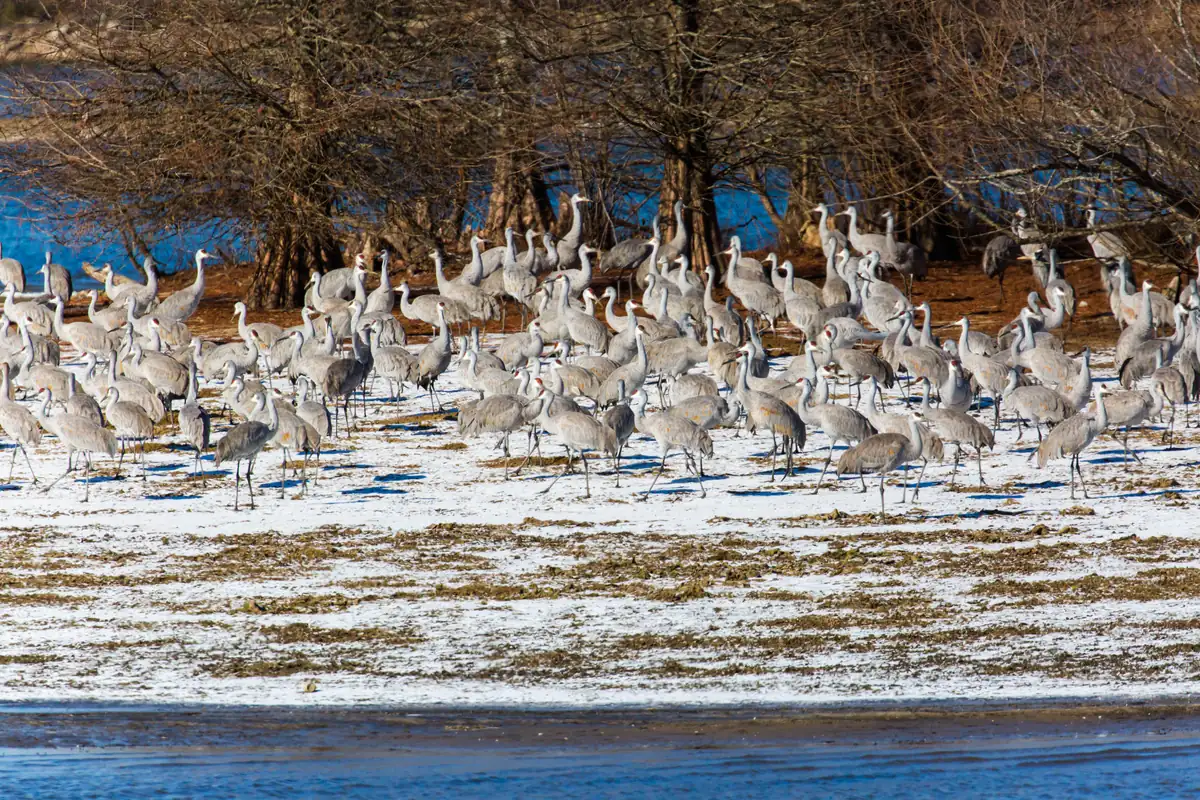
- Cranes on the move. TWRA dates the cranes’ spring flight from mid-February to late March. See the flock at the Hiwassee platform near Birchwood early in the month, then listen for bugling lines of birds overhead on mild days later in the month.
- Eagles on the nest. Bald eagles in Tennessee lay most of their eggs in late February, while visiting eagles from the north are still near peak numbers. Reelfoot Lake State Park runs eagle tours every day this month; book ahead.
- Two planets in Leo. Jupiter stands directly opposite the sun on Wednesday the 10th, nine days before Mars does the same on Friday the 19th. On the evening of the 20th the Snow Moon rises near both, with a very faint penumbral eclipse under way at moonrise.
In the Naturalist’s Field Journal, the map-of-sounds plate is the place for the first peeper night and the bugling of cranes heading north, the nest-observed page fits an eagle or heron colony watched from a distance, a colours-of-the-day entry can capture red maple bloom against a gray sky, and the birds-I-have-seen page holds your Great Backyard Bird Count tally.
Regions used below: West Tennessee; Middle Tennessee; The Cumberland Plateau; East Tennessee and the Valley; The Smokies and Blue Ridge.
When do the sandhill cranes leave Tennessee?
They start to go in the middle of the month. TWRA’s species account gives the spring flight north as running from mid-February through late March, so February is the month when the huge winter flock on the Hiwassee begins to thin and birds that wintered farther south pass overhead on their way back to the Great Lakes. TWRA says Tennessee has averaged over 29,000 cranes a year, and that the state’s birds belong to the Eastern Population, which the agency ranks as the second-largest sandhill crane population on Earth. Cranes have only wintered here since the 1990s.
-
Last weeks at the Hiwassee platform
Early and mid-February, before the flock disperses · Hiwassee Refuge viewing platform north of Birchwood, Meigs County (Eastern time)
TWRA notes that the cranes gather near the Watchable Wildlife platform from mid-October through February and sometimes linger into March. The refuge itself stays closed to all entry until the end of February, but the platform is open. Listen for paired birds standing side by side and calling in a tight, synchronized duet, which TWRA calls unison calling; it is one of the surest signs that a pair is together and getting ready for the breeding season ahead.
-
Hop-In Refuge, the western flock
Through the end of February · South Fork of the Obion River near Kenton, Obion County (Central time)
TWRA describes this 650-acre refuge, whose crop fields are flooded each winter, as home to the largest wintering crane population in West Tennessee and possibly more than 50,000 waterfowl. It is closed to all forms of use and trespass from November 1 through the last day of February, so scan the fields from public roads only, pull fully off the pavement, and never block a gate or farm lane.
-
Strings of cranes overhead
Mild days, mid-February into March · A corridor from Pickett and Clay counties toward Bradley and Monroe counties, and anywhere else in the state
Migrating cranes often fly too high to see at first. Listen for a rolling, wooden bugle that TWRA says carries more than a mile, then search the sky for long, wavering lines of birds flying with necks stretched straight out. Note the date, the time and the direction of travel.
Snow, Ross’s and white-fronted geese are heading north at the same time. Once the regular goose season ends on February 14, TWRA’s light goose conservation season opens on February 15, which is a reminder that some flooded fields will still see hunters into March.
Are bald eagles and hawks nesting in Tennessee in February?
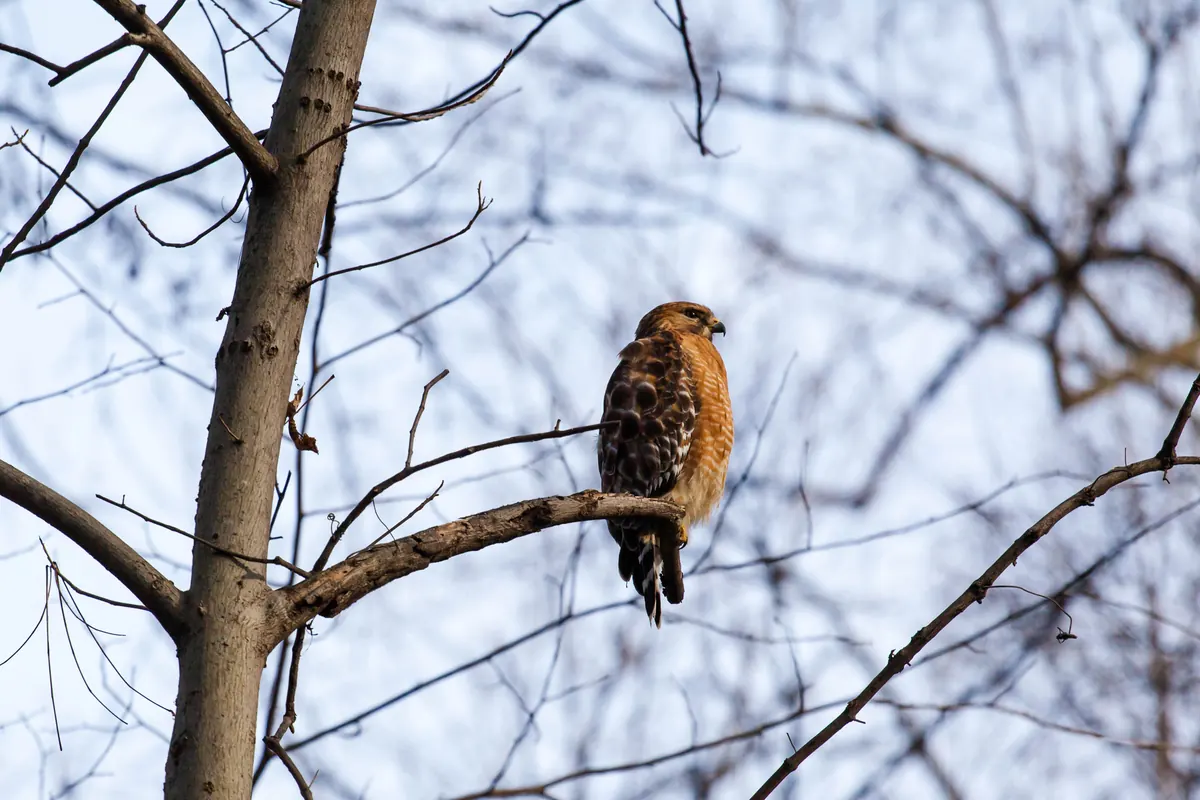
Yes. This is the month the state’s birds of prey switch from wintering to nesting. TWRA says bald eagle egg-laying in Tennessee peaks in late February, at the same time that the visiting eagles from the north are still at their highest numbers, a peak the agency places between late January and mid-February. Red-shouldered and red-tailed hawks are claiming territories overhead, and the great horned owls are busy feeding newly hatched young.
-
Bald eagles on eggs
Egg-laying peaks in late February · Big trees near reservoirs and rivers statewide
Pairs stay together for years and return to the same nest, adding material each season; TWRA says an old nest can reach 8 feet across, 12 feet deep and several tons. The usual clutch is two eggs, sometimes one or three, and both parents share 34 to 36 days of incubation, so eggs laid this month should hatch around the turn of March into April. An adult lying low in the nest on a raw day is very likely incubating. Watch from far away, with a scope, and leave quickly if the birds stand up or call at you.
-
The last big eagle weeks at Reelfoot
Daily van tours through February · Reelfoot Lake State Park and Reelfoot National Wildlife Refuge, Lake and Obion counties (Central time)
The state park says its eagle tours run every day in January and February and highlight more than 200 migrating eagles wintering around the lake. Book ahead (the park office is 731-253-9652). The park has also posted notice of tornado repairs at its Blue Bank and Eagle Basin day-use areas, with intermittent closures while the work goes on and completion expected in February 2027, and Eagle Basin itself has been closed since June 2026 until further notice, so ask which areas are open before you go.
-
Red-shouldered hawks calling over the bottoms
January and February · Wooded creek bottoms, swamps and riverside woods
TWRA says pairs return to their territories in these two months and soar in circles high overhead, calling loudly. The agency also warns that blue jays imitate the call remarkably well, so look up before you write one down. The nest is built below the canopy, in a main fork of a tall hardwood near water.
-
Red-tailed hawk sky dances
Late winter · Pastures, roadsides and open country with scattered big trees
TWRA describes courting red-tails diving and rolling together in the sky, sometimes locking talons and tumbling toward the ground before breaking apart. Northern birds swell the population from November through March, so February has plenty of hawks on fence posts and power poles. Look for the pale chest crossed by a dark belly band and, on adults, the reddish, unbarred tail.
Owl nests started in January are full of fuzzy young now. Whatever the species, a nest is not a photo prop: stay back, keep voices low and do not play recorded calls.
When do spring peepers start calling in Tennessee?
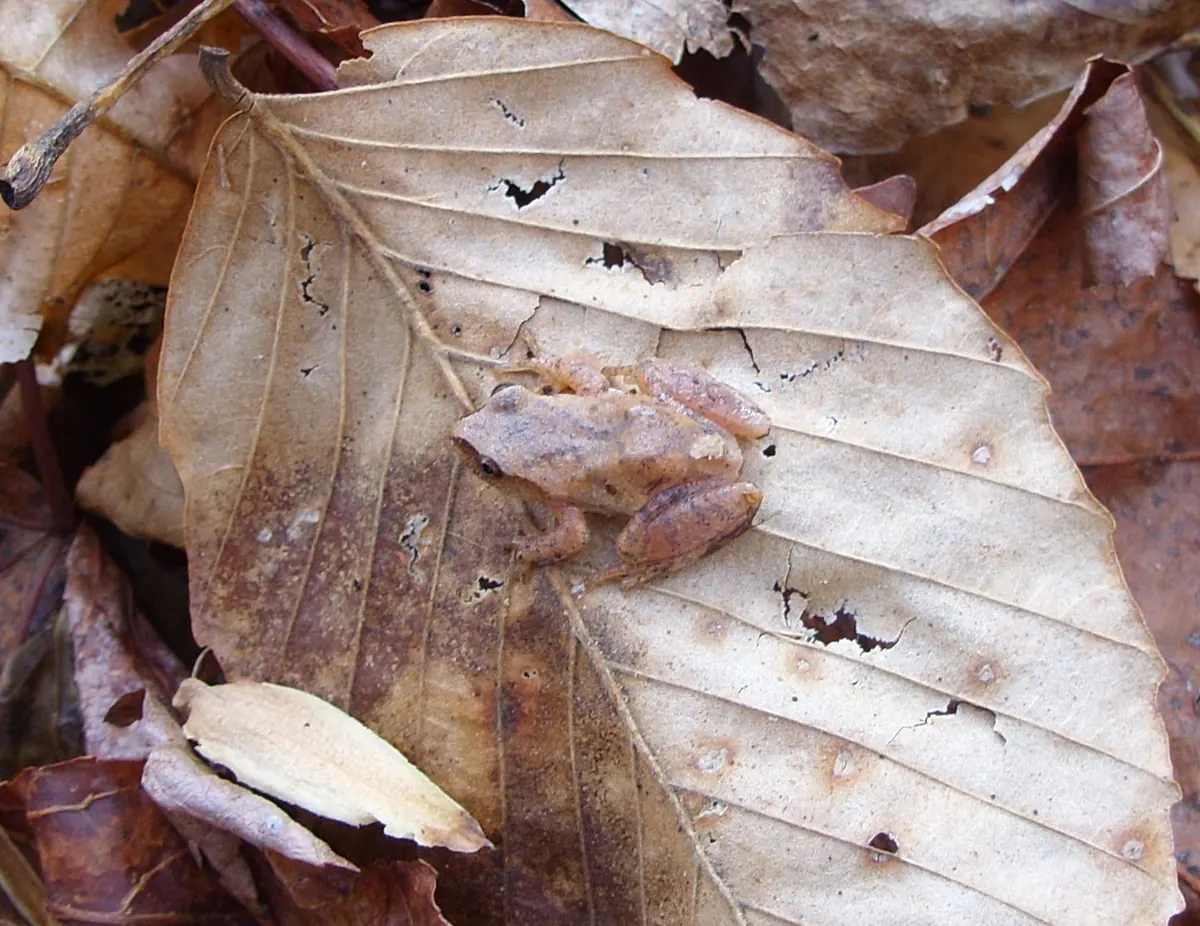
Usually in February. A frog guide from the Oak Ridge National Environmental Research Park, written for Anderson County north of Knoxville, says the upland chorus frog, spring peeper and mountain chorus frog all start calling in February, wood frogs can be heard at a schoolyard wetland in Norris in mid-to-late month, and American toads are usually trilling by late February. The Tennessee Aquarium’s curator of forests calls the chorus frogs’ ratcheting and the peepers’ peeps some of the earliest frog calls in Southern Appalachia. On the first mild, rainy evening of the month, roll down a car window beside any flooded field.
-
Spring peeper
Mild nights from February on · Woodlands and brushy edges near fishless ponds and pools, in every part of the state
TWRA calls the peeper common and widespread, a frog of 0.7 to 1.2 inches with an often imperfect dark X on its back. A female lays 800 to 1,000 eggs, singly or in twos and threes, on underwater plants, and they hatch in two to three days. One male sounds like a high, clear whistle; a whole pond of them sounds like sleigh bells. TWRA notes peepers have been heard calling at 6,300 feet in the Smokies.
-
Mountain chorus frog
February rains · The Cumberland Plateau, the Cumberland Mountains and the far northeast and southeast corners of the Blue Ridge
This plateau specialist lives in three separate patches of the state and, TWRA says, often far from water on forested hilltops. It breeds in roadside ditches, pools beside streams and even rain-filled tire ruts on gravel mountain roads. Its back markings can look like a peeper’s X, but TWRA says a well-defined dark triangle between the eyes usually gives it away.
-
American toads, then leopard frogs
Toads usually by late February; leopard frogs as the nights warm · Farm ponds, sloughs and creek edges statewide, except high in the eastern mountains
The American toad’s long, musical trill is usually heard by late February, the ORNL guide says, while the harsher waah of the Fowler’s toad seldom starts before late March. The southern leopard frog’s call, as TWRA puts it, sounds much like a hand rubbed over a balloon, a run of clucks and groans, and its females lay globular masses of 3,000 to 5,000 eggs.
Record each species and the first date you hear it; year after year, those notes become a record of how early spring comes to your road. On wet nights, drive slowly near ponds, because frogs and salamanders cross roads in numbers.
Which spring birds come back to Tennessee first?
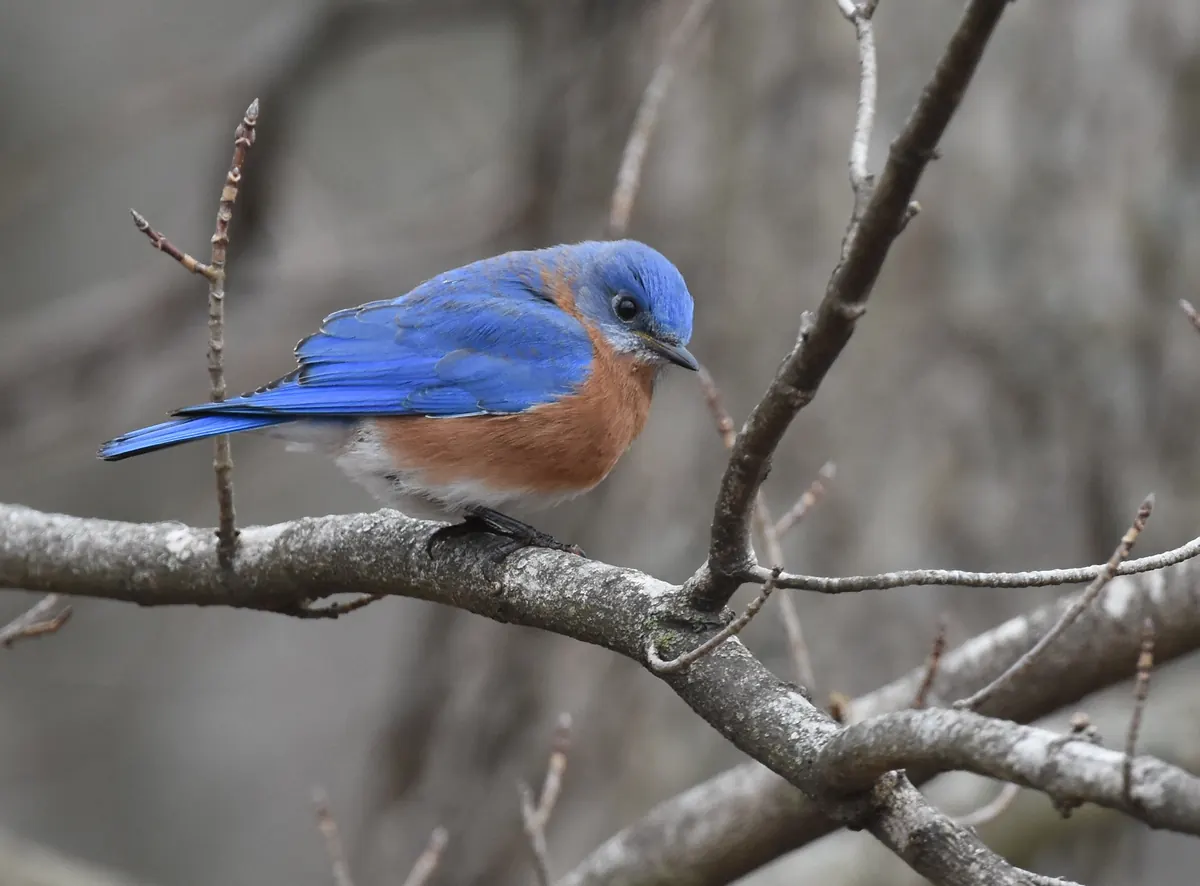
Purple martins lead the parade, and several resident birds start nesting chores long before spring officially arrives. TWRA calls the purple martin perhaps the earliest spring migrant in the state, arriving by the first of March, which makes late February the time to clean and open martin houses. Meanwhile herons are back on their colonies and bluebirds are inspecting boxes.
-
Purple martin scouts
The end of February into early March · Martin houses and gourd racks near water and open ground, in towns and on farms
In eastern North America these big swallows nest almost entirely in housing that people put up, a habit TWRA traces to the Choctaw and Chickasaw, who hung hollow gourds near their homes. Starlings and house sparrows compete for the same cavities, and TWRA says colonies often need people to manage them for that reason.
-
Great blue herons on their colonies
Warm days from January, egg-laying peak about mid-March · Heronries on islands and in wooded swamps near lakes and rivers
TWRA says great blue herons begin reoccupying nest sites on warm days as early as January. A colony can hold a few nests or several hundred, and the bare trees of February make the big stick platforms easy to count. The agency notes the number of colonies and birds in Tennessee has grown steadily since the 1980s.
-
Bluebirds house-hunting
February courtship, first eggs commonly in March · Fields, yards, cemeteries and open woods with nest boxes or old woodpecker holes
A male bluebird courts by carrying nest material into a cavity and back out again. TWRA says first clutches are commonly laid in March, so February is the time to put up or clean boxes. On very cold nights bluebirds pile into one box for warmth; the agency mentions 8 to 12 birds sharing a single box.
-
Red-winged blackbirds and robins
Song picks up in late winter · Marshes, wet fields and farm ponds; lawns and woods edges
TWRA calls the male red-wing’s gurgling kon-ke-ree a sure sign that spring is on the way, though males do not defend territories in earnest until March. TWRA says the winter roosts in West and Middle Tennessee number in the thousands, and such roosts can swell to several million birds. Robins gather in big flocks over the winter, and the agency says many start nesting in late winter, although peak egg-laying waits until mid-April.
All of these are worth adding to a Great Backyard Bird Count checklist in mid-February (see the families section below).
What are the first wildflowers to bloom in Tennessee?
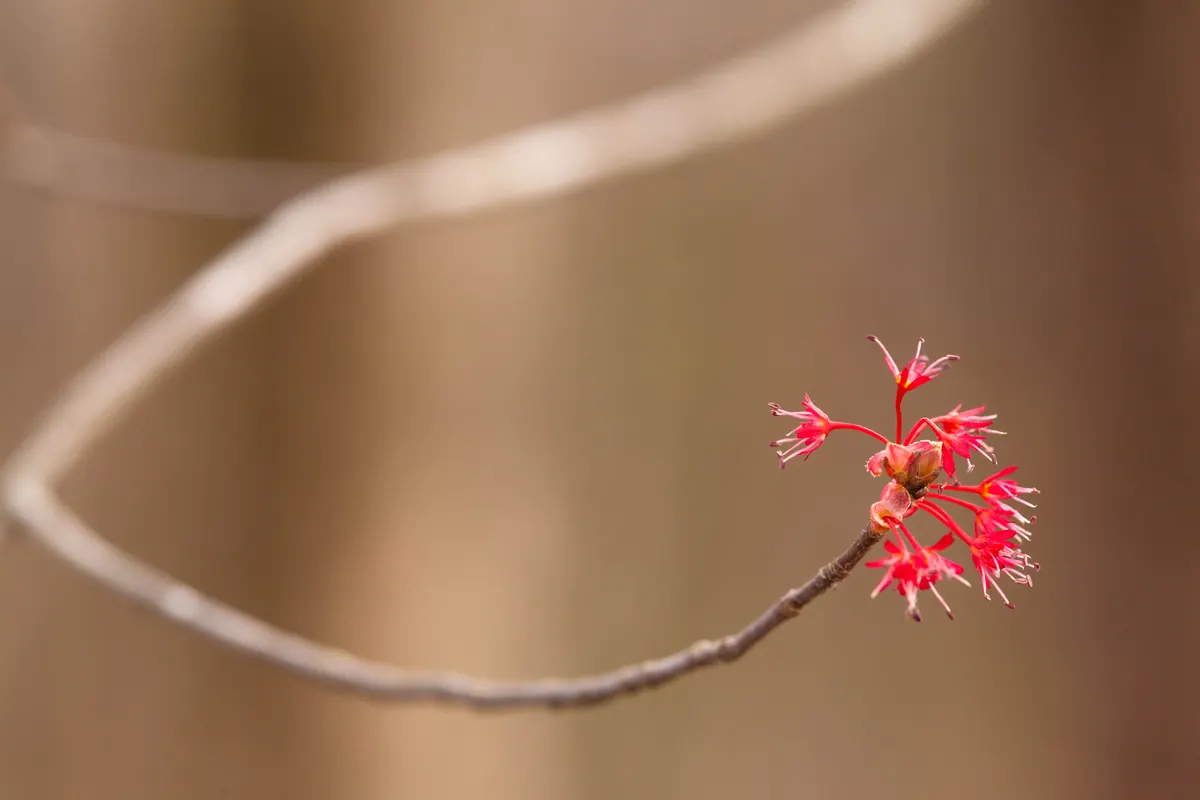
Look up before you look down. Great Smoky Mountains National Park says that from February through April red maple flowers wash the mountainsides in red, and the same small scarlet tufts show on red maples across the state, often before anything blooms on the forest floor. Then come the ephemerals: the park says its earliest hepaticas and spring beauties bloom in late winter, and that spring ephemerals emerge from February through April, before the trees leaf out.
-
Red maple in flower
February into April · Swamps, bottomlands, ridges and yards statewide
Use binoculars on the twig tips. The flowers are tiny but crowded together, so a tree in bloom looks as if it has been lightly dusted with red, and it is easy to spot from a car window along a creek.
-
Spring beauty
Tennessee State Parks lists January through May · Parks where it has been found include Meeman-Shelby, Long Hunter, David Crockett, Port Royal, Bledsoe Creek, Henry Horton, Booker T. Washington, Old Stone Fort and Cove Lake state parks
Small pink or white flowers with darker pink stripes, growing in low clusters close to the ground. State Parks notes the plant grows from a small tuber that was once eaten for its chestnut-like taste. Please leave them in the ground.
-
White trout lily
State Parks gives February through April · Cedars of Lebanon State Park, Wilson County (Central time)
One of the first woodland flowers, with a white bloom that hangs face-down to protect its nectar and pollen. The park system calls it hard to find in Tennessee, which makes a February sighting at Cedars of Lebanon worth noting in iNaturalist, as State Parks asks visitors to do.
For a sense of what follows, a 2024 Tennessee Conservationist article says the wildflowers along Edgar Evins State Park’s Highland Rim Nature Trail usually peak from mid-March to early April. Pick one patch of woods near home and visit it weekly from now on.
What are Tennessee’s mammals doing in February?
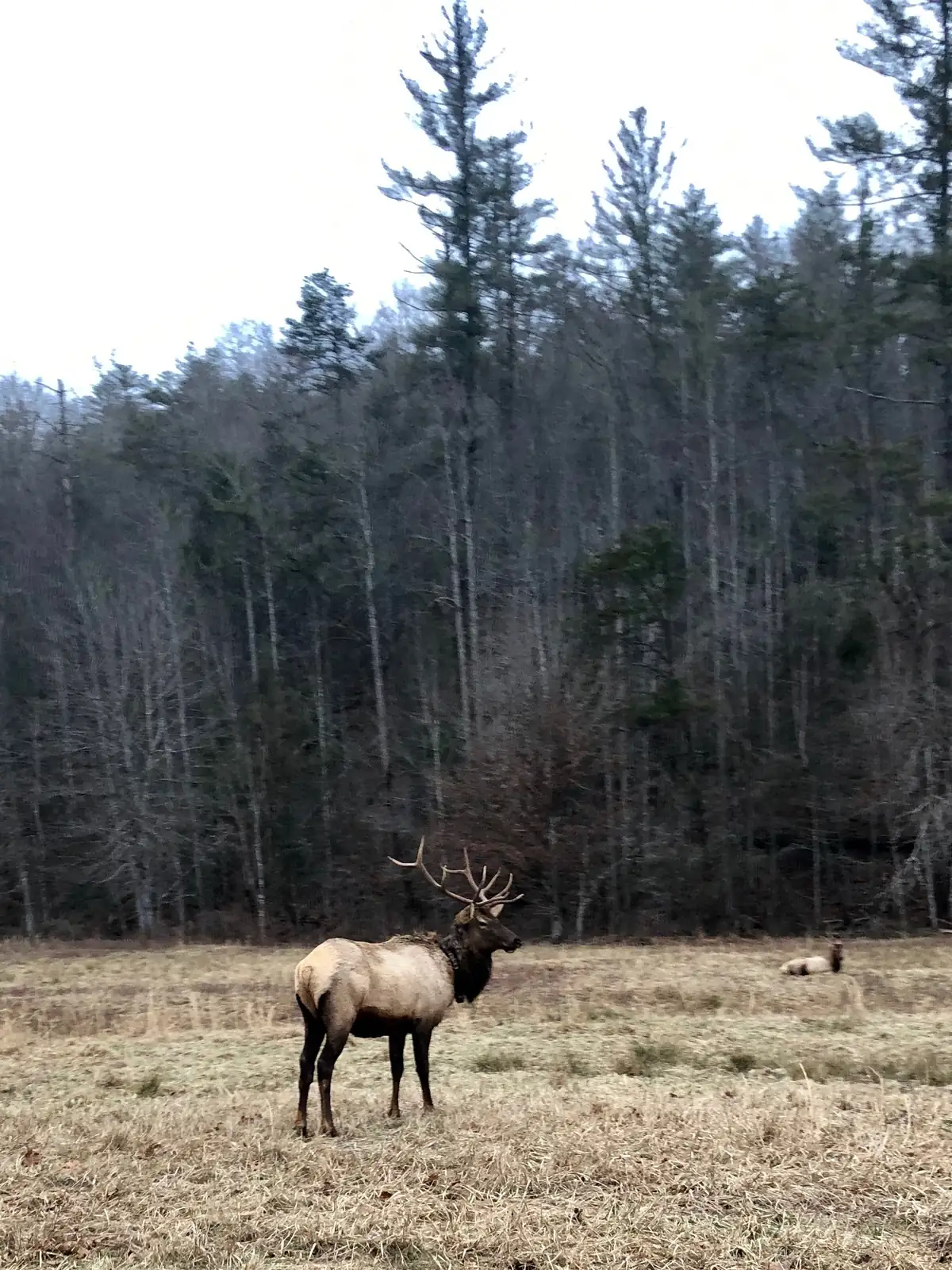
A lot happens out of sight. Mother bears are giving birth in their winter dens, groundhogs are sleeping out the last of winter, and on the northern Cumberland Plateau the bull elk are about to drop their antlers.
-
Bear cubs born in the den
Late January and early February · Mostly East Tennessee, where TWRA says bears are regularly seen
TWRA puts the births at the end of January or beginning of February. Cubs weigh only ounces and are born blind and without fur. They grow fast in the den and leave it with their mother around April, weighing over five pounds. The Smokies park adds that its bears are not true hibernators and may briefly leave the den, so a February bear on a sunny ridge is not out of the question.
-
Groundhogs, real and forecast
Groundhog Day is Tuesday, February 2 · Fencerows, field borders and stream banks statewide
The woodchuck, the largest member of the squirrel family, digs burrow systems with a separate den for hibernating, and in February most are still in it. TWRA says breeding follows the end of hibernation in early spring and young are born usually in early May. Whatever any groundhog sees on the 2nd, the real halfway point of astronomical winter comes on February 3 and 4 this year.
-
Elk dropping their antlers
February and March · North Cumberland Wildlife Management Area, Campbell County (Eastern time)
TWRA says bulls typically shed their antlers between February and March. The agency’s Hatfield Knob viewing tower, rebuilt in 2022 to be wheelchair accessible, draws about 16,000 visitors a year, and a live elk camera runs from the same spot. Elk are most active in the mornings and evenings and, in winter, move in mixed groups of cows and bulls, so plan a tower visit for first or last light.
If you come across a shed antler on a wildlife management area, photograph it where it lies and check the WMA rules before picking anything up.
Is February snowier than January in Tennessee?
In some places, yes. NOAA’s 1991–2020 normals give Crossville, on the Cumberland Plateau, a February snowfall normal of 4.4 inches, more than its January figure of 3.5, and Chattanooga and Memphis also log slightly more in February. In the Smokies, the park’s averages put 20 inches on Kuwohi in February and 2.9 at Gatlinburg, both more than in January. Yet average highs sit in the low and middle 50s at most of the lowland stations, so the month swings between snow days and mild, springlike afternoons.
-
Thunderstorms return
Warm, humid days ahead of a cold front · Statewide; West and Middle Tennessee most often
February warm spells can turn violent. On February 5, 2008, the day of the Super Tuesday primaries, the Memphis weather office surveyed 13 tornadoes in its Tennessee counties alone, including an EF-4 that struck Union University north of Jackson around 7:00 p.m. Central. Later that night an EF3 tracked 50.32 miles from Sumner County through Trousdale and Macon counties into Kentucky, killing 22 people; the Nashville office says 13 of them died in Macon County, most near Lafayette. Treat a mild, muggy February afternoon with a storm watch as seriously as one in April.
-
A very strong El Niño and February
Late winter 2027 · Statewide
In the Climate Prediction Center’s September 10, 2026, discussion, the forecasters’ confidence in a very strong El Niño peaking during the 2026–27 cold season stood above 90 percent. One recent very strong event came in 2015–16, and the Memphis weather office’s summary of that February is a useful snapshot: the month ran warmer and generally drier than normal across the Mid-South, Memphis averaged 48.1 °F (2.6 degrees above normal), and Jackson recorded only a trace of snow. The office called that whole winter much warmer and drier than normal. A single season proves nothing about the next one. For NOAA’s current thinking on February, see the latest three-month and monthly outlook maps; a new set appears every month.
| Station | Average high | Average low | Nights at 32 °F or colder | Precipitation | Snowfall |
|---|---|---|---|---|---|
| Memphis | 55.5 °F | 36.7 °F | 10.0 | 4.55 in | 1.0 in |
| Jackson | 53.0 °F | 32.5 °F | 15.3 | 4.40 in | – |
| Nashville | 53.8 °F | 33.0 °F | 14.2 | 4.47 in | 1.5 in |
| Crossville | 45.4 °F | 28.0 °F | 19.0 | 5.66 in | 4.4 in |
| Chattanooga | 55.6 °F | 35.6 °F | 12.0 | 5.03 in | 1.2 in |
| Knoxville | 52.8 °F | 33.1 °F | 13.8 | 4.81 in | 1.4 in |
| Bristol | 50.9 °F | 29.2 °F | 18.3 | 3.81 in | 3.0 in |
| Gatlinburg (park) | 54 °F | 29 °F | – | 4.8 in | 2.9 in |
| Kuwohi (park) | 35 °F | 18 °F | – | 8.2 in | 20 in |
The forecast page has the week ahead for your town, and anyone planning a spring garden can look up local frost dates for Tennessee.
How much daylight does Tennessee gain in February?
Close to an hour, and now it arrives at both ends of the day. In Nashville, sunrise moves up from 6:48 to 6:19 a.m. Central over the month while sunset slips from 5:14 to 5:41 p.m., so for once the mornings gain slightly more than the evenings. In Knoxville the sun sets at 6:03 p.m. Eastern on February 1 and at 6:30 p.m. on the 28th. Memphis, farthest west of the big cities, sees its sunset move from 5:29 to 5:55 p.m.
| City | Feb 1 | Feb 28 | Gained | Per day |
|---|---|---|---|---|
| Memphis | 10 h 30 m | 11 h 24 m | 54 min | 2.0 min |
| Jackson | 10 h 28 m | 11 h 22 m | 54 min | 2.0 min |
| Nashville | 10 h 26 m | 11 h 22 m | 56 min | 2.1 min |
| Clarksville | 10 h 24 m | 11 h 22 m | 58 min | 2.1 min |
| Crossville | 10 h 26 m | 11 h 22 m | 56 min | 2.1 min |
| Chattanooga | 10 h 30 m | 11 h 24 m | 54 min | 2.0 min |
| Knoxville | 10 h 27 m | 11 h 23 m | 56 min | 2.1 min |
| Bristol | 10 h 23 m | 11 h 21 m | 58 min | 2.1 min |
Each day’s gain is still increasing and will top out at the March equinox, so late-February days lengthen faster than early ones. Groundhog Day falls on Tuesday the 2nd, while the astronomical halfway mark of winter, between solstice and equinox, arrives on February 3 and 4. For your own address, the daylight tool lists sunrise and sunset day by day.
What can you see in Tennessee’s night sky in February 2027?
Two planets at their best of the year, Mercury’s finest evening showing of the winter, and a Snow Moon that comes up already brushed by a barely visible eclipse. West of the time-zone line, including Memphis, Nashville and Crossville, use the Central times below; Chattanooga, Knoxville and the Tri-Cities use Eastern. Standard time holds until March 14.
-
Mercury low in the west
Late January to about February 10; best around February 3 · West-southwest, 30 to 45 minutes after sunset
The innermost planet hits its widest evening separation, about 18 degrees, near midnight Central between February 2 and 3. Any hilltop or lakeshore with a clear west-southwest skyline will do; the planet looks like a lone, unwinking star in the afterglow. A slim crescent moon, just over a day old, joins it on the evening of Sunday the 7th; binoculars help.
-
Jupiter at opposition
Wednesday, February 10 · Rising in the east at sunset, high in the south around midnight
Jupiter lines up opposite the sun at 6:21 p.m. Central (7:21 p.m. Eastern) on the 10th, shining at magnitude -2.5 in Leo. Only the moon outshines it in the evening sky, and it is up from sunset until sunrise.
-
Mars at opposition
Friday, February 19, closest on February 20 · East in the evening, near Jupiter in Leo
Opposition comes on Friday morning, and on Saturday the red planet makes its nearest pass, some 63 million miles from Tennessee backyards. Mars sits close to aphelion, its outermost swing from the sun, so Tennessee gets a modest showing: a steady, rust-colored light around magnitude -1.2 rather than a glaring one. Even so, Mars will not come nearer to us again before 2029.
-
The Snow Moon and a faint penumbral eclipse
Evening of Saturday, February 20 · Rising in the east around sunset
The moon slips through Earth’s pale outer shadow from 3:12 to 7:13 p.m. Central (4:12 to 8:13 p.m. Eastern), deepest at 5:13 p.m. Central (6:13 p.m. Eastern). Tennessee sees only the moon rising into this, low in bright twilight: in the Eastern zone the moon comes up around the middle of the eclipse, and in the Central zone just after it. Sharp eyes might catch a faint dusky tint along one side of the moon; casual watchers will see an ordinary full moon. Whether to call it a supermoon is a matter of definition, because the moon was nearest Earth about 40 hours earlier, and almanacs split on it. Look also for Jupiter, Mars and Regulus clustered around the moon that evening; a night earlier, from the evening of Friday the 19th, the moon glides very near Jupiter.
| Phase | Date | Time |
|---|---|---|
| New moon | Saturday, Feb 6 | 9:56 a.m. CST (10:56 a.m. EST) |
| First quarter | Sunday, Feb 14 | 1:58 a.m. CST (2:58 a.m. EST) |
| Full moon, the Snow Moon | Saturday, Feb 20 | 5:23 p.m. CST (6:23 p.m. EST) |
| Last quarter | Saturday, Feb 27 in Central time; Sunday, Feb 28 in Eastern | 11:16 p.m. CST (12:16 a.m. EST) |
Saturn sinks into the southwestern dusk through the month, and brilliant Venus still rules the predawn sky. Dark, moonless evenings run from roughly February 2 through the 11th in Tennessee. Our cloud maps will tell you whether a planet night is worth staying up for, and the moon pages list rising and setting times for your town.
What can Tennessee families do outdoors in February 2027?
- Join a worldwide bird tally. The National Audubon Society and Birds Canada, two of its organizing partners, say the 30th Great Backyard Bird Count opens on Friday, February 12, 2027, and closes on Presidents’ Day, Monday the 15th. Fifteen minutes of watching on a single day counts; send your checklist through eBird or the Merlin app.
- Say goodbye to the cranes. Visit the Hiwassee platform near Birchwood in the first half of the month, before the flocks thin, and listen for pairs calling in unison.
- Ride an eagle tour. Reelfoot Lake State Park runs eagle tours by van every day in February; reservations are recommended. In 2026 its Eagle Festival ran from January 30 to February 1; the park had not announced the 2027 weekend when this page was written, so call ahead.
- Go frog listening. After a warm afternoon rain, stand by a pond or flooded field after dark and count how many kinds you hear: peepers, chorus frogs, maybe toads.
- Mark Groundhog Day differently. On February 2, record the sunrise and sunset times, then do it again on March 2 and compare.
- Hunt for the first flower. Search the twig tips of a red maple, or a woods edge for spring beauties, and photograph the first one for iNaturalist.
- Watch the planets. On a clear night near February 10, find Jupiter in the east after dark, then come back after the 19th to see Mars close by.
- Keep a rain and snow gauge. CoCoRaHS volunteers report precipitation every morning, and February’s mix of rain, sleet and snow makes good practice.
Look back at Tennessee in January for the crane peak and owl nesting, find nature guides for other states, and keep notes in the Naturalist’s Field Journal.
Safety notes for February in Tennessee
- Hunting seasons this month. TWRA’s 2026–27 calendar keeps Canada geese, white-fronted geese, brant and light geese open through February 14. On the 15th TWRA’s special light goose conservation season begins, running to March 31. Youth waterfowl days are February 6 and 13, and veterans and active military days February 7 and 14. February 28 closes the seasons for quail, grouse, rabbit, snipe and crow, and also ends trapping of fox, mink, muskrat, otter and bobcat. Squirrel season lasts until March 15, as do the raccoon and opossum taking seasons. Coyote, beaver and groundhog are open all year.
- Blaze orange. TWRA’s orange-or-pink clothing rule, a 500-square-inch minimum on cap and coat that must show from ahead and behind, is written for big-game hunts alone, and no deer, bear, elk or turkey season is open in February. Nobody else is legally bound by it this month, yet a vivid hat and vest remain cheap insurance in WMAs and along field edges.
- Severe storms. February tornadoes have struck after dark in Tennessee. Keep phone alerts on overnight and know your safe room.
- Floods. Winter rain on saturated ground can send creeks over roads quickly. Never drive into water across a road.
- Cold and ice up high. Kuwohi averages a February low of 18 °F, and Crossville logs about 19 freezing nights. Microspikes help on north-facing trails, and pond ice is best left alone.
- Bears waking up. Warm spells can bring bears out briefly. TWRA advises removing bird feeders and food piles once bears are active, and never leaving trash or pet food outside.
- Closures. The Hiwassee and Hop-In refuges stay closed through the end of February (the Hiwassee platform remains open), while Cross Creeks National Wildlife Refuge keeps all its roads and areas closed, and Tennessee National Wildlife Refuge its sanctuary waters, until March 15.
Sources
- TWRA: Sandhill Crane Festival and crane biology (spring migration, unison calling, Hop-in, Tennessee totals)
- TWRA: Hiwassee Refuge (winter closure, viewing platform)
- TWRA: Hop-In Refuge, Obion County (cranes, waterfowl, closure dates)
- TWRA: bald eagle (nesting, egg-laying peak, winter peak)
- TWRA: red-shouldered hawk
- TWRA: red-tailed hawk
- TWRA: great horned owl
- Tennessee State Parks: Reelfoot Lake State Park (eagle tours, day-use area repairs)
- Reelfoot Lake Tourism Council: Reelfoot Lake Eagle Festival
- U.S. Fish and Wildlife Service: Reelfoot National Wildlife Refuge
- Oak Ridge National Environmental Research Park: Frogs of Anderson County, TN (PDF)
- Tennessee Aquarium: what spring means for the wildlife of East Tennessee (2023)
- TWRA: spring peeper
- TWRA: mountain chorus frog
- TWRA: southern leopard frog
- TWRA: purple martin
- TWRA: great blue heron
- TWRA: eastern bluebird
- TWRA: red-winged blackbird
- TWRA: American robin
- National Park Service: wildflowers of Great Smoky Mountains (red maple, hepatica, ephemerals)
- Tennessee State Parks: spring wildflower scavenger hunt (bloom months and parks)
- The Tennessee Conservationist (March/April 2024): six great spring wildflower locations
- TWRA: black bears (cub birth, denning)
- National Park Service: black bears in Great Smoky Mountains
- TWRA: woodchuck
- TWRA: elk (antler shedding, Hatfield Knob tower and elk cam)
- NOAA NCEI: 1991–2020 monthly normals for Tennessee stations (data API)
- National Park Service: weather in Great Smoky Mountains National Park (monthly averages)
- NWS Memphis: Super Tuesday tornado outbreak, February 5, 2008
- NWS Nashville: February 5–6, 2008, Super Tuesday tornado outbreak
- NWS Memphis: February 2016 Mid-South climate summary
- Climate Prediction Center: ENSO diagnostic discussion, September 10, 2026
- Climate Prediction Center: 90-day and monthly outlooks
- U.S. Naval Observatory: moon phases, 2027 (data API)
- U.S. Naval Observatory: earth’s seasons, 2027 (solstice and equinox)
- Fred Espenak: Sky Event Almanac 2027 (GMT)
- EarthSky: Jupiter at opposition
- SEDS: the 2027 opposition of Mars
- NASA Eclipse Web Site: lunar eclipses, 2021–2030
- Old Farmer’s Almanac: eclipses (February 20, 2027, penumbral lunar eclipse)
- National Audubon Society: Great Backyard Bird Count (February 12–15, 2027)
- Birds Canada: Great Backyard Bird Count (February 12–15, 2027)
- eBird
- iNaturalist
- CoCoRaHS: community rain, hail and snow network
- TWRA: 2026–27 hunting and trapping season dates
- TWRA: migratory bird seasons, 2026–27 (geese, light goose conservation season, youth and veterans days)
- TWRA: big game hunting, fluorescent orange or pink requirement
- U.S. Fish and Wildlife Service: Tennessee National Wildlife Refuge, visit us (seasonal closures)
- U.S. Fish and Wildlife Service: Cross Creeks National Wildlife Refuge, visit us
- Photos via Wikimedia Commons; licenses and photographers are credited under each picture
