What to look for in nature in Tennessee this March
March is the month Tennessee stops rehearsing. The first warm, rainy night fills ponds with chorus frogs and sends salamanders crawling across wet leaves, hepatica and bloodroot open on creek banks, and the Louisiana waterthrush returns to the streams. The last sandhill cranes slip north, woodcock and herons sit on eggs, and by the end of the month redbud turns bare hillsides pink. The weather is slower to cooperate, swinging from mild afternoons to snow on the high ridges. Clocks jump ahead on Sunday, March 14, and the state spans two time zones, so every clock time below is labeled Central or Eastern.
Other months in Tennessee: October, November, December, January, February, April.
Start here
- A warm rainy night. Go out after dark on the first mild, wet evening and listen for the rising, comb-like trill of upland chorus frogs, which TWRA calls the earliest breeding frog in the state, then for peepers. Spotted salamanders move on the same nights.
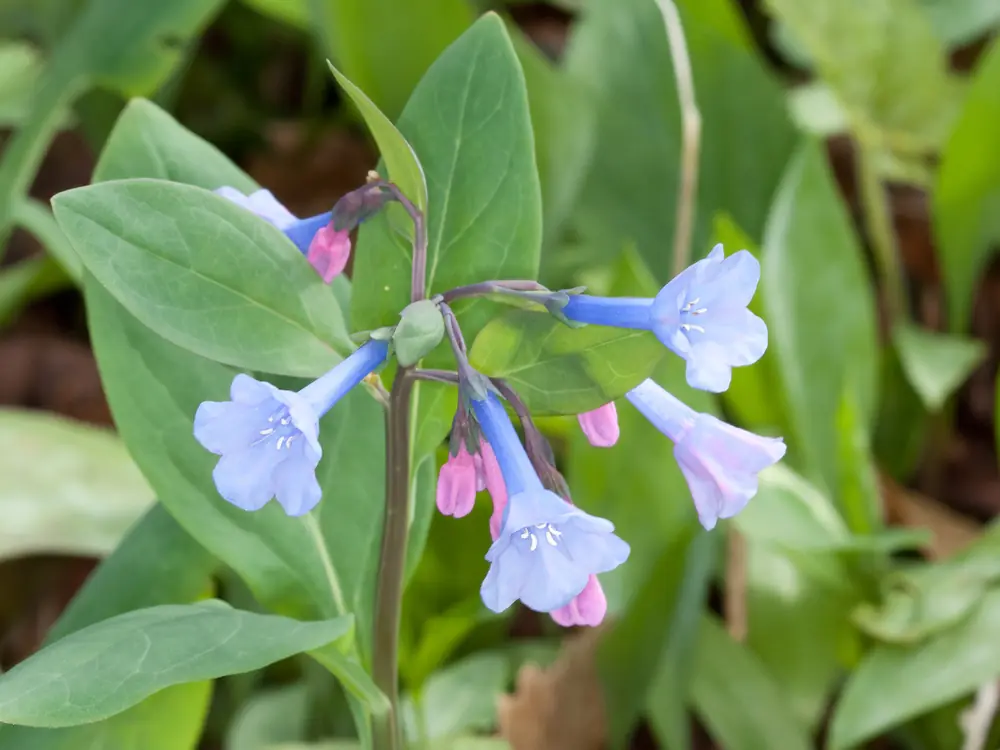
- Hepatica and bluebells. Tennessee State Parks lists March as a viewing month for hepatica, bloodroot and Virginia bluebells. Find a creek bank or a rich, damp slope and go at midday, when the flowers are open.
- Waterthrushes on the creeks. TWRA says the Louisiana waterthrush reaches Tennessee in mid-March, and the yellow-throated warbler follows in late March. Look for a tail-bobbing bird at the edge of a woodland stream, and listen for loud, ringing song.
For the Naturalist’s Field Journal, a night of chorus frogs belongs on the map of sounds, a woodcock or heron colony watched from far off fits the nest-observed plate, one redbud followed from bare twig to leaf suits the tree through the seasons, and a creek bank visited in early March and again at the end of the month makes a fine same-place-twice entry.
Regions used below: West Tennessee; Middle Tennessee; The Cumberland Plateau; East Tennessee and the Valley; The Smokies and Blue Ridge.
What are Tennessee’s frogs and salamanders doing in March?
March is when the ponds come alive. TWRA ties none of these amphibians to a calendar date. Warmth and rain set them off, so the best nights are the first mild evenings after a soaking rain, and a hard cold snap can silence a chorus overnight.
-
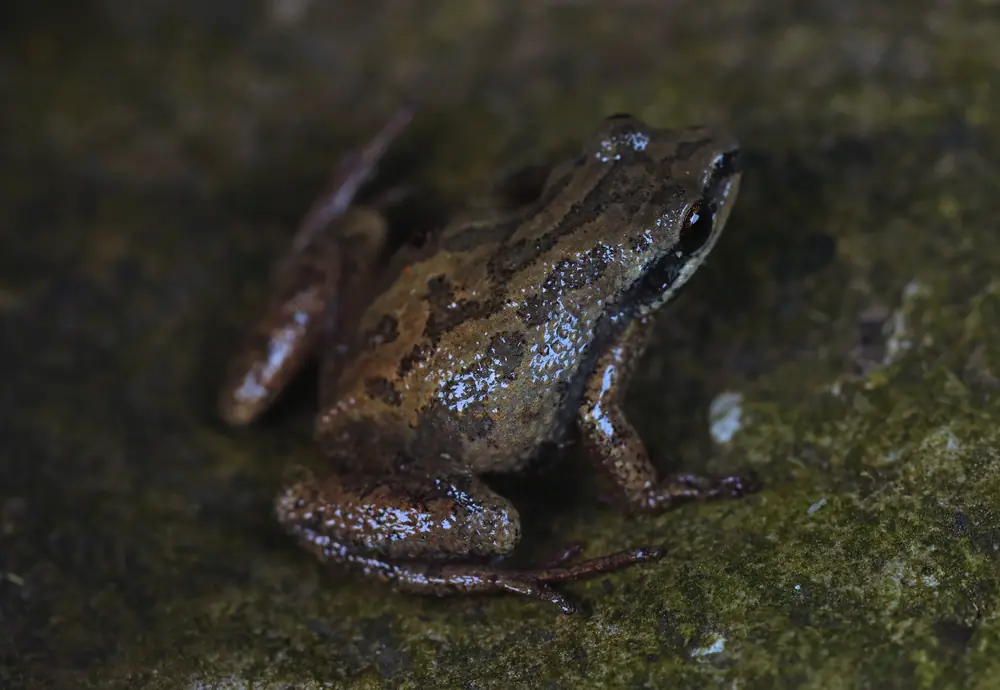
Upland chorus frog
Mild, wet nights from late winter on; TWRA calls it the earliest breeding frog in the state · Temporary pools, grassy swales, moist woodlands and well-vegetated ponds, statewide except the highest elevations of the eastern mountains
The call is short, raspy and rises in pitch, as if someone were scraping a fingernail across a pocket comb. TWRA says the eggs hatch in 3 to 4 days and the tadpoles need about 60 days, so the shallow pools these frogs pick have to hold water well into spring.
-
Wood frog
Among the first to call, TWRA says, sometimes before ice has left the pond · Moist woodlands in eastern to north-central Tennessee, in open ponds and even roadside ditches
The voice is a harsh quack, closer to a duck than a frog. A female anchors an egg mass of up to 3,000 eggs to underwater plants, and the tadpoles become frogs in about two months. TWRA places the species in the east and north-central part of the state, not the far west.
-
Spotted salamander
Warm, rainy nights; TWRA calls it an early spring breeder · Bottomland forests along rivers and upland woods wherever a breeding pond is within reach
TWRA says warm rains often trigger mass migrations to the ponds where these black, yellow-spotted salamanders mate, and that adults return to the pond where they hatched. Look for compact egg masses in clear or milky jelly attached to sticks under the water. The skin carries a sticky white secretion that is toxic to predators, one more reason to watch rather than handle.
-
American toad
TWRA says breeding typically takes place in March or April and can run into July · Statewide and abundant, around shallow fishless water
A female toad lays spiral strands of 4,000 to 8,000 eggs that hatch in about a week. TWRA adds that toads take in water through their skin, so look for them on damp ground after rain.
-
Salamander country in the Smokies
All year, with spring rains the best time to look · Streams and forest floor of Great Smoky Mountains National Park
The park counts 31 salamander species, 25 of them lungless species that breathe through their skin. Its advice is plain: never touch a salamander with bare hands, since skin oils and germs can be fatal to the animal, and, as the park asks, leave rocks where they lie.
Pick a mild, wet evening using the weather page forecast, stand still near a pond for ten minutes, and count the voices you can tell apart. Drive slowly on wet nights near woods and ponds.
Which wildflowers and trees bloom in Tennessee in March?
The forest floor puts on its show before the trees leaf out. Great Smoky Mountains National Park says its spring ephemerals appear from February through April, then flower, fruit and die back within about two months, using the sunlight that reaches the ground before the canopy closes. Tennessee State Parks lists March as a viewing month for many of them; start on a damp slope or creek bank at midday, when the blossoms are open.
-
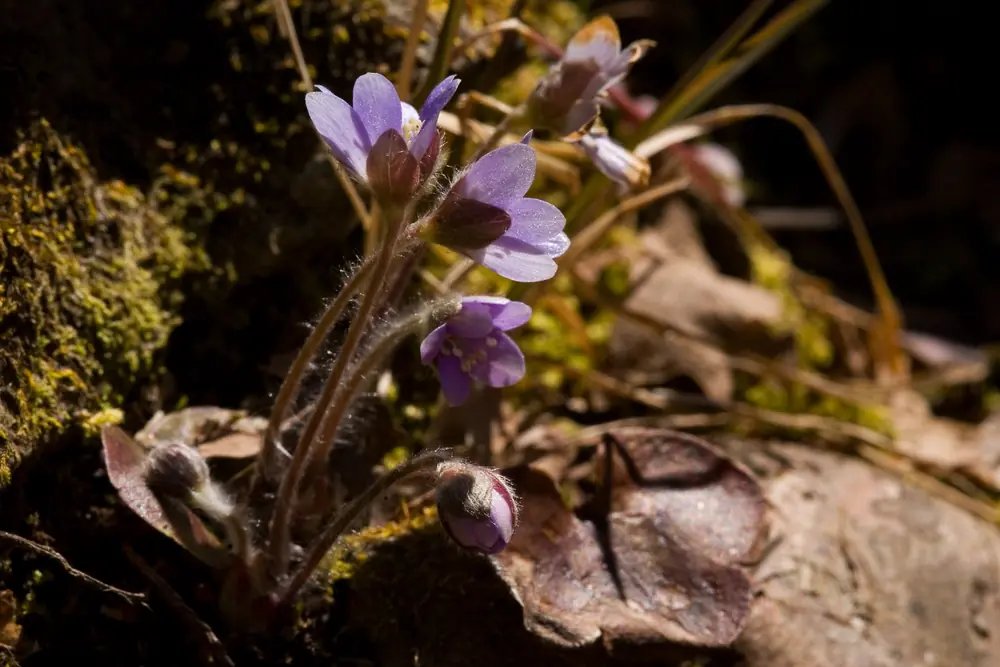
Round-lobed and sharp-lobed hepatica
State Parks lists March · Old Stone Fort and Cummins Falls (Middle Tennessee); Big Ridge and Roan Mountain (East); sharp-lobed also at Burgess Falls, South Cumberland, Frozen Head and Warriors Path
Three-lobed leaves, hairy stalks and small blue or white flowers mark these as some of the earliest bloomers in the state.
-
Bloodroot
State Parks gives March and April · Edgar Evins, Dunbar Cave, South Cumberland, Frozen Head, Red Clay, Sycamore Shoals and Roan Mountain
White flowers with golden-orange centers rise beside large, round leaves. The petals close at night and on dark days and reopen with the sun, so go on a bright afternoon. The red juice in the stem and root gives the plant its name.
-
Virginia bluebell
State Parks lists March through June · Radnor Lake, Edgar Evins, Old Stone Fort, Dunbar Cave, Montgomery Bell, Cedars of Lebanon, Burgess Falls and Standing Stone (Middle); Meeman-Shelby (West); Frozen Head and Sycamore Shoals (East)
Pink buds open into trumpet-shaped flowers in shades of blue on stems up to 24 inches tall, and State Parks says butterflies are the most frequent visitors. March finds the first buds and leaves; the full display belongs to the weeks after.
-
Nashville gladecress
State Parks lists March through May · Long Hunter and Cedars of Lebanon state parks, in Middle Tennessee’s cedar glades
This low glade wildflower has white, purple or yellow petals around a yellow center and a sweet honey scent that draws pollinators. A Tennessee conservation article says it is found only in the Central Basin of Tennessee, one of several cedar-glade plants, including the Tennessee coneflower, that grow nowhere else on Earth. It grows on thin, rocky soil, so stay on the trail. Early buttercup and glade phlox, both listed for March through May, bloom in the same parks.
-
Eastern redbud
UT Gardens gives mid- to late March through mid-April · Woodland edges, roadsides and yards statewide, flowering before the leaves open
The University of Tennessee Gardens says redbud blooms slightly ahead of the dogwoods, so a pink haze on a bare hillside is the late-March signal. Red buckeye, a shrub with red bell-shaped flowers, is listed by State Parks for March through May at Radnor Lake and Montgomery Bell.
Tennessee State Parks keeps a 14-flower scavenger hunt with park lists and asks visitors to log finds in iNaturalist with the park named. The Smokies’ week-long Spring Wildflower Pilgrimage comes each spring; the park lists no 2027 dates, so check with the park. For what blooms just before this, read Tennessee in February.
Which birds return to Tennessee in March?
The first wave is small and easy to miss. The birds arrive before the leaves do and sing from bare branches, so a creek walk or a quiet woodland edge starts to pay off. TWRA places a handful of species in the state by the middle or end of the month.
-
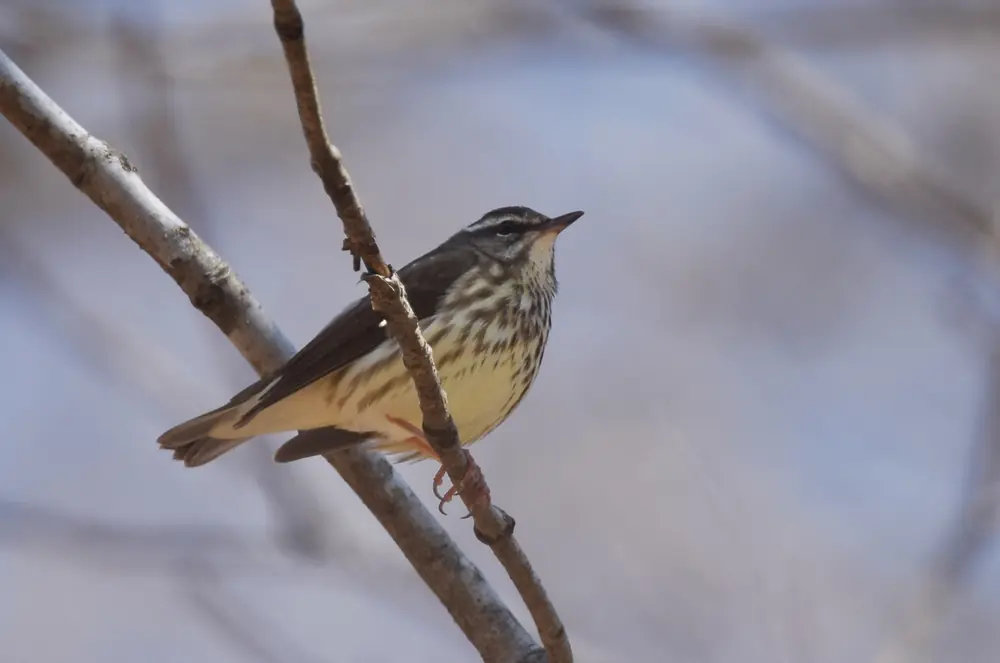
Louisiana waterthrush
TWRA says it reaches Tennessee in mid-March · Forested streams in hardwood woods, especially in Middle and East Tennessee
Watch for a brown, streaked bird bobbing its tail on a streamside rock, and listen for loud, ringing song. TWRA says males claim stretches of stream as soon as they arrive; documented territories run from 1,230 to nearly 4,000 feet. Egg-laying peaks in mid-April, and there is one brood a year. TWRA calls Radnor Lake State Park an excellent place to see them in spring.
-
Yellow-throated warbler
TWRA says from late March, earlier than most warblers · Canopies of pines, sycamores and cypress in stream bottomlands and forested wetlands
This gray-backed warbler with a bright yellow throat creeps along branches like a nuthatch. TWRA says its nests sit 15 to 60 feet up, averaging 33 feet in Tennessee, and that some pairs raise two broods. A sycamore along a creek is a good place to look.
-
Blue-gray gnatcatcher
TWRA says it arrives in late March · Deciduous woodlands and woodland edges across the state
A tiny, long-tailed bird that flicks its tail side to side and gives a thin, nasal spee. TWRA says spring, before the trees leaf out, is the best time to see one.
-
Ospreys back at the lakes
TWRA lists the osprey as common to abundant at Hiwassee Refuge from March through September · Hiwassee Refuge, Meigs County (Eastern time), and other lakes and rivers with nesting platforms
Nest counts rose from about 3 in 1980 to 131 by 1999 after TWRA and TVA released young birds and built platforms. Incubation lasts 32 to 43 days.
-
Hummingbirds, mostly still to come
TWRA gives mid-April to early October for the ruby-throated hummingbird · Gardens, parks and woodlands
The summer hummingbird belongs to next month, so late March is the time to clean feeders. TWRA also notes that western hummingbirds, such as rufous and black-chinned, winter in the state, arriving after late August and usually leaving in April, so one at a feeder now is worth reporting. Journey North takes sightings for its spring migration map.
Note the date and place of each first-of-year bird, and give them a page of their own in the field journal. Arrival dates compare well from one year to the next.
Which Tennessee birds are nesting in March?
Spring has barely started, but several species are already on eggs. Bare trees and leaf litter make nests easier to find than they will be next month, and the rule for all of them is the same: watch from a distance and never flush the adult.
-
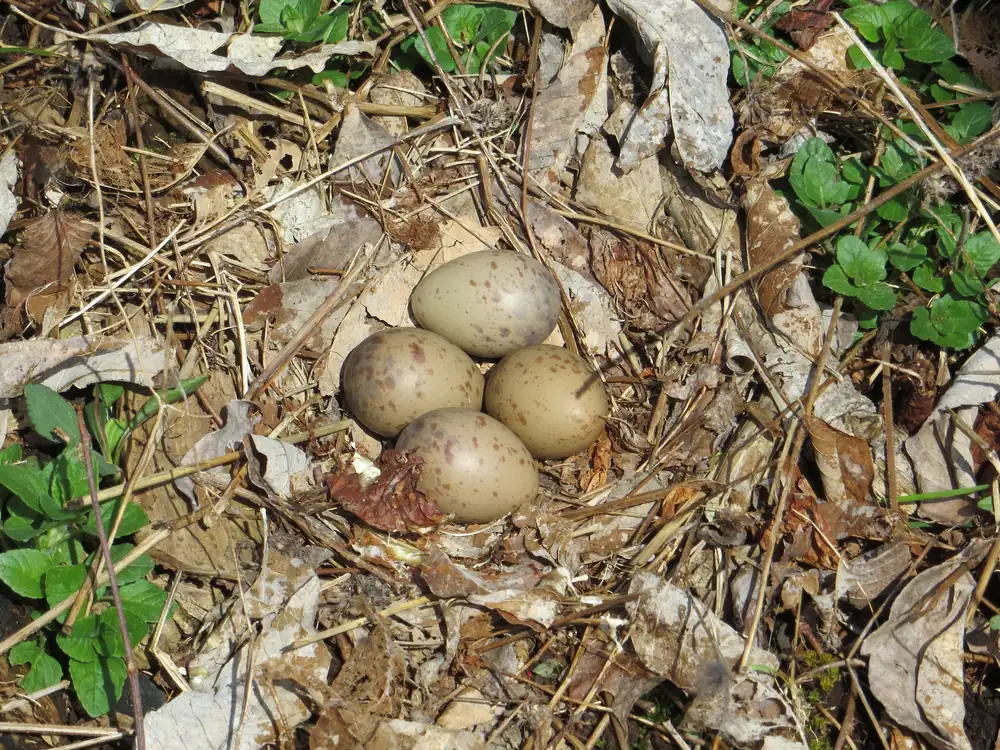
American woodcock on the nest
TWRA says peak nesting in Tennessee is in the first half of March · Moist low woods, most often in the eastern two-thirds of the state
The female usually lays 4 eggs in a shallow, leaf-lined hollow on the forest floor and sits alone for 20 to 22 days. TWRA says the chicks leave the nest within hours of hatching, fly in about two weeks and fend for themselves at about five weeks. Males display at dusk regularly from January into March and then on and off through May, so open fields at dusk may still ring with their calls. TWRA calls the woodcock an uncommon permanent resident.
-
Great blue heron colonies
TWRA says egg-laying peaks about mid-March · Heronries in tall trees near lakes, rivers and swamps
Clutches run 3 to 4 eggs, both adults incubate for 28 days, and the young fledge at about 60 days. Colonies sometimes hold several hundred pairs, and bare treetops make the stick platforms easy to count.
-
Eastern bluebird
TWRA says first clutches are commonly laid in March · Open fields, yards and cemeteries with nest boxes
The usual clutch is 4 to 5 pale blue eggs, incubated for 12 to 15 days. If you monitor a box, NestWatch, the Cornell Lab of Ornithology’s program, shows how to record it.
The nest-observed page in the Naturalist’s Field Journal suits this kind of watching: date, place, what the adults were doing and how far away you stood.
Are sandhill cranes, eagles and wintering waterfowl still in Tennessee in March?
Mostly they are leaving or settling in. TWRA says the cranes’ spring flight lasts until late March, so March holds the last northbound flocks, and the refuges that closed for the winter begin to reopen.
-
The last cranes
Through late March, according to TWRA · Hiwassee Refuge platform near Birchwood, Meigs County (Eastern time); the skies along a corridor from Pickett and Clay counties toward Bradley and Monroe counties
TWRA says more than ten thousand cranes have wintered on and around the Hiwassee Refuge, with peak numbers in January, and a few thousand at Hop-In Refuge in Obion County. The observation platform stays open all year, so it is the place to look for stragglers. The refuge itself was closed to entry through the end of February.
-
Refuges reopening
Hop-In Refuge opens to foot traffic in March; Cross Creeks opens March 16 · Obion County (Central time); Dover, Stewart County (Central time); Tennessee National Wildlife Refuge waters along Kentucky Lake
TWRA says Hop-In Refuge is shut to all use from November 1 to the last day of February and otherwise open in daylight to foot traffic when its gates are closed. The U.S. Fish and Wildlife Service closes all roads and areas at Cross Creeks from November 15 to March 15, and some Tennessee National Wildlife Refuge waters over the same stretch, to give waterfowl sanctuary.
-
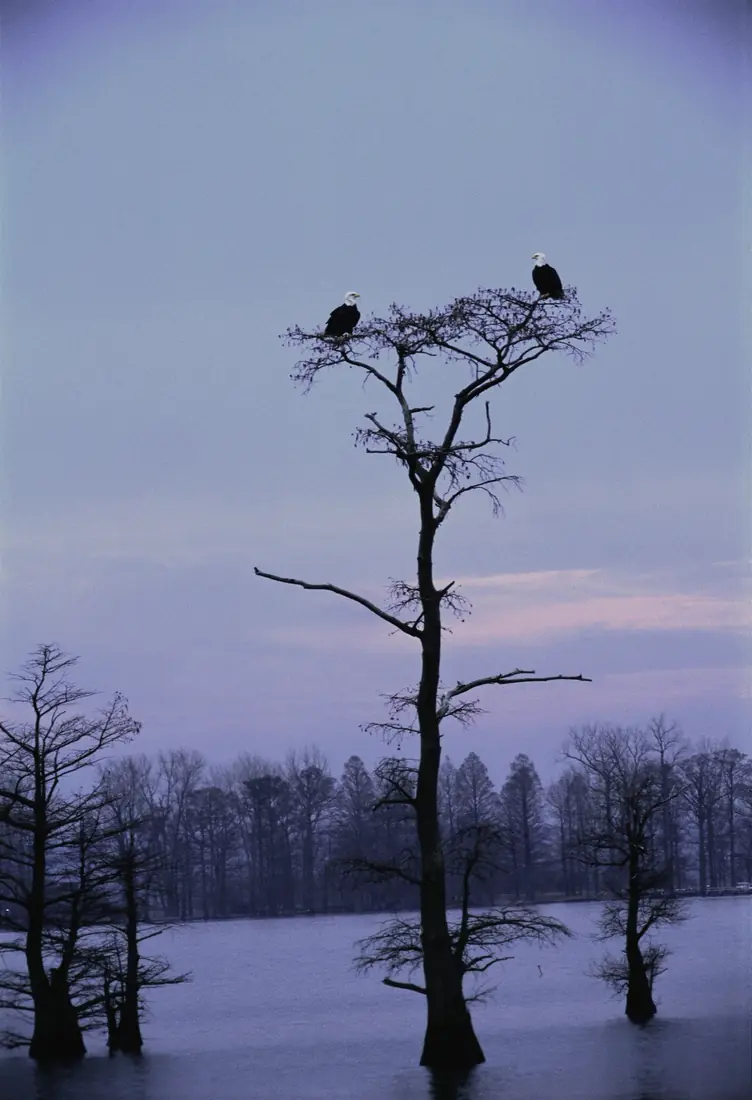
Bald eagles on eggs
Egg-laying peaked in late February, TWRA says; incubation takes 34 to 36 days · Big lakes and rivers, including Reelfoot, Kentucky Lake and the Tennessee River reservoirs
TWRA says most of the state’s nesting eagles stay all year and that northern visitors peak from late January to mid-February. The nests, which can reach 8 feet across, hold eggs through much of March, and the young leave the nest 10 to 12 weeks after hatching. Reelfoot Lake State Park runs eagle tours daily in January and February. Day-use areas can be closed for repairs, so call the park before you go.
What are Tennessee’s bears and elk doing in March?
Winter’s big residents are stirring, though neither is easy to see this month. The aim of a visit is to give them room.
-
Black bears and new cubs
Mother bears and cubs usually leave the den in late March or April, the Smokies park says · Great Smoky Mountains National Park and the mountains of East Tennessee
According to TWRA, cubs arrive in the den in January or February, weigh only ounces at birth and can top five pounds when they come out. Two is the usual litter size, and litters come every other year. The park estimates about 1,900 bears live inside it and requires visitors to stay at least 50 yards (150 feet) away.
-
Elk shedding antlers
TWRA says bulls typically drop their antlers between February and March · North Cumberland Wildlife Management Area; elk viewing tower at Hatfield Knob, Campbell County (Eastern time)
TWRA released 201 elk into the North Cumberland WMA over eight years, beginning in December 2000. Calves are born from late May through June, so the cows you see now are carrying them. The agency’s tower and live elk camera at Hatfield Knob let you look without entering the herd’s range.
Keep trash, pet food and bird feeders out of a bear’s reach. TWRA lists feeders next to garbage and pet food among the things that teach bears to look for people.
How warm, wet and stormy is March in Tennessee?
March is Tennessee’s swing month. NOAA’s normals put average highs in the low to mid 60s at most lowland stations but only 53.6 °F at Crossville, and the Smokies show how much elevation matters: 61 °F at Gatlinburg against 39 °F on Kuwohi. The park says snow can fall at any time in March, especially higher up, and that temperatures can differ by 10 to 20 degrees between the base of a mountain and its top. Gatlinburg’s published snowfall is a trace; Kuwohi averages 26 inches.
-
Tornadoes after dark
Any month; March 2020 is the reminder · Middle Tennessee in 2020; anywhere in the state
The National Weather Service describes an outbreak that ran from late on March 2, 2020 into the early hours of the 3rd. An EF-4 tornado crossed Putnam County on a path of about 8.4 miles, killing 19 people, and an EF-3 in the Nashville area stayed on the ground for more than 60 miles, the longest track in Middle Tennessee since official records began in 1950. Ten tornadoes struck the state and 25 people died, in the deadliest Tennessee tornado event since April 27, 2011.
-
Heavy rain and late freezes
Rain whenever a wet system stalls; freezes into April, as the next section shows · Statewide
The lowland stations in the table average roughly 4 to 6 inches of rain in March, and saturated ground sends creeks over roads quickly. Even Memphis logs 3.5 nights at or below 32 °F, and Crossville 13.3, so early blooms can be caught.
| Station | Average high | Average low | Nights at 32 °F or colder | Precipitation | Snowfall |
|---|---|---|---|---|---|
| Memphis | 64.2 °F | 44.3 °F | 3.5 | 5.74 in | 0.5 in |
| Jackson | 62.2 °F | 39.6 °F | 8.7 | 5.55 in | – |
| Nashville | 62.7 °F | 40.2 °F | 7.4 | 4.52 in | 0.7 in |
| Crossville | 53.6 °F | 35.0 °F | 13.3 | 6.08 in | 2.7 in |
| Chattanooga | 64.1 °F | 42.2 °F | 5.0 | 5.34 in | 1.1 in |
| Knoxville | 61.4 °F | 39.8 °F | 7.5 | 4.89 in | 0.9 in |
| Bristol | 59.4 °F | 35.4 °F | 12.3 | 3.96 in | 1.1 in |
| Gatlinburg (park) | 61 °F | 34 °F | – | 5.3 in | Trace |
| Kuwohi (park) | 39 °F | 24 °F | – | 8.2 in | 26 in |
The Climate Prediction Center posts its 90-day outlooks around the middle of each month at cpc.ncep.noaa.gov, so check the latest before planning anything weather-dependent. The weather page explains how to read a forecast, and the clouds page shows the towering cumulus that comes before a storm.
When is the last spring freeze in Tennessee?
Across the lowlands the median falls between mid-March and early April, and on the Cumberland Plateau and in the northeast it comes about two weeks later. The table gives NOAA’s normals at each city’s main station: Memphis International Airport, Jackson McKellar Airport, Nashville International Airport, Clarksville Outlaw Airport, Chattanooga Lovell Airport, Knoxville McGhee Tyson Airport, Crossville Memorial Airport and Bristol Tri-City Airport.
| Station | One year in ten | Median | Nine years in ten |
|---|---|---|---|
| Memphis | Feb 27 | Mar 16 | Apr 4 |
| Jackson | Mar 19 | Apr 5 | Apr 21 |
| Nashville | Mar 13 | Mar 31 | Apr 16 |
| Clarksville | Mar 20 | Apr 6 | Apr 23 |
| Crossville | Mar 30 | Apr 16 | May 5 |
| Chattanooga | Mar 6 | Mar 24 | Apr 8 |
| Knoxville | Mar 14 | Apr 1 | Apr 17 |
| Bristol | Mar 30 | Apr 16 | May 5 |
The University of Tennessee Extension’s 2026 Home Fruit and Vegetable Garden Calendar gives more cautious dates, those with only a 10 percent chance of frost afterward: Memphis April 9, Dyersburg April 15, Chattanooga April 17, Jackson April 18, Nashville April 21, Knoxville April 22, Clarksville April 27, McMinnville April 28, Bristol May 3, Crossville May 10 and Mountain City May 26. Hardy cool-season crops go out 4 to 6 weeks before the frost-free date, it says, and tomato transplants need 6 to 8 weeks, so a March seeding means May planting. Look up your own town on the Tennessee frost page.
How much daylight does Tennessee gain in March?
More than an hour, at about 2.2 to 2.4 minutes a day. Nashville’s sun rises at 6:18 a.m. Central Standard Time on March 1 and sets at 5:42 p.m. CST. On Saturday the 13th those are 6:01 a.m. and 5:53 p.m. CST; after the clocks change, Sunday the 14th brings 7:00 a.m. and 6:54 p.m. CDT. By March 31 the sun rises at 6:35 a.m. and sets at 7:08 p.m. CDT. In Knoxville, on Eastern time, the 13th has sunrise at 6:50 a.m. and sunset at 6:41 p.m. EST, and the 14th has 7:48 a.m. and 7:42 p.m. EDT.
| City | Mar 1 | Mar 31 | Gained | Per day |
|---|---|---|---|---|
| Memphis | 11 h 26 m | 12 h 32 m | 66 min | 2.2 min |
| Jackson | 11 h 25 m | 12 h 33 m | 68 min | 2.3 min |
| Nashville | 11 h 24 m | 12 h 33 m | 69 min | 2.3 min |
| Clarksville | 11 h 24 m | 12 h 34 m | 70 min | 2.3 min |
| Crossville | 11 h 25 m | 12 h 33 m | 68 min | 2.3 min |
| Chattanooga | 11 h 26 m | 12 h 32 m | 66 min | 2.2 min |
| Knoxville | 11 h 25 m | 12 h 33 m | 68 min | 2.3 min |
| Bristol | 11 h 23 m | 12 h 34 m | 71 min | 2.4 min |
The clock change moves only the reading on the dial, so the table holds on both sides of March 14. In Nashville the sun is up for nearly twelve hours on the equinox, Saturday the 20th. The daylight tool gives sunrise and sunset by date for any address.
What can you see in Tennessee’s night sky in March 2027?
March offers a Mercury at its best in the dawn, a brilliant Venus, Jupiter and Mars high in the evening, and a full moon that comes up near sunset on the equinox weekend. Central times below suit Memphis, Nashville and Crossville, and Eastern times suit Chattanooga, Knoxville and the Tri-Cities. The new moon falls before the clocks change; the later phases are listed in daylight time. Our planet timings below come from one calculation for a central U.S. location, so Memphis and Bristol may see them up to half an hour off.
-
Clocks spring forward
Sunday, March 14, at 2 a.m. local time · Both Tennessee time zones
At 2 a.m. the clocks jump to 3, and every sunrise and sunset reads an hour later from then on. The evening sky stays light longer and the morning sky darker. Compare the sunset on March 13 with the one on March 14 using the daylight tool.
-
Mercury low in the dawn
Best from about March 8 to 25; farthest from the sun at 11:20 p.m. Central on Tuesday the 16th (12:20 a.m. Eastern on the 17th) · Low in the east-southeast, before sunrise
The little planet stands 27.6 degrees from the sun, its best showing in the morning sky this time around. Early in the month it comes up roughly an hour before sunrise, give or take half an hour across the state. Find a flat, clear horizon and bring binoculars; Venus, far brighter, hangs well above it.
-
Venus, the morning star
All month, in the east before dawn · East-southeast to east, rising about two hours ahead of the sun on March 1
Venus, at magnitude -4.1, is the brightest point in the morning sky. By our own computation a very thin waning crescent moon sits close by, about 2 degrees away, on both Thursday morning the 4th and Friday morning the 5th.
-
Jupiter and Mars after dark
All month, with Jupiter and the Moon closest on the 18th and 19th · Leo, high in the south and southwest in the evening
Jupiter, near magnitude -2.5, and a fading Mars, at -1.1 on March 1, both sit in Leo a few weeks after their February oppositions. Watch for a bright gibbous Moon parked beside Jupiter on both the 18th and the 19th, closest on the 19th. By our own computation Mars and Jupiter draw to 4.3 degrees apart on Tuesday evening the 30th, high overhead after dark. Saturn is leaving the evening sky.
-
The equinox and the Worm Moon
Equinox Saturday, March 20 at 3:25 p.m. Central (4:25 p.m. Eastern); full moon best seen on the evening of Sunday the 21st · Anywhere with a clear eastern horizon at dusk
The equinox arrives that afternoon, with the sun over the equator and daylight and darkness almost the same length. The full moon itself comes at 5:44 a.m. Central on Monday the 22nd, so on Sunday evening it rises near sunset already looking full. The Old Farmer’s Almanac gives March’s full moon the name Worm Moon, tied either to earthworms surfacing in warming soil or to larvae coming out of tree bark.
| Phase | Date | Time |
|---|---|---|
| New moon | Monday, Mar 8 | 3:29 a.m. CST (4:29 a.m. EST) |
| First quarter | Monday, Mar 15 | 11:25 a.m. CDT (12:25 p.m. EDT) |
| Full moon, the Worm Moon | Monday, Mar 22 | 5:44 a.m. CDT (6:44 a.m. EDT) |
| Last quarter | Monday, Mar 29 | 7:54 p.m. CDT (8:54 p.m. EDT) |
See every phase for your own place on the moon phases page. The dates and times above are from the U.S. Naval Observatory; the Cumberland Plateau straddles the zone line near Crossville, so use the zone your clock follows.
What can Tennessee families do outdoors in March 2027?
- Hold a frog-listening night. On the first mild, wet evening, sit near a pond and match each voice to TWRA’s species pages; chorus frogs and peepers are easiest to separate by sound.
- Log the first flowers. Visit one patch of woods weekly, and photograph hepatica, bloodroot and bluebells in iNaturalist, naming the park in the observation, as Tennessee State Parks asks.
- Follow one tree. Pick an eastern redbud and record its bloom and leaf-out dates in Nature’s Notebook, the program of the USA National Phenology Network.
- Watch a nest from afar, and report first arrivals. NestWatch explains how to record a bluebird box, and Journey North takes spring sightings of hummingbirds and monarchs.
- Watch the moonrise. On the evening of Sunday, March 21, find a clear eastern horizon near sunset and wait for the full moon.
Look back at Tennessee in February for the cranes and eagles, browse the guides for other states, and record your finds in the Naturalist’s Field Journal, which has a plate for each.
Safety notes for March in Tennessee
- Hunting seasons this month. The winter night-hunting seasons for coyote and (on private land) bobcat, which began January 16, end at sunrise on March 14, and squirrel season ends on the 15th, the day the raccoon and opossum taking seasons close at sunrise. The light goose conservation season (free permit required), which allows unplugged shotguns and electronic calls, runs through March 31 with shooting hours half an hour either side of sunrise and sunset. TWRA’s Young Sportsman spring turkey hunt for ages 6 to 16 is March 27 and 28, 2027: one male turkey a day, with a non-hunting adult at least 21 beside the young hunter, and shooting from 30 minutes before sunrise until sunset. The general spring turkey season is April 3 to May 16.
- Blaze orange. TWRA’s 500-square-inch orange or pink rule covers big-game hunting but exempts turkey hunts and archery-only seasons, so the youth turkey weekend has no orange requirement.
- Tornadoes after dark. The 2020 Middle Tennessee outbreak struck overnight. TEMA says to make a plan, build a kit with at least three days of supplies, and have several ways to get alerts, including a NOAA Weather Radio. The weather page explains watches and warnings.
- Burning. The burn-permit season runs into May. A state burn permit, free through BurnSafeTN.org or the MyTN app, is required from October 15 through May 15 wherever local rules do not cover burning, and burning without one is a Class C misdemeanor. The state names careless debris burning as a primary cause of wildland fires. Check current rules first.
- Snow in the mountains. The Smokies park says snow can fall any time in March, particularly higher up. The park’s seasonal road schedule showed Kuwohi Road opening on April 1 and the Roaring Fork Motor Nature Trail on April 17 in 2026, so expect both closed this month and check the park’s road status.
- Bears. Mother bears with cubs begin leaving dens late in the month. Stay 50 yards from any bear in the Smokies, never feed one, and never leave food, trash or feeders within reach.
- Ticks. An older Oak Ridge research-park guide says ticks can be active on winter days when the ground is near 45 °F and that at least 15 species occur in the state. It advises permethrin on clothes (not skin), frequent checks, and prompt removal with tweezers.
Sources (51)
- TWRA: Sandhill Crane Festival and crane biology (spring migration, Hiwassee and Hop-In numbers)
- TWRA: Hiwassee Refuge (closure dates, viewing platform)
- TWRA: Hop-In Refuge (closure dates)
- U.S. Fish and Wildlife Service: Cross Creeks National Wildlife Refuge, visit us
- U.S. Fish and Wildlife Service: Tennessee National Wildlife Refuge, visit us
- U.S. Fish and Wildlife Service: Reelfoot National Wildlife Refuge, visit us
- U.S. Fish and Wildlife Service: Reelfoot National Wildlife Refuge bird list (PDF)
- Tennessee State Parks: Reelfoot Lake State Park (eagle tours, closures)
- TWRA: bald eagle
- TWRA: upland chorus frog
- TWRA: wood frog
- TWRA: American toad
- TWRA: spotted salamander
- National Park Service: amphibians of Great Smoky Mountains
- TWRA: American woodcock
- TWRA: great blue heron
- TWRA: eastern bluebird
- TWRA: Louisiana waterthrush
- TWRA: yellow-throated warbler
- TWRA: osprey
- TWRA: blue-gray gnatcatcher
- TWRA: ruby-throated hummingbird
- Tennessee State Parks: spring wildflower scavenger hunt (bloom months and parks)
- National Park Service: wildflowers of Great Smoky Mountains
- University of Tennessee Gardens: March plant of the month, eastern redbud
- Tenngreen: cedar glades, a Middle Tennessee exclusive (Nashville gladecress and other glade plants)
- TWRA: black bears
- National Park Service: black bears in Great Smoky Mountains
- TWRA: elk
- NOAA NCEI: 1991–2020 monthly normals for Tennessee stations (data API)
- National Park Service: weather in Great Smoky Mountains National Park (monthly averages)
- NWS Nashville: March 2-3, 2020 tornado event
- TEMA: preparing for spring severe weather (February 2026)
- Climate Prediction Center: 90-day outlooks
- University of Tennessee Extension: 2026 Home Fruit and Vegetable Garden Calendar (W 436)
- U.S. Naval Observatory: moon phases, 2027 (data API)
- U.S. Naval Observatory: earth’s seasons, 2027 (equinox)
- SeaSky: astronomy calendar 2027 (Mercury elongation, equinox, moon phases)
- Old Farmer’s Almanac: full moon names
- TWRA: 2026–27 hunting and trapping season dates (turkey, light goose, squirrel, furbearers)
- TWRA: big game hunting, fluorescent orange or pink requirement
- Tennessee Department of Agriculture: debris burn permits required through May 15 (April 2025)
- Tennessee Department of Agriculture: debris burn permits required beginning October 15 (2022)
- National Park Service: Great Smoky Mountains seasonal road schedule (2026 opening dates)
- Oak Ridge National Environmental Research Park: ticks (PDF)
- iNaturalist
- Cornell Lab of Ornithology: NestWatch
- USA National Phenology Network: Nature’s Notebook
- Journey North: hummingbirds
- Journey North: monarchs
- Photos via Wikimedia Commons; licenses and photographers are credited under each picture
