What to look for in nature in Tennessee this May
May is when Tennessee turns up the volume after dark. Fireflies begin to flash in the Smokies, whip-poor-wills call from the ridges and migrating thrushes and grosbeaks drop into woodlots by day. Hummingbirds sit on walnut-sized nests, elk calves and fawns wait out the day in cover, and the last spring freezes are long gone. Rain is the wild card. Tennessee spans Central and Eastern time, so each clock time below is labeled.
Other months in Tennessee: October, November, December, January, February, March, April.
Start here
- A firefly night. On a warm, still evening, go to a damp field or forest edge just before dark with a red light, let your eyes adjust and watch for flashing. Park records since 1993 put the peak anywhere between the third week of May and the third week of June.
- A whip-poor-will on a moonlit ridge. TWRA says whip-poor-wills call at dusk and dawn and are most likely heard on moonlit nights. Try Wednesday evening, May 19, when the almost-full Flower Moon rises around sunset, and listen from a forest edge.
- Eta Aquariids before dawn. Between May 5 and 7, lie back facing east before first light and count meteors for half an hour. A sliver of Moon barely dims the sky.
In the Naturalist’s Field Journal, a firefly evening goes on dusk and dawn watch, a whip-poor-will heard from a ridge on the map of sounds, a hummingbird or martin nest under nest observed, and a creek walked at the start and end of May makes a same-place-twice entry.
Regions used below: West Tennessee; Middle Tennessee; The Cumberland Plateau; East Tennessee and the Valley; The Smokies and Blue Ridge.
What comes out after dark in Tennessee in May?
May is the month Tennessee nights get busy. Synchronous fireflies start their courtship in the Smokies, whip-poor-wills call from the ridges, and nighthawks boom over gravel and rock. All three are easiest on a warm, calm night, and a clear sky with moonlight helps with the birds. Go a little before dark, let your eyes adjust, and keep a red light handy, since white light spoils the fireflies and your own night vision alike.
-
Synchronous fireflies
The National Park Service says the mating season lasts about two to three weeks, and records since 1993 place the peak between the third week of May and the third week of June · Elkmont, Great Smoky Mountains National Park, by vehicle reservation only during the viewing window
Males of this species flash five to eight times and then go dark for about eight seconds, and their rhythms line up as more join in. The park watches soil temperature to predict the dates, and it says heavy rain often stops the flashing while mist usually does not. Temperatures below 50 °F reduce activity. The park announces each year’s dates in April, so the 2027 window and lottery were not yet published when we checked; in 2026 the park ran an entry lottery with a $1 application fee and an eight-night window running May 20 to 27, plus a $29 charge for winners. Treat those as an example of how it works and read the park’s page for 2027.
-
How to watch without spoiling it
Any firefly evening · A trail, field edge or Elkmont if you hold a reservation
The park asks for a red light, made with several layers of red cellophane over a flashlight or a red-filter lamp, aimed at the ground only while you walk and switched off at your viewing spot. Do not catch fireflies, and if one lands on you, hold still until it leaves. This is bear country, so pack out all food and trash.
-
Eastern whip-poor-will
TWRA says it arrives in late March and calls after dusk and before dawn through late spring and early summer · Upland deciduous and mixed forest with openings, often above 2,000 feet in East Tennessee
TWRA calls it more often heard than seen, and most likely to be heard on moonlit nights from late March through July. Because egg-laying is timed to the lunar cycle, with eggs hatching about 10 days before the full moon, the weeks around the Flower Moon of May 20 are a fine time to stand at a forest edge near dusk and listen. Incubation lasts 19 to 20 days, and young fly at about 19 days.
-
Common nighthawk
TWRA says it is present from late April through early October · Cedar glades in Middle Tennessee, plus gravel rooftops and lighted urban areas
Look up near dusk for a long-winged bird with a bouncy, erratic flight and listen for a nasal buzzing peent. Males dive almost to the ground and make a booming sound with their wings. Females lay usually two eggs straight on bare ground or gravel, with no nest, and the young fly at about 23 days. TWRA notes that populations have declined in recent years.
Which birds are passing through or just arriving in Tennessee in May?
The great waves of spring migration roll through Tennessee in the early and middle weeks, and the trees are leafing out as the birds arrive, which makes the canopy both rich in insects and hard to see into. Resident species are already feeding young. Go to any large, damp woodland at first light, bring binoculars and stand still for ten minutes. Some of the birds below stay to nest and some pass on to forests farther north, and TWRA’s pages say which is which.
-
Swainson’s thrush
TWRA says it passes through from late April to late May · Moist woodlands, and any large wooded area during migration
A shy, ground-feeding thrush that only migrates through Tennessee and has no known nesting records here. The song is a rising spiral of flutelike notes, but outside the breeding season you are more likely to hear a note like a drop of water, a whoit. It is somewhat more numerous in spring than in fall.
-
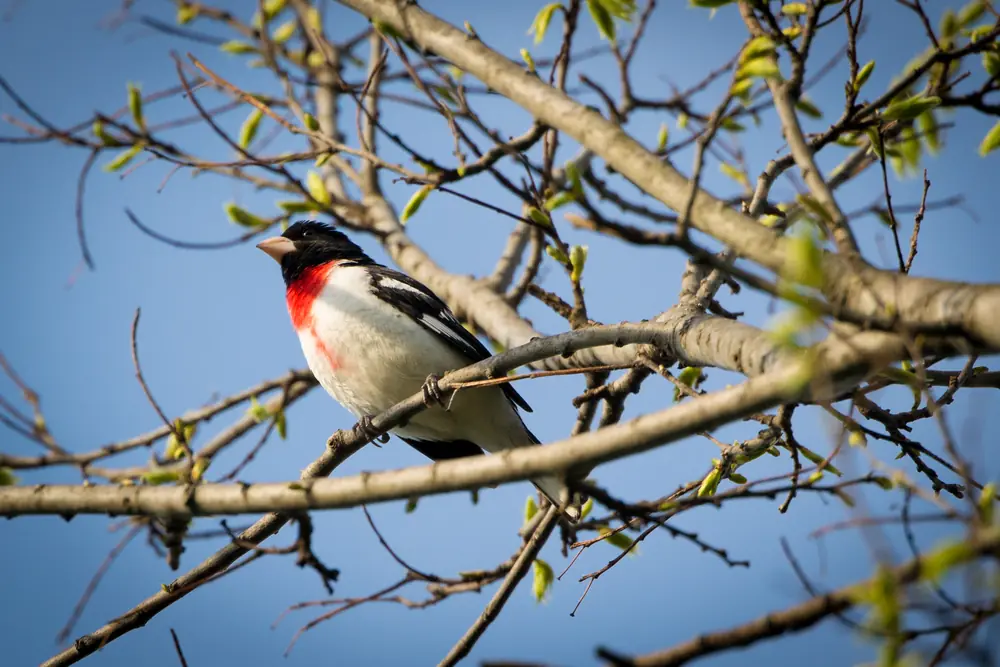
Rose-breasted grosbeak
TWRA calls it a fairly common migrant from mid-April through mid-May · Statewide in migration; nesting only in the higher mountains of East Tennessee
The black-and-white male with a red bib is easy to spot once it is singing in a treetop. It breeds only in the high country, with Frozen Head State Natural Area above about 3,000 feet, Great Smoky Mountains National Park and the Unaka and Roan Mountains named as places to look. Nests sit in shrubs or small trees, about 13 feet up on average.
-
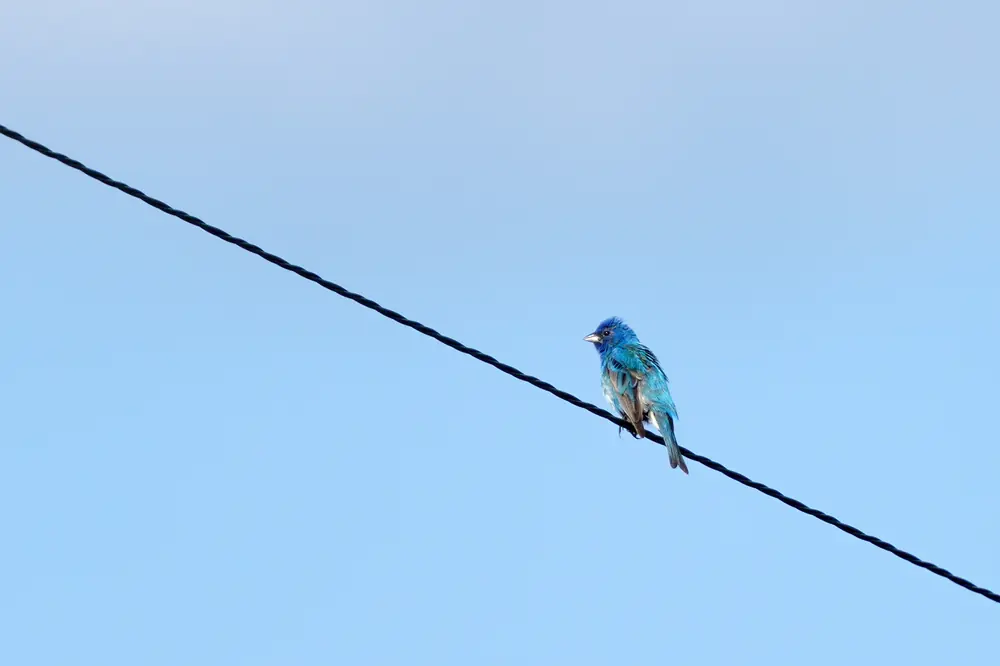
Indigo bunting
TWRA says it reaches Tennessee in mid-April and leaves by mid-October · Brushy field edges, fencerows, powerline cuts and forest openings, at every elevation
Males sing from wires and treetops well into summer, in paired warbling phrases that are fairly easy to learn. The female alone builds a low cup nest, about 3 feet up on average in Tennessee, and pairs often raise two or more broods in a season.
-
Dickcissel
TWRA says it usually arrives in early May and leaves by late August · Large grass fields and hayfields; TWRA names Bark Camp Barrens (Coffee County), Ernest Rice WMA (Dyer County) and Bells Bend Park in Nashville
The song is a series of short, dry, insect-like phrases from a fence post or weed stalk. The female alone builds the nest, a bulky cup in low shrubs or weeds, and the young leave about 8 to 10 days after hatching. TWRA’s page is not consistent about whether the bird is commonest in the east or the west, so go by local reports.
-
Yellow-billed cuckoo
TWRA says it arrives in late April or May and leaves by mid-October · Woodlands statewide
A lanky, shy bird that eats mostly caterpillars, especially hairy ones, and sometimes nests in step with outbreaks of cicadas and tent caterpillars. The song ends in a hollow klop klop klop, and it calls more on cloudy days, which earned it the name rain crow, although TWRA says its skill at forecasting rain has never been documented. From egg-laying to fledging takes only about 17 days.
Which Tennessee birds are nesting and raising young in May?
By the second half of May a great many Tennessee birds are sitting on eggs or feeding nestlings. The nests are small, camouflaged and easily abandoned, so the rule of thumb is to watch from the distance at which the birds ignore you. If you want to record what you find, Cornell’s NestWatch asks volunteers to log nests in an app, and it is open to anyone.
-
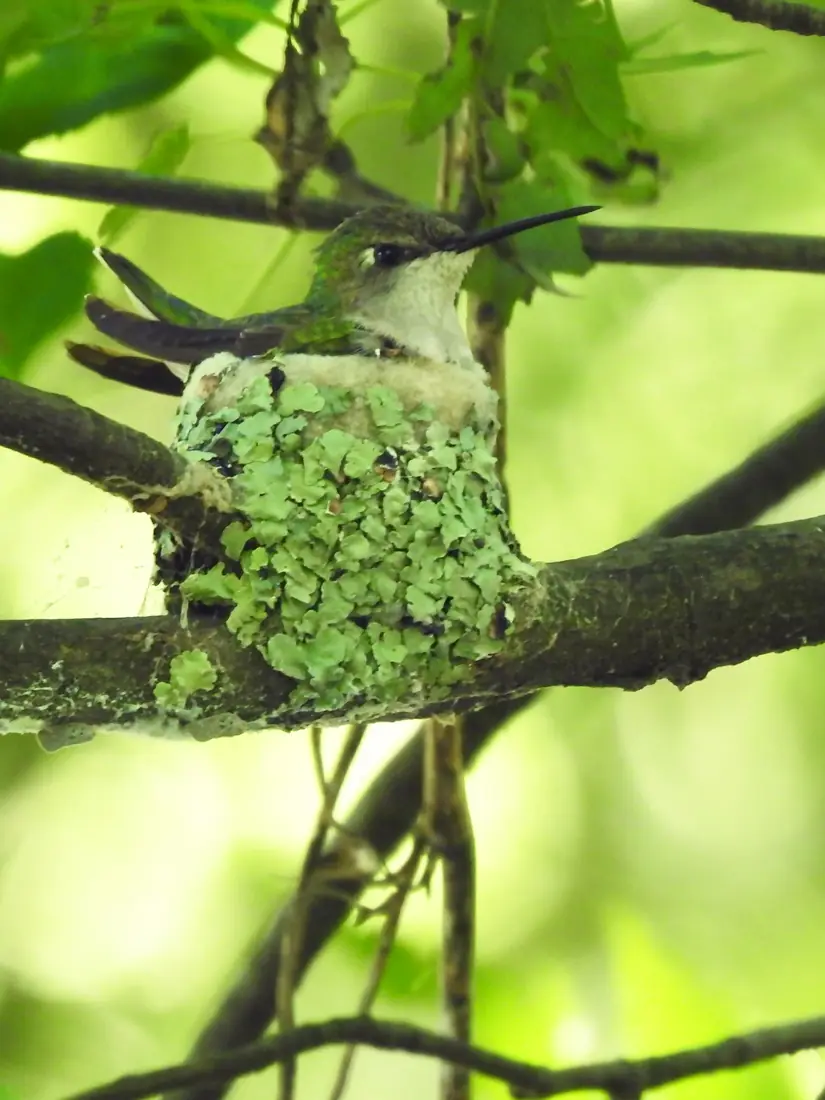
Ruby-throated hummingbird
TWRA says summer residents stay from mid-April to early October · Gardens, woodland edges and streamsides statewide
The female builds a walnut-sized cup of thistle and dandelion down, bound with spider web and covered with lichen, often on a small branch over a stream or other opening. She incubates two pea-sized eggs alone for 12 to 16 days, and nestlings stay 14 to 31 days, usually 18 to 23. After they leave, the young are larger than their mother and she feeds them about 10 more days. TWRA says feeder location matters more to the birds than feeder color.
-
Kentucky warbler
TWRA says it reaches Tennessee around mid-April; most eggs are laid from mid-May to early June · Large forest tracts with a dense understory
A bird that nests on the ground, well hidden in a thicket, so the best clue is the male’s rolling song, which TWRA says each bird keeps at one pitch for life. TWRA says it is usually absent where people or deer have trampled or browsed the ground cover. Brown-headed cowbirds often lay in its nests.
-
Cerulean warbler on territory
TWRA says it arrives in mid-April and leaves by the end of August · Mature forest on steep ridges and in bottomlands; TWRA names Frozen Head State Natural Area, Edgar Evans State Park, Center Hill Lake, Meeman-Shelby Forest and the North Cumberland WMA
The nest is a small cup on a horizontal limb high in the canopy, which is why a bird in the open is so hard to see. TWRA says the female incubates 3 to 4 eggs for 11 to 12 days and the young fledge in about 11 days. The agency calls it the fastest declining eastern songbird and says the North Cumberland WMA has the highest density of nesting ceruleans anywhere. Stay on trails near singing males.
-
Wild turkey hens and poults
TWRA places gobbling mainly in spring; incubation runs 27 to 28 days · Woods, fields and edges statewide
Each hen nests alone in a shallow scrape lined with leaves or grass beside a tree or bush and lays 7 to 14 eggs. If a nest fails, a hen may try again, sometimes three or four times, so you may see broods of different ages. Poults leave the nest soon after hatching and fly at about 8 to 10 days old. A hen with poults is a good reason to keep a dog on a leash.
-
Least terns on the Mississippi
TWRA says they arrive by mid-May in West Tennessee and are on nest sites by late May · Sandbars of the Mississippi River
The nest is a shallow scrape in sand or pebbles, usually near driftwood, and both parents incubate 2 to 3 eggs for 20 to 25 days. The U.S. Fish and Wildlife Service listed the inland population as endangered in 1985, and Tennessee lists it too. TWRA says recreation on nesting beaches conflicts with breeding, so keep off colonies you find.
-
Mississippi kites
TWRA says they arrive in late April and leave by early September · Woodlands, bottomlands and some urban and suburban neighborhoods
Graceful raptors that catch dragonflies and other insects in flight. The nest is crow-sized and near the top of a tall tree, with usually 2 eggs, incubated 29 to 31 days by both adults, and the young leave at about 34 days. TWRA warns that kites nesting in towns have attacked people passing near the nest.
What is blooming in the mountains and the cedar glades in May?
The spring wildflower rush of April is over by May, but the woods are not done blooming. The shrubs take over in the mountains, the glades of Middle Tennessee keep their rare specialists, and the ridges are green. The Smokies park says the spring ephemerals are gone, dormant, by May or June, so this is a month for shrubs, not trillium.
-
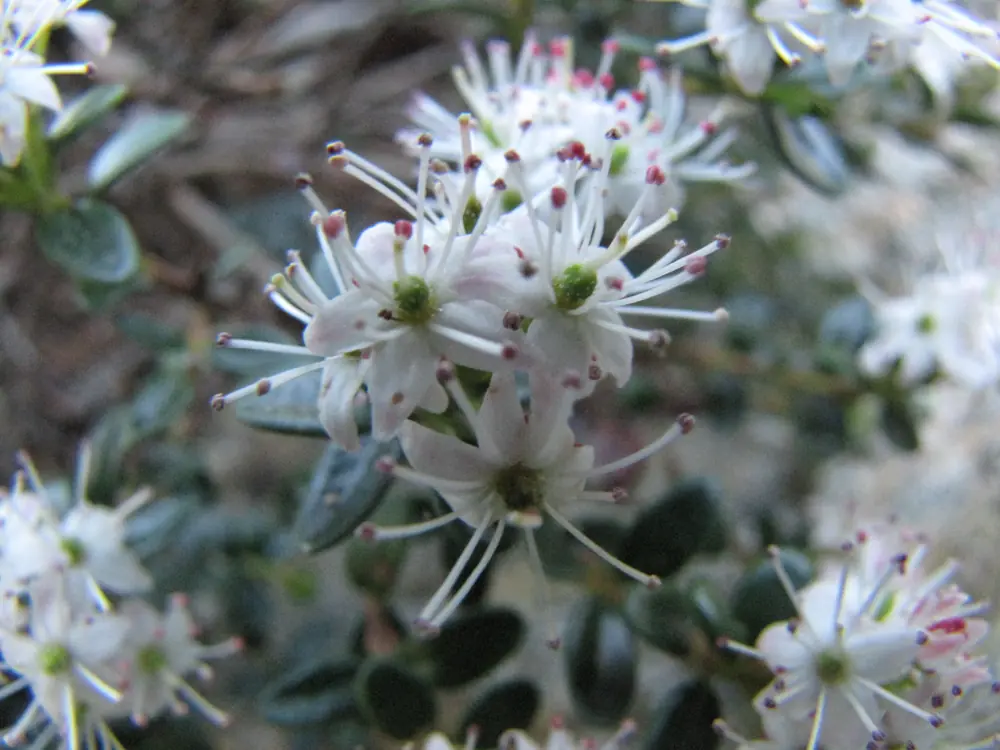
Mountain laurel
The Smokies park says it blooms from early May through June · Rocky ridges and dry slopes in the Smokies and the eastern mountains
Pink-and-white clusters open on dry, rocky slopes, often at the same time as the last flame azaleas.
-
Flame azalea
The park says it blooms at low and mid elevations in April and May · Low and mid-elevation slopes in the Smokies
A May hike below the highest ridges can still turn up azaleas, but they finish before June. Higher in the mountains, the Catawba rhododendron grows mainly above 3,500 feet and peaks in June, and the rosebay rhododendron blooms in June at lower elevations. The grassy balds peak later: Gregory Bald near the turn of June into July and Andrews Bald in early July, so save those trips.
-
Cedar glade specialists
The Cedars of Lebanon state natural area page names the species but gives no bloom dates; ask the Division of Natural Areas · Limestone glades of Middle Tennessee, including Cedars of Lebanon State Forest
The Tennessee Department of Environment and Conservation lists rare glade plants including the federally endangered leafy prairie clover, the Tennessee coneflower, delisted as endangered in 2011, and the Tennessee milkvetch, evolvulus, limestone flame flower and yellow sunnybell. Middle Tennessee State University’s glade center calls the coneflower the first plant in Tennessee listed as endangered. Stay on marked paths: glade soils are thin and easily scarred.
-
The Elsie Quarterman Cedar Glade Wildflower Festival
The 2026 festival ran April 30 and May 1 to 3; no 2027 dates were posted · Cedars of Lebanon State Park and nearby glades
The festival in 2026 offered botany hikes, bike rides, a cave program, an owl prowl and a nightjar program at Vesta Cedar Glade. It is an annual event, so ask the organizers at Middle Tennessee State University or the park office whether 2027 follows the same weekend. Some events need advance registration and a small fee.
What are Tennessee’s young animals, bears, elk and amphibians doing in May?
May is the first month in which wildlife is raising young in earnest. A fawn alone in the leaves or a calf alone in a field is almost never abandoned, and the kindest thing to do is to leave quietly. Every agency page below says the same: keep your distance, and do not touch, feed or move the animal.
-
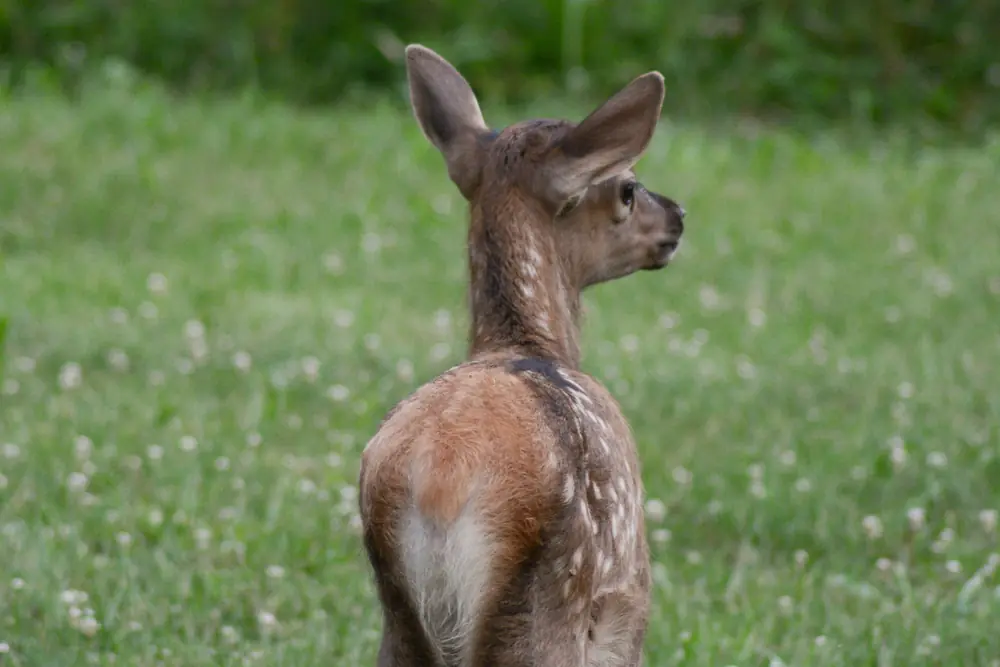
Elk calves
The National Park Service and TWRA both put most births from late May through June · The North Cumberland WMA (Scott, Morgan, Campbell, Anderson and Claiborne counties); Cataloochee, Balsam Mountain and Oconaluftee in the Smokies
TWRA says calves are usually single, spotted, and able to walk within minutes. The Smokies park says mothers often leave a calf alone in a safe place while they feed nearby, and that a lone calf is not necessarily abandoned. Stay at least 25 yards (75 feet) from elk in the park, which is a legal limit with fines, and do not enter fields. TWRA’s elk viewing tower at Hatfield Knob has a live camera.
-
White-tailed deer fawns
The Tennessee Aquarium says many mammals give birth in late April and May · Brushy edges, fields and woods statewide
The aquarium says fawns are often hidden in leaf litter or beneath bushes while their mothers feed and come back later. TWRA’s deer page says the spots on a young fawn are camouflage for hiding from predators and that does aged two and a half or older in good habitat usually have two fawns. If you find a fawn, leave it where it is.
-
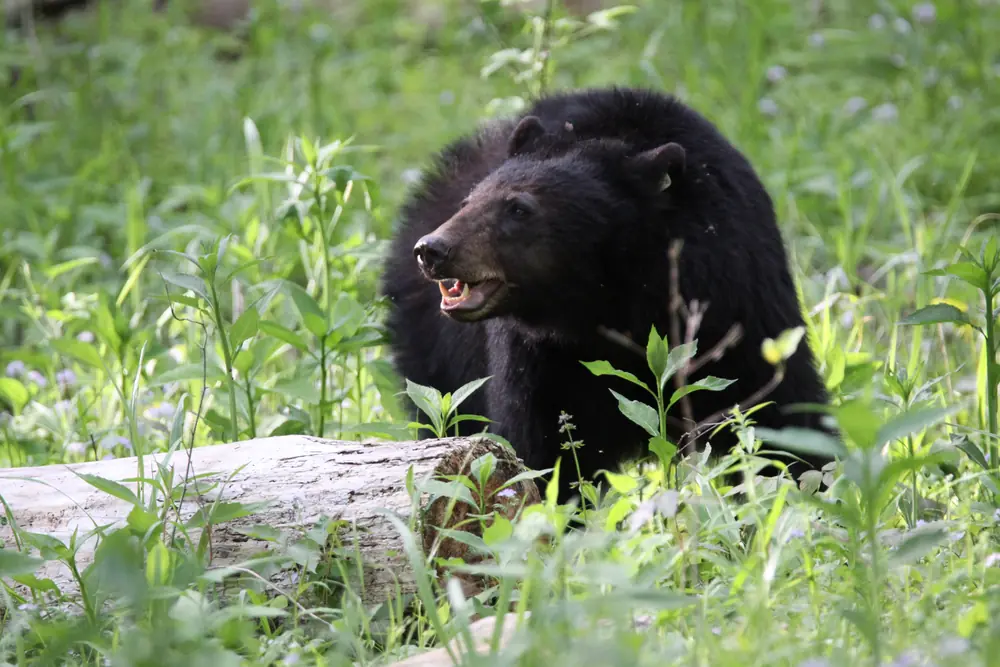
Black bear yearlings
The Smokies park says bear activity is especially high from May to August · The Smokies and the eastern mountains
Cubs leave the den about April, but TWRA says in late spring and early summer mothers push their yearlings away to find their own ranges. Yearlings weigh about 40 to 100 pounds, look gangly with big ears, and may be mistaken for cubs. The park estimates about 1,900 bears, roughly two per square mile. Do not approach: within the park it is illegal to come within 50 yards (150 feet). TWRA says a lone cub is not necessarily an orphan, and it steps in only in narrow cases, such as a mother confirmed dead.
-
Eastern box turtle
The Tennessee Aquarium says box turtles become much more active in late spring · Woods, field edges and roadsides statewide
TWRA says females dig a nest in sandy or loose soil and lay 3 to 8 white eggs, up to three clutches a year. The aquarium advises that a turtle crossing a road be carried to the side it was already heading toward, and only when that is safe.
-
Salamanders and hellbenders
The Smokies park gives no seasonal timing, but warm wet nights suit the lungless species · Smokies streams and damp forest floors
The park counts 31 salamander species there, 25 of them lungless, and calls the Smokies the Salamander Capital of the World. It says the eastern hellbender can exceed two feet in length. The Tennessee Aquarium says slimy and red-backed salamanders hide under logs and leaf litter. Put back any log or rock you turn over exactly as it was.
How warm, wet and stormy is May in Tennessee?
May is warm and green, with the stormiest weather of the year slowing down but not over. NOAA’s 1991–2020 normals put average highs from 77.1 °F at Bristol to 81.7 °F at Memphis, and only 71.6 °F at Crossville on the plateau. The Smokies show how much elevation matters: the National Park Service lists 79 °F at Gatlinburg against 57 °F at Kuwohi, with lows of 50 °F and 43 °F, and calls May warmer, with highs in the 70s and 80s and lows in the 40s and 50s in the lower elevations.
-
A very wet May is on the record
The National Weather Service’s Nashville climate page lists May 2010 as the wettest May on its record, with 16.43 inches · Nashville
The same page lists 7.25 inches on May 2, 2010, the most rain in one day of any May, against a normal of 5.02 inches for the whole month. It gives 34 °F as the record low for May and 96 °F, set in 1937, as the record high, so the month can still surprise. The point for a visitor is that creeks and low roads can flood fast after a stalled storm.
-
Storms and flash floods
TEMA calls spring the start of the state’s most active weather season · Statewide
The Tennessee Emergency Management Agency says the state faces tornadoes, flash flooding, damaging winds, lightning and extreme temperatures every year, and that hazards can develop quickly. It recommends learning your risk, writing a plan, stocking three days of supplies, using several alert methods and identifying a safe place. Savage Gulf’s state natural area page warns that heavy rain can cause flash floods and streams can turn dangerous quickly.
| Station | Average high | Average low | Nights at 32 °F or colder | Precipitation | Snowfall |
|---|---|---|---|---|---|
| Memphis | 81.7 °F | 62.4 °F | 0.0 | 5.27 in | 0.0 in |
| Jackson | 80.0 °F | 57.9 °F | 0.0 | 5.58 in | – |
| Nashville | 80.4 °F | 58.3 °F | 0.0 | 5.02 in | 0.0 in |
| Crossville | 71.6 °F | 52.0 °F | 0.3 | 5.35 in | 0.0 in |
| Chattanooga | 81.0 °F | 59.0 °F | 0.0 | 3.94 in | 0.0 in |
| Knoxville | 78.9 °F | 56.9 °F | 0.0 | 4.13 in | 0.0 in |
| Bristol | 77.1 °F | 52.3 °F | 0.2 | 3.82 in | 0.0 in |
| Gatlinburg (park) | 79 °F | 50 °F | – | 4.5 in | 0 |
| Kuwohi (park) | 57 °F | 43 °F | – | 6.0 in | Trace |
NOAA’s outlook office posts a fresh 90-day forecast each month, around the 15th, at cpc.ncep.noaa.gov; read the latest before a trip. Reading a forecast is covered in our weather guide, and the cloud pictures show a thunderstorm tower while it grows.
When is the last spring freeze in Tennessee?
By May the median last freeze has long passed at every station in the table, and by early May even the plateau and the northeast have nearly always seen their final freeze. The latest dates belong to Crossville (May 9) and Bristol (May 5) in the nine-in-ten column, and Knoxville follows on April 29. NOAA’s May normals show 0.3 nights at or below 32 °F at Crossville and 0.2 at Bristol, and none at the other five stations. The stations are the state’s main ones, as on the October page.
| Station | One year in ten | Median | Nine years in ten |
|---|---|---|---|
| Memphis | Mar 9 | Mar 29 | Apr 13 |
| Jackson | Mar 18 | Apr 4 | Apr 21 |
| Nashville | Mar 13 | Mar 31 | Apr 16 |
| Clarksville | Mar 26 | Apr 10 | Apr 26 |
| Crossville | Apr 2 | Apr 20 | May 9 |
| Chattanooga | Mar 6 | Mar 24 | Apr 8 |
| Knoxville | Mar 26 | Apr 11 | Apr 29 |
| Bristol | Mar 30 | Apr 16 | May 5 |
In roughly one spring out of ten the freeze comes later than that column says, so keep a sheet handy for seedlings in the high country. Find your town on the Tennessee frost page, and the April page shows the weeks before.
How much daylight does Tennessee gain in May?
Each May day runs about a minute and a half longer than the one before it. Over the month Chattanooga gains 43 minutes while Clarksville and Bristol gain 47, a small edge for the northern towns. These are sunrise-to-sunset lengths, which the March 14 clock change leaves untouched. If you want exact sunrise and sunset clock times for a particular town, the daylight guide has them.
| City | May 1 | May 31 | Gained | Per day |
|---|---|---|---|---|
| Memphis | 13 h 37 m | 14 h 22 m | 45 min | 1.5 min |
| Jackson | 13 h 38 m | 14 h 24 m | 46 min | 1.5 min |
| Nashville | 13 h 41 m | 14 h 26 m | 45 min | 1.5 min |
| Clarksville | 13 h 42 m | 14 h 29 m | 47 min | 1.6 min |
| Crossville | 13 h 39 m | 14 h 26 m | 47 min | 1.6 min |
| Chattanooga | 13 h 37 m | 14 h 20 m | 43 min | 1.4 min |
| Knoxville | 13 h 40 m | 14 h 25 m | 45 min | 1.5 min |
| Bristol | 13 h 42 m | 14 h 29 m | 47 min | 1.6 min |
Daylight time is in effect all month. Sunrise and sunset for a particular address come from the daylight tool.
What can you see in Tennessee’s night sky in May 2027?
This month offers a good meteor shower under a dark moon, a full moon with two names, Mercury’s finest evening showing of 2027 and a pairing of Jupiter with the Moon. Central time in the table fits Memphis, Nashville and Crossville, with Eastern time following in brackets for Chattanooga, Knoxville and the Tri-Cities; daylight time applies statewide.
-
Eta Aquariid meteors, a good year
Best mornings May 5, 6 and 7, before dawn · Any dark site with a view to the east and southeast
Meteors from this stream turn up from roughly April 19 into late May, and the best night runs from May 5 into May 6. New moon arrives on the 6th, and the Moon is then a mere 1 to 2 percent crescent. A watcher in the southern two-thirds of the country might count 10 to 30 an hour, mostly in the final two or three hours of darkness, and fewer in the north, where Aquarius comes up just ahead of the dawn. Bring a reclining chair and a hat, and allow half an hour for your eyes to adjust.
-
The Flower Moon, a seasonal Blue Moon
Full on Thursday, May 20, at 5:59 a.m. CDT (6:59 a.m. EDT); best evening Wednesday, May 19 · Any clear eastern horizon
Wednesday, May 19 is the evening to go out: the Moon rises close to sunset, around 8 p.m. in most of Tennessee, so look up moonrise for your own town. Flower Moon is the traditional name for May’s full moon in the Old Farmer’s Almanac lists, and May suits it. An older almanac rule gives the Blue Moon label to the third full moon of a season that has four; spring 2027 has four (Mar 22, Apr 20, May 20, Jun 19), which is why the May one counts as the seasonal Blue Moon. Under the newer two-in-a-calendar-month rule, 2027 has none.
-
Mercury at its best evening view of the year
Greatest eastern elongation on May 28; look from about May 12 to June 5, with May 27 and 28 nearly equal · Low in the west-northwest, 45 to 90 minutes after sunset
Mercury reaches its farthest point east of the Sun, 22.8 degrees, at 9:14 a.m. EDT on May 28, and the evenings around that date offer the best chance. Our own figures for 40 degrees north have Mercury lingering about 97 minutes past sundown in mid-May, brighter than most stars, before June dims it fast. Tennessee lies a few degrees south of that line, so treat the times as a guide. A flat, open western horizon is what you need, and binoculars help.
-
Jupiter, Mars and a quarter Moon in the evening
The first-quarter Moon sits near Jupiter on May 12 and near Mars on May 13 · Southwest to west after dark
In our calculations Jupiter sets roughly 7 hours after dark on the first of May and just 4.5 hours after dark by June 1, so it quits the evening sky a little sooner each week. Mars sets near 2 a.m. at the start of the month and keeps shrinking and fading. On May 12 the Moon slides to within about 1.2 degrees of Jupiter, though the closest moment comes in daylight, so look after dark. The next night it sits roughly 3 degrees from Mars.
| Phase | Date | Time |
|---|---|---|
| New moon | Thursday, May 6 | 5:58 a.m. CDT (6:58 a.m. EDT) |
| First quarter | Wednesday, May 12 (Thursday, May 13 Eastern) | 11:44 p.m. CDT (12:44 a.m. EDT) |
| Full moon, the Flower Moon | Thursday, May 20 | 5:59 a.m. CDT (6:59 a.m. EDT) |
| Last quarter | Friday, May 28 | 8:58 a.m. CDT (9:58 a.m. EDT) |
Other towns can look up their own dates on the moon phases page. The Naval Observatory supplies every time in the table, and since the zone boundary runs across the Cumberland Plateau near Crossville, use whichever zone your own clock shows.
What can Tennessee families do outdoors in May 2027?
- Join the City Nature Challenge. The organizer’s 2027 calendar has photographing from April 30 through May 3, identifying from May 4 through 16 and results on May 20. Upload wild plants and animals from your own city to iNaturalist, and look for your area on the participant list.
- Mark World Migratory Bird Day. The organizers place the North American event on a Saturday in May, but their page showed no 2027 date or theme the day we checked, so look there before you plan.
- Watch a nest. NestWatch is open to anyone: learn the method, find a nest, and record what you see in the app. A bluebird box or a hanging purple martin gourd is a good first project.
- Look for the first monarchs. Journey North asks for reports of monarch eggs, caterpillars and adults, especially the first of each in spring, so a milkweed patch is worth checking in May.
- Enter the synchronous firefly lottery, if the park runs one. The Smokies park announces its dates each April, so watch the park’s fireflies page for 2027. Have a second night in mind, since rain can stop the flashing.
- Learn the cedar glades. Ask the Cedars of Lebanon park office, at 615-443-2769, about 2027 glade walks, and ask the Middle Tennessee State University glade center whether a wildflower festival is planned.
- Plan for Memorial Day weekend. Memorial Day is Monday, May 31. Reelfoot National Wildlife Refuge’s visitor center lists itself as closed on all federal holidays, and Cades Cove Loop Road in the Smokies has been closed to vehicles on Wednesdays in summer in recent years (in 2026 from early May through September 30), so check the park’s page for 2027 before you go.
Write it all down in the Naturalist’s Field Journal: a night of fireflies fits a dusk and dawn watch, a hummingbird nest belongs under nest observed, a whip-poor-will heard from a ridge goes on the map of sounds, and a quiet fawn seen from the trail can go under mammal watch. Earlier Tennessee guides cover March and April, and you can browse other states too.
Safety notes for May in Tennessee
- Spring turkey season. The general spring season closes on May 16, 2027, after opening April 3, according to TWRA, which also held a Young Sportsman hunt on March 27 and 28. Hunters may take two male turkeys in all, and no hens. Legal hours begin half an hour before sunrise. Expect hunters in the woods at dawn through the 16th, and wear bright colors on public land.
- Blaze orange and turkey. TWRA sets an orange-or-pink clothing requirement, 500 square inches worth, for big-game hunters, and hunter-education guides say it leaves out turkey hunts. We did not find that exemption on TWRA’s own turkey page, so check the current hunting regulations before you hunt; if you are only walking, bright colors are the safer choice.
- Burning. The state’s burn-permit season has run from October 15 through May 15 in recent years, so in the first half of May open burning in counties that allow it still needs a Division of Forestry permit; confirm that the 2027 season has the same dates. A permit lasts for the day, comes from BurnSafeTN.org or 877-350-2876, and burning without one is illegal, with penalties of a fine or as much as 30 days in jail. Cities and counties may add their own limits.
- Storms and flash floods. Pick your shelter spot before any warning, and arrange more than one way to be alerted. Moving water is never safe to wade or drive through.
- Bears and elk. The Smokies rules are 50 yards from bears and 25 yards from elk. Lock your car, use the cable at backcountry sites and never feed wildlife. TWRA advises securing garbage and taking down bird feeders when bears are about.
- Young animals. A fawn, calf or cub alone is usually not orphaned. Keep away, and call TWRA’s regional office or a wildlife rehabilitator if an animal is plainly injured.
- Kites. A Mississippi kite that swoops at you is guarding a nest, so walk away from the tree.
- Snakes. TWRA names the copperhead as one of four venomous snakes in Tennessee, found statewide on rocky, wooded hillsides with logs and leaf litter, so look before you reach or step. Its venom is not very potent and deaths are extremely rare, but anyone bitten should seek medical care promptly.
- Ticks. The Oak Ridge research park’s guide says adult American dog ticks are most active in April, May and June and lone star ticks from April through July. It advises tucking trousers into socks, applying repellent mainly to clothes, walking in the middle of trails, checking yourself every two to three hours and pulling a tick straight out with tweezers.
Sources (53)
- National Park Service: synchronous fireflies in Great Smoky Mountains
- National Park Service: wildflowers of Great Smoky Mountains
- National Park Service: elk in Great Smoky Mountains
- National Park Service: black bears in Great Smoky Mountains
- National Park Service: weather in Great Smoky Mountains National Park
- National Park Service: amphibians of Great Smoky Mountains
- National Park Service: Great Smoky Mountains seasonal roads
- TWRA: ruby-throated hummingbird
- TWRA: 2027 spring turkey season
- TWRA: black bears
- TWRA: Mississippi kite
- TWRA: eastern whip-poor-will
- TWRA: eastern box turtle
- TWRA: deer
- TWRA: cerulean warbler
- TWRA: indigo bunting
- TWRA: dickcissel
- TWRA: common nighthawk
- TWRA: yellow-billed cuckoo
- TWRA: Kentucky warbler
- TWRA: Swainson’s thrush
- TWRA: rose-breasted grosbeak
- TWRA: least tern
- TWRA: purple martin
- TWRA: wild turkey
- TWRA: elk
- TWRA: copperhead
- TWRA: big game hunting, fluorescent orange or pink requirement
- TWRA: chimney swift
- TWRA: bald eagle
- TWRA: mammals (index)
- TWRA: Tennessee waterbirds (index)
- Tennessee Aquarium: what spring means for the wildlife of East Tennessee
- Middle Tennessee State University: Center for Cedar Glade Studies
- Tennessee Department of Environment and Conservation: Cedars of Lebanon State Forest natural area
- Tennessee Department of Environment and Conservation: Savage Gulf State Natural Area
- U.S. Fish and Wildlife Service: Reelfoot National Wildlife Refuge, visit
- U.S. Fish and Wildlife Service: Tennessee National Wildlife Refuge, visit
- National Park Service: Big South Fork National River and Recreation Area
- NWS Nashville: climate records for Nashville
- NOAA NCEI: 1991–2020 monthly normals for Tennessee stations (data API)
- TEMA: preparing for spring severe weather (February 2026)
- Tennessee Department of Agriculture: debris burn permits required through May 15
- Oak Ridge National Environmental Research Park: ticks (PDF)
- Climate Prediction Center: 90-day outlooks
- U.S. Naval Observatory: moon phases, 2027 (data API)
- SeaSky: astronomy calendar 2027
- Old Farmer’s Almanac: full moon names
- City Nature Challenge
- World Migratory Bird Day
- Cornell Lab of Ornithology: NestWatch
- Journey North: monarchs
- Photos via Wikimedia Commons; licenses and photographers are credited under each picture
