What to look for in nature in Alabama this March
Meteorological spring begins on March 1, and Alabama usually feels it first. Trout lilies carpet a creekside slope on Monte Sano, pitcher plants flower in the coastal bogs, and the first swallow-tailed kites and hummingbirds cross the Gulf to start the season. Frogs call from every wet ditch, gobblers start strutting, and white bass push up the Tennessee River. Each day runs about two minutes longer than the one before, daylight saving time begins March 14, and the astronomical spring equinox follows on the 20th. Each entry below gives a typical window and its source, from the Tennessee Valley down to the coast.
Other months in Alabama: October, November, December, January, February, April.
Start here
- Put out a clean hummingbird feeder. Alabama Extension says hummingbirds usually start visiting feeders in April or early May, so a feeder hung in March is simply early. Mix one part sugar to four or five parts water, clean the feeder weekly, and report the first bird to Journey North.
- Visit a trout lily slope. Yellow trout lilies carpet Monte Sano's Wildflower Trail in March, according to the Land Trust of North Alabama. Go in the afternoon, when the flowers have opened, and stay on the trail.
- Listen after dusk on a damp, mild night. Spring peepers, upland chorus frogs and Fowler's toads are all breeding now, according to ADCNR. Stand by a pond for ten minutes and note the calls and the temperature.
For the Naturalist's Field Journal: put the first swallow-tailed kite, hummingbird and returning warbler on birds I have seen; record each frog chorus and its temperature on a map of sounds; press a trout lily or spring beauty on colours of the day; follow one pitcher plant bog visit with a second in April on the same place twice; and keep Mercury, Venus and the Worm Moon on dusk and dawn watch.
Regions used below: Tennessee Valley and the northwest hills; Lookout Mountain and northeast Alabama; Birmingham and the Cheaha highlands; Montgomery and the Black Belt; The Wiregrass; Mobile Bay and the Gulf Coast.
Which birds come back to Alabama in March?
The first wave of summer residents, mostly arriving across the Gulf of Mexico from Central and South America. Alabama Birding Trails and the Alabama Department of Conservation and Natural Resources (ADCNR) give arrival windows species by species, and they differ from year to year. Dates run a little later each step north, and several of these birds are hard to see, so treat the windows below as the earliest you might hear or spot one.
-
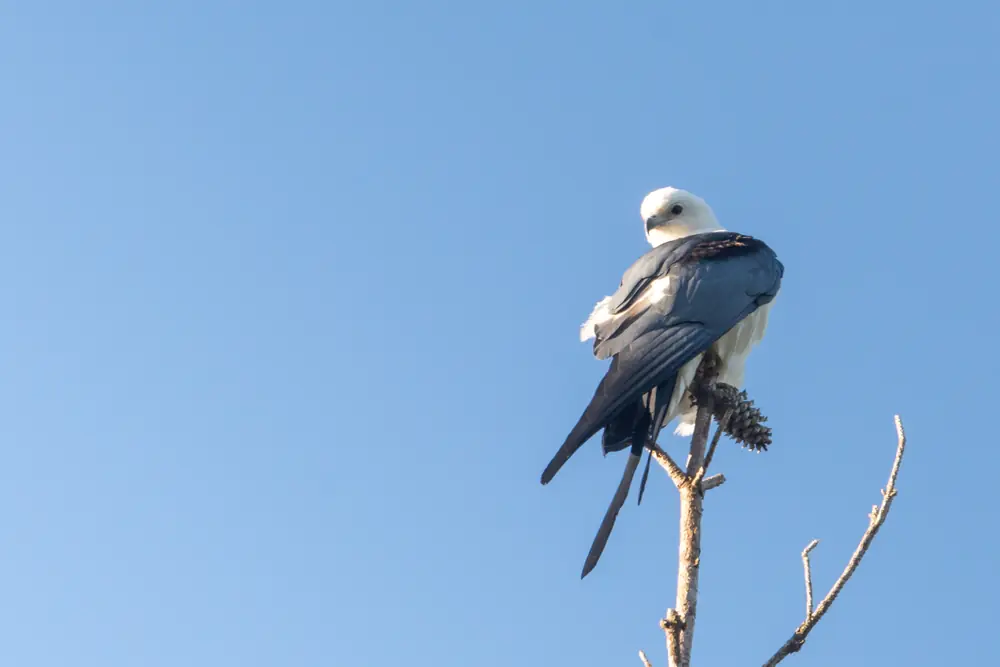
Swallow-tailed kites
Late March at the earliest in most of the range; breeding begins between the third week of March and the first week of July · Floodplain forests along the lower Alabama and lower Tombigbee rivers and the Mobile-Tensaw Delta
Few birds are as easy to name once you see one: a white head and underparts, black wings and back that flash blue in direct light, and a deeply forked tail. The Alabama Department of Conservation and Natural Resources (ADCNR) says arrival dates run from mid-February in south Florida to late March elsewhere, and that Alabama's birds nest in tall deciduous trees on natural levees and in mature cypress-hardwood swamps. It rates the kite a species of high conservation concern, because its numbers and range have shrunk since the early twentieth century. Alabama Birding Trails calls it uncommon and local, and the Mobile-Tensaw Delta trail account describes the summer view as kites flying along the riverbanks just above the treeline, so a boat ramp or bridge over the delta is a sensible place to look. Please keep your distance from any nest.
-
Ruby-throated hummingbirds
Usually April or early May at feeders; a scout may appear earlier · Flowering shrubs, woodland edges and feeders statewide
Alabama Birding Trails lists this hummingbird as common in spring, summer and fall, and the Alabama Cooperative Extension System says hummingbirds usually begin visiting feeders in April or early May. First-arrival dates vary from year to year, so a first-of-year sighting is worth recording either way. Extension suggests a nectar of one part table sugar to four or five parts warm water, never honey, with the feeder cleaned weekly in vinegar and hot water rather than detergent. Journey North keeps a map of reported sightings through the spring, and a first-of-year report from your yard adds a dot to it.
-
The purple martin second wave
Young birds arrive four to twelve weeks after the first adults · Martin houses and gourds near open ground
If a scout reached your martin house in February, the colony itself is still filling in. The Purple Martin Conservation Association says last year's young begin arriving four to twelve weeks after the first adults, and that martins can start nesting through the end of June. It advises keeping entrances closed until the adults are due, and not closing the entrance holes or taking housing down until late August. Alabama Birding Trails calls the species common in spring, summer and early fall inland, and says its return from the southern hemisphere heralds the start of spring.
-
Waterthrushes and parulas
From early March · Wooded creeks, swamps and river bottoms
Both are small, warbler-family birds that are heard before they are seen. Alabama Birding Trails lists northern parula and prothonotary warbler among the nesting species of the Mobile-Tensaw Delta, and early arrivals of both are possible in March, though dates vary with the year and the latitude. Look and listen along wooded creeks and swamp edges at first light.
Start a page in birds I have seen with a column for the first date of every returning species. A later column for the first date in April makes the spring wave visible at a glance.
Why do birders go to Dauphin Island, and does the rush start in March?
Dauphin Island is a barrier island with some of the first land and trees that tired songbirds reach after crossing the Gulf. March is the opening act. The Alabama Birding Trails account of the Dauphin Island Audubon Bird Sanctuary says peak migration comes in mid-April, when the parking area often fills, and the migration builds through April. So in March you will find fewer birds and far smaller crowds, but the first arrivals are already coming through.
-
Dauphin Island Audubon Bird Sanctuary
Quiet and promising in March; busiest around mid-April · Dauphin Island, with parking off Bienville Boulevard
The sanctuary has trails through maritime forest and a slightly raised, wheelchair-accessible boardwalk on the Lake Loop to Gaillard Lake, where wading birds feed. The oak grove of the old banding area and the Campground Trail draw the greatest variety of migrant songbirds. Printable maps and bird lists can be downloaded from the Alabama Birding Trails page, and the sanctuary's eBird hotspot shows what other people saw this week.
-
Indian Shell Mound Park
Spring and fall migrations · Northern shore of Dauphin Island, a stop on the Alabama Coastal Birding Trail
ADCNR describes this 11-acre park as the first point of land migrants meet after crossing the Gulf. Its moss-draped live oaks stand on shell middens left by Native people of the Mississippian period (about 1100 to 1550), and self-guided visits are possible. Listing the oak trees before the birds arrive makes it easier to know where to look when they do.
-
Lake Shelby and Gulf State Park
March programs listed by the park · Gulf Shores
Gulf State Park lists a Birding for Beginners walk at Lake Shelby on Tuesday, March 2, at 10 a.m., and other nature programs through the month (see the families section). It is a gentle way to learn the common coastal species before the April peak.
Come back to the same spot in mid-April and write a second entry. A same place twice page with both dates shows how much the island changes in a month.
What are the eagles, ospreys and bears doing in March?
Raising young, mostly. By March the winter crowds have thinned at Wheeler National Wildlife Refuge near Decatur, which the U.S. Fish and Wildlife Service (USFWS) still lists as a home for sandhill cranes and the endangered whooping crane in winter, but resident and returning raptors are busy and the refuge has moved to its spring schedule.
-
Eaglets growing in the nest
Fledging in spring · Tall trees near the Tennessee River reservoirs and other large lakes
ADCNR reports clutches of one to three eggs laid in December or January, incubated for 30 to 32 days, and says a young eagle spends close to three months in the nest. The young should therefore be flying by spring. They are about adult size when they leave, though the birds do not reach breeding age until about five. Binoculars from a car or a roadside are enough, so leave the nest tree undisturbed.
-
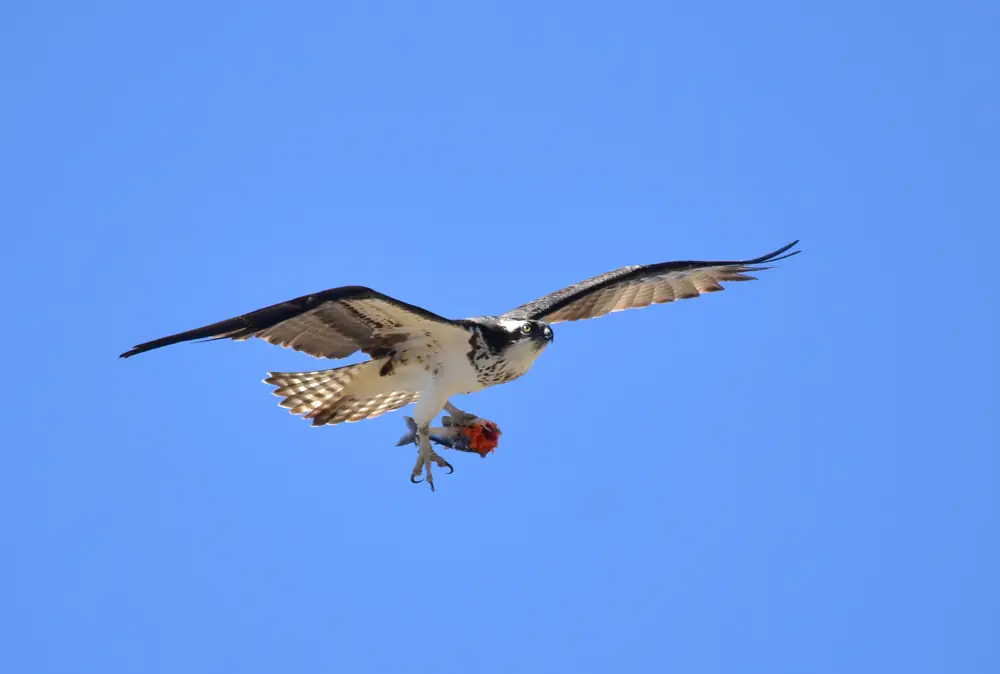
Ospreys and their sky dance
Spring courtship and nest repair · Lakes, rivers and coastal marshes; most common on the Gulf Coast
ADCNR calls the osprey a breeder, fairly common in spring, summer and fall on the Gulf Coast and uncommon in winter. In courtship the male flies about with a fresh fish or a stick in his talons in what is called the sky dance. Ospreys keep one partner for life and tend to return to the old nest. The species nearly vanished when DDT was in wide use, and its recovery since the ban in 1970 is a conservation success.
-
Wheeler's spring schedule
March through October · Wheeler National Wildlife Refuge, near Decatur
USFWS lists the visitor center, wildlife observation building, photography blinds, Atkeson Cypress Boardwalk and grounds as open 9 a.m. to 4 p.m., Tuesday through Saturday, March to October. A one-mile stretch of road through the Buckeye-Thorsen Arm Unit is closed as a waterfowl sanctuary between mid-November and the end of February, so it should be open again in March. Check the refuge page for current alerts before you drive out.
-
Black bears leaving winter dens
Cubs born January to February · North of Mobile; Lookout Mountain; Talladega National Forest
ADCNR rates the black bear rare in Alabama and says small populations live north of Mobile (Baldwin, Mobile and Washington counties), in the Lookout Mountain area of DeKalb and Cherokee counties, and in the Talladega National Forest area of Calhoun and Cleburne counties. Cubs weigh half a pound to a pound at birth and stay with the female for roughly eighteen months. A bear sighting in Alabama is unusual enough to report to ADCNR.
Log what you see at the refuge under mammal watch and birds I have seen, with the weather and time of day. Compare notes with your winter visit to see what has changed.
Which frogs are calling in Alabama in March, and are the gopher tortoises and alligators awake?
Frogs are at full volume, tortoises are digging out and alligators are stirring but not yet courting. Warm, damp evenings bring the loudest choruses.
-
Spring peepers
Breeding January to April; calling heard from late November on the coast · Ponds, pools and swamps in or near woodlands, statewide
ADCNR rates the northern spring peeper common statewide and describes a high, whistling peep. The frog is tiny, 3/4 to 1 1/4 inches long, carrying a dark X on its back, and outside the breeding season it retreats to damp woods, so a March night is the time to hear them.
-
Upland chorus frogs
December through late April · Grassy areas, moist woodlands, river-bottom swamps and temporary pools; absent from the far south
ADCNR describes the call as a series of short trills, like a finger run over the teeth of a comb, rising at the end. The species is widespread across Alabama except the extreme south, apart from the strips along the Conecuh and Chattahoochee rivers.
-
Southern leopard frogs
December through March, though breeding can happen year-round when conditions allow · Woodland pools, ditches and nearly any freshwater
ADCNR describes this as a common frog that crosses roads at night while hunting. It matures by its first spring after hatching, and each female lays several hundred to several thousand eggs in the shallows.
-
Fowler's toads
March to August · Residential areas, open woodlands, ponds, ditches and flooded fields
ADCNR calls Fowler's toad Alabama's most commonly encountered and widely distributed toad. Females lay long strings of about 7,000 eggs on aquatic plants, and the tadpoles transform within 30 to 60 days. Bird-voiced treefrogs, with their piping whistles, do not start until April, and the ADCNR account puts their season at April to July.
-
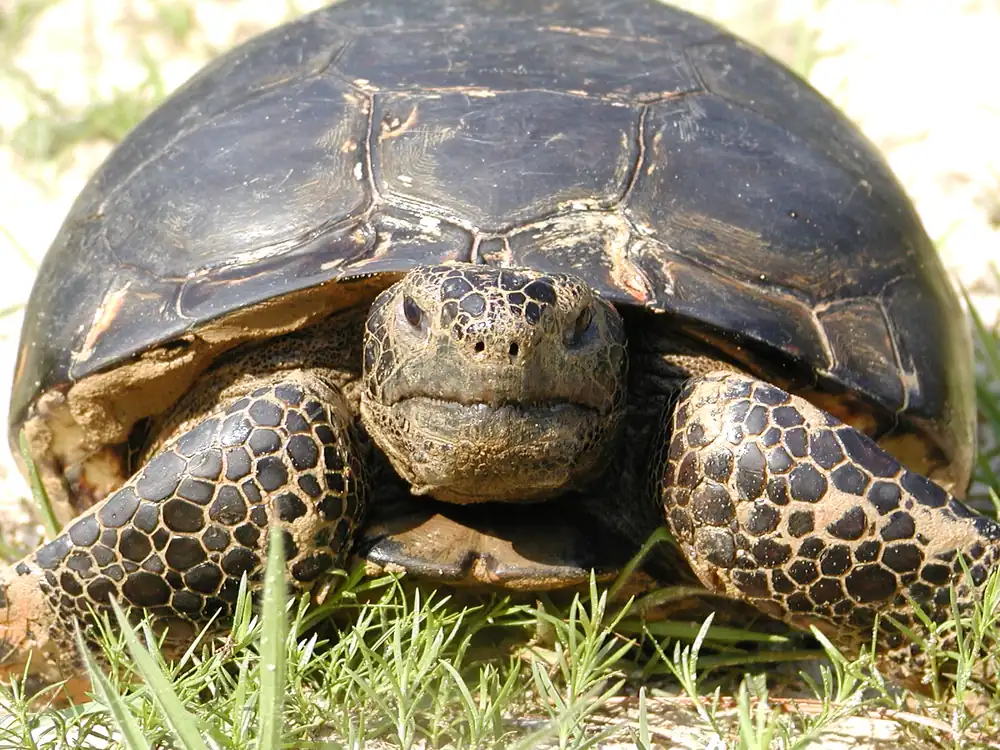
Gopher tortoises
Active burrows and foraging as days warm · Upland habitats of the Coastal Plain, in the southern part of the state
Alabama Extension says gopher tortoise burrows average 14.8 feet long, with a rounded top and flat bottom. It is against the law to harm a gopher tortoise or its burrow. The tortoise is federally protected west of the Mobile and Tombigbee rivers and protected by the state throughout its range. ADCNR runs two iNaturalist projects for reports: the Alabama Gopher Tortoise Conservation Project and a road mortality project. Gulf State Park lists Alligator Nature Walks on its Gopher Tortoise Trail on Tuesday, March 9, at 9 a.m. and Wednesday, March 24, at 1 p.m.
-
American alligators
Mating April and May; nests of 30 to 70 eggs follow · Freshwater swamps, marshes, rivers, lakes and streams of the south
ADCNR says alligators are most active in warm weather, when an adult eats about 20 pounds of food a week, and can go weeks without eating in winter. Mating season runs April through May, so courtship has not yet begun. Never feed or approach one. Gulf State Park's Alligator Adventures program with its young alligators is on Thursday, March 4, at 1 p.m.
Frogs belong on a map of sounds: sketch the pond, mark where each call came from, and note the night's temperature. If you were hoping for spotted salamanders, ADCNR gives their breeding season as late December to early February, so only the last egg masses remain.
Where do Alabama's spring wildflowers and pitcher plants bloom in March?
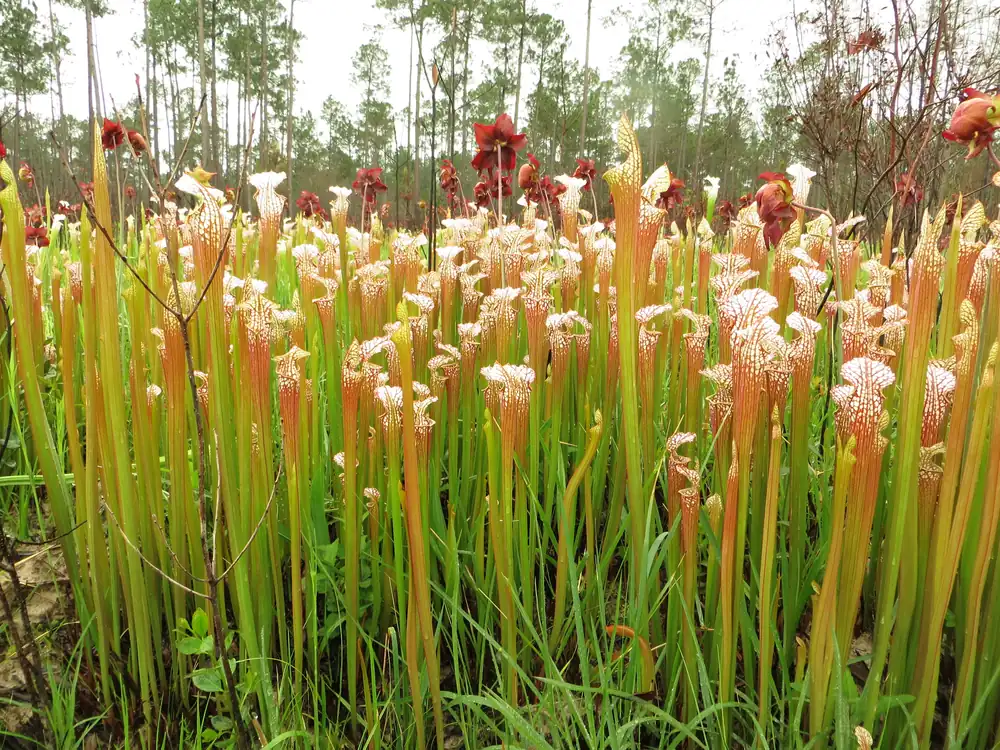
Spring ephemerals bloom from February through April, according to the Alabama Wildlife Federation, and March is when most of them peak, before the tree canopy closes. Two very different places show the season: a creekside slope in the Tennessee Valley and the pitcher plant bogs of the coast.
-
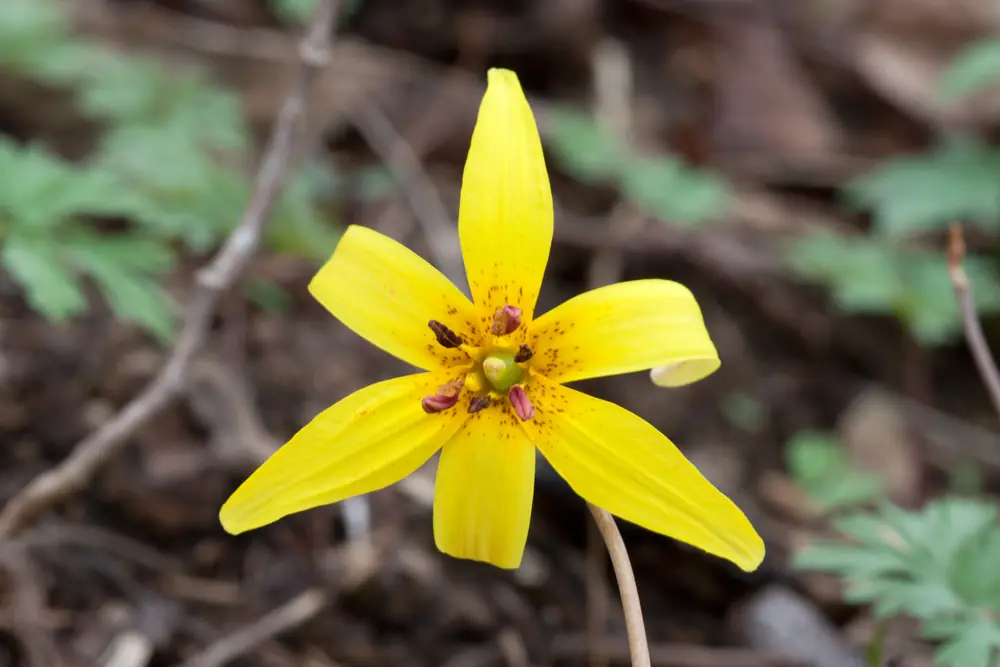
Trout lilies on Monte Sano
March, the trail's signature flower · Wildflower Trail, Cleermont Trailhead, 506 Cleermont Drive, Huntsville
The Land Trust of North Alabama describes the 0.58-mile trail along Fagan Creek as mostly flat with some rocky sections. Yellow trout lilies carpet the mountainside and follow the sun, staying tightly closed on cool mornings and opening fully when the sun is high, so go in the afternoon. Virginia spring beauty can appear as early as January, shooting star grows in the damp areas near the creek, Virginia bluebells, reintroduced to the preserve, bloom in March and April, and rue anemone shows from March through May. Please stay on the trail and take only photographs.
-
Pitcher plant bogs
Flowers in early spring, tall pitchers later · Weeks Bay Pitcher Plant Bog, County Road 17, a quarter mile north of U.S. 98; Gulf State Park program from Orange Beach
ADCNR says the pitcher plants at Weeks Bay begin to blossom in early spring, with pitchers emerging later, orchids following in late spring and summer, and wildflowers in fall. It describes these bogs as among the most diverse habitats for flowering plants in North America. The carnivorous plants drown insects in tubular leaves, while sundews use sticky hairs like flypaper. The reserve uses prescribed burns to keep the bog open. Gulf State Park lists a Carnivorous Plant Hike on Thursday, March 25, at 9 a.m., meeting at the Orange Beach Sportsplex. Park on the east side of County Road 17 if you go to Weeks Bay.
Press one fallen petal or leaf from each place on colours of the day, and note the date. Wildflowers on public land are not for picking, and a photograph keeps the plant in place for the next visitor.
Why do turkeys gobble in March, and what are anglers catching?
March is the start of turkey courtship and of the spring runs of fish up river. If you hear a gobble from the woods at dawn, it is a male turkey announcing himself to hens, and if you meet a long line of anglers below a dam, they are probably after white bass.
-
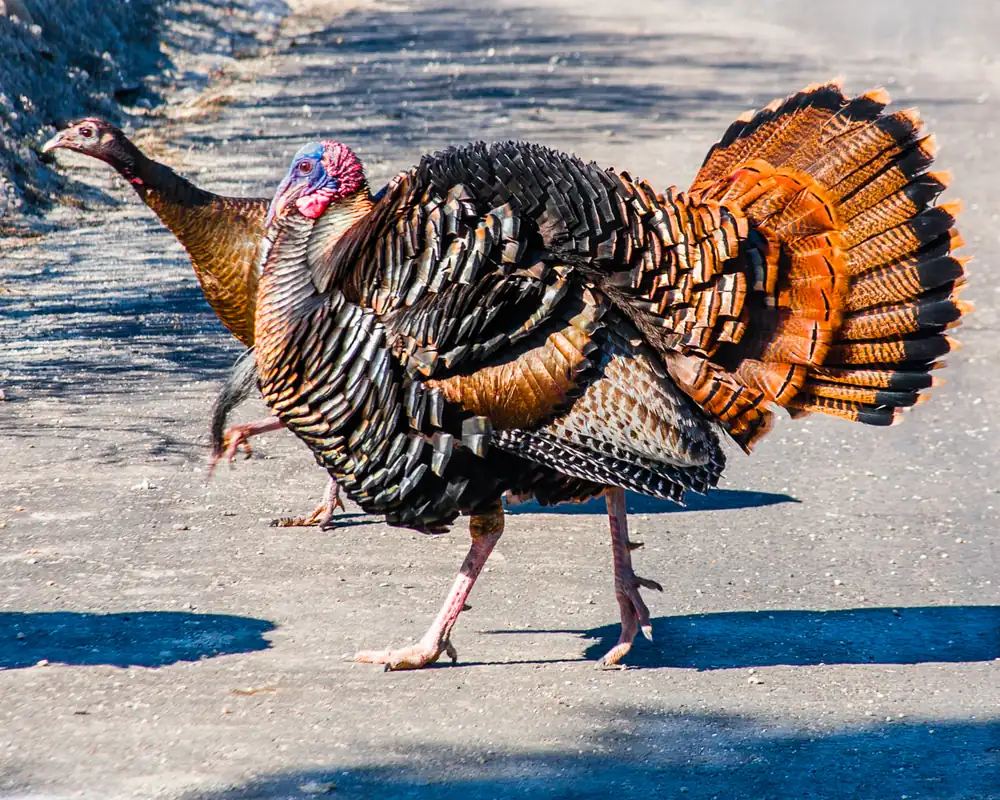
Wild turkeys
Mating from early March through April · Hardwood and mixed pine-hardwood forests with open areas, statewide
ADCNR says gobblers use gobbling, strutting and drumming to attract hens, which then make ground nests hidden by woody plants, lay 10 to 12 eggs over two weeks, and incubate them for about 28 days. Chicks leave the nest within 24 hours of hatching. ADCNR puts poult survival from hatching to fall at about 35 percent. The bird is fairly common in all seasons and regions.
-
White bass runs
Spawning in March and April · Lower reaches of large flowing streams; best known in the Tennessee River near Florence, Lauderdale County
ADCNR says white bass spawn at midwater depths in March and April, with males arriving at the spawning areas before females. They are most abundant in the Tennessee and Chattahoochee rivers, and ADCNR mentions the Tennessee River near Florence, in Lauderdale County, as a place where anglers fish the spawning runs. Eggs hatch within two to three days.
-
Bass and crappie
March and April for large bass · Reservoirs and small ponds
ADCNR's spring fishing tips say anglers often catch the largest bass in small waters in late February and March, and that tournament data from Alabama reservoirs show more large bass caught in March and April. The same page ties the crappie spawn to the time when daffodil leaves push up, usually in February, so by March the spawn is likely under way.
This spring season, sound and sight are the same: a gobble at first light, a heron at the dam. Write both on dusk and dawn watch. For hiking on public land, see the safety notes below for the season dates.
What is March weather like in Alabama, and when is the last freeze?
March warms fast and storms get stronger. NOAA's 1991 to 2020 normals put the average March high at 65.5 °F in Huntsville, 67.1 °F in Birmingham, near 72 °F in Montgomery, Dothan and Mobile, with normal lows from 43 °F at Huntsville to 50 °F at Mobile. Normal rain runs 4.7 to 5.7 inches across these five stations, and Huntsville still averages more than five nights at or below 32 °F in the month. Average figures hide big swings between a warm day ahead of a front and a frosty morning behind it.
Spring is also the stormy part of the year. NWS Birmingham maintains a database of Alabama tornadoes that goes back to 1794 and lists March events among its notable outbreaks, including March 21, 1932; check the office's pages on severe weather preparedness before storm season peaks. The National Weather Service's flood safety page says that 6 inches of fast-moving water can knock over an adult and that 12 inches can carry away most cars. For NOAA's own outlook, the Climate Prediction Center posts its latest three-month temperature and rainfall maps once a month, near mid-month.
| Station | Average high | Average low | Rain and melted snow | Nights at or below 32 °F | Snowfall |
|---|---|---|---|---|---|
| Huntsville | 65.5 °F | 43.0 °F | 5.39 in | 5.4 | 0.5 in |
| Birmingham | 67.1 °F | 45.0 °F | 5.66 in | 4.2 | 0.5 in |
| Montgomery | 71.9 °F | 46.5 °F | 5.21 in | 2.2 | not published |
| Dothan | 72.9 °F | 48.8 °F | 4.72 in | 1.1 | not published |
| Mobile | 71.8 °F | 50.0 °F | 5.44 in | 1.5 | 0.1 in |
Open the weather page for your own town's outlook and radar before leaving home, and keep warnings switched on overnight. Cloud shapes make a good logbook subject too: the cloud cover forecast shows how much sky will be open, and a line of tall anvil tops building in the southwest tells you a front is coming.
When does Alabama's last spring freeze usually come?
Earlier on the coast and in the Wiregrass, much later in the northern hills. In the table below, the median last freeze is March 1 at Dothan and March 3 at Mobile, March 13 at Montgomery, March 21 at Birmingham and March 24 at Huntsville. Cold hollows run weeks behind: Hamilton, in the northwest hills, and rural Camp Hill, in east-central Alabama, have a median last freeze on April 11, and Valley Head, on Lookout Mountain, on April 7. By April 8 nine springs in ten are freeze-free at Huntsville and Birmingham, but about one spring in ten still sees a freeze after those dates, which is enough to kill early tomato transplants.
| Station | One year in ten | Median | Nine years in ten |
|---|---|---|---|
| Hamilton 3 S (northwest hills) | Mar 26 | Apr 11 | Apr 27 |
| Valley Head 1 SSW (Lookout Mountain) | Mar 20 | Apr 7 | Apr 25 |
| Huntsville International Airport (Tennessee Valley) | Mar 4 | Mar 24 | Apr 8 |
| Birmingham Airport | Feb 28 | Mar 21 | Apr 8 |
| Camp Hill 2 NW (east-central) | Mar 25 | Apr 11 | Apr 26 |
| Tuscaloosa Municipal Airport (west-central) | Feb 24 | Mar 16 | Apr 3 |
| Montgomery Airport (Black Belt edge) | Feb 20 | Mar 13 | Mar 31 |
| Dothan Regional Airport (Wiregrass) | Feb 3 | Mar 1 | Mar 21 |
| Mobile (Regional Airport) | Feb 6 | Mar 3 | Mar 21 |
Find the station closest to you on the frost page for Alabama. Blooming fruit trees and tender transplants are the plants most at risk, and the bloom you enjoy on a March walk may be the very thing a hard freeze turns brown.
How much daylight does Alabama gain in March?
Between 56 and 66 minutes, depending on where you live, at a steady pace of roughly two minutes a day. North Alabama gains the most: Florence and Huntsville go from 11 hours 26 minutes on March 1 to 12 hours 32 minutes on March 31, while Dothan and Mobile gain 56 minutes, from 11 hours 32 minutes to 12 hours 28 minutes. By March 31 each city listed has passed 12 hours of daylight, and around the March 20 equinox daytime and nighttime are close to the same length across Alabama.
| City | Mar 1 | Mar 31 | Gained | Per day |
|---|---|---|---|---|
| Florence | 11 h 26 m | 12 h 32 m | 66 min | 2.2 min |
| Huntsville | 11 h 26 m | 12 h 32 m | 66 min | 2.2 min |
| Fort Payne | 11 h 27 m | 12 h 31 m | 64 min | 2.1 min |
| Birmingham | 11 h 28 m | 12 h 31 m | 63 min | 2.1 min |
| Montgomery | 11 h 30 m | 12 h 29 m | 59 min | 2.0 min |
| Dothan | 11 h 32 m | 12 h 28 m | 56 min | 1.9 min |
| Mobile | 11 h 32 m | 12 h 28 m | 56 min | 1.9 min |
Day length is the same whatever the clocks say, so the March 14 switch to daylight time leaves the table untouched. From March 14 on, the clock times of dawn and dusk both read an hour later. Type a street address into the daylight calculator for sunrise and sunset where you live, and use colours of the day to compare the 6 p.m. sky on the two dates the table covers.
What can you see in the night sky over Alabama in March?
The equinox, a Worm Moon, a bright morning Venus and Mercury at its best for spring, and Jupiter and Mars in the evening. Alabama clocks jump forward at 2 a.m. on March 14, so times below read CST on March 8 and CDT after that.
-
Morning Venus and Mercury
Mercury best about March 8 to 25; greatest elongation March 16 at 11:20 p.m. CDT · Low in the east and east-southeast before sunrise
Mercury reaches its greatest separation west of the Sun, 27.6 degrees, late on March 16 and rises roughly an hour before sunrise through mid-March. In spring that is a shallow angle for the northern hemisphere, so find a flat horizon. Brilliant Venus sits well above it, clearing the horizon roughly two hours ahead of the Sun on March 1. By our calculation the waning crescent Moon, only about an eighth lit, passes near Venus in the dawn sky on March 4 and again on March 5.
-
Jupiter and Mars after dark
All month; Moon near Jupiter the evenings of March 18 and 19; Mars and Jupiter 4.3 degrees apart the evening of March 30 · High in the south and southwest in the evening, in the region of Leo
Jupiter and Mars were at opposition in February, so they are still up for much of the night. Our computation has the bright, gibbous Moon (about 88 percent lit) gliding within about a degree of Jupiter around dusk on March 18 and 19. Mars is fading and moving away from Earth, but on March 30 our figures put it a roomy 4 degrees from Jupiter at nightfall, a roomy pair high overhead that needs no binoculars.
-
Saturn's last evening views
Early March · Low in the west after sunset
Early March is the last real chance for Saturn in the evening: our figures for central latitudes have it lingering 2 hours 35 minutes behind the Sun on March 1, a margin that shrinks to about 90 minutes by mid-month, before the planet slips into conjunction with the Sun on April 7. Catch it early in the month or wait for the morning sky in late April and May.
-
The equinox and the Worm Moon
Equinox Saturday, March 20, 3:25 p.m. CDT; full moon 5:44 a.m. CDT Monday, March 22 · Rising in the east around sunset
Day and night are close to equal on the equinox, the start of astronomical spring. The full moon of March comes in the early morning of the 22nd, so the best evenings for a round, rising moon are Sunday the 21st and Monday the 22nd. A traditional name for it is the Worm Moon. By our calculation it is not a supermoon. By our calculation the young crescent Moon passes close to the Pleiades on the evening of March 13, a handy way to find that cluster.
-
Milky Way before dawn
March 3 to 17 and again March 31, by our own calculation · Low in the southeast before dawn, from a dark site on the Gulf Coast
The center of the Milky Way returns to the pre-dawn sky this month, and the days surrounding the March 8 new moon give the best chance. By our calculation the window on the Gulf Coast, near 30 degrees north, lasts up to about two and a half hours; farther north it is shorter. Clouds, haze and city lights decide the rest.
| Phase | Date | Time |
|---|---|---|
| New moon | Monday, Mar 8 | 3:29 a.m. CST |
| First quarter | Monday, Mar 15 | 11:25 a.m. CDT |
| Full moon, the Worm Moon | Monday, Mar 22 | 5:44 a.m. CDT |
| Last quarter | Monday, Mar 29 | 7:54 p.m. CDT |
| New moon | Tuesday, Apr 6 | 6:51 p.m. CDT |
For faint stars, pick the moon-free evenings between about March 5 and 12. Moonrise times by town are on the moon phase page, and the cloud forecast is worth a look before you drive to a dark site. Record each sighting on dusk and dawn watch.
What can Alabama families do outside in March 2027?
- Tuesday, March 2: Birding for Beginners at Lake Shelby (10 a.m.) and Plants Gone Wild at the Nature Center (1 p.m.), both at Gulf State Park.
- Wednesday, March 3: Become a Citizen Scientist, 10 a.m., Nature Center, Gulf State Park.
- Thursday, March 4: Eagles and Ecosystems Nature Walk on Eagle Loop (9 a.m.) and Alligator Adventures (1 p.m.), both at Gulf State Park.
- Fridays, March 5, 12, 19 and 26: Guided Pier Walk at the Gulf State Park Saltwater Pier, 9 a.m.
- Tuesday, March 9: Alligator Nature Walk on the Gopher Tortoise Trail (9 a.m.), and Junior Rangers Plant ID and Press (1 p.m.).
- Wednesday, March 10: Snakes of Gulf State Park at 10 a.m., then Ramblin' on Rosemary at 1 p.m., a 3-mile out-and-back walk on flat pavement along a former dune.
- Sunday, March 14: clocks spring forward at 2 a.m. Take the first light evening walk with an extra hour of daylight.
- Wednesday, March 17: Eagles and Ecosystems Nature Walk, 1 p.m.
- Saturday, March 20: the March equinox (3:25 p.m. CDT) and Snakes of Gulf State Park (10 a.m.).
- Sunday, March 21: watch the nearly full Worm Moon come up at dusk (it turns full early on the 22nd).
- Wednesday, March 24: Coastal Raptors (10 a.m.) and an Alligator Nature Walk (1 p.m.).
- Thursday, March 25: Carnivorous Plant Hike, 9 a.m., from the Orange Beach Sportsplex.
- Saturday, March 27: Little Park Pals: Alligator Adventures, 10 a.m.
- Citizen science. Report hummingbirds to Journey North, log frog choruses, wildflowers and gopher tortoise burrows in iNaturalist (ADCNR runs Alabama tortoise projects there), and submit bird lists to eBird.
The programs above come from the Alabama State Parks online events calendar, viewed on October 7, 2026. On that date only Gulf State Park showed March 2027 listings. Registration and fees vary, so confirm each one with the park. Easter falls on Sunday, March 28. The February Alabama guide covers the end of the crane season; browse every state's guide or log your own finds in a Naturalist's Field Journal.
Safety notes for March in Alabama
- Spring turkey season opens in March. ADCNR's 2026 to 2027 regulations give Zones 1 and 3 a season from March 20 to May 3, with a youth hunt March 13 and 14 and a hunt for disabled hunters on March 19. Zone 2 (Colbert, Lauderdale, Lawrence, Limestone, Madison, Morgan, Winston, and part of Cullman counties) runs March 27 to May 3, with a youth hunt March 20 and 21 and a disabled hunt on March 26. Zone 3 is Clarke, Clay, Covington, Monroe, Randolph and Talladega counties; Zone 1 covers the remaining counties listed on the ADCNR page. Shooting hours are daylight to 1 p.m. Check the ADCNR page for exact county lines and any changes.
- No orange required for turkey hunters. The orange or fluorescent pink rule applies during gun deer season and exempts anyone hunting turkey. That means hikers on public hunting land in spring cannot count on seeing blaze orange. Stay on marked trails in wildlife management areas, make your presence known, and consider wearing a bright vest or hat of your own.
- Ticks. The CDC says tick activity peaks from April through September, but warm March days bring them out. Choose an EPA-registered repellent, put permethrin on boots and clothes, tumble clothes in a hot dryer for 10 minutes, do a tick check, and shower within two hours of coming indoors.
- Storms and flooding. Tornadoes can arrive with spring fronts, frequently after dark, and downpours can swamp low roads and creek fords. Stay out of any flood water, on foot or in a car.
- Alligators and snakes. Keep well back from alligators and never feed them. Snakes come out as days warm; look before you step or reach into brush and woodpiles.
- Wildlife you find. It is against the law to harm a gopher tortoise or its burrow. Do not pick up an apparently abandoned young bird, since the parents are usually nearby.
Sources (42)
- Outdoor Alabama (ADCNR): 2026-27 turkey season and zones
- Outdoor Alabama (ADCNR): hunter orange or fluorescent pink requirement
- Outdoor Alabama (ADCNR): wild turkey
- Outdoor Alabama (ADCNR): swallow-tailed kite
- Alabama Birding Trails (ADCNR account): swallow-tailed kite
- Alabama Birding Trails: Mobile-Tensaw Delta Wildlife Management Area
- Alabama Birding Trails: ruby-throated hummingbird
- Alabama Birding Trails: purple martin
- Alabama Birding Trails: Dauphin Island Audubon Bird Sanctuary
- Alabama Cooperative Extension System: hummingbirds in Alabama
- Journey North: hummingbird migration maps
- Purple Martin Conservation Association: timing and housing
- Outdoor Alabama (ADCNR): Indian Shell Mound Park
- Outdoor Alabama (ADCNR): bald eagle
- Outdoor Alabama (ADCNR): osprey
- U.S. Fish and Wildlife Service: Wheeler National Wildlife Refuge
- Outdoor Alabama (ADCNR): black bear
- Outdoor Alabama (ADCNR): northern spring peeper
- Outdoor Alabama (ADCNR): upland chorus frog
- Outdoor Alabama (ADCNR): southern leopard frog
- Outdoor Alabama (ADCNR): Fowler's toad
- Outdoor Alabama (ADCNR): bird-voiced treefrog
- Outdoor Alabama (ADCNR): spotted salamander
- Alabama Cooperative Extension System: gopher tortoise ecology and conservation
- Outdoor Alabama (ADCNR): Alabama iNaturalist projects
- Outdoor Alabama (ADCNR): American alligator
- Land Trust of North Alabama: wildflowers on Wildflower Trail, Monte Sano
- Alabama Wildlife Federation: woodland wildflower garden (spring ephemerals bloom February through April)
- Outdoor Alabama (ADCNR): Weeks Bay pitcher plant bog
- Outdoor Alabama (ADCNR): white bass
- Outdoor Alabama (ADCNR): spring fishing tips
- NOAA NCEI: U.S. climate normals 1991-2020, monthly (Huntsville, Birmingham, Montgomery, Dothan, Mobile)
- NWS Birmingham: Alabama tornado database
- NWS Birmingham: office home page (severe weather safety and awareness resources)
- National Weather Service: Turn Around Don't Drown
- Climate Prediction Center: seasonal outlooks
- CDC: preventing tick bites
- Alabama State Parks: events calendar, March 2027 programs
- U.S. Naval Observatory: phases of the Moon, 2027
- U.S. Naval Observatory: Earth's seasons, 2027
- Sea and Sky: astronomy calendar 2027 (Mercury elongation, equinox, full moon names)
- Photos via Wikimedia Commons; licenses and photographers are credited under each picture
