What to look for in nature in Alabama this October
October is Alabama’s driest month in Birmingham, Montgomery and Mobile, and its busiest for travelers. Warblers and hummingbirds drop onto the Fort Morgan peninsula and Dauphin Island behind the first fronts, monarchs gather on coastal goldenrod, flounder slip out of Mobile Bay toward the Gulf, and color starts high on Lookout Mountain while the beaches still feel like summer. What follows goes region by region, with typical dates and where each comes from.
Start here
- Watch birds being banded on the coast. Two free public banding stations open the same week: the Banding Coalition of the Americas at Fort Morgan State Historic Site, October 3–10, and Alabama Audubon at the Audubon Bird Sanctuary on Dauphin Island, listed for October 3–9. Go the morning after a north wind.
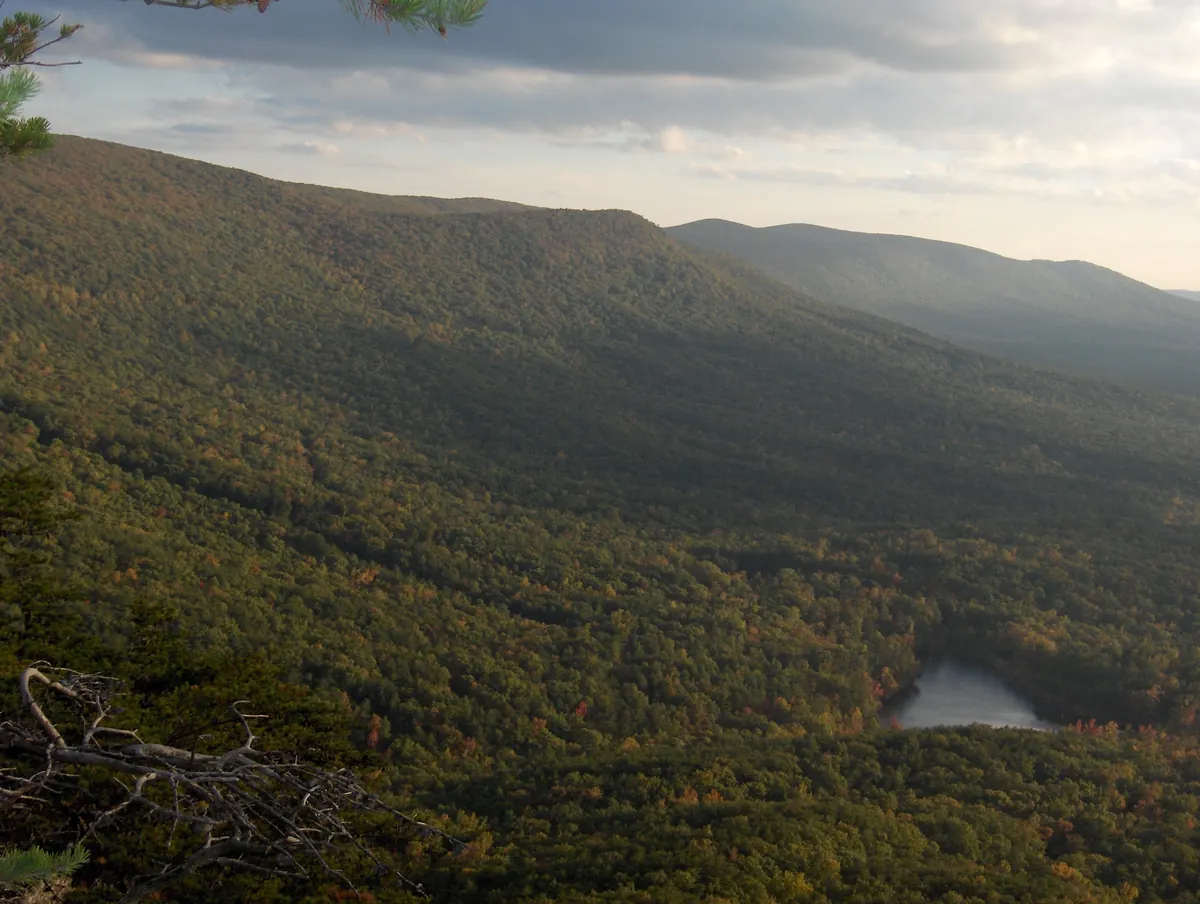
- Color from the top of the state down. The state’s tourism office says color shows first in north Alabama in early October and peaks from late October into early November. Little River Canyon, DeSoto State Park, Monte Sano and Cheaha, at 2,407 feet the state’s highest point, turn before the valleys.
- The Moon covers Jupiter. In the small hours of Tuesday, October 6, the thin waning Moon slides over Jupiter at about 3:15 a.m. Central and lets it go about an hour later, both in full darkness. On October 25 and 26 the Hunter’s Moon comes up around sunset.
For the journal: log banding week in the Naturalist’s Field Journal, species by species, under “birds I have seen”; the pollinator watch plate takes the monarchs on the goldenrod, the seeds, pods and cones plate takes a longleaf cone and a muscadine, and the dusk and dawn watch page is where the pre-dawn Jupiter occultation belongs. Write the wind direction beside each entry.
Regions used below: Tennessee Valley and the northwest hills; Lookout Mountain and northeast Alabama; Birmingham and the Cheaha highlands; Montgomery and the Black Belt; The Wiregrass; Mobile Bay and the Gulf Coast.
When do the leaves change color in Alabama?
Later than most people expect, and from the top down. Alabama Tourism’s Fall Color Trail puts the first color in north Alabama in early October and the peak “from late October to early November,” with yellow poplars, scarlet dogwoods, orange maples and golden hickories doing most of the work. Elevation matters more than latitude: the sandstone rims of Lookout Mountain and the Talladega ridges turn while Birmingham’s streets are still green, and the coastal plain gets softer color into November.
-
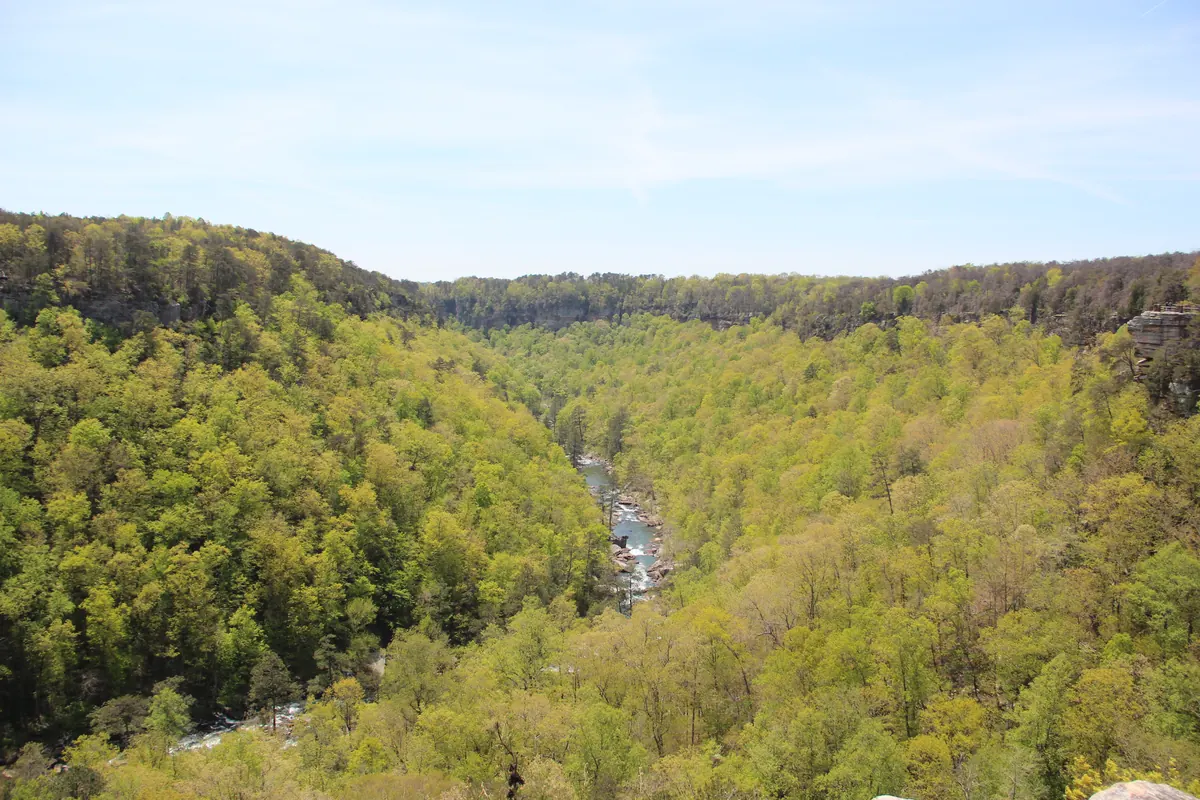
Little River Canyon and DeSoto State Park
Building through October; best late October into early November · Lookout Mountain, near Fort Payne and Mentone
The National Park Service points out what makes this preserve unusual: the Little River flows for most of its length on top of Lookout Mountain, cutting its canyon into the mountain rather than down its side. Alabama Highway 176, the Canyon Rim Parkway, links the overlooks, and DeSoto State Park upstream adds DeSoto Falls. The Little River Canyon Center, run by Jacksonville State University, is open Tuesday through Saturday, 10 a.m. to 4 p.m.
-
Cheaha and the Talladega ridges
Late October into early November · Cheaha State Park and Talladega National Forest
At 2,407 feet, Cheaha is the roof of Alabama. The state park sends leaf-watchers to the Bald Rock and Pulpit Rock trails and the Talladega Scenic Drive, where ridge hardwoods turn gold and rust among the pines. Late-month weekends fill up; a weekday sunrise at Pulpit Rock is quieter.
-
Monte Sano and the Tennessee Valley
Late October into early November · Huntsville, Rogersville, Guntersville, Bankhead National Forest
The Warpath Ridge Trail at Monte Sano State Park looks down over Huntsville and the valley, and Joe Wheeler and Lake Guntersville state parks give the long view across water. The Fall Color Trail also lists the Natchez Trace Parkway’s 33 Alabama miles, Russell Cave National Monument and the Bankhead’s scenic drives, and its map carries a weekend-by-weekend color forecast.
-
Birmingham and the south
Late October through November · Oak Mountain State Park, and southward
Oak Mountain State Park’s Peavine Falls overlook is an easy ridge-top view from Birmingham. South of the Fall Line the show is gentler: sweetgum, red maple and hickory in the river bottoms, sumac and dogwood along the roads. A very dry October can brown leaves early and shorten the display.
Pick a hickory or dogwood you pass every day and log its color weekly on the tree-through-the-seasons page. In a few autumns you will know your own street’s peak better than any map does.
Where can you see fall bird migration on the Alabama coast?
The Alabama coast is the last land many songbirds touch before they cross or skirt the Gulf of Mexico, and Alabama Audubon calls it an important stopover, a place to “rest and refuel” before the next leg. The best mornings follow a cold front: north winds overnight, and at first light the oaks and wax myrtles on the Fort Morgan peninsula and Dauphin Island fill with tanagers, buntings, vireos, thrushes and warblers.
-
Fort Morgan fall banding
October 3–10, 2026; 8 a.m. to 3 p.m., closing at noon on the last day · Stables area of Fort Morgan State Historic Site, at the tip of the peninsula
Federally licensed banders from the Banding Coalition of the Americas, a Foley nonprofit, net, measure and band birds while visitors watch and ask questions, with short talks through the day. They carry on work Bob and Martha Sargent ran here for nearly thirty years through the Hummer/Bird Study Group, and have held a public session of eight or nine days every fall since 2019. Watching is free; the historic site charges its usual entry fee. Bring a chair, water and closed-toe shoes.
-
Dauphin Island banding
Listed for October 3–9, 2026, from about 7 a.m. · Audubon Bird Sanctuary, 211 Bienville Boulevard, Dauphin Island
Alabama Audubon runs a songbird banding station for one week of fall migration in the 164-acre sanctuary, with Mississippi State University, ADCNR, the Fish and Wildlife Service and the town as partners. There is no fee. If the nets are quiet, walk the sand trails for kinglets, catbirds and the first sparrows. Confirm the dates on Audubon’s calendar before driving down.
-
Hummingbirds fueling up
Ruby-throats thin out through October · Salvia, lantana and feeders near the coast
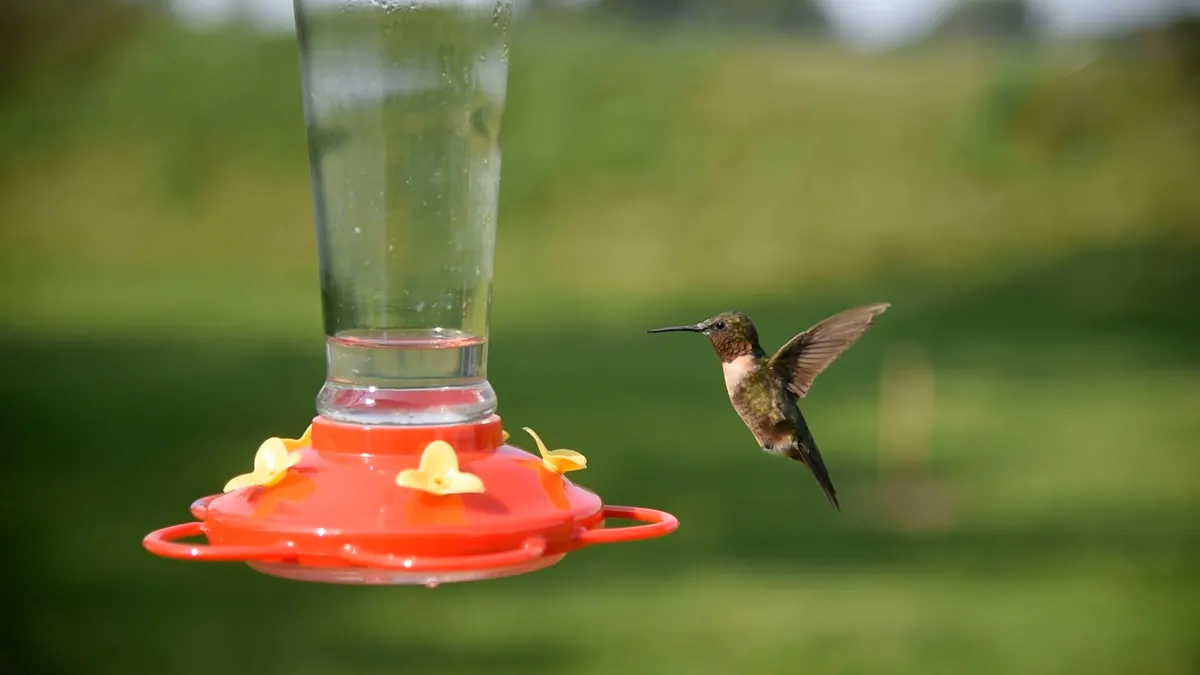
Before migrating, ruby-throated hummingbirds nearly double their weight in about a week, from roughly 3.25 grams to more than 6, Journey North says, and the Gulf Coast is where many do the last of that eating. Keep feeders clean and filled into November for stragglers; a feeder does not stop a hummingbird from leaving.
-
The Alabama Ornithological Society meeting
October 9–11, 2026 · Dauphin Island
The state birding society holds both yearly meetings on Dauphin Island, and this fall’s runs October 9–11 with field trips all weekend; first-time attendees get a free year of membership. Even unregistered, it is a good weekend on the island, with many skilled birders out and rarities found and shared fast.
A change of season: the Alabama Coastal BirdFest, for years an early-October event in Baldwin County, now runs in spring. Its 24th festival was April 23–26, 2026, and the next is April 22–25, 2027, so there is no fall BirdFest this year.
When do monarchs migrate through Alabama?
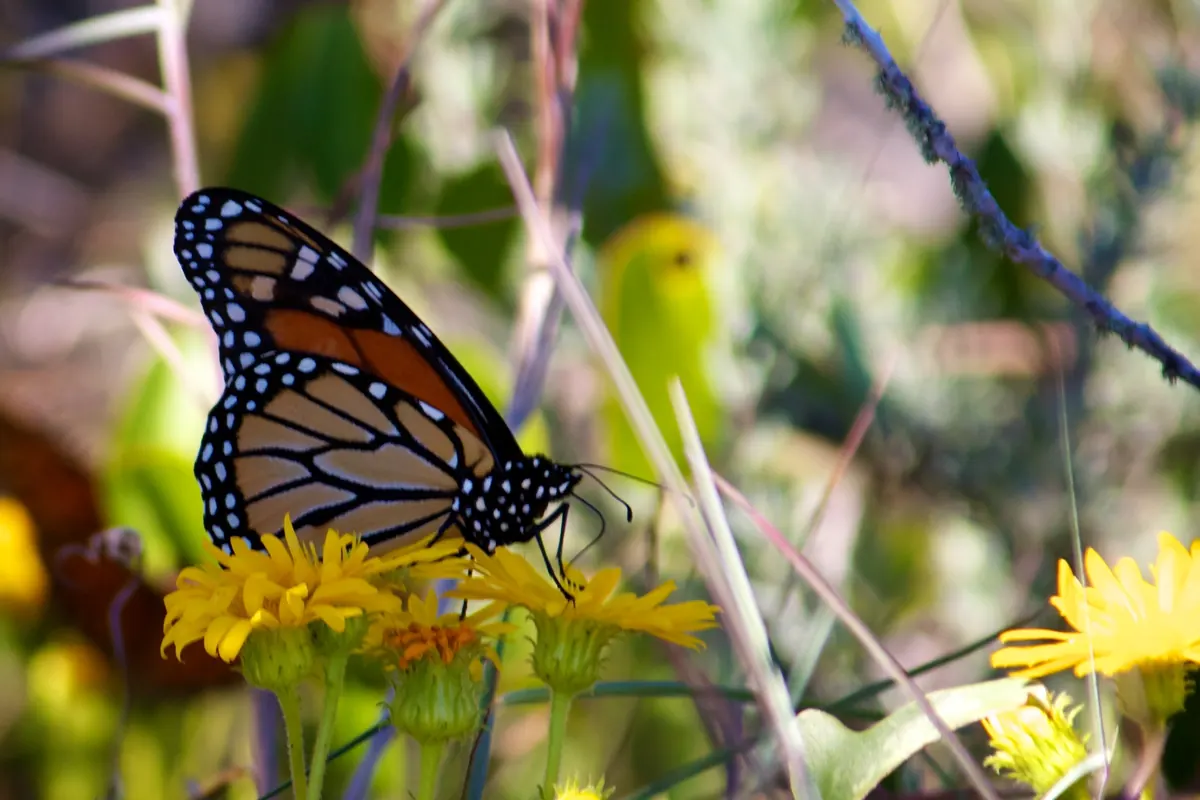
The monarch has been Alabama’s state insect since 1989, and October is its month. Monarch Watch’s tagging records put the peak of the fall flight at 35° N, the Tennessee line, between September 24 and October 6; at 33° N, a little south of Birmingham, between September 29 and October 11; and at 31° N, the Florida line, between October 4 and 16. Mobile Bay lies nearer 30.5° N, so the coast’s best days can stretch into the third week. Monarch Watch adds that coastlines bend the pattern, since headwinds and storms pile butterflies up behind fronts.
The Alabama shore adds two twists, both from the Alabama Butterfly Atlas. Most of the state’s fall monarchs go on to Mexico, but newer research suggests some travel east along the coast toward south Florida and the Caribbean instead. And some do not leave at all: in the winter of 2008–09, a volunteer found hundreds clustered in the pines at Fort Morgan, flying only on warm days. Check goldenrod, asters, mistflower and ironweed on sunny afternoons and the coastal pines toward dusk. Report roosts, and any monarch you see after Thanksgiving, to Journey North, whose maps depend on exactly those sightings.
What is happening on Mobile Bay and the Gulf beaches in October?
-
The fall flounder run
October through December with the cold fronts; harvest closed all of November · Perdido Pass, Little Lagoon Pass, the Fort Morgan and Gulf State Park piers, jetties and seawalls
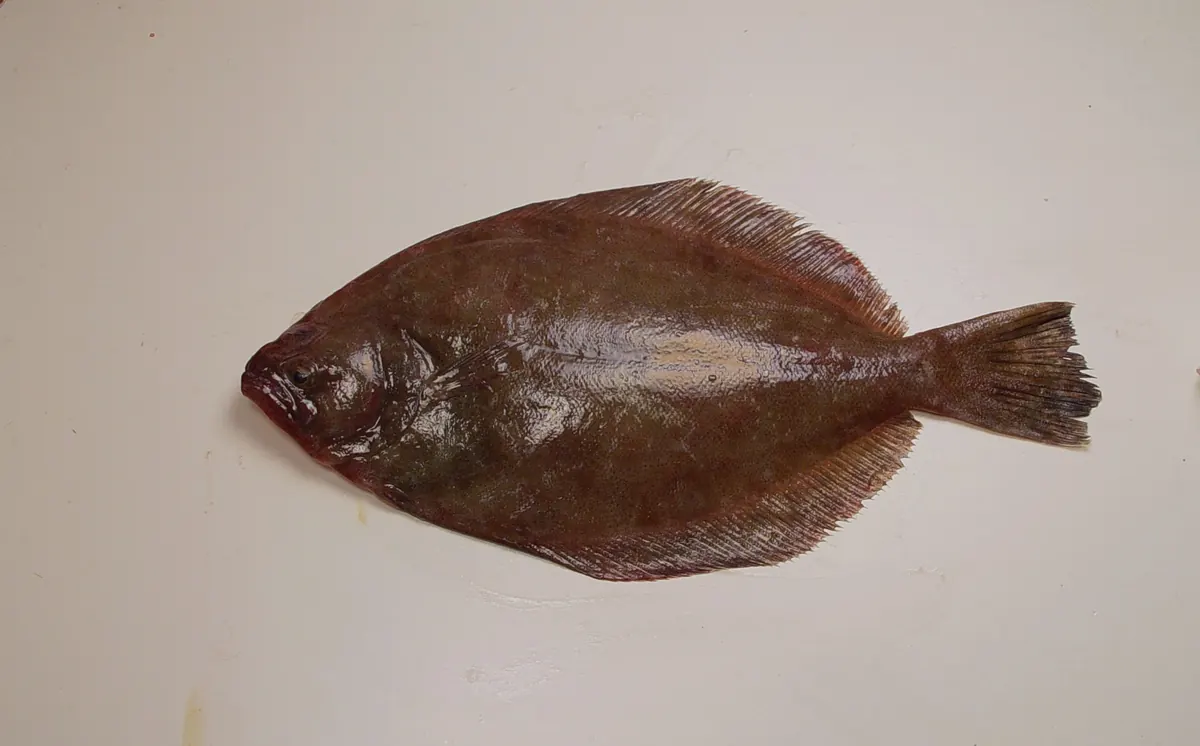
As the water cools, southern flounder leave the bays and bayous for spawning grounds offshore and funnel through the passes on the way. Gulf Shores and Orange Beach tourism, in a piece by ADCNR’s outdoor writer, times the run from October to December, set by fronts and water temperature. To protect the spawners, Alabama closes flounder harvest for all of November. In October the limit is five a day, 14 inches minimum; red drum caught in the same spots carry a 16-to-26-inch slot and a limit of three.
-
The last sea turtle nests
Nesting and hatching season runs May through October · Gulf beaches from Fort Morgan to Perdido Key
The sea turtle season does not close until the end of October, so a late nest can still hatch this month. Share the Beach, the volunteer program that monitors nests, is run by the Alabama Coastal Foundation, and its first worry is artificial light, which pulls hatchlings away from the surf. Shield beachfront lights, fill in holes and flatten sandcastles before you leave. Report a nest, a hatchling or a stranded turtle to the Alabama Sea Turtle Hotline, 1-866-732-8878.
-
Weeks Bay and its bog
All month · Weeks Bay National Estuarine Research Reserve, between Fairhope and Foley
Weeks Bay protects 9,317 acres of hardwood bottomland, salt and freshwater marsh, grass beds and pitcher plant bog on the east side of Mobile Bay. The bog is worth a slow October walk, with fall asters and grasses blooming among the pitchers.
Jot the water temperature and wind beside your first flounder of the fall in the daily field log; a few seasons of notes will show you how the run follows the fronts.
When is the first frost and freeze in Alabama?
For most of Alabama, not in October. In the table below, only the cold hollows of the north and a few low rural spots reach their median first freeze before Halloween: Hamilton, in the northwest hills, and Camp Hill, in east-central Alabama, on October 27, and Valley Head, on Lookout Mountain, on October 30. Birmingham’s airport waits until November 11, Montgomery’s until November 13, and Dothan and Mobile until the last week of November. The table holds a second lesson: rural Camp Hill freezes more than two weeks before the Montgomery airport, because on clear, calm nights cold air drains downhill and pools while city pavement holds its heat. Frost on the windshield usually comes a week or two before the first true 32 °F night.
| Station | One year in ten | Median | Nine years in ten |
|---|---|---|---|
| Hamilton 3 S (northwest hills) | Oct 15 | Oct 27 | Nov 10 |
| Valley Head 1 SSW (Lookout Mountain) | Oct 18 | Oct 30 | Nov 12 |
| Huntsville International Airport (Tennessee Valley) | Oct 27 | Nov 8 | Nov 25 |
| Birmingham Airport | Oct 30 | Nov 11 | Dec 1 |
| Camp Hill 2 NW (east-central) | Oct 16 | Oct 27 | Nov 10 |
| Tuscaloosa Municipal Airport (west-central) | Oct 30 | Nov 12 | Dec 1 |
| Montgomery Airport (Black Belt edge) | Oct 31 | Nov 13 | Dec 1 |
| Dothan Regional Airport (Wiregrass) | Nov 7 | Nov 24 | Dec 24 |
| Mobile (Regional Airport) | Nov 8 | Nov 25 | Dec 22 |
Every Alabama station is on the Alabama frost dates page, so you can find the one nearest your garden. Collards and turnips shrug off a light frost; peppers, basil and sweet potatoes do not, so dig and pick before the first calm, cloudless night forecast in the upper 30s.
How much daylight does Alabama lose in October?
About an hour in the north and a little less on the coast. Huntsville and Florence each lose 62 minutes between October 1 and 31, Birmingham 58, Montgomery 57 and Mobile 52. In Birmingham, sunrise slides from 6:42 to 7:05 a.m. while sunset moves from 6:31 to 5:56 p.m., so the evening walk loses more than the morning one. Standard time returns at 2 a.m. on the first of November, a Sunday, and the following week Birmingham’s sunset lands close to 5 p.m.
| City | Oct 1 | Oct 31 | Lost | Per day |
|---|---|---|---|---|
| Florence | 11 h 49 m | 10 h 47 m | 62 min | 2.1 min |
| Huntsville | 11 h 49 m | 10 h 47 m | 62 min | 2.1 min |
| Fort Payne | 11 h 49 m | 10 h 48 m | 61 min | 2.0 min |
| Birmingham | 11 h 49 m | 10 h 51 m | 58 min | 1.9 min |
| Tuscaloosa | 11 h 50 m | 10 h 51 m | 59 min | 2.0 min |
| Montgomery | 11 h 51 m | 10 h 54 m | 57 min | 1.9 min |
| Dothan | 11 h 51 m | 10 h 58 m | 53 min | 1.8 min |
| Mobile | 11 h 51 m | 10 h 59 m | 52 min | 1.7 min |
Type your town into the Field almanac to get its own sunrise, sunset and twilight, plus the minutes lost this week.
What is October weather like in Alabama, and what will El Niño do this winter?
Dry, bright and slowly cooling. By NOAA’s 1991–2020 normals, no month is drier than October at Birmingham (3.34 inches of rain), Montgomery (2.87) and Mobile (3.95), and Huntsville’s 3.56 inches is near the bottom of its year too. Average highs run 76 °F at Huntsville and Birmingham and about 80 °F at Montgomery and Mobile; average lows range from about 52 °F at Huntsville to 58 °F at Mobile. By November, highs are in the mid-60s in the north and near 70 on the coast, and the rain returns.
The exception is the tropics. Hurricane season runs through November, and October storms have hit Alabama hard: Hurricane Zeta came ashore in southeast Louisiana on October 28, 2020, and crossed the state overnight. The Mobile weather office logged a 91 mph gust at Mobile Regional Airport, and the Birmingham office noted at least 494,000 Alabama Power outages statewide.
El Niño matters for the winter, not much for this month. Alabama is heading into what could be a record Pacific warm event: on September 10 the Climate Prediction Center put the chance of a very strong Pacific warm event this cool season at more than nine in ten, and the chance that it tops every event since 1950 at three in four. For south Alabama the classic pattern is clear: a strong subtropical jet steers storm after storm along the Gulf, and the Tallahassee weather office and Alabama Extension both describe El Niño winters as cooler and wetter than normal, with the cooling strongest toward the coast. North Alabama is less tidy. The Huntsville office’s study of winters since 1900 found moderate El Niño winters in northwest and north-central Alabama about 2 °F cooler than neutral ones, and often drier, while strong events drift back toward normal on both counts. The Tallahassee office adds that El Niño tends to suppress Atlantic hurricanes by raising wind shear. Extension’s analysis leans slightly wet and cool for El Niño autumns, but a single front or tropical system decides an October more than the Pacific does. CPC’s next ENSO update comes October 8; NOAA’s official winter outlook arrives in mid-October.
Before a hike or a beach day, the Weather now page has the forecast and radar for your spot.
What can you see in the night sky over Alabama in October?
-
The Moon passes in front of Jupiter
Tuesday, October 6, about 3:15 to 4:15 a.m. CDT · Low in the east; the Moon only 5 to 7 degrees up at the start
The waning crescent rises around 2:30 a.m. with Jupiter just off its edge. IOTA, the International Occultation Timing Association, predicts that Jupiter vanishes behind the sunlit limb at about 3:15 a.m. CDT in Birmingham, Montgomery and Mobile, with the Moon just 5 to 7 degrees above the horizon, and reappears from the dark limb about an hour later, at 4:15 in Birmingham and Montgomery and 4:12 in Mobile, with the Moon 18 to 20 degrees up. Huntsville is not on the list, but Nashville and Chattanooga share 3:16 and 4:17, so the Tennessee Valley should fall within a minute or so of those. Twilight does not start until about 6:20, so both moments come in a fully dark sky. Because the start is so low, find a flat eastern horizon, such as a lake shore, a ridge overlook or an open field. Binoculars show it; a small telescope shows Jupiter’s moons winking out one at a time.
-
The Hunter’s Moon
Sunday, October 25, and Monday, October 26, near sunset · Eastern horizon
The Moon is full at 11:12 p.m. CDT on Sunday the 25th, so it looks round both evenings. In Birmingham it comes up at 5:31 p.m. on the 25th, about 30 minutes ahead of the 6:02 sunset, and at 6:09 p.m. on Monday, eight minutes behind the Sun’s setting; Mobile’s times are 5:41 and 6:21. It is not a supermoon this year.
-
Orionid meteors
Active October 2 to November 7; broad peak before dawn October 21 and 22 · Anywhere dark; look high in the south and east
The Orionids are debris from Halley’s Comet, fast and often bright, and in a good year a dark site shows 10 to 20 an hour at the peak. The bright gibbous Moon gets in the way until it sets, at about 3:10 a.m. in Huntsville and Birmingham and 3:19 in Mobile on the morning of the 22nd. That leaves more than two dark hours before dawn begins to show around 5:30. Set an alarm for 4 a.m., lie back on a blanket and give your eyes twenty minutes.
-
Draconid meteors
Evening of Thursday, October 8 · Northern sky after dark
A slow, unpredictable shower best seen in early evening, which makes it a school-night shower. The Moon does not rise until about 4:40 the next morning, so the evening is dark. Most years bring only a handful an hour.
-
Saturn all night, and the morning planets
Saturn at opposition October 4; Moon beside Saturn October 23–24; Mars at the Beehive the morning of October 11 · Saturn east at dusk; Jupiter and Mars east before dawn
Saturn’s opposition comes on Sunday the 4th: the ringed planet climbs out of the east as the Sun sets, stays up till dawn and shines at its best for 2026; the waxing Moon sits near it on the 23rd and 24th. Venus is low in the west after sunset for just the first few days of October, then sinks into the glare; inferior conjunction, when it passes between Earth and Sun, falls on the 23rd. Before dawn, Jupiter is the brightest point in the east, with reddish Mars not far off; Mars moves across the Beehive cluster before sunrise on the 11th,, a lovely binocular view.
| Phase | Date | Time |
|---|---|---|
| Last quarter | Saturday, Oct 3 | 8:25 a.m. CDT |
| New moon | Saturday, Oct 10 | 10:50 a.m. CDT |
| First quarter | Sunday, Oct 18 | 11:12 a.m. CDT |
| Full moon, the Hunter’s Moon | Sunday, Oct 25 | 11:12 p.m. CDT (looks full the evenings of Oct 25 and 26) |
| Last quarter | Sunday, Nov 1 | 2:28 p.m. CST |
Look at Today’s sky for tonight’s cloud cover before driving to a dark site, and at our moon phases page for local moonrise and moonset.
What is blooming, ripening and dropping in Alabama in October?
-
Gulf muhly turns pink
October · Sandy pine openings and dry ledges; planted along roads and parking lots statewide
Gulf muhly, or hairawn muhly, is a native bunchgrass that stays quietly green all summer and then, in October, raises a cloud of fine pink-purple seed heads. The Lady Bird Johnson Wildflower Center lists its bloom for October and its habitat as sandy pine openings, prairies and dry, exposed ledges. Wild stands are scattered; planted drifts are easier to find.
-
Longleaf pine cones fall
Cones ripe mid-September to mid-October; seed falls late October into November · Longleaf forests of south and central Alabama, and mountain longleaf on the Talladega ridges
The longleaf pine has been Alabama’s state tree since 1997. The Forest Service’s Fire Effects Information System says its cones mature from mid-September to mid-October and shed seed from late October into November, most of it within two or three weeks, and the seed sprouts a week or two after landing. Big seed years come only every 7 to 10 years, with fair crops every 3 or 4. A longleaf cone, among the largest of the southern pines, makes a fine drawing on the seeds, pods and cones plate.
-
Muscadines
September and October · Woods edges, fencerows and bottomlands statewide
Wild muscadine grapes, purple-black to bronze, ripen in September and October and, in the Wildflower Center’s words, “fall promptly” when ripe, so look on the ground under the vine. Deer, raccoons and foxes usually get there first. Eat only wild fruit you are sure of.
-
Goldenrods, asters and little bluestem
Until the first freeze · Roadsides, powerline cuts, old fields and Black Belt prairie remnants
Goldenrods and asters carry the last nectar of the year for monarchs, bumblebees and skippers. Beside them, little bluestem, named Alabama’s state grass in 2024, turns from blue-green to copper as the nights cool, with silver seed tufts that catch the low sun. In the Black Belt’s remnant prairies it is one of the main grasses, and October is when it stands out.
What are deer, bears and other Alabama animals doing in October?
-
Deer: the rut is months away
Peak breeding mostly mid- to late January · Statewide
Alabama deer keep their own calendar. ADCNR says that for most of the state the rut peaks in mid- to late January, though studies have found average conception dates from around Thanksgiving to early February, depending on the herd. Most fawns are born from late July to mid-August, so October fawns are still losing their spots. Bucks are only starting to rub; acorns and persimmons hold the herd’s attention. From perhaps 2,000 deer in the early 1900s, the state herd grew to an estimated 1.75 million by 2000.
-
Black bears fattening up
Fall feeding peaks now · Mobile, Baldwin and Washington counties; Lookout Mountain; the Talladega National Forest
The black bear is Alabama’s state mammal and a species of highest conservation concern. ADCNR describes a southwest population in Mobile, Baldwin and Washington counties, a small breeding group re-established around Lookout Mountain in DeKalb and Cherokee counties, and bears in the Talladega National Forest. In fall they eat almost around the clock on acorns, nuts and berries; plants make up more than 80 percent of the diet. Keep food and trash locked away at camp.
-
Wheeler waits for its ducks
Late October; the big flocks come in November and December · Wheeler National Wildlife Refuge, between Decatur and Huntsville
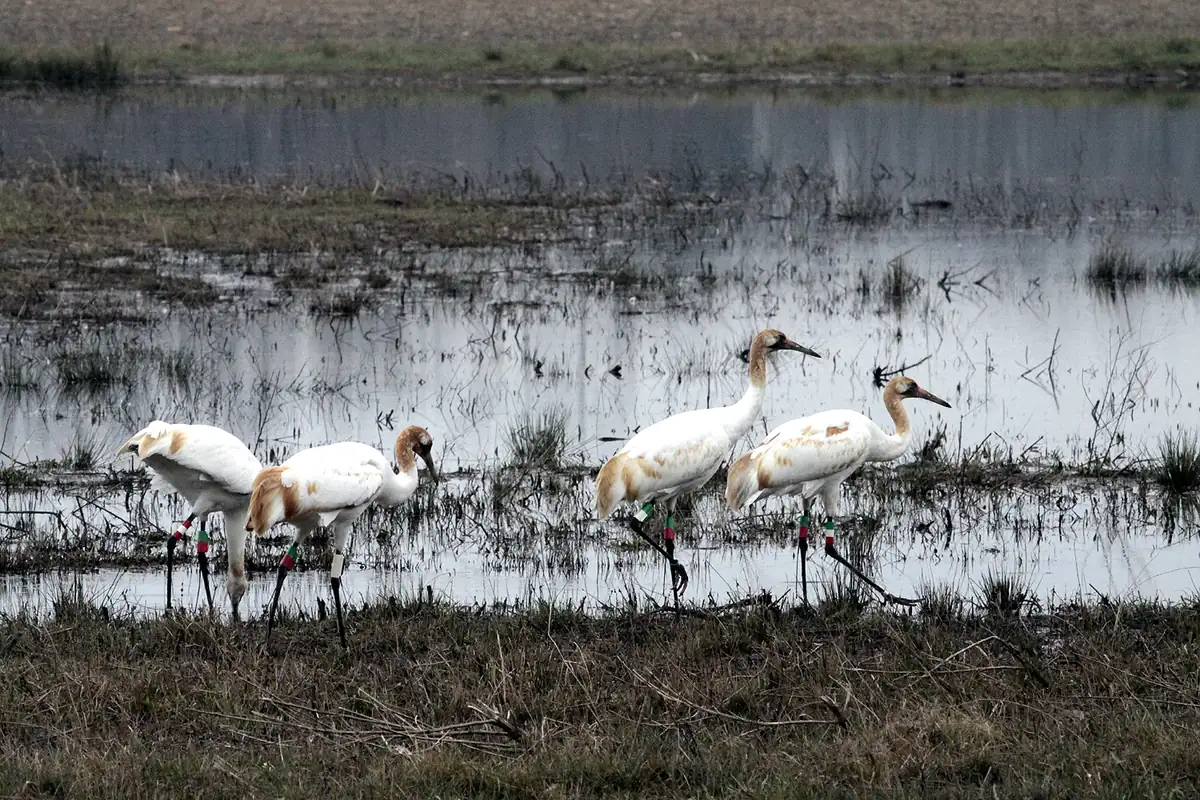
Wheeler, on the Tennessee River, is Alabama’s great winter waterfowl refuge, with thousands of ducks, geese and sandhill cranes and, since 2004, a few endangered whooping cranes. October is the calm before that. The Visitor Center and the climate-controlled Wildlife Observation Building, at the end of a short trail overlooking a display pond, are open Tuesday through Saturday, 9 a.m. to 4 p.m., March through October. From November 15, 2026, through February 28, 2027, a 335-acre waterfowl sanctuary in the Buckeye–Thorsen Arm unit closes to visitors.
What can Alabama families do outside this October?
- Saturday, October 3: Alabama Audubon birding at Ruffner Mountain. Free, 7 a.m. to noon at the eastern trailhead in Birmingham.
- October 3–10: bird banding on the coast. Fort Morgan State Historic Site, 8 a.m. to 3 p.m. (noon on the 10th), free apart from the fort’s entry fee; Alabama Audubon’s Dauphin Island station is listed for October 3–9.
- Tuesday, October 6, 3 to 4:30 a.m.: the Moon hides Jupiter. Worth one very early alarm; times are in the sky section.
- Thursday, October 8, after dark: the Draconids, with no Moon up.
- Saturday, October 10: eBird’s October Big Day. Count birds for any part of the day and submit a checklist; Alabama Audubon’s Great Fall Bird Count at Shoal Creek Park in Montevallo (fee) is that morning.
- Saturday, October 17: a Chapman Mountain field trip with Alabama Audubon in Huntsville (free, 8:30 a.m. to 4 p.m.), and the Alabama Bird Search awards that afternoon at Turkey Creek Nature Preserve in Pinson.
- October 18–24: Birdability Week walks on accessible trails: Turkey Creek (18th), Chapman Mountain and the Peavine Falls Overlook at Oak Mountain (22nd), Red Mountain Park and Greensboro (23rd) and the Trussville Greenway (24th). All free; register on Alabama Audubon’s calendar.
- Before dawn, October 21 or 22: the Orionids, after the Moon sets around 3 a.m.
- Late October: a color drive on the Little River Canyon Rim Parkway or the Talladega Scenic Drive; Alabama Audubon leads a free Little River Canyon field trip on November 7.
- Citizen science. Report monarchs and roosts to Journey North, phone sea turtle hatchlings in to 1-866-SEA-TURTLE, sign up for Project FeederWatch before its season starts November 1, and set out a CoCoRaHS rain gauge, because during a dry spell, days of zero rainfall are real data.
Alabama State Parks post naturalist hikes, pier walks and night programs on their program calendar, which changes week to week. For the rest of the country, start at the nature hub.
Safety notes for October in Alabama
- Hunting seasons. Deer bow season opens October 1 in Zones D and E and October 15 in Zones A, B and C and the CWD Management Zone; in Zone B, October 15–24 is for antlered bucks only. Squirrel season has been open since September 12, and dove season runs to October 18 in the North Zone and October 25 in the South Zone (Baldwin, Coffee, Covington, Dale, Escambia, Geneva, Henry, Houston and Mobile counties). Goose season reopens October 17–31; ADCNR notes that waterfowl dates depend on the final federal framework. In Zones D and E, the special youth gun deer season starts October 30.
- Hunter orange or pink. Wherever gun deer season is open, including the youth and muzzleloader seasons, anyone hunting any species must wear at least 144 square inches of solid hunter orange or fluorescent pink above the waist, or a full-size orange or pink cap. Turkey and migratory bird hunters, night raccoon, fox and opossum hunters, and hunters in enclosed or elevated stands are exempt. So the rule begins October 30 in Zones D and E and November 13 elsewhere. Hikers on wildlife management areas and national forest land: wear a bright color from now on, and put one on the dog.
- Hurricanes. The season lasts through November 30. On the coast, keep a kit and know your evacuation zone; Zeta showed how far inland an October storm can reach.
- Dry woods. In the driest month, check for burn restrictions before lighting a leaf pile, and never park on tall dry grass.
- Snakes, ticks and bears. Copperheads and rattlesnakes bask on warm afternoons, so step over logs, not on them, and watch your hands on rock ledges. Check for ticks after every walk, and store food at camp where a bear cannot reach it.
- Rip currents. Calm-looking fall surf can still pull. Swim where lifeguards are posted, if any are, and heed the beach flags.
Sources
- Alabama Tourism Department: Fall Color Trail (timing and sites)
- Outdoor Alabama (ADCNR): Fall Color Trail in the state parks
- Alabama State Parks: fall colors
- National Park Service: Little River Canyon National Preserve
- Gulf Shores & Orange Beach Mullet Wrapper: Fort Morgan fall bird banding, October 3–10, 2026
- Banding Coalition of the Americas: Fort Morgan bird banding
- Alabama Audubon: event calendar, October–November 2026
- Alabama Audubon: bird banding on Dauphin Island
- Alabama Audubon: Alabama Coastal BirdFest (April 2026 and 2027 dates)
- Alabama Ornithological Society: fall 2026 meeting, October 9–11, Dauphin Island
- Wikipedia: Dauphin Island, Alabama (Audubon Bird Sanctuary)
- Journey North: all about ruby-throated hummingbird migration
- Monarch Watch: peak migration dates by latitude
- Alabama Butterfly Atlas: monarch (coastal routes and Fort Morgan wintering)
- Journey North: monarch sightings and fall roost reports
- Wikipedia: list of Alabama state symbols
- Outdoor Alabama (ADCNR): saltwater recreational size and creel limits
- Gulf Shores & Orange Beach Tourism: the fall flounder run
- Alabama Coastal Foundation: Share the Beach sea turtle program
- Outdoor Alabama (ADCNR): Weeks Bay National Estuarine Research Reserve
- NOAA NCEI: U.S. climate normals 1991–2020, monthly (Birmingham, Montgomery, Mobile, Huntsville)
- NWS Mobile: Hurricane Zeta, October 28, 2020
- NWS Birmingham: Hurricane Zeta in central Alabama
- Climate Prediction Center: ENSO diagnostic discussion, September 10, 2026
- NWS Tallahassee: El Niño and La Niña impacts on the Southeast
- Alabama Cooperative Extension System: El Niño–Southern Oscillation and its impact on Alabama’s climate
- NWS Huntsville: El Niño winter temperature impacts, Alabama climate division 1
- NWS Huntsville: El Niño winter precipitation impacts, Alabama climate division 1
- U.S. Naval Observatory: sun and moon rise and set (data API; Birmingham, October 2026)
- U.S. Naval Observatory: moon phases 2026
- International Occultation Timing Association: occultation of Jupiter, October 6, 2026 (predictions for Birmingham, Montgomery, Mobile)
- American Meteor Society: 2026 meteor shower calendar
- EarthSky: meteor shower guide
- EarthSky: visible planets, October 2026
- NIST: daylight saving time
- Lady Bird Johnson Wildflower Center: Muhlenbergia capillaris (Gulf muhly)
- Lady Bird Johnson Wildflower Center: Vitis rotundifolia (muscadine)
- USDA Forest Service Fire Effects Information System: longleaf pine
- Outdoor Alabama (ADCNR): white-tailed deer (rut timing, fawning, population)
- Outdoor Alabama (ADCNR): black bear
- U.S. Fish and Wildlife Service: Wheeler National Wildlife Refuge
- Alabama Birding Trails: Wheeler National Wildlife Refuge Visitor Center and observation building
- eBird: October Big Day, October 10, 2026
- Project FeederWatch: how to participate
- CoCoRaHS: Alabama
- Alabama State Parks: program calendar
- Outdoor Alabama (ADCNR): 2026–27 deer seasons by zone
- Outdoor Alabama (ADCNR): 2026–27 mourning and white-winged dove seasons
- Outdoor Alabama (ADCNR): squirrel season
- Outdoor Alabama (ADCNR): 2026–27 waterfowl seasons
- Outdoor Alabama (ADCNR): hunter orange or fluorescent pink requirement
- Photos via Wikimedia Commons; licenses and photographers are credited under each picture
