What to look for in nature in Alabama this January
January is the coldest month in Alabama, and it is also when a lot of wildlife gets busy. Bald eagles hatch their chicks along the Tennessee River lakes, the Wheeler cranes are at or near their peak, spotted salamanders lay eggs in rain-filled woodland pools, and barred owls start their noisy courtship. Snow is rare but not unheard of, as the Gulf Coast found out in January 2025. The guide below runs from the Tennessee Valley to Mobile Bay, and each item comes with its usual timing and a source.
Other months in Alabama: October, November, December, February.
Start here
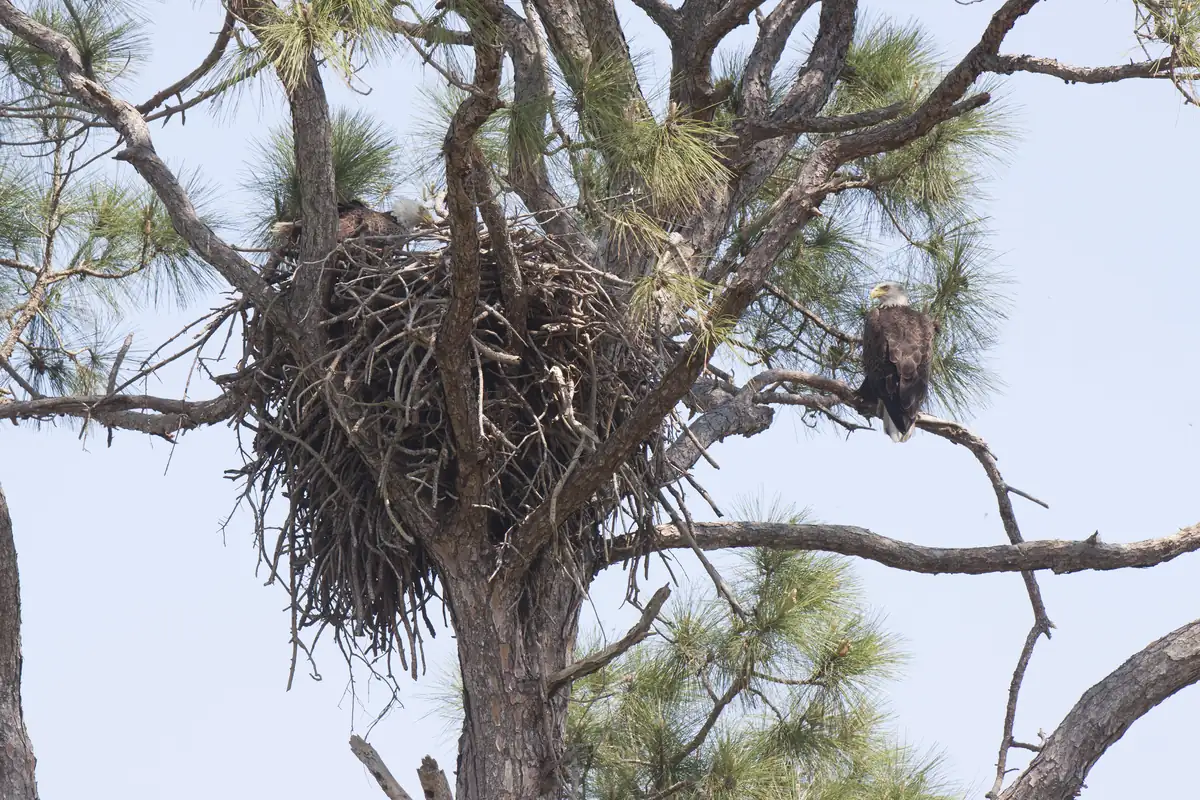
- Go eagle watching on a big lake. Lake Guntersville and Pickwick Lake hold Alabama's largest winter eagle gatherings. Lake Guntersville State Park runs eagle programs from January 2, and its Eagle Awareness weekends usually come at the end of the month.
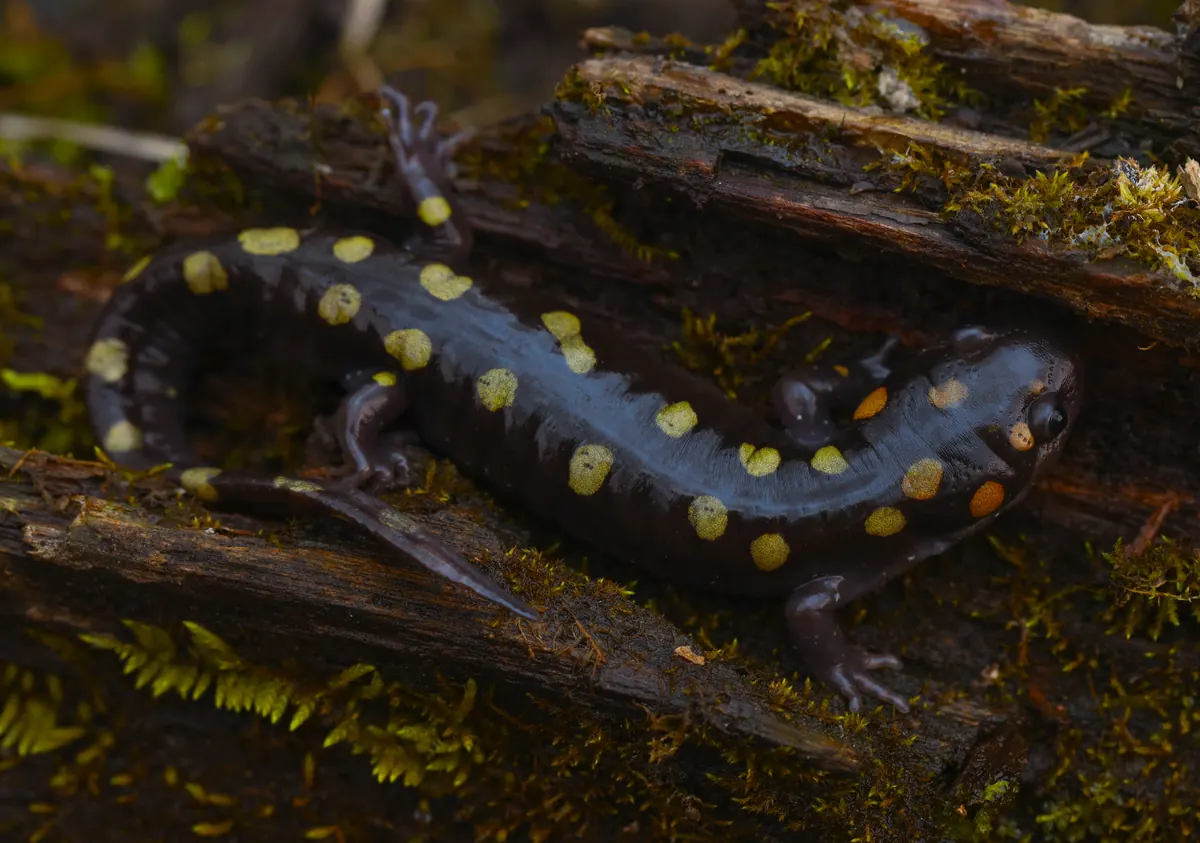
- Find salamander eggs after a rain. Spotted salamanders breed in Alabama from late December into early February. After a warm rain, look in a fishless woodland pool for clear or milky jelly masses stuck to sunken twigs, and leave them where they are.
- Watch the Wolf supermoon rise. The closest full moon of 2027 is full at 6:17 a.m. Central time on Friday, January 22. Watch it come up in the east-northeast at dusk the evening before, Thursday the 21st.
For the Naturalist's Field Journal: keep a running eagle and crane tally under birds I have seen; sketch prints from creek-bank mud on tracks to know; make a dusk map of sounds for owls and frogs; give a salamander pool a page in the same place twice, one visit a week; and log the Quadrantids and the Wolf Moon on dusk and dawn watch.
Regions used below: Tennessee Valley and the northwest hills; Lookout Mountain and northeast Alabama; Birmingham and the Cheaha highlands; Montgomery and the Black Belt; The Wiregrass; Mobile Bay and the Gulf Coast.
Where can you see bald eagles in Alabama in January?
On the big Tennessee River lakes, where January brings the year's best eagle watching. Wintering birds from the north join the state's own nesting pairs, and the reservoirs give them fish and tall shoreline trees for perches. ADCNR names Pickwick Lake near Waterloo and Lake Guntersville near the state park as the two places eagles gather in the largest numbers. This is also the month the nests get busy: eggs laid in December start hatching, and the adults spend more of the day hunting for a nest that suddenly needs feeding.
-
Eagle Awareness at Lake Guntersville
Usually the last weekends of January; the 2027 dates are not posted yet · Lake Guntersville State Park, the lodge and the lake's causeways and coves
Alabama's oldest eagle program began at this park in 1985, and the state parks call the coming season its 41st. For years it filled all of January; it now runs as two packed weekends, which in 2026 fell on January 23 to 25 and January 30 to February 1. A weekend brings live raptor shows, talks and guided eagle safaris, and ADCNR describes pre-dawn watches on the lake shore as the highlight. Watch the park's reservations page for the 2027 schedule; its shorter All About Eagles program starts January 2.
-
The midwinter eagle count
Early January · Major lakes and reservoirs statewide
Each year in the first weeks of January, biologists and volunteers drive and boat the shores of Alabama's large reservoirs on the same days, part of the long-running national Midwinter Bald Eagle Survey. ADCNR reports that the Alabama tally has run between about 100 and 150 birds in recent winters, and that the trend keeps improving. The department has even stopped surveying nests statewide, since well over 100 are now known.
-
Eggs hatching, and brown eagles
Hatching from about early January; more chicks by month's end · Large pines and other tall trees within sight of big water
ADCNR gives 30 to 32 days of incubation for eggs laid in December or January, so a pair that laid around Christmas should have chicks by late January. The all-brown or white-blotched eagles you see are immature; ADCNR says adulthood takes about five years. Joe Wheeler State Park's naturalist leads Eagle Eye walks to spot a nest, beginning Saturday, January 2.
-
Golden eagles in the hills
Late fall through winter; rare · Skyline, Freedom Hills and Oakmulgee wildlife management areas and the Talladega National Forest
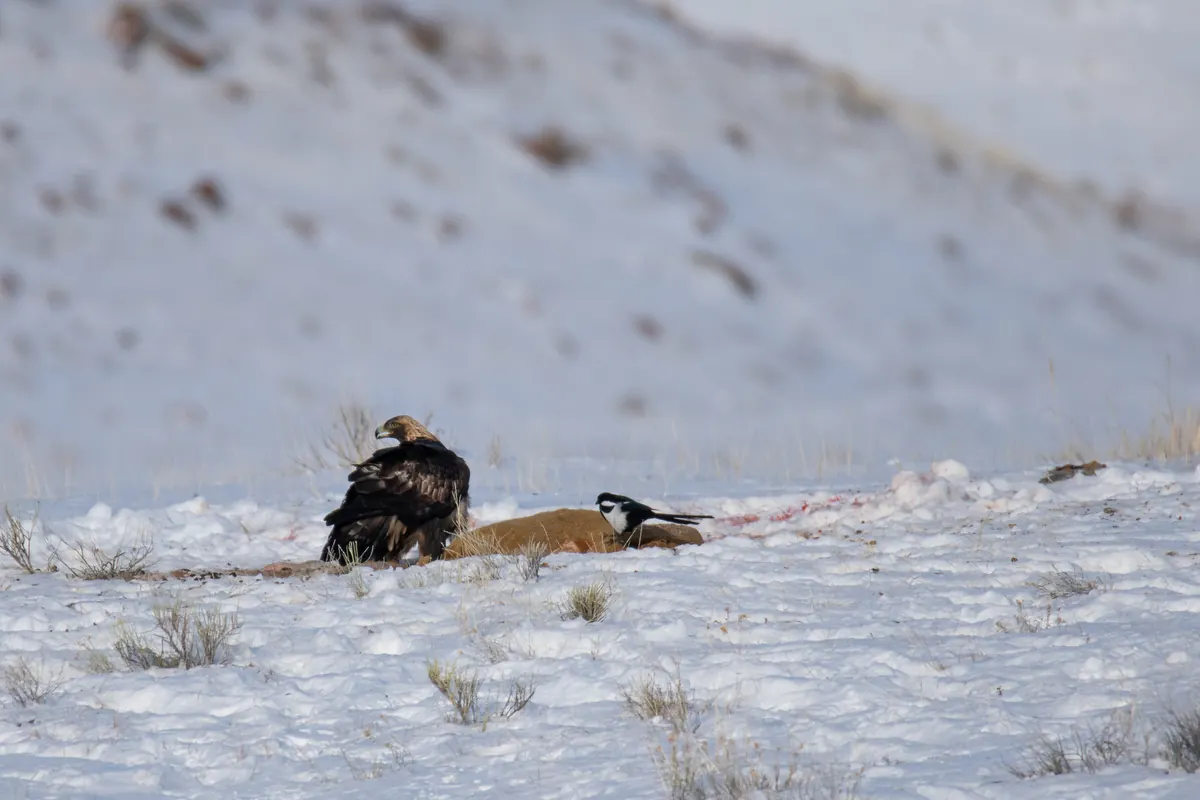
Alabama's other eagle is far harder to find. Golden eagles from a small eastern population that nests in eastern Canada spend the winter in the southern Appalachians, and since 2012 Alabama has joined 15 other states in watching them with trail cameras at bait sites, which have recorded thousands of photographs of the birds in Alabama winters. ADCNR lists the species as rare in every region and of high conservation concern. A big dark eagle soaring over a mountain ridge with its wings in a shallow V is worth a careful second look: a golden's legs are feathered to the toes, while a young bald eagle shows ragged white patches under the wings.
Federal law protects eagles at the nest, so watch from a road or across water and keep well back. Note each sighting in your daily field log with the time and the bird's age (all brown, mottled or white-headed); by February you will see how many of the eagles around you are youngsters.
Are the sandhill cranes still at Wheeler in January?
Yes, and the first days of the year are often the best of the season. The Wheeler Wildlife Refuge Association says the refuge's crane numbers usually top out in late December and early January, and that the flocks begin leaving around mid-February. In winter the visitor center near Decatur opens five days a week, Tuesday to Saturday, from 9 in the morning until 5, and stays shut on Sundays and Mondays.
-
A field full of cranes at midday
All January · Wheeler National Wildlife Refuge Visitor Center and the Wildlife Observation Building, east of Decatur
The birds leave their night roost soon after sunrise and drift back to it in the late afternoon, so the refuge association suggests the middle of the day for the biggest crowd in front of the observation building. Bring binoculars and scan the edges of the flock for a much whiter, taller bird: the refuge association lists endangered whooping cranes among the refuge's winter visitors.
-
The Festival of the Cranes
Usually the second weekend of January; check the 2027 schedule · Wheeler refuge and venues in downtown Decatur
The refuge association stages this festival every winter with talks, art and children's activities around Decatur and birding at the refuge; the International Crane Foundation sends educators each year. The association had not posted its 2027 program in early October, so check its site before you plan a trip. One piece is already set: the Cook Museum of Natural Science will hold its crane day, themed on whooping cranes, on Saturday, January 9, 2027, with crafts, short science demonstrations and a crane dance for children.
-
A crane photo contest
Voting December 28 to January 14; winners named January 15, 2027 · Decatur Public Library, 504 Cherry Street
The library's second crane photo contest lets the public vote from December 28 through January 14; the winning prints stay on display there until January 30.
Make a tally page in birds I have seen: one line per visit, with the date, the time, a rough crane count from the same window and the weather. Two or three visits between now and mid-February will show the flock building and then thinning as the cranes head north.
When do spotted salamanders lay their eggs in Alabama?
Now, in the heart of winter. ADCNR says spotted salamanders in Alabama have been found breeding from late December through early February, so January is the month to find their eggs. On rainy nights the adults leave the forest floor for fishless woodland pools; by the time the rain stops, the clear jelly masses are already stuck to sticks under the water. Alabama Extension points out that these pools, which dry up in summer, are exactly what makes them safe for eggs: no fish live in them.
-
Spotted salamander egg masses
Late December to early February · Shallow, fishless woodland pools in hardwood forest, across most of the state except the lower Coastal Plain
Look in the morning after a warm rain, in calm water a foot or two deep. A mass can hold more than 200 eggs, each inside its own membrane, with the whole cluster wrapped in firm jelly; some look clear and some milky white. The adults are big for a salamander, typically six to eight inches long, black or dark gray with two rows of yellow spots, and they spend most of the year underground.
-
Southern leopard frogs
Most breeding December to March · Ponds, ditches, marsh edges and woodland pools statewide
Extension lists this slim, spotted frog among Alabama's winter breeders, and ADCNR puts most of its breeding between December and March. A female leaves a cluster of hundreds to thousands of eggs in shallow water, and the tadpoles hatch in only a week to ten days.
-
Slow down on wet nights
Mild, rainy nights · Rural roads that cross between woods and wetlands
Extension asks drivers to slow down on rural roads on rainy winter nights, because salamanders and frogs cross the pavement after dark on their way to the pools.
Pick one pool and visit it once a week through February. Record the water level, any egg masses you can count from the edge, and how the eggs change from week to week until the larvae hatch.
Why are owls hooting and bobcats on the move in January?
Because for several Alabama predators, the dead of winter is mating season. With the leaves down and sound carrying on cold, still nights, the animals that hide all summer are easier to hear now, and their tracks show plainly in creek-bank mud.
-
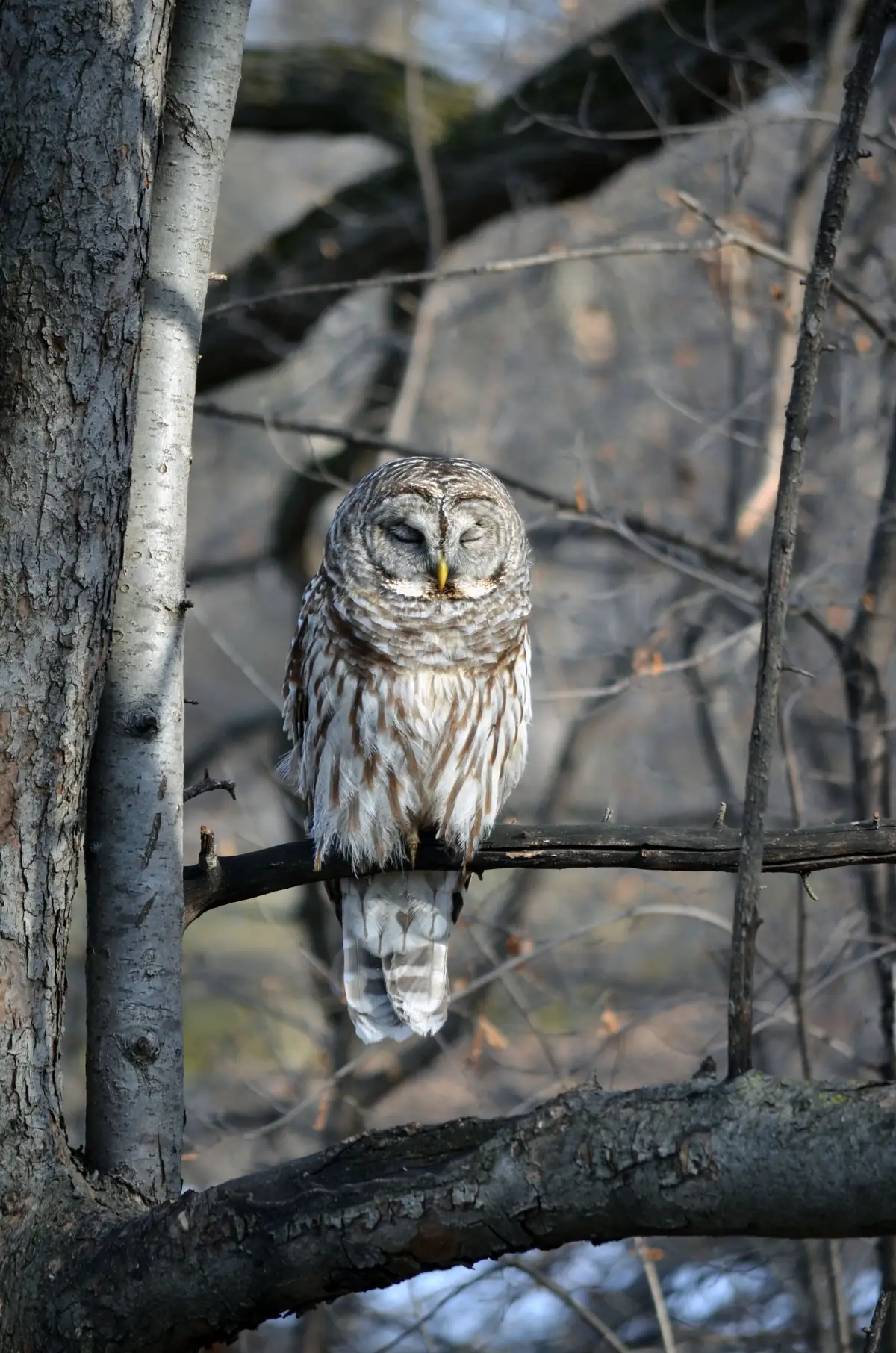
Barred owls start courting
Pairing late January into February; eggs February to April · Bottomland hardwoods, swamps and mature mixed forest
ADCNR says barred owls pair up in late January and early February with a great deal of hooting and commotion. The familiar song is a rhythm of eight hoots, but a courting pair adds cackles, barks and screams that can sound like a fight in the treetops. Stand by a creek bottom at dusk and you may hear two or three owls answering each other. Great horned owls nest even earlier, so a pair that began in December may already have downy young to feed.
-
Bobcats in their peak breeding season
Breeding peaks December to late February; kittens about two months later · Upland woods, river bottoms, swamps and brushy farmland statewide
ADCNR puts the peak of bobcat breeding between December and late February. Soft mud along creeks and logging roads is the place to look for their prints.
-
Gray foxes, the fox that climbs
Breeding in January or February · Thick brush, wooded lowlands and swamps statewide
The gray fox is common across Alabama but secretive and active mostly at night, so ADCNR notes it is seldom seen. It breeds in January or February, and kits arrive about 50 to 60 days later in a den or hollow log. It is one of the few dogs that can climb, scrambling up trees to escape danger or to reach eggs and birds, so a fox you see on a low branch is no mistake.
After a rain or a rare light snow, follow a creek bank or a muddy trail and sketch each print you come across in tracks to know; set a coin beside it for scale and write the date underneath. A walk at dusk the same week, with notes of every owl you hear, makes a good map of sounds.
What can you see on the Alabama coast in January?
A quieter Gulf Coast, with small shorebirds doing their wintering on the sand flats. Some come from the Great Plains and Great Lakes, a few stay all year, and two of the smallest are among the rarest birds in the state.
-
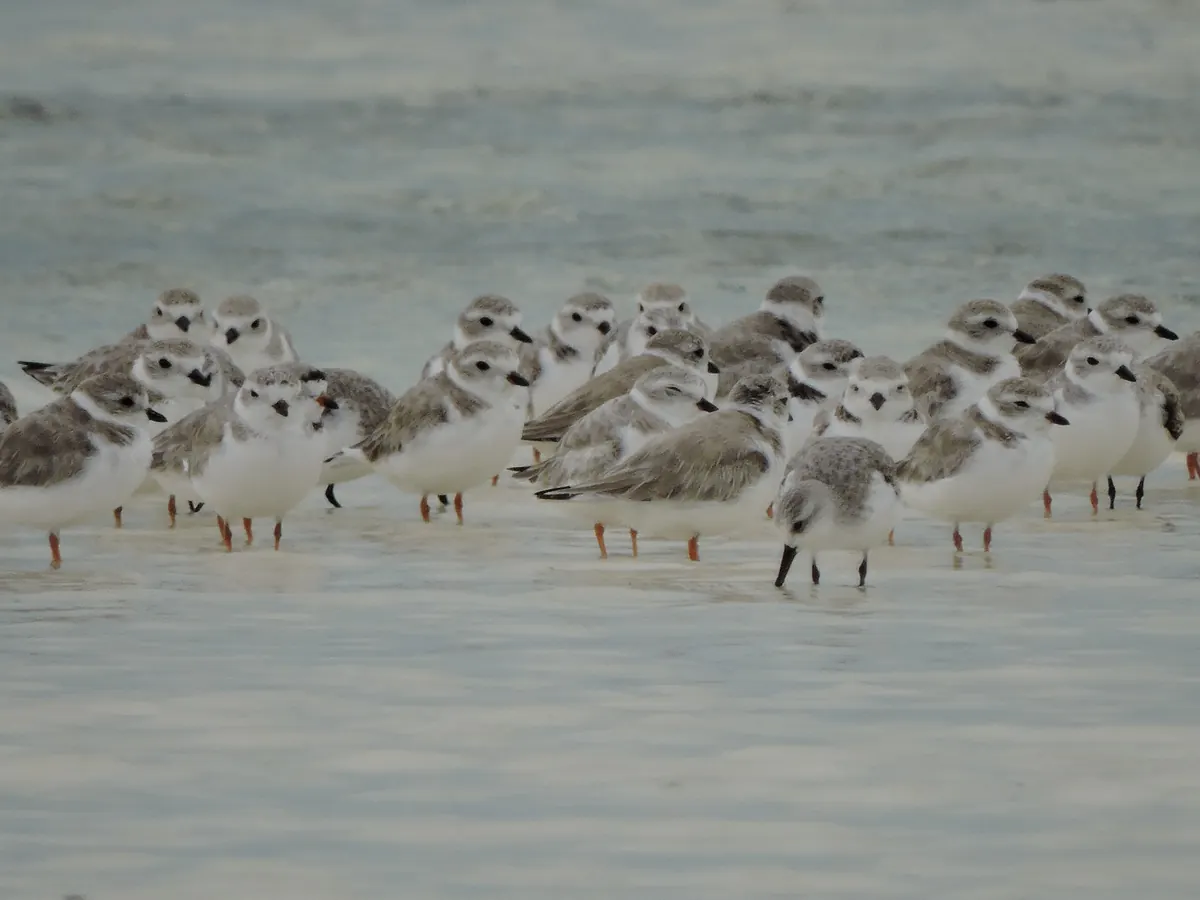
Piping plovers
August to May; most numerous in winter · Pelican Island, Little Dauphin Island and parts of Dauphin Island; now and then the western Fort Morgan Peninsula
The piping plover is a sand-colored shorebird hardly bigger than a sparrow, about seven inches long, whose stubby bill is orange with a black tip in the breeding season but black in winter. ADCNR says Alabama once hosted more than 200 in winter, but the most counted at one time now is usually under 40, partly because the tidal flats at Dauphin and Little Dauphin have degraded. The U.S. Fish and Wildlife Service lists the species as threatened and designated critical wintering habitat on Alabama's islands and peninsula in 2001. Give any feeding flock a wide berth.
-
Snowy plovers, year-round residents
All year; nesting begins in April · Gulf State Park, Bon Secour National Wildlife Refuge and Pelican Island
Paler still than a piping plover, the snowy plover stays on Alabama's beaches all year in very small numbers, and ADCNR ranks it among the species of highest conservation concern. In winter they rest in shallow scrapes in the sand and are almost invisible until they run. Nesting starts in April, so January is a calm time to look for them without disturbing a nest.
-
Coastal programs
Dated programs throughout January · Gulf State Park, Gulf Shores, and Alabama Point East, Orange Beach
Gulf State Park's naturalists run a beginners' birding session at Alabama Point East at 10 a.m. on Thursday, January 21, an Explore the Shore beach walk on Monday, January 18, and a close look at the park's education raptors on Tuesday, January 26. Bon Secour National Wildlife Refuge, about 7,000 acres of dunes and coastal forest, is open for winter walks.
Sketch a plover on the feather found page next to any shorebird feather you pick up along the wrack line, and note the tide. Plovers feed on the flats at low tide and huddle above the waterline at high tide.
Will pine siskins and other winter finches come to Alabama this year?
Probably only a few. The Finch Research Network's winter forecast, published September 25, 2026, finds good seed crops on conifers in eastern Canada and the northeastern states, which should keep most northern finches up there. For the Southeast, the forecasters say plainly that they do not expect a big invasion of any finch species. That is very different from the winter before, when red-breasted nuthatches came south in force.
-
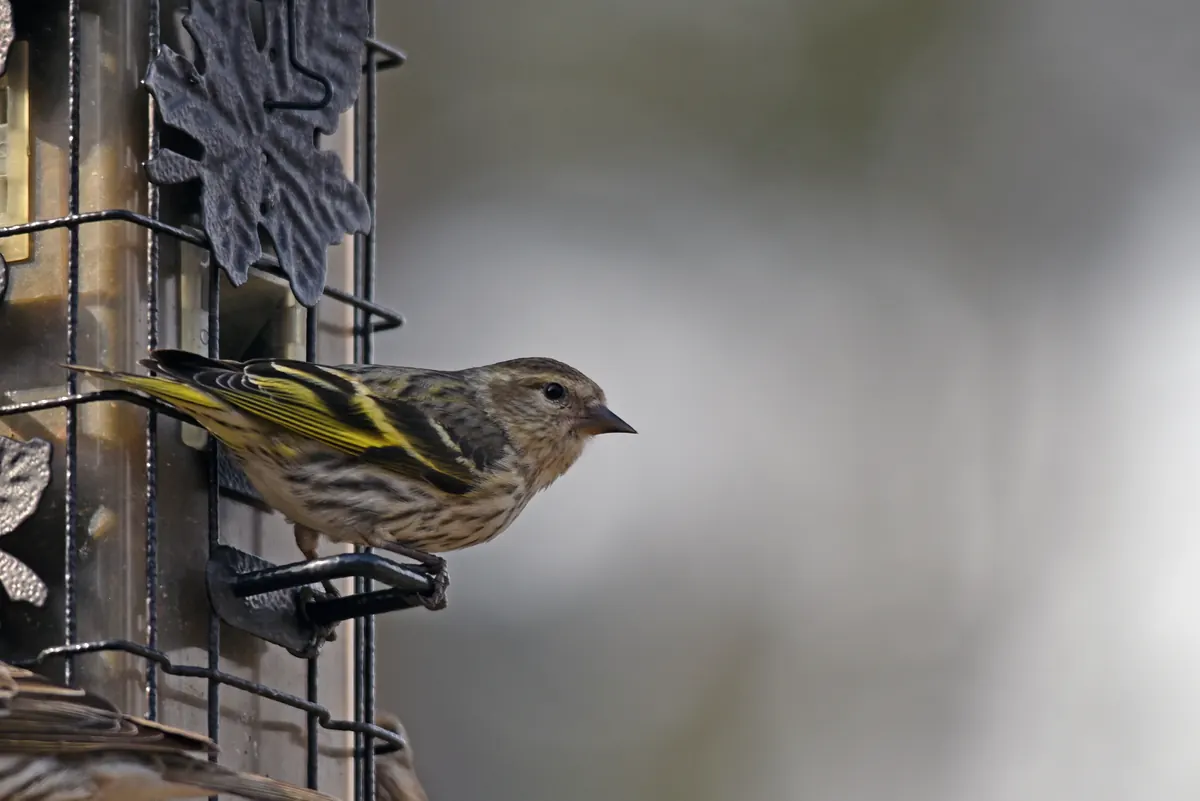
Pine siskins
Possible from midwinter into early spring · Thistle (nyjer) and sunflower feeders, sweetgum and pine trees
Siskins are the one finch the forecast says could reach the southeastern states in some numbers, in a flight it rates small to moderate. Look for a heavily streaked, brown, goldfinch-sized bird with a fine pointed bill and yellow edging in the wings; they often travel with goldfinches. If a flock settles in, wash the feeders every week or two.
-
Purple finches and red-breasted nuthatches
Late winter, if at all · Feeders and woodland edges, mostly in north Alabama
The forecast expects at best a small, late flight of purple finches to the south, and no large movement of red-breasted nuthatches toward the southeastern states.
-
Count your feeder birds
Through the winter · Your own yard
Cornell's Project FeederWatch runs through April, and every count, even of only cardinals and chickadees, helps track where winter birds go. Report any finch you see in eBird; it is how the forecasters check their predictions.
Joe Wheeler State Park leads a Winter Birds hike at 8 a.m. on Saturday, January 16, and Oak Mountain offers beginner sessions on eBird and the Merlin app on January 16 and 30. Each new species earns a line under birds I have seen, along with where it was feeding.
How cold and snowy is January in Alabama, and what might El Niño bring?
January is Alabama's coldest month. By NOAA's 1991 to 2020 normals, highs average about 52 °F at Huntsville and about 62 °F at Mobile and Dothan, and lows range from about 33 °F at Huntsville to about 41 °F at Mobile. Huntsville averages 16 freezing nights in January and even Mobile 8. Snow is light on average, 0.7 inch at Huntsville and 0.4 inch at Birmingham, but averages hide the big events.
The Birmingham weather office's record book is full of January. The city's coldest January reading was 6 below zero on January 21, 1985. Its second-biggest snow day on record, 9.5 inches, fell on January 23, 1940, and January 1936 brought 11.8 inches for the month. On January 21, 2025, a storm the Mobile weather office calls historic buried the coast: Mobile Regional Airport measured 7.5 inches, breaking a two-day record of 6.0 inches set in the great snowstorm of February 1895, and spots in Baldwin County reached 10 inches. The next morning Mobile fell to 6 °F, tied for its third-coldest reading ever, and Grand Bay dropped to 4 °F.
This winter adds a strong push from the Pacific. The Climate Prediction Center's diagnostic discussion of September 10, 2026, gives the developing El Niño a better-than-nine-in-ten shot at reaching very strong status by midwinter. The state climatologist's office at UAH describes the state's El Niño winters (November through March) as roughly 2 °F cooler than normal with 1 to 3 inches of extra precipitation on average, and says south Alabama has averaged more than 6 inches above normal during the seven strong and very strong events since 1950. A National Weather Service Huntsville study of northwest and north-central Alabama found that weak and moderate El Niño winters (December through February) there tended to be dry, not wet, with precipitation trending upward only as events grew stronger. For NOAA's own forecast, issued October 15 and updated monthly, see the Climate Prediction Center outlooks.
| Location | County | Snowfall | Reported by |
|---|---|---|---|
| Lillian | Baldwin | 10.0 in | Broadcast media |
| 3 miles northwest of Foley | Baldwin | 10.0 in | CoCoRaHS |
| Gulf Shores | Baldwin | 8.8 in | Public |
| Dauphin Island | Mobile | 8.0 in | Public |
| Mobile Regional Airport | Mobile | 7.5 in | Official NWS observation |
| Grand Bay | Mobile | 7.5 in | Trained spotter |
| Daphne | Baldwin | 7.3 in | Public |
| 1 mile west of Bay Minette | Baldwin | 6.0 in | Cooperative observer |
Check the forecast and radar for your town before a winter outing. Hard freezes can return in late February and March; the Alabama last-frost dates show how late they usually come where you live. And if snow falls, put a ruler in it and send the depth to CoCoRaHS.
When do Alabama sunsets get back to 5 p.m.?
Around the middle of January for most of the state. In Birmingham the Sun sets at 4:50 p.m. on January 1 and 5:18 p.m. on January 31, Central time. Birmingham, Montgomery and Dothan see their first sunset at 5 p.m. or later around January 12 or 13, Huntsville around the 17th; Mobile is already past 5 p.m. on New Year's Day. Mornings lag behind. Birmingham's sunrise holds at its latest, 6:52 a.m., from January 2 to about January 14, and Huntsville's stays at 6:53 or 6:54 a.m. through the first two weeks, so the extra light this month comes almost entirely at the end of the day.
| City | Jan 1 | Jan 31 | Gained | Per day |
|---|---|---|---|---|
| Florence | 9 h 52 m | 10 h 29 m | 37 min | 1.2 min |
| Huntsville | 9 h 52 m | 10 h 29 m | 37 min | 1.2 min |
| Fort Payne | 9 h 55 m | 10 h 31 m | 36 min | 1.2 min |
| Birmingham | 9 h 59 m | 10 h 34 m | 35 min | 1.2 min |
| Montgomery | 10 h 04 m | 10 h 38 m | 34 min | 1.1 min |
| Dothan | 10 h 10 m | 10 h 41 m | 31 min | 1.0 min |
| Mobile | 10 h 12 m | 10 h 43 m | 31 min | 1.0 min |
The daylight calculator gives exact times for any Alabama address. On the colours of the day page note the time the light fades on the 1st and the 31st.
What can you see in the night sky over Alabama in January?
A strong start to the year: a meteor shower under a nearly moonless sky, the brightest morning star, the closest full moon of 2027 and Jupiter climbing toward its best. All times are Central Standard Time.
-
The Quadrantids
Night of Sunday, January 3, into Monday, January 4 · Anywhere dark, best after midnight
Forecasts for the few-hour Quadrantid maximum differ: about 9:30 p.m. Sunday by the meteor society's reckoning, closer to midnight by EarthSky's. Either way the radiant, near the handle of the Big Dipper, climbs as the night goes on, so Alabama's best window is the last few hours of darkness before Monday's sunrise. A slim crescent Moon only comes up shortly before dawn. Under truly dark country skies a patient watcher might count a few dozen in an hour; city lights cut that sharply.
-
Earth closest to the Sun
Saturday, January 2, 8:33 p.m. · No viewing needed
Our planet passes its closest point to the Sun this evening, roughly 91.4 million miles out, even as Alabama shivers through its coldest weeks. Winter is a matter of axial tilt; the few percent of extra sunlight from being nearer barely registers.
-
Venus at its farthest from the Sun
Greatest elongation January 3; brilliant all month · Southeast before sunrise
Venus stands 47 degrees from the Sun on January 3, its widest separation of this morning apparition, so it rides high in the southeast in the hour before sunup. Point even modest binoculars or a backyard telescope at it and you can see that only half of its disk is lit.
-
The Wolf Moon, the year's closest full moon
Full at 6:17 a.m. Friday, January 22; best the night of the 21st · Rising in the east-northeast at dusk on January 21
Because the Moon swings through perigee less than a day before full, January's is the closest full moon of the year, some 222,229 miles from Earth, and every supermoon list includes it. It is fullest just before dawn on the 22nd, so the night of Thursday the 21st is the night to watch it rise. On the evening of January 23 the waning Moon passes near Jupiter, the brilliant planet just to its side.
-
Jupiter, Saturn and a glimpse of Mercury
All month · Jupiter east, Saturn southwest, Mercury very low in the west-southwest
Jupiter clears the eastern horizon soon after dark and outshines every star; it comes to opposition, when it is biggest and brightest, on February 10. Saturn slips a little lower in the southwest each evening. In the closing days of the month, sweep binoculars low over the spot where the Sun went down, about 30 minutes after sunset, for Mercury, heading toward its best evening appearance of the winter in early February.
| Phase | Date | Time |
|---|---|---|
| New moon | Thursday, Jan 7 | 2:24 p.m. CST |
| First quarter | Friday, Jan 15 | 2:34 p.m. CST |
| Full moon, the Wolf Moon | Friday, Jan 22 | 6:17 a.m. CST (a supermoon; best the night of Jan 21) |
| Last quarter | Friday, Jan 29 | 4:55 a.m. CST |
| New moon | Saturday, Feb 6 | 9:56 a.m. CST |
Moonless evenings, best for faint stars, run from about January 3 to 12. For your own town's moonrise times, open the moon phase calendar, and the cloud forecast map shows whether a passing front will clear out in time for the Quadrantids.
What can Alabama families do outside in January 2027?
- Friday, January 1: First Day Hikes. Seven state parks have posted guided New Year's Day walks, the earliest at Oak Mountain before dawn and the beach walk at Gulf State Park at 8 a.m.
- Saturday, January 2: eagles. All About Eagles at Lake Guntersville State Park (9 a.m., repeated on later dates) and Eagle Eye nest spotting at Joe Wheeler State Park (2 p.m.); Oak Mountain shows live raptors at 1 p.m.
- Tuesday, January 5: last day of the Christmas Bird Count season.
- Wednesdays, January 6, 20 and 27: Eagles and Ecosystems walks on the Eagle Loop at Gulf State Park.
- Saturday, January 9: cranes. The Cook Museum's whooping crane day in Decatur, and Wheeler Lake pontoon eco tours from Joe Wheeler State Park at 10 a.m. and 1 p.m. (again January 30).
- Saturday, January 16: birds and frost. A Winter Birds hike at Joe Wheeler (8 a.m.), a Frost Formation Lab at Lakepoint in Eufaula (10 a.m.), iNaturalist for Beginners at Oak Mountain (11 a.m.) and an Alabama Wildlife Center raptor show at Lake Guntersville (1 p.m., again January 30).
- Thursday, January 21: Birding for Beginners at Alabama Point East, Orange Beach, 10 a.m., and the Wolf supermoon rising that evening.
- Saturday, January 23: how animals get through winter. Lakepoint's Dormancy Deep Dive (11 a.m.) covers alligators, bats and frogs, and Life Under the Leaves (1 p.m.) goes hunting for larvae and salamanders in the leaf litter.
- Late January: Eagle Awareness at Lake Guntersville; watch the park's page for the 2027 weekends.
- Citizen science. Count yard birds for Project FeederWatch, log eagles, cranes and finches in eBird, photograph salamander eggs for iNaturalist, and measure rain and snow for CoCoRaHS. The Great Backyard Bird Count usually comes in mid-February; birdcount.org will post the 2027 weekend.
We took these dates and times from the state parks' online calendar in early October 2026. Most need online registration, some charge a fee on top of park admission, and plans can change, so confirm before you drive. Last month's Alabama December guide tells the story of the cranes' arrival, and our state-by-state nature guides reach every corner of the country. Keep the season's notes together in a Naturalist's Field Journal.
Safety notes for January in Alabama
- Deer hunting into February. Under ADCNR's 2026 to 2027 dates, private-land gun hunting goes on until February 10 everywhere except Zones D and E, where both gun and bow seasons close January 27; Zone C is bucks only from January 2. On open-permit public land only antlered deer may be taken from early January (January 2 in Zones C, D and E, January 4 in Zones A and B), except in the chronic wasting disease zone in the northwest corner, where either sex stays legal to February 10.
- Hunter orange or pink. While gun deer season is open, every hunter in the field needs a solid-colored hunter orange or fluorescent pink vest or upper garment of 144 square inches or more, or a full-size cap of that color, showing from all sides. ADCNR exempts turkey and migratory bird hunters, raccoon, fox and opossum hunters after dark, hunters sitting in a closed box blind or perched 12 or more feet up. Anyone walking public hunting land, dogs included, is wise to wear the same colors.
- Ducks, geese and cranes. Waterfowl seasons close January 31, with a youth, military and veteran hunt day on February 6; ADCNR cautions that the federal frameworks were not final when it published. The quota-permit crane hunt runs through January 3 and reopens for a second split from January 11 to 25 in north Alabama, above Interstates 20, 65 and 22. Expect shotguns at first light near lakes and refuge edges.
- Small game and trapping. Squirrel, rabbit and quail seasons last through February. So does trapping for bobcat, fox, mink, muskrat, otter and striped skunk, and beaver, coyote, nutria, feral hogs, raccoon and opossum have no closed season, so keep dogs on a leash.
- Park hunt days. Frank Jackson State Park (from January 7) and Oak Mountain (from January 18) close sections for managed deer hunts on posted days.
- Ice, cold water and storms. Even a thin glaze ices bridges first. A spill into a lake in January can trigger cold shock within seconds, so paddlers and anglers should keep a life jacket on. Strong cold fronts can also bring severe storms, sometimes overnight; keep phone alerts or a weather radio on.
- Leave wild caves alone. Bats are still hibernating, and waking them costs fat they need until spring.
Sources
- Outdoor Alabama (ADCNR): bald eagle (nesting, wintering concentrations, January survey)
- Outdoor Alabama (ADCNR): bald and golden eagle surveys
- Outdoor Alabama (ADCNR): Lake Guntersville State Park's Eagle Awareness (golden eagle sites and tracking)
- Outdoor Alabama (ADCNR): golden eagle
- Outdoor Alabama (ADCNR): Eagle Awareness weekends celebrate their 40th anniversary (2026 dates, history)
- Alabama State Parks: Eagle Awareness Weekend, Lake Guntersville State Park
- Alabama State Parks: events calendar, January 2027 programs
- Alabama State Parks: program registration
- America's State Parks: First Day Hikes
- Wheeler Wildlife Refuge Association: frequently asked questions (crane timing, winter hours)
- Wheeler Wildlife Refuge Association: Festival of the Cranes
- U.S. Fish and Wildlife Service: Wheeler National Wildlife Refuge
- Cook Museum of Natural Science: 2027 Festival of the Cranes, January 9, 2027
- Decatur Public Library: Festival of the Cranes and 2027 crane photo contest
- Outdoor Alabama (ADCNR): spotted salamander
- Outdoor Alabama (ADCNR): southern leopard frog
- Alabama Cooperative Extension System: Their blood runs cold, Alabama's amphibians in winter
- Outdoor Alabama (ADCNR): barred owl
- Outdoor Alabama (ADCNR): great horned owl
- Outdoor Alabama (ADCNR): bobcat
- Outdoor Alabama (ADCNR): gray fox
- Outdoor Alabama (ADCNR): piping plover
- Outdoor Alabama (ADCNR): snowy plover
- U.S. Fish and Wildlife Service: Bon Secour National Wildlife Refuge
- Finch Research Network: Winter Finch Forecast 2026-2027 (Tyler Hoar, September 25, 2026)
- Project FeederWatch (Cornell Lab of Ornithology): how to participate
- eBird: submit sightings
- Great Backyard Bird Count
- Audubon: Christmas Bird Count (December 14 to January 5)
- NOAA NCEI: U.S. climate normals 1991-2020, monthly (Huntsville, Birmingham, Montgomery, Dothan, Mobile)
- NWS Birmingham: Birmingham cold weather facts
- NWS Mobile/Pensacola: historic January 21, 2025 snowstorm
- Climate Prediction Center: ENSO diagnostic discussion, September 10, 2026
- Climate Prediction Center: seasonal outlooks (winter outlook issued October 15, 2026)
- Alabama Office of the State Climatologist (UAH): El Niño is here, what does that mean for Alabama?
- NWS Huntsville: El Niño winter precipitation impacts, Alabama Climate Division 1
- CoCoRaHS: Alabama
- U.S. Naval Observatory: phases of the Moon, December 2026 to March 2027
- U.S. Naval Observatory: Earth's seasons and apsides, 2027 (perihelion January 3 UTC)
- Fred Espenak: Sky Event Almanac 2027 (planets, perigee, conjunctions)
- American Meteor Society: meteor shower calendar (Quadrantids)
- EarthSky: Quadrantid meteor shower
- EarthSky: what is a supermoon? (full supermoons)
- EarthSky: Venus at greatest western elongation
- Sea and Sky: astronomy calendar 2027 (Wolf Moon, Mercury, Jupiter)
- Outdoor Alabama (ADCNR): 2026-27 deer seasons by zone
- Outdoor Alabama (ADCNR): hunter orange or fluorescent pink requirement
- Outdoor Alabama (ADCNR): 2026-27 waterfowl seasons
- Outdoor Alabama (ADCNR): 2026-27 sandhill crane season
- Outdoor Alabama (ADCNR): squirrel season
- Outdoor Alabama (ADCNR): rabbit season
- Outdoor Alabama (ADCNR): bobwhite quail season
- Outdoor Alabama (ADCNR): 2026-27 furbearer trapping season
- Outdoor Alabama (ADCNR): white-nose syndrome
- Photos via Wikimedia Commons; licenses and photographers are credited under each picture
