What to look for in nature in Alabama this December
December 1 opens meteorological winter, the three coldest months of the year, three weeks before the solstice. In Alabama that does not mean a quiet season. Sandhill cranes crowd the fields at Wheeler toward their yearly peak, bald eagles add sticks to nests that may hold eggs by New Year, birders fan out for the Christmas Bird Counts, and on the first mild, rainy nights tiny chorus frogs start singing as if it were March. The guide below covers the state from the Tennessee Valley to the Gulf, with a usual time window and a source for each item.
Other months in Alabama: October, November.
Start here
- Catch the crane peak at Wheeler. Sandhill cranes at Wheeler National Wildlife Refuge usually reach their highest numbers in late December and early January. The visitor center welcomes visitors from Tuesday to Saturday, and the cranes gather in front of its observation building around midday.
- Count birds for science. This winter’s Christmas Bird Count window opens December 14 and closes January 5, 2027. Alabama held thirteen counts last season, from Waterloo to Gulf Shores, and beginners are welcome: find a circle on Audubon’s map and write to its compiler.
- Geminids on a moonless night. The year’s richest meteor shower peaks on the night of Sunday, December 13, into Monday the 14th. A thin crescent Moon sets in mid-evening, so after about 10 p.m. the sky is dark, and the shower is strongest around 2 a.m.
For the Naturalist’s Field Journal: give the Wheeler cranes and your Christmas Bird Count tally a page each under “birds I have seen”; draw a holly sprig or a red cedar twig on seeds, pods and cones; log the first chorus frog of winter, with the night’s temperature, on a map of sounds. The Geminids belong on dusk and dawn watch, and an eagle nest you can see from a road goes on reading the signs: date every visit, starting with the first fresh sticks.
Regions used below: Tennessee Valley and the northwest hills; Lookout Mountain and northeast Alabama; Birmingham and the Cheaha highlands; Montgomery and the Black Belt; The Wiregrass; Mobile Bay and the Gulf Coast.
When is the best time to see sandhill cranes at Wheeler?
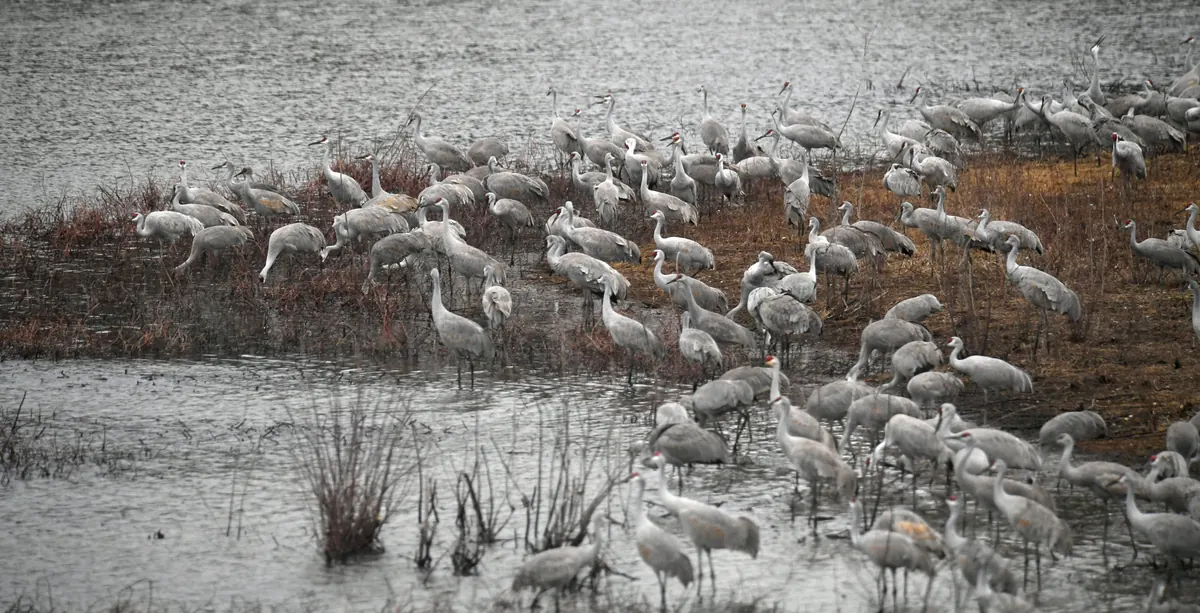
Now. The cranes that began landing at Wheeler National Wildlife Refuge in November keep coming all through December, and the Wheeler Wildlife Refuge Association puts the peak in late December and early January, with most birds gone north by mid-February. On a good day the fields by the visitor center near Decatur hold thousands of tall gray birds, with ducks and geese on the water behind them.
-
Sandhill cranes in the fields
Building all month; peak late December into early January · Wheeler National Wildlife Refuge Visitor Center and Wildlife Observation Building, on the refuge’s Visitors Center Road near Decatur
The refuge’s wintering crane flock has grown from a few birds in the early 1990s to a record of more than 30,000 in the winter of 2023–24, according to the refuge’s friends group. The birds spend the night at a roost and fly into the fields after sunrise, so there is no need to arrive in the dark: the association says the most cranes stand in front of the visitor center around midday, and on cloudy afternoons they may leave early. From November through February the center opens 9 a.m. to 5 p.m., Tuesday to Saturday, closed Sunday and Monday. Bring binoculars and a warm coat.
-
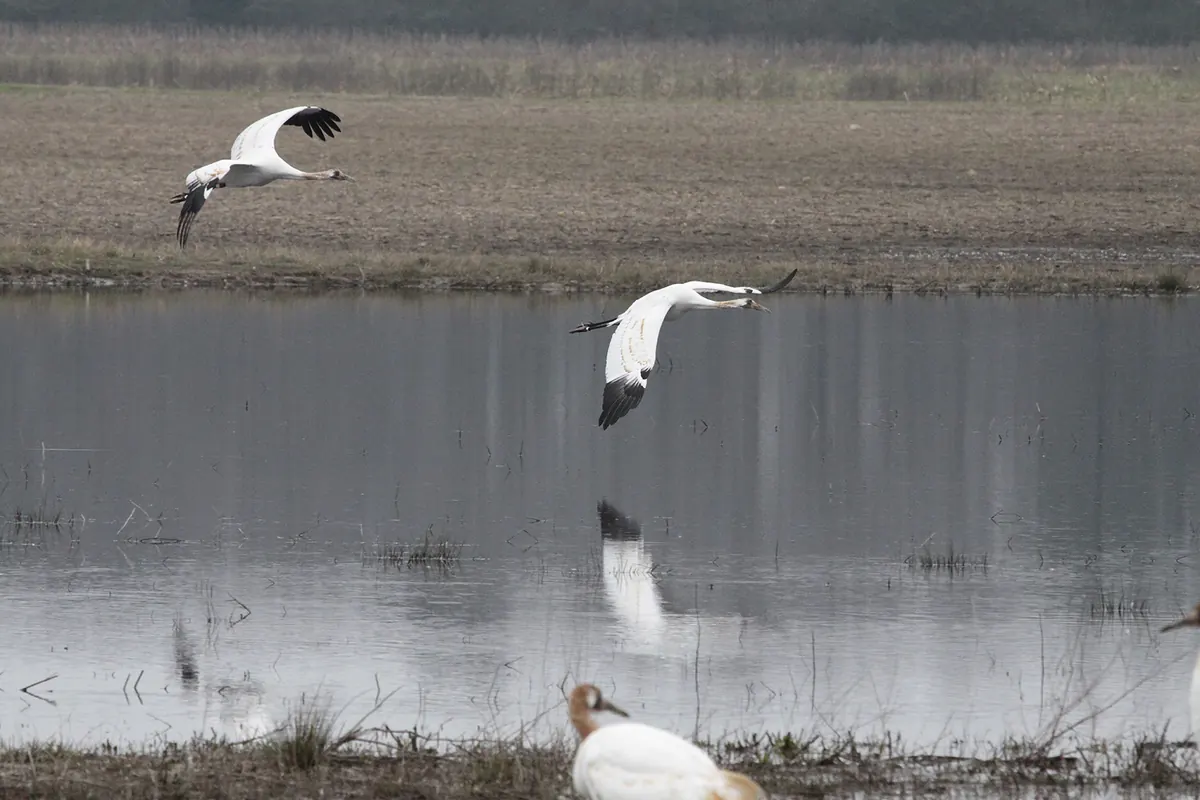
Whooping cranes among them
Same season as the sandhills · Usually mixed with the sandhill flock near the visitor center
The refuge has been a winter home for endangered whooping cranes since 2004. Taller than a sandhill and pure white with black wingtips, a whooper stands out across a field once you know to look. Only a few come each year, so ask the volunteers at the desk whether any have been seen that week.
-
Ducks, and a warning from last winter
Duck numbers rise through December and January · Refuge impoundments, sloughs and the Tennessee River
To give wintering ducks one undisturbed corner, the refuge has closed 335 acres of the Buckeye–Thorsen Arm unit, plus a mile of road, for the whole season, from mid-November through the end of February. Water matters as much as quiet. Audubon’s regional report on the 2024–25 Christmas Bird Count says a drought that lasted from July into December left Wheeler’s impoundments so low that its December waterfowl count was the lowest in fifty years, and American black ducks, once counted here by the thousands (6,155 at the most), were down to four. Whatever you see this winter, an eBird checklist adds to that record.
Count the cranes you can see from one window of the observation building on each visit and note the time and weather in your daily field log; by February the numbers will show you the peak. Decatur’s Festival of the Cranes follows in January, and the Cook Museum has listed its part, “Wild About Whoopers,” for Saturday, January 9, 2027.
Where can you see bald eagles in Alabama in winter?
Along the big rivers and reservoirs, and December is when Alabama’s own pairs settle down to nest. ADCNR says one to three eggs are laid in December or January and incubated for 30 to 32 days, and that pairs come back to the same nest year after year, adding sticks until it can reach 10 feet across and about 2,000 pounds. Northern eagles also come south for the winter. The state’s January survey has averaged about 100 to 150 birds in recent years, and the biggest gatherings are on Pickwick Lake near Waterloo and on Lake Guntersville near the state park.
-
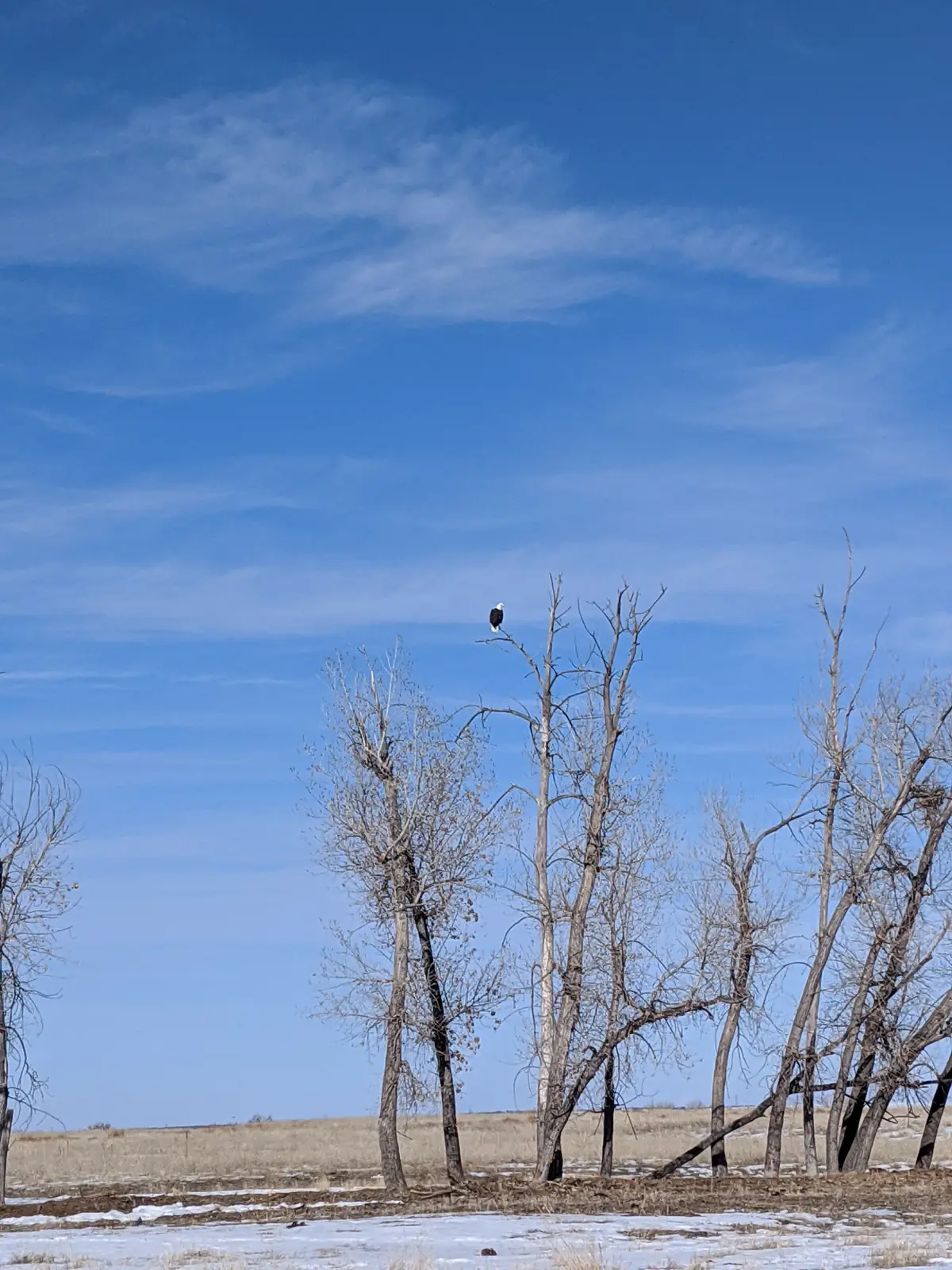
Lake Guntersville, where eagle watching began
December through February; Eagle Awareness weekends usually in late January · Lake Guntersville State Park and the Tennessee River causeways
Lake Guntersville is where Alabama’s eagle comeback began. Biologists raised eaglets from Florida and Alaska on hacking towers, and ADCNR says the first one took flight here in 1985, the same year the park held its first Eagle Awareness weekend; that first field trip counted 89 eagles. The first documented nest success followed in 1991, and today eagles live in all 67 counties. The 2027 weekends will be the 41st, but the park had not announced dates by early October. A first look is available sooner: the park’s naturalists lead “All About Eagles,” a talk followed by an eagle-watching outing, at 9 a.m. on Saturday, January 2.
Gulf State Park’s naturalists lead an Eagles and Ecosystems walk at 1 p.m. on Tuesday, December 8. If you find a nest, watch it from a distance, since federal law protects nesting eagles from disturbance, and date every visit: “adult on nest,” “two adults,” “sticks added.” The notes will tell you when the eggs were probably laid.
How do you join a Christmas Bird Count in Alabama?
Pick a count and write to its compiler. The 127th Audubon count season spans December 14, 2026, through January 5, 2027, and each count covers a circle 15 miles across on a single day in that window, and volunteers of every skill level are sent out with experienced leaders on set routes; if you live inside a circle, ask the compiler whether you can count at your feeder instead. Most circles have not posted their 2026 dates yet, so find the nearest one on Audubon’s online map, which lists each count’s contact.
In the 2024–25 count, the latest with a published summary, Alabama ran thirteen counts: Auburn, Birmingham, Cullman, Dauphin Island, Eufaula, Fort Morgan, Gulf Shores, Guntersville, Montgomery, Tuscaloosa, Waterloo, Wheeler Dam and Wheeler National Wildlife Refuge. Together they found 205 species on count days, plus a magnificent frigatebird, a brown booby and a northern goshawk seen only in count week. The regional editors also flagged low waterfowl and sparrow numbers, and mallards growing scarce.
| Count circle | Region | Species found |
|---|---|---|
| Gulf Shores | Gulf Coast | 141 |
| Eufaula National Wildlife Refuge | Wiregrass and Chattahoochee Valley | 130 |
| Dauphin Island | Gulf Coast | 122 |
| Wheeler National Wildlife Refuge | Tennessee Valley | 117 |
| Wheeler Dam | Tennessee Valley | 109 |
| Fort Morgan | Gulf Coast | 107 |
| Waterloo | Northwest corner, Pickwick Lake | 104 |
Not ready for a full day in the field? Watch your own yard instead: list everything that visits the feeder in an hour and enter it in eBird. Project FeederWatch keeps going until April 30.
What birds spend the winter on the Alabama coast?
Different ones from the fall migrants. Once the warblers have crossed the Gulf, the bays and the open water off the beaches fill with diving birds from the north: loons, grebes, sea ducks and gannets. In the 2024–25 count Gulf Shores tied for the second-highest species total of any Christmas Bird Count in Alabama and Mississippi, and December is a good month to learn why.
-
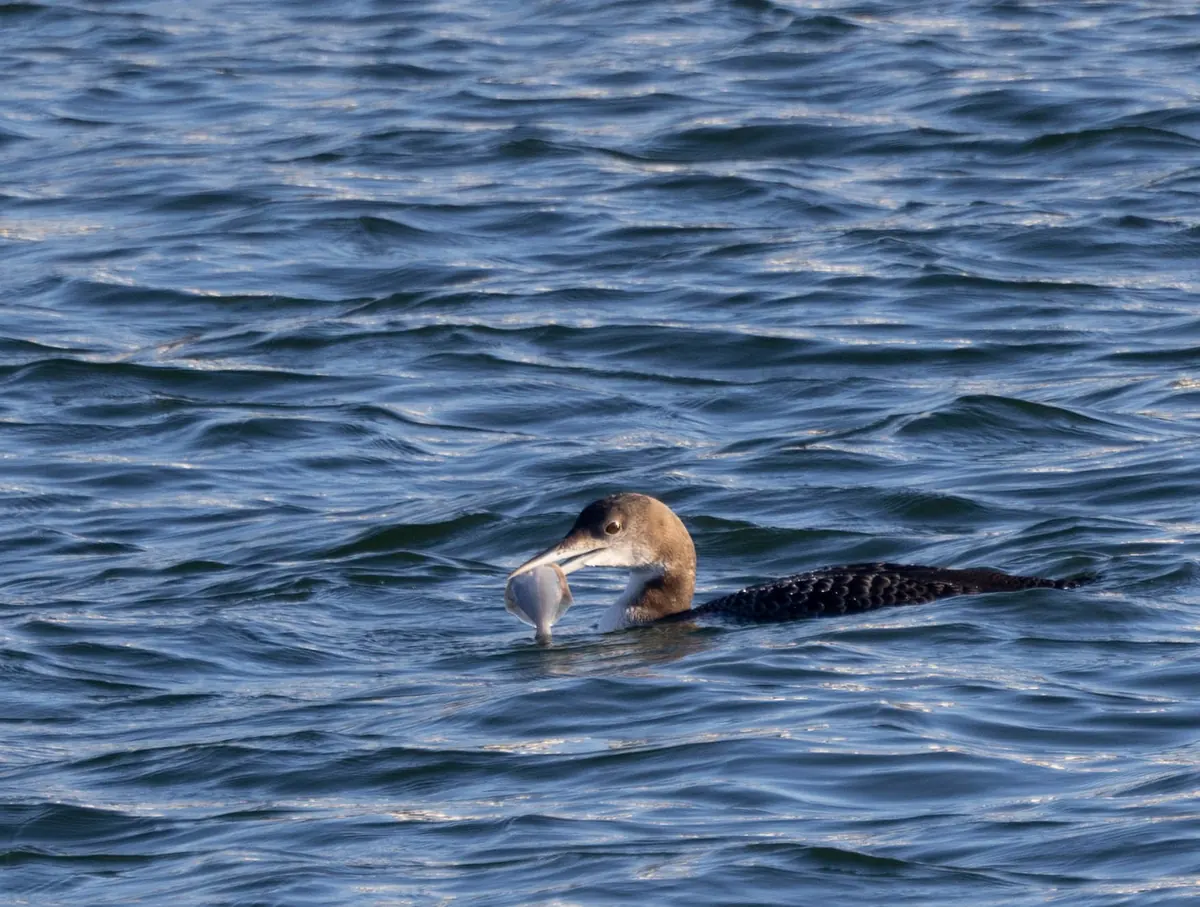
Common loons
Late fall to early spring · Gulf beaches, Mobile Bay, Lake Guntersville causeways and Tennessee River bridges
ADCNR calls the common loon common in winter both on the Gulf Coast and in the Tennessee Valley, and rare in the hills between. Forget the black-and-white checkerboard of summer postcards: in Alabama a loon wears plain gray above and white below. Look for a long, low bird with a heavy, dagger bill that dives and surfaces far from where it went under.
-
Gannets, scoters and grebes
December through February · Offshore from Fort Morgan, Gulf State Park and Dauphin Island; Bon Secour National Wildlife Refuge
The Gulf Shores and Orange Beach tourism office’s guide to the coastal birding trail lists northern gannets, black scoters and Bonaparte’s gulls as birds seen fairly often in winter, and buffleheads, horned grebes and loons from the Jeff Friend Trail at Bon Secour. Gannets are big white seabirds; watch for them diving headfirst into the swells from high above. On that 2024–25 count, Gulf Shores set its own high of 37 black scoters and found 458 black-bellied whistling-ducks, a new maximum for any Alabama count.
-
Flounder season reopens
From December 1 · All Alabama waters
After the November closure that protects spawning southern flounder, ADCNR’s limits allow five a day again from December 1, each at least 14 inches.
Hummingbirds are the coast’s other winter surprise. Many of the western hummingbirds that winter here turn up from December on, and the Banding Coalition of the Americas asks anyone hosting one between November 15 and March 1 to report it to Project HUMMER.
Why are frogs calling in Alabama in December?
Because for several Alabama frogs, winter is breeding season. Alabama Extension explains that chorus frogs, some true frogs and toads, and five of the state’s mole salamanders breed in the cold months, using rain-filled pools that dry up by summer and so hold no fish to eat their eggs. A mild, rainy December night is the signal. Step outside after dark near a flooded ditch or woodland pool and you may hear what sounds like spring.
-
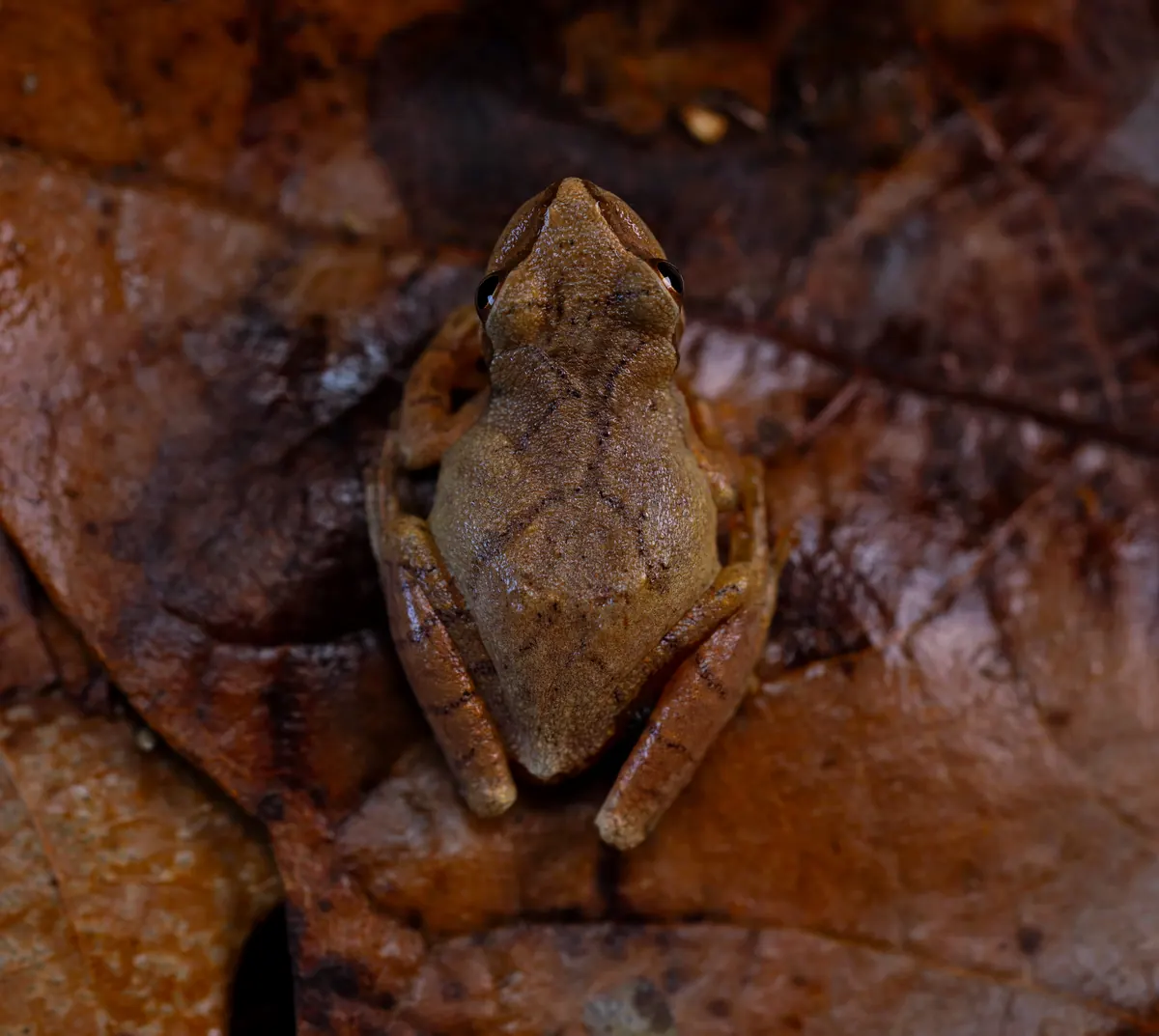
Spring peepers
From late November on the coast; January or February in the north; breeding mainly January to April · Ponds, pools and swamps in or near woods
Despite the name, ADCNR says peepers can be heard singing in Alabama’s coastal counties as early as late November. They are tiny, three-quarters of an inch to an inch and a quarter, and the call is one rising, high-pitched “peep,” repeated so fast that a full pond rings like sleigh bells.
-
Upland chorus frogs
Breeding December to late April · Temporary pools in woods and fields, statewide south to the Red Hills
The upland chorus frog is the sound of a wet Alabama winter: a rising “crreeek,” like a thumb run along the teeth of a pocket comb. ADCNR says breeding usually lasts from December to late April, and a female lays about 1,000 eggs in clusters of 20 to 100 stuck to grass stems and twigs. The frog itself is no more than an inch and a half long and is common across most of the state.
-
Spotted salamanders on the move
Rainy winter nights · Fishless woodland pools in hardwood forests
Extension notes that spotted salamanders depend on vernal pools and other temporary water to breed, and that rainy winter nights, when they walk from the forest to those pools, are the best chance to see one. Look for a stout black salamander with two rows of yellow spots. Use a dim red light, walk carefully and never move a pool’s eggs.
Make a sound map: stand at one pool on three rainy nights this month, note which frogs you hear and the air temperature, and draw it on the map of sounds page. The first night you hear peepers is worth a red circle in the margin.
How do Alabama animals get through the winter?
Alabama winters swing between mild spells and hard freezes, so few animals here sleep straight through. Some hibernate deeply, some doze on cold spells and wake on warm ones, and a few start raising young in the coldest weeks of the year.
-
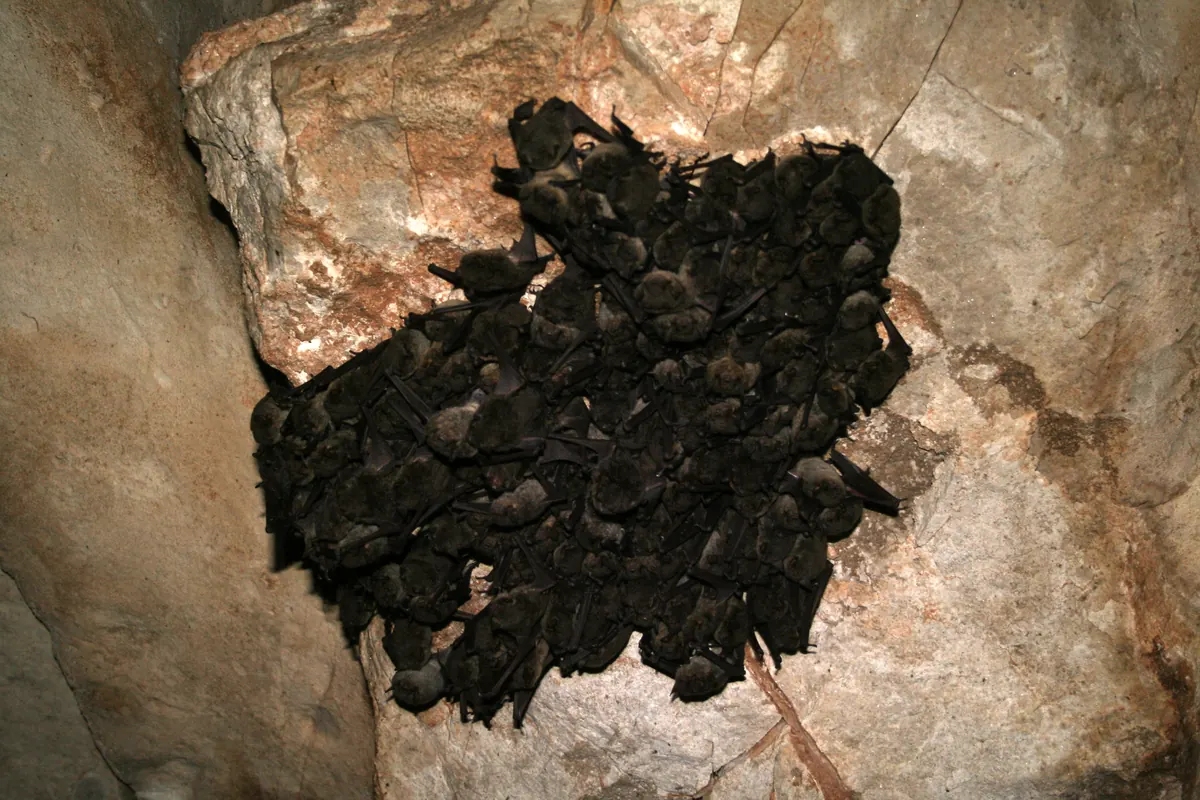
A million bats in one cave
Hibernation through the winter · Fern Cave National Wildlife Refuge, Jackson County, north of Paint Rock
Fern Cave holds the largest wintering colony of gray bats in the United States, more than one million, plus several hundred Indiana bats, according to the U.S. Fish and Wildlife Service. Both are endangered, and the cave is closed to visitors because waking hibernating bats burns fat they need to last until spring. White-nose syndrome raises the stakes: the fungus has killed more than six million North American bats since 2006, and some caves have lost 90 to 100 percent of theirs. Stay out of wild caves in winter; Cathedral Caverns and Rickwood Caverns state parks are the way to see Alabama underground.
-
Black bears that may not den
December through February · Mobile and Baldwin counties, the Lookout Mountain area and the Talladega National Forest
ADCNR says Alabama’s black bears may or may not hibernate, depending on how harsh the winter is and how much food is around. Cubs, two or three to a litter, are born in January or February. On mild days bears may still be foraging, so lock up camp food and trash.
-
Great horned owls start nesting
Eggs as early as December; owlets by mid to late January · Woods, river bottoms and even city parks statewide
The great horned owl is among Alabama’s earliest nesters. ADCNR says females lay two or three white eggs beginning as early as December, often in the old stick nest of a hawk, heron or crow high in a pine, and both parents share 30 to 35 days of incubation. Listen at dusk for deep, soft hoots, often traded between two birds; a pair calling night after night near the same trees is probably nesting there.
On a frosty morning, look for signs instead of animals: tracks in creek-edge mud, acorns cached under leaves, fresh woodpecker chips under a dead tree. Sketch what you find, the date and the night’s low on the reading the signs page.
Which trees and plants stay green in Alabama in winter?
More than most people notice until the oaks and hickories drop their leaves. December is the month to learn the evergreens, because nothing else is in the way.
-
American holly
Berries red from fall through winter · Understory of hardwood and mixed forests statewide
Only female hollies carry the red berries, and the Wildflower Center points out that a female needs a male of the same species blooming nearby to set fruit, so a berry-less holly in your yard may simply be a male. The berries feed many birds and small mammals, and the tree hosts the caterpillars of Henry’s elfin, a small brown butterfly.
-
Mistletoe in the bare treetops
Easiest to see December to March · High in oaks, water oaks, pecans and other sunny deciduous trees
Those round green clumps in leafless crowns are oak mistletoe, a semi-parasitic shrub whose genus name, Phoradendron, means “tree thief.” It has green leaves of its own but draws water and nourishment from the branch it grows on. Cedar waxwings and bluebirds eat the white berries and spread the sticky seeds, the Wildflower Center explains. The berries are poisonous to people, so keep the holiday sprig away from children and pets.
-
Christmas fern
Green through the holidays and all year · Shady slopes, ravines and stream banks
This fern takes its name from staying green through Christmas, in the Wildflower Center’s plain explanation, and it is often the only green on a north-facing slope in December. The fronds, a foot or two long, are cut once into narrow leaflets, each with a little ear at its base that people liken to a Christmas stocking.
-
Longleaf pine in the grass stage
Visible all winter · Longleaf forests of the coastal plain and the Talladega ridges
Look down in a longleaf stand and you may see what looks like a fountain of green grass. It is a young longleaf, and the Forest Service’s fire ecology database says this stemless grass stage lasts from two to many years, as long as 20 where needle blight or competition is heavy, while the seedling builds a deep root. A dense tuft of moist needles shields the bud from fire, and the tree shoots upward only once its root collar nears an inch across.
Chewacla State Park, near Auburn, leads a winter tree identification hike at 10 a.m. on Saturday, December 19. Bring a twig home from each evergreen you learn and draw it on the seeds, pods and cones plate.
When is the earliest sunset in Alabama, and how short is the shortest day?
In Alabama the darkest evenings arrive before the shortest day. On the solstice, Monday, December 21, at 2:50 p.m. Central time, Huntsville and Florence get 9 hours 49 minutes of daylight, Birmingham 9 hours 55 minutes and Mobile 10 hours 9 minutes. Yet Birmingham’s earliest sunset, 4:39 p.m., comes around December 4, holding at that minute from late November to about December 9, and its evenings are already lengthening by the solstice, while sunrise keeps creeping later into January, reaching 6:52 a.m. in the first days of the new year. The tilt of Earth’s axis and its elliptical orbit cause the mismatch. Dothan, near the eastern edge of Central time, sees sunsets as early as Birmingham’s despite lying well over 100 miles farther south.
| City | Dec 1 | Dec 21 | Dec 31 | Earliest sunset |
|---|---|---|---|---|
| Florence | 10 h 00 m | 9 h 49 m | 9 h 52 m | 4:39 p.m., Dec 5 |
| Huntsville | 10 h 00 m | 9 h 49 m | 9 h 53 m | 4:35 p.m., Dec 5 |
| Fort Payne | 10 h 02 m | 9 h 51 m | 9 h 54 m | 4:32 p.m., Dec 5 |
| Birmingham | 10 h 06 m | 9 h 55 m | 9 h 58 m | 4:39 p.m., Dec 4 |
| Montgomery | 10 h 11 m | 10 h 01 m | 10 h 04 m | 4:40 p.m., Dec 3 |
| Dothan | 10 h 16 m | 10 h 07 m | 10 h 09 m | 4:39 p.m., Dec 3 |
| Mobile | 10 h 18 m | 10 h 09 m | 10 h 12 m | 4:50 p.m., Dec 3 |
Our daylight calculator gives the sunrise, sunset and twilight times for any Alabama town on any winter day.
What is December weather like in Alabama, and will El Niño make it wetter?
Cool, often gray and, by NOAA’s 1991–2020 normals, wetter than November at Huntsville, Birmingham, Montgomery and Mobile: close to 5 inches of rain at most stations and nearly 6 at Huntsville. Highs run in the mid-50s in the Tennessee Valley and the low 60s along the coast. Freezing nights are routine in the north, about two weeks’ worth in Huntsville, but on the coast only about five. Snow is the exception. The normals give Birmingham and Huntsville two-tenths of an inch for the whole month.
When it does snow, December can surprise. The Birmingham weather office lists 8.0 inches on December 31, 1963, as the city’s December record. On Christmas Day 2010 a Gulf low spread snow across north Alabama, 6.5 inches on top of Monte Sano, yet the same office notes that Birmingham, with only a trace, still had never recorded a white Christmas. December has storms, too: the office’s Alabama tornado database counts 225 December tornadoes, close to January’s 246 and more than any month from June through October, many of them at night ahead of strong cold fronts.
Then there is the Pacific. Nine chances in ten, or a bit better, say this winter’s El Niño will rank as very strong, according to the September 10 diagnostic discussion from NOAA’s Climate Prediction Center. The Birmingham weather office looked at the six similarly strong events since 1950 (1957, 1965, 1972, 1982, 1991 and 1997) and found a clear progression in central Alabama: Octobers tended to run dry, Novembers came in near or a little above normal, and Decembers turned wet, averaging up to more than an inch above normal. An older study by the same office, from the 1997–98 event, noted that El Niño winters had brought little measurable snow. History tilts the odds; it does not promise. The official NOAA winter outlook is due out in mid-October (the 15th); it and its monthly updates will be posted with the CPC’s 90-day outlooks.
| Station | Average high | Average low | Rain and melted snow | Freezing nights | Snowfall |
|---|---|---|---|---|---|
| Huntsville | 55.0 °F | 35.9 °F | 5.87 in | 14.0 | 0.2 in |
| Birmingham | 56.9 °F | 37.9 °F | 4.87 in | 12.0 | 0.2 in |
| Montgomery | 61.9 °F | 38.6 °F | 4.99 in | 10.3 | – |
| Dothan | 63.8 °F | 42.4 °F | 4.76 in | 5.2 | – |
| Mobile | 63.5 °F | 43.0 °F | 5.45 in | 5.5 | 0.1 in |
When a front is coming through, the local forecast and radar page shows what is on the way. Dothan and Mobile may still be waiting for a first freeze this month; see how late on the Alabama freeze dates page.
What can you see in the night sky over Alabama in December?
-
The Geminids
Night of Sunday, December 13, into Monday, December 14 · Anywhere dark; the radiant climbs high in the east and south after mid-evening
The International Meteor Organization predicts a peak of about 150 meteors an hour on December 14 and calls this a moon-free maximum, since only a thin crescent is up in the evening and it sets by mid-evening. That figure is for an ideal, perfectly dark sky with Gemini straight overhead; from a real Alabama field you will see fewer, but still more than in any other shower of the year. Gemini is up by mid-evening, so you can start counting well before midnight, but the rate is best around 2 a.m., when the radiant stands highest.
-
The Cold Moon, the closest full moon of 2026
Full at 7:28 p.m. CST on Wednesday, December 23; nearly as full on Christmas Eve · Rising in the east-northeast around sunset
The Moon reaches perigee, its nearest point, only about seven hours after it turns full, which makes this the closest and largest-looking full moon of the year on EarthSky’s list of supermoons. It turns full in the evening of the 23rd, so it rises big and orange right at dusk. On the solstice evening, December 21, the gibbous Moon passes close to the Pleiades.
-
Venus blazing before dawn
All month; greatest distance from the Sun January 3, 2027 · Southeast before sunrise
Venus outshines everything but the Moon, a brilliant morning star that climbs higher each week. Before dawn on December 4 and 5 the waning crescent Moon hangs near it, with the blue-white star Spica between them. Jupiter, in Leo, rises in mid-evening by late December and rides high in the south before dawn, with reddish Mars, slowly brightening, not far away.
-
Saturn in the evening
Early evenings all month · South and southwest after dusk
Steady and creamy yellow in the south at dusk, Saturn is the one bright planet of early evening; by month’s end it sets about four hours after the Sun. A small telescope shows the rings.
| Phase | Date | Time |
|---|---|---|
| Last quarter | Tuesday, Dec 1 | 12:08 a.m. CST |
| New moon | Tuesday, Dec 8 | 6:52 p.m. CST |
| First quarter | Wednesday, Dec 16 | 11:42 p.m. CST |
| Full moon, the Cold Moon | Wednesday, Dec 23 | 7:28 p.m. CST (a supermoon; still nearly full on Dec 24) |
| Last quarter | Wednesday, Dec 30 | 12:59 p.m. CST |
| New moon | Thursday, Jan 7, 2027 | 2:24 p.m. CST |
Winter fronts can leave a sky crystal clear or socked in; look at the cloud cover map before you drive out for the Geminids. Our lunar calendar has moonrise for your town, and the Quadrantid meteors peak on the evening of January 3, just before a new moon.
What can Alabama families do outside in December 2026?
- Saturday, December 5: winter hikes and the hunt for kinglets. DeSoto State Park staff lead an adventure hike to the bottom of the DeSoto Falls basin at 10 a.m., Chewacla runs a guided hike to its Hidden Falls at 10, and at Wind Creek on Lake Martin the naturalist’s 10 a.m. walk is a challenge to find a kinglet.
- Tuesday, December 8: eagles at the beach. Gulf State Park’s Eagles and Ecosystems walk on the Eagle Loop, 1 p.m.
- Saturday, December 12: tracks. Cathedral Caverns’ Junior Rangers learn animal tracks at 1:30 p.m.
- Sunday, December 13: a December phenology walk on the Karst Trail at Rickwood Caverns State Park, 3 p.m., and that night the Geminids.
- Monday, December 14: the Christmas Bird Count season opens.
- Wednesday, December 16: “Where’s the Wildlife?” at Lakepoint State Park in Eufaula, 11 a.m., about why animals seem to vanish in winter and how to find their signs.
- Saturday, December 19: ducks, trees and owls. Wind Creek’s naturalist goes looking for wintering waterfowl at 10 a.m., Chewacla leads a winter tree ID hike at 10, and Chewacla and Gulf State Park both read the picture book The Christmas Owl, with a bird-feeder craft at Chewacla at 2 p.m.
- Monday, December 21: the solstice. Oak Mountain State Park holds a Winter Solstice Celebration at 6 p.m.
- Wednesday, December 23: the Cold supermoon rising at dusk.
- Friday, January 1, 2027: First Day Hikes. Alabama State Parks has listed guided New Year’s Day hikes at Oak Mountain (to King’s Chair, starting at 5 a.m.), Bucks Pocket (8 a.m.), Cathedral Caverns and Lakepoint (9 a.m.), and Lake Guntersville and Rickwood Caverns (2 p.m.), part of the national First Day Hikes program of America’s State Parks.
- Citizen science. Join a Christmas Bird Count, keep up Project FeederWatch through the winter, enter crane and eagle sightings in eBird, report wintering hummingbirds to Project HUMMER, and send snow or rain totals to CoCoRaHS.
These programs come from the Alabama State Parks events calendar as of early October; most need registration, and fees, including park admission, vary; confirm before you go. Our November guide for Alabama covers the start of the crane season, and the nature guides for every state cover the rest of the country. To keep a record of your winter outings, see the Naturalist’s Field Journal.
Safety notes for December in Alabama
- Gun deer season all month. Firearm deer season is open in every zone for all of December. Private-land gun hunting lasts from November 21 to February 10 in most of the state (Zones A, B and C and the chronic wasting disease zone), and from November 7 into late January in Zones D and E. On open-permit public land, gun hunting is for antlered bucks only through December 11, then either sex from December 12 through January 1 (January 3 in Zones A and B, longer in the CWD zone). Archery is open everywhere.
- Wear orange or pink. In any area where gun deer season is open, ADCNR’s rule covers every hunter, whatever the game: a solid hunter orange or fluorescent pink outer layer above the waist (at least 144 square inches), or a full-size hat of either color, that can be seen from every side. Exempt are turkey and migratory-bird hunters, raccoon, fox and opossum hunters at night, and anyone in an enclosed box stand or a stand at least 12 feet up. Hikers on WMAs and national forest land should dress the same way, dogs included.
- Ducks and cranes. Duck, coot, merganser and goose seasons run December 5 to January 31, according to ADCNR, which cautions that the federal guidelines were not final when it printed them. Sandhill crane hunting, by quota permit only, runs from November 27 to January 3 across north Alabama, roughly above I-20, I-65 and I-22. Expect shooting at dawn near lakes, rivers and refuges.
- State park hunts. The parks’ urban deer-management program has hunt days scheduled (at Oak Mountain December 7, 14 and 28; at Frank Jackson December 3, 10, 17 and 31), with posted closures.
- Night storms. December tornadoes often come after dark with fast cold fronts; keep a weather radio or phone alerts set to wake you.
- Cold water and cold nights. A fall into a December lake can take your breath away; wear a life jacket in any boat. With sunset before 5 p.m. in most of the state and temperatures dropping fast on clear evenings, set out early and pack a headlamp and an extra layer.
- Caves. Stay out of wild caves in winter to protect hibernating bats; ADCNR notes some caves are closed to the public to slow white-nose syndrome.
Sources
- Wheeler Wildlife Refuge Association: frequently asked questions (crane arrival, peak, winter hours)
- Wheeler Wildlife Refuge Association: sandhill crane (wintering numbers)
- U.S. Fish and Wildlife Service: Wheeler National Wildlife Refuge (whooping cranes, 2026–27 waterfowl sanctuary)
- Cook Museum: 2027 Festival of the Cranes, “Wild About Whoopers,” January 9, 2027
- Audubon: the 125th Christmas Bird Count in Alabama and Mississippi (Gardella and Hoeksema, 2025)
- Audubon: Christmas Bird Count (December 14 to January 5)
- Audubon: join or start a Christmas Bird Count (circle map and compilers)
- Outdoor Alabama (ADCNR): bald eagle (nesting, January survey)
- Outdoor Alabama (ADCNR): Eagle Awareness weekends celebrate their 40th anniversary
- Alabama State Parks: Eagle Awareness Weekends (2027 dates to come)
- Alabama State Parks: events calendar, December 2026 and January 2027
- Alabama State Parks: program registration calendar
- America’s State Parks: First Day Hikes
- Outdoor Alabama (ADCNR): common loon
- Gulf Shores & Orange Beach Tourism: the Alabama Coastal Birding Trail
- Outdoor Alabama (ADCNR): saltwater recreational size and creel limits (flounder)
- Banding Coalition of the Americas: Project HUMMER
- Alabama Cooperative Extension System: Their blood runs cold, Alabama’s amphibians in winter
- Outdoor Alabama (ADCNR): northern spring peeper
- Outdoor Alabama (ADCNR): upland chorus frog
- U.S. Fish and Wildlife Service: Fern Cave National Wildlife Refuge
- U.S. Fish and Wildlife Service: Fern Cave National Wildlife Refuge fact sheet (location, bat numbers)
- Outdoor Alabama (ADCNR): white-nose syndrome
- Outdoor Alabama (ADCNR): bat monitoring and conservation
- Outdoor Alabama (ADCNR): black bear
- Outdoor Alabama (ADCNR): great horned owl
- Lady Bird Johnson Wildflower Center: Ilex opaca (American holly)
- Lady Bird Johnson Wildflower Center: Phoradendron leucarpum (oak mistletoe)
- Lady Bird Johnson Wildflower Center: Juniperus virginiana (eastern red cedar)
- Lady Bird Johnson Wildflower Center: Polystichum acrostichoides (Christmas fern)
- USDA Forest Service Fire Effects Information System: longleaf pine (grass stage)
- NOAA NCEI: U.S. climate normals 1991–2020, monthly (Huntsville, Birmingham, Montgomery, Dothan, Mobile)
- NWS Birmingham: Birmingham cold weather facts
- NWS Birmingham: Christmas Day snowfall, 2010
- NWS Birmingham: Alabama tornado database (tornadoes by month)
- Climate Prediction Center: ENSO diagnostic discussion, September 10, 2026
- Climate Prediction Center: seasonal outlooks (winter outlook issued October 15, 2026)
- NWS Birmingham: El Niño impact on Central Alabama (strong events since 1950)
- NWS Birmingham: El Niño study (1997–98)
- U.S. Naval Observatory: phases of the Moon, November 2026 to January 2027
- U.S. Naval Observatory: Earth’s seasons, 2026 (solstice December 21)
- International Meteor Organization: 2026 meteor shower calendar
- EarthSky: what is a supermoon? (2026 full supermoons)
- EarthSky: Venus at greatest western elongation
- EarthSky: everything you need to know about the Geminid meteor shower
- Royal Astronomical Society of Canada: lunar occultations 2026 (Pleiades, December 21)
- NASA JPL Horizons: planetary and lunar positions
- Star Walk: Comet Encke in 2027
- Outdoor Alabama (ADCNR): 2026–27 deer seasons by zone
- Outdoor Alabama (ADCNR): hunter orange or fluorescent pink requirement
- Outdoor Alabama (ADCNR): 2026–27 waterfowl seasons
- Outdoor Alabama (ADCNR): 2026–27 sandhill crane season
- Project FeederWatch (Cornell Lab of Ornithology): how to participate
- eBird: submit sightings
- CoCoRaHS: Alabama
- Photos via Wikimedia Commons; licenses and photographers are credited under each picture
