What to look for in nature in Alabama this February
Meteorological winter ends with February, though an Alabama February seldom stays wintry for more than a few days at a time. The first purple martins come back from South America to check their gourds, rare wood frogs quack from a few mountain pools near Cheaha, and red maples color the swamp edges before a single leaf opens. The cranes at Wheeler start drifting north, eagle parents shuttle fish to growing chicks, and each day runs roughly two minutes longer than the one before. Every entry below gives a typical window and names where the information came from, Tennessee Valley to coast.
Other months in Alabama: October, November, December, January.
Start here
- Open the martin housing on time. Alabama Extension says purple martin scouts start looking for nest sites from mid-February into March. Have gourds or a martin house cleaned and on its pole before then, so the first returning adults find it ready.
- Count birds for four days. This year's Great Backyard Bird Count, the 30th, covers Presidents' Day weekend, Friday, February 12, through Monday the 15th. Fifteen minutes at a window or in a park, logged in eBird or the Merlin app, is enough to take part.
- See two planets at their best. Jupiter is at opposition on Wednesday, February 10, and Mars follows on Friday, February 19. Both rise around sunset and shine in the east all evening, the brightest points in that part of the sky.
For the Naturalist's Field Journal: note the date your first purple martin arrives under birds I have seen; log every frog chorus on a rainy night, with the temperature, on a map of sounds; follow one red maple from bud to seed on a tree through the seasons; press a henbit sprig on colours of the day; and keep Jupiter, Mars and the Snow Moon on dusk and dawn watch.
Regions used below: Tennessee Valley and the northwest hills; Lookout Mountain and northeast Alabama; Birmingham and the Cheaha highlands; Montgomery and the Black Belt; The Wiregrass; Mobile Bay and the Gulf Coast.
When do purple martins come back to Alabama?
The first ones usually turn up in February. These swallows winter in South America. The Purple Martin Conservation Association calls the first birds back at a colony its scouts: generally adults returning to the same site they used the year before. Alabama Extension puts the scouts' search for nest sites between mid-February and March, with the rest of the colony arriving later. On the coast, the Alabama Birding Trails account rates the species rare in midwinter and uncommon in late winter, so a martin over Mobile Bay in February is an early bird, but not an odd one.
-
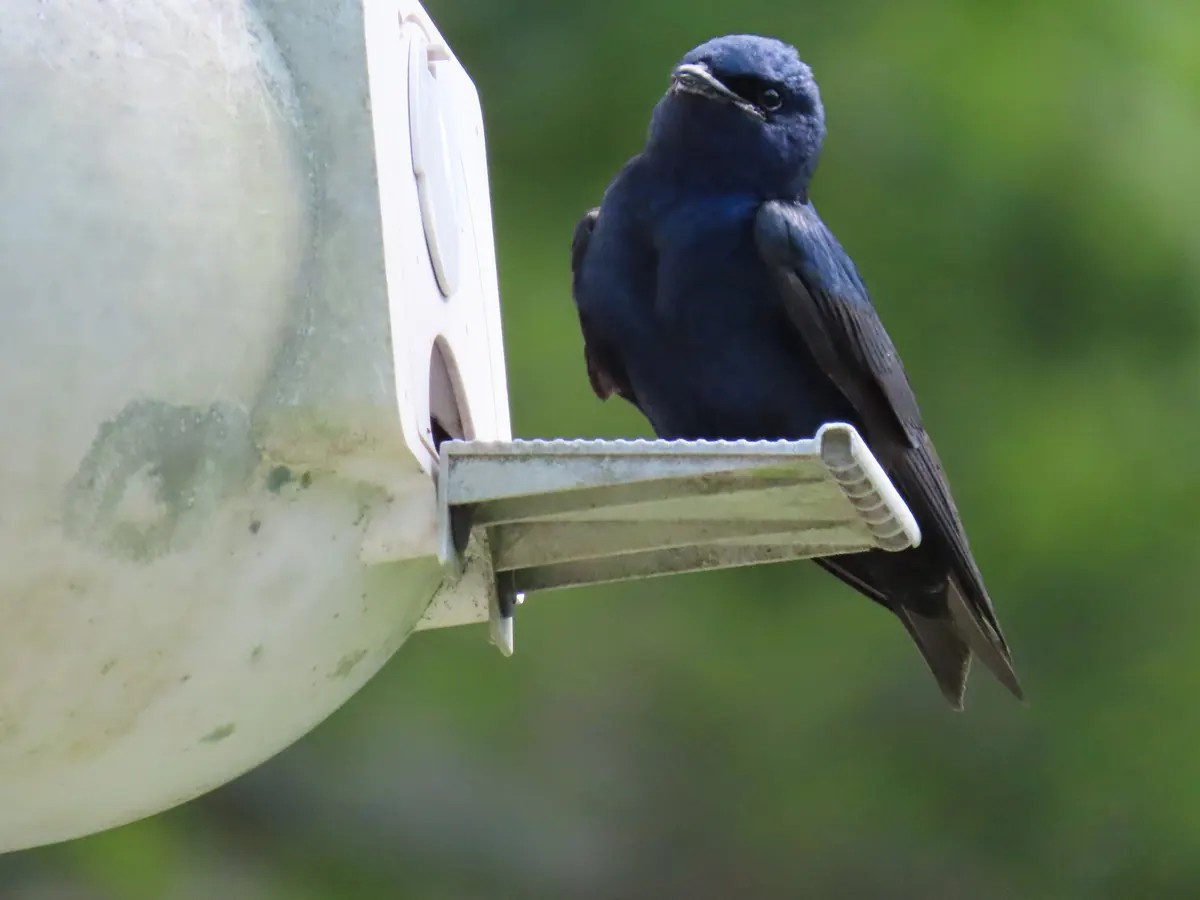
Martin scouts
Mid-February into March; usually earliest in south Alabama · Martin houses and hanging gourds near open fields, lakes and ponds statewide
The martin is Alabama's largest swallow, about seven to eight inches long, with swept-back wings and a slightly forked tail. Adult males are a dark, glossy steel-blue all over; females and young males are duller above and pale gray underneath. Listen for a flowing warble overhead on a mild afternoon. The association asks landlords to put housing up early but keep the entrance holes closed until the adults are due, so that bluebirds, tree swallows, house sparrows and starlings do not claim the cavities first, and its scout-arrival map shows the usual first dates for each part of the country.
-
Why martins nest in gourds
Background · Farms, backyards and lake shores
ADCNR's account notes that Native Americans in the South hung hollow gourds near their gardens to draw martin colonies, and settlers copied the habit. Birds tend to return to the same house or gourd year after year.
-
Report your first martin
When you see it · eBird or the association's scout survey
The Purple Martin Conservation Association runs a long-term Scout-Arrival Study that gathers first-sighting dates from landlords. Send in the date your first bird appears.
Make the martin house a same place twice subject: write one entry when the first scout lands on the porch, another when the colony is full in April.
Which frogs breed in Alabama in February?
Several of the state's rarest, plus a few common ones that start late. February rains fill shallow, fishless pools across Alabama, and the Alabama Wildlife Federation's guide to winter frogs lists species that breed in them right through the coldest weeks. Spring peepers and upland chorus frogs have been calling since December; the ones below are the frogs to listen for now.
-
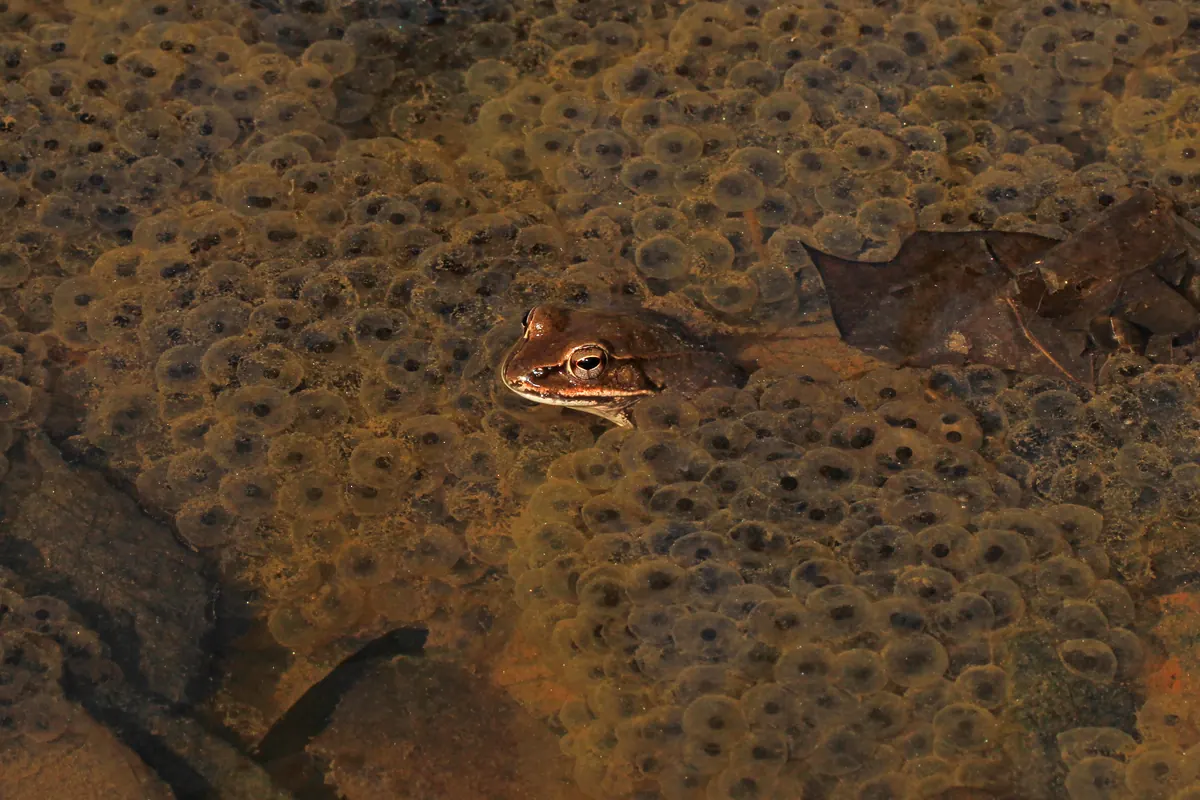
Wood frogs on the Cheaha ridges
Breeding January to February, on the first warm rainy nights · Woodland pools in the eastern Ridge and Valley and upper Piedmont, from Mount Cheaha south to Horseshoe Bend
ADCNR counts only twelve documented wood frog sites in Alabama, all in a narrow band of east-central hill country, and lists the species as being of high conservation concern. A wood frog has a dark mask through the eye like a bandit's, and the males' call sounds like ducks quacking from a puddle in the woods. The frogs survive cold spells by partly freezing: the heart stops and an antifreeze keeps ice out of their cells. Their round egg masses, up to 3,000 eggs each, hatch in two to three weeks.
-
Gopher frogs in the longleaf
Late January to March · Open, temporary ponds in longleaf pine forest; Escambia and Covington counties
The gopher frog is a stout, warty, big-headed frog of the dry, sandy longleaf woods favored by gopher tortoises, and it visits water only to breed. ADCNR knows of five breeding sites left in the state, all in Escambia and Covington counties, and rates the frog endangered in Alabama and of the highest conservation concern; a breeding pond in Shelby County was drained for a subdivision in 1997. Please leave its ponds undisturbed, and report any sighting to ADCNR.
-
Southern and ornate chorus frogs
Southern chorus frog February to May; ornate chorus frog December to March · Grassy, sandy-soil wetlands of the far south; Coastal Plain east of the Cahaba and Alabama rivers
Both are tiny frogs of temporary pools. The southern chorus frog is locally common in the extreme south of the state and begins breeding this month, while the ornate chorus frog, uncommon to locally common in the eastern Coastal Plain, is at the back half of its season.
-
American toads and pickerel frogs
Toads January to May; pickerel frogs in winter and early spring · Woodland pools in northeast Alabama; cool springs and cave mouths above the Fall Line
The federation describes American toads as fairly common in northeast Alabama and most often met in late winter and early spring near hardwood forest. The pickerel frog, with square spots in two neat rows down its back, often lives near cave entrances.
On a mild, wet evening, stand by a pool for ten minutes and note each call you can separate, with the air temperature. A month of these notes on a map of sounds shows which species start first in your part of the state. Drive slowly where roads cross between woods and ponds, since frogs move on exactly those nights.
Are the cranes and eagles still around in February, and where are the woodcock?
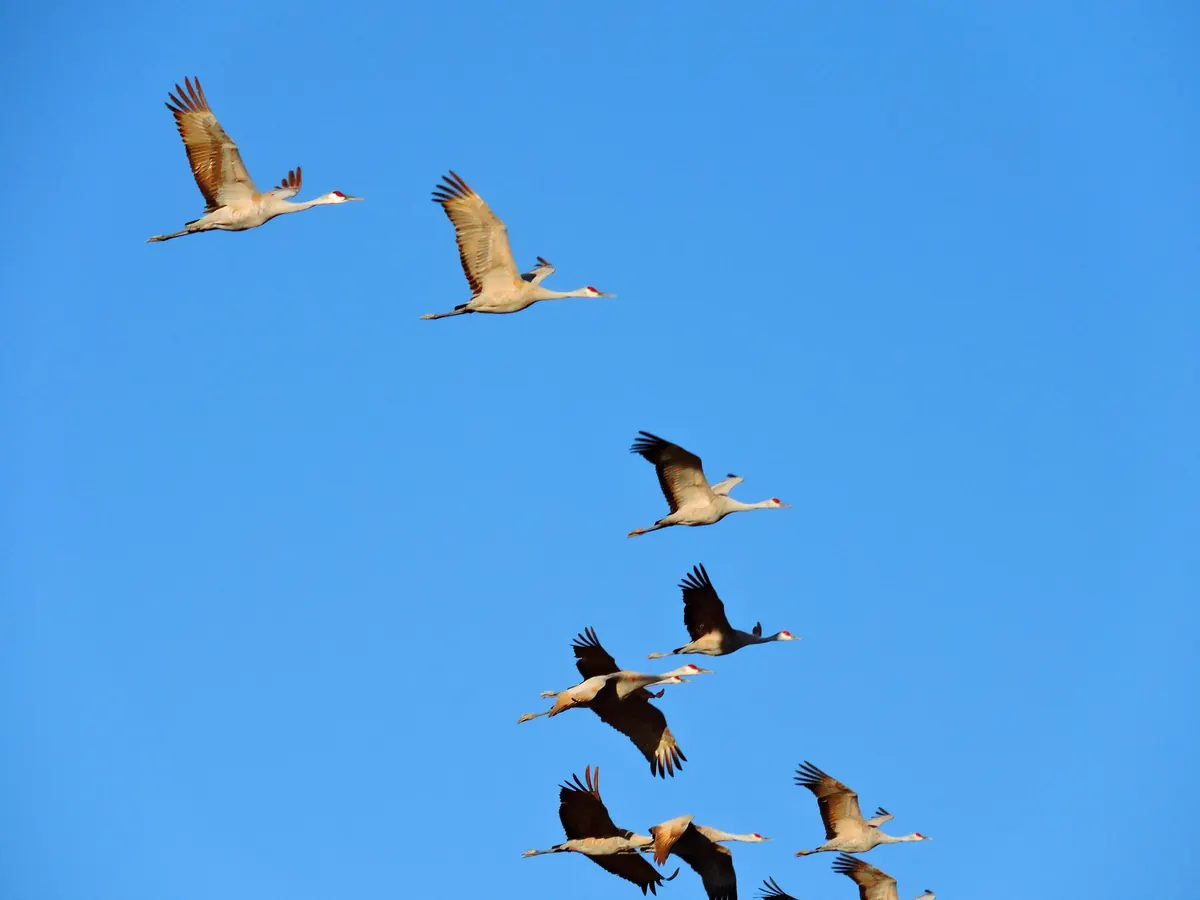
For the first half of the month, yes. The Wheeler Wildlife Refuge Association says cranes usually reach the refuge in mid-November and head north in mid-February, and the visitor center grounds, trails and photo blinds keep their winter schedule (9 to 5, Tuesday to Saturday) until the end of February. Eagles do not leave: February is when Alabama's nesting pairs are busiest feeding young. And at dusk in wet thickets, the woodcock that winter here are getting restless.
-
Sandhill cranes heading north
Departures usually around mid-February · Wheeler National Wildlife Refuge, near Decatur
On a clear day with a south wind, look up as well as out: departing flocks spiral upward on rising air before setting off in long, wavering lines, calling the whole time. Visit early in the month to see the last of the crowd, and scan for the few whooping cranes that sometimes winter with them.
-
Eaglets in the nest
Most chicks hatched in January and February; fledging takes about three months · Tall trees near big lakes and rivers, especially the Tennessee River reservoirs
ADCNR says Alabama's eagles lay one to three eggs in December or January and incubate them for 30 to 32 days. That puts small, downy chicks in most nests by February, and the adults carry in fish all day. ADCNR adds that eaglets need nearly three months before they leave the nest, so these young should be flying in spring. Give an active nest plenty of room; binoculars from a distance are enough.
-
Eagle Awareness at Lake Guntersville
Late January weekends, sometimes running into the first days of February; 2027 dates not yet posted · Lake Guntersville State Park
The park's eagle weekends, with live raptors, talks and dawn eagle watches, finished on February 1 in 2026. Its page says only that it looks forward to the 2027 event, so check there before planning a trip.
-
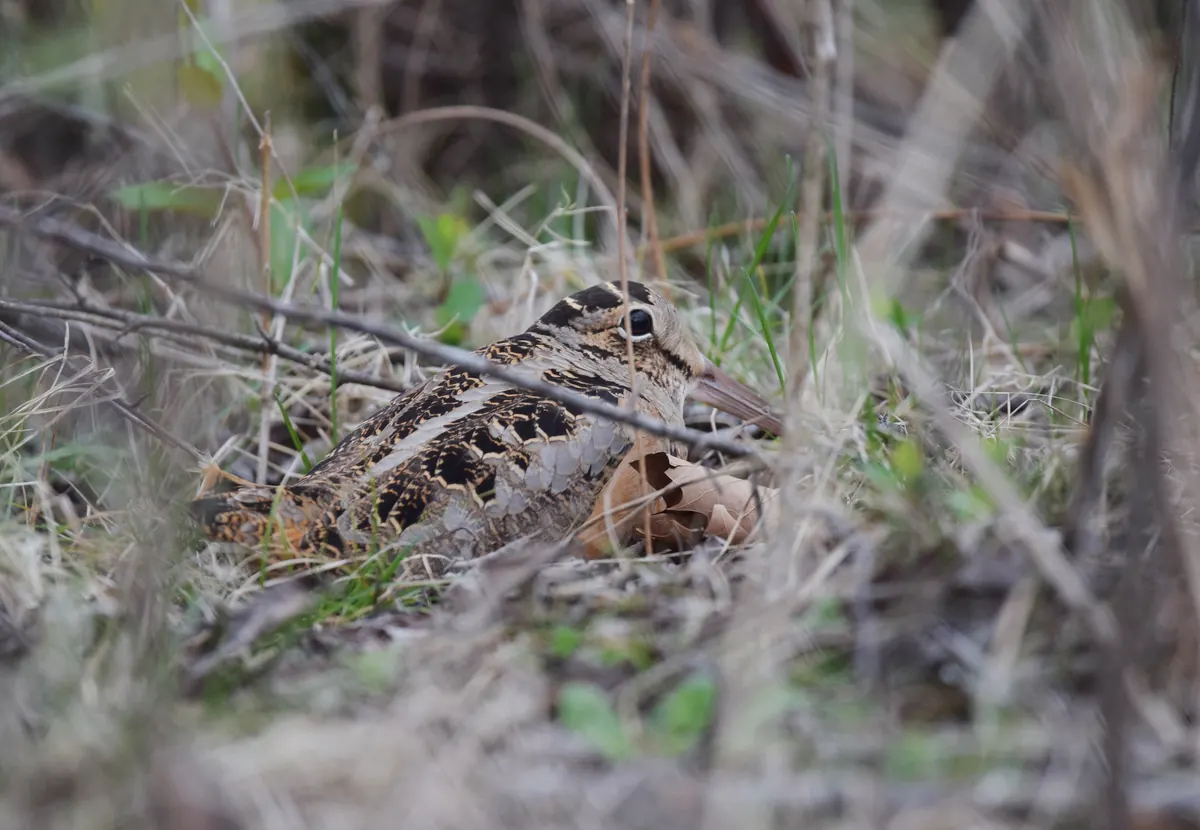
American woodcock
Winter visitors through February; northward movement begins late January and February · Moist young woods, thickets and brushy field edges; most common in winter near the coast
ADCNR describes the woodcock as a shorebird that lives in the forest: plump, nearly neckless and patterned like dead leaves, with a long bill whose flexible tip feels for earthworms. It rates the bird fairly common in fall and winter in the Gulf Coast region and uncommon elsewhere, and Connecticut's wildlife agency notes that woodcock begin moving north in late January and February. At sunset a male may perform on an open patch near wet woods: a nasal peent repeated from the ground, then a spiraling climb of 200 to 300 feet on whistling wings and a zigzag fall with chirps. ADCNR adds that nesting, normally March to June, may begin earlier in the Deep South. The hunting season closed January 31.
On your last Wheeler visit of the winter, count the cranes in front of the observation building and compare the number with your January tally in birds I have seen. A dusk visit to a brushy field edge for woodcock goes on your dusk and dawn watch page too.
Why do you see so many skunks, foxes and coyotes in Alabama in February?
Because February is mating season for several of them, and lovesick males travel far more than usual, often across roads. ADCNR's species accounts put the breeding of a whole group of Alabama mammals in late winter.
-
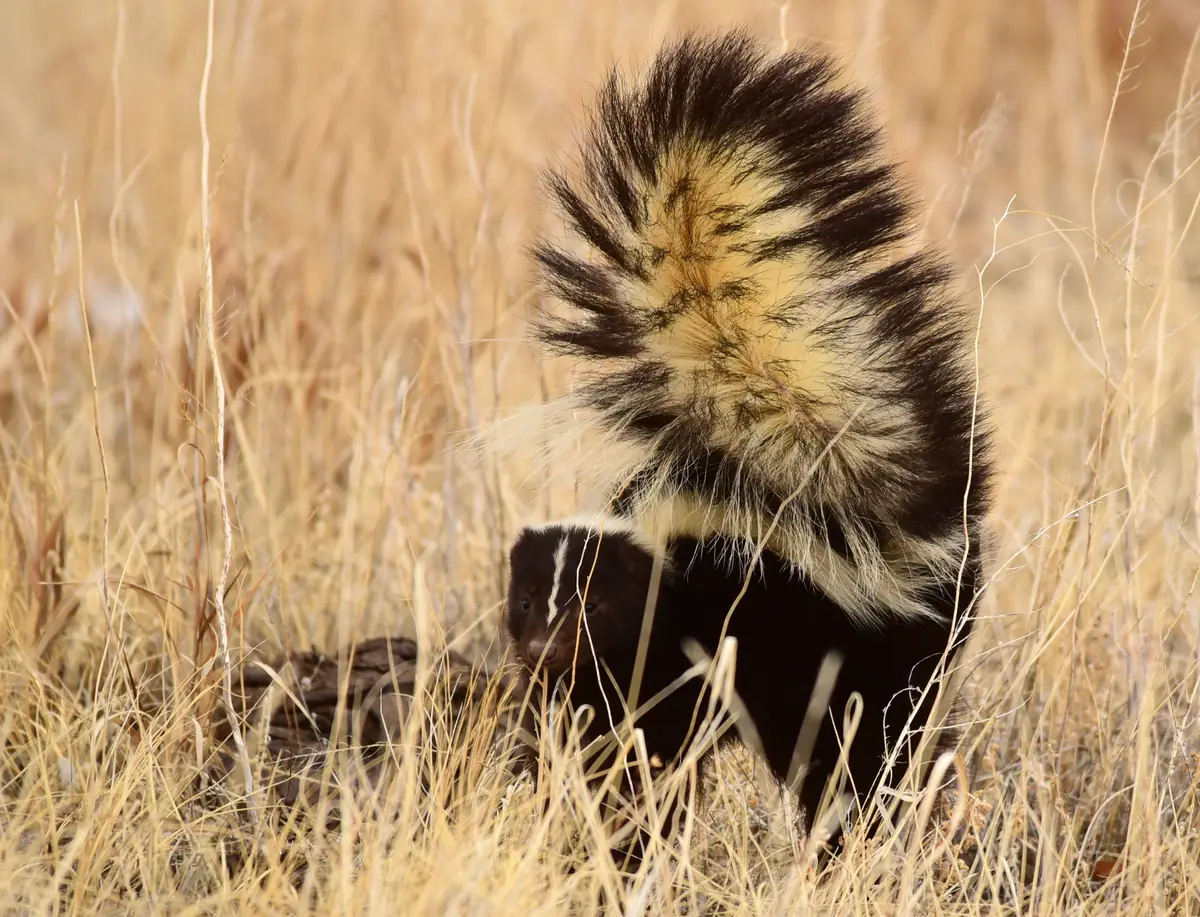
Striped skunks
Mating mid-February to mid-March · Field edges, farmyards and suburbs statewide
Skunks are night animals that sleep by day in burrows, and ADCNR gives their mating season as mid-February to mid-March, with four to eleven blind, helpless kittens born eight or nine weeks later. A sudden waft of skunk on a February night usually means one is out looking for a mate.
-
Red foxes and coyotes
Both breed February and March · Farmland, pastures, woods edges and towns
Red foxes den in old sawdust piles, ditch banks and burrows dug by other animals, and their pups arrive about 53 days after mating. Coyotes, which ADCNR describes as common in every habitat in the state, have litters of about six roughly 60 days after breeding.
-
Raccoons and beavers
Raccoon mating peaks February and March; beavers mate January and February · Creeks, swamps, ponds and river bottoms
Look for raccoon prints, like small human hands, in creek mud. Beaver pairs, which stay together, mate in January and February and have kits in March or April, so fresh cuttings and mud on a lodge mean a busy family.
-
Black bear cubs in the den
Cubs born January to February · Swamps and bottomlands north of Mobile (Mobile, Baldwin and Washington counties) and the northeast mountains
Alabama's few black bears are mostly in the southwest, and a small number now breed again in the northeast, on Lookout Mountain and in the Talladega National Forest. ADCNR says cubs are born in January or February, weighing half a pound to a pound, and stay with the mother for about a year and a half. Sightings can be reported to ADCNR or the Alabama Wildlife Federation.
Keep pet food and trash indoors at night this month. Note any mammal you see or smell, with the time, in your mammal watch log, and look for tracks after a rain.
What is blooming in Alabama in February?
Not much yet, but what blooms is easy to spot against the bare woods. February is when Alabama's first flowers show up, mostly on trees and weeds that beat the leaves to the sunlight, and a few of the earliest woodland wildflowers start to stir in the north.
-
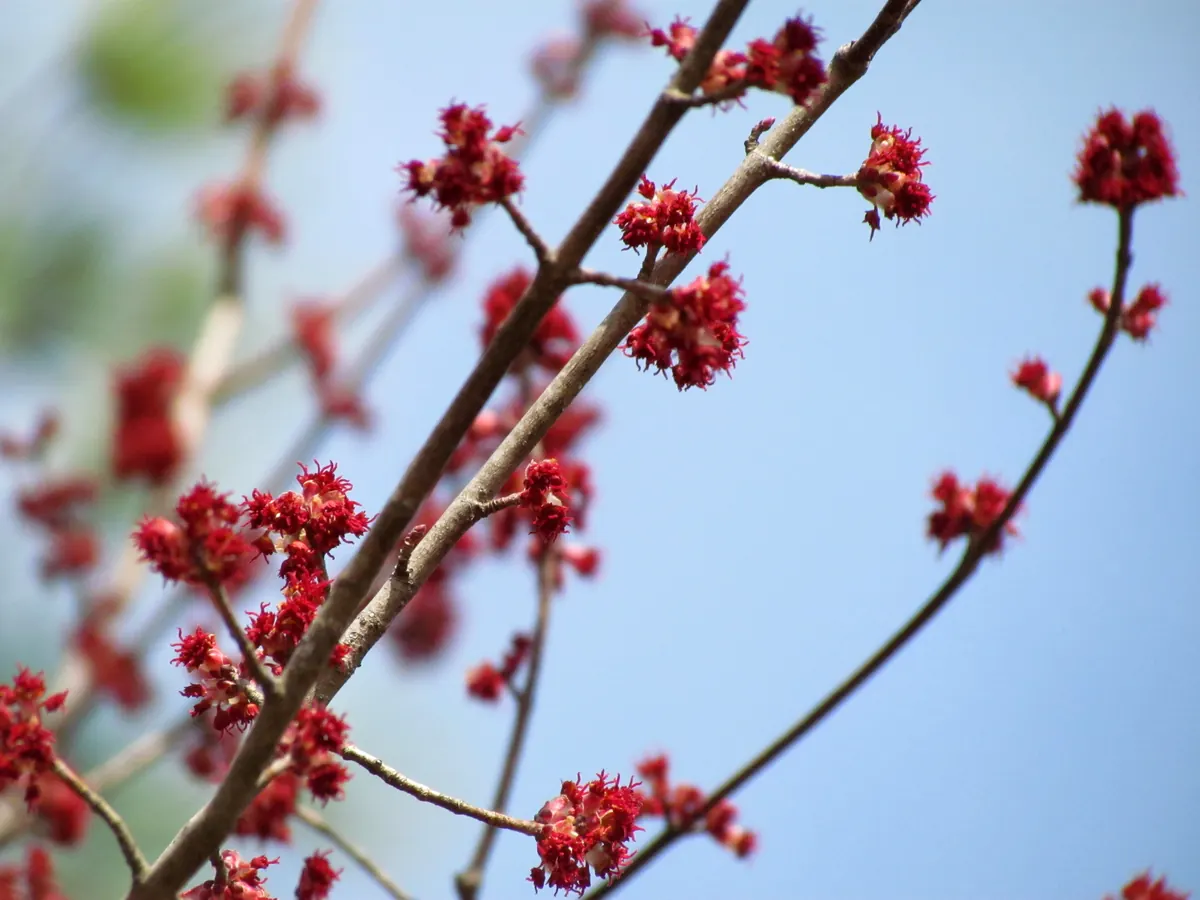
Red maple
Late winter into early spring, before the leaves · Swamps, creek bottoms, floodplains and roadsides statewide
The Alabama Plant Atlas notes that red maple flowers come out early in spring, ahead of the leaves, in small reddish clusters, with the male flowers the most obvious because of their anthers. Across a swamp or a river bottom, whole trees take on a red haze. The winged seeds that follow can be just as red.
-
Henbit and purple deadnettle
Through the coldest months, December to March · Lawns, fallow fields and garden beds; henbit statewide, deadnettle mainly in the north
Both are Eurasian members of the mint family, with square stems and small pink-purple hooded flowers. Alabama Extension calls them two of the few plants that put on a show in the coldest months, and suggests they may give early bees pollen and nectar. Extension lists fallow fields among the places they take over, and a field full of them in bloom looks purple from the road.
-
Carolina jessamine
Late winter into spring · Climbing fences, shrubs and pines
This native evergreen vine opens fragrant, golden, trumpet-shaped flowers from about February. Admire it without picking: NC State Extension rates every part of the plant as highly poisonous.
-
Crappie and daffodils
Usually February · Reservoirs and their creek arms
ADCNR's fisheries staff use a plant to time the fish: early crappie fishing begins when daffodil leaves push up out of the ground, usually in February, with the fish in shallow water near woody cover. Late afternoon, when the sun has warmed the shallows, is often best.
Spring ephemerals such as bloodroot, trout lily and spring beauty, which the Alabama Wildlife Federation says bloom from February through April, come mostly in March; the Land Trust of North Alabama's Wildflower Trail on Monte Sano is famous for its trout lilies in March and April. Pick a red maple you pass often and record it on a tree through the seasons, starting with the first red buds.
When is the Great Backyard Bird Count in 2027?
Friday, February 12, to Monday, February 15, 2027, Presidents' Day weekend. Audubon, one of the founding partners, lists these dates for the 30th count, and Birds Canada gives the same four days. Anyone can take part: watch birds for 15 minutes or longer, at least once over the four days, anywhere you like, and report what you see.
-
How to join
February 12 to 15, 2027 · A window, yard, park or refuge
Identify and count every bird you see or hear, then submit the list through the Merlin Bird ID app or eBird. The results become a snapshot of where birds are in mid-February around the world. The official site, birdcount.org, has the instructions; confirm there before the weekend.
Gulf State Park's Birding for Beginners program at Alabama Point East falls on the Monday of count weekend, February 15, at 9 a.m., a good chance to learn a few coastal species before you submit a list.
What is February weather like in Alabama, and what could El Niño change?
February is a month of swings. NOAA's normals for 1991 to 2020 put the average February high near 57 °F at Huntsville and 65 to 66 °F at Montgomery, Dothan and Mobile, and Huntsville still averages more than 11 nights at or below freezing. Normal February rain and melted snow runs about 4.5 to 5 inches across the state, and Huntsville's normal snowfall for the month is an inch. Warm, humid days ahead of cold fronts also mark the start of the stormy part of the year.
A very strong El Niño is likely to be in place. NOAA forecasters, writing on September 10, 2026, rated the odds of that strength for fall and winter above 90 percent. Two Weather Service offices have described what that tends to mean here. The Tallahassee office, which covers the Wiregrass, explains that El Niño winters on the Gulf Coast run cooler and wetter mainly because the subtropical jet stream steers storms farther south, bringing more clouds and rain rather than more Arctic blasts. A study from the Birmingham office written during the 1997 to 1998 event found fewer sub-freezing days in El Niño years (12 percent fewer at Huntsville, 21 percent fewer at Birmingham and 19 percent fewer at Montgomery) and generally less snow, because the extra cloud cover keeps nights milder. For NOAA's official outlook, updated every month, see the three-month outlook maps from the Climate Prediction Center.
-
Severe storms
Possible any time from late fall; more frequent from late winter into spring · Statewide
The Tallahassee office notes that the stretch of north Florida, southeast Alabama and south Georgia it covers sees 10 to 15 tornado events in a typical winter whatever the El Niño phase, with a severe season there that runs from about Christmas to late spring. The Birmingham study linked strong El Niño episodes with more Alabama tornadoes, although the big increases it found came in the years just after the event. Keep weather alerts switched on overnight.
| Station | Average high | Average low | Rain and melted snow | Nights at or below 32 °F | Snowfall |
|---|---|---|---|---|---|
| Huntsville | 57.1 °F | 36.4 °F | 5.11 in | 11.5 | 1.0 in |
| Birmingham | 59.1 °F | 38.4 °F | 4.95 in | 9.8 | 0.3 in |
| Montgomery | 64.7 °F | 40.4 °F | 4.88 in | 6.9 | not published |
| Dothan | 65.8 °F | 43.3 °F | 4.82 in | 4.1 | not published |
| Mobile | 65.6 °F | 44.4 °F | 4.47 in | 4.1 | 0.0 in |
Before you head out, check the local forecast and radar. Freezes are still likely into March in much of the state; the Alabama frost dates page shows when the last one usually comes near you, which matters if the warm spells tempt you to plant early.
How much daylight does Alabama gain in February?
Between 46 and 54 minutes, depending on where you live, and the gain speeds up all month. Unlike January, when nearly all the new light came in the evening, February adds it at both ends of the day. In Birmingham the Sun rises at 6:43 a.m. on February 1 and 6:17 a.m. on February 28, and sets at 5:19 p.m. and then 5:43 p.m., Central time, for a total gain of 51 minutes. Mobile goes from sunsets at 5:28 p.m. to 5:50 p.m., and Huntsville from 5:15 p.m. to 5:41 p.m. North Alabama gains the most, about two minutes a day by the table below, because the change in day length is larger the farther you are from the equator.
| City | Feb 1 | Feb 28 | Gained | Per day |
|---|---|---|---|---|
| Florence | 10 h 31 m | 11 h 25 m | 54 min | 2.0 min |
| Huntsville | 10 h 30 m | 11 h 24 m | 54 min | 2.0 min |
| Fort Payne | 10 h 32 m | 11 h 25 m | 53 min | 2.0 min |
| Birmingham | 10 h 35 m | 11 h 26 m | 51 min | 1.9 min |
| Montgomery | 10 h 39 m | 11 h 28 m | 49 min | 1.8 min |
| Dothan | 10 h 43 m | 11 h 29 m | 46 min | 1.7 min |
| Mobile | 10 h 44 m | 11 h 30 m | 46 min | 1.7 min |
Type in a street address and the daylight calculator works out its sunrise and sunset. Use colours of the day to record how the sky looks at 6 p.m. on the 1st and again on the 28th.
What can you see in the night sky over Alabama in February?
Two bright planets reach opposition eight days apart, both in the constellation Leo, and Mercury makes its best evening showing of the winter. All times below are Central Standard Time.
-
Mercury low in the west
Best around February 3; visible from late January to about February 10 · Low in the west-southwest, 30 to 45 minutes after sunset
Mercury reaches its greatest separation from the Sun around February 3. Find a clear western horizon and look for a small, steady point of light in the twilight; binoculars help, but never sweep them toward the Sun before it has set. Then, a little more than a day past new, a hairline crescent Moon hangs just beside Mercury in the dusk of Sunday, February 7.
-
Jupiter at opposition
Wednesday, February 10 · Rising in the east at sunset, high in the south around midnight
Earth passes between Jupiter and the Sun on this date, which puts the planet in the sky from dusk to dawn and at peak brightness. Hold binoculars still against a tree or a car roof and you may pick out its four largest moons in a line.
-
Mars at opposition
Friday, February 19; closest to Earth February 20 · East after dark, near Jupiter in Leo
Opposition comes on Friday morning and the closest approach on Saturday, at a distance of roughly 63 million miles. Mars is close to aphelion, its most distant point from the Sun, so the planet looks smaller than at some oppositions, yet this is as good as it gets until 2029. Look for a steady orange-red light in Leo that only Jupiter outshines. Late on February 19 the almost-full Moon passes within a whisker of Jupiter.
-
The Snow Moon and a faint eclipse
Full at 5:23 p.m. Saturday, February 20; eclipse ends 7:13 p.m. · Rising in the east around sunset
February's full moon comes up already slightly dimmed by a penumbral lunar eclipse. Greatest eclipse is at 5:13 p.m.; the Moon rises in Alabama soon after, and the Earth's outer shadow slides off by 7:13 p.m. At best, look for a faint gray shading on one edge; most people will see nothing unusual. Some almanacs count this as a supermoon, while stricter lists leave it out. That evening Jupiter, the star Regulus and Mars gather near the Moon. The annular solar eclipse of February 6 cannot be seen from Alabama or any other part of the country; the ring of fire will be seen in Chile, Argentina and West Africa.
| Phase | Date | Time |
|---|---|---|
| New moon | Saturday, Feb 6 | 9:56 a.m. CST |
| First quarter | Sunday, Feb 14 | 1:58 a.m. CST |
| Full moon, the Snow Moon | Saturday, Feb 20 | 5:23 p.m. CST (faint penumbral eclipse at moonrise) |
| Last quarter | Saturday, Feb 27 | 11:16 p.m. CST |
| New moon | Monday, Mar 8 | 3:29 a.m. CST |
For faint stars, aim for the moon-free evenings between about February 2 and 11. The moon phase calendar lists moonrise times by town, and the cloud cover forecast shows whether skies will be clear enough to bother.
What can Alabama families do outside in February 2027?
- Tuesday, February 2: Groundhog Day. Winter's true halfway point between solstice and equinox comes on February 3 to 4, so the groundhog is a little early. Go outside and list three signs of spring you can find.
- Early February: last looks at the Wheeler cranes before most of them leave around mid-month (visitor center Tuesday to Saturday, 9 to 5).
- Monday, February 8: Eagles and Ecosystems walk on Gulf State Park's Eagle Loop, 1 p.m., repeated Tuesday, February 16 (9 a.m.) and Tuesday, February 23 (1 p.m.).
- Wednesday, February 10: Coastal Raptors at the Gulf State Park Nature Center, 10 a.m., and Jupiter at opposition that evening.
- Thursdays, February 11 and 25: Plants Gone Wild, a naturalist-led look at the park's habitats and the plants and animals they support, 1 p.m.
- Friday to Monday, February 12 to 15: the Great Backyard Bird Count. On Monday the 15th, Birding for Beginners meets at Alabama Point East, Orange Beach, at 9 a.m.
- Tuesday, February 16: Nature Journaling for Adults at the Gulf State Park Nature Center, 1 p.m.
- Thursday, February 18: Alligator Adventures (10 a.m.) and a guided walk on the Gopher Tortoise Trail (1 p.m.) at Gulf State Park.
- Saturday, February 20: the Snow Moon rising at dusk, with Jupiter and Mars nearby.
- Wednesday, February 24: Snakes of Gulf State Park (10 a.m.) and Ramblin' on Rosemary (1 p.m.), a hike of about 3 miles round trip on a flat paved path over an old dune ridge.
- Citizen science. Report your first purple martin to the Purple Martin Conservation Association, log frog choruses and wildflowers in iNaturalist, keep counting for Project FeederWatch, and measure rain for CoCoRaHS.
These programs come from the state parks' calendar as it stood in early October 2026, when Gulf State Park had posted its February schedule but most inland parks had not. Many need registration and some carry a fee, so check the calendar again before you go. January's Alabama guide covers the eagle and crane peak, and the full set of nature guides covers every state. Keep the month's notes in a Naturalist's Field Journal.
Safety notes for February in Alabama
- Deer season ends February 10. ADCNR's 2026 to 2027 dates let gun and bow hunters keep after deer until February 10 in Zones A, B and C plus the zone set up to manage chronic wasting disease. On private land in Zones A and B gun hunters may take either sex, while Zone C is bucks only. Open-permit public land is bucks only, except in the disease zone, where either sex is legal. Zones D and E closed on January 27.
- Orange or pink through February 10. In places and on dates open to gun deer hunting, ADCNR requires every hunter, whatever the quarry, to wear a solid-colored vest, jacket or shirt of hunter orange or fluorescent pink covering at least 144 square inches, or else a full-size hat of the same color, which must be visible from any direction. Turkey and migratory bird hunters, night hunters of fox, raccoon and opossum, and anyone hunting from a closed box blind or from 12 feet or more above the ground are exempt. On wildlife management areas the rule applies to all hunters and trappers. Hikers on hunting land should wear bright colors until the deer season is over.
- Other seasons. February 6 is a special waterfowl day for youth, active military and veterans (ADCNR cautions that the federal rules behind its waterfowl dates were still pending at printing). Squirrel, rabbit and quail seasons run to the last day of February, and so does trapping season for striped skunk, otter, muskrat, mink, fox and bobcat; beaver, coyote, nutria, feral swine, raccoon and opossum can be trapped year-round. Spring turkey season does not open until March.
- Park hunt days. Oak Mountain (February 1) and Frank Jackson (February 4) have managed deer hunts on the calendar; posted areas close those days.
- Storms and flooding. Strong cold fronts can bring tornadoes, often at night, and heavy rain can flood low roads and creek crossings. Never drive through water over the road.
- Cold water. Lakes and rivers are still near their coldest. Tumbling out of a canoe or fishing boat now can trigger cold shock in seconds; keep a life jacket buckled on.
- Bats and caves. Hibernating bats are low on stored fat by late winter. Stay out of wild caves until spring.
Sources
- Alabama Cooperative Extension System: bird houses for songbirds (purple martin scouts mid-February to March)
- Purple Martin Conservation Association: timing, scouts and scout-arrival map
- Purple Martin Conservation Association: Scout-Arrival Study
- Alabama Birding Trails (ADCNR account): purple martin
- Alabama Wildlife Federation: Alabama's winter frogs
- Outdoor Alabama (ADCNR): wood frog
- Outdoor Alabama (ADCNR): gopher frog
- Wheeler Wildlife Refuge Association: frequently asked questions (crane arrival and departure, visitor center hours)
- U.S. Fish and Wildlife Service: Wheeler National Wildlife Refuge
- Outdoor Alabama (ADCNR): bald eagle
- Alabama State Parks: Eagle Awareness Weekends, Lake Guntersville State Park
- Outdoor Alabama (ADCNR): Eagle Awareness weekends celebrate their 40th anniversary (2026 dates)
- Outdoor Alabama (ADCNR): American woodcock
- Connecticut DEEP: American woodcock fact sheet (northward migration in late January and February)
- Outdoor Alabama (ADCNR): 2026-27 woodcock season
- Outdoor Alabama (ADCNR): striped skunk
- Outdoor Alabama (ADCNR): red fox
- Outdoor Alabama (ADCNR): coyote
- Outdoor Alabama (ADCNR): raccoon
- Outdoor Alabama (ADCNR): beaver
- Outdoor Alabama (ADCNR): black bear
- Alabama Plant Atlas: red maple (Acer rubrum)
- Alabama Cooperative Extension System: henbit and purple deadnettle
- NC State Extension Gardener Plant Toolbox: Carolina jessamine (Gelsemium sempervirens)
- Outdoor Alabama (ADCNR): spring fishing tips (crappie and daffodils)
- Alabama Wildlife Federation: woodland wildflower garden (spring ephemerals bloom February through April)
- Land Trust of North Alabama: wildflowers on Wildflower Trail, Monte Sano
- Great Backyard Bird Count
- Audubon: about the Great Backyard Bird Count (30th count, February 12-15, 2027)
- Birds Canada: Great Backyard Bird Count, February 12-15, 2027
- eBird: submit sightings
- Project FeederWatch (Cornell Lab of Ornithology): how to participate
- NOAA NCEI: U.S. climate normals 1991-2020, monthly (Huntsville, Birmingham, Montgomery, Dothan, Mobile)
- Climate Prediction Center: ENSO diagnostic discussion, September 10, 2026
- Climate Prediction Center: seasonal outlooks
- NWS Tallahassee: El Niño and its effect on the Southeast U.S.
- NWS Birmingham: the relationship between El Niño and Alabama weather
- NWS Birmingham: Alabama tornado database
- CoCoRaHS: Alabama
- U.S. Naval Observatory: phases of the Moon, December 2026 to March 2027
- U.S. Naval Observatory: Earth's seasons, 2027
- Fred Espenak: Sky Event Almanac 2027 (oppositions, Mercury, conjunctions)
- NASA Goddard: lunar eclipses 2021-2030 (penumbral eclipse of February 20, 2027)
- NASA Goddard: solar eclipses 2021-2030 (annular eclipse of February 6, 2027)
- EarthSky: Jupiter at opposition
- Sea and Sky: astronomy calendar 2027 (Snow Moon, Mars opposition)
- Old Farmer's Almanac: eclipses (February 20, 2027 penumbral eclipse visibility)
- Alabama State Parks: events calendar, February 2027 programs
- Outdoor Alabama (ADCNR): 2026-27 deer seasons by zone
- Outdoor Alabama (ADCNR): hunter orange or fluorescent pink requirement
- Outdoor Alabama (ADCNR): 2026-27 waterfowl seasons
- Outdoor Alabama (ADCNR): squirrel season
- Outdoor Alabama (ADCNR): rabbit season
- Outdoor Alabama (ADCNR): bobwhite quail season
- Outdoor Alabama (ADCNR): 2026-27 furbearer trapping season
- Outdoor Alabama (ADCNR): 2026-27 turkey season
- Outdoor Alabama (ADCNR): white-nose syndrome
- Photos via Wikimedia Commons; licenses and photographers are credited under each picture
