What to look for in nature in Alabama this May
May is when Alabama turns from migration to nesting. The Cahaba lilies open on the river shoals from mid-May, sea turtles begin to dig their nests on the Gulf beaches, gray bats pour out of Sauta Cave at dusk, and red-cockaded woodpeckers feed their young in the Oakmulgee pines. Swamp and flame azaleas take over from the April bloom, afternoons start to feel like summer, and the days still gain close to an hour over the month. The sky adds a meteor shower at the new moon, a Flower Moon that counts as a seasonal Blue Moon and a good evening view of Mercury. Treat each window below as a typical one rather than a guarantee, and confirm any event with its organizer.
Other months in Alabama: October, November, December, January, February, March, April.
Start here
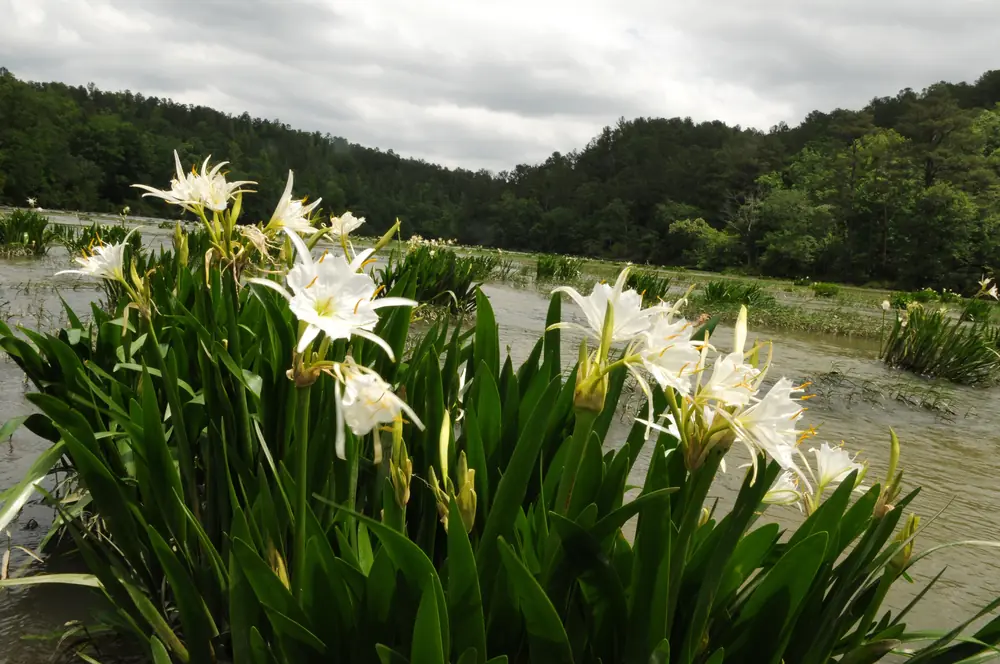
- Go to the Cahaba shoals at dusk. The Encyclopedia of Alabama says Cahaba lily flowers open in the early evening, with the flowering peak running from late May into early June. Visit the refuge in Bibb County near sunset, stay on the road pull-outs and look without picking.
- Watch the gray bats leave Sauta Cave. ADCNR says over 250,000 gray bats stream out of the cave on summer evenings from May through September, in a show of 30 to 40 minutes. Stand near the entrance and bring a hat or umbrella.
- Rise before dawn for the Eta Aquariids. Viewing is best from May 5 to May 7, and the Moon is nearly new, so the sky stays dark. Dress warmly, face east and give your eyes 20 minutes.
For the Naturalist's Field Journal: log the first Cahaba lily flower and each nesting bird on birds I have seen and nest observed; sketch the red-cockaded woodpecker pines and the white bands on cavity trees on a tree through the seasons page; record the Eta Aquariid count, the Flower Moon and Mercury on dusk and dawn watch; and return to the same shoal or azalea thicket you visited in April on the same place twice.
Regions used below: Tennessee Valley and the northwest hills; Lookout Mountain and northeast Alabama; Birmingham and the Cheaha highlands; Montgomery and the Black Belt; The Wiregrass; Mobile Bay and the Gulf Coast.
When and where do Cahaba lilies bloom in Alabama?
The Cahaba lily is a spiderlily (Hymenocallis coronaria) with white flowers about three inches across, and it grows only where a river runs fast and shallow over rock in full sun. The Encyclopedia of Alabama explains that its leaves poke above the water in mid-April after the spring floods, that flowering starts in mid-May, that the show peaks from late May into early June, and that a few blooms linger until late June. Each flower opens in the early evening, and a new one opens each day, so a stand that looks sparse at noon can be a crowd of white by dusk. Alabama's rivers hold the biggest populations because the Cahaba has no high dams, which are the plant's oldest enemy.
Visitors to the Cahaba River National Wildlife Refuge in Bibb County are looking at what the U.S. Fish and Wildlife Service (USFWS) calls the largest known stand of the imperiled shoals lily, a name for the same plant. Alabama Birding Trails puts the best of it at Hargrove Shoals and gives the bloom as mid-May to early June. The same page warns that a narrow gravel road, effectively one lane, runs beside the river, so use the pull-outs and keep an eye out for traffic as you walk.
-
Cahaba River National Wildlife Refuge
Flowers usually from mid-May to early June, peaking late May · Bibb County, near West Blocton. There are no facilities or offices on site; the staff in Anniston answer questions at cahabariver@fws.gov
The refuge protects 3,681 acres of rock shoals, pools and riffles. Bring water shoes only if you plan to wade, and move slowly: the rocks are slick and the current is faster than it looks. Look for the lilies in the evening, when the flowers are open, and for sphinx moths and swallowtails at the blooms. The Encyclopedia of Alabama names the plebeian sphinx moth and the pipevine swallowtail among the visitors seen at the flowers.
-
The Cahaba Lily Festival in West Blocton
An annual festival in mid to late May; the 2027 date was not posted when we looked · Cahaba Lily Center, 1012 Main Street, West Blocton
West Blocton holds the festival each spring, and Alabama Birding Trails says it includes guided tours to the lily shoals. Published dates disagree: Alabama Birding Trails says the last Saturday in May, while the U.S. Fish and Wildlife Service (USFWS) refuge page gave May 16 for 2026. No 2027 date has been posted yet, so ask the festival organizers or the Cahaba River Society before planning a trip.
Leave the bulbs where they grow. The Encyclopedia of Alabama says that digging bulbs for nurseries has wiped out smaller populations, so look, photograph and let the seed pods ripen.
What is happening on the Gulf beaches in May?
May is when the beaches change jobs. The songbird rush that crowds Dauphin Island in April thins out, and the sand turns into a nursery for turtles and shorebirds. Audubon writes that the island and its neighbor Fort Morgan, reached by a ferry of about four miles, stay full of birders from mid-March through mid-May. That window ends about mid-May, so by the second half of the month the crowds thin out and the sand turns to nesting.
-
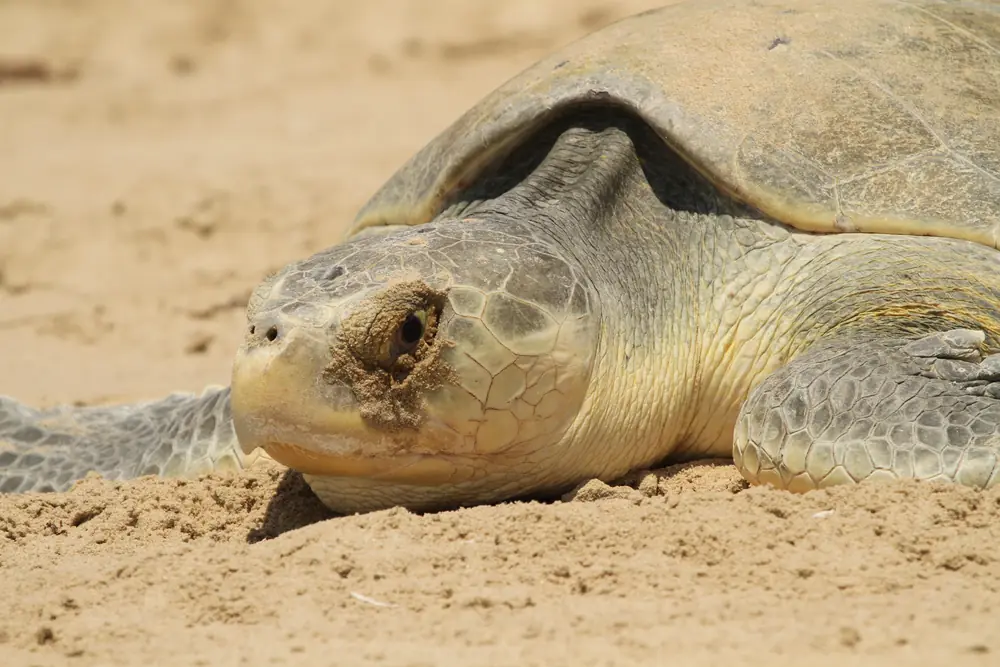
Sea turtles nesting
Season runs May 1 through October 31; each nest takes about two months to hatch · Every Alabama beach from the west end of Dauphin Island to Alabama Point
Alabama's conservation agency (ADCNR) says three species nest here: loggerheads most often, then Kemp's ridleys and green turtles. A female digs a chamber a few feet down and lays 80 to 120 eggs, and the hatchlings steer for the brightest light, usually moonlight on the water. An ADCNR article on the Share the Beach program says that a researcher with 12 years of work in Alabama counted 1,350 nests, of which 1,325 were loggerhead, 20 Kemp's ridley and 5 green. Volunteers walk the beaches each morning to find tracks, and a found nest is screened and staked off. Nests are federally protected, and disturbing one is a crime.
-
Shorebird chicks on open sand
Nesting from about mid-March through August · Dune edges and open sand on the Baldwin County Gulf beaches
Gulf Shores and Orange Beach tourism lists nine species that commonly nest on Alabama's sand, from snowy plovers and least terns to black skimmers and oystercatchers. Incubation lasts 24 to 27 days, and the young then spend three to four more weeks on the ground before they fly, so May beaches hold eggs and fluffballs that look like pebbles. Never walk on the dunes, leave any nest alone, fill your holes before you go and take your food and gear with you.
-
The last migrants at Bon Secour
Spring migration, tapering through mid-May · Bon Secour National Wildlife Refuge, about 12 miles west of Fort Morgan on the same peninsula
The refuge, about 7,000 acres from dunes to pine and oak woods, serves as a rest-and-refuel stop for songbirds, according to USFWS, and its beaches shelter green, loggerhead and Kemp's ridley turtles and the Alabama beach mouse. Call the visitor contact station at (251) 540-7720 for trail and beach access, since the building was being moved in autumn 2026.
If you stay on the beach after dark, ADCNR asks you to keep lights off or use a red flashlight, to avoid phone lights and flash photography, and to flatten sandcastles and fill holes before you leave. Report tracks, a nesting turtle or any stranded turtle to the 24-hour hotline, 1-866-732-8878, and do not push a stranded animal back into the water.
What comes out at dusk and after dark in Alabama in May?
Two of the state's best evening shows are underground in origin: an enormous bat colony and a canyon where the ceilings glow. Neither depends on a moonless night, but both reward a plan made in advance.
-
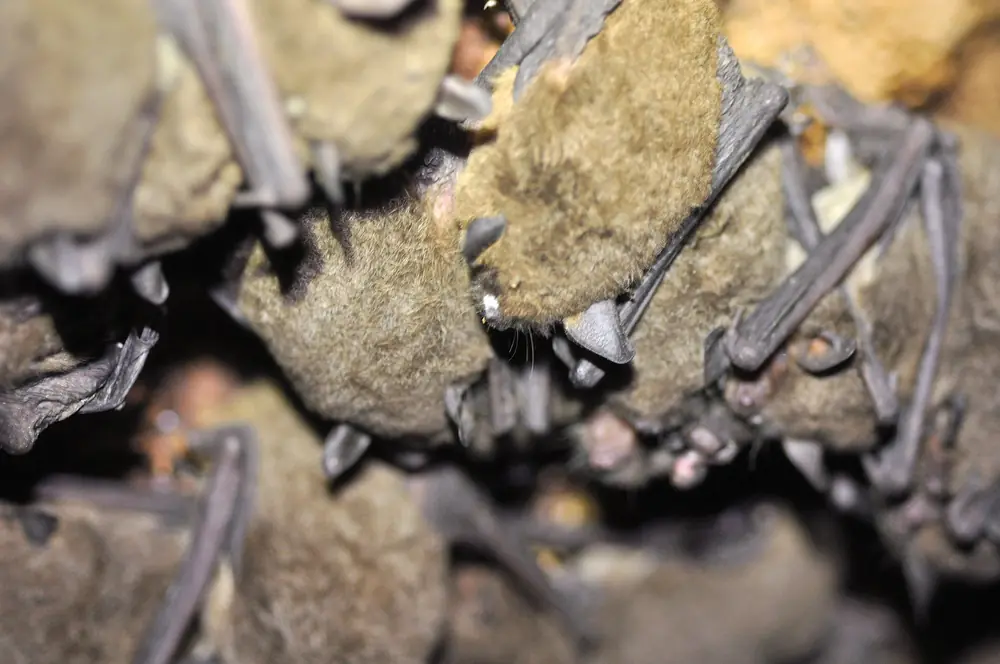
Gray bats leaving Sauta Cave
Evening emergences from May through September, strongest in midsummer · Sauta Cave National Wildlife Refuge, 7 miles west of Scottsboro, just off U.S. Highway 72
ADCNR says more than 250,000 federally endangered gray bats come out of Sauta on summer evenings, in a show that lasts 30 to 40 minutes. It is free, and the cave is closed to people, so you watch from the entrance. Bring a cap, hood or umbrella because the bats may fly close overhead. Wheeler National Wildlife Refuge answers questions at (256) 353-7243. Other sites ADCNR lists include Cave Springs Cave in Morgan County, Blowing Spring Cave Preserve in Lauderdale County, and Hambrick Cave in Marshall County, which can be watched only by boat. Do not shine lights at the bats.
-
Dismalites in Dismals Canyon
Peak seasons late April through May and again late September; best viewing May through September, per the canyon · Dismals Canyon, Phil Campbell
The canyon's "dismalites" are the larvae of a fly, Orfelia fultoni, not true worms, and they make blue-green light to lure insects into sticky threads. The canyon runs guided night tours of about 45 minutes, which its website lists on Saturday nights. It takes reservations only for the coming weekend, starting the Sunday before, and only in person or by phone at (205) 993-4559. Tours are prepaid, dogs are not allowed, and the canyon says they are not suited to small children. Bring a flashlight for the walk.
Where can you see red-cockaded woodpeckers and other nesting birds?
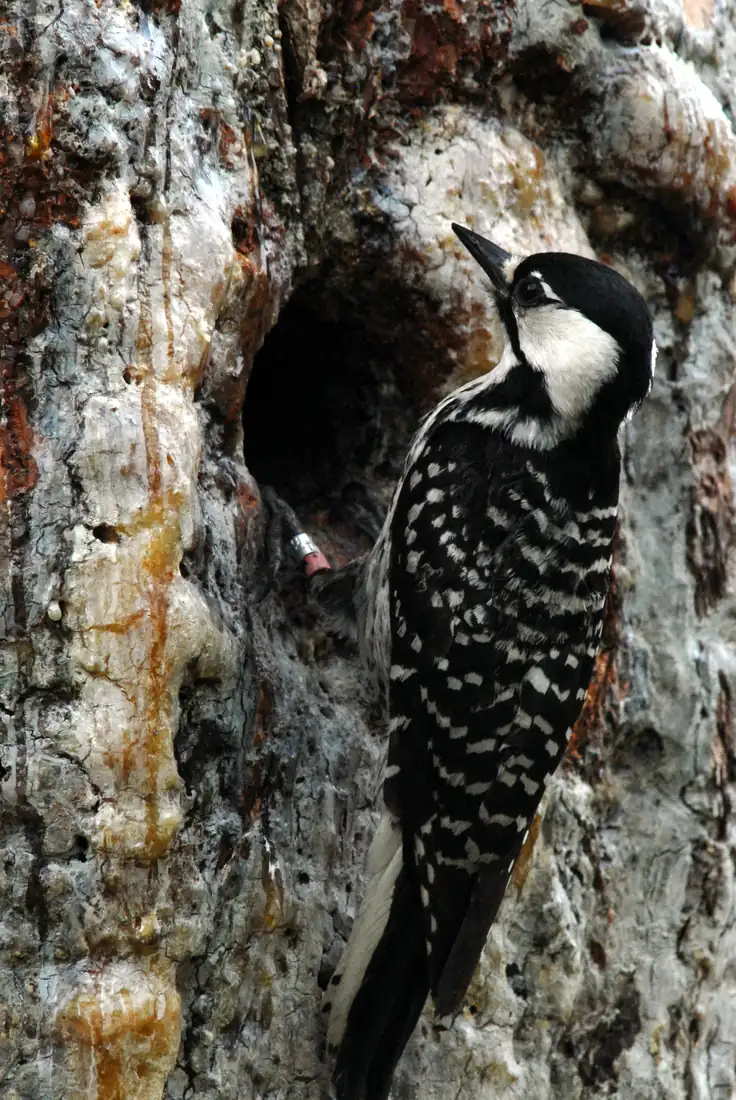
By May the birds that stayed or arrived in April are nesting, and the forests are noisy at dawn. The Oakmulgee Division of the Talladega National Forest, in Bibb County, holds the largest concentration of endangered red-cockaded woodpeckers in Alabama, with more than 100 family groups, though Alabama Birding Trails notes that only several hundred birds are spread over tens of thousands of acres. The birds' breeding season runs from March into late May or early June, when adults stay near their nest cavities, which makes late spring a good time to look.
Go within about 45 minutes of dawn or in the late afternoon, and look for mature, open pine stands with little understory, often recently burned. The cavity trees carry white bands near the ground, and the resin wells around the holes look like candle wax. The birding trail's most reliable stretch is on Forest Service road 745. Many roads are dirt, some need high clearance or are gated seasonally, there are no services and cell coverage is poor, so stop at the Forest Service ranger station on Alabama 5 near Brent first to ask about current conditions.
-
Red-cockaded woodpeckers
Adults stay near nests until late May or early June · Oakmulgee Division, Talladega National Forest, near Eoline and Brent
Scan the white-banded pines from a distance, watch quietly and never approach a cavity tree.
-
Bachman's sparrows and other pine specialists
Singing and breeding in May · The same pine woodlands and their edges
The same birding page lists pine warblers, brown-headed nuthatches, Bachman's sparrows and prairie warblers in the pines, with indigo buntings and chuck-will's-widows along the edges. Chuck-will's-widows call after dark, so a dusk stop gets you the nightjar too.
-
Warblers along the Cahaba
Spring and summer breeding season · River edges at the Cahaba River National Wildlife Refuge
The refuge's birding listing names the prothonotary warbler, Louisiana waterthrush, northern parula, Acadian flycatcher and American redstart along the river and wood thrushes and hooded warblers in the hardwoods, so a lily trip is also a nesting-bird trip.
Which native shrubs bloom in Alabama in May?
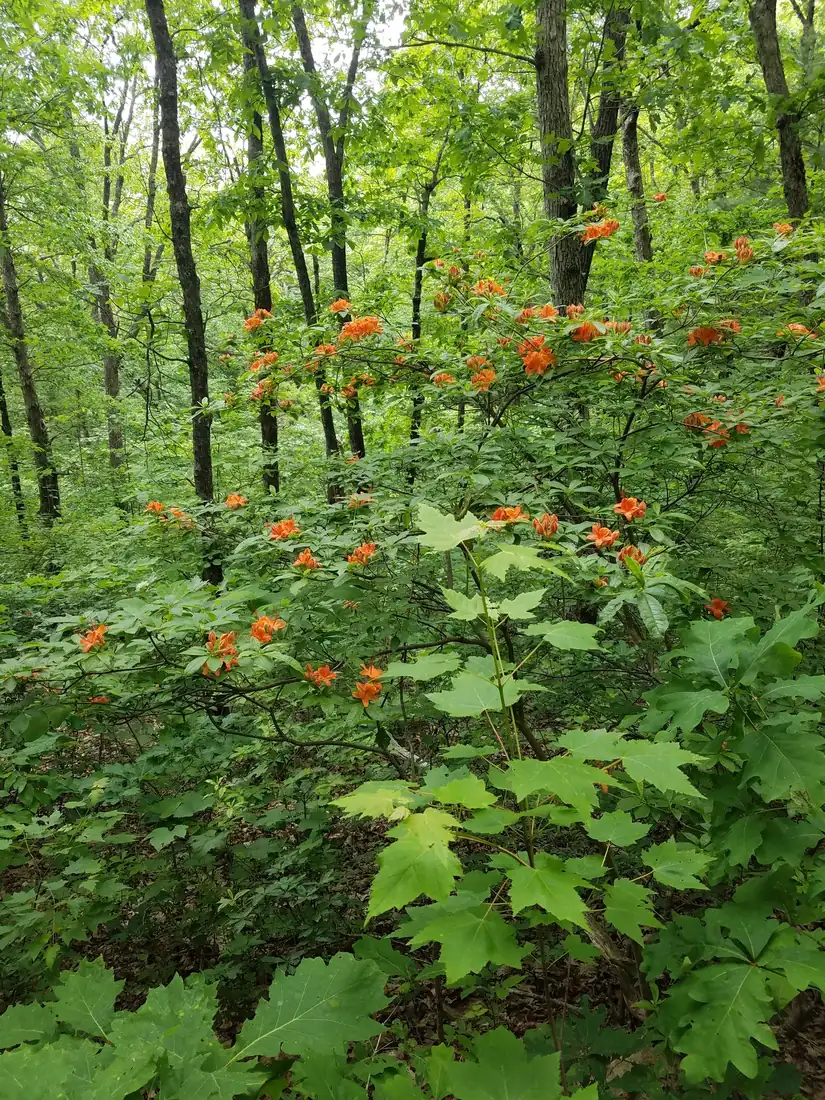
April's showy azaleas are finished, but the second group opens as the woods close in. The Alabama Cooperative Extension System says swamp azalea blooms from mid-May to early June, with slender white tubular flowers, and flame azalea blooms from around late May to early June in shades from orange and yellow to red. The same page puts the summer-blooming plumleaf azalea in July to September.
-
Swamp azalea
Mid-May to early June · Stream edges, bogs and wet woods
Look beside a creek or along the margin of a swampy trail for slender white tubular flowers. Photograph the bush and leave it in place.
-
Flame azalea
Late May to early June · Northern highlands and upland woods
Its flowers run from orange and yellow to red, so two bushes side by side can look nothing alike. Treat it as the azalea to look for at the very end of the month.
-
Oakleaf hydrangea
May through July · Woodlands and gardens across the state
The Alabama Wildlife Federation calls it the official state wildflower, a shrub that stands four to eight feet tall and whose fragrant flower clusters feed butterflies, other pollinators and birds. The dried flower heads hang on through winter.
Keep track of one blooming bush through the month on the Naturalist's Field Journal same place twice plate, with the date you saw the first flower and the date the petals dropped.
What are gopher tortoises, alligators and fish doing in May?
Warm days put the cold-blooded animals in motion, and the water starts to feel like summer. Three things are worth planning around.
-
Gopher tortoises laying eggs
Mainly May and June; hatchlings emerge in August and September · Sandy uplands and ridges in the Coastal Plain, mostly the south
The Encyclopedia of Alabama says each female lays one clutch a year, usually in a sunny spot, sometimes in the sandy apron right outside her burrow. The burrow entrance is shaped like a half-moon, and a burrow can run up to 40 feet long. The tortoise is federally threatened west of the Mobile and Tombigbee Rivers. Stay off bare sand at a burrow mouth, keep dogs away and watch from a distance.
-
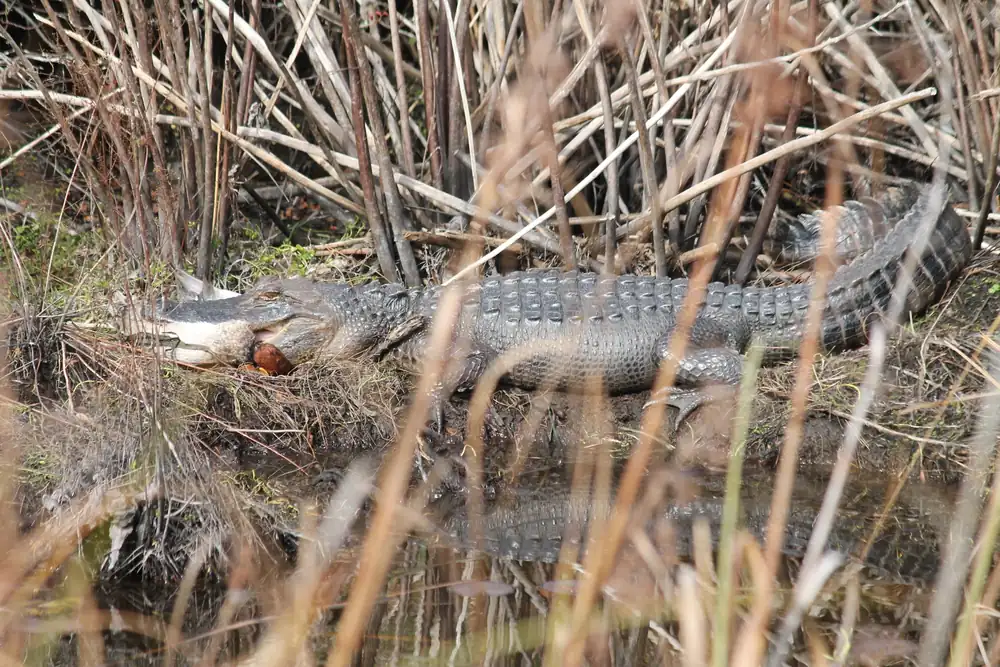
American alligators in the breeding season
Mating April through May; a nest holds 30 to 70 eggs and takes about nine weeks · Freshwater swamps, rivers, lakes and marshes in the south
ADCNR says the female builds a nest of vegetation and mud and covers the eggs with a mound that works as an incubator. Males can reach about 19 feet. Give the animals room, especially near a mound, and keep children and dogs back from the water's edge.
-
Bream beds, bass and the red snapper opener
Bluegill spawn monthly from May through October, often near the full moon; the Flower Moon is May 20 · Ponds, lakes and reservoirs statewide; the Gulf for red snapper
ADCNR's spring fishing tips say reservoir bass anglers do their best in May once most spawning is over, and bluegill bite well at midday because they feed by sight. On the Gulf, the 2026 private-angler red snapper season opened Friday, May 22, seven days a week, with two fish per person and a 16-inch minimum. The 2027 schedule had not been announced as we wrote, so follow the ADCNR Marine Resources Division for the date, and note that anglers 16 and older need a saltwater license plus a reef fish endorsement and that every vessel trip is reported through Snapper Check.
What is May weather like in Alabama, and is tornado season over?
May is the month the heat arrives. In NOAA's 1991 to 2020 normals, the average high reaches 82 degrees at Birmingham and Huntsville, 86 at Montgomery, 87 at Dothan and nearly 85 at Mobile. Nights run from the low 60s in the north to 64 at Dothan, and none of these five airports averages a night at or below 32 °F. Dothan has the most 90-degree afternoons, 9.6 in a normal May, and Birmingham the fewest of the group, 2.9. The Wiregrass is also the driest of the five, with 2.92 inches of rain, while Mobile gets 5.39.
Tornado season does not end with April. The state climatologist's office at the University of Alabama in Huntsville puts April at the top, with about 13.8 tornadoes on average, describes spring as the most active season and ranks November second. It does not publish a single May figure on the page we read, so we will not quote one. It does note that most tornadoes arrive in the afternoon and evening, peaking around 5 p.m. Central standard time, and that a notable number strike overnight when people are asleep. The Encyclopedia of Alabama adds that the tropical storm season is counted from May through October.
| Station | Average high | Average low | Rain and melted snow | Days at or above 90 °F |
|---|---|---|---|---|
| Huntsville | 82.5 °F | 60.2 °F | 4.67 in | 3.9 |
| Birmingham | 82.0 °F | 61.0 °F | 4.91 in | 2.9 |
| Montgomery | 86.0 °F | 61.3 °F | 3.88 in | 6.8 |
| Dothan | 87.2 °F | 64.0 °F | 2.92 in | 9.6 |
| Mobile | 84.9 °F | 63.8 °F | 5.39 in | 5.1 |
Check the weather page before an outing and the cloud forecast for the evening sky. For the newest 90-day outlook maps, open the Climate Prediction Center's outlook page, refreshed each month.
Can Alabama still get a frost in May?
Almost never. At the latest station in the table, Hamilton in the northwest hills, the last freeze is over by April 27 nine years in ten, while the Gulf side finished weeks earlier. NOAA's May normals count zero nights at or below 32 °F at all five airports on the weather table. The rare late cold snap belongs to the high ground along Lookout Mountain and the northern hills. Treat any gardening advice for May as a local call, since the table shows the northern stations finishing weeks after the Gulf side.
| Station | One year in ten | Median | Nine years in ten |
|---|---|---|---|
| Hamilton 3 S (northwest hills) | Mar 26 | Apr 11 | Apr 27 |
| Valley Head 1 SSW (Lookout Mountain) | Mar 20 | Apr 7 | Apr 25 |
| Huntsville International Airport (Tennessee Valley) | Mar 4 | Mar 24 | Apr 8 |
| Birmingham Airport | Feb 28 | Mar 21 | Apr 8 |
| Tuscaloosa Municipal Airport (west-central) | Feb 24 | Mar 16 | Apr 3 |
| Montgomery Airport (Black Belt edge) | Feb 20 | Mar 13 | Mar 31 |
| Dothan Regional Airport (Wiregrass) | Feb 3 | Mar 1 | Mar 21 |
| Mobile (Regional Airport) | Feb 6 | Mar 3 | Mar 21 |
Look up your own town on the Alabama frost page.
How much daylight does Alabama gain in May?
Between 37 and 44 minutes, a slower gain than in April, at about one and a half minutes a day in the north and a little over one in the south. The north gains the most: Huntsville goes from 13 hours 35 minutes on May 1 to 14 hours 19 minutes on May 31, and Fort Payne gains the same 44 minutes. Mobile gains 37 minutes and ends the month at exactly 14 hours. The gain keeps shrinking until the solstice on June 21. Because the clocks changed on March 14, any clock time quoted for May on this page is daylight time.
| City | May 1 | May 31 | Gained | Per day |
|---|---|---|---|---|
| Florence | 13 h 36 m | 14 h 19 m | 43 min | 1.4 min |
| Huntsville | 13 h 35 m | 14 h 19 m | 44 min | 1.5 min |
| Fort Payne | 13 h 34 m | 14 h 18 m | 44 min | 1.5 min |
| Birmingham | 13 h 31 m | 14 h 13 m | 42 min | 1.4 min |
| Tuscaloosa | 13 h 30 m | 14 h 12 m | 42 min | 1.4 min |
| Montgomery | 13 h 27 m | 14 h 08 m | 41 min | 1.4 min |
| Dothan | 13 h 24 m | 14 h 02 m | 38 min | 1.3 min |
| Mobile | 13 h 23 m | 14 h 00 m | 37 min | 1.2 min |
For clock times, use the daylight page.
What can you see in the night sky over Alabama in May?
May has a fine meteor shower at new moon, a Moon with two names and the best evening view of Mercury all year for the northern United States. All times here are Central daylight time (CDT).
-
The Eta Aquariid meteor shower
Active about April 19 to May 28; best mornings May 5, 6 and 7 · Look toward the east-southeast in the last two hours before dawn
SeaSky calls this an above-average year, because the Moon is a hair-thin crescent at the May 6 new moon and the sky stays dark. SeaSky puts the rate at up to 60 an hour in the Southern Hemisphere and about 30 an hour in the Northern, and we would plan on roughly 10 to 30 meteors per hour from Alabama during the pre-dawn stretch. The shower's source point, in Aquarius, climbs above the horizon only an hour or two ahead of the Sun, so our expectation is for better counts in south Alabama than in the north. Go to a dark spot and give your eyes 20 minutes.
-
The Flower Moon, a seasonal Blue Moon
Full on Thursday, May 20, 5:59 a.m. CDT; look the evening of May 19 · Rising in the east near sunset on May 19
Full moons in May are traditionally called the Flower Moon. This one turns full before sunrise, so the best view is the round Moon rising at dusk on May 19, and it looks nearly the same on the evenings before and after. SeaSky counts it as a blue moon in the older, seasonal sense, being the third of the four full moons that fall in this spring. There is no calendar-month blue moon in 2027. The Flower Moon also falls in the middle of the bluegill spawning season.
-
Mercury after sunset
Best evenings May 27 and 28; greatest eastern elongation May 28 · Low in the west-northwest, 45 to 90 minutes after sunset
On May 28 Mercury stands at its widest separation east of the Sun for this apparition, about 23 degrees. Our computations for the central United States make it a good target from about May 12 to June 5, at its brightest near magnitude -0.6 in mid-May. Those timings are approximate for Alabama, and a clear western horizon matters more than the exact minute.
-
Jupiter and the Moon
Evening of May 12; Moon near Mars May 13 · High in the south and southwest after dark
Jupiter is up in the evening, and by our calculation it sets about 7 hours after sunset on May 1. The first quarter Moon passes about 1.2 degrees from it on May 12, with the closest approach in daytime, and then drifts to within about 3 degrees of Mars on May 13. The separations are our own calculations.
-
The Milky Way's core
Moonless windows May 1 to 14 and May 25 to 31, for up to about four hours · Low in the south after full darkness
Our computations for the central United States show the galactic center above the horizon with no Moon and a fully dark sky on those nights. Choose a site well away from the Birmingham and Huntsville glow.
| Phase | Date | Time |
|---|---|---|
| New moon | Thursday, May 6 | 5:58 a.m. CDT |
| First quarter | Wednesday, May 12 | 11:44 p.m. CDT |
| Full moon, the Flower Moon | Thursday, May 20 | 5:59 a.m. CDT |
| Last quarter | Friday, May 28 | 8:58 a.m. CDT |
| New moon | Friday, Jun 4 | 2:40 p.m. CDT |
The moon phase page lists rise and set times by location.
What can Alabama families do outside in May 2027?
- Wednesday, May 5 to Friday, May 7: Eta Aquariid mornings. Set the alarm for the final hours of darkness, bring a blanket and a thermos, and tally the streaks.
- Early May through June: the Cahaba lilies. Flowering usually starts in mid-May and peaks in late May, so plan an evening visit to the refuge. The West Blocton festival is annual, but its 2027 date was not posted when we looked, so check with the festival.
- May 19 and 20: the Flower Moon. Watch it rise at dusk on the 19th.
- May 27 and 28: Mercury low in the west after sunset.
- Monday, May 31: Memorial Day. The holiday brings crowds to the beaches. Keep your distance from nests and flatten sandcastles before you leave.
- Gray bats and dismalites. Sauta Cave's evening emergences run May through September. Dismals Canyon night tours need a phone reservation the week before.
- World Migratory Bird Day. This annual day comes twice a year, and 2026's spring day was May 9, but the organizers had not posted 2027 dates when we looked, so check the day's website or your nearest nature center.
- State park programs. The state parks calendar only showed October 2026 events when we looked, so watch the events calendar for May listings and call the park for registration and fees.
- Citizen science. Log birds in eBird, post blooms and frog calls to iNaturalist, and report turtle tracks to the sea turtle hotline.
The March and April Alabama guides cover the earlier spring, the nature index lists the other states, and a Naturalist's Field Journal keeps your own notes.
Safety notes for May in Alabama
- Hunting. ADCNR's turkey page lists May 3, 2027 as the last day of the spring season in every zone and on the listed public lands, though its zone map was still labeled "proposed" when we looked, so confirm the final regulations before you go. ADCNR's hunter orange page exempts turkey hunters from the orange rule. After May 3, gobbler hunting is over until the fall season.
- Heat. May brings the first 90-degree days, and the National Weather Service says it is never safe to leave a child, disabled person or pet in a parked car. Carry water, rest in shade and plan long hikes for mornings.
- Lightning. The National Weather Service counts about 25 million lightning strikes a year across the country and about 20 deaths. Head indoors at the first rumble of thunder.
- Tornadoes and flash floods. Use more than one way to get warnings, including a weather radio and phone alerts, and follow the warning polygons. The National Weather Service warns that flood water only six inches deep can knock a grown person down, while a foot of current can carry off a car, so never drive or walk into flood water.
- Gulf surf. The Alabama Department of Public Health explains the flags: yellow for medium hazard, red for high hazard, double red meaning the water is closed, and purple for jellyfish and stingrays. Check the flag and a beach report before wading, and if a rip current catches you, swim parallel to the shore.
- Beach nests. Keep away from sea turtle nests and nesting shorebirds, and leave caves closed to the public alone. Gray bat colonies are protected and cave entry is not allowed.
- Ticks. The CDC puts tick season at April through September. Its advice: repellent with an EPA registration, permethrin-treated clothing, ten minutes of high dryer heat for the clothes, a quick shower and a thorough look over your body afterward.
- Snakes. Six venomous kinds live in Alabama, ADCNR reports: copperhead, cottonmouth, timber and pigmy rattlesnakes, eastern diamondback and coral snake. Watch your hands and feet, especially near the water, and leave snakes alone.
- Young animals. Alabama law protects most wild birds and mammals, and ADCNR asks you to leave apparently abandoned young animals exactly where they are, since a parent is usually close.
- Slick shoals. If you wade a river to see the lilies, wear shoes with grip, test each step and skip it when the water is high.
Sources (36)
- Encyclopedia of Alabama: Cahaba Lily
- Alabama Birding Trails: Cahaba River National Wildlife Refuge
- U.S. Fish and Wildlife Service: Cahaba River National Wildlife Refuge
- ADCNR: What to Know About Sea Turtles
- ADCNR: Share the Beach's Training for Sea Turtle Monitoring
- Gulf Shores and Orange Beach: Nesting Shorebirds on Alabama's Beaches
- Audubon magazine: Birding in Alabama
- U.S. Fish and Wildlife Service: Bon Secour National Wildlife Refuge
- ADCNR: Bat Watching in Alabama
- Dismals Canyon: Dismalite Guided Night Tours
- Alabama Birding Trails: Red-cockaded Woodpecker Colony
- Alabama Extension: Native Azaleas for Alabama
- Alabama Wildlife Federation: Dig into Plants, Oakleaf Hydrangea
- Encyclopedia of Alabama: Gopher Tortoise
- ADCNR: American Alligator
- ADCNR: Spring Fishing Tips
- ADCNR: Alabama Red Snapper Season 2026
- NOAA NCEI: 1991-2020 monthly normals, Huntsville, Birmingham, Montgomery, Dothan and Mobile
- Alabama Office of the State Climatologist: Understanding Tornadoes in Alabama
- Encyclopedia of Alabama: Alabama's Climate
- NOAA Climate Prediction Center: 90-day outlooks
- U.S. Naval Observatory: 2027 moon phases
- SeaSky: Astronomy Calendar 2027
- World Migratory Bird Day
- Alabama State Parks: Events calendar
- Alabama State Parks: Gulf State Park events and programs
- ADCNR: Spring turkey season 2027
- ADCNR: Hunter orange requirements
- ADCNR: Leave fawns in the wild
- ADCNR: Venomous snakes
- CDC: Preventing tick bites
- National Weather Service: Heat safety
- National Weather Service: Lightning
- National Weather Service: Turn Around Don't Drown
- Alabama Department of Public Health: Know Before You Go, the Beach Flag Warning System
- Photos via Wikimedia Commons; licenses and photographers are credited under each picture
