What to look for in nature in Alabama this November
November is when Alabama changes hands. The sandhill cranes that summer around the Great Lakes come down to the Tennessee River at Wheeler, ducks pile onto the reservoirs, and a few western hummingbirds turn up at Gulf Coast feeders instead of flying to Mexico. The ridge-top hardwoods finish their show in the first week while the cypress in the delta is only starting to rust, most of the state sees its first freeze, and the clocks fall back on the first morning of the month. The guide below goes through the state region by region, giving a typical window and a source for every date.
Other months in Alabama: October, December.
Start here
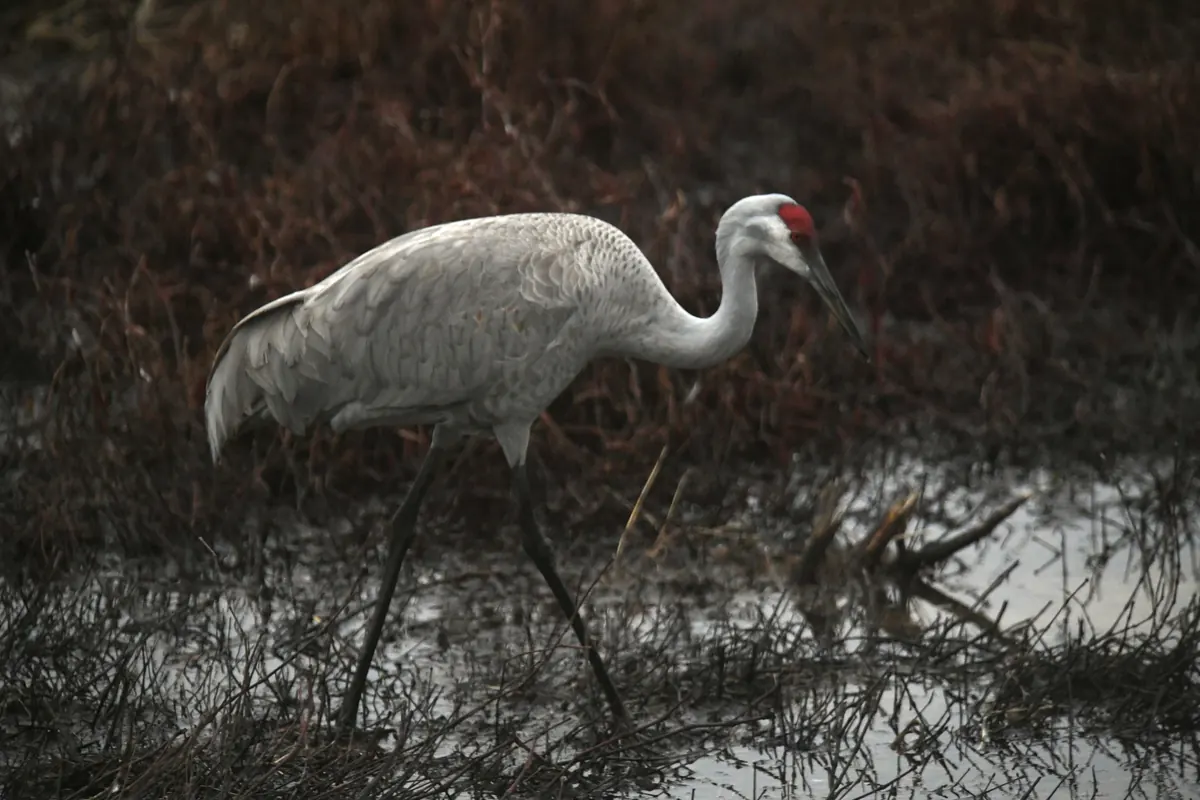
- Go and see the cranes come in. Sandhill cranes begin landing at Wheeler National Wildlife Refuge, between Decatur and Huntsville, in early to mid-November, and their numbers keep building toward a peak around New Year. The visitor center grounds are open Tuesday to Saturday, 9 a.m. to 5 p.m., through February; midday is when the most birds are in view.
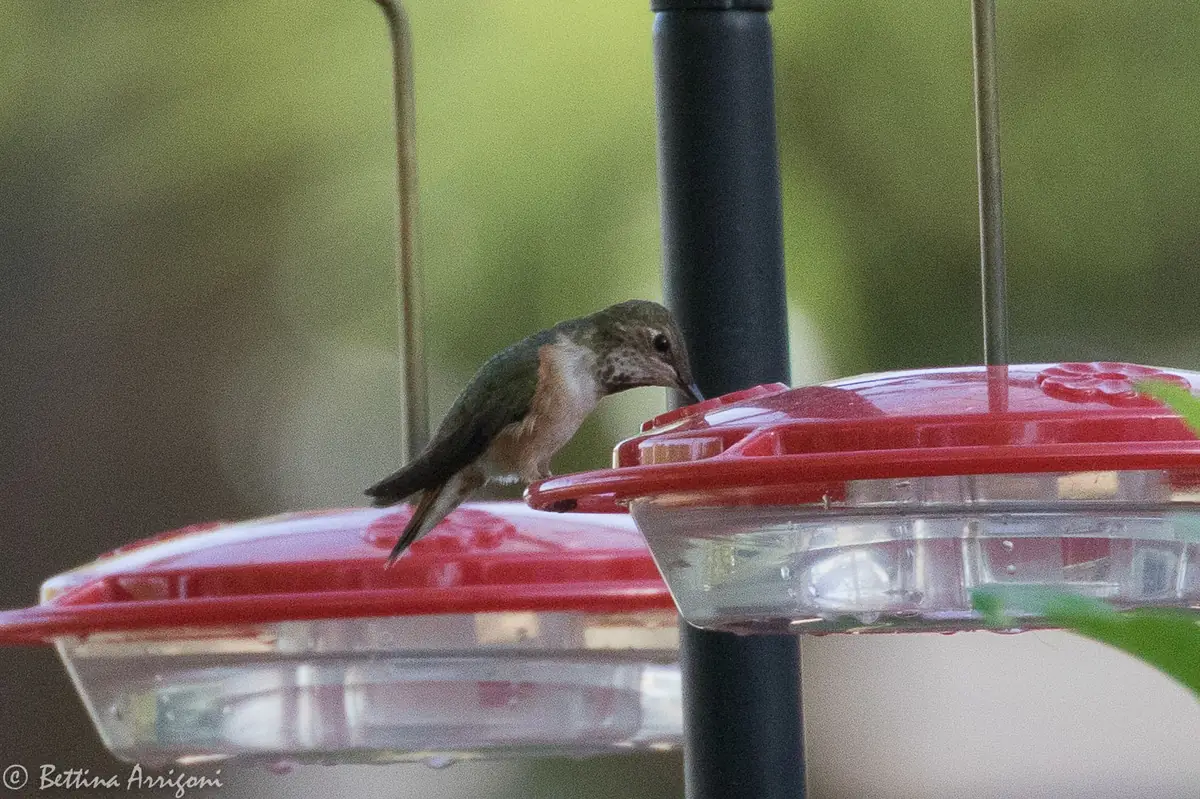
- Leave one hummingbird feeder up. Rufous and black-chinned hummingbirds from the West winter in small numbers in south Alabama. Keep a clean feeder out, and if a hummingbird visits between November 15 and March 1, report it to the Banding Coalition of the Americas’ Project HUMMER.
- Leonids, then a supermoon. The Leonid meteors are best in the dark hours before dawn on Wednesday, November 18, after the half-lit Moon has gone down. A week later the Beaver Moon, full at 8:53 a.m. Central on Tuesday the 24th, rises big and round at dusk on Monday the 23rd and again on Tuesday.
In the Naturalist’s Field Journal, the Wheeler cranes earn their own daily field log entry, with the date you first hear that rattling bugle overhead; a winter hummingbird goes under “birds I have seen” along with the feeder it visits. Press a copper cypress spray or a beech leaf onto the colours of the day plate and sketch a persimmon on seeds, pods and cones; the Leonid count goes on dusk and dawn watch. The same place twice plate fits one ridge view, photographed in the first week of November and again at the end.
Regions used below: Tennessee Valley and the northwest hills; Lookout Mountain and northeast Alabama; Birmingham and the Cheaha highlands; Montgomery and the Black Belt; The Wiregrass; Mobile Bay and the Gulf Coast.
When do sandhill cranes and ducks arrive in Alabama?
Through November, mostly in the north and along the big rivers. The Tennessee River reservoirs and their refuges fill with wintering birds from the Midwest and Canada, and each strong cold front tends to bring a new wave. Songbird migration is essentially over by now; this is the month of big birds.
-
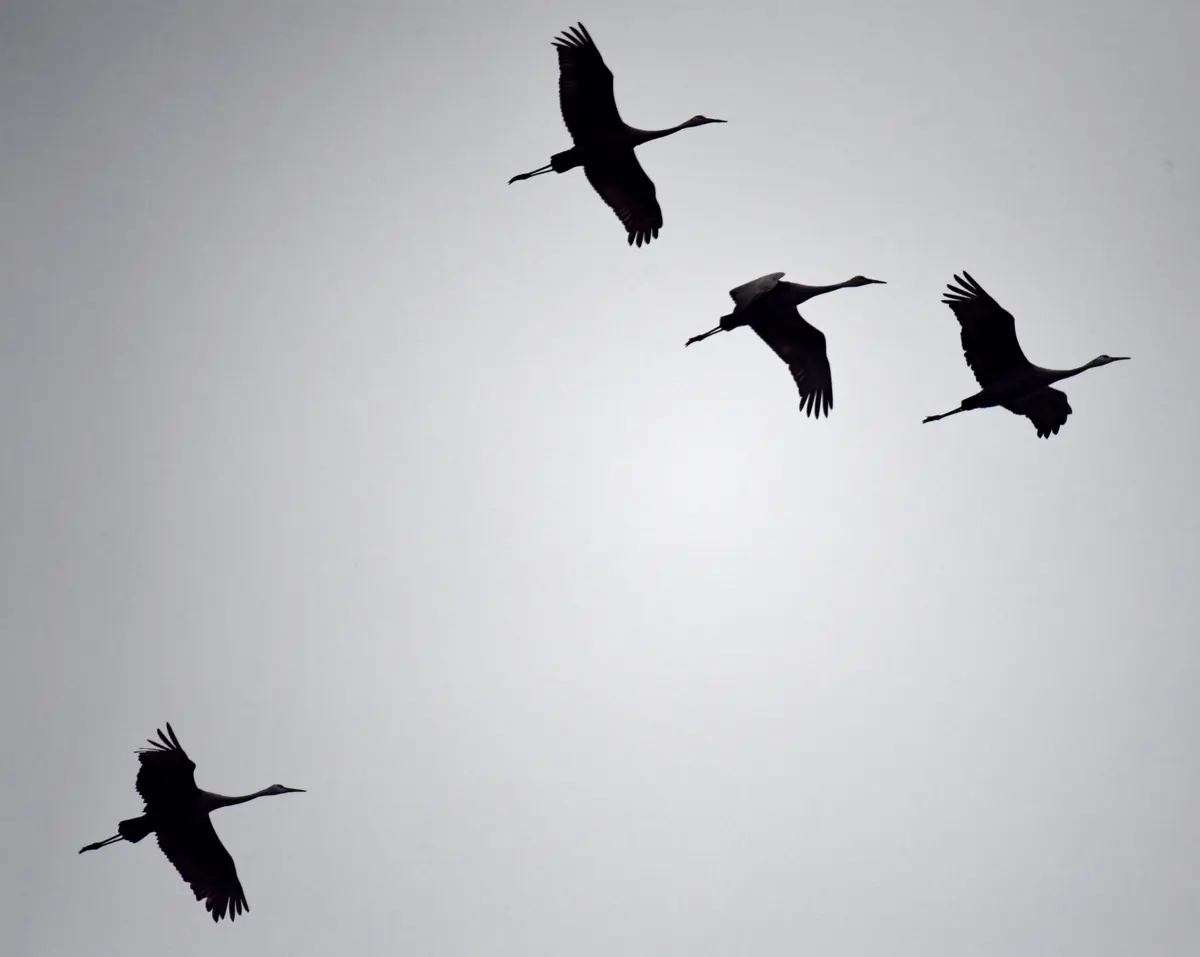
Sandhill cranes at Wheeler
First arrivals early to mid-November; peak late December into early January; most gone by mid-February · Wheeler National Wildlife Refuge, on Wheeler Lake between Decatur and Huntsville
The Wheeler Wildlife Refuge Association says the refuge’s sandhill cranes nest around the Great Lakes and in southern Canada and start showing up around the start of November; its visitor FAQ puts the average arrival in mid-November. The flock is a recent and fast-growing one: cranes first wintered here in the early 1990s, the refuge counted about 20,000 in the winter of 2017–18, and the 2023–24 season set a record of more than 30,000. The cranes spend the night at a roost, come in near the visitor center after sunrise and leave again in late afternoon, so the middle of the day is the best time and you do not need to be there at dawn. Listen first: a flock’s rolling, wooden bugling carries a long way, often before you can pick out the birds. Adults stand about four and a half feet tall, gray with a red crown.
-
Ducks, geese and a new sanctuary at Wheeler
Numbers rise all month; the duck peak usually comes in January · Wheeler refuge ponds, sloughs and the Tennessee River
The refuge’s own month-by-month notes say waterfowl and crane numbers keep climbing through November even as the songbirds leave, and that big gatherings of great blue herons and hawks are common then. New this year: starting Sunday, November 15, 2026, and lasting through February, the refuge shuts a 335-acre block as a quiet sanctuary for the ducks, and about a mile of road with it; walkers and cyclists keep the surrounding trails. The visitor center and the Wildlife Observation Building, which overlooks a pond beside it, are the easiest places to watch without disturbing anything.
-
Eufaula National Wildlife Refuge
Waterfowl build from November into winter · On both banks of the Chattahoochee River, about 7 miles north of Eufaula
In the Wiregrass, the 11,184-acre Eufaula refuge straddles the Alabama–Georgia line on Lake Eufaula and was set aside for wintering waterfowl. Next door, Lakepoint State Park runs naturalist programs through the month, including an evening walk on November 13 about how alligators slow down and dig in for the cold.
-
Bald eagles on the big lakes
Late November onward · Lake Martin, Lake Guntersville, Gulf State Park
The state parks schedule eagle watching as the weather cools: Wind Creek State Park, on Lake Martin near Alexander City, holds a long-range eagle scan from its clubhouse at 10 a.m. on Saturday, November 28, and Gulf State Park leads an “Eagles and Ecosystems” walk on its Eagle Loop trail on November 12 and November 30. Scan the tops of tall dead pines along the shore; an adult’s white head shows from far off, while young eagles are mottled brown for their first four or five years.
If you visit Wheeler more than once, count the cranes you can see from the observation building each time and write the number in your daily field log. By January your own tally will show the flock building.
Where are the leaves still turning in Alabama in November?
Everywhere, but in a different order than in October. The northeastern ridge tops usually reach their best as the month opens and stand bare by Thanksgiving, while the coastal plain and the river swamps of the south keep coloring late. Alabama Tourism’s 2026 Fall Color Trail forecast map runs weekend by weekend all the way to November 30, which is a fair measure of how long the season lasts here.
-
The last of the ridge-top color
First week or so of November · Cheaha State Park, DeSoto State Park, Little River Canyon, Monte Sano
By early November the poplars and maples on the high ridges are past peak and the oaks take over in rust, red-brown and dull gold, often lasting into the second week. Cheaha State Park runs a guided Fall Foliage Hike from the Bald Rock Boardwalk trailhead at noon on Saturday, November 7. A windy cold front can strip a ridge in one night, so go early in the month and check the forecast map first.
-
Copper cypress in the Mobile-Tensaw Delta
Late November, around Thanksgiving · Meaher State Park boardwalk, Spanish Fort; delta creeks and bayous
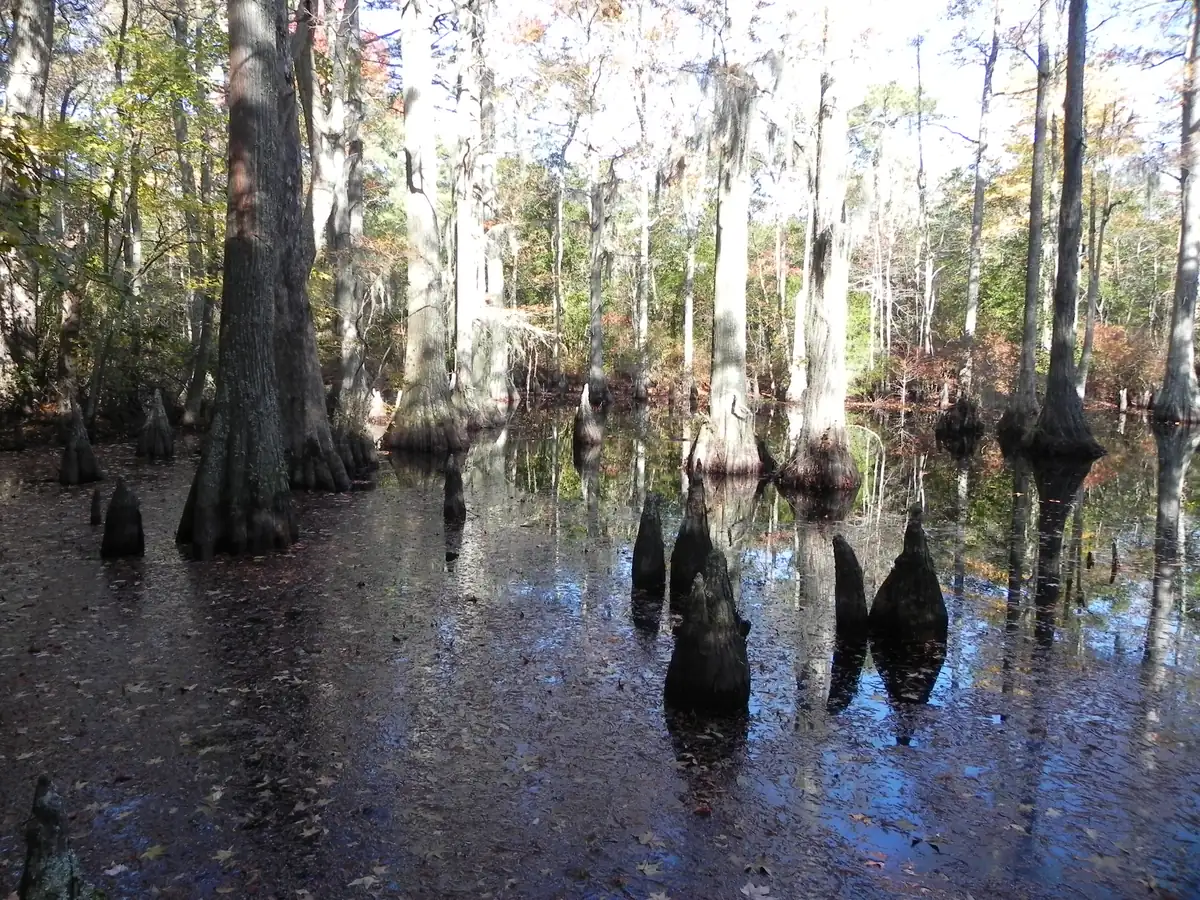
Bald cypress is that odd thing, a needle-bearing tree that goes bare in winter, and before it does, the soft green sprays turn copper and then a warm brick red. The Lady Bird Johnson Wildflower Center times that “terra cotta” color to around Thanksgiving. The Mobile-Tensaw Delta, which Alabama State Parks calls the second-largest delta in the lower 48 states, is the place to see it; the boardwalk at Meaher State Park, on the Causeway at Spanish Fort, reaches into the marsh, and the gate fee is $3 a person. A kayak up any delta creek shows you the knees, the cone-shaped roots that stick up out of the water around each tree.
-
Beeches and oaks that keep their leaves
From November into spring · Ravines and stream slopes statewide
Once the other trees are bare, look for the pale tan leaves still rattling on young American beeches and on many oaks. The Wildflower Center notes that beech leaves turn copper in fall and hold on through most of the winter, a habit called marcescence. It is easiest to see on small understory beeches in shady hollows, which glow almost white when the low sun comes through them.
-
Persimmons ripen
Fruit colors late September to November; best after the first frost · Old fields, fencerows and woods edges statewide
Wild persimmons hang orange on bare branches after the leaves fall. Unripe fruit is so full of tannin that it puckers the mouth, and the Wildflower Center notes that it is not good to eat until frost or a run of cold nights has softened it. Foxes, opossums, raccoons, deer and many birds eat them first, and fresh scat full of flat brown persimmon seeds under a tree tells you who has been visiting.
For November, one tree is enough: draw a beech or a cypress twig once a week on the tree through the seasons plate and watch it change.
Which birds come to Alabama feeders in winter?
A short list of newcomers joins the cardinals, chickadees and titmice. White-throated sparrows, juncos in the north, yellow-rumped warblers and kinglets arrive through the month. The ones people ask about most are the hummingbirds that are not supposed to be here, and whether the northern finches will come south.
-
Winter hummingbirds
Reported November 15 to March 1; most turn up in December to February · Feeders and late flowers, mainly on the Gulf Coast
Each winter a scattering of hummingbirds, mostly western species, fly east instead of south and spend the cold months in the Southeast. ADCNR lists the rufous hummingbird as rare to uncommon in winter in the Gulf Coast region and rare inland. Long-term banding shows how regular they are: a study of hummingbirds wintering in south Alabama and north Florida from 2008 to 2018 banded nearly 1,900 birds of 11 species, roughly half of them rufous, with ruby-throated and black-chinned the next most common. The Banding Coalition of the Americas, based in Foley, asks “Hummer Hosts” to keep at least one feeder out and to report any hummingbird that visits between November 15 and March 1; its Project HUMMER page lists a bander to contact for each state. A feeder does not hold a bird back from migrating; it feeds one that is already in the area.
-
The 2026–27 winter finch forecast
Through the winter · Feeders and pine and sweetgum woods statewide
Published on September 25, the Finch Research Network’s annual outlook says not to expect big irruptions of any of the finches in the southeastern states this winter. Pine siskins may make a small to moderate flight toward the Southeast, so watch the thistle feeder for streaky, sharp-billed goldfinch look-alikes with yellow in the wings. Any purple finch flight will be a late, small one at best, and good cone crops in the North should keep most red-breasted nuthatches there.
-
Project FeederWatch
November 1, 2026, to April 30, 2027 · Your own yard
The Cornell Lab’s FeederWatch season opens on November 1. Choose two consecutive count days, as often as once a week, write down the biggest flock of each kind you see together, and post the numbers online; a participation fee applies.
Note each new arrival under “birds I have seen” with the date and the weather. In a few years you will know your yard’s first junco or kinglet date as well as your own birthday.
What is happening on the Alabama coast in November?
-
Flounder: the month of no harvest
Closed November 1–30 · All Alabama waters
Southern flounder pour out of Mobile Bay and the coastal lagoons through the passes as the water cools, heading to deeper Gulf water to spawn, and ADCNR’s regulations close flounder season for the whole of November to let them go. Anglers can still fish for red drum, with a 16- to 26-inch slot and a limit of three, and speckled trout. If a flounder comes up on the line this month, slip it back quickly; from December 1 the limit is again five fish of at least 14 inches.
-
Gulf State Park programs
Through November · Gulf State Park, Gulf Shores
The park’s naturalists lead a guided walk on the saltwater pier on November 13 and November 20 at 9 a.m., a beach walk on coastal plants and animals on November 3 and 16, and a live birds of prey program at the nature center on November 23. Most need registration through the state parks’ program calendar.
What are deer, salamanders and alligators doing in Alabama in November?
-
Deer: rubs, scrapes and an early rut in some herds
Signs build all month; most of the state breeds later · Statewide
Alabama’s deer are famous for a late and uneven rut. ADCNR says research has found average conception dates around Thanksgiving in some herds, and in mid-December, early January or even early February in others, with most of the state peaking in mid- to late January. November is when bucks mark their ground: look for saplings with the bark scraped raw at knee to waist height, and bare, pawed patches of soil under an overhanging branch, which bucks scent with their foreheads and urine. Lakepoint State Park, in Eufaula, has a family program on buck behavior at 5:30 p.m. on November 13.
-
Marbled salamanders on the move
October and November, on rainy nights · Dry pond basins and low spots in hardwood forests statewide
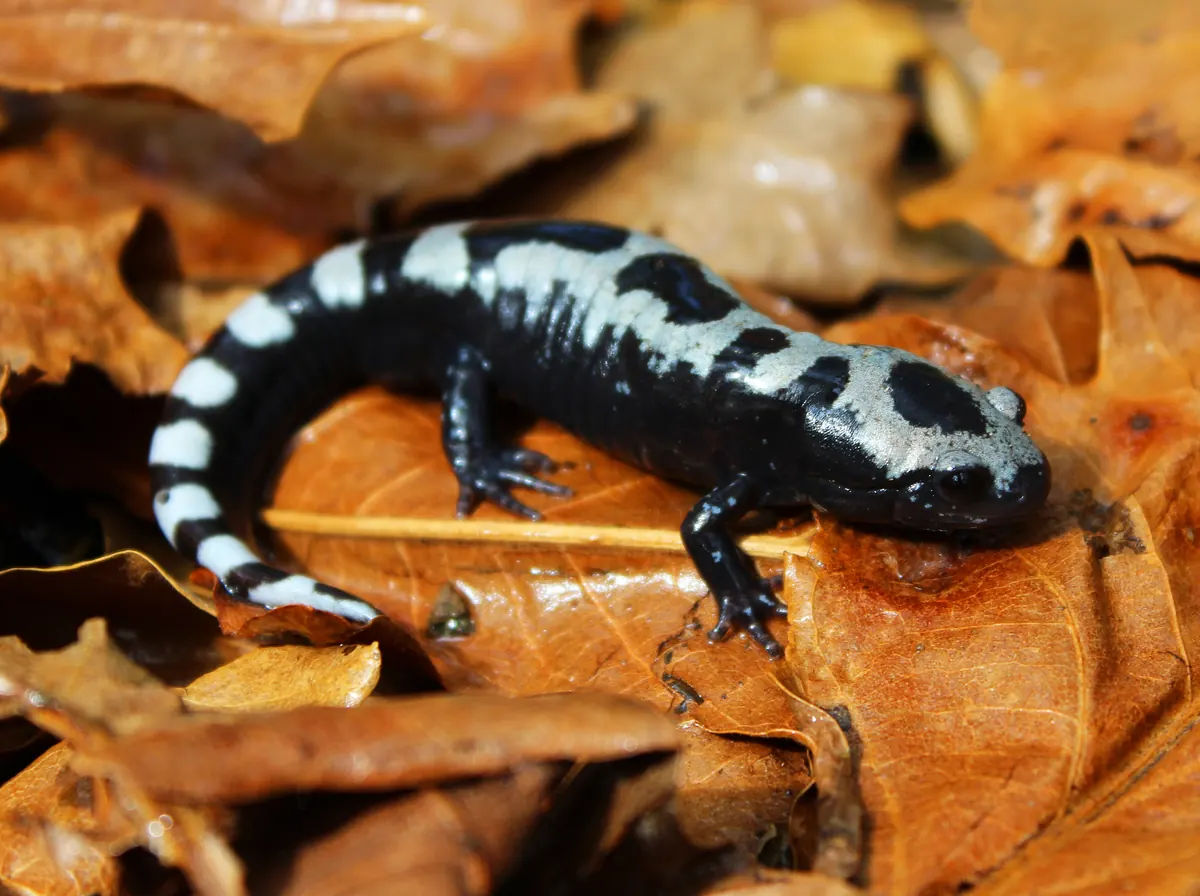
Most salamanders breed in spring, but the marbled salamander breeds in the fall. ADCNR says Alabama’s marbled salamanders mate in October and November, and the female lays her eggs on dry ground in a hollow that will flood later, then curls around them to keep them damp until winter rains fill the basin; the eggs hatch within a day or two of going under water. Stout, black and three to five inches long, it wears bold white bands if male and silvery-gray ones if female. Look on warm, wet nights, and if you lift a log, put it back exactly as it was.
-
Alligators slow down
As water temperatures fall · Lake Eufaula, the Mobile-Tensaw Delta and southern lakes and swamps
As the water cools, alligators eat less and less and spend sunny afternoons basking on banks. Lakepoint State Park’s naturalists describe how they also dig “gator holes” to wait out the cold, and on a mild winter day one may still haul out to bask.
Track a deer rub line or a salamander pond on the reading the signs plate, with the date, the weather and what you found.
When does Alabama usually get its first freeze?
For most of the state, in November. By the NOAA 1991–2020 records below, the cold hollows of the northwest hills, Lookout Mountain and rural east-central Alabama have usually had their first 32 °F night before the month begins: Hamilton and Camp Hill on a median date of October 27 and Valley Head on October 30. The cities follow in the first half of November: Huntsville on November 8, Birmingham on November 11, Tuscaloosa on November 12 and Montgomery on November 13. The Wiregrass and the coast are still waiting: Dothan’s median is November 24 and Mobile’s November 25, and in one year in ten those two get to about Christmas without a freeze. Low spots in the country, where cold air drains and pools on calm nights, often freeze a week or more before the airport does.
| Station | One year in ten | Median | Nine years in ten |
|---|---|---|---|
| Hamilton 3 S (northwest hills) | Oct 15 | Oct 27 | Nov 10 |
| Valley Head 1 SSW (Lookout Mountain) | Oct 18 | Oct 30 | Nov 12 |
| Huntsville International Airport (Tennessee Valley) | Oct 27 | Nov 8 | Nov 25 |
| Birmingham Airport | Oct 30 | Nov 11 | Dec 1 |
| Camp Hill 2 NW (east-central) | Oct 16 | Oct 27 | Nov 10 |
| Tuscaloosa Municipal Airport (west-central) | Oct 30 | Nov 12 | Dec 1 |
| Montgomery Airport (Black Belt edge) | Oct 31 | Nov 13 | Dec 1 |
| Dothan Regional Airport (Wiregrass) | Nov 7 | Nov 24 | Dec 24 |
| Mobile (Regional Airport) | Nov 8 | Nov 25 | Dec 22 |
Look up the station closest to you on our frost and freeze dates for Alabama. Bring in tender potted plants on the first clear, still evening with a forecast low in the mid-30s; collards, kale and turnips taste sweeter after a frost.
How much daylight does Alabama lose in November?
Close to three-quarters of an hour up north, and nearer half an hour by the Gulf. From November 1 to 30, Huntsville and Florence each lose 45 minutes of daylight, Birmingham 43, Montgomery 41 and Mobile 38, and by month’s end Huntsville is down to exactly 10 hours. The bigger shock is the clock. On Saturday, October 31, Birmingham’s sun sets at 5:56 p.m.; on Sunday, after the change back to standard time at 2 a.m., it sets at 4:55. By November 30 sunset is at 4:39 in Birmingham, 4:35 in Huntsville and 4:50 in Mobile, while sunrise, which jumped an hour earlier, creeps back from 6:06 to 6:33 a.m. in Birmingham. Morning walkers get light back for a few weeks; evening walkers lose it.
| City | Nov 1 | Nov 30 | Lost | Per day |
|---|---|---|---|---|
| Florence | 10 h 46 m | 10 h 01 m | 45 min | 1.6 min |
| Huntsville | 10 h 45 m | 10 h 00 m | 45 min | 1.6 min |
| Fort Payne | 10 h 46 m | 10 h 03 m | 43 min | 1.5 min |
| Birmingham | 10 h 49 m | 10 h 06 m | 43 min | 1.5 min |
| Tuscaloosa | 10 h 50 m | 10 h 08 m | 42 min | 1.4 min |
| Montgomery | 10 h 53 m | 10 h 12 m | 41 min | 1.4 min |
| Dothan | 10 h 56 m | 10 h 17 m | 39 min | 1.3 min |
| Mobile | 10 h 57 m | 10 h 19 m | 38 min | 1.3 min |
Type a town from Florence to Foley into our daylight calculator for its daily sun times.
What is November weather like in Alabama, and what does El Niño mean for the winter?
Cooler, cloudier and wetter than October. By NOAA’s 1991–2020 normals, November averages 4.23 inches of rain at Birmingham, 4.25 at Huntsville, 3.85 at Montgomery and 4.60 at Mobile, up from October at all four. Average highs fall to about 64 °F at Huntsville and 65 °F at Birmingham and about 70 °F at Montgomery and Mobile, and average lows to 41 °F at Huntsville, 43 °F at Birmingham and Montgomery and 48 °F at Mobile. Fronts come every few days, so one week can bring a 75-degree afternoon and the next a hard frost.
November is also Alabama’s second tornado season. In the Birmingham weather office’s database of Alabama tornadoes back to 1794, November has 318, behind only April, March and May and more than twice October’s 134. The same strong cold fronts that bring the cranes can bring lines of storms, often at night. Keep a weather radio or phone alerts on through the month, and know where you would shelter.
Then there is the Pacific, where the odds now favor a very strong El Niño: the federal Climate Prediction Center’s update of September 10 put them above nine in ten for a very strong event this winter. Alabama’s Office of the State Climatologist, at the University of Alabama in Huntsville, explains why that matters: El Niño shifts the jet stream south and sends more storm systems along the Gulf from late fall to early spring, with the effect clearest from December through February. Averaged over all El Niño events since 1950, the state’s November-to-March season has run roughly 2 °F cooler and 1 to 3 inches wetter than normal. In the seven strong or very strong events, south Alabama averaged more than 6 inches above normal. The climatologists stress that this is a tilt of the odds: the 2006–07 drought came during an El Niño. The federal winter outlook for Alabama and everywhere else arrives on October 15, posted on the CPC’s seasonal outlook page.
When a front is on the way, the current conditions page shows the forecast and radar for where you are.
What can you see in the night sky over Alabama in November?
-
The Leonids
Best before dawn on Wednesday, November 18; also the mornings of the 17th and 19th · Look high in the east and south after midnight
The International Meteor Organization puts this year’s Leonid peak on November 17, with about 15 meteors an hour under ideal skies and no outburst expected. The half-lit Moon goes down shortly after midnight, and Leo, where the meteors seem to come from, rises around 11 p.m. to midnight and climbs until dawn, so the dark hours from about 1 a.m. to the first light around 5:30 are the ones to watch. Leonids strike the air at tremendous speed, and the bright ones sometimes paint a faint smoky line that lingers after the flash.
-
The Taurids and their fireballs
Southern Taurids peak about November 5; Northern Taurids about November 12 · High in the sky most of the night
Both Taurid streams are debris from Comet Encke. Neither gives more than about 5 to 10 an hour, yet their meteors drift slowly, and a Taurid fireball can light the yard. The new moon of November 9 leaves the nights between the two peaks dark.
-
The Beaver Moon, a supermoon
Evenings of Monday, November 23, and Tuesday, November 24 · Rising in the east-northeast around sunset
The Moon is full at 8:53 a.m. Central on Tuesday the 24th and reaches perigee about 30 hours afterward, so this is a modest supermoon, slightly bigger and brighter than average. Late on Monday the 23rd, and on toward Tuesday’s dawn, it slides close by the Pleiades, but moonlight will wash out all but the brightest of the Seven Sisters. December’s full moon, on the 23rd, is the closer one.
-
A crowded morning sky
Before dawn all month · East and south before sunrise
Venus is now a morning object, a little higher at each dawn, and it reaches its greatest brilliancy around November 24 to 27. Jupiter and Mars ride together in Leo: on the mornings of Sunday the 15th and Monday the 16th the two sit about one degree from each other, both inside a single binocular field. Low in the east-southeast, Mercury adds itself to the lineup on the best mornings, roughly November 18 to 25, in the brightening dawn. After dusk the evening sky offers just one bright planet, Saturn, in the south. Uranus is at opposition on November 25, just within reach of binoculars near the Pleiades for anyone with a star chart and dark skies.
| Phase | Date | Time |
|---|---|---|
| Last quarter | Sunday, Nov 1 | 2:28 p.m. CST |
| New moon | Monday, Nov 9 | 1:02 a.m. CST |
| First quarter | Tuesday, Nov 17 | 5:48 a.m. CST |
| Full moon, the Beaver Moon | Tuesday, Nov 24 | 8:53 a.m. CST (looks full the evenings of Nov 23 and 24) |
| Last quarter | Tuesday, Dec 1 | 12:08 a.m. CST |
Clouds come with the fronts this month, so check sky cover for tonight before setting an alarm, and use the Moon phase calendar to time moonrise where you live.
What can Alabama families do outside in November 2026?
- Sunday, November 1: clocks fall back an hour. Sunrise comes earlier for a few weeks, and the evening walk moves into the dark. That afternoon Rickwood Caverns State Park, near Warrior, has a Junior Ranger program on bats at 1 p.m.
- Friday, November 6: an Owl Prowl at Monte Sano State Park in Huntsville, a guided night hike from the main hikers’ parking lot at 6 p.m.
- Saturday, November 7: two ridge-top outings. Cheaha State Park’s Fall Foliage Hike leaves the Bald Rock Boardwalk trailhead at noon, and Alabama Audubon’s free all-day field trip goes to Little River Canyon near Fort Payne for late raptors, fall birds and the color.
- Friday, November 13: Alabama Audubon speaker night at UAB’s Sterne Library in Birmingham (free, 6 p.m.), with Florida birder and photographer Tamerra Jones; at Lakepoint State Park, evening programs on alligators and on buck behavior start at 5:30.
- Saturday, November 14: Black Belt birding with Alabama Audubon at the Marion Fish Hatchery and Perry Lakes Park, 7 a.m. to noon (fee).
- Sunday, November 15: beginner birding. Oak Mountain State Park’s Bird Nerd Basics class and guided walk starts at 10 a.m., and Wind Creek State Park teaches animal track identification on a noon hike.
- Before dawn, Wednesday, November 18: the Leonids, best after about 1 a.m.
- Saturday, November 21: tracks, trees and moths. Cheaha’s “Animal Signs: Tracks & Scat” (1 p.m.), Chewacla State Park’s autumn tree identification (1 p.m.), Rickwood Caverns’ “November Notions” seasonal-change hike (2 p.m.) and a night insect program at Lake Guntersville (6:30 p.m.).
- Monday and Tuesday, November 23 and 24: the Beaver supermoon rising at dusk.
- Friday, November 27: get outside after Thanksgiving. DeSoto State Park staff lead a Trail Trekker hike along the Little River at 10 a.m.
- Saturday, November 28: eagle watch at Wind Creek State Park on Lake Martin, 10 a.m.
- Citizen science. Start Project FeederWatch on November 1, report winter hummingbirds to Project HUMMER from November 15, enter a crane count from Wheeler in eBird, and put a CoCoRaHS rain gauge out for the wetter months ahead.
Times and dates come from the Alabama State Parks and Alabama Audubon calendars as of early October; most programs need registration, some charge a fee, and park entry fees apply, so confirm before you drive. The rest of the country, month by month, is covered in our seasonal nature guides, and for a place to keep it all, see the Naturalist’s Field Journal.
Safety notes for November in Alabama
- Gun deer season opens. Zones D and E go first: youth gun hunting October 30 to November 2, muzzleloaders and air rifles November 2–6, then the regular gun season from November 7. Everywhere else (Zones A, B, C and the CWD Management Zone) youth hunters get November 13–16, muzzleloaders November 16–20, and the general gun opener is Saturday, November 21. Archery season is open statewide.
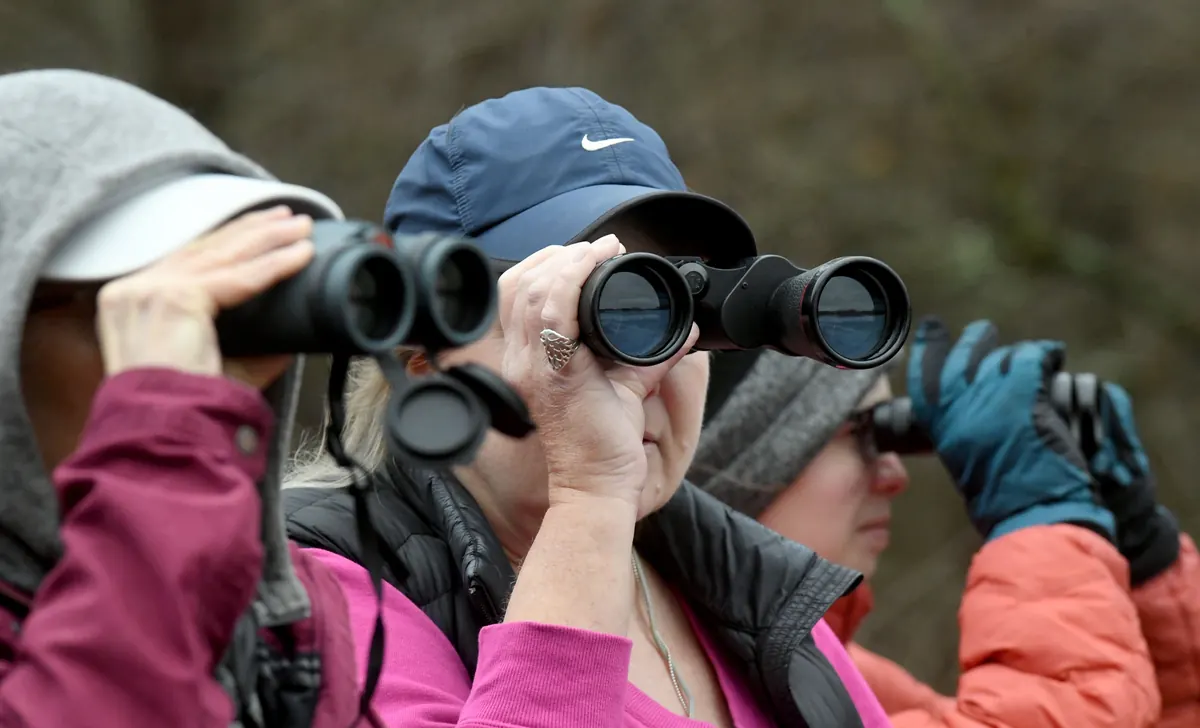
- Hunter orange or pink. While any firearm deer season is under way (the youth and muzzleloader weeks count), ADCNR makes every hunter, whatever the quarry, display a solid patch of hunter orange or fluorescent pink measuring 144 square inches or larger, or wear a full-size cap in one of those two colors, so it can be seen from every side. Hunters of turkey and migratory birds, night hunters of raccoon, fox and opossum, and hunters in enclosed stands or stands 12 feet or more up are exempt. If you walk WMA or national forest trails this month, borrow the hunters’ habit: a bright orange hat for you, an orange vest for the dog.
- Waterfowl and cranes. ADCNR lists a youth, active military and veteran waterfowl day on November 21 and duck and goose hunting on November 27 and 28 before the main season resumes December 5, noting the dates depend on the final federal framework. A permit-only sandhill crane season opens November 27 north of Interstate 20 and its connecting interstates. Expect gunfire near refuges and reservoirs at dawn on those days.
- State park deer hunts. Oak Mountain and Frank Jackson state parks hold urban deer-management hunts on several November dates; watch for posted closures.
- Storms. November tornadoes often come at night with fast-moving fronts. Make sure your phone will wake you for a warning. The Atlantic hurricane season ends November 30.
- Short days and cold water. After the clocks change, the sun sets before 5 p.m. in Birmingham and Huntsville, and on the coast from the end of the first week, so start hikes early and carry a light. Lake water cools quickly; wear a life jacket when paddling.
- Ticks and snakes. Both stay active on warm November days; do a tick check after walks, and look before you reach onto a sun-warmed ledge.
Sources
- U.S. Fish and Wildlife Service: Wheeler National Wildlife Refuge (2026–27 waterfowl sanctuary, hours)
- U.S. Fish and Wildlife Service: Wheeler National Wildlife Refuge, species and seasons
- Wheeler Wildlife Refuge Association: frequently asked questions (crane arrival, peak, winter hours)
- Wheeler Wildlife Refuge Association: sandhill crane
- U.S. Fish and Wildlife Service: Eufaula National Wildlife Refuge
- Alabama Tourism Department: Fall Color Trail and 2026 forecast map
- Alabama State Parks: Meaher State Park and the Mobile-Tensaw Delta
- Lady Bird Johnson Wildflower Center: Taxodium distichum (bald cypress)
- Lady Bird Johnson Wildflower Center: Fagus grandifolia (American beech)
- Lady Bird Johnson Wildflower Center: Diospyros virginiana (common persimmon)
- Banding Coalition of the Americas: Project HUMMER and Hummer Hosts
- Bassett and Dietrich (2021), A second decade of overwintering hummingbirds in Florida and Alabama, The Wilson Journal of Ornithology
- Outdoor Alabama (ADCNR): rufous hummingbird
- Finch Research Network: Winter Finch Forecast 2026–2027
- Project FeederWatch (Cornell Lab of Ornithology): how to participate
- Outdoor Alabama (ADCNR): saltwater recreational size and creel limits (flounder closed in November)
- Outdoor Alabama (ADCNR): white-tailed deer (conception dates, rubs and scrapes)
- Outdoor Alabama (ADCNR): marbled salamander
- Alabama State Parks: events calendar, November 2026
- Alabama State Parks: program registration calendar
- Alabama Audubon: event calendar, November 2026
- NOAA NCEI: U.S. climate normals 1991–2020, monthly (Birmingham, Montgomery, Mobile, Huntsville)
- NOAA NCEI: U.S. climate normals 1991–2020 (freeze dates)
- NWS Birmingham: Alabama tornado database, tornadoes by month
- Climate Prediction Center: ENSO diagnostic discussion, September 10, 2026
- Climate Prediction Center: seasonal outlooks (winter outlook issued October 15, 2026)
- Alabama Office of the State Climatologist (UAH): El Niño is here, what does that mean for Alabama?
- U.S. Naval Observatory: phases of the Moon, November 2026
- International Meteor Organization: 2026 meteor shower calendar
- EarthSky: what is a supermoon? (2026 full supermoons)
- Sea and Sky: astronomy calendar of celestial events 2026
- EarthSky: Mercury at greatest western elongation
- Star Walk: planetary conjunctions (Mars and Jupiter, November 2026)
- EarthSky: Uranus at opposition
- NASA JPL Horizons: planetary and lunar positions
- NIST: daylight saving time
- Outdoor Alabama (ADCNR): 2026–27 deer seasons by zone
- Outdoor Alabama (ADCNR): hunter orange or fluorescent pink requirement
- Outdoor Alabama (ADCNR): 2026–27 waterfowl seasons
- Outdoor Alabama (ADCNR): 2026–27 sandhill crane season
- CoCoRaHS: Alabama
- eBird: submit sightings
- Photos via Wikimedia Commons; licenses and photographers are credited under each picture
