What to look for in nature in Alaska this March
March is the month Alaska turns the corner, though winter is far from finished. Fairbanks still has about 18 nights at zero or colder in an average March, and Valdez still averages nearly four feet of snow. Yet the light is racing back: Anchorage gains close to three hours of sun from March 1 to March 31, day and night are about equal on the equinox, and on Sunday, March 14, clocks jump forward an hour. Dog teams leave Anchorage for Nome, golden eagles are due back at their cliffs in Denali, polar bear mothers are digging out of snow dens on the Arctic coast, and in Sitka Sound the herring gather to spawn. What follows is a region-by-region guide, with a typical window and a source for each sighting.
Other months in Alaska: October, November, December, January, February, April.
Start here

- Daylight gaining fast. Anchorage goes from about 10 and a half hours of sun on March 1 to over 13 by the 31st. Pick one evening a week, stand outside at the same clock time, and notice how high the sun still stands when you come home.
- Willow ptarmigan getting territorial. Through March and April, male willow ptarmigan grow less tolerant of each other and start staking out patches of ground. Scan snowy willow thickets and open slopes for white birds with a rusty head.
- The Worm Moon on the evening of March 21. The full moon arrives in the small hours of Monday, March 22, so the best view is the evening before, rising in the east after 8 p.m. from Anchorage.
Record it: In the Naturalist’s Field Journal, March suits the dusk and dawn watch plate, where weekly sunset times will show both the climb of the light and the one-hour jump on March 14. Use the daily field log for temperature and snow depth, tracks to know for lynx, hare and ptarmigan prints in fresh snow, birds I have seen for the first eagle or the first raven pair at a nest, a map of sounds for the owl’s soft song and the squeak of cold snow, and the same place twice for a trail photographed on March 1 and March 31. Colours of the day suits the long pink and blue twilights of the equinox.
Regions used below: Southeast and the Inside Passage; Southcentral: Anchorage, Mat-Su and the Kenai; Interior and Fairbanks; Southwest: Kodiak, Bristol Bay, the Alaska Peninsula and the Aleutians; Western Alaska: the Y-K Delta and Seward Peninsula; Arctic and the North Slope.
How much daylight does Alaska gain in March?
Almost three hours in Anchorage and more in the north, which makes March one of the fastest-brightening months of the year for most of the state. The table below counts only the time between sunrise and sunset, so the clock change on March 14 has no effect on it. The gain is steepest in the far north: Utqiagvik adds well over four hours by the 31st.
The clock times need a little care. Alaska is on standard time until 2 a.m. on Sunday, March 14, and on daylight time after that. The U.S. Naval Observatory puts Anchorage’s sun up at 8:00 a.m. and down at 6:25 p.m. on March 1. By the evening of Saturday, March 13, sunset has crept to 6:57 p.m.; the next evening, on daylight time, it is 7:59 p.m. By March 31 Anchorage sunrise is 7:26 a.m. and sunset 8:43 p.m. Fairbanks goes from 8:00 a.m. and 6:08 p.m. on March 1 to 7:11 a.m. and 8:41 p.m. on the 31st, and Utqiagvik sees the sun rise at 7:30 a.m. and set at 9:35 p.m. on March 31. (Utqiagvik’s March 1 times are 8:59 a.m. and 6:21 p.m.; all March 1 times are standard time and all March 31 times are daylight time.)
-
Clocks spring forward
2 a.m., Sunday, March 14 · All of Alaska (the western Aleutians keep their own zone, an hour behind)
The first evening on daylight time feels like a gift in a state where the light is so unevenly shared: on March 14 Anchorage’s sunset leaps from 6:57 p.m. the night before to 7:59 p.m., and Fairbanks’ from 6:46 p.m. to 7:49 p.m. Sunrise jumps the same way, to 8:20 a.m. in Anchorage and 8:13 a.m. in Fairbanks, so school mornings are briefly dark again for a week or two.
-
The equinox
12:25 p.m. AKDT, Saturday, March 20 · Statewide
The sun crosses the celestial equator at 20:25 universal time, which is 12:25 p.m. in Alaska on daylight time, according to the Naval Observatory. From this day Alaska’s daylight outweighs its darkness until the September equinox. Sunrise and sunset sit near true east and true west, which makes this a good day to mark compass directions from your own porch.
| City | Mar 1 | Mar 31 | Gained | Per day |
|---|---|---|---|---|
| Ketchikan | 10 h 45 m | 13 h 02 m | 137 min | 4.6 min |
| Juneau | 10 h 35 m | 13 h 09 m | 154 min | 5.1 min |
| Kodiak | 10 h 37 m | 13 h 08 m | 151 min | 5.0 min |
| Anchorage | 10 h 25 m | 13 h 17 m | 172 min | 5.7 min |
| Bethel | 10 h 26 m | 13 h 16 m | 170 min | 5.7 min |
| Fairbanks | 10 h 08 m | 13 h 30 m | 202 min | 6.7 min |
| Nome | 10 h 10 m | 13 h 29 m | 199 min | 6.6 min |
| Utqiagvik | 9 h 22 m | 14 h 05 m | 283 min | 9.4 min |
Our sunrise and day length calculator gives times, twilight included, for any Alaska town. If you keep a daily log, sunset on the same clock hour each week makes the steep climb easy to see.
What big events mark March in Alaska?
March is the high season for winter festivals, because the days are long enough for evening events and the snow is still deep. Most organizers had not yet posted full 2027 schedules in early October, so treat the dates below as the organizers’ current plans and confirm them before you travel.
-
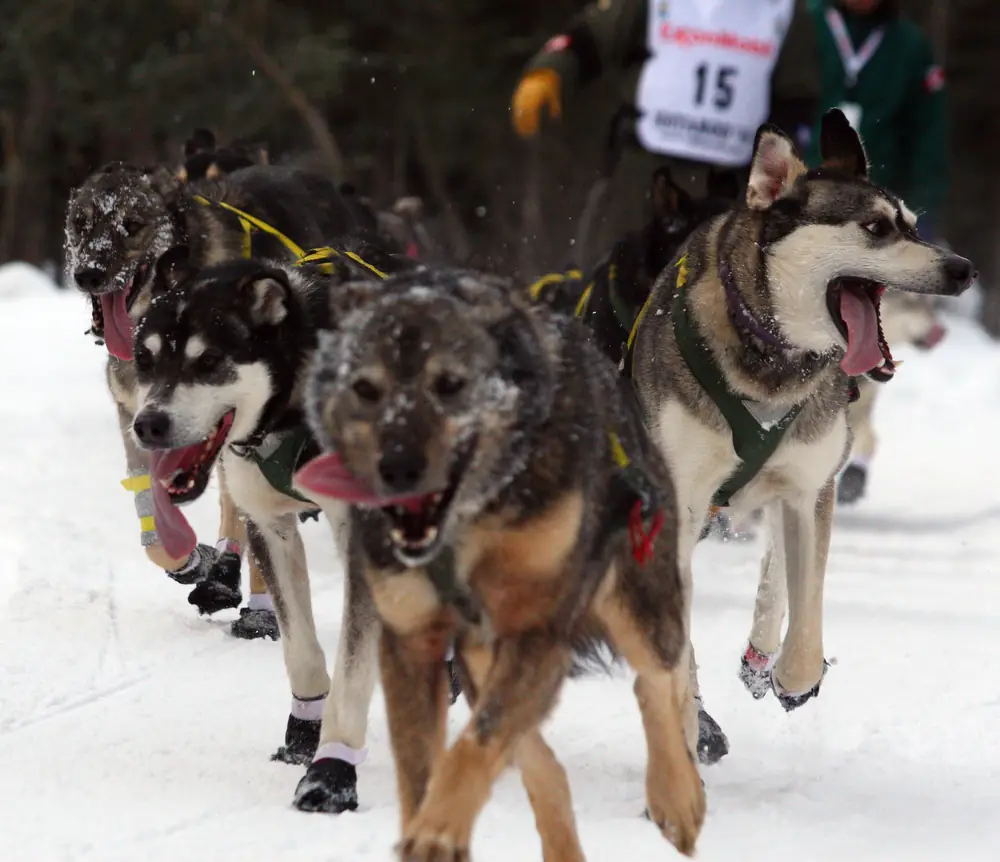
Iditarod ceremonial start and restart
Ceremonial start in Anchorage on Saturday, March 6; restart at Willow the following day, per Visit Anchorage · Fourth Avenue and D Street, Anchorage, then an 11-mile route to Campbell Creek Science Center; the race continues to Nome
The Iditarod Trail Committee’s website counts down to a race day of March 6, 2027, and Visit Anchorage describes the 55th race as starting in Anchorage that day with a restart at Willow the next. The Anchorage start is ceremonial, and the competitive restart comes at Willow. In a low-snow year the committee has shortened the Anchorage route, as it did in 2025, so check iditarod.com close to the date.
-
Fur Rendezvous, the Rondy
February 25 to March 7, 2027, per the festival’s website · Downtown Anchorage and around town
Anchorage’s winter festival overlaps the first week of March. The festival’s own site lists these dates but had not yet posted a 2027 schedule of individual events, including the sled dog races it has traditionally hosted. Look for the schedule on the Fur Rondy site in the new year.
-
World Ice Art Championships, Youth Classic
Youth Classic registration March 8, carving March 9 to 11; single-block and Fairbanks Open classes February 28 to March 2, per the organizer’s 2027 competition schedule · Fairbanks
Ice Alaska lists Youth Classic registration on Monday, March 8, carving from Tuesday, March 9, to Thursday, March 11, and awards on March 12, plus the single-block and Fairbanks Open divisions from February 28 to March 2. Public viewing hours and ticket prices were still unannounced when we checked, so ask Ice Alaska or watch its website.
-
Nenana Ice Classic tickets
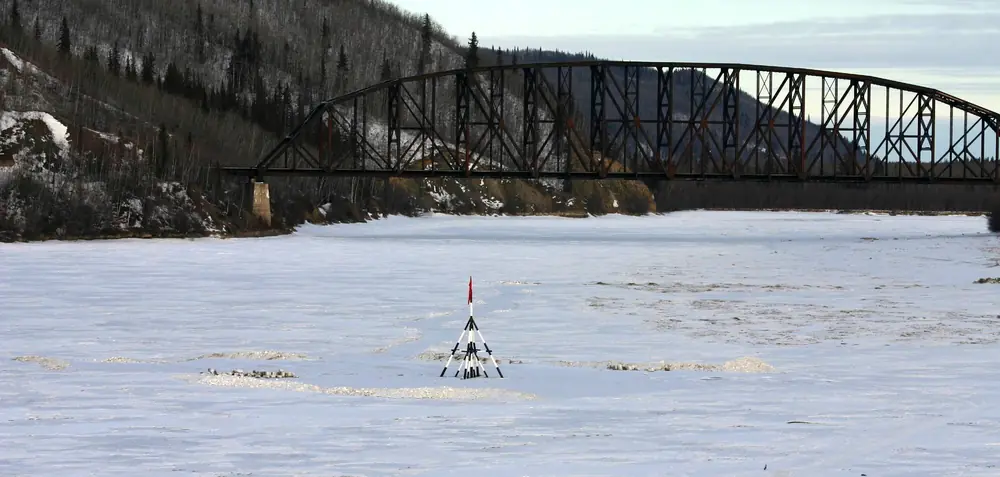
Sold between February 1 and April 5 in 2026; check for the 2027 window · Alaska; the tripod stands on the Tanana River at Nenana
Since 1917 Alaskans have bought $3 tickets guessing the minute the Tanana River ice will move the tripod at Nenana. In 2026 the ice went out on May 4 at 6:58 p.m. Alaska Standard Time, according to the Ice Classic. Ticket sales close in early April, so March is the time to put your guess in.
Many of the Interior’s big winter events depend on snow and ice that will not be certain until the weeks before. If you are planning a trip around any of them, check the organizer’s page a few days ahead.
Is March still winter in Alaska, and what weather should I watch for?
Mostly, yes. NOAA’s 1991–2020 normals, published by its National Centers for Environmental Information, put March highs still below freezing at Fairbanks (24.9 °F is the average high, with an average low of −3.4 °F), Bethel, Nome and Utqiagvik, where the average high is −3.8 °F and nights at or below zero number nearly 29. Anchorage, with an average high of 33.0 °F, is right at the line. Along the coast the story is wet rather than cold: Ketchikan’s normal March precipitation is 10.98 inches, and Valdez still averages 45.8 inches of snow.
The big change from midwinter is the sun. Expect big swings between sunny afternoons and nights well below zero in the Interior, and bright sun on snow that can burn skin and eyes.
-
River ice weakens and breakup begins to be watched
Spring, varying by river · Rivers and lakes statewide
The Alaska-Pacific River Forecast Center, part of the Weather Service, posts a spring flood potential outlook, historic breakup dates, a village flood map and an interactive breakup map. Ice that held a truck in February can be unsafe weeks before it moves, especially where water flows beneath it, so treat every crossing as an open question as the days warm.
-
Check the avalanche advisory
March through April · Chugach, Kenai and Talkeetna mountains, Thompson Pass, the Alaska Range and Southeast mountains
As days lengthen and the sun strengthens, snowpack can change quickly. The Chugach Avalanche Center and the Alaska Avalanche Information Center post daily advisories for the regions they cover; check the advisory for your area before skiing, snowmachining or climbing steep terrain, and carry a beacon, probe and shovel.
| Station | Average high | Average low | Snowfall | Precipitation (water) | Nights at or below 0 °F |
|---|---|---|---|---|---|
| Ketchikan | 43.6 °F | 32.4 °F | not published | 10.98 in | 0.0 |
| Sitka | 42.5 °F | 32.5 °F | not published | 5.60 in | 0.0 |
| Juneau | 39.2 °F | 26.6 °F | 12.4 in | 3.67 in | 0.1 |
| Valdez | 36.7 °F | 23.0 °F | 45.8 in | 4.10 in | 0.0 |
| Kodiak | 38.8 °F | 27.6 °F | 12.3 in | 4.82 in | 0.0 |
| Anchorage | 33.0 °F | 18.6 °F | 11.0 in | 0.69 in | 1.4 |
| Bethel | 22.0 °F | 7.0 °F | 8.8 in | 0.74 in | 11.5 |
| Nome | 17.6 °F | 1.6 °F | 10.7 in | 0.74 in | 15.5 |
| Fairbanks | 24.9 °F | −3.4 °F | 6.5 in | 0.40 in | 18.2 |
| Utqiagvik | −3.8 °F | −17.2 °F | 2.9 in | 0.18 in | 28.8 |
NOAA’s Climate Prediction Center issues new three-month outlooks every month; look for the newest maps on its 90-day outlook site. Our weather forecast page covers the coming week for your town, and the next section shows when freezing nights typically end.
When is the last spring freeze in Alaska?
Long after March ends. NOAA’s 1991–2020 normals put the median last freeze of spring at April 22 in Ketchikan, May 4 in the Mendenhall Valley of Juneau, May 5 at both Anchorage and Kodiak, May 13 at the Fairbanks airport, May 21 at Bethel and June 5 at Nome. A freeze this late means March is still a time for planning rather than planting. Seed starting indoors, sorting seeds and sketching beds fits the month.
| Station | One year in ten | Median | Nine years in ten |
|---|---|---|---|
| Fairbanks International Airport | May 2 | May 13 | May 26 |
| Anchorage International Airport | Apr 24 | May 5 | May 15 |
| Juneau International Airport (Mendenhall Valley) | Apr 23 | May 4 | May 18 |
| Kodiak Airport | Apr 19 | May 5 | May 21 |
| Bethel Airport | May 8 | May 21 | Jun 2 |
| Nome Municipal Airport | May 20 | Jun 5 | Jun 26 |
| Ketchikan International Airport | Apr 2 | Apr 22 | May 9 |
To look up your own town, use our Alaska frost and freeze page. Treat the first column as an optimist’s date: only about one spring in ten sees its last freeze arrive that early.
What is in the sky over Alaska in March 2027?
Long evenings, a lingering sky glow and the first dark nights of spring. Times are Alaska time: standard through March 13 and daylight time after the 14th. In the western Aleutians, subtract one hour.
-
Dark evenings around the new moon
New moon at 12:29 a.m. AKST on Monday, March 8; roughly the evenings of March 5 to 12 · Away from town lights
The days around the new moon are the best nights of the month for faint objects and for watching for aurora, with no moonlight to wash out the sky. Evening twilight stretches later every week, so the window for dark skies shifts later in the evening as March goes on.
-
Northern lights near the equinox
Any clear, dark night; strong storms tend to cluster near the March and September equinoxes · Interior and Arctic best; low in the north from the south coast
The University of Alaska Fairbanks Geophysical Institute posts a daily aurora forecast, and NOAA’s Space Weather Prediction Center expects the sun to remain fairly active, with its predicted smoothed sunspot number for March 2027 at about 86 (range roughly 66 to 99). Forecasts are no guarantee, but a clear sky and a new moon make this a good week to look. Check the cloud forecast before you drive out.
-
Mercury in the dawn
Greatest western elongation on March 17 (March 16 evening in Alaska time, 8:20 p.m. AKDT); best about March 8 to 25 · Low in the east-southeast just before sunrise
Mercury is 27.6 degrees west of the sun on March 17, which makes it as high above the horizon as it gets in the morning sky this spring. At Alaska’s latitude the angle of the morning ecliptic is shallow, so the planet is harder to catch than in the lower 48: you will need a flat eastern horizon and a clear dawn. Bright Venus, farther above it, is the guide.
-
Venus and a thin waning moon
Mornings of Thursday, March 4 and Friday, March 5 · Low in the southeast before dawn
Venus shines at about magnitude −4.1 in March, brilliant even in a pale dawn sky. By our calculation, a slim waning crescent moon, about 12 percent lit, hangs near it before dawn on March 4 and March 5, a good target for a photo.
-
Jupiter, the Moon and Mars in the evening
Moon near Jupiter on the evenings of March 18 and 19; Mars and Jupiter 4.3 degrees apart on the evening of Tuesday, March 30 · High in the south and southwest after dark
Jupiter, still bright from its February opposition, stays up most of the night in March. By our calculation the 88 percent lit moon passes within 1 degree of it around 1:26 a.m. AKDT on March 19, so the pair looks close on both evenings. By the same calculation Mars shines about 4.3 degrees from Jupiter on March 30, high up after dark and easy to see with the unaided eye.
-
The Worm Moon
Full at 2:44 a.m. AKDT on Monday, March 22; best evening is Sunday, March 21 · Rises in the east at about 8:03 p.m. in Anchorage on the 21st
March’s full moon is traditionally the Worm Moon, a name linked to ground thawing in the east; here the ground is still frozen solid, but the moon rides high over snow. Because the moment of full falls in the middle of the night, look on the evening of the 21st and again on the 22nd. No lunar eclipse occurs this month.
| Phase | Date | Time |
|---|---|---|
| New moon | Monday, Mar 8 | 12:29 a.m. (AKST) |
| First quarter | Monday, Mar 15 | 8:25 a.m. (AKDT) |
| Full moon, the Worm Moon | Monday, Mar 22 | 2:44 a.m. (AKDT) |
| Last quarter | Monday, Mar 29 | 4:54 p.m. (AKDT) |
| New moon | Tuesday, Apr 6 | 3:51 p.m. (AKDT) |
For moonrise at your own cabin or in town, try the moon calendar.
Which birds return or begin courting in Alaska in March?
The big flocks of spring are still weeks off, but a few early arrivals and several year-round birds are already acting as if the season has changed.
-
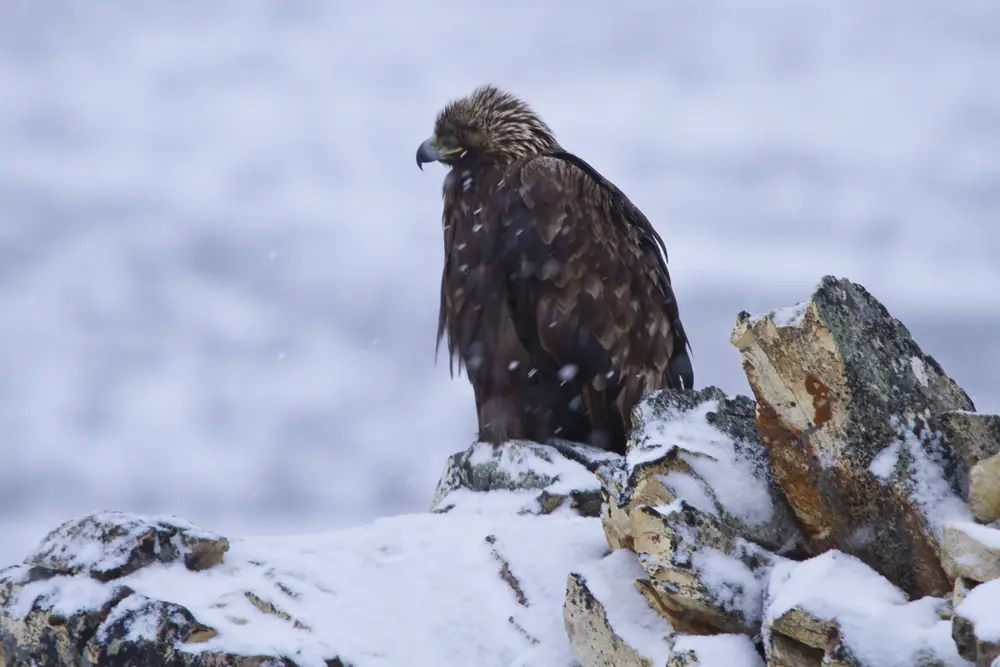
Golden eagles return to Denali
Late March or early April, per the National Park Service · Foothills and cliffs of the Alaska Range in and around Denali National Park
Denali’s golden eagles are migratory; young birds tracked from the park have wintered as far south as central Mexico. The National Park Service says the nesting adults return in late March or early April, with nest repairs starting as they settle in. Park researchers survey nearly 80 nesting territories every year, and nearly nine in ten are occupied. Eggs are laid around mid-April, on nests built on cliffs and rock outcrops. Watch for a large dark raptor with pale gold on the back of its head, soaring along ridgelines on rising air.
-
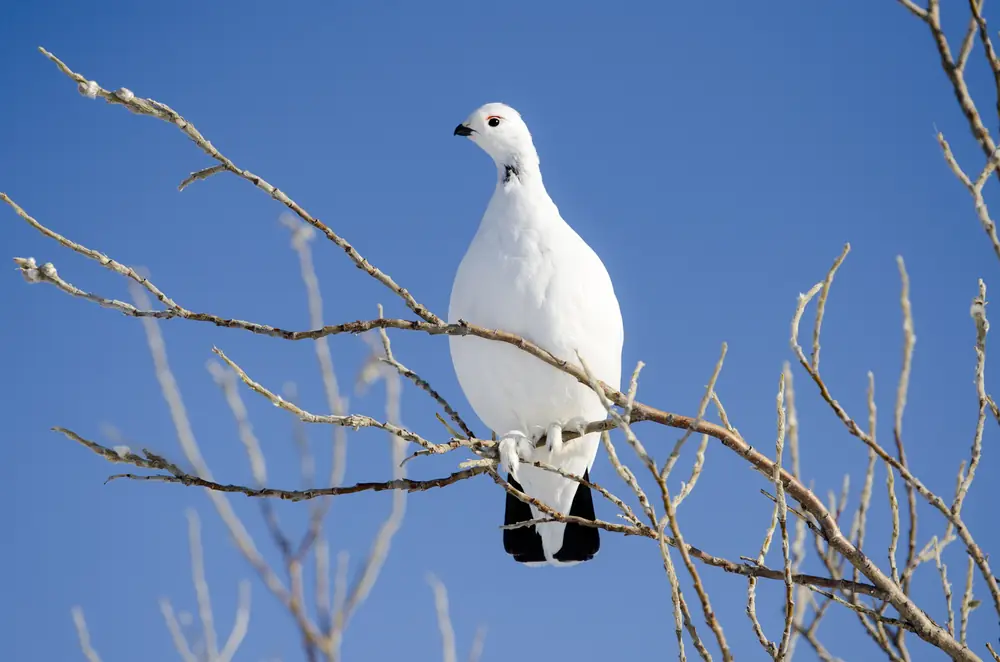
Willow ptarmigan stake out ground
Through March and April; permanent territories by late April or early May · Willow country and open tundra
ADF&G notes that male willow ptarmigan grow steadily less tolerant of each other through March and April. On good days they defend small patches of ground; a spring snowstorm sends them back to the flock. The first eggs are not laid until late May. Look for white birds on snowy slopes; males gradually show rusty-brown on the head and neck as spring advances.
-
Ptarmigan flocks on the move
April and early May · River valleys and mountain passes
ADF&G’s Wildlife Notebook says flocks of several thousand ptarmigan sometimes appear in purposeful movement back to their breeding grounds in April and early May, perhaps funneled together by river valleys and narrow passes. March is the time to learn the birds’ tracks and calls in advance.
-
Boreal owls keep singing
Calling late January or early February through late April · Boreal forest, especially the Interior
ADF&G says boreal owls give their rapid, soft “po-po-po-po” from late January or early February until late April, so March is the middle of the singing season. The female lays three to seven eggs starting in April or May. On a still night the call carry as far as a mile and a half, and in spring people often mistake it for a snipe.
-
Ravens at their nesting spots
By mid-March in the Interior · Cliffs, trees and buildings
Interior ravens start courtship displays in mid-January, according to ADF&G, and by mid-March the adult pairs are roosting near their nest sites. The female lays three to seven eggs. If you see two ravens tumbling together, wingtips touching, they are courting. For the display itself, see January in Alaska.
Anchorage Audubon posts monthly evening programs and field trips; its calendar listed events through January 2027 when we looked, so watch its site for spring dates.
When do polar bears and other bears leave their dens in Alaska?
The earliest of Alaska’s bears to appear are the ones that dug their dens in snow on the northern coast.
-
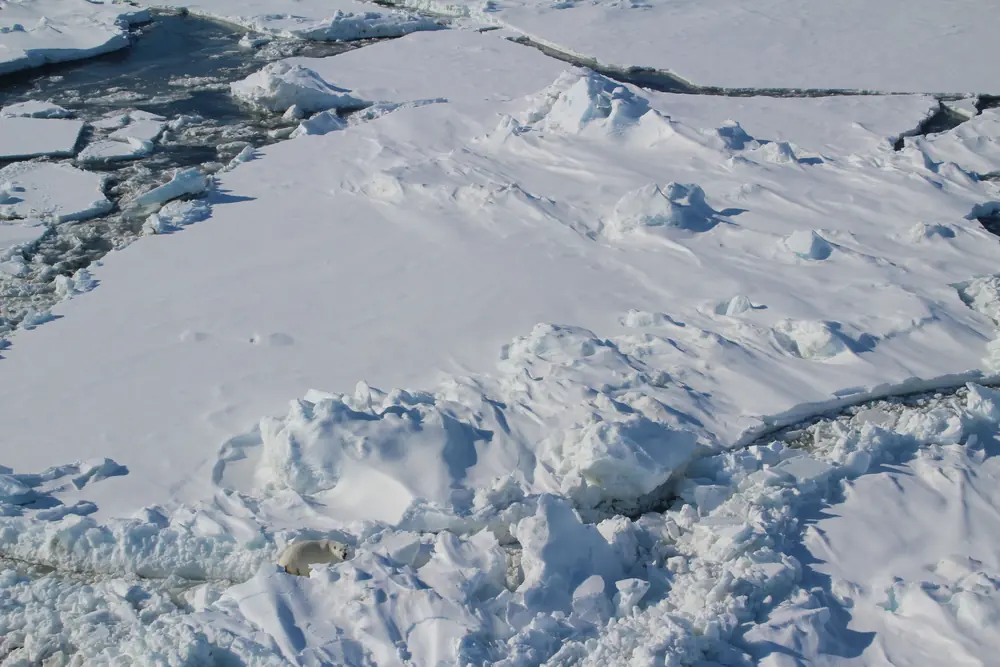
Polar bear mothers and cubs emerge
Mid-March to April; one study’s mean emergence was March 16 · Coastal dens along the southern Beaufort and Chukchi seas, including near Utqiagvik
A study of polar bears in the southern Beaufort and Chukchi seas, listed by the U.S. Geological Survey, found a mean den emergence date of March 16 and a mean departure date of March 24. Mothers with cubs lingered near the den for about 7.9 days on average, much longer than the 1.9 days of females without cubs. The study estimated that litter survival in the following spring rose from about 0.5 to 0.9 when the stay near the den was about four days longer. Chukchi Sea dens were left later than Beaufort ones.
-
Brown and black bears wake with the food
No fixed date; adult males first, mothers with newborn cubs last · Dens in mountains and hillsides statewide
ADF&G says adult male brown bears enter dens later and emerge earlier than most other bears, and females with newborn cubs are the last to leave. On Kodiak, where winters are mild, some males stay active all winter. Black bears come out when food is available again, and black bear cubs leave the den in May. Bears weigh the least in spring, so they are hungry. Keep food, garbage and pet food locked away from now on.
-
Wolverine kits in snow caves
Litters born from February to April · Alpine and boreal Alaska, mostly in the Interior and North
ADF&G reports that wolverines give birth between February and April, and that in the Interior and north most young are born in snow caves with tunnels up to 60 yards long. Males defend territories from February through July. A wolverine is rarely seen, and its den sites are poorly known, so count it a lucky day if you ever meet one.
Never approach a den or a polar bear. The U.S. Fish and Wildlife Service and ADF&G both publish safety guidance for polar bear country; anyone traveling on the northern coast should read it before heading out.
Which Alaska mammals are breeding or shedding antlers in March?
Spring comes to Alaska’s hoofed animals and cats as changes you can spot in tracks and antlers.
-
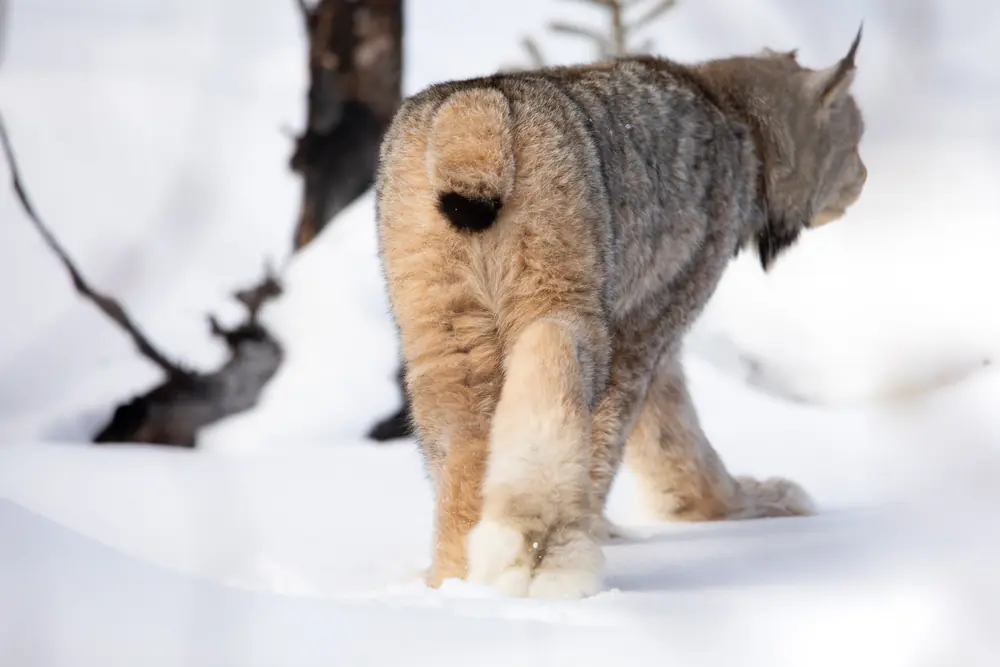
Lynx mating
March and early April · Boreal forest and brushy country across the mainland
ADF&G says lynx mate in March and early April, and kittens arrive about 63 days later under a fallen spruce, a rock ledge or a log jam. ADF&G describes the lynx’s large, broad feet as built-in snowshoes, and says kitten survival follows the snowshoe hare cycle.
-
Caribou keep their antlers, bulls drop them
Small bulls and non-pregnant cows shed in April; pregnant cows keep theirs until calving in late May or early June · Tundra and boreal winter ranges
The big bulls dropped their antlers in late October, ADF&G says. Many of the caribou still carrying antlers now are pregnant cows, which keep them until calving; small bulls drop theirs this month.
-
Young moose bulls with last antlers
Mature bulls shed from November, mostly in December and January; some young bulls carry them as late as April · Willow flats and roadsides
An antlered moose in March is probably a young bull, ADF&G’s Wildlife Notebook says. Moose spend the end of winter living on stored fat and twigs, so give them plenty of room on roads and trails.
Wolves and red foxes, which breed in late winter, were part of February in Alaska.
When does the herring spawn in Sitka Sound, and when do gray whales pass Alaska?
As the ice stays locked up north, the sea in the Southeast begins to turn milky with life.
-
Herring spawn in Sitka Sound
Typically late March into early April: first spawn seen March 23 in 2024, March 22 in 2025; main spawning began March 26 and March 27 · Sitka Sound, Southeast Alaska
ADF&G flies aerial surveys of Sitka Sound each spring. In 2024 the department saw its first spawn on March 23, with the main event beginning March 26 and peaking March 29 at 26.2 nautical miles of active spawn. In 2025 the first spawn was seen on March 22, the main event began March 27 and peaked March 30 at 31.9 nautical miles. In 2026 the department’s updates counted spawn from March 30. Timing varies each year with water temperature. NOAA Fisheries says herring deposit their eggs on kelp, eelgrass and other structures along shallow shorelines, and ADF&G describes spawning as taking place in shallow, vegetated areas in spring.
-
Eulachon, or hooligan
Main run as early as April in Southeast; May in Southcentral and Western Alaska · Chilkat, Stikine, Taku, Copper, Kenai and Susitna rivers
ADF&G says the main eulachon run can start as early as April in Southeast, and in some rivers there are winter runs in January and February. A host of animals follow the fish, among them eagles, ravens, crows, bears, seals, sea lions and whales.
-
Gray whales head north
From late February to May; into the Bering Sea mostly April and May · Waters along Alaska’s southern coast, then Unimak Pass into the Bering Sea
ADF&G says the eastern Pacific gray whale begins its northward migration from late February to May and enters the Bering Sea mostly in April and May. NOAA Fisheries gives mid-February to May for the northbound pass along the U.S. West Coast. Look from headlands on calm days, and bring binoculars.
The Sitka herring spawn also supports a commercial sac roe fishery; in its April 8, 2026 update, ADF&G reported that about 6,555 tons had been harvested since March 27. Check ADF&G’s Sitka area announcements for the current year’s spawn map.
What is the sea ice doing in March?
The National Snow and Ice Data Center explains that the Arctic’s annual sea ice maximum extent occurs in March, and its minimum in September. After a winter of freezing, March is the month when the ice covers the most ocean.
-
Arctic sea ice reaches its yearly maximum
March · The Arctic Ocean, including the waters off Alaska’s north coast
The sea ice desk at the Anchorage Weather Service office publishes ice analyses and forecasts, the right place to look before any travel on the ice. The sea ice desk’s maps show where the pack edge sits on a given day.
-
Ringed seals and the bears that hunt them
All winter and spring · Solid sea ice of the Bering, Chukchi and Beaufort seas
ADF&G says ringed seals live under solid ice, keeping breathing holes open with their claws, and make snow lairs over some of them to rest and give birth. Ringed seals are the most common prey of polar bears, which can locate lairs by smell. That is why polar bear mothers, fresh from their dens, head toward the ice.
River ice goes out much later than the sea ice peaks. The Nenana Ice Classic’s tripod on the Tanana River did not move until May 4 in 2026.
What can families do outdoors in Alaska this March?
- Watch the Iditarod ceremonial start on Saturday, March 6, if you are in Anchorage, or follow the race online afterward. Mark the route on a map of Alaska and trace it with a finger.
- Stay up for new-moon evenings, March 4 to 13, and look for stars, Jupiter and, if the forecast is good, the aurora.
- Find Venus on March 4 or 5 with a slim crescent moon near it (by our calculation), low before sunrise.
- Mark the clock change on Sunday, March 14. Note sunset the night before and the night after on a chart.
- Test the equinox on Saturday, March 20: watch where the sun comes up and goes down; it should be nearly due east and west.
- Look for the Worm Moon on Sunday, March 21. Look east after 8 p.m. from Anchorage.
- Look for ptarmigan tracks and for white birds on a snowy hillside; males are getting territorial.
- Buy a Nenana Ice Classic ticket if you are in Alaska, and make a family guess for breakup day.
- Join a citizen science project. Nature’s Notebook from the USA National Phenology Network and the GLOBE Observer cloud tool both take observations from Alaska.
The nature guides index lists the other states and months we cover. The month before this one is February in Alaska.
Safety notes for March in Alaska
- Avalanches. March sun and deep snow are a risky pairing, especially after a storm or on a warm afternoon. Check the daily advisory from the Chugach Avalanche Center or the Alaska Avalanche Information Center before heading to steep terrain, bring a beacon, probe and shovel and practice with them first.
- River and lake ice. Ice weakens as the sun strengthens, and rivers can run open at bends and below bridges. Stay on well-used trails, test as you go, and check the River Forecast Center’s breakup products as the season advances.
- Polar bears and waking bears. Polar bear mothers and cubs are leaving dens on the northern coast; give any bear or den a wide berth and read the U.S. Fish and Wildlife Service guidance. Elsewhere, ADF&G notes that black bears in southern ranges sometimes emerge in winter, and bears are light and hungry in spring, so keep garbage and pet food secured and carry bear spray when you head out in places bears use.
- Moose. Late winter is hard on moose. Do not crowd them on a trail, and leave a clear way out if one approaches.
- Cold and sun. Fairbanks still averages about 18 nights at or below zero, and Utqiagvik nearly 29. Wear sunglasses against the bright snow, and bring layers for the sudden change when the sun sets.
- Hunting. In the state’s 2026–2027 hunting booklet, ptarmigan seasons end March 31 in Units 6D, 7, 11, 13A, 13C, 13D, 14A, 14B, 14C (outside the Eklutna area), 15A, 15B, most of 15C and 16, run to April 30 in Units 8, 10, 17, 19, 21, 22, 24 and parts of 25, and stay open to May 15 in Units 1 to 5 and 6A to 6C. In Units 12, 20 and 25C the main season ends February 28, and a second season runs March 1 to April 30 at five birds a day. Grouse seasons close March 31 in Units 7, 11, 12, 13, 14A, 14B, 15, 16 and the rest of 20 and 25, and April 30 in Units 9, 17 to 19, 21 to 24 and 26. Bag limits differ by unit, so read the entry for yours.
- Trapping. The 2026–2027 trapping regulations end lynx seasons March 15 in Units 12, 19A, 19B, 19E, 20, 21B to 21E and 25, and March 31 in Units 19C, 19D and 21A; coyote trapping in Units 6, 7 and 15 runs to March 31; and beaver trapping in much of Southcentral continues to April 30. Keep dogs close on trails near traplines.
- Spring bears. In parts of Unit 1 in Southeast, the 2026–2027 booklet lists brown bear registration hunts from March 15 to May 31, with permits available from March 1 (nonresidents need a guide), and black bear seasons in Unit 1 run September 1 to June 30. Check the booklet for other units’ bear seasons.
- Hunter orange. The state booklet requires it only for the August youth small-game hunt at Hatcher Pass. March hunters often wear white or camouflage, so put on a bright jacket or hat.
The Naturalist’s Field Journal has room for ptarmigan tracks, eagle sightings and the rising curve of the light.
Sources (53)
- U.S. Naval Observatory: phases of the moon, 2027
- U.S. Naval Observatory: sun and moon rise and set for one day
- U.S. Naval Observatory: Earth’s seasons and apsides, 2027
- Sea and Sky: Astronomy calendar of celestial events, 2027
- NOAA Space Weather Prediction Center: Solar Cycle Progression
- UAF Geophysical Institute: aurora forecast
- NOAA NCEI: U.S. Climate Normals 1991–2020, monthly normals
- NOAA NCEI: monthly normals data service, 1991–2020 (Alaska stations)
- NOAA Climate Prediction Center: 90-day outlooks
- National Weather Service: Alaska-Pacific River Forecast Center
- National Weather Service: Spring Breakup Outlook and Summary Products
- National Weather Service: Break Up Database
- National Weather Service: Alaska sea ice program
- Chugach National Forest Avalanche Information Center
- Alaska Avalanche Information Center
- Iditarod Trail Committee: official site
- Iditarod: Ceremonial Start Route Shortened Due to Lack of Snow (February 2025)
- Visit Anchorage: Iditarod Trail Sled Dog Race
- Fur Rendezvous: official site
- Ice Alaska: World Ice Art Championships
- Nenana Ice Classic
- National Park Service, Denali: Ecology of golden eagles in Denali
- National Park Service: Long-term golden eagle studies
- ADF&G: Willow ptarmigan species profile
- ADF&G: Ptarmigan (Wildlife Notebook Series)
- ADF&G: Boreal owl species profile
- ADF&G: Common raven species profile
- USGS: The post-emergence period for denning polar bears, phenology and influence on cub survival
- ADF&G: Brown bear species profile
- ADF&G: Brown bear (Wildlife Notebook Series)
- ADF&G: Black bear species profile
- ADF&G: Black bear (Wildlife Notebook Series)
- ADF&G: Living with bears
- ADF&G: Wolverine species profile
- ADF&G: Lynx species profile
- ADF&G: Caribou species profile
- ADF&G: Moose species profile
- ADF&G: Moose (Wildlife Notebook Series)
- ADF&G: Pacific herring species profile
- NOAA Fisheries: Pacific herring
- ADF&G: 2024 Sitka Sound herring fisheries summary
- ADF&G: 2025 Sitka Sound herring fishery summary
- ADF&G: Sitka Sound herring fishery update 21 (April 8, 2026)
- ADF&G: Eulachon species profile
- ADF&G: Gray whale species profile
- NOAA Fisheries: Gray whale
- National Snow and Ice Data Center: Arctic Sea Ice News and Analysis
- Anchorage Audubon Society
- USA National Phenology Network: Nature’s Notebook
- GLOBE Observer
- ADF&G: 2026–2027 Alaska Hunting Regulations (complete booklet)
- ADF&G: 2026–2027 Alaska Trapping Regulations
- Photos via Wikimedia Commons; licenses and photographers are credited under each picture