What to look for in nature in Alaska this November
November is when most of Alaska stops changing and starts enduring. The ground is white across the Interior and the west, ponds hold their ice, bears are asleep, and the birds still here are the ones built to stay. Yet the month has its own crowds: thousands of eagles on the Chilkat, rams clashing above Turnagain Arm. On the Arctic coast the sun sets for the year. Below, month-specific sights across the state, each dated and sourced.
Other months in Alaska: October, December.
Start here
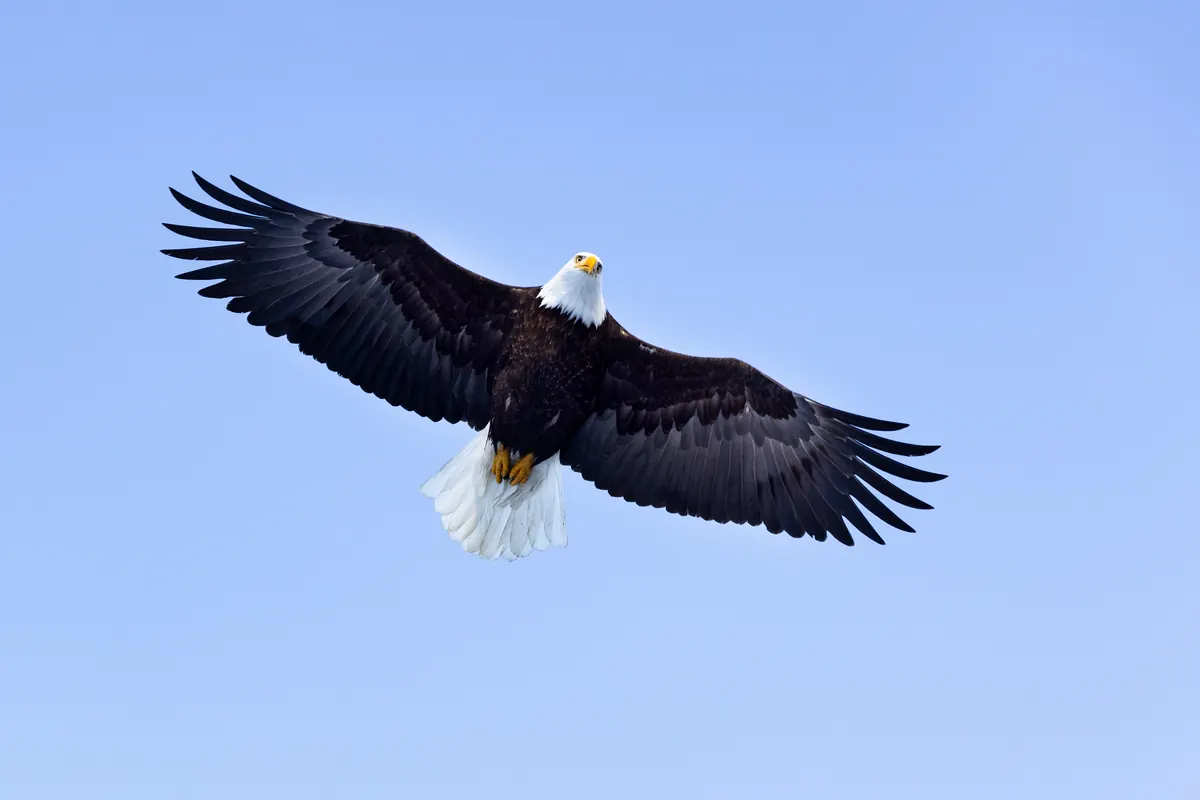
- The Chilkat eagles. November is the heart of the eagle season north of Haines, when late chum salmon in open water feed one of the biggest gatherings of bald eagles anywhere. The Alaska Bald Eagle Festival is listed for November 6–8.
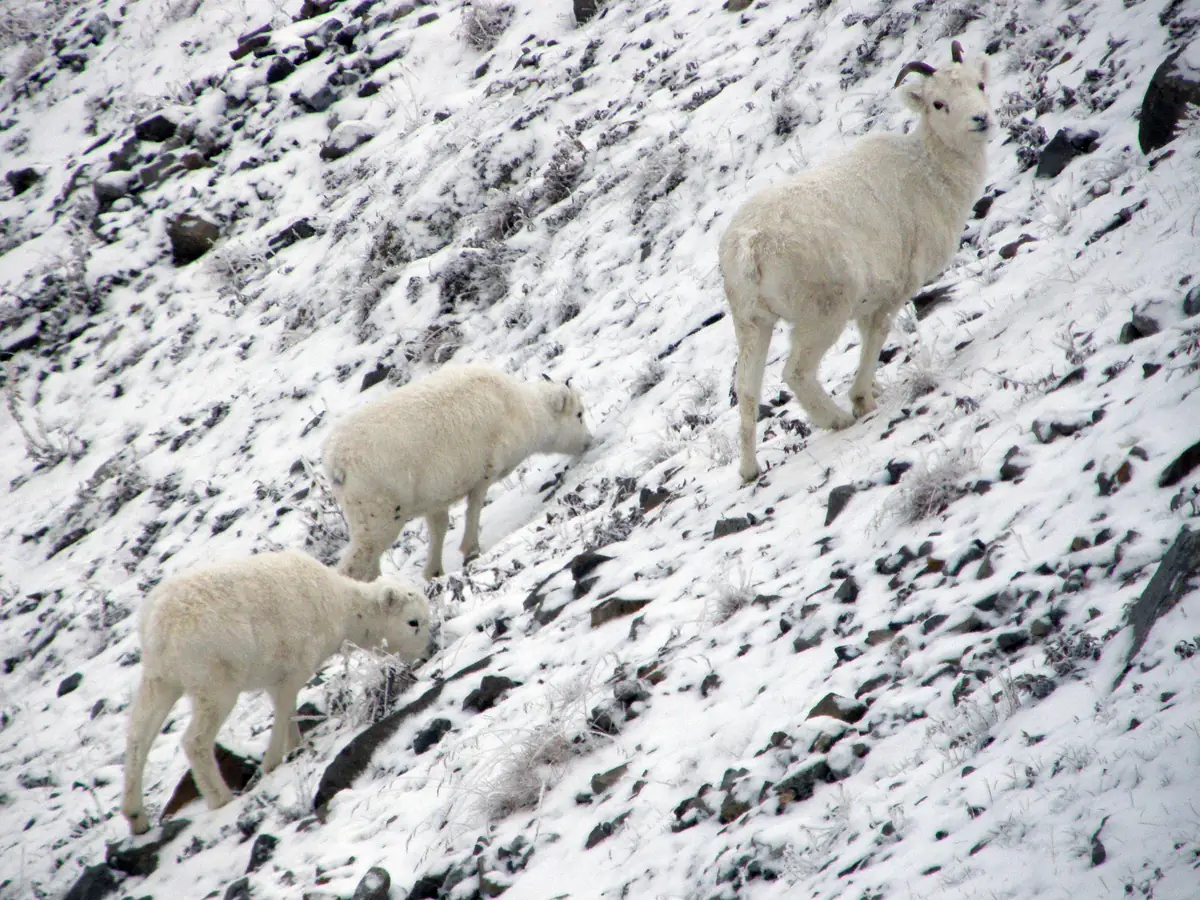
- Rams on the rocks at Windy Corner. Dall sheep breed in late November and early December, and the big rams start sizing each other up beforehand. Milepost 106 of the Seward Highway is about as convenient a sheep-watching spot as Alaska offers, from a proper turnout.
- The last sunset in Utqiagvik. On Wednesday, November 18, the sun sets on the nation’s northernmost town and stays down until January 23. Elsewhere the days keep shrinking fast, so plan outdoor time around the midday light.
For the journal: Alaska’s brief November light makes the dusk and dawn watch the natural first page to fill, “birds I have seen” is the place for redpolls, waxwings and emperor geese, and tracks to know earns its keep after every fresh snowfall. Use mammal watch for sheep, moose and hares, and pick one window or one tree for the same place twice, once now and once in March.
Regions used below: Southeast and the Inside Passage; Southcentral: Anchorage, Mat-Su and the Kenai; Interior and Fairbanks; Southwest: Kodiak, Bristol Bay, the Alaska Peninsula and the Aleutians; Western Alaska: the Y-K Delta and Seward Peninsula; Arctic and the North Slope.
How fast is Alaska losing daylight in November?
Faster in the north than anywhere else in the country, though the pace eases a little as the month goes on. Over November, Sitka and Juneau give up close to two hours, Anchorage about two and a quarter, and Fairbanks and Kotzebue over three. The table below runs from November 1 to November 30. At Utqiagvik there is nothing left to lose by the end: the U.S. Naval Observatory puts the last sunrise and sunset of 2026 on Wednesday, November 18, with the sun clearing the horizon at about 12:42 p.m. and dropping out of sight at about 1:42 p.m. Alaska Standard Time. It stays below the horizon for 65 nights and next rises on Saturday, January 23, 2027.
Polar night is not pitch dark: around noon the sun sits just below the southern horizon and twilight gives hours of usable blue light. Fairbanks never loses the sun entirely; its shortest day, at the December solstice, still runs about three hours and forty minutes.
| City | Nov 1 | Nov 30 | Lost | Per day |
|---|---|---|---|---|
| Sitka | 9 h 03 m | 7 h 12 m | 111 min | 3.8 min |
| Juneau | 8 h 54 m | 6 h 56 m | 118 min | 4.1 min |
| Kodiak | 8 h 58 m | 7 h 03 m | 115 min | 4.0 min |
| Anchorage | 8 h 29 m | 6 h 08 m | 141 min | 4.9 min |
| Bethel | 8 h 32 m | 6 h 16 m | 136 min | 4.7 min |
| Fairbanks | 7 h 49 m | 4 h 45 m | 184 min | 6.3 min |
| Kotzebue | 7 h 19 m | 3 h 32 m | 227 min | 7.8 min |
| Utqiagvik | 5 h 48 m | no sunrise | — | — |
Alaskans set clocks back an hour in the small hours of November 1, a Sunday; the change pulls sunrise an hour earlier for a few days and makes the afternoon dark arrive with a jolt. For your exact spot, including twilight times, open the Field almanac; it recalculates sunrise and sunset for any coordinates.
Is November a good month to see the northern lights in Alaska?
Yes, with one catch: clouds. The nights are now long almost everywhere in the state, so the limiting factor is a clear sky rather than darkness. The University of Alaska Fairbanks Geophysical Institute, which runs the state’s best-known aurora forecast, points to the middle of the night, centered on midnight, as the likeliest time, with strong displays usually falling between about 9 p.m. and 3 a.m. In November, though, the sky is dark well before 9 p.m., so an early show over the Interior or the Arctic is entirely possible.
The sun has passed the peak of its current cycle. NOAA’s Space Weather Prediction Center lists the smoothed sunspot peak of Solar Cycle 25 as 160.9 in October 2024, and the monthly count has since fallen, to about 60 in September 2026. A declining sun still produces big storms, and Alaska sits under the auroral zone, so check the forecast on the day; nobody can predict a particular storm weeks ahead.
-
The darkest nights of the month
Around the new moon, Sunday, November 8 · Anywhere with a clear view north, away from town lights
From about November 4 to November 13 the moon is a thin crescent or absent for most of the night. Around Fairbanks, the Geophysical Institute suggests heading for spots such as Chena Lakes Recreation Area, Cleary Summit, Murphy Dome or Ester Dome, and pullouts along the highways out of town. Near Anchorage, any parking area with a clear northern horizon away from the city glow will do.
-
Dress for standing still
Every aurora night · Interior and Arctic especially
Average November lows at Fairbanks are below zero, and aurora watching means hours of standing still. Layers, insulated boots and a thermos decide whether you stay for the show.
A clear-sky forecast matters as much as the space-weather one. Before leaving town, look at the cloud cover for your area on Today’s sky.
When is the Chilkat bald eagle gathering at its biggest?
Late fall into early winter, according to Alaska State Parks, and November sits squarely in that window, which is why Haines holds its festival then. The birds start arriving along the Chilkat River north of town in mid-October and some stay into January. What draws them is geology. A deep fan of gravel and sand beside the river holds water that stays above freezing as the air chills, and that water keeps seeping into the Chilkat all winter, so several miles of channel stay open long after nearby rivers have locked up. Late salmon spawn and die in the open stretches, and the eagles come for the carcasses. The Alaska Department of Fish and Game puts the gathering at more than 3,000 bald eagles over the season.
-
Where to stand
Daylight hours, which are short: plan for late morning to mid-afternoon · Alaska Chilkat Bald Eagle Preserve, Haines Highway
The river flats along the Haines Highway, between about miles 18 and 24, are the heart of it. The state park lists four main pullouts between miles 18 and 21; the ones near miles 19.5 and 20.9 have restrooms, a viewing platform, signs and spotting scopes, and a two-mile trail follows the river. Look for eagles hunched in the cottonwoods and standing on the gravel bars. Park only in the pullouts, keep to the boardwalk and trail, and let the birds feed without being flushed; an eagle that leaves a carcass in November burns energy it cannot easily replace.
-
The Alaska Bald Eagle Festival
November 6–8, 2026, per Travel Alaska · Haines: the American Bald Eagle Foundation and the Sheldon Museum
Talks, photography workshops, art shows and naturalist-led bus trips up the river. The state tourism listing gives November 6–8; the host foundation’s page says only “this coming November,” so confirm on its events tab before booking a ferry or flight.
Elsewhere, look for wintering eagles wherever a river stays open or fish waste collects around a harbor.
Are there still whales in Southeast Alaska in November?
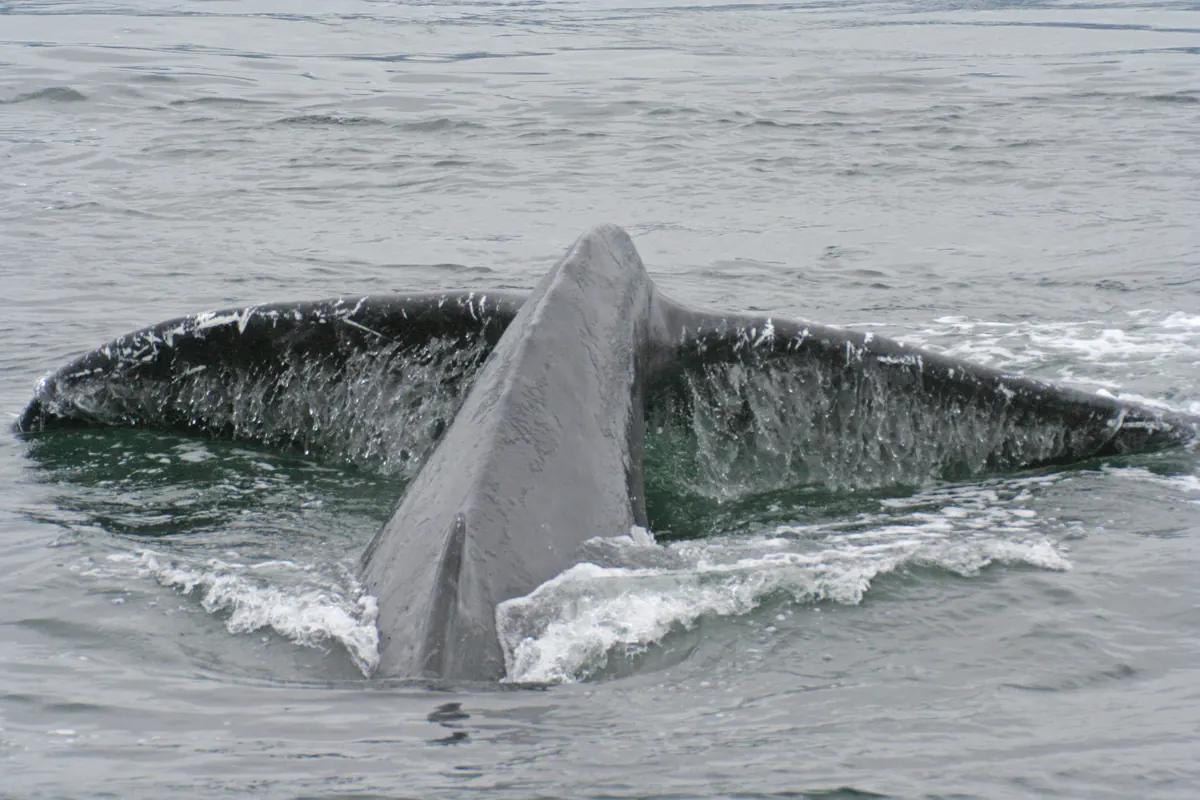
Often, yes, though fewer each week. Most humpbacks that spend the summer feeding in Alaska head to Hawaii to breed, a trip NOAA Fisheries says can take as little as four weeks for roughly 3,000 miles. They do not all leave at the same time, and the organizers of Sitka WhaleFest, now in its 30th year, describe Sitka as a place where whales and other marine mammals can be watched each November during the festival.
-
Sitka WhaleFest, the 30th year
November 5–9, 2026 · Sitka
This year’s theme is “Generations of Giants: 30 Years of Whales, Wisdom, and What Follows.” At its core is a three-day science symposium. For families, the schedule lists a student art show on November 5 from 5 to 6:30 p.m. followed by a film night at 7, a WhaleFest Run with 5K, 10K and two-mile walk options on the morning of November 7, scientific illustration workshops, a marine trivia night and a market and café on November 6–8. Educational whale-watching cruises with festival speakers aboard run from 8:30 to 11:30 a.m. on November 7 and 8.
-
Watching from shore
Calm, clear days · Sitka Sound, Frederick Sound, Lynn Canal, Kodiak and the eastern Aleutians
On still November mornings, look for the low bushy blow of a humpback against dark water. On Kodiak, ADF&G lists harbor seals, Steller sea lions and sea otters as common along the coast; the sea lions turn to capelin in winter. Write down the date of the last humpback you see each fall; a few years of those notes make a real record of when they go.
When do Dall sheep and mountain goats rut in Alaska?
Late fall, which makes November the month to watch the mountain hoofed animals. The Alaska Department of Fish and Game puts the Dall sheep breeding season in late November and early December. The horn clashing that rams are famous for, it explains, is less a fight over ewes than a way of settling rank, and it happens most often when strange rams of similar size meet in the weeks before and during the rut. For most of the year the adult rams keep to their own bands, but they now move in among the ewes. Mountain goats breed a little earlier, between late October and early December, and coastal goats drift down to old-growth forest at or below tree line for the winter, browsing hemlock, blueberry and lichen.
-
Windy Corner, Seward Highway
All year; rams most active in November and December · Milepost 106, south of Anchorage along Turnagain Arm
ADF&G calls this the only place in the world where Dall sheep can be watched from a road at sea level. A mineral lick on the cliffs brings them down year-round, and in November and December the larger rams can be seen testing one another. In their winter coats they look thicker and rounder than in summer. Pull fully into a turnout, never onto the shoulder, and stay well clear of passing traffic. Do not feed them, and back off if they start shifting away.
-
What sheep eat in winter
From the first lasting snow · Windswept ridges
ADF&G says winter sheep live mostly on dry, frozen grass and sedge stems on slopes where the wind strips the snow away, which is why they stand on the most exposed ridges in the worst weather.
Which birds spend the winter in Alaska?
More than you might expect, and November is when the winter cast settles in. Some come down from the north and west to the ice-free southern coast; others are year-round residents with remarkable ways of staying alive.
-
Emperor geese on the southern coast
Late fall through spring · Kodiak, the Alaska Peninsula and the Aleutians, including Unalaska Bay
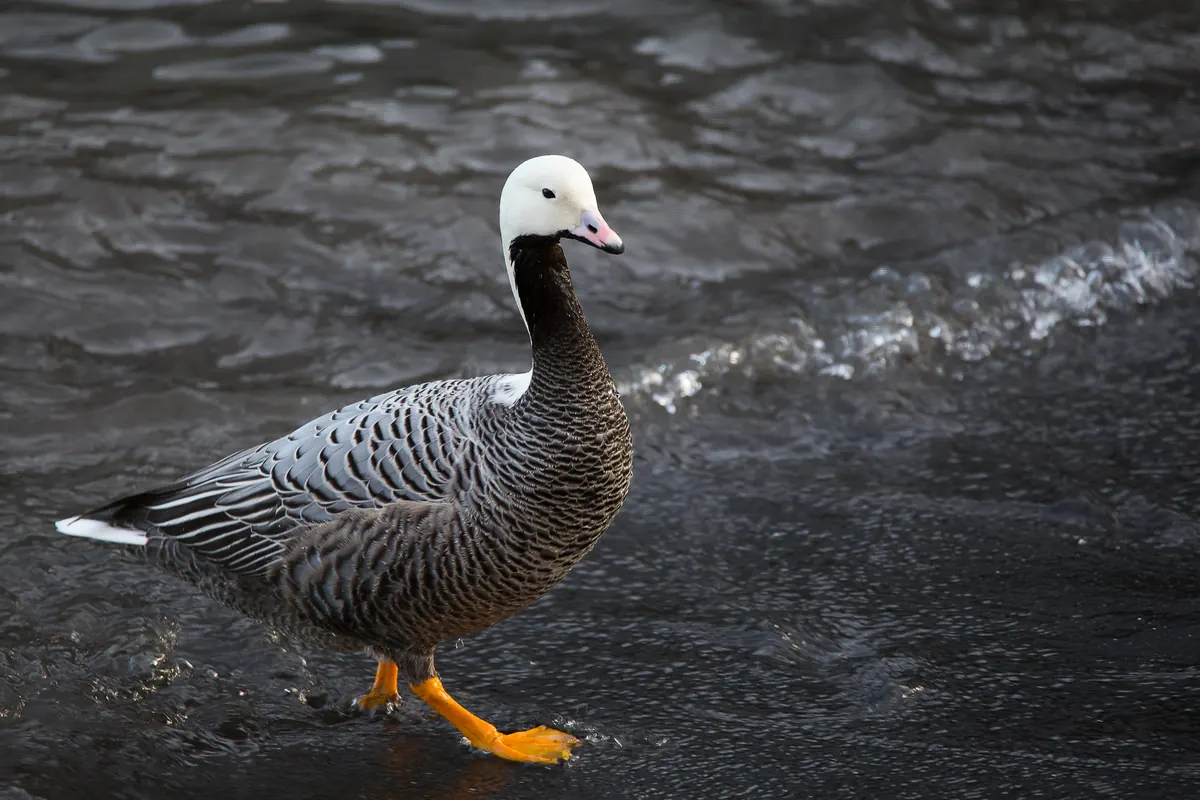
These blue-gray geese with white heads nest along the coast of western Alaska and travel only a few hundred miles to winter, along the rocky shores of Kodiak, the Peninsula and the Aleutians. In winter they switch from marsh plants and berries to seaweed, crustaceans and mollusks. ADF&G’s counts tell a recovery story: about 140,000 in 1964, down to 42,000 by 1986, and back to roughly 98,000 by 2015 after hunting was closed. The 2026–27 migratory bird regulations still list no open season for them anywhere in the state.
-
Black oystercatchers at Kodiak
Winter · Chiniak Bay, Kodiak
ADF&G says about a third of the world’s black oystercatchers winter in Chiniak Bay: all-dark shorebirds with long red bills on the rocks at low tide.
-
Redpolls and crossbills: the finch forecast
All winter · Birch and spruce forest; feeders statewide
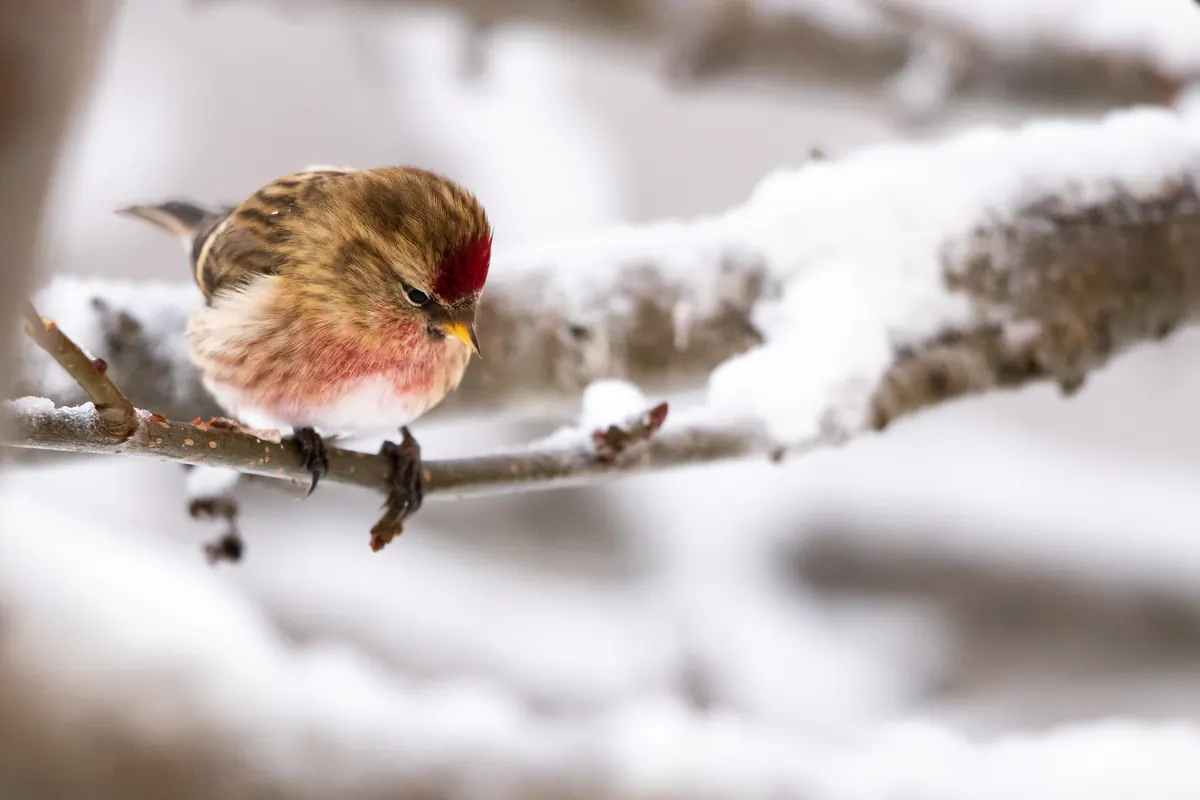
The Finch Research Network’s 2026–27 winter forecast, published September 25, describes an excellent spruce cone crop in a fairly narrow band from Alaska into parts of British Columbia, which should hold white-winged crossbills here. It also reports a strong mountain-ash crop across much of the boreal forest, good news for Bohemian waxwings and pine grosbeaks that would otherwise wander south. Redpolls, which Audubon now treats as a single species including the paler birds once called hoary redpolls, have a pouch in the throat that lets them gulp seeds quickly and digest them later in shelter, a big advantage on short, cold days.
-
Chickadees at 40 below
All winter · Woods and yards statewide
ADF&G says the gap between a black-capped chickadee’s body temperature and the winter air in Alaska can reach 150 °F. The birds manage by putting on about eight percent of their body weight in fat every day, burning it overnight, lowering their body temperature at night to save fuel, and caching food they can find again later.
-
Bohemian waxwings in town
From November, when they find the fruit · Anchorage, Fairbanks, Juneau and other towns with mountain-ash
Flocks roam for berries and can strip a yard tree in an afternoon; listen for their high trill.
Project FeederWatch, the Cornell Lab and Birds Canada’s winter survey, begins on November 1 and continues into April; U.S. participants pay $18 and count as often or as rarely as they like. In Alaska, put feeders out only once the bears around you are denned, and keep them clean.
What are moose, bears and hares doing in November?
-
Bull moose lose their antlers
Early winter, after the rut · Willow flats, river bottoms, city greenbelts
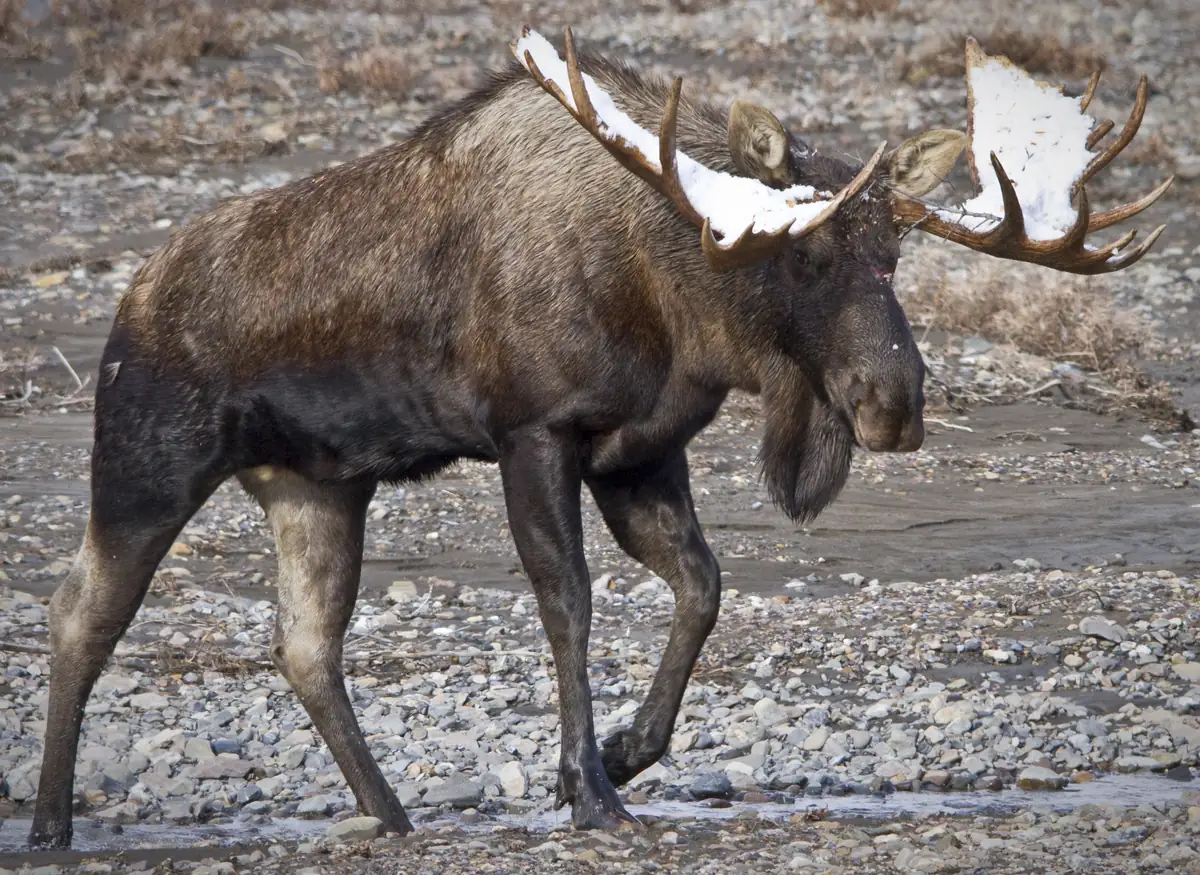
The National Park Service at Denali says bulls grow antlers each spring and drop them in early winter, after breeding is over, so November and December are when you start to see bulls with one antler or none. Moose then spend the winter in willow marshes and other good browse, tramping trails in deep snow as they paw for food. ADF&G notes they eat large amounts of willow, birch and aspen twigs in fall and winter, sometimes cropping a visible browse line six to eight feet up. That road-edge browse is a hazard: in the Matanuska Valley alone, ADF&G reports about 185 moose a year killed by vehicles.
-
Bears in their dens
Most denned by the end of November · Statewide
ADF&G says black bears den in October and November. On Kodiak, expectant mothers are the first brown bears underground and big males the last, and the department notes that some males skip denning and stay awake all winter. So a bear track in November snow is unusual but not impossible; keep the garbage locked up regardless.
-
White hares, white ptarmigan
Coats and plumage finish turning in fall · Forest and willow thickets statewide
Snowshoe hares and willow ptarmigan both turn white for winter, and once the snow is down they are easier to find by their sign than by sight. A hare’s big hind feet land ahead of its small front feet, leaving a track like an exclamation point turned sideways. Ptarmigan leave neat lines of three-toed prints between willow clumps.
After a calm night’s snowfall, go out early, before wind blurs the tracks.
Has Alaska had its first freeze by November?
Almost everywhere, yes. The NOAA 1991–2020 normals below show that Nome, Fairbanks, Bethel and Anchorage normally see their first 32 °F night in September or the first day of October, and Kodiak and Juneau’s airport by early October. By November the places still waiting are the mildest corners of the coast. Sitka is the standout: its median first freeze falls on November 1, and in the latest tenth of years Sitka is still waiting after November 21. Ketchikan’s median is October 23, but one autumn in ten it gets past November 10 without a frost, and Dutch Harbor’s late date is November 5.
| Station | One year in ten | Median | Nine years in ten |
|---|---|---|---|
| Nome Municipal Airport | Aug 15 | Sep 3 | Sep 22 |
| Fairbanks International Airport | Aug 29 | Sep 13 | Sep 24 |
| Bethel Airport | Sep 7 | Sep 22 | Oct 4 |
| Anchorage International Airport | Sep 18 | Oct 1 | Oct 14 |
| Kodiak Airport | Sep 22 | Oct 3 | Oct 17 |
| Juneau International Airport (Mendenhall Valley) | Sep 18 | Oct 3 | Oct 20 |
| Dutch Harbor (Aleutians) | Sep 20 | Oct 18 | Nov 5 |
| Ketchikan International Airport | Oct 3 | Oct 23 | Nov 10 |
| Sitka Airport | Oct 13 | Nov 1 | Nov 21 |
In the Interior and the west, the November story is freeze-up on lakes and rivers. The National Weather Service’s Alaska-Pacific River Forecast Center collects freeze-up observations for rivers across the state, tracking the date of first ice, full freeze-up, and when observers judge the ice safe for people and then for vehicles. Offshore, the Arctic Ocean is refreezing after a September minimum that the National Snow and Ice Data Center ranked tied for tenth lowest on record. Station-by-station frost dates for the whole state, including towns not in this table, are on the Alaska frost dates page.
How cold and snowy is November in Alaska, and what might El Niño do?
November is the month the Interior and the Arctic turn properly cold. By the NOAA 1991–2020 normals, Fairbanks averages a high of 12 °F and a low of −4 °F for the month, and Utqiagvik is barely warmer. Anchorage averages 29 °F by day and 18 °F at night with about a foot of snow. Southeast stays mostly above freezing in the daytime and wet: Ketchikan’s November normal is over 17 inches of precipitation, mostly rain. Bethel and Nome also average about a foot of snow; Kodiak gets half that.
| Station | Average high | Average low | Precipitation | Snowfall |
|---|---|---|---|---|
| Ketchikan | 43.7 °F | 35.6 °F | 17.07 in | not published |
| Sitka | 44.3 °F | 35.8 °F | 9.91 in | not published |
| Juneau | 38.3 °F | 29.2 °F | 6.54 in | 13.8 in |
| Kodiak | 41.2 °F | 30.2 °F | 7.06 in | 6.1 in |
| Anchorage | 28.9 °F | 18.3 °F | 1.19 in | 12.6 in |
| Bethel | 24.3 °F | 12.8 °F | 1.80 in | 13.2 in |
| Nome | 24.3 °F | 12.2 °F | 1.27 in | 12.1 in |
| Fairbanks | 12.3 °F | −4.1 °F | 0.74 in | 12.5 in |
| Utqiagvik | 11.5 °F | −0.1 °F | 0.37 in | 7.8 in |
El Niño. Federal forecasters see El Niño as all but certain: the Climate Prediction Center’s mid-September update put the odds above 90 percent that this winter’s event will be very strong. The agency’s formal December to February outlook comes out on October 15; the maps then go up with the rest of the CPC 90-day set. For Alaska, history says to expect a nudge rather than a shove. Brian Brettschneider, who manages climate services for the National Weather Service’s Alaska Region, found that 20 of 30 El Niño winters since 1925 were warmer than normal, driven by southerly winds off the Gulf of Alaska, and that they also tended toward less precipitation. He also cautioned that the state of the tropical Pacific explains no more than about a fifth of the year-to-year swings in Alaska’s winter temperatures. The USGS Climate Adaptation Science Centers rate the boost in odds of a slightly warm winter at only five to ten percent, largest in Southeast, and note that the Aleutian Low and North Pacific sea temperatures often matter more. For the forecast where you live this week, see the weather page.
What is in the sky over Alaska this November?
-
The Leonid meteors
Best before dawn on Wednesday, November 18; active November 6–30 · Look high in the east and south after midnight
The Leonid maximum falls at about 2:45 p.m. Alaska time on November 17, according to the International Meteor Organization, and this looks like a routine year: around 15 an hour at best from a site well away from town, with no storm of meteors in the forecast. That makes the mornings of the 17th, 18th and 19th the ones to try, and the 18th the best. The first-quarter moon sets well before dawn, and the radiant in Leo climbs highest in the hours before dawn, which in Alaska comes late.
-
The Taurids and their fireballs
Southern branch peaks November 5; northern branch November 12 · Taurus, high in the southeast in the evening
Two weak, drawn-out showers from debris shed by Comet Encke. Expect only a handful of meteors an hour, yet the Taurids are known for slow, bright fireballs. The new moon on the evening of November 8 falls neatly between the two peaks.
-
The Beaver Moon, a supermoon
Full at 5:53 a.m. AKST on Tuesday, November 24 · Rises around sunset
The November full moon is a modest supermoon, with perigee, the month’s closest pass, following about 30 hours after it. Expect a round moon on both Monday and Tuesday evening, and from Alaska it rides very high in the sky through the long night. Overnight on the 23rd it slides across or past the Pleiades, but the moonlight swamps the little star cluster.
-
Planets before dawn
All month; Mars and Jupiter closest on the mornings of November 15 and 16 · South and southeast before sunrise
Jupiter and Mars are morning planets in Leo, and they pass about a degree apart before sunrise on November 15 and 16, a fine pairing in binoculars. Venus has swung into the morning sky and grows brighter all month, peaking in brightness in the last week of the month, though from Alaska it stays fairly low in the southeast. After dark, look south for Saturn, the lone bright evening planet. Uranus, a faint green dot for binoculars not far from the Pleiades, is at opposition on November 25, though the bright moon gets in the way that week.
| Phase | Date | Time |
|---|---|---|
| Last quarter | Sunday, Nov 1 | 11:28 a.m. |
| New moon | Sunday, Nov 8 | 10:02 p.m. |
| First quarter | Tuesday, Nov 17 | 2:48 a.m. |
| Full moon, the Beaver Moon | Tuesday, Nov 24 | 5:53 a.m. (looks full Nov 23 and 24) |
| Last quarter | Monday, Nov 30 | 9:08 p.m. |
Moonrise and moonset swing wildly at Alaska’s latitudes from one night to the next; the moon phases page gives the times for your own town.
What can families do outside in Alaska this November?
- Count birds from the kitchen window. Project FeederWatch starts November 1. Redpolls, chickadees, nuthatches and woodpeckers all count, and a count can be as short as you like.
- Go to Sitka WhaleFest, November 5–9. The student art show and film night on the 5th, the run and walk on the morning of the 7th, and the whale-watching cruises on the 7th and 8th are the most family-friendly parts.
- Ride out to the eagles at the Alaska Bald Eagle Festival in Haines, listed for November 6–8. Check the American Bald Eagle Foundation’s events page for the final schedule.
- Make feeders at Thanksgiving for the Birds, Saturday, November 14. The Friends of Creamer’s Field list the event from noon to 4 p.m. at the Farmhouse Visitor Center in Fairbanks, with crafts and an introduction to the birds that winter in the Interior.
- Watch rams at Windy Corner. Pick a calm weekend afternoon, park properly in a turnout at milepost 106 of the Seward Highway, and bring binoculars.
- Look for Leonids before school on Wednesday, November 18, while the sky is still dark. Give your eyes 15 minutes to adjust.
- Try Anchorage Audubon’s November evening program, Thursday, November 19, 6 to 7:30 p.m. The chapter lists the date and time, but had not posted the topic or venue by early October, so check its website.
- Watch the Beaver Moon rise on Monday, November 23, or Tuesday, November 24. It rises around sunset, which in November is well before bedtime.
- Get outside the day after Thanksgiving, November 27, in the middle of the day, when the light is best.
- Start a snow log: the date your pond freezes, and snow depth on the first of each month.
- Sign up for a Christmas Bird Count. The 2026–27 counts run December 14 to January 5. Audubon’s map shows the count circles and compilers in Alaska; feeder watchers inside a circle can often take part from home.
Guides for other months and other states are collected on the nature index, and last month’s Alaska page, with bears, swans and the first snow, is at October in Alaska.
Safety notes for November in Alaska
- Ice. New ice is deceptive. River ice forms unevenly and stays thin over currents, near inlets and outlets, around springs and under snow, which insulates it. Do not trust any ice you have not tested or that local people are not already using, and hold kids and dogs back from new pond ice until someone has measured it. The Alaska-Pacific River Forecast Center’s freeze-up reports are a useful guide to rivers, but they do not replace a chisel and a tape measure.
- Cold and wind. With Fairbanks averaging lows below zero and the coasts windy, frostbite comes fast on exposed skin. Tell someone where you are going, carry extra layers, and keep a winter kit in the car.
- Short days. Anchorage is down to about six hours of sun by November 30, and the north has far less. Start hikes by late morning, turn around early, and carry a headlamp even on short walks.
- Moose on dark roads. Moose feed along road edges and railway lines in winter and are almost invisible in the long dusk. Slow down, especially where willows crowd the road.
- Avalanches. Early-season snow in the mountains can slide, often on a weak base. In Southcentral, the Chugach National Forest Avalanche Information Center forecasts for Turnagain Pass, Girdwood, Summit Lake, Seward, Chugach State Park and Hatcher Pass; check it, or your local center, before heading onto steep slopes.
- Hunting. Seasons in Alaska vary by Game Management Unit and are listed unit by unit in ADF&G’s 2026–2027 regulations booklet, valid until June 30, 2027. Some that overlap November: on Kodiak’s road system, deer may be taken by bow, crossbow or muzzleloader only from November 1 to 14, then by youth hunters aged 10 to 17 with those weapons from November 16 to December 31 (across the remainder of Unit 8, deer of either sex may be taken October 1 to December 31); in the Anchorage Management Area of Unit 14C, an antlerless moose permit hunt by shotgun or muzzleloader runs November 1–30; and in Unit 22B east of the Darby Mountains, residents may take an antlered bull from November 1 to December 31. Duck seasons, from ADF&G’s 2026–2027 migratory bird regulations, run September 1 to December 16 in the Gulf Coast and Northern zones, September 1 to November 30 in Southeast (closed December 1–15, then open again December 16–31), and October 8 to January 22 in the Kodiak and Pribilof/Aleutian zones. Emperor geese have no open season anywhere.
- Blaze orange. Alaska does not have a general hunter orange law; the 2026–27 regulations require orange outerwear only in a few special areas, such as the Hatcher Pass Youth Management Area. ADF&G’s hunter education program points out that orange clothing is still proven to cut hunting accidents. If you walk or ski where hunting is open, wear something bright, and dress your dog in orange too.
When you come in from the cold, a few lines on paper keep the day. Most of what this page describes has its own plate in the Naturalist’s Field Journal.
Sources
- U.S. Naval Observatory: sun and moon rise and set for one day (Utqiagvik last sunset, November 18, 2026)
- U.S. Naval Observatory: phases of the moon, 2026
- U.S. Naval Observatory: Earth’s seasons and apsides, 2026
- UAF Geophysical Institute: aurora forecast, viewing tips and Fairbanks viewing spots
- NOAA Space Weather Prediction Center: Solar Cycle Progression
- NOAA Space Weather Prediction Center: observed solar cycle indices (monthly sunspot numbers)
- Alaska State Parks: Alaska Chilkat Bald Eagle Preserve
- ADF&G: Haines and the Bald Eagle Preserve, wildlife viewing
- American Bald Eagle Foundation: Alaska Bald Eagle Festival
- Travel Alaska: Alaska Bald Eagle Festival, November 6–8, 2026
- Sitka WhaleFest 2026: November 5–9, schedule and cruises
- NOAA Fisheries: Humpback whale
- ADF&G: Kodiak Island wildlife viewing (sea lions, black oystercatchers)
- ADF&G: Unalaska wildlife viewing (winter emperor geese)
- ADF&G: Dall sheep species profile
- ADF&G: Mountain goat species profile
- ADF&G: Windy Corner wildlife viewing, Seward Highway milepost 106
- ADF&G: Emperor goose species profile
- ADF&G: Black-capped chickadee species profile
- Finch Research Network: Winter Finch Forecast 2026–2027
- Audubon Guide to North American Birds: Redpoll
- Audubon Guide to North American Birds: Bohemian waxwing
- Project FeederWatch: project overview and 2026–27 season
- National Park Service, Denali: Moose
- ADF&G: Moose species profile
- ADF&G: Black bear species profile
- ADF&G: Snowshoe hare species profile
- ADF&G: Willow ptarmigan species profile
- NOAA NCEI: U.S. Climate Normals, 1991–2020 (freeze dates, temperature, precipitation, snowfall)
- NOAA Regional Climate Centers: Applied Climate Information System (November station normals)
- NWS Alaska-Pacific River Forecast Center: freeze-up observations
- National Snow and Ice Data Center: Arctic Sea Ice News, 2026 minimum
- NOAA Climate Prediction Center: ENSO diagnostic discussion, September 10, 2026
- NOAA Climate Prediction Center: 90-day seasonal outlooks (winter outlook due October 15, 2026)
- NOAA Climate.gov: Moose tracks through Alaska and ENSO
- USGS Climate Adaptation Science Centers: Regional super El Niño impacts, Alaska
- International Meteor Organization: 2026 Meteor Shower Calendar
- EarthSky: What is a supermoon? (2026 full supermoons)
- NASA JPL Horizons ephemeris system (planet positions and conjunctions)
- EarthSky: Uranus at opposition
- Friends of Creamer’s Field: program and event schedule (Thanksgiving for the Birds, November 14)
- Anchorage Audubon Society
- National Audubon Society: Christmas Bird Count
- ADF&G: 2026–2027 Alaska Hunting Regulations (complete booklet)
- ADF&G: 2026–2027 Alaska Migratory Game Bird Hunting Regulations
- ADF&G: Hunter education (hunter orange)
- Chugach National Forest Avalanche Information Center
- ADF&G: Kodiak brown bear fact sheet
- eBird
- Photos via Wikimedia Commons; licenses and photographers are credited under each picture
