What to look for in nature in Alaska this May
May is the month Alaska finally turns green and loud. The last freeze of spring arrives for most of the southern coast and the Interior during the month, the Sun climbs until Fairbanks has nearly twenty and a half hours of daylight by May 31, and in Utqiagvik the Sun stops setting altogether on May 12. Sandhill cranes pour over the Tanana Valley by the tens of thousands, millions of shorebirds drop onto the tide flats at Cordova and Homer, birch and aspen leaves open in a single week, and moose, caribou and Dall sheep begin to give birth. Cordova’s shorebird festival has already posted its 2027 dates, May 6 to 9. Every entry that follows names a usual timing, where to look and who says so, and a late spring can shift any of it by a week or more.
Other months in Alaska: October, November, December, January, February, March, April.
Start here
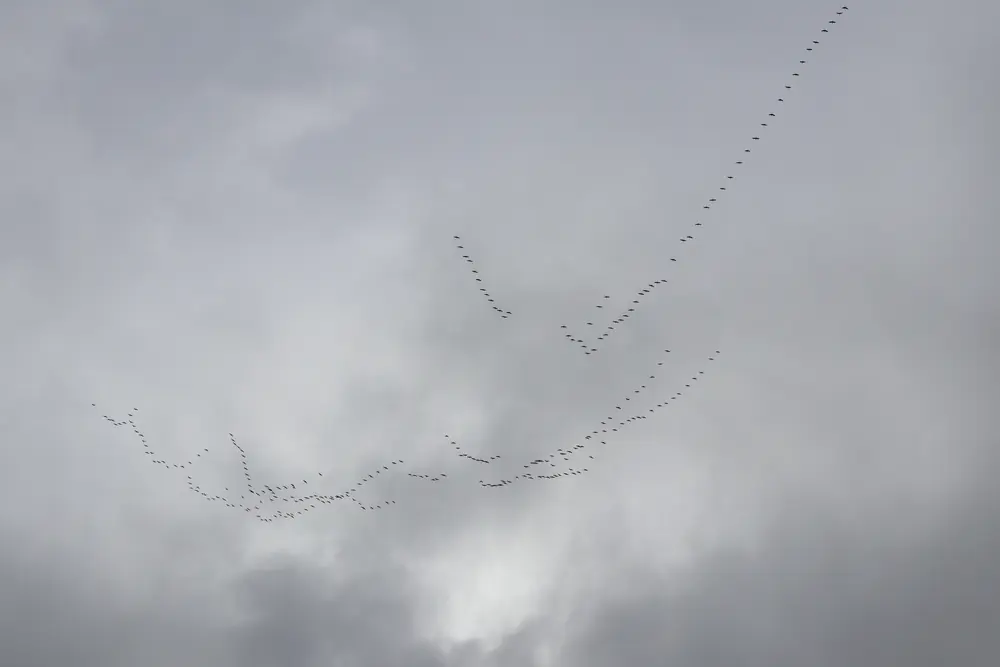
- A crane flight overhead. Step outside in the first half of May near Delta Junction, Fairbanks or the Susitna Valley and listen. Cranes call loudly enough to be heard from a long way off, and the main passage lasts only about a week in any one place.
- The day the birch leaves open. Pick one birch and photograph it every two days from the start of May. In Fairbanks the long-term average date for the faint green flush of green-up is May 8.
- The Flower Moon rising late on May 19. Full at 2:59 a.m. AKDT on Thursday, May 20, which makes the previous evening best; in Anchorage it rises at about 11:27 p.m., low in the southeast.
Record it: In the Naturalist’s Field Journal, May suits the same place twice plate best, with one photograph of a birch or willow on May 1 and another on May 31 to show green-up. Birds I have seen is for the first crane, shorebird and swallow of the year, and a map of sounds fits the roar of a crane flight and the trill of a Lapland longspur. Nest observed is for a trumpeter swan on its mound or a raven pair feeding young, mammal watch for a cow moose and her calf seen from far away, and the plate for watching dusk and dawn is for the oddity that Utqiagvik has no dusk at all after May 11. The daily field log holds the date the lake ice goes out and the first mosquito.
Regions used below: Southeast and the Inside Passage; Southcentral: Anchorage, Mat-Su and the Kenai; Interior and Fairbanks; Southwest: Kodiak, Bristol Bay, the Alaska Peninsula and the Aleutians; Western Alaska: the Y-K Delta and Seward Peninsula; Arctic and the North Slope.
How much daylight does Alaska gain in May, and when does the Sun stop setting?
The climb slows in May but the numbers are still large. Anchorage adds two hours and 27 minutes between May 1 and May 31 and finishes the month with 18 hours 41 minutes of Sun, Fairbanks adds nearly three and a half hours and reaches 20 hours 30 minutes, and Ketchikan, the slowest of the eight towns in the table, adds one hour and 43 minutes. Only a few weeks remain before the June solstice, when the daily gain falls to nothing.
Utqiagvik is on the edge of the continuous daylight. According to the U.S. Naval Observatory, the last sunset of the spring comes in the early hours of Tuesday, May 11, at 2:20 a.m. AKDT, with sunrise at 2:26 a.m., a gap of only six minutes. From May 12 the Sun stays above the horizon all day and night until the first sunset of late summer, on August 2. The table shows “no sunset” for May 31 for that reason, and the gain columns for the town are blank.
-
Utqiagvik’s midnight sun begins
Sun stays up from May 12 to August 1, per the U.S. Naval Observatory · Utqiagvik; the rest of the North Slope is similar
The Sun does not go down at all for about 82 days, so there is no dusk to watch for and no darkness for the aurora. Fairbanks and Nome keep a nightly sunset all summer, though by the end of May their nights are short twilights.
-
Memorial Day
Monday, May 31, 2027 · Statewide
Memorial Day is the last Monday in May, and in 2027 that is May 31. In Alaska it also marks the start of the busy visitor season, so roads and trailheads fill up quickly.
| City | May 1 | May 31 | Gained | Per day |
|---|---|---|---|---|
| Ketchikan | 15 h 19 m | 17 h 02 m | 103 min | 3.4 min |
| Juneau | 15 h 43 m | 17 h 44 m | 121 min | 4.0 min |
| Kodiak | 15 h 39 m | 17 h 36 m | 117 min | 3.9 min |
| Anchorage | 16 h 14 m | 18 h 41 m | 147 min | 4.9 min |
| Bethel | 16 h 10 m | 18 h 31 m | 141 min | 4.7 min |
| Fairbanks | 17 h 03 m | 20 h 30 m | 207 min | 6.9 min |
| Nome | 16 h 58 m | 20 h 16 m | 198 min | 6.6 min |
| Utqiagvik | 19 h 46 m | no sunset | — | — |
Sunrise and sunset for any Alaska town can be looked up on the daylight page. Alaska is on daylight time all of May, so every clock time you read already includes the hour added on March 14. The western Aleutians keep a clock one hour behind the rest of the state.
Where can I see the big sandhill crane flights in May?
The sandhill crane is the sound of an Alaskan May. ADF&G reports that the cranes of the Mid-continent population fly through the Tanana Valley between Delta Junction and George Lake in early May and again in mid-September, about 200,000 birds in all, with up to 50,000 passing in a single day at the peak. Cranes headed for northeast Siberia also use the route, at least 50,000 of them. Most of this traffic is a passage, not a stay, and it depends on the weather: a cold front can stall the flocks or compress them into a few days.
-
Delta Junction and the Tanana Valley
Early May, per ADF&G; a week or so at any one place · Fields and river flats around Delta Junction, then northwest toward Fairbanks
Outdoor columnist John Schandelmeier wrote in the Anchorage Daily News that the flight trails the first swans and geese by about three weeks, by which time the fields are bare and leftover grain is easy to find. He also noted that cranes “sound out” overhead near Delta Junction for only about a week, and that their calls carry for more than a mile.
-
Dale Saunders Crane Sanctuary, Trapper Creek
Mid to late April and early May, per the Great Land Trust · Saunders Road, east of the Parks Highway near mile 114.8
The trust asks visitors to watch from the road and not walk into the barley field. Its guide also lists Settlers Bay in Wasilla and the Campbell Creek and Fish Creek estuaries in Anchorage, where a few pairs stay to nest and low tide brings more activity.
-
Cranes at the Copper River Delta
Spring passage, with the shorebirds · Cordova area
ADF&G puts the number of cranes using the Copper River Delta at about 20,000 and the Yukon Flats near Eagle at about 8,000. The department lists them with the Tanana Valley among the places where cranes gather.
-
Cranes settle in to nest
Early to mid-May on the breeding grounds, per ADF&G · Wet tundra, marshes and muskeg statewide
A pair usually lays two eggs, and both parents sit for about 30 days. The chicks walk soon after hatching and take roughly two to two and a half months to fly. Nesting pairs are easily disturbed, so watch from a distance.
-
Trumpeter swans on their mounds
Laying begins as early as thaw allows; eggs hatch after 31 to 35 days, per ADF&G · Undisturbed ponds and lake edges, Southcentral to the Interior
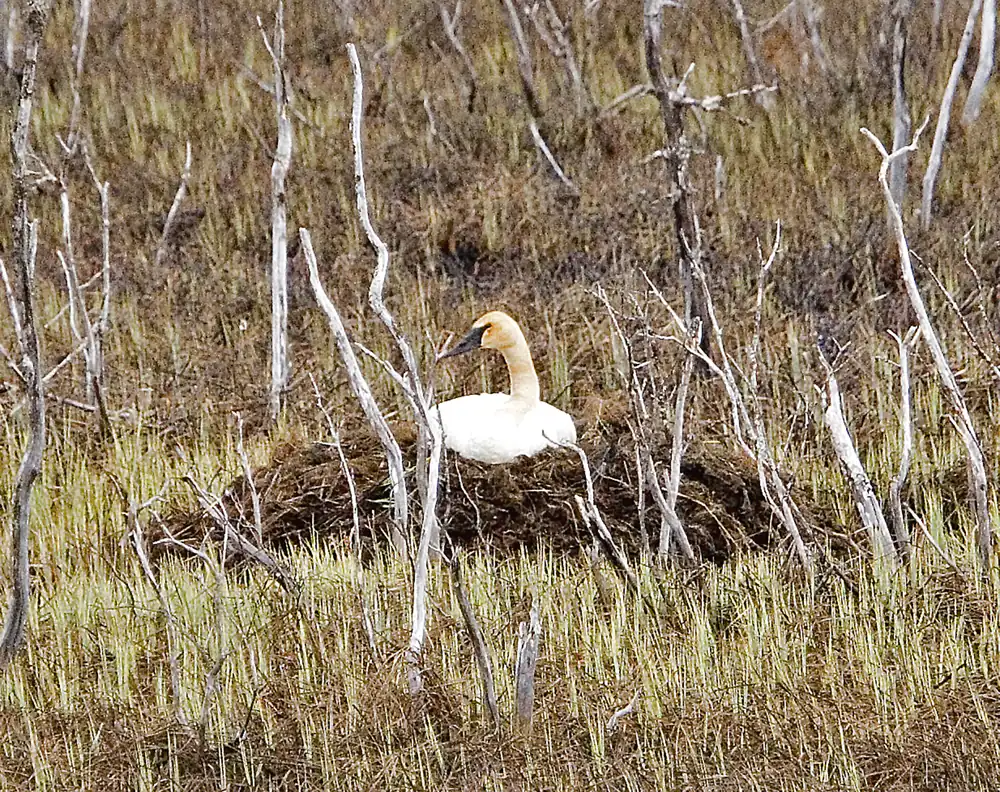
A female lays two to seven eggs, four on average, on a mound of uprooted plants that can be six to twelve feet across. ADF&G calls swans very sensitive to disturbance, and says heavy human activity near a chosen nest site can cost a whole season. A 1990 census counted over 13,000 trumpeters in Alaska, more than 80 percent of the world population. Use binoculars, stay off the shoreline, and keep dogs on a leash.
-
Songbirds and the next wave at Creamer’s Field
At least another 100 species arrive in May, per the Fairbanks Daily News-Miner · Creamer’s Field Migratory Waterfowl Refuge, Fairbanks
On the refuge, the Alaska Songbird Institute operates what it describes as the most northerly bird banding station on the continent; its crew banded 33 species there in 2025. The institute’s site lists its calendar and a volunteer page; check them for the spring banding schedule.
April’s page for the month before covers the first geese and swans; by May the waterfowl are on nests and the arrivals are cranes, shorebirds, swallows and the warblers that sing from every willow thicket.
Where do millions of shorebirds stop in Alaska in May?
Two coastal areas of Southcentral Alaska are famous for the shorebird rush, and both hold festivals tied to it. The birds stop to feed on the tide flats on their way north to tundra breeding grounds, so the best days follow the tide and the weather more than the calendar.
-
Copper River Delta Shorebird Festival
May 6 to 9, 2027, per the festival’s website · Cordova and the Copper River Delta
The organizers list expert speakers, classes, guided birding trips, art and culture events, kids’ activities and social events, and call the delta a site of hemispheric importance. The page uses two different numbers for the festival’s anniversary, so check the program for the edition.
-
Millions on the tide flats
Every May, per Audubon Alaska · Copper River Delta, near Cordova
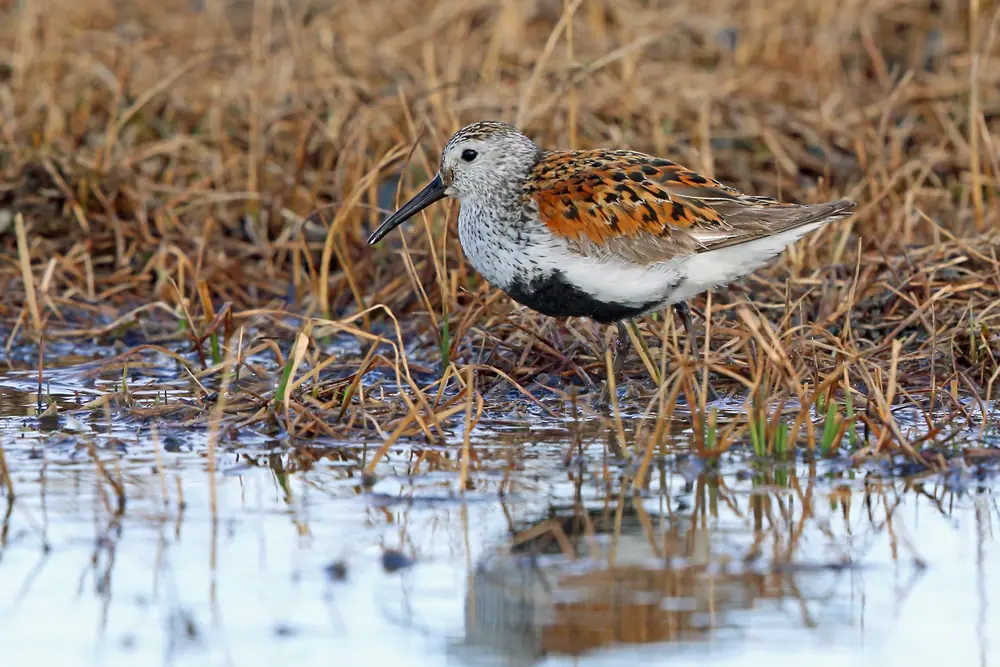
Audubon Alaska calls the delta the largest contiguous wetland system on the Pacific coast of North America and says up to 5 to 8 million migratory shorebirds gather there to rest and refuel each spring, with western sandpipers and dunlin in the largest numbers. That is an estimate for a whole migration, not a count on one day, so treat it as a measure of scale.
-
Kachemak Bay Shorebird Festival
Annual, in early May; the 2027 dates were not posted when we looked, and registration was announced to open in March 2027 · Homer, with events at the Alaska Maritime National Wildlife Refuge headquarters
A U.S. Fish and Wildlife Service listing describes it as Alaska’s largest wildlife viewing festival, tied to World Migratory Bird Day, and the festival’s own page says it offered 183 events in 2025. Check kachemakshorebird.org for the 2027 schedule and sign-up.
-
World Migratory Bird Day
2026 was May 9 and October 10; the 2027 dates were not posted when we looked · Worldwide, with local events
The official site showed only 2026 dates. Other calendar sites give different days for 2027, so rely on the organizers’ own page for the date.
Respect the birds’ feeding time: shorebirds on a flat are burning fuel for a flight of thousands of miles, and a walker or a loose dog that sends a flock into the air costs them energy they cannot spare. Stay on trails and boardwalks and watch from a distance.
When do the trees leaf out in Alaska, and what blooms first?
The green-up is the best-tracked event of the Alaskan spring. At the University of Alaska Fairbanks, observers have watched birch and aspen on Chena Ridge since 1974 and record the day the leaves open enough to give the forest canopy a faint but distinct green flush. The long-term average for that day is May 8, according to the university. Warmth is the driver: the same page tracks a heat sum that adds up how far each day’s high exceeds 32 °F, and a cold April pushes everything later.
-
Green-up in the Interior
Average May 8 at Fairbanks; later after a cold April, earlier after a warm one · Birch and aspen stands on south-facing hills first
A climate specialist quoted by the university said that forecasts made weeks ahead carry large uncertainty, so a better estimate comes only in early May. The leaves are tiny at first; the whole hillside seems to change color over a few days.
-
The pollen burst
Usually within a day or two after green-up · Birch stands around Fairbanks and Southcentral
The same report says a burst of birch pollen typically follows green-up within a day or two. People with allergies in the Interior can use the green-up date as a warning.
-
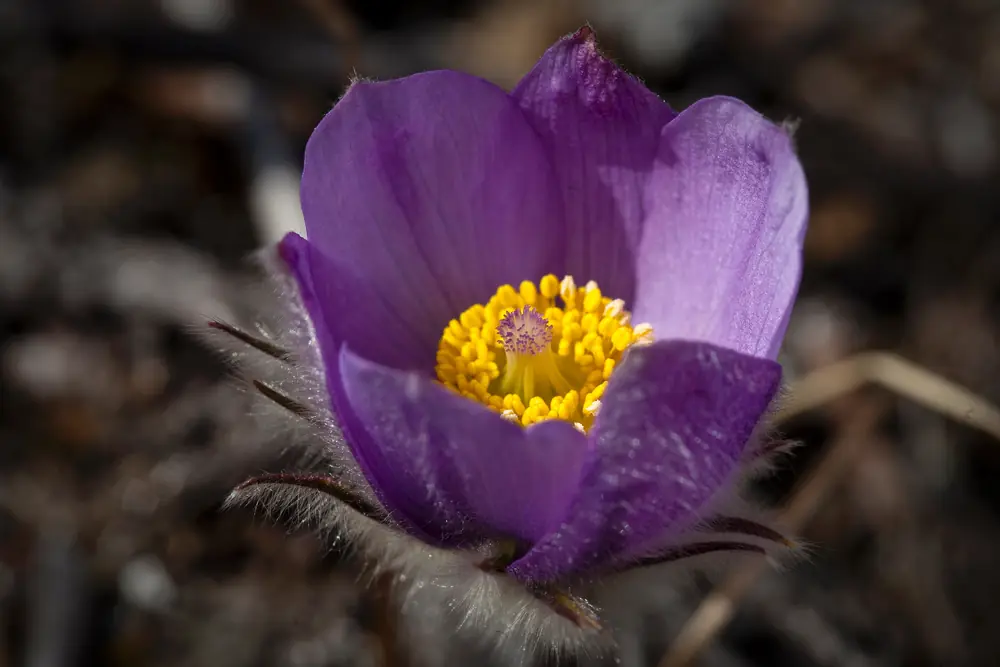
Pasqueflower
Starts blooming in May while patches of snow remain · South-facing hillsides; the Boreal Forest Trail at Park Headquarters in Copper Center
The National Park Service calls it the first spring flower to bloom in Wrangell-St. Elias. The furry gray buds you saw in April now open into purple cups. The park lists the next flower, arctic lupine, as a June bloom.
For a project that counts, try the Naturalist’s Field Journal or sign up as an observer with Nature’s Notebook, which takes leaf-out reports from Alaska. A single tree watched from bud to leaf is worth more than a dozen glimpses.
When are moose, caribou and Dall sheep born, and what should I do if I find a baby animal?
The birthing season opens in the second half of May. An ADF&G news release from May 29, 2026, said that moose calves, bear cubs and other newborn wildlife were being seen across Alaska, with most appearing between mid-May and the end of June. The department’s advice has not changed: resist the urge to approach or rescue, because a protective mother is almost always nearby.
-
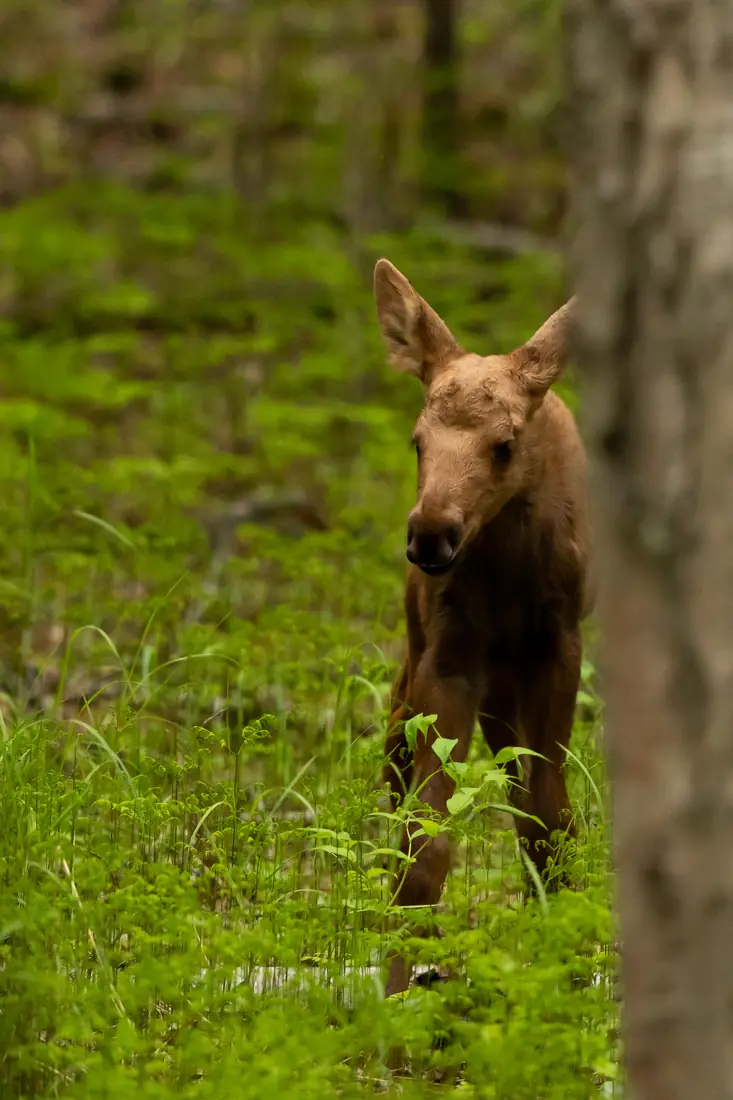
Moose calves
Late May and June; most births mid-May to the end of June, per ADF&G · Willow flats, forest edges and, in Anchorage, yards and parks
ADF&G says cow moose are particularly dangerous around calving, and attacks on people and pets are reported every spring. Usually one calf is born, or twins in good years, and newborns weigh only about 28 pounds. The department advises avoiding narrow brushy trails, keeping dogs leashed, and never trying to haze a moose: it may turn and attack.
-
Caribou calving
Mid to late May in the Interior; early June in northern and southwestern Alaska, per ADF&G; mid-May to early June in Denali, per the National Park Service · Mountains and open coastal tundra; each herd keeps its own calving area
Newborn calves average about 13 pounds and can double their weight in 10 to 15 days. The park service says Denali’s cows travel to the calving grounds in spring and give birth shortly after arriving, and that about 1,760 caribou live in the park. ADF&G lists 31 herds in the state. Do not approach a cow with a calf for a photograph.
-
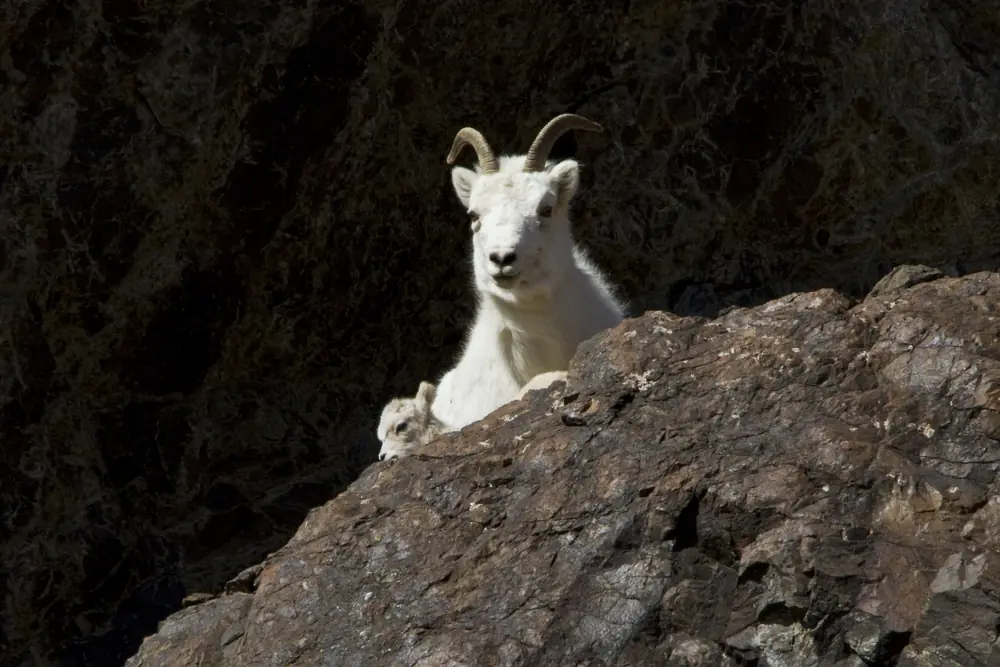
Dall sheep lambs
Late May or early June, per ADF&G · Rugged cliffs on spring ranges in the Alaska Range, Brooks Range and other mountains
Ewes seek solitude in steep, rocky terrain before lambing. Watch from a distance with a spotting scope and do not scramble toward a ewe and lamb.
-
Bear cubs
Mostly seen from May on, per ADF&G · Anywhere bears live
ADF&G notes that sows often send cubs up a tree to wait while they look for food, so a lone cub is not an orphan. If you meet a cub, leave the way you came and give the area a wide berth.
If an animal appears to have been alone for more than 48 hours, or is obviously injured, the release says to contact the nearest ADF&G office during business hours or use the department’s online wildlife report. Picking up or feeding a wild animal is illegal and often kills it.
What returns to the water in May: whales, salmon and ice?
The sea comes alive more slowly than the land. By the end of May the ice is gone from most of the southern rivers, the first king salmon head upstream, and humpback whales are settling in to feed.
-
Humpback whales return to feed
Spring arrival; feeding is almost entirely in summer, per ADF&G · Southeast Alaska and Prince William Sound
ADF&G reports that humpbacks return to Alaska in the spring and concentrate in several areas, with Southeast and Prince William Sound among them. A whale can eat up to 1.5 tons of krill and small fish a day. The department estimates about 20,000 animals in the North Pacific stock and 10,000 in the Central North Pacific stock.
-
Ship Creek king salmon
Late May through mid-July in the department’s run-timing guide, printed in 2022 · Ship Creek, Anchorage
ADF&G’s Anchorage guide lists late May as the start of the king salmon season in the creek, and lists hooligan in the Twentymile River from April through May, with the run timing described as highly variable. Only Alaska residents may dip-net hooligan. Fishing regulations and emergency orders change every year, so read the current Southcentral summary before you go.
-
The Copper River opener
ADF&G planned the 2026 first commercial period for Friday, May 22; the 2027 plan comes out in the spring · Copper River District, near Cordova
ADF&G’s advisory for 2026 also set a single 16-hour subsistence period on May 16 before the commercial opener. Watch ADF&G’s Prince William Sound announcements for what happens in 2027.
Boaters should follow the current federal viewing rules for marine mammals and keep well back from whales. Seals hauled out on beaches should be left alone.
What opens, ends or is celebrated in Alaska nature in May?
Spring in Alaska has a schedule of its own: roads open, permits change and a few fixed-date festivals light up the calendar. Most 2027 summer plans have not been posted yet, so the entries below say where to check.
-
Denali’s summer season
Mid-May to mid-September each year, per the National Park Service; full bus service along the park road is planned for 2027 · Denali National Park and Preserve
The park’s conditions page says full bus service on the road is to resume once the Pretty Rocks bridge is complete, and that bus and campground reservations for 2027 open December 1, 2026. It last updated that page on October 6, 2026, and asks visitors to check back. Check the park’s page for the 2027 opening dates and vehicle rules.
-
Nenana Ice Classic breakup
Historic window April 20 to May 20; average May 5 in the 1917 to 2014 record · Tanana River at Nenana
The 2026 tripod fell on May 4 at 6:58 p.m. by the organizers’ official clock, which runs on Alaska standard time, and the 2026 jackpot was $144,749. Tickets cost $3 and had to be turned in between February 1 and April 5 in 2026. The 2027 window is not announced, so check the organizers’ site.
-
Kodiak Crab Festival
Annual, held over Memorial Day weekend in 2026 (May 21 to 25); the 2027 dates were not posted · Kodiak
The 2026 festival was the 68th, and began in 1958 as the King Crab Festival. It is more of a town festival than a nature program, but whale watching and tide-pool walks are good sidelines on the island. Check the Kodiak Visitors Center for the 2027 schedule.
-
Burn permits and wildfire season
April 1 through August 31 each year · Statewide, in areas covered by the state forestry program
The Division of Forestry and Fire Protection says campfires under three feet across with flames under two feet long need no permit, and that permits for other burning are free. In May 2026 the division suspended burn permits in the Delta area (April 30, and again May 4 and 5) and in part of the Fairbanks area (from May 1) because of dry grass, wind and high fire danger. Expect the same kind of suspension in a dry, windy May.
The best check on any of these is the organizer’s own page, a week before you go.
What is May weather like in Alaska, and what is the risk of wildfire and flooding?
May is when the cold finally lets go. Fairbanks averages a high of 62.1 °F and a low of 38.6 °F, with about 6.2 nights at or below freezing. Anchorage averages 56.3 °F and 40.0 °F, with 2.7 freezing nights. Utqiagvik has an average high of 26.9 °F and still has 30.4 nights at or below 32 °F. All of these figures are 1991 to 2020 normals published by NOAA’s climate data center.
-
Dry grass and the fire danger
Late April through early June, before green-up · Interior and Southcentral grasslands and brush
The forestry division warns that dead grass exposed by snowmelt can dry out in just a few hours of sunshine. May is the main month for escaped debris fires. Keep fires small and fully out, and check for a local suspension before burning.
-
Breakup and high water
Late April into May for many Interior rivers, varying by year · Tanana, Yukon, Kuskokwim and their tributaries
Ice jams can send water over banks quickly. The Nenana record is a good gauge: ice has gone out as early as April 14 (2019) and as late as May 20, per the Anchorage Daily News, and the average has trended earlier by about five days in recent decades. If you live near a river, watch for flood statements from your local National Weather Service office.
-
Cold snaps after green-up
Any time in May · Valleys and low ground
A late freeze after the buds open can wilt garden plants and slow insects, and it can silence the first wave of songbirds. Row covers and a watchful eye on the forecast protect transplants.
| Station | Average high | Average low | Snowfall | Precipitation (water) | Nights at or below 32 °F |
|---|---|---|---|---|---|
| Ketchikan | 56.9 °F | 43.3 °F | not published | 8.68 in | 1.4 |
| Sitka | 53.3 °F | 43.0 °F | not published | 3.81 in | 0.2 |
| Juneau | 57.6 °F | 40.3 °F | 0.0 in | 3.51 in | 2.1 |
| Valdez | 55.6 °F | 39.8 °F | 3.4 in | 3.02 in | 1.4 |
| Kodiak | 51.7 °F | 39.9 °F | 0.5 in | 5.85 in | 2.6 |
| Anchorage | 56.3 °F | 40.0 °F | 0.3 in | 0.65 in | 2.7 |
| Bethel | 52.0 °F | 34.1 °F | 1.9 in | 1.21 in | 12.5 |
| Nome | 43.6 °F | 30.9 °F | 1.9 in | 0.89 in | 17.9 |
| Fairbanks | 62.1 °F | 38.6 °F | 0.9 in | 0.54 in | 6.2 |
| Utqiagvik | 26.9 °F | 18.5 °F | 3.4 in | 0.28 in | 30.4 |
The Climate Prediction Center at NOAA puts out a new seasonal outlook monthly. Its newest maps are posted on the 90-day outlook page. For a forecast covering the next few days, see the weather page, while the clouds page explains the towering afternoon cumulus that builds on warm days.
When is the last spring freeze in Alaska?
In May, for much of the state. Ketchikan’s airport has its median final freeze on April 22. Juneau, Anchorage and Kodiak reach theirs on May 4 or 5, Fairbanks on May 13, Bethel on May 21 and Nome not until June 5 (NOAA, 1991 to 2020). So a bright, warm May afternoon is not a safe signal to put tender plants outdoors in the Interior or the west.
| Station | One year in ten | Median | Nine years in ten |
|---|---|---|---|
| Fairbanks International Airport | May 2 | May 13 | May 26 |
| Anchorage International Airport | Apr 24 | May 5 | May 15 |
| Juneau International Airport (Mendenhall Valley) | Apr 23 | May 4 | May 18 |
| Kodiak Airport | Apr 19 | May 5 | May 21 |
| Bethel Airport | May 8 | May 21 | Jun 2 |
| Nome Municipal Airport | May 20 | Jun 5 | Jun 26 |
| Ketchikan International Airport | Apr 2 | Apr 22 | May 9 |
More than these seven stations are on the Alaska frost page. The first date in each row is the early one, a date only about one spring in ten has already seen its last freeze.
What is in the sky over Alaska in May 2027?
All times below are AKDT, Alaska daylight time, and the far western Aleutians run an hour earlier. The nights are very short, and by late May true darkness is gone from most of the state, so this is a month for the Moon and the bright planets, not for faint objects or the aurora.
-
The Flower Moon, a seasonal Blue Moon
Full at 2:59 a.m. AKDT on Thursday, May 20; the best evening is Wednesday, May 19 · Rises in the southeast late at night: about 11:27 p.m. in Anchorage on May 19
Call it the Flower Moon first. It is also the third of four full moons in astronomical spring (namely Mar. 22, Apr. 20, May 20 and Jun. 19), which some almanacs call a seasonal Blue Moon. No month of 2027 holds two full moons, so the calendar version of a Blue Moon never happens this year. The evenings of May 18 and May 20 are nearly as good.
-
Eta Aquariid meteors, a poor show for Alaska
Peak night May 5 to 6, with a new moon on May 6 · Southeast sky just before dawn
The Sea and Sky calendar calls it an excellent year in the lower 48, and the American Meteor Society also puts the peak on May 5 to 6 with the Moon only a thin crescent. In Alaska the radiant rises only shortly before dawn and May twilight is already bright, so counts will be low. Do not plan a trip around it.
-
The Moon near Jupiter
Evening of Wednesday, May 12, with the Moon at first quarter at 8:44 p.m. AKDT · South to southwest after sunset
By our calculation the first-quarter Moon passes about a degree from Jupiter that day, with the closest approach in the afternoon. Jupiter keeps to the evening sky through the spring, but each week it slips below the horizon a bit sooner.
-
Mercury at its best evening, hard in Alaska
Greatest eastern elongation on May 28 (5:14 a.m. AKDT); the evenings of May 27 and 28 are close to best · Low in the west-northwest in bright twilight
By our calculation this is the best evening of the year for Mercury in the northern US, with the planet about 23 degrees east of the Sun. In Alaska, with the Sun setting late and twilight lasting for hours, it is a hard sighting; try only with a clear, flat horizon and binoculars.
-
No aurora season until late summer
Roughly May to mid-August · Statewide
The long light of the late-spring and summer sky washes out the aurora, and it returns in mid to late August. For the rest of the year, the university’s Geophysical Institute in Fairbanks publishes a nightly aurora forecast.
| Phase | Date | Time |
|---|---|---|
| New moon | Thursday, May 6 | 2:58 a.m. (AKDT) |
| First quarter | Wednesday, May 12 | 8:44 p.m. (AKDT) |
| Full moon, the Flower Moon | Thursday, May 20 | 2:59 a.m. (AKDT) |
| Last quarter | Friday, May 28 | 5:58 a.m. (AKDT) |
For moonrise and moonset where you live, try the moon calendar.
What can families do outdoors in Alaska this May?
- Listen for the cranes. Stand in an open field near Fairbanks, Delta Junction or Trapper Creek on a mild morning in the first half of May and count the calls over a ten-minute stretch.
- Follow one tree. Pick a birch, photograph it every other day, and write down the date the first leaves open. Compare it with the Fairbanks average of May 8.
- Visit a shorebird festival, if you can reach Cordova on May 6 to 9, or watch for Homer’s 2027 schedule. Kids’ activities are on the Cordova list.
- Follow the Tanana River ice. Look up the 2027 breakup time on the Nenana Ice Classic site once it is posted and compare it with the average.
- Watch the Flower Moon rise on May 19, then draw how far north of east it comes up compared with the Sun.
- Join a citizen science project. Nature’s Notebook takes leaf and flower observations, and the GLOBE Observer app takes cloud and tree-height reports. Log your first swallow or mosquito in the Naturalist’s Field Journal.
Other states and months are in the nature index, and the previous month is April in Alaska.
Safety notes for May in Alaska
- Young animals. Cow moose with calves, caribou cows, ewes with lambs and sows with cubs are all defending young. Give each one a wide berth, keep dogs leashed, and do not approach for a photograph.
- Bears. Bears are hungry and active. Carry bear spray and know how to use it, keep food and trash locked away, and read ADF&G’s Living With Bears pages before a hike.
- Spring hunting seasons. In ADF&G’s 2026–2027 hunting booklet, which runs through June 30, 2027, black bear has no closed season in Units 7, 9 and 11, residents may take black bears in Unit 5 from September 1 to June 30, and brown bear seasons reach May 31 in parts of Unit 1 by permit and June 30 in Unit 11. Bear baiting, by permit, runs from April 15 to June 15 in Southeast and parts of Southcentral, to June 30 in much of the Interior and to May 31 in Unit 17. Along the southern coast (Units 1 through 5 and 6A through 6C) the ptarmigan season lasts until May 15. Rules differ between units and even within one, so read the entry for yours. Alaska has no statewide blaze orange requirement in that booklet; the one place we found it demanded was a youth hunt near Hatcher Pass. Bright clothing is wise for anyone on a trail in hunting country.
- Wildfire. Burn permits are required statewide from April 1 to August 31. Small campfires are exempt, but dry grass catches quickly, so keep them small and put them out cold.
- Rivers and lakes. Ice that looks safe can fail quickly, and spring rivers run high and cold. Wear a life jacket, and tell someone where you are going.
- Cold water. Spring river, lake and sea water is very cold, and a capsized canoe is an emergency within minutes.
- Mosquitoes. Mosquitoes emerge as the snow melts, so carry a head net and repellent for evening walks.
- Daylight. The long light makes it easy to hike too late. Pack warm layers even if the afternoon feels summery.
The Naturalist’s Field Journal has space for the first crane, the day of green-up and the first calf you see from a safe distance.
Sources (47)
- U.S. Naval Observatory: phases of the moon, 2027
- U.S. Naval Observatory: sun and moon rise and set for one day
- Sea and Sky: Astronomy calendar of celestial events, 2027
- American Meteor Society: 2027 meteor shower calendar
- UAF Geophysical Institute: aurora forecast
- NOAA Climate Prediction Center: 90-day outlooks
- NOAA NCEI: monthly normals data service, 1991–2020 (Ketchikan)
- NOAA NCEI: monthly normals data service, 1991–2020 (Sitka)
- NOAA NCEI: monthly normals data service, 1991–2020 (Juneau)
- NOAA NCEI: monthly normals data service, 1991–2020 (Valdez)
- NOAA NCEI: monthly normals data service, 1991–2020 (Kodiak)
- NOAA NCEI: monthly normals data service, 1991–2020 (Anchorage)
- NOAA NCEI: monthly normals data service, 1991–2020 (Bethel)
- NOAA NCEI: monthly normals data service, 1991–2020 (Nome)
- NOAA NCEI: monthly normals data service, 1991–2020 (Fairbanks)
- NOAA NCEI: monthly normals data service, 1991–2020 (Utqiagvik)
- Copper River Delta Shorebird Festival
- Audubon Alaska: Copper River Delta Shorebird Festival and WHSRN site turns 35
- Kachemak Bay Shorebird Festival
- U.S. Fish and Wildlife Service: Kachemak Bay Shorebird Festival listing
- World Migratory Bird Day
- ADF&G: Sandhill crane species profile
- Anchorage Daily News: Sandhill cranes make their quick and noisy annual fly-by (May 2018)
- Great Land Trust: Sandhill crane viewing guide
- ADF&G: Trumpeter swan species profile
- Alaska Songbird Institute
- Fairbanks Daily News-Miner: migratory birds at Creamer’s Field announce the arrival of spring
- UAF news: When is green-up? It’s going to be late this year, and so is the birch sap run
- NPS Wrangell-St. Elias: Wildflowers
- ADF&G: news release, Be alert if you see young wildlife (May 29, 2026)
- ADF&G: Moose species profile
- ADF&G: Caribou species profile
- NPS Denali: Caribou
- ADF&G: Dall sheep species profile
- ADF&G: Humpback whale species profile
- ADF&G: Anchorage Bowl area run timing
- ADF&G: 2026 Prince William Sound salmon fishery information (May 1, 2026)
- NPS Denali: Current conditions
- NPS Denali: Birds
- Nenana Ice Classic
- NOAA Climate.gov: When will the Tanana River ice break up?
- Anchorage Daily News: Nenana Ice Classic tripod goes down, setting record for earliest river break up (2019)
- Kodiak Visitors Center: 2026 Kodiak Crab Festival
- Peninsula Clarion: April brings back burn permit requirement (2026)
- ADF&G: 2026–2027 Alaska Hunting Regulations (complete booklet)
- ADF&G: Living with bears
- Photos via Wikimedia Commons; licenses and photographers are credited under each picture
