What to look for in nature in Alaska this February
Weather scientists close the books on winter at the end of February, but across Alaska the month still feels like midwinter. Fairbanks spends about 21 nights of an average February at zero or colder, and Valdez expects more than five feet of new snow. Yet this is the month the balance tips. Fairbanks adds roughly three hours of daylight between the 1st and the 28th, and by month’s end its sun sets after 6 p.m. Out of sight, brown bear mothers are giving birth underground, beavers are mating inside frozen lodges, and burbot gather to spawn in tangled balls beneath the lake ice. Wolves and red foxes pair up, and boreal owls start their soft, rapid song in the spruce. Here, by region, is what to watch and listen for, with timing and a source for each.
Other months in Alaska: October, November, December, January.
Start here
- Three hours of new light. Fairbanks goes from about 7 hours of sun on February 1 to about 10 on the 28th, and Anchorage gains about two and a half hours. Pick one evening a week, step outside at the same clock time, and note how much brighter the western sky has become.
- Boreal owls singing. From late January the tiny boreal owl starts a quick, soft run of hoots that can carry well over a mile on a still night. Listen at the edge of mixed spruce and birch forest after dark, especially in the Interior.
- Jupiter at its biggest and brightest. On Wednesday, February 10, Jupiter stands opposite the sun and is up from dusk to dawn. Brace binoculars on a fence rail and you may spot its big moons as tiny sparks strung in a row.
Record it: In the Naturalist’s Field Journal, February belongs on the dusk and dawn watch plate, where four Saturdays of sunset times will show the curve steepening. Use mammal watch for a red fox crossing a frozen slough or moose browsing by the road, tracks to know for paired fox or wolf trails running side by side, and a map of sounds for the boreal owl’s song, ravens and the creak of cold snow underfoot. Reading the signs suits beaver lodges with a breathing hole of frost at the top, and colours of the day fits the long blue twilight before a late-winter sunrise.
Regions used below: Southeast and the Inside Passage; Southcentral: Anchorage, Mat-Su and the Kenai; Interior and Fairbanks; Southwest: Kodiak, Bristol Bay, the Alaska Peninsula and the Aleutians; Western Alaska: the Y-K Delta and Seward Peninsula; Arctic and the North Slope.
How much daylight does Alaska gain in February?
A great deal, and faster the farther north you live. Fairbanks starts February with about 6 hours 58 minutes between sunrise and sunset and finishes with just over 10 hours, a gain of about 3 hours and 3 minutes in four weeks. That works out to six to seven minutes of extra daylight every single day, and the pace holds steady the whole month. Anchorage gains about 2 hours 32 minutes, and its daily gain is still climbing; it tops out in mid-March, a few days before the equinox.
Watch the evening as much as the day length. Fairbanks has its first sunset at or after 5 p.m. on Tuesday, February 9, and by February 28 the sun there sets at about 6:05 p.m. and rises at 8:04 a.m. Anchorage reaches about 6:22 p.m. for sunset on the last day of the month. At Utqiagvik, where the sun first returned on January 23, the days are now growing faster than anywhere else in the state.
-
Marmot Day and the real middle of winter
Tuesday, February 2, and Wednesday, February 3 · Statewide
Alaska does not wait for a groundhog. State law (AS 44.12.110) sets aside February 2 as Marmot Day, to be marked by schools, the Alaska Zoo, civic groups and anyone else who wants to. No marmot will be checking its shadow, though: ADF&G describes hoary marmots as true hibernators that spend the winter alone in their burrows, so none will be out looking for a shadow. Astronomers put the exact middle of the season a day later. Measured by the sun’s position, it falls at about 4:43 p.m. Alaska Standard Time on February 3; measured by the clock, it lands near 11:38 p.m. that same night.
| City | Feb 1 | Feb 28 | Gained | Per day |
|---|---|---|---|---|
| Ketchikan | 8 h 44 m | 10 h 41 m | 117 min | 4.3 min |
| Juneau | 8 h 18 m | 10 h 31 m | 133 min | 4.9 min |
| Kodiak | 8 h 23 m | 10 h 33 m | 130 min | 4.8 min |
| Anchorage | 7 h 47 m | 10 h 19 m | 152 min | 5.6 min |
| Bethel | 7 h 52 m | 10 h 21 m | 149 min | 5.5 min |
| Fairbanks | 6 h 58 m | 10 h 01 m | 183 min | 6.8 min |
| Nome | 7 h 03 m | 10 h 03 m | 180 min | 6.7 min |
| Utqiagvik | 4 h 12 m | 9 h 13 m | 301 min | 11.1 min |
By February 28 every town in the table except Utqiagvik has passed ten hours of sun, and Utqiagvik, gaining about 11 minutes a day, is not far behind. For the times at your own cabin or trailhead, including civil twilight, try the sunrise and day length calculator.
Is February still deep winter in Alaska, and where does the most snow fall?
In most places, yes. The 1991–2020 climate normals from NOAA’s National Centers for Environmental Information show February staying bitterly cold across most of the mainland. Fairbanks averages a high of 11.6 °F and a low of −11.2 °F, with about 21 nights at or below zero. Anchorage is gentler, with an average high of 27.3 °F. At Utqiagvik, February is the coldest month of the year, with an average low of −18.3 °F.
For snow, no airport in the table comes close to Valdez. Its normals show about 70 inches in December, 67 in January and 63 in February, and still 46 inches in March. Nome actually gets a little more snow in February than in January, and Juneau’s February average is 16.7 inches. Southeast, as usual, gets most of its winter weather as rain: Ketchikan averages nearly a foot of precipitation in February.
-
Snow that keeps on piling up
Through February and into March · Prince William Sound, the coastal mountains, Thompson Pass above Valdez
Moist air from the Gulf of Alaska rises into the Chugach Mountains and drops its load as snow, which is why Valdez and the pass above it are buried every winter. Valdez’s normals show February still adding about as much snow as January, so the mountain snowpack keeps building, good news for skiers and a reason for caution on steep slopes (see the safety notes below).
-
Ice fog in the Interior
Calm spells of deep cold · Fairbanks and other Interior towns
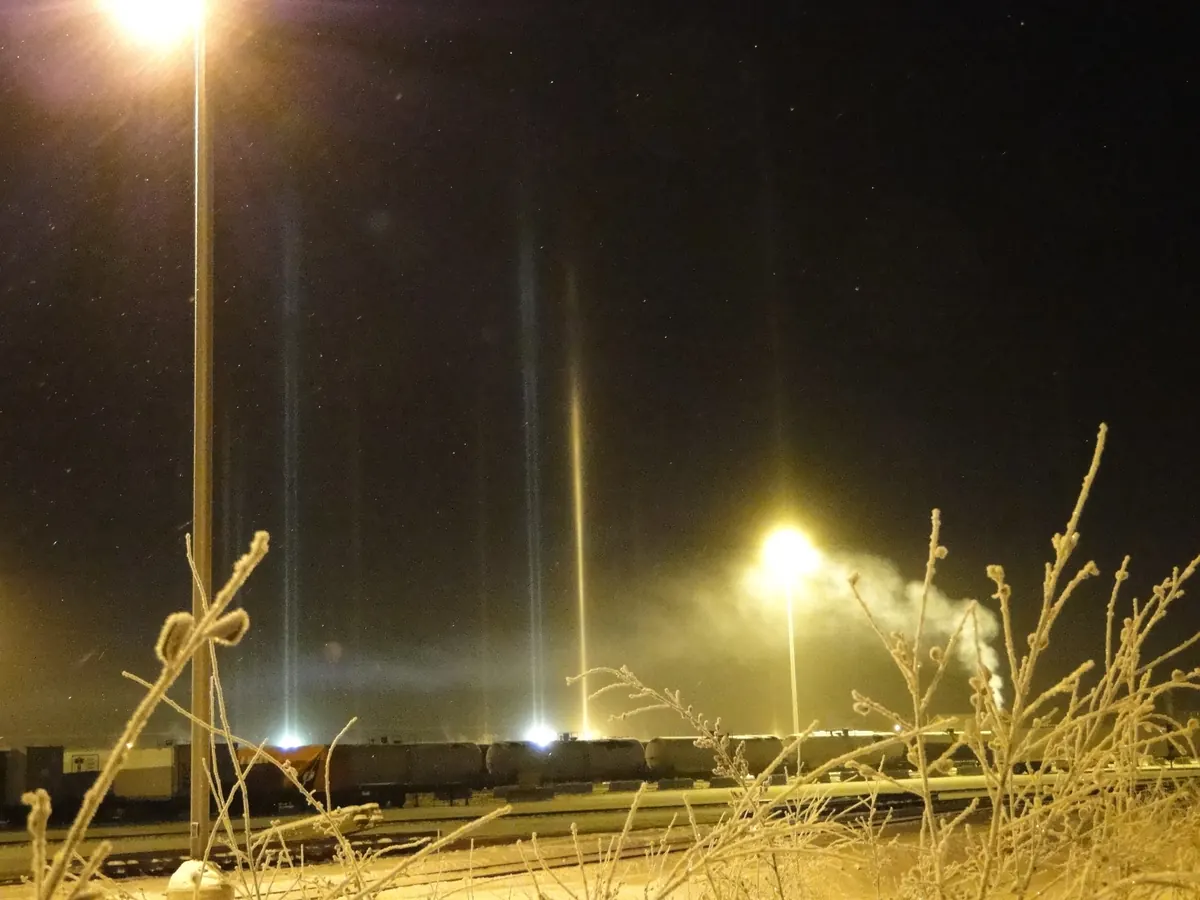
The Geophysical Institute’s Alaska Science Forum explains that ice fog has a threshold of about −30 °F: it forms only when the air gets that cold and clears once it warms past it. Below that, water vapor from tailpipes, chimneys, heating plants and even the breath of people and dogs cools so fast that it turns straight into ice particles too small to see one by one. Together they make a low, glittering cloud over town and roads that lasts as long as the deep cold does.
| Station | Average high | Average low | Snowfall | Precipitation (water) | Nights at or below 0 °F |
|---|---|---|---|---|---|
| Ketchikan | 40.9 °F | 31.5 °F | not published | 11.80 in | 0.0 |
| Sitka | 41.2 °F | 32.1 °F | not published | 5.93 in | 0.0 |
| Juneau | 35.7 °F | 24.6 °F | 16.7 in | 4.31 in | 0.3 |
| Valdez | 31.9 °F | 21.4 °F | 63.4 in | 5.92 in | 0.2 |
| Kodiak | 37.5 °F | 27.2 °F | 14.4 in | 6.31 in | 0.2 |
| Anchorage | 27.3 °F | 15.2 °F | 13.4 in | 0.86 in | 3.8 |
| Bethel | 20.1 °F | 6.5 °F | 8.1 in | 0.88 in | 10.0 |
| Nome | 16.8 °F | 1.3 °F | 14.7 in | 0.99 in | 13.5 |
| Fairbanks | 11.6 °F | −11.2 °F | 10.0 in | 0.52 in | 21.2 |
| Utqiagvik | −5.5 °F | −18.3 °F | 3.5 in | 0.21 in | 25.6 |
El Niño and the end of winter. Nine-in-ten odds or better: that was the September 10 verdict from federal forecasters on whether the warm Pacific event under way peaks this winter in El Niño’s top, very strong tier. In Alaska that mostly shifts the odds: a NOAA Climate.gov analysis of El Niño winters back to 1925 found two in three ran warmer than normal statewide, with southerly winds off the open Gulf of Alaska doing much of the work, the coast feeling it more than the Interior, and precipitation more often below normal than above. The last El Niño shows how loose that link is. NOAA and Environment Canada’s regional winter summary ranked 2023–24 as the fourth-strongest El Niño winter in 50 years, yet much of mainland Alaska ran colder than in most recent El Niños: Fairbanks had its first El Niño winter in more than 50 years to average even slightly below normal, and Juneau buried itself under 62.8 inches of snow between January 13 and 23, its highest 11-day total on record. Updated each month starting in mid-October, NOAA’s three-month maps are on the CPC seasonal outlook site; for the coming week in your own town, use our weather forecast page.
What is in the sky over Alaska in February 2027?
Two planets reach opposition eight days apart this month, and the evenings are still long enough to enjoy them at a reasonable hour. Times are Alaska Standard Time; subtract an hour in the western Aleutians.
-
Mercury low in the evening twilight
Late January to about February 10; farthest from the sun on the evening of February 2 · Low in the west-southwest, 30 to 45 minutes after sunset
Early February brings this winter’s best chance to catch Mercury after sunset. It never climbs far from the horizon, so you need a clear, flat view to the southwest and ideally binoculars. On the evening of Sunday, February 7, a hairline crescent just past new appears near it.
-
Jupiter at opposition
Wednesday, February 10 · Rising in the east at sunset, high in the south around midnight
Jupiter lines up opposite the sun at 3:21 p.m. on February 10, which means it comes up around sunset, is visible all night and outshines every star. It is in the constellation Leo this year. Steady binoculars show its four large moons, which change position from night to night.
-
Mars at opposition
Friday, February 19 (closest to Earth on the 20th) · In Leo, not far from Jupiter, all night
Mars reaches opposition early on February 19 and passes closest to Earth the next day, about 63 million miles away. This is a small, distant opposition, so Mars looks like a bright orange star rather than a blazing beacon, yet the planet will not come this near again until 2029. Overnight from February 19 to 20, the almost-full moon slides just past Jupiter.
-
The Snow Moon
Full at 2:23 p.m. on Saturday, February 20 · Rises in the east around 6:17 p.m. in Anchorage
February’s full moon is usually called the Snow Moon. Some almanacs label it a supermoon; by the tighter rule others use, it is merely a near miss. That evening the moon rises with Jupiter, Mars and the bright star Regulus gathered around it in Leo. A faint penumbral eclipse takes place the same day, but it ends at 4:13 p.m. Alaska time, before the moon comes up, so nothing of it can be seen from Alaska. The annular solar eclipse on February 6 is visible only from the far Southern Hemisphere and cannot be seen anywhere in the United States.
-
Aurora in the dark of the moon
Moonless evenings about February 2 to 11 · Interior and Arctic best; low in the north from the south coast
With new moon on February 6, the first third of the month offers the darkest evenings for watching the northern lights. Solar maximum, which NOAA’s Space Weather Prediction Center dates to October 2024, is behind us, but sunspot numbers remain moderate and strong storms are still possible. Check the University of Alaska Fairbanks Geophysical Institute forecast and the cloud forecast together before driving out.
| Phase | Date | Time |
|---|---|---|
| New moon | Saturday, Feb 6 | 6:56 a.m. |
| First quarter | Saturday, Feb 13 | 10:58 p.m. |
| Full moon, the Snow Moon | Saturday, Feb 20 | 2:23 p.m. |
| Last quarter | Saturday, Feb 27 | 8:16 p.m. |
| New moon | Monday, Mar 8 | 12:29 a.m. |
All four main phases fall on Saturdays this month, which makes them easy to plan around. Times for your own town’s moonrise are on the moon calendar. Before dawn, Venus blazes low in the southeast; after dusk, Saturn slips a little nearer the western horizon each week.
When are bear cubs born in Alaska?
In the middle of winter, deep inside the den. While snow drifts over the entrance, Alaska’s brown and black bear mothers give birth to tiny, nearly helpless cubs that will not see daylight for months.
-
Brown bear cubs
Born in January and February · Dens on mountain slopes and hillsides from Southeast to the North Slope
State biologists say brown bear cubs arrive in the den in January and February, most often as twins, with one to four in a litter. The family stays sealed in until June, when ADF&G says the cubs may weigh up to 15 pounds.
-
Black bear cubs
Born in the winter den · Forested Alaska, from Southeast to the Interior
ADF&G’s Wildlife Notebook describes newborn black bear cubs as blind, nearly hairless and under a pound at birth. Two cubs is the usual litter, though one to four may be born. In the north, black bears may stay dormant seven or eight months, and mothers with new cubs come out later than other bears.
Polar bear cubs, born a little earlier in snow dens along the Arctic coast, were part of January in Alaska. A den of any kind should never be approached or disturbed. Snowmachiners in particular should steer clear of big drifts on steep, sheltered slopes, where bears like to dig in.
When do wolves and red foxes breed in Alaska?
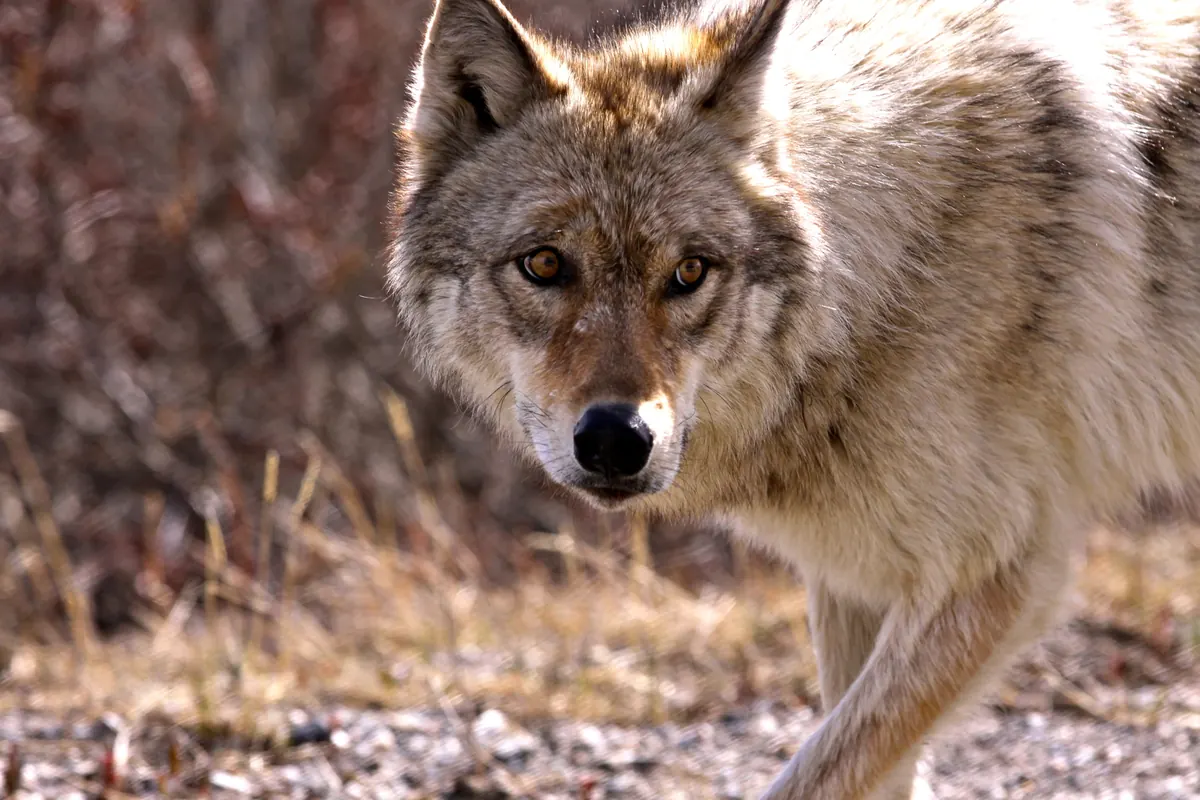
Late winter is courting season for Alaska’s wild dogs. Look for two sets of tracks traveling together, scent posts marked again and again, and more howling and yapping at night.
-
Wolves
Breeding peaks from about late February to mid-March · Throughout mainland Alaska and much of Southeast
The Denali Education Center places the peak of wolf breeding between about late February and mid-March. A female’s cycle runs about a month, but she is receptive only during its last five days or so. Pups follow about 63 days later, typically around six in an Alaska litter, and stay in the den for roughly two months. February is a good time to listen for a pack’s howl, which the center describes as a long, guttural, quavering wail.
-
Red foxes
Breeding in February and March · Statewide, including town edges, river bars and coastal tundra
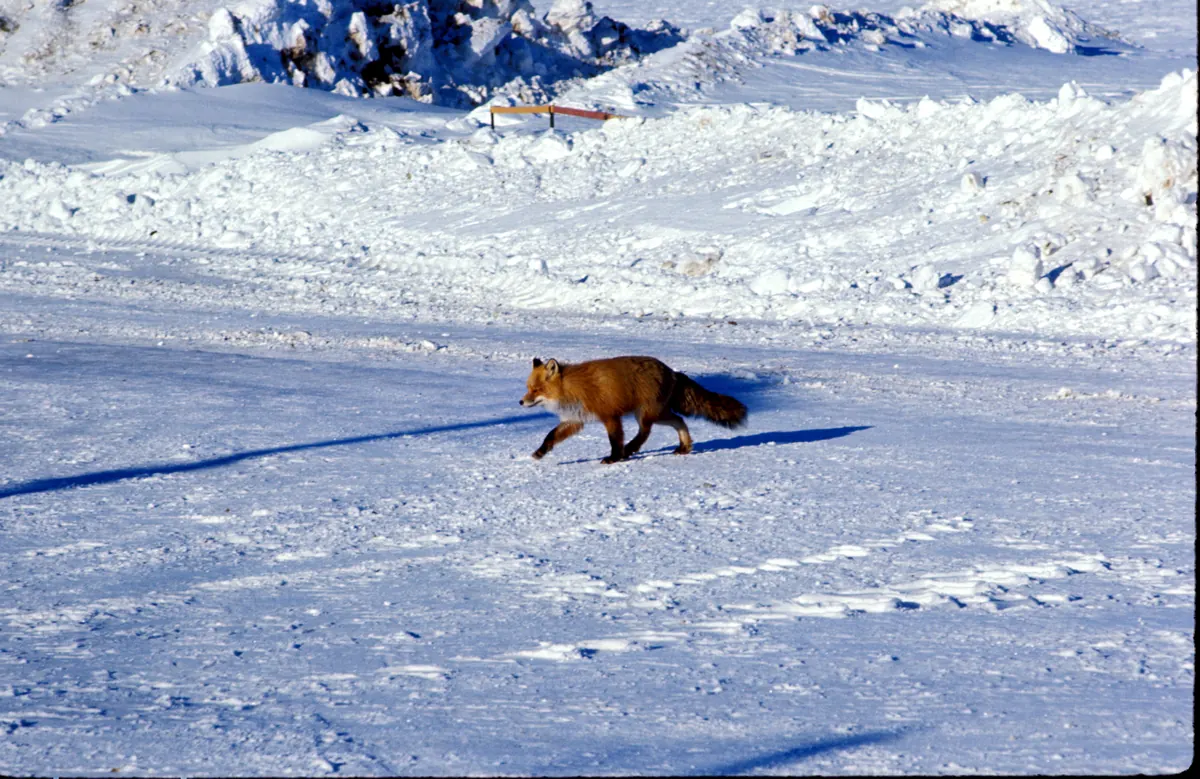
ADF&G says red foxes breed in February and March. After 51 to 54 days the female gives birth in a den, often a long burrow on the side of a knoll with several entrances, and four pups is a typical litter. Both parents raise the young. Besides the familiar red, Alaska foxes come in cross (with a dark cross over the back and shoulders), silver and black phases. Voles are a favorite food, and foxes cache extra food, coming back to check on it and sometimes burying it again in the same spot.
Paired fox trails are one of the easiest late-winter stories to read in snow. Where two lines of neat, nearly straight prints run side by side and then split and rejoin, a pair has probably been traveling together. In northern and western coastal Alaska, keep pets away from foxes; see the safety notes about rabies below.
What is happening under the ice in February?
A frozen lake or pond looks lifeless from above, but two of Alaska’s most unusual breeding seasons are under way beneath it this month.
-
Burbot spawning in a writhing ball
Late winter, February to March · Lakes and big rivers, including the Yukon, the Tanana and Interior lakes
The burbot, Alaska’s only freshwater member of the cod family, spawns at the very coldest time of year. ADF&G describes them spawning under the ice in late winter, from February to March, sometimes milling together in a large, writhing ball. They build no nest; eggs and milt are simply released into the water and drift to the bottom. A big female can produce more than a million eggs, each only about a millimeter across.
-
Beavers mating in the lodge
January or February · Ponds, sloughs and slow streams statewide, except the far north
Beavers mate in January or February, ADF&G says, sealed inside their lodges beneath the ice. They live through winter on the branches they stored in an underwater food pile in fall, swimming out through a tunnel kept below the ice. The two to four kits are born from late April to June. On a frosty morning it is worth checking the top of a snow-covered lodge: a patch of frost or bare sticks there can hint that the family inside is home.
-
Ice fishing at stocked lakes
All winter · Anchorage and Mat-Su lakes; Harding, Birch and Quartz lakes on the Richardson Highway
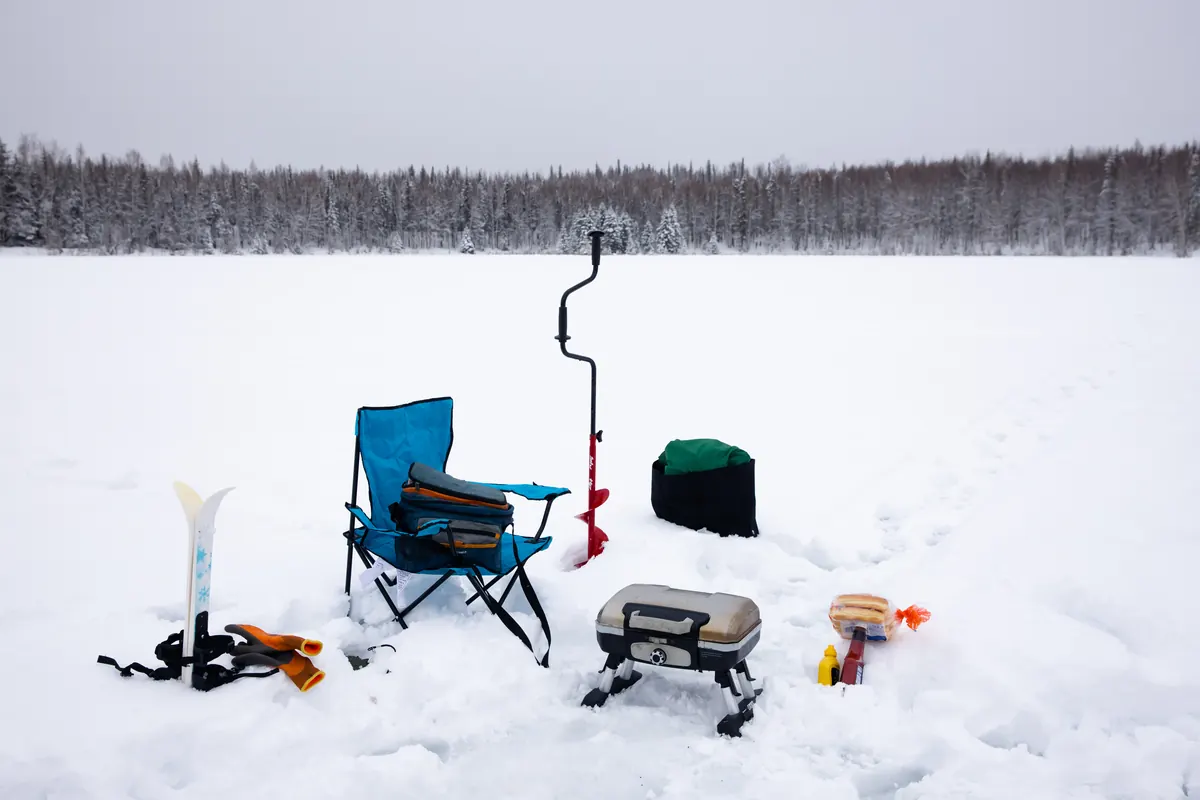
ADF&G stocks more than 130 lakes in Southcentral every year with rainbow trout, Arctic char, Arctic grayling and landlocked king and silver salmon, and several in the Anchorage area are stocked with catchable salmon especially for winter fishing. In the Interior, the department’s Fairbanks staff point to Harding, Birch and Quartz lakes between Fairbanks and Delta Junction, where the ice commonly passes three feet thick by mid-January.
Never walk onto a beaver pond to look closely: the ice over and around a lodge and its channels is often thinner than elsewhere. If you fish, check the current sport fishing regulations for your area before you drill.
How do Sitka black-tailed deer survive late winter in Southeast Alaska?
For the small deer of the coastal rain forest, February through April is the hardest stretch of the year. Body fat built up in summer and fall is running low, and deep snow can bury the plants they need.
-
Living on the forest’s winter pantry
All winter · Old-growth forest of Southeast, Prince William Sound and Kodiak
In winter, ADF&G says, black-tailed deer depend on evergreen forbs and woody browse such as blueberry, yellow cedar and hemlock, along with lichens that grow on trees. Big old-growth trees matter because their thick canopy catches snow and keeps the ground beneath them more open. When snow gets very deep, many deer move down into heavily timbered stands at low elevation, and some end up on the beach.
-
Deer on the beach and seaweed for dinner
Deep-snow winters, late winter into spring · Beach fringe along Southeast and Prince William Sound shorelines
Older ADF&G research from Prince William Sound found that when deep snow pushed deer to the shore, they turned to kelp for most of their diet. Seaweed keeps them going for a while, but the researchers found that once deer were stuck on the beaches for about two months, deaths from starvation began. A 2022 department article on the Admiralty, Baranof and Chichagof islands describes the severe winter of 2006–2007, when snow lay nine feet deep above the high-tide line and beach surveys counted 3.8 dead deer per mile. Recent milder years have been far lower. Fawns, with the least fat, are the most likely to die.
If you see deer on a Southeast beach in late winter, give them room, since a starving animal has little energy to spare for running. ADF&G notes that does have a high reproductive rate, so herds knocked down by a hard winter can recover fairly quickly when mild ones follow.
Which birds are singing and hunting in Alaska in February?
The cast is the same hardy one as in January, but a few are already behaving as if spring were near.
-
Boreal owls start to sing
Late January through late April · Mixed spruce and birch forest in the Interior, the upper Kobuk Valley, Kodiak and western Southcentral
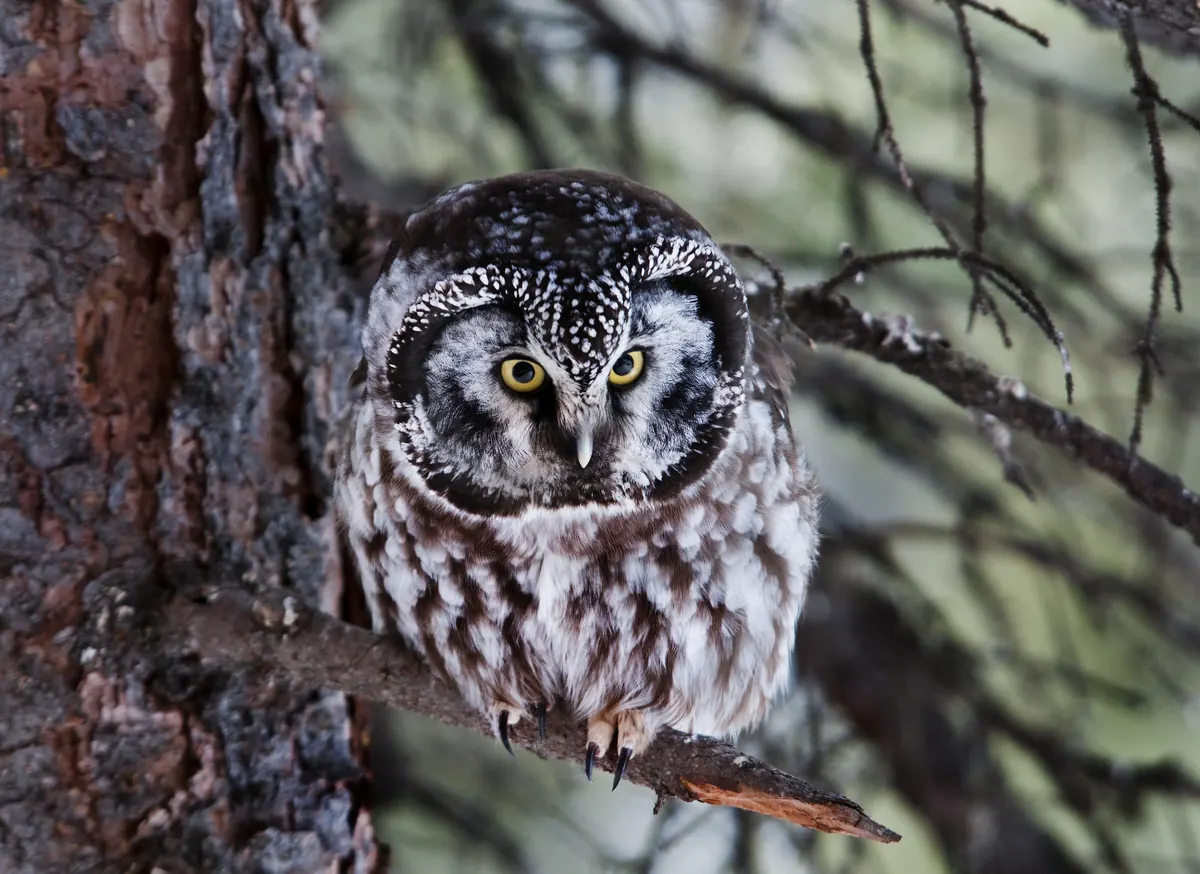
The boreal owl, only 8 to 9 inches long, is one of the earliest birds in Alaska to start singing. ADF&G puts its calling season from late January through late April and describes the song as a rapid, soft, evenly repeated “po-po-po-po” that can carry up to a mile and a half. Females are much heavier than males, about 6.4 ounces to 3.8.
-
Gyrfalcons, the ptarmigan hunters
All winter · Open tundra and mountains: the Alaska and Brooks ranges, the Seward Peninsula, the North Slope, treeless parts of Southcentral
The gyrfalcon is the largest falcon in the world, and most of Alaska’s stay through winter. ADF&G notes that they are not generally migratory but may wander south in winter when prey runs short. Ptarmigan are a staple, and a gyrfalcon can outfly most birds in a straight chase. Pairs often return to the same cliff ledge each year and lay eggs, usually in May.
-
The Great Backyard Bird Count
Friday, February 12, to Monday, February 15 · Anywhere, including your own window
The National Audubon Society lists the 2027 Great Backyard Bird Count for February 12–15. A quarter hour of counting on any of the four days, entered online afterward, is enough to take part.
Anchorage Audubon’s February evening program is Wednesday, February 17, from 6 to 7:30 p.m.; the speaker had not been named in early October. For January’s raven courtship and owl story, see last month’s page.
How far does the sea ice reach in February?
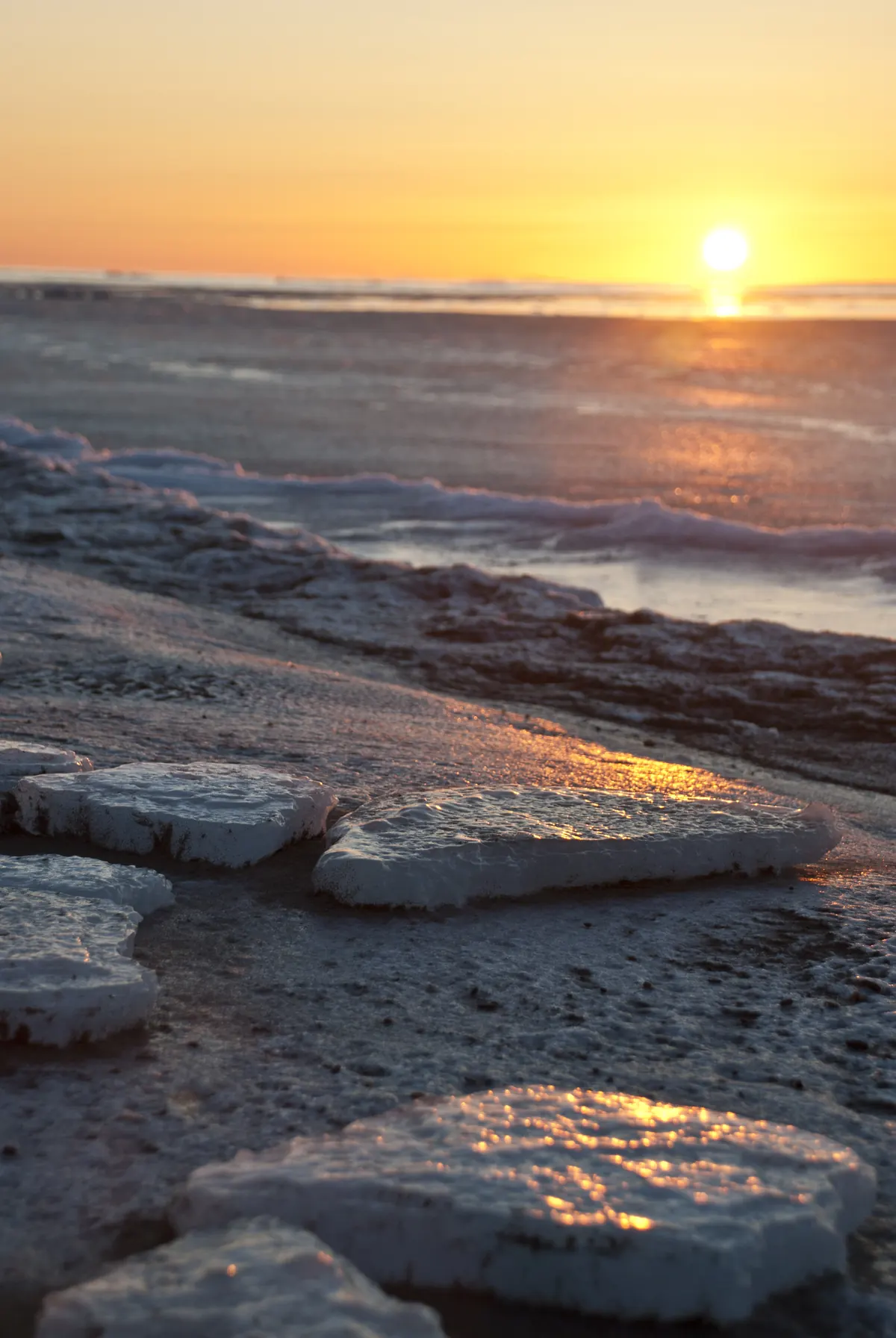
In a normal year the Bering Sea ice is still spreading south in February. NOAA’s satellite service notes that the ice historically reaches its greatest extent in late March to early April, when it can cover much of the shelf between Alaska and Russia. The edge of the ice is made, in large part, by north winds that push newly formed ice southward until it melts in warmer water.
-
A fragile late-winter peak
February and March · Bering and Chukchi seas
The ice can also retreat quickly in the middle of winter. NOAA’s Arctic Report Card for 2019 describes how Bering Sea ice shrank by 82 percent between late January and early March that year, the largest retreat in January or February in the satellite record, after record-low ice in 2018. Warm water, late freeze-up and southerly storms all play a part.
-
Ringed seals in snow caves
All winter; pups born April to May · Landfast and pack ice of the Bering, Chukchi and Beaufort seas
Ringed seals spend the winter under solid ice, keeping breathing holes open by scratching at them with the claws of their front flippers. Over some holes they hollow out caves, or lairs, in the snow drifted on top of the ice, where they rest and later give birth. ADF&G says the pups arrive in these lairs in April or May, weighing about 10 pounds and wrapped in white, woolly fur. ADF&G counts thinner snow on the ice among the threats to their pupping.
Sea ice conditions change daily. Anyone traveling or hunting on the ice can find current analyses and forecasts from the Weather Service’s sea ice desk in Anchorage.
What can families do outdoors in Alaska this February?
- Celebrate Marmot Day on Tuesday, February 2. Draw a marmot asleep in its burrow, then talk about why it is still fast asleep in February.
- Look for Mercury and a one-day-old moon on Sunday, February 7. Pick a place with an open southwestern horizon and begin scanning roughly 30 minutes after the sun goes down.
- Point binoculars at Jupiter on Wednesday, February 10.
- Count feeder birds February 12–15 for the Great Backyard Bird Count.
- Hear about birds at Anchorage Audubon on Wednesday, February 17, from 6 to 7:30 p.m. at its usual Energy Court meeting place.
- Watch the Snow Moon rise on Saturday, February 20. Look east in early evening for the moon, with Jupiter and orange Mars close by.
- Go to Denali Winterfest. The National Park Service and the communities around Denali hold this festival every year on a weekend in late February (in 2026 it ran February 20–22), with ranger-led snowshoe walks, ski tours, sled dog visits and a snow sculpture contest. Look for the 2027 dates on the park’s website in the new year.
- Try ice fishing at a stocked lake.
Last month’s page, with Utqiagvik’s first sunrise, ravens and walruses, is January in Alaska. You can browse every month and state we have written up on the nature guides index.
Safety notes for February in Alaska
- Avalanches. Late-winter snowpacks in the coastal mountains are deep and can be unstable after storms, wind or a sudden warm spell. Before heading into steep terrain on skis, a snowmachine or foot, check the daily avalanche advisory for Turnagain Pass, Girdwood and Summit from the Chugach National Forest center or the Alaska Avalanche Information Center’s regional centers, including Valdez. Carry a beacon, probe and shovel, and know how to use them.
- Deep cold. Fairbanks averages about 21 nights at or below zero in February, and deep cold snaps are still possible statewide away from the coast. Dress children in layers with a windproof shell, cover faces when it is windy, and plan short outings with a warm place to retreat to.
- Ice and overflow. ADF&G notes that Interior lake ice commonly passes three feet by mid-January, but thickness varies, and water can seep up over the ice beneath the snow on rivers, sloughs and lake edges. Stay on established trails, test new ice as you go, and remember that a thaw can weaken ice fast. Average freeze-up dates for your area are on our Alaska frost and freeze page.
- Foxes and rabies. The Alaska Division of Public Health notes in the state trapping regulations that rabies is always present at a low level in Arctic and red foxes along the north and west coasts, and bird flu has also been found in foxes. A fox that is unafraid, staggering or acting strangely should be avoided and reported. Keep pets vaccinated and leashed.
- Hunting. Under ADF&G’s 2026–2027 hunting regulations, ptarmigan seasons close February 15 in Units 13B and 13E and February 28 in Unit 9; in Units 12, 20 and 25C the season runs to February 28 and then continues to April 30 at a lower bag limit. Other ptarmigan seasons stay open into March or later, most grouse seasons last until the end of March, and in much of Alaska snowshoe hares can be taken year-round. All duck and goose seasons are closed. Wolf hunting is open through April 30 or later in most units.
- Trapping. Many trapping seasons end on the last day of the month. Kenai Peninsula seasons for lynx, red fox and river otter (Units 7 and 15) end February 28; in the Interior, marten close February 28 in Units 12, 19 to 21, 24 and 25, while lynx stay open to March 15 in Unit 20 and wolf trapping runs to April 30. Beaver trapping in Units 7 and 15 continues to April 30, except in the Anchor River drainage, which is closed. Keep dogs leashed or close on trails near traplines.
- Bright clothing. Alaska’s 2026–2027 hunting regulations require hunter orange only in one place, the Hatcher Pass Youth Management Area during an August youth small-game hunt. Hunters you meet in February may be in white or camouflage, so make yourself visible with a bright jacket or hat.
The Naturalist’s Field Journal has room for fox trails, owl songs and the rising curve of the light.
Sources
- U.S. Naval Observatory: phases of the moon, 2027
- U.S. Naval Observatory: sun and moon rise and set for one day
- U.S. Naval Observatory: Earth’s seasons and apsides, 2027
- Fred Espenak: Sky Event Almanac 2027 (planets, oppositions, conjunctions)
- Sea and Sky: Astronomy calendar of celestial events, 2027
- EarthSky: Jupiter at opposition
- SEDS: Mars opposition 2027
- NASA eclipse website: lunar eclipses 2021–2030
- NASA eclipse website: solar eclipses 2021–2030
- Old Farmer’s Almanac: eclipse dates
- NOAA Space Weather Prediction Center: Solar Cycle Progression
- UAF Geophysical Institute: aurora forecast
- NOAA NCEI: U.S. Climate Normals 1991–2020, monthly normals
- UAF Geophysical Institute, Alaska Science Forum: Ice fog a product of temperature, topography, dogs
- NOAA NCEI: monthly normals data service, 1991–2020 (Alaska stations)
- NOAA Climate Prediction Center: ENSO diagnostic discussion, September 10, 2026
- NOAA Climate Prediction Center: 90-day outlooks
- NOAA, ACCAP and Environment and Climate Change Canada: Alaska and Northwestern Canada climate highlights, December 2023 to February 2024
- NOAA Climate.gov ENSO blog: Moose tracks through Alaska and ENSO
- Alaska Statutes: AS 44.12.110, Marmot Day
- Alaska Legislature: SB 58 (26th Legislature), Marmot Day
- ADF&G: Hoary marmot species profile
- ADF&G: Brown bear species profile
- ADF&G: Black bear species profile
- ADF&G: Black bear (Wildlife Notebook Series)
- Denali Education Center: Wolves
- ADF&G: Red fox species profile
- ADF&G: Burbot species profile
- ADF&G: Beaver species profile
- ADF&G Alaska Fish & Wildlife News: Ice fishing stocked lakes (February 2015)
- ADF&G Alaska Fish & Wildlife News: Ice fishing on the Big Three (January 2013)
- ADF&G: Sitka black-tailed deer species profile
- ADF&G: History and current status of Sitka black-tailed deer in Prince William Sound
- ADF&G Alaska Fish & Wildlife News: How are the deer? (July 2022)
- ADF&G: Boreal owl species profile
- ADF&G: Falcons (Wildlife Notebook Series)
- National Audubon Society: Great Backyard Bird Count (February 12–15, 2027)
- Great Backyard Bird Count
- Anchorage Audubon Society: February Evening Program, February 17, 2027
- NOAA NESDIS: Bering Sea appears largely ice-free from NOAA-20 (April 2019)
- NOAA Arctic Report Card 2019: Recent warming in the Bering Sea and its impact on the ecosystem
- ADF&G: Ringed seal species profile
- National Weather Service: Alaska sea ice program
- National Park Service, Denali: Winterfest
- Chugach National Forest Avalanche Information Center
- Alaska Avalanche Information Center
- ADF&G: 2026–2027 Alaska Hunting Regulations (complete booklet)
- ADF&G: 2026–2027 Alaska Migratory Game Bird Hunting Regulations
- ADF&G: 2026–2027 Alaska Trapping Regulations (includes Division of Public Health rabies notice)
- Photos via Wikimedia Commons; licenses and photographers are credited under each picture
