What to look for in nature in Arizona this March
March is when Arizona changes gear. In the low desert, wildflowers that started in February reach their fullest at Saguaro National Park, which calls mid to late March its usual best, while the high country is still a snow country: Flagstaff averages more than a foot of snow this month. The sandhill cranes of the Sulphur Springs Valley are packing for the long flight north, bald eagle eggs laid on the Verde and Salt are hatching, and the first Gila monsters begin to climb out of their winter burrows late in the month. The equinox arrives on March 20, daylight saving time begins elsewhere on March 14 without changing a single Arizona clock, and a faint Mercury hangs below brilliant Venus in the dawn. Because Arizona runs from sea-level river valleys to 12,000-foot peaks, the page below is a guide to where to stand as much as when.
Other months in Arizona: October, November, December, January, February, April.
Start here

- Time a wildflower walk for the middle of the month. Saguaro National Park says its desert blooms are often best in mid to late March, with lupine, brittlebush, desert marigold, gold poppy, globemallow and ocotillo among the species. Go early in the morning, stay on the trail and check the park’s wildflower conditions page the week you plan to visit.
- Watch the roads late in the month. Researchers at Tonto National Monument find that Gila monsters start coming out of hibernation in late March, with the most activity in early April. Drive slowly on desert roads in rocky country, and if you see one, give it room: most of the animals tracked there moved off rather than standing their ground.
- Find the Mercury and Venus pair before dawn. In the first half of March, Venus is a dazzling morning star well above the eastern horizon, and the much fainter Mercury sits below it, easiest to find between about March 8 and March 25. By our calculation the old crescent Moon passes near Venus on March 4 and 5.
Give a hillside of poppies, lupine and brittlebush a colours of the day plate, noting the elevation; use the same place twice for one wash visited early and late in the month so the speed of the bloom shows; log the first Gila monster, tortoise or snake you meet at a safe distance under reading the signs or tracks to know, with the air temperature; and let dusk and dawn watch hold your Mercury and Venus mornings in the Naturalist’s Field Journal.
Regions used below: Phoenix and the low deserts; Tucson and the southeastern Sky Islands; Yuma and the Colorado River; Prescott, Sedona and the Verde Valley; Flagstaff, the Grand Canyon and the Mogollon Rim; The White Mountains; The Navajo Nation and Hopi lands.
When are Arizona’s desert wildflowers at their best in March?
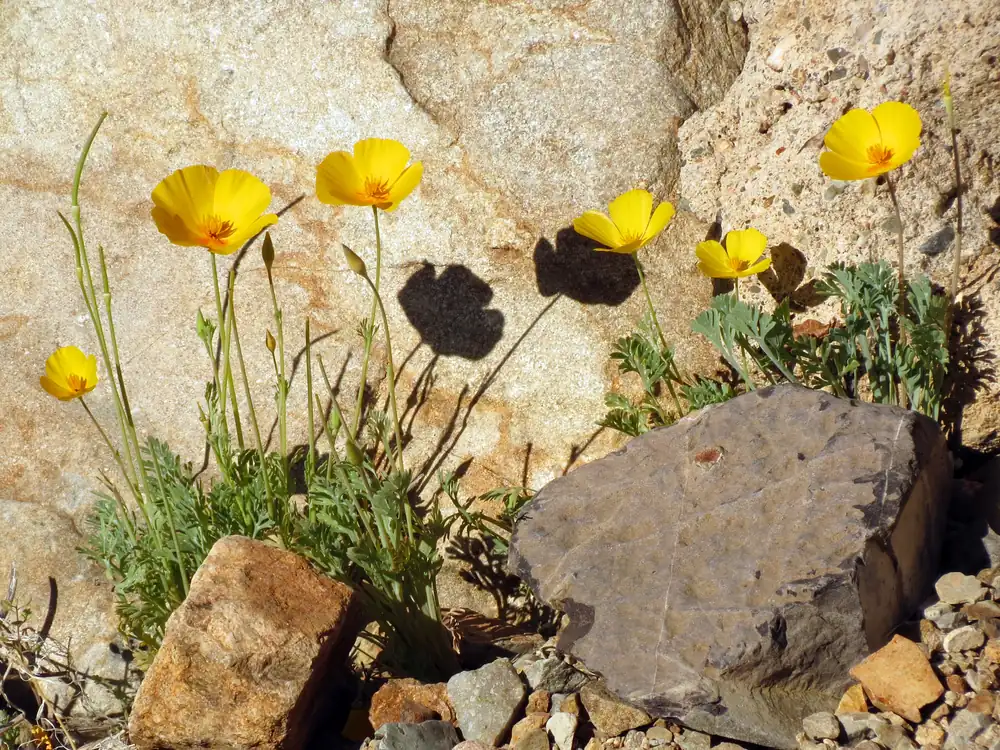
For most of the low desert, March is the main event. Arizona State Parks says Catalina’s poppies usually appear in March and April and Picacho Peak’s blooms typically begin in early March, with the higher country such as Red Rock State Park near Sedona flowering later in spring, and Saguaro National Park says its blooms are often best in mid to late March. All of that depends on winter rain and on how warm the weeks turn out. The park service says plainly that there is no perfect way to predict any year’s bloom in any one place, and that a true superbloom needs several favorable seasons in a row, so treat every date below as a window, not a promise.
-
The Saguaro National Park spring show
Often best mid to late March · Tucson Mountain District (west) and Rincon Mountain District (east), both on the edge of Tucson
The park service lists desert lupine, brittlebush, desert marigold, gold poppy, globemallow, ocotillo, Parry’s penstemon and desert verbena among the spring flowers, with the best displays often in mid to late March. The park’s condition reports say the east side normally blooms a bit later than the west side, which stretches the viewing season if you can visit both. The cactus bloom follows: the park says the first week of May usually has the most species in flower, and the saguaro itself peaks toward the end of May.
-
Poppies at Picacho Peak and Catalina
Picacho: mid-February to mid-March, depending on the year; Catalina: March and April · Picacho Peak State Park, off I-10 between Phoenix and Tucson; Catalina State Park, north of Tucson
Picacho Peak’s Bloomdar gives the best chance as mid-February to mid-March and warns that timing varies. Last season’s dated log is a good lesson: scattered poppies on the Nature Loop on February 17, then a February 25 note that the flowers were fading with very few poppies left. If Picacho looks finished, Catalina is higher and cooler; the state parks agency describes its poppies as a March and April sight along the Sutherland Trail, where the blooms are concentrated.
-
Ocotillo, brittlebush and globemallow
March, longer in a cool spring · Rocky slopes and bajadas around Phoenix, Tucson and Yuma
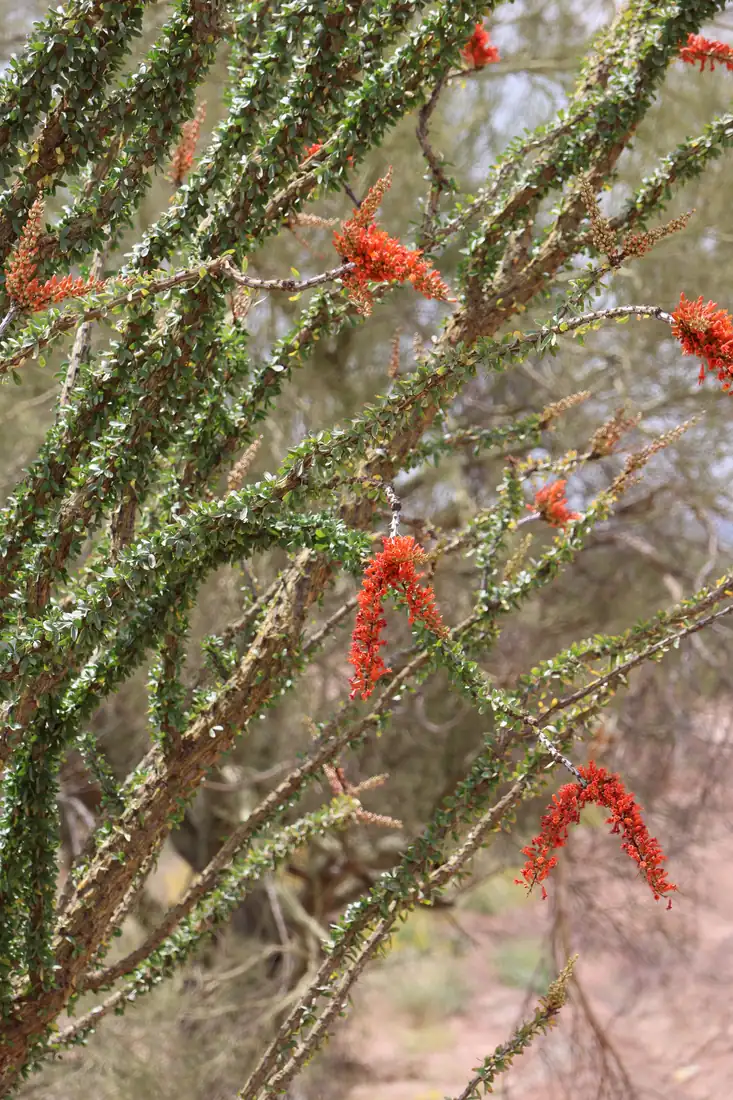
Even in a thin year the shrubs carry the color. Ocotillo tips its long, spiny stems with red flame-shaped clusters, brittlebush turns a hillside yellow, and Arizona State Parks says brittlebush and peach globemallow delight in drier years too. Ocotillo is on the Saguaro spring list.
The February guide follows the first poppies and the hummingbird courtship season that leads into this bloom. Please stay on trails: both the parks agency and the park service ask visitors not to pick or trample the flowers.
Can I still see sandhill cranes at Whitewater Draw in March?
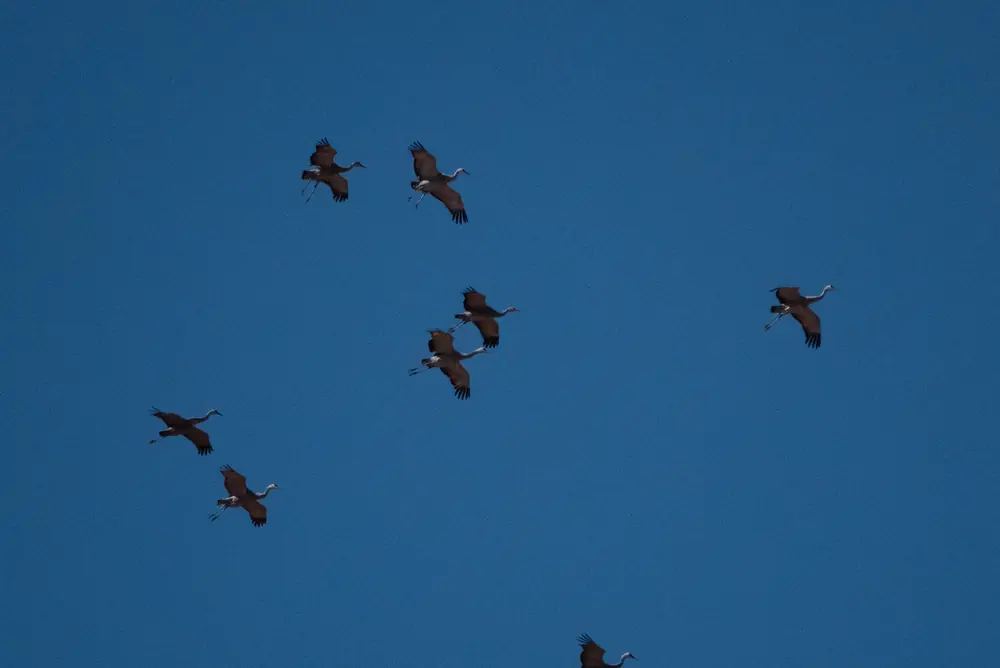
Possibly, but go early in the month. Arizona Game and Fish has long said the cranes typically arrive in the Sulphur Springs Valley from mid-September to early October and begin to leave around mid-February, with some staying until about the middle of March. By the time the spring equinox arrives most of the big flock is usually on its way north to its breeding grounds. The department tallies the valley’s cranes each winter, so check its news pages or the wildlife area for the latest count.
-
Dawn flight-out and the afternoon return
First half of March; fewer birds each week · Whitewater Draw Wildlife Area, near McNeal, Cochise County
The cranes follow a daily routine that makes them easy to find. According to the department they fly out as a group at dawn to feed in nearby fields and come back between about 11 a.m. and 4 p.m. Arrive before sunrise for the flight-out. When the flock thins, the last stragglers are often easier to see in the late morning.
-
A crane cam for the days you can’t go
All season · Online
The department runs a live Sandhill Crane Cam at Whitewater Draw. It is a quick way to see whether the flock is still in place before you drive to the Sulphur Springs Valley from Tucson or Phoenix.
The January festival season and the arrival story are told in the earlier winter guides; this month is the exit.
Are Arizona’s bald eagle chicks hatching in March?
Yes, for the late nesters and the second wave. The Southwestern Bald Eagle Management Committee says Arizona eagles lay eggs from December to March, mostly in January and February, and that an egg needs 35 days to hatch. So early March is hatching time for the pairs that laid in late January and February, and the youngest chicks hatch toward the middle of April. The nestlings stay in the nest about 12 weeks, so most do not fledge until May and June.
-
Where the birds are
February through June · The lower Verde River, the Salt River lakes and other desert rivers
The committee counts more than 60 known breeding areas in the state and says the lower Verde River, with eight breeding areas downstream of Bartlett Dam, has the highest concentration. Nest sites are protected by seasonal closures on the water, usually marked with signs or buoys; keep clear of them whether or not you see a bird.
-
Nestwatchers at work
About February to June · Camps near the busiest nests
Arizona runs a nestwatch program the committee calls the only one of its kind in the country. Teams of two work ten days on and four off, camp near the nests, record flights and feeding with spotting scopes, and talk with boaters and hikers. Giving them a wave and doing as they ask is the best way to be a good visitor.
-
A cousin that nests all year
Any month · Desert washes and mesquite bosques near Tucson and Phoenix
The Tucson Bird Alliance notes that Harris’s hawks, which breed in cooperative family groups, can have eggs or young in any month of the year, so a stick nest in a saguaro arm in March may be active. Watch from a distance with binoculars.
When do Gila monsters, desert tortoises and snakes come out in Arizona?
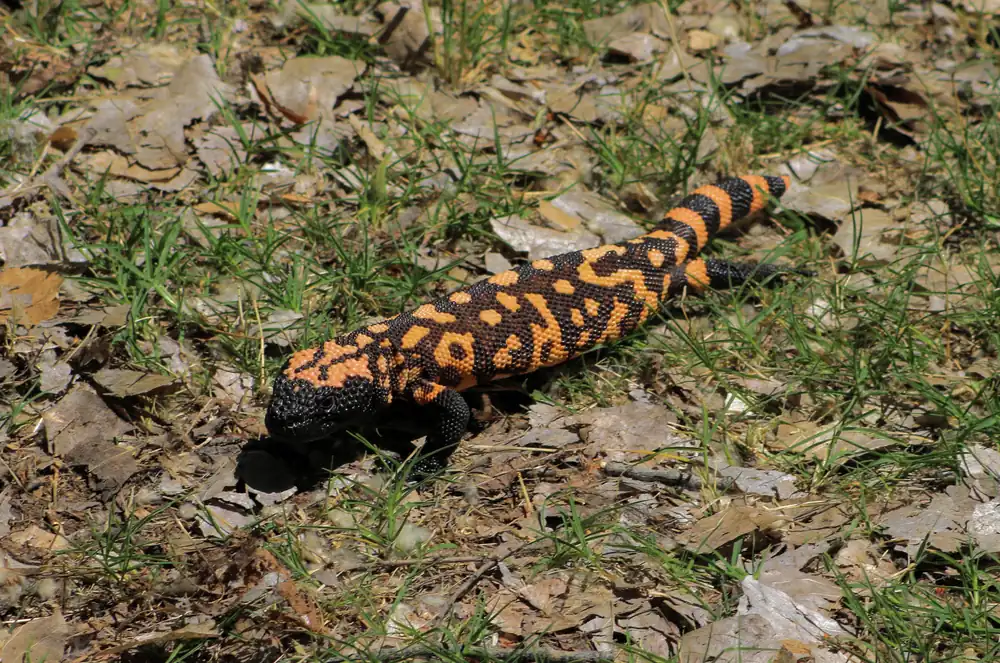
The reptile season opens by degrees. At Tonto National Monument, east of Phoenix, researchers radio-tracking Gila monsters found them leaving their winter burrows from late March, with the most activity in early April. The monument’s staff reports that they feed on bird eggs such as quail, and on young cottontails, and that the lizards often cross the road below the visitor center parking lot on their way to rocky ground and the damp ground of Cave Wash. In the same study, more than half of the animals met by people ran, took cover or dug deeper rather than standing firm.
-
Gila monsters, late March into April
Late March, peaking in early April; again in the late-summer monsoon · Rocky desert foothills; Tonto National Monument is a research site
Look on warm afternoons near boulder piles and washes, not on open flats. The Tonto study found shelters were usually burrows dug under boulders and small outcrops. The monument keeps hours from 8 a.m. to 4 p.m., and the Lower Cliff Dwelling trail has a start-time cutoff of 3 p.m. through April, so a visit fits an afternoon. These lizards are venomous and protected; watch them, never pick them up.
-
Desert tortoises after a good winter
On mild days after winter rain · Rocky desert slopes and washes
Saguaro National Park explains that tortoises spend most of the year in underground burrows and come out to drink and eat grasses, flowers and cactus fruit only when conditions are right. Handling a wild tortoise is illegal in Arizona. If one is crossing a busy road, move it only to the side it was heading for, and never relocate it. Releasing a pet tortoise into the wild is also prohibited because of disease risk.
-
A free snake talk at Picacho Peak
Saturday, March 6, 2027, 10 a.m. · Copper Court Amphitheater, Picacho Peak State Park
The park’s own event page lists “Into the Snake Den,” a 45-minute talk on desert snakes and how to tell venomous from harmless ones. March 6 is the last of the dates posted; it is outdoors, so bring water and sun protection. Check the Arizona State Parks calendar for changes.
Rattlesnakes are active on warm evenings and afternoons now; see the safety notes below.
Where can I see California condors at the Grand Canyon in March?
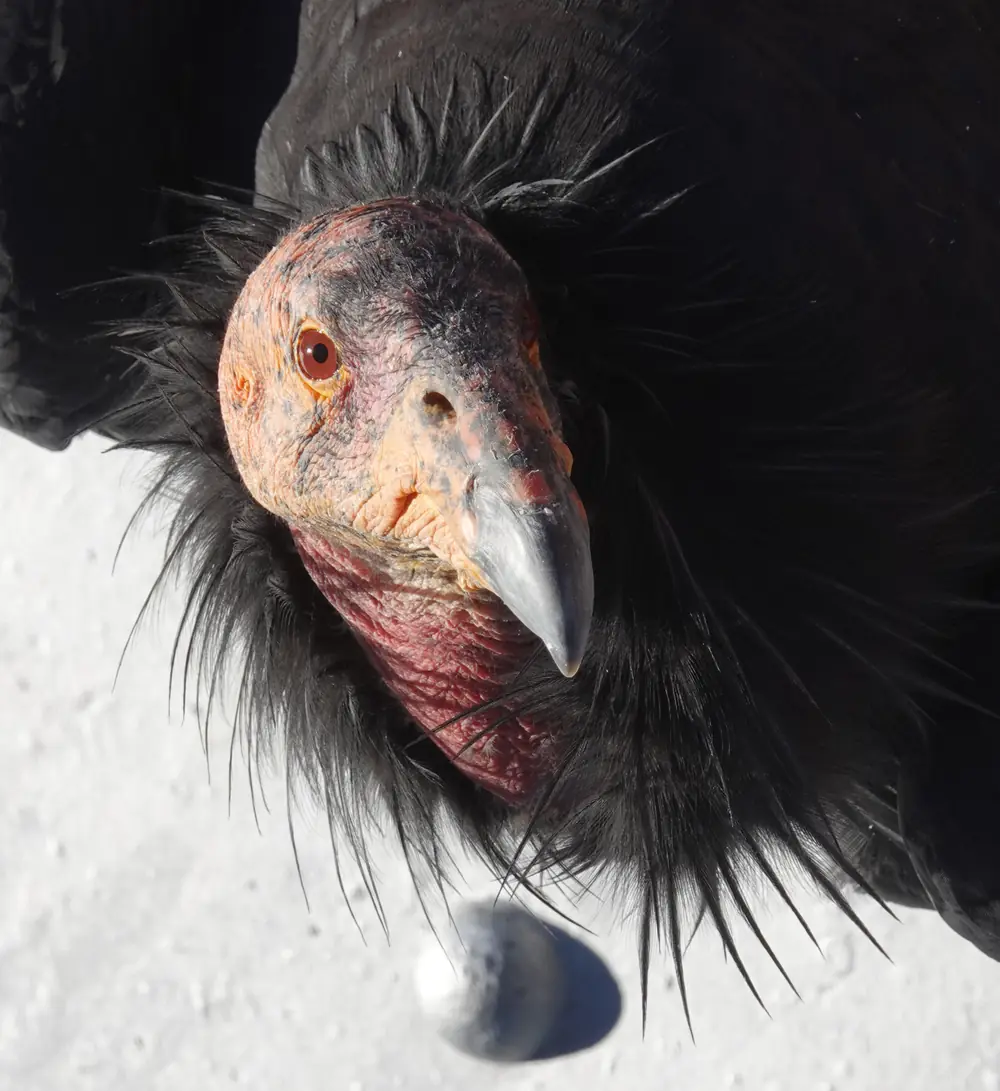
The South Rim is a regular place, though the best season is later. Grand Canyon National Park says condors can be spotted daily from March through October, with the best viewing mid-April through July, and that the birds often roost on the cliffs and Douglas-fir trees below Bright Angel Lodge from late April through July. In March you are watching for a bird that is mostly at its nest, not roosting in the village.
-
A slow family life
Pairs usually nest every other year · Cliff caves in the Grand Canyon and the Vermilion Cliffs area
The park service says condors lay a single egg every other year in a cave or rock crevice, that the egg hatches after 56 days, and that both parents incubate and feed the chick, which fledges at five to six months. The park service page we read in October 2026 reported 73 condors flying free in northern Arizona and southern Utah.
-
Where to scan from the rim
Late afternoon, March to October · The South Rim near Bright Angel Lodge, plus the North Rim after it opens
Look for a very large dark bird soaring along the cliffs, and use binoculars rather than walking toward it. The park’s conditions page says select areas of the North Rim have reopened for its most recent season; check it before planning a trip. Please do not approach or feed any condor.
-
Lead and hunting season
Year-round concern; Arizona’s spring bear season opens March 19 · Northern Arizona
Park officials call lead the primary challenge for condors and say most Arizona condors have been treated at least once for high lead levels, which they pick up from fragments in carrion. They ask hunters to use copper ammunition.
Why are some Arizona refuges and trails closed in March for pronghorn and bighorn?
Because the young are on the way. In southwestern Arizona, the U.S. Fish and Wildlife Service has described a seasonal closure of about three-quarters of Cabeza Prieta National Wildlife Refuge from mid-March to mid-July to protect the fawning season of the endangered Sonoran pronghorn, the only such herd in the United States. That description comes from older refuge stories, from 2002 to 2006, so confirm the current dates and boundaries with the refuge; its own page says any visit requires a Barry M. Goldwater Range access permit.
-
Pusch Ridge bighorn rules
Through April 30 · Pusch Ridge Wilderness, Coronado National Forest, north of Tucson
The Forest Service prohibits traveling more than 400 feet off its system trails from January 1 through April 30 because of lambing, and dogs are barred from the bighorn management area in every season. The closure area touches 11 trailheads.
-
Kofa, the original bighorn refuge
Spring · Kofa National Wildlife Refuge, near Yuma
The refuge was set aside in 1939 specifically to protect desert bighorn sheep, and wilderness covers over four-fifths of its land. Most of its small mammals are nocturnal. Check its page for road conditions before you go.
What migrants and bats are about to arrive in Arizona?
March is the last quiet stretch before the Sonoran Desert fills up. The Costa’s hummingbird, a desert breeder that nests late winter and spring, is already here; the Tucson Bird Alliance calls spring a great time to see them before they leave for the coast. Two famous arrivals are just ahead, and March is the time to plan for them.
-
Elegant trogons
Arriving from about April; calls in April to May · Sky Island canyons: Santa Ritas (Madera Canyon), Chiricahuas, Huachucas and Atascosas
Audubon describes the trogons as migrating to southeastern Arizona between April and September, nesting in tree cavities near water. Tucson Bird Alliance surveys since 2013 found a record low of 31 in 2025, against an average of 136 per year, after a poor monsoon; drought cuts the insects that feed the chicks. March is the time to check lodging and canyon road conditions.
-
Lesser long-nosed bats
Late spring, as tall cacti bloom · Southern Arizona, including Organ Pipe Cactus National Monument
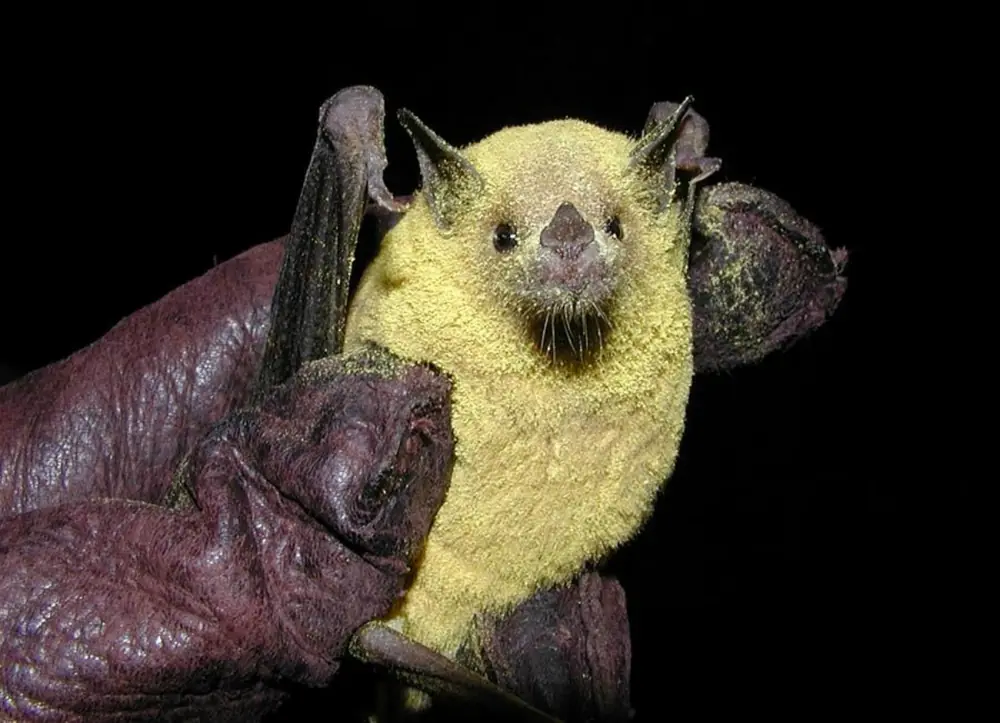
Journey North says that pregnant bats fly up to 100 miles a night, following the bloom north from south-central Mexico; the round trip can reach 3,200 miles. The park service says the bats come with the tall cacti and are seen at night only for a short time. At Saguaro National Park the saguaro bloom peaks toward the end of May, so do not expect them in March in numbers. The bat is about three inches long with a tongue as long as its body, according to the Fish and Wildlife Service.
To follow the bloom they depend on, join the USA National Phenology Network’s Nature’s Notebook, which runs a Flowers for Bats campaign.
What is the weather in Arizona in March, and when is the last freeze?
March is the month the two Arizonas are furthest apart. NOAA’s 1991–2020 normals show the average March high at Phoenix Sky Harbor at 78.1 °F with a low of 54.5 °F, and at Tucson International at 75.8 °F and 48.0 °F, with only 0.83 and 0.56 inch of precipitation. At Yuma Proving Ground the normal is 79.7 °F and 53.1 °F. Up on the plateau it is winter’s tail end: Flagstaff’s normal is 52.2 °F and 23.8 °F with 15.6 inches of snow, and the Grand Canyon South Rim’s is 53.6 °F and 25.0 °F with 8.1 inches. Show Low sits at 58.0 °F and 31.3 °F with 2.3 inches of snow.
The table below shows when freezing ends. In the lower desert the last freeze is finished by March, but at higher stations a freeze in April or May is normal, so a warm week in March should not send you to plant tender things. Watch for wind: spring storms can cross the state with strong winds, blowing dust in the desert and snow squalls on the Rim. The National Weather Service offices in Phoenix and Flagstaff publish forecasts and fire-weather products; the Flagstaff office covers the national forests, where dry, windy days raise the fire danger before the monsoon.
| Station | One year in ten | Median | Nine years in ten |
|---|---|---|---|
| Page | Mar 8 | Mar 27 | Apr 16 |
| Flagstaff | May 21 | Jun 4 | Jun 19 |
| Kingman | Mar 8 | Apr 2 | Apr 21 |
| Prescott | Apr 14 | Apr 30 | May 15 |
| Phoenix | Dec 19 | Jan 5 | Jan 22 |
| Yuma | Dec 17 | Jan 11 | Feb 14 |
| Tucson | Jan 4 | Feb 5 | Mar 2 |
| Sierra Vista | Mar 15 | Apr 5 | Apr 21 |
For your own town, use the Arizona frost dates page. The NOAA Climate Prediction Center issues its three-month outlooks once a month near mid-month; see the latest at cpc.ncep.noaa.gov. Our weather pages explain how to read them, and the cloud guide helps with spring fronts. The Arizona State Climate Office at ASU publishes monthly climate reports with city data.
How much daylight does Arizona gain in March, and do the clocks change?
The days lengthen faster now than at any other time of the year. The table gives sunrise-to-sunset day length for eight Arizona towns on March 1 and March 31. The equinox is March 20 at 1:25 p.m. Arizona time (20:25 UTC), the day and night are close to equal across the globe; our calculations put Phoenix at about 12 hours and 8 minutes of daylight that day. On March 14 the rest of the country moves clocks forward an hour, but Arizona, which lies entirely within one time zone and has exempted itself under the Uniform Time Act, does not. The exception is the Navajo Nation, which does change. From that date Arizona’s clocks match California’s, and the Navajo Nation’s match Utah’s and New Mexico’s. See the daylight tools for any date.
| City | Mar 1 | Mar 31 | Gained | Per day |
|---|---|---|---|---|
| Page | 11 h 23 m | 12 h 34 m | 71 min | 2.4 min |
| Flagstaff | 11 h 26 m | 12 h 32 m | 66 min | 2.2 min |
| Kingman | 11 h 26 m | 12 h 33 m | 67 min | 2.2 min |
| Prescott | 11 h 27 m | 12 h 32 m | 65 min | 2.2 min |
| Phoenix | 11 h 28 m | 12 h 31 m | 63 min | 2.1 min |
| Yuma | 11 h 30 m | 12 h 30 m | 60 min | 2.0 min |
| Tucson | 11 h 30 m | 12 h 30 m | 60 min | 2.0 min |
| Sierra Vista | 11 h 31 m | 12 h 29 m | 58 min | 1.9 min |
What can you see in Arizona’s night sky in March?
The Moon is new on March 8 and full on March 22, called the Worm Moon, one of the traditional names for the March full moon. The table uses Mountain Standard Time, correct for all of Arizona except the Navajo Nation, where clocks are an hour ahead after March 14. The dark nights around the new moon, roughly March 5 to 11, are the best for faint objects, which brings us to the planets.
- Venus and Mercury before dawn. On March 1 Venus clears the horizon about 115 minutes ahead of the Sun, blazing at magnitude −4.1. Mercury, much fainter, reaches its widest separation from the Sun, 27.6 degrees west, on March 17 (04:20 UTC, which is the night of March 16 in Arizona). It is best seen between about March 8 and 25, rising roughly an hour before sunrise, low in the east-southeast with Venus well above it. Our own calculations put the old crescent Moon near Venus on March 4 and 5, so look east before sunrise on those days.
- Jupiter and Mars in the evening. Jupiter, past its February opposition, is high in Leo in the evening, and our figures show a bright, almost-full Moon coming within about a degree of it on March 18 and 19. Mars creeps closer through the month and ends March 30 roughly four degrees from the giant planet, a wide pairing high in the Arizona sky.
- Saturn’s last evenings. Saturn, in Pisces, sinks fast: by our central-US calculation it still sets 155 minutes behind the Sun at the start of March, 93 minutes behind by the 15th, and it vanishes into the Sun’s glare by April.
Times for planets come from our own calculations and shift by up to half an hour with latitude. There are no major meteor showers in March.
| Phase | Date | Time |
|---|---|---|
| New moon | Monday, Mar 8 | 2:29 a.m. |
| First quarter | Monday, Mar 15 | 9:25 a.m. |
| Full moon, the Worm Moon | Monday, Mar 22 | 3:44 a.m. |
| Last quarter | Monday, Mar 29 | 5:54 p.m. |
What can families do outdoors in Arizona this March?
- Saturday, March 6: “Into the Snake Den” at Picacho Peak State Park, 10 a.m., a 45-minute outdoor talk on desert snakes. The park’s page shows this date; bring water and a hat.
- Guided bird walks at Catalina State Park. The park’s page lists walks on Sundays and Wednesdays at 7:30 a.m. through May 17, plus Mondays March 8 and 22, each three to four hours, in an Important Bird Area with more than 150 species. Bring binoculars; check the page for any change.
- Picacho Peak bird walks. The park’s page shows 2027 dates only through February; check with the park for any in March.
- Havasu National Wildlife Refuge tours. The refuge lists guided tours once a month on the second Tuesday from November to April, 9 to 11 a.m., beginning at the North Dike parking lot; reservations are required, so call the refuge at 928-259-9632.
- Tonto National Monument. The visitor hours run 8 a.m. to 4 p.m. every day, and guided Upper Cliff Dwelling tours run weekends from November to April by reservation.
- Join a count. Log birds with eBird, report sightings through Journey North’s hummingbird pages, or track bloom times with Nature’s Notebook. Project FeederWatch runs on a winter-to-spring season; check its page for the end date.
- Watch from home. Arizona Game and Fish’s Sandhill Crane Cam shows Whitewater Draw.
The nature hub has other states, and your own finds belong in the Naturalist’s Field Journal. Each date here was read from the organizer’s own page in October 2026, so call or check online before you leave home.
Safety notes for March in Arizona
- Spring bear hunt. The department’s 2027 spring booklet lists a general bear season from March 19 to April 22 in most units, from the Mogollon Rim and White Mountains to the Sky Islands, for any bear except cubs and sows with cubs. A nonpermit tag is required and hunters must report within 48 hours. Expect hunters in forests where you hike.
- Bison and turkey. A Kaibab Plateau bull-bison hunt runs March 26 to June 3 in units 12A, 12B and 13A. Spring turkey hunts in the department’s 2027 booklet start April 16 in a few units and April 23 or later in most, so March trips are clear of them. Javelina hunts end in February.
- Be easy to see. The Arizona Game and Fish Department’s dove-hunting guidance says hunter orange is not required in Arizona but is recommended near other hunters, so do not count on seeing it. Dress in a bright color on forest trails, and give a dog a bright vest.
- Snakes and lizards. Rattlesnakes become active on warm days. Watch where you put hands and feet, stay on trails, keep dogs leashed, and give snakes and Gila monsters room.
- Snow, ice and wind up high. With a normal low of 23.8 °F at Flagstaff, shaded trails and Rim roads can ice over. Check the Grand Canyon’s conditions page or call 928-638-7496 for weather and roads before an inner-canyon hike.
- Closures. Pusch Ridge bighorn rules run to April 30, and Cabeza Prieta’s pronghorn fawning closure has traditionally begun in mid-March, so check with the refuge. Eagle closures on rivers and lakes stay in force.
- Early heat in the low desert. With normal highs near 80 °F, carry far more water than you think you need; dehydration comes on quietly in dry air.
Sources (43)
- Arizona State Parks and Trails: Picacho Peak wildflower reports (Bloomdar)
- Arizona State Parks and Trails: Arizona’s wildflowers
- Arizona State Parks and Trails: events calendar
- Arizona State Parks and Trails: Into the Snake Den, Picacho Peak
- Arizona State Parks and Trails: Picacho Peak bird walk
- Arizona State Parks and Trails: guided bird walks at Catalina
- National Park Service: Saguaro National Park flowers
- National Park Service: Saguaro National Park current wildflower conditions
- National Park Service: Saguaro National Park desert tortoise
- National Park Service: Tonto National Monument Gila monster research
- National Park Service: Tonto National Monument plan your visit
- National Park Service: Grand Canyon California condors
- National Park Service: Grand Canyon alerts and conditions
- National Park Service: Organ Pipe Cactus National Monument bats
- Southwestern Bald Eagle Management Committee: biology of bald eagles in Arizona
- Southwestern Bald Eagle Management Committee: Arizona Bald Eagle Nestwatch Program
- Arizona Game and Fish Department: sandhill cranes at Whitewater Draw (January 2017 news release via Birding Wire, for the usual timing)
- Tucson Bird Alliance: Costa’s hummingbird
- Tucson Bird Alliance: Harris’s hawk
- Audubon: Arizona surveys find a record-low number of elegant trogons
- Journey North: flower-powered bats follow the nectar trail
- Journey North: hummingbirds
- U.S. Fish and Wildlife Service: lesser long-nosed bat
- U.S. Fish and Wildlife Service: Cabeza Prieta seasonal closure protects Sonoran pronghorn
- U.S. Fish and Wildlife Service: Cabeza Prieta National Wildlife Refuge
- U.S. Fish and Wildlife Service: Kofa National Wildlife Refuge
- U.S. Fish and Wildlife Service: Havasu National Wildlife Refuge
- Coronado National Forest: Pusch Ridge Wilderness
- Arizona Game and Fish Department: 2027 spring turkey, javelina, bison, bear and raptor capture regulations (PDF)
- Arizona Game and Fish Department: dove hunting for beginners (hunter orange not required)
- NOAA NCEI: 1991–2020 monthly climate normals, Arizona stations (data query)
- NOAA NCEI: U.S. climate normals
- Climate Prediction Center: seasonal outlooks
- National Weather Service Phoenix
- National Weather Service Flagstaff
- Arizona State Climate Office, Arizona State University
- U.S. Naval Observatory: Earth’s seasons and apsides, 2027
- Fred Espenak: Sky Event Almanac 2027
- Sea and Sky: astronomy calendar 2027
- Uniform Time Act, 15 U.S.C. 260a (Legal Information Institute)
- USA National Phenology Network: Nature’s Notebook
- Project FeederWatch (Cornell Lab of Ornithology)
- Photos via Wikimedia Commons; licenses and photographers are credited under each picture
