What to look for in nature in Arizona this October
In Arizona, October is two months at once. Phoenix usually logs its last 100-degree afternoon in the first week, while Flagstaff has, in a typical year, already had its first freeze. Aspens go gold on the San Francisco Peaks, sandhill cranes drop into the Sulphur Springs Valley by the thousand, nectar bats drain hummingbird feeders in Tucson before heading back to Mexico, and the new moon on October 10 lands on a Saturday full of star parties. What follows is sorted by elevation as much as by region, because in this state the two are nearly the same thing.
Start here

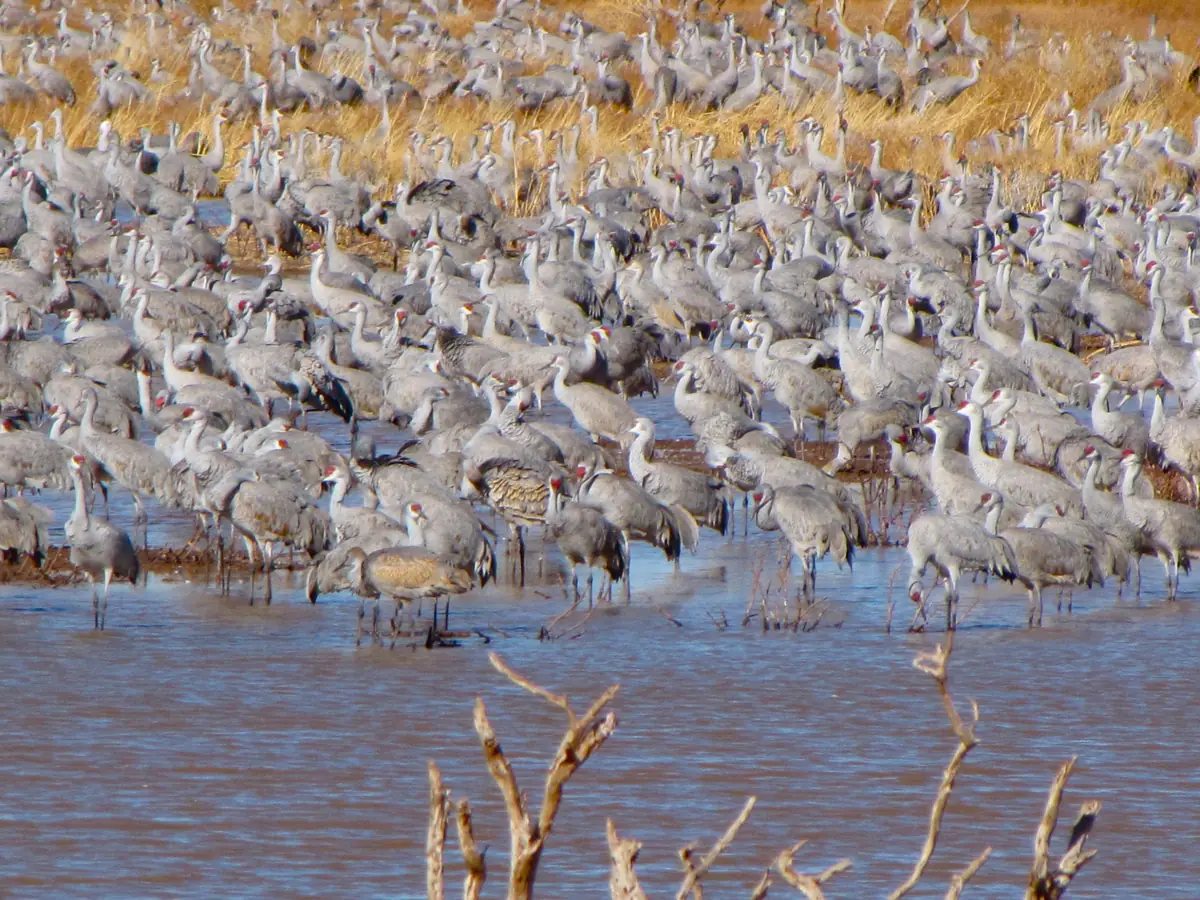
- Cranes at Whitewater Draw. Arizona Game and Fish expects the first sandhill cranes at Whitewater Draw Wildlife Area, south of Willcox near McNeal, in early October, building through the fall toward a winter crowd of more than 20,000. Go at first light, when the flocks lift off to feed, or watch the department’s crane cam from home.
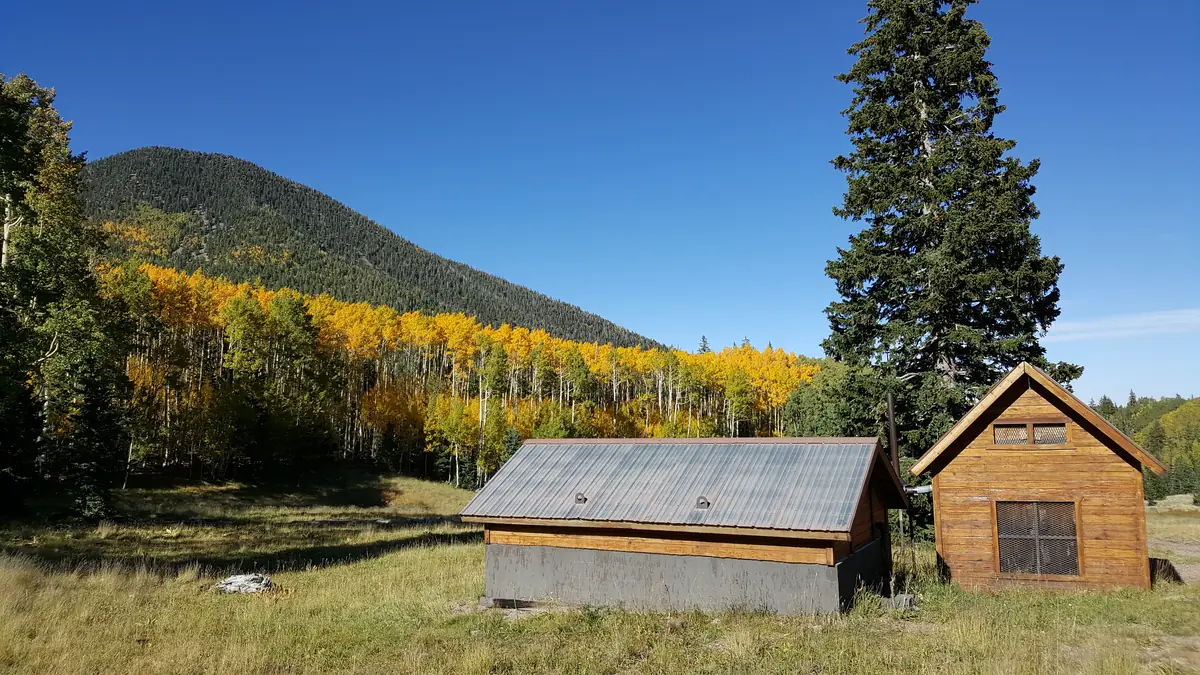
- Aspen gold above Flagstaff. The Coconino National Forest says the high-elevation trees near Flagstaff are usually at their best in early October, with Oak Creek Canyon’s broadleaf color lasting into November. Lockett Meadow Road is closed this year to everyone, walkers included, so plan on Snowbowl Road, Kendrick Park or the Aspen Nature Trail instead.
- A dark Saturday, then the Hunter’s Moon. The moon is new on Saturday, October 10, and four state parks host star parties that weekend. Saturn, at opposition on the 4th, is up all night. The full Hunter’s Moon comes at 9:12 p.m. on Sunday, October 25, Arizona time.
For the journal: the Naturalist’s Field Journal’s “birds I have seen” list will hold the first cranes and the hawks over the canyon, the dusk and dawn watch page suits the crane liftoff and the bats at the feeder, the pollinator watch plate takes the monarchs, and a tree through the seasons is made for one aspen you can visit again in spring. Write the elevation next to the date.
Regions used below: Phoenix and the low deserts; Tucson and the southeastern Sky Islands; Yuma and the Colorado River; Prescott, Sedona and the Verde Valley; Flagstaff, the Grand Canyon and the Mogollon Rim; The White Mountains; The Navajo Nation and Hopi lands.
When do sandhill cranes come back to southeastern Arizona?
Early October. Whitewater Draw Wildlife Area, a state-managed wetland in the Sulphur Springs Valley between Bisbee and Willcox, is the best-known roost, and Arizona Game and Fish describes more than 20,000 cranes spending the winter there alongside ducks and other wetland birds. The Southeastern Arizona Bird Observatory notes that it is the early storms of November that push the bigger waves of sparrows, raptors and cranes south, so an October visit is about the first flocks, not the full spectacle.
-
The morning liftoff
About 30 minutes either side of sunrise · Whitewater Draw, near McNeal, Cochise County
Game and Fish recommends the half hour before and after sunrise, when the birds leave the roost to feed in the surrounding fields. They usually drift back before noon and loaf on the water for the rest of the day, which makes late morning the easy option for families. At the Draw the sun comes up at 6:13 a.m. on October 1 and 6:34 a.m. on October 31.
-
The crane cam
From about October into spring · Online, from Arizona Game and Fish
The department streams a live camera on the roost from around October until the birds leave. Departures begin about mid-February and some cranes linger into March, so the cam is a long season’s worth of watching.
When do the aspens turn gold in Arizona?
From the end of September through October, highest trees first. The Coconino National Forest puts the start of fall color in late September, with trees at Flagstaff’s higher elevations usually reaching their prime in early October and color peaking across the forest through the month. Below the rim, the maples of the Mogollon Rim Ranger District put on their own show, and in Oak Creek Canyon the sycamores, cottonwoods and maples keep going well into November.
-
San Francisco Peaks aspen
Late September to mid-October; best in the first week or two · Snowbowl Road, Kendrick Park, Aspen Nature Trail, Weatherford and Abineau trails
The forest’s own list of good viewing spots includes the Snowbowl Road and Schultz Pass drives, the Around the Peaks loop, the Aspen Nature Trail and the Kendrick Park Watchable Wildlife Trail. Two closures matter this year: Lockett Meadow Road is closed to all traffic, including hikers and bikes, and the Call of the Canyon picnic site in Oak Creek Canyon is closed after the Pocket Fire. Park only in designated spots and stay off the meadows; weekend parking fills early. Discover Flagstaff’s LEAFometer tracks conditions week by week.
-
Mogollon Rim maples
Through October · Forest Road 300 (Rim Road), FR 139 on Dick Hart Ridge, FR 321C on Dane Ridge
Bigtooth maples in the side canyons below the Rim turn red and orange, a different palette from the aspen gold on the Peaks. These are unpaved forest roads; check conditions after rain.
-
Canyon color in the southeast
Late October through late November · Madera, Ramsey and Cave Creek canyons; the Chiricahuas
The Southeastern Arizona Bird Observatory’s birding calendar points to aspens, cottonwoods, sycamores and maples coloring the Sky Island canyons from late October to late November, which is when the birding there is quiet and the scenery makes up for it. Arizona sycamore, with its white limbs and big pale leaves, is the tree to learn.
What birds are migrating over Arizona in October?
Hawks over the Grand Canyon, the last hummingbirds in the southeast, and the first wintering ducks and sparrows in the valley wetlands. The Southeastern Arizona Bird Observatory is candid that the mountain canyons are often a letdown by early October as the summer specialties leave; the lowlands, wetlands and the canyon rim are where the movement is.
-
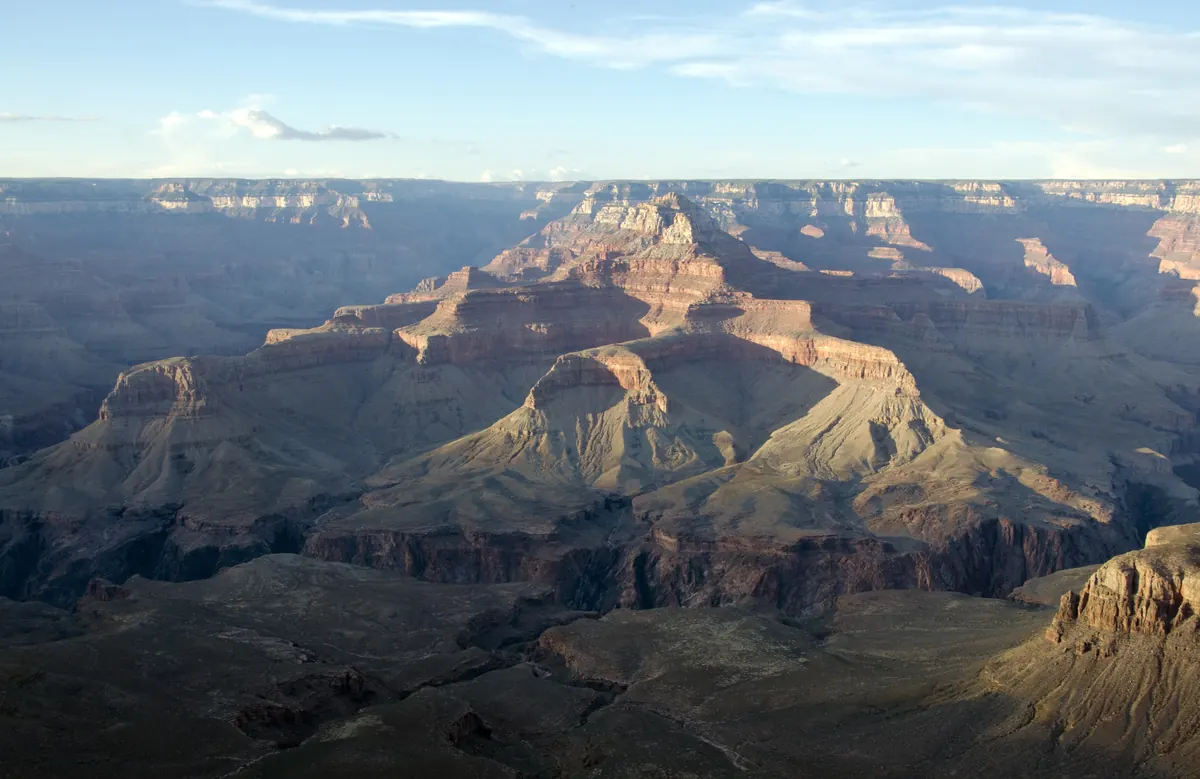
Grand Canyon HawkWatch
Daily through November 5, 9 a.m. to 5 p.m., weather permitting · Yaki Point, South Rim, Grand Canyon National Park
HawkWatch International has counted migrating raptors on the South Rim since 1991, at Yaki Point since 1997. A season typically brings 10,000 to 12,000 migrants of up to 19 species, and this is one of the few count sites where you look down on hawks riding the thermals below the rim. HawkWatch singles out zone-tailed hawks and California condors as the less common prizes. During the busy season the orange Kaibab Rim Route shuttle from the visitor center is the way in, and only groups larger than six need to book a time.
-
The last hummingbirds
Numbers fall off through October; Anna’s stay all year · Southeastern Arizona canyons, Tucson and Phoenix yards
A long banding study at Sonoita and Harshaw Creek near Patagonia found the fall peaks arrive in sequence: black-chinned first, in late August and early September, then rufous, mostly young birds, then Anna’s. By October the migrants are thinning out. Anna’s hummingbirds live year-round in the Phoenix and Tucson areas, so a clean feeder still has customers. The observatory’s advice on the old myth is plain: leaving a feeder up will not keep a healthy bird from migrating, and it may help a straggler.
-
World Migratory Bird Day and October Big Day
Saturday, October 10 · Anywhere; guided walk at Sweetwater Wetlands, Tucson
eBird’s October Big Day falls on the 10th, and any list entered that day counts. In Tucson, the Tucson Bird Alliance (formerly Tucson Audubon) leads an all-levels World Migratory Bird Day walk at Sweetwater Wetlands at 6:30 a.m., with registration through its events page. It is a good morning to start a list you can add to all winter.
-
California condors
All year · Grand Canyon, especially the South Rim
Condors are not migrants, but October is a fine month to see one. In 1982 only 22 remained in the wild; after years of captive breeding and releases, they soar over the canyon again, and HawkWatch lists them among the birds its counters see. Read the numbered wing tag with binoculars and look the bird up.
Are monarchs migrating through Arizona in October?
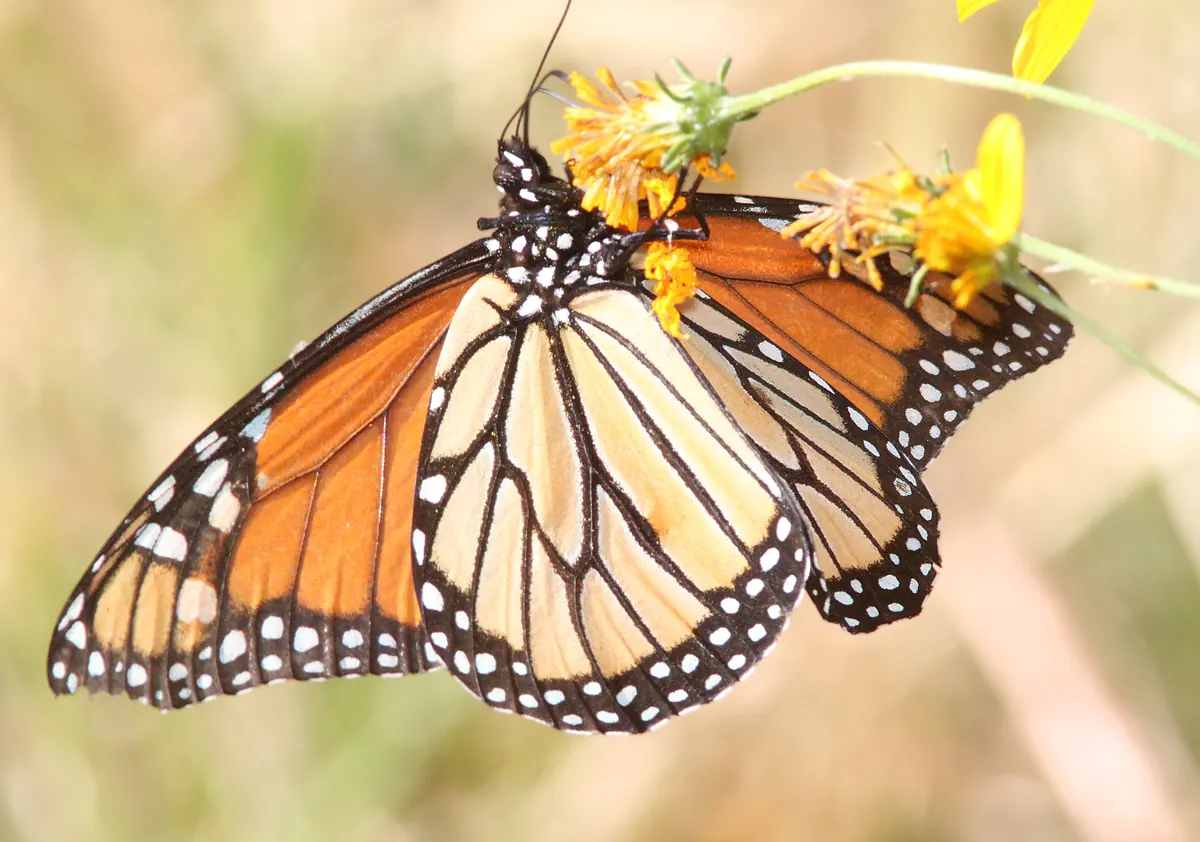
Yes, though Arizona’s monarchs do not behave like the eastern ones. The Southwest Monarch Study, whose volunteers have tagged thousands of butterflies since 2004, has found that monarchs tagged in Arizona end up both in coastal California and in Mexico in the same season, apparently depending on the wind the day they leave. Most of its recovered tags come from butterflies tagged between mid-September and mid-October, and directional flight has been recorded in Arizona from September 1 to as late as November 19. A few hundred stay the winter in the low deserts around Phoenix and Tucson and along the Colorado River.
-
Where to look
Mid-September to mid-October, later in the low desert · Phoenix, Tucson, the Colorado River at Lake Havasu, Parker and Yuma; Canelo in the southeast
The study reports small clusters in trees in Phoenix and Canelo during the fall movement, and larger clusters of 100 to 500 along the Colorado River. Any patch of flowering milkweed is worth checking on a warm afternoon, and look twice at every orange butterfly: queens, the monarch’s darker desert relative, fly here too.
-
Radio-tagged monarchs in Phoenix
This fall · Desert Botanical Garden, Phoenix
In a September 3 post, the Desert Botanical Garden said its researchers plan to fit monarchs with tiny solar-powered radio tags this fall and spring. Anyone with the free Project Monarch phone app can pick up a tagged butterfly over Bluetooth, so a visitor’s phone becomes part of the tracking network. The garden also runs Desert Refuge, a milkweed-watching program with the USA National Phenology Network.
Report sightings to the Southwest Monarch Study or Journey North; if you want to tag, sign up with the study before the season rather than buying tags elsewhere. If you grow milkweed, the garden’s plant sale in late October stocks native species.
Why are bats emptying my hummingbird feeder, and when will they leave?
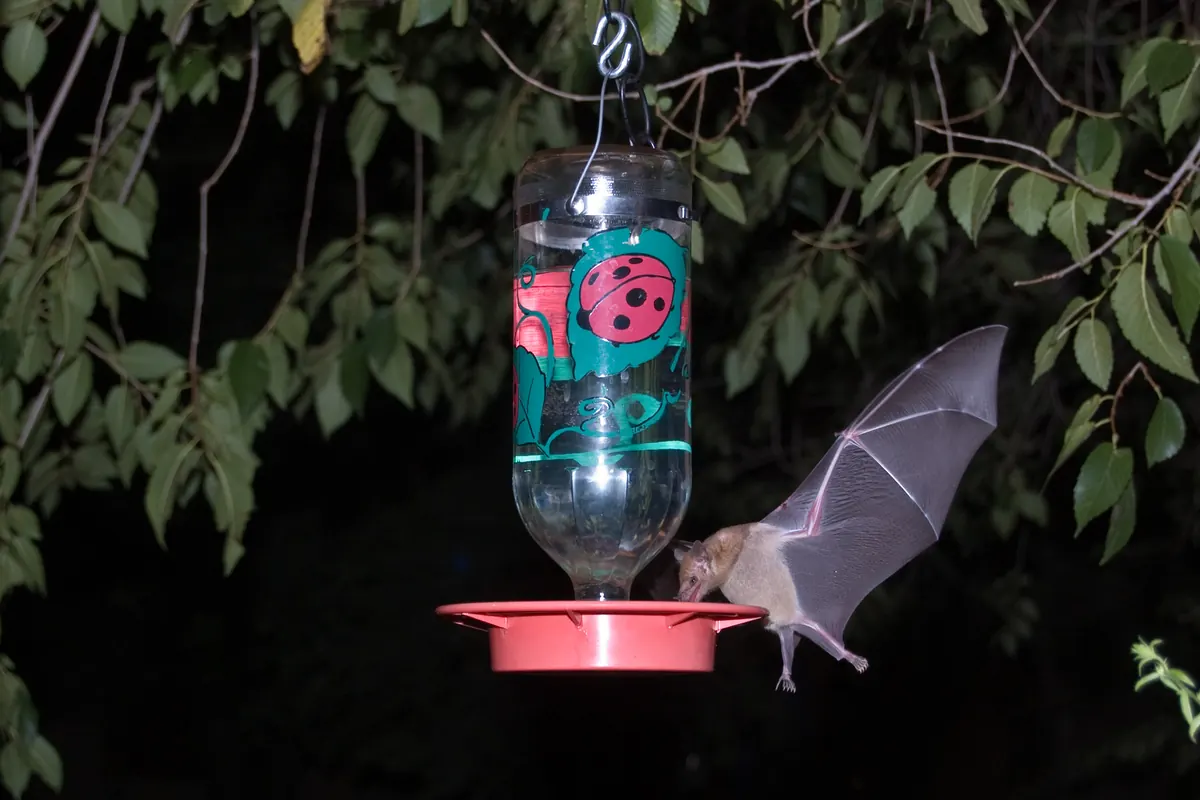
They are nectar bats, and they are about to go. Two species, the lesser long-nosed bat and the Mexican long-tongued bat, migrate up from Mexico, and in late summer and fall they find the hummingbird feeders of Tucson and southern Arizona. A feeder that is full at dusk and dry at dawn is the giveaway. The lesser long-nosed bat, listed as endangered until 2018, is the reason Arizona Game and Fish has asked residents to watch their feeders since 2006; the study’s instructions ask for a note when the bats first appear, again in late August or early September, and again in late September or early October, or whenever numbers start to drop. Treat the end of the season as a date to record, not a date to expect: most bats leave during October.
-
How to watch
From about half an hour after sunset · Your own feeder, Tucson and southern Arizona
The bats roost until at least a half hour after dark and may fly 20 miles to feed, so the visits come later than you might think. Each one lasts about a second: the bat stalls in front of the port, laps with a long tongue, and drops away. A red flashlight and patience work better than a camera flash. Use the same one-part-sugar, four-parts-water mix as for hummingbirds, with no dye, and take any bee guard off at night.
-
Bat events
October 17 and 24 · Jerome State Historic Park; Kartchner Caverns State Park
Jerome’s ranger-led bat walk on Saturday, October 17 (registration required) looks for bats emerging from the old mine shafts of the Black Hills. Kartchner Caverns holds an all-day Bat Fest on Saturday, October 24, 9 a.m. to 4 p.m.
When does the heat break in Arizona, and what will El Niño do this winter?
In Phoenix, usually in the first week of October. Across 1991–2020, the median date of the last 100-degree day at Sky Harbor was October 4, but the tail is long: in 2024 the heat held on until October 26, one day short of the record set on October 27, 2016. The month as a whole cools fast. NOAA’s normal high at Phoenix falls from 100.4 °F in September to 89.2 °F in October, and Tucson averages 86.3 °F. On the plateau, Flagstaff’s normal October high is 63.6 °F with a low of 31.5 °F, Prescott runs 73 and 42, and Winslow 74 and 40.
The monsoon season the Weather Service tallies ends on September 30, and October is one of the driest months of the year in the desert: 0.56 inch of rain is normal at Phoenix and 0.67 at Tucson. The exceptions come from the Pacific, when the remains of an eastern Pacific hurricane or an early winter low sweep across; those are the storms that can flood a wash in a month that is otherwise dry. Flagstaff, at 1.52 inches, gets more, and some of it can fall as snow. The normal there is 1.5 inches of snow for October and 8.2 for November. In the airport records, the median first measurable snow in 1991–2020 came around November 8, but in about four years out of ten it arrived in October, and it came as early as October 7 in 2018.
-
El Niño and the winter ahead
Winter outlook due mid-October · Statewide, strongest in the south
Federal forecasters now rate a very strong El Niño as better than nine-in-ten likely for the coming cold season, and in their September 10 discussion gave three-in-four odds that October through December sets a new mark for any El Niño since 1950. For Arizona that tilts the odds toward a wet winter. A study by the Flagstaff weather office noted that moderate and strong El Niños have tended to bring above-normal precipitation from November through March, and that the south has gained more than the north: historically around 150 percent of normal in the north and 180 percent in the south in November and December, and about 120 and 170 percent from January to March. The same office found January 1998 dry in the middle of a wet season, and the University of Arizona’s Michael Crimmins reminded KJZZ listeners in September that the record El Niño of 2015–16 left Arizona drier than normal. More storms is the bet, not a promise. October itself owes little to the Pacific pattern; any effect shows up from November on. NOAA’s winter outlook is published in mid-October.
For the cloud cover over your own town tonight, open Today’s sky; a radar and forecast summary is on the weather page.
When is the first freeze in Arizona?
It depends almost entirely on elevation. On the Colorado Plateau and in the White Mountains, October comes after the typical first freeze: Flagstaff’s median is September 28, and at the Window Rock airport it is the same date. The middle elevations freeze during the month, Prescott around October 27 and Willcox on Halloween. The low deserts wait until December, and at Yuma half of all winters see no 32 °F night until after Christmas.
| Station | One year in ten | Median | Nine years in ten |
|---|---|---|---|
| Flagstaff Pulliam Airport | Sep 16 | Sep 28 | Oct 9 |
| Window Rock Airport (Navajo Nation) | Sep 16 | Sep 28 | Oct 8 |
| Show Low Airport (White Mountains) | Oct 2 | Oct 15 | Oct 28 |
| Prescott Love Field | Oct 13 | Oct 27 | Nov 10 |
| Willcox (Sulphur Springs Valley) | Oct 20 | Oct 31 | Nov 14 |
| Kingman Mohave County Airport | Oct 26 | Nov 11 | Nov 24 |
| Tucson International Airport | Nov 21 | Dec 9 | Jan 3 |
| South Phoenix | Nov 29 | Dec 16 | Jan 9 |
| Yuma Quartermaster Depot | Dec 11 | Dec 28 | Feb 7 |
The full list of 172 Arizona stations, from Sunrise Mountain in the White Mountains to Willow Beach on the Colorado, is on the Arizona frost dates page. In the valleys, October is not the end of the garden but the start of the second season: the Desert Botanical Garden times its only plant sale of the year for fall planting.
How much daylight does Arizona lose in October?
Close to an hour. Page, the northernmost city in the table, gives up 68 minutes over the month; Sierra Vista, near the border, loses 55. In Phoenix, sunrise moves from 6:23 to 6:46 a.m. and sunset from 6:12 to 5:37 p.m. Most of Arizona will not change its clocks on November 1. The exception is the Navajo Nation, which keeps daylight time and returns to Mountain Standard Time at 2 a.m. on Sunday, November 1, putting the whole state on the same clock until March. The Hopi Reservation, surrounded by the Navajo Nation, stays on standard time all year.
| City | Oct 1 | Oct 31 | Lost | Per day |
|---|---|---|---|---|
| Page | 11 h 48 m | 10 h 40 m | 68 min | 2.3 min |
| Flagstaff | 11 h 48 m | 10 h 46 m | 62 min | 2.1 min |
| Kingman | 11 h 49 m | 10 h 45 m | 64 min | 2.1 min |
| Prescott | 11 h 49 m | 10 h 48 m | 61 min | 2.0 min |
| Phoenix | 11 h 49 m | 10 h 51 m | 58 min | 1.9 min |
| Yuma | 11 h 50 m | 10 h 53 m | 57 min | 1.9 min |
| Tucson | 11 h 50 m | 10 h 54 m | 56 min | 1.9 min |
| Sierra Vista | 11 h 51 m | 10 h 56 m | 55 min | 1.8 min |
Sunrise, sunset and twilight for your own coordinates, and this week’s loss in minutes, are in the Field almanac.
What can you see in Arizona’s night sky in October?
Arizona’s dry air and dark-sky parks make this a good month to look up, and the calendar helps: the new moon on October 10 is a Saturday. Times below are Mountain Standard Time, which is Arizona time everywhere except the Navajo Nation, where clocks read an hour later until November 1.
-
Saturn at its best
Opposition October 4; beside the moon October 23–24 · Rises in the east at sunset
Saturn is opposite the sun on the 4th, so it rises around sunset, stands highest near midnight and sets at dawn. Look for a steady, pale-yellow point that does not twinkle, alone in a faint part of the autumn sky. A small telescope will show the rings. On the evenings of the 23rd and 24th the bright gibbous moon keeps it company.
-
The moon and Jupiter before dawn
Tuesday, October 6; moonrise about 2:00–2:30 a.m. MST · Very low in the east-northeast
Farther east, the crescent covers Jupiter this morning; Arizona sits just west of that zone. The International Occultation Timing Association’s predictions put Jupiter’s reappearance at nearby Farmington and El Paso at about 9:10 to 9:11 Universal Time, which is roughly 2:10 a.m. MST. The U.S. Naval Observatory has the moon rising at about 2:00 a.m. at Window Rock, 2:04 at Springerville, 2:14 at Tucson, 2:17 at Phoenix and 2:29 at Yuma. So in the far east of the state, around Window Rock and the White Mountains (3:00 a.m. by Navajo Nation clocks), Jupiter comes out from behind the dark limb with the moon only a degree or two above a flat horizon, which is a hard catch. Everywhere else the two rise already separated, Jupiter a hair off the crescent’s edge, a striking binocular pair until dawn.
-
Draconids
Evening of Thursday, October 8 · Face north after dark
A sparse shower that is best in the evening, which makes it a good one for children, and there is no moonlight at all: in Phoenix the thin crescent sets at 4:56 p.m., before dark, and stays down until near dawn. Expect a few an hour unless the shower surprises.
-
Mars in the Beehive
Before dawn, Sunday, October 11 · East, above Jupiter
Jupiter is the brilliant morning “star” in the east. Higher up, on the 11th, Mars slides across the Beehive, the loose star cluster in Cancer, and binoculars frame both. Venus, by contrast, is leaving the evening sky: look for it low in the west-southwest right after sunset only in the first few days of the month. On October 23 it reaches inferior conjunction, lined up between us and the sun.
-
Orionids
Active October 2 – November 7; best before dawn October 21–22 · Anywhere dark, after moonset
The peak is broad, and the moon is a waxing gibbous that sets at 1:57 a.m. on the 21st and 2:57 a.m. on the 22nd in Phoenix. That leaves a dark window from about 3:00 a.m. until the first glow of dawn, a little after 5 a.m. After the 23rd the moon stays up too late to help.
-
The Hunter’s Moon
Full at 9:12 p.m. MST, Sunday, October 25 · Rising in the east around sunset
In Phoenix the moon clears the horizon at 5:15 p.m. on the 25th, roughly 30 minutes ahead of sunset, and at 5:53 p.m. on the 26th, about ten minutes after sunset, and it will look full on both evenings. It is not a supermoon.
-
New-moon star parties
October 10 and 11 · Catalina, Kartchner Caverns, Homolovi and Picacho Peak state parks
Arizona State Parks lists a star party with Tucson Amateur Astronomy Association telescopes at Catalina State Park on Saturday, October 10; a solar-and-night-sky program at Kartchner Caverns, an International Dark Sky Park, from 1 to 9 p.m. the same day; the monthly second-Saturday star party at Homolovi, the only state park with a permanent observatory, at 6 p.m.; and a Picacho Peak star party on Sunday, October 11. Check each park’s page for times and any fees.
| Phase | Date | Time |
|---|---|---|
| Last quarter | Saturday, Oct 3 | 6:25 a.m. |
| New moon | Saturday, Oct 10 | 8:50 a.m. |
| First quarter | Sunday, Oct 18 | 9:12 a.m. |
| Full moon, the Hunter’s Moon | Sunday, Oct 25 | 9:12 p.m. (looks full the evenings of Oct 25 and 26) |
| Last quarter | Sunday, Nov 1 | 1:28 p.m. (MST statewide) |
Moonrise and moonset for any night are on the moon phase calendar.
What are Arizona’s desert animals and plants doing in October?
-
Gila monsters on the move by day
Mornings and evenings in fall · Sonoran Desert foothills, Saguaro National Park
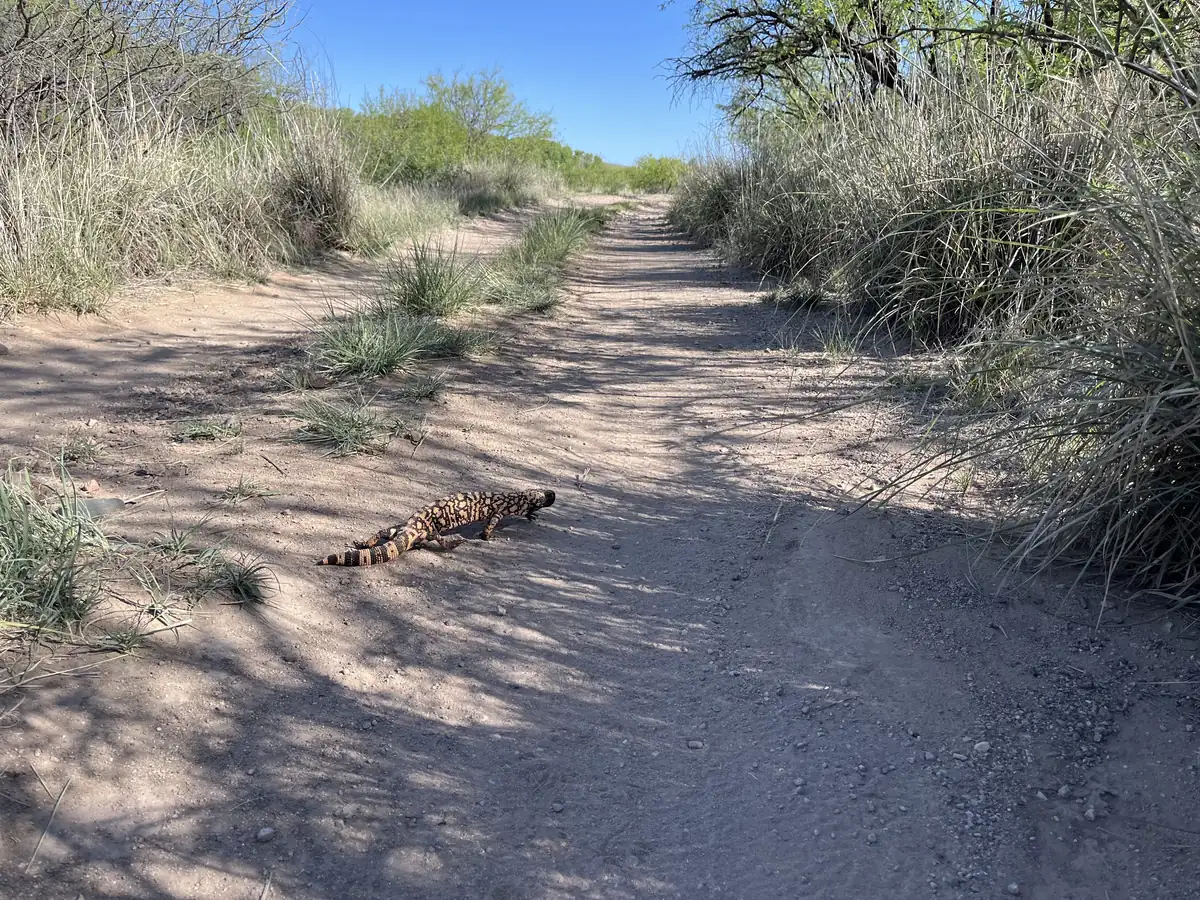
The National Park Service notes that Gila monsters, rare to meet at any time, shift from night activity in summer to mornings and evenings in spring and fall. The pink-and-black beaded pattern is a warning: this is the only venomous lizard in the United States, and a bite is a trip to the emergency room. Admire it from a few steps back and let it go on its way.
-
Elk on the South Rim
Fall · Grand Canyon Village, the Mogollon Rim, the White Mountains
In the rut, bulls bellow and thrash trees, shrubs and the ground with their antlers to impress cows and warn off rivals. Grand Canyon’s elk are used to people and drink from puddles under the bottle-filling stations, which is why the park calls them one of its most dangerous animals. Give them at least 100 feet.
-
Javelina in cooler hours
Early morning and evening · Desert foothills and edge neighborhoods
Javelina keep to the cool parts of the day and travel in herds that average about a dozen. Prickly pear is a favorite food, fruit and pads alike, spines and all. Keep dogs leashed; a herd will defend itself.
-
Planting season in the low desert
October into spring · Phoenix, Tucson, Yuma
In the desert, fall is the time to plant, when roots can grow through the mild months before the heat returns. The Desert Botanical Garden’s 50th-anniversary plant sale, its only one this year, fills the grounds with cactus, agaves, native trees, shrubs and vegetables: members on Thursday, October 22, and the general public from October 23 to 26, 7 a.m. to 6 p.m., free and with no tickets needed.
-
Butterflies in the canyons
Good into October · Southeastern Arizona mountain canyons
When the canyon birding goes quiet, the butterflies do not. The Southeastern Arizona Bird Observatory notes that butterfly diversity usually stays good well into October; a sunny patch of late flowers in Ramsey, Carr or Madera Canyon is worth half an hour.
What can families do outdoors in Arizona this October?
- Saturday, October 3: Fall Fest at Slide Rock State Park, 8 a.m. to 3 p.m., in Oak Creek Canyon. The same morning, Homolovi State Park near Winslow leads an 8:30 a.m. walk to the Homolovi II pueblo and its petroglyphs (repeated October 24).
- Fridays, October 2, 16 and 30, 10 a.m.: “Wildlife of the Sonoran Desert”, a volunteer-led hike at Lost Dutchman State Park below the Superstitions.
- Friday, October 9: nature journaling at Catalina State Park. The park starts second- and fourth-Friday sessions that run to April; the next is October 23. Bring the journal.
- The October 10 weekend: birds by day, stars by night. Count birds for eBird’s October Big Day or join the Tucson Bird Alliance walk at Sweetwater Wetlands, then pick a star party at Catalina, Kartchner Caverns or Homolovi that evening, or Picacho Peak on Sunday.
- Saturday, October 17: bat walk at Jerome State Historic Park (registration required), and Saturday, October 24: Bat Fest at Kartchner Caverns, 9 a.m. to 4 p.m.
- October 22–26: the Desert Botanical Garden plant sale in Phoenix, free to enter. Pick one native milkweed for the monarchs.
- Citizen science that fits a school week. Log nectar bats at your feeder for Arizona Game and Fish, report monarchs to the Southwest Monarch Study or Journey North, carry the Project Monarch app on walks, and check the Whitewater Draw crane cam before breakfast.
The Field almanac has a printable October checklist, and the nature hub has the same guide for other states. Event details come from the organizers’ own calendars as of late September; confirm times before you drive.
Safety notes for October in Arizona
- Heat in the first week. The median last 100-degree day in Phoenix is October 4, and trailheads in the low desert still bake by midmorning early in the month. Start early, carry more water than you think, and turn around at the halfway point of your water.
- Hunting seasons, and no orange rule. Arizona Game and Fish’s 2026–27 regulations open youth-only deer and javelina hunts in some units from October 2 through October 18, fall turkey hunts October 2–8 across much of the north, general deer hunts October 23–November 1 in most northern units, mule deer hunts October 30–November 5 in much of the south, whitetail hunts October 23–29 in the southeast, and Gambel’s, scaled and California quail statewide from October 16. Elk and pronghorn hunts are drawn on separate schedules; see the department for units. Arizona does not require hunter orange, though the department recommends it for hunters near other people. On national forest and state trust land this month, hikers should wear something bright anyway, and put a bright collar or vest on the dog.
- High-country nights. Flagstaff’s normal October low is below freezing, and a first snow on the Peaks is possible in any October. Pack a warm layer for aspen hikes and for star parties at elevation, and check the weather page before you go up.
- Washes and late storms. The monsoon is over, but a tropical remnant or early winter storm can still send water down a dry wash. Never drive into a flooded crossing.
- Animals. Stay 100 feet from elk, leave Gila monsters and rattlesnakes alone on warm days, and never pick up a bat that is on the ground; call Arizona Game and Fish or animal control.
Sources
- Arizona Game and Fish Department: sandhill cranes arriving at Whitewater Draw (arrival, numbers, viewing times)
- Arizona Game and Fish Department: live sandhill crane cam
- Southeastern Arizona Bird Observatory: the five seasons (fall birding, butterflies, canyon color)
- Southeastern Arizona Bird Observatory: hummingbird FAQ (feeders and migration)
- USDA Forest Service, Coconino National Forest: fall colors (timing, viewing routes, Lockett Meadow and Call of the Canyon closures)
- HawkWatch International: Grand Canyon HawkWatch (season, hours, species, access)
- Arizona Important Bird Areas: Grand Canyon National Park IBA (Lipan and Yaki Point counts)
- National Park Service: Yaki Point raptor migration program (2024 listing; shuttle access)
- National Park Service, Grand Canyon: California condors
- USDA Forest Service, PSW-GTR-191: hummingbird migration timing at three southeastern Arizona banding sites
- eBird: October Big Day, 10 October 2026
- Tucson Bird Alliance: events and field trips (World Migratory Bird Day, October 10)
- Southwest Monarch Study: monarch migration and breeding in the Southwest
- Southwest Monarch Study: peak migration dates by latitude
- Southwest Monarch Study: home page and reporting
- Desert Botanical Garden: monarchs are returning to Phoenix (September 3, 2026; radio tags, Project Monarch, Desert Refuge)
- Desert Botanical Garden: 50th anniversary plant sale, October 22–26
- Journey North: monarch butterfly sightings
- Arizona Game and Fish Department: bats and hummingbird feeders study, information and instructions
- Pima County Public Library: bats and hummingbird feeders
- Journal of Mammalogy: nectar bats at hummingbird feeders in southern Arizona
- Arizona State Parks: statewide events calendar, October 2026
- Arizona State Parks: Catalina State Park events (star party, nature journaling, bird walks)
- Arizona State Parks: Picacho Peak State Park events (star party October 11)
- Arizona State Parks: Slide Rock State Park events (Fall Fest October 3)
- NOAA NCEI: 1991–2020 monthly normals for Phoenix, Tucson, Flagstaff, Prescott and Winslow (data API)
- NOAA NCEI: U.S. climate normals 1991–2020 (first-freeze probabilities)
- NOAA Regional Climate Centers, ACIS: daily records for Phoenix and Flagstaff (last 100 °F day, first measurable snow)
- National Weather Service Phoenix: NOWData climate records
- National Weather Service Tucson: monsoon season information (season ends September 30)
- Climate Prediction Center: ENSO diagnostic discussion, September 10, 2026
- National Weather Service Flagstaff, Western Region Technical Attachment 98-33: winter precipitation in Arizona during the 1997–98 El Niño
- KJZZ: will record-strong El Niño bring a wet winter to Arizona? (September 9, 2026)
- U.S. Naval Observatory: sun and moon rise and set (data API; Phoenix, October 6, 2026, MST)
- U.S. Naval Observatory: moon phases 2026 (data API)
- International Occultation Timing Association: lunar occultation of Jupiter, October 6, 2026 (city timings)
- American Meteor Society: 2026 meteor shower calendar
- EarthSky: visible planets and the Hunter’s Moon, October 2026
- Fred Espenak: full moons at perigee, 2001–2100
- National Park Service, Navajo National Monument: hours and time change (Navajo Nation observes daylight time)
- Wikipedia: time in Arizona (Navajo Nation and Hopi Reservation)
- National Park Service, Saguaro: Gila monster
- National Park Service, Saguaro: javelina
- National Park Service, Grand Canyon: elk
- Arizona Game and Fish Department: 2026–27 Arizona hunting regulations (deer, turkey, javelina, bighorn and quail season dates)
- Arizona Game and Fish Department: dove hunting for beginners (hunter orange not required, recommended)
- Arizona Game and Fish Department: hunting regulations (elk and pronghorn booklets)
- Photos via Wikimedia Commons; licenses and photographers are credited under each picture
