What to look for in nature in Arizona this December
December 1 opens meteorological winter, the three-month stretch that is coldest on average, and in Arizona it opens two very different winters. On the Colorado Plateau, Flagstaff’s normal December snowfall is more than double November’s, and only January and February bring more. In the Sonoran Desert, winter is a nesting season: bald eagles are courting on the Salt and Verde rivers, Anna’s hummingbirds may already be sitting on eggs, and phainopeplas are defending their own clumps of mistletoe. Volunteers fan out for the Christmas Bird Counts, the Geminids peak on a nearly moonless night, and the Cold Moon on December 23 is the closest full moon of 2026. As always in this state, the guide goes by elevation as much as by region.
Other months in Arizona: October, November.
Start here
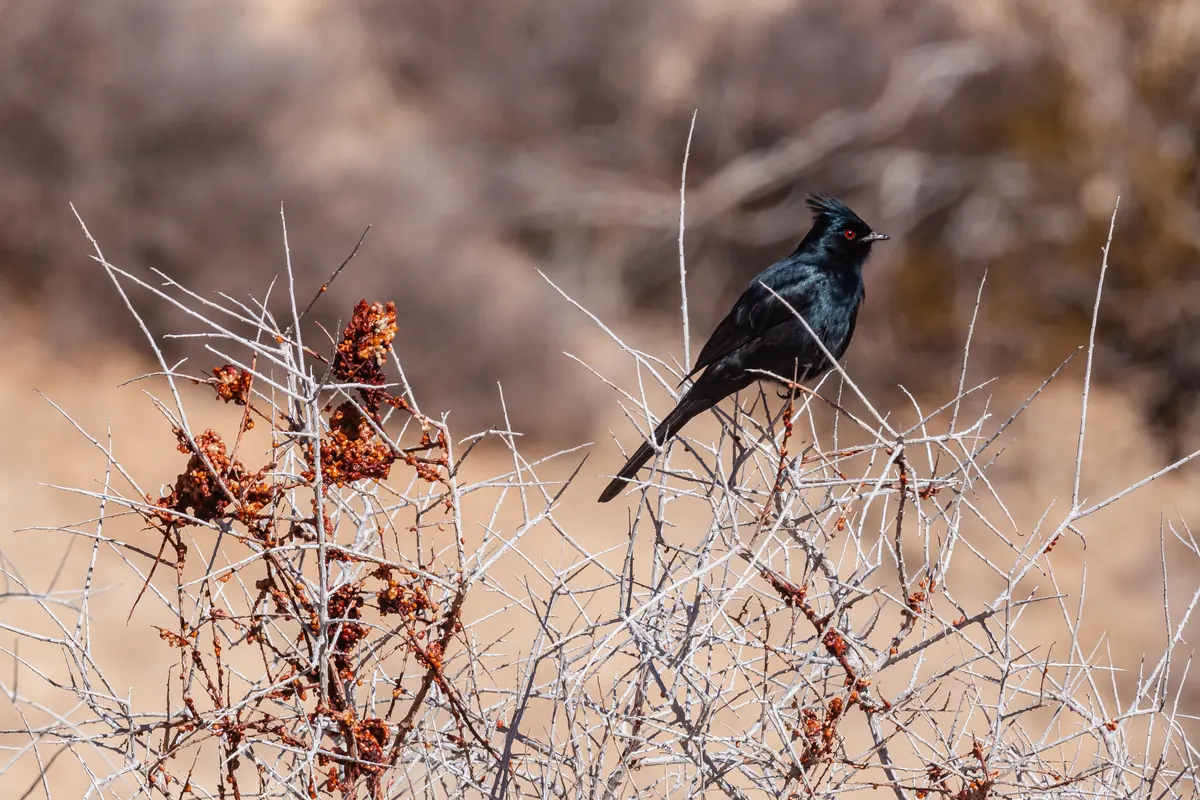
- A phainopepla on its mistletoe. Walk any Sonoran Desert trail with mesquite or palo verde and look for clumps of desert mistletoe hung with pinkish berries. A glossy black, crested bird with red eyes perched on top is a male phainopepla, and he is likely guarding that clump for the winter. Listen for a soft, rising “wurp?”
- Count birds for science. Arizona’s Christmas Bird Counts fill the weeks from December 14 to January 5, from Ramsey Canyon and Portal to Flagstaff and the Havasu refuge. Beginners are welcome on most teams. Pick a circle on the Tucson Bird Alliance’s statewide list and write to its compiler now.
- Geminids, then the biggest moon of the year. Sunday night, December 13, is Geminid night in Arizona, and a slim crescent moon will have set by mid-evening. Ten days later, the full Cold Moon arrives at 6:28 p.m. on Wednesday, December 23, Arizona time, and no full moon this year looks bigger.
For the journal: give the Naturalist’s Field Journal’s nest observed page to an eagle pair seen from a legal distance or to a hummingbird nest the size of a walnut shell, use tracks to know for the prints in a muddy wash or fresh snow at Flagstaff, let seeds pods and cones hold a ponderosa cone and an alligator juniper berry, and keep the birds I have seen list going through your Christmas Bird Count day. Note the elevation and the overnight low beside each entry.
Regions used below: Phoenix and the low deserts; Tucson and the southeastern Sky Islands; Yuma and the Colorado River; Prescott, Sedona and the Verde Valley; Flagstaff, the Grand Canyon and the Mogollon Rim; The White Mountains; The Navajo Nation and Hopi lands.
When do Arizona’s bald eagles start nesting, and which places close?
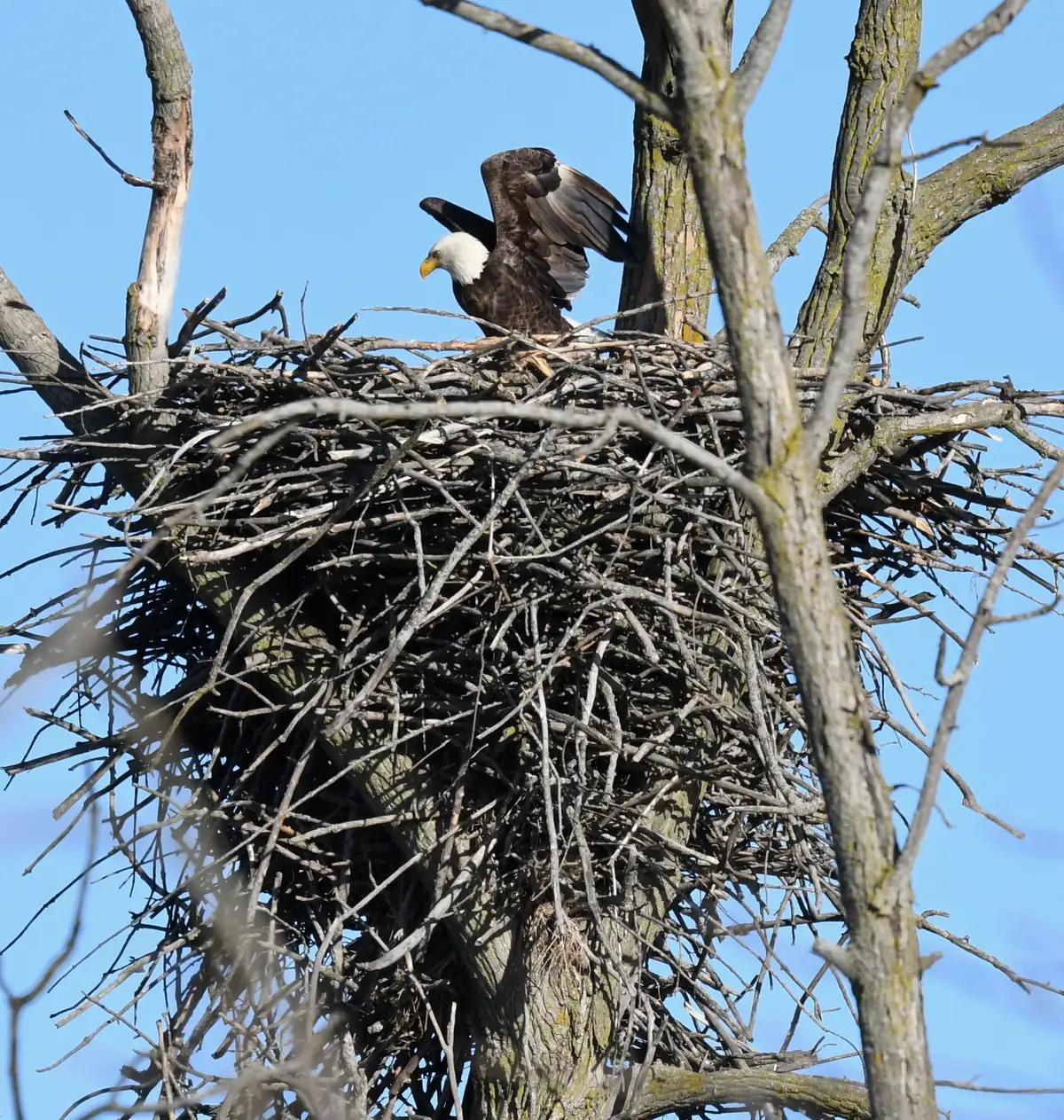
Now. Arizona has two kinds of bald eagles in winter. Migrants from the north spend the season on the high-country lakes, and in December Arizona Game and Fish still points to Upper and Lower Lake Mary, Mormon Lake and Kaibab Lake for groups of them, with elk in their winter coats on the same shorelines. The state’s own desert-nesting eagles are doing something quite different: they are repairing nests and courting along the Salt and Verde rivers and the reservoirs of central Arizona, getting ready to lay eggs in the weeks ahead.
-
The breeding-area closures
Usually December 1 to June 30 · Stretches of the Verde and Salt rivers, the Tonto Creek inlet to Roosevelt Lake, and other nest sites
In its December 2025 bulletin the department counted 111 bald eagle breeding areas statewide and reported that 83 young hatched in the 2025 season, of which 71 lived to make their first flight. To protect the next round, land managers close the ground near certain nests from December 1 to June 30. Last season’s list included the Verde near Chasm Creek, the Verde upstream of the East Verde confluence and near Mule Shoe Bend (float through, but no stopping or landing), the Salt near Meddler Point, and the Tonto Creek inlet to Roosevelt Lake, where land within 1,000 feet of the nest and water within 300 feet were off limits. The Southwestern Bald Eagle Management Committee notes that once eggs are laid, 15 to 30 minutes of disturbance can be enough to end a nesting attempt. The Southwestern Bald Eagle Management Committee’s standing closure list puts most of the Verde, Salt and Tonto Creek areas, Horseshoe Reservoir among them, off limits from December 1 to June 30, with Lake Pleasant following on December 15 and Alamo Lake on January 1. Arizona Game and Fish usually announces the season’s closures around the start of December; check both before any river trip.
-
Watching without disturbing
All winter · Open shorelines and overlooks; the Flagstaff lakes for wintering birds
Drones and paragliders are asked to keep away from nest areas entirely. On foot, a spotting scope from a legal distance beats creeping closer. Around Flagstaff, look for the wintering birds early and late in the day on snags above open water, and dress for a dawn well below freezing.
Why are phainopeplas and hummingbirds so busy in the desert in December?
Because for them, winter in the low desert is the good season. Flowers, berries and mild afternoons mean food, and two of the most interesting birds around Phoenix and Tucson time their year around it. In winter, the Southeastern Arizona Bird Observatory notes, the lowlands around Tucson, the San Pedro and the Sulphur Springs Valley hold the most variety, while the high canyons go quiet.
-
Phainopeplas and desert mistletoe
Winter, into early spring · Mesquite and palo verde with mistletoe: Saguaro National Park, Sabino Canyon, desert parks around Phoenix
The phainopepla, a silky-flycatcher, lives largely on the berries of desert mistletoe, a leafy parasite that hangs in tangled clumps from mesquite and palo verde. The Tucson Bird Alliance says a phainopepla eats about 1,100 of the berries in a day and that each berry passes through in roughly 12 minutes; Saguaro National Park explains that the seeds pass through the bird and are left on new host trees, which is how the mistletoe spreads. In winter each bird defends its own clumps hard. The male is glossy black with a ragged crest and white wing patches that flash in flight; the female is plain slate gray. Unusually, they nest twice: in the desert in late winter and spring, then again in oak woodland such as Madera Canyon after the berries run out.
-
Anna’s hummingbirds nesting in midwinter
Nest building can start in December; most nesting from late winter · Neighborhoods, parks and gardens in Phoenix and Tucson
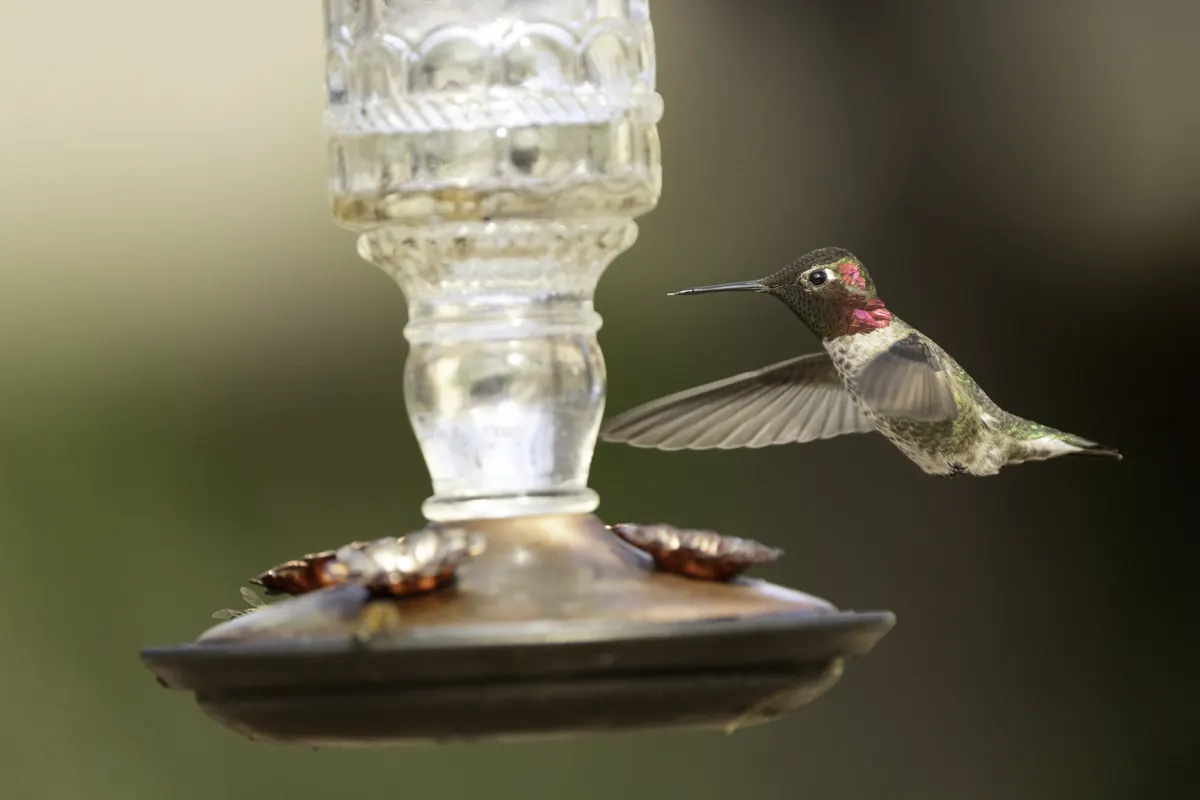
Audubon’s field guide notes that Anna’s hummingbird may begin nesting in December, earlier than almost any other North American bird, and the Tucson Bird Alliance calls it the most common hummingbird in southeastern Arizona at any time of year, nesting from late winter through summer. In this season, watch for a male climbing high and then diving steeply past a perched female, ending in a sharp pop made by air rushing over his tail feathers. The nest is a tiny cup bound with spider silk, often in a garden shrub; watch it only from a distance.
When are Arizona’s Christmas Bird Counts, and how do I join one?
Arizona’s count circles each settle on one day; the national window runs from the 14th of this month to the 5th of January. On count day, teams tally every bird inside a set circle measuring 15 miles across; the Arizona Field Ornithologists call it North America’s oldest community science effort. Arizona has dozens of circles, and the Tucson Bird Alliance keeps a statewide list with each count’s compiler. When we checked in early October the list still showed last season’s dates, so wait for the 2026–27 dates to appear rather than assuming a count falls on the same day of the month.
-
Southeastern counts
Mid-December to early January · Tucson Valley, Santa Catalina Mountains, Avra Valley, Ramsey Canyon, Patagonia, Nogales, Atascosa Highlands, Green Valley–Madera Canyon, Portal, Buenos Aires National Wildlife Refuge and more
The observatory notes that the Ramsey Canyon count regularly turns in one of the highest inland totals in the country, 150 species or more, because the circle takes in grassland, canyon and the San Pedro’s riverside forest. The Portal count covers the east side of the Chiricahuas, and the Organ Pipe and Ajo–Cabeza Prieta counts reach out into the borderland desert.
-
Central and northern counts
Mid-December to early January · Phoenix, Salt–Verde Rivers, Tres Rios, Gila River, Prescott, Chino Valley, Camp Verde, Jerome, Sedona, Payson, Flagstaff–Mount Elden, Havasu and Bill Williams River refuges
The Maricopa Bird Alliance says beginners are welcome and that teams are usually matched by identification skill and stamina. Newcomers can keep the tally or watch a feeder inside the circle. The Flagstaff–Mount Elden circle makes for a colder day among the pines, sometimes in snow.
-
Cranes at full strength, and a festival in January
December into February; Wings Over Willcox January 14–17, 2027 · Whitewater Draw near McNeal and fields around Willcox
By December the sandhill cranes that built up through November are settled for the winter, so the morning liftoff at Whitewater Draw is close to its winter best. The 34th Wings Over Willcox Birding and Nature Festival runs January 14–17, 2027, with registration opening October 10; its tours fill early, so December is the time to book.
Where do Arizona’s tortoises, Gila monsters and bears go in winter?
Mostly underground, each in its own way. Reptiles cannot make their own heat, so they shut down in burrows; black bears den up in the mountains. On a warm, sunny December afternoon in the desert, though, you may still see a tortoise or lizard at a burrow mouth, soaking up the light.
-
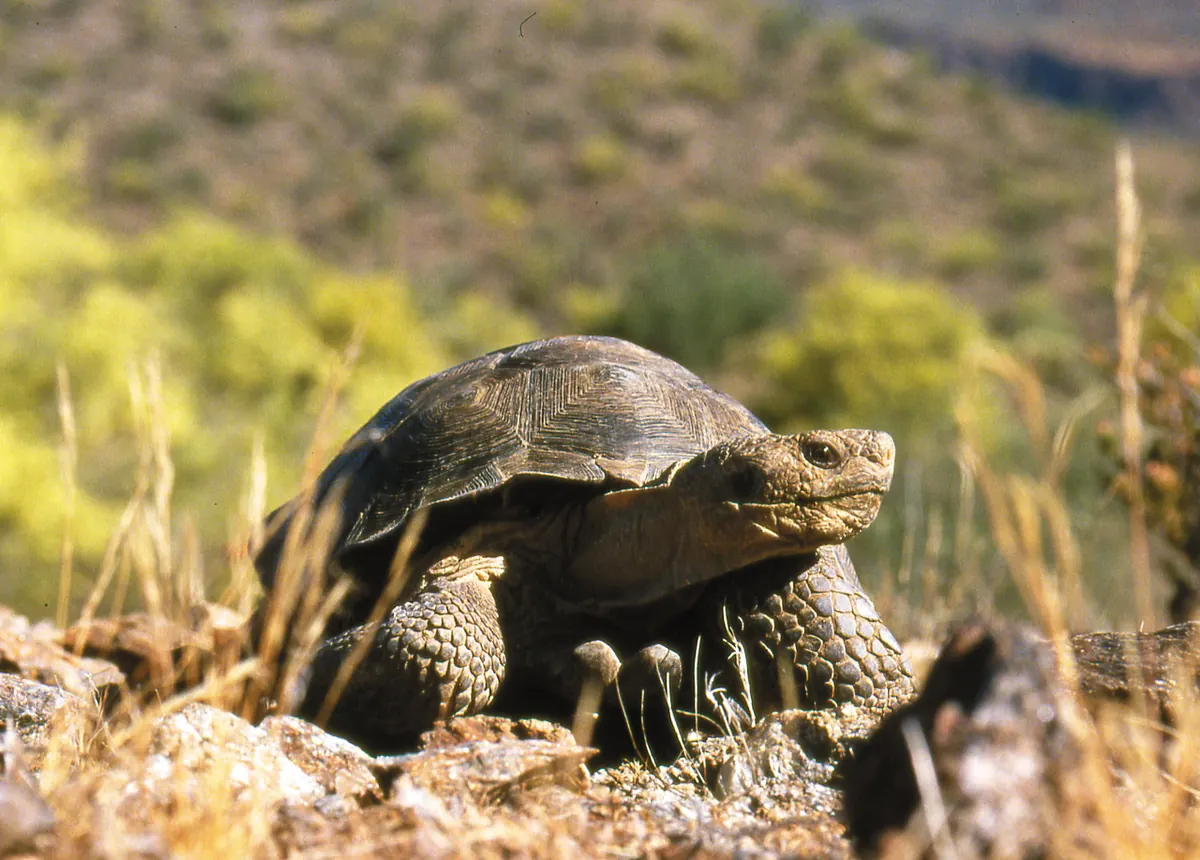
Desert tortoises in brumation
Generally October through March · Rocky slopes and wash banks in the Sonoran Desert
Arizona Game and Fish’s tortoise adoption guide says desert tortoises normally settle in once nights stay below 50 °F for a few days running, and that breathing, heart rate and metabolism all slow. A tortoise may come out to bask on a warm day and go back in by sundown, which is normal. If you see one in the wild, enjoy it from where you stand and leave it be.
-
Gila monsters below ground
Winter · Burrows in the desert foothills
Saguaro National Park says Gila monsters spend most of their lives underground anyway, and in winter they may come up only to bask. The park adds a detail few people know: eggs laid in late June hatch in early winter, but the young stay underground, living on their yolk, until spring. So December has new Gila monsters in it, just out of sight.
-
Black bears in their dens
Mostly November through March · The Mogollon Rim, the White Mountains and the Sky Islands
Arizona Game and Fish says most of the state’s black bears hibernate from November through March, with body temperature, heart rate and metabolism lowered but the bears still somewhat alert. Cubs are usually born in the den in December and January, often twins, small and helpless, and they come out with their mother in April.
How do you tell Arizona’s evergreens and animal tracks apart in winter?
With the leaves down in the canyons and the wildflowers months away, December is a good month to learn the trees that stay green and the signs animals leave behind. Snow on the plateau and mud in desert washes after a winter storm both make tracks easy to read.
-
Ponderosa pine
All year; bark scent strongest in sun · Flagstaff, the Mogollon Rim, the White Mountains, Prescott, the higher Sky Islands
The U.S. Fish and Wildlife Service describes the identifying marks: long needles, five to ten inches, in bundles of three, and thick orange bark that comes away in plates like jigsaw pieces. Put your nose to a sunny trunk. Some people smell vanilla, others butterscotch. A fallen cone, three to six inches long, makes a good journal sketch.
-
Alligator juniper
All year · Pinyon-juniper and oak woodland, roughly 4,000 to 6,000 feet: Prescott, Payson, the Sky Islands
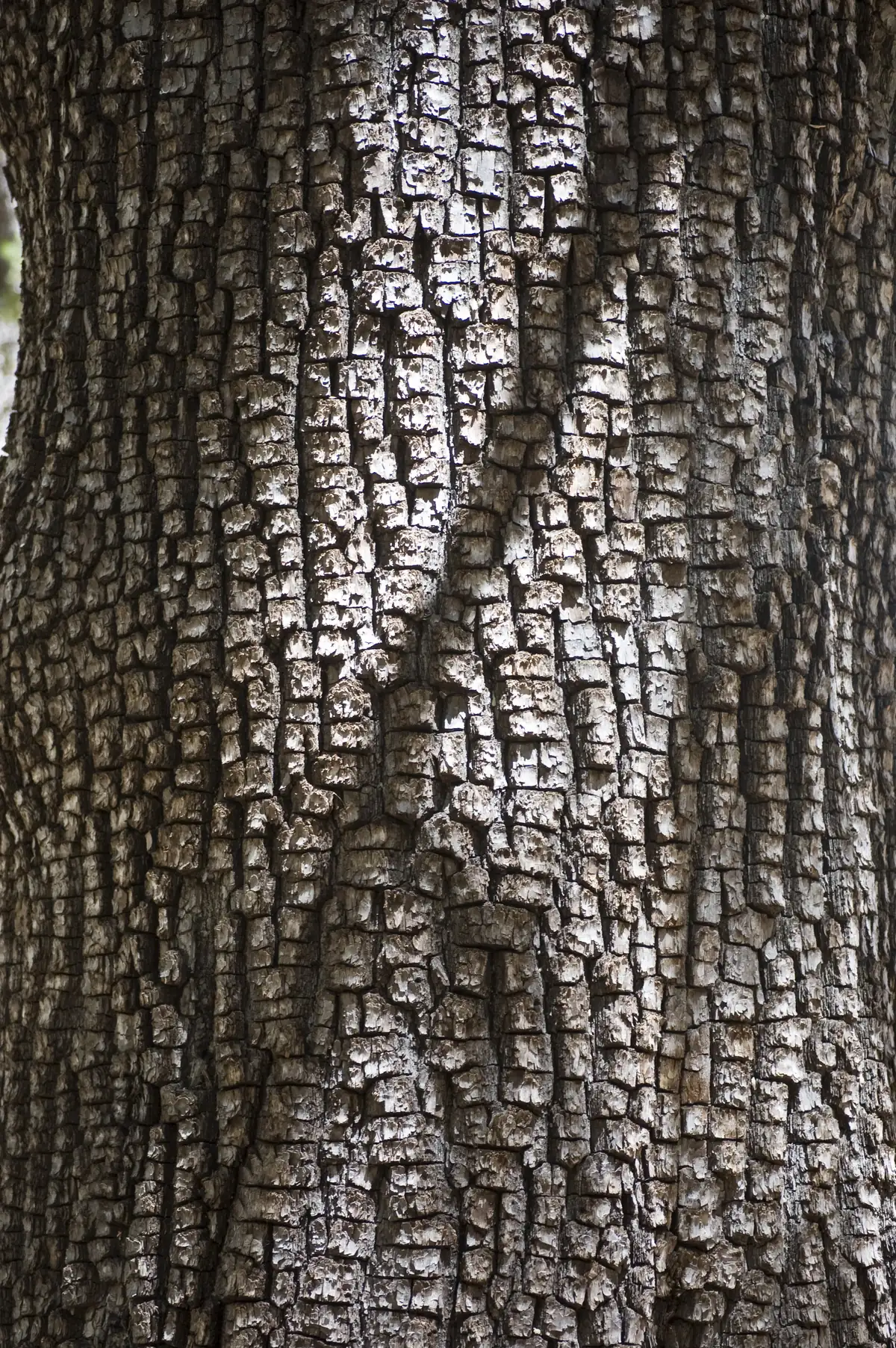
The Forest Service’s fire effects database explains the name: thick bark broken into square scales like an alligator’s back, quite unlike the stringy bark of other junipers. It is the largest juniper of the Southwest and can live about 500 years. The hard, mealy berry-like cones take two years to ripen, so a tree often carries two ages of them at once.
-
Reading the signs in the desert
Best after rain, when washes are damp · Saguaro National Park and any desert trail
Saguaro National Park’s guide to animal signs is a good December checklist: prickly pear pads with big bites taken out of them (javelina, which travel in groups of two to 30), coyote scat on the trail itself, the long, X-shaped tracks of a roadrunner, quarter-sized tarantula holes rimmed with silk, the earthen mounds of banner-tailed kangaroo rats, and packrat middens of sticks and cholla joints piled under prickly pear.
-
A tree for the holidays
Permits usually sold in November · Coconino, Kaibab and Apache-Sitgreaves national forests
The national forests sell a limited number of tree-cutting permits through Recreation.gov, first come, first served. The 2026 details were not posted when we wrote; watch the Coconino’s page there.
How much snow does Arizona get in December, and what will El Niño bring?
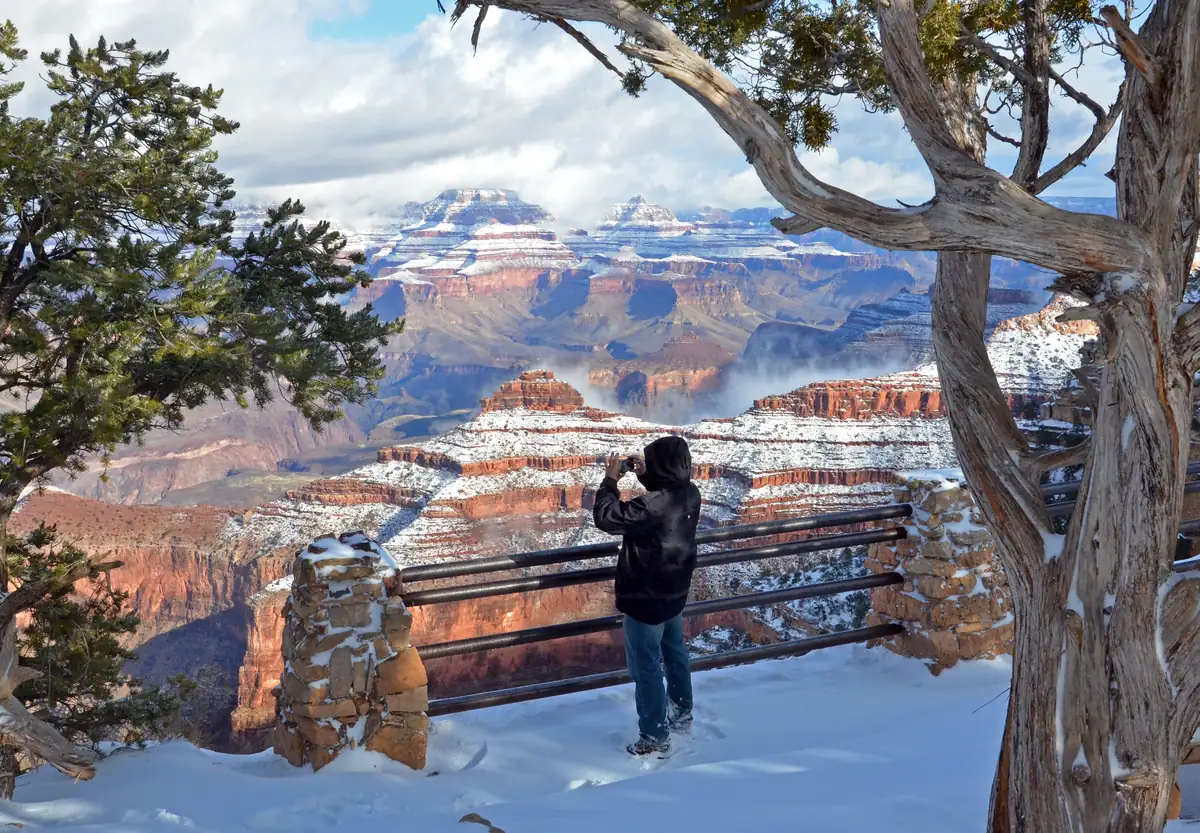
December 1 is the first day of meteorological winter, which weather records count as December, January and February because those are, on average, the three coldest months; the astronomical solstice follows on December 21. NOAA’s 1991–2020 normals show how far apart the state’s winters are. Phoenix Sky Harbor averages a December high of 66.2 °F and a low of 45.3 °F, with 0.74 inch of rain. Flagstaff averages 43.0 °F by day and 16.9 °F at night, and 18.5 inches of snow, behind only January and February. Prescott runs 52 and 26, and Winslow 49 and 22.
-
The El Niño question
Through the cool season · Statewide
Arizona heads into December with the equatorial Pacific running hot, and federal ENSO forecasters (September 10) gave this warm event better than 90 percent odds of reaching the very strong class. A Weather Service study from the Tucson office, which matched decades of rainfall at Tucson International Airport against El Niño years, found that in moderate or strong events the November-to-April season came out above normal 9 times in 11. The same study found December through February alone above normal in only 6 of those 11 winters, and temperatures that tended to run near or a little below normal. In other words, the wet signal is real but spread unevenly through the season, and a dry December would not mean the forecast failed. NOAA’s official December-to-February outlook comes out October 15 and is updated each month; read it at the CPC 90-day outlook page.
-
Snow squalls on the interstates
With any cold front · I-40 and I-17 across the plateau and the Rim
The Flagstaff Weather Service office warns about snow squalls, brief bursts of heavy snow and wind that can cut visibility to almost nothing within minutes. Check road conditions before driving north.
| Station | Normal high | Normal low | Precipitation | Snowfall |
|---|---|---|---|---|
| Flagstaff Pulliam Airport | 43.0 °F | 16.9 °F | 1.90 in | 18.5 in |
| Grand Canyon National Park (South Rim) | 43.0 °F | 18.2 °F | 1.25 in | 8.0 in |
| Alpine (White Mountains) | 46.2 °F | 15.7 °F | 1.44 in | 7.9 in |
| Show Low Airport | 45.8 °F | 23.4 °F | 1.37 in | 5.4 in |
| Payson | 54.9 °F | 25.6 °F | 2.09 in | 3.6 in |
| Page | 43.8 °F | 26.9 °F | 0.42 in | 1.0 in |
| Willcox | 60.2 °F | 28.2 °F | 1.09 in | 0.2 in |
| Tucson International Airport | 65.5 °F | 40.5 °F | 0.96 in | 0.0 in |
| Yuma Proving Ground | 67.1 °F | 43.2 °F | 0.45 in | 0.0 in |
Payson, just below the Mogollon Rim, is the wettest station in the table, because moist air from the southwest is lifted up the face of the Rim. For tonight’s clouds over your own town, see Today’s sky; for radar and the short-range forecast, see our weather page.
Will December rain mean desert wildflowers in spring?
It can, and December is the end of the window. The Arizona-Sonora Desert Museum explains that the showy spring annuals, poppies, lupines and owl clover among them, must germinate in autumn, probably between late September and early December. A triggering rain of at least an inch has to fall in that window, the earlier the better, and then the seedlings need roughly an inch a month through March. A really good bloom takes both an early and an unusually wet winter, which is part of why a strong El Niño gets wildflower watchers excited.
-
Looking for seedlings
After a soaking December rain · Open desert flats and bajadas: Picacho Peak, the Tohono O’odham lands west of Tucson, the desert around Phoenix
The museum says widespread, spectacular shows come only about once a decade, and that rocky, thickly vegetated places like the Tucson Mountains rarely have mass blooms, while Picacho Peak does fairly regularly. Two or three weeks after a good storm, kneel on bare ground between shrubs and look for carpets of tiny paired seed leaves. If the rains keep coming, the payoff is a peak of about two weeks, most often in early to mid-March.
Perennials such as brittlebush and penstemon are less particular, so even a late wet season brings some color.
When does the low desert get its first frost?
In December, in a typical year. The high country has frozen long since, but NOAA’s 1991–2020 normals put the median first freeze at Tucson International Airport on December 9 and in South Phoenix on December 16, with Yuma waiting until December 28. In an early year (one in ten) the first frost reaches Tucson by November 21 and South Phoenix by the 29th; at the late end, one year in ten Tucson is still frost-free on January 3 and South Phoenix on January 9, and Yuma on February 7.
-
Protecting plants on a freeze night
Clear, calm nights after a cold front · Low spots and open yards in the Phoenix, Tucson and Yuma areas
A desert freeze is usually brief and comes at dawn after a still, cloudless night, so cover tender citrus, bougainvillea and young cactus in the evening with frost cloth or old sheets that reach the ground, and take the covers off the next morning.
For the nearest of 172 Arizona stations and its freeze odds, open our Arizona frost dates; the November guide covers the high-country freeze dates.
When is the earliest sunset in Arizona, and how short is the solstice day?
Sunset bottoms out weeks ahead of the solstice. In Phoenix the sun sets at 5:20 p.m. from about November 30 to December 8, with the exact minimum on December 4, and then evenings start to stretch even though the days keep shrinking until the solstice. Mornings do the opposite: sunrise keeps getting later until January 8, when it reaches 7:33 a.m. The solstice itself is at 1:50 p.m. on Monday, December 21, Arizona time. In December the whole state, Navajo Nation included, is on Mountain Standard Time, so a time in this guide means the same thing from Window Rock to Yuma.
| City | Dec 1 | Dec 21 | Dec 31 | Earliest sunset |
|---|---|---|---|---|
| Page | 9 h 49 m | 9 h 38 m | 9 h 40 m | 5:09 p.m., Dec 6 |
| Flagstaff | 9 h 57 m | 9 h 47 m | 9 h 50 m | 5:14 p.m., Dec 5 |
| Kingman | 9 h 58 m | 9 h 47 m | 9 h 49 m | 5:24 p.m., Dec 5 |
| Prescott | 10 h 00 m | 9 h 50 m | 9 h 54 m | 5:19 p.m., Dec 5 |
| Phoenix | 10 h 06 m | 9 h 57 m | 9 h 59 m | 5:20 p.m., Dec 4 |
| Yuma | 10 h 09 m | 10 h 00 m | 10 h 02 m | 5:32 p.m., Dec 4 |
| Tucson | 10 h 12 m | 10 h 02 m | 10 h 04 m | 5:18 p.m., Dec 3 |
| Sierra Vista | 10 h 15 m | 10 h 05 m | 10 h 08 m | 5:17 p.m., Dec 3 |
For sunrise, sunset and the length of twilight wherever you are standing, use the Field almanac.
What can you see in Arizona’s night sky in December?
Long, clear nights and dry air make December one of the best months for the sky here, as long as you dress for it. Among the bright planets only Saturn shows in the evening, a little lower in the southwest each week; before dawn, Venus blazes in the southeast with Jupiter and Mars higher up, and by late month Jupiter is rising in the mid-evening. All times are Mountain Standard Time, which every part of Arizona keeps in December. There are no eclipses.
-
The crescent between Spica and Venus
Before dawn, December 4 and 5 · Low in the southeast
A thin waning moon slides past Spica, the brightest star of Virgo, and on toward Venus over these two mornings. Venus is still close to its most brilliant and is climbing away from the sun, heading for its greatest distance from it in early January.
-
The Geminids
Night of Sunday, December 13 into Monday, December 14 · Anywhere dark; the radiant in Gemini is highest around 2 a.m.
This is usually the year’s richest shower, and this year the timing is kind: the moon is a slim crescent that sets in mid-evening, so the hours after about 9 or 10 p.m. are dark until dawn. The International Meteor Organization gives an ideal rate of about 150 an hour; what you actually see will be fewer, because that number imagines flawless darkness and Gemini straight overhead. Geminids are often bright and slow, and because Gemini is up by mid-evening, children can catch a few before bed.
-
Moon and Pleiades
Evening of Monday, December 21 · East after dark
At dusk on the solstice, look just beside the waxing gibbous moon for the Pleiades.
-
The Cold Moon, the closest full moon of 2026
Full at 6:28 p.m., Wednesday, December 23 · Rising in the east-northeast around sunset
The moon reaches full just after it rises, and perigee, its closest point to Earth, follows only about seven hours later, so no full moon of 2026 comes closer, at about 221,700 miles, a supermoon in every sense the term gets used. December 23 is the night to watch; some calendars list the 24th because that is the date in Universal Time.
-
The Ursids, and the Quadrantids to come
Ursids December 22; Quadrantids early January 4, 2027 · North, toward the Little Dipper and the Big Dipper’s handle
The Ursids are a minor shower of about ten an hour, and this year a nearly full moon swamps them. Save your stamina for the Quadrantids, which peak at about 8:25 p.m. on January 3 by the meteor organization’s prediction, just before a new moon. Their peak is short and the radiant sits low in Arizona’s evening sky at that hour, so try both the late evening of the 3rd and the darkness before dawn on the 4th, and expect modest numbers. Comet Encke, parent of November’s Taurids, begins brightening this month too and should be a binocular target low in the west after sunset by late January and February.
-
A star party a few nights after new moon
Friday, December 11 · Catalina State Park, north of Tucson
Telescopes from the Tucson Amateur Astronomy Association come to Catalina on December 11, three nights after the new moon on the 8th, according to the state parks calendar; check the park’s page for the start time.
| Phase | Date | Time |
|---|---|---|
| Last quarter | Monday, Nov 30 | 11:08 p.m. |
| New moon | Tuesday, Dec 8 | 5:52 p.m. |
| First quarter | Wednesday, Dec 16 | 10:42 p.m. |
| Full moon, the Cold Moon | Wednesday, Dec 23 | 6:28 p.m. (closest full moon of 2026) |
| Last quarter | Wednesday, Dec 30 | 11:59 a.m. |
Our moon phase calendar gives the rising and setting time for each night.
What can families do outdoors in Arizona this December?
- Friday, December 4 and Friday, December 18, 10 a.m.: “Wildlife of the Sonoran Desert” guided hikes at Lost Dutchman State Park, below the Superstition Mountains.
- Saturday, December 5: Buffel Slayers at Catalina State Park, 8 a.m. to noon, pulling invasive buffelgrass to protect saguaros. The park asks volunteers to come ready to work hard; bring gloves and dress for spines.
- Wednesdays and Saturdays: bird walks at Red Rock State Park near Sedona, starting at 9 a.m. in December. At Boyce Thompson Arboretum near Superior, a free-with-admission bird walk runs every Wednesday from 8:15 to 9:30 a.m., except during the arboretum’s holiday break (December 22–28 and 31).
- Friday, December 11: nature journaling and stars at Catalina State Park. The park’s second- and fourth-Friday journaling sessions continue, and the Tucson Amateur Astronomy Association brings telescopes that night.
- The weekend of December 12–13: history and the Geminids. Tombstone Courthouse State Historic Park holds its Victorian Christmas on Saturday the 12th; on Sunday night, find a dark spot for the Geminids.
- December 4 to January 3, selected nights: Las Noches de las Luminarias at the Desert Botanical Garden in Phoenix, 5 to 9:30 p.m. (December 4–6, 11–13, 16–23 and 26–31, plus January 1–3). General ticket sales open October 16.
- December 20–23, 5 to 6 p.m.: the luminaria walk at Riordan Mansion State Historic Park in Flagstaff, weather permitting, with hot cider; the mansion is dressed for Christmas from December 1 to January 6. Fort Verde State Historic Park in Camp Verde holds a Victorian Christmas on Saturday, December 19, 10 a.m. to 8 p.m.
- Citizen science at home. Ask the nearest Christmas Bird Count compiler about counting at your feeder on count day, and keep up a Project FeederWatch count through April.
- Friday, January 1, 2027: a First Day Hike. America’s State Parks organizes guided New Year’s Day walks nationwide; in Arizona, Picacho Peak State Park’s starts at 10 a.m., with a choice of the Hunter or Calloway trail. Picacho’s ranger bird walk follows on January 2 at 8 a.m.
December guides for the rest of the country are on our nature hub, and a whole winter of notes fits in the Naturalist’s Field Journal. Event details are from the organizers’ calendars in early October; confirm before you set out.
Safety notes for December in Arizona
- Late deer hunts and archery season. Arizona Game and Fish’s 2026–27 regulations run whitetail hunts from November 27 to December 6 in many southeastern and central units, then late general hunts from December 11 to 31 in a long list of units, mostly for whitetail across central and southeastern Arizona and parts of the Rim, with any-antlered deer in Units 3A, 3C, 7, 9 and 19B and mule deer in Units 22 and 36A. Archery-only deer seasons are open from December 11 across much of the state and run through January 31. A few units have late muzzleloader hunts on the same December dates.
- Waterfowl. Under the department’s 2026–27 waterfowl regulations, ducks, coots and geese are open statewide from October 23 to January 31, and scaup from November 7, so expect shotguns at dawn on the lakes, marshes and the Colorado River all month. A youth-only waterfowl hunt follows on February 6 and 7.
- Bighorn and quail. Desert bighorn sheep hunts run through December in many western and southern units, including the Kofa and Cabeza Prieta refuges. Gambel’s, scaled and California quail are open statewide until February 7, and Mearns’ quail season opens December 4 in the grasslands and oak woodlands of the southeast.
- No orange rule, so wear your own. Arizona has no hunter orange requirement, and Arizona’s hunter education course simply calls it a good idea. On national forest, state trust land and the refuges this month, make yourself visible: a bright hat or vest for you, a bright collar or vest for the dog, and stay on trails during the hunts. Don’t be surprised by survey aircraft flying low, either; the department counts deer and javelina from the air in December and January.
- Eagle closures. From December 1, some river and lake access near bald eagle nests is closed. The closures are enforced; obey them even if you see no birds.
- Cold and early dark. Flagstaff’s normal December low is 16.9 °F, and even in the desert a hike that starts in a T-shirt at noon turns cold quickly once the sun drops at about 5:20. Carry a warm layer and a headlamp, plan to be back at the trailhead before sunset, and expect ice on the upper stretches of Grand Canyon trails. Chains and a winter kit belong in the car north of the Rim.
- Flash floods from winter storms. El Niño winters tend to send more soaking Pacific storms this way, and runoff from rain on snow or bare rock fills washes fast. Never drive across a running wash.
Sources
- Arizona Game and Fish Department: seasonal restrictions as bald eagle breeding begins (bulletin, Dec. 2, 2025)
- Southwestern Bald Eagle Management Committee: closure areas
- Arizona Game and Fish Department: Northern Arizona wildlife viewing by month (PDF)
- Southeastern Arizona Bird Observatory: the five seasons of birding
- Tucson Bird Alliance: Phainopepla profile
- Saguaro National Park: birds
- Audubon field guide: Anna’s hummingbird
- Tucson Bird Alliance: Anna’s hummingbird profile
- Project FeederWatch (Cornell Lab of Ornithology)
- Tucson Bird Alliance: Arizona Christmas Bird Counts
- Arizona Field Ornithologists: Christmas Bird Count
- Maricopa Bird Alliance: Christmas Bird Counts
- National Audubon Society: join the Christmas Bird Count
- Wings Over Willcox Birding and Nature Festival 2027
- Arizona Game and Fish Department: sandhill crane cam
- Arizona Game and Fish Department: Sonoran desert tortoise adoption guide (PDF)
- Saguaro National Park: Gila monster
- Arizona Game and Fish Department: black bear
- U.S. Fish and Wildlife Service: Know your trees, ponderosa pine
- USDA Forest Service Fire Effects Information System: alligator juniper
- Saguaro National Park: signs of life
- Recreation.gov: Coconino National Forest
- NOAA NCEI: 1991–2020 monthly climate normals, Arizona stations (data query)
- NOAA NCEI: 1991–2020 monthly climate normals, Show Low, Willcox, Payson, Alpine (data query)
- NOAA NCEI: U.S. climate normals
- Climate Prediction Center: ENSO diagnostic discussion, September 10, 2026
- Climate Prediction Center: seasonal outlooks
- National Weather Service Tucson: El Niño and La Niña episodes and their impact on the weather in the Tucson metropolitan area (PDF)
- National Weather Service Flagstaff: winter weather information
- Arizona-Sonora Desert Museum: predicting desert wildflower blooms
- U.S. Naval Observatory: moon phases
- U.S. Naval Observatory: Earth’s seasons, 2026
- International Meteor Organization: 2026 meteor shower calendar (PDF)
- EarthSky: what is a supermoon?
- EarthSky: Venus before sunrise, greatest elongation
- NASA JPL Horizons ephemeris service
- RASC Observer’s Handbook 2026: lunar occultations (PDF)
- Star Walk: Comet Encke
- Arizona State Parks and Trails: events calendar
- Desert Botanical Garden: Las Noches de las Luminarias
- Boyce Thompson Arboretum: walks and tours
- America’s State Parks: First Day Hikes
- Arizona Game and Fish Department: 2026–27 Arizona hunting regulations (PDF)
- Arizona Game and Fish Department: 2026–27 Arizona waterfowl and snipe regulations (PDF)
- Arizona hunter education course (with Arizona Game and Fish): hunter orange
- Photos via Wikimedia Commons; licenses and photographers are credited under each picture
