What to look for in nature in Arizona this February
Meteorological winter ends with February, yet the Sonoran Desert is already acting as if spring has come. Arizona State Parks says mid-February is usually when the wildflowers at Picacho Peak start to take off, Costa’s hummingbirds are diving and whistling over flowering chuparosa, and Harris’s hawks are carrying sticks into the arms of saguaros. Along the Salt and Verde, the state’s paid bald eagle nestwatchers move into their camps for the season, while the wintering eagles on the high lakes and the sandhill cranes in the Sulphur Springs Valley start to drift north. Flagstaff still averages more than a foot and a half of snow this month. Overhead, the two outer planets take turns at their best, Jupiter first and then a small, orange Mars, and the Snow Moon of February 20 rises right beside them in Leo. As always in Arizona, where you are standing matters as much as the date.
Other months in Arizona: October, November, December, January.
Start here
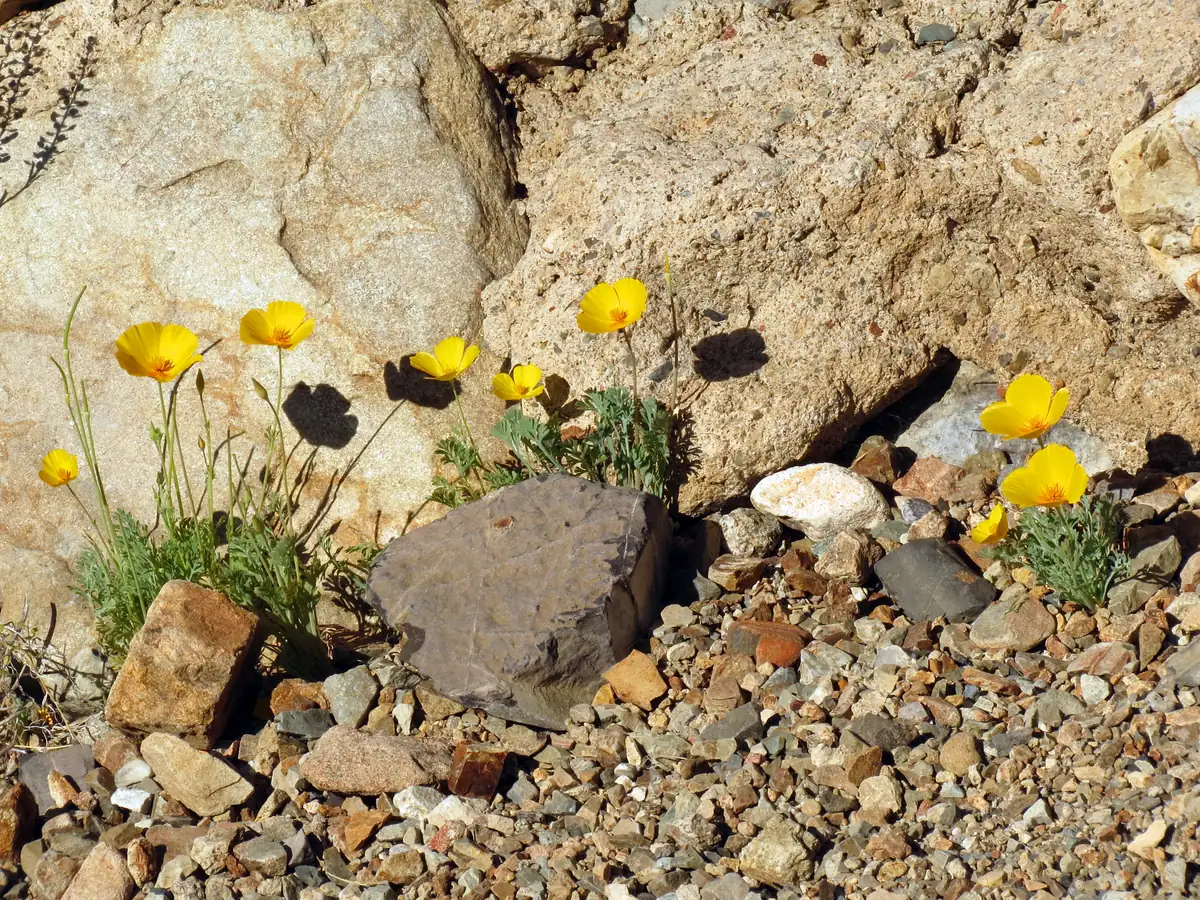
- Check the Bloomdar, then go. Arizona State Parks posts dated wildflower reports for Picacho Peak on its Bloomdar page, and the park says the best odds run from mid-February to mid-March. Look for orange California poppies and purple Coulter’s lupine along the Nature Loop and the park roads.
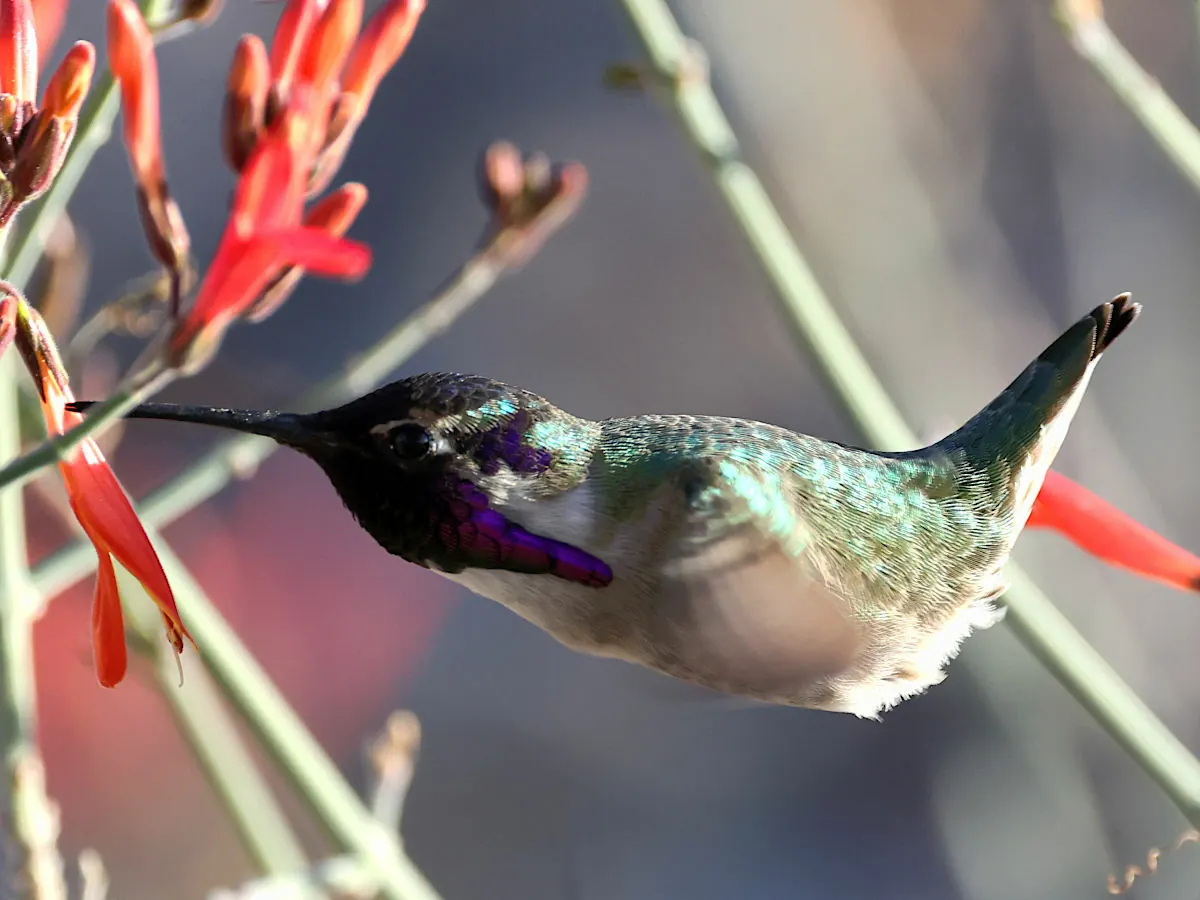
- Listen for a hummingbird whistle. On a desert trail with red-flowered chuparosa, listen for a thin, high, falling whistle. It is the sound of a male Costa’s hummingbird swooping past a perched female in his courtship dive. Look for the purple throat that flares out to the sides like a mustache.
- Jupiter at sunset, Mars nine days later. On Wednesday, February 10, Jupiter is opposite the Sun: watch the east as the sun goes down and it will be the brightest point rising there. Mars follows on February 19, smaller and orange, in the same part of the sky in Leo.
In the Naturalist’s Field Journal, give colours of the day to a slope of poppies, lupine and brittlebush, with the date and the trail; use nest observed for a Harris’s hawk or eagle nest watched only from a legal distance; let the same place twice record one wash or hillside in early and late February, so the green-up shows; and keep birds I have seen open for your Great Backyard Bird Count lists. Add the elevation and the afternoon high beside each entry.
Regions used below: Phoenix and the low deserts; Tucson and the southeastern Sky Islands; Yuma and the Colorado River; Prescott, Sedona and the Verde Valley; Flagstaff, the Grand Canyon and the Mogollon Rim; The White Mountains; The Navajo Nation and Hopi lands.
When do Arizona’s desert wildflowers start blooming?
In the low desert, the first real color often shows in February, but the size of the show depends on the rain that fell from fall into winter and on how warm the late winter turns out. Arizona State Parks describes its desert parks as coming alive from late February through April in years with enough late winter and early spring rain. Higher up the bloom comes later: the agency places the peak at parks like Red Rock near Sedona around May, with flowers lasting into summer. In the low desert, a February wildflower walk is mostly about annuals on open slopes and roadsides, plus a few shrubs that bloom reliably even in dry years.
-
Poppies and lupine at Picacho Peak
Best odds mid-February to mid-March; some years not until early March · Picacho Peak State Park, off I-10 between Phoenix and Tucson
The park’s own wildflower page gives the best window as mid-February to mid-March and adds that it cannot predict the peak; the statewide wildflower page, written for another season, puts Picacho’s first blooms in early March. Expect the timing to slide with the weather. The park’s dated log from last season shows how quickly things change: scattered blooms on the Nature Loop and in some washes on February 3, a report on February 10 of scattered poppy, lupine and globemallow with afternoons in the 80s holding the flowers back, scattered poppies again on the 17th after a little rain, and by February 25 a park report of the place as barren of flowers, with the brittlebush drying and very few poppies left. Check the Bloomdar the week you plan to go.
-
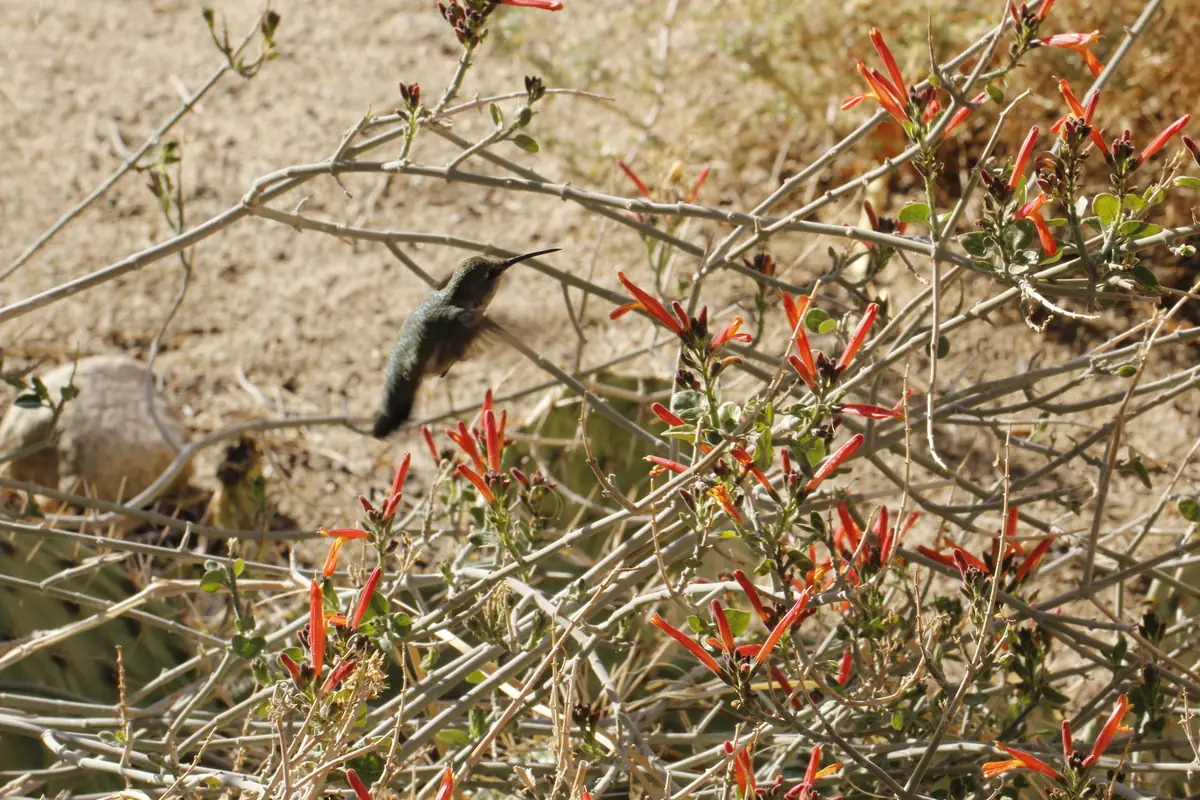
Brittlebush, globemallow and chuparosa
Late winter into spring · Rocky desert slopes and washes around Phoenix, Tucson and Yuma
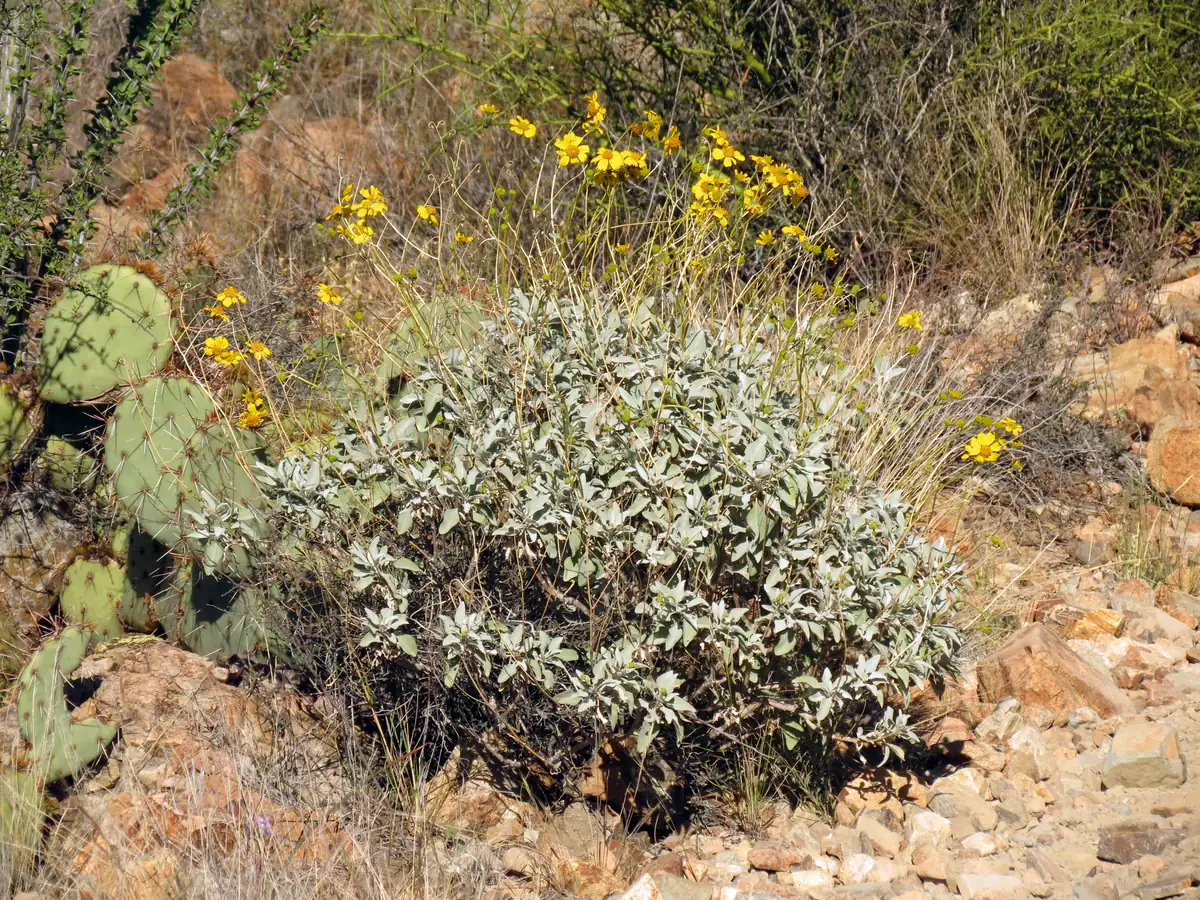
Even when the annuals are thin, look for the domes of gray-leaved brittlebush turning yellow on hillsides, the apricot cups of globemallow, and chuparosa, a leafless-looking shrub with red tubular flowers. Arizona State Parks notes that hummingbirds wintering in the desert are especially fond of chuparosa, so a blooming patch is a good place to stand still for ten minutes.
-
Poppies at Catalina State Park
Usually March and April; earlier after a wet, warm winter · The Sutherland Trail and the base of the Nature and Alamo Canyon loops, north of Tucson
Catalina sits higher than Picacho, and the park describes its California poppies as normally a March and April flower along the Sutherland Trail. In a winter with good rain and mild temperatures they can open in late February, so a February visit is a gamble worth making if the Picacho reports are good.
The December guide explains how the seeds behind this bloom depend on rain falling months earlier.
Why are Costa’s hummingbirds diving and whistling in the desert in February?
Because they are nesting. Costa’s is the hummingbird of the Sonoran Desert proper, and its main habitat is desertscrub rather than streamside woods. The Sonoran Joint Venture, a partnership of agencies and conservation groups, gives its Arizona breeding season as January to early June, and the courtship dive is part of that season. Partners in Flight estimates about 480,000 breed in Arizona, roughly 14 percent of the world’s population.
-
The courtship dive
Late winter and spring, on calm sunny days · Desert washes, bajadas and rocky slopes with paloverde, ocotillo and chuparosa
The Tucson Bird Alliance describes the display: the male climbs high, swoops down past a perched female while giving a shrill, high whistle, and climbs again. The sound carries well; many hikers hear it without knowing what made it. A male’s violet crown and throat, with long side flares, are unmistakable when the light catches them, but females are drab and easily confused with Anna’s or black-chinned hummingbirds.
-
Nests in the paloverdes
Breeding season January to early June · Paloverde, jojoba, ironwood and acacia across the low desert
The Sonoran Joint Venture account lists paloverde as the favorite nest tree, with nests anywhere from under two feet to about fifteen feet up and around six feet on average. Chuparosa is singled out as a key nectar plant because it flowers in winter, and ocotillo becomes important when it blooms. If you find a nest, the walnut-sized cup on a low branch, admire it once from a few steps back and move on.
-
Here for the cool season only
Fall through spring; scarce by midsummer · Phoenix, Tucson and the lower Colorado and Gila river valleys
The Tucson Bird Alliance says most Costa’s leave the Arizona deserts after nesting to escape the summer heat, heading toward coastal California and Baja California, and start coming back in October when the fall-flowering plants open. Researchers estimate one bird visits about 1,840 flowers a day. The Joint Venture reports the species declining by about 4 percent a year across the Mojave and Sonoran deserts.
When do Arizona’s bald eagle chicks hatch, and when do the winter eagles leave?
February is a changeover month for eagles here. The migrants that spent the winter on the high-country lakes start to go: the Southwestern Bald Eagle Management Committee, the interagency group that guides eagle management in the state, says that by late February most of them have flown north. The desert-nesting pairs stay. Most lay their eggs in January and February, and incubation takes about 35 days, so hatching begins across the state this month and continues through March.
-
Nestwatchers back in camp
From about February through June · The busiest breeding areas on the Salt and Verde rivers and the central Arizona lakes
Arizona has the only program of its kind in the country: paid nestwatchers who camp near the most heavily visited eagle nests for the whole breeding season. Up to 20 observers, working in pairs on a schedule of ten days on and four off, spend their days behind spotting scopes logging flights, perches and feeding, and asking boaters and hikers to keep out of closed areas. The program began in 1978, when the Forest Service asked the local Audubon chapter to watch a single pair, and Arizona Game and Fish now runs it. The program is seeking contractors for the 2027 season. If a nestwatcher asks you to move along, the committee’s advice is simply to comply.
-
Signs you are too close
December through June · Any eagle nest, closed area or not
An eagle that is calling repeatedly or circling in agitation is telling you to leave, and the committee says a bird incubating or brooding small young should never be kept off the nest for more than 15 minutes. Use binoculars or a long lens instead of stepping closer. Anglers can help in another way: discarded monofilament has turned up in about two-thirds of the state’s bald eagle nests and has killed nestlings, so carry out every tangle of line you find.
-
Last looks at the wintering eagles
Early February, before most leave · Upper and Lower Lake Mary, Mormon Lake and other open water south of Flagstaff
The committee puts the state’s winter count at about 300 bald eagles and notes that the social migrants gather by the dozen on the high lakes, adults and mottled brown youngsters together. Early in the month is the time to see them before the lakes empty out; after that, the high country is quiet for eagles until the summer.
Arizona Game and Fish also holds free bald eagle natural history workshops at its Pinetop and Flagstaff offices each year in late January or early February, with a reservation required; call either office for this year’s date. January’s stage of the story, incubation, is in the January guide.
When do the sandhill cranes leave southeastern Arizona?
Starting in late February. Arizona Game and Fish says the cranes at Whitewater Draw Wildlife Area begin to depart between late February and the middle of March, and that by April every one of them is headed for the northern breeding grounds, which for some birds means eastern Siberia. February is the last month to count on big numbers in the Sulphur Springs Valley.
-
A final morning at Whitewater Draw
Early February is the safest bet · Whitewater Draw Wildlife Area, near McNeal in Cochise County
The routine has not changed since the fall: the cranes roost in the shallows overnight, fly out to the fields around sunrise, and come back before noon to spend the afternoon. Sunrise near McNeal comes at about 7:12 a.m. on February 1, so aim to reach the viewing area by 6:40 in the first week. Late in the month, watch for flocks circling higher and longer than usual on warm afternoons, a sign the restlessness has started.
-
Watch the numbers fall from home
Through March · Online
The department’s live crane camera at Whitewater Draw shows the ponds from your desk, and following it every few days through late February and March is a simple way to see the departure for yourself. A second camera at the same wildlife area watches a barn owl nest box.
When do Harris’s hawks nest in Arizona?
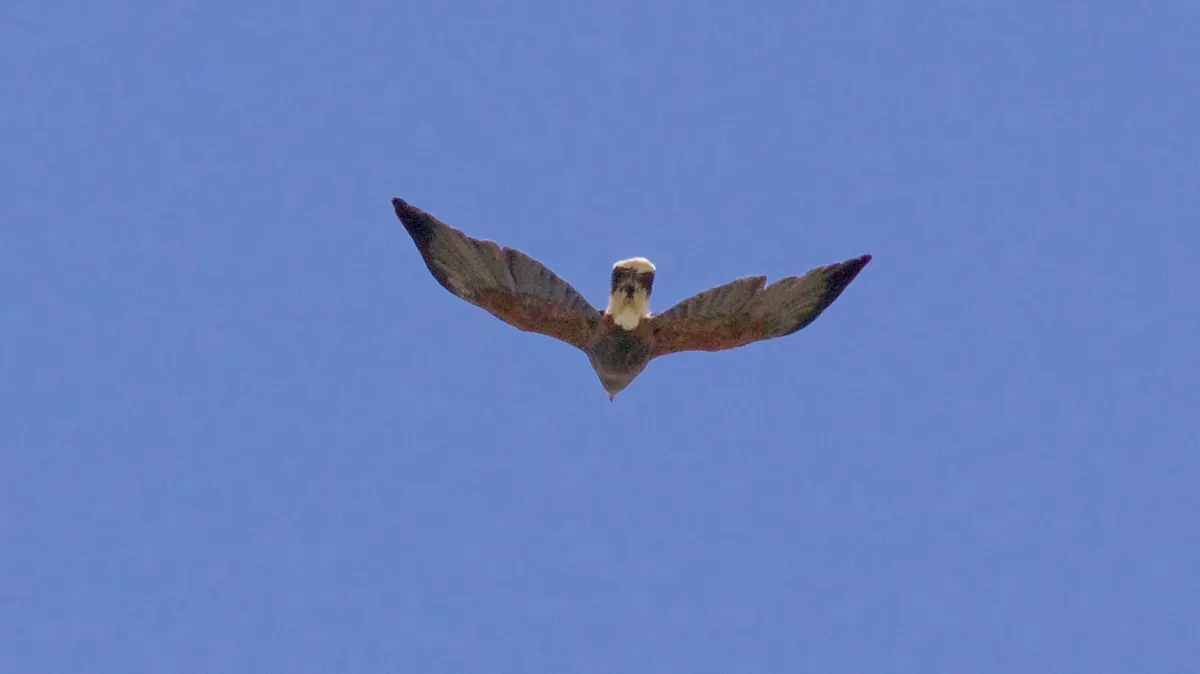
Their season opens in February. The Maricopa Bird Alliance gives the Arizona nesting period as February through October, often with more than one brood, and Arizona egg dates mostly from early March to mid-April, so February is the month of courtship and nest building. Harris’s hawks are dark chocolate brown with rich chestnut shoulders and legs and a bold white band at the base and tip of the tail.
-
Wolf packs of the skies
All year; family groups most visible in winter and spring · Desert flats and edges of town around Phoenix and Tucson
The Tucson Bird Alliance calls them the most social raptors in North America. A hunt often begins with three to nine birds gathering on the same perch, sometimes standing on one another’s backs, before they split up to surprise, flush or relay-chase a rabbit. Groups that hunt together catch more than lone birds, and the alliance notes that the cooperative style may be peculiar to the Sonoran Desert birds. The Maricopa Bird Alliance adds that its Salt and Verde River Christmas Bird Count often tallies more of them than any other count in the United States.
-
Nests in saguaros
Building in February; eggs mostly March and April · Saguaros and big desert trees, 10 to 30 feet up
The nest is a platform of sticks, often in the arms of a saguaro, and a single female is commonly tended by two or more males, with older offspring helping. Clutches run from one to five eggs, incubation takes 33 to 36 days, and young fly about 40 days after hatching.
Why are some trails near Tucson restricted for bighorn sheep in February?
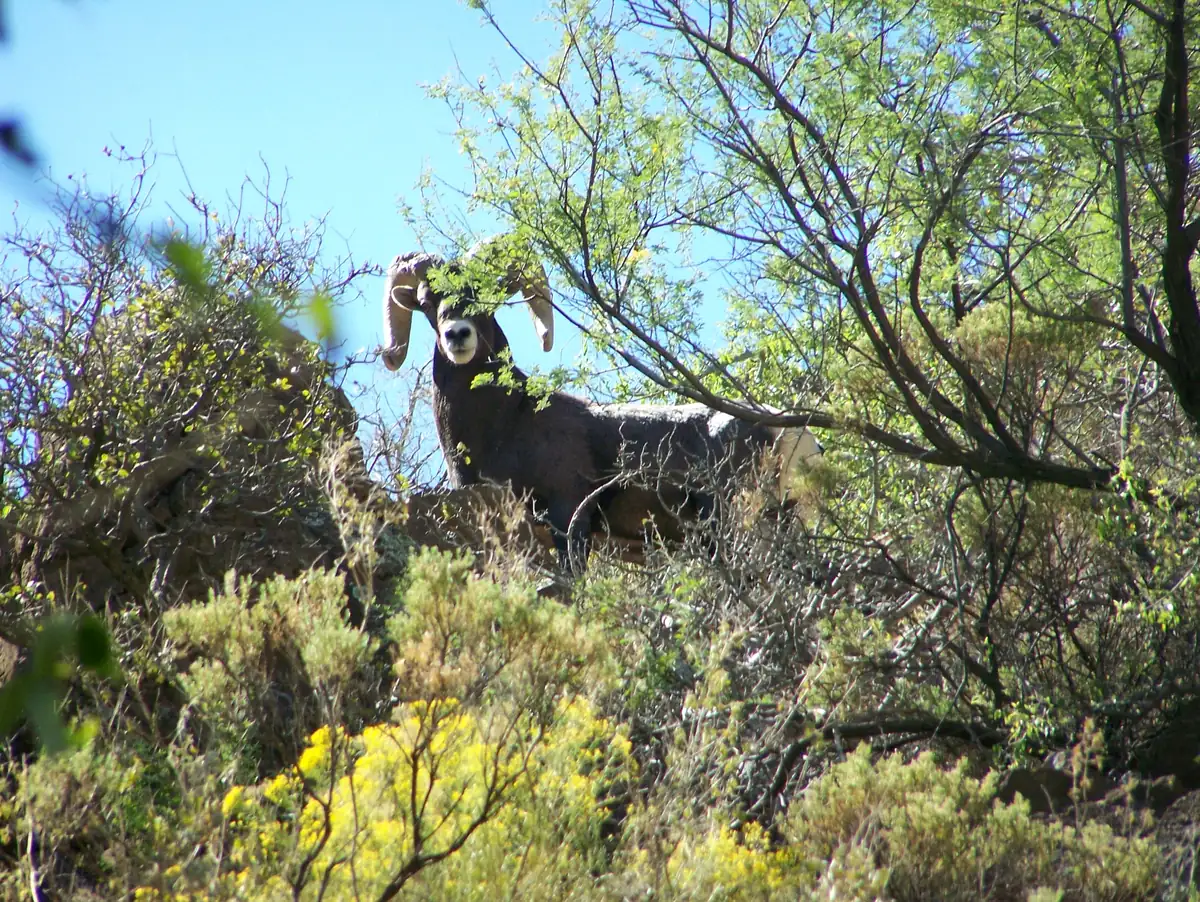
Because ewes in the Santa Catalina Mountains are carrying lambs, and a ewe disturbed with a very young lamb can lose it. Desert bighorn breed in the fall; Arizona’s hunter education course lists lambs appearing from March to April or later, while the Forest Service treats the whole stretch from January 1 to April 30 as lambing season on Pusch Ridge. Either way, February sits inside the protected window.
-
The Pusch Ridge rules
January 1 to April 30 (dogs banned all year) · Pusch Ridge Wilderness, Coronado National Forest, above north Tucson and Oro Valley
From January 1 through April 30, the Forest Service prohibits travel more than 400 feet off system trails in the bighorn closure area, which takes in the Ventana Canyon, Pima Canyon, Esperero, Cathedral Rock, West Fork, Mount Lemmon, Finger Rock, Pontatoc, Linda Vista, Sutherland and Romero trails. Dogs and other animals are not allowed in the bighorn management area at any time of year. The wilderness covers 56,933 acres and climbs from 2,800 to 8,800 feet, saguaros at the bottom and Douglas-fir at the top.
-
A herd brought back
Since 2013 · The Santa Catalina Mountains
Bighorns had been gone from the Catalinas for years when Arizona Game and Fish released 31 animals into the Pusch Ridge Wilderness on November 18, 2013: six rams, 24 ewes and a yearling, captured on the Kofa and Imperial refuges near Yuma. The department said at the time that it planned to release 60 more over the next two years. Scan the cliffs above the Pima Canyon and Finger Rock trails with binoculars for tan shapes that move.
-
Kofa, the bighorn refuge
Year-round; cool months are best for visiting · Kofa National Wildlife Refuge, northeast of Yuma
Kofa was set aside on January 25, 1939, specifically to protect desert bighorn, and more than 80 percent of it is wilderness. The refuge’s own fact sheet tells a cautionary tale: its herd fell from over 800 in 2000 to fewer than 400 in 2006, and an October 2014 survey estimated 500 to 600. Managers there have looked at closing lambing areas to people during the peak of the season. Bring water, a high-clearance vehicle and a spotting scope.
How much snow and rain does Arizona get in February?
Plenty up high. NOAA’s 1991–2020 normals give Flagstaff 19.3 inches of snow in February, its second-snowiest month after January, and Alpine in the White Mountains 9.9 inches. Payson and Flagstaff are the wettest stations below, at more than two inches of precipitation. In the low desert, February is the month the afternoons turn warm: Phoenix Sky Harbor’s normal high is 70.8 °F and Yuma’s 72.8 °F, while Tucson’s normal snowfall for the month rounds to a tenth of an inch.
| Station | Normal high | Normal low | Precipitation | Snowfall |
|---|---|---|---|---|
| Payson | 58.5 °F | 27.7 °F | 2.33 in | 4.9 in |
| Flagstaff Pulliam Airport | 45.7 °F | 19.6 °F | 2.17 in | 19.3 in |
| Prescott | 56.0 °F | 28.5 °F | 1.28 in | no normal |
| Grand Canyon National Park (South Rim) | 46.3 °F | 21.1 °F | 1.23 in | 7.8 in |
| Show Low Airport | 51.0 °F | 26.8 °F | 1.16 in | 3.8 in |
| Alpine (White Mountains) | 48.0 °F | 18.4 °F | 1.13 in | 9.9 in |
| Willcox | 64.9 °F | 31.8 °F | 0.93 in | 0.6 in |
| Phoenix Sky Harbor | 70.8 °F | 49.0 °F | 0.87 in | no normal |
| Tucson International Airport | 69.2 °F | 43.2 °F | 0.84 in | 0.1 in |
| Yuma Proving Ground | 72.8 °F | 47.8 °F | 0.53 in | 0.0 in |
| Page | 51.3 °F | 30.4 °F | 0.51 in | 0.4 in |
| Winslow | 56.2 °F | 25.9 °F | 0.42 in | no normal |
Before a drive north, check our weather page for radar and the forecast, and see whether tonight will be clear for stargazing on Today’s sky.
Does El Niño make February and March wetter in Arizona?
On average, yes, especially in the south. Federal forecasters wrote on September 10, 2026 that the odds of this El Niño peaking in the very strong range exceed 90 percent. An older CPC statement for Arizona, issued in November 1997, reported that wet winters had come more often in past moderate and strong El Niño episodes, and that January-to-March totals had averaged about 120 percent of normal in the north of the state and about 170 percent in the south. In 1982–83 the surplus reached 3 to 4 inches in central and southern Arizona.
-
Why one dry month proves nothing
December through March · Statewide
Forecasters at the Flagstaff Weather Service office later reviewed the winter of 1997–98, an exceptionally powerful event, using 31 cooperative weather stations. January that winter was drier than normal, as forecasters had expected, yet the four months from December through March still came out wetter than normal across the state, with southern Arizona getting proportionally more. Places in the rain shadow of mountains, where air sinks and dries, came in below normal. In 1997–98 the late-winter months carried the season.
-
The current outlook
Updated monthly · Climate Prediction Center
For this year’s February and February-to-April odds, open the CPC seasonal outlook maps; the background is in the September 2026 ENSO discussion. We do not repeat the outlook here because it changes every month.
A wet late winter is what the poppies and lupine need, and it also means running washes and muddy desert roads; see the safety notes below.
How much daylight does Arizona gain in February?
Between 47 and 58 minutes, more in the north than the south, and at a quicker pace than in January. In Phoenix the sun sets at 6:00 p.m. on February 1 and at 6:24 p.m. on February 28, while sunrise moves from 7:24 to 6:58 a.m., so both ends of the day are now growing. Groundhog Day is Tuesday, February 2; the astronomical midpoint of winter, halfway from solstice to equinox, lands on February 3 or 4, depending on the method. The daily gain keeps climbing until the equinox on March 20.
| City | Feb 1 | Feb 28 | Gained | Per day |
|---|---|---|---|---|
| Page | 10 h 23 m | 11 h 21 m | 58 min | 2.1 min |
| Flagstaff | 10 h 29 m | 11 h 23 m | 54 min | 2.0 min |
| Kingman | 10 h 30 m | 11 h 24 m | 54 min | 2.0 min |
| Prescott | 10 h 31 m | 11 h 25 m | 54 min | 2.0 min |
| Phoenix | 10 h 36 m | 11 h 26 m | 50 min | 1.9 min |
| Yuma | 10 h 38 m | 11 h 27 m | 49 min | 1.8 min |
| Tucson | 10 h 39 m | 11 h 28 m | 49 min | 1.8 min |
| Sierra Vista | 10 h 42 m | 11 h 29 m | 47 min | 1.7 min |
Arizona stays on Mountain Standard Time when most of the country springs forward on March 14, 2027; the Navajo Nation is the exception and changes its clocks that day. Sunrise, sunset and twilight for any spot are in our Field almanac.
What can you see in Arizona’s night sky in February?
February belongs to the planets. Jupiter and then Mars swing opposite the Sun among the stars of Leo, Mercury makes its best evening appearance of the winter early on, and Venus still blazes low in the southeast in the hour before sunrise. Saturn hangs low in the west at dusk and slips into the twilight as the weeks go by. All times are Mountain Standard Time, which covers the whole state in February. There is a solar eclipse on February 6, but only South America, Antarctica and parts of Africa can see it; none of it is visible from anywhere in the United States.
-
Mercury low in the west
Evenings around Tuesday, February 2; thin Moon beside it Sunday, February 7 · West-southwest, 30 to 45 minutes after sunset
Mercury’s greatest elongation comes late on Tuesday, February 2, Arizona time, and is easiest to catch for about a week either side. On the evening of the 7th, a hairline crescent about a day past new sits very close to it in the afterglow; binoculars help, and so does a flat horizon to the west.
-
Moonless evenings
Roughly February 2 to 11; new moon at 8:56 a.m. on Saturday, February 6 · Any dark site
The first third of the month gives dark evening skies for Orion, the Pleiades and the faint winter Milky Way. The star party at Picacho Peak falls on the new-moon Saturday itself; see the families section.
-
Jupiter at opposition
Wednesday, February 10 (opposition at 5:21 p.m.) · Rising in the east at sunset, highest around midnight
Opposite the Sun, Jupiter comes up in the east just as daylight fades and is above the horizon until dawn, shining at magnitude minus 2.5 from about 405 million miles. Hold binoculars steady against a car roof and look for its large moons, small sparks strung out on either side of the planet; their arrangement changes every evening.
-
Mars at opposition
Friday, February 19 (about 8 a.m.); closest on February 20 · East after dark, near Regulus in Leo
Mars will be about 63 million miles from Earth, which sounds close but makes this one of the smaller, more distant oppositions, because Mars is near the farthest point of its orbit from the Sun. It shines orange at about magnitude minus 1.2, outshone by Jupiter nearby. In a small telescope the disk is only a small orange dot, so enjoy it with the naked eye or binoculars.
-
The Snow Moon among the planets
Full at 4:23 p.m. on Saturday, February 20; the Moon passes Jupiter on the night of February 19–20 · Rising in the east around sunset (6:21 p.m. in Phoenix)
The Moon is full in the afternoon and rises in Phoenix a few minutes after sunset, with Jupiter, Regulus and Mars gathered in the same patch of sky. Some almanacs count it a supermoon; by the stricter definitions it falls just short. A faint penumbral eclipse of the Moon happens that afternoon, but in Arizona it ends at 6:13 p.m., about when the Moon is rising, so there is nothing worth looking for here.
| Phase | Date | Time |
|---|---|---|
| New moon | Saturday, Feb 6 | 8:56 a.m. |
| First quarter | Sunday, Feb 14 | 12:58 a.m. |
| Full moon, the Snow Moon | Saturday, Feb 20 | 4:23 p.m. |
| Last quarter | Saturday, Feb 27 | 10:16 p.m. |
For the Moon’s rising and setting on each night of February, open our moon phase calendar.
What can families do outdoors in Arizona this February?
- Saturday, February 6: star party at Picacho Peak State Park, 7 p.m. at the Sunset Day Use Area, with telescopes from the Tucson Amateur Astronomy Association. With the Moon new that day, the evening sky will be fully dark. Free with park entry.
- February 12–15 (Friday through Presidents’ Day): Great Backyard Bird Count. Both the National Audubon Society and its Canadian partner list these 2027 dates. Watch birds for at least 15 minutes, once or many times, and enter what you see; details are on birdcount.org. A desert yard in February can turn up Costa’s and Anna’s hummingbirds, verdins, cactus wrens and Gambel’s quail.
- Saturday, February 13: star party at Catalina State Park, 7 to 9 p.m. at the trailhead parking lot, also with the Tucson astronomers. Bring a jacket and a red light.
- Sunday, February 14: ranger-led bird walk at Picacho Peak, 8 a.m., about an hour on the Nature and Calloway trails. If the wildflowers have started, you will walk right past them.
- Bald eagle natural history workshops. Arizona Game and Fish holds these each year in late January or early February at its Pinetop and Flagstaff offices, with an optional trip to a lake to watch eagles. Reservations are required; call the regional office for the 2027 date.
- Watch from home. Game and Fish streams its Whitewater Draw cranes and a barn owl box online, and the Tucson Bird Alliance’s Ventana Canyon owl camera may show eggs hatching this month.
- Keep counting. Project FeederWatch runs through April 30, and any walk can become an eBird checklist.
Every state’s guides live on the nature hub; to log the flowers and nests you find, try the Naturalist’s Field Journal. Dates come from each organizer’s own page as of early October 2026; confirm before you set out.
Safety notes for February in Arizona
- Javelina hunts. Arizona Game and Fish’s 2027 spring regulations set handgun, archery and muzzleloader javelina hunts from February 5 to 15 and general (rifle) hunts from February 19 to 25 in many units, from the forests south of Flagstaff to the deserts around Tucson; Fort Huachuca has its own dates. Expect hunters on desert slopes and in washes those weeks.
- Quail, ducks and small game. Gambel’s, scaled, California and Mearns’ quail close on February 7, as do pheasant and chukar. The youth-only waterfowl weekend is February 6–7 and falconers have a duck season on February 1–4. Mountain lion season runs to May 31, and cottontails and coyotes can be hunted all year across most of the state. Hunting stays closed on the posted part of Roosevelt Wildlife Area through February 15.
- Be easy to see. Arizona does not require hunter orange, though its hunter education course says it may be a good idea. Wear a bright color on desert trails these weeks and put a bright vest on your dog.
- Bighorn and eagle closures. Stay within 400 feet of system trails in the Pusch Ridge bighorn area until April 30, and leave dogs at home there. Eagle breeding-area closures on rivers and lakes are marked with signs or buoys and stay in force whether or not you see a bird.
- Snow and ice up high. With Flagstaff’s normal February low under 20 °F, shaded trail sections, canyon switchbacks and forest roads can stay icy for days. Carry traction for boots and a winter kit in the car, and look up road conditions on I-17 and I-40 before you leave. Freeze odds for the nearest station are on our Arizona frost dates page.
- Washes and warm afternoons. A string of El Niño storms can send water down dry washes with little warning; never drive into a flooded crossing. On sunny desert days in the 70s and 80s, carry more water than seems necessary, because the dry air dehydrates hikers faster than the temperature suggests.
Sources
- Arizona State Parks and Trails: Picacho Peak wildflower information (Bloomdar)
- Arizona State Parks and Trails: Arizona’s wildflowers
- Sonoran Joint Venture: Costa’s hummingbird species account (PDF)
- Tucson Bird Alliance: Costa’s hummingbird
- Southwestern Bald Eagle Management Committee: Arizona Bald Eagle Nestwatch Program
- Southwestern Bald Eagle Management Committee: watchable wildlife
- Southwestern Bald Eagle Management Committee: events and workshops
- Southwestern Bald Eagle Management Committee: biology of bald eagles in Arizona
- Southwestern Bald Eagle Management Committee: closure areas
- Arizona Game and Fish Department: Bald Eagle Nestwatch Program
- Arizona Game and Fish Department: sandhill cranes arriving daily at Whitewater Draw (news release, Nov. 6, 2025; archived copy)
- Arizona Game and Fish Department: sandhill crane cam
- Tucson Bird Alliance: Harris’s hawk
- Maricopa Bird Alliance: Harris’ hawk
- Coronado National Forest: Pusch Ridge Wilderness
- Arizona hunter education course: bighorn sheep
- Arizona Public Media: desert bighorn sheep return to Santa Catalinas (Nov. 18, 2013)
- Tucson Local Media: bighorn sheep, lambs continue to be monitored
- U.S. Fish and Wildlife Service: Kofa National Wildlife Refuge
- U.S. Fish and Wildlife Service: desert bighorn sheep of Kofa National Wildlife Refuge (PDF, Jan. 2025)
- NOAA NCEI: 1991–2020 monthly climate normals, Arizona stations (data query)
- NOAA NCEI: 1991–2020 monthly climate normals, Show Low, Willcox, Payson, Alpine (data query)
- NOAA NCEI: U.S. climate normals
- Climate Prediction Center: ENSO diagnostic discussion, September 10, 2026
- Climate Prediction Center: seasonal outlooks
- Climate Prediction Center: the 1997 El Niño, potential effects in Arizona
- National Weather Service Flagstaff: winter precipitation forecast and trends in Arizona during the 1997–98 El Niño (Western Region Technical Attachment 98-33, PDF)
- U.S. Naval Observatory: moon phases
- U.S. Naval Observatory: Earth’s seasons and apsides, 2027
- Fred Espenak: Sky Event Almanac 2027
- NASA Eclipse Web Site: lunar eclipses, 2021–2030
- NASA Eclipse Web Site: solar eclipses, 2021–2030
- EarthSky: Jupiter at opposition
- Students for the Exploration and Development of Space: Mars in 2027
- Sea and Sky: astronomy calendar 2027
- Old Farmer’s Almanac: eclipses
- Uniform Time Act, 15 U.S.C. 260a (Legal Information Institute)
- Arizona State Parks and Trails: star party at Picacho Peak
- Arizona State Parks and Trails: star party at Catalina State Park
- Arizona State Parks and Trails: Picacho Peak bird walk
- National Audubon Society: about the Great Backyard Bird Count
- Birds Canada: Great Backyard Bird Count
- Great Backyard Bird Count
- Tucson Bird Alliance: great horned owl cam
- Project FeederWatch (Cornell Lab of Ornithology)
- eBird (Cornell Lab of Ornithology)
- Arizona Game and Fish Department: 2027 spring turkey, javelina, bison, bear and raptor capture hunt draw information (PDF)
- Arizona Game and Fish Department: 2026–27 Arizona hunting regulations (PDF)
- Arizona Game and Fish Department: 2026–27 Arizona waterfowl and snipe regulations (PDF)
- Arizona hunter education course (with Arizona Game and Fish): hunter orange
- Photos via Wikimedia Commons; licenses and photographers are credited under each picture
