What to look for in nature in Arizona this November
November is when Arizona’s winter visitors settle in. Sandhill cranes pour into the Sulphur Springs Valley and the lower Colorado River, bald eagles drop onto the lakes south of Flagstaff, and snow geese spiral down onto the fields at Havasu. The low desert finally feels like the brochures, with Phoenix afternoons in the mid-70s, while the Weather Service puts Flagstaff’s average first measurable snow around November 11. The last color hangs on in the canyons: sycamores and cottonwoods in the Sky Islands, Chinese pistache at Boyce Thompson Arboretum. Overhead there is a Mars and Jupiter pairing before dawn, the Leonids, and a full Beaver Moon that counts as a supermoon. This guide goes by region and elevation, because in Arizona the two decide almost everything.
Other months in Arizona: October, December.
Start here
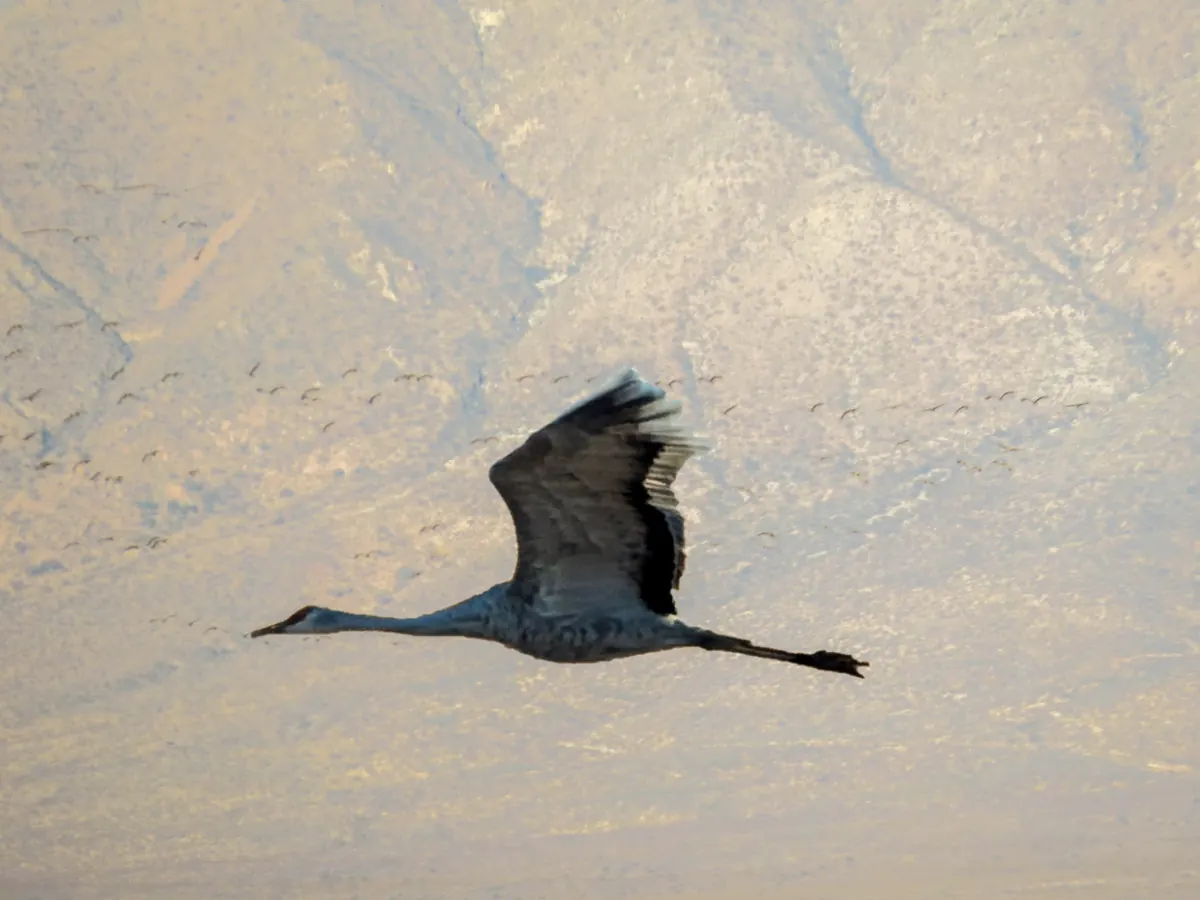
- Cranes at sunrise in the Sulphur Springs Valley. The Southeastern Arizona Bird Observatory notes that November’s first storms push the big waves of cranes south, so this is the month Whitewater Draw near McNeal goes from a few thousand birds toward its winter crowd. Be on the levee before 6:35 a.m. early in the month, or before 7 a.m. by Thanksgiving, when the flocks lift off to feed.
- Bald eagles on the Flagstaff lakes. Arizona Game and Fish says icy lakes and early snow bring migrant bald eagles down onto the high country in November. Drive Lake Mary Road past Upper and Lower Lake Mary to Mormon Lake and scan the tops of tall dead pines, where the eagles perch between fishing runs.
- Leonids, planets and a supermoon. Mars and Jupiter share a binocular field in the dawn sky of November 15 and 16. The Leonids are best after the moon sets in the early hours of November 18, and the full Beaver Moon, a modest supermoon, comes at 7:53 a.m. on Tuesday, November 24, Arizona time.
For the journal: open the Naturalist’s Field Journal at dawn beside the Whitewater roost and log the liftoff on its dusk and dawn watch page, the “birds I have seen” list will take the eagles, geese and the first juncos, the feather found page suits the gray crane feathers left along a refuge levee, and a tree through the seasons can follow one Arizona sycamore from gold to bare. Note the elevation beside each entry.
Regions used below: Phoenix and the low deserts; Tucson and the southeastern Sky Islands; Yuma and the Colorado River; Prescott, Sedona and the Verde Valley; Flagstaff, the Grand Canyon and the Mogollon Rim; The White Mountains; The Navajo Nation and Hopi lands.
Where can I see sandhill cranes in Arizona in November?
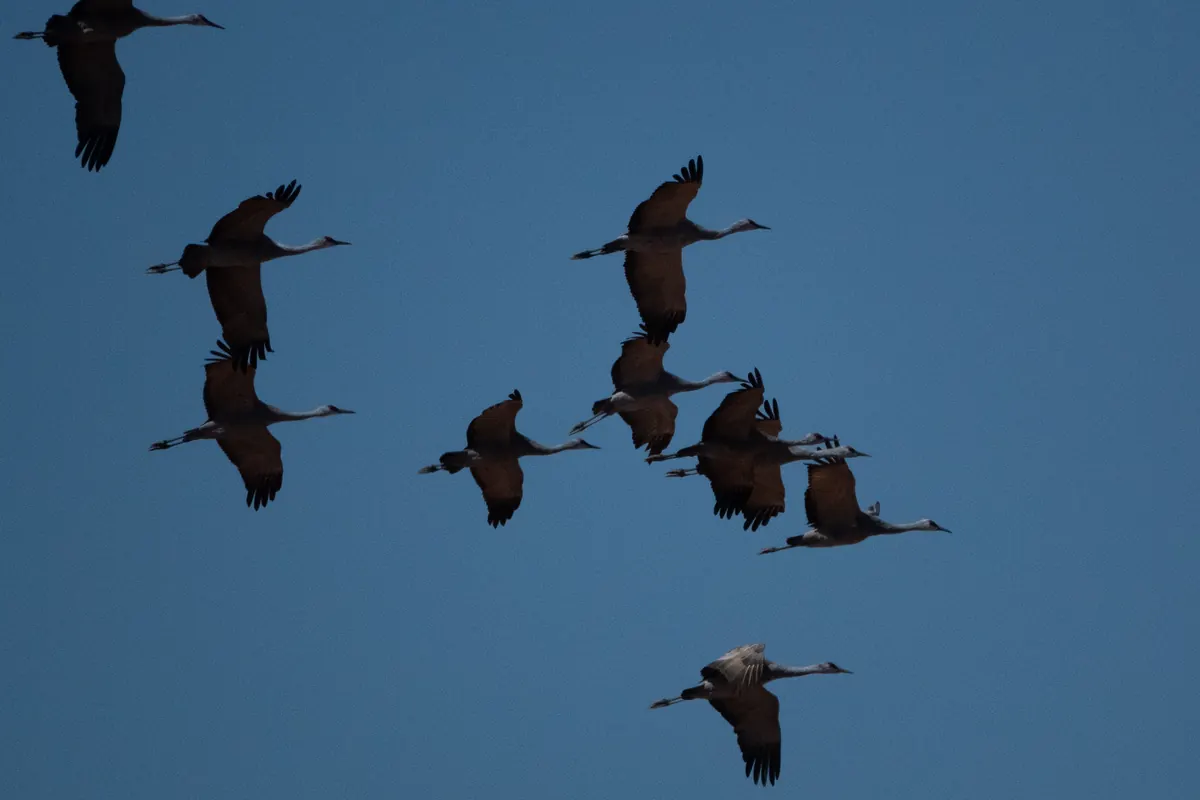
In two quite different places. The big show is in the southeast, in the Sulphur Springs Valley between Willcox and Douglas, where Arizona Game and Fish expects more than 20,000 cranes over the course of the winter at Whitewater Draw Wildlife Area alone. The Southeastern Arizona Bird Observatory says the early storms of November are what push good numbers of cranes, sparrows and raptors south, so the flocks grow week by week through the month. The second, much smaller gathering is on the lower Colorado River, where a separate population of greater sandhill cranes spends the winter around Cibola National Wildlife Refuge.
-
Whitewater Draw
From first light; the flocks build through November toward a January peak · Whitewater Draw Wildlife Area, near McNeal, Cochise County
The Arizona Important Bird Areas program calls this wetland the primary wintering area for sandhill cranes in Arizona, with early January counts that climbed from about 4,000 in 1991 to over 22,000 by 2008. Both lesser and greater sandhills come here, from the Rocky Mountain and midcontinent populations. The routine is reliable: the birds leave the roost around sunrise to feed in the farm fields, and return to stand in the shallows from late morning on. In the valley the sun rises at about 6:35 a.m. on November 1 and 7:00 a.m. on November 30. The same wetland holds a modest flock of snow geese (the program puts it at 80 to 200, with an occasional Ross’s goose mixed in), along with pintails, Mexican ducks and wintering eagles and hawks.
-
Willcox Playa and the valley fields
Through the winter · Around Willcox, Cochise County
Whitewater is not the only roost. Game and Fish’s January crane surveys tally several sites in the valley and along the Gila River, and recent counts have put the largest concentration near the Willcox Playa. The cranes feed in harvested corn and alfalfa fields during the day, so a slow drive on the county roads around Willcox often turns up flocks close to the shoulder. The fields are private, so watch from the road shoulder.
-
The Colorado River cranes
Mid-November into March · Cibola National Wildlife Refuge, south of Blythe on the Arizona–California line
The U.S. Fish and Wildlife Service calls the Lower Colorado River Valley population the smallest of the migratory sandhill crane populations in North America. Its cranes nest mostly in northeastern Nevada and southwestern Idaho and winter almost entirely at Cibola, on Colorado River Indian Tribes land near Parker, at the Salton Sea and along the Gila River. The winter aerial count found 2,927 of them in 2025, down from 5,156 the year before; the three-year average of 4,267 is still above the management goal of 2,500. Cibola is the only refuge on the lower river where cranes winter. Farmers there leave part of each crop standing for the birds, and the three-mile Canada Goose Drive loop and the Nature Trail, with its deck over a crane and goose pond, are the places to look.
When do bald eagles arrive at the lakes near Flagstaff?
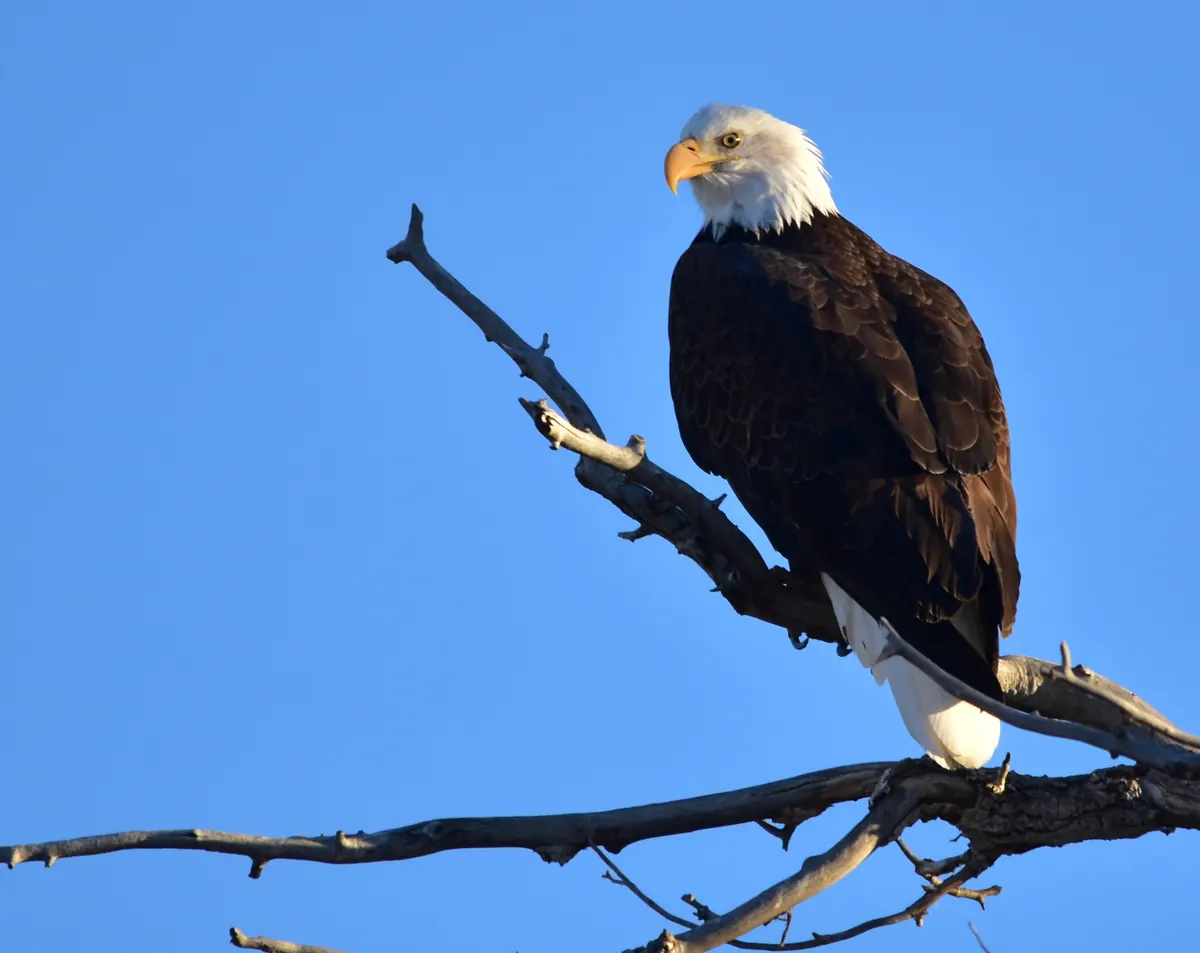
In November. Arizona Game and Fish’s month-by-month guide to northern Arizona wildlife says that icy lakes and early snow are what bring migratory bald eagles down onto the high country for the winter, and that sightings continue until spring. The Coconino National Forest’s watchable wildlife program puts the Mormon Lake season at November through late February. These are mostly northern birds wintering here, separate from Arizona’s small population of desert-nesting bald eagles along the Salt and Verde rivers.
-
Lake Mary Road
Early morning and late afternoon · Upper and Lower Lake Mary, Marshall Lake and Mormon Lake, southeast of Flagstaff
Game and Fish lists Upper and Lower Lake Mary, Mormon Lake, Marshall Lake and Rogers Lake among the best places near Flagstaff for groups of wintering eagles, along with the Kachina Wetlands, the Pumphouse Greenway, and Cataract and Kaibab lakes near Williams. Mormon Lake has long been the focus: a Forest Service study logged 4,525 eagle sightings there between 1975 and 2000. Scan the crowns of tall snags along the shore, and look for the white head and tail of adults and the blotchy brown of younger birds, which take several years to gain the full white head.
-
The rest of the winter pine forest
All day · Ponderosa pine and pinyon-juniper country, Flagstaff to the White Mountains
The same guide makes the point that the high country is anything but empty in winter. Pygmy and white-breasted nuthatches, mountain chickadees, Steller’s jays and acorn woodpeckers keep working the ponderosas all day, while robins, western and mountain bluebirds and white-crowned sparrows flock into the junipers for berries. A single monotone whistle from a juniper top usually means a Townsend’s solitaire. Oregon-type juncos and Cassin’s finches arrive for the winter too. Game and Fish adds a mammal to watch for: oval den openings in open country can belong to a badger.
Where do snow geese and ducks spend the winter in Arizona?
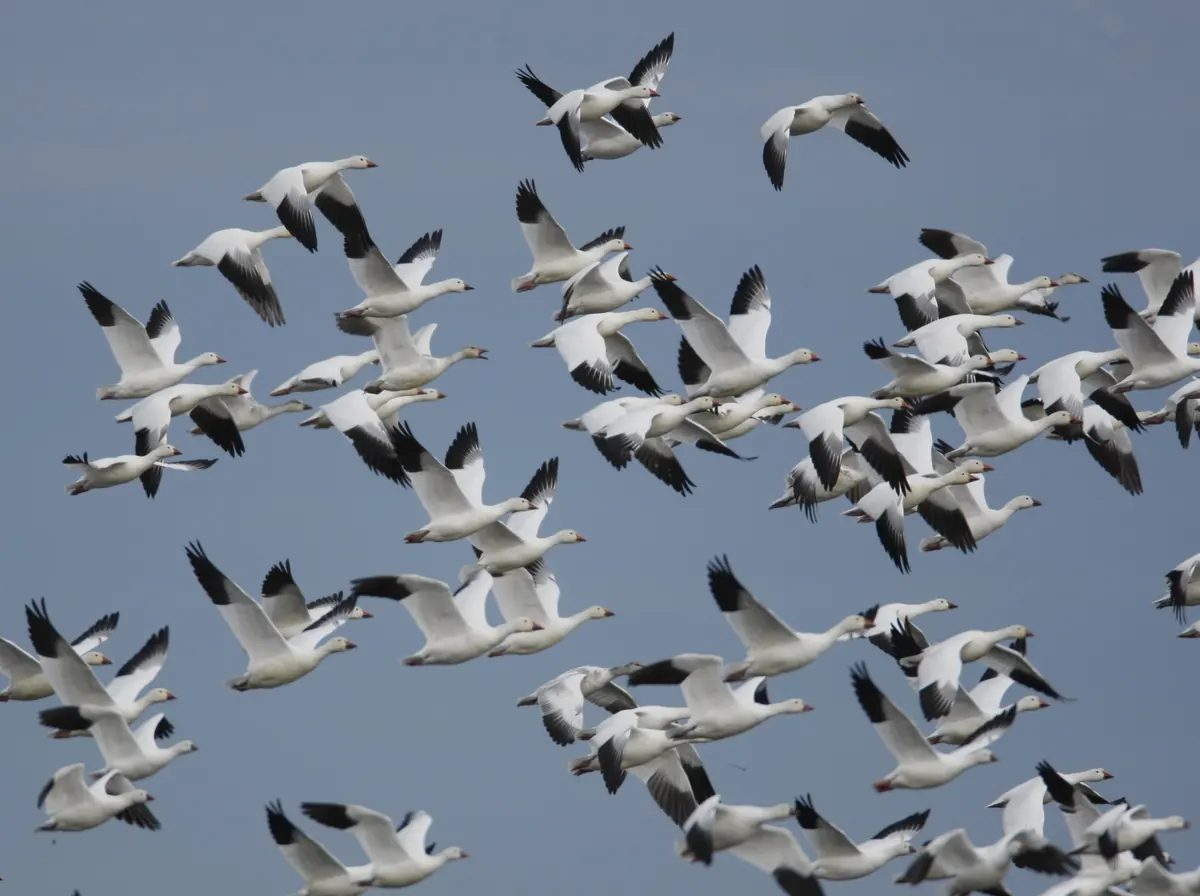
Mostly along the Colorado River, where three national wildlife refuges, Havasu, Cibola and Imperial, string the river’s backwaters and fields together from Needles to Yuma. Havasu National Wildlife Refuge was set aside in 1941 for migratory waterfowl, and its 4,000-acre Topock Marsh is the heart of it.
-
Snow geese at Havasu
From late October; gone by February · Bermuda Pasture off Levee Road, and Topock Marsh, Havasu National Wildlife Refuge near Needles
The refuge describes thousands of snow geese wintering on Bermuda Pasture on the west side of the refuge. A refuge brochure likens their arrival to a winter squall of whirling flakes, which is about right when a flock wheels in to land. Canada geese and many kinds of ducks share the marsh. Topock Marsh has four access points (North Dike, Five Mile Landing, Catfish Paradise and South Dike); the refuge recommends early morning or evening for the best viewing.
-
Ducks in the valley wetlands
Through the winter · Sweetwater Wetlands in Tucson, the Gilbert Riparian Preserve, Whitewater Draw
The Southeastern Arizona Bird Observatory notes that wetlands host waterfowl, cranes and a few shorebirds in winter, while grasslands and desert scrub fill with raptors and big flocks of sparrows. City wetlands built on treated water are the easiest places to learn ducks: pintails, shovelers, green-winged teal, ring-necked ducks and ruddy ducks all turn up at close range in November.
Waterfowl hunting is open on parts of the refuges in winter, so check each refuge’s hunt map before you walk a dike.
Where can I still see fall color in Arizona in November?
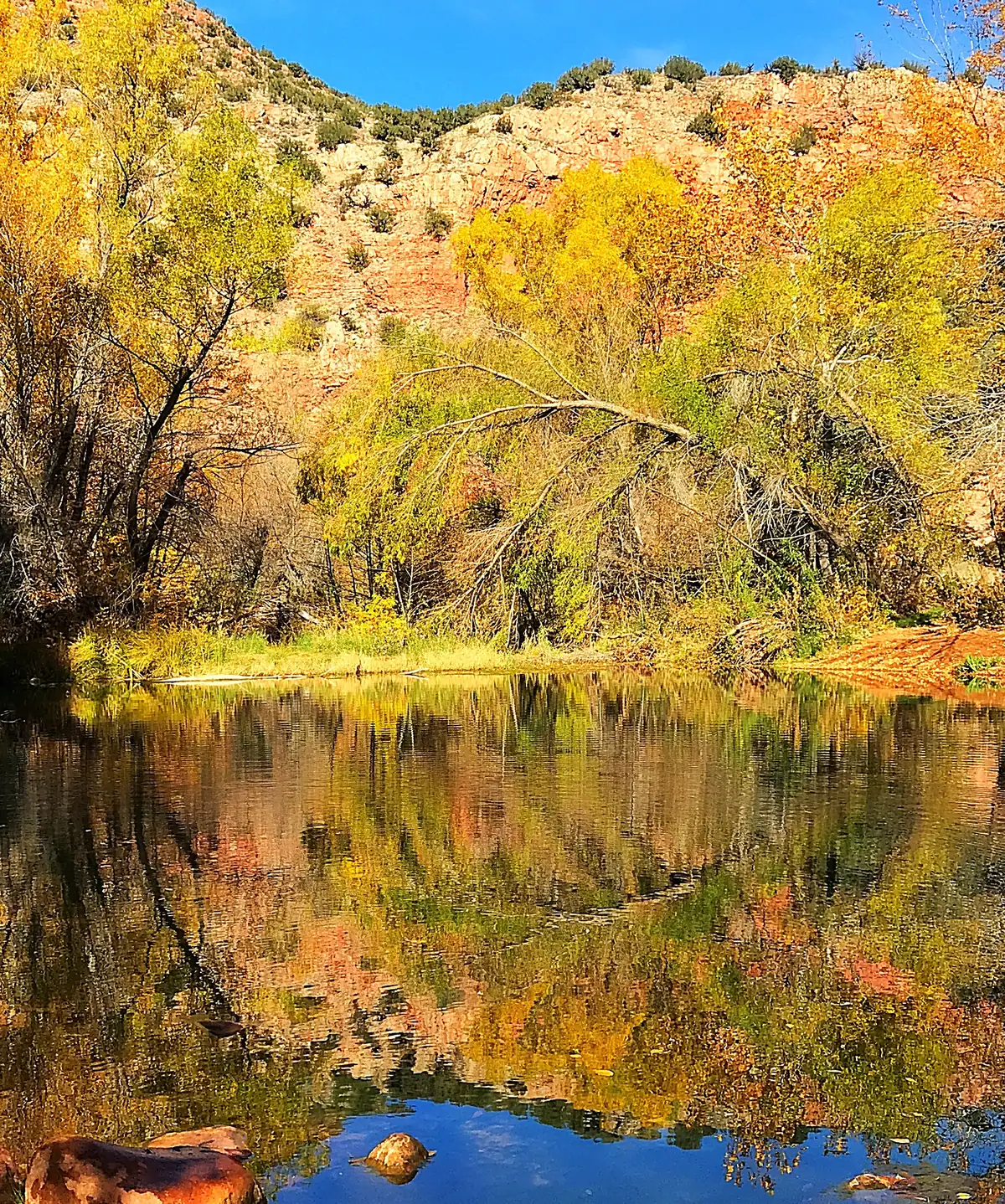
Lower down. By November the aspens on the San Francisco Peaks are bare, and the color moves into the canyons and the warm low country, carried by trees that grow along water: Arizona sycamore, Fremont cottonwood, Arizona walnut, velvet ash and willows. The Southeastern Arizona Bird Observatory gives late October to late November as the season for aspen, cottonwood, sycamore and maple color in the Sky Islands. In the Verde Valley, the Parsons Trail into Sycamore Canyon Wilderness, at the end of Forest Road 131 north of Cottonwood, follows a spring-fed creek lined with sycamores and cottonwoods that the Coconino National Forest has photographed in full color in late November.
-
Oak Creek Canyon
Into November · State Route 89A between Sedona and Flagstaff
The Coconino National Forest says the broadleaf trees of Oak Creek Canyon keep their color well into November, after the high country is done. The Pocket Fire changed the usual plan this year: the Forest Service kept the West Fork Trail, the classic November color hike, and the picnic ground at Call of the Canyon shut until October 1 because the burned West Fork watershed carries a higher flood risk, so check the Coconino National Forest alerts page before you go. Slide Rock State Park and the pullouts along the creek are still open, and the maples and oaks on the canyon walls show well from the road.
-
Sky Island canyons
Late October to late November · Madera, Ramsey and Cave Creek canyons; the Chiricahuas; Patagonia
White-barked sycamores turning butter yellow against red rock make this one of the best-looking months in the southeastern mountains, even as the birding goes quiet. The observatory warns that the canyons can feel eerily still in winter because many resident birds move downhill to warmer ground, so pair a canyon walk with a stop at a valley wetland.
-
Boyce Thompson Arboretum
Usually mid-November to early December; best around Thanksgiving · Superior, about an hour east of Phoenix
Arizona’s oldest botanical garden has the low desert’s most dependable fall color. The arboretum says its peak usually falls in a three-week window between mid-November and early December. The headline trees are Chinese pistache, which go scarlet-orange; around them, pomegranates, pecans, willows, canyon hackberries and the cottonwoods along Queen Creek turn gold, along with native ash and soapberry.
Which winter birds come to Arizona feeders in November?
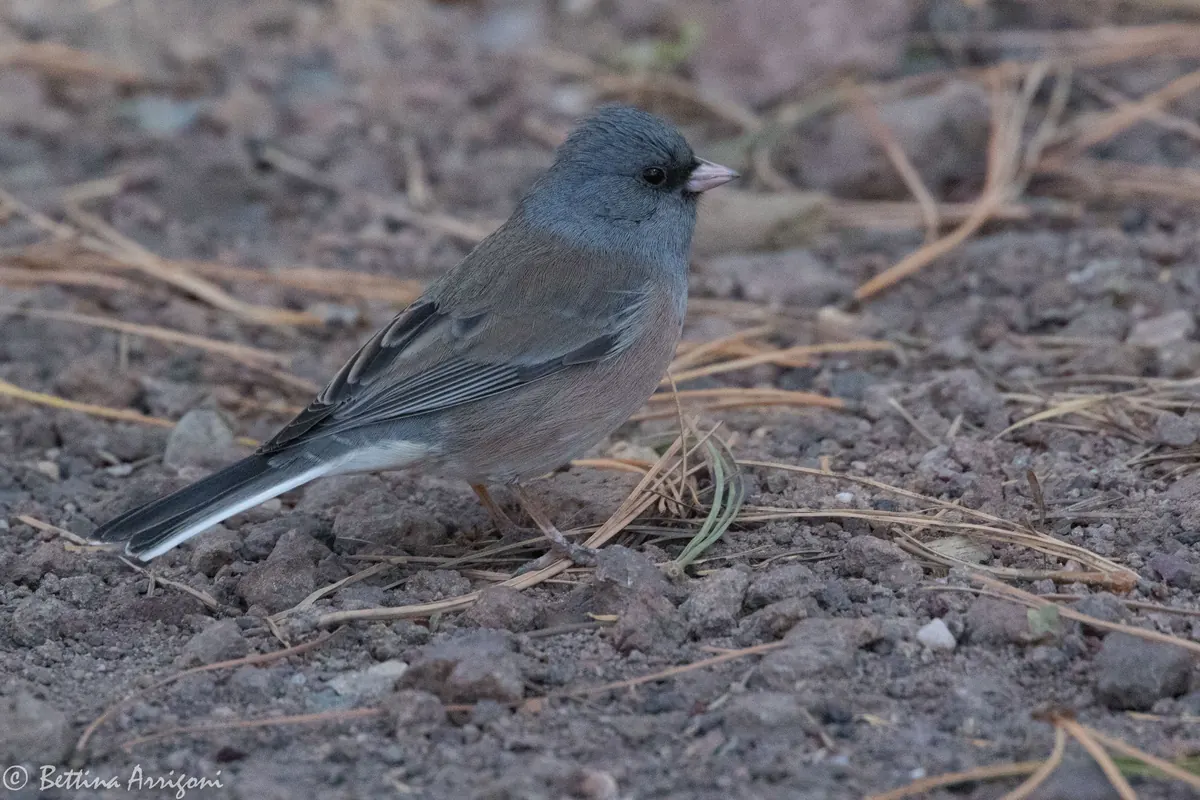
Juncos, sparrows and finches from the north, plus the hummingbirds that never left. In the low desert, white-crowned sparrows, ruby-crowned kinglets and yellow-rumped warblers settle in for the winter, and Anna’s and Costa’s hummingbirds can stay all year where the winters are mild, so a feeder in Phoenix or Tucson keeps its customers. In the pines, dark-eyed juncos of several forms, Cassin’s finches and house finches gather at seed.
-
The winter finch forecast
Posted late September 2026 · Statewide, most relevant in the high country
The Finch Research Network’s 28th annual forecast is mostly about Canada and the Northeast, but one line matters here: it reports a widespread cone failure on pinyon, ponderosa, limber and whitebark pines across the interior mountain West. A poor pine crop tends to send red crossbills and pine siskins wandering in search of food, and the network says type 2 red crossbills, a ponderosa specialist, were already moving west to east this summer. Expect crossbills to be scarce or unpredictable in Arizona’s pines this winter, and treat any flock of siskins at a feeder as worth noting.
-
Project FeederWatch
November 1, 2026 to April 30, 2027 · Any yard, balcony or schoolyard
Cornell Lab of Ornithology’s winter count starts on the first of the month. Choose two days in a row, note the largest number of each species seen together at once, and repeat as often as you like through April. Arizona counts are valuable precisely because they include birds most of the country never sees at a feeder, like Gila woodpeckers, curve-billed thrashers, verdins and Abert’s towhees.
When does Flagstaff get its first snow, and what might El Niño do this winter?
Usually in November. The National Weather Service office in Flagstaff gives November 11 as the city’s average date for the first tenth of an inch of snow, and April 25 for the last. Higher ground starts sooner: the Grand Canyon’s North Rim averages October 30. Lower towns wait longer, with Show Low around December 5 and Prescott around December 9, and below about 4,500 feet the office says measurable snow is too irregular to give a date at all. In any one year the first snow can come weeks either side of the average. NOAA’s normal November snowfall there is 8.2 inches, with a normal high of 52.1 °F and a low of 23.0 °F. Prescott averages 62 and 32, Winslow 60 and 29.
Down in the valleys, November is the mild month people move here for: the 1991–2020 normal at Phoenix Sky Harbor is 76.5 °F by day and 53.7 °F at night, and Tucson runs 75.1 and 47.9. It is also dry, with 0.57 inch of rain normal at Phoenix and 0.56 at Tucson, though a single Pacific storm can bring most of a month’s rain in an afternoon.
-
A very strong El Niño
November through March · Statewide; the south has usually gained most
The Climate Prediction Center’s September 10 discussion gives odds above 90 percent that this winter’s El Niño will be a very strong one, and says there is a 75 percent chance that the October to December index beats every event since 1950. Arizona gets most of its winter rain and snow from Pacific storms, and El Niño tends to steer more of them across the southern tier of states. The record is encouraging but uneven. University of Arizona climatologist Mike Crimmins has pointed out that the last very strong event, in 2016, sent the storms farther north and left much of Arizona drier than normal, and University of Arizona Extension describes El Niño as shifting the odds toward a wetter cool season rather than promising one. A Weather Service study from the Flagstaff office, written after the 1997–98 event, found that southern Arizona has tended to gain more from El Niño than the north. Treat a wet winter as the likelier outcome, not a sure one.
-
The official winter outlook
Issued October 15, 2026 · Climate Prediction Center
NOAA’s three-month outlooks for December through February appear on the federal seasonal outlook page from mid-October and updated monthly. Look there for the official odds for Arizona rather than at long-range rumors.
Tonight’s cloud cover for your part of the state is on Today’s sky; radar and a short forecast sit on the weather page.
Has my part of Arizona had its first freeze by November?
Above about 4,000 feet, almost certainly. Flagstaff and Window Rock have a median first freeze of September 28, Show Low October 15, Prescott October 27 and Willcox October 31, so in nine years out of ten all five have frozen by mid-November. Kingman sits right on the line, with a median of November 11. The low deserts are still waiting: Tucson’s median is December 9, South Phoenix’s December 16 and Yuma’s December 28. In one year in ten, though, Tucson has frozen by November 21 and South Phoenix by November 29, so frost cloth for tender citrus and bougainvillea belongs in the garage before Thanksgiving.
| Station | One year in ten | Median | Nine years in ten |
|---|---|---|---|
| Flagstaff Pulliam Airport | Sep 16 | Sep 28 | Oct 9 |
| Window Rock Airport (Navajo Nation) | Sep 16 | Sep 28 | Oct 8 |
| Show Low Airport (White Mountains) | Oct 2 | Oct 15 | Oct 28 |
| Prescott Love Field | Oct 13 | Oct 27 | Nov 10 |
| Willcox (Sulphur Springs Valley) | Oct 20 | Oct 31 | Nov 14 |
| Kingman Mohave County Airport | Oct 26 | Nov 11 | Nov 24 |
| Tucson International Airport | Nov 21 | Dec 9 | Jan 3 |
| South Phoenix | Nov 29 | Dec 16 | Jan 9 |
| Yuma Quartermaster Depot | Dec 11 | Dec 28 | Feb 7 |
Dates for 172 Arizona stations, including your nearest one, are listed on our Arizona frost dates page. Down in the valleys a freeze is usually a single clear, calm night after a cold front, and it is coldest in low spots and open desert, not under trees or eaves.
How early does it get dark in Arizona in November?
Around 5:20 p.m. in Phoenix by the end of the month, and the change is gradual. Most of Arizona does not use daylight saving time, so there is no sudden jump on November 1; sunset simply creeps earlier, from 5:36 p.m. on the 1st to 5:20 p.m. on the 30th in Phoenix, while sunrise slides from 6:47 to 7:14 a.m. The Navajo Nation is the exception: it does change clocks, whose clocks drop from daylight to standard time on Sunday, November 1, so evenings there suddenly arrive an hour earlier and the whole state shares one clock until March. The Hopi Reservation stays on standard time throughout. Late in the month sunset in Phoenix barely moves at all; the earliest sunset of the year, 5:20 p.m., comes around December 4, and after that the evenings begin to lengthen even though the days keep shortening until the solstice.
| City | Nov 1 | Nov 30 | Lost | Per day |
|---|---|---|---|---|
| Page | 10 h 38 m | 9 h 51 m | 47 min | 1.6 min |
| Flagstaff | 10 h 44 m | 9 h 59 m | 45 min | 1.6 min |
| Kingman | 10 h 43 m | 9 h 58 m | 45 min | 1.6 min |
| Prescott | 10 h 46 m | 10 h 01 m | 45 min | 1.6 min |
| Phoenix | 10 h 49 m | 10 h 06 m | 43 min | 1.5 min |
| Yuma | 10 h 51 m | 10 h 10 m | 41 min | 1.4 min |
| Tucson | 10 h 52 m | 10 h 13 m | 39 min | 1.3 min |
| Sierra Vista | 10 h 55 m | 10 h 16 m | 39 min | 1.3 min |
Sunrise, sunset and twilight for wherever you are, plus the minutes lost this week, are in the Field almanac.
What is in Arizona’s night sky in November?
The evening sky belongs to Saturn, the only bright planet up after dark, while the morning sky is crowded: Venus, Jupiter, Mars and, late in the month, Mercury. Every time given here is MST; from November 1 the whole state, Navajo Nation included, keeps that one clock. There are no eclipses this month.
-
Taurid fireballs
Southern Taurids peak around November 5, Northern Taurids around November 12 · High in the south and east by late evening
The Taurids are thin, about five to ten meteors an hour at best, but they are slow and known for the occasional bright fireball. Comet Encke shed the grit that makes them. The new moon on the night of November 8 to 9 falls between the two maxima, leaving the middle of the month moonless before dawn.
-
Venus near Spica, then the crescent
Before dawn, November 7 and 9 · Low in the east-southeast
Venus has just swung from the evening sky to the morning sky and is climbing fast. On the morning of the 7th a very thin crescent moon sits close to it, low in the twilight, a hard but lovely sight from a high viewpoint. On the 9th Venus passes about a degree from Spica, the brightest star in Virgo. Venus reaches its greatest brilliancy late in the month.
-
Mars meets Jupiter
Before dawn, November 15 and 16 · High in the southeast, in Leo
Their closest approach comes at about 7 p.m. on the 15th, Arizona time, while both are still under the horizon, so the dawns of the 15th and 16th are the ones to catch. Jupiter is the brilliant one; Mars, much fainter and orange, sits about a degree away, roughly two finger-widths at arm’s length. Venus blazes lower down, and for a few mornings in mid-November four planets stretch across the predawn sky.
-
The Leonids
Best after moonset until dawn on November 18; the 17th and 19th are worth a try · Anywhere dark; the radiant in Leo rises around midnight
Expect around 15 meteors an hour in a dark sky at best this year, with no outburst predicted. The first quarter moon sets around midnight, which leaves the best part of the night, when Leo is highest, free of moonlight.
-
Mercury at dawn
About November 18 to 25 · Very low in the east-southeast, about 45 minutes before sunrise
Mercury reaches its greatest angle west of the sun late on the 20th, Arizona time, which makes this its best morning appearance of the season. Find Venus first, then look much lower, close to the horizon, for a smaller, steady point. A flat eastern horizon, easy to find in the desert, makes all the difference.
-
The Beaver Moon, a supermoon
Full at 7:53 a.m. MST, Tuesday, November 24 · Rises in the east-northeast around sunset
Because the moon is full after sunrise on the 24th, it looks full on both the 23rd and the 24th, with the 24th slightly nearer. It qualifies as a supermoon only just, since the moon is closest to Earth about 30 hours after it is full. Before dawn on the 24th it crosses the Pleiades, and its glare washes most of the little cluster away.
-
Uranus at opposition
November 25 · In Taurus, not far from the Pleiades
Uranus is technically visible to the naked eye under very dark skies, which Arizona has, but binoculars and a finder chart are the realistic way.
-
Star parties around the new moon
November 7, 14 and 28 · Alamo Lake, Cattail Cove, Red Rock, Homolovi and Rockin’ River Ranch state parks
Arizona State Parks lists star parties on Saturday, November 7 at Alamo Lake, Cattail Cove and Red Rock State Park (6 to 8:30 p.m., with the Astronomers of Verde Valley), the monthly second-Saturday program at Homolovi near Winslow on November 14 at 6 p.m., and a session with the AstroVerde club at Rockin’ River Ranch near Camp Verde on November 28 from 7 to 10 p.m. The last falls a few nights after full moon, which suits the moon itself better than faint galaxies.
| Phase | Date | Time |
|---|---|---|
| Last quarter | Sunday, Nov 1 | 1:28 p.m. |
| New moon | Monday, Nov 9 | 12:02 a.m. (just after midnight Sunday night) |
| First quarter | Tuesday, Nov 17 | 4:48 a.m. |
| Full moon, the Beaver Moon | Tuesday, Nov 24 | 7:53 a.m. (looks full the evenings of Nov 23 and 24) |
| Last quarter | Monday, Nov 30 | 11:08 p.m. |
For moonrise and moonset on any night of the month, use the moon phase calendar.
What can families do outdoors in Arizona this November?
- Sunday, November 1: Project FeederWatch begins. Hang a feeder or fill a dish of water and start a count you can keep up until the end of April.
- Saturday, November 7: a busy first weekend. Picacho Peak State Park leads a 10 a.m. guided hike on the Sunset Vista Trail; Catalina State Park’s Buffel Slayers pull invasive buffelgrass from 8 a.m. to noon (first Saturdays through May); the Tucson Bird Alliance holds a paid “Brand New to Birding” field workshop at Sweetwater Wetlands at 7:30 a.m.; and three state parks host star parties that night.
- Wednesday, November 11: free entry to national parks. Veterans Day is a fee-free day for U.S. citizens and residents at Grand Canyon, Saguaro, Petrified Forest and the rest. Nonresidents pay the usual fee.
- Saturday, November 14: Oak Creek cleanup and Homolovi stars. Slide Rock State Park’s collaborative cleanup of Oak Creek runs 8 a.m. to 12:30 p.m., and Homolovi’s star party and guest speaker start at 6 p.m.
- Fridays, November 13 and 27: nature journaling at Catalina State Park, part of the park’s second- and fourth-Friday series that runs to April.
- Friday, November 20: “Wildlife of the Sonoran Desert,” a 10 a.m. guided hike at Lost Dutchman State Park, which also runs a beginners’ desert birding program on some Thursday mornings from November through March.
- Thanksgiving weekend. Boyce Thompson Arboretum’s pistache and cottonwood color is usually near its peak; Picacho Peak holds a ranger campfire with s’mores and stories at 5:30 p.m. on Friday, November 27; the Desert Botanical Garden’s Las Noches de las Luminarias opens the same night (November 27 to 29, 5 to 9:30 p.m., then December 4 to 6, 11 to 13, 16 to 23 and 26 to 31, and January 1 to 3); and Rockin’ River Ranch has a star party on Saturday, November 28.
- Citizen science. Report cranes and eagles to eBird, count yard birds for FeederWatch, and watch the Whitewater Draw crane cam to see how many birds are on the roost before you plan a trip.
The nature hub has guides like this one for other states. These events come from the organizers’ calendars as of early October; times change, so check before you leave home.
Safety notes for November in Arizona
- Deer, javelina and sheep hunts all month. Arizona Game and Fish’s 2026–27 regulations run general deer hunts that end November 1 or November 8 in most northern units, then open hunts in the desert units west and southwest of Phoenix toward Yuma from November 6 to 15. In the southeast, whitetail hunts run November 6–12, November 13–19 and November 27 to December 6 in many units, and the Kaibab Plateau and some southern units have late hunts from November 20. Javelina hunts open November 20 in a number of southern and western units, desert bighorn hunts are under way in a few units, and Gambel’s, scaled and California quail have been open statewide since October 16. Waterfowl hunters are out on the river refuges and valley lakes. Elk and pronghorn hunts follow their own drawn schedules; see the department’s booklets for units.
- No orange requirement. Arizona does not require hunters to wear blaze orange, though the department recommends it. That means hikers cannot count on spotting hunters, or being spotted. On national forest and state trust land, wear a bright orange hat or vest, keep to trails, and dress the dog in something bright as well.
- Cold at elevation, and short days. Flagstaff’s normal November low is 23 °F, and the first snow can close forest roads overnight. Check road conditions on I-17 and I-40 before driving north, carry warm layers to every star party, and remember that after the first week the sun sets before 5:30 p.m. Plan Grand Canyon and Sky Island hikes so you are back at the trailhead before dark, with a headlamp anyway.
- Winter storms and washes. A strong El Niño raises the odds of Pacific storms, and heavy rain on dry ground runs off fast. Never drive into a flooded wash, however shallow it looks.
- Animals on warm afternoons. Rattlesnakes and Gila monsters slow down in the cold but still come out on sunny days; watch where you put your hands and feet on rocky trails. Give cranes and eagles their space: if birds lift off as you approach, you are too close.
Sources
- Arizona Game and Fish Department: sandhill cranes arriving at Whitewater Draw (numbers, viewing times)
- Arizona Game and Fish Department: live sandhill crane cam
- Arizona Important Bird Areas: Whitewater Draw State Wildlife Area IBA (crane counts, subspecies, snow geese)
- Southeastern Arizona Bird Observatory: the five seasons (November storms, winter birds, canyon color)
- Southeastern Arizona Bird Observatory: hummingbird FAQ (year-round Anna’s and Costa’s)
- AZPM: sandhill crane count higher than five- and ten-year averages (January survey sites)
- U.S. Fish and Wildlife Service: Status and Harvests of Sandhill Cranes 2025 (Lower Colorado River Valley population counts)
- U.S. Fish and Wildlife Service: Lower Colorado River Valley sandhill crane breeding and wintering ecology
- U.S. Fish and Wildlife Service: Cibola National Wildlife Refuge
- U.S. Fish and Wildlife Service: Cibola National Wildlife Refuge brochure (auto tour, farming for wildlife, Nature Trail)
- U.S. Fish and Wildlife Service: wildlife watching at Havasu National Wildlife Refuge (Bermuda Pasture, Topock Marsh access)
- U.S. Fish and Wildlife Service: Havasu National Wildlife Refuge brochure (snow geese arrival and departure)
- Arizona Game and Fish Department: Northern Arizona wildlife viewing by month (November and December)
- Arizona Watchable Wildlife Experience (with Coconino National Forest): Mormon Lake
- USDA Forest Service, The Southwestern Naturalist: wintering bald eagles at Mormon Lake, 1975–2000
- USDA Forest Service, Coconino National Forest: fall colors (Oak Creek Canyon into November; West Fork and Call of the Canyon closures)
- Boyce Thompson Arboretum: fall foliage forecast
- Finch Research Network: Winter Finch Forecast 2026–2027
- Project FeederWatch: join or renew (season November 1 to April 30)
- Project FeederWatch: home page
- eBird: report sightings
- NOAA NCEI: 1991–2020 monthly normals for Phoenix, Tucson, Flagstaff, Prescott and Winslow (data API)
- NOAA NCEI: U.S. climate normals 1991–2020 (first-freeze probabilities)
- Climate Prediction Center: ENSO diagnostic discussion, September 10, 2026
- Climate Prediction Center: official 90-day outlooks (winter outlook issued October 15, 2026)
- National Weather Service Flagstaff, Western Region Technical Attachment 98-33: winter precipitation in Arizona during the 1997–98 El Niño
- U.S. Naval Observatory: moon phases (data API)
- International Meteor Organization: 2026 meteor shower calendar (Taurids, Leonids)
- EarthSky: what is a supermoon? (2026 full supermoons)
- EarthSky: Mercury at greatest western elongation
- EarthSky: Uranus at opposition
- Star Walk: planetary conjunctions 2026 (Mars and Jupiter, November 16 UTC)
- In-The-Sky.org: Venus at greatest brightness, November 2026
- JPL Horizons: solar system ephemerides (planet and moon positions)
- Time and Date: Navajo Nation clock change, November 1, 2026
- National Park Service, Navajo National Monument: hours and time change
- Arizona State Parks: statewide events calendar, November 2026
- Arizona State Parks: Catalina State Park events (nature journaling, bird walks, Buffel Slayers)
- Arizona State Parks: Homolovi State Park events (second-Saturday star party)
- Arizona State Parks: Lost Dutchman State Park events (wildlife hike November 20, desert birding)
- Arizona State Parks: Picacho Peak State Park events (guided hike, campfire)
- Arizona State Parks: Slide Rock State Park events (Oak Creek cleanup)
- Tucson Bird Alliance: events and field trips, November 2026
- Desert Botanical Garden: Las Noches de las Luminarias 2026
- National Park Service: 2026 fee-free days (Veterans Day, U.S. citizens and residents)
- Arizona Game and Fish Department: 2026–27 Arizona hunting regulations (deer, javelina, bighorn and quail season dates)
- Arizona Game and Fish Department: dove hunting for beginners (hunter orange not required, recommended)
- Arizona Game and Fish Department: hunting regulations (elk, pronghorn and migratory bird booklets)
- National Weather Service Flagstaff: winter safety in northern Arizona (average first and last measurable snowfall graphic)
- KJZZ: will record-strong El Niño bring a wet winter to Arizona? (University of Arizona climatologist on 2016)
- University of Arizona Cooperative Extension: El Niño has begun, but Arizona's weather impact is likely months away (July 22, 2026)
- USDA Forest Service, Coconino National Forest: Oak Creek temporary area closure lifts (September 14, 2026; West Fork and Call of the Canyon closed until October 1)
- Photos via Wikimedia Commons; licenses and photographers are credited under each picture
