What to look for in nature in Arkansas this March
March is the month Arkansas stops waiting. On the first warm, soaking nights, spotted salamanders and small-mouthed salamanders leave their burrows and walk to fishless pools, and the roadside ditches ring with frogs. Fish move out of the big lakes and up the tributaries as the water warms. The first hummingbirds, phoebes and waterthrushes come back from the south, and in the northwest caves, endangered bats begin leaving their winter roosts. Redbud and spicebush bloom ahead of their leaves, bloodroot opens for a day or two at a time, and the freeze risk fades from south to north. The weather can still turn violent: a tornado outbreak on March 31, 2023, killed five people in Arkansas. Here is where and when to look.
Other months in Arkansas: October, November, December, January, February, April.
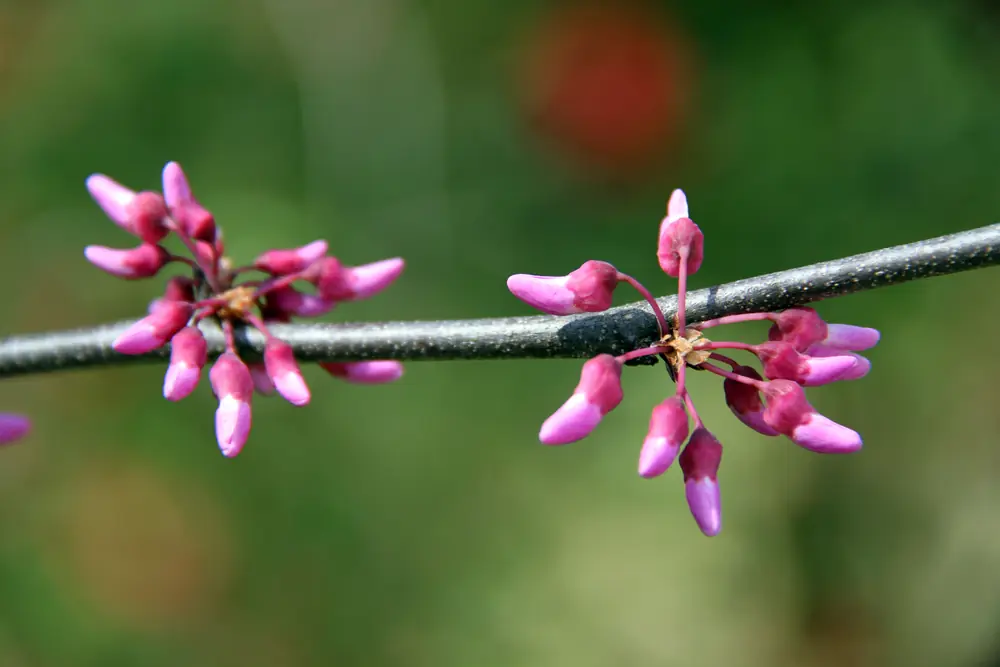
Start here

- Head out when the first warm storm rolls through. After a cold spell, a soaking rain with the air staying above freezing is the cue. Creep along a road beside a woodland pool, a ditch or a flooded field with the windows down. Salamanders crossing wet pavement and frogs calling from the water are the reward, and a dim or red flashlight disturbs them least.
- Put the hummingbird feeder up and tell Journey North. Wash the feeder and fill it by mid-month, then report your first ruby-throated hummingbird at journeynorth.org. Each date you send helps map how fast the birds are moving north.
- Walk a wooded ravine for bloodroot. On a sunny late morning, look on rich slopes and stream banks for a single white flower wrapped in a gray-green leaf. Each flower lasts only a day or two, so every one you find is a short, precious appointment.
Field Journal ideas: give the first night amphibians move a page on the map of sounds, noting temperature and rainfall; write the date of your first hummingbird, phoebe and waterthrush on birds I have seen; sketch a redbud twig or a bloodroot leaf on reading the signs; use dusk and dawn watch for the equinox sunset; and revisit your chosen tree on a tree through the seasons.
Regions used below: The Ozarks and the Buffalo River; Arkansas River Valley; Ouachita Mountains; Central Arkansas and Little Rock; The Delta and Crowley’s Ridge; South Arkansas and the Timberlands.
Where do salamanders and frogs migrate on rainy March nights in Arkansas?
To fishless pools, and the first warm, heavy rain after a freeze is the signal. Both of the big pond-breeding salamanders of Arkansas spend most of the year underground. On a wet night in late winter or early spring they climb out in numbers, cross leaf litter, lawns and roads, and gather to breed in shallow water that dries up later in the year. No fish live in a pool like that, so nothing eats the eggs.
The Missouri Department of Conservation, whose neighbor-state guides are the most detailed published timing for these animals, puts the spotted salamander’s breeding peak from late February to mid-March and the small-mouthed salamander’s from late February through early April. Arkansas lies to the south, so expect the action to start earlier in the Delta and the Timberlands and later in the Ozark hills. Cold snaps pause everything, and the next mild rain restarts it.
-
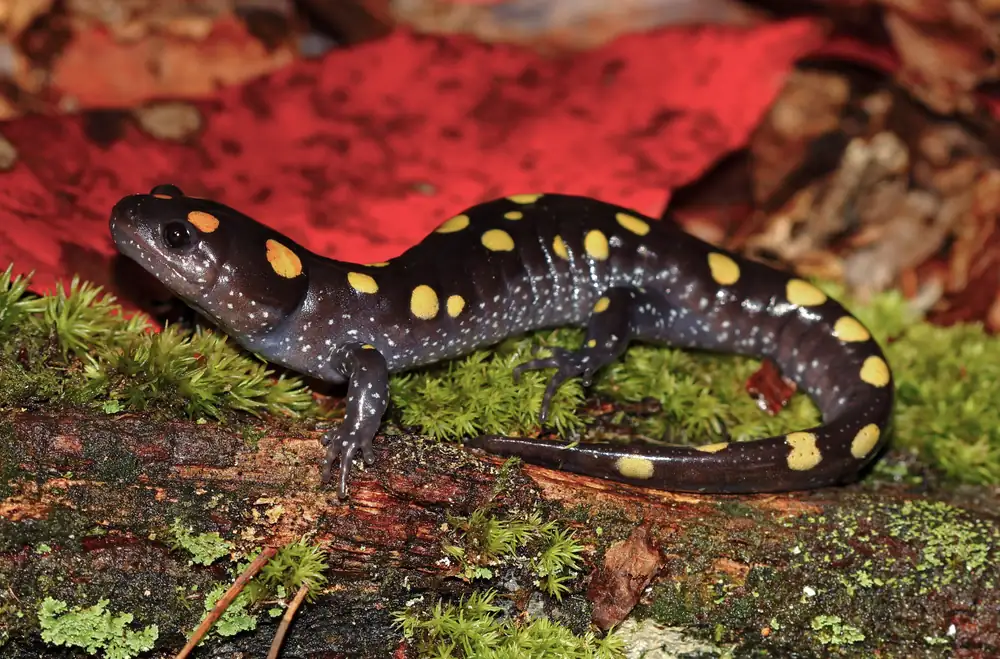
Spotted salamander
Rainy nights from late winter into March, most active after warm rain · Hardwood forests with temporary pools, statewide
A stout, slate-black salamander 4½ to 7¾ inches long with two rows of yellow spots, according to Missouri’s guide. The Herps of Arkansas atlas calls it statewide, with museum specimens from 63 of the state’s 75 counties. Females lay eggs on submerged plants, and the eggs hatch in about four to six weeks. Outside the breeding week you will almost never see one; they hide under logs, rocks and leaf piles.
-
Small-mouthed salamander
Rainy nights from late February through early April · Bottomlands, flooded fields, ditches and farm ponds across much of the state, except most of the Ozark Highlands and Boston Mountains
A gray-brown, lichen-patterned salamander with a small head and a short mouth, 4 to 5½ inches long. Herps of Arkansas finds it in much of the state but largely absent from the Ozark Highlands and Boston Mountains, with scattered populations near Bentonville, Fayetteville, Mountain View and Fairfield Bay. Eggs may be laid singly, in loose clusters or in short sausage-shaped masses, and the larvae live in the water for two to four months.
-
Wood frog
Late winter into March; males call from the water for only a short stretch · Cool, rocky ravines and fishless woodland pools in the Ozark Highlands and Boston Mountains
A tan frog with a bandit’s black mask. Arkansas is at the edge of its range: the state’s atlas lists it as rare, north of the Arkansas River, and a species of greatest conservation need. The call is a quiet, hoarse, duck-like quack. The Missouri guide places breeding between early February and late March and explains that wood frogs make glucose in their blood, which acts as antifreeze when they are buried in leaves. If you hear one, write down the exact place and date.
-
Spring peeper
After warm rains from late winter into spring · Nearly statewide; the atlas has few records from the Mississippi Alluvial Plain
Common nearly statewide in the atlas, with records from 59 of the 75 counties. The loud, single peep of a male carries a long way from a wet thicket, and the frogs call in early spring, so a warm March night after rain is a good bet almost anywhere except the far east.
Slow down on wet roads that cross woodland next to a pond, and never dig for a salamander or pick one up with dry hands; they absorb what is on your skin. Log the temperature, the rainfall and the time you first heard or saw them. After a few seasons you will know which night to expect them.
When do white bass and walleye run in Arkansas?
As the lake water warms toward the 50s. White bass and walleye are the first of the big spring spawners to leave deep water for the rivers that feed Arkansas’s reservoirs. The Arkansas Game and Fish Commission’s Randy Zellers explained to Arkansas’s tourism agency that the run begins when water temperature stays in the low 50s for a few days. That can happen in early March in the southern part of the state but may not come until late March or early April on Beaver Lake.
A 2019 Commission article gives the white bass a slightly different range: movements start late February or early March once the surface reaches about 50 degrees, and the fish get serious about spawning in the mid-50s. Unlike many sport fish, white bass lay eggs that sink and stick to rocks and gravel, where current keeps them supplied with oxygen until they hatch.
-
Walleye
Mid-March into April · Greers Ferry, Bull Shoals, Lake Greeson and Lake Ouachita
Walleye are among the first fish to move and spawn, pushing from the big lakes into tributaries while the water is still cold. Wildlife watchers at a tailrace or creek mouth in mid-March will find the anglers have already found them.
-
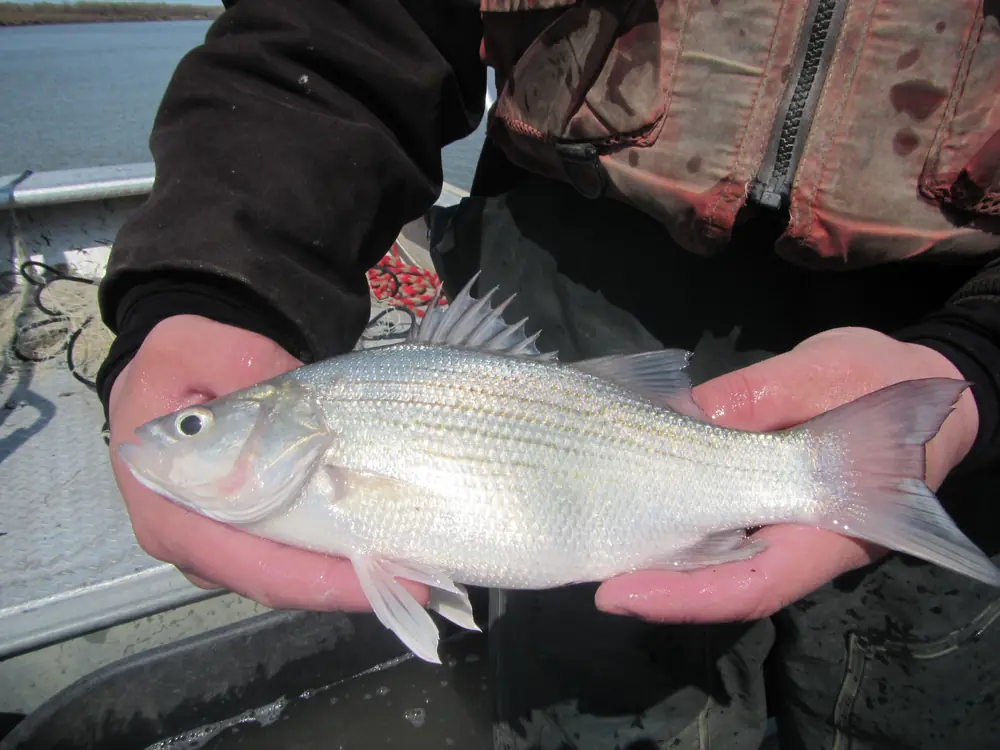
White bass
Early March in the south, perhaps late March or April on Beaver Lake · Beaver Lake and the White River and War Eagle Creek arms, the lakes near Hot Springs, Lake Maumelle, Millwood Lake, Greers Ferry
The 2019 Commission article names access points for the runs, including Twin Bridges on the White River and War Eagle Creek, Sleepy Hollow and Bringle Creek on Lake Maumelle, the Little River upstream of Yarborough Landing at Millwood Lake, and the South Fork of the Little Red River near Johnson Hole. Access points change, so confirm the current road and ramp conditions before you go.
You do not need a rod to enjoy a run. Stand on a bridge or bank where a creek meets the lake and watch the anglers gather. Anyone who fishes needs an Arkansas license and should check the Commission’s current regulations for length and creel limits.
Which birds and butterflies come back to Arkansas in March?
The hardy early ones: a hummingbird, a flycatcher, a stream warbler, and a butterfly that has been waiting in a crack in the bark all winter. Dates vary with the weather, and most published timing comes from Missouri, one state north, so Arkansas arrivals often fall earlier than the dates below.
-
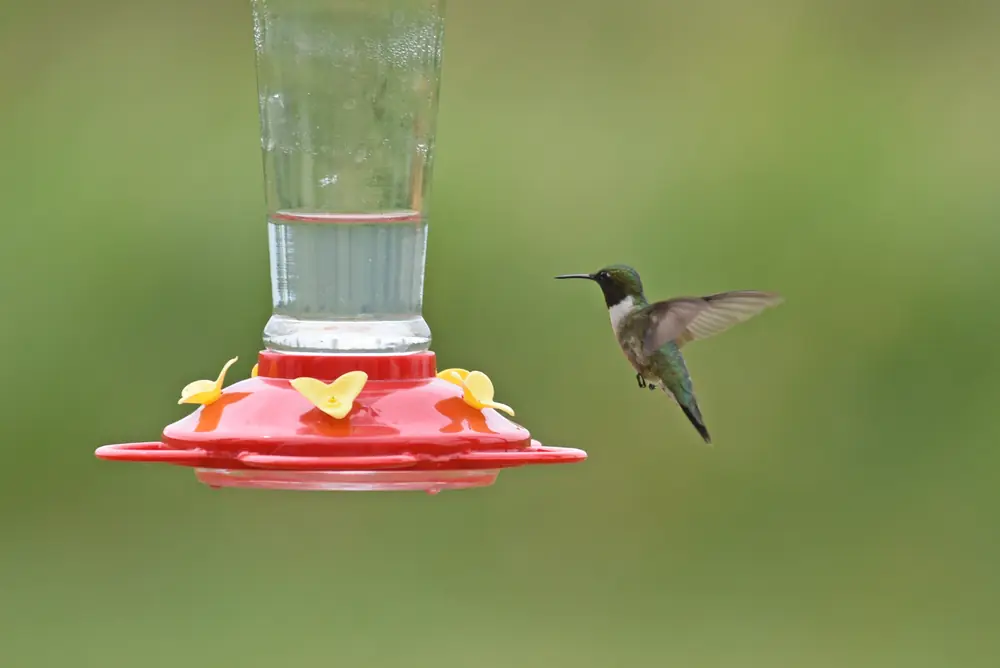
Ruby-throated hummingbird
Reports in some years begin in mid- to late March; widespread by April · Yards, woodland edges and flower beds statewide
Journey North’s volunteers recorded a first ruby-throated hummingbird in Batesville on March 26 in 2020, in the middle of a stalled migration front that was slowed by rain and wind. Missouri’s guide says the species starts arriving there in early April, after most birds cross the Gulf of Mexico nonstop. Put the feeder out by mid-March. The Missouri guide recommends a mix of one part plain white sugar to four parts water, with no red dye, honey or artificial sweetener.
-
Eastern phoebe
March, earlier in the south · Bridges, porches, barns, cliffs and cave mouths
An early flycatcher that bobs its tail and calls its own name, a raspy fee-bee. It builds a mud-and-moss nest on a ledge, often under a bridge or porch roof, and takes flying insects on the wing, including wasps, beetles and ticks.
-
Louisiana waterthrush
From mid-March in Missouri; likely earlier in Arkansas · Wooded, fast, clear streams in the Ozarks and Ouachitas
A brown, streaked warbler that walks the stream edge bobbing its rear end and begins its descending, ringing whistle before the trees leaf out. It nests in the roots of a bank, so keep your distance from steep, mossy creek banks in April.
-
Eastern bluebird
Nest-box checks from March; Missouri’s guide says breeding birds arrive in March and April · Pastures, cemeteries and open woodland edges
A bluebird pair claims a cavity or box, builds a grass nest and lays two to seven eggs, usually raising two broods a year. Boxes should be in place by the time the first males are singing near them. The Cornell Lab’s NestWatch project welcomes anyone who wants to monitor a box or a natural nest and enter the results.
-
Herons, shorebirds and the last of the geese at Bald Knob
The waterfowl sanctuary reopens March 1; spring migration brings shorebirds and herons · Bald Knob National Wildlife Refuge, White County, bounded by the Little Red River
The refuge is a cypress-tupelo, oxbow and farmland mosaic built as winter habitat for ducks and geese. Its sanctuary stays closed in winter and reopens on March 1, just as the wintering flocks thin out and shorebirds and herons start passing through. Check the refuge’s page for current road and trail status after spring rains.
-
Mourning cloak
Warm, sunny days in March; Missouri’s guide says most seen April to May · Woodland edges, creek banks and trails
A maroon-brown butterfly with a cream edge and a row of blue spots. Adults spend the winter under loose bark and in tree cavities and can fly on a warm day, using shivering muscles to warm up. They prefer sap and rotting fruit to flowers, so look near oozing wounds on trees.
Add the date and place of each first arrival to your birds I have seen page. Next March, see how much the weather moved it.
When do Arkansas’s cave bats leave their winter roosts?
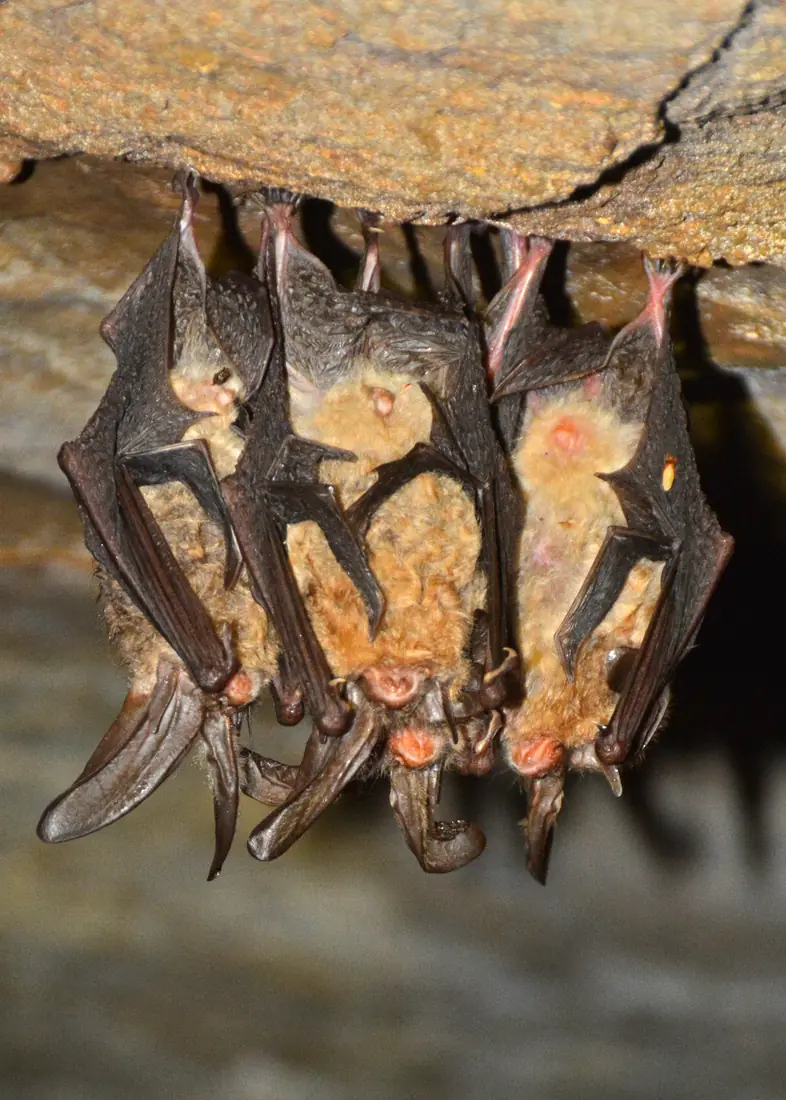
Late March through April for gray bats, and in spring for the Ozark big-eared bat, an endangered subspecies found in only four Arkansas counties. You are very unlikely to see either at the cave, and you should not try, but March is when their spring movements begin, and it is a good month to learn how these animals live.
-
Ozark big-eared bat
Hibernation runs November through March; females move to maternity caves from spring and stay May through July · Northwest Arkansas: Crawford, Franklin, Washington and Marion counties, plus nearby Oklahoma
The U.S. Fish and Wildlife Service lists this subspecies as endangered. It roosts in limestone and sandstone talus caves and crevices surrounded by oak-hickory forest. In March 2024, Arkansas Game and Fish Commission biologists captured three females at a hibernation cave in Washington County and tracked them by radio into early April. Two moved to caves no one had known about, 9.7 and 11.6 kilometers away (about 6 and 7 miles), and a third flew 20.1 kilometers (about 12.5 miles) to a known maternity cave. The researchers concluded these bats are not true long-distance migrants.
-
Gray bat
Adult females leave hibernation in late March through mid-April; pups are born in late May and early June · Limestone karst in the Ozarks, and caves, bridges and culverts used in summer
Federal biologists report that over 95 percent of the species spends the winter in only 15 caves in a handful of states, Arkansas among them. Most are regional migrants that travel under 200 miles between winter and summer sites. Human disturbance of caves has been one of the long-standing threats to the species.
If you walk past a cave mouth this month, leave it alone. A bat roused from hibernation or a mother startled in spring burns fat she cannot replace. Stay out of caves marked closed, and look instead at the creek valleys at dusk, where bats come out to feed on mild evenings.
What blooms in Arkansas in March, and when is Arbor Day?
Flowering shrubs and trees go first, then the woodland wildflowers on the south-facing slopes. The median last freeze comes about five weeks later at Fayetteville than at Stuttgart (see the freeze table below), so treat these dates as a ladder that spring climbs from south to north. Most flowering dates in published guides come from Missouri; Arkansas blooms earlier in the south.

-
Eastern redbud
Mid-April in the Ozarks per the extension service; earlier in southern Arkansas · Roadsides, forest edges and yards statewide
The University of Arkansas Cooperative Extension Service says redbud is usually in full bloom by the middle of April in the Ozarks and precedes flowering dogwood by about a week. The flowers are purple pea-blossoms, and the heart-shaped leaves follow. The tree is short-lived, seldom surviving past 35 or 40 years. Pods hang on through winter.
-
Flowering dogwood
Mid-April to mid-May in Missouri; expect it earlier in the south, about a week after redbud · Understory of oak-hickory forests
What look like white petals are four large bracts around a cluster of small yellow-green flowers. The red fruits that follow in late summer are eaten by deer, turkeys and many songbirds.
-
Spicebush
Missouri: March to May, before the leaves · Damp woods, ravine bottoms and stream edges
A shrub with small clusters of fragrant yellow flowers on bare branches. Crushed twigs and leaves smell spicy. It is the host plant for the spicebush swallowtail, whose caterpillars fold a leaf shut with silk and hide inside.
-
Bloodroot
March and April · Rich woods, bottomlands, stream banks and the bases of bluffs
Eight to sixteen white petals of uneven length surround a ring of yellow stamens, on a flower about an inch and a quarter wide. Each flower lasts one or two days, and ants carry off the seeds, which have an oily appendage, and plant them in their nests.
-
Dutchman’s breeches
March through May · Rich slopes, bottomlands and stream sides with well-drained, humus-rich soil
Fernlike blue-green leaves and a row of white flowers shaped like tiny pairs of upside-down pantaloons, on a stalk about a foot tall. The plant is apparently toxic, and in some people it causes a rash, so look without picking.
-
Jonquils at Historic Washington State Park
Annually in March; the 58th festival was held March 20 and 21 in 2026, and no 2027 date had been announced as of early October 2026 · Historic Washington State Park, about 20 miles east of Nashville in southwest Arkansas
The park’s annual festival celebrates thousands of jonquils in bloom across the grounds, along with historic building tours, crafts and food. Bloom depends on the weather, not the calendar. Contact the park at (870) 983-2684 or check the Arkansas State Parks event calendar before you plan a trip.
Arkansas Arbor Day is observed on the third Monday in March, which in 2027 is Monday, March 15, according to the Arkansas Urban Forestry Council’s website. Native trees planted in March in the south settle in before summer heat. For the frost dates that tell you when tender plants are safe, see the Arkansas frost dates page.
What is March weather like in Arkansas, and when does storm season start?
Mild, wet and changeable, with storms that can be violent. In March the average highs run from about 60 °F in the northwest to nearly 69 °F in the south, and warm Gulf air starts running into cold fronts from the northwest. The table below gives the National Oceanic and Atmospheric Administration’s 1991–2020 normals at seven airports.
The worst recent example came on March 31, 2023. The National Weather Service in Little Rock’s summary lists 137 tornadoes that day across the central and eastern United States. In Arkansas, an EF3 tornado with winds of 165 miles per hour tracked just over 34 miles from west Little Rock to the south side of Cabot. Another EF3 hit Wynne in Cross County at about 4:45 p.m., and at least five people died in the state, four of them in Wynne. The lesson of that day is that an afternoon with a warm, humid, windy start can turn dangerous within hours.
Elsewhere in the hills, March is a month for prescribed fire, and smoke from planned burns is a regular sight. See the safety section for detail. For the latest national outlook for the coming months, see the Climate Prediction Center’s 90-day outlooks (new ones come out about the middle of each month).
| City | Average high | Average low | Precipitation |
|---|---|---|---|
| Fayetteville (Drake Field) | 60.7 °F | 36.1 °F | 3.98 in |
| Harrison | 60.3 °F | 38.1 °F | 3.91 in |
| Fort Smith | 65.6 °F | 41.5 °F | 3.90 in |
| Jonesboro | 60.9 °F | 41.2 °F | 4.73 in |
| Little Rock | 63.7 °F | 41.8 °F | 4.96 in |
| Texarkana | 66.7 °F | 45.2 °F | 4.45 in |
| El Dorado | 68.7 °F | 44.0 °F | 5.10 in |
Check the forecast and radar before any outing, and know your county’s shelter plan. Weather radios and phone alerts matter most at night, when many tornadoes in the South are hard to see. Outdoor burning is restricted by county, and the Arkansas Department of Agriculture’s Forestry Division keeps a fire danger and burn ban map.
Why is there smoke in the hills of western Arkansas in March?
Because spring is the main prescribed-burning season in western Arkansas, according to the University of Arkansas extension service. The University of Arkansas Cooperative Extension Service describes the U.S. Forest Service’s goals as reducing the hazardous fuel load in the understory and restoring wildlife habitat, a reversal of the mid-twentieth-century policy of putting out every fire. In a typical season about 60 burns are planned on the Ozark National Forest, covering less than 10 percent of its acreage. Crews use firebreaks cut through the forest to hold each fire to its planned unit.
For wildlife the payoff comes a few weeks later. Extension writes that the new growth after a burn brings more insects, which feed turkeys and other ground-nesting birds.
-
Where you may see smoke
Spring, on days the Forest Service judges suitable · The Ozark National Forest and the hills of western Arkansas
A column of smoke in the hills is not always a wildfire, but do not drive toward it to find out. Smoke can cut visibility on forest roads, and crews and engines may be working there.
-
Fire danger and burn bans
Checked daily in dry spells · Statewide, by county
The Arkansas Department of Agriculture’s Forestry Division keeps a map of fire danger and burn bans and a list of county forestry offices. The National Weather Service in Little Rock also links burn ban alerts and fire weather assessments from its home page. Before you burn yard debris, check both.
If you hike in a recently burned area, you will see how quickly plants respond. Photograph the same slope in March and again in May and add it to your the same place twice plate.
When does the last freeze of spring arrive in Arkansas?
Not until April in the Ozark hills, but weeks sooner in the Delta. In the 1991–2020 normals, the median last freeze at Stuttgart falls on March 11, at Little Rock on March 21 and at Fayetteville’s Drake Field on April 15, a gap of more than a month. The last column is the late side: at Fayetteville, nine springs in ten are finished with freezing by May 1, so roughly one in ten is not.
This is why the first warm spell of March is a trap. Fruit buds, tomatoes set out early and tender perennials can look fine for days, then die in a clear, still night after a front. Your own yard may differ from the airport; hollows and low spots get colder than hilltops.
| Station | One year in ten | Median | Nine years in ten |
|---|---|---|---|
| Fayetteville Drake Field (Northwest Ozarks) | Mar 31 | Apr 15 | May 1 |
| Harrison Boone County Airport (Ozark Plateau) | Mar 17 | Apr 3 | Apr 21 |
| Mena (Ouachita Mountains) | Mar 15 | Apr 5 | Apr 24 |
| Fort Smith Regional Airport (Arkansas River Valley) | Mar 4 | Mar 25 | Apr 11 |
| Jonesboro Municipal Airport (Crowley’s Ridge) | Mar 7 | Mar 23 | Apr 9 |
| Little Rock Airport Adams Field (Central Arkansas) | Mar 2 | Mar 21 | Apr 6 |
| Stuttgart 9 ESE (the Delta) | Feb 21 | Mar 11 | Mar 31 |
| El Dorado S Ar Regional Airport (Timberlands) | Mar 1 | Mar 24 | Apr 9 |
The Arkansas frost dates page lists many more towns, and the freeze and frost chances there come from the same federal normals.
How much daylight does Arkansas gain in March?
Between 61 and 70 minutes, depending on the city, or about two minutes a day. The gain is steady through the month and is slightly larger in the north of the state than in the south.
Two things happen in the middle of the month. On Sunday, March 14, at 2 a.m. the clocks jump ahead, so every sunrise and sunset after that reads an hour later, though the daylight itself has not grown by a minute. The sun crosses the equator at 3:25 p.m. Central Daylight Time on Saturday, March 20, the astronomical start of spring, with daylight and darkness close to evenly matched everywhere on Earth.
| City | Mar 1 | Mar 31 | Gained | Per day |
|---|---|---|---|---|
| Fayetteville | 11 h 24 m | 12 h 34 m | 70 min | 2.3 min |
| Harrison | 11 h 24 m | 12 h 33 m | 69 min | 2.3 min |
| Jonesboro | 11 h 25 m | 12 h 33 m | 68 min | 2.3 min |
| Fort Smith | 11 h 26 m | 12 h 32 m | 66 min | 2.2 min |
| Little Rock | 11 h 26 m | 12 h 31 m | 65 min | 2.2 min |
| Hot Springs | 11 h 27 m | 12 h 31 m | 64 min | 2.1 min |
| Pine Bluff | 11 h 27 m | 12 h 31 m | 64 min | 2.1 min |
| El Dorado | 11 h 29 m | 12 h 30 m | 61 min | 2.0 min |
Exact sunrise and sunset for your own town are in the sunrise and sunset tables; remember that times before March 14 are in standard time and times after are in daylight time.
What can you see in the Arkansas night sky in March?
A dark week around the new moon, Mercury in the dawn, two bright planets in Leo all night, and the Worm Moon on the 22nd. Times below are Central Standard Time on March 8 and earlier and Central Daylight Time from March 14 on.
-
A dark week around the new moon
Around Monday, March 8 · Any dark field away from town
The Moon is new at 3:29 a.m. CST on the 8th. Faint star clusters and galaxies show best in the days around it. By our calculation a young crescent Moon sits close to the Pleiades on Saturday evening the 13th, the last before the clocks change.
-
Mercury in the morning sky
Mornings of roughly the 8th through the 25th; widest from the Sun late on the 16th (11:20 p.m. CDT) · Low in the east-southeast before sunrise
On the 16th the little planet reaches its widest morning gap from the Sun, 27.6 degrees, and in early March it clears the horizon roughly an hour before dawn. This is a shallow spring apparition, so you need a flat horizon. Venus is the brilliant point well above it. Our figures show a skinny old crescent Moon close to Venus before sunrise on Thursday the 4th and again on Friday the 5th.
-
Jupiter and Mars all night
Evenings all month; the Moon sits near Jupiter on the 18th and 19th, per our figures · Rising in the east as the sky darkens and setting near dawn, in Leo
Both planets are still bright after their February oppositions. Our own calculations have the bright gibbous Moon slipping to roughly one degree from Jupiter after dark on the 18th and 19th, and by the 30th Mars and Jupiter pair up about 4.3 degrees apart, close enough to share one view in binoculars. Saturn, by contrast, is slipping into the evening twilight and will be lost in the Sun’s glare by April.
-
The Worm Moon
Full before dawn on Monday, March 22 (5:44 a.m. CDT); look on Sunday the 21st · Rising in the east around sunset
The name is an old one tied to soft ground and the return of earthworms. Because full comes before dawn on the 22nd, the Moon already looks round on the 21st and sets in the west around sunrise.
| Phase | Date | Time |
|---|---|---|
| New moon | Monday, Mar 8 | 3:29 a.m. CST |
| First quarter | Monday, Mar 15 | 11:25 a.m. CDT |
| Full moon, the Worm Moon | Monday, Mar 22 | 5:44 a.m. CDT |
| Last quarter | Monday, Mar 29 | 7:54 p.m. CDT |
The last quarter arrives on the evening of the 29th, so the final nights of March are dark again after moonset. Today’s sky shows where clouds are heading, and you can find moonrise and moonset for your location on the moon phase calendar.
What can Arkansas families do outdoors in March?
- Monday, March 8: a dark-sky evening. The new moon makes it the best night of the month for faint stars. Bring a red flashlight and a star chart.
- Any warm rainy night: an amphibian walk. Walk, do not run, near a woodland pool with a dim light. Count the species you hear and log the temperature.
- Sunday, March 14: set the clocks ahead. The extra evening light is a good reason to take a walk after supper.
- Monday, March 15: Arkansas Arbor Day. Plant a native tree, or adopt one to watch through the seasons. Ask your city or county forester about local plantings.
- Saturday, March 20: the equinox. Mark where the sun sets on your horizon and compare it in June.
- Sunday, March 21: the Worm Moon rises. Look for it at sunset in the east.
- All month: hummingbird watch. Put your feeder up by mid-March and report your first bird to Journey North.
- All month: a nest box or a feeder count. Project FeederWatch runs through April 30, and NestWatch lets you follow a box through the whole season.
- Late March: the Jonquil Festival. Historic Washington State Park holds its jonquil festival in March in most years. The park has not posted a 2027 date as of early October 2026, so call or check its calendar.
Arkansas State Parks lists its hikes and programs on an events calendar; check it in February for March 2027 events, because none were being advertised when this page was written. Other states and months are linked from the nature pages, and keep the Naturalist’s Field Journal in your pack.
Safety notes for March in Arkansas
- Hunting. No deer season is open in March 2027; archery deer season ended February 28. Spring turkey season has not started: the statewide youth hunt for ages 6 to 15 is April 10 and 11, and the regular season opens April 5 in zone 3, April 12 in zones 2 and 2A and April 19 in zones 1 and 1A. The Light Goose Conservation Order, which allows hunting of snow geese and related species with a free registration permit (youth 15 and younger excepted), continues through April 25, and hunters may shoot from half an hour before sunrise until half an hour after sunset. Trapping of beaver, nutria and coyote continues statewide through sunset March 31, so keep dogs on a leash near beaver ponds and creek bottoms.
- Blaze orange. The Commission ties its safety-color rule to modern gun and alternative-firearms seasons for deer, bear and elk. None is open in March, so the rule is dormant. Bright clothing is still a good idea on public land.
- Snakes. Copperheads begin to leave their winter dens in mid-to-late March and bask in the morning sun. Missouri’s guide says they seldom strike unless provoked. Wear boots on trails, and keep your hands out from under logs and rocks.
- Ticks. They are active whenever the weather is warm, so check yourself, children and pets after a walk in brush or woods.
- Severe storms. Tornadoes, large hail and damaging wind can arrive any afternoon or night this month. Know the safest room in your home and your phone’s emergency-alert settings. After a heavy rain, never drive into moving water.
- Fire season. Spring is the main prescribed-burning season in western Arkansas, so smoke in the hills is often planned. Check the Arkansas Department of Agriculture’s burn ban map before burning yard debris.
- Caves. Stay out of caves, particularly those used by endangered bats, and avoid disturbing roosts.
- Cold water and mud. Lake and river water is still cold in March, and a swamped boat is dangerous. Wear a life jacket, and give steep, muddy stream banks respect.
- Bald Knob. The waterfowl sanctuary at Bald Knob National Wildlife Refuge is shut each winter, then opens again on March 1, so expect more people on its trails.
Sources (51)
- Arkansas Urban Forestry Council: Arkansas Arbor Day (third Monday in March)
- Arkansas Urban Forestry Council
- Arkansas Department of Agriculture Forestry Division: wildfire danger and burn bans
- Arkansas Game and Fish Commission: 2026-27 deer seasons and limits by zone
- Arkansas Game and Fish Commission: deer-specific hunting regulations (hunter orange)
- Arkansas Game and Fish Commission: 2026-27 furbearer trapping seasons
- Arkansas Game and Fish Commission: 2027 spring turkey season dates
- Arkansas Game and Fish Commission: Light Goose Conservation Order (2027 dates)
- Arkansas Game and Fish Commission: white bass articles (2019 run report)
- Arkansas Tourism: when and where to fish in Arkansas (Commission’s Randy Zellers on the runs)
- University of Arkansas Cooperative Extension Service: redbud, plant of the week
- University of Arkansas Cooperative Extension Service: prescribed burns in the Ozarks
- Sasse and colleagues, Southeastern Naturalist: spring movements of Ozark big-eared bats (Arkansas Game and Fish Commission, March 2024)
- U.S. Fish and Wildlife Service: Ozark big-eared bat
- U.S. Fish and Wildlife Service: gray bat
- U.S. Fish and Wildlife Service: Bald Knob National Wildlife Refuge
- Herps of Arkansas: wood frog
- Herps of Arkansas: spotted salamander
- Herps of Arkansas: small-mouthed salamander
- Herps of Arkansas: spring peeper
- Herps of Arkansas: eastern copperhead
- Missouri Department of Conservation field guide: spotted salamander
- Missouri Department of Conservation field guide: small-mouthed salamander
- Missouri Department of Conservation field guide: wood frog
- Missouri Department of Conservation field guide: ruby-throated hummingbird
- Missouri Department of Conservation field guide: eastern phoebe
- Missouri Department of Conservation field guide: Louisiana waterthrush
- Missouri Department of Conservation field guide: eastern bluebird
- Missouri Department of Conservation field guide: mourning cloak
- Missouri Department of Conservation field guide: flowering dogwood
- Missouri Department of Conservation field guide: spicebush
- Missouri Department of Conservation field guide: bloodroot
- Missouri Department of Conservation field guide: Dutchman’s breeches
- Missouri Department of Conservation field guide: eastern copperhead
- Journey North: hummingbird migration
- Journey North: end of March, where are the hummingbirds (spring 2020 report from Batesville, Arkansas)
- Cornell Lab of Ornithology: NestWatch
- Project FeederWatch: how to participate
- Southwest Arkansas Radio: 58th annual Jonquil Festival, March 20 and 21, 2026
- Arkansas State Parks: Historic Washington State Park and event calendar
- NOAA NCEI: 1991–2020 monthly normals for Arkansas stations (data API)
- NOAA NCEI: U.S. Climate Normals 1991–2020 (the site’s frost dates page uses these normals)
- National Weather Service Little Rock: March 31, 2023 tornado outbreak
- National Weather Service Little Rock: home page (severe weather, burn bans, fire weather)
- Climate Prediction Center: 90-day seasonal outlooks
- U.S. Naval Observatory: moon phases from March 1, 2027
- U.S. Naval Observatory: Earth’s seasons, 2027 (March equinox)
- Fred Espenak: Sky Event Almanac 2027 (Mercury elongation, Moon pairings, Mars and Jupiter)
- Sea and Sky: astronomy calendar of celestial events, 2027
- NOAA Global Monitoring Laboratory: solar calculator (equations used for the day-length table)
- Photos via Wikimedia Commons; licenses and photographers are credited under each picture
.jpg)