What to look for in nature in Arkansas this November
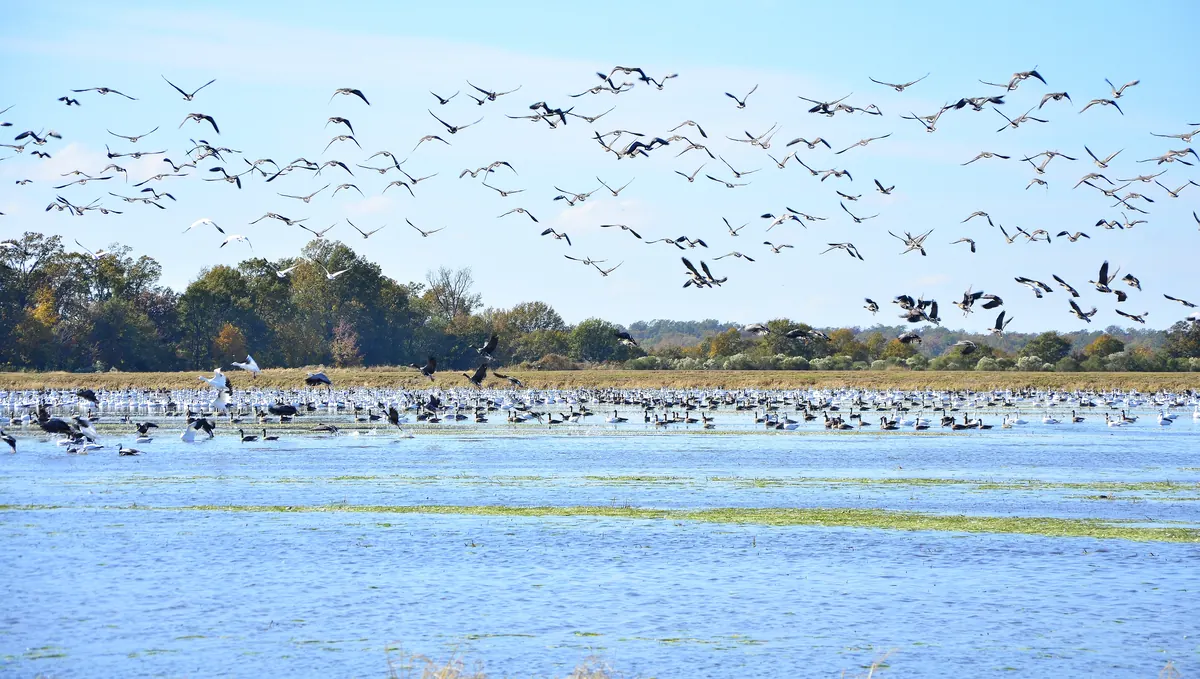
November is when Arkansas fills up with birds from the north. Trumpeter swans glide back onto a small oxbow lake east of Heber Springs, mallards drop into the flooded rice fields and green-timber bottoms of the Grand Prairie, and wintering bald eagles start to perch over DeGray and Dardanelle. In the woods the white-tailed rut reaches its height, a few weeks later in the Delta than in the Ozarks. The last color drains out of the southern forests, persimmons soften after the first hard frost, and the clocks falling back on November 1 put sunset before dinner. Below are the month’s highlights and dated outings, from the Ozarks down to the Timberlands.
Other months in Arkansas: October, December.
Start here
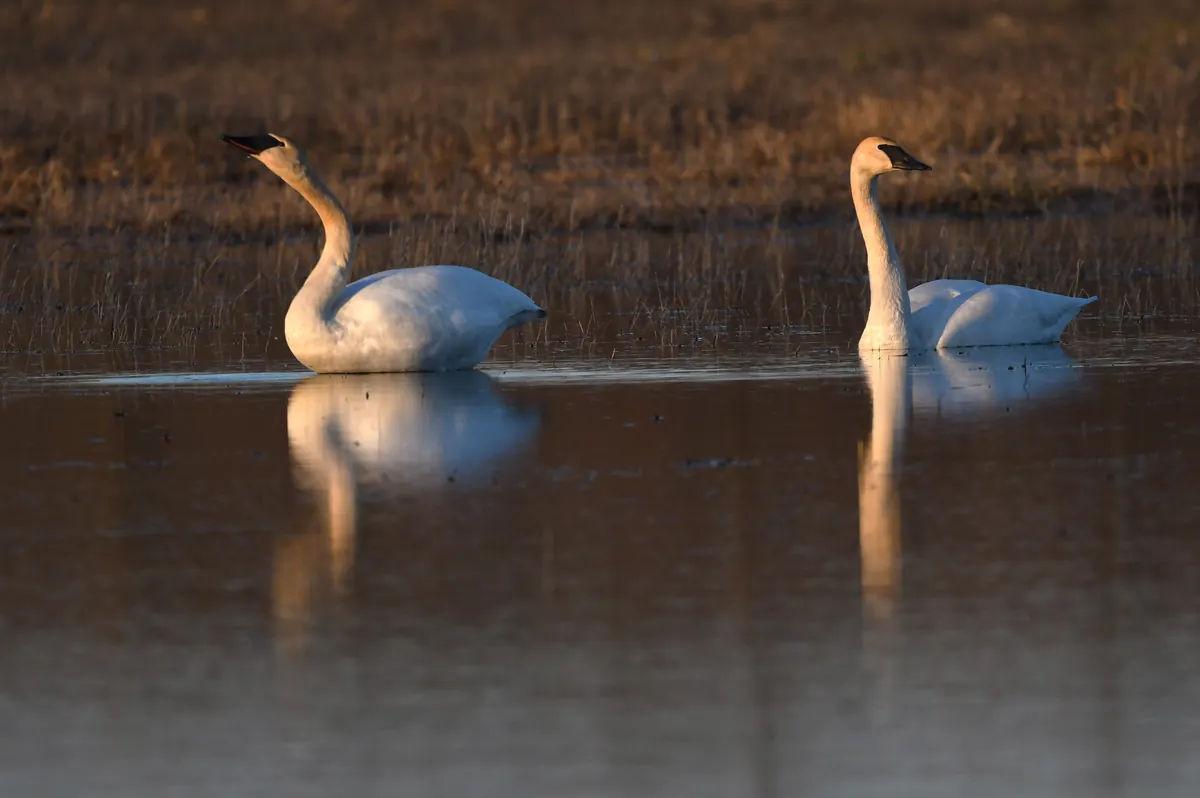
- Swans at Magness Lake. Trumpeter swans usually reach this 30-acre lake east of Heber Springs during November, sometimes by the second week, and stay until late February. Watch from the county road along the shore and leave the birds their space.
- Thanksgiving weekend in Stuttgart. The 91st World’s Championship Duck Calling Contest and Wings Over the Prairie Festival fill Stuttgart on November 27 and 28, six days after the duck season opens. Drive the rice country at dawn for flights of mallards and geese.
- Mars meets Jupiter. Step outside before first light on Sunday, November 15, or Monday, November 16, and look high in the southeast: reddish Mars hangs barely a degree from much brighter Jupiter, and Venus blazes lower down toward the sunrise.
In the Naturalist’s Field Journal, give the swans and the ducks their own lines on the birds I have seen list, use the tracks to know plate for the deer trails in the frost, the reading the signs page for buck rubs and scrapes, the seeds, pods and cones plate for a fallen persimmon, and give the predawn hour when Mars sat beside Jupiter its own entry under dusk and dawn watch.
Regions used below: The Ozarks and the Buffalo River; Arkansas River Valley; Ouachita Mountains; Central Arkansas and Little Rock; The Delta and Crowley’s Ridge; South Arkansas and the Timberlands.
When do the trumpeter swans come to Heber Springs?
Usually in the second half of November. Trumpeter swans, the largest native waterfowl in North America, were brought back from the edge of extinction by restoration programs in the twentieth century. In Arkansas the modern story begins with three that turned up on an oxbow of the Little Red River in the winter of 1990–91. The next winter three young swans settled on Magness Lake, a private 30-acre lake about five miles east of Heber Springs, and a flock has come back every year since.
A history written by The Trumpeter Swan Society with two Arkansas Game and Fish Commission biologists describes the pattern: whenever the lakes freeze in Minnesota and the upper Midwest, the first swans tend to arrive at Magness Lake in November, occasionally as early as the second week, and most have left by March 1, sooner in a mild winter. Marked birds in the flock have come from restoration programs in Minnesota, Wisconsin, Iowa and Michigan. The count passed 88 in the winter of 2004–05 and has varied since, so keep your own tally.
-
How to see them
Mid-November to late February · Magness Lake, off Highway 110 east of Heber Springs, Cleburne County
The lake is private, but a paved county road runs along one shore, and there is a small gravel pull-off where you can park and watch from the car or the roadside. Mornings and late afternoons are best: the swans have often left during the day with wild geese to graze in nearby fields, then fly back to roost on the lake by late afternoon. Stay on the road, keep voices low and let the birds come and go on their own.
-
Swan, goose or something else?
All winter · Magness Lake and the Little Red River
A trumpeter is all white with a long straight neck and a heavy, entirely black bill. Gray-brown birds with them are the year’s young, the cygnets. The lake also holds domestic ducks and geese, which helped draw the first swans in, so do not count the farmyard birds. The National Audubon Society’s Arkansas guide also lists trumpeters at Holla Bend and Lake Dardanelle between fall and spring.
Start a page for the flock: the date you see the first swan, the highest count on one visit, the number of gray cygnets, and the day the lake is empty again in late winter.
When do the ducks arrive in Arkansas, and when does duck season open?
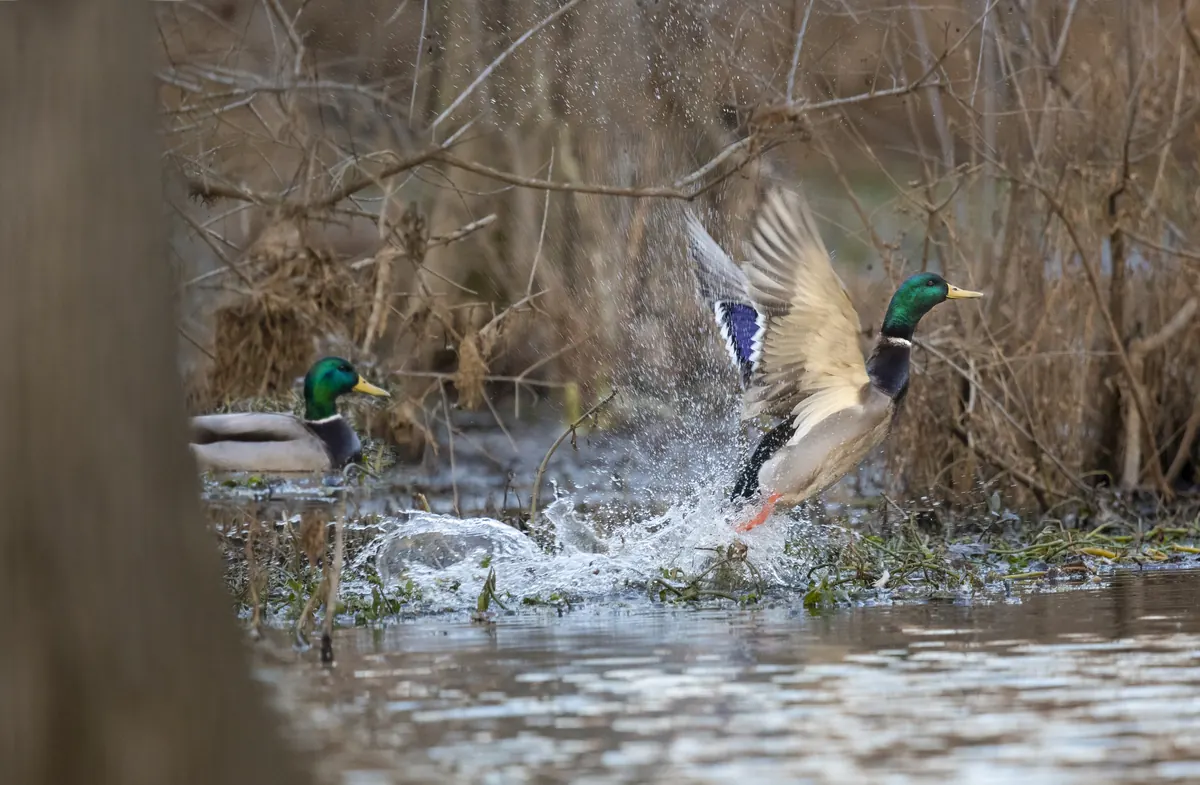
The big flights build through November, carried south by cold fronts down the Mississippi Flyway. The Game and Fish Commission calls the mallard the most common duck in Arkansas, and the flooded rice fields, reservoirs and green-timber bottoms of the Grand Prairie and the Delta are why the state is known for them. The Commission flies aerial waterfowl surveys from November into early February to track how many birds are on the ground.
The 2026–27 regular duck season opens on Saturday, November 21, and its first segment runs through November 29; the season then closes until December 10. Light geese and white-fronted geese have two November windows, October 31 to November 8 and November 21 to 29. For a birder that matters in two ways: hunting pressure moves the birds around, and some of the best viewing is on refuges and sanctuaries where no one hunts.
-
Stuttgart’s Thanksgiving weekend
Friday and Saturday, November 27–28 · Stuttgart, Arkansas County
The contest began on Stuttgart’s Main Street on November 24, 1936, with seventeen callers, and the Encyclopedia of Arkansas credits the town’s place in the middle of the flyway, and the rice that feeds the ducks, for putting it there. The 2026 festival is the 91st; the schedule page says which contest runs on which day.
-
A refuge sanctuary goes quiet
Closed November 15 to February 28 · Bald Knob National Wildlife Refuge, White County
Bald Knob is a winter home for large numbers of ducks and geese, and from November 15 its waterfowl sanctuary is closed to all public use so the birds have somewhere to rest. Look from the open roads and the edges, with a spotting scope, rather than walking in.
-
Geese and eagles on the Arkansas River
From November into early spring · Holla Bend National Wildlife Refuge, Pope and Yell counties
The Fish and Wildlife Service describes fall and winter as the time to see deer and migratory birds at Holla Bend, and says bald eagles, seen in every season, turn up most often in winter and early spring. The auto tour costs $4 a vehicle per day, and the observation tower lets children see over the fields.
WMA duck hunters must stop shooting at noon during the regular season, so an afternoon on a wildlife management area is calmer. For the journal, write down which species you saw first and how many, the wind direction, and how cold it was overnight; the first big push of ducks usually follows a strong north wind.
When do bald eagles and winter birds arrive in Arkansas?
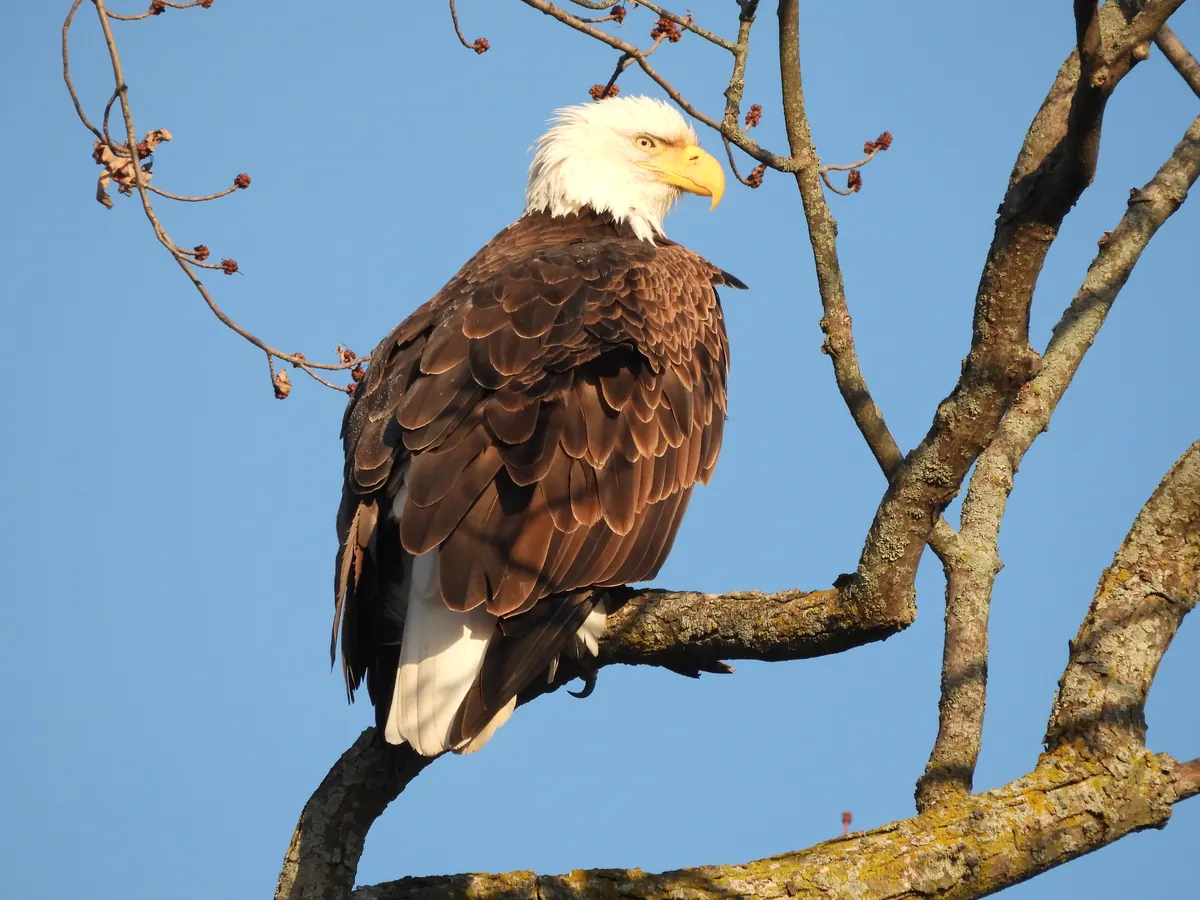
Some bald eagles live and nest in Arkansas year-round, but the winter visitors from farther north swell the numbers from late fall onward, and November is when the big lakes start to show them. They gather where open water and fish come together: below dams, on the large reservoirs and along the Arkansas River. Arkansas State Parks begins its eagle season on DeGray Lake on November 1, and Lake Dardanelle State Park runs eagle programs through the month.
-
Eagle Watch Tours on DeGray Lake
Weekends from Sunday, November 1 · DeGray Lake Resort State Park, Bismarck
A park interpreter takes a boat out for an hour looking for wintering bald eagles, ospreys, loons, herons, grebes and ducks. November sailings include November 1, 7, 8 and 15 at 10 a.m. and 2 p.m., November 14 at 3 p.m. and November 21 at 10 a.m., with more listed on the park’s page. Tickets are $14 for adults, $8 for ages 6 to 12, and free under 6. Dress for the wind on the water.
-
Eagle Measure Up and the Great Migration Challenge
Wednesday, November 11, 9 a.m.; Saturday, November 14, 5 p.m. · Lake Dardanelle State Park, Russellville
Two free programs on the lawn across from the visitor center: the first lets children compare themselves with an eagle’s size and wingspan, the second turns the long journeys of migrating birds into a game, using the park’s mix of habitats as the stopover. Bring binoculars and check the dam and the open water afterward.
-
A quiet finch winter, probably
November onward · Feeders statewide
The Finch Research Network’s 2026–27 forecast, published in late September, reads the northern seed and cone crops as rich enough to keep most boreal finches at home, with no big irruptions expected into the southeastern states. Pine siskins may still trickle south in small to moderate numbers, and red-breasted nuthatches, abundant on the Gulf Coast last winter, are not expected in force. A siskin at the nyjer feeder is worth writing down.
-
The FeederWatch season starts
November 1 to April 30 · Your own yard
Project FeederWatch, from the Cornell Lab of Ornithology, is built on pairs of consecutive count days, up to one pair a week. Your number for each species is the biggest group seen together at any moment during the pair, so a chickadee that keeps returning is still one chickadee. There is a small participant fee. A November record of which sparrows and juncos have arrived is the baseline for the whole winter.
Hummingbirds are a November surprise worth watching for: the University of Arkansas extension service notes that a few ruby-throats can linger into this month, and any hummingbird seen after that is likely a western stray that banders would like to hear about. Note the date, the time and a photo.
When is the deer rut in Arkansas?
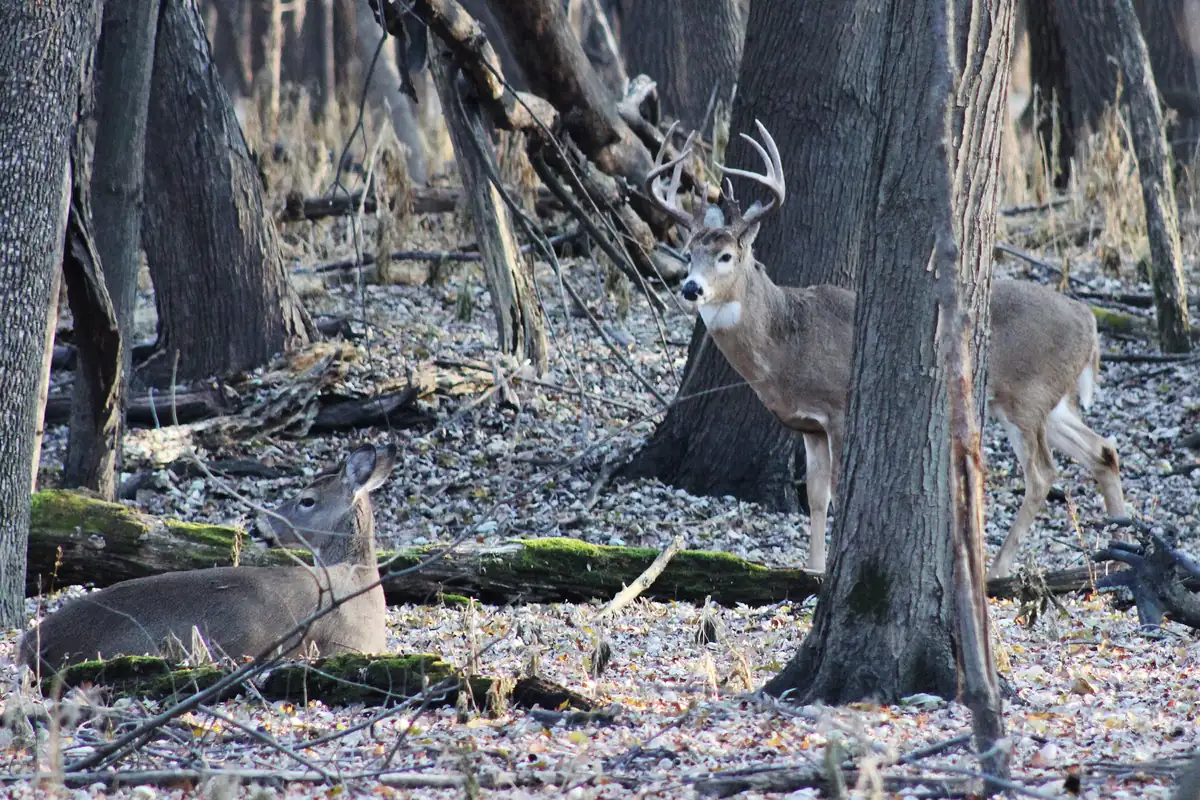
It depends on where you live, and Arkansas has a map for it. Game and Fish biologists measured fetuses from does collected in winter between 2002 and 2015 and worked back to the date each doe conceived. The result, printed in the Commission’s white-tailed deer strategic plan, shows a rut that sweeps across the state from northwest to southeast:
| Area | Example counties | Peak conception |
|---|---|---|
| Far northwest | Benton, Washington, Crawford, Sebastian | Oct 28 – Nov 11 |
| Most of the state: Ozarks, River Valley, Ouachitas, central and southwest Arkansas | Boone, Pope, Pulaski, Garland, Union | Nov 12 – Nov 21 |
| Western edge of the Delta | Craighead, Poinsett, Woodruff, Prairie, Drew | Nov 22 – Dec 1 |
| Mississippi River counties | Crittenden, Lee, Phillips, Desha, Chicot | Dec 2 – Dec 14 |
So most of Arkansas has its peak in mid-November, while the counties along the Mississippi wait until December. The Game and Fish Commission estimates close to a million white-tailed deer in the state. Watch for the signs: young trees with the bark shredded where a buck has polished and sparred with his antlers, and scrapes, patches of bare dirt pawed out beneath an overhanging branch and marked with scent. Rutting bucks travel by day, often oblivious to traffic, so drive slowly where woods meet fields at dawn and dusk. Several parks are running programs on deer this month: Devil’s Den’s free “Oh Deer” talk on Friday, November 20, at 3 p.m., and Crowley’s Ridge’s Whitetail Tales sessions, with one on Thursday, November 19, at 9 a.m. In Boxley Valley on the Buffalo River, the National Park Service says the elk rut continues through November, and a cold day can bring the herd into the open at any hour.
When do the last leaves fall in Arkansas?
By the end of November in the north, and later in the south and the Delta. Arkansas Tourism puts the Ozarks’ color peak in late October and says the rest of the state is at its best from late October into mid-November, so the first half of this month belongs to the River Valley, the Ouachitas, Crowley’s Ridge and the pine-and-hardwood forests of South Arkansas. After the first hard freeze the maples and sweetgums drop fast. What lingers is the brown and russet of the oaks: many young oaks and beeches hold their dead leaves into winter, rattling in the wind long after everything else is bare.
-
Fall Color Paddle
Sunday, November 1, 3 to 5 p.m. · Hornor Neck Lake, Mississippi River State Park, near Marianna
A guided kayak trip in the St. Francis National Forest on Crowley’s Ridge, where the color comes later than in the hills. Adults $18, children 6 to 12 $12.
-
Fall Color Hike at Logoly
Sunday, November 8, 2 to 3:30 p.m. · Spring Branch Trailhead, Logoly State Park, Magnolia
A free walk through the coastal-plain forest of South Arkansas, where hickories and oaks are still turning in early November.
-
Fall Foliage Hike Along the Rim
Sundays, November 15 and 22, 11 a.m. to 1 p.m. · Rock House Cave parking area, Petit Jean State Park
A free two-hour walk along the bluffs of Petit Jean Mountain, where the views over the Arkansas River Valley show how much color is left in the lowlands.
For the journal, keep watching the one tree you followed in October and record the day it is fully bare; the gap between an Ozark tree and a Delta tree can be two or three weeks. The Field almanac gives a satellite-based leaf-off estimate for your address to compare with your own date.
What fruits and berries are left in the Arkansas woods in November?
With the leaves down, fruit becomes easy to spot, and it is what birds and mammals live on until spring.
-
Persimmons after frost
November, once nights turn cold · Old fields, fencerows and woods edges statewide
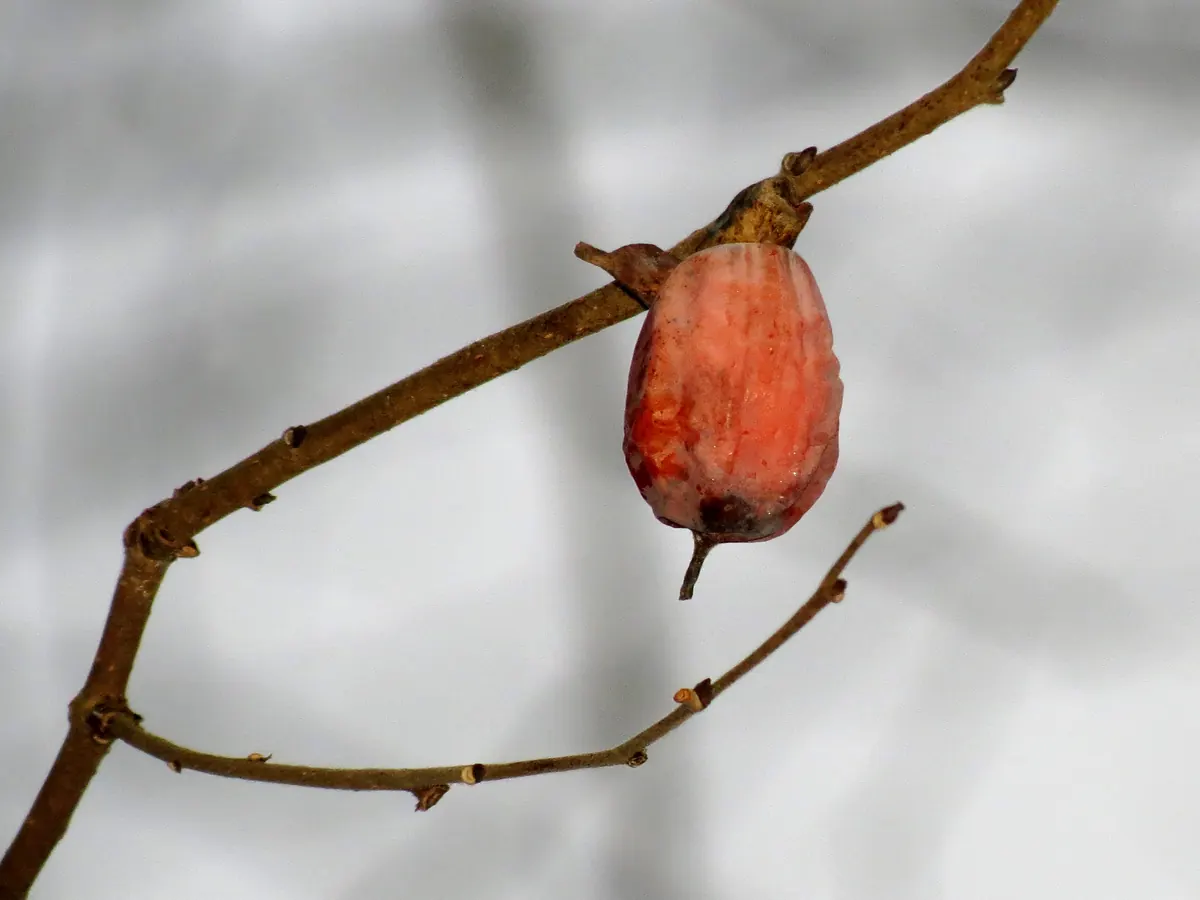
The Lady Bird Johnson Wildflower Center says the fruit is strongly astringent with tannin while immature and only becomes edible after frost or a run of cold weather. A good one is wrinkled, soft and orange-brown. Only female trees bear, and the Center lists foxes, opossums, raccoons, skunks, deer and birds among the animals that eat the fruit, so a tree that is still dropping fruit in November is a fine place to look for tracks in the mud below it.
-
Possumhaw
Fruit through the winter · Low, wet woods and river bottoms, especially in the south and east
A deciduous holly. Its leaves stay dark green well into autumn before turning yellow and falling, and then the female shrubs stand out for months, their bare gray twigs studded with red or orange berries. Songbirds, game birds, raccoons and opossums eat them over the winter.
-
Mushrooms after the rain
After a soaking rain on a mild week · Leaf litter and old logs
November’s rains and cool nights bring a late flush of fungi. Petit Jean State Park runs a free Finding Fungi Hike on the Cedar Creek Trail on November 15 and 22 at 3 p.m.; photograph and look, but never eat a wild mushroom without an expert’s certain identification.
Collect one persimmon seed and one possumhaw twig for the seeds, pods and cones plate, noting the day and the spot where each turned up, and note which animals’ tracks were under the tree.
Has Arkansas had its first freeze by November?
The northwest usually has, and the south usually has not. Fayetteville’s Drake Field, in a valley where cold air pools, typically sees its first freeze on October 21, weeks before November. Harrison (October 30) and Mena in the Ouachitas (November 1) reach their medians right at the turn of the month, so in about half of years they are still waiting. Most of the rest of the state gets its first 32 °F night during this month. The medians are November 6 at Fort Smith, November 7 at El Dorado, November 9 at Jonesboro, November 10 in Little Rock, November 13 at Texarkana and November 17 near Stuttgart on the Grand Prairie. And in one year out of ten, Stuttgart still has not frozen by December 6, nor Texarkana by December 3.
| Station | One year in ten | Median | Nine years in ten |
|---|---|---|---|
| Fayetteville Drake Field (Northwest Ozarks) | Oct 8 | Oct 21 | Nov 3 |
| Harrison Boone County Airport (Ozark Plateau) | Oct 16 | Oct 30 | Nov 14 |
| Mena (Ouachita Mountains) | Oct 18 | Nov 1 | Nov 16 |
| Fort Smith Regional Airport (Arkansas River Valley) | Oct 23 | Nov 6 | Nov 21 |
| Jonesboro Municipal Airport (Crowley’s Ridge) | Oct 27 | Nov 9 | Nov 26 |
| Little Rock Airport Adams Field (Central Arkansas) | Oct 29 | Nov 10 | Nov 25 |
| Stuttgart 9 ESE (the Delta) | Oct 31 | Nov 17 | Dec 6 |
| El Dorado S Ar Regional Airport (Timberlands) | Oct 24 | Nov 7 | Nov 26 |
| Texarkana Webb Field (Southwest) | Nov 1 | Nov 13 | Dec 3 |
A light freeze ends the tender garden plants; it takes a hard freeze, in the mid-20s or lower, to stop the ticks and chiggers for the season and to sweeten the persimmons. The Arkansas frost dates page lists spring and fall dates for stations across the state. Record the first morning you scrape a windshield, and the first night the birdbath freezes.
How early does it get dark in Arkansas in November?
Early, and suddenly. Arkansas sets its clocks an hour earlier as Saturday night turns to Sunday, November 1. In Little Rock the sun set at 6:16 p.m. on Saturday, October 31; on Sunday, November 1, it sets at 5:15 p.m. By November 30 it sets at 4:58. The day itself keeps shrinking too: every city in the table loses between 42 and 48 minutes of daylight over the month, about a minute and a half a day, a slower slide than October’s. By November 30, Fayetteville, Harrison, Jonesboro and Fort Smith are down to less than ten hours between sunrise and sunset, and Little Rock is only a minute above it.
| City | Nov 1 | Nov 30 | Lost | Per day |
|---|---|---|---|---|
| Fayetteville | 10 h 42 m | 9 h 54 m | 48 min | 1.7 min |
| Harrison | 10 h 41 m | 9 h 54 m | 47 min | 1.6 min |
| Jonesboro | 10 h 42 m | 9 h 55 m | 47 min | 1.6 min |
| Fort Smith | 10 h 44 m | 9 h 58 m | 46 min | 1.6 min |
| Little Rock | 10 h 45 m | 10 h 01 m | 44 min | 1.5 min |
| Hot Springs | 10 h 46 m | 10 h 02 m | 44 min | 1.5 min |
| Pine Bluff | 10 h 47 m | 10 h 03 m | 44 min | 1.5 min |
| El Dorado | 10 h 50 m | 10 h 08 m | 42 min | 1.4 min |
The earlier dark is a gift for children: owls, stars and the first planets all come out before bedtime. Look up your own sunrise, sunset and twilight times on the Field almanac, which also tracks how many minutes you are losing each day.
What is November weather like in Arkansas, and what will El Niño do this winter?
Cooler, often gray, and wetter than you might think. NOAA’s 1991–2020 normals put the average November high at 59 °F in Harrison, 60 °F in Fayetteville and Jonesboro, 62 °F in Little Rock and 66 °F in El Dorado, with lows from 37 to 44 °F. Little Rock averages 4.7 inches of rain in November and Jonesboro 4.4, more than either gets in October, while Fort Smith, Texarkana and El Dorado get a little under 4 inches. Snow is rare this month; Little Rock’s normal for November rounds to zero.
November is also a second, smaller severe-weather season in Arkansas, when strong fronts meet the last warm, humid air from the Gulf. On November 27, 2005, the Sunday after Thanksgiving, 24 tornadoes touched down across northern and central Arkansas, two of them rated F3 in Perry and Conway counties, according to the National Weather Service in Little Rock. Keep weather alerts on, even on a mild holiday weekend.
El Niño is the big story for the coming winter. Federal forecasters writing for the Climate Prediction Center on September 10 put the odds of this event reaching very strong status by fall and winter above 90 percent. Forecasters at the Jackson, Mississippi, weather office, whose territory reaches into Arkansas’s southeast corner, say the Deep South usually sees a wetter, cooler winter and spring under El Niño, because the jet stream sags south and pulls more Gulf moisture inland, while warning that every El Niño behaves a little differently. NOAA’s official three-month outlook for the heart of winter lands October 15 and had not been issued when this page was written; find the maps under the Climate Prediction Center’s 90-day outlooks.
For the next front, the Weather now page shows radar and the current forecast for any Arkansas town.
What can you see in the Arkansas night sky in November?
A lot, and with sunset before 5:30 p.m. you do not have to stay up late. All times below are Central Standard Time, which begins November 1.
-
Taurid fireballs
Southern Taurids peak about November 5; Northern Taurids about November 12 · High in the east and south by late evening
The Taurids are a thin shower, five or ten an hour at best, but their meteors are slow and some are bright fireballs. They are debris from Comet Encke. Around the 5th the waning crescent moon does not rise until about 3 a.m., and a new Moon on November 9 leaves the stretch between the two peaks free of moonlight.
-
Leonids
Active November 6–30; best in the hours before dawn on Wednesday, November 18 · Face east after midnight; the radiant in Leo rises late
Expect around 15 an hour from a dark site at the best, with no outburst forecast this year. The peak moment falls on the evening of the 17th, Central time, before the radiant has risen, so the morning of the 18th (and the mornings either side) is the time to watch. The half-lit moon is down by roughly 12:30 a.m., leaving the sky dark until dawn. Devil’s Den State Park holds a free guided Leonids hike to Yellow Rock on Saturday, November 14, 9 to 11:30 p.m.; it comes early in the shower, so expect a few meteors and a great deal of sky.
-
Planets: one at dusk, four at dawn
All month; Mars and Jupiter closest the mornings of November 15 and 16 · East and southeast before dawn
Saturn is the lone bright planet of the evening, low in the south after dusk; the action is at dawn. Venus now rises well before the sun and grows more brilliant each week, near its brightest in the last week of November; on November 9 it passes about a degree from the star Spica. Jupiter and Mars are up high in Leo, and on the evening of November 15 Central time they are just 1.2 degrees apart, so the dawns on either side show them as a tight pair. From mid-month Mercury can be picked out low in the east-southeast as well, at its best around November 18 to 25. Around November 7 the thinnest crescent moon sits close to Venus just before sunrise, very low.
-
The Beaver Moon
Evenings of Monday, November 23, and Tuesday, November 24 · Rising in the east-northeast around sunset
Full at 8:53 a.m. on the 24th. Perigee, the moon’s nearest point, comes roughly a day later, so some calendars call it a supermoon; the difference in size is too small to notice by eye. Late on the 23rd and into the morning of the 24th, the bright moon slides across or right by the Pleiades, and Arkansas stargazers will find the little cluster all but lost in its light.
-
Star parties and owl walks
November 6 to 27 · Mount Magazine, Queen Wilhelmina, Woolly Hollow, Petit Jean, Lake Catherine, DeGray
All free: Fall Stargazing at Mount Magazine’s first Cameron Bluff overlook on Friday, November 6, 9 p.m.; Stars on the Summit at Queen Wilhelmina on November 6 (7 p.m.) and November 27 (6:30 p.m.); a Star Party on the Woolly Hollow swim beach on November 7 at 6 p.m. Owl walks leave from Woolly Hollow on November 6 (5:15 p.m.), Petit Jean’s Seven Hollows trailhead on November 8 and 20 (5 p.m.), Lake Catherine on November 13 (6 p.m.) and DeGray on November 23 (6 p.m.).
| Phase | Date | Time |
|---|---|---|
| Last quarter | Sunday, Nov 1 | 2:28 p.m. CST |
| New moon | Monday, Nov 9 | 1:02 a.m. CST |
| First quarter | Tuesday, Nov 17 | 5:48 a.m. CST |
| Full moon, the Beaver Moon | Tuesday, Nov 24 | 8:53 a.m. CST (looks full the evenings of Nov 23 and 24) |
| Last quarter | Tuesday, Dec 1 | 12:08 a.m. CST (just after midnight Monday night) |
Cloud cover decides everything, so check Today’s sky before you drive to a dark site; moonrise and moonset for your own town are on the moon phases page.
What can Arkansas families do outside in November?
- Sunday, November 1: use the extra hour for a sunrise walk, then join the Fall Color Paddle at Mississippi River State Park at 3 p.m.
- November 6–8, the dark-sky weekend: stargazing at Mount Magazine on Friday, the Woolly Hollow Star Party on Saturday, Petit Jean’s Owl Prowl on Sunday, and Taurid fireballs all three nights.
- Weekends from November 1: an eagle cruise on DeGray Lake; book ahead.
- November 11 and 14: free eagle and migration programs at Lake Dardanelle State Park.
- Saturday, November 14: the Leonids hike at Devil’s Den, with a blanket for the rock.
- Sunday, November 15: Becoming a Community Scientist at Logoly State Park, 9:30 a.m., a free lesson in recording sightings that researchers can use.
- Thanksgiving week: trumpeter swans at Magness Lake, then the duck-calling contest in Stuttgart on November 27 or 28.
- Friday, November 27, opt outside: a beginner gravel ride at Mississippi River State Park (2 p.m.), the Soaring Scavengers walk for vultures and hawks at DeGray (9 a.m.), or Stars on the Summit at Queen Wilhelmina (6:30 p.m.).
- All month: FeederWatch counts, eBird lists for swans and eagles, and iNaturalist records of persimmons, possumhaw and fungi.
Park programs can change with the weather, so check each event page before you go. Other states and other months live on our nature hub, and every outing has room in the Naturalist’s Field Journal.
Safety notes for November in Arkansas
- Gun season and safety colors. Gun season fills the woods in November. The youth modern gun deer hunt is November 7–8, and modern gun deer season opens statewide on Saturday, November 14; Zones 4 and 5 close November 22, and the other zones run into December. Bear modern gun season runs November 14–30 in Bear Zones 1 and 2, archery deer season continues all month, duck season runs November 21–29, and the goose seasons run October 31 to November 8 and November 21 to 29. Any time Arkansas has a modern gun or muzzleloader hunt open for deer, bear or elk, AGFC rules require hunters, and anyone going along with them, to put on 400 or more square inches of a safety color (hunter orange, chartreuse or blaze camouflage) on the upper body, plus a head covering in one of those colors; people hunting migratory birds do not need them. The rule does not apply to hikers, yet an orange cap and vest on public land, and orange on the dog, cost little. Stay on marked trails and avoid wearing white or brown in the woods.
- Dark comes early. With sunset around 5 p.m., a long trail begun after lunch can finish by flashlight. Put a headlamp in the pack, and let somebody know which trailhead you parked at.
- Deer on the roads. Bucks chasing does pay no attention to headlights. Ease off the gas at dawn and dusk, and where you see one deer cross, expect another.
- Cold water. Lakes and rivers are much colder than the air by late November. Anyone in a kayak or a duck boat should have a life jacket on, with a dry change of clothes in a bag.
- Severe weather and floods. November fronts can bring tornadoes and heavy rain. Keep a phone or weather radio that will wake you for a warning, and never drive into a flooded low-water crossing.
- Ticks until the hard freeze. A light frost does not stop them. Use repellent and check for ticks after any walk in tall grass or leaf litter.
Sources
- The Trumpeter Swan Society, with AGFC biologists: The trumpeter swans of Heber Springs, Cleburne County, Arkansas (history, arrival and departure, banded birds)
- KUAF Ozarks at Large: trumpeter swans grace Magness Lake in Heber Springs
- Arkansas Game and Fish Commission: waterfowl (mallards, the Mississippi Flyway)
- Arkansas Game and Fish Commission: 2026–27 waterfowl season dates, limits and WMA shooting hours
- Arkansas Game and Fish Commission: waterfowl surveys and reports
- Wings Over the Prairie Festival: 91st World’s Championship Duck Calling Contest, November 27–28, 2026
- CALS Encyclopedia of Arkansas: World’s Championship Duck Calling Contest
- U.S. Fish and Wildlife Service: Bald Knob National Wildlife Refuge (waterfowl sanctuary closed November 15 to February 28)
- U.S. Fish and Wildlife Service: Holla Bend National Wildlife Refuge
- National Audubon Society: birding in Arkansas
- Arkansas State Parks: Eagle Watch Tour, DeGray Lake Resort State Park (November 2026 dates)
- Arkansas State Parks: Eagle Measure Up, Lake Dardanelle State Park, November 11, 2026
- Arkansas State Parks: Great Migration Challenge, Lake Dardanelle State Park, November 14, 2026
- Finch Research Network: Winter Finch Forecast 2026–2027
- Project FeederWatch: how to participate
- University of Arkansas Cooperative Extension Service: hummingbird migrations through Arkansas
- Arkansas Game and Fish Commission: White-tailed Deer Strategic Management Plan (Figure 3, peak conception dates)
- Arkansas Game and Fish Commission: deer harvest reports and strategic management plan
- Arkansas Game and Fish Commission: deer in Arkansas
- Arkansas Game and Fish Commission: 2026–27 deer seasons and limits by zone
- Arkansas Game and Fish Commission: deer-specific hunting regulations (safety colors)
- Arkansas Game and Fish Commission: 2026–27 bear seasons and limits
- Arkansas Game and Fish Commission: 2026 elk season dates
- National Park Service, Buffalo National River: elk
- Arkansas State Parks: Oh Deer, Devil’s Den State Park, November 20, 2026
- Arkansas State Parks: Crowley’s Ridge Adventure School, Whitetail Tales, November 19, 2026
- Arkansas Tourism: fall foliage drives and destinations across Arkansas
- Arkansas State Parks: Fall Color Paddle, Mississippi River State Park, November 1, 2026
- Arkansas State Parks: Fall Color Hike, Logoly State Park, November 8, 2026
- Arkansas State Parks: Fall Foliage Hike Along the Rim, Petit Jean State Park, November 15 and 22, 2026
- Arkansas State Parks: Finding Fungi Hike, Petit Jean State Park
- Lady Bird Johnson Wildflower Center: common persimmon
- Lady Bird Johnson Wildflower Center: possumhaw
- NOAA NCEI: U.S. Climate Normals 1991–2020 (first-freeze probabilities, as used on the site’s Arkansas frost dates page)
- NOAA NCEI: 1991–2020 monthly temperature, rain and snow normals for Arkansas stations (data API)
- National Weather Service Little Rock: the November 27, 2005, tornado outbreak
- Climate Prediction Center: ENSO diagnostic discussion, September 10, 2026
- Climate Prediction Center: 90-day seasonal outlooks (winter outlook issued October 15, 2026)
- National Weather Service Jackson, Mississippi: El Niño and the Deep South
- U.S. Naval Observatory: moon phases from November 1, 2026
- U.S. Naval Observatory: sunrise and sunset (data API; example for Little Rock, November 30)
- International Meteor Organization: 2026 meteor shower calendar (Taurids, Leonids)
- EarthSky: what is a supermoon? (2026 full supermoons)
- EarthSky: Mercury at greatest western elongation
- NASA JPL Horizons: planetary positions used for the conjunction dates
- Arkansas State Parks: Under the Ozark Sky, Leonids at Yellow Rock Hike, Devil’s Den State Park, November 14, 2026
- Arkansas State Parks: Fall Stargazing, Mount Magazine State Park, November 6, 2026
- Arkansas State Parks: Stars on the Summit, Queen Wilhelmina State Park, November 6 and 27, 2026
- Arkansas State Parks: Star Party, Woolly Hollow State Park, November 7, 2026
- Arkansas State Parks: Owl Prowl Hike, Woolly Hollow State Park, November 6, 2026
- Arkansas State Parks: Owl Prowl Hike, Petit Jean State Park, November 8 and 20, 2026
- Arkansas State Parks: Owl Prowl, Lake Catherine State Park, November 13, 2026
- Arkansas State Parks: Owl Prowl Night Hike, DeGray Lake Resort State Park, November 23, 2026
- Arkansas State Parks: Becoming a Community Scientist, Logoly State Park, November 15, 2026
- Arkansas State Parks: Opt Outside Gravel Ride, Mississippi River State Park, November 27, 2026
- Arkansas State Parks: Soaring Scavengers Walk, DeGray Lake Resort State Park, November 27, 2026
- CDC: preventing tick bites
- Photos via Wikimedia Commons; licenses and photographers are credited under each picture
