What to look for in nature in Arkansas this May
May is when Arkansas turns from arriving to raising young. The big waves of migrants thin out after the first week or two, and the birds that stay begin to nest in the river swamps, the prairie edges and the sandbars of the Arkansas River. Fawns lie hidden in the grass, bats form maternity colonies in the Ozark caves, and the first fireflies drift over damp fields at dusk. Prairie and glade flowers replace the woodland bloom of April, bream begin to gather in the shallows, and the Buffalo River is at its busiest in its upper reaches. The same warm, wet air also keeps the storm and flood season going, and May carries some of the state’s biggest river-flood stories. Here is what to watch for, and when to leave things alone.
Other months in Arkansas: October, November, December, January, February, March, April.
Start here
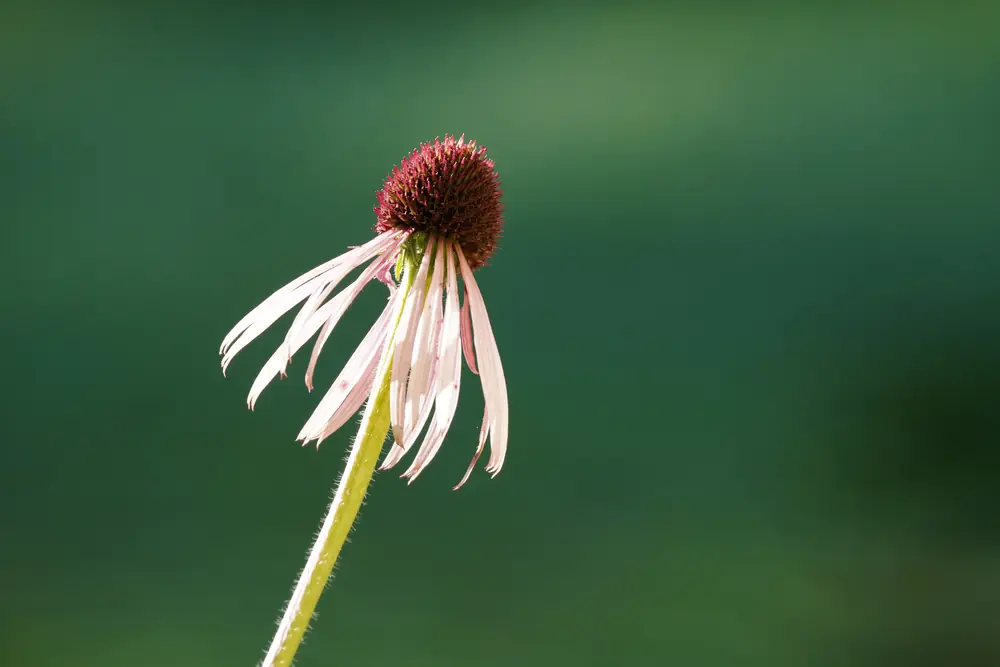
- Walk a prairie or glade at mid-morning. Pick a natural area with open sun, such as a tallgrass prairie remnant, and look for coneflowers, butterfly weed and the first black-eyed Susans. Photograph each plant in place and leave it there.
- Sit by a mudflat or a drained pond. Shorebirds move through in early to mid-May. Bring binoculars, sit still at the edge of a refuge field or hatchery pond, and count the small birds probing the mud.
- Step outside at dusk and watch the grass. On a warm, humid evening, find a damp field or a dark yard and wait for the first fireflies. Write down the date, the temperature and your count.
Field Journal ideas: log each flower you find in bloom on a tree through the seasons page or reading the signs; list the late migrants on birds I have seen; record a nest you can watch from a distance on nest observed; map the evening sounds on a map of sounds; and mark the Flower Moon and the Blue Moon on dusk and dawn watch.
Regions used below: The Ozarks and the Buffalo River; Arkansas River Valley; Ouachita Mountains; Central Arkansas and Little Rock; The Delta and Crowley’s Ridge; South Arkansas and the Timberlands.
What should you do if you find a fawn, a calf or a baby bird in Arkansas in May?
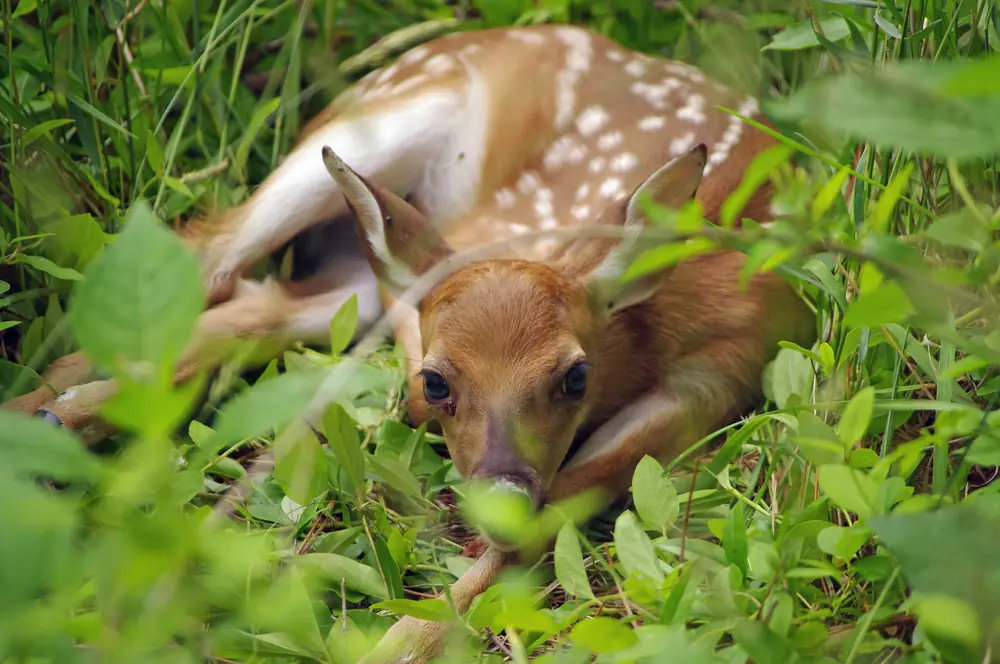
The short answer from the Arkansas Game and Fish Commission is to leave it alone and step away. A doe leaves her fawn hidden for much of the day so she does not draw predators to it, and the fawn stays still while she is gone. The Commission calls the idea that a mother will reject a young animal because of human scent a “wive’s tale,” and it warns that taking a white-tailed fawn home can bring legal trouble. Hand-catching one is illegal in Arkansas. If you have already picked one up, put it back where you found it as soon as you can.
-
White-tailed deer fawn
Late spring and early summer · Grass, brush and field edges statewide
The Commission says a fawn can begin eating native plants about two weeks after birth and is fully weaned within two to three months. If the mother is confirmed dead, the Commission asks people to contact a licensed wildlife rehabilitator from its list, and to call ahead. Since chronic wasting disease was found in Arkansas in 2016, rehabilitators may not take white-tailed deer or elk, so a rescue is rarely possible and rarely needed.
-
Elk in Boxley Valley
Dawn and dusk · About six miles of Arkansas 43 and 21 in Boxley Valley, Newton County
The National Park Service puts the Buffalo National River herd at nearly 500 animals, while the Commission’s own history page estimates about 450, and says 112 elk from Colorado and Nebraska were released in Newton County between 1981 and 1985. The Park Service advises pulling completely off the road, staying back and watching for traffic. In summer the elk rest in shade by day, so go before sunrise or after sunset. Neither agency page says when calves arrive, so ask at the Ponca Nature Center before you assume a date. The nature center keeps Wednesday-to-Saturday hours (10 a.m. to 4:30 p.m. when we checked) and posts elk viewing tips and a Boxley Valley map. The Park Service’s test is simple: when the elk’s behavior shifts because of you, back off.
-
Wild turkey poults
May and June · Fields and forest edges, including refuges
Holla Bend National Wildlife Refuge lists turkey poults among the sights of spring and summer, along with nesting songbirds, wildflowers and amphibians. A hen with chicks will often stand off at a distance. Do not chase them.
-
Fledgling and fallen nestlings
May · Yards, parks and trails
For a baby bird on the ground, the Commission’s advice is to place it back in the nest, or as close to the tree as possible. If the spot is unsafe, move it a short distance so its parents can find it.
If a young animal is in immediate danger, such as lying in a road or in the path of mowing equipment, the Commission says to move it only a few feet, and never out of the area.
Is spring bird migration still going in Arkansas in May?
Yes, but it is at its crest early in the month and then turns into nesting. Arkansas Tourism says the first returning birds show up in mid-March and the flow crests in the first week of May, with warblers, vireos, orioles, thrushes and buntings together adding up to more than 35 spring species. Cornell’s BirdCast turns weather-radar data into migration forecast maps and local alerts for the contiguous U.S., and its tools run from March 1 to June 15, so you can check on a night with a south wind whether a push of birds is coming. The BirdCast team also asks people to turn off unneeded lights on those nights.
-
Charlie Craig State Fish Hatchery
Early to mid-May · Near Centerton, Benton County
Audubon magazine’s Arkansas guide says early to mid-May is probably best here for the widest variety of shorebird species, and that about 37 shorebird species have been recorded at the site. Draining hatchery ponds leave shallow water and mud, which is what migrating shorebirds need.
-
Bald Knob National Wildlife Refuge
May · Near Bald Knob, White County
The magazine calls Bald Knob among the most productive Arkansas sites for wading birds and shorebirds during spring and fall migration, with thousands of shorebirds possible in the right conditions. The refuge keeps fields seasonally flooded and drained to make that habitat. Nesting species in the scrubby and wooded roadsides include scissor-tailed flycatcher, Bell’s vireo, prothonotary warbler and blue grosbeak. How many shorebirds are present depends on water levels in a given week, so look at recent eBird reports before driving far.
-
Holla Bend National Wildlife Refuge
May through summer · Near Dardanelle, Pope County
The refuge says spring and summer are good for nesting songbirds, wildflowers, turkey poults and amphibians. It offers a self-guided auto tour, two hiking trails, an observation tower and information panels. Entrance fees resumed in December 2025, at $4.00 per vehicle per day or $12.50 for an annual pass, so carry cash or a card.
-
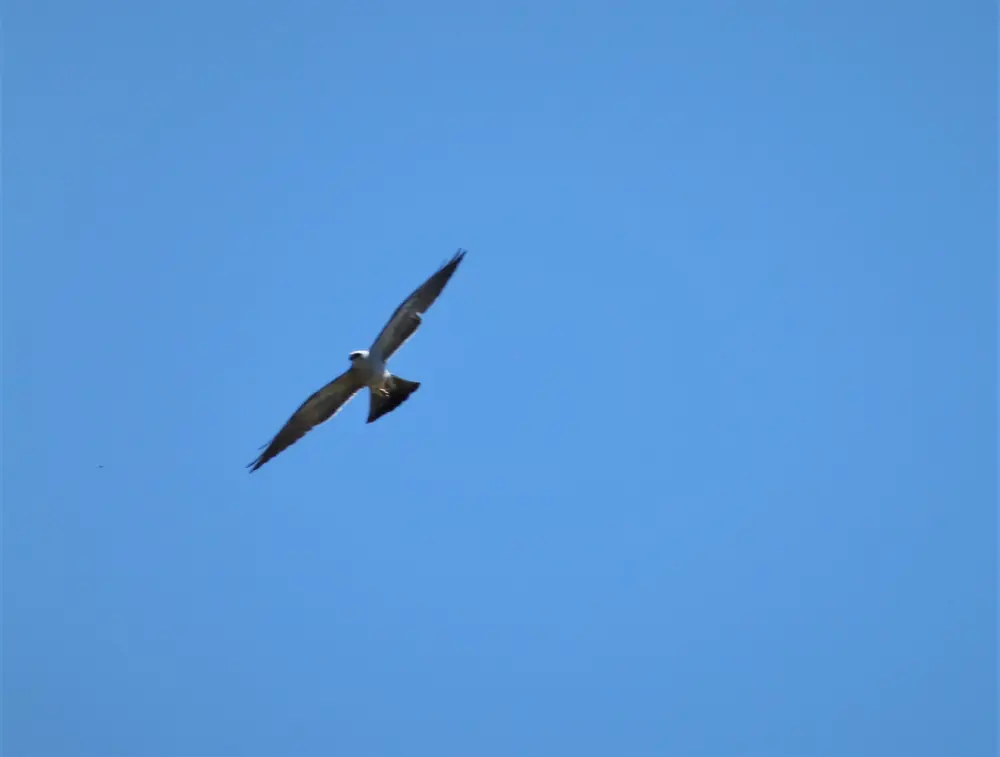
Mississippi kite
May through summer · St. Francis National Forest along Crowley’s Ridge
Audubon magazine says visitors can watch for Mississippi kites in the St. Francis National Forest during the summer breeding season. Audubon’s field guide describes a graceful flier that glides and circles after large flying insects, often eating on the wing, with cicadas, grasshoppers, katydids and dragonflies high on its menu. It nests in tall trees next to open country, and it winters in southern South America.
For local help, Audubon Delta, the regional Audubon office that covers Arkansas, Louisiana and Mississippi, runs a Little Rock center. World Migratory Bird Day comes around every spring. Its organizers had published no 2027 date when we checked, so look at migratorybirdday.org for the day and for nearby events.
Where do least terns nest along the Arkansas River?
Interior least terns are small, white and gray terns with a black cap that nest on bare sand. Along the Arkansas River they use exposed sandbars. Audubon’s field guide describes the nest as a shallow scrape holding one to three eggs, which both parents warm in turn for 20 to 25 days, and it puts the chicks’ first flight at about 19 to 20 days after hatching. Inland birds nest along rivers with broad sandbars. The birds hover over water and then plunge for small fish.
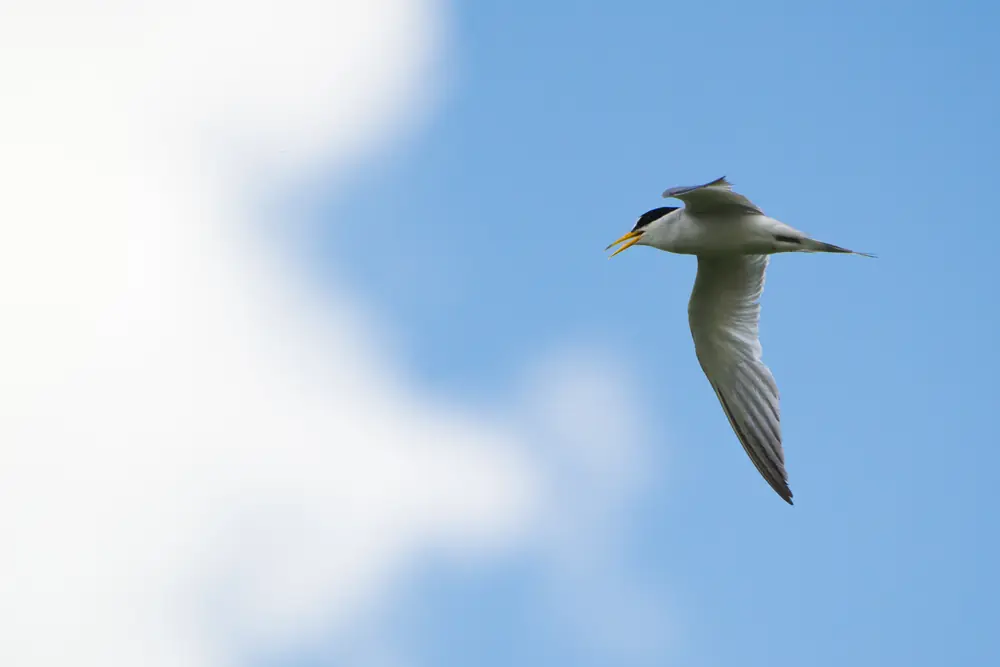
-
A tern colony in a gravel lot
June 2019 (an example of what high water does) · Little Rock Port Authority
In 2019, high water on the Arkansas River covered the sandbars, and about 35 terns nested in a gravel lot at the Little Rock Port Authority instead. Audubon Arkansas’s Dan Scheiman told the newspaper the birds were “making do with a bad situation,” and the port later put concrete barriers at the entrance and posted signs. Fish and Wildlife attributes the species’ decline largely to channelization, irrigation and reservoir construction, which removed much of its sandbar habitat.
-
What you can do
All season · Sandbars and gravel areas along the river
Audubon notes that inland, unstable water levels are a major threat, and that releases from big dams can flood sandbar nests. If a bird flies at you, calls loudly or dives, you are too close to a nest. Back away quietly and watch from a boat or the bank with binoculars.
High water, as the weather section explains, is the biggest hazard these birds face; in 2019 it pushed them to look for other bare ground.
What comes out at dusk in Arkansas in May: fireflies and bats?
Fireflies need damp or boggy soil, tall grass, a tree canopy and leaf litter, according to a University of Arkansas System Division of Agriculture article about the state’s lightning bugs. The article, written in June, describes the sustained, upward J-shaped flash of the common Photinus pyralis and warns about a predatory Photuris female that mimics other species’ flashes to lure and eat males. It gives no calendar for Arkansas, so treat the last half of May as the start of the season in the warmer south and June as the main show, and look on warm, humid evenings. Light pollution and habitat loss are the main threats.
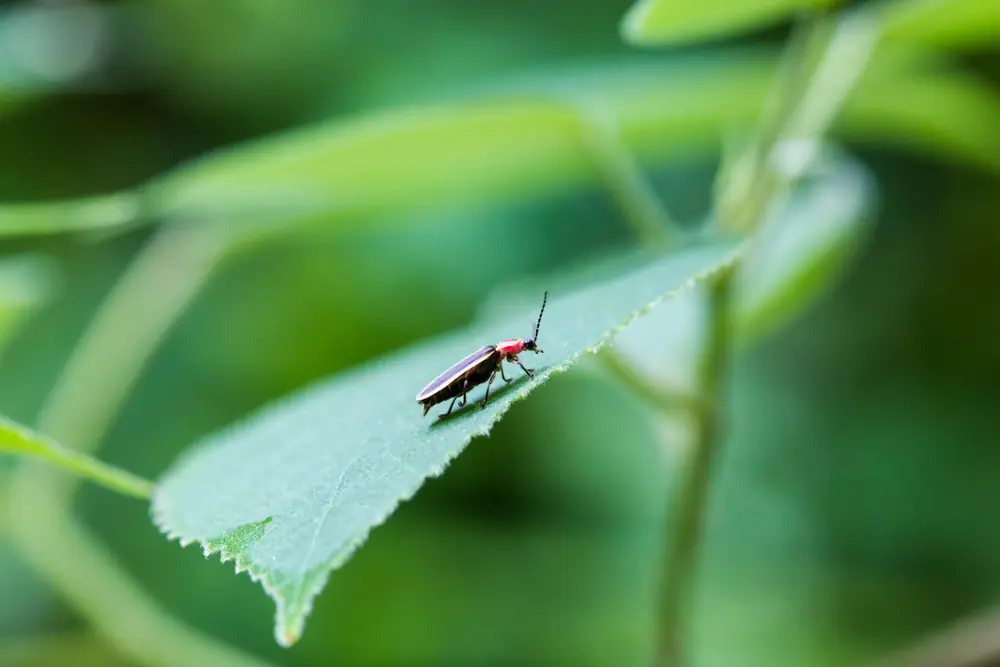
-
Fireflies over damp ground
Late May into June · Meadows, field edges, creek bottoms and dark yards
Each species has its own flash pattern and its own hour. Some court at dusk, others wait for full dark. Firefly.org asks people to record sightings on iNaturalist, and lists four things that help: undisturbed cover, a variety of plants, less outdoor light and limited pesticide use.
-
Ozark big-eared bat
Maternity season, May through July · Caves in Crawford, Franklin, Washington and Marion counties
Fish and Wildlife says that current Arkansas populations of this bat are in those four northwest counties. Colonies break up in spring, from April through May, and maternity colonies usually form between late April and early June. Females give birth to a single young in May or June. The agency calls human disturbance the greatest threat to cave-dwelling bats and says abandonment of a roost during the maternity season can be especially harmful. Do not enter a bat cave, and do not shine lights into one.
You can watch bats without entering a cave. Pick a pond or a river edge at dusk, wait for the sky to darken a little and watch the dark shapes against the glow in the west.
What blooms in Arkansas in May, from the prairies to the glades?
The woodland flowers of April give way to sun lovers. The Encyclopedia of Arkansas wildflower entry lists many of them with bloom windows. Those windows describe a typical year across the state and run a week or two earlier in the south and later in the highlands, so use them as a guide, not a promise.
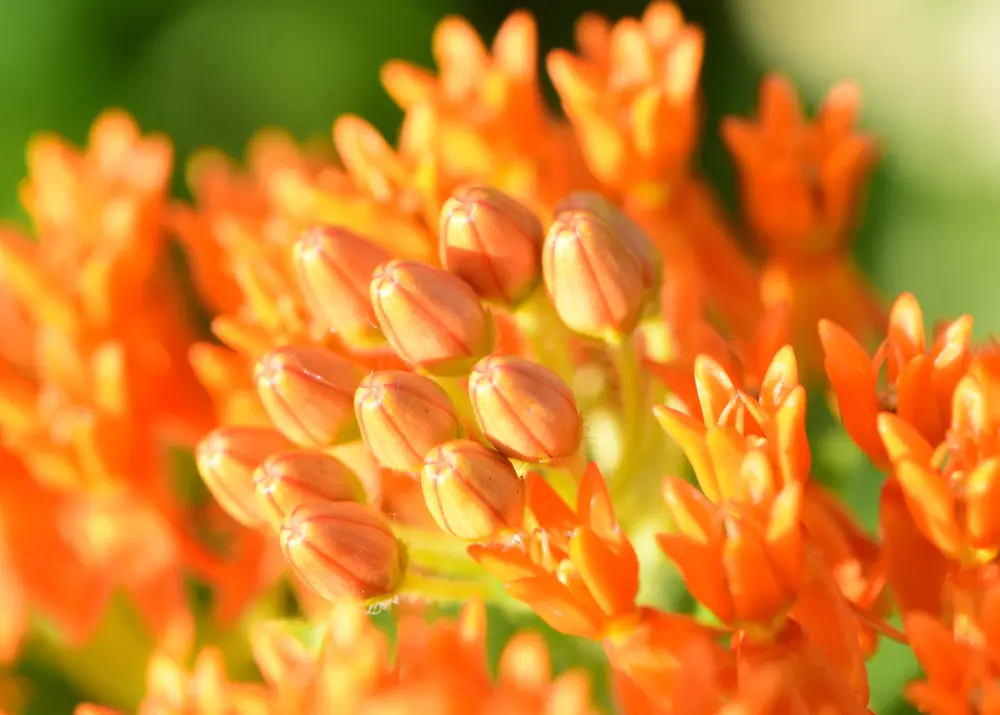
-
Pale purple coneflower
May through July · Pinelands, cutover areas and prairies, nearly statewide but less often in the Delta
The entry describes a three-foot plant with drooping rays that vary from white or greenish white to pale reddish purple. Look in sunny openings in pine woods in the Ouachitas and the Timberlands, and in prairie remnants.
-
Butterfly weed and black-eyed Susan
May through September (butterfly weed); May through October (black-eyed Susan) · Fields and roadsides; butterfly weed is less common in the Delta
Bright orange butterfly weed is a milkweed, and its flat clusters draw butterflies and bees. Black-eyed Susan is found statewide on fields and roadsides.
-
Carolina larkspur, Ohio spiderwort and showy evening primrose
May through July (larkspur and spiderwort); April through July (primrose) · Open woods, slopes, ledges, roadsides and dry open areas
The same entry lists these three as blooming into summer. Larkspur favors open woods and ledges, spiderwort grows statewide along roads, railroads and fields, and evening primrose likes dry open ground.
-
Spider lily
May through August · Low or marshy ground on the Grand Prairie and in a few central counties
The entry lists this white, spidery native lily as an inhabitant of wet spots.
-
Prairie and glade natural areas
May · Franklin, Boone, Howard and Prairie counties
The Encyclopedia of Arkansas names Cherokee Prairie (Franklin County), Baker Prairie in Harrison (a 71-acre area it calls the best display of wildflowers in Arkansas), and Downs Prairie (Prairie County). The Natural Heritage Commission says Cherokee Prairie covers 584 acres about 2 miles north of Charleston and is one of the largest remaining tracts of tallgrass prairie in the Arkansas Valley, with compass plant and purple prairie clover among its flowers. Stone Road Glade in Howard County covers 108 acres of limestone glades and blackland prairie. A neighbor’s locked gate may sometimes close the road, in which case the Commission says to park without blocking it and walk about 2 miles. Hunting is prohibited there, but it is permitted on certain terms at Cherokee Prairie, so wear bright clothing.
How are the Buffalo River and the bream lakes in May?
May is a busy month on the water. The National Park Service says peak use of the Buffalo National River runs April through August. The upper river, from Ponca to Pruitt, is busiest in April and May, while the middle and lower sections peak in June and July and are seldom used in spring and late fall. The river depends on steady rain, and the Park Service warns that it can be very low, with some stretches flowing underground. Float on weekdays or choose a lower section such as Carver to Woolum to avoid crowds. Canoe concessioners outside the park provide life jackets, paddles and shuttles. Check the park’s alerts page for river conditions before you leave home.
-
Bluegill and other bream moving to the shallows
Bedding mostly June and July, with the first beds possible in a warm late May · Lakes and ponds statewide
The Commission’s panfish page says bream gather in shallow water to spawn in June and July, and a 2023 Commission article says bluegill and redear sunfish bed up around the first full moon in June, when bait shops brace for a rush of cricket buyers. The full moons in 2027 fall on May 20 and June 18 in local time, so the June one is the traditional peak and the May one may catch only early beds. Treat the moon timing as a fishing tradition, not a measurement. The Commission names crickets as the top bait, with redworms good for redear. Check its regulations for licenses and limits.
Memorial Day is Monday, May 31, 2027. Wear life jackets over the holiday weekend.
How wet and stormy is May in Arkansas, and what should you watch?
May is warm and wet. By NOAA’s 1991–2020 normals, a typical May afternoon peaks near 77 °F in the northwest and 83 °F around El Dorado, and rainfall near 5 inches a month across the stations below. At Little Rock the May normal of 5.08 inches is a little under April’s 5.59 inches, according to the Weather Service’s Little Rock office.
| City | Average high | Average low | Precipitation |
|---|---|---|---|
| Fayetteville (Drake Field) | 76.7 °F | 54.0 °F | 5.89 in |
| Harrison | 76.6 °F | 55.8 °F | 4.81 in |
| Fort Smith | 81.4 °F | 59.5 °F | 5.63 in |
| Jonesboro | 80.7 °F | 60.0 °F | 5.21 in |
| Little Rock | 80.5 °F | 59.3 °F | 5.08 in |
| Texarkana | 81.6 °F | 61.6 °F | 5.10 in |
| El Dorado | 83.5 °F | 60.5 °F | 4.81 in |
The biggest May story in recent memory was the 2019 Arkansas River flood. The Weather Service’s Little Rock office says 15 to more than 20 inches of rain fell over southeast Kansas and northeast Oklahoma, and releases at Keystone Dam in Oklahoma exceeded 250,000 cubic feet per second, more than double the flow of Niagara Falls. The river rose to unprecedented levels in late May and early June, with crests more than two feet above the old marks at Van Buren, Toad Suck and Pendleton. A levee near Dardanelle was breached on June 2, and a driver died on May 28 near Barling after driving around a barricade. The Weather Service’s guidance is blunt: a half foot of moving water can topple a grown person, a foot of it can sweep off most cars, and two feet can float SUVs and trucks. Never drive or walk into floodwater. Turn around.
The Little Rock office’s home page links to hazard outlooks, river forecasts, NOAA Weather Radio information and Skywarn storm-spotter training. For Arkansas’s outlook, open the Climate Prediction Center’s monthly 90-day products at cpc.ncep.noaa.gov, and we do not summarize it here. To see how the weather of the month compares with the usual, see our weather page and the clouds page for what the sky is telling you.
Is there any chance of a freeze in Arkansas in May?
Almost none at the stations below. Even in the northwest, the latest date in the table is April 26 at Fayetteville, so a freeze in May would be a rarity even there. Low spots on clear, still nights can run colder than the airport thermometer. Our Arkansas frost page has the first-freeze side of the story for autumn and the full list of stations.
| Station | One year in ten | Median | Nine years in ten |
|---|---|---|---|
| Fayetteville | Mar 21 | Apr 8 | Apr 26 |
| Harrison | Mar 1 | Mar 22 | Apr 8 |
| Jonesboro | Mar 7 | Mar 23 | Apr 9 |
| Little Rock | Feb 27 | Mar 16 | Apr 2 |
| Hot Springs | Mar 3 | Mar 24 | Apr 13 |
| Pine Bluff | Feb 27 | Mar 14 | Apr 2 |
| El Dorado | Mar 1 | Mar 24 | Apr 9 |
Gardeners can use the nine-years-in-ten date as a cautious planting guide, and a sheet over tender plants on a rare cold night is easier than replanting.
How much daylight does Arkansas gain in May?
Days keep lengthening through May, though at a slower pace than in spring’s first two months, as the Sun nears its northernmost point. The table shows gains of roughly 41 to 47 minutes across the month, and by May 31 every city is past 14 hours. After the solstice on June 21, the gains stop. Look up any other date on our daylight page.
| City | May 1 | May 31 | Gained | Per day |
|---|---|---|---|---|
| Fayetteville | 13 h 40 m | 14 h 27 m | 47 min | 1.6 min |
| Harrison | 13 h 40 m | 14 h 27 m | 47 min | 1.6 min |
| Jonesboro | 13 h 39 m | 14 h 25 m | 46 min | 1.5 min |
| Fort Smith | 13 h 38 m | 14 h 23 m | 45 min | 1.5 min |
| Little Rock | 13 h 35 m | 14 h 20 m | 45 min | 1.5 min |
| Hot Springs | 13 h 35 m | 14 h 18 m | 43 min | 1.4 min |
| Pine Bluff | 13 h 33 m | 14 h 16 m | 43 min | 1.4 min |
| El Dorado | 13 h 30 m | 14 h 11 m | 41 min | 1.4 min |
Remember that Arkansas is on daylight time all month. The clock jumped forward on March 14, so sunrise and sunset times in May are already in daylight time.
What can you see in the Arkansas night sky in May?
Times below are Central Daylight Time. The month starts with a thin evening moon and ends with a bright one, and it holds one meteor shower worth getting up for, a seasonal Blue Moon and an easy evening look at Mercury.
-
Eta Aquariid meteors
Mornings of May 5, 6 and 7 before dawn · Dark sky with a clear view to the east and southeast
The American Meteor Society puts the peak on the night of May 5 to 6, and Sea and Sky calls 2027 an excellent year for it. With the new moon arriving at 5:58 a.m. CDT on May 6, the Moon will not interfere. Aquarius, where the meteors seem to originate, gets above the eastern horizon barely one to two hours before sunup in Arkansas, which makes the final stretch of darkness the time to watch. Our own estimate for the southern two-thirds of the United States is roughly 10 to 30 meteors an hour in those last hours, fewer in the north.
-
Venus and Saturn low in the east
Mornings of May 6 to 8 · Low in the east before sunrise
Venus and Saturn come as close as 0.6 degrees on May 7, a little more than the width of the full Moon. Venus is bright, and Saturn is much fainter. Both are very low, only a few degrees above the horizon half an hour before sunrise, so this needs a flat eastern horizon and binoculars. This is our own computation, so treat it as a bonus if the sky is clear.
-
The Moon beside Jupiter
Evening of Wednesday, May 12 · High in the south to southwest after dusk
By our computation a first-quarter Moon passes about 1 degree from Jupiter on May 12, with the Moon half lit. The closest approach, 1.2 degrees, comes at 4:52 p.m. CDT, in daylight, so the best look is after dark that evening. Mars is also in Leo this month and is fading.
-
The Flower Moon, and a seasonal Blue Moon
Thursday, May 20, 5:59 a.m. CDT (best evening: Wednesday, May 19) · Rising in the east around sunset
The full moon of May is the Flower Moon. Astronomical spring runs from the March equinox to the June solstice, and in 2027 it holds four full moons: March 22, April 20, May 20, and finally June 19. By the older seasonal definition, the third of four is a Blue Moon, so May 20 qualifies, and Sea and Sky lists it that way. By the modern definition, two full moons in one calendar month, there is none in 2027. On the evening of May 19 the Moon rises about 8 p.m. in central U.S. cities (7:53 p.m. in Chicago and 7:50 p.m. in Houston, by our computation). It looks full the evening before and after, too.
-
Mercury in the evening sky
May 12 to June 5, best around May 27 and 28 · Low in the west-northwest, 45 to 90 minutes after sunset
Mercury reaches its greatest eastern elongation, 22.8 degrees from the Sun, on May 28 at 8:14 a.m. CDT, so the evenings of May 27 and 28 are both near the best. By our computation, in mid-May at 40 degrees north the planet drops below the horizon about 97 minutes after sunset, glowing at magnitude −0.6. It fades quickly in June. It is the best evening showing of the year for the northern U.S. Look for a steady, unblinking point of light over a clear western horizon.
-
Dark nights for the Milky Way
May 1 to 14 and May 25 to 31 · A dark site away from town, looking south after midnight
By our computation, for a site at 40 degrees north the Milky Way’s bright core is high enough in the dark, with no Moon, on those nights, for as long as about 3.8 hours. Arkansas lies farther south, so expect the core a little higher. The dark nights around the new moon on May 6 are the best of these.
| Phase | Date | Time |
|---|---|---|
| New moon | Thursday, May 6 | 5:58 a.m. CDT |
| First quarter | Wednesday, May 12 | 11:44 p.m. CDT |
| Full moon, the Flower Moon | Thursday, May 20 | 5:59 a.m. CDT |
| Last quarter | Friday, May 28 | 8:58 a.m. CDT |
See the moon phases page for the full year, and use it with your journal to log dusk and dawn watch.
What can Arkansas families do outdoors in May?
- Join NestWatch. Anyone can take part in Cornell’s NestWatch, which records nest data from volunteers. Read its code of conduct and nest monitoring protocol first, and check nests from a distance.
- Count fireflies. Firefly.org asks people to log sightings on iNaturalist.
- Report hummingbirds. Journey North takes hummingbird sightings at all times of year and shows spring progress on its maps.
- Check BirdCast. On a clear night with southerly winds, look at the migration forecast, and look up in the morning.
- Visit the Ponca Nature Center. Its posted hours were Wednesday to Saturday, 10 a.m. to 4:30 p.m., so confirm before a trip; it has elk exhibits, viewing tips and a Boxley Valley map.
- World Migratory Bird Day. It returns every spring; no 2027 date was online when we checked, so confirm the day and nearby events at migratorybirdday.org.
- Memorial Day weekend. The holiday is Monday, May 31. Pick a morning float on a gentle stretch of river, wear life jackets and have a plan for storms.
- Keep a journal. Our Naturalist’s Field Journal has plates for exactly these notes, and the nature index lists the other months.
Safety notes for May in Arkansas
- Hunting. By the Commission’s 2027 schedule, spring turkey season runs into May in two zones: Zone 2 closes May 2 and Zone 1 closes May 9. Zones 1A, 2A and 3 close in April. Shooting hours end half an hour after sunset and start half an hour before sunrise, and hens, including bearded hens, may not be taken. The Commission’s turkey page mentions no orange requirement, and deer seasons are closed, yet colorful clothing helps on public land while hunters are out. The Cache River refuge posts closures: its notice says Flood Prone Region D closes to deer and turkey hunting when the White River gauge at Clarendon reaches 28 feet, so check the refuge’s current rules before you go.
- Flash floods and swollen rivers. Never drive or walk into floodwater, and do not drive around a barrier. Stay off a river that is rising. Check the Buffalo National River alerts page and NWS Little Rock river forecasts.
- Storms. Know where you will shelter, keep a weather radio or phone alert on and leave open water when thunder starts.
- Ticks. The Department of Health calls Rocky Mountain spotted fever the most common tick-borne disease in Arkansas, carried mainly by the American dog tick, while lone star ticks are tied to ehrlichiosis and other illnesses, and Arkansas, Missouri and Oklahoma together account for about 35 percent of reported ehrlichiosis infections. Use repellent with DEET on skin or permethrin on clothes, walk in the middle of trails, check yourself, children and pets, and remove ticks promptly with fine-tipped tweezers, pulling straight up without twisting. Tell a health provider about any bite if fever, chills, rash or aches follow.
- Mosquitoes. Local mosquitoes can carry West Nile virus. The Department of Health notes they can breed in as little as a bottle cap of water, so empty containers around your home.
- Young animals. Leave fawns, fledglings and poults alone, and stay back from elk and their calves.
- Caves and sandbars. Do not enter caves with bats and keep off sandbars with nesting terns.
- Heat. Normal highs reach the low 80s, and humid afternoons can feel hotter.
- Snakes. Look before you reach into rock piles or brush, and leave every snake alone.
Sources (40)
- Arkansas Game and Fish Commission: 2027 spring turkey season dates, zones, limits and shooting hours
- Arkansas Game and Fish Commission: leaving fawns and other young wildlife alone
- Arkansas Game and Fish Commission: history of elk in Arkansas
- Arkansas Game and Fish Commission: Ponca Nature Center
- Arkansas Game and Fish Commission: panfish (bream) page
- Arkansas Game and Fish Commission: first full moon in June prompts annual spike in cricket sales (May 31, 2023)
- National Park Service: elk at Buffalo National River
- National Park Service: Buffalo National River frequently asked questions (float season)
- Arkansas Tourism: bird watching tips and spring migration
- Audubon magazine: birding in Arkansas
- Audubon Delta (Arkansas, Louisiana and Mississippi)
- Audubon field guide: least tern
- Audubon field guide: Mississippi kite
- Arkansas Democrat-Gazette: endangered least terns nest in a Little Rock gravel lot (June 24, 2019)
- U.S. Fish and Wildlife Service: Bald Knob National Wildlife Refuge
- U.S. Fish and Wildlife Service: Holla Bend National Wildlife Refuge
- U.S. Fish and Wildlife Service: Cache River National Wildlife Refuge
- U.S. Fish and Wildlife Service: Ozark big-eared bat
- University of Arkansas System Division of Agriculture: lightning bugs (June 2024)
- Arkansas Department of Health: tickborne diseases in Arkansas
- Arkansas Department of Health: precautions during tick and mosquito season (March 31, 2022)
- Encyclopedia of Arkansas: wildflowers
- Arkansas Natural Heritage Commission: Cherokee Prairie Natural Area
- Arkansas Natural Heritage Commission: Stone Road Glade Natural Area
- Firefly.org: firefly sightings and how to help
- Cornell Lab of Ornithology: BirdCast
- Cornell Lab of Ornithology: NestWatch
- Journey North: hummingbird migration
- World Migratory Bird Day
- National Weather Service Little Rock: home page
- National Weather Service Little Rock: Arkansas climate page and 1991–2020 Little Rock normals
- National Weather Service Little Rock: historic flooding in 2019 (Arkansas River)
- National Weather Service Little Rock: 2019 year in review
- National Weather Service: Turn Around, Don’t Drown
- NOAA NCEI: 1991–2020 monthly normals for Arkansas stations (data API)
- Climate Prediction Center: 90-day seasonal outlooks
- U.S. Naval Observatory: moon phases from May 1, 2027
- Sea and Sky: astronomy calendar of celestial events, 2027
- NOAA Global Monitoring Laboratory: solar calculator (equations used for the day-length table)
- Photos via Wikimedia Commons; licenses and photographers are credited under each picture
