What to look for in nature in Arkansas this October
October in Arkansas starts with elk bugling at first light in Boxley Valley and ends with the Ozark hollows in full color. In between, male tarantulas walk the back roads looking for mates, the monarch flight crests and fades, white pelicans settle on the reservoirs, and persimmons wait for a frost. The first freeze reaches the Ozark valleys weeks before it touches the Delta or the Timberlands. Here is what to watch for, by region, with dates.
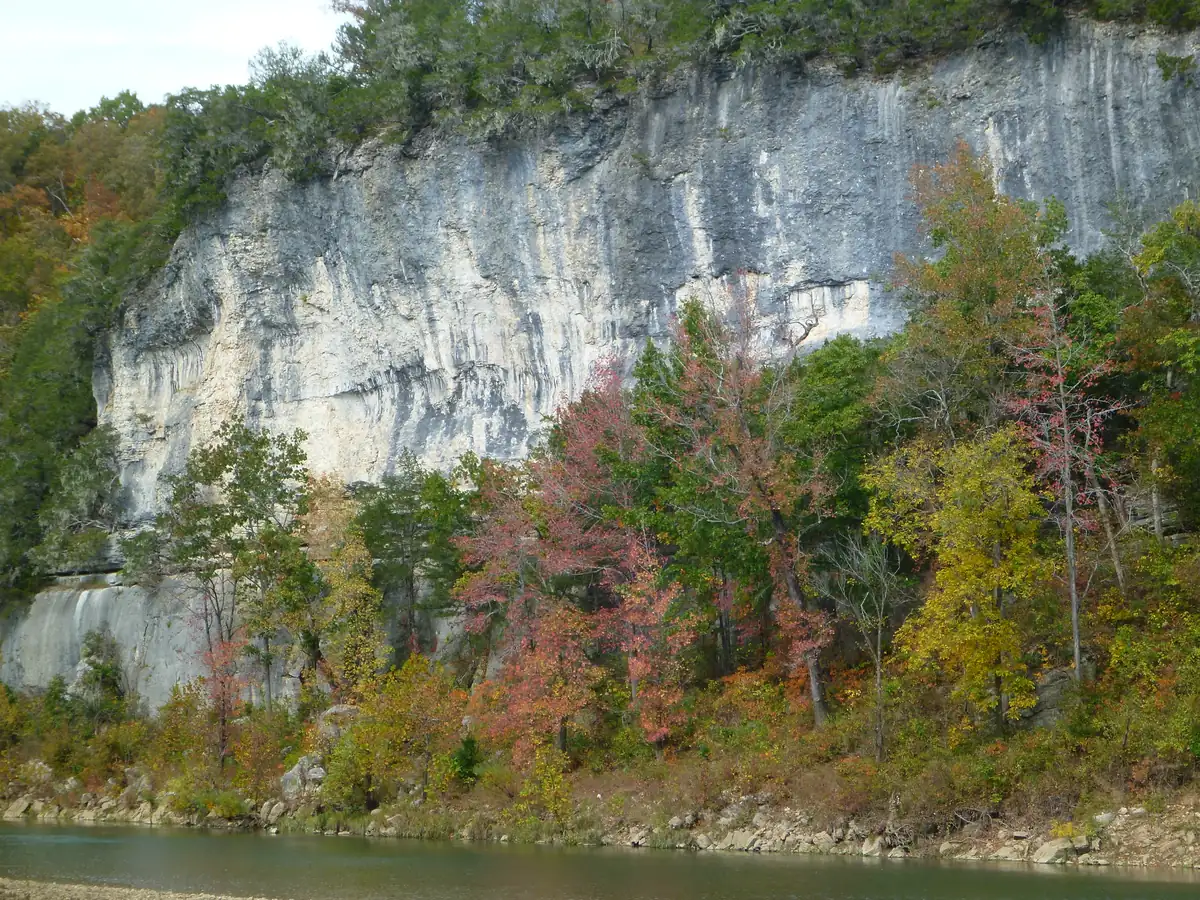
Start here

- Elk in Boxley Valley. The rut runs through October and November on the upper Buffalo River. Drive the six miles of Highways 43 and 21 through Boxley Valley just after dawn or in the last hour of light, pull completely off the pavement, and listen before you look.
- Tarantulas on the move. Mature male tarantulas leave their burrows between August and October to hunt for females, which is why they turn up on trails, porches and county roads from the Ozarks to the West Gulf Coastal Plain. They are harmless if left alone; let them cross.
- The moon swallows Jupiter. Arkansans who rise early on Tuesday, October 6, can watch a slim crescent slide in front of Jupiter. It vanishes low in the east about 3:15 a.m. Central and comes back around 4:14, when the moon is higher and the view easier. Nineteen days later, at 11:12 p.m. on the 25th, the Hunter’s Moon turns full.
In the Naturalist’s Field Journal, use the dusk-and-dawn watch plate for the elk mornings, the map of sounds for bugles and owls, the seeds, pods and cones page for persimmons and beautyberry, and the tree-through-the-seasons page for one sweetgum or hickory you visit every week until it is bare.
Regions used below: The Ozarks and the Buffalo River; Arkansas River Valley; Ouachita Mountains; Central Arkansas and Little Rock; The Delta and Crowley’s Ridge; South Arkansas and the Timberlands.
When is the elk rut in Boxley Valley?
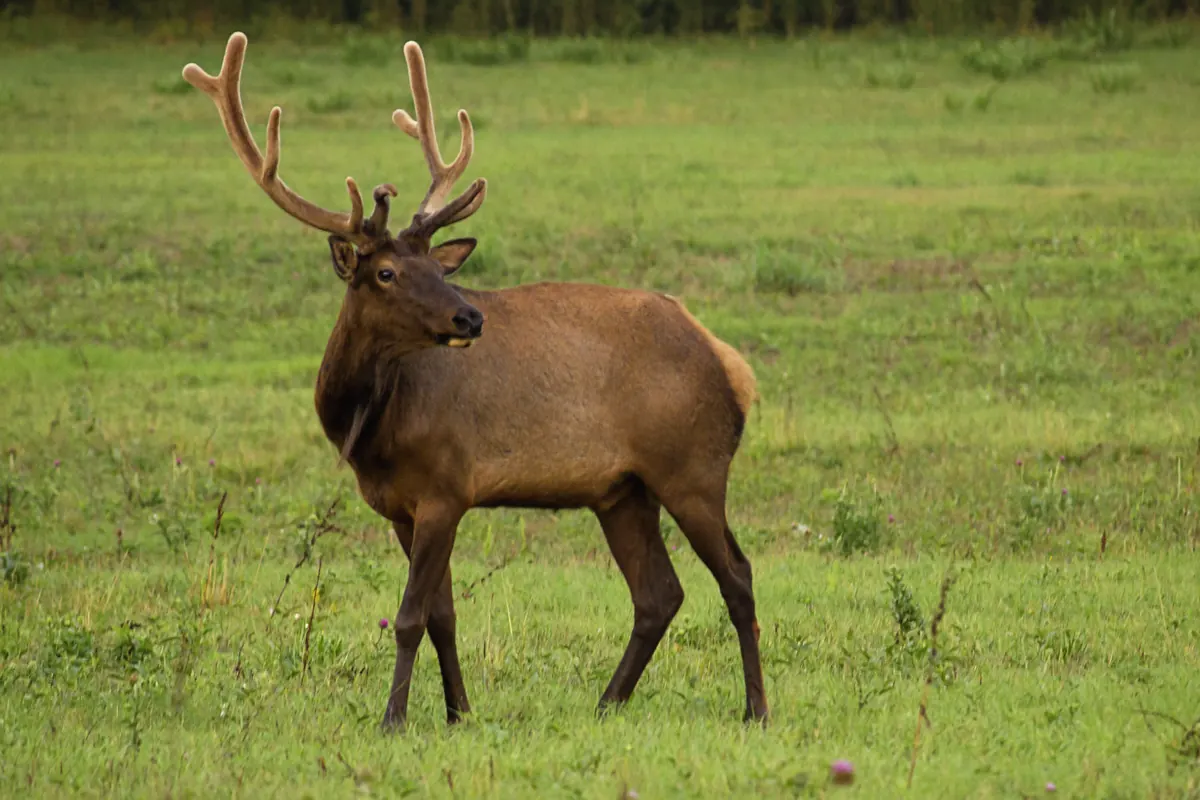
Now. The National Park Service puts the rut in October and November on Buffalo National River, when bulls show off their antlers and gather cows. Elk were native here, but the eastern subspecies was gone from Arkansas by the 1840s. Beginning in 1981 the Arkansas Game and Fish Commission released 112 Rocky Mountain elk along the river, and the Park Service says the herd now numbers nearly 500 animals.
The easy place to see them is the stretch of Highway 43 and Highway 21 that runs about six miles through Boxley Valley, south of Ponca, where pastures line the road inside the park. October and November are the months when the Park Service says you may see them at any hour. The surest times are still before sunrise and after sunset, when the herds graze in the open and the bulls bugle, a rising whistle ending in grunts.
-
How to watch without trouble
Dawn and dusk, all month · Highways 43 and 21, Boxley Valley, Newton County
Pull completely off the road; weekend traffic stacks up fast on a two-lane highway with narrow shoulders. The Park Service rule is simple: if an animal changes what it is doing because you are there, you are too close. A rutting bull weighs several hundred pounds and is not interested in your phone. Binoculars from the car window are the best seat in the valley.
-
Elk hunts in October
Oct 3–4, 5–9, 24–25 and 26–30 · The elk zone around the Buffalo River
AGFC’s 2026 elk seasons run by drawn permit: youth hunts October 3–4 and 24–25, regular hunts October 5–9 and 26–30, on public land in the Buffalo National River Wildlife Management Area and on private land in the elk zone. Hunting is allowed in most of the national river outside developed areas, campgrounds and river accesses, and not within 100 feet of a maintained road. If you hike off the Boxley roads on those dates, wear orange.
Log the time of the first bugle, how many cows trail each bull and the temperature, then set that beside a morning in early November.
When do the leaves change color in Arkansas?
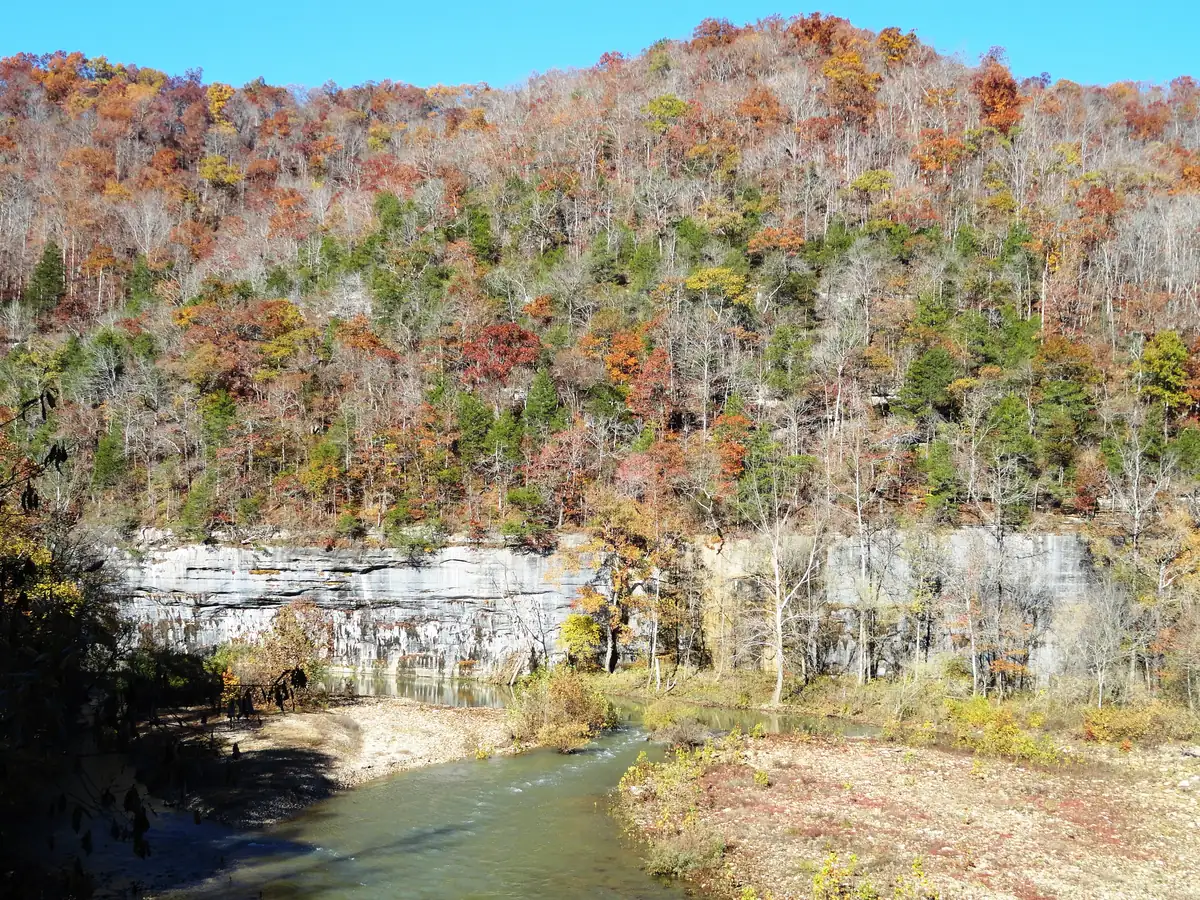
From the hilltops down and from north to south. The state tourism office says color starts in earnest in the Ozarks by the second week of October and peaks there in late October, while the rest of Arkansas reaches its best from late October into mid-November as the change sweeps south. Higher ground turns before the lowlands around it, so the Boston Mountains, Mount Magazine and the ridges of the Ouachitas lead, and the bottomland hardwoods of the Delta and the pine-and-oak country around El Dorado finish last.
The palette is a hardwood one: sugar and red maples, sassafras in orange and red, sweetgum in every color at once, sumac scarlet on the roadcuts, hickories gold, and oaks going slowly to russet and deep red. On the bayous and oxbows, bald cypress turns a coppery bronze late in the season.
-
Ozarks drives
Peak usually late October · Pig Trail Scenic Byway, Boston Mountains Scenic Loop, Scenic 7 north of Russellville
The Pig Trail, Highway 23 north of Ozark, and the Boston Mountains loop are the classic northwest drives. Scenic 7 runs from the Ozarks south through the Ouachitas to the Timberlands.
-
River Valley and Ouachitas
Late October into early November · Mount Magazine Scenic Byway, Talimena National Scenic Byway from Mena
Mount Magazine is the highest point in the state, and its bluffs look down on the River Valley as it turns. The Talimena byway follows the crest of Rich Mountain west from Mena into Oklahoma, with long views over the Ouachita National Forest.
-
Delta and Crowley’s Ridge
Early to mid-November · Crowley’s Ridge Parkway, Great River Road
The ridge rises from flat Delta farmland, and its hardwoods color later than the Ozarks. Crowley’s Ridge State Park runs a free Fall Color Hike on the Spider Creek Trail on Sunday, October 4, 2 to 3 p.m., early for peak but a good first look.
For your own yard, choose one tree and photograph it from the same spot every Sunday; the date it goes bare is the one to write down. The Field almanac estimates green-up and leaf-off for any address from satellite records, which makes a fair check on your notes.
When do monarchs migrate through Arkansas?
Arkansas lies in the middle of the eastern monarch’s flyway to Mexico, and the fall flight crests about now. The Arkansas Natural Heritage Commission describes numbers peaking in late September and early October, with the butterflies feeding on nectar by day and bunching into roosts at night. The Game and Fish Commission gives a later date, mid-October. Both are fair: the peak slides south roughly five days for every two degrees of latitude, and Arkansas spans about three and a half degrees. Monarch Watch’s peak windows, which put more of the flight before the midpoint than after it, work out like this:
| Latitude | Reference places | Peak window |
|---|---|---|
| About 36° N | Fayetteville, Harrison, Mountain Home, Jonesboro, Blytheville | Sept 22 – Oct 3 (between the 35° and 37° windows) |
| 35° N | Fort Smith, Russellville, Conway, West Memphis | Sept 24 – Oct 6 |
| 34° N | Hot Springs, Pine Bluff, Arkadelphia, De Queen | Sept 27 – Oct 8 (between the 33° and 35° windows) |
| 33° N | El Dorado, Magnolia, Crossett, Texarkana | Sept 29 – Oct 11 |
So the northern tier is already past the crest as October opens, while South Arkansas has its best days in the first ten days of the month. The Heritage Commission notes that Arkansas monarchs lay eggs late, with eggs, caterpillars and chrysalises turning up from August through early November, so a last-generation caterpillar on a milkweed in October is not a mistake. Look for adults on goldenrod, asters and late thistles in the warm afternoon hours, and check the lee side of a tree line at dusk for a roost. AGFC runs an Arkansas Monarch Mapping Project on iNaturalist and wants every sighting with a date, place and photo; Journey North takes roost reports from across the flyway. The journal’s pollinator watch page is the place for your own last-monarch date.
What birds arrive in Arkansas in October?
October is the hinge between the songbird flight of September and the waterfowl months of winter. Warblers and vireos thin out, sparrows and kinglets settle into the hedgerows, and the big water birds begin to show on the lakes and refuges.
-
American white pelicans
Fall migration, some staying all winter · Lake Dardanelle, Millwood Lake, Lake Chicot, the Arkansas River below the dams
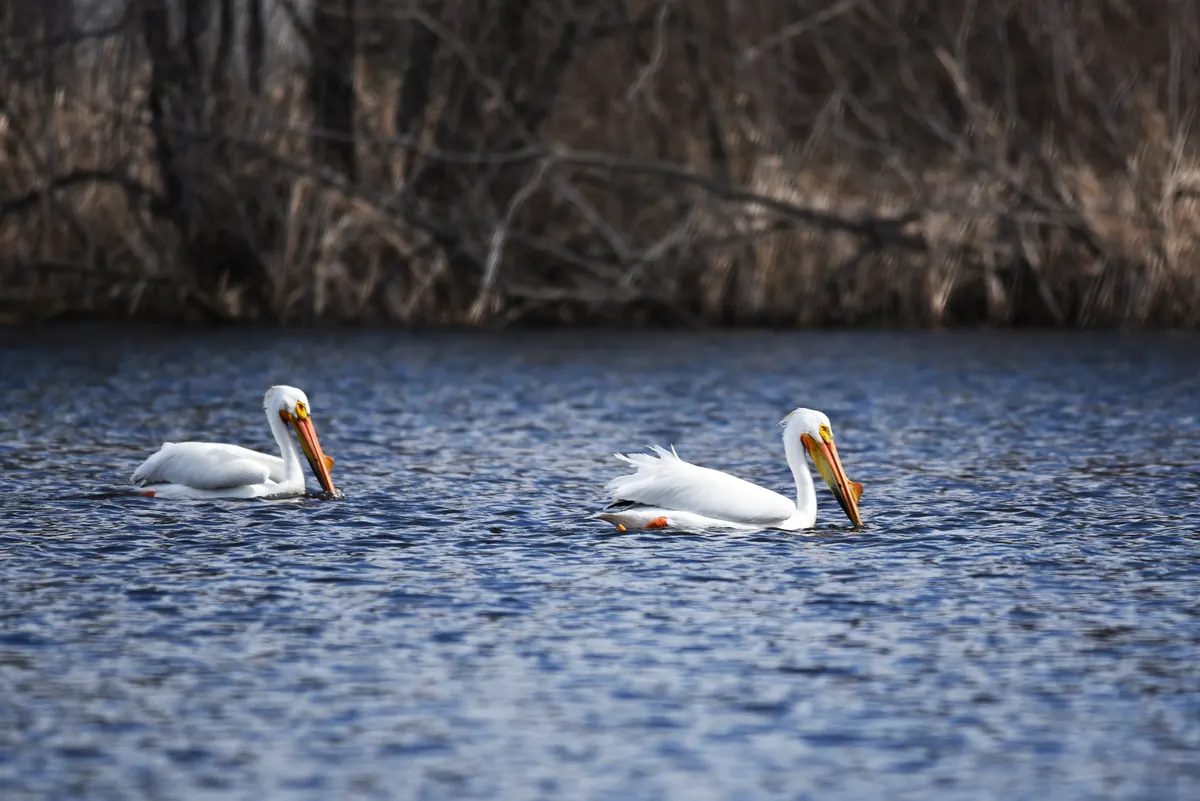
Few sights on an Arkansas lake beat a raft of white pelicans. Flocks pass through in fall, and many stay the winter below the dams, where the water does not freeze. AGFC points to the Big Dam Bridge and Arkansas River Trail in Little Rock, Lake Conway, Lake Chicot and Lake Dardanelle; Millwood Lake in the southwest is good from fall through spring. AGFC notes that some adults weigh 30 pounds, and their black-tipped wings are wider than an eagle’s. Watch for teamwork: a line of them paddles toward shore, flapping, and herds fish into the shallows.
-
Ducks and geese at Holla Bend
Building from October; peak in winter · Holla Bend National Wildlife Refuge, Pope and Yell counties
Holla Bend lies on the Arkansas River about five miles below Dardanelle, and from fall through spring it can hold hundreds of geese and ducks, with bald eagles in winter. A self-guided auto tour, an observation tower and two trails make it easy with children; the fee is $4 per vehicle a day. White-fronted and snow goose season opens October 31, and the regular duck season on November 21, so once the early Canada goose season closes on October 15, the water is quiet for a few weeks.
-
Hummingbirds: the last ruby-throats
Stragglers through October, a few into early November · Feeders and late-blooming gardens statewide
Ruby-throated hummingbirds are at their best in August and September, and Wild Birds Unlimited in Little Rock notes that their season can run well into October, with a few stragglers into early November. Keep the feeder clean and full until you have seen none for a week or two; it will not keep a healthy bird from leaving. A hummingbird at a feeder in December is almost always a stray from the West; local banders want to know about it.
-
Shorebirds and waders at Bald Knob
During fall migration · Bald Knob National Wildlife Refuge, White County
The refuge floods and drains its fields on a schedule that draws shorebirds and wading birds in passage. Bring a spotting scope for the mudflats.
-
Two birders’ weekends
Oct 8–10 and Oct 16–18 · Hot Springs; Russellville
Visit Hot Springs hosts the Birding Festival of the South, October 8–10; passes are sold out, and field trips are open only to pass holders. The Arkansas Audubon Society meets at Arkansas Tech in Russellville, October 16–18, and welcomes non-members, with ten field trips, among them banding, easy birding by car, Holla Bend and Lake Dardanelle.
eBird’s October Big Day falls on Saturday the 10th; one hour of watching from the back step is a real contribution. The “birds I have seen” list is where the first white-throated sparrow and the last hummingbird go.
Why are tarantulas, bears and deer so visible in October?
Because it is breeding season for some and feeding season for others. The shorter days change behavior across the woods, and people notice.
-
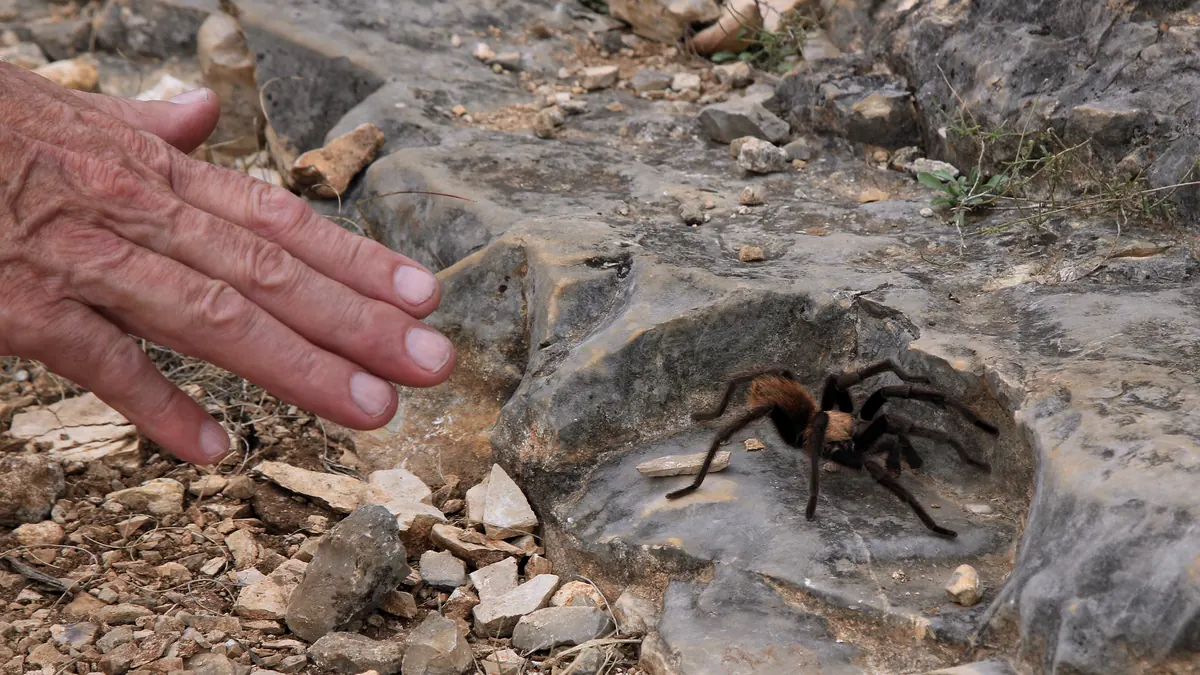
Tarantulas looking for love
August to October · Ozarks, River Valley, Ouachitas and the West Gulf Coastal Plain; rare in the Delta
The Encyclopedia of Arkansas explains the sudden appearance: tarantulas take about ten years to mature, spending most of that time in burrows ten to twenty-four inches deep in open, dry ground. Mature males leave home “sometime between August and October” to search for females and die soon after mating, while females can live to twenty. The species arrived when prairie-like habitat spread east from the Plains, which is why they are scarce on the Mississippi Alluvial Plain. The bite is compared to a bee sting, so watch, photograph and leave them alone.
-
Black bears eating everything
All fall, before denning · Mostly the Ozarks and Ouachitas, plus the big river bottoms
Arkansas was once called the Bear State, and bears were nearly gone by the 1930s. AGFC’s restoration from 1958 to 1968 brought them back, and the Commission now counts more than 5,000. In fall they feed hard on acorns, hickory nuts, persimmons and anything left outside, so bring in bird feeders, pet food and trash in bear country. Mount Magazine State Park’s free Bear Buffet Hike explains what they eat, on October 10 and 17 at 11 a.m. and October 24 and 31 at noon.
-
Deer on the move
Rising through October into the November rut · Statewide, especially at dusk on roads
AGFC puts the herd at roughly a million white-tailed deer. As the rut approaches, bucks rub saplings raw and paw scrapes under low branches, and deer cross roads at dusk and after dark. Slow down on wooded roads after sunset.
-
Bats before winter
Bat Week, Oct 24–31 · Over ponds, streams and streetlights on warm evenings
Bat Week, October 24–31, is a good excuse to sit out at dusk with children and count them.
When is the first freeze in Arkansas?
It depends more on where the cold air settles than on how far north you are. On clear, calm nights cold air drains off the hills and pools in the valleys, so some of the earliest freezes in the state are recorded at valley stations in the Ozarks: Fayetteville’s Drake Field, in a valley south of town, has a median first freeze of October 21, and one year in ten sees it freeze by October 8. Gilbert, down on the Buffalo River, reaches its median on October 22, and Evening Shade on October 20. Little Rock waits until November 10 in a typical year, Texarkana until November 13, and the Grand Prairie near Stuttgart until November 17.
| Station | One year in ten | Median | Nine years in ten |
|---|---|---|---|
| Fayetteville Drake Field (Northwest Ozarks) | Oct 8 | Oct 21 | Nov 3 |
| Harrison Boone County Airport (Ozark Plateau) | Oct 16 | Oct 30 | Nov 14 |
| Mena (Ouachita Mountains) | Oct 18 | Nov 1 | Nov 16 |
| Fort Smith Regional Airport (Arkansas River Valley) | Oct 23 | Nov 6 | Nov 21 |
| Jonesboro Municipal Airport (Crowley’s Ridge) | Oct 27 | Nov 9 | Nov 26 |
| Little Rock Airport Adams Field (Central Arkansas) | Oct 29 | Nov 10 | Nov 25 |
| Stuttgart 9 ESE (the Delta) | Oct 31 | Nov 17 | Dec 6 |
| El Dorado S Ar Regional Airport (Timberlands) | Oct 24 | Nov 7 | Nov 26 |
| Texarkana Webb Field (Southwest) | Nov 1 | Nov 13 | Dec 3 |
Frost on the grass usually shows up a week or so before the first true freeze, on a still night when the air a few feet up stays in the mid-30s. Every station on the list, from Blytheville to De Queen, is on the Arkansas frost dates page. In the Ozark valleys, October is the month to bring the peppers and houseplants in; in the south and the Delta, there is usually time for another cutting of basil and a fall planting of greens.
How much daylight does Arkansas lose in October?
A little over an hour. Every Arkansas city in the table loses between 58 and 65 minutes of daylight over the month, about two minutes a day, a bit more in the north than in the south. In Little Rock, sunrise moves from 7:04 to 7:29 a.m. and sunset from 6:53 to 6:16 p.m. between October 1 and 31, so the day closes in from both ends. Daylight saving time ends at 2 a.m. that Sunday, November 1, and from then on the evening walk is a walk in the dark.
| City | Oct 1 | Oct 31 | Lost | Per day |
|---|---|---|---|---|
| Fayetteville | 11 h 48 m | 10 h 44 m | 64 min | 2.1 min |
| Harrison | 11 h 48 m | 10 h 43 m | 65 min | 2.2 min |
| Jonesboro | 11 h 48 m | 10 h 44 m | 64 min | 2.1 min |
| Fort Smith | 11 h 48 m | 10 h 46 m | 62 min | 2.1 min |
| Little Rock | 11 h 49 m | 10 h 47 m | 62 min | 2.1 min |
| Hot Springs | 11 h 49 m | 10 h 48 m | 61 min | 2.0 min |
| Pine Bluff | 11 h 49 m | 10 h 49 m | 60 min | 2.0 min |
| El Dorado | 11 h 50 m | 10 h 52 m | 58 min | 1.9 min |
Type your address into the Field almanac for local sunrise, sunset and twilight, plus a running tally of minutes lost.
Is October wet in Arkansas, and what will El Niño bring this winter?
October is usually pleasant and a little wetter than September. NOAA’s 1991–2020 normals put the average October high at 71 °F in Harrison, 72 in Fayetteville, 74 °F in Little Rock and 78 °F in El Dorado, with lows from 47 to 54 °F. Normal October rain runs from 3.8 inches at Harrison and Jonesboro to about 4.5 at Little Rock, Texarkana and El Dorado, wetter than September at every station in the table of normals except Harrison: Little Rock goes from 3.0 inches in September to 4.5 in October. Most of it arrives with the cold fronts, with dry, blue spells between.
The winter ahead belongs to El Niño. On September 10 the Climate Prediction Center called the event strengthening and gave it better than nine chances in ten of becoming very strong this fall and winter, and a 75 percent chance that October–December beats any El Niño since 1950. What that means for Arkansas depends on where you live. NOAA’s long record shows the most dependable El Niño effect is a wetter cold season along the Gulf Coast, with a drier tilt in the Ohio Valley; Arkansas sits between the two. The Jackson, Mississippi, weather office, which covers the southeast corner of the state, describes El Niño winters as wetter and cooler across the Deep South, while cautioning that no two events behave alike. The outlook issued September 17 leans toward above-normal precipitation for much of the Mississippi Valley from October through December. October itself feels El Niño only faintly, so do not blame this month’s weather on it. NOAA’s next seasonal outlook comes out October 15, and the ENSO update on October 8.
Before a trip to the Buffalo or the Ouachitas, check the Weather now page for the next front, and never drive into water over a low-water crossing.
What can you see in the Arkansas night sky in October?
-
The moon covers Jupiter
Tuesday, October 6, about 3:15 to 4:15 a.m. CDT · Very low in the east; you need a flat, open horizon
Moonrise comes around 2:51 a.m. in Little Rock and 2:57 in Fayetteville, the slim crescent with Jupiter almost touching it. IOTA, the occultation timing group, predicts that the planet disappears behind the sunlit limb at 3:15 a.m. in Little Rock, Texarkana and Pine Bluff, 3:16 in Fort Smith and Jonesboro and 3:17 in Fayetteville and Harrison, when the moon is only 2 to 6 degrees up. That half is hard: find a hilltop, a lakeshore or a big field facing east. The reappearance is the better show. Jupiter pops back out from the dark edge between about 4:13 (Texarkana, Fort Smith) and 4:15 a.m. (Jonesboro, Blytheville), with the moon 13 to 17 degrees high and dawn more than two hours away. Binoculars are enough.
-
Saturn all night
Opposition Sunday, October 4; the moon alongside October 23–24 · East at dusk, south at midnight
Saturn reaches opposition on October 4. It rises as the sun sets, stays up all night and shines its brightest of 2026, a steady pale-gold light with few bright stars around it. The moon, nearly full, sits near Saturn on October 23 and 24. Even a small telescope shows the rings.
-
Draconids, then the dark weekend
Evening of Thursday, October 8; new moon October 10 · Look north after dark
The Draconids are a slow, usually sparse shower best in the early evening, and this year the moon is out of the way. The new moon on Saturday the 10th makes the next few nights the darkest of the month.
-
Orionids after moonset
Active Oct 2–Nov 7; best before dawn on Oct 21 and 22 · Anywhere dark; face east or south
The Orionids, fast meteors from Halley’s Comet, have a broad peak on October 21–22. The bright gibbous moon is the obstacle. On the morning of the 21st it sets around 2:33 a.m. in Little Rock and 2:39 in Fayetteville; on the 22nd, at 3:34 and 3:41. After that the sky is dark until dawn begins to show a little before 6.
-
Venus leaves, Jupiter and Mars at dawn
Venus in the first days of the month; Mars and the Beehive, Sunday, October 11 · West at dusk; east before sunrise
Catch Venus low in the western twilight only during October’s opening evenings; it reaches inferior conjunction on October 23. Before sunrise, look east for Jupiter, far outshining everything near it, with fainter, reddish Mars also up. At dawn on Sunday the 11th, Mars crosses the Beehive, a star cluster that binoculars turn into a swarm.
-
The Hunter’s Moon
Sunday, October 25 and Monday, October 26 · Low in the east at sunset
Full at 11:12 p.m. Central on the 25th. In Little Rock it rises at 5:52 p.m. that evening, half an hour before the 6:22 sunset, and at 6:29 p.m. on the 26th, just after the sun goes down. Ignore any supermoon billing; the moon is not near enough to perigee.
-
A star party and two owl walks
Oct 2, Oct 9, Oct 11 and 17 · Withrow Springs, Cane Creek and Petit Jean state parks
Withrow Springs State Park, near Huntsville, hosts a free star party with the Northwest Arkansas Astronomical Society on Friday, October 2, 7:30 to 8:30 p.m., with a 14-inch telescope. Cane Creek State Park, near Star City, runs an Owl Prowl on Friday, October 9, 8 to 9 p.m., and Petit Jean has owl walks from the Seven Hollows trailhead on October 11 (6:30 p.m.) and October 17 (6 p.m.).
| Phase | Date | Time |
|---|---|---|
| Last quarter | Saturday, Oct 3 | 8:25 a.m. CDT |
| New moon | Saturday, Oct 10 | 10:50 a.m. CDT |
| First quarter | Sunday, Oct 18 | 11:12 a.m. CDT |
| Full moon, the Hunter’s Moon | Sunday, Oct 25 | 11:12 p.m. CDT (looks full the evenings of Oct 25 and 26) |
| Last quarter | Sunday, Nov 1 | 2:28 p.m. CST |
The Today’s sky page shows tonight’s cloud cover, and the moon phases page has moonrise and moonset for your town.
What is ripening and blooming in Arkansas woods in October?
-
Persimmons
Late September through November · Old fields, fencerows, woods edges statewide
The Wildflower Center notes that the fruit ripens from late September through November, turning bright orange, and “is not edible until exposed to frost or consistent low temperatures”; before that, the tannins pucker your whole mouth. Foxes, opossums, raccoons, deer and birds do not wait, so the ground under a persimmon is one of the best places in the woods to look for tracks.
-
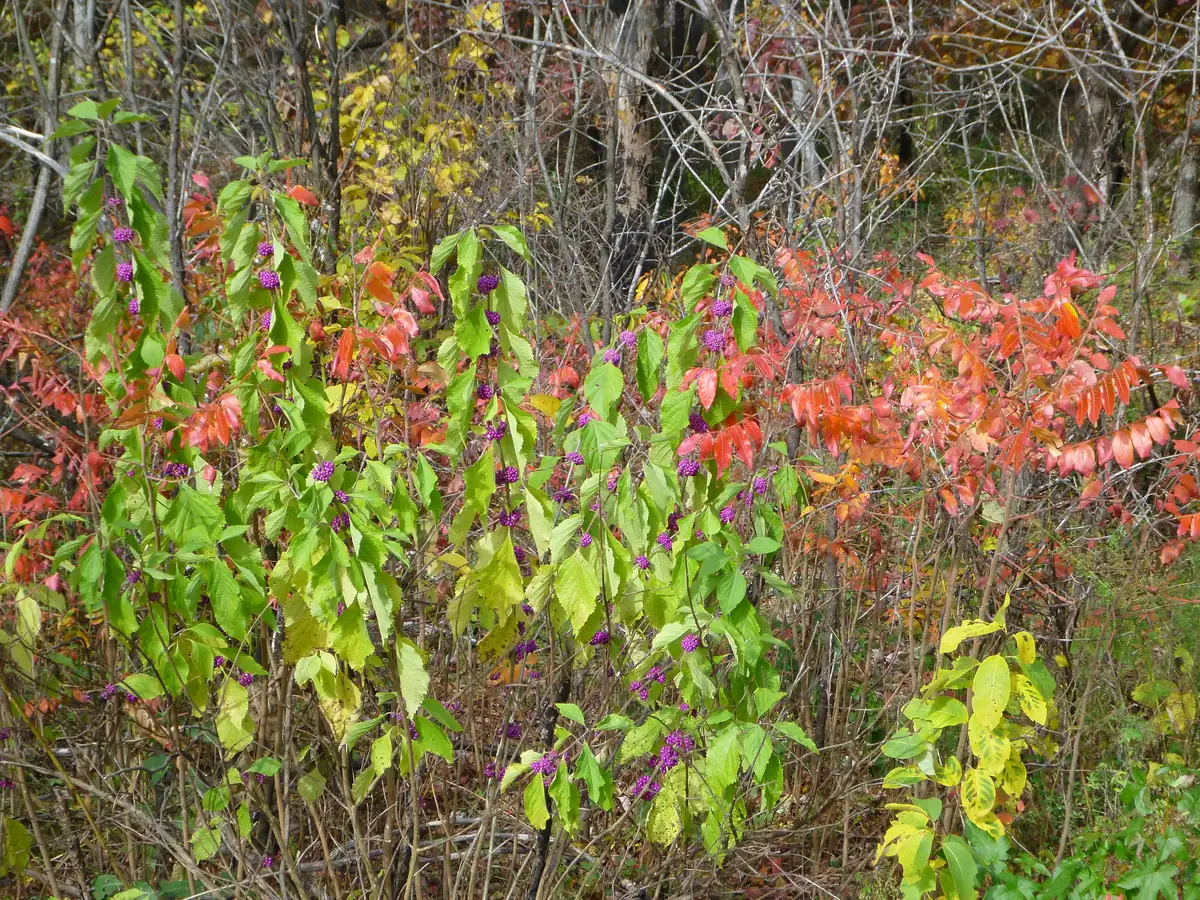
American beautyberry
Fruit in fall and early winter · Woods edges and thickets
A shrub most people walk past until October, when its stems are ringed with clusters of glossy, almost metallic purple berries that hang on after the leaves fall. Birds eat them, northern bobwhite especially, and deer browse the leaves.
-
Witch hazel, twice
American witch hazel from September to December; the Ozark species in winter · Moist woods, ravines and rocky streambanks
American witch hazel opens fragrant, ribbon-petaled yellow flowers as the leaves drop, while last year’s dry capsules on the same twigs fire their seeds as far as 30 feet. Arkansas has a second species, Ozark witch hazel, on rocky streambanks; it waits until December through March to bloom, curling its petals shut on the coldest days.
-
The last pawpaws
Early fall · Creek bottoms and floodplains
The last pawpaws drop in early fall, often still hard and green; they soften and turn brown on a tray. The leaves go a pale yellow-green.
Gather a persimmon seed, a beautyberry twig and a hickory hull for the seeds, pods and cones plate, and date each one.
What are the best outdoor outings for Arkansas families in October?
- Friday, October 2: a star party at Withrow Springs State Park, 7:30 p.m., telescopes provided.
- Sunday, October 4: Fall Color Hike at Crowley’s Ridge State Park, 2 p.m. on the Spider Creek Trail.
- Tuesday, October 6, before dawn: watch the moon cover Jupiter. A school-night alarm at 4 a.m. is enough to catch Jupiter reappearing.
- October 8–10: the dark-moon weekend. Draconids on Thursday evening, the Owl Prowl at Cane Creek State Park on Friday at 8 p.m., and eBird’s October Big Day on Saturday. Also Saturday: Morning on the Meadowbrook, a free wildlife walk at Lake Dardanelle State Park, 9 a.m.
- All month on Mount Magazine: the free “Oh, I AM on a Mountain” hike to the Dripping Springs bluffs at 9 a.m. on October 1, 5, 8, 12, 15, 19, 22, 26 and 29 (high overlooks without guardrails; hold small hands), and the Bear Buffet Hike on the four Saturdays from October 10.
- Woolly Hollow and Lake Fort Smith: the 3.5-mile Huckleberry Nature Hike around Lake Bennett on October 1, 3, 8, 12 and 30 at 8:15 a.m. and October 25 at 10 a.m.; a Woodland Birding Hike at Lake Fort Smith on October 2 and 16 at 9 a.m. and October 30 at 10 a.m.
- October 24–31: Bat Week, and the Hunter’s Moon rising at sunset on the 25th and 26th.
- Science you can do from home. Report monarchs to AGFC’s iNaturalist mapping project, photograph a tarantula for iNaturalist without touching it, keep a feeder log for the last hummingbird, and join Project FeederWatch before its winter count starts on November 1.
State park programs sometimes change with weather and staffing, so confirm on the park’s event page before you drive. The nature hub has the other states, and the Naturalist’s Field Journal has room for every outing.
Safety notes for October in Arkansas
- Hunting seasons and hunter orange. Deer archery opened September 26 and runs to February 28. The alternative firearms (muzzleloader) deer season is October 17–25 in most zones, with a second segment December 12–14; some zones differ, so check your zone. The elk hunts around the Buffalo River run October 3–9 and 24–30, and bear alternative firearms season on the Buffalo National River WMA is October 17–25. Modern gun deer season opens November 14 in most zones after a youth weekend November 7–8. AGFC’s rule: hunters and anyone with them, in areas where a modern gun or alternative firearms season for deer, bear or elk is open, must wear at least 400 square inches of hunter orange, chartreuse or blaze camouflage above the waist plus a hat in the same colors; migratory bird hunters are exempt. Hikers are exempt, but on public hunting land those weeks, a bright vest for you and orange for the dog are cheap insurance.
- Ticks and chiggers. Ticks stay active in October leaf litter and tall grass, and chiggers bite until a hard frost. The CDC suggests clothing treated with permethrin at 0.5 percent, a repellent registered with the EPA, a shower within two hours of coming in, a full-body check, and tumble-dry field clothes on high for 10 minutes.
- Bluffs and low-water crossings. Many Ozark and Ouachita overlooks have no rails; fall leaves on sandstone are slick. After heavy rain, streams at low-water bridges rise fast; turn around.
- Wildlife. Keep well back from rutting elk, store food and trash where bears cannot reach it, leave tarantulas alone, and watch for deer on the roads at dusk.
Sources
- National Park Service, Buffalo National River: elk (reintroduction, herd size, rut, viewing in Boxley Valley)
- National Park Service, Buffalo National River: hunting rules inside the national river
- Arkansas Game and Fish Commission: 2026 elk season dates and bag limits
- Arkansas Game and Fish Commission: Buffalo National River WMA 2026–27 seasons (deer, bear, elk)
- Arkansas Game and Fish Commission: 2026–27 deer seasons and limits by zone
- Arkansas Game and Fish Commission: deer-specific hunting regulations (hunter orange and safety colors)
- Arkansas Game and Fish Commission: deer (statewide herd, CWD)
- Arkansas Game and Fish Commission: 2026–27 waterfowl season dates
- Arkansas Game and Fish Commission: black bears (history, population, restoration 1958–1968)
- Arkansas Game and Fish Commission: pelicans provide winter wildlife-viewing excitement
- Arkansas Game and Fish Commission: monarch and pollinator conservation (Arkansas Monarch Mapping Project)
- Arkansas Natural Heritage Commission: the multifaceted migration of the monarch butterfly
- Monarch Watch: peak migration dates by latitude
- Journey North: monarch sightings and fall roost reports
- Arkansas Tourism: fall foliage drives and destinations across Arkansas
- Arkansas State Parks: Fall Color Hike, Crowley’s Ridge State Park, October 4, 2026
- Arkansas State Parks: Bear Buffet Hike, Mount Magazine State Park (October 2026 dates)
- Arkansas State Parks: “Oh, I AM on a Mountain” hike, Mount Magazine State Park (October 2026 dates)
- Arkansas State Parks: Huckleberry Nature Hike, Woolly Hollow State Park (October 2026 dates)
- Arkansas State Parks: Woodland Birding Hike, Lake Fort Smith State Park (October 2026 dates)
- Arkansas State Parks: Morning on the Meadowbrook hike, Lake Dardanelle State Park, October 10, 2026
- Arkansas State Parks: Star Party, Withrow Springs State Park, October 2, 2026
- Arkansas State Parks: Owl Prowl, Cane Creek State Park, October 9, 2026
- Arkansas State Parks: Owl Prowl Hike, Petit Jean State Park (October and November 2026 dates)
- Visit Hot Springs: Birding Festival of the South, October 8–10, 2026
- Arkansas Audubon Society: fall convention, Russellville, October 16–18, 2026
- eBird: October Big Day, October 10, 2026
- National Audubon Society: birding in Arkansas (Millwood Lake, Holla Bend, Bald Knob)
- U.S. Fish and Wildlife Service: Holla Bend National Wildlife Refuge
- Wild Birds Unlimited, Little Rock: hummingbirds in Arkansas
- CALS Encyclopedia of Arkansas: tarantulas
- Bat Week 2026, October 24–31
- Project FeederWatch: how to participate
- NOAA NCEI: U.S. Climate Normals 1991–2020 (first-freeze probabilities, as used on the site’s Arkansas frost dates page)
- NOAA NCEI: 1991–2020 monthly precipitation and temperature normals for Arkansas stations (data API)
- Climate Prediction Center: ENSO diagnostic discussion, September 10, 2026
- Climate Prediction Center: prognostic discussion for the long-lead seasonal outlooks, September 17, 2026
- NOAA Climate.gov: United States El Niño impacts
- NWS Jackson, Mississippi: El Niño impacts on the Deep South (including southeast Arkansas)
- U.S. Naval Observatory: sunrise, sunset, moonrise and moonset (data API; example for Little Rock, October 22)
- U.S. Naval Observatory: moon phases 2026
- International Occultation Timing Association: occultation of Jupiter, October 6, 2026 (predictions for Arkansas cities)
- EarthSky: meteor shower guide
- EarthSky: visible planets, October 2026
- Lady Bird Johnson Wildflower Center: common persimmon
- Lady Bird Johnson Wildflower Center: American beautyberry
- Lady Bird Johnson Wildflower Center: American witch hazel
- Lady Bird Johnson Wildflower Center: Ozark witch hazel
- Lady Bird Johnson Wildflower Center: pawpaw
- CDC: preventing tick bites
- Photos via Wikimedia Commons; licenses and photographers are credited under each picture
