What to look for in nature in Connecticut this April
April is the month Connecticut gets loud. The peepers fill the ponds, turkeys gobble from the field edges at dawn, and the first warblers drop into the shrubs by the shore while ospreys settle on their eggs. The shore finishes with freezing early in the month, but the hills keep their risk into May. This guide follows the month from the Northwest Hills to the coast: trout and shad in the rivers, birds and turtles, the flowers that bloom before the leaves, and a Pink Moon that rises just after sunset on April 20.
Other months in Connecticut: October, November, December, January, February, March.
Start here
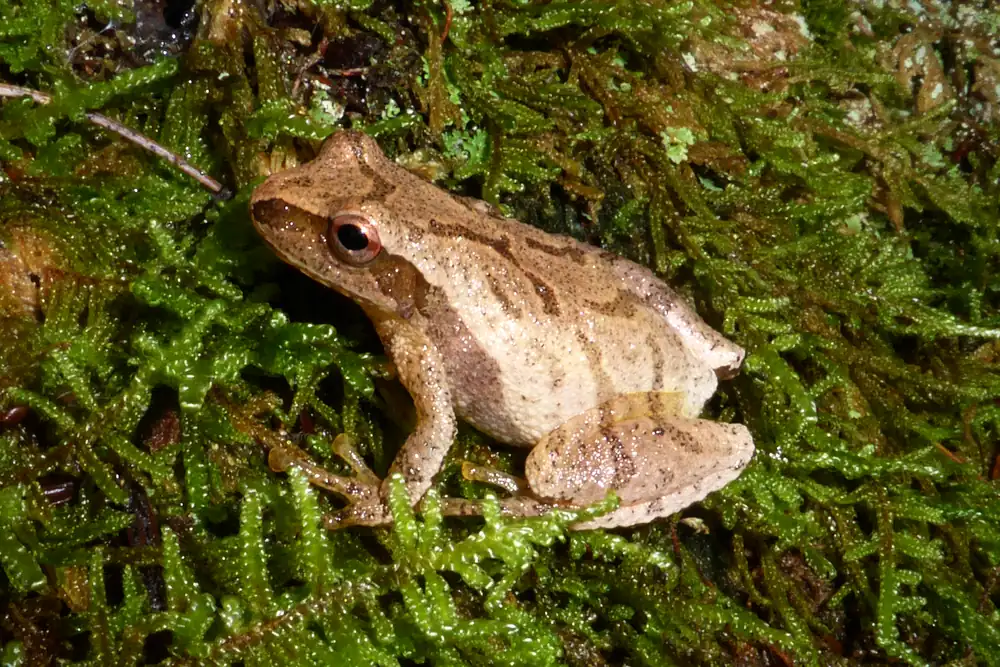
- Stand at a pond at dusk and listen. On the first warm evening, find a pond or swamp edge, turn off the flashlight and wait ten minutes. Peepers give a high squeak; an American toad begins a long trill late in the month.
- Walk a stream or shoreline for shadbush. White shadbush flowers open before the leaves, around the time shad head up the rivers. Look at pond edges and the Connecticut River shore, and note the date of the first bloom.
- Go out on April 10 for the trout opener. Harvest opens at 6 a.m. on the second Saturday in April, which is April 10 this year. Even if you don’t fish, stocked streams are lively that morning.
This month suits the Naturalist’s Field Journal well. Record the night you first hear peepers and the morning the shadbush opens on the daily field log. Give each new arrival, from the first tree swallow to the first warbler, a line on “birds I have seen,” and follow a single red maple on “a tree through the seasons.” A mud-edged pond is a good place for “tracks to know,” a turkey feather suits “feather found,” and an osprey at its nest belongs on “nest observed.” Write the pond chorus into “a map of sounds,” and photograph the same pond edge on April 1 and April 30 for “the same place twice.”
Regions used below: Northwest Hills and Litchfield County; Hartford and the Connecticut River Valley; The Quiet Corner (northeast); Fairfield County and the southwest; New Haven and the central shoreline; Southeast and the lower Connecticut River.
When does trout season open in Connecticut in April 2027?
The state’s rule is that harvest of trout in rivers and streams begins at 6 a.m. on the second Saturday in April, and by the calendar that Saturday is April 10, 2027. Until then, most rivers and streams are catch and release only. The date follows from a rule in the DEEP regulations, not from a festival announcement; the rules quoted here are the ones in effect in 2026, and the agency revises them, so read the current version before you go.
-
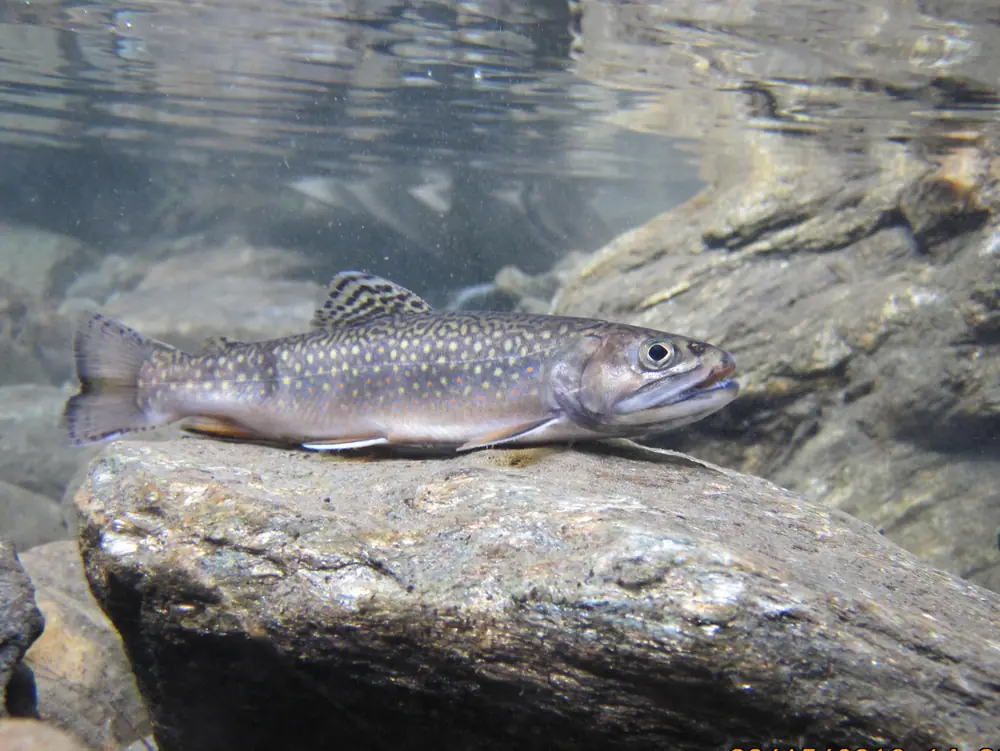
Opening morning
6 a.m., Saturday, April 10, 2027 (by DEEP’s second-Saturday rule) · Stocked rivers, streams, lakes and ponds statewide
DEEP’s 2026 announcement for the same morning described more than 500,000 trout going into over 100 lakes and ponds and 135 rivers and streams between March and May. Anglers 16 and older need a Trout and Salmon Stamp on top of a fishing license to keep trout; in 2026 the stamp cost $5 for adults and $3 for ages 16 and 17. DEEP also held free public stocking events at 12 sites that morning in 2026. No 2027 events are announced yet.
-
Trout Parks
Stocked about every 10 days or so through the spring · Fifteen parks, from Pomfret and Eastford in the northeast to Monroe, Oxford and Southbury in the southwest
Trout Parks are short, easy-access stretches that are restocked often, so they suit a child’s first outing. The daily limit is two trout, and the stamp is required. DEEP says the parks stay stocked through mid-May, and its stocking reports show what went into which water.
Trout waters change, and so do the daily limits and length rules. The river and stream page of DEEP’s freshwater fishing guide is the place to read the entry for the exact water you plan to fish.
Are shad and river herring running in Connecticut in April?
Yes, the front edge of the run is under way, though the peak comes later. American shad, a silver relative of the herring, enter the lower Connecticut River in late March or April and push upstream as the water warms. Connecticut named it the state fish in 2003, and DEEP calls the Connecticut River run one of the largest on the East Coast, a recovery of the past half century. Alewives and blueback herring, smaller cousins, climb the smaller streams in April.
-
American shad
Late March through May, building through April · Connecticut River, and spring runs also reach the Housatonic, Pawcatuck and Thames
Holyoke Gas and Electric, which runs the Barrett Fishway at Holyoke Dam in Massachusetts, well upstream of Long Island Sound, says shad reach the dam in late April or early May, at water temperatures between 54 and 68 °F. The lower river gets them first and the upper river later. Most are 15 to 24 inches long, and the state record is 9.3 pounds. DEEP notes that shad stop feeding on their spawning run but will still hit small jigs and spinners, which is why anglers chase them.
-
The Pink Moon connection
Full at 6:27 p.m. EDT, Tuesday, April 20, 2027 · Anywhere with an open eastern horizon
The Sea and Sky astronomy calendar records that many coastal tribes called April’s full moon the Fish Moon because it was the season when shad swam upstream to spawn. It also gives the more familiar name: the Pink Moon, for the wild ground phlox, or moss pink, one of the first spring flowers.
-
Alewife and blueback herring
A DEEP release expected alewife runs to be in full swing around April 21 (2018) · Fishways such as the Rainbow Dam in Windsor, the Greeneville fish lift in Norwich and Mianus Pond in Greenwich
Together the two are called river herring, and their runs have declined. DEEP prohibits taking them from all Connecticut waters, including Long Island Sound, and names predation by increasingly abundant striped bass as the main suspected cause. The agency’s 2018 World Fish Migration Day notice listed fishway open houses with underground viewing windows. No 2027 open houses are announced, so ask the fishway’s owner.
-
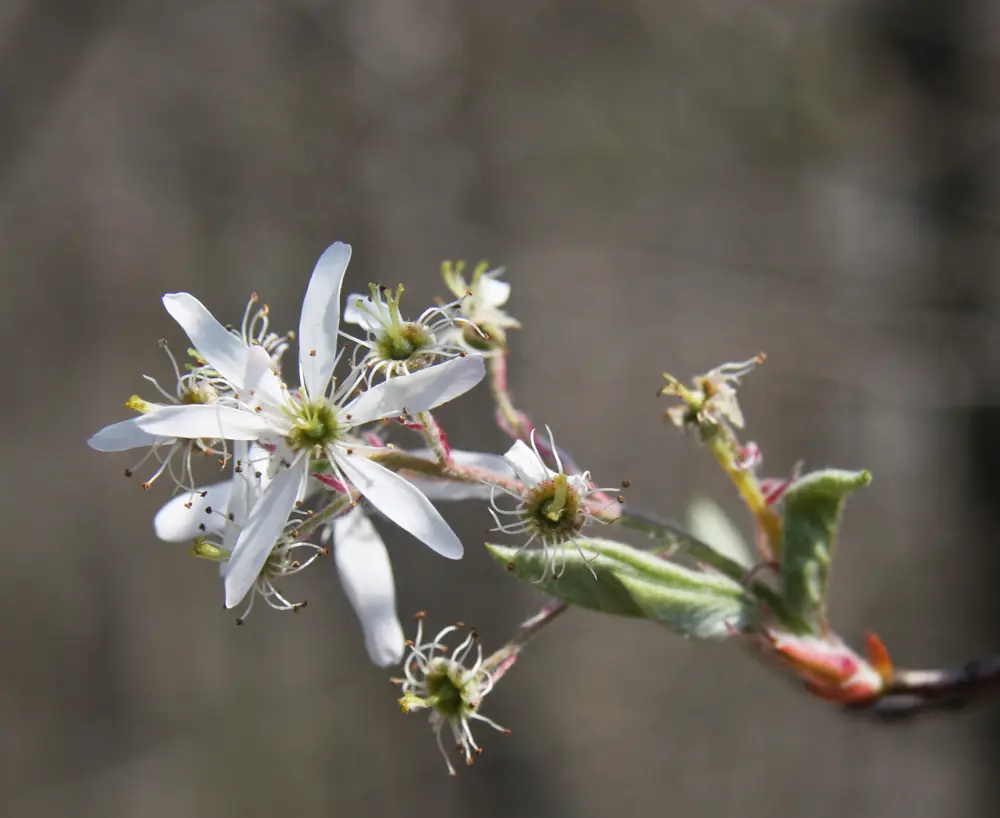
The shadbush sign
Often late April in Connecticut, earlier on the shore · Pond edges, shorelines and woodland borders
The shadbush, shadblow or serviceberry takes its name from flowers that open about when the shad run. A 2006 Connecticut newspaper column put it at one week at the end of April; UConn’s plant database lists the white, drooping flower clusters of downy serviceberry as an early-spring bloom, with red fruit that birds favor in June. A Vermont naturalist cautions that the match weakens farther north.
Rules for shad angling, including any special seasons or tackle limits, are in DEEP’s fishing guide, so read them before you wade in below Enfield Dam, where DEEP says the state’s shad fishing access area once drew anglers from along the whole East Coast.
Which birds arrive in Connecticut in April, and where can you see migrants?
April is when the quiet of March turns into song. The early arrivals push in, the first warblers appear, and as April ends the first wave of the main migration begins to come through. Patrick Comins, the executive director of Connecticut Audubon, told New England magazine that spring migrants begin arriving in late April, with numbers peaking in mid-May, when nearly 200 species may be passing through the state.
-
The early arrivals
Early to mid-April · Woodland edges, ponds and open ground
New Hampshire Audubon’s April guide, written for a state farther north, where birds arrive a little later, lists these: hermit thrush and tree swallows in early April; ruby-crowned kinglets in the second week; chipping sparrows around mid-month; and the first warblers, pine, palm and yellow-rumped, along with the Louisiana waterthrush, by mid-April. Use those as a rough order, and expect each species to show up as soon or sooner in southern Connecticut.
-
The first main wave
The final week of April · Hammonasset Beach State Park in Madison, Birdcraft Sanctuary in Fairfield, the Coastal Center at Milford Point
The same guide puts the first main-wave warblers at the end of the month, among them black-and-white warbler, northern parula and black-throated green. Comins describes coastal places like Hammonasset as terrific stopover habitat for migrating land birds. Audubon Connecticut adds that the park holds nesting saltmarsh sparrows, piping plovers and purple martins in spring and summer.
-
Ruby-throated hummingbirds
Reports can start in mid-April; more come in late April and May · Gardens near feeders and early flowers
Journey North, the citizen-science project that maps the northward movement, published a report on April 22, 2025 in which an Oxford, Connecticut observer reported the earliest first sighting at that home, and wrote that the average is about a week later. Journey North’s map is built from reports like that one, so add your own first sighting; many people hang a clean feeder in the third week of April.
-
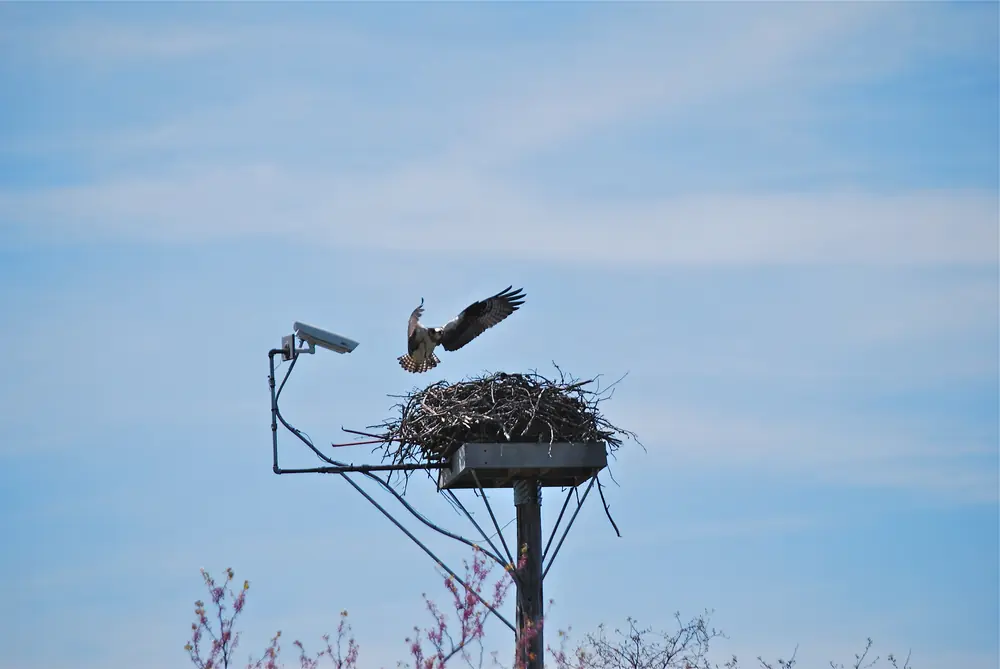
Ospreys on eggs
Eggs are laid in April; incubation lasts about a month · Nest platforms over water along the coast and big rivers
DEEP’s fact sheet puts egg laying in April, three eggs on average, with a month of incubation that the female usually completes. It lists nest sites that include duck blinds, channel markers and utility poles. A bird sitting low in the nest is probably on eggs, so enjoy it from a distance. Connecticut had only 9 active nests in 1974, and DEEP now calls the population flourishing.
-
Shorebirds begin nesting
First eggs by late April; oystercatchers arrive in early April · Coastal beaches, including Milford Point and Hammonasset
DEEP says piping plovers reach beaches in late March and lay first eggs in a shallow sand scrape by late April, four to a clutch. A Connecticut Audubon account from Milford Point expects American oystercatchers to arrive in the first week of April. Fenced areas protect nests that are hard to see, and the piping plover is state-listed as threatened.
The Naturalist’s Field Journal has pages for logging each arrival; our journal page shows what is included.
Which frogs, toads and turtles are active in Connecticut in April?
Wood frogs, the first to breed, may still be calling in early April (one state guide lists March and April), but the peepers now carry the chorus, and a toad joins in late in the month. Turtles come out to bask in the first warm sunshine. The timing in this section comes from University of Connecticut herpetology materials, the state wildlife division and a state guide to the frogs and toads, so it describes a typical year and shifts with the weather.
-
Spring peepers
From the first warm spring night until about the end of April · Ponds, swamps and marsh edges
A UConn field herpetology lecture describes the spring peeper as the smallest frog in the state and one of the first to call, from the first warm night until about the end of April. DEEP’s frog presentation for schools describes the call as a high-pitched squeak and the animal as marked with an X on its back.
-
American toads
Late April into summer · Shallow, temporary pools, flooded fields and ditches
The UConn lecture calls the American toad an explosive breeder in temporary ponds in late April, and a state amphibian guide gives its breeding season as late April to July. Its call is a long musical trill, quite different from the peeper’s squeak. Fowler’s toad, which that guide says is more common near the coast, breeds later, from May.
-
Painted turtles
Basking from March; peak breeding in April · Ponds, slow streams and marshes, on logs and rocks
DEEP’s fact sheet says painted turtles spend winter in the mud at the bottom of ponds and emerge earlier than other turtles, typically in March, and that their breeding period runs from March to mid-June, peaking in April. Eggs are laid between May and July, and the sheet notes that painted turtles are commonly seen basking on rocks and logs, even on top of one another.
-
Eastern box turtles
Emerging from hibernation in April; breeding begins in April · Woodland edges and meadows
DEEP says box turtles hibernate from October to April and begin feeding and looking for mates as soon as they come out; the breeding season begins in April. It is a species of special concern, and females travel to nest sites from mid-May to late June. If you find one, look and leave it where it is.
DEEP’s kids page on vernal pools explains why pools that dry out in summer make fish-free nurseries for amphibians. Walk around a pool, not through it, and leave egg masses where they are.
What blooms in Connecticut in April?
April’s flowering is a story of elevation and distance from the water. Along the shore and in the river valley it is well under way. In the Northwest Hills much of it waits for May. Everywhere, the flowers on red maples and shadbush come before the leaves, and the forest floor wildflowers must finish before the trees shade them.
-
Red maple flowers
Late March and April · Swamps, wet woods and roadsides across the state
UConn’s plant database says red maple flowers appear in late March and April and are red or orange, with the female flowers more showy and redder.
-
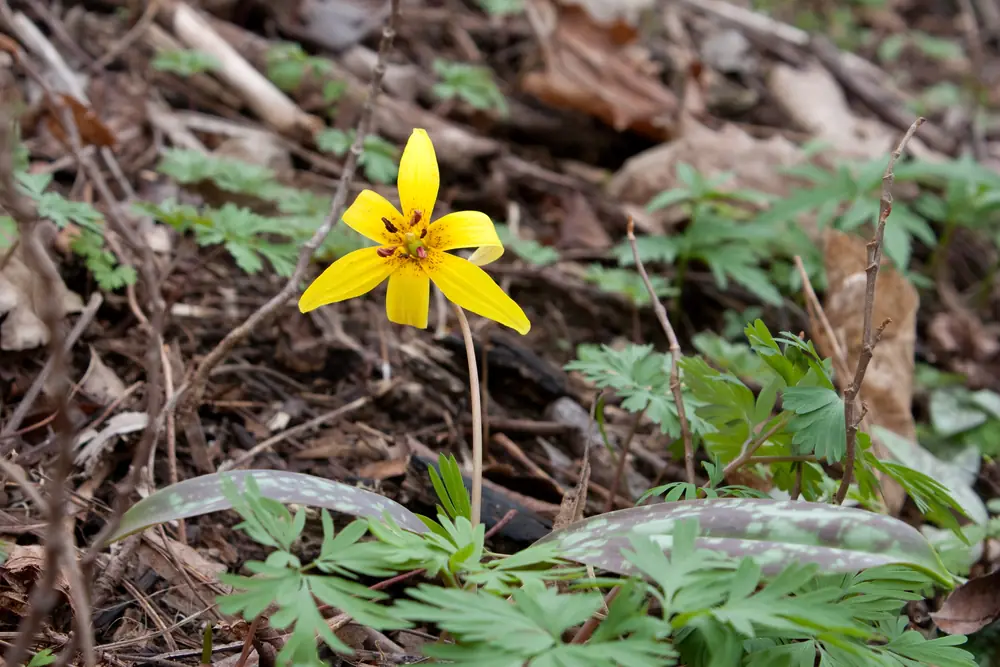
Woodland ephemerals
April on the shore and in the valleys; much of it May in the Northwest Hills · Rich, moist woods and stream valleys
An April 2025 write-up in the Daily Nutmeg of Branford preserves, Stony Creek Quarry and the Supply Ponds, found yellow trout lilies, marsh marigolds and spring beauties there. In contrast, a Norfolk-based nature writer says the spring ephemerals there, bloodroot, trout lily, jack-in-the-pulpit, red trillium and wild columbine, run mostly through the month of May. The two accounts differ by weeks, which fits a state where the shore warms first, so note the dates in your own yard rather than trusting a single calendar.
Wildflower season is short. Stay on the path so you do not trample next year’s shoots, and leave the flowers where they grow.
What mammals and other wildlife should you watch for in Connecticut in April?
The animals of April are the ones that gobble, wake hungry or fly on the first warm days. Turkeys are the loudest, bears are the ones to plan around, and the butterflies that spent winter as adults are the first to take wing.
-
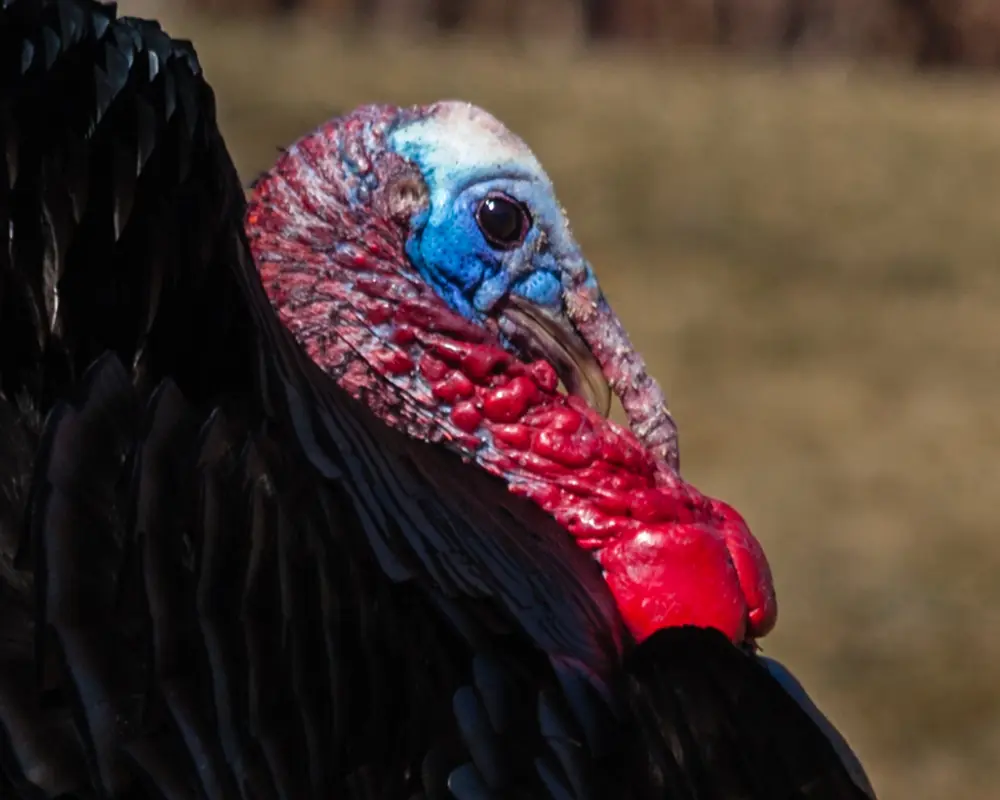
Wild turkeys gobbling
Breeding season starts in late March and early April · Field edges and mixed woods, mostly at dawn
DEEP’s fact sheet says the breeding season starts when the males begin gobbling and displaying for the hens. Hens lay 8 to 14 eggs at about one a day and incubate them for 28 days. The state released 356 wild turkeys at 18 sites between 1975 and 1992, and DEEP says they now live in all 169 towns; spring hunting has been allowed since 1981. A male in full strut on a hillside is one of April’s great sights.
-
Black bears
All month, increasingly active · Mostly the northwest quarter of the state, spreading east
DEEP estimates the resident population at around 1,200, including juveniles. In spring, DEEP says, wetlands matter because emerging plants are one of the few foods available. The state’s advice is to avoid putting out bird feeders at all if bears are regular in your area, and to take them in right away if one visits. Report sightings to the Wildlife Division.
-
Spring azures and mourning cloaks
From the first warm days; reports in the first half of April · Woodland edges, sap flows and sunny paths
The Connecticut butterfly mailing list, which volunteers use to trade sightings, carries reports such as a spring azure in Killingworth on April 16, 2004, and on April 2, 2006 an observer in East Lyme counting 15 or more mourning cloaks and 3 commas on sap flowing from cut trees. These are individual reports, not a calendar, but they show that butterflies that overwinter as adults are flying in the first half of April.
How much daylight does Connecticut gain in April?
The clocks changed on March 14, so every time in April is Eastern Daylight Time. At Hartford, per the U.S. Naval Observatory, the sun rises at 6:34 a.m. and sets at 7:16 p.m. on April 1; by April 30, sunrise is at 5:49 a.m. and sunset at 7:48 p.m. By April 22 the sun is up at 6:00 a.m. The table has the day length at eight Connecticut towns.
| City | Apr 1 | Apr 30 | Gained | Per day |
|---|---|---|---|---|
| Torrington | 12 h 42 m | 14 h 00 m | 78 min | 2.7 min |
| Hartford | 12 h 42 m | 13 h 59 m | 77 min | 2.7 min |
| Putnam | 12 h 42 m | 14 h 00 m | 78 min | 2.7 min |
| Waterbury | 12 h 41 m | 13 h 58 m | 77 min | 2.7 min |
| Danbury | 12 h 42 m | 13 h 57 m | 75 min | 2.6 min |
| New London | 12 h 41 m | 13 h 58 m | 77 min | 2.7 min |
| New Haven | 12 h 42 m | 13 h 57 m | 75 min | 2.6 min |
| Stamford | 12 h 41 m | 13 h 56 m | 75 min | 2.6 min |
The gain runs about 2.7 minutes a day, a hair under March’s pace, and light arrives at both ends: civil twilight begins at 5:19 a.m. at Hartford on April 30, which suits the dawn chorus. For other cities and dates, use our daylight page.
When is the last spring freeze in Connecticut?
April is when the shore finishes with freezing, and the hills do not. The median last freeze at the main stations falls on April 5 at Bridgeport, April 14 at Norwich, April 17 at New Haven, April 19 at Storrs and April 21 at Hartford’s Bradley airport. It is May 1 at Danbury and the Quiet Corner’s W Thompson Lake and May 3 at Norfolk. NOAA’s 1991 to 2020 normals are the source.
| Station | One year in ten | Median | Nine years in ten |
|---|---|---|---|
| Norfolk 2 SW (Northwest Hills) | Apr 21 | May 3 | May 17 |
| W Thompson Lake (Quiet Corner) | Apr 20 | May 1 | May 17 |
| Danbury Municipal Airport (western hills) | Apr 18 | May 1 | May 16 |
| Hartford Bradley International Airport (Windsor Locks) | Apr 8 | Apr 21 | May 6 |
| Storrs (Mansfield) | Apr 7 | Apr 19 | May 3 |
| Norwich Public Utility Plant (southeast) | Apr 1 | Apr 14 | Apr 30 |
| New Haven Tweed Airport (central shoreline) | Apr 2 | Apr 17 | May 1 |
| Bridgeport Sikorsky Memorial Airport (Stratford, western shoreline) | Mar 25 | Apr 5 | Apr 17 |
Look at the spread in the last two columns. Norfolk’s late column reads May 17, and Hartford’s reads May 6. Blossoms that open on a warm April day are at risk in the hills, and tender seedlings belong indoors until the nine-in-ten date. For your own town, see the Connecticut frost dates page.
How warm is April in Connecticut, and what weather should you watch?
April’s average high at Hartford, 60.5 °F in NOAA’s 1991 to 2020 normals, is about 13 degrees above March’s, with a low of 38.4 °F and 3.88 inches of precipitation. In the hills, Norfolk’s 54.0 °F high and 34.0 °F low are far cooler, and the station still averages 3.9 inches of April snow. Near the shore, Bridgeport’s 58.3 °F and 41.7 °F come with 0.9 inches of snow, and Norwich collects the most precipitation of the eight, 4.71 inches.
| Station | Average high | Average low | Precipitation | April snowfall |
|---|---|---|---|---|
| Norfolk 2 SW (Northwest Hills) | 54.0 °F | 34.0 °F | 3.93 in | 3.9 in |
| W Thompson Lake (Quiet Corner) | 58.1 °F | 34.4 °F | 4.57 in | 1.5 in |
| Hartford Bradley International Airport (Windsor Locks) | 60.5 °F | 38.4 °F | 3.88 in | 1.1 in |
| Storrs (Mansfield) | 57.0 °F | 38.0 °F | 4.23 in | 1.7 in |
| Danbury Municipal Airport (western hills) | 58.7 °F | 36.6 °F | 3.74 in | no normal |
| Norwich Public Utility Plant (southeast) | 59.3 °F | 39.1 °F | 4.71 in | 0.8 in |
| New Haven Tweed Airport (central shoreline) | 57.8 °F | 39.3 °F | 4.19 in | no normal |
| Bridgeport Sikorsky Memorial Airport (Stratford) | 58.3 °F | 41.7 °F | 4.16 in | 0.9 in |
Four hazards deserve attention. Late snow. An NBC Connecticut meteorologist’s climatology, written some years ago, found measurable April snow in 57 of 110 years at Bradley airport (52 percent) and in 16 of 65 years at Sikorsky airport on the shore (25 percent); the biggest April storms on his list, 14.1 inches on April 6, 1982 and 11.4 inches on April 1, 1997, both came in the opening days. Brush fires. DEEP’s spring fire season runs from mid-March to mid-May, with bare trees, drying leaf litter and wind. For April 14 to 21, 2025 alone it reported 40 wildfires covering about 300 acres, and the year’s total to that date, 155 fires, was twice the count at the same point in 2024. River flooding. The Connecticut River at Hartford has an action stage of 12 feet and flood stages of 16 (minor), 24 (moderate) and 28 feet (major), published by the National Weather Service; heavy rain on top of high water raises it. Thunderstorms. The same NBC meteorologist’s count of 91 tornadoes from 1950 to 2013 puts the state’s peak in June and July, though April can still bring a strong storm on a warm, humid day. Each month near mid-month, the Climate Prediction Center updates its official 90-day outlook; the newest maps are on the CPC outlook page. Check the weather page before heading out.
What can you see in Connecticut’s night sky in April 2027?
A late-rising Pink Moon, a Lyrid shower that the Moon spoils, a crescent beside Venus at dawn and a bright planet pair with the waxing Moon. All of April is Eastern Daylight Time.
-
The Pink Moon
Full at 6:27 p.m. EDT, Tuesday, April 20 · Rising in the east after sunset
Full phase comes 80 minutes before moonrise. At Hartford, per the Naval Observatory, the sun sets at 7:37 p.m. and the Moon rises at 7:47 p.m., so it climbs out of the east just as dusk begins. It looks full on the evenings of the 19th and 21st too.
-
The Lyrids, a poor year
Peak about 9:41 p.m. EDT, Thursday, April 22 (an International Meteor Organization figure) · Radiant in Lyra, rising in the northeast; look anywhere dark
Sea and Sky describes the Lyrids as an average shower, usually about 20 an hour at the peak, and says the nearly full Moon will hide the fainter streaks this year. At Hartford, the 97 percent Moon rises about 10:06 p.m. on the 22nd, so only the dark hours after nightfall and before moonrise are good, and Lyra is still low then. A few bright trails are possible; do not expect more.
-
Venus before dawn
Early on April 3 and 4, with a thin crescent Moon nearby · Low in the east, before sunrise
Venus holds the dawn all month, rising 75 minutes before sunrise on April 1. By our own calculation a slim crescent Moon passes about 3 degrees from it early on the 4th, and the pair is worth a look the morning before too.
-
Jupiter and Mars with the Moon
Evenings of April 14 and 15 · High in the south after dark
The waxing Moon, about 70 percent lit, comes within roughly a degree of Jupiter around April 15, by our own calculation. Mars, near magnitude 0 and fading, sits roughly 3 degrees off the lunar disk that evening. Jupiter is up most of the night, not setting until about 4 a.m. on April 1.
| Phase | Date | Time |
|---|---|---|
| New moon | Tuesday, Apr 6 | 7:51 p.m. EDT |
| First quarter | Tuesday, Apr 13 | 6:56 p.m. EDT |
| Full moon, the Pink Moon | Tuesday, Apr 20 | 6:27 p.m. EDT |
| Last quarter | Wednesday, Apr 28 | 4:18 p.m. EDT |
See the moon phases page for every phase and the clouds page for judging a clear night. The Eta Aquariid meteors are active from about April 19, and their early-May peak, near a new moon, will be a better show than the Lyrids.
What can families do outdoors in Connecticut in April?
- Saturday, April 10: trout season opens. By DEEP’s second-Saturday rule, harvest begins at 6 a.m.; confirm the date with DEEP, which had not announced 2027 events. Pick a Trout Park for a first try, and see the first section above.
- Tuesday, April 20: the Pink Moon. Watch for it rising just after sunset. For a young child, this is easier than the Lyrids.
- Thursday, April 22: Earth Day. The date is fixed, and EARTHDAY.ORG’s 2027 theme is “Food for Our Planet.”
- Friday, April 30: Arbor Day in Connecticut. State law sets the last Friday of April, and it falls on April 30 this year. DEEP’s 2026 announcement described tree plantings and giveaways across the state over several weeks, so look for local events.
- April 30 to May 3, the City Nature Challenge. The organizers’ site lists these four days for photographing wildlife in 2027, with identifications through May 16. It does not say which Connecticut areas take part, so check whether yours does.
- Citizen science. Post photos to DEEP’s Discover Outdoor Connecticut project on iNaturalist, report banded purple martins to DEEP’s colony-monitoring program, watch for chimney swifts, and add a first hummingbird to Journey North. Connecticut-registered vehicles park free at state parks through Passport to the Parks.
In May 2026, Connecticut Audubon ran a month-long Migration Magic festival with guided walks and a birdathon; its 2027 events are not yet announced. Check each organizer’s page for exact dates.
Safety notes for April in Connecticut
- Spring turkey season. In 2026 the spring season ran April 29 to May 30, with a junior training week from April 18 to 25, and hunters may hunt from half an hour before sunrise to sunset. DEEP has not posted 2027 dates, so look for the new hunting guide. Turkey hunting on Sundays is limited to private land and is not allowed within 40 yards of blazed public trails.
- Blaze orange. The state’s 400-square-inch orange rule applies September 1 through the end of February, and turkey hunters are exempt. DEEP nonetheless advises hunters to wear an orange vest walking in and out of the woods, and it tells them to avoid red, white, blue and black, the colors of a turkey’s head. As a hiker, wear something bright and skip those four colors in turkey woods at dawn.
- Ticks. The CDC says the greatest risk of a blacklegged tick bite is in spring, summer and fall. Walk in the middle of trails, wear light long clothes and check yourself afterward.
- Brush fires. Burn permits are suspended on High, Very High or Extreme fire days. Keep a 10-foot cleared circle around a campfire and drown it before leaving.
- Cold, high water. April streams run high with rain. Stay back from undercut banks and watch children near brooks and the Connecticut River.
- Turtles and amphibians. Slow down on wet nights near wetlands. If a turtle is on the road, DEEP’s box turtle sheet says to move it to the side it was headed, never to a different area.
- Beach nests. Keep out of fenced plover areas and keep dogs away; the piping plover is state-listed as threatened.
- Bears. Take down bird feeders if bears are regular visitors, keep trash in a shed and do not feed a bear.
Sources (58)
- CT DEEP: river and stream trout regulations (second Saturday of April rule, 2-trout limit)
- CT DEEP: 2026 Spring Fishing Day release (500,000 trout, 12 stocking events, stamp costs)
- CT DEEP: Trout Parks (15 parks, stocked about every 10 days)
- CT DEEP: American shad (state fish, size, run size)
- CT DEEP: American shad assessment (monitoring since 1978, Enfield Dam)
- Holyoke Gas and Electric, Barrett Fishway: American shad timing and water temperature
- CT DEEP: river herring closure (alewife and blueback herring)
- CT DEEP: 2018 World Fish Migration Day events (alewife runs, fishways)
- Sea and Sky: astronomy calendar 2027 (Pink Moon, Fish Moon, Lyrids)
- Northern Woodlands: Amelanchier by any other name (shadbush and the shad run)
- Newtown Bee: Field Notes, things to do when the shadblow blooms (April 28, 2006)
- UConn Plant Database: downy serviceberry (Amelanchier arborea)
- UConn Plant Database: red maple (Acer rubrum)
- New England magazine: rite of return, a Connecticut migratory bird parade
- New Hampshire Audubon: April birding highlights (arrival order in New England)
- Audubon Connecticut: Hammonasset Beach State Park, salt marsh days
- Journey North: a big week for hummingbird movement (April 22, 2025)
- CT DEEP: osprey fact sheet (April eggs, nest sites)
- CT DEEP: piping plover fact sheet (arrival and nesting)
- CT DEEP: wild turkey fact sheet (breeding season, restoration)
- CT DEEP: black bear fact sheet (population, feeders)
- CT DEEP: white-tailed deer fact sheet (fawns)
- UConn field herpetology: frogs and turtles of Connecticut (lecture, PDF)
- CT DEEP Kellogg Center: frogs presentation (PDF)
- Gone Froggin: frogs in Connecticut (breeding seasons by species)
- CT DEEP: eastern box turtle fact sheet (PDF)
- CT DEEP: painted turtle fact sheet (PDF)
- CT DEEP, Connecticut Wildlife, March/April 2000: vernal pools kids page (PDF)
- Connecticut Audubon: Frog and Toad Calls program at Trail Wood
- Daily Nutmeg: spring ephemerals at Stony Creek Quarry and the Branford Supply Ponds
- Norfolk Now: discovering the short-lived beauty of wildflowers
- Connecticut butterfly mailing list: spring azure, Killingworth, April 16, 2004
- Connecticut butterfly mailing list: East Lyme butterflies, April 2, 2006
- NOAA NCEI: monthly climate normals 1991-2020 for Connecticut stations (April)
- NBC Connecticut meteorologist Quincy Vagell: how common is April snow?
- NBC Connecticut meteorologist Quincy Vagell: Connecticut’s tornado season
- CT DEEP: spring brush fire season, April 2025 release
- NOAA National Water Prediction Service: Connecticut River at Hartford (HFDC3) flood stages
- NOAA Climate Prediction Center: 90-day seasonal outlook page
- U.S. Naval Observatory: moon phases 2027
- U.S. Naval Observatory: sun and moon data for Hartford, April 1, 2027
- U.S. Naval Observatory: sun and moon data for Hartford, April 20, 2027
- U.S. Naval Observatory: sun and moon data for Hartford, April 22, 2027
- U.S. Naval Observatory: sun and moon data for Hartford, April 30, 2027
- Fred Espenak: Sky Event Almanac 2027 (April moon-planet conjunctions, Lyrids)
- CT DEEP: 2026 hunting season date summary (PDF; spring turkey, coyote, woodchuck)
- CT DEEP: 2026 wild turkey hunting (season, hours, Sunday rule, orange advice)
- CT DEEP: 2026 spring wild turkey season release
- CT DEEP: 2026 hunting laws and regulations (fluorescent orange, Sunday hunting)
- Centers for Disease Control and Prevention: where ticks live
- Connecticut General Statutes, Sec. 10-29a (Arbor Day, last Friday of April)
- CT DEEP: 2026 Arbor Day release
- EARTHDAY.ORG
- City Nature Challenge
- Westport Journal: Connecticut Audubon Migration Magic events (May 2026)
- CT DEEP: community science and volunteer opportunities, Wildlife Division
- CT DEEP: Passport to the Parks
- Photos via Wikimedia Commons; licenses and photographers are credited under each picture