What to look for in nature in Connecticut this November
November strips Connecticut’s woods down to their bones and lets you see into them. The oaks and beeches hang on to brown leaves while everything else lets go; red-tailed hawks ride northwest winds past New Haven; loons, scoters and long-tailed ducks settle onto Long Island Sound; wild brook trout dig nests in headwater gravel; and bucks chase does through the last two weeks of the month. The clocks fall back on the first day, so most of this happens in short, bright afternoons. Here is what to look for and when.
Other months in Connecticut: October, December.
Start here
- The late hawks at Lighthouse Point. Red-tailed hawks are the November specialty of New Haven’s hawk watch, with a few red-shouldered hawks, goshawks and, on a lucky day, a golden eagle among them. The count runs to the end of the month and starts at 7 a.m.; pick a clear morning just after a cold front passes.
- Brook trout on their nests. Wild brook trout spawn in cold, gravel-bottomed headwater streams from October into early December. Stand on the bank of a small northwest-hills brook on a sunny afternoon, polarized glasses on, and look for pale, freshly turned patches of gravel with orange-bellied fish hovering over them. Keep your boots out of the riffles.
- A supermoon Beaver Moon. Full moon arrives Tuesday morning, November 24, at 9:53 Eastern, so Monday and Tuesday evenings both bring a round disk. This Beaver Moon counts among 2026’s supermoons, a little closer than average, and during the night of the 23rd it slides across the Pleiades, though the glare will hide most of the cluster.
Keep a November record in the Naturalist’s Field Journal. Rubs and scrapes along a woods road are made for the “reading the signs” plate; the loons and scoters off the beach go on “birds I have seen”; the Leonid morning and Venus before sunrise belong on the dusk-and-dawn watch; and returning to the same October spot now that the leaves are down is exactly what “the same place twice” is for. Note the date of your first snowflakes on the daily field log.
Regions used below: Northwest Hills and Litchfield County; Hartford and the Connecticut River Valley; The Quiet Corner (northeast); Fairfield County and the southwest; New Haven and the central shoreline; Southeast and the lower Connecticut River.
Is there still fall color in Connecticut in November?
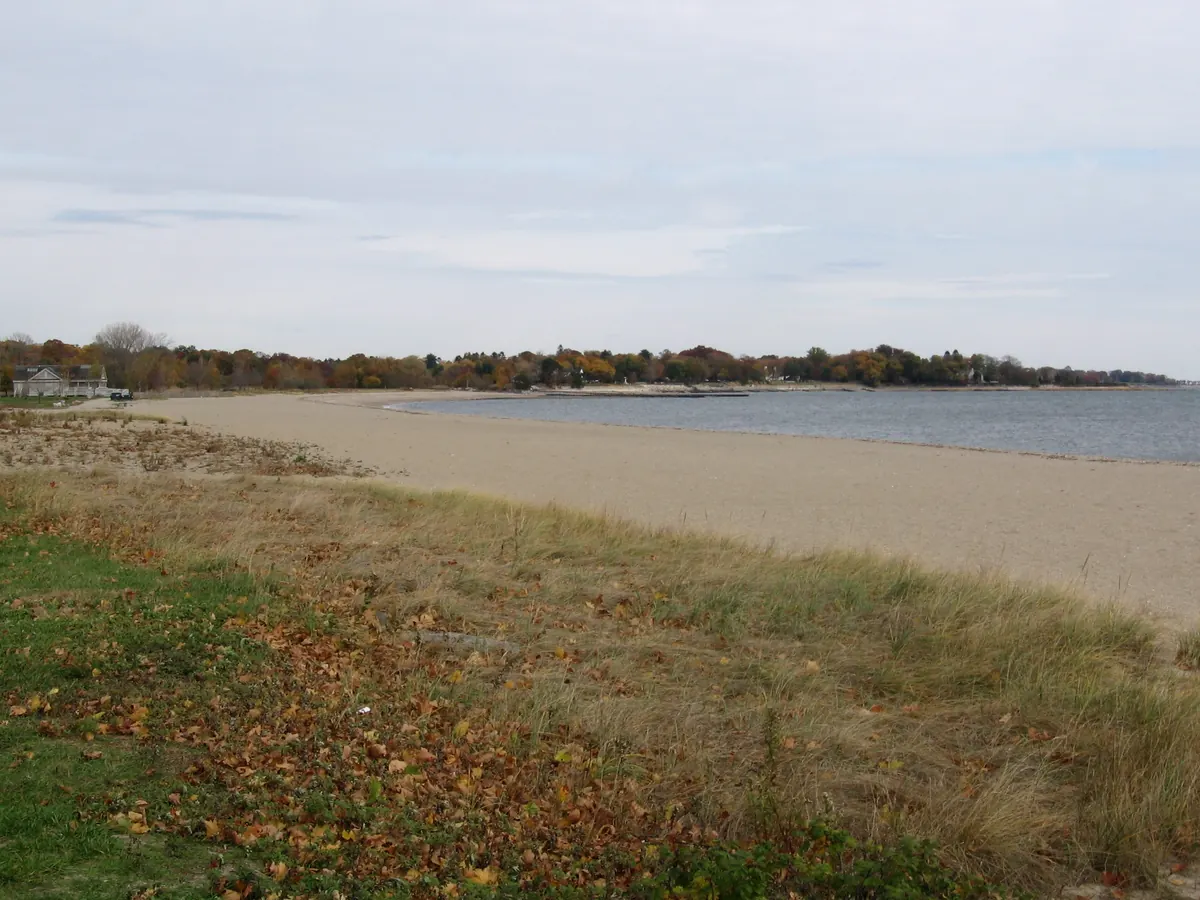
Yes, but only at the bottom of the map. DEEP’s standing regional schedule gives the shoreline and the lower Connecticut River their peak from October 28 to November 3 and saves the southwest corner, Greenwich to Norwalk, for November 4–10. Either way, the first days of November are the last good color in the state, and they belong to Fairfield County, the Old Lyme and Essex river towns and the shoreline parks.
Inland, November is the month the hills go gray and russet. After the maples drop, what is left is mostly oak, and oaks color slowly and dully, in leather browns, wine reds and a few late oranges. The bare woods have their own reward: stone walls, ledges, old cellar holes and bird nests that were hidden all summer stand out clearly by mid-month.
-
Beeches and oaks that won’t let go
November through winter · Understory beeches and young oaks statewide
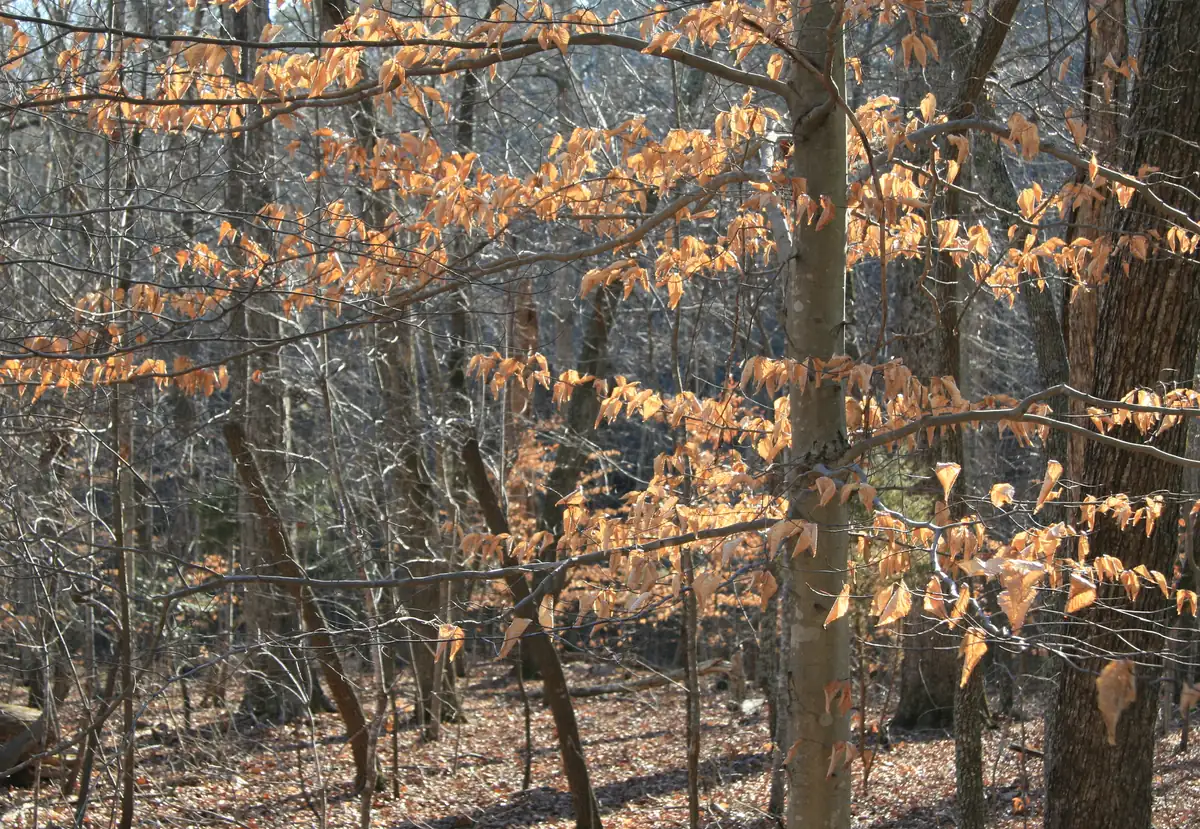
Some trees hold dead leaves through the winter instead of shedding them, a habit botanists call marcescence. American beech is the easiest example to spot: young beeches in the understory keep pale, papery, almost white leaves that rattle in a January wind. Young oaks do the same in brown. Nobody is certain why. University of Illinois Extension lists the leading ideas: the dead leaves may shield buds from drying winds, hide the buds from browsing deer, or fall in spring as a timely layer of mulch, and the habit is probably the product of several of these at once.
-
The last yellow: Norway maples and larches
Early to mid-November · Town streets, yards and plantations
Planted Norway maples hold green leaves late and then go yellow fast, so street trees supply the last color in many towns. Larches, planted in old reforestation stands and on estates, turn gold and shed their needles, one of the few conifers that spends the winter without needles.
Are hawks still migrating over Connecticut in November?
Yes, and the November flight is a different crowd from the falcons and sharp-shins of early fall. HMANA’s records for Lighthouse Point Park in New Haven list the fall count season as August 25 to November 30, and the New Haven Bird Club’s calendar has its daily watch starting at 7 a.m. and continuing into early December. The late birds are bigger, fewer and slower, and they tend to soar in the middle of the day once the sun has warmed the ground.
-
Red-tailed hawks
Peak in November · Lighthouse Point; also inland ridges
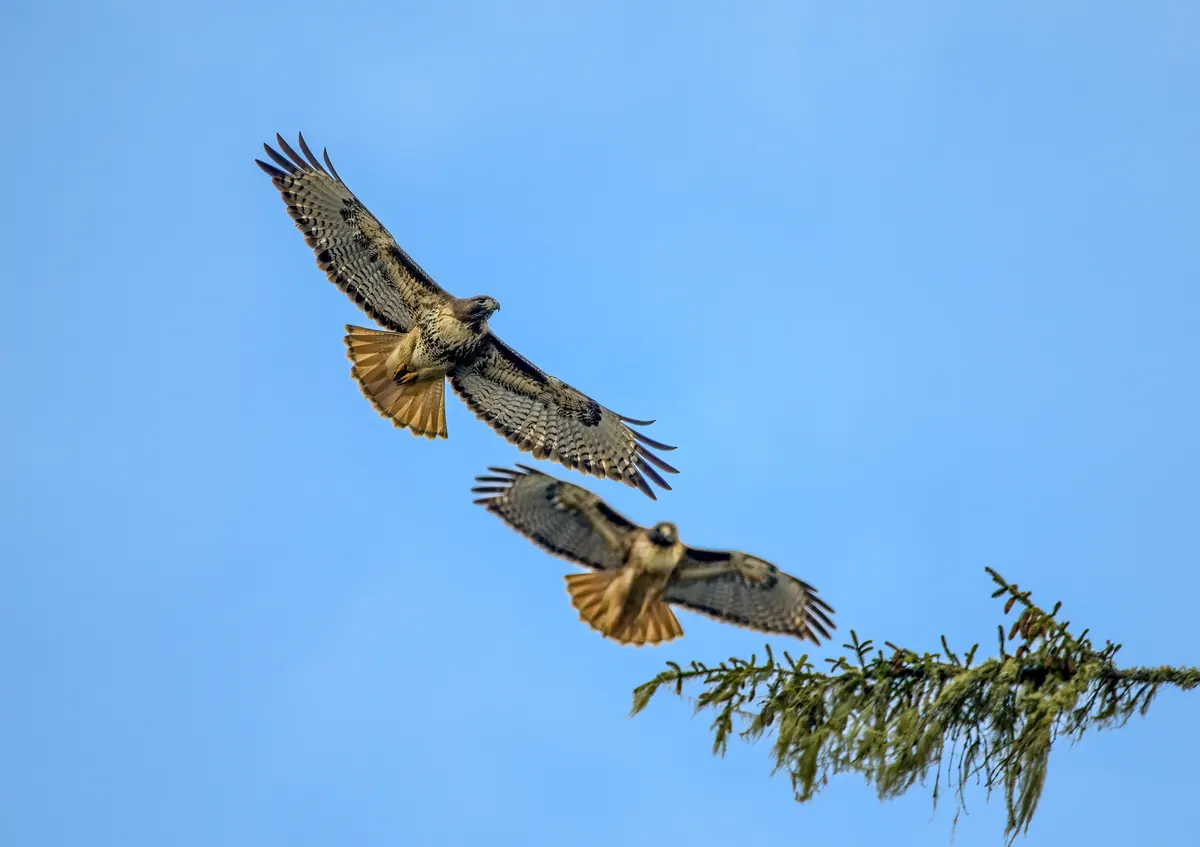
The red-tail is the bird of the November watch. The site averages about 349 a season, and its biggest day came on November 7, 1999, when counters tallied 237. Look for the dark belly band and, on adults, the brick-red tail glowing as the bird banks in sunlight.
-
Red-shouldered hawks and goshawks
Late October into November · Lighthouse Point and the coast
Red-shouldered hawks average about 113 a season at the site, and the record day for them is October 29, 1991, with 227. Goshawks are scarce, about a dozen in an average fall, and most pass between early October and the first weeks of November. A goshawk is a heavy, broad-chested accipiter with a pale eyebrow; most people who think they have seen one have seen a big female Cooper’s hawk.
-
Golden eagles and rough-legged hawks
Late October and November · Lighthouse Point; ridge lookouts in the Northwest Hills
These are the prizes. Lighthouse Point averages only about four golden eagles and three rough-legs a season, but both turn up in the late weeks of the count. Five golden eagles on November 3, 2013, remains the site’s high count for the species.
Days with a steady northwest wind after a front still bring the best flights, though in November a light wind and a sunny midday can be productive too. Bring a hat and gloves; the watch sits on an exposed point.
Which winter birds arrive on the Connecticut shore in November?
As the songbirds thin out, the water fills up. Long Island Sound is a wintering ground for sea ducks, loons and grebes from the Arctic and the northern forests, and November is when they arrive in numbers. With the summer crowds gone, the big state beaches turn into some of the best birding in the state.
-
Loons, scoters and long-tailed ducks
Building through the month · Hammonasset Beach State Park, Sherwood Island State Park, Stratford Point
Audubon’s guide to birding the state names Hammonasset, from fall into spring, as an ideal place for sea ducks, loons, grebes, northern gannets and gulls, with the occasional dovekie, murre or razorbill, and lists scoters, long-tailed ducks, mergansers and loons off Sherwood Point in Westport. Common loons in gray winter plumage dive and resurface far from where they went down; red-throated loons are slimmer and hold their thin bills tilted up. A spotting scope helps a great deal; aim for an early, windless morning when the water is flat.
-
Snow buntings, horned larks and pipits
November into winter · Beaches, dunes and short grass at the big state parks
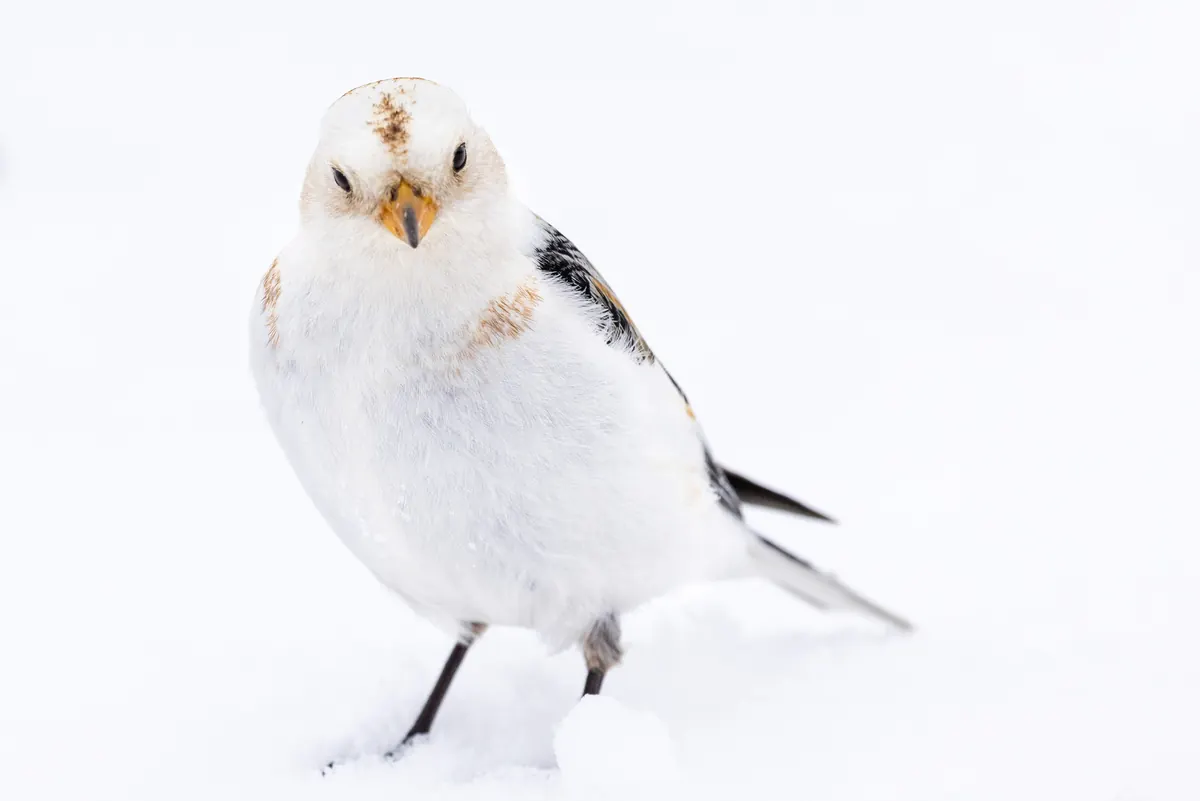
Mixed flocks of these open-country birds work the upper beach and parking-lot edges at Sherwood Island and Hammonasset. Snow buntings flash white wings when they flush and then drop back down a few yards away. Walk slowly along the wrack line and let them get used to you.
-
Harbor seals, maybe
A few late in November; most from December to March · Rocks off Guilford (Falkner Island), the eastern Sound
Harbor seals come down from Maine and Canada to winter in the Sound. Menunkatuck Audubon Society in Guilford dates their arrival to December, so a seal hauled out on the rocks in late November would be an early one. They are federally protected; watch from a distance and never approach one on a beach.
Indoor learning helps the outdoor kind: the New Haven Bird Club’s virtual meeting on Thursday, November 12, at 7 p.m. is a talk on the common loon.
When do brook trout spawn in Connecticut?
Through the fall, with November the busiest stretch. Connecticut’s only native stream trout survives as a wild, self-reproducing fish mainly in small headwater brooks, where, as DEEP puts it, habitat changes, fishing pressure and competition from brown trout are low. In autumn the mature fish move upstream to clean gravel, the females fan out shallow nests called redds, and the eggs sit in the stones all winter and hatch toward spring.
-
Redds in the gravel
October into early December · Small cold streams in the Farmington, Housatonic, Pawcatuck and Saugatuck watersheds and elsewhere
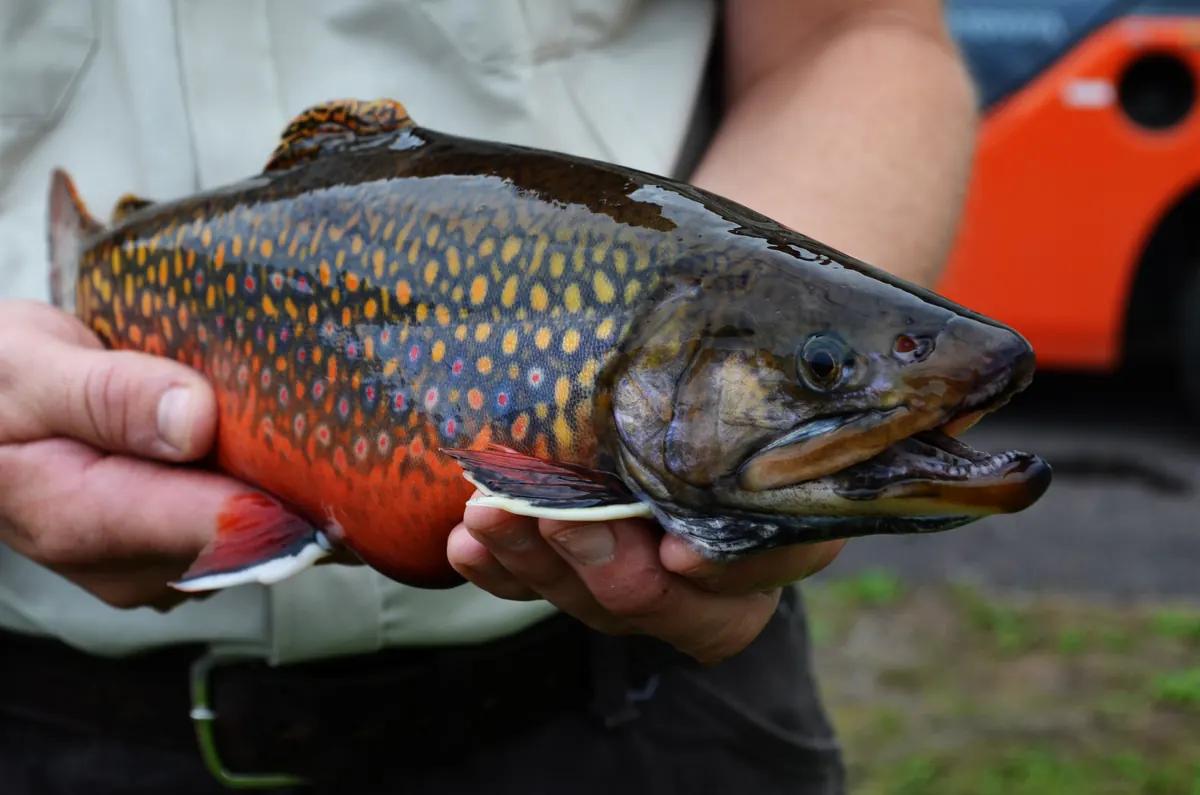
Farmington Valley Trout Unlimited, which helps DEEP survey redds on Farmington River tributaries, notes that spawning may continue until early December. Volunteers walk the same streams weekly and log each nest on a phone app, and Trout Unlimited has been extending the surveys to the Housatonic, Pawcatuck, Saugatuck and other priority watersheds. Brook trout redds are smaller and harder to see than brown trout redds: look for an oval of cleaner, lighter gravel in a riffle tail. The spawning males are the most colorful fish in New England, with orange bellies, red spots ringed in blue and white-edged fins.
-
Don’t walk on the nests
Until the eggs hatch · Any trout stream
A single wading angler can crush a season’s eggs. Cross streams at pools or on rock, not through shallow gravel riffles, and leave fish on redds alone. Found a redd? Jot the brook’s name and the date in your field journal, then return in April to look for fry. The Trout Unlimited volunteers add one more piece of advice for anyone streamside in hunting season: put on a blaze-orange cap.
-
Broodstock salmon still going in
Fall stocking continues; catch-and-release until December 15 · Naugatuck and Shetucket rivers; Crystal Lake and Mount Tom Pond
The hatchery fish are the opposite story: big retired Atlantic salmon released for anglers. On the Naugatuck, Shetucket and Housatonic, DEEP allows only catch-and-release from September 1 through December 15, using a fly or lure with a single free-swinging hook, and one fish a day after that. DEEP’s fall stocking report is updated as each water is stocked.
When is the deer rut in Connecticut, and when do bears den?
November is the month of the rut. DEEP dates the breeding season from late October into early January and says the peak here comes during November’s second half. It is also the month bears give up on the year: DEEP says most of the state’s bears den from late November until mid-March.
-
Bucks on the move
Peak about November 16–30 · Field edges, woods roads, suburban yards
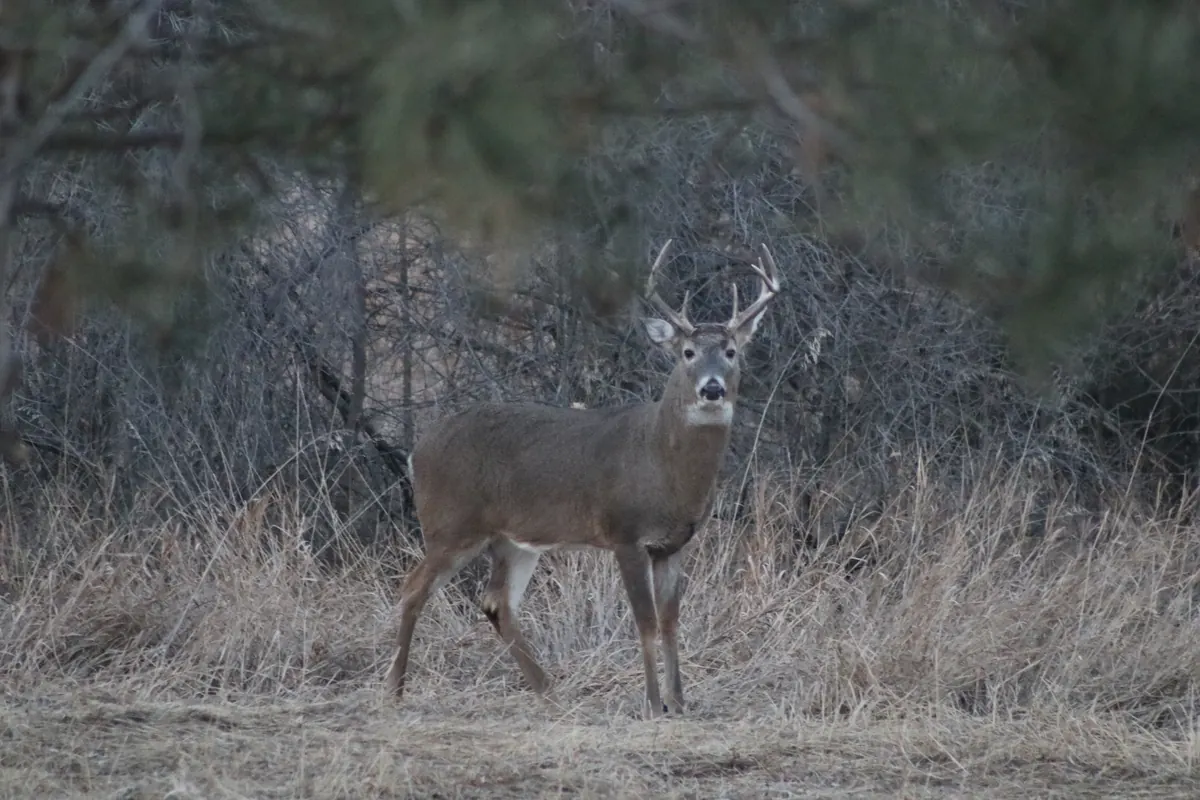
At the height of the rut, bucks roam widely and lose much of their usual caution around traffic and houses. Two signs give them away. Rubs are young trees stripped of bark a foot or three off the ground where a buck has polished his antlers. Scrapes are bare, pawed-out ovals of earth beneath a low limb, often with the limb’s tip chewed and broken. Bucks keep their antlers until DEEP’s shedding window, mid-December to late January, so November is the month to see full racks.
-
Bears looking for a den
Late November · Statewide, most densely in the northwest
DEEP lists the usual dens: under fallen trees and in brush piles, in rock ledges and thick mountain laurel, and sometimes under decks, porches and sheds. Cubs are born in the den from late December into early January. Bears may wander on mild days all winter if there is little snow, which matters in a winter that could run warm (see the weather section). DEEP had recorded over 60 cases this year, as of September 21, of bears getting inside houses, spread across 20 municipalities.
-
Beavers working late
Until the ponds freeze · Ponds and slow streams statewide
November’s full moon carries the name of the beaver, and it fits. DEEP describes the autumn routine: beavers anchor cut sticks and branches in the mud just outside the lodge, a feed bed they draw on once the pond ices over. Look for pale, freshly gnawed stumps of birch, aspen or willow and a raft of branches beside a lodge. The animals are mostly nocturnal, so the last half hour of daylight gives the best chance of seeing one.
Can you put up bird feeders in Connecticut in November, and which winter finches are coming?
Not yet, in most of the state. DEEP’s bear fact sheet says bears are typically less active from mid-December through the end of February, and that feeders may go out in that window only where there is no bear activity; if a bear visits, take them down for good. In towns where bears are regular, DEEP asks people not to feed birds with feeders at all.
That doesn’t mean you can’t count birds. FeederWatch (the long-running yard-bird tally of Cornell and Birds Canada) began its 2026–27 counting on November 1 and continues until April 30, and it explicitly welcomes counts of birds drawn to plantings, brush piles and water in a yard with no feeder. A heated birdbath on a frozen morning is a strong bird magnet and of no interest to a bear.
-
Winter finches: a quiet year, with exceptions
November onward · Conifers, birch and alder stands, yards
Tyler Hoar’s 2026–27 forecast for the Finch Research Network, issued in late September, expects good cone crops in the North to keep most finches there. The exceptions worth watching for in Connecticut: a small evening grosbeak movement as far as Massachusetts and southern New York, a possible late-winter push of red crossbills (especially the call type known as Type 12) down the coast toward Long Island, and perhaps some pine siskins. Pine grosbeaks, redpolls and Bohemian waxwings are not expected to come this far south in any number.
-
Juncos and white-throats settle in
All month · Brushy edges, yards, hedgerows
The sparrows that passed through in October are now the ones that stay. Dark-eyed juncos feed in small flocks on the ground under shrubs, white-throated sparrows sing a thin, half-hearted version of their song on mild mornings, and the first American tree sparrows, rusty-capped visitors from the far north, may join them by the end of the month.
Has the first freeze usually happened in Connecticut by November?
Almost everywhere except the western shore. By November 1, every station in the table below has passed its median first-freeze date except Bridgeport’s Sikorsky airport in Stratford, where the median first freeze is November 6 and the latest tenth of years wait until November 20. Inland, the question is no longer whether it will freeze but how hard: Norfolk, Thompson and Danbury have frozen by the end of October in nine years out of ten. Bradley airport has done so by November 2, Storrs by November 6, Hartford’s Brainard Field and Norwich by November 7, and New Haven’s Tweed airport by November 8.
Where the median has passed and you still haven’t had a frost, your garden is in the lucky minority, not running on schedule.
| Station | One year in ten | Median | Nine years in ten |
|---|---|---|---|
| Norfolk 2 SW (Northwest Hills) | Oct 1 | Oct 11 | Oct 28 |
| W Thompson Lake (Quiet Corner) | Sep 30 | Oct 9 | Oct 26 |
| Danbury Municipal Airport (western hills) | Oct 1 | Oct 14 | Oct 29 |
| Hartford Bradley International Airport (Windsor Locks) | Oct 3 | Oct 16 | Nov 2 |
| Storrs (Mansfield) | Oct 6 | Oct 22 | Nov 6 |
| Hartford Brainard Field (Hartford riverfront) | Oct 12 | Oct 26 | Nov 7 |
| Norwich Public Utility Plt (southeast) | Oct 9 | Oct 24 | Nov 7 |
| New Haven Tweed Airport (central shoreline) | Oct 11 | Oct 27 | Nov 8 |
| Bridgeport Sikorsky Mem Airport (Stratford, western shoreline) | Oct 25 | Nov 6 | Nov 20 |
Twenty-three Connecticut stations, with last spring frosts as well as first fall ones, are listed on the Connecticut frost dates page. Drain hoses and empty clay pots before a hard freeze, 28 °F or lower, cracks them.
How early does it get dark in Connecticut in November?
Abruptly early. Standard time returns overnight as October gives way to November: at 2 a.m. on the 1st, a Sunday, clocks drop back to 1 a.m. In Hartford the sun set at 5:46 p.m. on Saturday, October 31, and sets at 4:45 p.m. on Sunday, November 1, by the new clock. By November 30 sunset comes at 4:21 p.m., and Hartford’s day has shrunk from 10 hours 22 minutes to 9 hours 24 minutes, a loss of 58 minutes over the month, or about two minutes a day. The shore towns lose a minute or so less than Putnam in the Quiet Corner.
| City | Nov 1 | Nov 30 | Lost | Per day |
|---|---|---|---|---|
| Torrington | 10 h 22 m | 9 h 24 m | 58 min | 2.0 min |
| Hartford | 10 h 22 m | 9 h 24 m | 58 min | 2.0 min |
| Putnam | 10 h 22 m | 9 h 23 m | 59 min | 2.0 min |
| Waterbury | 10 h 23 m | 9 h 25 m | 58 min | 2.0 min |
| Danbury | 10 h 24 m | 9 h 26 m | 58 min | 2.0 min |
| New London | 10 h 23 m | 9 h 26 m | 57 min | 2.0 min |
| New Haven | 10 h 24 m | 9 h 26 m | 58 min | 2.0 min |
| Stamford | 10 h 25 m | 9 h 28 m | 57 min | 2.0 min |
Connecticut’s earliest sunsets of the year fall in early December, well before the solstice; the Field almanac will show the exact evening for your own address, along with civil twilight, the useful half hour of light after sunset.
What is November weather like in Connecticut, and how might a strong El Niño shape the winter?
November is the month the state’s two climates part ways. NOAA’s 1991–2020 normals put Bradley airport’s average high at 51.5 °F and low at 33.0 °F, with 3.51 inches of precipitation and 1.4 inches of snow. Norfolk, up in the Northwest Hills, averages 44.9 °F and 30.2 °F with 4.4 inches of snow, while Bridgeport, on the water, holds at 53.6 °F and 38.4 °F with under an inch. New Haven’s normals are close to Bridgeport’s, at 53.4 °F and 35.9 °F. First flakes in the hills are expected this month; in the valley, November snow usually amounts to little more than an inch. Watch the forecast for gusty northwest winds after fronts and for coastal storms late in the month.
Behind all of it is a strong El Niño. Federal forecasters, writing September 10, judged it more than 90 percent likely to grow into a very strong event before the winter is out. The government’s official winter outlook is due October 15; until then nobody knows what it will say, and once issued, the maps go up at CPC’s seasonal outlooks, which is where Connecticut readers should look.
History offers a pattern rather than a promise. In October 2015, with another powerful event under way, federal climate scientists, working with the Northeast Regional Climate Center, issued an outlook for the eastern states. Its reading: the northern jet tends to sit farther north than usual in these winters, while storms ride up the Atlantic seaboard, so coastal states usually end up wetter than normal, and a strong event pushes the warmth deeper into New England. The same briefing notes that shoreline snow has often come in higher during these winters, by up to half a foot over December to February, since it only takes one well-placed storm. For Connecticut that means a winter more likely to run mild than cold, with a real chance that one or two big coastal storms decide the snow total. Rain-versus-snow lines will matter more than usual, and so will bears that stay active on warm days.
What is in Connecticut’s night sky in November 2026?
-
The Beaver Moon, a supermoon over the Pleiades
Evenings of Monday, November 23 and Tuesday, November 24 · East-northeast at dusk
Exact fullness falls mid-morning on the 24th, which makes Tuesday evening the better match, though Monday’s moon will look just as complete. EarthSky and BBC Sky at Night both list this one among 2026’s supermoons; it is a marginal case, since perigee follows full by roughly thirty hours. The December full moon will be the bigger one. Late that Monday night and toward Tuesday’s dawn, the bright disk drifts through the Seven Sisters; in binoculars a few of the cluster’s brightest members may show along its rim.
-
The Leonids
Before dawn on Wednesday, November 18 (also the 17th and 19th) · Anywhere dark; the radiant in Leo rises late in the evening
Maximum, by the International Meteor Organization’s reckoning, comes around 6:45 p.m. Eastern on Tuesday the 17th; a rate near 15 an hour under ideal skies is the ceiling, and no outburst is forecast. The radiant is below the horizon at that hour, so the practical window is the early morning of the 18th, after the half-lit moon has set, roughly around midnight, until the sky starts to brighten. Leonids are fast and often leave short-lived trains.
-
Taurid fireballs around a dark new moon
Southern Taurids peak about November 5; Northern Taurids about November 12 · High in the south and east after mid-evening
Neither shower produces more than a handful of meteors an hour, but Taurid meteors tend to drift slowly and can flare into fireballs. Both streams are crumbs of Comet 2P/Encke, and with the moon new on November 9, between the two maxima, moonlight interferes with neither.
-
Venus, Mars, Jupiter and Mercury before dawn
Mornings all month; Mars and Jupiter closest November 15–16 · East and southeast before sunrise
The morning sky is where the planets are. Venus has just swung around the sun and climbs rapidly into the eastern dawn, reaching its greatest brilliance around November 24–27; Spica, the blue-white star of Virgo, lies close below or beside it at dawn on November 9. Higher up, in Leo by Regulus, reddish Mars closes in on Jupiter until only about one degree separates them in the dawn twilight of November 15 and again the next morning. Mercury puts in its best morning appearance of the season around November 18–25, low in the southeast, and in mid-month all four planets string across the dawn sky.
-
Saturn in the evening, Uranus at opposition
All month after dark; Uranus at opposition November 25 · Saturn south and southwest after dusk; Uranus near the Pleiades
After dark, Saturn has the evening to itself among the bright planets, glowing pale gold in the south. Uranus reaches opposition on November 25, the week of the full moon, so wait until early December’s darker nights to find it in binoculars, a dim blue-green point in Taurus, within binocular range of the Pleiades.
| Phase | Date | Time |
|---|---|---|
| Last quarter | Sunday, Nov 1 | 3:28 p.m. EST |
| New moon | Monday, Nov 9 | 2:02 a.m. EST |
| First quarter | Tuesday, Nov 17 | 6:48 a.m. EST |
| Full moon, the Beaver Moon (a supermoon) | Tuesday, Nov 24 | 9:53 a.m. EST (looks full the evenings of Nov 23 and 24) |
| Last quarter | Tuesday, Dec 1 | 1:08 a.m. EST |
No eclipses are visible this month. Before a Leonid alarm or a dawn planet walk, look at the cloud forecast on Today’s sky, and find your town’s moonrise on the moon phases page.
What can Connecticut families do outdoors in November?
- Sunday, November 1: Cheshire with the New Haven Bird Club, 8 a.m. to noon, including Broad Brook Reservoir; the Lighthouse Point hawk watch runs daily from 7 a.m. all month.
- November 1–8: the last week of Walktober, The Last Green Valley’s festival of guided walks, paddles and rides in the Quiet Corner, which ends November 8.
- Wednesday, November 4: Sherwood Island State Park, Westport, a New Haven Bird Club walk from 8 to 11 a.m.; Westport Astronomical Society also holds public observing on Wednesday nights at its observatory on Bayberry Lane.
- Friday, November 6: Astronomy Night at Meigs Point Nature Center, Hammonasset, 7 to 9 p.m., with telescopes from three local astronomy clubs. Saturn is the evening’s planet.
- Saturday, November 7: Hammonasset with the New Haven Bird Club, 8 to 11 a.m., a good morning for the first loons and sea ducks.
- Thursday, November 12: Beaver Walk with the Denison Pequotsepos Nature Center at The Nature Conservancy’s Walden Preserve in Salem, 4 to 5 p.m.
- Saturday, November 14: Lake Chamberlain in Bethany with the New Haven Bird Club, 8 to 11 a.m., or Denison Pequotsepos’s birding at Harkness Memorial State Park, 9 to 11 a.m.
- Saturday, November 21: Winter Duck and Waterfowl Walk at Rocky Neck State Park, 1 to 2:30 p.m., with the Denison Pequotsepos Nature Center.
- Tuesday, November 24: Full Beaver Moon walk at Denison Pequotsepos’s Peace Sanctuary, 4 to 5 p.m.
- Friday, November 27: a day outside. Any car with Connecticut plates parks free at every state park and forest under Passport to the Parks, so Black Friday makes a fine excuse to walk off the turkey on an empty trail.
- Saturday, November 28: Family Owl Prowl at the Denison Pequotsepos Nature Center, 4 to 5:15 p.m.
- Citizen science. Sign up for Project FeederWatch (feeders not required), log November birds to eBird, and note the date of the first skim ice on a puddle.
These events were listed on the organizers’ own calendars as of October 2; many need registration and some may change, so check with each before you go. Other states’ monthly guides are collected on the nature hub.
Safety notes for November in Connecticut
- Deer season and orange. November is Connecticut’s busiest hunting month. Landowner deer hunting runs November 1 to December 31, the junior deer hunt November 7–14, and the shotgun and rifle season on private land, along with the no-lottery shotgun season on state land, November 18 to December 8. Archery deer and turkey continue on private land through December 31; on state land the archery season pauses after November 17. Pheasant, rabbit and fox have been open since October 17; ruffed grouse closes November 30. The late duck season opens November 7 in the North Zone and November 11 in the South Zone. Connecticut’s orange rule covers September 1 to the last day of February: a hunter needs at least 400 square inches of it on the upper body, showing from front, back and sides. The bowhunter exemption ends November 17; from the 18th, archers may shed their orange only up in a tree stand at least 10 feet high, so nearly everyone you meet on the ground is wearing it. Hikers in state forests and wildlife management areas should match them, dogs included.
- Sundays. Under the 2026 rules, Sunday hunting is legal on private land for all species except migratory birds, with written landowner permission for deer and turkey and a 40-yard buffer around blazed public trails. State land stays closed to Sunday hunting.
- Driving at dusk. The peak of the rut lines up with the first weeks of commuting home in the dark. Slow down on wooded roads between 4 and 7 p.m.; where one deer crosses, another is often following.
- Short days on the trail. With sunset around 4:30 p.m., start hikes by early afternoon and carry a headlamp. Ridgetops are windier and colder than the valley parking lot, so pack a layer more than you think you need.
- Cold water. The Sound and inland lakes are chilly enough by now to bring on cold shock in seconds. Paddlers need a life jacket and clothing meant for immersion.
- Ticks. Adult blacklegged ticks stay active through the fall and come out again on mild winter days, so tick checks don’t stop with the first frost. Check the Weather now page before setting out.
Sources
- HMANA HawkCount: Lighthouse Point, New Haven (count season, species averages, peak periods and record days)
- New Haven Bird Club: events calendar, November 2026 (walks, hawk watch, loon talk)
- National Audubon Society: Birding in Connecticut (Hammonasset and Sherwood Island)
- Menunkatuck Audubon Society: Seals visit Long Island Sound in winter
- CTvisit: Connecticut fall foliage report (DEEP regional peak schedule)
- University of Illinois Extension: marcescence explained (December 6, 2024)
- CT DEEP: brook trout (habitat and wild populations)
- Farmington Valley Trout Unlimited: conservation committee update on DEEP redd surveys
- Trout Unlimited: Blue lines and brook trout, mapping spawning habitat in Connecticut’s priority waters
- CT DEEP: freshwater fishing guide, species regulations (Atlantic salmon)
- CT DEEP Fisheries Division: fall 2026 trout and salmon stocking report
- CT DEEP: white-tailed deer fact sheet (rut peak, antler shedding)
- CT DEEP: black bear fact sheet (denning, cubs, winter activity, bird feeders)
- CT DEEP: DEEP urges residents to avoid conflicts with bears this fall (September 21, 2026)
- CT DEEP: beaver fact sheet (feed beds, diet, winter under ice)
- Project FeederWatch: how to participate (season November 1 to April 30; no feeder required)
- Finch Research Network: winter finch forecast 2026–2027 (Tyler Hoar)
- NOAA NCEI: U.S. climate normals 1991–2020, monthly (Bradley, Bridgeport, New Haven, Norfolk)
- NOAA NCEI: annual normals documentation (freeze-date probabilities)
- Climate Prediction Center: ENSO diagnostic discussion, September 10, 2026
- Climate Prediction Center: seasonal (90-day) outlooks
- NOAA and Northeast Regional Climate Center: Eastern Region El Niño Impacts and Outlook (October 2015; storm track, warmth and coastal snowfall)
- U.S. Naval Observatory: moon phases from November 2026
- International Meteor Organization: 2026 meteor shower calendar (Taurids, Leonids)
- EarthSky: what is a supermoon (2026 list)
- BBC Sky at Night Magazine: supermoons in 2026
- RASC Observer’s Handbook 2026: lunar occultations (the Pleiades, November 24)
- EarthSky: Mercury at greatest western elongation
- EarthSky: Uranus at opposition
- Star Walk: planetary conjunctions 2026 (Mars and Jupiter, November 16)
- In-The-Sky.org: Venus at greatest brightness, November 2026
- NASA: lunar and solar eclipses of 2026
- CT DEEP: hunting season date summary from the 2026 Connecticut Hunting and Trapping Guide (PDF)
- CT DEEP: 2026 hunting laws and regulations (fluorescent orange, Sunday hunting)
- CT DEEP: migratory bird hunting seasons starting soon (August 27, 2026)
- Meigs Point Nature Center, Hammonasset Beach State Park: events (Astronomy Night, November 6)
- Denison Pequotsepos Nature Center: events, November 2026
- The Last Green Valley: Walktober 2026 (September 19 – November 8)
- Westport Astronomical Society: public observing nights
- CT DEEP: Passport to the Parks
- CDC: preventing tick bites
- Photos via Wikimedia Commons; licenses and photographers are credited under each picture
