What to look for in nature in Connecticut this May
May is when Connecticut fills up. Warblers drop into the new leaves by the hundreds, horseshoe crabs crowd the beaches of Long Island Sound, plover chicks scatter across the sand and snapping turtles walk out of the ponds to dig their nests. Fawns and bear cubs are out in the woods, the last frosts are leaving the hills, and daylight stretches toward fifteen hours by month’s end. Read it from the hills down to the shore. Firm dates are marked as such, and events whose organizers have not yet announced 2027 plans are described by season only.
Other months in Connecticut: October, November, December, January, February, March, April.
Start here
- Go to a migrant stopover at first light. Pick a small, wooded patch near the coast or a river, arrive at sunrise and look up into the new leaves for warblers. Mid-May is the high point.
- Visit a Sound beach at an evening high tide. Walk the high-tide line looking for horseshoe crabs coming ashore, and keep well away from fenced bird areas as you go.
- Step back from baby animals. A fawn lying alone, a fox kit near its den or a fledgling on the ground is usually not abandoned. Look, photograph from a distance and leave.
Field Journal plates for May: put each arrival on “birds I have seen,” log the day the first warbler appears on the daily field log, and follow one oak through its leaf-out on “a tree through the seasons.” A fawn or a fox kit belongs on “mammal watch,” a snapping turtle’s nest on “nest observed,” and the calls of a warm night on “a map of sounds.” Take a dusk and dawn watch on the nights of the Eta Aquariids, and photograph the same woodland patch on May 1 and May 31 for “the same place twice.”
Regions used below: Northwest Hills and Litchfield County; Hartford and the Connecticut River Valley; The Quiet Corner (northeast); Fairfield County and the southwest; New Haven and the central shoreline; Southeast and the lower Connecticut River.
Which birds are passing through Connecticut in May, and where can you see them?
May is the busiest month of the birding year in Connecticut. New England magazine reports that nearly 200 species may pass through the state at the mid-May crest, and Connecticut Audubon calls May the peak month of spring migration, with some days bringing more than half a million birds that stop to rest and feed. The timing in this section is a typical year; a cold front or a southerly wind can move the whole show by several days.
-
The warbler wave
Roughly the first three weeks of May, with the heaviest numbers around the middle of the month · Woodland edges, shrubby thickets, park trees and shoreline stopovers across the state
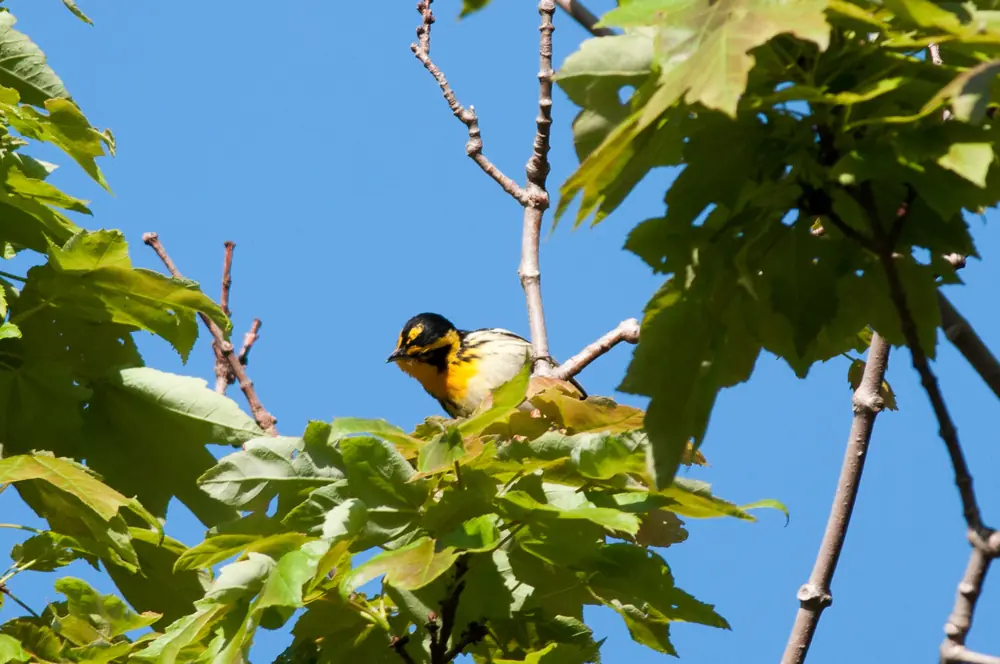
New England magazine singles out the Blackburnian warbler as a typical May arrival, a bird that stays high in the treetops and gives a thin, high song that ends in a trill. It adds that yellow-rumped warblers can be abundant at the peak. Connecticut Audubon says yellow warblers are among the commonest warblers of the month, which is why they land on nearly every list from its Birdathon. The trick with warblers is to look up, since many feed in the new leaves at the tops of oaks, and to learn a few songs before you go.
-
Hammonasset and Birdcraft: where migrants pile up
Mid-May is the high point; mornings after a night of southerly wind are usually best · Hammonasset Beach State Park in Madison; Birdcraft Sanctuary in Fairfield
Patrick Comins of Connecticut Audubon says migrants flying overhead easily spot a coastal park like Hammonasset, which makes it a good place for them to rest. Birdcraft, a six-acre sanctuary hemmed in by development, packs the birds into a small space where they are easy to find. Hammonasset is the most visited state park in Connecticut, with more than three million visitors a year according to Audubon, so go early on a weekday if you can.
-
Sparrows, loons and the nighthawk watch
White-crowned sparrows peak around Mother’s Day (Sunday, May 9, 2027); loons pass through until about mid-May; nighthawks appear in mid-May · Brushy fields and yard edges; larger ponds after rain; the open sky in late afternoon
The same New England magazine article says white-crowned sparrows reach their peak numbers in Connecticut around Mother’s Day, and that common loons pass over the south of the state from late March to about mid-May. Check the bigger ponds after a spring rainstorm for loons, grebes and sea ducks that dropped in overnight. In mid-May, look skyward in the late afternoon for common nighthawks and listen for their buzzy calls.
-
Hummingbirds and orioles at the feeder
Hummingbirds are already arriving by May; orioles tend to turn up about the same time · Gardens with early flowers, clean feeders and oranges or jelly for orioles
Journey North, the citizen-science project that maps migration, reported in 2020 that Baltimore orioles were arriving at about the same time as ruby-throated hummingbirds, and some observers saw both on the same day. Those notes were not from Connecticut, so add your own first sightings to the Journey North maps. Our April page covers the first hummingbird sightings; a wild red columbine in bloom is a natural stop for one, as the plants section below explains.
-
Migration Magic and the Birdathon
A month-long festival in May; the 2027 schedule is not posted yet · Events across the state, and any park or yard you like for the Birdathon
In 2026 Connecticut Audubon held Migration Magic from May 1 to May 31, with a guided walk at Birdcraft on May 5, a free introduction to birding on May 9, a bird-banding demonstration on May 23 and a family craft day on May 30. The Birdathon is a month-long contest to see or hear as many species as you can in Connecticut and a designated corner of New York, with the proceeds going to conservation. The festival page says to check back for 2027 details, so treat those 2026 dates as a sample of what the month usually holds, not as a schedule. World Migratory Bird Day fell on May 9 in 2026, and its organizers had not announced the 2027 date when we looked.
Start a list of May arrivals on the “birds I have seen” plate; the journal page shows what it looks like.
What is happening on Long Island Sound and the rivers in May?
Two ancient migrations meet the Connecticut shore in May. One is a mass of horseshoe crabs coming up the beaches of the Sound to lay eggs. The other is the American shad, which by now has reached the upper Connecticut River on its way to spawning water.
-
Horseshoe crabs spawning
May and June, mostly around high tide; the new moon on May 6 and full moon on May 20 are traditional peaks, though New England spawning follows water temperature too · Sandy beaches of Long Island Sound; Milford Point in Milford is a long-studied site
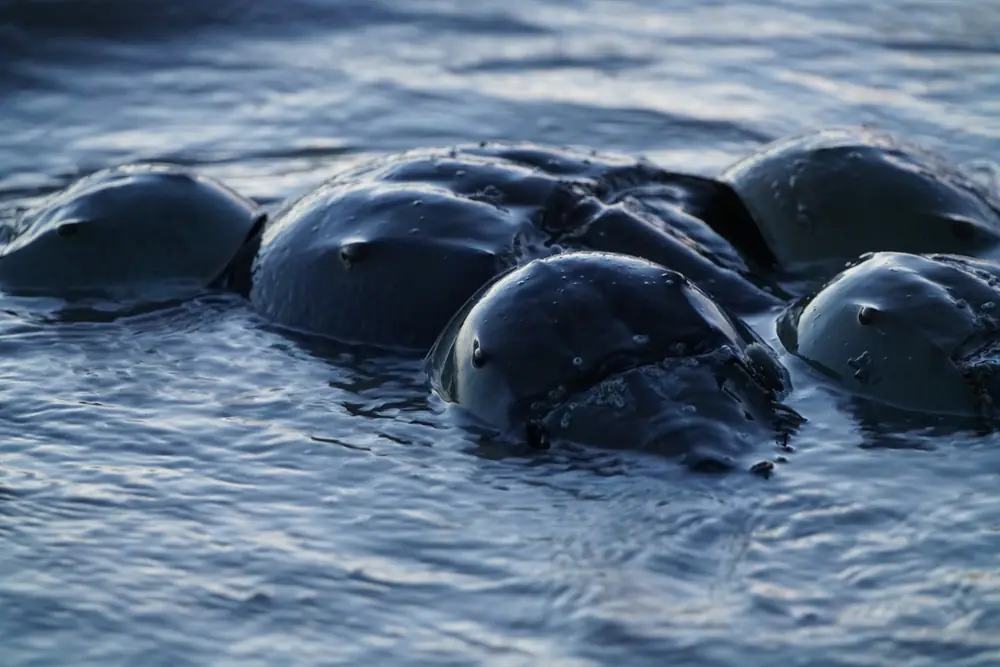
Horseshoe crabs come ashore to mate on high tides in late spring and early summer. The Atlantic States Marine Fisheries Commission says spawning generally runs from March through July, with peak activity after sunset on new and full moon high tides in May and June, but that in some areas, New England included, spawning follows water temperature more closely than moon phase or time of day. Check a tide table and walk the high-tide line slowly in the evening. A mature female can lay many thousands of eggs, which is why crowded beaches matter to the birds and fish that feed on them.
Project Limulus, run from Sacred Heart University, tags crabs at Milford Point and on other Sound beaches with the help of volunteers, and its researchers mark nests with pink flags. If you find a tagged crab, you can report the tag at fws.gov/crabtag. A law signed in August 2023 bans hand harvesting of horseshoe crabs, with exemptions for scientific and medical use and a $25 fine per crab taken. A Project Limulus director has said recovery will take time and depends on what neighboring states do. If a crab is stranded on its back, hold it by both sides of the shell, never by the tail, which can injure it.
-
American shad in the upper river
Shad reach the Holyoke fishway, just over the Massachusetts line, in late April or early May · The Connecticut River; the best fishing and watching is upstream of Hartford
Holyoke Gas and Electric, which runs the fishway at the Holyoke dam, says shad swim into the river from late March on and reach Holyoke in late April or early May, in water between 54 and 68 degrees Fahrenheit. After spawning they drift back downstream, mostly in daylight in June and July. DEEP’s assessment page says adult returns have fallen in recent years, which it links to the big increase in striped bass along the coast, and expects abundance to rise and fall over time. We found no published forecast for 2027.
-
Trout stocking and a free fishing day
The 2026 free fishing day was Saturday, May 9; DEEP lists no 2027 date yet · Statewide, including the 15 Trout Parks
For the 2026 season DEEP held a Free Fishing Day on Saturday, May 9, when no fishing license was needed, and two more days, June 21 and August 8, when anglers 16 and older needed a free one-day license. DEEP lists no 2027 dates, so check its licensing page in spring. Children under 16 fish free all year.
Check a tide table for your own beach, and walk the high-tide line slowly so you do not step on crabs or eggs.
Which shorebirds, ospreys and martins are nesting on the Connecticut coast in May?
By May the early arrivals of March and April are sitting on eggs or watching new chicks. This is the month to give nests room, because the birds that look the calmest are often the ones with the most to lose.
-
Piping plover and least tern chicks
By that arithmetic, hatching begins in late May; DEEP gives April through August as the nesting season · Fenced sections of beaches, including Milford Point and Hammonasset
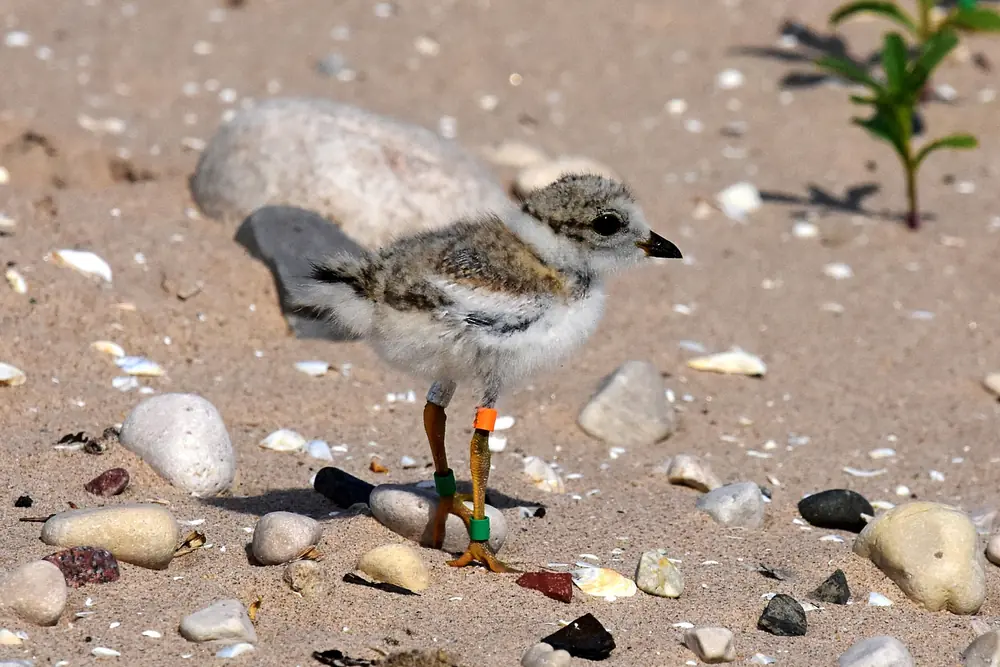
Both plover parents sit on the eggs for about 27 days, according to DEEP’s fact sheet. The chicks run from the nest within hours and do not fly until about 28 days. The state marks nesting habitat each spring with stakes, twine and signs, and on some beaches protects nests with wire cages that come off once the chicks hatch. A 2026 DEEP release notes that both species are state threatened and that plovers are also federally threatened. It asks beachgoers to keep pets, bicycles and vehicles at least 25 feet from the marked areas, says dogs are banned at many beaches during the season, and singles out Memorial Day weekend as a time of heavy use. Chicks wander outside the fencing, so look down before you step. DEEP also warns against kites and drones near a nesting beach, since the birds read them as predators.
-
Osprey chicks
Eggs laid in April hatch around May; young first fly roughly two months later · Platforms, channel markers and poles along the coast and big rivers
DEEP’s osprey sheet gives an average of three eggs and about a month of incubation, so chicks in a platform nest are likely to appear in May. The sheet asks people and pets to stay at least 300 feet from a nest, adding that disturbing ospreys is prohibited under the federal Migratory Bird Treaty Act and under state law. Adults can become aggressive when approached, which is a sign you are too close.
-
Purple martin colonies
Eggs take 15 to 18 days to hatch and young stay in the nest 24 to 28 days, so late May and June are busy · Houses and gourds near the shore and open fields
In Connecticut, DEEP notes, purple martins nest only in man-made houses or hollow gourds, usually 12 to 15 feet up and painted white. The Wildlife Division is trying to document every colony, and landlords who host one are asked to report it. Banded martins can also be reported through the Wildlife Division’s colony monitoring program.
An adult that flutters off as if hurt, or circles and calls, is guarding a nest or chick. Retreat toward the waterline and leave quietly.
Which frogs, toads and turtles are active in Connecticut in May?
The peepers of April are fading, but the pond edges are not quiet. The frog and toad information below comes from UConn course notes and the turtle information from DEEP. Both describe a typical year.
-
Toads and treefrogs at the pond edge
Spring peepers fade by the end of April; American toads breed in late April; gray treefrogs breed from late spring into July · Wooded ponds, swamps, marshes, and sandy or gravelly shores for Fowler’s toads
A UConn herpetology lecture has the spring peeper calling from the first warm spring night to roughly the close of April, the American toad breeding in a rush in temporary pools in late April, and gray treefrogs leaving the treetops through April and May to breed in June and July. On a warm, damp night in the second half of May, stand at a pond edge and listen for what is left of the toad trills and the first treefrog calls, and check DEEP’s frog and toad call guide to sort them out.
-
Snapping turtles on the move
Nesting is described as May through June in a 2024 DEEP interview and as May through July on DEEP’s turtle page · Sandy, sunny ground near ponds, streams and wetlands, including roadsides and gardens
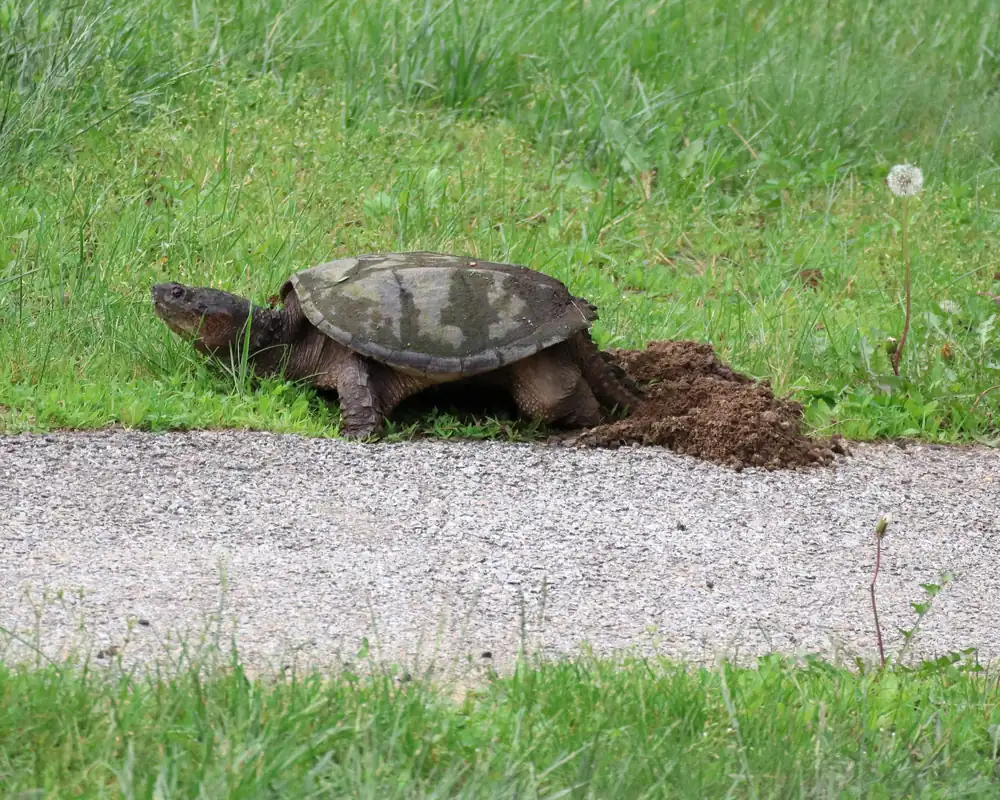
A DEEP wildlife biologist told Connecticut Public in 2024 that females leave the water to look for sunny, sandy soil. Snapping turtles can top a foot in length and need a decade or more to mature, so each adult lost on a road costs a local population for years. DEEP says turtles crossing roads in June and July are often pregnant females and advises helping them along rather than collecting them. Help only when it is safe, point the turtle the way it was already heading and never carry it far. Lift a snapping turtle by the back of the shell, not the tail, or nudge it along with a shovel. A turtle laying eggs should be left alone to finish.
-
Painted and box turtles
Nesting season runs May through July; hatchlings emerge in early fall · Soft soil near ponds and in woodland edges
Connecticut has eight native freshwater and land turtles, and nine of its 12 native species, sea turtles included, are on the state’s list of endangered, threatened and special concern species. Leave wild turtles where they are, never keep them as pets and never release captive turtles into the wild. If a turtle has nested in a busy spot, DEEP suggests covering the site with a marker such as a traffic cone, then removing any cover after a short time because shade changes the temperature of the eggs. Do not put a box turtle in water.
On a night walk, listen first and sketch where each call came from on the journal’s “a map of sounds” plate.
What young animals and night creatures are out in Connecticut in May?
Spring births make May the month when the best advice is often to step away. DEEP’s 2026 release on young wildlife has a plain message: many animals leave their young alone for long stretches, and a youngster alone is usually not abandoned.
-
White-tailed deer fawns
DEEP’s release says births run from May to late June; its deer fact sheet says usually June · Fields, forest edges, backyards and roadsides
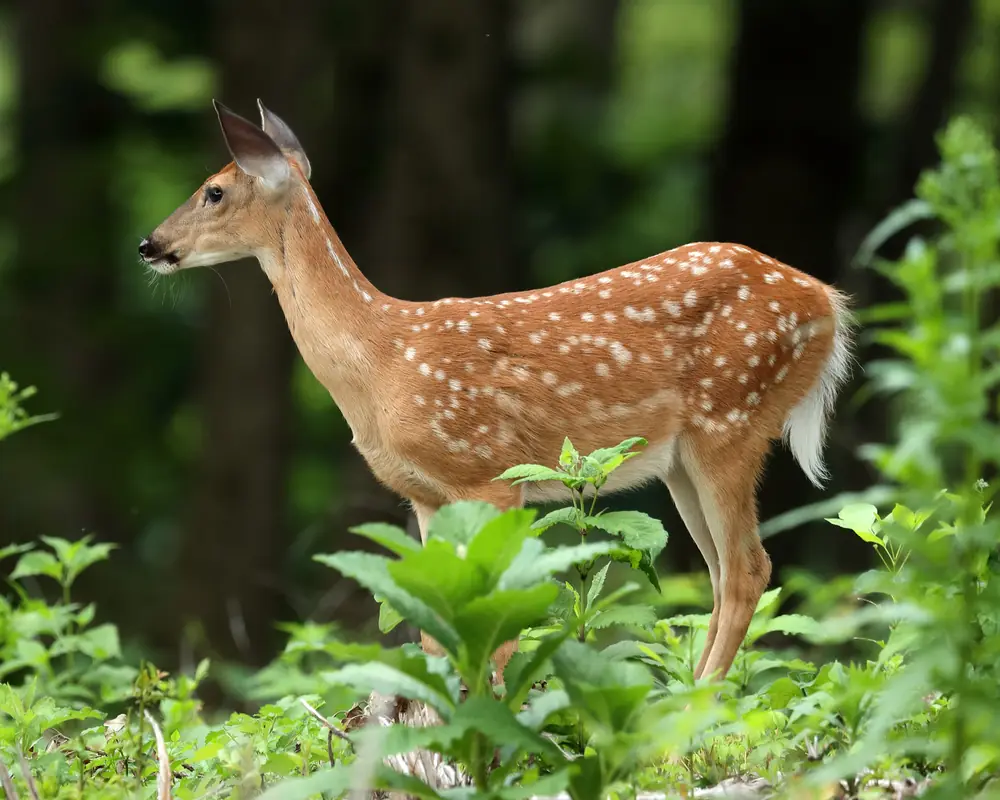
The two DEEP pages differ slightly on timing, so expect the first fawns late in May and most in June. Fawns weigh 4 to 8 pounds at birth, and twins are common in Connecticut. DEEP says a doe visits her fawn only three or four times a day, for about 15 minutes each time, to avoid drawing predators. A newborn freezes and lies still if approached. DEEP’s advice is to leave a found fawn for at least 48 hours, keep people and pets away, and call only if it wanders and cries for hours or looks injured. Removing a healthy fawn is illegal.
-
Black bears and their cubs
Cubs were born in the den in December or January; mating happens in late spring and early summer · Mostly the northwest quarter of the state, spreading east
DEEP puts the resident population at about 1,200 bears, including juveniles, and says it is growing. Litters are usually two or three cubs that stay with the mother until their second spring, which is why yearlings are now striking out on their own. Wetland plants are among the few spring foods. Where bears visit, skip the bird feeders, and take one down at once if a bear shows up. On a meeting, shout, wave your arms and back away slowly, with dogs leashed and no running. Mother bears often leave cubs alone or send them up a tree, so call the Wildlife Division rather than moving them.
-
Fox kits and rabbit nests
Kits play at den sites in spring and early summer; young cottontails leave their nests in 2 to 3 weeks · Yards, field edges and stone walls
Kits playing outside a den are normal, according to DEEP, and orphaning is rare because both parents raise them. Do not feed or approach them. A mother rabbit visits her nest only briefly, at dawn and dusk, so a nest that seems unattended is not abandoned. Keep pets and mowers away. Fully feathered young birds on the ground are usually fledglings still tended by their parents.
-
Bats
Report summer colonies to DEEP · Barns, eaves, bat houses, and the air over ponds at dusk
DEEP lists nine bat species in Connecticut: six cave bats and three tree-roosting bats. White-nose syndrome has killed nearly seven million cave bats in North America since 2006, and DEEP says little brown and northern long-eared bats have declined by more than 90 percent in the region. Tree-roosting bats are considered safe from the disease. If you have bats in a building, report the colony; never handle a live bat.
-
The first fireflies
Late May through July, with a peak from mid-June to mid-July · Meadows, lawns and woodland edges on warm, humid evenings
One local guide, in the Newtown Bee, gives late May as the usual start and says a warm, humid spring can bring them out sooner; treat the dates as rough. Connecticut entomologist Gale Ridge links declines in built-up areas to city lighting that interferes with their flashing. The guide suggests leaving fall leaf litter, skipping pesticides and turning off outdoor lights.
If an animal is truly injured, call the Wildlife Division at 860-424-3011 or, after hours and on weekends, DEEP Emergency Dispatch at 860-424-3333.
What blooms in Connecticut in May, and when does the state flower open?
In the hills, May is when the forest floor finally wakes. Along the shore, much of the spring flowering is behind you and the trees are already in leaf, while in the Northwest Hills the woodland ephemerals reach their best.
-
Woodland ephemerals in the Northwest Hills
Mostly through May in Norfolk, per a local writer · Barbour Woods and Great Mountain Forest near Norfolk
A Norfolk writer lists five spring ephemerals that bloom there mostly in May: bloodroot, yellow trout lily, jack-in-the-pulpit, red trillium and wild red columbine. Red trillium smells unpleasant, and the writer warns that bloodroot and columbine are toxic, so enjoy them by looking. Columbine’s downward-hanging flowers are pollinated most often by hummingbirds. Stay on the trail to protect next year’s shoots.
-
Mountain laurel, the state flower
Buds swell in May; flowers usually open from late May and mostly in early June, per UConn · Rocky woods, hillsides and roadsides, along Interstate 95 and throughout the state
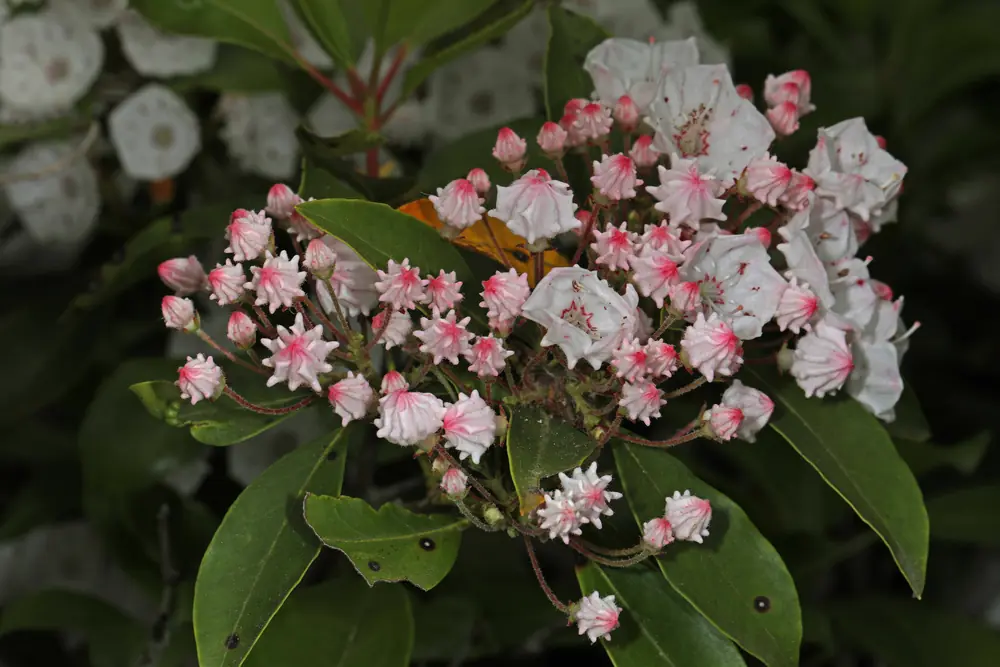
The General Assembly designated mountain laurel the state flower in 1907, and the state’s own page calls it perhaps the most beautiful of native American shrubs. The UConn Plant Database says it blooms in late May and mostly in early June, and that the flowers last two weeks or more. Native Plant Trust describes a multi-stemmed shrub with leathery, evergreen leaves and clusters of white or pink flowers. Every part of the plant is poisonous, so look but do not eat or chew it. In May, look for the bud clusters.
Note the day each flower opens on the daily field log, and photograph one patch of woods on May 1 and May 31. The flowers that open first are on the April page, linked above.
How much daylight does Connecticut gain in May?
The whole month runs on Eastern Daylight Time. The U.S. Naval Observatory has the sun at Hartford rising at 5:48 a.m. and setting at 7:49 p.m. on May 1, and rising at 5:19 a.m. and setting at 8:18 p.m. on May 31. Civil twilight begins at 4:46 a.m. that morning, which is when the dawn chorus is in full voice. The table shows the day length at eight Connecticut towns.
| City | May 1 | May 31 | Gained | Per day |
|---|---|---|---|---|
| Torrington | 14 h 02 m | 14 h 59 m | 57 min | 1.9 min |
| Hartford | 14 h 02 m | 14 h 59 m | 57 min | 1.9 min |
| Putnam | 14 h 02 m | 15 h 01 m | 59 min | 2.0 min |
| Waterbury | 14 h 01 m | 14 h 58 m | 57 min | 1.9 min |
| Danbury | 14 h 00 m | 14 h 57 m | 57 min | 1.9 min |
| New London | 14 h 00 m | 14 h 57 m | 57 min | 1.9 min |
| New Haven | 14 h 00 m | 14 h 57 m | 57 min | 1.9 min |
| Stamford | 13 h 59 m | 14 h 54 m | 55 min | 1.8 min |
The gain is slowing as the June solstice nears. For other places and dates, use our daylight page.
When is the last spring freeze in Connecticut?
By May, most of Connecticut has had its last freeze, but not all of it. The median last freeze falls on May 3 at Norfolk and May 1 at W Thompson Lake and Danbury, on April 21 at Hartford’s Bradley airport and on April 5 at Bridgeport. At Norfolk and W Thompson Lake, the nine-in-ten date is May 17. The figures are NOAA’s 1991 to 2020 normals.
| Station | One year in ten | Median | Nine years in ten |
|---|---|---|---|
| Norfolk 2 SW (Northwest Hills) | Apr 21 | May 3 | May 17 |
| W Thompson Lake (Quiet Corner) | Apr 20 | May 1 | May 17 |
| Danbury Municipal Airport (western hills) | Apr 18 | May 1 | May 16 |
| Hartford Bradley International Airport (Windsor Locks) | Apr 8 | Apr 21 | May 6 |
| Storrs (Mansfield) | Apr 7 | Apr 19 | May 3 |
| Norwich Public Utility Plant (southeast) | Apr 1 | Apr 14 | Apr 30 |
| New Haven Tweed Airport (central shoreline) | Apr 2 | Apr 17 | May 1 |
| Bridgeport Sikorsky Memorial Airport (Stratford, western shoreline) | Mar 25 | Apr 5 | Apr 17 |
The last column is what matters for tender plants: the hills can still see a frost into the middle of May. To check your own town, open the Connecticut frost page.
How warm is May in Connecticut, and what weather should you watch?
May is the month the weather finally settles into warmth. In NOAA’s 1991 to 2020 normals, Hartford’s average high is 71.7 °F and its low is 48.4 °F, with 3.79 inches of precipitation. Norfolk, in the hills, runs about six degrees cooler, with a 65.3 °F high and 45.4 °F low, and has the wettest May of the eight at 4.13 inches. Bridgeport on the shore has the mildest nights, at 51.7 °F. NOAA lists no May snowfall at the stations that report it.
| Station | Average high | Average low | Precipitation |
|---|---|---|---|
| Norfolk 2 SW (Northwest Hills) | 65.3 °F | 45.4 °F | 4.13 in |
| W Thompson Lake (Quiet Corner) | 68.6 °F | 45.1 °F | 3.43 in |
| Hartford Bradley International Airport (Windsor Locks) | 71.7 °F | 48.4 °F | 3.79 in |
| Storrs (Mansfield) | 67.6 °F | 47.7 °F | 3.73 in |
| Danbury Municipal Airport (western hills) | 69.1 °F | 46.4 °F | 3.78 in |
| Norwich Public Utility Plant (southeast) | 69.9 °F | 48.9 °F | 3.64 in |
| New Haven Tweed Airport (central shoreline) | 67.7 °F | 49.4 °F | 3.54 in |
| Bridgeport Sikorsky Memorial Airport (Stratford) | 68.4 °F | 51.7 °F | 3.58 in |
Three hazards deserve attention. Late frost. The freeze table shows the hills at risk until the middle of the month. Thunderstorms. On May 15, 2018, a line of storms crossed the state; NBC Connecticut reported at least two tornadoes in New Haven County, one starting near Bullet Hill Road in Southbury and one over Beacon Falls, with straight-line winds up to 100 mph, and one tornado near Bethany rated EF-1, or 110 mph. The National Weather Service office in New York counts 50 Connecticut tornadoes from 1950 to 2022, most of them in New Haven and Fairfield counties, so tornadoes here are uncommon, but a May storm line can still produce them. The weather page and clouds page explain what to watch as the sky darkens. Brush fires. DEEP’s spring fire season is not over while leaf litter stays dry, and local burn permits are suspended on high fire-danger days. The newest long-range outlook sits on NOAA’s seasonal outlook page, refreshed monthly.
What can you see in Connecticut’s night sky in May 2027?
A meteor shower at a new moon, a thin planet pair at dawn, a full moon with two names and Mercury at its best evening of the year. All of May is Eastern Daylight Time.
-
The Eta Aquariid meteors
Best before dawn on May 5, 6 and 7 · Look anywhere dark, toward the east before dawn
The shower is active from about April 19 to May 28, and the new moon on May 6 leaves it moonless. At Hartford, per the Naval Observatory, civil twilight begins about 5:10 a.m. on the 7th and the Moon is a thin sliver that rises at 4:46 a.m. on the 5th and 5:58 a.m. on the 7th. Sea and Sky says the shower can produce up to 60 an hour at its peak. In New England expect noticeably fewer, because the radiant in Aquarius climbs only an hour or two before sunrise at our latitude. Lie back, give your eyes 20 minutes and watch the eastern half of the sky.
-
Venus and Saturn at dawn
The morning of May 7, with the mornings before and after nearly as good · Very low in the east before sunrise
By our own calculation the two come within about 0.6 degrees of each other on May 7 and remain about a degree apart on the mornings before and after. Venus is brilliant, around magnitude minus 3.9; Saturn is far fainter at about plus 0.7. Both sit only a few degrees up half an hour before the 5:40 a.m. sunrise at Hartford, so you need a clear eastern horizon and binoculars. It is a hard sight, not an easy one.
-
The Flower Moon, a seasonal Blue Moon
Full at 6:59 a.m. EDT, Thursday, May 20 · Rising in the east just before sunset on the evening of May 19
Full arrives after the Moon has set, so watch on the evening of May 19. At Hartford the Moon rises at 7:51 p.m., 17 minutes before sunset, already 99 percent lit. The next evening it rises at 8:56 p.m. It earns the Blue Moon name under the seasonal rule, which counts four full moons in a season and gives the label to the third. This spring has four, ending with June 18 in local time. By the modern calendar-month rule 2027 has no Blue Moon at all, and Sea and Sky uses the seasonal count.
-
Jupiter and the Moon, then Mercury at dusk
Moon beside Jupiter on the evening of May 12; Mercury best from about May 12 to June 5, with May 27 and 28 closest to its peak · Jupiter high in the evening sky; Mercury low in the west-northwest after sunset
On May 12 the half-lit Moon sits beside Jupiter, closest (by our calculation) at 5:52 p.m. EDT, a gap of roughly 1.2 degrees, and the pair stands high in the evening sky. Mercury reaches its widest eastern gap from the Sun, 22.8 degrees, on May 28, and the evenings of May 27 and 28 come closest to that peak. Search the low west-northwest sky between 45 and 90 minutes after sunset, which at Hartford on May 27 (sunset 8:15 p.m.) means roughly 9:00 to 9:45 p.m. It fades quickly in early June.
| Phase | Date | Time |
|---|---|---|
| New moon | Thursday, May 6 | 6:58 a.m. EDT |
| First quarter | Thursday, May 13 | 12:44 a.m. EDT |
| Full moon, the Flower Moon (a seasonal Blue Moon) | Thursday, May 20 | 6:59 a.m. EDT |
| Last quarter | Friday, May 28 | 9:58 a.m. EDT |
The moon phases page lists the whole year, and the clouds page helps you guess whether the sky will cooperate.
What can families do outdoors in Connecticut in May?
The dates below are fixed by rule or are the organizers’ own; where a program has not posted its 2027 plan, we say so.
Sunday, May 9: Mother’s Day. The second Sunday in May falls near the peak for white-crowned sparrows, so a walk along a brushy field edge makes a good outing.
World Migratory Bird Day. It fell on May 9 in 2026; check the organizers’ site for the 2027 date.
Migration Magic and the Birdathon. Connecticut Audubon ran both through May 2026; its page says to check back for 2027 details.
Monday, May 31: Memorial Day. Federal law sets it on the last Monday in May. It is a big beach weekend, so stay clear of fenced plover and tern areas, and keep dogs away where they are banned and leashed where they are allowed.
Horseshoe crab watch. Visit a Sound beach at an evening high tide, and ask Project Limulus at Sacred Heart University about volunteering. A tagged crab can be reported at fws.gov/crabtag.
Citizen science. The Wildlife Division takes reports of bald eagle nests, banded purple martins, chimney swift roosts, bobcats and fishers, and its turkey brood survey runs June 1 to August 31. Post photos to the Discover Outdoor Connecticut project on iNaturalist. Connecticut-registered vehicles park free at state parks and forests through Passport to the Parks.
Safety notes for May in Connecticut
May’s hazards are small ones, mostly with legs, plus the usual storms.
Spring turkey season. Last year’s spring turkey season ran from April 29 to May 30, and DEEP has not published 2027 dates, so watch for its new hunting guide. In 2026 the daily limit was five bearded birds and Sunday hunting was open on private land only, and not within 40 yards of any blazed trail open to the public. DEEP does not require turkey hunters to wear orange but recommends a vest for the walk in and out. It also warns hunters away from red, white, blue and black, which resemble a gobbler’s head. If you hike or bird at dawn in turkey woods, avoid those four colors.
Ticks. In April 2026 the Connecticut Agricultural Experiment Station (CAES) reported that more than 40 percent of recently tested blacklegged ticks carried the Lyme bacterium and that lone star, Gulf Coast and longhorned ticks have settled mainly in coastal Fairfield and New Haven counties. The CDC rates spring, summer and fall as the riskiest seasons for blacklegged tick bites, with nymphs and adult females the stages most likely to bite people. Use repellent and check your skin after every outing.
Mosquitoes. The State Mosquito Management Program begins trapping on June 1 and runs through October; West Nile virus usually first appears in late June or July.
Snapping turtles. Do not pick one up by the tail; if you must move one, use a shovel, or leave it alone.
Poisonous plants. Mountain laurel, bloodroot and columbine are toxic if eaten.
Bears. Keep trash secured and never feed one.
Fires. Local burn permits are suspended on days of high or worse fire danger; clear a 10-foot circle around any campfire and drown it before you go.
Storms. If thunder is audible, get indoors or into a car.
Sources (46)
- Connecticut Audubon Society: Migration Magic 2026 (May festival, Birdathon; 2027 not posted)
- Westport Journal: Connecticut Audubon Migration Magic events, May 2026
- New England magazine: rite of return, a Connecticut migratory bird parade
- Audubon Connecticut: Hammonasset Beach State Park, salt marsh days
- Journey North: more hummingbird arrivals (May 8, 2020)
- World Migratory Bird Day (2026 dates; 2027 not posted)
- WBUR: Connecticut horseshoe crab law (August 2023)
- Holyoke Gas and Electric, Barrett Fishway: American shad timing and water temperature
- CT DEEP: American shad assessment
- CT DEEP: fishing licenses and permits (2026 free fishing days)
- CT DEEP: piping plover fact sheet (incubation, chicks, fencing, drones)
- CT DEEP: share the shore with nesting birds (2026)
- CT DEEP: osprey fact sheet (eggs, hatching, 300-foot distance)
- CT DEEP: purple martin fact sheet (houses, eggs and young, colony reports)
- CT DEEP: community science and volunteer opportunities, Wildlife Division
- CT DEEP: turtles of Connecticut (nesting, road crossings, status)
- Connecticut Public: snapping turtles, road kill and nesting season (2024)
- CT DEEP: hands off, young wildlife should be left alone (2026)
- CT DEEP: white-tailed deer fact sheet (fawns)
- CT DEEP: black bear fact sheet (cubs, feeders, encounters)
- CT DEEP: bats in Connecticut (species, white-nose syndrome, reporting)
- Newtown Bee: Connecticut fireflies guide
- Norfolk Now: discovering the short-lived beauty of wildflowers
- State of Connecticut: the state flower, mountain laurel
- Native Plant Trust, Go Botany: Kalmia latifolia (mountain laurel)
- NOAA NCEI: monthly climate normals 1991-2020 for Connecticut stations (May)
- NBC Connecticut: May 15, 2018, Southbury to Hamden tornado
- CT DEEP: spring brush fire season, April 2025 release
- NOAA Climate Prediction Center: 90-day seasonal outlook page
- U.S. Naval Observatory: sun and moon data for Hartford, May 1, 2027
- U.S. Naval Observatory: sun and moon data for Hartford, May 7, 2027
- U.S. Naval Observatory: sun and moon data for Hartford, May 19, 2027
- U.S. Naval Observatory: sun and moon data for Hartford, May 27, 2027
- U.S. Naval Observatory: sun and moon data for Hartford, May 31, 2027
- Sea and Sky: astronomy calendar 2027 (Eta Aquariids, Flower Moon and Blue Moon, Mercury)
- CT DEEP: 2026 wild turkey hunting (season, hours, Sunday rule, orange advice)
- Connecticut Agricultural Experiment Station: tick activity, April 6, 2026
- Centers for Disease Control and Prevention: where ticks live
- Connecticut Mosquito Management Program: press room (2026 trapping season)
- U.S. Code, 5 U.S.C. 6103: Memorial Day, the last Monday in May
- CT DEEP: Passport to the Parks
- Photos via Wikimedia Commons; licenses and photographers are credited under each picture
- Atlantic States Marine Fisheries Commission: horseshoe crab life history and habitat needs
- UConn: frogs and turtles of Connecticut (course notes, 2017)
- UConn Plant Database: Kalmia latifolia, mountain-laurel
- National Weather Service New York: Connecticut tornado statistics, 1950 to 2022