What to look for in nature in Connecticut this October
Connecticut’s October runs from the hills down to the Sound. Color starts in Norfolk and the Quiet Corner and reaches the Greenwich shore in November; sharp-shinned hawks and kestrels stream west past Lighthouse Point; hatchery trucks carry broodstock salmon to the Naugatuck and Shetucket; and bears go looking for every calorie they can find. This guide follows the month place by place, with dates.
Start here

- Hawks over Lighthouse Point. New Haven’s Lighthouse Point Park counts more migrating raptors in fall than almost anywhere in the Northeast. Sharp-shinned hawks and merlins pass in their thousands from late September to mid-October, and red-tails take over late in the month. Go on the morning after a cold front, when the wind swings northwest.
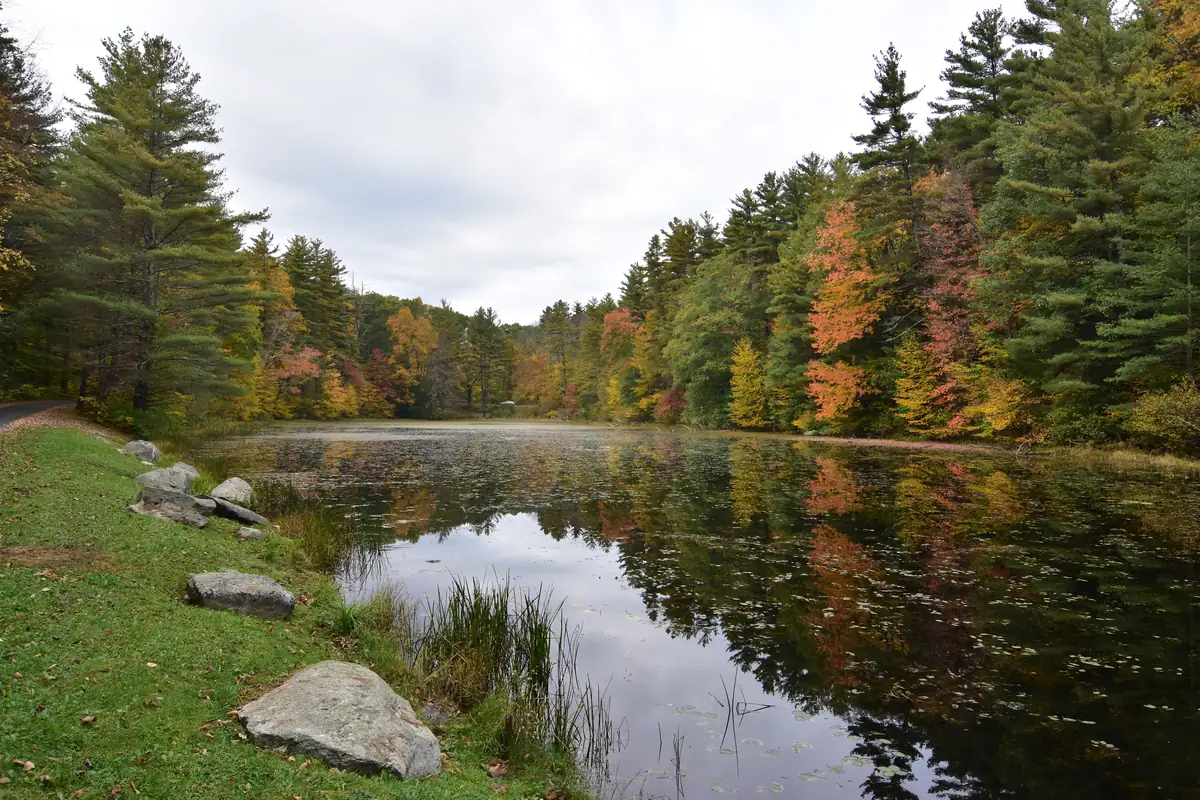
- Color moving south. DEEP’s 2026 foliage map, as reported by Connecticut Public, puts peak color in the northern tier October 14–20, the middle of the state October 21–27 and the south October 28 to November 3, later than usual after a record-wet summer on the coast.
- Jupiter disappears, then the Hunter’s Moon. Before dawn on Tuesday, October 6, a thin crescent moon slides over Jupiter at about 4:25 a.m. and lets it go at about 5:28 a.m. Eastern, with the sky still dark throughout. The full Hunter’s Moon comes up at dusk on October 25 and again on the 26th, and the best Orionid mornings are October 21 and 22.
Write it down. The hawks and sparrows belong on the “birds I have seen” list of the Naturalist’s Field Journal; one maple or oak you pass every day belongs on the tree-through-the-seasons page; acorns and witch hazel capsules go on the seeds-pods-and-cones plate; the occultation morning fits the dusk-and-dawn watch; and the daily field log keeps the date of your first frost. Date every entry.
Regions used below: Northwest Hills and Litchfield County; Hartford and the Connecticut River Valley; The Quiet Corner (northeast); Fairfield County and the southwest; New Haven and the central shoreline; Southeast and the lower Connecticut River.
When is peak fall color in Connecticut?
Later than usual, if the 2026 map holds. Connecticut Public reported on September 17 that DEEP’s foliage map this year puts northern Connecticut at peak October 14–20, the middle of the state October 21–27 and southern Connecticut October 28 to November 3. UConn Extension forester Thomas Worthley expects the statewide peak in mid-to-late October, and put the delay plainly: “If things stay warm, the leaves stay green.” The summer was warm and very wet, with Bridgeport logging more than 21 inches of rain in June, July and August, its wettest such stretch on record.
DEEP’s standing schedule, still posted on the state tourism site, runs about a week earlier in the north: the northwest and northeast corners October 7–13, the eastern and western mid-state counties October 14–20, the shoreline and lower Connecticut River October 28 to November 3, and the southwest corner November 4–10. State Forester Christopher Martin’s note with it is the useful part: a well-watered forest colors brilliantly, and if cool nights set in, most of the schedule can collapse into one spectacular week. Treat the two versions as bookends.
| Region | Reference places | 2026 map | Standing schedule |
|---|---|---|---|
| Northwest Hills and the Quiet Corner | Norfolk, Canaan, Salisbury; Thompson, Woodstock, Pomfret | Oct 14–20 | Oct 7–13 |
| Mid-state | Litchfield, Waterbury, Hartford, Storrs, Danbury | Oct 21–27 | Oct 14–20 |
| Shoreline and lower Connecticut River | Old Lyme, Essex, Madison, New Haven, Mystic | Oct 28–Nov 3 | Oct 28–Nov 3 |
| Southwest corner | Greenwich, Stamford, Norwalk | Oct 28–Nov 3 (southern band) | Nov 4–10 |
There is some good news inside the late forecast. Worthley told Connecticut Public that the maple leaf fungus that has browned and dropped canopies early in recent years has been less common this year, so the sugar and red maples should carry full crowns into their color. Red maples in swamps turn first, often in late September; sugar maples follow with oranges and yellows; the oaks, which cover much of the state, come last and hold russet and brown into November.
Where can you watch hawks migrate in Connecticut in October?
Hawks moving south along New England hit the Connecticut shore and turn west rather than cross Long Island Sound, which funnels them past a handful of coastal points. The best known is Lighthouse Point Park, on the east side of New Haven Harbor, where the New Haven Bird Club’s count, coordinated by Steve Mayo and sent to the Hawk Migration Association of North America, runs from late August to the end of November. HMANA’s records there reach back to 1970.
-
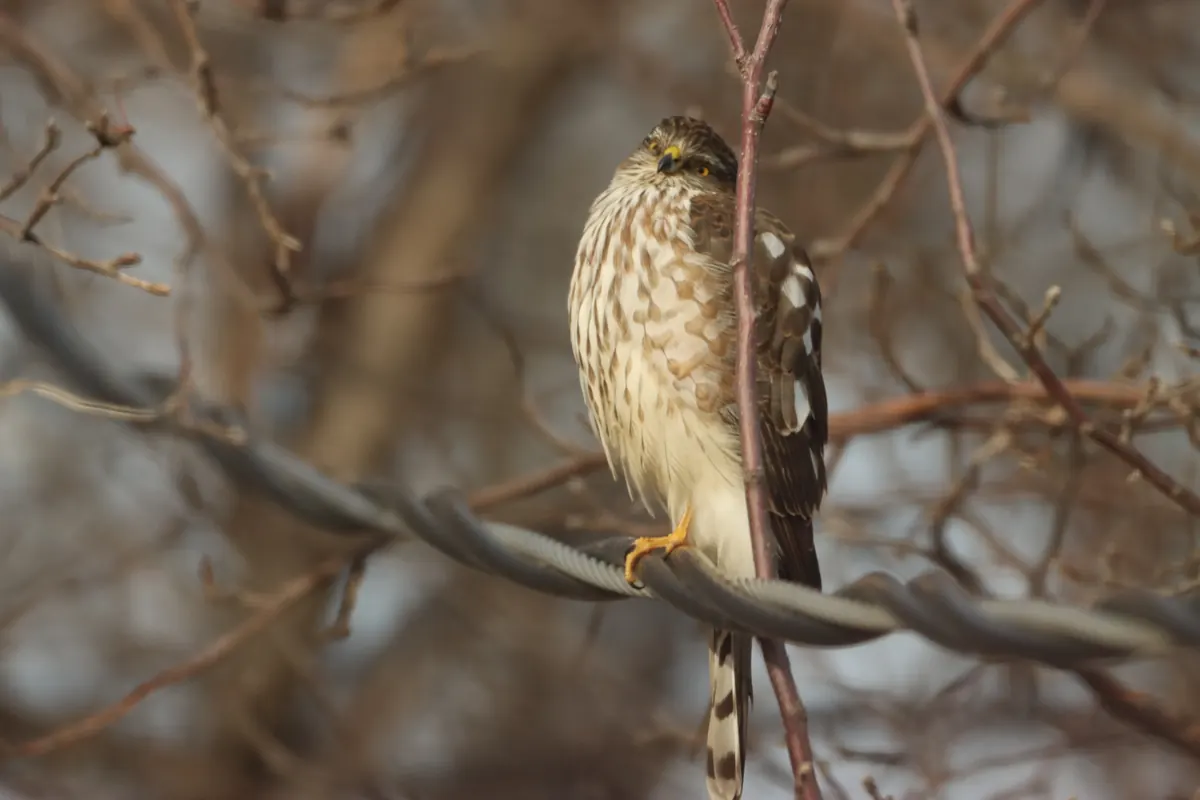
Sharp-shinned hawks, kestrels and merlins
Late September to mid-October · Lighthouse Point Park, New Haven
The site’s long-term averages are striking: about 5,500 sharp-shinned hawks a season, peaking late September to mid-October, with more than 1,900 American kestrels and about 300 merlins over the same weeks. The biggest single days are the stuff of local legend, including more than 1,500 sharpies on October 8, 2001. Recent years run lower than the 1980s and ’90s, when September alone could top 10,000 birds, so count yourself lucky with a few hundred. Small falcons often skim the treetops right over the parking lot.
-
Cooper’s hawks, harriers and peregrines
Cooper’s through early November; harriers and peregrines late September to early October · Coastal points from Greenwich to Stonington
HMANA’s averages at Lighthouse Point put Cooper’s hawks near 900 a season, northern harriers around 420 and peregrines under 100, most of the falcons in the first days of the month.
-
Red-tails and the late flight
Late October into early November · Lighthouse Point; inland ridges
Red-tailed hawks are the late migrants, peaking at the site from late October into early November, when the watch thins to a few committed counters in coats.
-
Other Connecticut watches
Whenever the wind is northwest · Quaker Ridge (Greenwich Audubon), Hammonasset Beach State Park, Sandy Point in West Haven
Quaker Ridge, at the Greenwich Audubon Center, is the big inland site, best for the September broad-wings but worth an October morning. Hammonasset and Sandy Point catch the same coastal stream as Lighthouse Point. The rule for every site is the same: the first clear day behind a cold front, with a northwest breeze, is the day to go; a south wind and haze empties the sky.
Two dated chances to learn from the counters: the New Haven Bird Club leads a walk at Lighthouse Point on Wednesday, October 7, 8 to 11 a.m. (registration required, twenty people), and the Connecticut Ornithological Association runs a free hawk identification workshop there with Steve Mayo on Saturday, October 10, 10 to 11 a.m., as part of the park’s Fall Migration Festival. Check with the organizers the day before; hawk events follow the weather.
What other birds and butterflies are moving through Connecticut in October?
The warblers of September give way to sparrows, kinglets and the first waterbirds of winter. The coast gets the most variety, because migrants that overshoot at night end up on the last patch of land before the water.
-
The Goose Island swallows, winding down
Peak mid-September; some roosting into October · Connecticut River off Old Lyme, south of Essex
Every late summer, hundreds of thousands of tree swallows from New England and the Maritimes gather at dusk over the reeds of Goose Island and pour down into them to sleep. Connecticut Public, reporting in 2025, put the peak in mid-September and said the roost carries on through late October before the birds leave. RiverQuest’s sunset cruises to the roost ended September 23 this year, so an October visit means watching from shore on a calm evening and accepting smaller numbers. Connecticut Audubon’s Matthew Bell explained the choice of site: raccoons, skunks and other predators can’t swim out to the island.
-
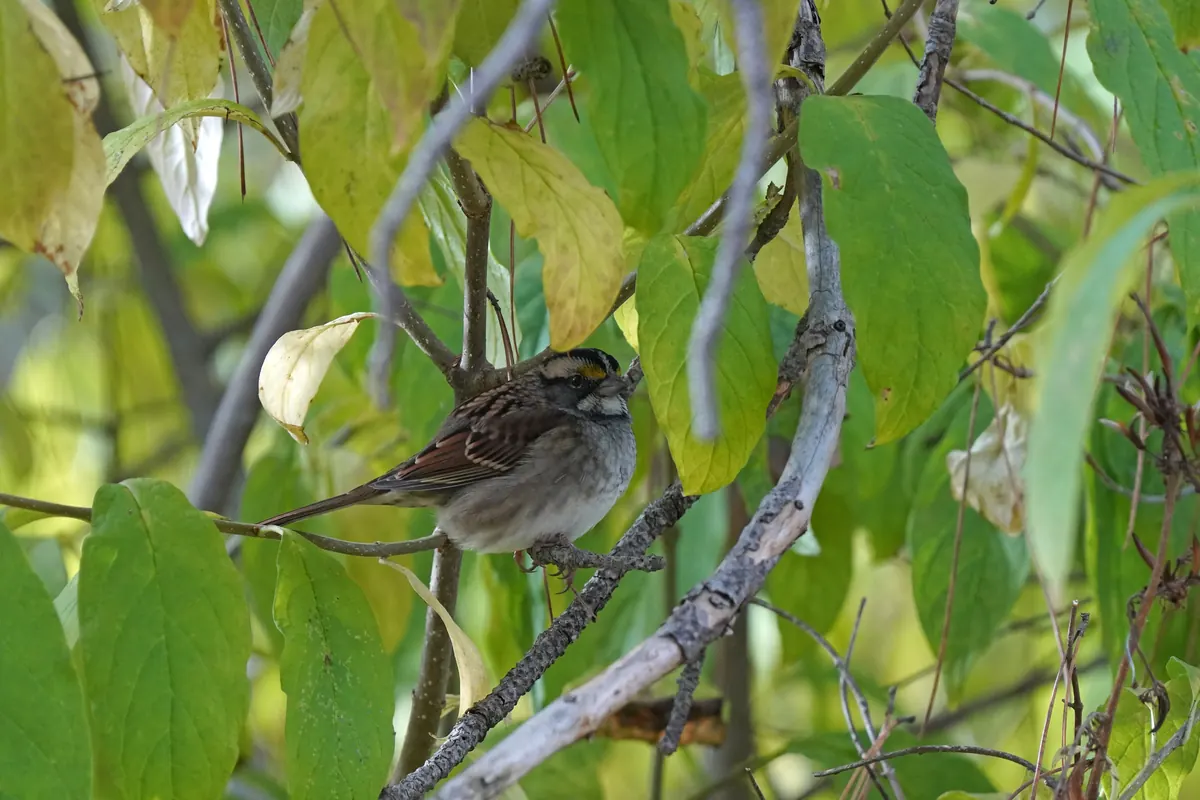
Sparrows, kinglets and juncos
All month · Hedgerows, weedy fields and marsh edges statewide; Hammonasset and McKinney refuge on the coast
White-throated sparrows rustle in every thicket, golden-crowned and ruby-crowned kinglets work the pines, and dark-eyed juncos arrive from the north. The Salt Meadow unit of Stewart B. McKinney National Wildlife Refuge, one of ten refuge units along 70 miles of shore, is used by more than 280 species of migrating birds. The New Haven Bird Club’s October walks visit Hammonasset (October 3), McKinney’s Great Meadows unit in Stratford (October 4) and the Farm River in East Haven (October 25), all 8 to 11 a.m.
-
Blue jays on the move, few northern finches
October into November · Coast and ridges in the morning
Published September 25, the Finch Research Network’s winter forecast calls the acorn and beechnut crops in the East “quite good and widespread” and expects a strong blue jay flight along the Great Lakes, so loose strings of jays flying south over the shore are likely. Good cone and seed crops up north should keep most red-breasted nuthatches, pine siskins and purple finches there this winter, though a small evening grosbeak movement into Massachusetts and southern New York is possible, and red crossbills may show up in the Northeast.
-
The Big Sit, born in New Haven
Saturday and Sunday, October 10–11 · Any 17-foot circle you choose
The Big Sit asks birders to stay inside a circle 17 feet across for up to a full day and list every species seen or heard from it. The New Haven Bird Club invented it in 1992, and the club still fields local circles. A backyard or a beach parking lot works; a thermos and a notebook are the only equipment. eBird’s October Big Day falls on the same Saturday.
-
The last monarchs
Stragglers into early October · Goldenrod and aster patches along the shore
The Connecticut shore sits at 41° N, where Monarch Watch dates the peak passage to September 8–20, so October brings only stragglers. It also notes that headwinds and storms push the migration toward the coast, sweeping monarchs to the shore behind cold fronts, which is why late ones turn up nectaring at Hammonasset or Milford Point after the inland fields are empty. Log your last sighting with Journey North.
Turn off unneeded outdoor lights on nights with a north wind; most songbirds migrate in the dark and are drawn off course by bright buildings and porches.
When does Connecticut stock salmon and trout in the fall?
The hatchery trucks started rolling with the first days of fall. DEEP’s Fisheries Division plans to put more than 60,000 brook, brown, rainbow and tiger trout and over 2,000 Atlantic salmon into 38 lakes and ponds and 37 river and stream sections this fall, and it updates a stocking report daily as each water is done. The first loads went to the Housatonic: more than 12,000 brown and rainbow trout in the Cornwall and Bulls Bridge trout management areas.
-
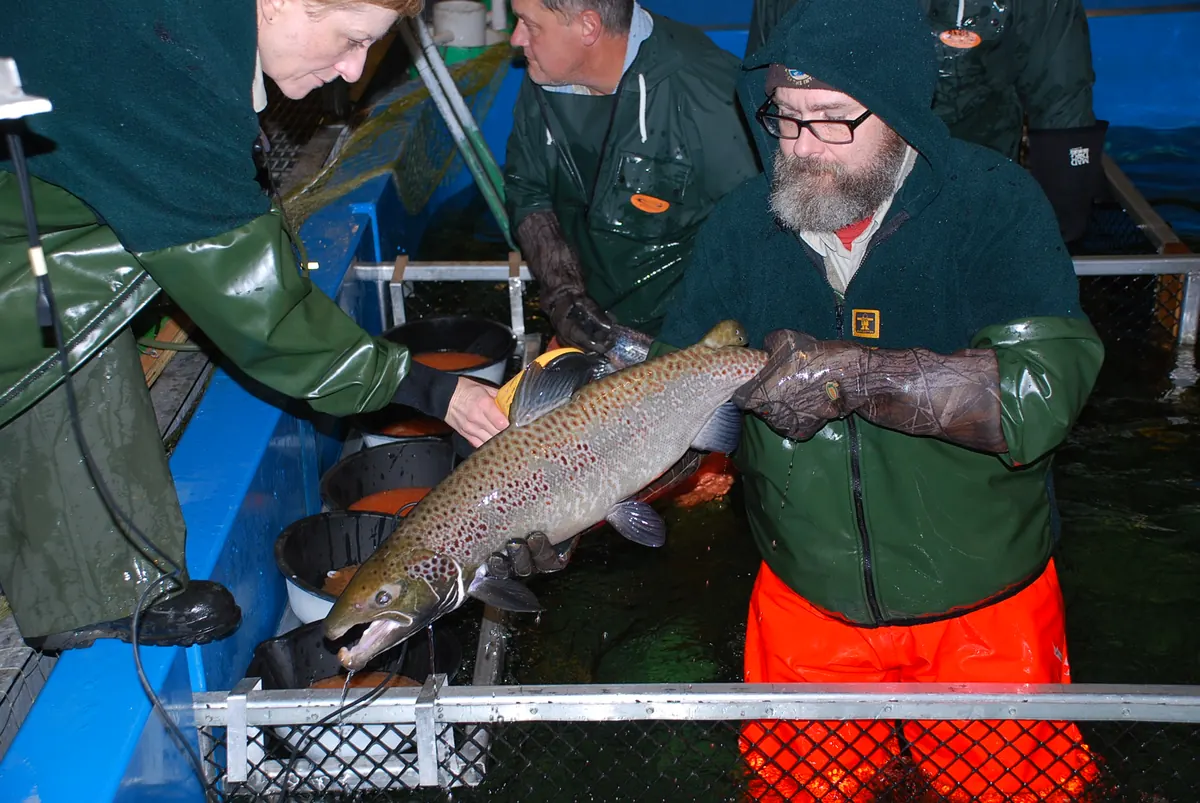
Broodstock Atlantic salmon
Late September into December · Naugatuck River, Shetucket River, Crystal Lake (Ellington and Stafford), Mount Tom Pond
These are big fish raised at DEEP’s Kensington State Fish Hatchery for anglers, most of them 2 to 5 pounds and a couple of hundred at 10 to 15 pounds once they have been spawned. In 2023 the salmon were catch-and-release until December 15, with one fish a day allowed after that; confirm this year’s dates in the 2026 fishing guide.
-
Fall trout in lakes and streams
October and November · Trout parks, trout management areas and community fishing waters statewide
The fall list includes small, family-friendly waters such as Black Rock Pond in Watertown, Bunnells Pond at Beardsley Park in Bridgeport and Center Springs Park Pond in Manchester, alongside larger rivers. Cool water and fewer anglers make October one of the easiest months to catch a first trout. DEEP’s interactive stocking map shows what went in and where.
When is the first frost and freeze in Connecticut?
Connecticut’s first freeze is a story of elevation and water. Norfolk, 408 meters up in the Northwest Hills, reaches its median first 32 °F night on October 11, and in one year in ten it has frozen by October 1. At the Thompson station in the Quiet Corner the median is October 9. On the Sound it is a different season: Bridgeport’s Sikorsky airport, at sea level, waits until November 6 in a typical year. Even within Hartford, the valley-floor Bradley airport (median October 16) and the riverfront Brainard Field (October 26) sit ten days apart, a reminder that an open airfield on the valley floor and a riverside airport beside the city are different climates. Frost on the lawn often comes a week or two before the thermometer at head height reads freezing.
| Station | One year in ten | Median | Nine years in ten |
|---|---|---|---|
| Norfolk 2 SW (Northwest Hills) | Oct 1 | Oct 11 | Oct 28 |
| W Thompson Lake (Quiet Corner) | Sep 30 | Oct 9 | Oct 26 |
| Danbury Municipal Airport (western hills) | Oct 1 | Oct 14 | Oct 29 |
| Hartford Bradley International Airport (Windsor Locks) | Oct 3 | Oct 16 | Nov 2 |
| Storrs (Mansfield) | Oct 6 | Oct 22 | Nov 6 |
| Hartford Brainard Field (Hartford riverfront) | Oct 12 | Oct 26 | Nov 7 |
| Norwich Public Utility Plt (southeast) | Oct 9 | Oct 24 | Nov 7 |
| New Haven Tweed Airport (central shoreline) | Oct 11 | Oct 27 | Nov 8 |
| Bridgeport Sikorsky Mem Airport (Stratford, western shoreline) | Oct 25 | Nov 6 | Nov 20 |
All 23 Connecticut stations, including Groton, Meriden, Ansonia and Stamford, are on our Connecticut frost dates page. In the hills, bring the tender plants in by the first week of October; on the shore you can usually wait until the end of the month. Write down the morning the birdbath first has ice on it.
How much daylight does Connecticut lose in October?
Close to an hour and twenty minutes. Torrington loses 81 minutes between October 1 and October 31, Hartford and Waterbury 80, and Stamford and New Haven 78, or roughly 2.6 to 2.7 minutes a day. In Hartford the sun comes up at 6:48 a.m. on the first of the month and 7:22 a.m. on the last, and it sets at 6:32 p.m. at the start and 5:46 p.m. by Halloween. Daylight time ends in the small hours of November 1 (officially 2 a.m.), after which a Hartford sunset comes at 4:45 p.m.
| City | Oct 1 | Oct 31 | Lost | Per day |
|---|---|---|---|---|
| Torrington | 11 h 45 m | 10 h 24 m | 81 min | 2.7 min |
| Hartford | 11 h 44 m | 10 h 24 m | 80 min | 2.7 min |
| Waterbury | 11 h 45 m | 10 h 25 m | 80 min | 2.7 min |
| Danbury | 11 h 45 m | 10 h 26 m | 79 min | 2.6 min |
| New London | 11 h 45 m | 10 h 26 m | 79 min | 2.6 min |
| Bridgeport | 11 h 45 m | 10 h 26 m | 79 min | 2.6 min |
| New Haven | 11 h 44 m | 10 h 26 m | 78 min | 2.6 min |
| Stamford | 11 h 45 m | 10 h 27 m | 78 min | 2.6 min |
For your own street, the Field almanac gives sunrise, sunset, twilight and the minutes gained or lost this week.
What is October weather like in Connecticut, and what could El Niño bring this winter?
October is crisp and usually generous with sun, but it is not a dry month here. NOAA’s 1991–2020 normals give Bradley airport an average high of 63.5 °F and low of 42.4 °F, with 4.52 inches of rain, The shore stays milder at night: Bridgeport averages 64.4 and 48.3 °F with 3.84 inches, New Haven 63.8 and 45.5 °F, and Groton 63.2 and 45.6 °F. By November the Bradley high has dropped to 51.5 °F.
Snow is not normal in October, at 0.7 inch at Bradley and a tenth of an inch at Bridgeport, but the state remembers the exception. The nor’easter of October 29–30, 2011, dropped 12.3 inches on Hartford, an October record, and 24 inches in Farmington. Because the trees were still in leaf, limbs and whole trunks came down across the lines, about 830,000 customers lost power, and some waited eleven days to get it back. Any early wet snow before leaf drop is worth taking seriously.
The winter ahead has a strong El Niño behind it. Forecasters at the Climate Prediction Center, writing on September 10, rated a very strong El Niño by midwinter as better than nine chances in ten, and gave three chances in four that the October–December season sets a new record for strength since 1950. For Connecticut the signal is weaker than in the South or West. NOAA’s Climate.gov has said as much outright: the link between El Niño and winter weather from the Carolinas through the Northeast “is not very strong,” though the composites lean slightly snowier for the mid-Atlantic and Northeast, and a NOAA forecaster answering a Vermont reader on the same page expected above-average temperatures in northern New England during El Niño winters, with more rain than snow. For Connecticut, then, lean mild but hold the snow shovel: whether any one storm brings snow or rain will depend on its track and on whether cold air is in place. October itself will hardly feel it. CPC updates its discussion on October 8, and NOAA’s seasonal outlook for the winter follows in mid-October.
What can you see in Connecticut’s night sky in October?
-
The moon covers Jupiter
Tuesday, October 6, about 4:25 to 5:28 a.m. EDT · East, moon 21 to 33 degrees up
The best sky event of the month happens before breakfast. The waning crescent, 18 percent lit, rises in Hartford at 2:15 a.m. with Jupiter just beside it. Jupiter vanishes behind the moon’s bright limb at 4:24 a.m. at Stratford and 4:25 a.m. at Windsor Locks, according to the International Occultation Timing Association, and reappears from the dark limb at about 5:28 a.m. at both. The sun does not rise until 6:53 a.m., so both events happen in full darkness. Binoculars or a small telescope show the disk being swallowed over several seconds.
-
The Hunter’s Moon
Sunday, October 25 and Monday, October 26, at dusk · Low in the east-northeast
Full at 12:12 a.m. EDT on the 26th, so it looks full on both evenings. In Hartford it rises at 5:19 p.m. on the 25th, roughly 35 minutes ahead of the 5:54 sunset, and at 5:50 p.m. on the 26th, almost with the sun going down. It is not a supermoon this year. Find a view across a field, a reservoir or the Sound for the orange rising moon.
-
Orionid meteors
Before dawn, October 21 and 22 · Anywhere dark; look high in the south and east
The Orionids, dust from Halley’s Comet, show up from October 2 through November 7, with the most meteors across October 21–22. Expect perhaps 10 to 20 an hour from a dark place. The gibbous moon sets in Hartford at 2:00 a.m. on the 21st and 3:06 a.m. on the 22nd, leaving several dark hours before the sky begins to pale, about an hour ahead of the 7:10 a.m. sunrise.
-
Draconid meteors
Evening of Thursday, October 8 · Face north after dark
An early-evening shower, which makes it one for children, and the moon does not rise until 4:39 a.m., so the evening is moonless. Rates are usually low and unpredictable, but a few slow meteors radiating from the head of Draco, high in the northwest after dusk, are a good excuse for a blanket on the lawn.
-
Saturn all night, Jupiter and Mars at dawn
Saturn at opposition October 4; moon nearby October 23–24; Mars at the Beehive the morning of October 11 · Saturn southeast at dusk; Jupiter and Mars east before sunrise
Saturn reaches opposition on Sunday, October 4, rising at sunset and staying up until dawn, a steady, pale gold light in a sparse patch of stars; the waxing gibbous moon passes it on October 23 and 24. As for Venus, it is only a low glint in the western twilight in the first days of the month and on October 23 it crosses to the morning side of the sun. Before dawn, Jupiter is the brilliant point in the east, and on the morning of October 11 reddish Mars sits in front of the Beehive star cluster, a lovely pair in binoculars.
| Phase | Date | Time |
|---|---|---|
| Last quarter | Saturday, Oct 3 | 9:25 a.m. EDT |
| New moon | Saturday, Oct 10 | 11:50 a.m. EDT |
| First quarter | Sunday, Oct 18 | 12:12 p.m. EDT |
| Full moon, the Hunter’s Moon | Monday, Oct 26 | 12:12 a.m. EDT (looks full the evenings of Oct 25 and 26) |
| Last quarter | Sunday, Nov 1 | 3:28 p.m. EST |
Check tonight’s cloud cover on Today’s sky before you set an alarm, and look up moonrise for your town on the moon phases page.
What is blooming, dropping and ripening in Connecticut in October?
-
Witch hazel
Late September into November · Moist woods, stream banks and ravines statewide
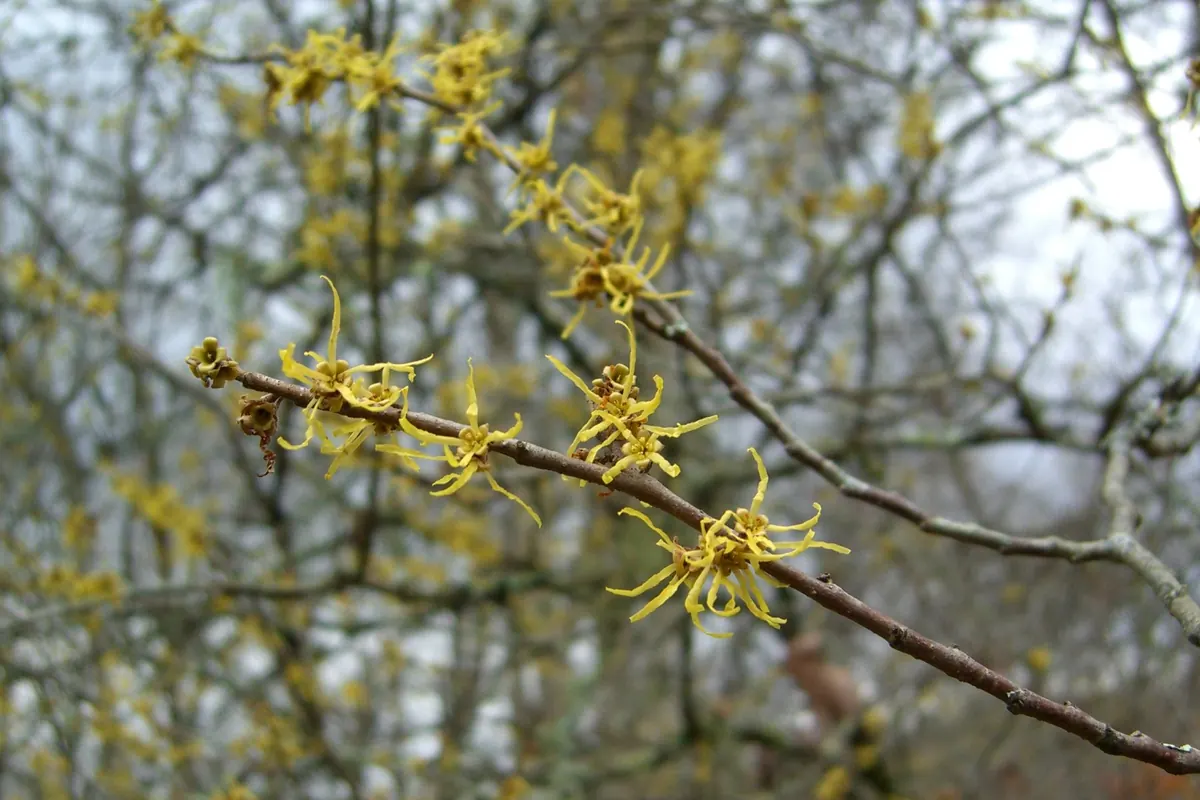
The native witch hazel blooms when almost everything else is done, putting out thin, crinkled yellow petals from late September to late November, often after its own leaves have turned yellow or dropped. On the same twigs, last year’s woody capsules split and fire their two shiny black seeds as far as 10 meters. Stand near a shrub on a dry afternoon and you may hear the capsules snap.
-
Asters and goldenrods
Through the first hard freeze · Roadsides, meadows, salt-marsh edges
New England aster, purple with a yellow eye, and the goldenrods are the last big nectar source of the year, working hard for bumblebee queens, late monarchs and flies on every sunny day.
-
Acorns everywhere
September and October · Oak woods, yards, sidewalks
The Finch Research Network rates this year’s acorn crop in the East as good and widespread, and a heavy acorn fall matters in Connecticut for more than squirrels. Acorns carry about 2,100 calories a pound, DEEP says, and they are what bears, deer, turkeys and blue jays lean on this month. Count how many fall under one oak in a week and write the number down; heavy and light years alternate irregularly.
-
Mushrooms after the rain
After every soaking · Oak bases, logs, lawns
A wet summer usually means a strong fall fungus season. Look for hen of the woods at the base of old oaks, shelf fungi on logs and puffballs on lawns. Photograph them, note what tree they were on, and eat nothing wild unless an experienced local identifier has checked it in person.
What are Connecticut’s bears, deer and other animals doing in October?
-
Bears eating all day
Through November; denning from late November · Statewide; most in the northwest, spreading east
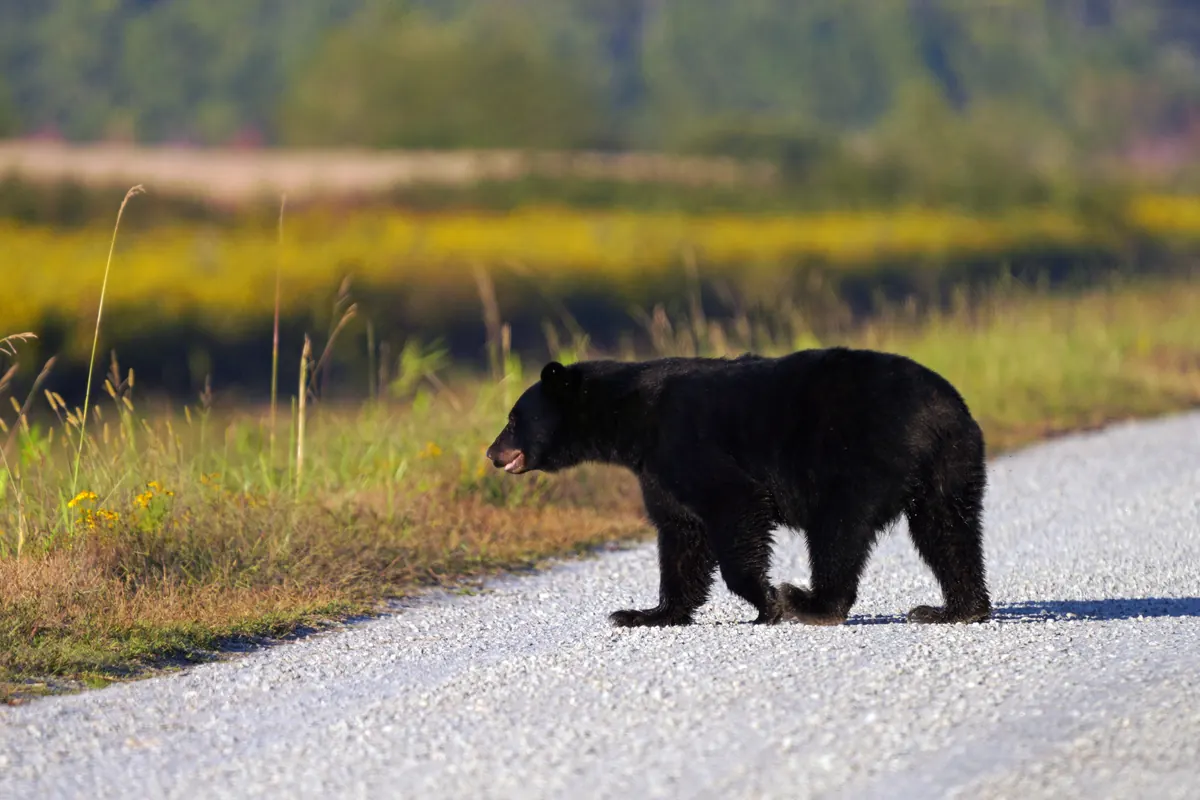
DEEP puts the state’s resident bear population around 1,200, most of it in the northwest quarter but spreading into eastern Connecticut, and bears have now been seen in all 169 towns. In fall they enter hyperphagia and can eat 20,000 calories a day. DEEP’s September 21, 2026 release counted more than 60 bear entries into homes in 20 towns this year, and it points out that a bird feeder or open trash can gives a bear as many calories in less than an hour as a full day of acorns. The agency asks residents to take feeders down, keep trash in a garage until pickup and feed pets indoors. Bears usually den from late November to mid-March.
-
Deer: the rut begins
Late October; peak the last two weeks of November · Woods edges and roads at dusk and dawn
DEEP says the rut starts in late October and runs into early January, with the peak in Connecticut in the last two weeks of November. This month bucks rub saplings to strip the velvet and scrape bare patches under low branches, and deer feed hard on acorns and fallen apples. Watch the roadsides after sunset, especially now that the evening commute runs into dark.
-
Woolly bears crossing
Warm afternoons all month · Trails, driveways and roads
The black-and-rust woolly bear, the caterpillar of the Isabella tiger moth, is on the move looking for leaf litter to freeze solid in over winter. The width of its bands tells you about its age and the season it grew in, not the coming winter.
-
Ticks in the leaves
October and November, and any mild winter day · Leaf litter, trail edges, stone walls
Adult blacklegged ticks, the ones that carry Lyme disease, are most active in fall, and Connecticut’s oak woods and stone walls suit them perfectly. Wear long pants tucked into socks, use a repellent, and check children and dogs after every walk.
-
The last crickets
Until the first hard freeze · Gardens and field edges on mild evenings
The snowy tree cricket’s even trill slows as the evening cools. Count the chirps in 14 seconds and add 40 for a rough Fahrenheit temperature, and record the count on the cricket thermometer page of the Naturalist’s Field Journal. The night you hear nothing is the start of winter.
What are the best outdoor outings for Connecticut families in October?
- Saturday, October 3: Hammonasset. A New Haven Bird Club walk 8 to 11 a.m., then a beach cleanup at Meigs Point Nature Center from 10 a.m. to noon.
- Tuesday, October 6, before school: the moon covers Jupiter. Set an alarm for 4:15 a.m., look east, and watch the planet vanish at about 4:25 a.m.
- Thursday, October 8: Draconids after dark, in a moonless evening sky.
- Saturday, October 10: the Lighthouse Point hawk day. The Fall Migration Festival and the free hawk ID workshop at 10 a.m., the start of the Big Sit (October 10–11) and eBird’s October Big Day. Connecticut Audubon’s lighthouse cruise leaves New London the same afternoon, and RiverQuest runs a lighthouse cruise on Monday the 12th.
- Through November 8: Walktober. The Last Green Valley’s 36th Walktober fills the Quiet Corner and the neighboring Massachusetts towns with hundreds of guided hikes, paddles and rides.
- Wednesday nights: the Westport Observatory, open to the public free when the sky is clear; check the society’s calendar or social media first. Saturn’s rings are the October target.
- Friday, October 30: Owl-O-Ween at Meigs Point Nature Center, 6 to 8 p.m., with live owls, opossums and snakes; RiverQuest has a Halloween kids’ cruise on October 31 at 1:30 p.m.
- Citizen science. Log the last monarch with Journey North, count from a 17-foot circle for the Big Sit, and submit your walks to eBird. Project FeederWatch opens its season November 1; in bear country, count the birds visiting native plantings and a birdbath instead of a feeder, as DEEP asks.
Dates and times come from the organizers’ calendars as of September 30; confirm with each before you go. Other states’ October guides are on the nature hub.
Safety notes for October in Connecticut
- Hunting seasons and orange. Archery deer and turkey have been open since September 15 and squirrel since September 1. Fall firearms turkey runs October 3–31. The junior pheasant day is October 10, and pheasant, rabbit, ruffed grouse and quail open October 17. The early duck season opens October 10 and runs to October 17 in the North Zone and October 12 in the South Zone, with junior waterfowl days on October 3 and 31. Firearms deer season on private land opens November 18, and landowners may hunt from November 1. From September 1 through the end of February, Connecticut requires hunters to wear at least 400 square inches of fluorescent orange above the waist, visible from all sides; archery deer hunters are exempt from September 15 to November 17. Archery deer hunting is now legal on Sundays on private land, except within 40 yards of a blazed public trail. Hikers on state forests and wildlife management areas should wear orange too, and put some on the dog.
- Bears. Never feed one, even by accident. If you meet a bear, make noise, back away slowly and give it room; keep dogs leashed. Report a bear inside a building or acting aggressively to DEEP at 860-424-3333.
- Deer on the roads. The rut and the earlier sunset put deer and commuters in the same place at the same hour. Brake hard and stay in your lane if one appears.
- Wet leaves and early snow. Wet leaves on rock and roadways are as slick as ice. An early wet snow on trees still in leaf can bring down limbs and lines, as it did in 2011; keep flashlights charged. Check the Weather now page before a long hike.
- Cold water. Long Island Sound and the rivers cool quickly in October, so paddlers should wear a life jacket and dress for a swim, not for the air temperature.
- Ticks and mushrooms. Check for ticks after every walk, and never eat a wild mushroom on a guess.
Sources
- Connecticut Public: CT’s peak fall foliage expected to be later and more vibrant than usual (September 17, 2026)
- CTvisit: Connecticut fall foliage report (DEEP regional peak schedule and State Forester’s outlook)
- HMANA HawkCount: Lighthouse Point, New Haven (site profile, season averages and peak periods)
- Daily Nutmeg: look, up in the sky (the Lighthouse Point hawk watch)
- New Haven Bird Club: October 2026 walks and events
- Connecticut Ornithological Association: events calendar
- Connecticut Ornithological Association: Hawk ID Workshop at Lighthouse Point, October 10, 2026
- The Big Sit! 2026 (October 10–11; founded by the New Haven Bird Club in 1992)
- eBird: October Big Day, October 10, 2026
- Connecticut Public: the Connecticut River is home to a tree swallow phenomenon (September 12, 2025)
- RiverQuest: tree swallow, foliage, lighthouse and Halloween cruises, fall 2026
- Connecticut Audubon Society: EcoTravel day trips (Annual Lighthouse Cruise, October 10, 2026)
- U.S. Fish and Wildlife Service: Stewart B. McKinney National Wildlife Refuge
- Finch Research Network: winter finch forecast 2026–2027 (September 25, 2026)
- Monarch Watch: peak migration dates by latitude
- Journey North: monarch sightings and roost reports
- CT DEEP Fisheries Division: fall 2026 trout and salmon stocking report (updated September 28–29, 2026)
- CT DEEP: DEEP begins fall Atlantic salmon stockings (2023 release; sizes, waters, catch-and-release rule)
- Connecticut Atlantic salmon and river herring regulations (eRegulations)
- NOAA NCEI: U.S. climate normals 1991–2020, monthly and annual (Bradley, Bridgeport, New Haven, Groton, Danbury)
- NOAA NCEI: annual normals documentation (freeze-date statistics)
- Wikipedia: 2011 Halloween nor’easter (Connecticut snowfall and outages)
- Climate Prediction Center: ENSO diagnostic discussion, September 10, 2026
- NOAA Climate.gov: United States El Niño impacts (the Northeast signal)
- U.S. Naval Observatory: sunrise, sunset, moonrise and moonset (data API), Hartford
- U.S. Naval Observatory: moon phases 2026
- International Occultation Timing Association: lunar occultation of Jupiter, October 6, 2026 (city timings)
- American Meteor Society: 2026 meteor shower calendar
- EarthSky: meteor shower guide
- Westport Astronomical Society: public observing nights
- Wikipedia: Hamamelis virginiana (bloom period and seed dispersal)
- Lady Bird Johnson Wildflower Center: New England aster
- CT DEEP: DEEP urges residents to avoid conflicts with bears this fall (September 21, 2026)
- CT DEEP: black bear fact sheet (population, denning, feeders)
- CT DEEP: white-tailed deer fact sheet (rut timing)
- CDC: Lyme disease, causes and transmission
- CDC: preventing tick bites
- The Last Green Valley: Walktober 2026 (September 19 – November 8)
- Meigs Point Nature Center, Hammonasset Beach State Park: events (beach cleanup October 3, Owl-O-Ween October 30)
- Project FeederWatch: how to participate
- CT DEEP: hunting season date summary from the 2026 Connecticut Hunting and Trapping Guide (PDF)
- CT DEEP: 2026 hunting laws and regulations (fluorescent orange, Sunday archery on private land)
- CT DEEP: migratory bird hunting seasons starting soon (August 27, 2026)
- CT DEEP: 2026–2027 Connecticut Migratory Bird Hunting Guide (PDF)
- Photos via Wikimedia Commons; licenses and photographers are credited under each picture
