What to look for in nature in Florida this March
March is Florida's first full month of spring, and the change happens on the beaches, in the springs and in the woods. Leatherback sea turtles start hauling out on the southeast Atlantic coast, manatees leave the warm springs where they spent the winter, and the last right whale mothers and calves linger off the coast. Spring migration picks up over the Dry Tortugas, Panhandle azaleas open, scrub-jays and burrowing owls tend their nests, and black bears come out of their dens. Overhead, the equinox arrives on March 20, clocks spring forward on March 14, and the Worm Moon fills on March 22. This guide covers where to look, what the weather is likely to do, and how to enjoy it all safely.
Other months in Florida: October, November, December, January, February, April.
Start here
- Look for turtle tracks at first light. On the Atlantic coast from Brevard County south, a wide, rough trail up the beach toward the dunes may be a leatherback's. Stay well away, report it to local turtle volunteers if you can, and keep every light off the beach at night.
- Find a wild azalea. In the Panhandle and north Florida, walk the edge of a swamp or moist woods in March and look for pink, white or orange flowers on a leafy shrub. Admire them in place; never dig one up.
- Watch one scrub-jay pair. Visit a scrub preserve and pick one territory. Note how often the pair carries twigs, and send your notes to a local volunteer group or your journal.
Record it: a turtle track you find, a first hummingbird at the feeder, or the bark of a treefrog all belong in the daily field log. Follow one scrub-jay nest on a “nest observed” page, give a wild azalea its own pages in “a tree through the seasons” (a shrub works fine), and note the Worm Moon's rise on “dusk and dawn watch”.
Regions used below: Panhandle; North Florida; Central Florida; Southwest Florida; Southeast Florida; The Keys.
When do sea turtles start nesting on Florida's beaches?
March brings the first of the big turtles ashore, and they are not the ones most people expect. The Florida Fish and Wildlife Conservation Commission (FWC) says leatherbacks nest in Florida mainly from March through July, almost all of them on the Atlantic side, with about half of that nesting in Palm Beach County. In its spring reminder, FWC adds that turtles typically start coming ashore in March along the southeast Atlantic coast from Brevard County south to Broward County, while Gulf Coast and north Florida beaches see their first nests in April or May. Loggerheads, the most numerous nesters, usually begin in April and keep going through September, and green turtles nest mainly from June to late September. A March beach, then, belongs to the leatherback.
The state matters far beyond its borders for these animals. FWC calls the Northwest Atlantic loggerhead nesting group the largest in the world and says Florida hosts about 90 percent of its nests, most of them in Brevard, Indian River, St. Lucie, Martin and Palm Beach counties. The U.S. Fish and Wildlife Service describes Archie Carr National Wildlife Refuge, a 20.5-mile stretch of coast between Melbourne Beach and Wabasso Beach, as the world's most significant loggerhead nesting area and North America's most significant green turtle nesting area.
-
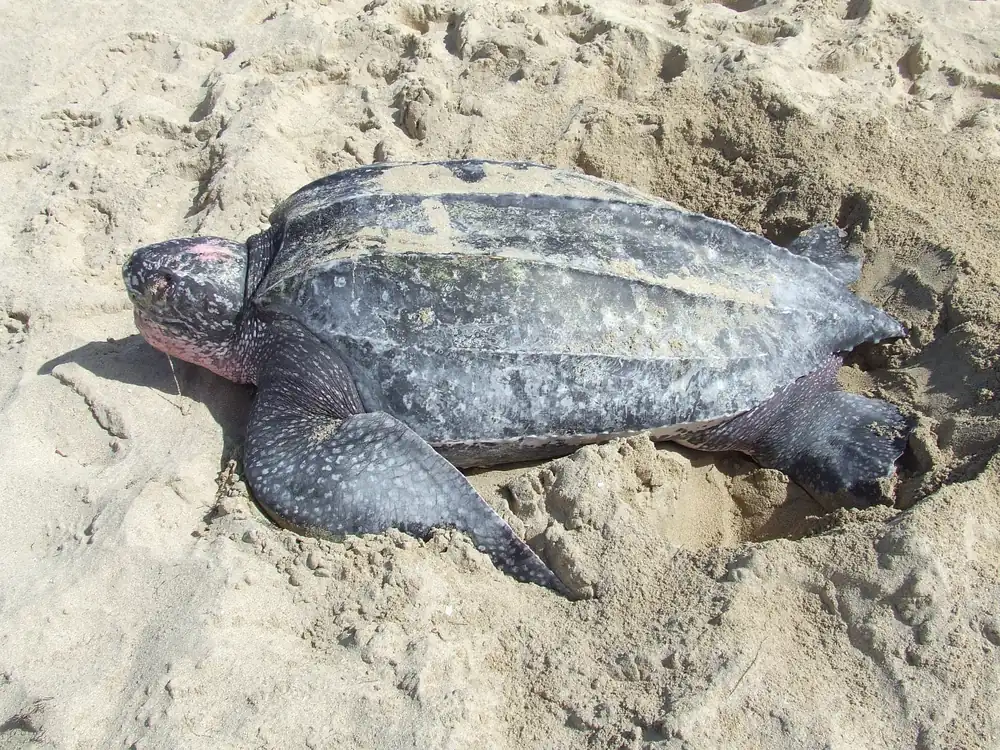
Leatherbacks, the early nesters
March through July, with the first nests on the southeast Atlantic coast in March · Atlantic beaches, above all in Palm Beach County; only a few nests each year on the Gulf side
The leatherback is the largest sea turtle. Adults weigh between 700 and 2,000 pounds and measure 4 to 8 feet long. A female returns to nest at intervals of two to three years and lays several nests in a season; FWC gives an average of about 73 fertilized eggs per nest, plus roughly 25 smaller yolkless ones. A turtle that heavy hauls itself a long way over sand, which is why a dark, level, litter-free beach matters so much.
-
Keep the beach dark and clear
Every night of the nesting season, which has begun on the southeast coast by March · Any Florida beach, and any window, porch or parking lot that can be seen from one
FWC asks beachfront residents and visitors to switch off or shield lights that shine on the sand, to close curtains after dark, and to use starlight rather than flashlights or phone screens. Lights that must stay on should be long in wavelength, low in brightness and mounting height, and shielded; the agency's lighting guidance recommends the lowest-wattage amber, orange or red LED that does the job. Before sunset, take beach toys, chairs and gear off the sand, fill any holes, and carry out your trash. It is illegal to harm or disturb nesting sea turtles, their nests or eggs, or to pick up hatchlings. Report a sick, injured or entangled turtle to the Wildlife Alert Hotline at 888-404-FWCC (3922).
-
Visit the best-known nesting coast
Check each site for current hours and programs · Archie Carr National Wildlife Refuge, Brevard and Indian River counties
The refuge was set aside to protect the most important loggerhead nesting beach in the world, and the U.S. Fish and Wildlife Service invites visitors to its Barrier Island Center at the Doc Ehrhart Sanctuary for more about the area and its wildlife. Loggerhead nesting is still weeks away in March, so a visit now is mostly about the place itself. Call the refuge for current programs and rules.
Where do manatees and right whales go when winter ends?
The winter crowds break up in March. FWC explains that manatees head for warm springs and power plant discharge basins in the cold months and spread out through Florida's waterways for the rest of the year. The agency's slow-speed signs for manatee areas run from November 15 to March 31, so the boating rules ease just as the animals scatter. At Blue Spring in Volusia County, Save the Manatee Club reported that manatee season ended on March 27 in 2026, with the last of its adopted manatees seen on March 21, after a February cold front had packed a record 859 into the spring on a single day. Most of the herd dispersed once March warmed. That is last year's calendar, so ask the park for the 2027 closing date.
-
Manatees on the move
Through March, thinning out toward the end of the month · Springs such as Blue Spring, and the Tampa Electric Manatee Viewing Center in Apollo Beach, which is usually open daily from November 1 to April 15
FWC's viewing guidelines are short: look, but do not touch; do not feed manatees or give them water; and watch quietly from a distance, because animals that grow used to people can lose their natural wariness of boats. A swirl on the surface, a snout or the sound of a breath can be the only sign of one. Viewing centers set their own seasons, so confirm the hours before you drive.
-
The last weeks of right whale calving
Mid-November to mid-April, so the final weeks fall in this month · Atlantic coastal waters, sometimes just beyond the surf
NOAA Fisheries says North Atlantic right whales typically calve between mid-November and mid-April. The 2026 season, with 23 calves, was the highest number since 2009, and 20 of the 23 mothers were returning. One mother and calf were photographed by FWC survey staff on March 14, 2026, just beyond the surf at Crescent Beach. The species remains endangered, at an estimated 380 animals, with only about 70 reproductively active females. Federal rules prohibit approaching within 500 yards (1,500 feet) of a right whale. To report one from North Carolina to Florida, call 877-WHALE-HELP (877-942-5343), or use Coast Guard channel 16 or the Whale Alert app.
Is spring bird migration under way in Florida in March?
It has started, quietly. The National Park Service says northbound migrants reach the Dry Tortugas as early as mid-February, that migration there increases substantially during March, and that it peaks from April through mid-May, with more than 200 species passing through. Its birding page adds a point that surprises beginners: the biggest concentrations show up in the worst weather, when wind, rain and cold ground the travelers on the islands. Audubon describes the same window, early April to mid-May, for the park's spring migration. For most of the state, March is the thin end of the wave: a few early arrivals, then a surge that builds through April.
-
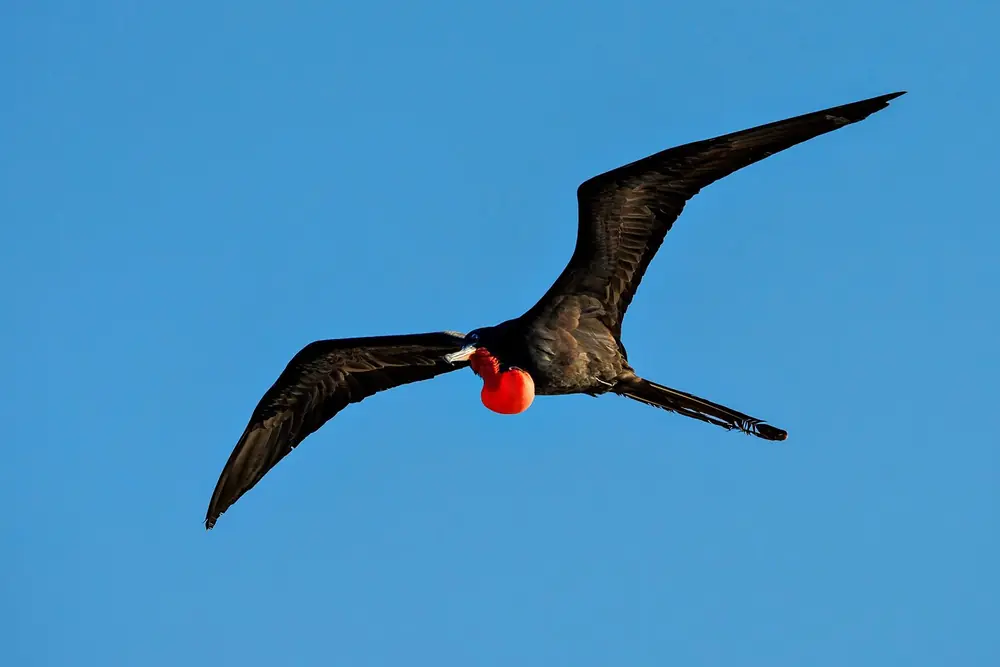
The Dry Tortugas and their seabird colonies
Migrants increase through March; sooty terns nest on Bush Key from late January into early July · Dry Tortugas National Park, about 70 miles west of Key West
Audubon notes that the Dry Tortugas hold the only regular nesting sites in the continental United States for sooty terns, masked boobies, brown noddies and magnificent frigatebirds. Bush Key is closed to visitors for part of the year to protect nesting birds, but binoculars or a spotting scope on the fort walls at Garden Key give good views. Check the park's operating hours and seasons page before booking, since islands close on different schedules.
-
Fort De Soto and the other migrant traps
A few arrivals in March, then the big days from April · Fort De Soto Park, Pinellas County, on the Gulf coast
The Great Florida Birding and Wildlife Trail says more than 330 species have been recorded at Fort De Soto Park, a complex of five keys with mangroves, mudflats and roughly 6 miles of beach. More than 20 shorebird species have been seen there, and the park is known for rarities. Posted nesting areas are off limits to people.
-
Ruby-throated hummingbirds
First reports in late February in a good year; more through March · Gulf Coast and peninsula gardens, feeders and flowering shrubs
Journey North’s volunteers have logged first ruby-throats in Florida as early as the last days of February in some years, as in a 2018 report that credited favorable winds, and most first sightings are of males. Some ruby-throats winter along the Gulf Coast, so an early bird at a feeder is not always a new arrival. Report your first one to Journey North.
What is blooming in Florida in March?
Wild azaleas carry the Panhandle bloom this month, while orchards and groves carry the peninsula. The UF/IFAS bee-plant calendars list orange blossom as a March nectar source in the North, Central and South Florida lists alike, together with blueberry, cherry, hawthorn, oak and plum in the north, and with saw palmetto, seagrape, buttonwood and lychee in the south.
-
Wild azaleas
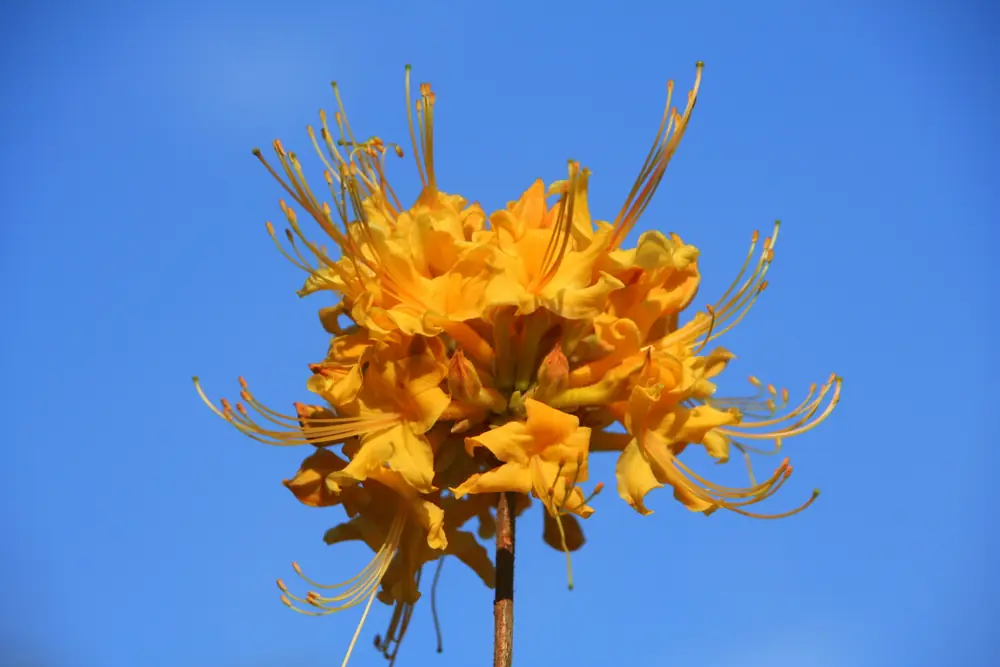
In bloom in March in northwest Florida, according to UF/IFAS Extension in Escambia County · Edges of swamps and sunny fringes of moist woods; Florida flame azalea grows in rare upland forests
Three native azaleas flower now: the honeysuckle azalea, whose blooms run from white to deep pink; the white swamp azalea; and the brilliant orange Florida flame azalea. The flame azalea is on the state endangered species list, and Extension staff stress that wild azaleas should never be dug up. They draw hummingbirds and butterflies; the Florida Native Plant Society (FNPS) notes that the flame azalea attracts bees and hummingbirds too.
-
Atamasco lily
Late winter into spring, often after rains · River floodplains, low roadsides and low pastures
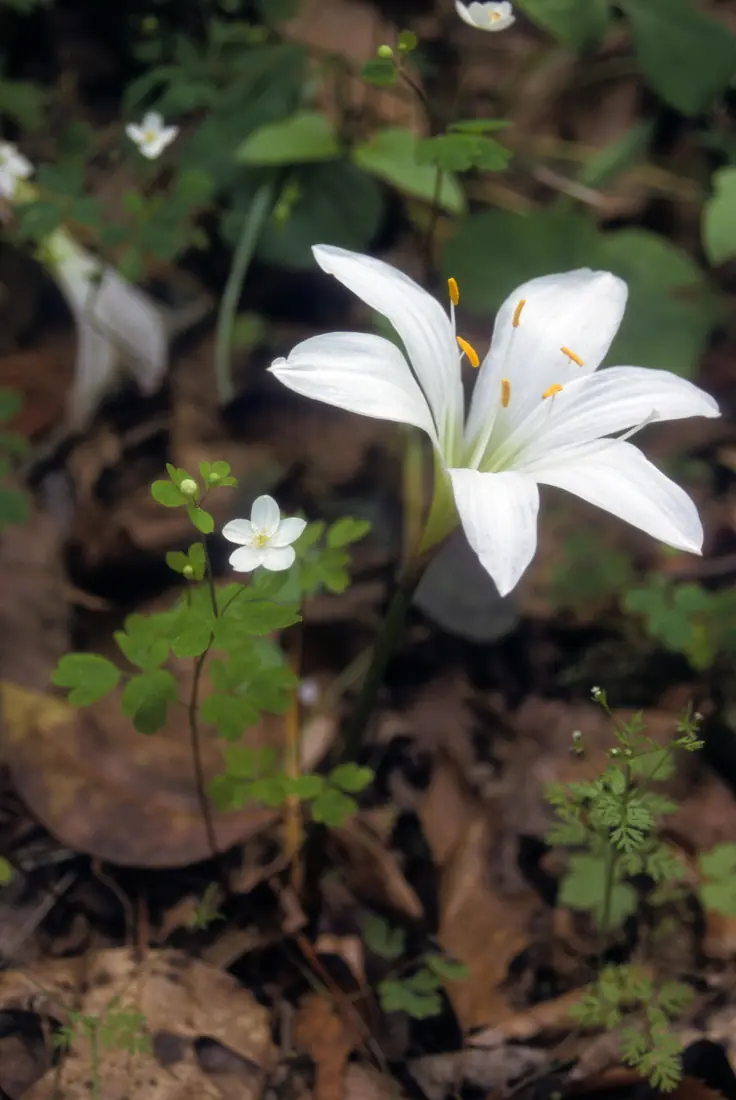
This white, lily-like flower stands about a foot tall and grows in small tufts, which makes it nearly invisible when not in bloom. FNPS says it usually appears in late winter or spring after rains, though a good wet-dry pattern can bring it up at other times.
-
White wild indigo
March to May, according to FNPS · Sandhill habitat
A bushy herb two to five feet tall, wild indigo carries long white flower spikes above rounded leaves. It is a legume, so its roots fix nitrogen, and FNPS cautions that it is toxic to livestock and people.
Which Florida birds begin nesting in March?
Three nesting seasons overlap on the ground now: the scrub-jay's, which is just beginning; the burrowing owl's, which opened in mid-February; and the beach-nesting birds', which are setting up on open sand. All three are easy to disturb without meaning to.
-
Florida scrub-jays
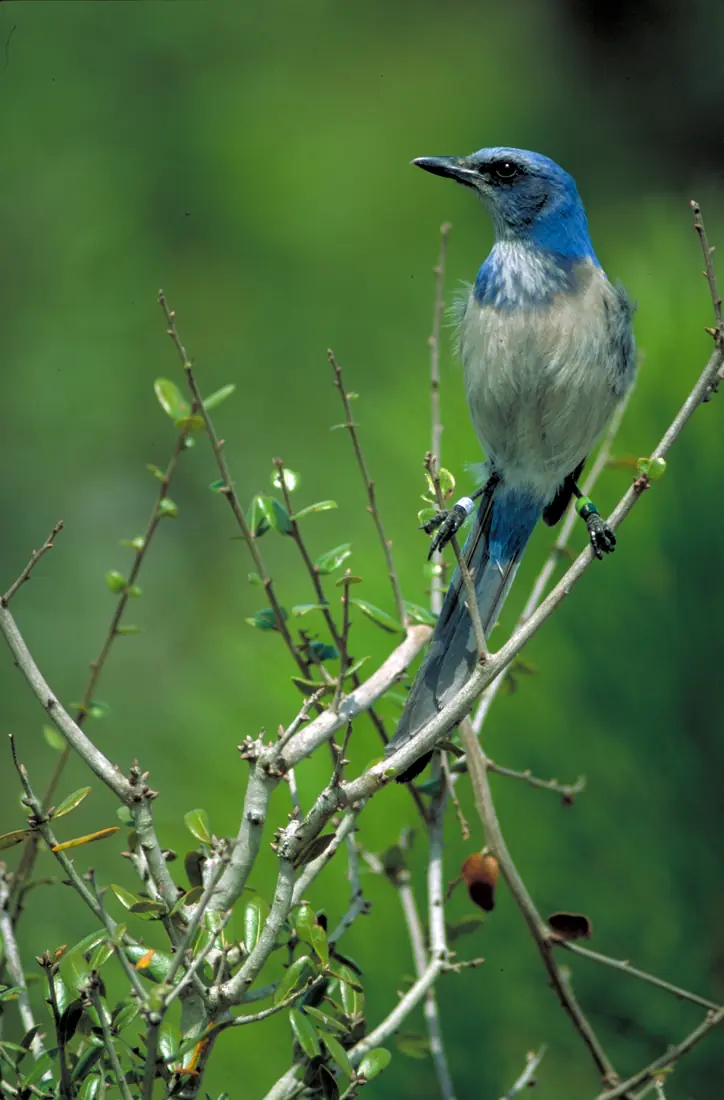
Breeding from March to June, according to FWC · Sand pine and oak scrub, scrubby flatwoods and other high, dry sandy ridges
The Florida scrub-jay is the only bird species found nowhere but Florida. FWC says pairs build twig-and-palmetto-fiber nests three to ten feet up in shrubby oaks, lay two to five eggs, incubate for about 18 days, and fledge young after about another 18. Last year's young often stay on as helpers. Jays do not migrate and defend the same territory year after year, so a pair you see in March is likely to be there in June. Stay on trails and watch from a distance.
-
Burrowing owls
FWC gives the typical breeding season as February 15 to July 10 · Open ground with little low vegetation: golf courses, airports, pastures, farm fields and vacant lots, in patches throughout the peninsula
These small owls nest in burrows they dig themselves and often reuse them from year to year. FWC says the owls, their burrows and their eggs are protected, and taking or disturbing them without a permit is prohibited. Females lay up to eight eggs, incubation lasts up to 28 days, and chicks stay inside for about two weeks after hatching. Watch from a car or a good distance, keep dogs away from burrows, and remember that a burrow cannot be destroyed without an FWC permit.
-
Beach-nesting birds
During the breeding season, when nesting areas are posted with signs · Atlantic and Gulf beaches within parks and preserves
American oystercatchers, snowy plovers, black skimmers and least terns are all state-designated threatened species that nest right on the sand. FWC's advice is simple: never enter areas posted with shorebird or seabird signs, drive slowly on any beach where driving is allowed, keep dogs leashed and away, keep cats indoors, and do not fly kites near nesting areas. If birds circle, call or dive at you, you are too close.
What is moving on the ground in Florida in March: bears, frogs and tortoises?
Warm nights set the ground-level animals in motion. After a winter of lying low, bears are looking for food, gopher tortoises are entering their breeding season, and frogs and toads call from rain-filled ditches and pools.
-
Black bears out of their dens
FWC says bears come out of winter dens in March · Forests, swamp edges and neighborhoods within bear range; rural roads at dawn and dusk
FWC expects an active spring, with many yearlings out on their own and dispersing across the landscape. Cubs born in winter nurse in the den until April. The agency's BearWise advice is to secure garbage, remove bird feeders when bears are active, feed pets indoors, clean grills, and keep dogs on a short leash, because dogs can set off a defensive female with cubs. About 300 Florida bears die on average each year after being hit by vehicles, which is why FWC asks drivers to slow down and watch for wildlife crossing signs.
-
Gopher tortoises
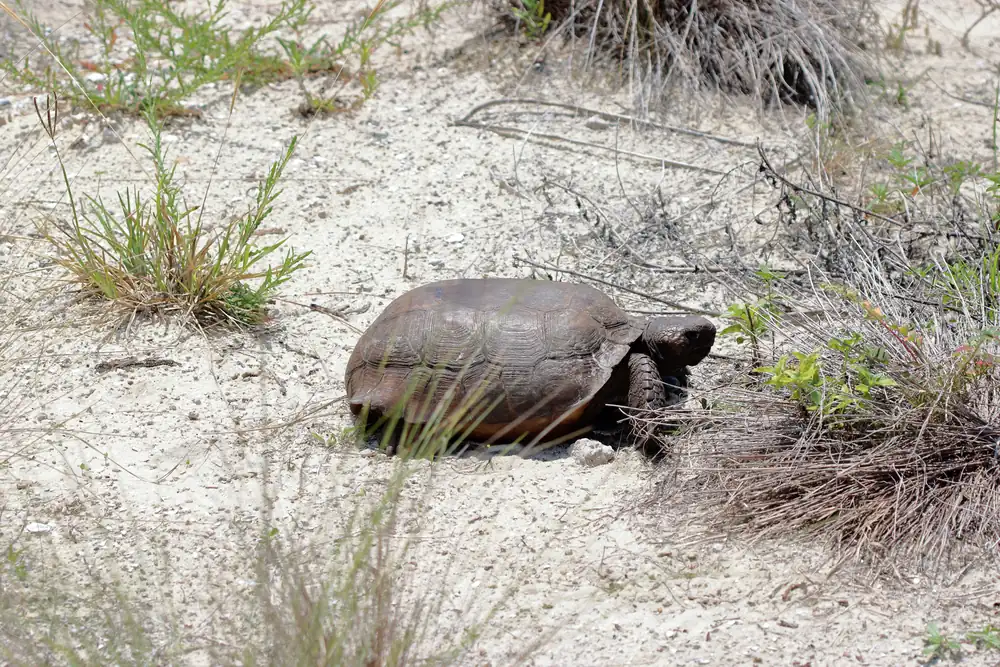
The breeding season runs from March to October; eggs are laid in May to July · Sandhills, scrub and dry pinelands; look for a sand apron at a burrow entrance
In FWC's description, an average burrow runs about 15 feet in length and 6.5 feet down, and a tortoise can spend up to 80 percent of its life inside one. Eggs are frequently laid in the sandy mound at a burrow entrance. Give them room, and leave a tortoise and its burrow alone.
-
Frogs and toads after rain
Warm, rainy evenings, strongest after a good soaking · Ditches, temporary pools, swamps and pond edges
The Florida Museum of Natural History says southern toads migrate to lowland water to breed and call louder after rains, that squirrel treefrogs move downhill toward shallow temporary water after heavy showers, and that the little pinewoods treefrog is nicknamed the Morse code frog for its call. The loud bark of the barking treefrog carries from swampy woods and pinelands. FrogWatch USA trains volunteers to listen for frogs and toads on evenings from February through August and report what they hear.
What is March weather like in Florida, and what are the hazards?
March is the warming month. NOAA's 1991–2020 normals put Tallahassee's average March low near 49 °F, with about two nights at or below freezing, while Key West's average low is about 69 °F and Miami's about 66 °F. Pensacola and Tallahassee average more than 5 inches of rain, against about 1.5 inches at Key West, and the gap narrows later in spring as South Florida's rain increases (Miami's April normal is 3.36 inches).
| Station | Average high | Average low | Rain | Nights 32 °F or colder | Nights 40 °F or colder |
|---|---|---|---|---|---|
| Pensacola | 72.0 | 52.7 | 5.25 | 0.5 | 3.3 |
| Tallahassee | 74.2 | 48.6 | 5.24 | 2.1 | 7.5 |
| Jacksonville | 74.3 | 50.6 | 3.29 | 1.0 | 5.4 |
| Gainesville | 75.8 | 49.7 | 3.49 | 1.2 | 5.6 |
| Orlando | 78.9 | 55.8 | 3.03 | 0.0 | 0.8 |
| Tampa | 77.8 | 59.3 | 2.52 | 0.0 | 0.3 |
| Miami | 80.6 | 65.6 | 2.46 | 0.0 | 0.0 |
| Key West | 79.6 | 69.3 | 1.53 | 0.0 | 0.0 |
Severe storms. The Florida Climate Center, the state climatologist's office at Florida State University, says that truly destructive tornadoes are reported most often in spring and summer and that the strongest usually strike in spring. Measured per 10,000 square miles, it adds, Florida has a higher tornado frequency than any other state, with a particular concentration along the coast between Tampa Bay and Fort Myers, in the western Panhandle and along parts of the Atlantic coast. Florida tornadoes often form along squall lines ahead of an advancing spring cold front. Know your shelter, and keep alerts on after dark.
Wildfire. The climate center's wildfire page describes a traditional Southeast wildfire season in which the Keetch-Byram Drought Index tends to reach critical values from January through July. Prescribed burns and smoke are normal in state forests and refuges now.
A late cold snap, rarely. The same office lists a March 6, 1954, snowfall of four inches at the Milton Experimental Station, which stands as the state's 24-hour snowfall record, and up to four inches of snow in the Panhandle during the ’93 Superstorm on March 12. Such events are rare, but a freeze in the first half of March is not.
Rip currents. The National Weather Service reminds beachgoers that rip currents often form on calm, sunny days, that it is wise to check the local beach forecast and talk to the lifeguard, and that swimming at a beach with lifeguards is safest. Spring-break crowds are exactly when this matters.
The Climate Prediction Center posts a fresh set of three-month maps every month at its 90-day outlook page; open it close to March for the newest version. Our weather page covers the days just ahead.
When is the last freeze in Florida?
By March the freeze season is nearly finished across the state, but it can still bite in the north. Read the right-hand column as the date after which only one spring in ten still brings a freeze. For Tallahassee that is March 30, with a median of March 11; for Gainesville March 23, median March 3; for Jacksonville March 19, median February 25; for Pensacola March 11, median February 14. Farther south, the last freeze of an ordinary winter has already come and gone by January or February. A date in December or January, such as Tampa's one-in-ten entry of December 27, means that in the mildest tenth of years the winter's final freeze came before the new year.
Miami and Key West do not have a freeze date to report: their March normals in the table above show no nights at 32 °F, and the frost data we use has no station for them. Look up your own town in our frost-date finder before setting out tender seedlings.
| Station | One year in ten | Median | Nine years in ten |
|---|---|---|---|
| Pensacola | Jan 21 | Feb 14 | Mar 11 |
| Tallahassee | Feb 18 | Mar 11 | Mar 30 |
| Jacksonville | Jan 22 | Feb 25 | Mar 19 |
| Gainesville | Feb 1 | Mar 3 | Mar 23 |
| Orlando | Dec 30 | Jan 25 | Feb 26 |
| Tampa | Dec 27 | Jan 20 | Feb 10 |
These are long-run normals, not guarantees. If a March forecast calls for a low near freezing, cover tender plants that evening.
How much longer are Florida's days by the end of March?
All eight cities begin March with roughly 11 hours 30 minutes of daylight and finish it past 12 hours 20 minutes. The gain runs from 56 minutes at Jacksonville and 55 at Pensacola down to 46 at Miami and 43 at Key West, since the yearly swing in day length narrows toward the tropics. Each day adds about 1.7 to 1.9 minutes in the north and 1.4 to 1.5 in the south, near the fastest pace of the year, and every city crosses the 12-hour line in the middle of the month, close to the equinox on March 20.
Daylight saving time on March 14 shifts that light on the clock without changing the table. Miami's sunset moves from 6:29 p.m. on Saturday, March 13, to 7:29 p.m. on Sunday, March 14, and its sunrise jumps by an hour as well. The part of the Panhandle on Central time springs forward at the same moment.
| City | Mar 1 | Mar 31 | Gained | Per day |
|---|---|---|---|---|
| Pensacola | 11 h 33 m | 12 h 28 m | 55 min | 1.8 min |
| Tallahassee | 11 h 33 m | 12 h 27 m | 54 min | 1.8 min |
| Jacksonville | 11 h 32 m | 12 h 28 m | 56 min | 1.9 min |
| Gainesville | 11 h 34 m | 12 h 27 m | 53 min | 1.8 min |
| Orlando | 11 h 34 m | 12 h 26 m | 52 min | 1.7 min |
| Tampa | 11 h 35 m | 12 h 26 m | 51 min | 1.7 min |
| Miami | 11 h 38 m | 12 h 24 m | 46 min | 1.5 min |
| Key West | 11 h 40 m | 12 h 23 m | 43 min | 1.4 min |
For the exact sunrise, sunset and twilight where you live, use our daylight calculator.
What can you see in the night sky over Florida in March 2027?
-
The equinox and the clock change
Clocks change Sunday, March 14; equinox Saturday, March 20, at 4:25 p.m. EDT (3:25 p.m. CDT) · Everywhere; the Sun rises due east and sets due west on the equinox
At 2 a.m. on March 14, Florida's clocks move ahead one hour. Six days later the Naval Observatory places the astronomical start of spring at 20:25 UTC on March 20, which is late afternoon in Florida. The shift in daylight saving time makes Miami's sunset leap from 6:29 p.m. standard time on March 13 to 7:29 p.m. daylight time on March 14.
-
Mercury at its best, and brilliant Venus
Mercury at greatest western elongation around midnight, March 16 to 17 (12:20 a.m. EDT March 17); best viewing about March 8 to 25 · Low in the east-southeast before sunrise; Venus is higher
At that point the little planet sits 27.6 degrees from the Sun, its widest spread of this appearance. In our central-U.S. calculation it clears the horizon about an hour ahead of sunrise through mid-March, shining at magnitude +1.0 and dimming to +0.3, so find a spot with nothing blocking the east-southeast. Venus (magnitude -4.1) is the brilliant morning star far above it, climbing nearly two hours before sunrise on March 1 and rising a little closer to the Sun every week. By our calculation Venus has company on March 4 and 5, when a slim old Moon hangs beside it before sunrise.
-
The Worm Moon
Full on Monday, March 22, at 6:44 a.m. EDT (5:44 a.m. CDT); best viewing the evening of Sunday, March 21 · Rising in the east around sunset
The full moon of March is the Worm Moon, a name tied to the ground softening and earthworms reappearing; the Sea and Sky astronomy calendar lists Crow, Crust, Sap and Lenten Moon as other names. The exact moment arrives shortly before sunrise on Monday, which leaves Sunday evening, March 21, as the best moonrise, at 7:01 p.m. EDT in Miami, with Monday evening nearly as good. Our own calculation from Naval Observatory data finds that no full moon from March to September 2027 counts as a supermoon.
-
Jupiter and Mars in the evening
Moon near Jupiter on the evenings of March 18 and 19; Mars and Jupiter closest on the evening of March 30 · High in the east to south after dark, in Leo
Jupiter, past its February opposition, still dominates the evening sky at magnitude -2.5. Our figures put the Moon, 88 percent lit and close to full, within roughly one degree of the planet on March 19. Mars, fading but still orange-red, lies 4.3 degrees from Jupiter at their closest, which falls on the evening of March 30 in U.S. time: a wide but easy pairing. Saturn, meanwhile, is sinking into the evening twilight, and its last good evening views come in early March.
-
A dark-sky window for the Milky Way
Roughly March 3 to 17 and March 31, in the hours before dawn · Dark sites away from town lights, looking south-southeast
The bright heart of the Milky Way comes back this month, but only before dawn. Computed for 30 degrees north, the best nights are around the March 8 new moon, with up to about two hours when the core is above the horizon in full darkness, and again on March 31. Florida's Panhandle is near that latitude; the peninsula sees the core a little higher.
| Phase | Date | Time |
|---|---|---|
| New moon | Monday, Mar 8 | 4:29 a.m. EST (3:29 a.m. CST) |
| First quarter | Monday, Mar 15 | 12:25 p.m. EDT (11:25 a.m. CDT) |
| Full moon, the Worm Moon | Monday, Mar 22 | 6:44 a.m. EDT (5:44 a.m. CDT) |
| Last quarter | Monday, Mar 29 | 8:54 p.m. EDT (7:54 p.m. CDT) |
For moonrise in your town, try our moon-phase calendar; to find out whether clouds will spoil the view, check the cloud forecast.
What can families do outdoors in Florida in March 2027?
- Count with FrogWatch USA. Local chapters train volunteers to listen for frogs and toads on evenings from February through August. Look for a chapter near you at frogwatch.org.
- Follow one nest. NestWatch, from the Cornell Lab of Ornithology, lets anyone follow a nest and enter what they see.
- Keep counting at the feeder. Project FeederWatch runs through April 30.
- Report your first hummingbird to Journey North, and write the date down.
- Turn the porch light off if you live near a beach, and bring chairs and toys in before dark.
- Try a watched viewing spot. The Tampa Electric Manatee Viewing Center is usually open daily until April 15, and Fort De Soto Park offers easy flat birding with mudflats, mangroves and beach.
- Watch the equinox shadow. Mark where a stick's shadow ends at noon on Saturday, March 20, and again a week later.
- See the Worm Moon rise on the evening of Sunday, March 21, and the Moon near Jupiter on March 18 and 19.
A Naturalist's Field Journal is a good place to log what you see. Compare this month with February in Florida, or see our other seasonal guides.
Safety notes for March in Florida
- Spring turkey season (FWC). South of State Road 70 the general season runs March 6 to April 11, and north of the road it runs March 20 to April 25. FWC runs two youth spring hunts, with State Road 70 as the dividing line: Feb. 26 to Mar. 1 south of it, and Mar. 12 to 15 north of it. Only bearded turkeys and gobblers may be taken, with a limit of two for the spring; hunters need a license and turkey permit outside the WMA system, and wildlife management areas set their own rules and quota permits.
- Other seasons. Statewide quail season ends March 7, and bobcat season runs through March 31. No general deer gun seasons run in March. Wild hogs may be taken year round.
- Blaze orange. FWC's fluorescent orange rule applies to deer hunters on public land and those with them, so it does not apply to spring turkey hunting. If you hike on a wildlife management area during turkey season, wear bright clothing anyway and avoid camouflage.
- Snook reopen. On the Gulf coast, snook season returns on March 1 after being closed since December 1. The Gulf regions close again on May 1. The Atlantic regions are open all of March, having been closed only from December 15 to January 31. The slot is generally 28 to 33 inches (32 inches in the Southeast and Indian River Lagoon regions), the bag limit is one fish, and a snook permit and fishing license are required. Rules change, so check FWC first.
- Beaches. Swim near a lifeguard, watch for rip currents, give nesting turtles and posted birds room, and keep lights off the sand at night.
- Bears. Secure your trash, bird seed and pet food, and keep dogs leashed in bear country.
- Alligators. Never feed an alligator, keep pets back from the water's edge, and call FWC's Nuisance Alligator Hotline at 866-FWC-GATOR (866-392-4286) about an animal that worries you.
- Manatee zones. Slow-speed manatee zones usually run through March 31. Watch for signs before you power up.
- Storms, smoke and cold. Keep weather alerts on at night, expect smoke near prescribed burns, and cover tender plants if the forecast approaches freezing.
- Dry Tortugas. Islands are closed seasonally for nesting birds, so read the park's rules before planning a trip.
Sources (52)
- FWC: 2026-27 species season dates and bag limits (spring turkey, quail, bobcat, otter, deer)
- FWC: youth turkey hunts, 2027 spring hunt dates
- FWC: spring turkey hunt guide (outside the WMA system: license, permit, methods)
- FWC: general hunting regulations, including the hunter orange rule
- FWC: snook (regional seasons, slot, bag limit, permit)
- FWC: leatherback nesting in Florida (March through July, Palm Beach County)
- FWC: loggerhead nesting in Florida (April to September, 90 percent of the aggregation)
- FWC: green turtle nesting in Florida (June through late September)
- FWC: sea turtle nesting research overview and survey programs
- FWC news release: sea turtle nesting season arrives along Florida's coasts (March 2024)
- FWC: sea turtles and lights (the three golden rules of beachfront lighting)
- U.S. Fish and Wildlife Service: Archie Carr National Wildlife Refuge
- FWC: Florida manatee program (seasonal protection zones, November 15 to March 31)
- FWC: where can I see manatees in Florida
- FWC: manatee viewing guidelines
- Save the Manatee Club: manatee sightings update, April 2026 (Blue Spring season ended March 27)
- Tampa Electric: Manatee Viewing Center (open daily November 1 to April 15)
- NOAA Fisheries: by the numbers, the 2026 North Atlantic right whale calving season
- NOAA Fisheries: North Atlantic right whale (population, 500-yard rule, how to report)
- FWC: North Atlantic right whales off Florida (sighted November to April)
- National Park Service: birds of Dry Tortugas National Park (spring migration, Bush Key closures)
- Audubon: birding bucket list, Dry Tortugas National Park (migration windows, nesting seabirds)
- Great Florida Birding and Wildlife Trail: Fort De Soto Park
- Journey North: first ruby-throated hummingbirds reach Florida (an earlier spring report, 2018)
- Journey North: hummingbird migration project and sighting reports
- UF/IFAS Extension Escambia County: native azaleas (blooming in March)
- Florida Native Plant Society: Florida flame azalea (Rhododendron austrinum)
- Florida Native Plant Society: atamasco lily (Zephyranthes atamasca)
- Florida Native Plant Society: white wild indigo (Baptisia alba)
- UF/IFAS EDIS: Florida honey bee plants, bloom calendars (ENY-171/IN1223)
- FWC: Florida scrub-jay species profile (breeding March to June)
- FWC: burrowing owl species profile (February 15 to July 10)
- FWC: living with beach-nesting shorebirds
- FWC: gopher tortoise species profile (breeding season, burrows)
- FWC news release: what does it mean to be BearWise this spring (March 2026)
- FWC: black bear hibernation, dens and cubs
- FWC: alligator management program (living with alligators, nuisance hotline)
- Florida Museum of Natural History: Florida frog calls (southern toad, squirrel treefrog, barking treefrog, pinewoods treefrog)
- FrogWatch USA (Akron Zoo): volunteers listen February through August
- NestWatch (Cornell Lab of Ornithology)
- Project FeederWatch: how to participate (November 1 through April 30)
- NOAA NCEI: 1991–2020 monthly normals for eight Florida stations (data API)
- NOAA NCEI: U.S. climate normals, 1991–2020 (source of last-freeze normals)
- Florida Climate Center (state climatologist): tornadoes in Florida
- Florida Climate Center: wildfire risk
- Florida Climate Center: Florida winters, freezes and snow events
- National Weather Service: how to avoid getting caught in a rip current
- Climate Prediction Center: official 90-day outlooks
- U.S. Naval Observatory: moon phases, March 2027 (data API)
- U.S. Naval Observatory: Earth's seasons, 2027 (data API)
- Sea and Sky: astronomy calendar of celestial events 2027
- Photos via Wikimedia Commons; licenses and photographers are credited under each picture
