What to look for in nature in Florida this January
January is Florida's coldest month, and that is exactly why so much happens in it. Each front pushes more manatees into the springs and warm canals, where they can be counted by the hundreds. Right whale mothers nurse new calves within sight of the Atlantic beaches, great horned owls sit on eggs, black bear cubs are born in dens hidden in palmetto thickets, and the first purple martins fly in from South America. In the wet flatwoods of the north, frogs sing and salamanders crawl to breeding ponds on rainy nights, while red maples quietly open their scarlet flowers. This guide covers the month from Pensacola to Key West.
Other months in Florida: October, November, December, February.
Start here
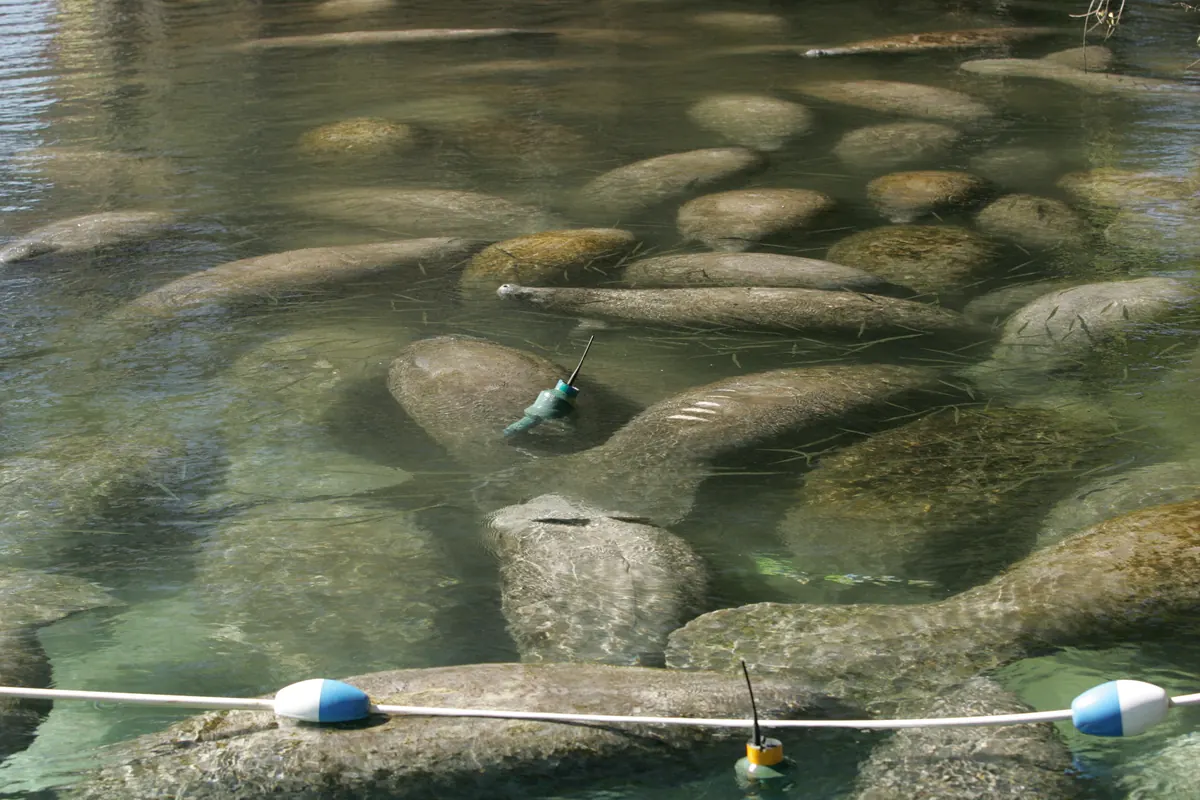
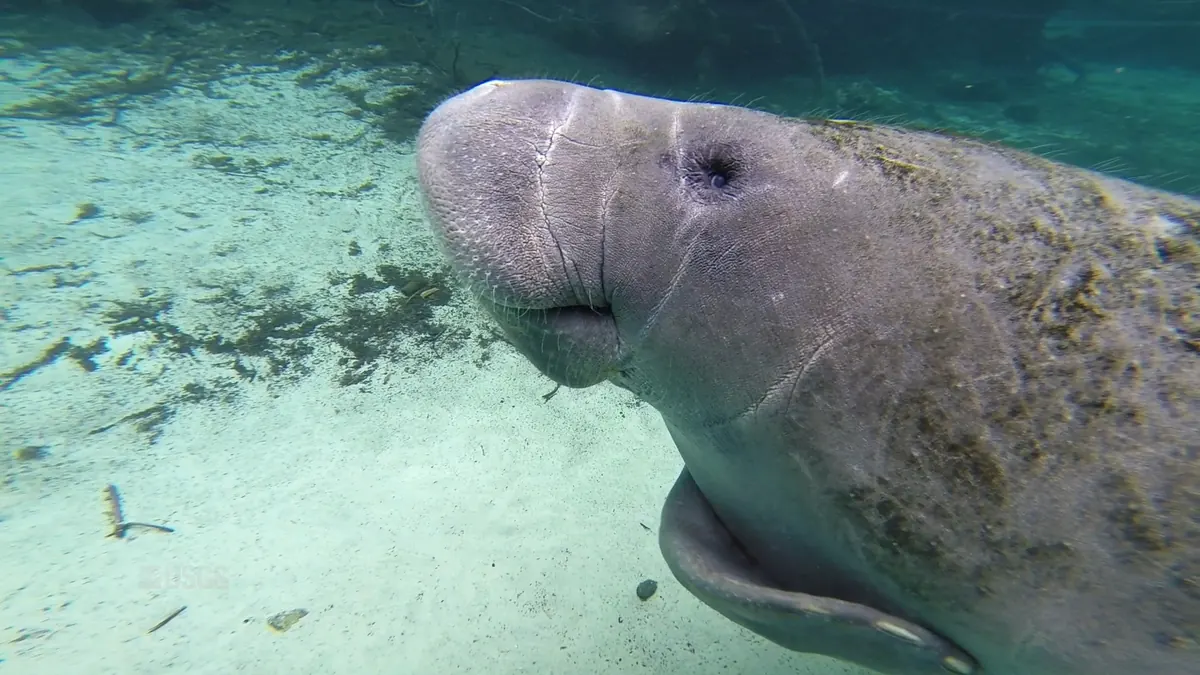
- Go see manatees on a cold morning. The first clear, chilly morning after a front is the time. Three Sisters Springs in Crystal River, Blue Spring near Orange City and Tampa Electric's free viewing center at Apollo Beach all fill up when the rivers and bays drop below the springs' steady warmth. Arrive early and count backs and snouts.
- Watch the beach for a whale. Right whale mothers and calves rest close to shore between St. Augustine and Daytona Beach in January. Last season a mother nearly 50 years old turned up with her ninth calf half a mile off Flagler Beach on January 30. A broad black back with no fin is the sign.
- Catch the Quadrantids. The Quadrantids, 2027's opening meteor display, peak briefly in the night between Sunday the 3rd and Monday the 4th, with just a sliver of Moon. Head out before Monday's dawn, once the radiant has climbed high.
Record it: give the manatee morning a page of “the same place twice”, and come back to the same spring on a warm afternoon to see how many have left. A frog chorus after a winter rain belongs on “a map of sounds”. The owls hooting at dusk fit a dusk and dawn watch, and the first red maple in flower makes a good start to “a tree through the seasons”, a page you can return to as the keys turn red.
Regions used below: Panhandle; North Florida; Central Florida; Southwest Florida; Southeast Florida; The Keys.
Where can you see the most manatees in Florida in January?
Manatee season peaks in January. A manatee cannot stay long in water colder than about 68 °F without risking cold stress, so as fronts chill the rivers and bays, most of the population crowds into a short list of refuges: artesian springs that flow at a steady temperature all year, and the warm outflows of coastal power plants. The densest crowds come on the coldest mornings. At Blue Spring, where Save the Manatee Club researchers count the animals in the spring run each morning, the club logged a record 859 manatees in one day after a long, hard cold snap drove night temperatures down to 23 °F early in February 2026.
State biologists once used that crowding to count them. From 1991 to 2019 the FWC flew a synoptic survey, a quick aerial census of the warm-water sites, but only after a real cold snap: air at or below 49 °F near most sites on three of the five days before, water under 68 °F, light wind and clear skies. Most surveys fell in January. These are head counts, not population estimates. The 2019 flight is the last one on the FWC’s list: the agency now uses an abundance survey flown over a week or more on each coast at random locations, when manatees are spread out rather than packed into warm water, so newer results are not comparable with the table.
| Year | Survey dates | East coast | West coast | Total |
|---|---|---|---|---|
| 1991 | January 23–24 | 687 | 580 | 1,267 |
| 2001 | January 5–6 | 1,559 | 1,741 | 3,300 |
| 2009 | January 19–23 | 2,148 | 1,654 | 3,802 |
| 2010 | January 12–15 | 2,780 | 2,297 | 5,077 |
| 2011 | January 20 and 24 | 2,432 | 2,402 | 4,834 |
| 2014 | January 24 and 27 | 2,315 | 2,509 | 4,824 |
| 2015 | February 16, 20, 23 | 3,333 | 2,730 | 6,063 |
| 2016 | February 11, 12, 13 | 3,292 | 2,958 | 6,250 |
| 2017 | January 30 to February 2 | 3,488 | 3,132 | 6,620 |
| 2018 | January 6–8 | 3,731 | 2,400 | 6,131 |
| 2019 | January 28 to February 2 | 2,394 | 3,339 | 5,733 |
Where to go: Three Sisters Springs in Crystal River National Wildlife Refuge offers daily programs from November 15 to March 31, while the refuge's Kings Bay sanctuaries are closed to all activity so the animals can rest. Save the Manatee Club posts its researchers' Blue Spring counts on a sighting blog. Apollo Beach's free viewing center, run by Tampa Electric, opens daily from 10 a.m. to 5 p.m. through April 15. Go early on a sunny morning after a cold night, when the animals lie in rows on the bottom and rise every few minutes to breathe.
Two manatee festivals fall in January. The Citrus County Chamber of Commerce's Florida Manatee Festival is set for Saturday and Sunday, January 16 and 17, 2027, in downtown Crystal River, with boat and kayak tours to see the animals. The Orange City Blue Spring Manatee Festival is usually held on the last full weekend of January, with shuttles from Valentine Park to the spring; as of early October its 2027 dates were not yet listed, so confirm with the organizers.
Can you see right whale calves from Florida beaches in January?
Yes, and January is one of the likeliest months. The waters off northeast Florida and Georgia are the only known calving ground of the North Atlantic right whale, and NOAA Fisheries dates the season from mid-November to mid-April. The first calves of a season are usually spotted in December; by January more mothers have given birth, and the pairs often linger in the shallow water just beyond the surf, where the calves nurse and rest. With only about 380 right whales left, survey teams photograph and log every new calf.
The 2026 season ended with 23 calves, the most since 2009, and several of the January sightings came from Florida beaches. On January 22, 2026, a beachgoer reported a mother and calf about a quarter mile off South Daytona Beach; the mother turned out to be a well-known female named Slalom. Eight days later, volunteers from the Marineland Right Whale Project found a whale named Ghost about half a mile off Flagler Beach with a newborn. Ghost is close to 50 years old, was first seen in 1985 already grown and with a calf, and the 2026 baby was her ninth known calf.
-
Where and how to look
Calm mornings, mid-November to mid-April; January and February are prime · From Fernandina Beach south to about Cape Canaveral; piers, dune crossovers and high balconies help
Right whales have no dorsal fin, so watch for a broad, dark back that barely breaks the surface and a V-shaped blow. Report a sighting to NOAA's Southeast right whale reporting line, as FWC aerial and boat teams use public calls to find new pairs.
-
The 500-yard rule
Always · Any boat, kayak, paddleboard, surfboard or drone
Under federal rules, boats, paddlers, surfers and drones must keep 500 yards or more between themselves and any right whale, and move off slowly if one comes up close. Vessel strikes and fishing-gear entanglement are the species' leading threats.
Which Florida animals are nesting or giving birth in January?
While most of the country waits for spring, several of Florida's larger animals are already raising young. Three to look for, or at least listen for:
-
Great horned owls on eggs
Hooting from November; eggs from late December into March · Woods next to open country statewide: hammocks, pine flatwoods, swamps, pastures and city parks
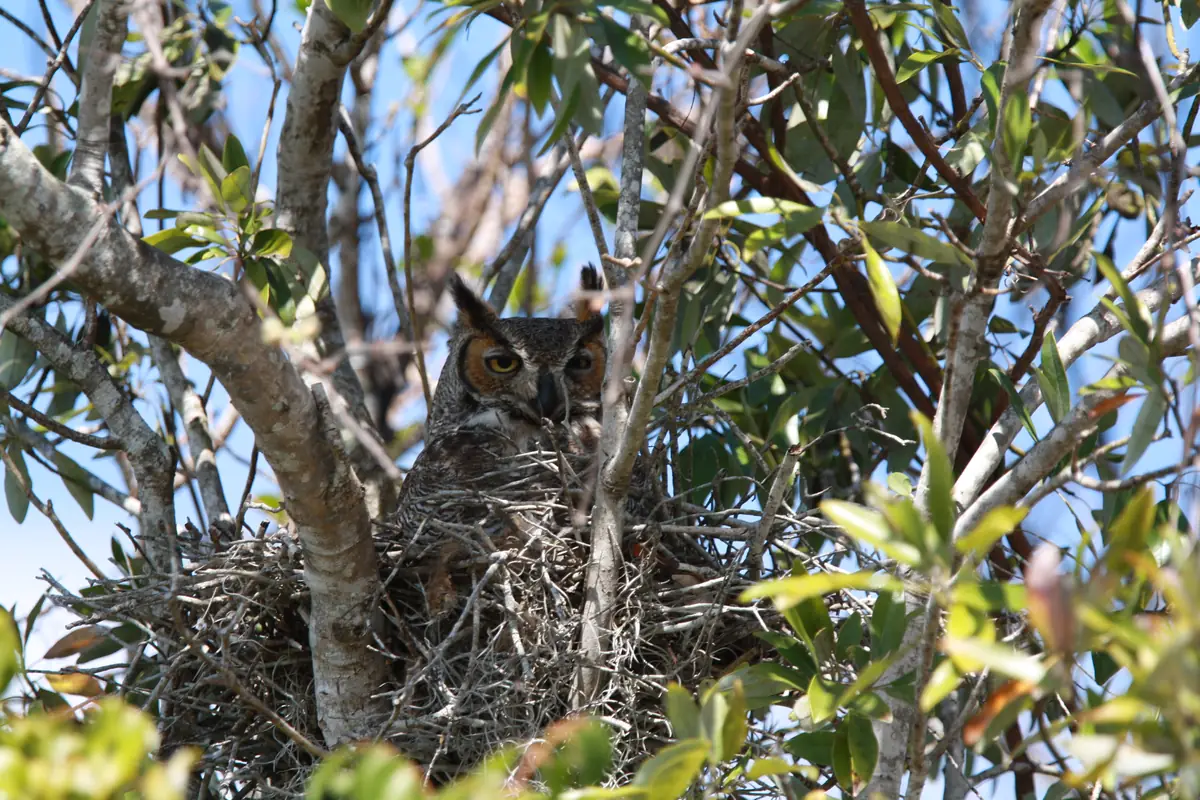
Few Florida birds begin a family as early as this big owl does. Rather than build its own nest, a pair takes over an old stick nest left by a hawk, crow, heron or squirrel, and the FWC says nesting can begin as early as December. Biologists at Fort Matanzas National Monument, south of St. Augustine, where a pair once nested in plain view of the visitor center, write that courtship hooting starts in November and that breeding usually happens in late December. The female lays one or two eggs and incubates them for about a month, so many Florida owls are sitting tight through January. Around dusk the mated pair often trade deep hoots between neighboring trees. Any nest you find deserves a wide berth.
-
Eaglets in the nest
Eggs mostly laid in December and early January; young fly at about 11 weeks · Tall pines and towers near lakes, rivers and coasts; the Southwest Florida Eagle Cam online
Florida has an estimated 1,500 nesting pairs of bald eagles, one of the densest concentrations in the lower 48 states. By the FWC's account, eagles here lay mostly from December into early January, and eggs hatch after about 35 days, so through January more and more nests hold small gray chicks, and the adults spend the day ferrying fish to them. You can help keep track of them: Audubon's EagleWatch program, based at the Audubon Center for Birds of Prey in Maitland, has about 750 volunteers monitoring more than 1,200 nests, about 40 percent of the state's pairs, and it takes reports of new nests from anyone.
-
Black bear cubs born in the den
Late January to early February · Dense thickets and swamps in bear range: Ocala, Osceola, Apalachicola, Big Cypress and the St. Johns River country
Pregnant females are the one group of Florida black bears that must den for the winter. They usually make a nest of leaves, pine needles or chewed saw palmetto fronds on the ground in a dense thicket, though tree cavities and spaces under fallen logs are used too. Cubs arrive in late January or the first days of February, blind and weighing only 8 to 15 ounces, about the size of a soda can, and Florida litters usually hold 2 or 3. They will nurse in the den for more than two months. Males and females without cubs may den only briefly or not at all, so bears can still turn up on warm days; keep trash and pet food secured.
When do the first purple martins come back to Florida?
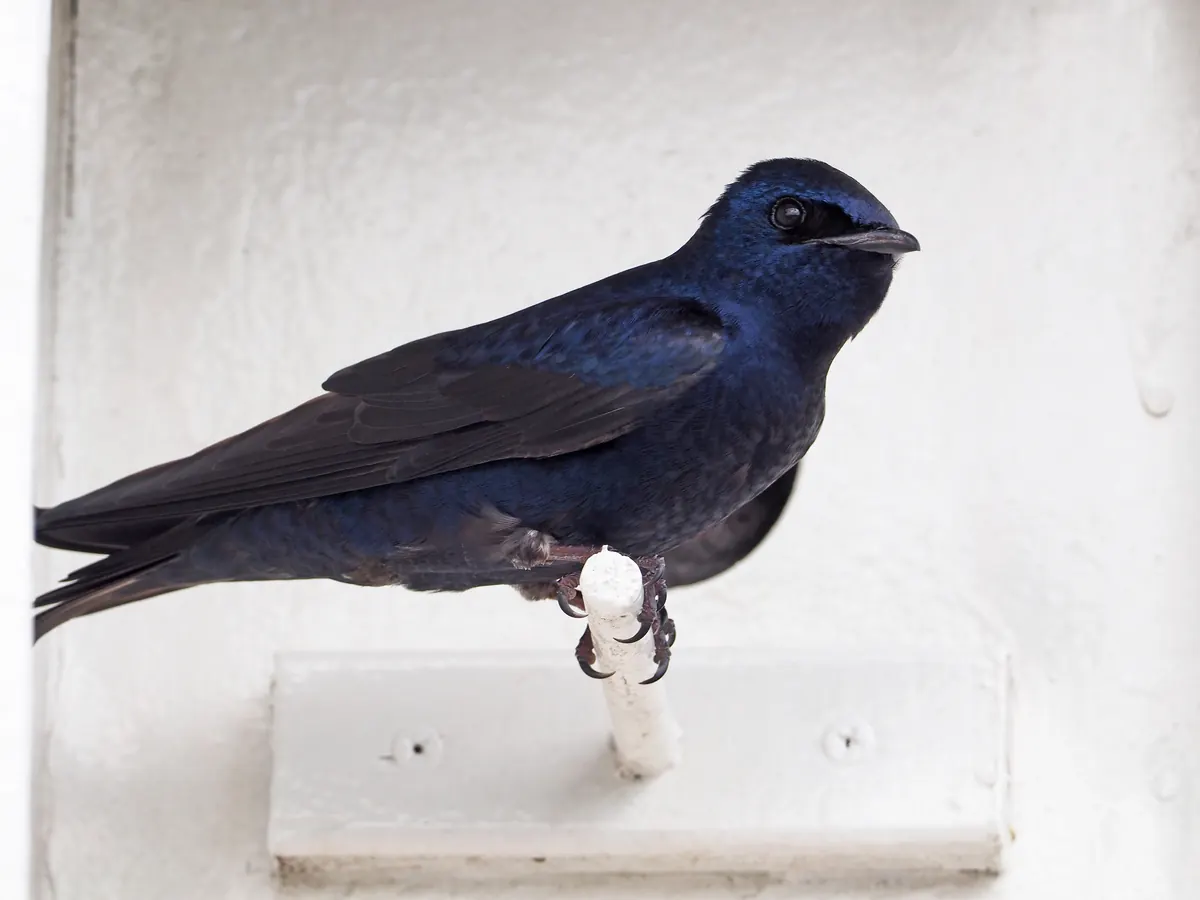
Florida gets the first spring migrants in the country, and they arrive in the middle of winter. Purple martins, the largest North American swallows, spend the northern winter in South America, mostly Brazil, and some cross the Gulf of Mexico straight to Florida and Louisiana on the way back. The Purple Martin Conservation Association places adult arrivals anywhere from January to May depending on latitude, and says the timing varies from year to year. Florida, at the southern end of the breeding range, is among the first places the returning birds reach, generally earliest in the south of the state and later in the Panhandle; the association’s Scout-Arrival Study map shows this season’s first reports as they come in.
-
Purple martin scouts
From January in Florida, earliest in the south; the year-old birds follow weeks later · Martin houses and gourd racks near open water and lawns; check the Scout-Arrival Study map
The first martins back at a colony are called scouts. Despite folklore about advance scouts leading the flock, they are simply the oldest birds, male or female, coming back to the place they nested the year before, and each martin travels on its own. East of the Rockies martins nest almost entirely in housing people put up, which makes them easy to watch. If you have a colony, or see martins over a park pond, add the date to the association's free Scout-Arrival Study, which has collected first-arrival reports every year since 1998 and maps them online.
-
Sandhill crane flocks at their peak
Northern migrants stay from November and December into March · Paynes Prairie near Gainesville, the Kissimmee prairie region and pastures across the peninsula
About 25,000 greater sandhill cranes from the Great Lakes winter in Florida, more than doubling the state's crane population, and January is the heart of their stay. The resident Florida sandhill cranes, 4,000 to 5,000 of them, do something the visitors never do here: they begin to nest in late winter, piling up a mat of plants about two feet across in shallow water.
Which frogs and salamanders breed in Florida in winter?
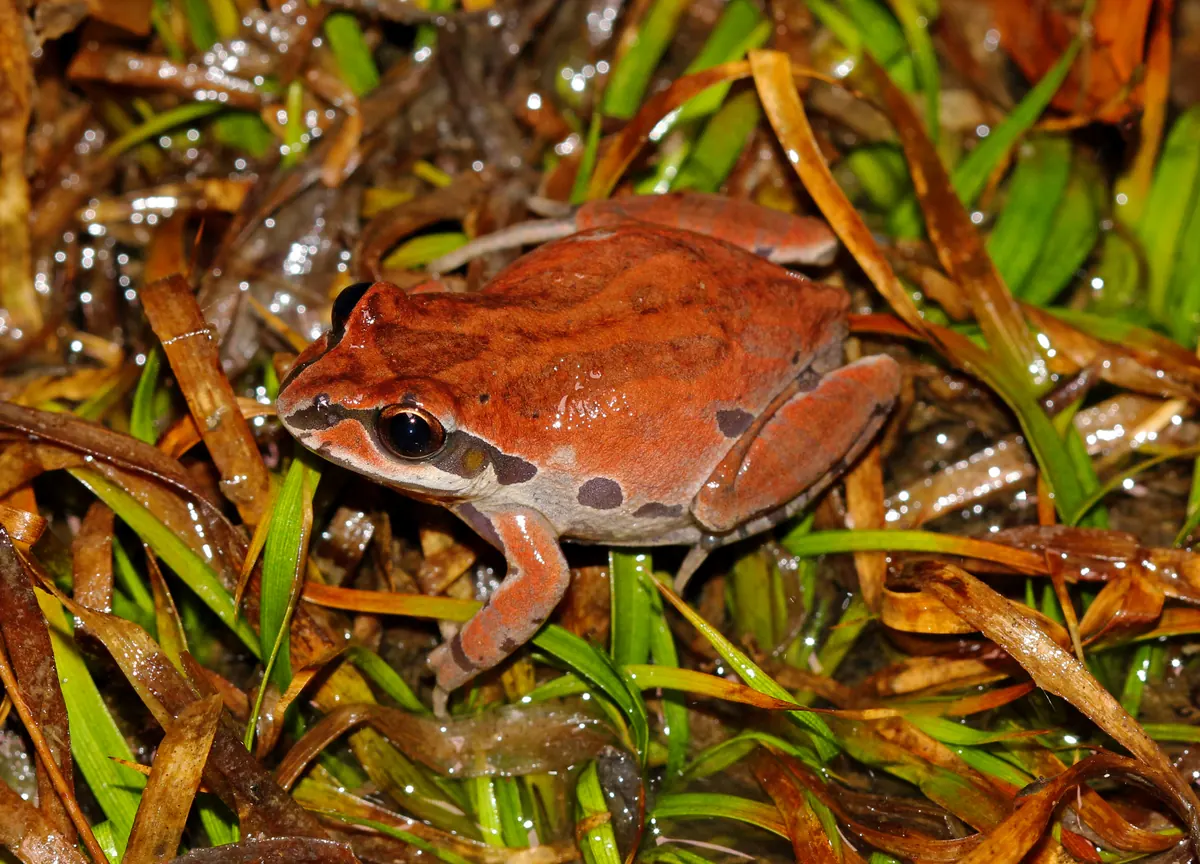
Most of Florida's frogs wait for the warm summer rains, but a few do the opposite and breed in the cool season, when ponds are full and the snakes that eat them are slow. A warm, rainy January night in North Florida can be loud. UF/IFAS names the spring peeper and the southern leopard frog as two of the winter breeders; the Florida Museum of Natural History adds the ornate chorus frog.
-
Spring peepers
Cool, rainy nights through the winter · Swamps and forested wetlands in northern Florida
Despite the name, Florida's peepers sing in winter. They are tiny, usually under an inch long, tan, brown, olive or gray, and only the males call: a single clear, high peep repeated over and over. When many gather at one pond the sound rises into a ringing chorus that carries a long way.
-
Southern leopard frogs
Winter is their main breeding season · Ponds, ditches, marshes and lake edges statewide
These green-and-brown spotted frogs wander onto dry land in the hot months and return to the water to breed in winter. Their chuckling, clucking call is often the loudest sound at a roadside ditch after a January rain. A female can lay more than 1,500 eggs at once, in a jelly mass about the size of a baseball, so look for egg masses attached to plants in shallow water.
-
Ornate chorus frogs
Active and calling in winter and spring · Pinelands and sandy upland fields in most of northern Florida
One of the prettiest frogs in the state, an inch or so long, boldly marked and green, gray or reddish brown, depending on its surroundings. It spends the hot months buried in sand and leaves, then moves downhill to temporary ponds as the weather cools. Breeding in winter means its main predators, snakes, are still dormant, the Florida Museum notes.
-
Frosted flatwoods salamanders
Breeding October to January, during wet weather · Longleaf and slash pine flatwoods east of the Apalachicola River, including St. Marks National Wildlife Refuge
This small, gray, frosty-patterned salamander is federally listed as threatened, and in Florida it lives only in Franklin, Wakulla, Liberty, Jefferson and Baker counties. On rainy nights adults walk from their burrows to shallow, temporary wetlands with a wiregrass floor and lay eggs in the dry basin; the eggs hatch only once winter rain floods the pond. That makes a wet January matter: without enough rain, a whole year's eggs can fail.
What is flowering in Florida in January?
Florida's wildflower year never quite stops, and January has two native bloomers that are easy to find even from a car window.
-
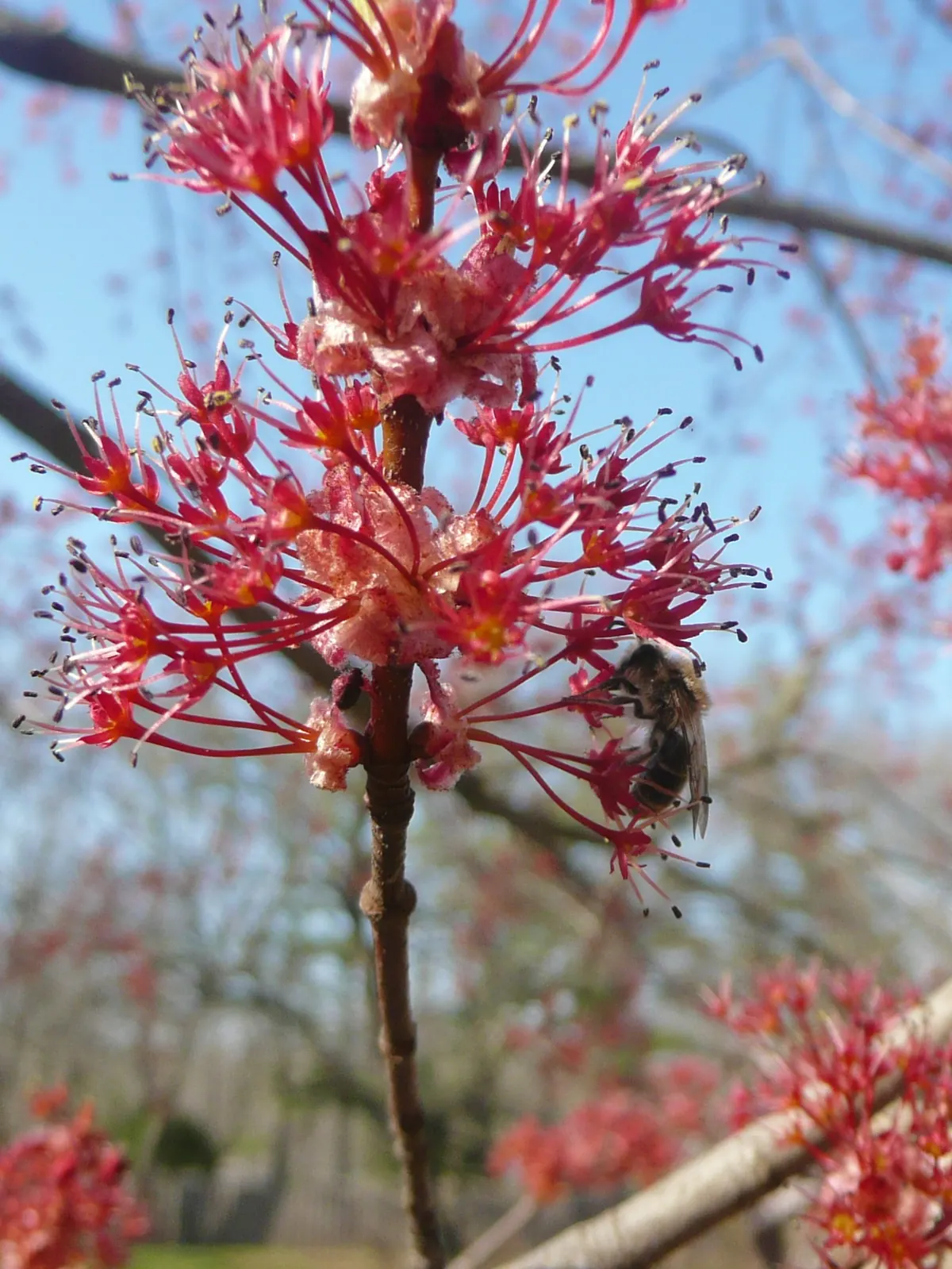
Red maple in flower
January; the red winged seeds follow within weeks · Swamps, flatwoods, creek edges and roadside ditches statewide
Look along any wet road edge for trees that seem to glow a dull red against the bare woods. Those are red maples, and the color comes from thousands of tiny scarlet flowers on leafless twigs. The Florida Native Plant Society puts the flowers in winter, and UF/IFAS extension staff list the tree among plants at their peak in late January; bright red, two-winged keys follow quickly and stay on the branches for several weeks, an early hint of spring. The flowers are an early source of pollen for bees, and squirrels and other small mammals eat the seeds.
-
Carolina jessamine
Late winter · Climbing fences and trees in woods, flatwoods and roadsides, mostly in northern and central Florida
An evergreen vine that twines up to 25 feet into the trees and covers itself with fragrant, bright yellow trumpets in late winter. It is one of the first nectar sources of the year for bees, including the southeastern blueberry bee, and it draws hummingbirds that spend the winter in North Florida. The plant is toxic if eaten, so admire it rather than picking it for small children to hold.
How cold does Florida get in January, and what does a strong El Niño change?
NOAA's 1991–2020 normals make January Florida's coldest month. Tallahassee averages close to ten nights at or below freezing in January and an average low of about 40 °F, while Key West averages no freezing nights at all and a low of about 65 °F. Central Florida sits in between: Orlando and Tampa average about one freezing night or fewer. Rain is modest everywhere except the western Panhandle, where Pensacola averages about 5 inches, more than twice Miami's.
| Station | Average high | Average low | Rain | Nights 32 °F or colder | Nights 40 °F or colder |
|---|---|---|---|---|---|
| Pensacola | 62.7 | 43.7 | 5.03 | 5.1 | 13.3 |
| Tallahassee | 63.9 | 40.5 | 4.41 | 9.6 | 16.5 |
| Jacksonville | 65.5 | 42.9 | 3.28 | 6.2 | 14.0 |
| Gainesville | 67.1 | 42.6 | 3.29 | 6.2 | 13.5 |
| Orlando | 71.8 | 49.5 | 2.48 | 1.1 | 4.7 |
| Tampa | 71.3 | 52.8 | 2.65 | 0.5 | 3.8 |
| Miami | 76.2 | 61.0 | 1.83 | 0.0 | 0.3 |
| Key West | 75.8 | 65.5 | 1.83 | 0.0 | 0.0 |
This winter may not follow the averages. NOAA's Climate Prediction Center (a September 10 update) made Florida's winter forecasters sit up: better than 90 percent odds of an exceptionally powerful El Niño. In Tallahassee, the weather service office lays out the usual pattern for such winters: a dominant subtropical jet stream steers storms farther south, so Florida gets more clouds and rain and runs a little cool, from the weather itself rather than from extra Arctic outbreaks. Severe weather comes with it. In tornado reports from 1950 to 2009, Central and South Florida averaged around 15 tornado events per November-to-April season in El Niño years, nearly double the figure for other years, and about 20 in strong ones. River flooding follows the rain: a Southeast River Forecast Center analysis cited by the office found 23.3 Florida flood events a year in El Niño years against 4.9 in neutral years, mostly in strong events, with the yearly flood peak in late February and early March. A soggy January primes the rivers for it.
Even an El Niño winter can bring a hard freeze. NOAA's seasonal maps, refreshed monthly, appear with the official 90-day outlooks, and our weather page tracks each front as it nears, and Florida's frost and freeze dates show how late in the season a freeze usually comes where you live.
How much longer are Florida's days by the end of January?
The days are growing again, but slowly at first. Over January, Pensacola and Tallahassee add 31 minutes of daylight and Miami 25, while Key West, closest to the tropics, gains only 23, crossing 11 hours on the last day of the month. Northern Florida gains faster than the Keys because its seasonal swing in day length is bigger. The pace also quickens through the month: by the sky calculations behind our tables, Miami gains under half a minute a day at New Year's and more than a minute a day by February 1. You may notice the evenings stretching before the mornings do. Sunrise keeps drifting later into the middle of January, even as sunset moves later too, so nearly all of January's extra light arrives after work, not before breakfast. On New Year's Day, Miami's sunset is at 5:41 p.m., and it slips a little later each evening after that.
| City | Jan 1 | Jan 31 | Gained | Per day |
|---|---|---|---|---|
| Pensacola | 10 h 13 m | 10 h 44 m | 31 min | 1.0 min |
| Tallahassee | 10 h 13 m | 10 h 44 m | 31 min | 1.0 min |
| Jacksonville | 10 h 14 m | 10 h 44 m | 30 min | 1.0 min |
| Gainesville | 10 h 17 m | 10 h 46 m | 29 min | 1.0 min |
| Orlando | 10 h 22 m | 10 h 50 m | 28 min | 0.9 min |
| Tampa | 10 h 25 m | 10 h 52 m | 27 min | 0.9 min |
| Miami | 10 h 34 m | 10 h 59 m | 25 min | 0.8 min |
| Key West | 10 h 39 m | 11 h 02 m | 23 min | 0.8 min |
Want exact numbers for your street? Our daylight calculator lists sunrise, sunset and twilight wherever you are in Florida.
What can you see in the night sky over Florida in January 2027?
-
The Quadrantid meteor shower
Night of Sunday, January 3, into Monday, January 4 · Any dark spot; meteors streak across the whole sky, and the radiant climbs in the northeast after midnight
This shower's maximum is brief, about six hours, and 2027 treats it kindly. The American Meteor Society's predicted maximum is about 10:30 p.m. EST on January 3 (9:30 p.m. CST in Pensacola), and EarthSky expects it roughly two hours later, so either way it lands in Florida's night. Moonlight is minimal: a waning crescent under a fifth lit that comes up only a few hours ahead of dawn. Because the radiant, near the border of Boötes and Draco, starts low and gains height all night, the darkest hours before Monday's sunrise are best. Two or three dozen an hour from a truly dark site would be a fine night; town skies show far fewer.
-
Earth closest to the Sun
Saturday, January 2, at 9:33 p.m. EST (8:33 p.m. CST) · Everywhere
Perihelion puts Earth about 91.4 million miles from the Sun, nearer than at any other point in 2027. Children often guess that winter happens because the Sun is farther away; Florida's chilliest month arriving at our closest approach shows that the tilt of Earth's axis, not distance, makes the seasons.
-
Venus at its widest swing
Sunday, January 3, and all month before dawn · Southeast before sunrise
Sunday, January 3, finds Venus at its widest angle from the Sun on this morning apparition, a full 47 degrees. Look for the dazzling white point well up in the southeast during the last hour of darkness; through a small telescope its disk appears half illuminated.
-
The Wolf Moon, the closest full moon of 2027
Full at 7:17 a.m. EST on Friday, January 22 · Rising in the east-northeast at dusk on Thursday, January 21
Perigee comes roughly 14.5 hours ahead of full moon, so this is the year's nearest full moon, about 222,229 miles off and a supermoon however you define it. Full moon itself falls just after Florida sunrise on Friday, so Thursday night, January 21, is the one to plan around: the Moon clears the horizon near sunset, stays out until dawn and sets at its fullest. It still looks round on Friday evening. Then on Saturday night, January 23, the slightly waning Moon passes close to Jupiter, with Regulus, the brightest star of Leo, close by.
-
Saturn, Mercury and the moonless nights
Saturn all month; Mercury from the final days of January; darkest evenings about January 3 to 12 · Southwest and low west-southwest after sunset
Saturn, a steady pale-yellow light, hangs in the southwest at nightfall, a bit lower every week. As January closes, Mercury begins to show near the west-southwest horizon in the half hour to 45 minutes following sunset, heading for its best evening appearance of the winter on February 3; a Gulf beach gives the open horizon you need. New moon falls on January 7, and the evenings from roughly the 3rd through the 12th stay moonless, the month's best window for the faint winter Milky Way or the Orion Nebula in binoculars. No eclipses happen in January.
| Phase | Date | Time |
|---|---|---|
| New moon | Thursday, Jan 7 | 3:24 p.m. EST (2:24 p.m. CST) |
| First quarter | Friday, Jan 15 | 3:34 p.m. EST (2:34 p.m. CST) |
| Full moon, the Wolf Moon | Friday, Jan 22 | 7:17 a.m. EST (6:17 a.m. CST) |
| Last quarter | Friday, Jan 29 | 5:55 a.m. EST (4:55 a.m. CST) |
Moonrise times for Pensacola, Ocala or Key Largo are on our moon phase calendar; before a long drive to dark skies, check cloud cover on Today's sky.
What can families do outdoors in Florida in January 2027?
- Begin 2027 with a ranger-led walk on New Year's Day, Friday, January 1. First Day Hikes have been offered at state parks all over Florida in past years; the 2027 list should appear on the Florida State Parks events calendar in late December.
- Squeeze in a bird count by Tuesday, January 5, the final day of the Christmas Bird Count season. A family whose feeder sits within a count circle can tally birds without leaving the house.
- Go to the Florida Manatee Festival in Crystal River on January 16 and 17, and book a boat or kayak tour to see the animals in Kings Bay. Admission is $10 for adults and free for children 12 and under.
- Visit the Space Coast Birding and Wildlife Festival, January 20 to 24, 2027, at the Radisson Resort at the Port in Cape Canaveral. Join the festival’s email list for news of when registration opens.
- Stay up for the Wolf Moon on Thursday, January 21, and watch it rise from a beach or lakeshore with an open eastern horizon.
- Take a frog walk after a warm rain beside a North Florida pond, with a flashlight, and match the calls to the Florida Museum's recordings.
- Follow an eagle nest, from far away or on the Southwest Florida Eagle Cam, and note each week how the chicks change. Report a new nest to Audubon EagleWatch.
- Log the first purple martin you see this year in the Purple Martin Conservation Association's Scout-Arrival Study.
Project FeederWatch keeps going through April 30. The Naturalist's Field Journal has room for all of January's notes; you can also revisit December in Florida, or find other states and months among our nature guides.
Safety notes for January in Florida
- Hunting seasons (FWC, 2026–27). In Zone A (South Florida), general gun deer and fall turkey close January 3. Zone B keeps general gun deer open to February 21, antlerless deer to January 3 and fall turkey to January 31. Zone C closes general gun deer on January 24 and fall turkey on January 3. Zone D, the western Panhandle, has general gun deer to February 21 and fall turkey to January 17. Across the state, ducks, coots, mergansers and light geese close January 31, Canada geese January 30, and doves and woodcock January 31; quail stay open to March 7 and snipe to February 15, and bobcat and otter seasons are open. Wildlife management areas follow their own calendars.
- Fluorescent orange. Anyone hunting deer on public land in Florida must wear daylight fluorescent orange as an outer layer above the waist, 500 square inches of it or more, and a hat may count toward that. Archery-only seasons and private land are exempt. The rule is for hunters, yet with gun seasons running in Zones B and D all month, orange is a smart choice for anyone walking a wildlife management area.
- Cold water. The springs stay near 72 °F, but rivers can fall below 60 °F after a front. Wear a life jacket and dress for the water, not the air.
- Leave the manatees in peace. Stay out of posted sanctuaries, never chase, touch or feed a manatee, and report injured or dead animals to the FWC at 888-404-3922.
- Night tornadoes. Fronts in a strong El Niño winter can spin up tornadoes after dark, so leave phone alerts on overnight and plan where you would take shelter at a campsite.
- Freezes. A hard freeze can reach well into Central Florida. Cover tender plants and bring pets in; stunned iguanas dropping from trees usually revive, so leave them be.
- Short days. Every Florida city except Key West still has less than 11 hours of daylight on January 31, and shaded hammock and swamp trails darken well before sunset. Start hikes early and carry a light.
Sources
- FWC: manatee synoptic surveys, 1991 to 2019 (dates, counts and survey conditions)
- FWC: manatee program and seasonal protection zones
- FWC: where to see manatees
- U.S. Fish and Wildlife Service: Crystal River National Wildlife Refuge (Three Sisters Springs, manatee season November 15 to March 31)
- U.S. Fish and Wildlife Service: Crystal River refuge, sanctuaries closed to all activity in manatee season
- Save the Manatee Club: manatee sightings update, April 2026 (record 859 at Blue Spring in early February 2026)
- Save the Manatee Club: Blue Spring manatee sighting reports
- Tampa Electric: Manatee Viewing Center, open daily November 1 to April 15
- Citrus County Chamber of Commerce: Florida Manatee Festival, January 16–17, 2027
- Visit West Volusia: Blue Spring Manatee Festival (2026 listing)
- NOAA Fisheries: North Atlantic right whale calving season 2026 (mothers and calves, including Ghost and Slalom)
- NOAA Fisheries: by the numbers, the 2026 right whale calving season
- NOAA Fisheries: North Atlantic right whale (population, 500-yard rule)
- FWC: North Atlantic right whales off Florida
- FWC: great horned owl species profile
- National Park Service, Fort Matanzas National Monument: great horned owl
- FWC: bald eagle (about 1,500 nesting pairs)
- FWC: bald eagle biology (nesting season and egg dates)
- Audubon Florida: EagleWatch
- FWC: Florida black bear facts (cubs born late January or early February)
- FWC: black bear hibernation, dens and cubs
- Purple Martin Conservation Association: Scout-Arrival Study
- Purple Martin Conservation Association: purple martin timeline
- FWC: sandhill crane species profile
- Great Florida Birding and Wildlife Trail: Paynes Prairie Preserve State Park
- Audubon: join the Christmas Bird Count (December 14 to January 5)
- UF/IFAS: managing conflicts with wildlife, living with frogs (UW394)
- Florida Museum of Natural History: spring peeper
- Florida Museum of Natural History: southern leopard frog
- Florida Museum of Natural History: ornate chorus frog
- FWC: frosted flatwoods salamander
- Florida Native Plant Society: red maple (Acer rubrum)
- UF/IFAS Extension Sarasota County: plants at their peak, red maple
- Florida Native Plant Society: Carolina jessamine (Gelsemium sempervirens)
- NOAA NCEI: 1991–2020 January normals for eight Florida stations (data API)
- NWS Tallahassee: El Niño and its effect on the Southeast (tornado and flood statistics)
- Climate Prediction Center: ENSO diagnostic discussion, September 10, 2026
- Climate Prediction Center: official 90-day outlooks
- U.S. Naval Observatory: moon phases, December 2026 to 2027 (data API)
- U.S. Naval Observatory: Earth's seasons and perihelion, 2027 (data API)
- Fred Espenak: Sky Event Almanac 2027 (planets, perigee, conjunctions)
- American Meteor Society: meteor shower calendar (Quadrantids)
- EarthSky: what is a supermoon? (closest full moons)
- EarthSky: Venus at greatest western elongation, January 2027
- Florida State Parks: events calendar (First Day Hikes)
- Space Coast Birding and Wildlife Festival: January 20–24, 2027
- Project FeederWatch: how to participate
- FWC: 2026–2027 hunting season dates
- FWC: 2026–2027 migratory bird hunting season dates
- FWC: general hunting regulations, including the hunter orange rule
- Photos via Wikimedia Commons; licenses and photographers are credited under each picture
