What to look for in nature in Florida this December
Meteorologists start winter on December 1, and Florida’s version is the season the rest of the country envies: dry, bright and mostly mild. Yet this is also the month when nature here gets busiest. Bird counters fan out across some 80 count circles, the first right whale calves appear off the Atlantic coast, bald eagle eggs begin to hatch, and white pelicans settle onto the refuges. When a hard front does come through, sea turtles and iguanas show just how cold-sensitive a subtropical state can be. This guide follows the month from Pensacola down to Key West.
Other months in Florida: October, November.
Start here
- Count birds for Audubon. The Christmas Bird Count runs December 14, 2026, to January 5, 2027. In the 2024–25 count, the latest with published Florida results, the state held 80 counts, and the inland Gainesville circle tallied 175 species, the most in the state. Beginners are welcome; find a circle near you and sign up with its compiler well before count day.
- Eaglets on camera. Florida’s bald eagles lay in late fall, so December is hatching season. On the North Fort Myers eagle cam, last season’s first egg showed a pip on December 17, 2025, and the eaglet was out the next day. Watch the live feed for the 2026 hatch.
- The Geminids, under a dark sky. Sunday night, December 13, brings the Geminid maximum, the best meteor shower of 2026. Moonlight is no problem: only a slim crescent, gone by mid-evening. Rates climb toward 2 a.m., when Gemini stands highest over Florida.
Record it: your Christmas Bird Count tally belongs on the Naturalist’s Field Journal page called “birds I have seen”. Give the eagle cam a “nest observed” page with a line each morning, and the Geminid night a dusk and dawn watch. On a cold morning, “tracks to know” fits the prints around a gopher tortoise burrow.
Regions used below: Panhandle; North Florida; Central Florida; Southwest Florida; Southeast Florida; The Keys.
How do you join a Christmas Bird Count in Florida?
Each count takes place inside a fixed circle, 15 miles in diameter, where volunteers spend one day between December 14 and January 5 tallying every bird they see or hear inside it. Audubon has run the count since 1900, and it is free and open to anyone; newcomers are paired with seasoned birders, and a home inside the circle qualifies you as a feeder watcher who never leaves the kitchen window. The 2026–27 season is the 127th.
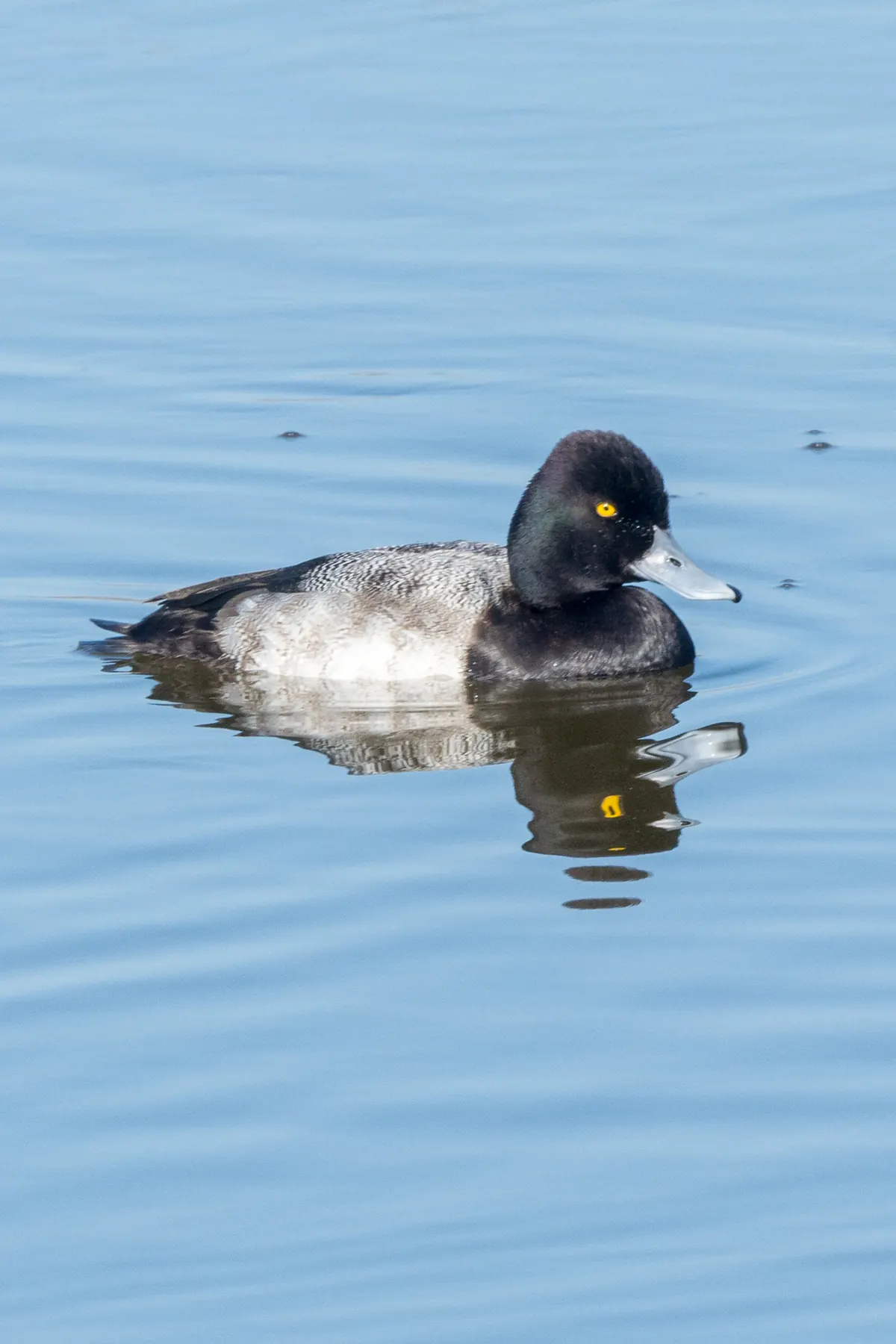
Florida does this on a grand scale. In the 125th count, the most recent with a published Florida summary, volunteers ran 80 counts and recorded 278 native species and natural vagrants and more than 1.9 million birds. Those totals are lopsided: lesser scaup, small diving ducks that gather in huge rafts, accounted for 525,000 of the birds on the Cocoa count alone, on the Indian River.
| What | Number | Where |
|---|---|---|
| Counts held in Florida | 80 | Statewide |
| Most species on one count | 175 | Gainesville |
| Second and third most | 168 and 156 | Sarasota; West Pasco |
| Lesser scaup | 542,801 statewide | 525,000 of them at Cocoa |
| American robins | 176,794 | Statewide |
| Tree swallows | 80,463 | Statewide |
Gainesville’s total stands out because the circle is inland, without the shorebirds and seabirds that pad the coastal counts; its prairie, lakes and hammocks make up the difference. To join, open Audubon’s Christmas Bird Count circle finder, pick a circle and email its compiler: circles marked green or yellow still want help, and red ones are full. Florida chapters such as Orange Audubon also run classroom counts on school grounds, which make a good first count for children. Enter the rest of your winter lists in eBird so they count too.
Which winter birds are worth looking for in Florida in December?
-
American white pelicans
Numbers build from October through December; they leave by spring · Ding Darling and Merritt Island refuges, Tampa Bay, big inland lakes
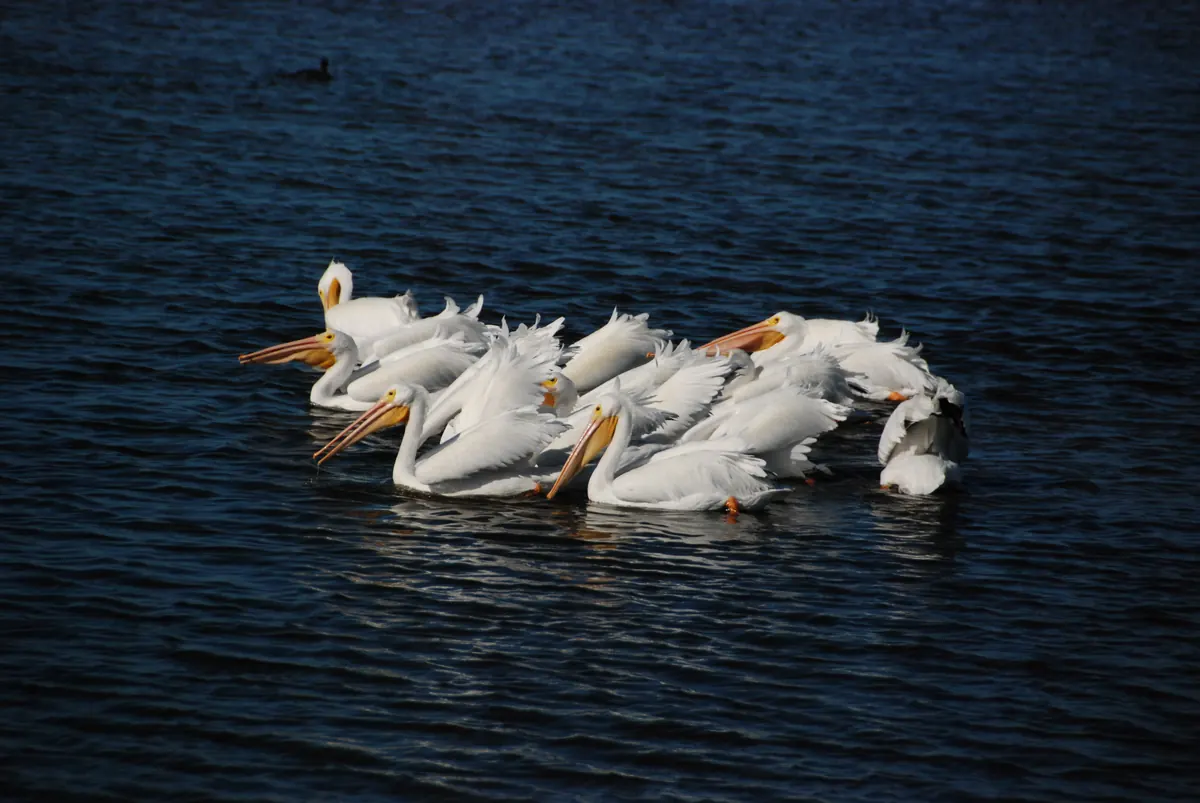
The white pelican is among the largest birds on the continent, with wings that span 8 to 9 1/2 feet, and it winters on shallow, sheltered bays and big warm-climate lakes. J.N. “Ding” Darling National Wildlife Refuge on Sanibel says white pelicans reach the refuge in greater numbers from October through December. Unlike the brown pelicans that plunge from the air, these feed while swimming: a flock lines up and herds fish into shallow water, then scoops them up.
-
Hummingbirds in winter
December and January are the best months · Feeders and winter flowers, especially around Tallahassee and the Panhandle
Most ruby-throated hummingbirds have gone south by December, so a hummingbird at a North Florida feeder now deserves a second look. A Tallahassee column republished by the UF/IFAS Leon County extension blog (a 2013 piece, so treat the details as a guide) says December and January are the likeliest months, that the rufous hummingbird of the West is the usual winter visitor, and that calliope, black-chinned, buff-bellied and Allen’s hummingbirds have also been banded in the area. One female rufous banded there in January turned up in Alaska that June, 3,523 miles away. A winter feeder needs its sugar water changed often; report a winter bird to a local Audubon chapter, since banders want to see it.
-
Robins by the thousand
All winter, in flocks that move with the fruit · Lawns, hammocks, anywhere with holly, cedar or palm fruit
The robin is a winter bird in most of Florida, arriving in loose, roving flocks that strip a fruiting tree and move on. Florida’s 125th count found 176,794 of them, the second-highest total of any species after the lesser scaup. A holly stripped bare in a day means a flock has passed through.
-
The North Shore of Lake Apopka
Best in winter; festival December 3–7 · Lake Apopka North Shore, northwest of Orlando
The Lake Apopka North Shore, 20,000 acres of former vegetable farms being restored to marsh, is where Central Florida birders go in December. It is free to visit, and Orange Audubon Society reports more than 370 species seen there, more than at any other inland site in the country. Its North Shore Birding Festival, December 3–7, 2026, runs guided field trips on the property and elsewhere in Central Florida; registration is open on the festival’s website.
Which Florida animals start their families in December?
Florida’s calendar runs backward for some of its biggest animals. While northern wildlife is shutting down for the winter, bald eagles here are hatching chicks, right whales are giving birth off the Atlantic beaches, and black bears are settling into dens to have cubs.
-
Bald eagle eggs hatch
Many hatch in December and January · Tall pines near water statewide; the Southwest Florida Eagle Cam online
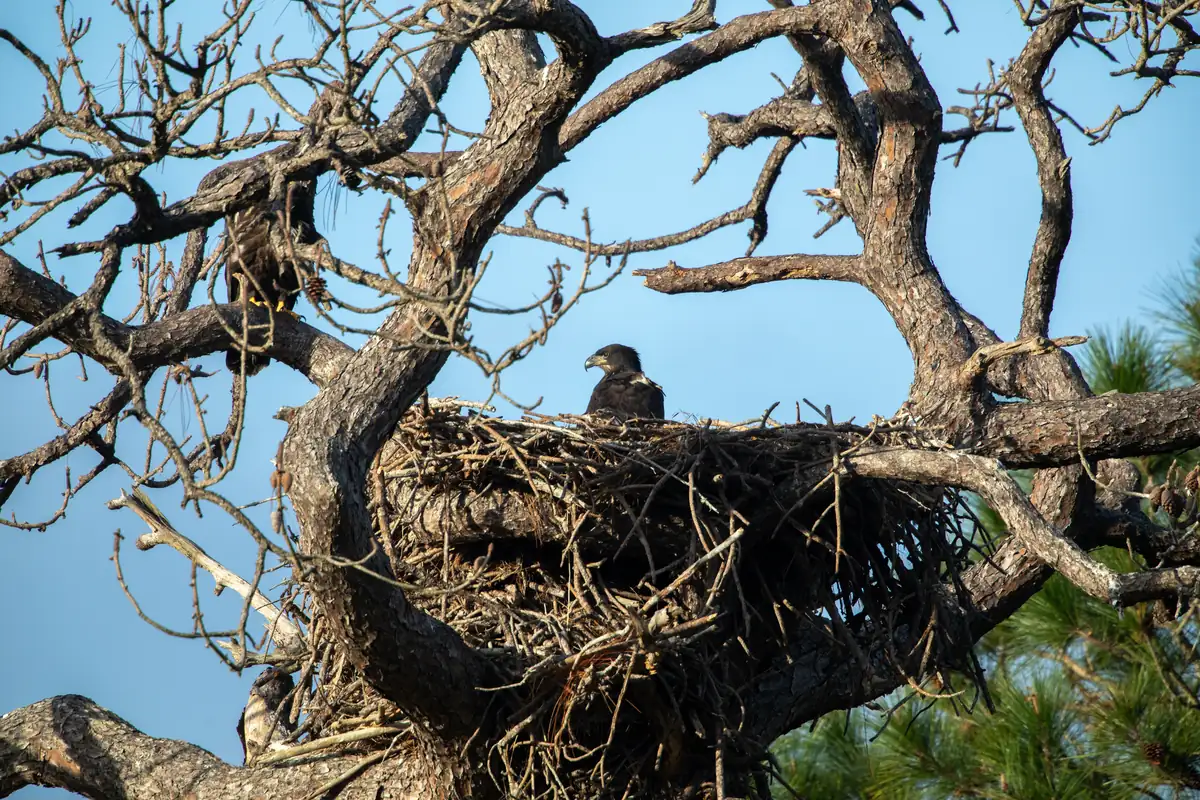
Eggs laid in November hatch after about five weeks, so December is when the first Florida eaglets appear. The most-watched nest in the state streams live as the Southwest Florida Eagle Cam, from a tall pine in North Fort Myers. Last season the resident pair, M15 and F23, laid two eggs in mid-November 2025. A tiny star-shaped hole, the pip, appeared in the first egg early on December 17, and the chick hatched the following day. The second egg never hatched, and by late December the cam team had judged it no longer viable. After the hatch, watch the parents feed the gray, downy chick tiny strips of fish.
-
The first right whale calves
The first calves usually show up in late November and December · Atlantic waters off northeast Florida and Georgia
Survey planes watch the coast all winter for newborns. Last season’s first mother and calf, a 17-year-old whale called Champagne, were spotted off South Carolina on November 28, 2025, and on December 3 the FWC’s team found Millipede and her new calf east of the Florida–Georgia line, near the mouth of the St. Marys River. A newborn is much smaller and paler than its mother and stays close at her side. Only about 380 of these whales are left, so each calf counts. If you see whales from the beach between Fernandina and Cape Canaveral, call the sighting hotline, 877-WHALE-HELP (877-942-5343).
-
Black bears go into dens
Pregnant females den through the winter; cubs are born in late January or February · Ocala, Apalachicola, Osceola, Big Cypress and other bear range
Florida’s bears do not sleep through the winter the way northern bears do, but pregnant females must den to have their cubs. The FWC says most dens are on the ground in dense thickets, though some are in tree hollows or under fallen logs. The cubs, usually two or three, are born around late January or early February and weigh only 8 to 15 ounces, about the weight of a can of soda. Males and females without cubs may den for a few weeks at most, and some males barely den at all, so bears are still about on mild December days.
What happens to Florida wildlife when a hard cold front comes through?
Most Florida cold snaps would barely register up north, but many of the state’s reptiles have nowhere to go when the air and water turn cold. After a hard December or January front, watch for these:
-
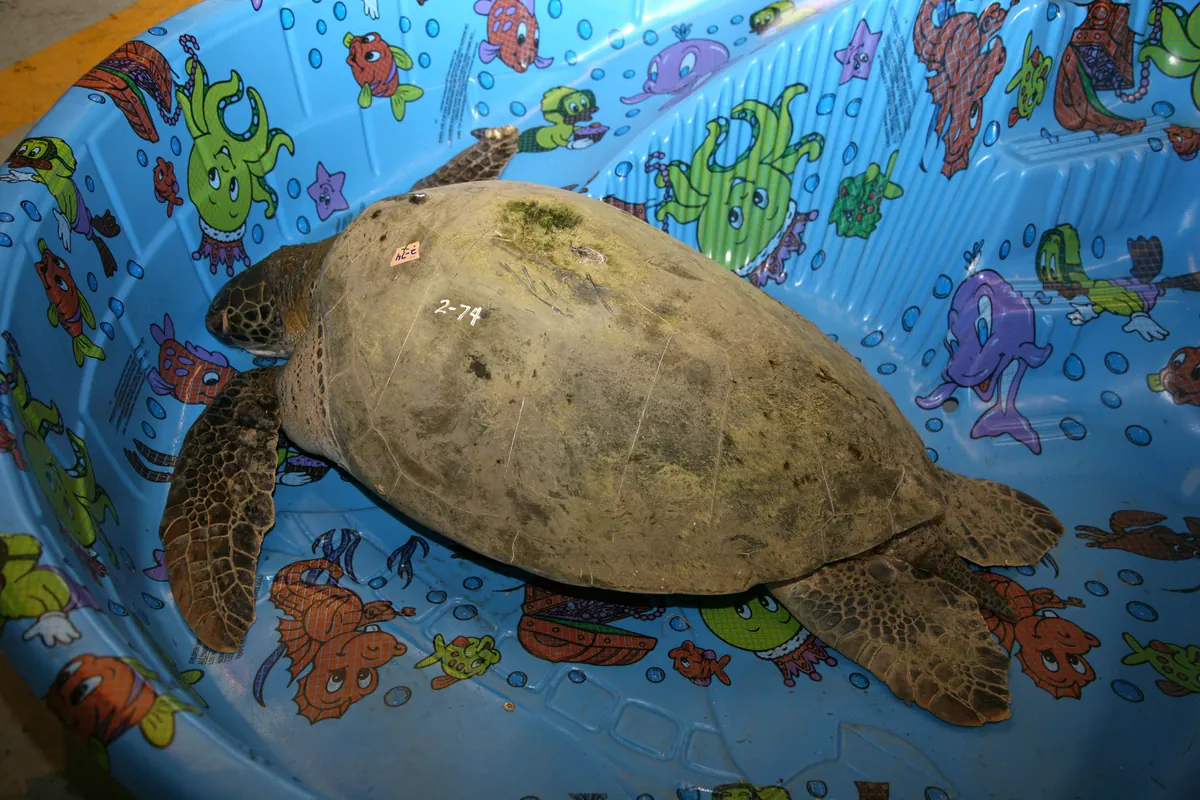
Cold-stunned sea turtles
After several cold nights in a row, usually December to February · St. Joseph Bay above all, but it can happen on any Florida coast
When the water drops to 50 °F or below, sea turtles become cold-stunned: too chilled to swim or even lift their heads to breathe. They float limp or wash into the shallows looking dead, but many are alive. St. Joseph Bay in Gulf County, a shallow bay where many young green turtles spend the winter, is where it happens most. In January 2018, with long cold spells and night high tides pushing turtles into the shallows, volunteers and USGS biologists rescued about 1,000 there, mostly green turtles with some Kemp’s ridleys and loggerheads; the cold of January 2010 produced Florida’s largest event, with more than 4,500 turtles rescued statewide. Last winter’s cold snaps brought another big rescue, more than 600 turtles from St. Joseph Bay. If you find one, don’t try to return it to the water yourself; note the spot and call the FWC Wildlife Alert line, 888-404-FWCC (3922).
-
Iguanas dropping from trees
Nights near freezing, mostly in South Florida · Southeast and Southwest Florida, wherever green iguanas live
Green iguanas are not native, and the cold shows it. The FWC explains that on nights near or below freezing they slip into torpor, losing control of their muscles, and can let go of the branches they sleep on. A stiff iguana on the sidewalk is usually alive. It warms up quickly, and an iguana that recovers in your car or kitchen will defend itself with claws, teeth and a whipping tail, so leave it where it fell.
-
Manatees at the warm spots
Every cold spell · Springs and power-plant outflows
Manatees need water warmer than 68 °F, and on a cold morning nearly all of them crowd into springs and power-plant canals. The FWC asks visitors to give them space: a manatee frightened out of a warm site can swim into water cold enough to kill it. At Apollo Beach, the power company’s free viewing center beside the warm discharge canal opens every day of the month except Christmas, with an early 3 p.m. close on Christmas Eve.
How do gopher tortoises and other Florida animals ride out the winter?
-
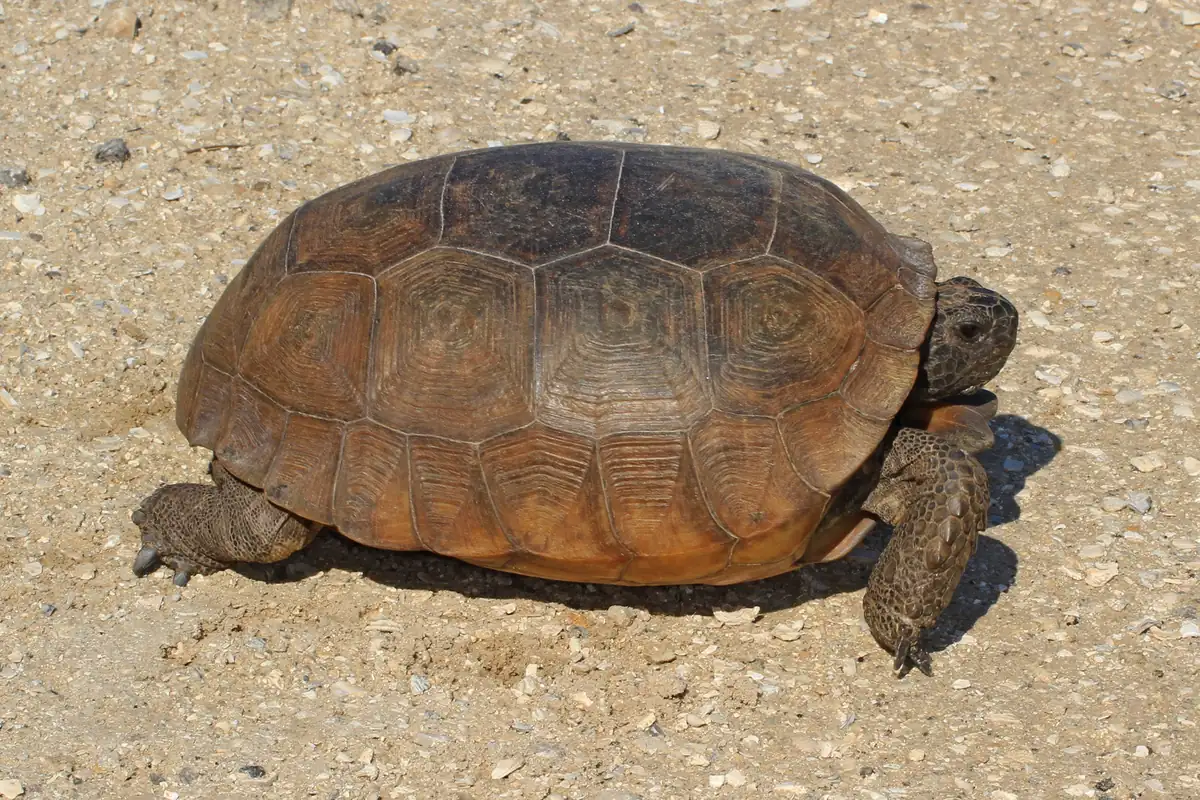
Gopher tortoises stay underground
Cool days all winter; out to bask on warm afternoons · Sandhills, scrub, flatwoods, pastures and road edges statewide
The gopher tortoise solves winter by digging. A typical burrow runs about 15 feet long and 6.5 feet deep, and some reach 40 feet; the air down there stays steady through cold snaps and droughts alike. In winter tortoises spend most of their time below, especially in North Florida, but on warm afternoons some climb out to sun themselves on the fan of bare sand, the apron, at the burrow mouth. More than 350 other species share those burrows, from indigo snakes to gopher frogs. The tortoise is listed as threatened in Florida and both the animal and its burrow are protected, so watch from a distance and report sightings with the FWC’s gopher tortoise app.
-
Reading tracks in the sand
Early mornings, especially after rain or dew · Sandy trails, firebreaks, beaches and burrow aprons
Florida rarely gets snow, but its sand holds tracks almost as well. On a burrow apron, look for the tortoise’s broad, scuffed trail with a flat drag mark down the middle. Along trails, the paired teardrop hooves of deer, the hand-like prints of raccoons and the narrow, toe-heavy tracks of armadillos are common. Go early after a damp night, before the wind smooths the sand.
Which plants stand out in Florida’s woods in December?
-
Mistletoe in the bare oaks
Easiest to see once deciduous trees drop their leaves · Laurel oaks and other hardwoods, mostly in North and Central Florida
In summer you could walk under it all day without noticing. Once the laurel oaks, hickories and other hardwoods thin out for winter, mistletoe shows as round green clumps high in the crown. It is a parasite, drawing water and minerals from its host while making its own food, and its sticky whitish berries ripen from October to December; birds and squirrels spread the seeds from tree to tree. The UF/IFAS Duval County extension office notes that the berries are poisonous to children and pets, so keep any you hang indoors out of reach.
-
Southern red cedar, Florida’s first Christmas tree
Evergreen all year; cones ripen blue in winter · Coastal hammocks, shell mounds, limestone soils, old fields
Before trucks brought firs down from the north, the Florida Native Plant Society notes, red cedar served as the southern Christmas tree. Its blue “berries” are really small fleshy cones, borne only on the female trees, and birds eat them all winter. Its dense foliage also gives roosting birds shelter on cold nights, and the tree stands up well to hurricane winds.
-
Resurrection fern after a dry spell
Curled and gray in dry weather; green within hours of rain · The upper branches of live oaks and other hammock trees
December is in the heart of Florida’s dry season, and the little fern that lines live oak limbs shows it. In dry weather, UF/IFAS writes, resurrection fern turns gray and shrivels; when rain comes it turns green and unrolls its fronds within hours. Check one limb before and after a front’s rain to see it happen. The fern takes nothing from the tree; it only uses the bark as a place to grow.
-
Florida torreya
Evergreen year round · Ravines on the east bank of the Apalachicola River; Torreya State Park
The Florida torreya, a federally endangered evergreen conifer, grows wild only on the bluffs and ravines along the Apalachicola River, and the Florida Native Plant Society reports that disease is killing it in the wild. Winter, when the hardwoods on the steep slopes are bare, is a good season to look for its dark green foliage at Torreya State Park near Bristol.
What is December weather like in Florida, and what might a strong El Niño bring?
Meteorologists count winter as December, January and February, so by their reckoning the cold season is already twenty days old when the solstice arrives. In Florida, that means a spread of more than 25 degrees from north to south: an average December night in Tallahassee drops to about 43 °F, while in Key West it stays above 68 °F. It is also the month when much of North Florida usually gets its first freeze. Half of all years, by NOAA’s 1991–2020 normals, have frozen by December 4 at Gainesville, December 7 at Jacksonville and December 9 at Pensacola. Orlando and Tampa usually wait until January, and Miami and Key West have no typical date at all. Tallahassee, whose median comes in late November, averages seven freezing nights in December.
| Station | Average high | Average low | Rain | Nights 32 °F or colder | Nights 40 °F or colder |
|---|---|---|---|---|---|
| Pensacola | 65.1 | 45.9 | 5.40 | 2.9 | 11.3 |
| Tallahassee | 65.9 | 42.9 | 4.24 | 7.4 | 14.2 |
| Jacksonville | 67.5 | 45.8 | 2.78 | 3.6 | 11.5 |
| Gainesville | 69.3 | 45.2 | 2.88 | 3.7 | 11.2 |
| Orlando | 73.8 | 52.9 | 2.48 | 0.3 | 2.5 |
| Tampa | 73.9 | 55.9 | 2.56 | 0.1 | 1.6 |
| Miami | 78.2 | 64.3 | 2.44 | 0.0 | 0.1 |
| Key West | 77.7 | 68.3 | 2.16 | 0.0 | 0.0 |
Snow is rare but not unheard of. Just before Christmas in 1989, a storm laid snow along the Southeast coast from December 22 to 24: the National Weather Service measured 0.8 inch at its Jacksonville office, 1 inch at the Naval Air Station and 2.5 inches at Jacksonville Beach, and flurries fell in Tampa and near Sarasota. The freeze that came with it badly damaged the citrus groves north of Interstate 4. A far bigger snow hit the Panhandle in January 2025: on the 21st, Pensacola measured 8.9 inches, nearly three times its old two-day record from 1895. For the freeze outlook in your own town, use our Florida frost and freeze dates.
This winter has an unusual setup. On September 10, NOAA’s forecasters at the Climate Prediction Center (their El Niño discussion) said the warming Pacific had a better than nine-in-ten chance of reaching very strong El Niño levels through the fall and winter. When the Miami weather office looked at past events of that size before the 2015–16 dry season, it found that El Niño strengthens the southern jet stream and steers a series of Gulf storms over the peninsula, so the dry season turns cloudier, wetter and stormier, with cooler weather mostly in January to March. Its tornado record was the sobering part: in the six strongest El Niño winters since 1950, South Florida had more than twice as many dry-season tornadoes of F1/EF1 strength or greater as in an average El Niño, and they struck at night almost as often as in the afternoon. February and March brought the most. Look for NOAA’s official December-to-February maps after their October 15 release among the 90-day outlooks, and our weather page follows each front as it comes.
When is the earliest sunset in Florida, and how short is the shortest day?
Florida’s shortest day is longer than in most of the country, but its evenings still close in early. On the solstice, Monday, December 21, Pensacola, Tallahassee and Jacksonville get 10 hours 11 minutes of daylight, Orlando 10 hours 20 minutes, Miami 10 hours 32 minutes and Key West 10 hours 37 minutes. The surprise is the sunset. Across the state the earliest one lands around the turn from November to December, weeks before the solstice: Miami’s sun goes down at 5:29 p.m. around November 30, Jacksonville’s at 5:26 around December 3, and Pensacola, on Central time, reaches its earliest, 4:48 p.m., around December 2. By the solstice the evenings have already gained a few minutes, while sunrise keeps creeping later until mid-January, when Miami’s comes at about 7:09 a.m. Blame geometry: Earth’s tilted axis, combined with an orbit that brings it nearest the sun in early January, makes the clock time of solar noon drift later all through December.
| City | Dec 1 | Dec 21 | Dec 31 | Earliest sunset |
|---|---|---|---|---|
| Pensacola | 10 h 20 m | 10 h 11 m | 10 h 14 m | 4:48 p.m., Dec 2 |
| Tallahassee | 10 h 20 m | 10 h 11 m | 10 h 13 m | 5:36 p.m., Dec 2 |
| Jacksonville | 10 h 20 m | 10 h 11 m | 10 h 13 m | 5:26 p.m., Dec 3 |
| Gainesville | 10 h 23 m | 10 h 15 m | 10 h 17 m | 5:30 p.m., Dec 2 |
| Orlando | 10 h 27 m | 10 h 20 m | 10 h 21 m | 5:28 p.m., Dec 1 |
| Tampa | 10 h 30 m | 10 h 22 m | 10 h 24 m | 5:34 p.m., Dec 1 |
| Miami | 10 h 39 m | 10 h 32 m | 10 h 34 m | 5:29 p.m., Nov 30 |
| Key West | 10 h 44 m | 10 h 37 m | 10 h 39 m | 5:38 p.m., Nov 29 |
Type any Florida address into the daylight calculator and it returns that spot’s sunrise, sunset and twilight for each winter day.
What can you see in the night sky over Florida in December?
-
The Geminid meteor shower
Night of Sunday, December 13, into Monday, December 14 · Anywhere dark; the radiant in Gemini climbs in the east after dusk
No shower beats the Geminids for numbers, and this December the Moon stays out of their way. The International Meteor Organization times the maximum for December 14 and gives a zenithal rate near 150, a figure that assumes a perfect sky with the radiant overhead; from a dark Florida site, a few dozen an hour is a more realistic hope. The Moon is a slim crescent five days past new, and it is gone by mid-evening. The count rises as Gemini climbs and peaks around 2 a.m. local time. For the darkest sky, head for Kissimmee Prairie Preserve State Park or the Big Cypress country; a quiet beach facing away from city glow also works.
-
The Cold Moon, the closest full moon of 2026
Full at 8:28 p.m. EST on Wednesday, December 23 · Rising in the east-northeast around sunset
December’s full moon comes only about seven hours before lunar perigee, the Moon’s closest approach of the month, which makes this the nearest full moon of 2026, roughly 356,700 kilometers (about 221,700 miles) away. EarthSky lists it as the year’s closest full supermoon. The difference from an ordinary full moon is small to the eye, but a moonrise over the Gulf or a prairie makes it look huge anyway. On Christmas Eve it is still almost perfectly round.
-
The winter solstice
Monday, December 21, at 3:50 p.m. EST (2:50 p.m. CST) · Watch where the sun sets that evening
The solstice is the moment the sun stops its southward slide along the horizon, and Florida gets its shortest day of the year. Mark where it sets against a fence post or a treeline, then check the same spot in late January to see how far it has moved north.
-
Venus before dawn, Saturn after dusk
All month · East before sunrise; south and southwest after sunset
Venus is the dazzling morning star, high in the southeast before sunrise and on its way to greatest western elongation, its widest swing from the sun, on January 3, 2027. At dawn on December 4 the waning crescent Moon, the star Spica and Venus line up in the southeast, with Spica in the middle; on the 5th the Moon has slid closer to Venus. Mars and Jupiter are also morning planets, and in the last week of the year Jupiter clears the eastern horizon well before midnight. Saturn has the evening to itself, a steady yellow point in the south, and as the month ends it follows the sun down about four hours behind it.
-
The Moon meets the Pleiades
Evening of Monday, December 21 · East after dark
On the solstice evening the bright gibbous Moon passes very close to the Pleiades, the little dipper-shaped star cluster in Taurus. Moonlight drowns the faint stars, so binoculars help.
-
Meteors to skip and one to plan for
Ursids December 22; Quadrantids night of January 3, 2027 · North
A nearly full Moon will wash out the Ursids, which peak on December 22. The Quadrantids are the better bet: their brief maximum falls on the night of Sunday, January 3, 2027, with almost no moonlight. There are no eclipses this month.
| Phase | Date | Time |
|---|---|---|
| Last quarter | Tuesday, Dec 1 | 1:08 a.m. EST |
| New moon | Tuesday, Dec 8 | 7:52 p.m. EST |
| First quarter | Thursday, Dec 17 | 12:42 a.m. EST (11:42 p.m. Wednesday CST) |
| Full moon, the Cold Moon | Wednesday, Dec 23 | 8:28 p.m. EST (7:28 p.m. CST) |
| Last quarter | Wednesday, Dec 30 | 1:59 p.m. EST |
Look up when the Moon rises over Tampa, Ocala or your own street on our moon phase calendar; before driving to a dark site, check tonight’s cloud cover on Today’s sky.
What can families do outdoors in Florida in December 2026?
- Join a field trip at the North Shore Birding Festival, December 3–7, on the Lake Apopka North Shore. Registration is open on the festival’s website; check each trip’s fee when you book.
- Stay up for the Geminids on the night of December 13. Bring reclining chairs and blankets, give your eyes 20 minutes to adjust, and count meteors in 15-minute blocks.
- Sign up for a Christmas Bird Count between December 14 and January 5; households inside a circle can take part as a feeder count.
- Mark the solstice on Monday, December 21, by watching the sunset from the same spot, and compare it with the earliest sunset a few weeks before.
- On Wednesday, December 23, catch the Cold Moon coming up from a beach or lakeshore with a clear eastern horizon.
- Check the Southwest Florida Eagle Cam each morning in December for a pip, and log the hatch date.
- Visit Tampa Electric’s free Manatee Viewing Center on the first cold morning after a front, when the most manatees gather in the warm canal.
- Start the year on a First Day Hike on January 1, 2027. Florida State Parks led ranger hikes at parks from Grayton Beach to Long Key last New Year’s Day; look for the 2027 list on the parks’ events calendar in late December.
Project FeederWatch is in full swing too; a December count of the robins, warblers and hummingbirds in a Florida yard is useful data. If you plan a January trip, the Space Coast Birding and Wildlife Festival runs January 20–24, 2027. For a place to keep the season’s notes, the Naturalist’s Field Journal has pages for each of these outings, and our month-by-month nature guides cover the rest of the year, including November in Florida.
Safety notes for December in Florida
- Hunting seasons (FWC, 2026–27). Zone A, South Florida: general gun deer and fall turkey run through January 3. Zone B: muzzleloading through December 4, then general gun from December 5 to February 21 and fall turkey December 5 to January 31, with antlerless deer December 26 to January 3. Zone C: general gun deer runs all month, through January 24, and fall turkey through January 3. Zone D, the western Panhandle: crossbow November 30 to December 4, a youth deer weekend December 5–6, muzzleloading December 5–11, then general gun from December 12 to February 21 and fall turkey December 12 to January 17. Statewide, the second phase for ducks, coots, mergansers and light geese runs December 12 to January 31; Canada geese reopen December 1; doves run through December 6 and again from December 19; woodcock opens December 18.
- Fluorescent orange. The FWC requires every deer hunter on public land, and anyone going along, to wear an outer layer of daylight fluorescent orange, no less than 500 square inches of it, above the waist; it does not apply during archery-only seasons or on private land. The rule does not cover hikers, but with gun seasons open in every zone this month, wear orange on any wildlife management area and check its hunt calendar before you go.
- Cold water. Springs stay warm all winter, but rivers, lakes and shallow bays chill fast after a front. Dress for the water, not the air, when you paddle, and keep a dry bag of warm clothes.
- Night storms. In a strong El Niño winter, fronts can bring tornadoes after dark. Keep weather alerts on your phone switched on overnight, especially if you are camping.
- Short days. In Pensacola every December sunset comes before 5 p.m. Central time, and even Key West is dark by about 6. Plan walks and paddles to finish early, and pack a headlamp.
- Wildlife. Leave cold-stunned turtles and iguanas where you find them and report turtles to 888-404-3922; keep 500 yards from right whales; stay well back from eagle nests with young.
Sources
- Audubon: the 125th Christmas Bird Count in Florida (Pranty and Anderson)
- Audubon: join the Christmas Bird Count (dates, circle finder, feeder counts)
- Audubon: count circles, codes and compilers, 125th Christmas Bird Count (PDF)
- Audubon Florida: Orange Audubon Society brings the Christmas Bird Count to schools
- eBird
- U.S. Fish and Wildlife Service: J.N. “Ding” Darling National Wildlife Refuge, species and seasons
- Audubon Guide to North American Birds: American white pelican
- UF/IFAS Extension Leon County: winter hummingbirds
- North Shore Birding Festival, December 3–7, 2026 (Orange Audubon Society)
- Great Florida Birding and Wildlife Trail: events calendar
- St. Johns River Water Management District: Lake Apopka Wildlife Drive
- WGCU: pip confirmed in North Fort Myers eagle egg (December 17, 2025)
- WGCU: second eagle egg at the North Fort Myers nest will not hatch (December 28, 2025)
- FWC: bald eagle
- Clearwater Marine Aquarium Research Institute: first right whale calves of the 2025–2026 season
- GPB News: first right whale calf of the season spotted (December 5, 2025)
- NOAA Fisheries: North Atlantic right whale
- FWC: North Atlantic right whales off Florida
- FWC: Florida black bear facts (cubs)
- FWC: black bear hibernation, breeding and reproduction
- FWC: wildlife winter safety reminders (January 26, 2026)
- FWC: cold weather impacts on wildlife (January 7, 2025)
- USGS: scientists and volunteers rescue about 1,000 cold-stunned sea turtles
- NOAA Fisheries: cold snaps and stunned sea turtles
- FWC: January 2010 cold-stunning event
- FWC: threats to sea turtles and the Wildlife Alert number
- Tampa Electric: Manatee Viewing Center hours and holiday closures
- FWC: gopher tortoise program
- FWC: gopher tortoise species profile (burrows, winter activity)
- UF/IFAS Extension Nassau County: gopher tortoise
- UF/IFAS Extension Duval County: mistletoe, decoration or menace to trees?
- Florida Native Plant Society: Juniperus virginiana (red cedar)
- UF/IFAS Gardening Solutions: resurrection fern
- Florida Native Plant Society: Torreya taxifolia (Florida torreya)
- NOAA NCEI: 1991–2020 December normals for eight Florida stations (data API)
- NOAA NCEI: 1991–2020 first-freeze normals (data API)
- NWS Wilmington: the Christmas coastal snowstorm of December 22–24, 1989
- NWS Mobile/Pensacola: the historic January 21, 2025, snowstorm
- Climate Prediction Center: ENSO diagnostic discussion, September 10, 2026
- Climate Prediction Center: official 90-day outlooks
- NWS Miami: Tropical Winds newsletter, South Florida dry season outlook 2015–2016 (PDF)
- NWS Tallahassee: El Niño and La Niña impacts on Florida
- U.S. Naval Observatory: moon phases, 2026 (data API)
- U.S. Naval Observatory: Earth’s seasons, 2026 (data API)
- International Meteor Organization: 2026 meteor shower calendar (PDF)
- EarthSky: supermoons, including the December 2026 full moon
- EarthSky: Venus at greatest western elongation, January 2027
- RASC Observer’s Handbook 2026: lunar occultations (Pleiades) (PDF)
- NASA: eclipses during 2026
- Flagler News Weekly: First Day Hikes at Florida State Parks, January 1, 2026
- Florida State Parks: events calendar
- Project FeederWatch: how to participate
- FWC: 2026–2027 hunting season dates
- FWC: 2026–2027 migratory bird hunting season dates
- FWC: general hunting regulations, including the fluorescent orange rule
- Space Coast Birding and Wildlife Festival: January 20–24, 2027
- Photos via Wikimedia Commons; licenses and photographers are credited under each picture
