What to look for in nature in Florida this October
In Florida, October is the hinge between the wet season and the dry one. Peregrine falcons stream down the Keys by the hundreds on the best days, monarchs pile up under the St. Marks lighthouse, the last sea turtle hatchlings scramble for the surf, and at some point, often around mid-month, a cold front shuts off the afternoon thunderstorms. Nothing freezes. Here is what to watch for, from the Panhandle to Key West, with dates.
Start here
- Peregrines over the Keys. Curry Hammock State Park near Marathon holds the world records for peregrine falcons, and the days either side of October 10 are the usual peak: 1,506 passed the deck on October 10, 2015. Hawkwatch staff explain the flight to visitors from 8 a.m. to 4 p.m. during the season.
- The front that ends the wet season. The Miami weather office dates South Florida’s wet season May 15 to October 15, with a transition that can stretch two weeks or more. What actually flips the switch is a cold front: the afternoon storms quit, the air dries, and monarchs and songbirds ride the north wind down the coasts.
- Jupiter goes behind the Moon. Before dawn on Tuesday, October 6, the crescent Moon covers Jupiter for roughly 45 minutes to an hour. The planet vanishes at the bright edge between about 4:16 and 4:22 a.m. Eastern (3:15 a.m. Central in Pensacola) and returns at the dark edge between about 5:06 and 5:15 a.m. (4:12 a.m. Central).
Record it: the Naturalist’s Field Journal gives you a “birds I have seen” page for the day’s hawkwatch tally, a dusk-and-dawn watch page for the occultation and the bears’ evening rounds, and a map of sounds for the night the first cranes call overhead. A line a day is enough.
Regions used below: Panhandle; North Florida; Central Florida; Southwest Florida; Southeast Florida; The Keys.
When do peregrine falcons pour through the Florida Keys?
The Keys work like a funnel. Hawks and falcons following the peninsula south run out of mainland at Key Largo and squeeze down the island chain. The Florida Keys Hawkwatch counts them from the second-floor deck of the campground bathhouse at Curry Hammock State Park, mile marker 56 near Marathon, and no count anywhere has logged more peregrine falcons: 1,506 on October 10, 2015, and 4,559 that fall. An average season brings about 2,700 peregrines and more than 30,000 raptors of 19 species, and the falcons crest in the week around October 10, which birders there call the Day of the Peregrine.
| What | Number | When |
|---|---|---|
| Peregrines in one day (world record) | 1,506 | October 10, 2015 |
| Peregrines in one season (world record) | 4,559 | Fall 2015 |
| Previous one-day record | 651 | October 10, 2012 |
| Peregrines, average season | About 2,700 | Mid-September to November |
| Raptors of all species, typical season | More than 30,000 | Count period Sept 1 – Nov 15 |
| Other big days | 424 magnificent frigatebirds; more than 4,000 common nighthawks | Sept 25, 2015; Sept 10, 2014 |
The project’s core count runs from mid-September through October, with staff on the deck from 8 a.m. to 4 p.m. to explain what is going over; the park charges its normal admission. Numbers swing with the wind, so check the last few days on hawkcount.org before driving down. Broad-winged and sharp-shinned hawks, ospreys, kestrels and turkey vultures make up most of the rest of the tally, and a few miles north at Long Key State Park the same team counts the morning songbird flights.
When do monarchs reach St. Marks and the rest of Florida?
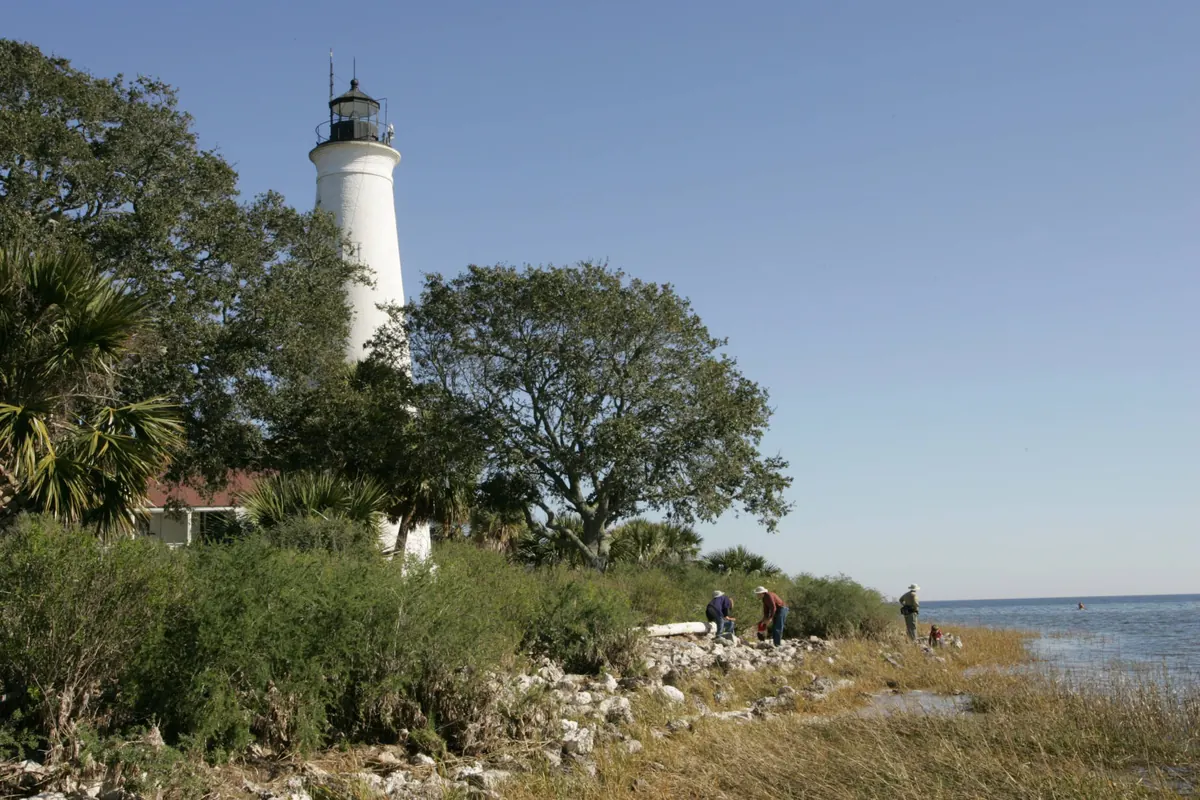
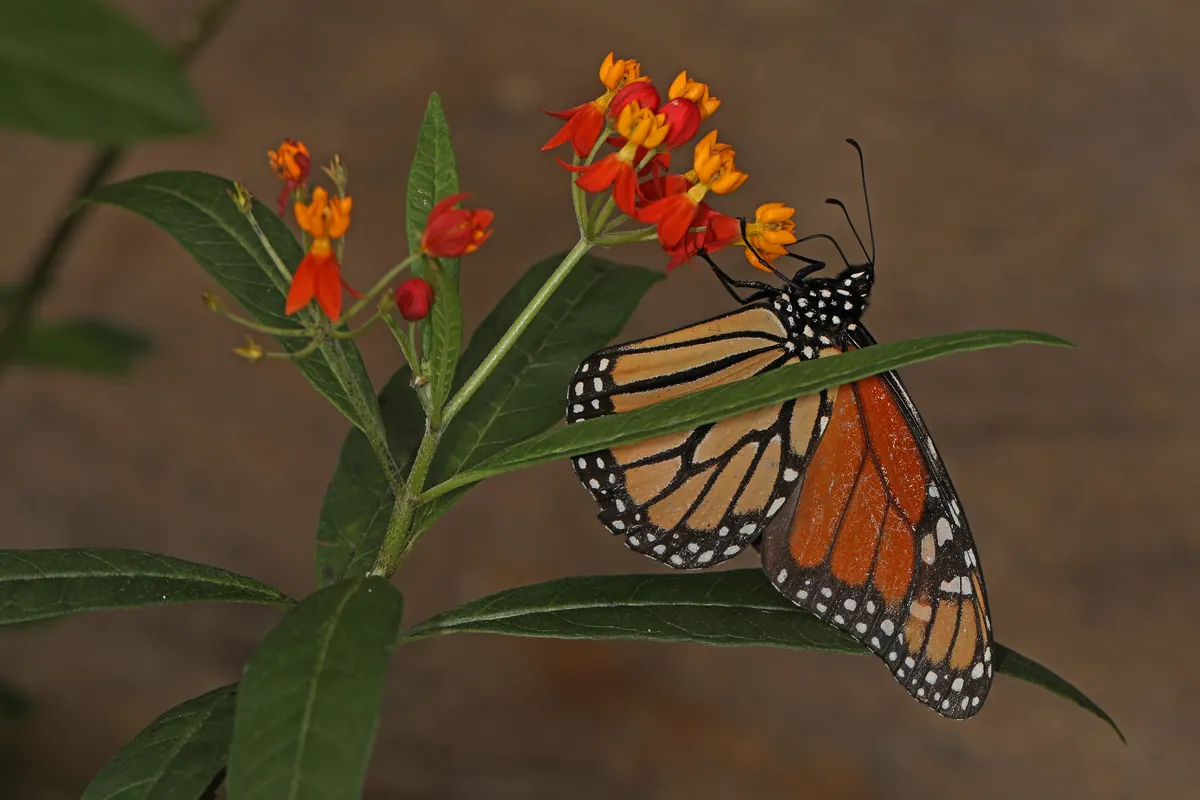
Monarchs reach Florida along two routes: down the Atlantic beaches, and along the Gulf coast to the Big Bend, where St. Marks National Wildlife Refuge is the best-known stopover in the Southeast. The refuge describes migrants that “fall out” on goldenrod and saltbush by the shore. Reluctant to set off across open water, they pile up on the lighthouse point, at times by the hundreds or thousands, and feed until the wind turns fair. Monarch Watch gives each band of latitude a peak window of about twelve days, so the peak works its way down the state over the month:
| Region | Reference cities | Peak window |
|---|---|---|
| Panhandle and North Florida | Pensacola, Tallahassee, Jacksonville (30–31° N) | Oct 4 – 19 |
| North-central Florida | Gainesville, Ocala, Daytona Beach (29° N) | Oct 10 – 22 |
| Central Florida | Orlando, Tampa (28° N) | Oct 13 – 25 |
| Southwest and Southeast | Fort Myers, West Palm Beach (27° N) | Oct 15 – 27 |
| Miami and the Keys | Miami, Key West (25° N) | Oct 20 – Nov 1 |
The refuge’s Monarch Butterfly Festival includes tagging at the lighthouse. Last year’s was October 25; a community calendar lists this year’s for Saturday, November 7, 10 a.m. to 2 p.m., $5 a car, but the refuge had not posted the 2026 date when we checked, so call 850-925-6121 before you go. Anywhere in the state, watch in the warm afternoon, when monarchs feed, and at dusk, when they cluster in trees to roost. Journey North takes roost reports, and Monarch Watch sells tagging kits. The journal’s pollinator-watch plate fits the job: ten minutes, one goldenrod patch, a count.
When does the dry season start, and is it still hurricane season?
The Miami weather office splits South Florida’s year at October 15: the wet season runs May 15 to October 15 and brings 60 to 70 percent of the annual rain, and “often there is a transition period near the beginning and end of the rainy season which can last two weeks or more.” In practice the first strong cold front sets the date; in 2011 the dry season began on October 20. Farther north the change shows in the nights: Tallahassee’s normal low drops from 70 °F in September to 59 in October and 48 in November. Fronts reach the Panhandle first and Miami last. Over most of the state October is a dry month, while the southeast coast is still wet: it is Miami’s fifth-wettest.
| City | Sept rain | Oct rain | Nov rain | Oct high / low | Oct rank |
|---|---|---|---|---|---|
| Pensacola | 6.61 | 4.70 | 4.42 | 81 / 62 °F | 9th |
| Tallahassee | 4.91 | 3.24 | 3.10 | 82 / 59 °F | 11th |
| Jacksonville | 7.56 | 4.03 | 2.00 | 81 / 62 °F | 6th |
| Gainesville | 5.05 | 2.68 | 1.79 | 82 / 61 °F | 11th |
| Orlando | 6.37 | 3.46 | 1.79 | 85 / 66 °F | 9th |
| Tampa | 6.09 | 2.34 | 1.40 | 86 / 69 °F | 9th |
| Fort Myers | 9.00 | 3.08 | 1.78 | 87 / 69 °F | 9th |
| West Palm Beach | 7.96 | 5.90 | 3.62 | 85 / 73 °F | 7th |
| Miami | 10.22 | 7.65 | 3.53 | 86 / 74 °F | 5th |
| Key West | 7.24 | 5.67 | 2.05 | 86 / 77 °F | 7th |
Hurricane season runs to November 30, and October is Florida’s second-busiest month for landfalls. In NOAA’s Hurricane Research Division list of U.S. hurricanes since 1851, 46 Florida strikes came in September, 39 in October and 26 in August, with only a handful in June, July and November. Eleven of those October strikes were major hurricanes, from the 1921 Tampa Bay storm and King at Miami in 1950 to Opal in 1995, Wilma in 2005 and Michael, a Category 5 at Mexico Beach on October 10, 2018; Milton came ashore near Siesta Key on October 9, 2024. Roughly three of an average season’s fourteen named storms form in October, many of them close to home in the western Caribbean and the Gulf, which puts the Gulf coast and South Florida most at risk.
For the winter, the story is El Niño. The Climate Prediction Center’s September 10 update kept an El Niño Advisory in place and gave better than 90 percent odds of a very strong event this fall and winter, with a 75 percent chance it outdoes every event since 1950. The Tallahassee weather office says El Niño “generally brings above average precipitation to Florida during Fall-Winter-Spring,” with cooler Gulf coast winters and about 15 tornadoes a year in central and South Florida, nearly double the neutral and La Niña figure. Most of that builds from November on. NOAA issues its winter outlook October 15, and we will explain it on the Weather now page.
What is happening along the coast: manatees, sea turtles, mullet and red tide?
-
Manatees, not quite yet
Warm-water sites fill in November; viewing centers open Nov 1 and Nov 15 · Springs, power-plant outfalls, coastal rivers
Manatees cannot tolerate water below about 68 °F for long, but in October the bays and rivers are still warm, so most of Florida’s 8,350 or more are spread out feeding. They crowd into springs and power-plant outfalls as the November fronts chill the water, and the calendar follows: Tampa Electric’s Manatee Viewing Center at Apollo Beach opens November 1 (free, 10 a.m. to 5 p.m.), the Three Sisters Springs programs at Crystal River refuge start November 15, and many seasonal slow-speed manatee zones take effect the same day. Report sick, injured or dead manatees to the FWC Wildlife Alert line, 888-404-FWCC.
-
The last sea turtle hatchlings
Nesting season ends October 31 · Every sandy coast; the Atlantic beaches from Brevard to Palm Beach most of all
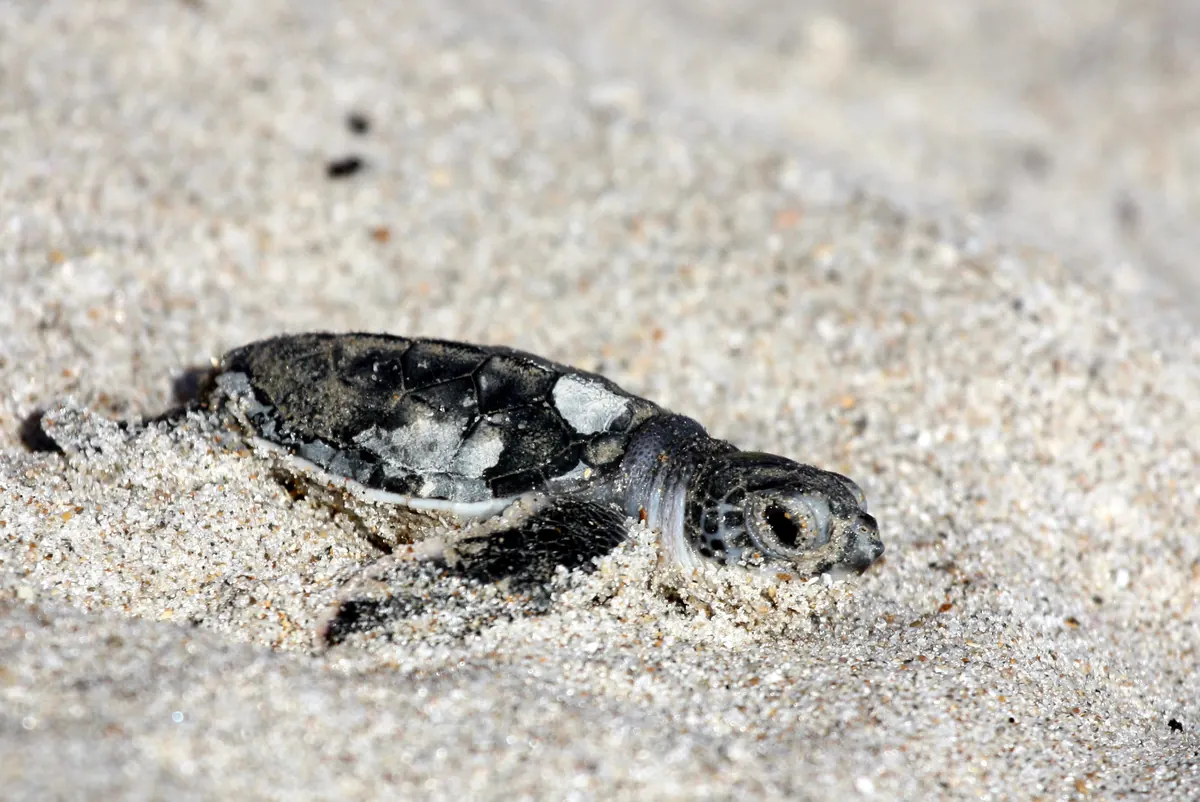
Florida’s sea turtle nesting season ends October 31, and the FWC’s beach-lighting guidance runs to that date because late nests are still hatching. Loggerheads nest from April to September, and Florida beaches hold about 90 percent of the northwest Atlantic population’s nests, most of them from Brevard to Palm Beach; Archie Carr National Wildlife Refuge protects what the Fish and Wildlife Service calls the most significant loggerhead nesting area in the world. Hatchlings steer for the brightest horizon, so until month’s end keep beach lights low, long-wavelength and shielded, keep flashlights off the sand at night, and fill in holes. Call 888-404-FWCC about a stranded one rather than carrying it to the water.
-
The mullet run
Fall into winter; the heavy weeks vary · Atlantic surf and inlets, Gulf passes
Striped mullet live in the bays and rivers and, in the FWC’s words, “migrate offshore in large schools to spawn” in fall and winter; in the Gulf they spawn 40 to 50 miles out. From shore that is the mullet run: dark schools pushing along the Atlantic surf and out through the Gulf passes, with tarpon, snook, sharks and pelicans in pursuit. The timing shifts with the fronts; the morning after a north wind is a good time for a pier or an inlet jetty.
-
Horseshoe crabs on the tide
Spring and fall peaks; high tides near the Oct 10 new moon and Oct 26 full moon · Sandy beaches inside bays and lagoons
Horseshoe crabs can nest in any month in Florida, but the FWC says spring and fall are the peaks and that “most nesting activity takes place during high tides around the time of a new or full moon”: this month, around October 10 and October 26. Look for pairs at the waterline, the smaller male holding onto the female’s shell, and report them to the FWC’s Florida Horseshoe Crab Watch.
-
Red tide
Blooms most often start in late summer and early fall · Gulf coast, mostly southwest Florida
Blooms of Karenia brevis, Florida red tide, most often start “in late summer and early fall” and can last “through winter to spring,” almost always on the Gulf side. With an onshore breeze it can mean coughing and stinging eyes, and it makes local shellfish unsafe. Check the FWC’s daily sample map before a Gulf beach day.
-
Right whales: not yet
November to April · Atlantic coast, Fernandina Beach to Cape Canaveral
North Atlantic right whales are “typically sighted off Florida between November and April,” when the waters off Florida and Georgia serve as the only known calving ground for a species of about 380. Federal rules keep boats, boards, kayaks and drones 500 yards away. Fernandina Beach welcomes them back with its free Right Whale Festival at Main Beach Park on November 7 and 8.
When do sandhill cranes, ducks and the other winter birds arrive?
-
Sandhill cranes
First flocks late in the month at best; the crowds in November and December · Paynes Prairie, the Kissimmee prairies, cattle country
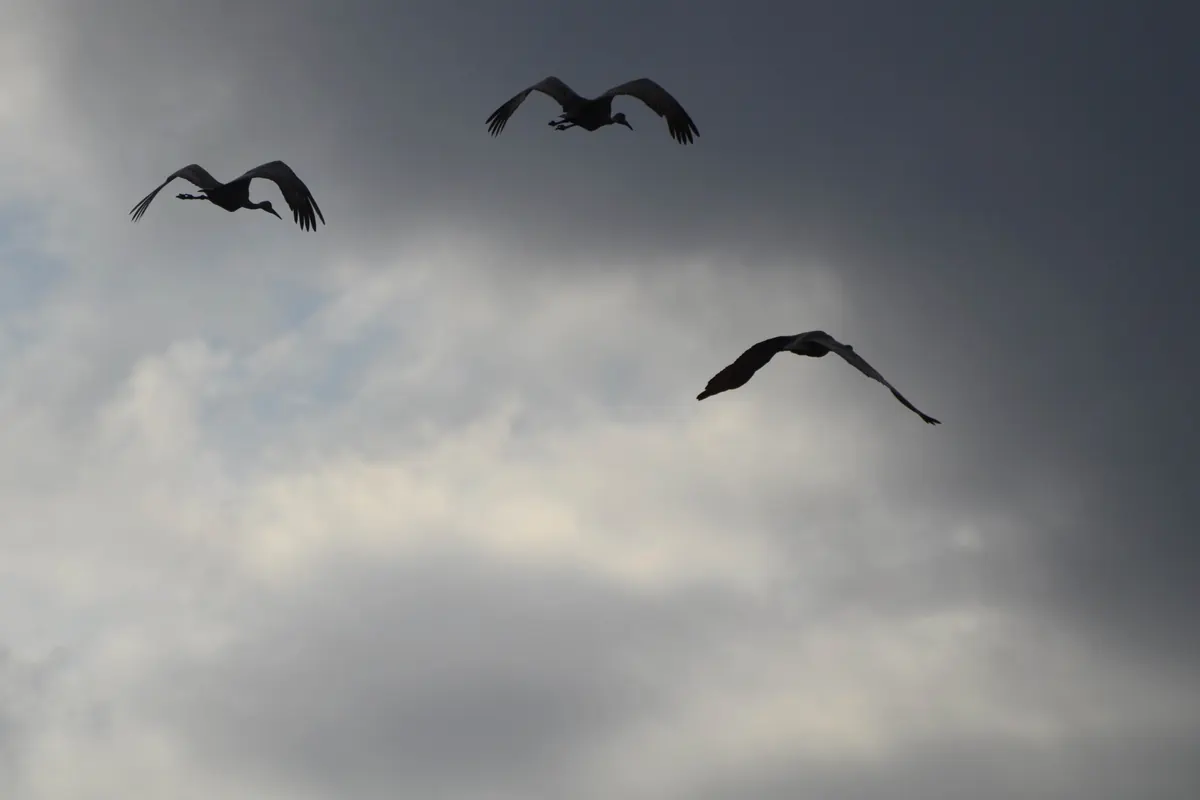
Florida keeps 4,000 to 5,000 resident sandhill cranes, and about 25,000 greater sandhills from the Great Lakes join them each winter. The FWC puts their arrival in November and December; at Paynes Prairie near Gainesville the migrants stay from November to March, seen by the hundreds from the La Chua Trail. In October, listen for the first flocks: the rolling, rattling call carries far and often arrives before you can see the birds.
-
Teal now, the rest of the ducks later
Blue-winged teal since September; the main arrivals with the November fronts · Refuge impoundments, lakes, the St. Johns marshes
Blue-winged teal have been here since September; the FWC’s early teal season ran September 19 to 23. Most wintering ducks follow the November fronts, and the regular duck season opens November 21. Merritt Island National Wildlife Refuge, with its managed impoundments, and St. Marks, set aside in 1931 “to provide winter habitat for migratory birds” along 43 miles of Gulf coast, are where to watch the numbers build.
-
Bald eagles back at the nest
Pairs usually return in the fall; Florida’s eagles nest in the cool months · The tallest pine near any lake, river or shoreline
Florida has “one of the densest concentrations of nesting bald eagles in the lower 48 states, with an estimated 1,500 nesting pairs,” and has monitored them since 1972. Here eagles nest through the cool months rather than in spring, so fall is when pairs usually reclaim their territories and begin adding sticks. Audubon Florida’s EagleWatch takes reports of new nests.
-
Songbirds on the coasts
All month; the big mornings follow fronts · Long Key, Cape Florida, Fort De Soto, the Gulf barrier islands, any coastal hammock
On every Florida coast the pattern is the same: warblers, thrushes, vireos and buntings migrate at night and drop into the first trees they reach at dawn, so the morning after a front is the time to be in a coastal hammock or a barrier-island park. World Migratory Bird Day falls on Saturday, October 10, and the 2026 theme, “Every Bird Counts – Your Observations Matter!”, is a nudge to enter your list in eBird.
Project FeederWatch runs November 1 to April 30; sign up in October so you are ready for the first count.
What are scrub-jays, bears, alligators and lovebugs doing in October?
-
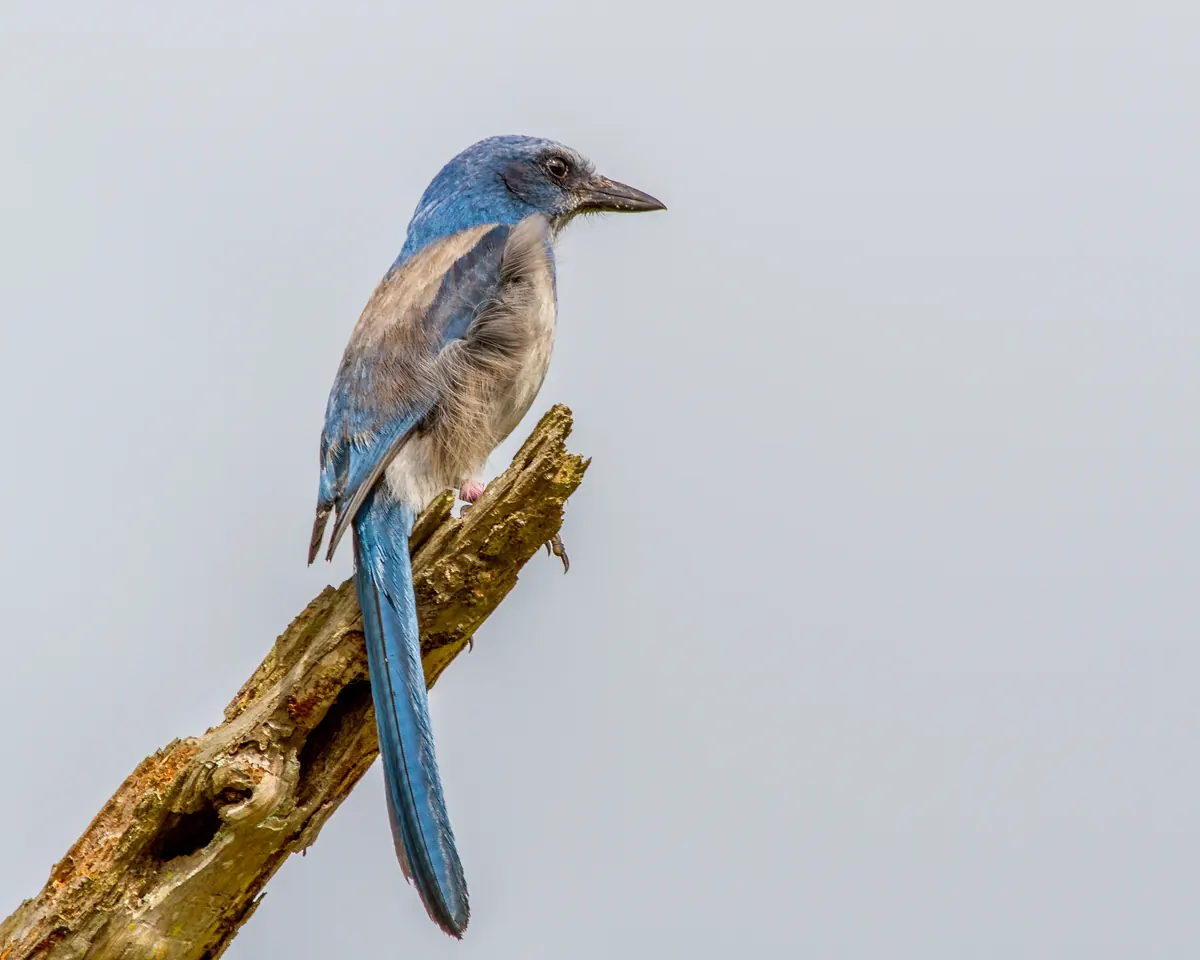
Florida scrub-jays bury the acorn crop
September to November · Scrub: Ocala National Forest, Merritt Island, Oscar Scherer, the Lake Wales Ridge
Florida’s only endemic bird spends the autumn burying acorns. Archbold Biological Station reports that one jay caches “between six and eight thousand acorns” between September and November, pushing each into the sand and often covering it, then digging them up and re-hiding them through the winter, when insects and lizards are scarce. A jay crossing a fire lane with a bulging throat is on that job.
-
Black bears in hyperphagia
All month; fall is the peak season for bears on roads · Ocala, Apalachicola, Osceola, Big Cypress, and the suburbs beside them
Florida has about 4,050 black bears, and in fall they are in hyperphagia. BearWise describes bears foraging “up to 20 hours a day” and gaining “two to three pounds a day” on acorns, nuts and berries, including saw palmetto fruit. The FWC’s advice: trash out on the morning of pickup, not the night before; bird feeders 10 feet up and 10 feet out from anything a bear can climb, or brought inside; ripe fruit picked and windfalls cleared; pets fed indoors; grills cleaned. At dusk on rural roads, slow down and watch the shoulders for eyeshine.
-
Alligators, still on duty
Active on warm days; harvest season through Nov 1 · Every one of the 67 counties
Alligators are “most active when temperatures are between 82° to 92° F” and “stop feeding when the ambient temperature drops below approximately 70° F,” so October afternoons in the 80s keep them busy. This summer’s hatchlings, out since mid-August, stay in the shallows near their mother. Florida has about 1.3 million alligators, in all 67 counties. The statewide harvest runs August 15 to November 1, mostly at night, so expect boats and lights on public lakes. Report a gator that worries you to 866-FWC-GATOR; handling one yourself is illegal.
-
Snakes
Active on warm days all month · Everywhere; water edges for cottonmouths
Florida has about 50 native snakes, six of them venomous: the eastern diamondback, timber and pygmy rattlesnakes, the cottonmouth, the coral snake and the copperhead, the last mostly in the Panhandle. UF/IFAS advice covers all of them: “it is best not to attempt to capture, harass, or harm any snake.” Watch where you put hands and feet near logs, palmetto and water, and keep Poison Control, 1-800-222-1222, in your phone.
-
Lovebugs, the tail of the fall flight
Early October, fading · Highways, gas stations, anything pale and warm
The late-summer lovebug flight lasts only a few weeks, so early October catches its tail. UF/IFAS stresses that they “do not bite, sting, or transmit diseases.” They swarm highways because exhaust chemistry and heat attract them, and they fly only once the air passes about 68 °F. Wash them off the car within a day.
-
Deer: the most variable rut in the country
October in parts of the central peninsula; earlier south, later north · Statewide
The FWC says “Florida has more variability in breeding than any other state, from July in southern Florida to February in northwest Florida.” Its breeding-chronology map shows October dates in parts of the central peninsula, so look for fresh buck rubs on young trees and pawed scrapes in the leaf litter, and check the map for your county.
Does Florida ever freeze in October?
Not in the normals. None of the stations below has even a one-in-ten first-freeze date before November. Tallahassee, the coldest, has frozen by November 3 in one year in ten and by November 21 in half of years; Pensacola, beside the Gulf, waits until November 15 for its one-in-ten date. The peninsula waits for December or January, and the far south has no datable freeze at all: NOAA’s 1991–2020 normals give Miami and Key West no 32 °F date, and Key West not even a 36 °F one. Miami reaches 36 °F, cold enough to hurt tropical plants, by December 22 in one year in ten and by January 7 in half of years.
| Station | One year in ten | Median | Nine years in ten |
|---|---|---|---|
| Pensacola | Nov 15 | Dec 9 | Jan 12 |
| Tallahassee | Nov 3 | Nov 21 | Dec 14 |
| Jacksonville | Nov 17 | Dec 7 | Jan 10 |
| Gainesville | Nov 10 | Dec 4 | Jan 6 |
| Orlando | Dec 18 | Jan 9 | Feb 6 |
| Tampa | Dec 23 | Jan 12 | Feb 5 |
| Miami (36 °F, not 32) | Dec 22 | Jan 7 | Jan 27 |
| Key West | No date | No date | No date |
For any other town, see frost dates across Florida. In the garden, October is for planting: UF/IFAS’s North Florida calendar makes it the last month to set strawberries and a time for bulbing onions, arugula, lettuce, spinach and daffodils, while Central Florida sows broccoli, collards, kale and lettuce and gives the lawn its last fertilizer in early October. Fall is also the season to sow native wildflower seed.
How much shorter are the days by Halloween?
Fifty-three minutes in the Panhandle, forty in Key West, the smallest October loss anywhere in the contiguous United States. That still works out to roughly a minute and a half each day. In Orlando sunrise moves from 7:19 to 7:37 a.m. over the month and sunset from 7:11 to 6:41 p.m.; in Miami, sunrise from 7:13 to 7:29 a.m. and sunset from 7:07 to 6:40 p.m. Daylight saving time then ends at 2 a.m. Sunday, November 1, and a 6:40 sunset becomes 5:40.
| City | Oct 1 | Oct 31 | Lost | Per day |
|---|---|---|---|---|
| Pensacola | 11 h 52 m | 10 h 59 m | 53 min | 1.8 min |
| Tallahassee | 11 h 51 m | 10 h 59 m | 52 min | 1.7 min |
| Jacksonville | 11 h 52 m | 11 h 00 m | 52 min | 1.7 min |
| Gainesville | 11 h 52 m | 11 h 01 m | 51 min | 1.7 min |
| Orlando | 11 h 52 m | 11 h 04 m | 48 min | 1.6 min |
| Tampa | 11 h 53 m | 11 h 06 m | 47 min | 1.6 min |
| Miami | 11 h 54 m | 11 h 11 m | 43 min | 1.4 min |
| Key West | 11 h 55 m | 11 h 15 m | 40 min | 1.3 min |
For sunrise, sunset and twilight at your own address, and this week’s loss, use the Field almanac.
What is in the sky over Florida this October?
-
The Moon hides Jupiter
Tuesday, October 6, about 4:16 to 5:15 a.m. EDT (3:15 to 4:12 a.m. CDT) · East; the Moon is 6 to 13 degrees up at the start and 18 to 24 at the end
The thin crescent, about a fifth lit, is already up when Jupiter disappears behind its bright edge: about 4:16 a.m. in Tallahassee, 4:17 in Jacksonville and Gainesville, 4:18 in Tampa and Orlando, 4:19 in Fort Myers, 4:20 in West Palm Beach, 4:21 in Miami and 4:22 in Key West (3:15 a.m. Central in Pensacola, where the Moon is only 6 degrees up, so find a clear eastern horizon). The planet returns from the dark edge, with the Moon higher and the sky still dark, at 5:06 a.m. in Key West, 5:09 in Miami, 5:10 in Fort Myers, 5:11 in West Palm Beach, 5:12 in Tampa, 5:13 in Orlando, 5:14 in Tallahassee and Gainesville and 5:15 in Jacksonville (4:12 a.m. Central in Pensacola). The reappearance is easier to catch: a bright point switching on beside the unlit edge.
-
The Hunter’s Moon
Sunday, October 25, rising before sunset; full at 12:12 a.m. Monday · Low in the east at dusk; find a beach, a lake or a prairie
The Hunter’s Moon is the full moon after the Harvest Moon. In Orlando it rises at 6:17 p.m. on the 25th, about half an hour before the 6:46 sunset, and at 6:58 p.m. on the 26th; in Pensacola it rises at 5:38 p.m. Central on the 25th, before a 6:07 sunset. It is not a supermoon by the strict full-moon-at-perigee definition.
-
Orionid meteors
Peak October 21–22, between moonset and dawn · Face southeast, anywhere dark
The Orionids run October 2 to November 7 and peak broadly on October 21 and 22, at 10 to 20 an hour under dark skies. In Orlando the waxing gibbous moon sets about 2:55 a.m. on the 21st and 3:53 a.m. on the 22nd (3:16 a.m. Central on the 22nd in Pensacola), leaving two to three hours of real darkness before dawn twilight. On the 23rd moonset slips to 4:51 a.m. and the chance is mostly gone. Kissimmee Prairie, the Big Cypress and the quieter Panhandle beaches have Florida’s darkest skies.
-
Draconid meteors
Evening of Thursday, October 8, right after dark · Look north, low
A thin shower, perhaps ten an hour at best, but it comes in the evening and two days before new moon, so there is no moonlight. Draco is low in the north from Florida, and a clear northern horizon helps. It is a good one to try with children before bed.
-
Saturn all night
Opposition October 4; the Moon beside it October 23–24 · Rising in the east at sunset
Saturn reaches opposition on October 4, rising at sunset and up all night, the brightest point in the faint stretch between Pisces and Cetus. The gibbous Moon sits beside it on October 23 and 24.
-
Venus leaves; Jupiter and Mars rule the morning
Venus only the first evenings; Jupiter and Mars before dawn · Low in the west at dusk; east before dawn
Venus is a low spark in the western twilight for only the first few evenings of October before it passes between Earth and the sun on October 23. Jupiter and Mars are both in the eastern sky before dawn all month, and on the morning of October 11 Mars crosses the Beehive star cluster in Cancer, a fine sight in binoculars.
| Phase | Date | Time |
|---|---|---|
| Last quarter | Saturday, Oct 3 | 9:25 a.m. EDT |
| New moon | Saturday, Oct 10 | 11:50 a.m. EDT |
| First quarter | Sunday, Oct 18 | 12:12 p.m. EDT |
| Full moon, the Hunter’s Moon | Monday, Oct 26 | 12:12 a.m. EDT (11:12 p.m. Sunday CDT); looks full the evenings of Oct 25 and 26 |
| Last quarter | Sunday, Nov 1 | 3:28 p.m. EST |
Check tonight’s clouds for your town on Today’s sky, and find local moonrise times on the moon phases page.
What is blooming, fruiting and turning in Florida in October?
-
Muhly grass
Fall; the pink peak is now · Pine flatwoods, coastal uplands, highway medians and the plantings that copy them
The plant that stops traffic in October is a native grass. UF/IFAS: “In fall, muhly grass produces fluffy pink to purple flower stalks that can reach up to 5 feet tall,” and it “is naturally found in Florida’s pine flatwoods, coastal uplands, and even along its highways.” The Florida Native Plant Society dates the bloom to mid-fall.
-
Blazing stars, goldenrods and sunflowers
September–October peak; seaside goldenrod into November · Scrub, sandhills, flatwoods, roadsides, the edge of the salt marsh
Chapman’s blazing star, purple spikes in the scrub and on the dunes, blooms summer to fall “with the peak being in September-October.” Seaside goldenrod flowers along the coast from summer into fall, one of the plants the migrating monarchs work at St. Marks. Swamp sunflower, the narrow-leaved one, “blooms in fall” in flatwoods, marsh edges and wet roadside ditches, often by the acre.
-
Berries and mast
Now · Flatwoods, hammocks, yards
American beautyberry hangs clusters of magenta fruit along its stems for catbirds, mockingbirds and robins. Saw palmetto is in fruit; the Florida Native Plant Society counts more than 100 bird species, 27 mammals, 25 amphibians and 61 reptiles that use it, and its berries are important bear food. Acorns are dropping in the scrub oaks and live oaks, and the scrub-jays, bears and deer are all working the same crop.
-
Fall color: not yet
Late fall in North Florida, later down the peninsula · Rivers and swamps for bald cypress; wet woods for red maple
The two trees the Florida Native Plant Society lists as “noted for fall color” are bald cypress and red maple, and neither is in a hurry. Cypress turns rust and drops its needles late in the fall, usually after Halloween in the north and later down the peninsula, and the red maple’s color comes with the cool weather. October brings only the first thinning of the swamp canopy.
What can families do outside in Florida this month?
- Visit the hawkwatch deck in the week around October 10. Curry Hammock State Park, mile marker 56; staff are there 8 a.m. to 4 p.m. Bring binoculars and a hat, and check hawkcount.org the night before.
- Keep a bird list on World Migratory Bird Day, Saturday, October 10, and enter it in eBird.
- Look for horseshoe crabs on the high tides near October 10 and October 26 on a sheltered bay or lagoon beach, and report pairs to Florida Horseshoe Crab Watch.
- Tell Journey North about any monarch roost you find that same evening; if you have a Monarch Watch kit, tag a few.
- Go to Art in the Wild at J.N. “Ding” Darling National Wildlife Refuge, October 20–22, which marks Ding Darling’s 150th birthday: Wildlife Drive opens early, at 7:30 a.m., on the 20th, there are birding and photography tours, “Teddy and Ding” perform on the 21st, and the renovated Indigo Trail boardwalk gets its ribbon-cutting.
- Walk the beach at first light, not after dark, through October 31, and look for fans of hatchling tracks running to the water.
- Count bats at dusk during Bat Week, October 24–31, on the journal’s dusk-and-dawn page.
- Set two alarms: 5 a.m. on October 6 for Jupiter’s return from behind the Moon, and 4 a.m. on October 21 or 22 for the Orionids.
Florida State Parks list ranger-led walks and paddles on their online events calendar; check it for the park nearest you.
Safety notes for October in Florida
- The heat lingers: normal October highs run from 81 °F at Pensacola to 87 at Fort Myers, and it stays humid until the first front. Take water on any walk over an hour.
- Lightning: the Melbourne weather office notes that “Florida has the highest number of lightning casualties of all 50 states.” Afternoon storms fade with the dry season, but if you can hear thunder, go inside and wait 30 minutes after the last clap.
- Hurricanes: keep the kit ready until November 30 and follow the National Hurricane Center.
- Wildlife: swim only in designated areas in daylight, keep dogs back from the water’s edge, never feed an alligator, leave snakes alone, and drive slowly on forest roads at dusk for bears.
- Mosquitoes: wear repellent until the ground dries out, and again after rain.
- Hunting (FWC, 2026–27): in Zone A, the southern peninsula, general gun deer season runs through October 18 and fall turkey October 5–18; in Zone C, which covers much of north and central Florida, archery runs through October 18, crossbow through October 23 and muzzleloading from October 24, with a youth deer weekend October 31–November 1; Zone B opens archery and crossbow October 17; and Zone D, the Panhandle, opens archery and crossbow October 24. Dove season runs September 26 to October 18, and crows are open on weekends through October 25. On public land, “It is unlawful to hunt deer or to accompany another person hunting deer on public lands unless each person is wearing a minimum of 500 square inches of daylight fluorescent orange material as an outer garment,” worn above the waist; the rule does not apply in archery-only seasons or on private land. Hikers are not covered, but orange is wise on any wildlife management area during a gun season.
Sources
- HMANA hawkcount.org: Florida Keys Hawkwatch site record and peregrine records
- Great Florida Birding and Wildlife Trail: Curry Hammock State Park (hawkwatch records)
- Florida Keys Hawkwatch: the project (Curry Hammock and Long Key)
- Florida Rambler: the Florida Keys Hawkwatch and the Day of the Peregrine
- Monarch Watch: peak migration dates by latitude
- Monarch Watch: tagging program
- Journey North: monarch sightings and fall roost reports
- U.S. Fish and Wildlife Service: St. Marks National Wildlife Refuge
- U.S. Fish and Wildlife Service: Monarch Butterfly Festival, St. Marks (2025 listing; goldenrod and saltbush)
- Florida Rambler: Monarch Butterfly Festival at St. Marks (why monarchs bunch up at the lighthouse)
- Fun 4 Tally Kids: St. Marks Monarch Festival, November 7, 2026 listing
- NWS Miami: South Florida rainy season outlook 2024, with the wet-season definition (PDF)
- NWS Miami: summary of the 2011–2012 dry season (PDF)
- NOAA NCEI: 1991–2020 monthly precipitation and temperature normals (data API)
- NOAA NCEI: 1991–2020 first-freeze probability normals, Miami, Key West, Orlando and West Palm Beach (data API)
- NOAA Hurricane Research Division: continental U.S. hurricane impacts and landfalls, 1851–2025
- National Hurricane Center: tropical cyclone climatology
- NOAA NESDIS: late-season hurricanes can bring their own October surprise
- Florida Climate Center: hurricanes
- Climate Prediction Center: ENSO diagnostic discussion, September 10, 2026
- NWS Tallahassee: El Niño and La Niña impacts on Florida and the Southeast
- U.S. Fish and Wildlife Service: Florida manatee species profile (68 °F, population)
- FWC: manatee program and seasonal protection zones
- FWC: where to see manatees
- U.S. Fish and Wildlife Service: Crystal River National Wildlife Refuge (manatee season programs)
- Tampa Electric: Manatee Viewing Center, open November 1 to April 15
- FWC: sea turtles and lights (nesting season ends October 31)
- FWC: loggerhead nesting in Florida
- FWC: leatherback nesting in Florida
- U.S. Fish and Wildlife Service: Archie Carr National Wildlife Refuge
- FWC: striped mullet
- Florida Museum: striped mullet (Mugil cephalus) spawning migration
- FWC: horseshoe crab facts and spawning
- FWC: Florida Horseshoe Crab Watch and sighting reports
- FWC: red tide FAQ and daily sample map
- FWC: North Atlantic right whales off Florida
- NOAA Fisheries: North Atlantic right whale (population, 500-yard rule)
- Right Whale Festival, Fernandina Beach, November 7–8, 2026
- FWC: sandhill crane
- Great Florida Birding and Wildlife Trail: Paynes Prairie Preserve State Park
- FWC: 2026–2027 migratory bird hunting season dates
- U.S. Fish and Wildlife Service: Merritt Island National Wildlife Refuge
- FWC: bald eagle (1,500 nesting pairs; monitoring since 1972)
- World Migratory Bird Day 2026: October 10, “Every Bird Counts”
- Project FeederWatch: how to participate (season November 1 to April 30)
- Archbold Biological Station: scrub-jays caching acorns
- Archbold Biological Station: Gather the Harvest (how jays cache)
- FWC: Florida black bear facts (population)
- FWC: bear attractants
- BearWise: what bears do in September (hyperphagia)
- BearWise: what bears do in October (roads at dusk)
- FWC: alligator facts (temperature and activity)
- FWC: Statewide Nuisance Alligator Program (1.3 million alligators; hotline)
- FWC: alligator (statewide harvest August 15 to November 1)
- UF/IFAS: Venomous snakes of Florida (UW229)
- UF/IFAS: Living with lovebugs (IN694)
- FWC: white-tailed deer and the breeding chronology (rut) maps
- UF/IFAS Gardening Solutions: muhly grass
- Florida Native Plant Society: Muhlenbergia capillaris; Liatris chapmanii; Solidago sempervirens; Helianthus angustifolius; Serenoa repens; Callicarpa americana; Taxodium distichum; Acer rubrum (plant database)
- UF/IFAS: North Florida gardening calendar (EP451)
- UF/IFAS: Central Florida gardening calendar (EP450)
- U.S. Naval Observatory: moon phases 2026 and sunrise, sunset and moonset (data API)
- International Occultation Timing Association: lunar occultation of Jupiter, October 6, 2026
- EarthSky: meteor shower guide (Draconids, Orionids)
- EarthSky: visible planets and the Hunter’s Moon, October 2026
- American Meteor Society: 2026 meteor shower calendar
- NWS Melbourne: lightning in Florida
- FWC: 2026–2027 hunting season dates
- FWC: general hunting information, including the hunter orange rule
- “Ding” Darling Wildlife Society: Art in the Wild and Ding Darling’s 150th birthday, October 20–22, 2026
- National Park Service: Bat Week, October 24–31
- Everglades National Park: weather, wet and dry seasons
- Photos via Wikimedia Commons; licenses and photographers are credited under each picture
