What to look for in nature in Georgia this March
March is when Georgia changes its mind, again and again. A week of 80-degree afternoons can be followed by a frost that burns the first leaves, and in between the first hummingbirds, gnatcatchers and kites return, toads trill from shallow pools, and redbud and trillium open in the woods. Below, each event gets its usual window, with the source named beside it.
Other months in Georgia: October, November, December, January, February, April.
Start here
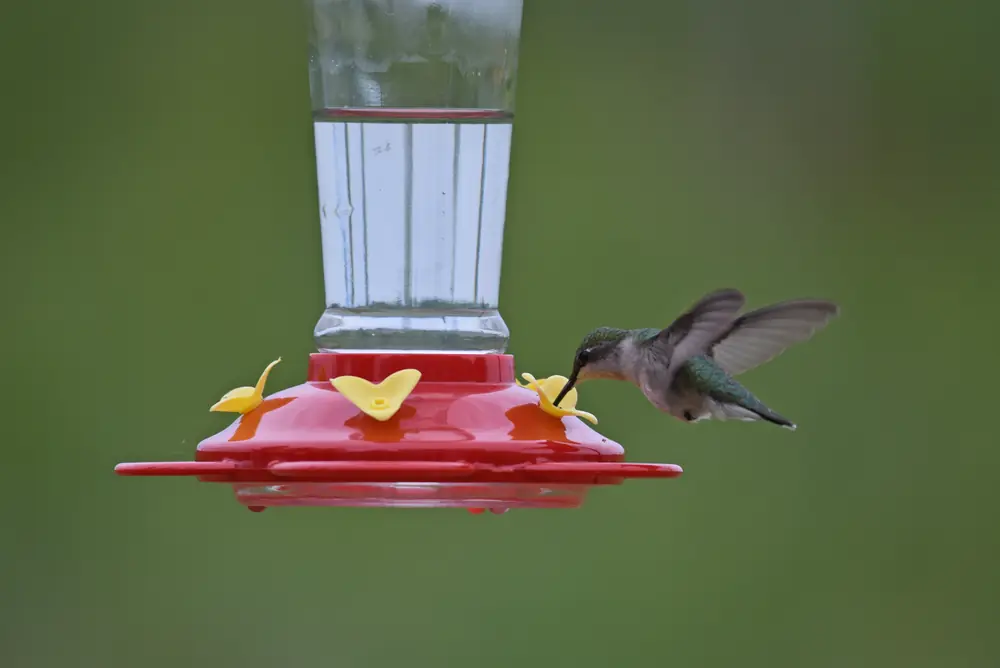
- Hang a hummingbird feeder. Georgia DNR columns put the first ruby-throats in far south Georgia somewhere between March 1 and March 11, and in middle Georgia in the middle of the month or a little later. Fill it with one part sugar to four parts water and no dye.
- Listen on a warm, wet night. Toads, spadefoots and winter frogs still call after a soaking rain. Stand quietly at the edge of a shallow pool and listen before you shine a light.
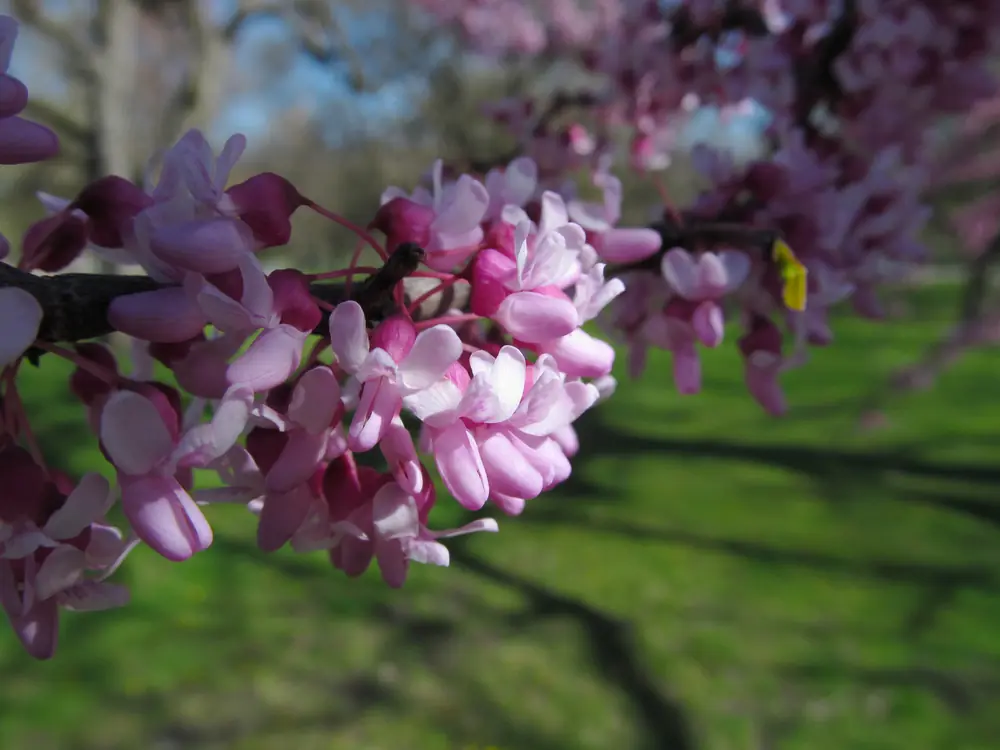
- Follow one redbud. Pick a redbud or dogwood near home and record the day its first flower opens and its first full leaf. Two or three weeks of notes make your own local spring calendar.
For the Naturalist’s Field Journal: write the day of your first hummingbird, gnatcatcher and redbud flower on the daily field log, mark the toad trill on the map of sounds, follow a dogwood on the tree through the seasons plate, sketch a tortoise burrow on tracks to know, and note Mercury and the March full moon on the dusk and dawn watch plate.
Regions used below: Mountains (Blue Ridge and Ridge and Valley); Piedmont and Metro Atlanta; Coastal Plain; Coast and Barrier Islands; Southwest Georgia.
When do ruby-throated hummingbirds come back to Georgia?
Late in March in most places, and earlier along the Florida line. Georgia DNR’s Out My Backdoor columnist reports that although a few turn up in March, most people do not see their first one until the first two weeks of April. The earliest arrivals are adult males, and females follow about a week behind.
-
The first scouts
About March 1 to March 11 in the far south; late March elsewhere · South Georgia, the southwest corner and the coast first
Two DNR columns differ on the far south, about March 1 in one and about March 11 in the other, so treat early March as the early edge. Bird Watcher’s Digest says ruby-throats reach the southwest and the coast by the end of the month.
-
The sapsucker connection
Late March, while few flowers are in bloom · Woods and yards where yellow-bellied sapsuckers have been drilling
The DNR column explains a puzzle: flowers are scarce when the first hummingbirds arrive. Forsythia, Bradford pear, daffodils and even redbud make little nectar, though redbud blossoms draw small insects that give the birds protein. Yellow-bellied sapsuckers, which winter across the state, drill rings of shallow holes in more than 1,000 kinds of woody plants, where sap with a sugar content of 10 to 30 percent wells up. A sapsucker keeps 10 to 20 or more wells going at once, and hummingbirds learn to follow the woodpecker’s calls from tree to tree and wait nearby until it leaves. If you find rings of small holes around a trunk, stand back and watch it for a while.
-
Red buckeye, a hummingbird favorite
Spring; the column gives no date · Understory of Coastal Plain and lower Piedmont woods, also planted widely
DNR describes carmine-red tubular flowers on spikes 4 to 8 inches long that last for several weeks, and says some experts consider the ruby-throat its major pollinator.
-
Feeder basics
Put one out before the birds are due · A shaded spot you can see from a window
Georgia DNR’s recipe is one part white sugar to four parts water, boiled and cooled, with no red dye. Start with one or two feeders only part filled, change the nectar every two to three days, and clean the feeder with one part bleach to ten parts water.
| Part of Georgia | First ruby-throats usually seen | Source |
|---|---|---|
| Far south Georgia | About March 1, or about March 11 | Georgia DNR (two columns) |
| Middle Georgia, around Macon | End of the second week of March, or about March 21 | Georgia DNR (two columns) |
| Southwest corner and the coast | By the end of March | Bird Watcher’s Digest |
| North Georgia | About April 1, or sometime in April | Georgia DNR (two columns) |
Journey North invites volunteers to report hummingbird sightings, and its maps show how far north the first birds have come.
What returns to Georgia’s big rivers and coast in March?
Swallow-tailed kites, mostly, plus the last weeks of the right whale calving season. The lower Altamaha and Satilla rivers are where Georgia’s kites nest, and the whale season off the barrier islands winds down just as the kites move in.
-
Swallow-tailed kites
Some return to south Georgia in March, according to Georgia DNR · Lower Altamaha and Satilla rivers; the Okefenokee also lists the species
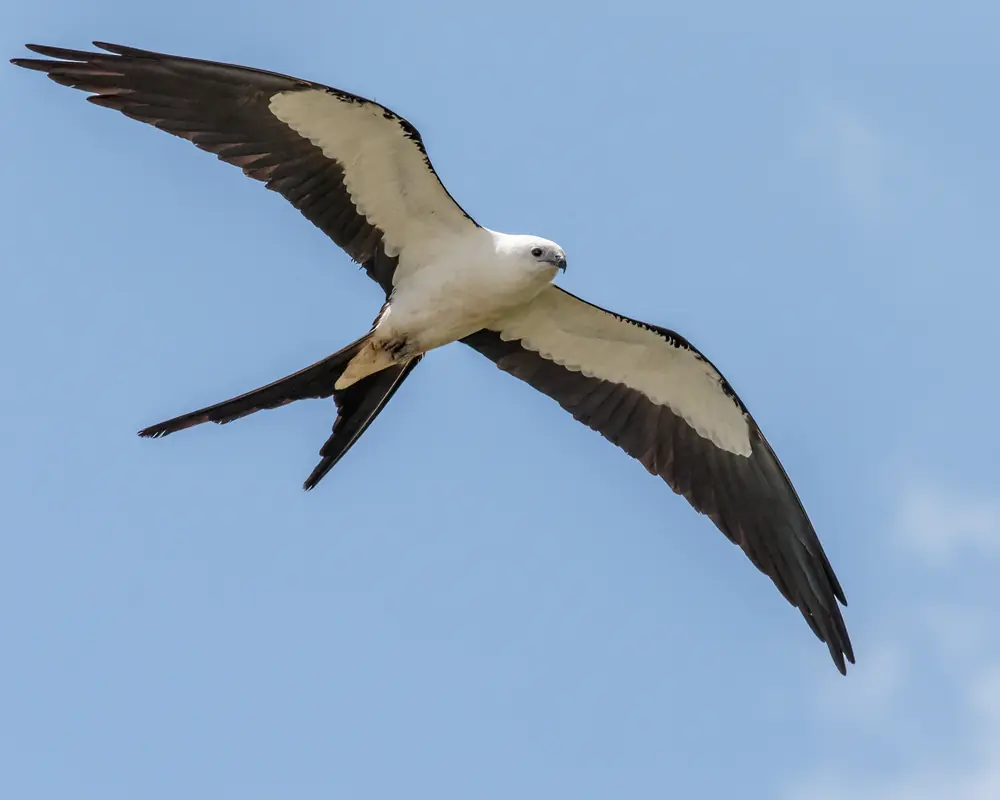
A kite is a bird you have to see once to believe: black and white, with a deeply forked tail it twists almost 90 degrees as it banks, catching dragonflies and other insects on the wing. A 2009 DNR nongame newsletter says Georgia’s kites leave in August for South America and some come back to south Georgia in March, with the Altamaha River system the state’s hotspot. DNR’s Out My Backdoor column says about 150 to 200 pairs nest in the state each year, mostly on the lower Satilla and Altamaha. Any kite you see in March is worth a report to eBird.
The scale of what returns later in the year is striking: in early August 2023 a DNR technician following a satellite-tagged bird found a roost south of Glennville, and a helicopter count there came to 612 kites, the largest roost then documented in the state.
-
The last weeks of right whale calving season
NOAA Fisheries defines the season as mid-November to mid-April · Nearshore waters off the barrier islands
Calves of this rare whale are born only in the coastal waters of Georgia and northeast Florida, as far as anyone knows, and fewer than 400 whales remain (NOAA Fisheries estimates about 380, and DNR says about 385). Seasonal speed limits for vessels over 65 feet still apply: through April 30 north of Sapelo Island and through April 15 south of it. Stay at least 500 yards away from any right whale and report a sighting to 877-WHALE-HELP (877-942-5343).
The Okefenokee National Wildlife Refuge keeps its longer spring hours from March 1: open daily from half an hour before sunrise until 7:30 p.m., with boats off the water by 6 p.m. The refuge estimates about 15,000 alligators live in the swamp.
Which songbirds arrive first in Georgia in March?
The smallest and the most insect-hungry. A Bird Watcher’s Digest seasonal guide says that in March, blue-gray gnatcatchers and northern parulas lead the first wave north, followed closely by white-eyed vireos. The great push of warblers comes in April, with migration peaking around mid-April in the far south of the state, about April 20 to 26 around Atlanta, and at the end of April in the north Georgia mountains.
-
Blue-gray gnatcatchers
Late March for many people · Bare branches of oaks, walnuts and woodland edges, near water
The DNR columnist saw his first of the year in late March, hopping through the leafless limbs of a black walnut and betrayed by a thin, nasal call. The bird is only about 4 inches long and weighs about as much as a nickel, so early spring, before the leaves hide it, is the best time to see one. The pair builds a nest that looks like a large hummingbird nest or a knot on a limb.
-
Louisiana waterthrush and whip-poor-will
Mid-March and the last days of March · Wooded streams for the waterthrush; the northern half of the state for the whip-poor-will
Bird Watcher’s Digest says Louisiana waterthrushes turn up singing along streams by the middle of March, and that whip-poor-wills begin calling across the northern half of the state by the end of the month. Both are better heard than seen, so go at dawn or dusk.
-
Robins are not a sign of spring
Flocks are common all winter · Lawns, fruiting trees, wet woods
Georgia DNR’s columnist points out that the flock of robins on your lawn does not mean winter is ending. Georgia sees far more robins in winter, when migrants from the north pass through or stay, than in spring, summer and fall combined, and a Christmas Bird Count team in 1993 watched a flock estimated at 2 million fly south along the Ocmulgee River. In winter robins eat fruit; in spring and summer the main diet is insects and earthworms.
-
Birds that eat the blossoms
Spring migration · Red maples, fruit trees, forsythia, yellow jessamine
Cedar waxwings are among the few birds that regularly eat buds, flowers and young leaves, often during spring migration. A DNR column describes a flock stripping every petal from an apple tree, goldfinches working over red maple flowers and quail taking yellow jasmine blooms.
Jot down the date of each first-of-year bird; the birds-I-have-seen plate in the Naturalist’s Field Journal is built for it.
Which toads and frogs are calling in Georgia in March?
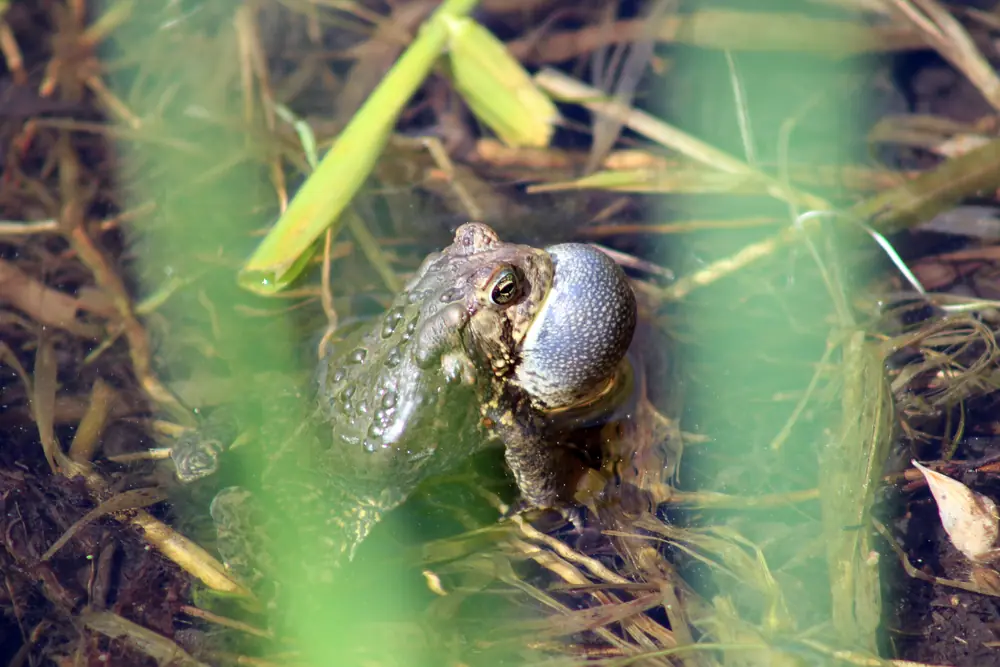
More than you might guess. Georgia has 32 frog species, including two that are not native, and ranks third among the states for frog variety, according to a Georgia DNR and Adopt-A-Stream call guide. Winter breeders such as spring peepers and chorus frogs are still singing on mild nights, and March adds toads and a few others. Only the males call, and they sometimes sing by day when it rains.
-
American toad
Winter and early spring in the northern half of Georgia · Shallow pools, ditches and flooded edges
A long, musical trill. The DNR guide says this toad breeds in winter and early spring in the northern half of the state. It is larger than Fowler’s toad and usually has no more than one wart in each dark spot on its back.
-
Eastern spadefoot
After a soaking rain, when it is 55 degrees or warmer · Fishless, temporary pools
The spadefoot spends most of its life underground and comes up only after 2 to 3 inches of rain, then breeds explosively in rain-filled pools. The call is a belch-like groan. Warm, drenching nights are the ones to go out on.
-
Pickerel frog and southern leopard frog
Late winter and spring · Ponds, ditches and slow streams
The pickerel frog gives a quick, rising snore, usually while submerged in the water. The southern leopard frog, the most widespread frog in Georgia, makes a screeching call like a finger rubbed across a balloon, and it is an early breeder that sings in winter and spring.
-
Gopher frog
Spring rains · Sandy uplands with gopher tortoise burrows
An eerie snoring call. The gopher frog lives in tortoise burrows in sandy uplands and travels to water to breed, so it depends on both pine-forest habitat and temporary ponds.
Pick a warm evening after rain, stand at the edge of a shallow pool, switch off the flashlight and listen. Mark what you hear on the map of sounds in your journal, and see our January guide for the winter-breeding salamanders and frogs that start the season.
What are gopher tortoises doing in Georgia in March?
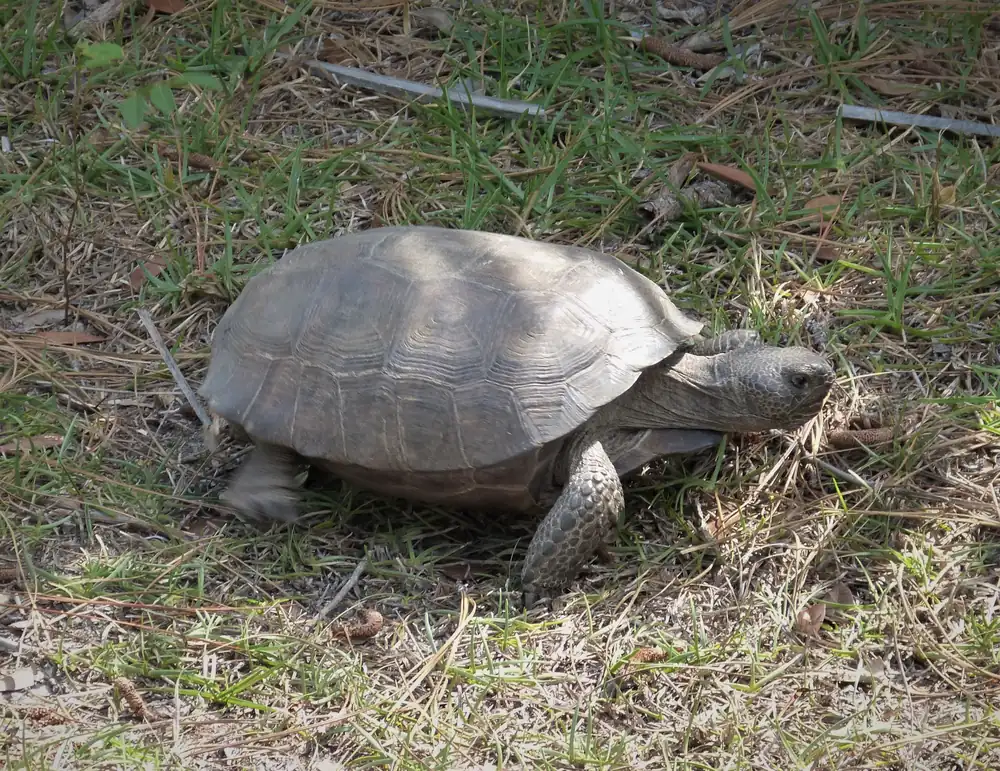
Mostly still underground, but stirring. A U.S. Forest Service review of the research says tortoises in the northern part of their range, which includes Georgia, are typically inactive through most of the winter, January to March. The Gopher Tortoise Council says they are active in the daytime in spring, summer and fall, so late March is the start of the best season to find one at a burrow.
-
The burrow
Year-round · Sandy uplands, pine flatwoods and old fields of the Coastal Plain
The Gopher Tortoise Council says the tunnels can reach 40 feet in length and 10 feet in depth, with a steady temperature and humidity year-round, and shelter more than 360 other animal species; Georgia biologists say over 350. The Forest Service review adds that a tortoise may spend as much as 80 percent of its time, around 19 hours a day, inside.
-
The alligator in the tortoise hole
Reported in March 2023 by Georgia Wildlife Resources · Tattnall County sandhills
Biologists looking into a burrow with a camera found a 4½-foot alligator smiling back. The animal had used the hole for three winters, though the nearest significant water was more than 800 yards away. State biologists speculated the alligator remembered the spot, and noted that alligators had been seen in gopher burrows at least twice before in Georgia. Leave burrows alone and never reach into one.
-
Courtship and nesting
Courtship mostly April to early June, some in February and March; nests late April to mid-July · Sunny, sandy ground near the burrow
The Forest Service review says courtship happens mainly from April to early June, with some in late winter (February and March) and fall, particularly in the South. Nesting runs from late April to mid-July and peaks from mid-June to mid-July.
-
Helping one cross the road
Any warm day · Roads that cross tortoise habitat
If a tortoise is crossing a road, the Gopher Tortoise Council says you may carry it to the far side, facing the way it was already going, because it will keep trying to reach its original destination. Gopher tortoises are protected by state law, so never take one home, and do not risk yourself in traffic.
What blooms in Georgia’s woods in March?
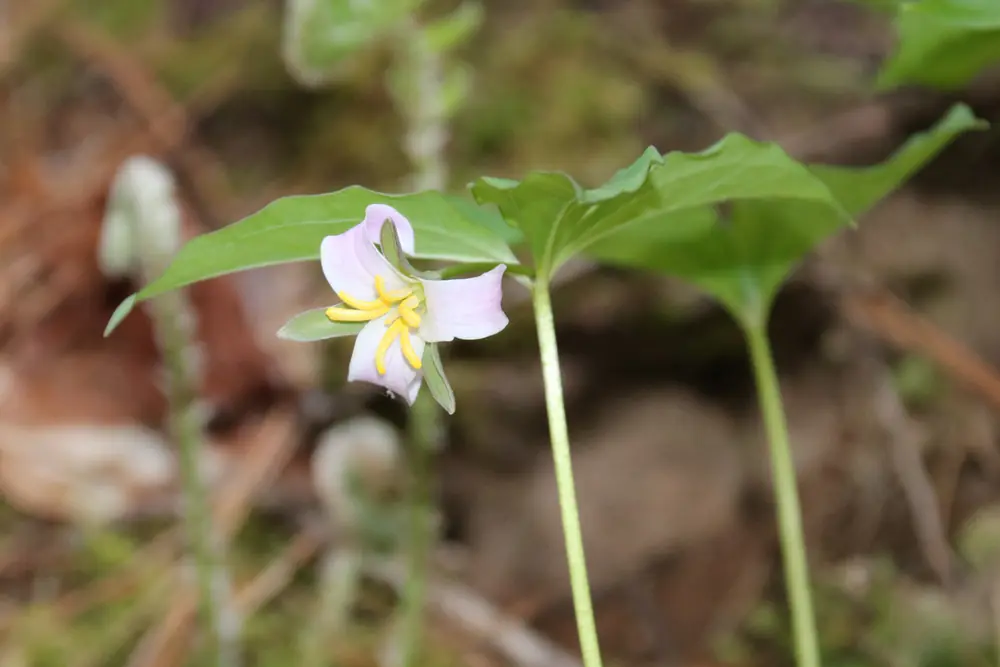
The spring show starts with trees. Georgia DNR notes that the state’s wildflower parade begins before the official first day of spring and runs into May, and redbud and flowering dogwood come out in the trees while the forest floor holds trillium, for which Georgia has more species than any other state. Several sources give bloom times for these plants only as “spring”, so treat the windows below as a guide and let your own woods tell you.
-
Eastern redbud
Early spring, before the leaves · Bluffs, hammocks, fields and dry to moist woods
Redbud is one of the first native trees to flower, its half-inch blossoms in rosy pink or reddish-purple borne before most of the leaves appear. DNR says the flowers are an important source of pollen and nectar for bees, moths, butterflies and ruby-throated hummingbirds, and the tree is the host plant for Henry’s elfin butterfly and the io moth. The state champion redbud lives behind a bank in downtown Forsyth.
-
Flowering dogwood
Spring; DNR’s column gives no date · Understory of forests in all 159 counties
What look like creamy white petals are really showy bracts around a tight cluster of small true flowers, and the trees bloom before their leaves come out. DNR notes you can pick dogwoods in bloom out of the leafless woods as you drive along a forest road.
-
Trillium
March through April; some species begin in early March or earlier · Rich, shaded, often rocky or streamside slopes
The Atlanta History Center’s plant staff list several that flower in March: Catesby’s trillium from March through early May, little sweet Betsy (toadshade) from March through April, the Chattahoochee River wake-robin by early March, and trailing wake-robin from mid-March. A trillium can take between 4 and 20 years to reach flowering size, depending on the species, so a colony is a precious thing. Look, take photos and leave them in place; ants carry the seeds away.
-
Piedmont azalea
Early spring, as the leaves come out · Streambanks and swamp margins
Georgia Native Plant Society describes fragrant, tubular white-pink to pink flowers whose long stamens extend past the petals. Also called pinxter azalea or wild azalea, it blooms in early spring just about the time the leaves appear, and attracts hummingbirds and butterflies.
Where you live changes the date by a few weeks. Follow one redbud or dogwood from bud to leaf, write down the first open flower and the first full leaf, and you have your own local calendar. The Georgia frost date tables show when the last freeze usually arrives where you live.
When is Georgia’s last spring freeze, and what does a late one do to the peach bloom?
In the south, usually in the first weeks of March; in the mountains, not until late April. The table gives NOAA’s 1991–2020 normals for the main station in each city: the median is the date half of all springs have had their last 32 °F night, and the right-hand column gives the date after which a freeze is rare. A freeze that comes after a warm spell is the peach grower’s nightmare.
-
A warm winter sets the trap
March 2023 · Peach orchards of middle Georgia
The Georgia Farm Bureau’s account says peach trees bloomed in mid-February that year after an unusually warm winter, and most varieties were about 90 percent in full bloom by mid-March, when freezing nights struck on March 14, 15, 16, 20 and 21. It reported a crop reduction of as much as 98 percent and estimated combined losses of $190 million. A UGA plant pathologist quoted there called it as bad as any he had seen in 23 years.
-
Chill hours and the earlier losses
October 1 to February 15 · Orchards statewide
Peaches need roughly 1,000 hours between 32 and 45 degrees, counted from October 1 to February 15, to break dormancy properly. A 2019 UGA article recalls that freezes on March 9 and 15 of 2018 destroyed much of that year’s crop, and that in 2017 growers lost 80 percent, about 70 percent of it from too few chill hours in a mild winter.
| Station | One year in ten | Median | Nine years in ten |
|---|---|---|---|
| Blairsville | Apr 8 | Apr 26 | May 11 |
| Rome | Mar 13 | Apr 1 | Apr 19 |
| Atlanta | Mar 4 | Mar 26 | Apr 13 |
| Athens | Mar 2 | Mar 23 | Apr 10 |
| Macon | Feb 28 | Mar 21 | Apr 7 |
| Columbus | Feb 11 | Mar 5 | Mar 24 |
| Savannah | Feb 4 | Mar 2 | Mar 25 |
| Valdosta | Feb 15 | Mar 10 | Mar 31 |
For your own town’s odds, use the Georgia frost date tables. For the week’s forecast open our weather page.
How warm is March in Georgia, and when are storms most likely?
Spring warmth arrives with swings. In NOAA’s 1991–2020 normals, March afternoons average about 66 °F in Atlanta and Athens and 71 °F in Savannah, Augusta and Macon, while nights are still cool enough to freeze: Atlanta averages 3 freezing nights in March, Savannah 1.5, and Blairsville in the mountains more than 14. Blairsville’s normal March snowfall is 1.0 inch.
The month can swing both ways. The National Weather Service office in Peachtree City summed up March 2026 for north and central Georgia as 6 to 7 degrees above normal and 1 to 2 inches drier than normal, with Atlanta hitting 83 °F on March 6 and 7 and Macon reaching 88 °F on March 23. Yet Macon also set a record low of 26 °F on March 18, and tornadoes touched down in central Georgia on March 12 and 16.
| Station | Average high | Average low | Rain and melted snow | Freezing nights | Snowfall |
|---|---|---|---|---|---|
| Blairsville | 60.3 °F | 33.9 °F | 5.56 in | 14.4 | 1.0 in |
| Athens | 66.8 °F | 42.9 °F | 4.37 in | 4.5 | – |
| Atlanta | 65.9 °F | 45.3 °F | 4.68 in | 3.0 | 0.4 in |
| Augusta | 71.0 °F | 44.1 °F | 4.08 in | 5.2 | 0.0 in |
| Macon | 70.6 °F | 44.9 °F | 4.31 in | 4.0 | – |
| Columbus | 70.4 °F | 47.3 °F | 4.92 in | 1.8 | 0.2 in |
| Savannah | 71.4 °F | 48.6 °F | 3.50 in | 1.5 | 0.0 in |
Tornado season starts now. The Peachtree City forecast office’s climatology lists March, April and May as the main tornado months for north and central Georgia, with the strongest tornadoes most likely in April and the most likely time from mid-afternoon to early evening; it counts about 6 tornado days in a typical year. A violent tornado struck on the night of March 25 to 26, 2021: an EF-4 with 170 mph winds, a path 38.9 miles long and up to 1,850 yards wide through Heard, Coweta and Fayette counties, the first EF-4 in Georgia since 2011.
Burning is the other March hazard. The Georgia Forestry Commission records about 3,500 wildfires a year, and debris burning, mostly of yard leaf piles, causes over half. Since July 1, 2021, hand-piled yard debris (leaves and limbs only) needs neither a permit nor notification, but the Commission still asks burners to keep the pile 25 feet from woodland and 50 feet from buildings, burn only between sunrise and sunset, and stay until the fire is out. Agricultural, forestry, land-clearing and storm-debris burns do need a permit or notification, good only for the day it is issued: call 1-800-GA-TREES (428-7337) or use the online system. For the latest temperature and rainfall outlook, open the Climate Prediction Center’s three-month maps, which NOAA updates monthly.
How much daylight does Georgia gain in March?
Just over an hour, at about two minutes a day, which is the fastest gain of the year. Atlanta’s day grows from 11 hours 28 minutes on March 1 to 12 hours 30 minutes on March 31, a gain of 62 minutes. The mountains gain the most (Blairsville 66 minutes) and the far south the least (Valdosta 57), as the table shows. Around the equinox on Saturday, March 20, the sun is up for about 12 hours.
The clock does something sharper than the sun. Daylight saving time starts early on Sunday, March 14, when 2 a.m. becomes 3 a.m. In Atlanta the sun sets at 6:44 p.m. Eastern Standard Time on Saturday, March 13, and at 7:44 p.m. Eastern Daylight Time the next evening; sunrise jumps from 6:51 a.m. to 7:50 a.m. By March 31 the sun rises at 7:27 a.m. and sets at 7:57 p.m. EDT.
| City | Mar 1 | Mar 31 | Gained | Per day |
|---|---|---|---|---|
| Blairsville | 11 h 26 m | 12 h 32 m | 66 min | 2.2 min |
| Rome | 11 h 27 m | 12 h 32 m | 65 min | 2.2 min |
| Atlanta | 11 h 28 m | 12 h 30 m | 62 min | 2.1 min |
| Athens | 11 h 28 m | 12 h 31 m | 63 min | 2.1 min |
| Macon | 11 h 29 m | 12 h 30 m | 61 min | 2.0 min |
| Columbus | 11 h 29 m | 12 h 29 m | 60 min | 2.0 min |
| Savannah | 11 h 30 m | 12 h 29 m | 59 min | 2.0 min |
| Valdosta | 11 h 32 m | 12 h 29 m | 57 min | 1.9 min |
To check a particular date at your own house, type it into the daylight calculator.
What can you see in Georgia’s night sky in March 2027?
A full Worm Moon at dawn, Mercury at its best before sunrise, Jupiter and Mars through the evening, and the equinox. There are no eclipses this month. Times are Eastern Standard Time on the 8th and Eastern Daylight Time from the 14th onward, as the table notes.
-
The equinox
Saturday, March 20, 4:25 p.m. EDT · Anywhere
The sun crosses the equator heading north and astronomical spring begins; meteorological spring started on March 1. On March 21 Atlanta’s sun rises at 7:40 a.m. and sets at 7:50 p.m. EDT.
-
Mercury in the morning
Greatest western elongation Wednesday, March 17 (12:20 a.m. EDT); best views about March 8 to 25 · Low in the east-southeast before sunrise
Mercury swings 27.6 degrees west of the sun, the best time of this apparition to see it, according to Sea and Sky. Our calculation for the central U.S. has it rising about an hour before the sun in mid-March. Spring mornings give northern observers only a shallow view of the planet, so find a flat, clear horizon; brilliant Venus, well above it, helps you get your bearings.
-
Jupiter and Mars in the evening
All month, in Leo near the Cancer border · East to south after dark
The two giants, which were at opposition in February, sit in the evening sky all spring. Jupiter is the brighter, at magnitude −2.5 at the start of March. In our computations the Moon comes to within one degree or so of Jupiter around March 18 and 19, so look for the bright Moon beside it on those evenings. Venus blazes in the eastern sky before dawn, sinking lower as the weeks go by.
-
The Worm Moon
Full at 6:44 a.m. EDT, Monday, March 22; best evening Sunday, March 21 · Rising in the east about half an hour before sunset
Sea and Sky traces the Worm Moon name to ground softening and earthworms reappearing. Because the moment of full comes at dawn on the 22nd, the night to watch is Sunday, March 21: on USNO’s numbers the Moon rises at 7:20 p.m. in Atlanta and 7:06 p.m. in Savannah, about 30 minutes before the sun sets. Civil twilight in Atlanta that evening ends at 8:15 p.m. EDT, well before true darkness.
| Phase | Date | Time |
|---|---|---|
| New moon (EST) | Monday, Mar 8 | 4:29 a.m. |
| First quarter | Monday, Mar 15 | 12:25 p.m. |
| Full moon (Worm Moon) | Monday, Mar 22 | 6:44 a.m. |
| Last quarter | Monday, Mar 29 | 8:54 p.m. |
| New moon (April) | Tuesday, Apr 6 | 7:51 p.m. |
The moon phase page shows any night of the month, and the cloud guide helps you judge whether the sky will be clear.
What can Georgia families do outside in March 2027?
- Report your first hummingbird. Hang a feeder, then log the day you see the first ruby-throat in Journey North and eBird.
- Follow one tree. Choose a redbud or dogwood near home and note the day its first flower opens and its first leaf unfolds.
- Hold a frog night. After a warm rain, listen at a shallow pool and match the calls to the DNR frog guide.
- Find a trillium. Walk a shady creek bank in the Piedmont or mountains later in the month and look, without picking.
- Visit Unicoi State Park on a Saturday. The park lists a Wildlife of Unicoi program, with resident animals, at noon on March 6, 13, 20 and 27, 2027; there is a parking fee, so confirm with the park before you go.
- Plant for pollinators. Monarch butterflies begin leaving their Mexican wintering sites in mid-March and lay eggs on the way north in late March and April, so milkweed in the ground by then helps the first arrivals. Monarchs Across Georgia, a committee of the Environmental Education Alliance, offers a habitat certification program.
Annual events such as CoastFest, put on by Georgia DNR’s Coastal Resources Division in Brunswick, have no 2027 date posted yet: the Okefenokee refuge lists the 30th annual CoastFest for a Saturday in March 2026, so check with the organizer for 2027. The Naturalist’s Field Journal has room for your sketches and dates.
Rain or a cold snap can cancel a program, so phone first. The nature guides cover each month in every state, and Georgia’s February page has the crane flights and the first purple martins.
Safety notes for March in Georgia
- Spring turkey season opens this month. Georgia’s 2026–27 regulations list a special hunt for youth under 16 and mobility-impaired hunters on March 20 and 21, 2027, not on public land unless designated, then the general season on private land from March 27 to May 15, 2027. Wildlife management areas, VPAs and national forest land open on April 3. The limit is one gobbler a day and two per season, and one per area on public land; every hunter must keep a harvest record and report through Georgia Game Check within 24 hours. The state’s blaze-orange rule names deer, bear and feral hog hunters in firearms and primitive weapons seasons and does not list turkey; if you are walking on public land in turkey season and are not hunting, our advice is to wear a bright hat or vest.
- Trout stocking begins. DNR says 160 streams can be stocked with rainbow, brown and brook trout from late March through October. Anglers 16 and older need a fishing license and a trout license. Check the DNR stocking schedule for your stream.
- Ticks. The CDC says ticks are most active from April to September but can bite year-round. Use an EPA-registered repellent, treat clothes with permethrin, check your body after being outdoors and shower within two hours.
- Snakes. Georgia has 47 snake species, 7 of them venomous. DNR says encounters are relatively infrequent. Watch where you step and put your hands, and give any coiled snake room.
- Alligators and burrows. Alligators sometimes use gopher tortoise burrows, so keep your hands out of burrows, stay well back from any large reptile and keep dogs away from the water’s edge.
- Storms and fire. Tornado season is under way, so switch on emergency alerts on your phone or buy a weather radio, and check burn conditions and permit rules before burning anything.
- Spring cold snaps. A freeze can still return after a warm spell; the table in this guide shows how late it can come. Rivers and lakes stay cold long after the air warms, so wear a life jacket when paddling.
Sources (57)
- Georgia DNR, Out My Backdoor: the first day of spring (hummingbird arrival dates)
- Georgia DNR, Out My Backdoor: food is hard to find for first-arriving hummingbirds
- Georgia DNR, Out My Backdoor: how sapsuckers help hummers
- Georgia DNR: hummingbirds in your backyard
- Georgia DNR, Out My Backdoor: red buckeye, a hummingbird favorite
- Journey North: report a hummingbird sighting
- Bird Watcher’s Digest: Georgia birding by season, spring
- Georgia DNR nongame newsletter: swallow-tailed kites (March 2009; return and departure timing)
- Georgia DNR, Out My Backdoor: kites can be backyard birds, too (nesting pairs)
- Georgia DNR bulletin: record swallow-tailed kite roost found on the Altamaha (September 2023)
- U.S. Fish and Wildlife Service: Okefenokee National Wildlife Refuge
- U.S. Fish and Wildlife Service: Okefenokee NWR, visit us (hours and boating)
- U.S. Fish and Wildlife Service: Okefenokee NWR events
- Georgia DNR: North Atlantic right whales
- NOAA Fisheries: North Atlantic right whale calving season 2026
- Georgia DNR, Out My Backdoor: the blue-gray gnatcatcher
- Georgia DNR, Out My Backdoor: robins aren’t harbingers of spring
- Georgia DNR, Out My Backdoor: don’t eat my spring flowers
- Georgia DNR and Adopt-A-Stream: Froggin’ by ear, Georgia frog calls and notes (PDF)
- Gopher Tortoise Council: frequently asked questions
- U.S. Forest Service, Fire Effects Information System: gopher tortoise
- Georgia Public Broadcasting: biologist finds an alligator in a gopher tortoise burrow (March 2023)
- Georgia DNR, Out My Backdoor: redbuds are on parade
- Georgia DNR, Out My Backdoor: dogwoods deliver beauty and wildlife food
- Georgia Native Plant Society: redbud
- Georgia Native Plant Society: Piedmont azalea
- Georgia Native Plant Society: toadshade trillium
- Atlanta History Center: the trillium collection at Goizueta Gardens
- UGA College of Agricultural and Environmental Sciences: Georgia peach farmers hope to avoid a March freeze (2019)
- Georgia Farm Bureau: Georgia peach crop decimated by March freeze (2023)
- NOAA NCEI: 1991–2020 monthly normals for Georgia stations (data API)
- NWS Peachtree City: March 2026 climate summary for north and central Georgia
- NWS Peachtree City: severe weather climatology (tornadoes, hail and wind)
- NWS Peachtree City: the March 25–26, 2021 severe weather event (Newnan EF-4)
- Georgia Forestry Commission: burn permits and notifications
- Georgia Forestry Commission: wildfire prevention
- Climate Prediction Center: three-month outlooks
- U.S. Naval Observatory: moon phases from March 1, 2027 (data API)
- U.S. Naval Observatory: Earth’s seasons, 2027
- U.S. Naval Observatory: sun and moon data for Atlanta, March 13, 2027
- U.S. Naval Observatory: sun and moon data for Atlanta, March 14, 2027
- U.S. Naval Observatory: sun and moon data for Atlanta, March 21, 2027
- U.S. Naval Observatory: sun and moon data for Savannah, March 21, 2027
- U.S. Naval Observatory: sun and moon data for Atlanta, March 31, 2027
- Sea and Sky: astronomy calendar of celestial events, 2027
- Georgia DNR hunting regulations: big game seasons, dates and limits (spring turkey 2027)
- Georgia DNR hunting regulations: bear, turkey, feral hog, alligator and small game
- Georgia DNR hunting regulations: hunter orange and blaze pink
- Georgia DNR: talk turkey to me, Georgia turkey hunting season
- Georgia DNR: trout fishing and stocking
- CDC: preventing tick bites
- Georgia DNR: snakes of Georgia
- MonarchNet: spring migration ecology
- Journey North: spring maps (monarchs, milkweed, hummingbirds)
- Monarchs Across Georgia, Environmental Education Alliance
- Georgia State Parks: events calendar, March 2027
- Photos via Wikimedia Commons; licenses and photographers are credited under each picture