What to look for in nature in Georgia this October
October is the month Georgia changes from the top down. Black Rock Mountain colors while Savannah afternoons are still near 80, the first frost reaches the Blue Ridge valleys, monarchs push south through every region, and on the coast the deer rut arrives a month before it reaches Atlanta. Below, region by region, is what to watch for this month, with typical dates and the sources behind them.
Start here
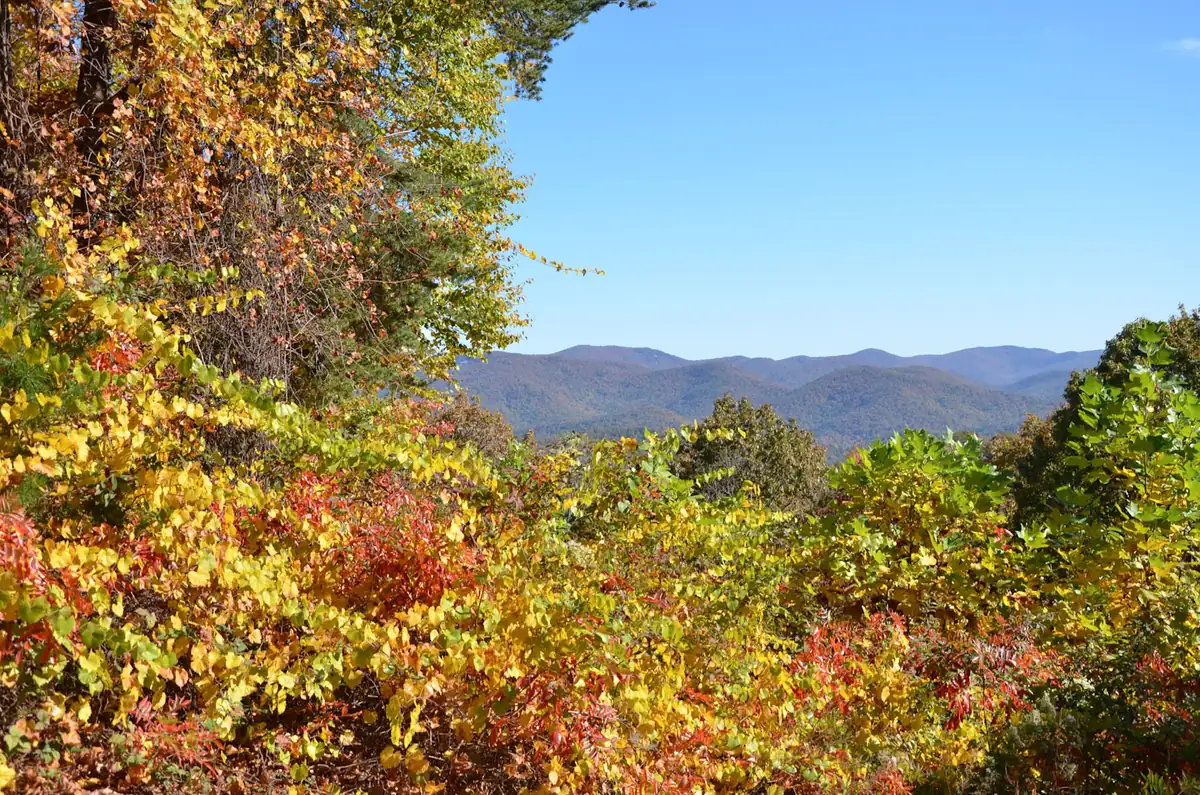
- The mountains turn and the first frost comes. Georgia State Parks’ Leaf Watch reports run through the month, and Black Rock Mountain, at 3,640 feet the highest state park, usually colors first; the high Blue Ridge peaks in mid-to-late October, the Piedmont not until November. Blairsville’s median first freeze is October 19, Atlanta’s November 6, Savannah’s November 30.
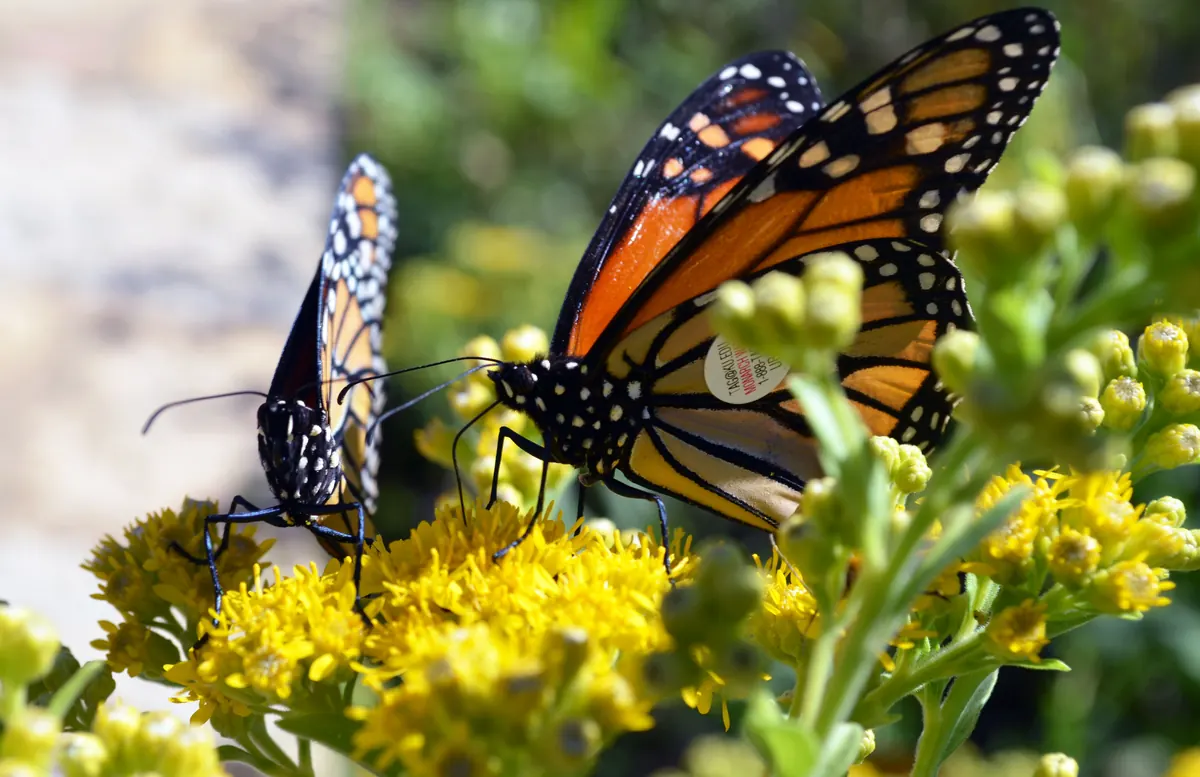
- Monarchs, north to south. Monarch Watch’s peak windows run September 24 – October 6 in the Blue Ridge, September 29 – October 11 around Atlanta and Augusta, and October 4 – 16 for Albany, Valdosta and the coast, where wind and storms bunch the flight into big days. Look on goldenrod and swamp sunflower in the afternoon and report roosts to Journey North.
- The Moon hides Jupiter, then the Hunter’s Moon. Before dawn on Tuesday, October 6, the crescent moon covers Jupiter at about 4:16 a.m. EDT and uncovers it at about 5:17, low in the east, and all of Georgia sees both halves. The full Hunter’s Moon rises at sunset on Sunday, October 25 (full at 12:12 a.m. on the 26th), and the Orionids are best in the last dark stretch before first light on the 21st and 22nd.
Record it: draw one tree for Leaf Watch on the tree-through-the-seasons plate in the Naturalist’s Field Journal, log the monarchs on its pollinator page, add each new sparrow and kinglet to the “birds I have seen” list, and keep the deer and owls on the dusk-and-dawn watch page. A page a week is enough.
Regions used below: Mountains (Blue Ridge and Ridge and Valley); Piedmont and Metro Atlanta; Coastal Plain; Coast and Barrier Islands; Southwest Georgia.
When do the leaves change in Georgia, and where first?
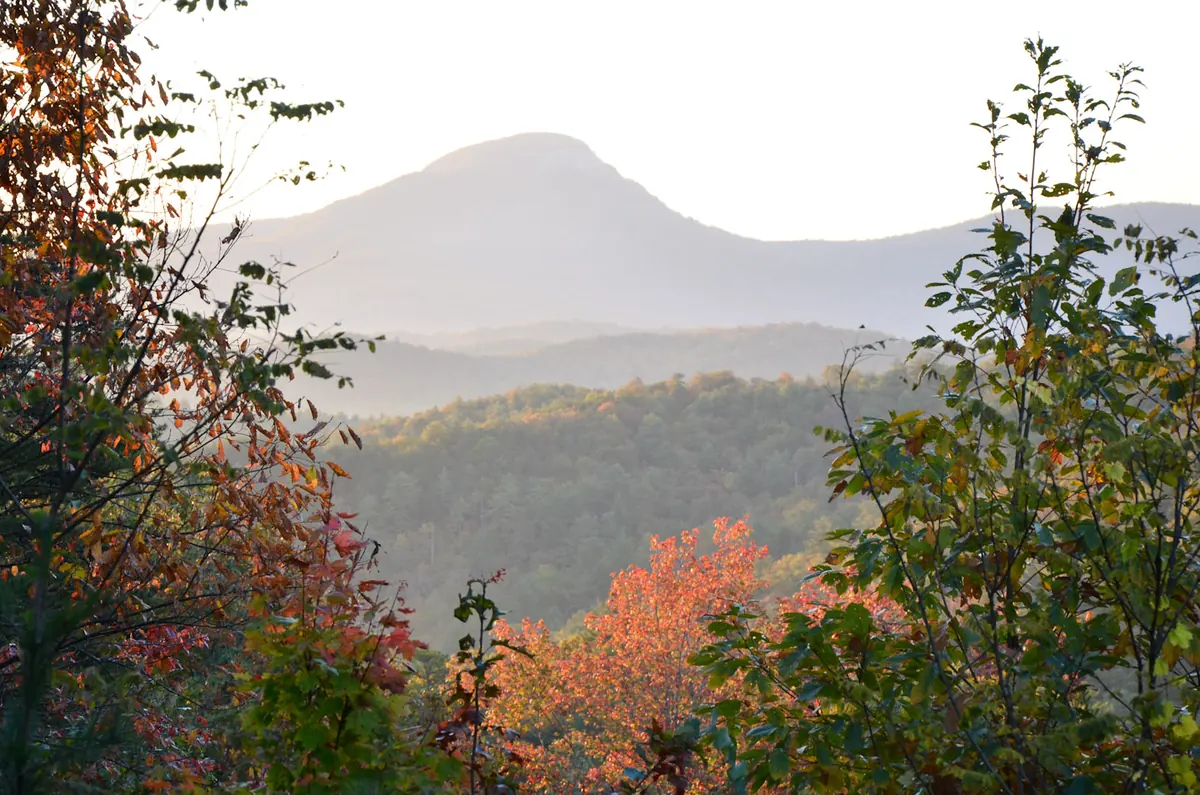
From the top of the state down. Georgia State Parks’ Leaf Watch, at gastateparks.org/LeafWatch, posts reports through the season and names Black Rock Mountain State Park near Clayton, at 3,640 feet the highest state park in Georgia, as “usually one of the first locations to show vibrant fall color.” Color peaks in mid-to-late October at the highest elevations and lasts into mid-November lower down, according to the parks’ announcement of last year’s season, and F.D. Roosevelt State Park, on Pine Mountain at the edge of the Piedmont, “often peaks during early November.” Sweetgum and black gum go deep red and purple, dogwood pink to red, hickories and oaks gold and russet, tulip poplar yellow, red maple scarlet. Sunny days and cool nights make the good years; a warm, cloudy October mutes the show.
| Region | Where to look | Typical peak |
|---|---|---|
| Blue Ridge above 3,000 feet | Black Rock Mountain, Brasstown Bald, Vogel, Amicalola Falls, Moccasin Creek | Mid to late October |
| Lower mountains and the Ridge and Valley | Cloudland Canyon, Fort Mountain, Tallulah Gorge, Smithgall Woods, Unicoi | Late October to early November |
| Piedmont and Metro Atlanta | F.D. Roosevelt, Hard Labor Creek, the Chattahoochee corridor, city oaks and hickories | Early to mid November |
| Coastal Plain, Southwest Georgia and the coast | River swamps and hardwood bottoms: sweetgum, hickory, cypress | Mid November on; Leaf Watch rarely reports this far south, so look for yourself |
The parks invite visitors to submit photos for the Leaf Watch gallery, and on fall weekends Black Rock and Vogel fill early, so go on a weekday if you can. To see when the woods near home start to turn, rather than where the crowds are, open the Field almanac for your own pin.
When do monarchs migrate through Georgia?
Georgia spans about 30.4° to 35° of latitude, and Monarch Watch’s peak-migration table, built from decades of tagging, moves the peak south about five days for every two degrees: the last week of September and first of October in the Blue Ridge, the first ten days of October around Atlanta and Augusta, the second week in Albany, Valdosta and on the coast. Monarch Watch adds that the pattern “is likely to be modified along the coasts due to strong head winds or storms,” which on Georgia’s coast means bunched, weather-driven days.
| Region | Reference cities | Peak window |
|---|---|---|
| Blue Ridge and northwest Georgia | Blairsville, Clayton, Dalton, Rome | Sept 24 – Oct 6 |
| Upper Piedmont and Metro Atlanta | Atlanta, Athens, Gainesville, Augusta | Sept 29 – Oct 11 |
| Middle Georgia and the upper coast | Macon, Columbus, Savannah | About Oct 1 – 14 |
| South Georgia and the lower coast | Albany, Valdosta, Waycross, Brunswick | Oct 4 – 16 |
If you tag, do it now: the window is closing in the mountains and still open on the coast. Journey North wants fall roost reports above all: “These gatherings, whether they’re of 10 monarchs or 1,000, are a key indicator of migrating monarchs.” Check tall goldenrod and swamp sunflower on warm afternoons and the trees at dusk. On the coast, Hofwyl-Broadfield Plantation near Brunswick leads an “On the Wings of a Butterfly” migration walk on Saturday, October 10, 10 a.m. to noon (fee; call 912-264-7333), and Monarchs Across Georgia’s Symbolic Migration, in which schoolchildren send paper butterflies to Mexico, has a final postmark deadline of October 10.
Where are the hawks and the migrating songbirds this month?
-
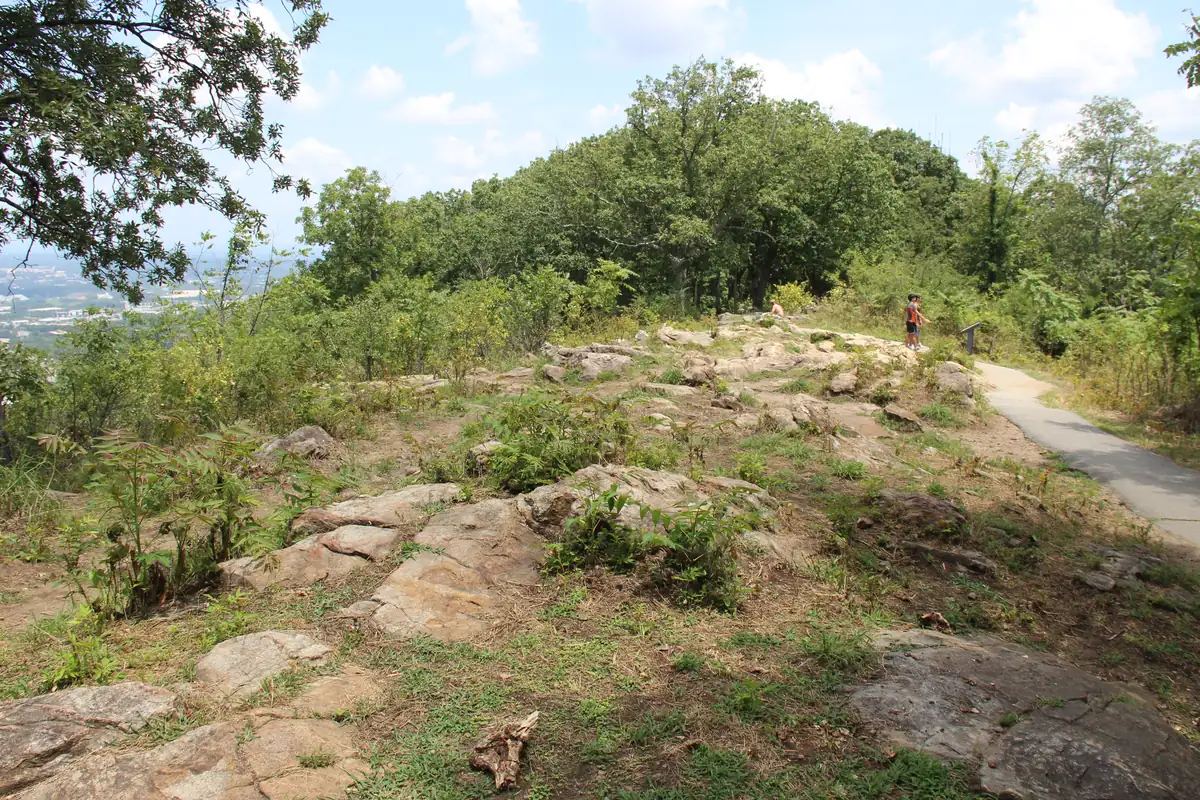
Kennesaw Mountain
Landbird peak Sept 5 – Oct 10; hawks and falcons through October · Kennesaw Mountain National Battlefield Park, Cobb County
BirdWatching magazine’s hotspot guide gives the calendar for Georgia’s best-known migrant trap: “Fall migration (late July to late Oct., peak Sept. 5–Oct. 10),” with the note that daily numbers are lower than in spring but the season runs longer. The broad-winged kettles are mostly a September event; from the second half of September into October, Bird Watcher’s Digest says, a warm sunny day can bring hundreds of hawks, falcons among them. Walk to the summit and watch.
-
Jekyll Island Banding Station
About four weeks around the October peak; visitors welcome · Dune scrub at the south end of Jekyll Island
Volunteers have run the station every fall since 1978, setting mist nets in the dunes for about four weeks and banding songbirds for the North American Bird Banding Program: 2,000 to 3,000 birds a season in the 1980s and 1990s, 1,000 to 1,500 now. Its 2023 mid-season report shows what an October there can be: 690 birds banded from October 1 through 12, 150 of them on October 8 alone, among them Cape May, black-throated blue and blackpoll warblers. The Georgia Bird Observatory posts each season’s dates.
-
The coast’s shorebirds, gulls and swifts
All month; swifts at dusk in early October · Jekyll’s south end, Gould’s Inlet on St. Simons, downtown Brunswick
Jekyll’s south end is a stopover where “thousands pass through on their harrowing migration south each fall,” the red knot among them on a 9,000-mile trip from the Arctic to the tip of South America. Late August through October is the best window for the lesser black-backed gull. In town, chimney swifts gather before they leave: Birds Georgia’s Swift Night Out in Brunswick on Wednesday, October 7 (rain date October 8), 5:30 to 7:30 p.m. at Silver Bluff Brewing Company, watches hundreds pour into the historic post office chimney at dusk.
-
Winter residents arriving
Late September through October · Statewide
Ruby-crowned kinglets have been arriving since late September and golden-crowned kinglets come in mid-October, with blue-headed vireos, the first winter wrens and yellow-bellied sapsuckers. Song and white-throated sparrows appear through the month and dark-eyed juncos late in it, while inland the warbler flight falls off after mid-month. Those are Bird Watcher’s Digest’s dates for the state as a whole; the mountains run earlier and the coast later.
-
Ruby-throated hummingbirds leave; the winter hummingbirds begin
Rare after October 31 · Statewide; the winter birds mostly on the coast
Georgia DNR’s status line for the ruby-throated hummingbird is one sentence: “Rare in state past October 31.” Leaving a feeder up will not stop a hummingbird from migrating, since day length, not food, sets them moving, so keep one up. It may draw Georgia’s second hummingbird season: nine species have been recorded here in winter, the rufous most often. The DNR asks that any hummingbird at a feeder from October to the end of February be reported to the Wildlife Conservation Section at 478-994-1438.
-
Sandhill cranes: not yet
Mid to late November · Okefenokee National Wildlife Refuge
The Okefenokee is “critical winter habitat” for greater sandhill cranes from the upper Midwest and Canada, 3,000 to 5,000 birds that arrive “from the middle to the end of November,” a refuge ranger wrote, and leave in late February. You will hear the rolling call before you see the deep V.
-
Refuges: what is open and what is closed
Harris Neck closed Oct 1 – 3; Okefenokee Suwannee Canal hunt Oct 23 – 24 · Coast and the Okefenokee
Harris Neck, north of Darien, is closed for a deer hunt October 1 to 3, the gate shut from sunset on September 30 until sunrise on Sunday, October 4. Savannah National Wildlife Refuge keeps its 4.5-mile Laurel Hill Wildlife Drive open sunrise to sunset every day; dogs stay in the car. The Okefenokee holds a deer hunt in the Suwannee Canal Recreation Area on October 23 – 24 and reports historically low water, with many paddle trails and most camping platforms closed; check before you paddle.
eBird’s October Big Day, a single-day global count, falls on a Saturday in mid-October; check ebird.org for this year’s date and put your list in, even if it is only the feeder.
When is the deer rut in Georgia?
Not on one date. The DNR and the UGA Deer Lab mapped it county by county from Georgia DOT deer–vehicle collision records, which track closely with conception dates and with the movements of GPS-collared deer. The surprise is the coast. Glynn, McIntosh and Camden counties peak October 13 – 19 and the Savannah and Okefenokee counties the week after, about a month ahead of Atlanta’s northern suburbs and six weeks ahead of the northeast mountains, while the far southwest corner does not peak until late December. The usual explanation is restocking: many herds were rebuilt decades ago with deer from other states, and their descendants kept the old breeding clocks.
| Region | Sample counties | Peak week |
|---|---|---|
| Coast and barrier islands | Glynn, McIntosh, Camden | Oct 13 – 19 |
| Savannah, the lower coast and the Okefenokee rim | Chatham, Bryan, Liberty, Effingham, Ware, Charlton | Oct 20 – 26 |
| Augusta and the central Savannah River | Richmond, Columbia, Burke, Screven | Oct 20 – 26 |
| Scattered counties, coast to Piedmont | Bacon, Echols, Lanier, Baldwin, Putnam, Hart | Oct 27 – Nov 2 |
| Middle Georgia and the south side of Atlanta | Bibb, Houston, Cobb, DeKalb, Henry, Floyd, Lowndes | Nov 3 – 9 |
| North metro Atlanta and the upper Piedmont | Fulton, Gwinnett, Cherokee, Forsyth, Hall, Clarke, Muscogee | Nov 10 – 16 |
| Blue Ridge and south-central Georgia | Union, Towns, Fannin; Tift, Colquitt, Lee, Worth | Nov 17 – 23 |
| Northeast mountains and southwest Georgia | Rabun, White, Habersham, Stephens; Dougherty, Thomas, Mitchell | Nov 24 – 30 |
| Far southwest corner | Quitman, Decatur, Grady, Early, Miller, Seminole | Dec 1 – 28 |
What that means in October: on the coast, bucks are already moving, rubs and scrapes are fresh, and the dusk-and-dawn watch page will fill fast. In the Piedmont and the mountains this is the pre-rut, when bucks open scrapes and sparring starts but the does are not ready. Drivers: the same map is a collision map, so slow down at dusk and dawn, on the coast now and everywhere else next month.
When is the first frost in Georgia?
The Peachtree City forecast office puts the average first freeze “from mid-October across northeast Georgia to mid-November across central Georgia,” and in the mountains it is an October event: Blairsville’s median date is October 19, and one year in ten it has frozen there by October 7. Elsewhere an October freeze is early but not unheard of: Atlanta’s earliest on record is October 11, 1906, Athens’ September 24, 1928, Macon’s October 14, 1988, and Columbus’ October 21, 1989. On the coast the first freeze is as often a December question as a November one; Savannah does not reach nine years in ten until December 28.
| Station | One year in ten | Median | Nine years in ten |
|---|---|---|---|
| Blairsville | Oct 7 | Oct 19 | Nov 1 |
| Rome | Oct 22 | Nov 3 | Nov 18 |
| Atlanta | Oct 25 | Nov 6 | Nov 24 |
| Athens | Oct 28 | Nov 10 | Nov 27 |
| Macon | Oct 29 | Nov 10 | Nov 29 |
| Columbus | Oct 31 | Nov 11 | Dec 1 |
| Savannah | Nov 11 | Nov 30 | Dec 28 |
| Valdosta | Nov 9 | Nov 27 | Dec 21 |
Look up your own town’s odds on the Georgia frost dates page. In the Blue Ridge valleys, October is the month to pick the last tomatoes and note the first white morning; south of the fall line it is time to sow collards and set out garlic, with a month of growing weather still ahead.
How fast are Georgia’s days shortening in October?
About an hour, faster in the mountains than at the Florida line: Blairsville loses 62 minutes in October, Valdosta 52. Georgia sits at the western edge of the Eastern time zone, so most of the loss lands on the morning: Atlanta’s sunrise slips from 7:32 a.m. on October 1 to 7:56 on Halloween, sunset from 7:22 to 6:46 p.m. The clocks fall back at 2 a.m. on Sunday, November 1.
| City | Oct 1 | Oct 31 | Lost | Per day |
|---|---|---|---|---|
| Blairsville | 11 h 49 m | 10 h 47 m | 62 min | 2.1 min |
| Rome | 11 h 50 m | 10 h 48 m | 62 min | 2.1 min |
| Atlanta | 11 h 50 m | 10 h 50 m | 60 min | 2.0 min |
| Athens | 11 h 50 m | 10 h 50 m | 60 min | 2.0 min |
| Macon | 11 h 50 m | 10 h 52 m | 58 min | 1.9 min |
| Columbus | 11 h 51 m | 10 h 54 m | 57 min | 1.9 min |
| Savannah | 11 h 51 m | 10 h 55 m | 56 min | 1.9 min |
| Valdosta | 11 h 51 m | 10 h 59 m | 52 min | 1.7 min |
For today’s sunrise, sunset and twilight at your own address, and how many minutes this week takes away, open the Field almanac.
Is October dry in Georgia, and what about hurricanes and El Niño?
For most of the state October is the driest month of the year. In NOAA’s 1991–2020 normals it is the driest at Atlanta (3.28 in), Macon (2.63), Columbus (2.78) and Augusta (2.56), and second-driest at Athens (3.34); the Peachtree City office says “the driest months are September and October.” The coast differs: Savannah’s 3.72 inches sits mid-year, and there November is the dry month. Afternoons average 74 °F in Atlanta and about 80 in Savannah and Valdosta, and the dry air brings the clearest skies of the year.
Hurricane season runs to November 30, and October has hit Georgia hard. The eye of Hurricane Michael crossed into Seminole County around 6 p.m. on October 10, 2018 as a Category 3 with 115 mph winds, “the first major hurricane (Category 3+) to directly impact Georgia since the 1890s”; Donalsonville gusted to 115 mph. On October 8, 2016, Hurricane Matthew, a Category 2 off the coast, pushed the tide at Fort Pulaski to 12.56 feet above mean lower low water, the highest recorded there.
The winter is the bigger story. The Climate Prediction Center’s September 10 discussion put the odds of a very strong El Niño this fall and winter above 90 percent, and gave a 75 percent chance that October–December exceeds every event since 1950; its next update is October 8, and NOAA’s winter outlook follows in mid-October. For Georgia, El Niño usually means wet: the Southeast has one of the strongest wet-winter signals in the country, temperatures tend to run cooler, and hurricane seasons quieter, though the state has still felt some tropical impact in half of all El Niño years. The signal builds through the cold season, so October itself will mostly look like October.
What should Georgians look up for this October?
-
The Hunter’s Moon
Sunday, October 25, rising at sunset; full at 12:12 a.m. on the 26th · Anywhere with a low eastern horizon; the beaches face the right way
The full moon after the Harvest Moon. In Atlanta it rises at 6:21 p.m. on Sunday, October 25, half an hour before sunset, and in Savannah at 6:10 p.m., out of the Atlantic; full is at 12:12 a.m. on the 26th, so Monday evening’s moon looks full too. It is not a supermoon.
-
Orionid meteors
Before dawn, October 21 and 22 · Dark sky; face south and east
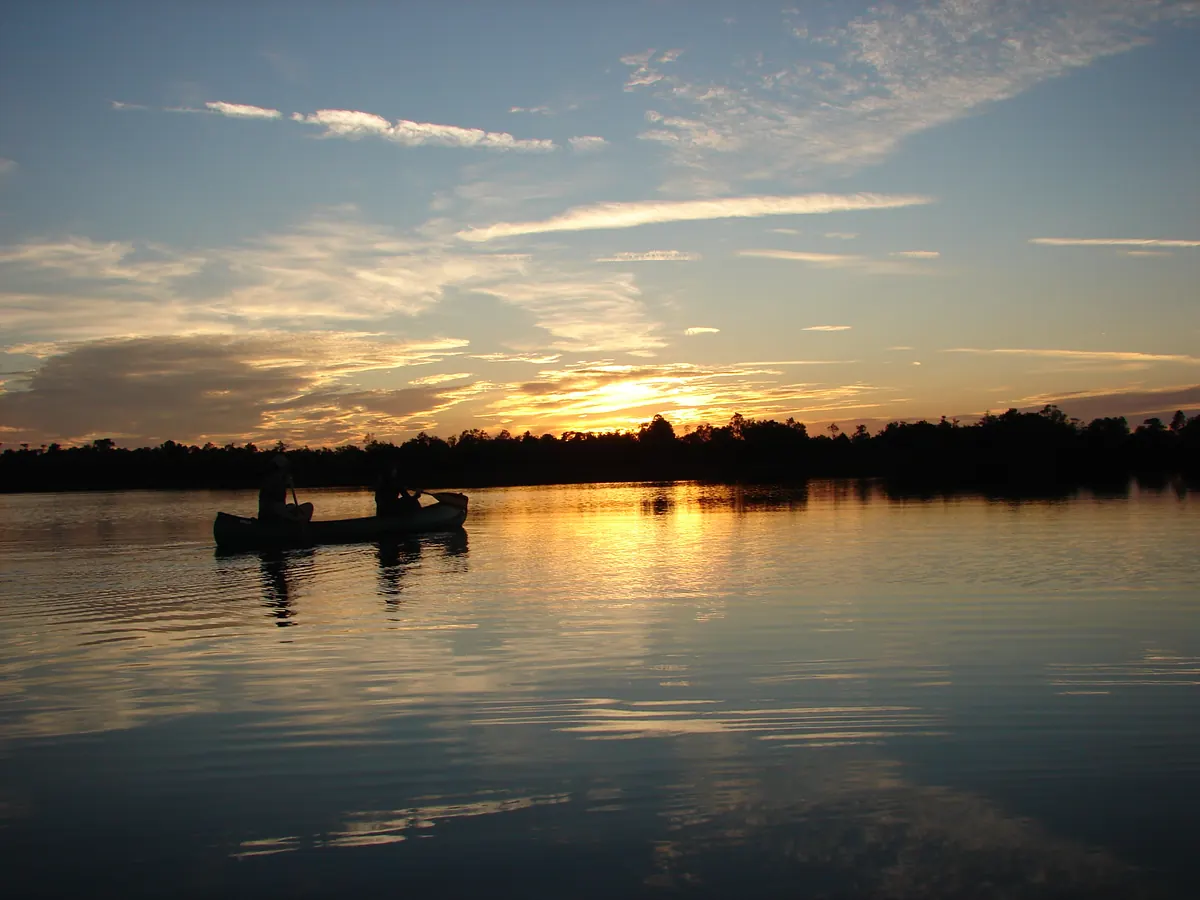
Halley’s Comet leaves the dust; the shower runs from early October into the first week of November and is strongest on the nights of October 21 and 22, typically 10 to 20 meteors per hour. In Atlanta the gibbous moon is down by 3:01 a.m. on the 21st and 4:01 a.m. on the 22nd, and civil twilight does not begin until 7:23, so the dark window is roughly 4 to 7 a.m. Okefenokee State Park at Fargo, the former Stephen C. Foster State Park and a certified International Dark Sky Park, is the place to be.
-
Draconid meteors
Evening of Thursday, October 8 · Look north after dark
A slow, sparse shower, about 10 an hour under a dark sky, and an evening one: EarthSky puts the peak at 9 p.m. Eastern on Thursday the 8th, with the radiant in Draco’s head highest as darkness falls and the moon two days from new. A good first shower for a child.
-
Saturn all night
Opposition October 4; Moon beside it October 23 – 24 · East at dusk, high at midnight
Saturn reaches opposition on October 4, rising at sunset and up all night at its brightest for the year, a steady yellow point in the faint stars between Pisces and Cetus. On the 23rd and 24th a bright moon keeps it company.
-
Mornings belong to Jupiter and Mars
Venus gone after the first days of October; Jupiter and Mars before dawn · West at dusk; east at dawn
Venus drops out of Georgia’s dusk after the first days of October and passes between Earth and the sun on October 23 – 24. Before dawn, look east for bright Jupiter with red Mars above it; binoculars on October 11 show Mars drifting by the Beehive cluster.
-
The Moon hides Jupiter
About 4:16 to 5:17 a.m. EDT, Tuesday, October 6 · Low in the east; a beach, a ridge or a big field with an open eastern view
The waning crescent moon, 20 percent lit, passes in front of Jupiter before dawn on Tuesday, October 6, and Georgia gets the whole show. In Atlanta the moon rises at 3:20 a.m.; Jupiter slips behind the sunlit edge at about 4:16 a.m. EDT with the moon only 9 degrees up, then reappears at the dark edge at about 5:17 a.m., 22 degrees up and well before sunrise. IOTA’s predictions put the disappearance at 4:16 in Augusta, Macon and Valdosta and 4:17 in Savannah, and the reappearance at 5:18 in Augusta, 5:16 in Macon, 5:17 in Savannah and 5:15 in Valdosta. You need a flat eastern horizon for the first half and binoculars for the second.
-
Star parties and dark-sky nights
October 3 and 10 · Tallulah Gorge, Unicoi and the Okefenokee
Okefenokee State Park (formerly Stephen C. Foster) holds Dark Skies Stargazing on Saturday, October 10, 8:45 to 9:45 p.m., the night of the new moon, with a parking fee; it is “extremely weather dependent,” so call 912-637-5274 if clouds threaten. Tallulah Gorge’s State Park After Dark on Saturday, October 3, 7 to 9 p.m., builds star wheels and finds constellations, and Unicoi runs night hikes on October 3, 10 and 24.
| Phase | Date | Time |
|---|---|---|
| Last quarter | Saturday, Oct 3 | 9:25 a.m. |
| New moon | Saturday, Oct 10 | 11:50 a.m. |
| First quarter | Sunday, Oct 18 | 12:12 p.m. |
| Full moon, the Hunter’s Moon | Monday, Oct 26 | 12:12 a.m. (looks full the evenings of Oct 25 and 26) |
| Last quarter | Sunday, Nov 1 | 3:28 p.m. EST |
Before you set an alarm, check the cloud forecast for your town on Today’s sky; local moonrise and moonset times are on the moon page.
What is blooming, ripening and being harvested?
-
Georgia aster
October and November · Open oak-pine woods and rights-of-way where something keeps the canopy open
The state’s own aster is a late bloomer and a rare one. Symphyotrichum georgianum flowers in October and November, deep violet heads about two inches across on stems to three feet, in open oak-pine woods, a relict of the post oak savannas that fire once kept open. Only about 146 populations were estimated to remain in 2013, NatureServe ranks it vulnerable, and a conservation partnership keeps it off the endangered list for now. Photograph it, log it on iNaturalist, and leave it.
-
Goldenrod, swamp sunflower and pink muhly
Through October, into November · Roadsides, ditches, sandy pine openings
Tall goldenrod blooms August through November on roadsides and old fields, swamp sunflower, the tall yellow daisy of wet ditches, from August to November, and pink muhly grass in October, a knee-high pink haze in sandy pine openings. All three are native, and the first two are the monarchs’ fuel.
-
Persimmons and mast
September to November · Fencerows, old fields, bottomlands
The common persimmon “fruits in September–November,” the USDA plant guide says, “highly astringent” before ripening and “turning yellowish-orange to reddish-orange and sweet in the fall”; deer, foxes, raccoons, opossums, turkeys and cedar waxwings all eat it. The acorn crop is the month’s real event, for bears above all; count the acorns under one oak and write the number on the seeds, pods and cones plate to learn which years are mast years.
-
Pecans
Early varieties from early October; the rest into winter · Southwest and Middle Georgia orchards
UGA’s pecan blog reported on October 16, 2025 that “the pecan harvest season is underway,” with the early Pawnee crop first and the mid-season and later varieties following through the fall. Orchards are shaken and swept, so stay out of them; roadside stands in the Albany, Fort Valley and Vienna country sell the new crop from October on.
-
Cotton and peanuts
Harvest under way · Coastal Plain and Southwest Georgia
For the week ending September 27, USDA’s crop-progress report had 79 percent of Georgia’s cotton bolls open and 7 percent of the crop picked (five-year average 4), and 16 percent of the peanuts dug, ahead of the five-year average of 11; both crops rated 56 to 58 percent good or excellent. October is when the pickers and peanut combines run across the Coastal Plain; a back road through Tift, Colquitt or Worth County late in the month shows white fields, peanut vines drying in windrows and lint along the shoulders.
What are the bears, spiders and reptiles doing?
-
Black bears in hyperphagia
September to November · North Georgia; the Ocmulgee corridor; the Okefenokee
Georgia has 4,100 to 5,100 black bears in three populations, and the bear-hunting zones trace them: the mountains and north Georgia, the Ocmulgee River country around Bibb, Houston and Twiggs, and the Okefenokee rim from Ware and Charlton to Camden. In fall all of them are in hyperphagia, the bears’ “power-eating time,” with acorns the main course, and sightings climb. BearWise basics: secure garbage, pet food and bird feeders, and keep children close and dogs leashed on the trail. If a bear approaches, make noise and stand your ground; do not run and never play dead.
-
Joro spiders at their biggest
Webs most conspicuous September – October; egg sacs mid-October to November · North and central Georgia, spreading
The big yellow-and-black orb weaver with the golden web, first detected in Georgia in 2014 and now established statewide and in neighboring states, is at its most obvious now. UGA’s circular says “adult females become sexually mature in September and early October” and “egg sacs are laid mid-October to November,” each holding 400 to 500 eggs, so the webs and the females, with bodies up to about an inch long, are at their biggest this month. Georgia Invasives says they “do not pose a danger to humans or animals.” Move a web off a path with a stick rather than spraying, and send a photo to Joro Watch (jorowatch.org), UGA’s project mapping the spread.
-
Snakes are still out
Warm October days · Statewide
Georgia has six venomous snakes, the copperhead, cottonmouth, eastern coral snake, eastern diamondback, timber rattlesnake and pigmy rattlesnake, and many harmless ones, all protected by state law. The DNR notes that snakes are relatively inactive when it is cold or extremely hot; October is neither, so they are out on warm days. Watch where hands and feet go in leaf litter, rock piles and firewood.
-
Alligators slow but stay
Feeding slows below about 70 °F · Coast, Coastal Plain, Okefenokee
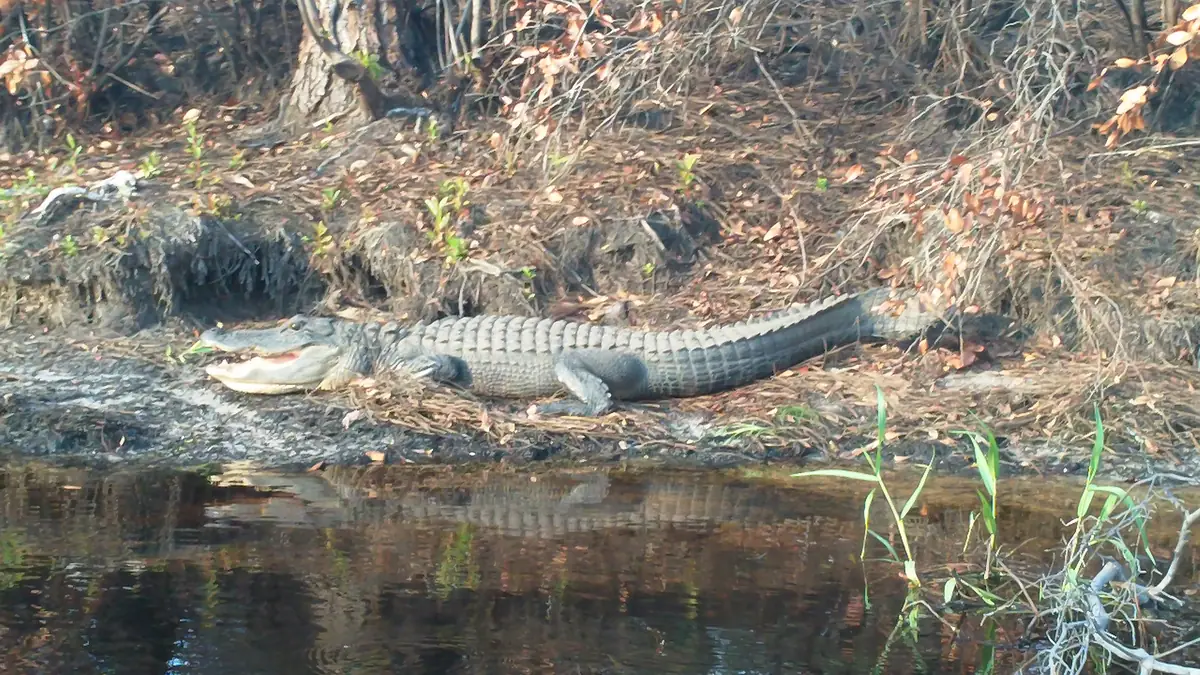
The Okefenokee alone holds an estimated 15,000 alligators. Florida’s wildlife agency gives the thermometer: they are most active between 82 and 92 °F, stop feeding at about 70 °F and go dormant below 55. Savannah’s October afternoons average 79, so this is still basking-and-feeding weather on the coast and in the swamp. Georgia’s quota alligator season closes at sunrise on October 5. Keep dogs away from the water; the Savannah refuge warns that dogs are “easy prey.”
-
Manatees leave, the last sea turtles hatch, and the right whales are not here yet
October into November · Coast
Manatees are “most frequently sighted in Georgia waters from April through October” in Camden, Glynn and McIntosh counties, the DNR says, and head back to Florida as the water cools; report sightings to the DNR coastal office at 800-272-8363. Loggerhead hatching runs “beginning in mid-July and continuing through early October,” so the last nests on Jekyll, Cumberland and the other islands empty early this month, at night, which is why the lights-out rules still apply. Right whales are not here yet: the calving season runs mid-November to mid-April and the whales usually arrive in late November or early December, though last year two were spotted off Savannah on November 5. Last season produced 23 calves, the most in 17 years, in a population of about 380; report sightings to 877-WHALE-HELP.
What can Georgia families get out and do in October?
- Walk with the monarchs. Join the Hofwyl-Broadfield butterfly walk on October 10 (see the monarch section), and if you find butterflies clustered in a tree at dusk, send Journey North the roost that same night.
- Watch the swifts go down the chimney. Birds Georgia’s Swift Night Out in Brunswick is October 7; any old brick chimney in your town may draw swifts too, so stand outside at sunset and count.
- Chase the color. Read Leaf Watch and pick a park near peak; Victoria Bryant State Park runs a leaf-watch hayride on Saturday, October 17. Draw one tree at home now and again in November.
- Go out at night. Stargazing at Okefenokee State Park on the 10th and Tallulah Gorge’s After Dark on the 3rd; Crooked River’s free Owl Prowl on Saturday, October 24, 7:30 p.m., with owl-pellet dissection at 2 p.m. the same day; bat walks at Skidaway Island on October 17 and 30 at 5:30 p.m. and at Tallulah Gorge on October 9 at 8 p.m.
- Meet a hawk. Chattahoochee Bend State Park’s homeschool class “Birds of Prey in Central Georgia” is Friday, October 23, 10 a.m.; Kennesaw Mountain’s summit is open any day.
- Count something. Photograph Joro spiders for Joro Watch, report any hummingbird that stays past October to the DNR, join eBird’s October Big Day, and sign up for Project FeederWatch, which starts November 1.
Safety notes for October in Georgia
- Hurricane season runs to November 30, and October brought Michael (2018) and Matthew (2016). On the coast and in the southwest, keep the plan current until the first strong cold front.
- Early October is still warm, with afternoons near 80 °F in Savannah and Valdosta. Carry water.
- Ticks stay active in fall. Treat boots and pants with permethrin, use repellent, check everyone after coming in, and tumble clothes on high heat.
- Venomous snakes are out on warm days, alligators are still feeding on the coast, and bears are in hyperphagia; secure food and leash dogs.
- Deer are moving: the rut peaks on the coast in October and across most of the state in November. Drive slowly at dusk and dawn.
- Hunting seasons: archery deer September 12 – October 9; an antlerless-only firearms weekend October 3 – 4 in two zones; primitive weapons (and youth firearms) October 10 – 16; firearms deer opens Saturday, October 17 and runs to January 10 (January 15 in one zone). Bear: the Northern Zone firearms season opens with deer on October 17, and the Southern Zone around the Okefenokee has firearms days October 1 – 3 and 8 – 10. Dove closes October 11, Canada goose is open October 10 – 25, grouse opens October 15, squirrel has been open since August 15. The rule: “A hunter, and anyone accompanying the hunter, must wear an outer garment with at least 500 square inches of daylight fluorescent orange or fluorescent blaze pink above the waist” during the primitive-weapons and firearms deer and bear seasons; it is not required on archery-only areas. Hikers are not required to wear it on wildlife management areas or national forests, but an orange hat is cheap insurance.
- Refuge closures: Harris Neck October 1 – 3 and the Okefenokee’s Suwannee Canal area October 23 – 24 (see the birds section).
Sources
- Georgia State Parks: Leaf Watch 2026
- WSB-TV: Georgia Leaf Watch returns, which parks are best for fall color (2025 season timing)
- U.S. Forest Service: fall colors by tree species
- Monarch Watch: peak migration dates by latitude
- Monarch Watch: tagging program
- Journey North: monarch sightings and fall roost reports
- Georgia State Parks: event list, October 2026 programs
- Environmental Education Alliance: Monarchs Across Georgia and the Symbolic Migration
- BirdWatching magazine: Kennesaw Mountain hotspot
- National Park Service: birding at Kennesaw Mountain
- Bird Watcher’s Digest: Georgia birding by season, fall
- Georgia Bird Observatory: Jekyll Island Banding Station mid-season update, October 2023
- Jekyll Island Authority: For the Birds (banding station and stopover)
- Birds Georgia: upcoming events (Swift Night Out, Brunswick)
- Georgia DNR: Hummingbirds in your backyard
- U.S. Fish and Wildlife Service: Okefenokee NWR, Sights and Sounds of Winter (PDF)
- U.S. Fish and Wildlife Service: Okefenokee National Wildlife Refuge
- U.S. Fish and Wildlife Service: Okefenokee NWR hunting, 2026–27 dates
- U.S. Fish and Wildlife Service: Harris Neck National Wildlife Refuge
- U.S. Fish and Wildlife Service: Savannah National Wildlife Refuge, visit us
- Georgia DNR and UGA Deer Lab: peak deer movement in Georgia, the rut map (PDF)
- NWS Peachtree City: frost and freeze dates for north and central Georgia
- NWS Peachtree City: what’s typical in north and central Georgia
- NWS Charleston: first and last freeze dates, 1991–2020 (PDF)
- NOAA NCEI: 1991–2020 monthly normals for Georgia stations (data API)
- U.S. Naval Observatory: sun and moon rise and set, moon phases (data API; Atlanta, October 22, 2026)
- National Hurricane Center: tropical cyclone climatology
- NWS Peachtree City: Hurricane Michael hits Georgia, October 2018
- NWS Tallahassee: Hurricane Michael, October 2018
- NWS Charleston: Hurricane Matthew, October 2016
- Climate Prediction Center: ENSO diagnostic discussion, September 10, 2026
- NOAA Climate.gov: United States El Niño impacts
- Georgia Public Broadcasting: a super El Niño is predicted, what that means for Georgia (September 14, 2026)
- EarthSky: meteor shower guide (Draconids and Orionids 2026)
- American Meteor Society: 2026 meteor shower calendar
- International Occultation Timing Association: lunar occultation of Jupiter, October 6, 2026
- Georgia State Parks: Dark Skies Stargazing at Okefenokee State Park (formerly Stephen C. Foster)
- Lady Bird Johnson Wildflower Center: Georgia aster (bloom time)
- Lady Bird Johnson Wildflower Center: pink muhly, tall goldenrod and swamp sunflower (bloom times)
- Wikipedia, citing the USFWS 2013 species assessment: Symphyotrichum georgianum
- USDA NRCS: common persimmon plant guide (PDF)
- UGA Extension pecan blog: October 2025 harvest updates
- USDA NASS: Crop Progress, September 28, 2026
- Georgia Public Broadcasting: bears in Georgia are hungrier right now, DNR BearWise advice (October 2025)
- UGA Extension: Joro spider, Trichonephila clavata (C1273)
- UGA CAES: Joro Watch citizen science
- Georgia Invasives: Joro spider
- Georgia DNR: snakes of Georgia
- Florida Fish and Wildlife Conservation Commission: alligator facts (activity and temperature)
- Georgia DNR: manatees in Georgia
- Georgia Biodiversity Portal: loggerhead sea turtle
- NOAA Fisheries: North Atlantic right whale calving season 2026
- Georgia Public Broadcasting: right whales return to the Georgia coast (November 7, 2025)
- Georgia DNR hunting regulations: deer seasons and either-sex days, 2026–27
- Georgia DNR hunting regulations: big game seasons, 2026–27
- Georgia DNR hunting regulations: migratory bird seasons, 2026–27
- Georgia DNR hunting regulations: small game and trapping seasons, 2026–27
- Georgia DNR hunting regulations: hunting information, hunter orange and blaze pink
- Georgia DNR hunting regulations: bear zones
- CDC: preventing tick bites
- Project FeederWatch: how to participate
- Georgia DNR: alligator hunting season, 2026
- WRDW: Stephen C. Foster State Park officially renamed Okefenokee State Park (September 2, 2026)
- Photos via Wikimedia Commons; licenses and photographers are credited under each picture
