What to look for in nature in Georgia this May
May is when Georgia’s coast fills with eggs. Terns, plovers and oystercatchers nest on the open sand, red knots stop to fatten up for the Arctic, loggerhead turtles come ashore after their first nest in the first week of the month, and diamondback terrapins cross the causeways. Inland, red-cockaded woodpeckers feed young in the Piedmont pines, the last mountain flowers open, and the first peaches and blueberries ripen. The nights bring an excellent Eta Aquariid meteor year at the new moon and the third of four spring full moons, a Blue Moon in the seasonal sense. We give each event a typical window and name the source, and we flag the spots where agencies disagree.
Other months in Georgia: October, November, December, January, February, March, April.
Start here
- Share the beach. Georgia DNR says terns, plovers and oystercatchers nest on the open sand through July. Walk below the high-tide line, keep dogs away from posted areas, and watch from a distance.
- Catch the Flower Moon rise. The Moon is full at 6:59 a.m. EDT on May 20, so go out the evening of May 19. In Atlanta it rises at 8:15 p.m., just before sunset, as the third of four full moons this season.
- Let the baby be. Georgia DNR advises leaving a fawn, fledgling or rabbit where you find it and waiting 24 to 48 hours. The parent is usually close, even if you cannot see it.
For the Naturalist’s Field Journal: put the date of your first firefly on the daily field log, add any red knot or oystercatcher to the birds I have seen plate, describe a nest you watch from a distance on the nest observed plate, and keep the meteor mornings and the full-moon evenings of May 19 and 20 on the dusk and dawn watch plate.
Regions used below: Mountains (Blue Ridge and Ridge and Valley); Piedmont and Metro Atlanta; Coastal Plain; Coast and Barrier Islands; Southwest Georgia.
Which birds are nesting on Georgia’s beaches in May, and where are the red knots?
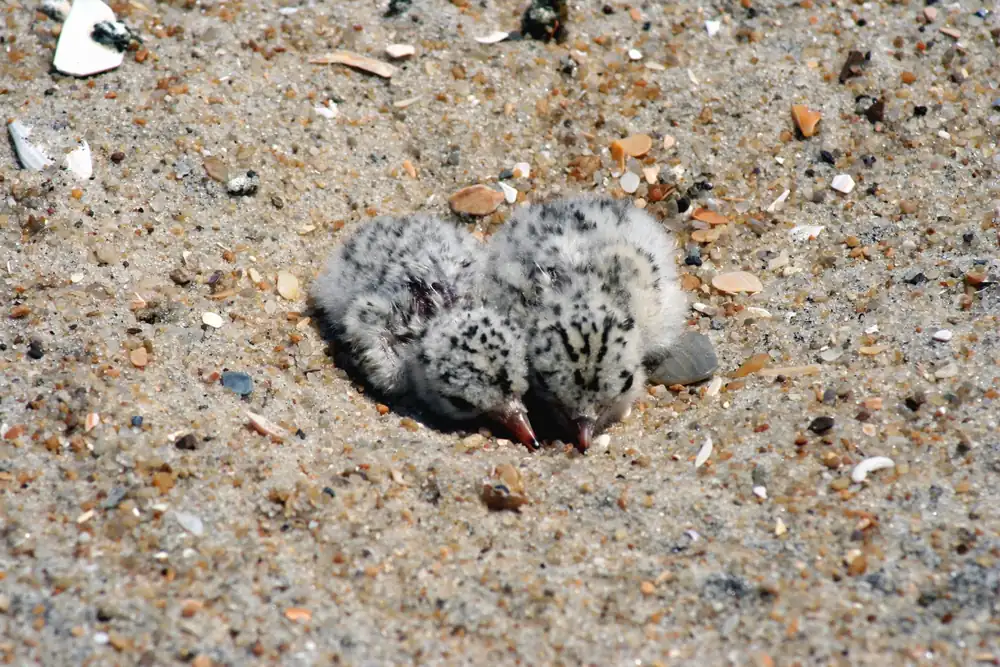
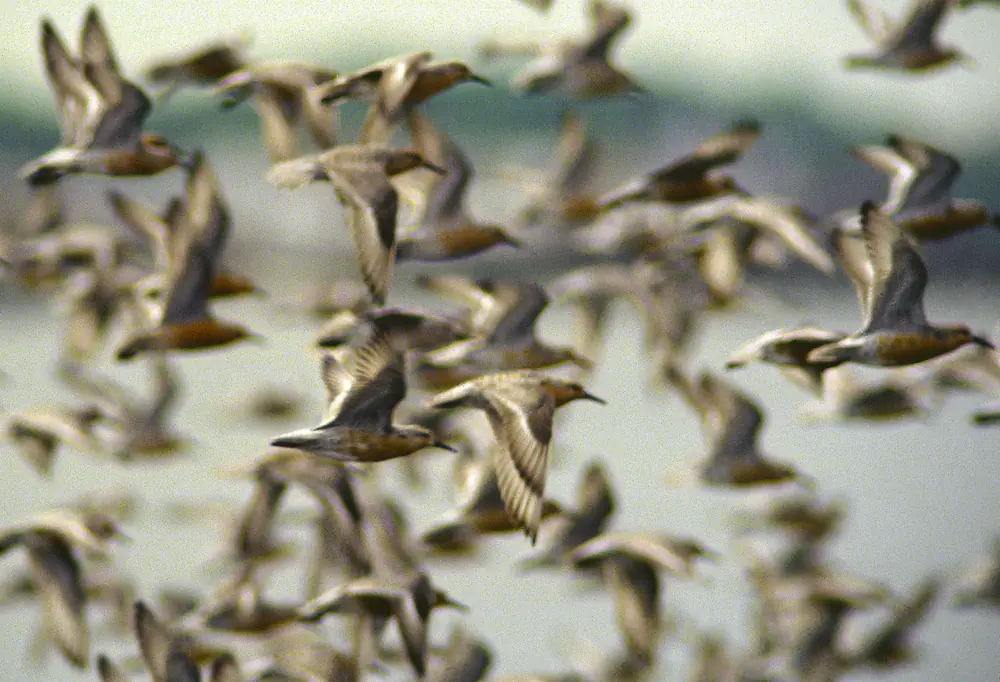
Georgia’s sand is crowded in May. Georgia DNR says American oystercatchers, Wilson’s plovers, least terns, black skimmers, royal terns and gull-billed terns all nest on the state’s beaches and offshore sandbars, laying eggs in shallow scrapes from mid-March through July. By May many of those scrapes hold eggs or chicks the color of dry sand. The same beaches are also a refueling stop for migrating shorebirds, and the most famous traveler is a rust-breasted sandpiper called the red knot.
-
Nesting terns, plovers and oystercatchers
Eggs and chicks from spring into July · Little Tybee Island, Pelican Spit off Sea Island, Cumberland Island, the south end of Jekyll Island, St. Simons’ East Beach and a bar in Gould’s Inlet
The DNR lists those places as nesting sites. On East Beach and the Gould’s Inlet bar, its page counted 25 least tern nests, 46 black skimmer nests, 21 gull-billed tern nests, one pair of oystercatchers and about 10 pairs of Wilson’s plovers. Nests sit above the high-tide line on wide beach flats or at the edge of the dunes, and chicks hide on the beach or in the grass after they hatch. Several sites keep pets out, and Brunswick Dredge Island is closed to people. Eggs and chicks blend into the sand so well that they are easy to step on.
-
Red knots refueling for the Arctic
Spring stopover; a May survey in 2023 counted 5,840 · Sea Island, Ogeechee Bar, St. Catherines Bar, Ossabaw, Little Tybee and other barrier-island beaches
Red knots are federally threatened. A report from the Center for Conservation Biology estimated that just under 12,000 used Georgia as a stopover in spring 2016, more than a quarter of the roughly 42,000 birds in the Atlantic Coast population at the time, and it put the typical stay at about three and a half weeks in 2013. In an early-May helicopter survey in 2023, biologists counted an estimated 5,840 along the coast, including a flock of about 2,000 at the south end of Sea Island. Fletcher Smith said about 70 percent of the knots seen in Georgia leave on a nonstop flight to the Arctic. They were eating coquina clams that spring because the horseshoe crabs had not yet spawned, which he linked to colder-than-normal water. Those are single-year snapshots, so do not treat them as a forecast for 2027.
The DNR’s advice is simple: stay out of posted areas, walk below the high-tide line, watch from a distance, and leave dogs at home or on a leash where they are allowed. Eggs can cook in as little as 10 minutes on a hot day if the parents are flushed off the nest, and a knot that is chased into the air may burn fuel it needs for a flight of more than 9,000 miles. Keep house cats indoors. Report anyone who is disturbing birds to the DNR Law Enforcement hotline, 800-241-4113.
When do sea turtles and diamondback terrapins nest in Georgia?
Sea turtles arrive first on the sand, and terrapins follow in the marsh. Loggerheads are the only sea turtle that nests regularly on Georgia’s barrier islands; green and leatherback turtles nest only occasionally, according to the DNR. Sources give slightly different starting lines for the season, so plan for a ragged start in May and a busy summer after it.
-
Loggerhead nests
The first nest usually appears in the opening days of May; the DNR program page dates the season from late May to mid-August · Cumberland, Jekyll, Sapelo and the other barrier-island beaches
Georgia’s sea turtle coordinator told DNR in 2025 that the first nest always turns up in the first week of May; that year Jekyll Island staff found it on May 1. Daily nest monitoring on all the barrier islands begins in mid-May. The DNR’s program page describes the nesting season as late May to mid-August, and the numbers can swing sharply: 4,071 loggerhead nests in 2022, the most since surveys of all the islands began in 1989, then 3,431 the following year and 2,490 the year after that. A network of about 200 volunteers, researchers and agency staff, the Georgia Sea Turtle Cooperative, patrols the beaches under a state permit.
-
Diamondback terrapins on the causeways
Monitored from May through July · Jekyll Island Causeway, the U.S. 80 causeway to Tybee Island
Female terrapins climb out of the salt marsh to lay eggs, and the roads built across the marsh are where many of them die. The Georgia Sea Turtle Center’s 2024 tally for the Jekyll causeway reported 492 encounters between May 1 and July 21, with 104 of the turtles (21 percent) hit by cars; staff saved 248 eggs from 50 females that were struck. The DNR calls the terrapin a high-priority species in the state’s wildlife action plan and says a researcher once found 133 dead in two abandoned crab traps in 2007. If you see a terrapin on the road, do not swerve or stop in traffic. Call the Jekyll Island terrapin hotline at 912-270-8865.
For turtles of every kind, the DNR asks beach visitors to turn off, shield or redirect beachfront lights, skip flashlights and flash photography at night, take lounge chairs and umbrellas off the sand at dusk, leave tracks alone, and stay quiet and still if a turtle comes ashore. Report a dead, injured or hit turtle to 800-272-8363.
Which birds are raising young inland in Georgia in May?
Most of the state’s resident birds are on a second or third brood by May, and the forests are loud from before dawn. Two families of nesting birds are worth a special trip, one in the Piedmont pines and one in the swamps and ponds of the Coastal Plain.
-
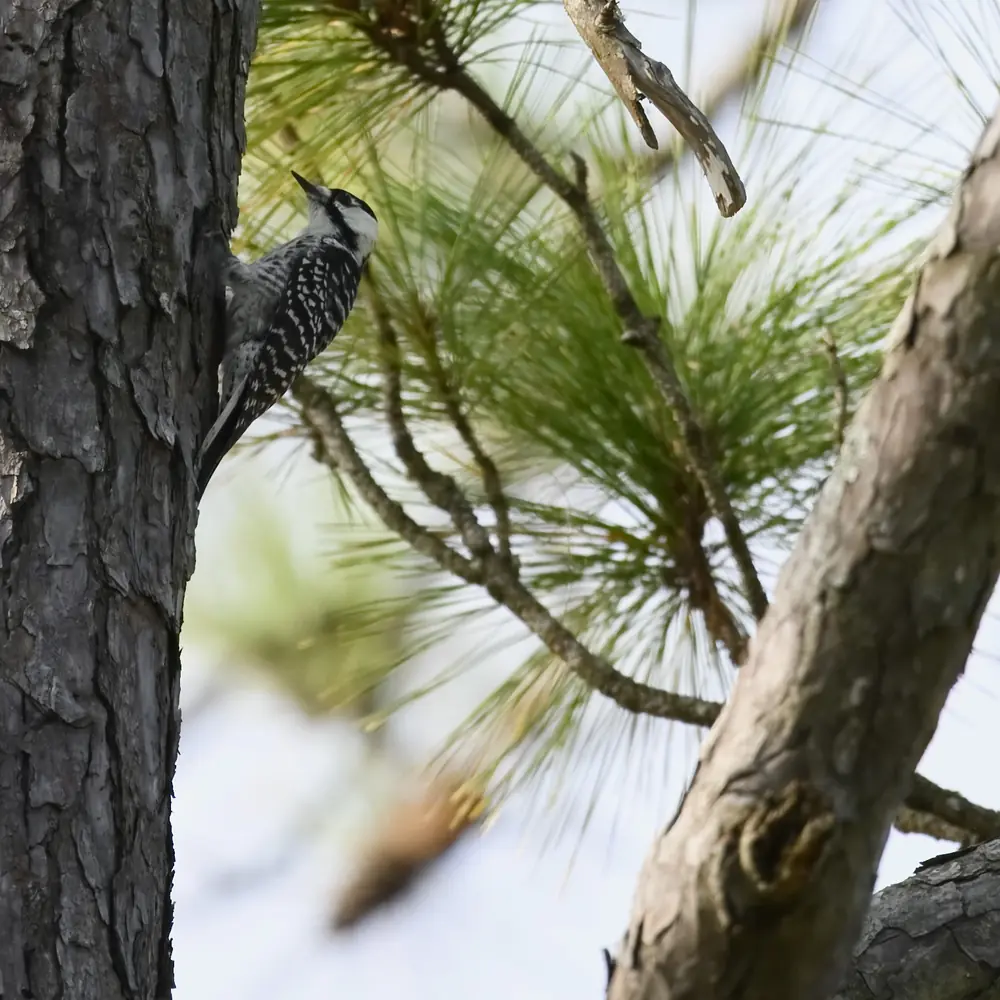
Red-cockaded woodpeckers at Piedmont National Wildlife Refuge
Spring is the nesting season; ask the refuge for current viewing advice · Jones and Jasper Counties, about 25 miles north of Macon
The refuge covers 35,000 acres and dates to 1939, and federal managers report a growing population of this endangered woodpecker on it. The birds nest in old pines in spring, so May is a fair time to ask refuge staff where and when they are being seen. Hours, roads and access change, so confirm them with the refuge before you drive out, and watch quietly from a distance.
-
Wading bird colonies
Nesting from about mid-March into July · Coastal Plain swamps, ponds and river corridors below the Fall Line
The Fall Line runs roughly from Columbus to Macon to Augusta. Below it, herons, egrets and ibises build colonies over water. The DNR says the state’s last survey of these colonies was in 1996 and ran a pilot survey in 2023, and it asks the public to report confirmed colonies through an online form. A site counts only if birds are incubating eggs, brooding young or feeding chicks, not if they merely roost there. Tricolored and little blue herons are the species of concern. Watch from a distance, because all wading birds are protected by state and federal law.
-
Hummingbirds at the feeder
Present statewide by now · Yards and woodland edges
Ruby-throated hummingbirds reached all of Georgia in March and April, so May is the month to keep the feeder fresh. Journey North takes sightings from volunteers year-round and builds maps of the northward spring migration; its page says the maps give a good idea of the birds’ progress north.
What is still blooming in the north Georgia mountains in May?
The mountain spring is a slow wave that climbs the slopes. A regional guide from North Georgia Living describes bloom beginning at low elevations in late March and peaking at higher elevations in late April and early May, with mountain laurel, flame azalea and lady’s slippers closing the season. That guide is a magazine, not an agency, so treat its timing as a rough guide and let the weather of the year decide.
For a second opinion, the National Park Service says that in the nearby Great Smoky Mountains flame azalea blooms April to May in low and middle elevations and June to early July on the mountaintops, mountain laurel blooms from early May through June, and Catawba rhododendron peaks in the first half of June along the Newfound Gap Road and in late June on the highest peaks. The Smokies are in Tennessee and North Carolina, so Georgia’s mountains will not match them day for day, but the order is a reasonable guide: laurel and low azaleas in May, rhododendron on the high ridges in June.
-
Flame azalea and mountain laurel
Flame azalea April to May in low and middle elevations; laurel from early May through June (Smokies timing) · Pine and oak slopes and ridges in the Blue Ridge
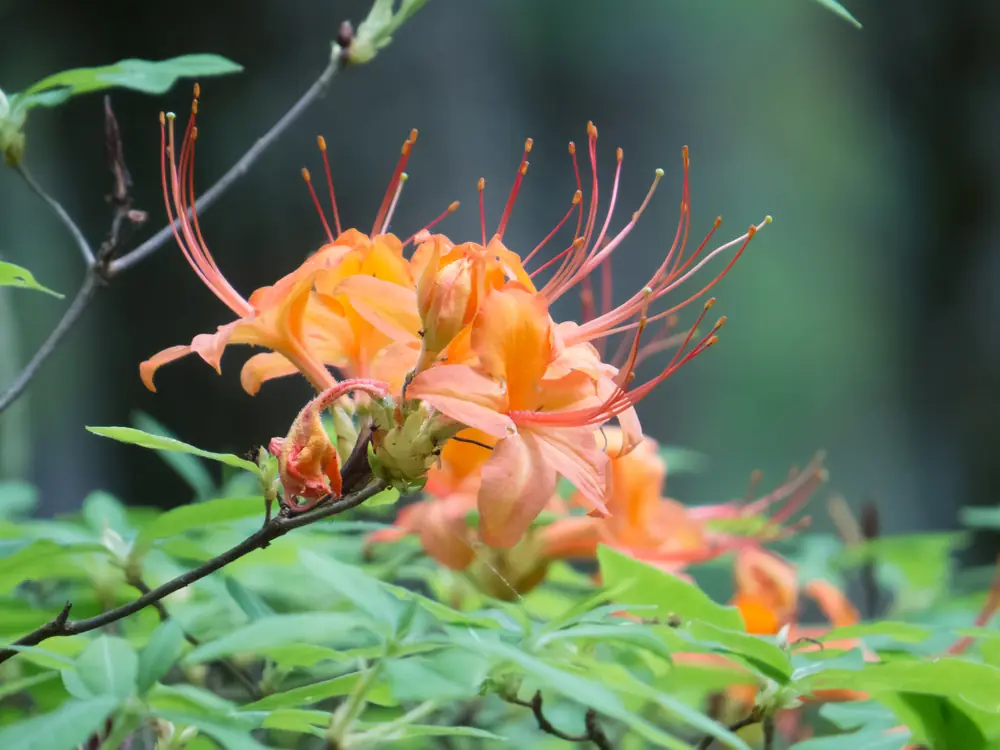
Flame azalea opens in shades from yellow to scarlet before its leaves are fully out, and mountain laurel carries clusters of pink-and-white cups. Both are shrubs of dry slopes and ridges. Georgia sources we found give no exact dates, so expect them to open first at the lower elevations and to follow the cool air upslope.
-
Where the guide points
Early May at Brasstown Bald; April and May at Cloudland Canyon · Brasstown Bald, Tallulah Gorge, Cloudland Canyon, Vogel and Amicalola Falls state parks
North Georgia Living says blooms near Brasstown Bald, including painted trillium and rare orchids on the Jacks Knob Trail, often peak in early May. It recommends the Hurricane Falls Trail at Tallulah Gorge for columbine clinging to rocky outcrops and for several kinds of trillium, and says the Waterfalls Trail at Cloudland Canyon has wildflowers in April and May. Stay on the marked trail. The guide describes these populations as fragile and irreplaceable.
-
Stocked trout streams
Stocking continues from late March through October · Up to 160 streams across north Georgia
The DNR says rainbow, brown and brook trout are stocked in up to 160 streams from late March through October, and the Tallulah River from mid-March to early September. Anglers age 16 and older need both a fishing license and a trout license, available at GoOutdoorsGeorgia.com. Mountain streams can rise fast after storms, so look at the sky upstream too.
A fawn, a fledgling or a bat pup: what should you do in Georgia in May?
Almost nothing, and that is the hardest advice to follow. Georgia DNR says it is best to leave all wildlife, including young birds, rabbits and fawns, where they are found. Step away and give the animal 24 to 48 hours. An animal that seems abandoned usually is not: the adult is nearby even if you cannot see it, and deer mothers stay within hearing distance of their fawns in the first couple of weeks. The DNR adds that keeping most wild animals without a permit is against state law, and that only licensed, trained rehabilitators should care for them. If the animal is still there after the wait, contact a regional wildlife office through GeorgiaWildlife.com; the state’s general questions line is 706-557-3333.
-
White-tailed fawns
Born from late spring into summer · Meadow edges, yards and thickets statewide
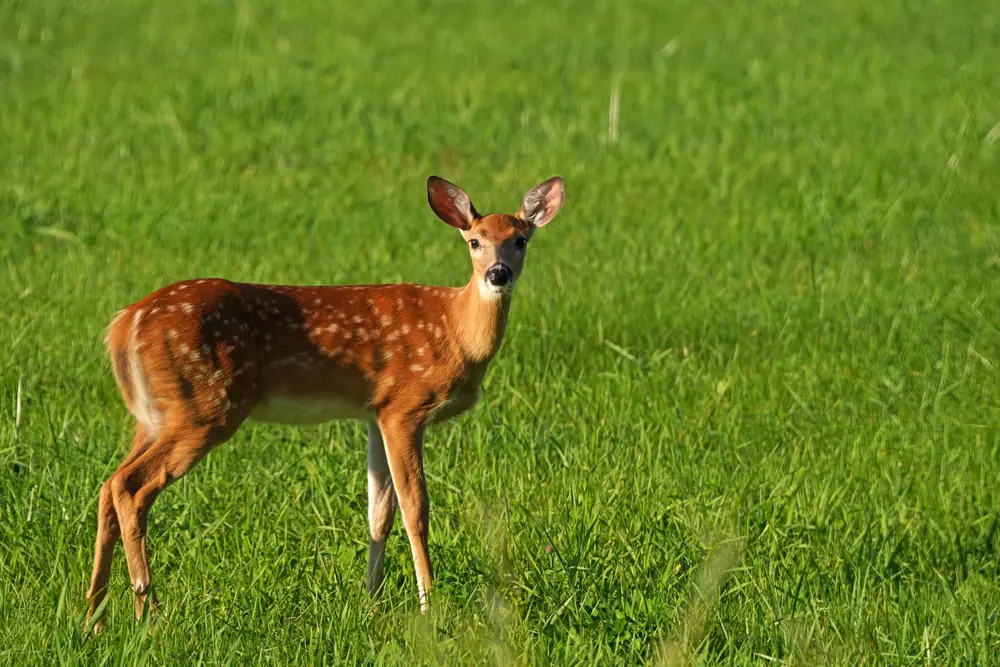
A fawn’s spots and near-absence of scent are its defense, and its mother keeps away on purpose while it lies still. A lone fawn in the grass is almost always fine. Keep dogs leashed, and mow fields and lawns with care.
-
Bat pups
Bats are in maternity season April 1 to July 31 · Attics, barns, bridges and tree cavities
Georgia has 16 species of bats, the DNR says, and the state advises against excluding bats from a building between April 1 and July 31 because the pups cannot fly and may be trapped inside and die. If a colony has to be removed during that window, a licensed nuisance wildlife control operator must do it. Do not handle a bat. Very few carry rabies, but the disease is fatal without prompt care, so anyone who has contact with a bat should follow CDC guidance.
-
Nest boxes you can watch
Season runs through the summer · Backyard and park nest boxes
NestWatch, a project of the Cornell Lab of Ornithology, invites anyone to find nests, record what they see, and add the observations to its database, including with a phone app. Check boxes quickly and from the side, and stay away if you notice parents alarm-calling.
What is ripe, and what glows, in Georgia in May?
The first Georgia peaches and blueberries reach the market this month, and fireflies begin to light the evenings. Each is timed by weather, so the dates below describe a typical year and not a promise.
-
Peaches
Harvest starts in early May; shipping volume builds from mid-May · Middle Georgia orchards around Fort Valley and the Peach Belt
In a May 2024 statement the Georgia Peach Council said growers would pick more than 50 varieties on about 10,000 acres, starting in early May and running into late August, with promotable volume by mid-May. A cold or late spring pushes those dates back, and a warm winter that damages the bloom can shorten the crop. The council is based in Fort Valley and lists growers on its website for buying direct.
-
Blueberries
Picking in early May in a typical year, with a second wave from late May into June · Bacon, Appling and Pierce Counties in southeast Georgia, and Bristol
The Atlanta Journal-Constitution reported in May 2026 that workers were harvesting at a farm in Bristol on May 5 that year. Georgia produced about 116.7 million pounds of blueberries in 2025 and led the country in fresh-market production, per USDA figures quoted in the story. A UGA report from 2012 says Georgia has two harvests, one in April and one in late May or June, depending on variety and region. For u-pick dates, call a farm directly.
-
Fireflies
From warm spring evenings onward · Wet meadows, creek bottoms and yards at dusk
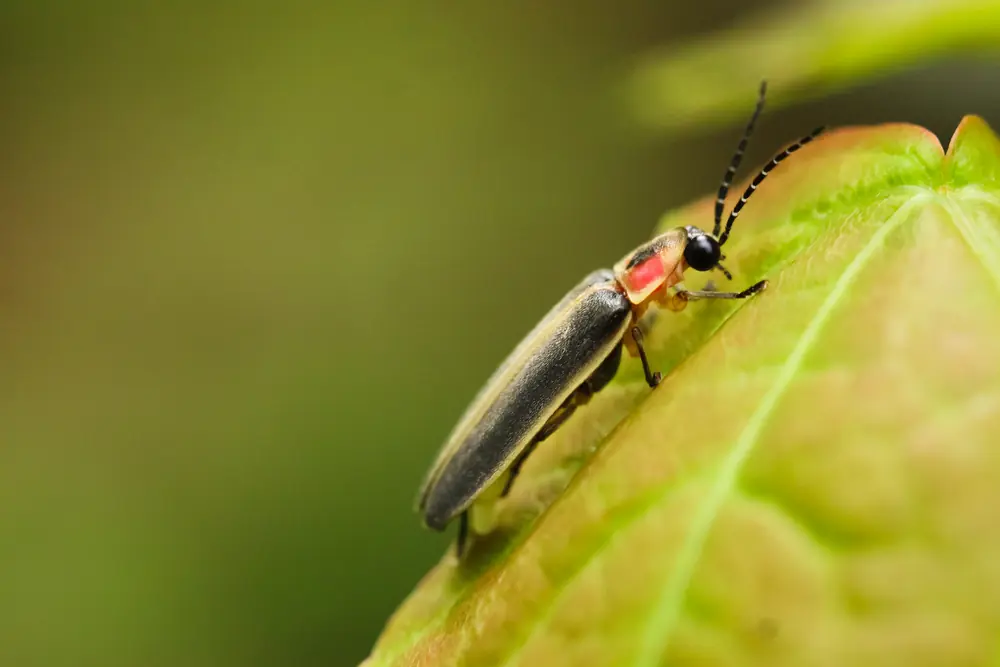
UGA’s Field Report says Georgia has several dozen firefly species. Males patrol at night while females perch on plants and answer with light, and each species has its own flash pattern. Some females copy the flashes of another species to lure males and eat them. Their cold light is nearly 100 percent energy efficient, so it makes no heat, and the larvae, called glowworms, live in moist ground and eat slugs, snails and earthworms. You can tell species apart by their flight style and flash pattern. Turn off porch lights and you will see more.
How warm is May in Georgia, and what does the weather do?
May turns the state from spring to early summer. By NOAA’s 1991–2020 normals, a typical afternoon peaks near 81 °F in Atlanta, 82 °F in Athens and about 85 to 86 °F in Macon, Columbus, Augusta and Savannah, while the north Georgia mountains stay cooler: 76 °F at Blairsville. Mornings run from 50 °F at Blairsville to 63 °F at Columbus and Savannah. Blairsville is the one station in the table that still averages a freezing night in May (0.6 of one).
May 2026 gives one example of how far a single month can stray. The National Weather Service forecast office in Peachtree City summarized it in two sentences: temperatures about a degree below normal and precipitation about 4 inches above normal across north and central Georgia.
| Station | Average high | Average low | Rain and melted snow | Freezing nights |
|---|---|---|---|---|
| Blairsville | 76.1 °F | 50.0 °F | 4.49 in | 0.6 |
| Athens | 82.3 °F | 58.6 °F | 3.28 in | 0.0 |
| Atlanta | 81.1 °F | 61.3 °F | 3.56 in | 0.0 |
| Augusta | 85.9 °F | 59.6 °F | 3.05 in | 0.0 |
| Macon | 85.8 °F | 60.0 °F | 2.65 in | 0.0 |
| Columbus | 85.1 °F | 63.1 °F | 3.24 in | 0.0 |
| Savannah | 84.7 °F | 63.4 °F | 3.62 in | 0.0 |
In the Peachtree City office’s climatology for north and central Georgia, tornadoes can happen in any month but cluster in the spring, and the strongest are likelier in April than May. Its yearly averages are about 6 tornado days, 7 hail days and 19 days of damaging wind, and wind events pile up most in July. Storms of every kind favor the afternoon and early evening hours. Thunderstorms also bring lightning: the National Weather Service reports about 20 lightning deaths a year in the United States, and the only safe place is inside a building or a hard-topped vehicle. For the outlook beyond this month, see the Climate Prediction Center’s seasonal outlook page, refreshed every month. Our weather page sends you on to the forecast for your town.
Can Georgia still get a freeze in May?
Only in the northern mountains, and rarely. The figures below are NOAA’s 1991–2020 normals for each city’s main station. The middle column gives the usual date of a spring’s final 32 °F night. At Blairsville that date is April 26, and by May 11 nine years in ten have seen their last freeze, so about one year in ten can still bring a frost afterward. Everywhere else on the list, freezing is over by April 19 in nine years out of ten, and Savannah, Columbus and Valdosta are clear by the last days of March.
-
Mountain gardens
Median April 26; nine in ten done by May 11 at Blairsville · Blairsville and the high valleys
Only one spring in ten is done with freezing by April 8 at Blairsville. Cover tomatoes and beans if a late cold night is forecast, since a spring freeze after leaf-out is the usual way an otherwise warm season turns costly.
| Station | One year in ten | Median | Nine years in ten |
|---|---|---|---|
| Blairsville | Apr 8 | Apr 26 | May 11 |
| Rome | Mar 13 | Apr 1 | Apr 19 |
| Atlanta | Mar 4 | Mar 26 | Apr 13 |
| Athens | Mar 2 | Mar 23 | Apr 10 |
| Macon | Feb 28 | Mar 21 | Apr 7 |
| Columbus | Feb 11 | Mar 5 | Mar 24 |
| Savannah | Feb 4 | Mar 2 | Mar 25 |
| Valdosta | Feb 15 | Mar 10 | Mar 31 |
Look up your own town in the Georgia frost tables.
How much daylight does Georgia gain in May?
Roughly 40 minutes over the month, or 1.3 to 1.5 minutes a day, with the gain slowing as the summer solstice approaches. Atlanta’s day grows from 13 hours 32 minutes on May 1 to 14 hours 14 minutes on May 31, a gain of 42 minutes. Blairsville gains the most (44 minutes) and Valdosta the least (37). Clocks stay on Eastern Daylight Time statewide. Atlanta’s sun comes up at 6:49 a.m. and goes down at 8:21 p.m. on May 1, then comes up at 6:28 a.m. and goes down at 8:42 p.m. on May 31, per the U.S. Naval Observatory; Savannah’s days run 6:38 a.m. to 8:05 p.m. and 6:19 a.m. to 8:25 p.m.
| City | May 1 | May 31 | Gained | Per day |
|---|---|---|---|---|
| Blairsville | 13 h 36 m | 14 h 20 m | 44 min | 1.5 min |
| Rome | 13 h 34 m | 14 h 17 m | 43 min | 1.4 min |
| Atlanta | 13 h 32 m | 14 h 14 m | 42 min | 1.4 min |
| Athens | 13 h 32 m | 14 h 15 m | 43 min | 1.4 min |
| Macon | 13 h 29 m | 14 h 09 m | 40 min | 1.3 min |
| Columbus | 13 h 28 m | 14 h 08 m | 40 min | 1.3 min |
| Savannah | 13 h 26 m | 14 h 06 m | 40 min | 1.3 min |
| Valdosta | 13 h 23 m | 14 h 00 m | 37 min | 1.2 min |
For your own town and date, use the daylight calculator.
What can you see in Georgia’s night sky in May 2027?
Dust from Halley’s Comet streaks into the dark of a new moon, the third of four spring full moons doubles as a Blue Moon, and Mercury makes a rare good evening showing. Georgia keeps Eastern Daylight Time all month, so every clock time below is EDT. Planet positions and pairings are our own calculations, checked against Sea and Sky and the U.S. Naval Observatory.
-
Eta Aquariid meteors at a moonless peak
Active from about April 19; May 5 through 7 are the best mornings · East and southeast, in the final hour or two before dawn
The new moon arrives May 6 at 6:58 a.m., so the sky is free of moonlight when the shower peaks. Sea and Sky dates the maximum to the night of the 6th into the 7th and says a dark Southern Hemisphere site can see up to 60 an hour against roughly 30 in the north. Because the radiant in Aquarius climbs only shortly before sunrise, Georgia watchers get a short window: civil twilight starts near 6:18 a.m. in Atlanta on May 5 (Naval Observatory), and the sky is already brightening by then. Set expectations at a meteor every few minutes at best. The grains come from Halley’s Comet.
-
Flower Moon, and a Blue Moon by the seasonal count
Full at 6:59 a.m., Thursday, May 20; look the evening of Wednesday, May 19 · Low in the east-southeast at sunset
At the instant of fullness the Moon is already below the horizon in Georgia (it sets in Atlanta at 6:16 a.m.), so the best look is the evening before. On May 19 it comes up at 8:15 p.m. in Atlanta, shortly before the 8:34 p.m. sunset, and a night later it rises at 9:16 p.m. Folklore calls May’s moon the Flower Moon. Because spring 2027 holds four full moons and this is the third, Sea and Sky labels it a Blue Moon under the older seasonal rule. Counting two in a single calendar month, the newer rule, 2027 has none. The Moon will not look blue.
-
Mercury after sunset
Farthest east of the Sun on May 28; try May 12 to early June · Low in the west-northwest, about 45 to 90 minutes after dark falls
Mercury stands 22.8 degrees from the Sun on the 28th (Sea and Sky lists 22.9), and the evenings of the 27th and 28th are about equally good. Atlanta’s sun sets at 8:40 p.m. on the 27th, which by our estimate puts the planet well placed from roughly 9:25 to 10:10 p.m. Its brightness drops from about magnitude minus 0.6 in mid-May to about plus 0.9 at the start of June, so go earlier rather than later in the window. A clear western skyline and a pair of binoculars make it easy.
-
Venus and Saturn in the dawn glow
Nearest on May 7; check the mornings of May 6 and 8 · Barely above the eastern horizon before sunrise
The two are 0.6 degree apart on the 7th, an afternoon moment you cannot see, so use the mornings on either side, when about a degree separates them. Venus lifts off the horizon about an hour before the Sun. Saturn is dimmer, and the pair calls for a flat eastern view and ideally binoculars. Count it a challenge, not an easy target.
-
Jupiter and Mars after dusk
The Moon sits near Jupiter on May 12 and near Mars on May 13 · South to southwest in the early evening, both in Leo
Jupiter is the brilliant steady point in Leo and sets in the small hours, a little earlier every week. The half-lit Moon lies about 1.2 degrees from it on the 12th and about 3 degrees from dimmer Mars on the 13th. By our check, the Moon does not pass in front of either planet anywhere in the United States.
-
Milky Way core season opens
Moonless stretches near the first and last days of the month · Low in the south in the hours before dawn
Our figures for 40 degrees north show the galactic center high enough, with a dark moonless sky, for up to nearly four hours between May 1 and 14 and again between May 25 and 31. Georgia lies farther south, which lifts the core higher. Leave the town lights behind and wait about 20 minutes for your eyes to adapt.
| Phase | Date | Time |
|---|---|---|
| New moon | Thursday, May 6 | 6:58 a.m. |
| First quarter | Thursday, May 13 | 12:44 a.m. |
| Full moon (Flower Moon) | Thursday, May 20 | 6:59 a.m. |
| Last quarter | Friday, May 28 | 9:58 a.m. |
No eclipses occur in May. The Perseids are still months off. Check any night on our moon phases page, and use the cloud guide when the sky is patchy.
What can Georgia families do outside in May 2027?
- Hold a bird morning for World Migratory Bird Day. The organizers’ page lists no 2027 date as of this writing. Confirm the day at their website before you plan, and write down every bird you hear.
- Join a turtle watch. Turn out beachfront lights if you stay near the coast, and if you cross a causeway near high tide, slow down for terrapins.
- Watch a nest box. NestWatch welcomes anyone, and a notebook works if you do not want the app.
- Count fireflies. Pick a yard or field, note the date of the first flash and how the lights move, and compare the next evening.
- Report a hummingbird. Add yours to the Journey North maps.
- Fill a basket. Look up a pick-your-own blueberry or peach farm and call ahead; harvest dates move with the weather.
- Remember Memorial Day, Monday, May 31. Beaches and parks fill up, so arrive early.
Georgia State Parks posts its programs on its events calendar, but we found no May 2027 listings yet, so check the park you plan to visit.
Rain can cancel a program, so call ahead. Browse every state in our nature guides; Georgia’s earlier spring months are on the March and April pages.
Safety notes for May in Georgia
- Spring turkey season ends May 15. The state’s 2027 regulations list private land from March 27 through May 15 and public hunting areas and national forest land from April 3 through May 15, with a limit of one gobbler a day on private land and two for the season. The blaze-orange rule covers deer, bear and hog hunts in the gun and primitive-weapon seasons and does not name turkey, but wearing something bright on public land is still wise before the 15th.
- Burning is banned in 54 north Georgia counties from May 1 to September 30. A permit is needed for agricultural, land-clearing and machine-piled burns elsewhere and expires at day’s end, so ask each time at 1-800-GA-TREES (428-7337). Hand-piled yard debris needs no permit, but local ordinances still apply.
- Ticks. The CDC says activity runs April through September. Use an EPA-registered repellent, treat boots and clothing with 0.5 percent permethrin, do a full-body check, and rinse off in the shower soon after you come inside.
- Snakes. Georgia has 47 species, seven of them venomous: copperhead, northern and Florida cottonmouth, eastern coral snake, eastern diamond-backed, pigmy and timber rattlesnake, per the DNR. Look before you step or reach, and leave any snake alone.
- Thunderstorms. Go inside at the first thunder. Do not wait for rain.
- Beaches. The National Weather Service warns that fair, sunny beach days can still have rip currents. Swim by a lifeguard and keep an eye on the surf.
- Baby animals, bats and nesting birds. Leave fawns, fledglings and bat pups where they are, keep your distance from beach-nesting birds, and do not handle bats.
- Trout streams. Mountain creeks run high and cold after storms.
Hurricane season starts June 1, so May is a good month to look over your plan; the National Hurricane Center posts preparedness guides.
Sources (44)
- Georgia DNR: first loggerhead sea turtle nest of 2025 found on Jekyll Island
- Georgia DNR: sea turtle program
- Georgia DNR: give beach-nesting birds space
- Center for Conservation Biology: Georgia coast critical for migrating red knots (2018)
- The Current: Georgia’s coast provides a critical refuge for red knots (May 2023)
- Jekyll Island Foundation: diamondback terrapin causeway report, 2024 season
- Georgia DNR: conserving Georgia’s diamondback terrapins
- Georgia DNR: report wading bird nest colonies
- U.S. Fish and Wildlife Service: Piedmont National Wildlife Refuge
- Journey North: hummingbird migration and sightings
- North Georgia Living: guide to the best wildflower displays this spring
- National Park Service: blooming shrubs of the Great Smoky Mountains
- Georgia DNR: trout fishing and stocking
- Georgia DNR: wildlife belongs in the wild, leave wildlife where found
- Georgia DNR: excluding bats from your house
- NestWatch, Cornell Lab of Ornithology
- Fruit Growers News: Georgia Peach Council expects a bumper crop (May 2024)
- Georgia Peach Council
- Atlanta Journal-Constitution: blueberries taking a bigger bite of business in the Peach State (May 2026)
- UGA CAES Field Report: frozen buds (blueberries, May 2012)
- UGA CAES Field Report: fireflies add magic to spring, summer evenings
- NOAA NCEI: 1991–2020 monthly normals for Georgia stations (data API)
- NWS Peachtree City: May 2026 climate summary for north and central Georgia
- NWS Peachtree City: severe weather climatology (tornadoes, hail and wind)
- National Weather Service: lightning safety
- National Weather Service: rip current safety
- Climate Prediction Center: three-month outlooks
- U.S. Naval Observatory: moon phases for 2027 (data API)
- U.S. Naval Observatory: sun and moon data for Atlanta, May 1, 2027
- U.S. Naval Observatory: sun and moon data for Atlanta, May 5, 2027
- U.S. Naval Observatory: sun and moon data for Atlanta, May 19, 2027
- U.S. Naval Observatory: sun and moon data for Atlanta, May 20, 2027
- U.S. Naval Observatory: sun and moon data for Atlanta, May 27, 2027
- U.S. Naval Observatory: sun and moon data for Atlanta, May 31, 2027
- U.S. Naval Observatory: sun and moon data for Savannah, May 1, 2027
- U.S. Naval Observatory: sun and moon data for Savannah, May 31, 2027
- Sea and Sky: astronomy calendar of celestial events, 2027
- Georgia DNR hunting regulations: big game seasons, dates and limits (spring turkey 2027)
- Georgia DNR hunting regulations: hunter orange and blaze pink
- Georgia Forestry Commission: burn permits and notifications
- CDC: preventing tick bites
- Georgia DNR: snakes of Georgia
- World Migratory Bird Day
- Photos via Wikimedia Commons; licenses and photographers are credited under each picture