What to look for in nature in Hawaii this March
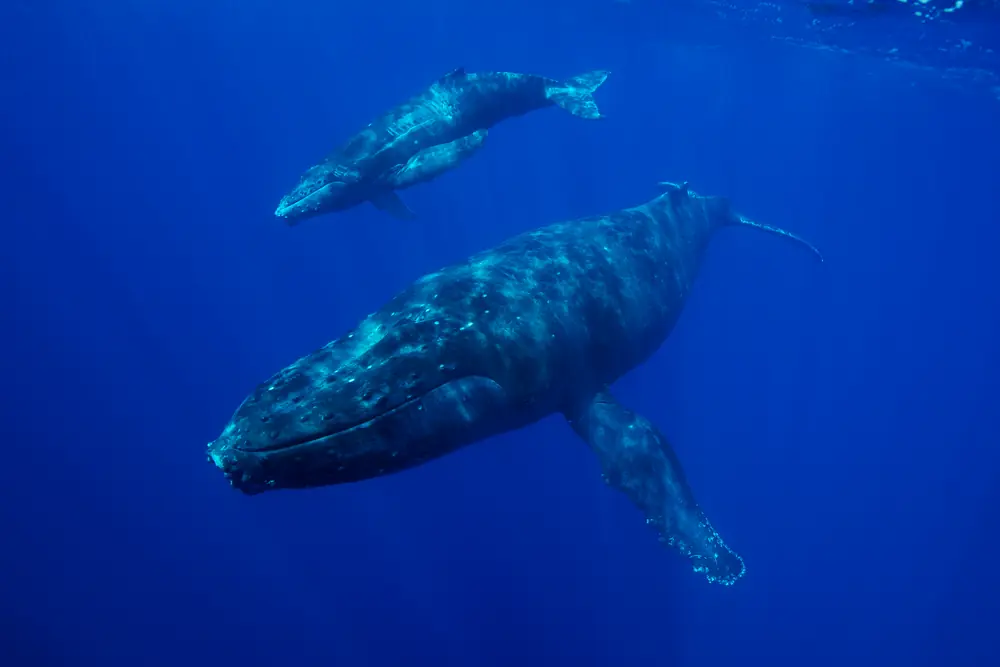
March is when Hawaii’s winter crowd begins to leave and its summer nesters begin to arrive. The humpbacks that filled the channels since November are thinning out as they head back toward Alaska, and the state’s last shore count of the season, on Saturday, March 27, usually shows it. As the whales go, wedge-tailed shearwaters return to their burrows along the coast and fill the dusk with moaning calls, ʻio on Hawaiʻi Island turn to the business of eggs, Hawaiian stilts look for mudflats to nest on, and monk seal pups, which are born from March through August, begin to appear on beaches. The kōlea, still on the lawns, are changing into the black-bellied plumage they wear on the tundra. This guide follows the month island by island, from the shoreline to the summits.
Other months in Hawaii: October, November, December, January, February, April.
Start here

- Count whales on March 27. The third and last statewide shore count of the season is Saturday, March 27, 2027, from 8 a.m. to noon. Maui volunteers register through the Pacific Whale Foundation (registration opens December 14, 2026); the other islands register at oceancount.org.
- Listen at dusk for shearwaters. From mid-March, go to a coastal bluff or dune just as dusk settles and listen for a long, groaning moan coming from the ground. That is an ʻuaʻu kani, a wedge-tailed shearwater, back at its burrow.
- Watch one kōlea change. Pick a lawn or ballfield with a regular kōlea and look again every few days. Over the weeks before departure the bird’s face and belly darken to black edged with white, and a note of the last day you see it is useful to the Kōlea Count.
Each March sighting has a home in the Naturalist’s Field Journal: mammal watch for the last whale count, nest observed for one shearwater burrow or ʻio pair, birds I have seen for stilts and kōlea, a map of sounds for a dusk of shearwater calls, the same place twice for a beach or pond before and after the wet season, and dusk and dawn watch for Jupiter, Mars and the Worm Moon.
Regions used below: Kauaʻi; Oʻahu; Maui, Molokaʻi and Lānaʻi; Hawaiʻi Island; The high summits: Maunakea, Mauna Loa and Haleakalā.
Is March still a good month to see humpback whales in Hawaii?
Yes, but the crowd is thinner every week. According to the sanctuary’s boating guide, the peak usually runs from January to March and the whole season from November to May, so a March whale is still very likely to be seen from a headland or a boat, only not as often as in February. The shore counts put numbers on the drop. In 2026 the Sanctuary Ocean Count logged 1,954 whales in January and 1,935 in February, and then 436 in March, which the sanctuary’s summary put at 77.7 percent below January. It said the low March total reflected whales returning to their feeding grounds in Alaska, and also named Kona low storms that month as a reason for poor viewing.
That second reason matters when you read any single March number. The table gives the final count of each of the last four seasons. The 2023 count, on a clear and calm morning, found more than twice as many whales as the 2026 count, which was held in strong wind and whitecaps. Both facts are true at once: fewer whales are around in late March, and rough water hides many of those that remain.
-
The final shore count
Saturday, March 27, 2027, 8 a.m. to noon · Headlands and beach parks on Kauaʻi, Oʻahu, Molokaʻi, Hawaiʻi Island, Maui and Lānaʻi
The Sanctuary Ocean Count and the Pacific Whale Foundation’s Great Whale Count both list March 27 as their third and last 2027 count, after January 30 and February 27. Volunteers scan a set patch of sea and log each whale sighting in quarter-hour blocks. Maui registration opens on December 14, 2026, through the foundation, and the other islands sign up at oceancount.org. Bring water, sun protection and a chair, since the four hours go slowly when few whales surface.
-
Give the late whales room
Until the season closes in May · Anywhere on the water
The sanctuary’s rules do not relax as the numbers fall. Stay at least 100 yards from any humpback, since closer is illegal, and keep to six knots or less once you are inside 400 yards. Open-water transit is capped at 15 knots. To report a collision or an injured whale, call NOAA’s statewide line at 888-256-9840 or hail the Coast Guard on VHF channel 16.
| Count date | Statewide total | Sites | Conditions reported |
|---|---|---|---|
| Mar 25, 2023 | 1,121 | 42 | Clear and sunny skies with calm seas |
| Mar 30, 2024 | 855 | 46 | Rain, small to medium swells and wind at several sites; a few Kauaʻi sites ended early |
| Mar 29, 2025 | 714 | 41 | No weather note in the summary |
| Mar 28, 2026 | 435 | 37 | Moderate to strong wind and whitecaps; some sites cancelled after severe weather |
Which seabirds are back on their nesting grounds in March?
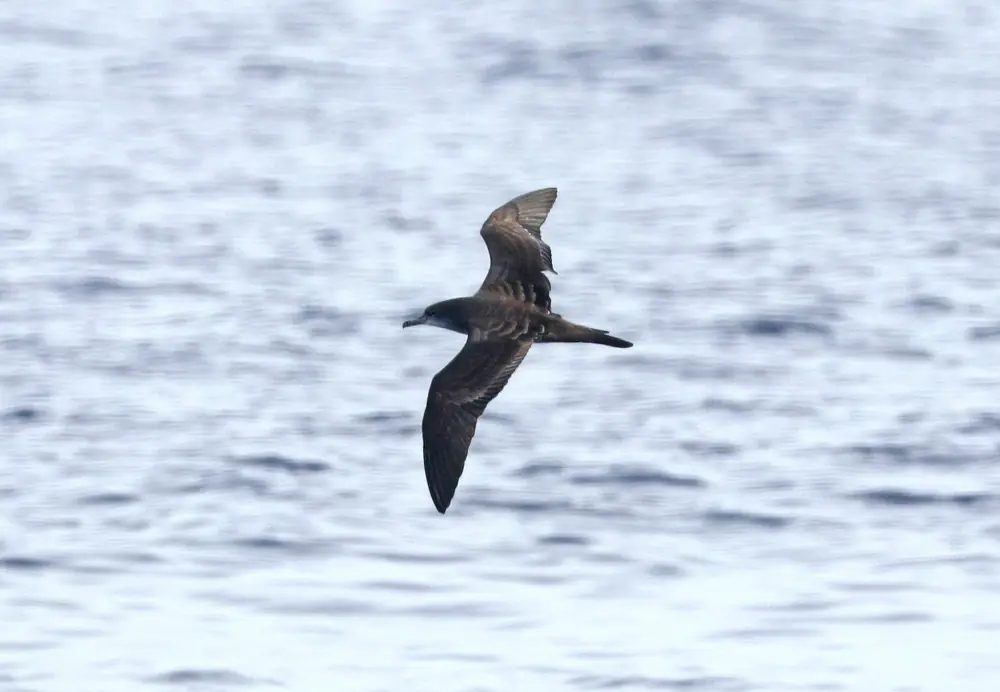
Three of Hawaii’s burrow and ground nesters are busy at once. The newest arrivals are the ʻuaʻu kani, or wedge-tailed shearwaters. The Kauaʻi refuges’ own website says they come back to the Kīlauea Point area around mid-March, reunite with mates, claim burrows under rocks and vegetation, and then wait until June to lay a single egg; the chick hatches in August. Their name means “moaning petrel,” and the refuge notes that they are most active in twilight.
Two other seabirds are already well into their year. Mōlī, the Laysan albatross, lay in November and December and their chicks do not fly until July, according to the state wildlife division, so March falls in the middle of the chick months. And on Haleakalā, ʻuaʻu, the Hawaiian petrels, are back on the summit slopes, where the park says they are present from February through November.
-
Shearwater calls at dusk
From mid-March, in the half hour after sunset · Coastal bluffs and dunes with burrow colonies, such as Kaʻena Point on Oʻahu and the Kīlauea Point area on Kauaʻi
Stand still at a safe distance from the colony and let your eyes adjust. The Kauaʻi refuges describe the birds as returning from the sea in the twilight and calling as they come, so the first sign is usually sound. Stay on the trail so that you do not step on burrows.
-
Mōlī chicks on the nest
Through spring; the chicks fly in July · Kaʻena Point Natural Area Reserve on Oʻahu and the north shore of Kauaʻi
DLNR lists the two main-island colonies as Kīlauea Point and Kaʻena Point, with a third on Lehua off Niʻihau. At Kaʻena Point the reserve counts about 2,000 seabirds in the breeding season, including albatrosses, wedge-tailed shearwaters and white-tailed tropicbirds. There is no vehicle access in the reserve, so you arrive on foot or by mountain bike.
-
ʻUaʻu calling over the crater
After dark, February through November · Summit District of Haleakalā National Park, 7,000 to 10,000 feet
The park describes the call as “oo-A-oo,” along with yapping like a small dog, and says the largest known nesting colony is on the summit slopes, in burrows from three to thirty feet long. The park estimates 3,000 to 4,000 breeding pairs. Each female lays only one egg a year. Dress for a freezing, windy night, and use red light to keep your eyes adjusted.
Dogs and cats are the shearwaters’ worst enemies near the coast. The Kauaʻi refuges’ site asks visitors to keep dogs leashed, cats indoors and not to feed feral cats. Kīlauea Point National Wildlife Refuge itself was closed to the public in early October 2026 for hurricane repairs and lighthouse restoration; when it reopens, visits will be by reservation on Recreation.gov, so check its page before you plan around it.
When do ʻio, the Hawaiian hawks, start nesting on Hawaiʻi Island?
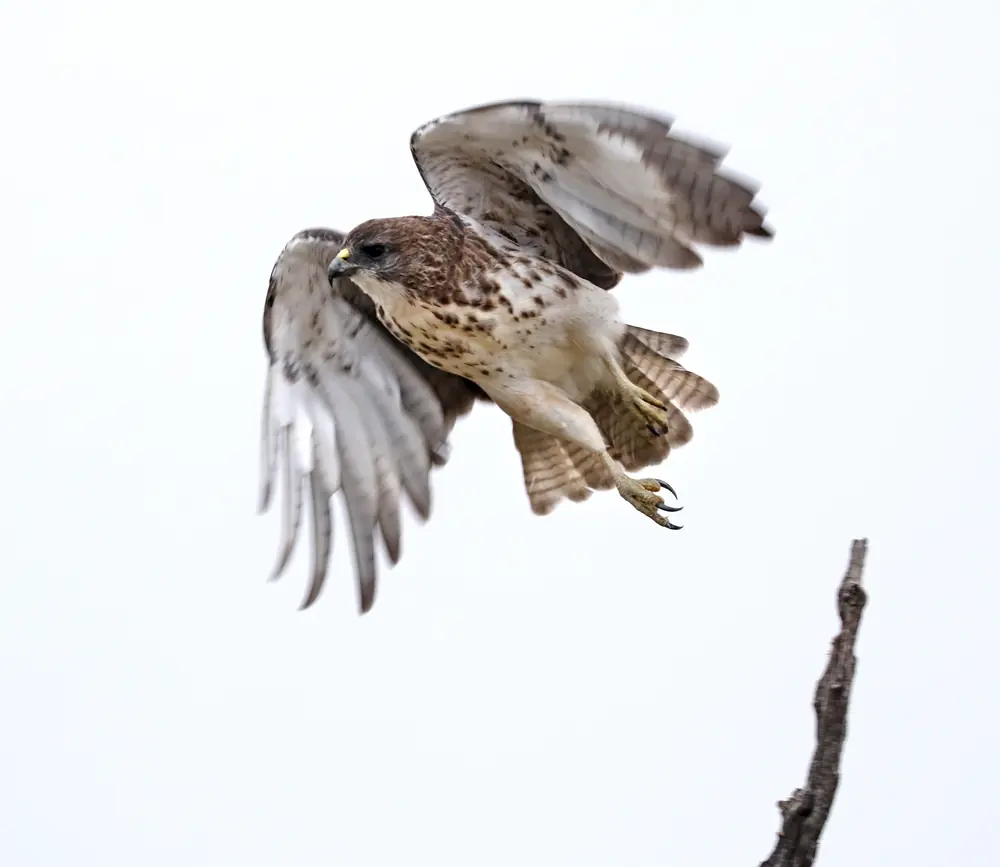
March is when the eggs start to appear. The U.S. Fish and Wildlife Service says ʻio pairs build their nests in spring, that egg-laying typically begins in March, and that the eggs hatch by July after about 38 days of incubation shared by both parents. The Service says males perform elaborate aerial acrobatics from winter into spring and that these displays can be seen from the ground. The ʻio is a hawk found nowhere in the wild except Hawaiʻi Island, where it holds some 2,372 square miles, about 58.7 percent of the island, in both native ʻōhiʻa forest and farm country. It has been federally listed as endangered since 1967, and the Service describes the population as low but relatively stable.
-
A display over the pasture
March, on sunny mornings · Forest edges, ridgelines and ranchland on Hawaiʻi Island
Look for a hawk that climbs, folds and dives again over the same ground. The pair is probably marking a territory, and the Service calls ʻio “quite territorial” around nesting and hunting areas. Binoculars make the watching easier.
-
Watch from far off
Through nesting season · Anywhere near a stand of tall trees where hawks keep returning
Hawks that circle and call overhead may be defending a nest, so move on quietly. Do not go looking for a nest, and keep dogs on a leash.
Are there still nēnē goslings in March?
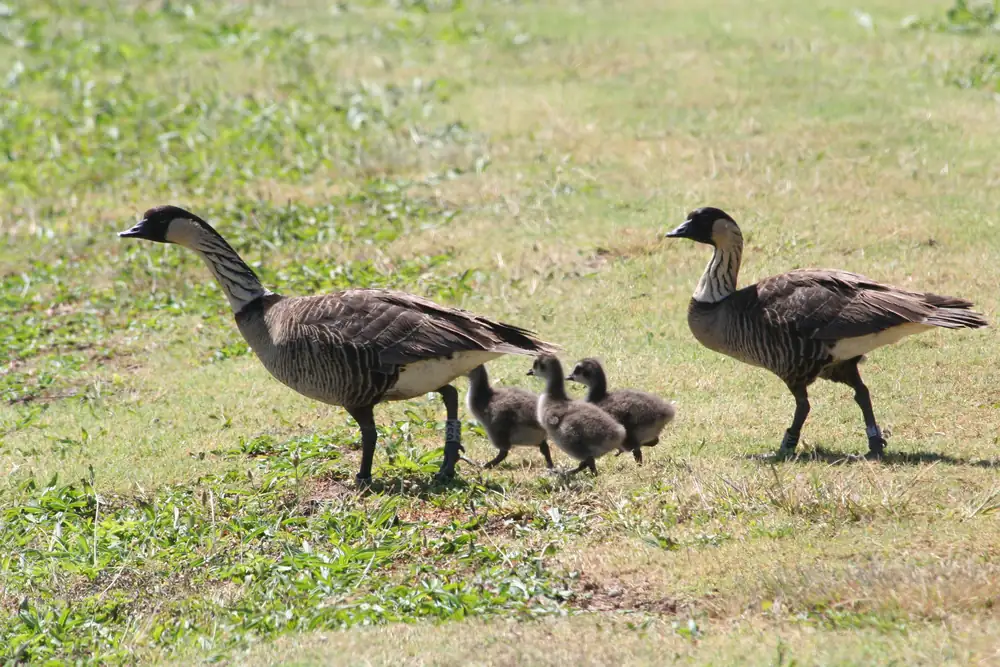
A few, at the tail end of the season. The state wildlife division says nēnē may nest in any month except May, June and July, though most nesting happens from October to March, and clutches are usually laid from October through December. An egg hatches after about 30 days, the goslings can feed themselves almost at once, and young birds stay close to their parents for as long as a year, so families with young are still a possible sight in March.
Once down to about 30 birds in the 1950s, the nēnē now numbers several thousand in the wild. In 2019 the federal government moved it from endangered to threatened, but it remains endangered under state law. It lives on four islands, Hawaiʻi, Maui, Kauaʻi and Molokaʻi, from sea level to 7,800 feet.
-
Watch the road
Year-round, but especially around nesting families · Roads through Hawaiʻi Volcanoes National Park, Haleakalā National Park and Kauaʻi’s north shore
The national park on Hawaiʻi Island reports that vehicle strikes are the main killer of adult nēnē in the park. Drive slowly near geese on or beside the pavement, and never feed them: the park explains that fed birds learn to beg and to approach moving cars.
-
The five keeps
Any time you meet nēnē · Parks, golf courses and shoreline lawns
DLNR boils the advice down to five things: keep your food to yourself, keep dogs leashed, keep cats indoors, keep your speed down near roads, and keep your distance from the birds.
-
Hanalei from the viewpoint
Tuesday through Saturday, 8:30 a.m. to 4:30 p.m. · The public viewpoint beside Hanalei National Wildlife Refuge, Princeville, Kauaʻi
The refuge itself is closed to the public to protect its birds, which include nēnē, Hawaiian ducks, coots and stilts. The nearby viewpoint is open Tuesday to Saturday.
When do Hawaiian stilts start nesting, and are the winter ducks still around?
Both: the nesters are just beginning and the visitors have not quite gone. DLNR says the aeʻo, or Hawaiian stilt, nests from March to August, with a peak in May and June. At Keālia Pond on Maui, the refuge says the season begins when the water level in the ponds drops and exposes mudflats, usually in late March or early April. The birds then lay four brown-speckled eggs and sit on them for about 24 days. The ʻalae keʻokeʻo, the Hawaiian coot, prefers deeper water for its breeding season, which the refuge puts at December to March, so its nesting is mostly finished.
The same ponds hold more than thirty species of waterfowl and shorebirds in winter, some arriving from Alaska, Canada and occasionally Asia. The refuge calls August to April the best time to see them, which makes March one of the last good months.
-
Keālia boardwalk
Daily, 6:30 a.m. to 7 p.m. · Keālia Pond National Wildlife Refuge, Maui
The coastal boardwalk is open every day. The visitor center keeps shorter hours, weekdays from 9 a.m. to 3 p.m. (opening at noon on Mondays) and the first Saturday of each month, which falls on March 6 and April 3 in 2027. Dogs, drones and fishing are not allowed.
-
Bird tours have ended on Oʻahu
November through February only · James Campbell National Wildlife Refuge, Oʻahu
The refuge says its guided bird tours run from November through February only, so there is no March tour. Look for the Friends of Oʻahu Refuges announcement of next winter’s dates in the fall.
-
Give nesting stilts room
From late March · Ponds, taro fields and mudflats near the coast
DLNR says the birds defend their nests by calling, diving at intruders and acting out a broken-wing display to lure predators away. If a stilt starts that routine, you are close to its nest; turn back the way you came. Parts of Keālia’s Kanuimanu ponds may also be closed to visitors from April to July.
Why are the kōlea turning black before they leave?
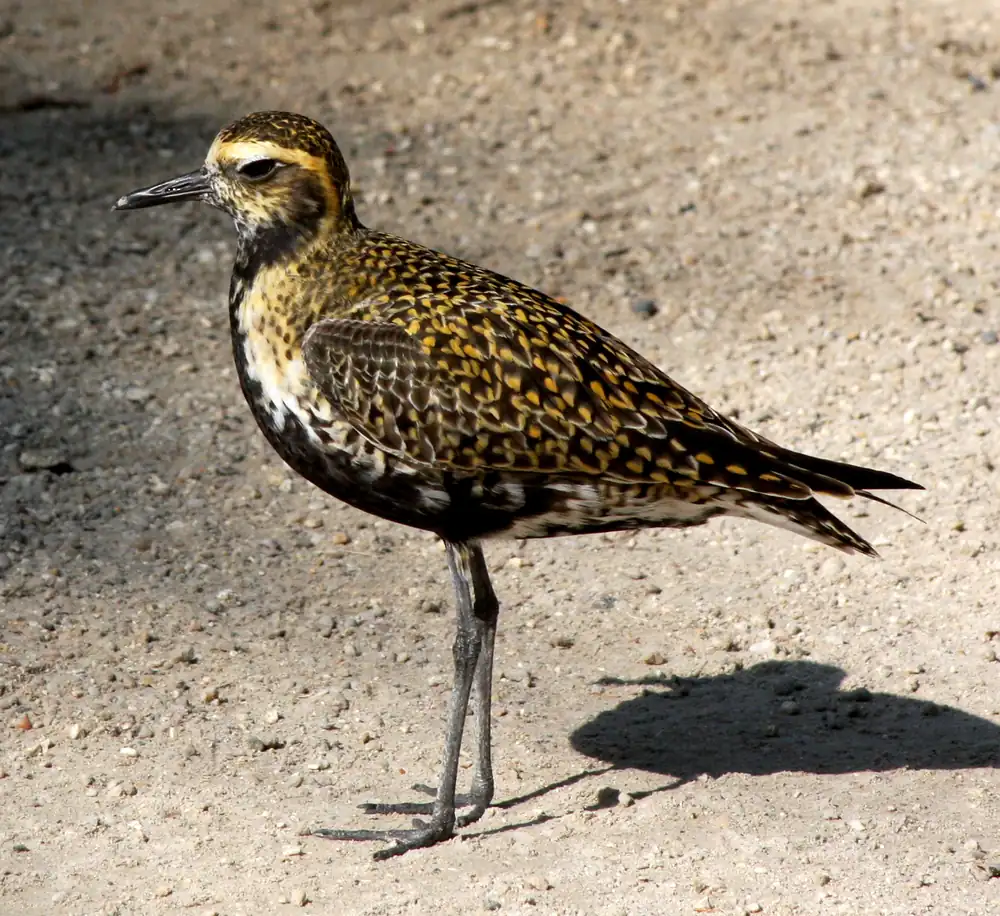
They are putting on their breeding plumage. Through the winter, kōlea, Pacific golden plovers, are speckled brown and gold, easy to overlook on a grass verge. As spring comes they molt into a startling look, with a black belly, face and throat outlined in bright white, and then they leave for Alaska. The Kōlea Count places the departure in April and May.
Hawaiʻi Audubon’s Kōlea Count project divides the year into three watching periods: arrival from July 1 to November 30, winter counts from December 1 to March 31, and departure in April and May. March is therefore the last month of the winter count, and the project asks for the date each bird leaves and where birds gather before they go.
-
The same bird, a new look
Late March and April · Lawns, golf courses, ballfields and pastures on every island
Because kōlea hold the same patch of ground all winter, you can follow one bird as it changes. Take a photo from the same spot each week and compare.
-
Log the last day
March 31 ends the winter count; April and May are the departure period · koleacount.org
If your bird is there on March 31, it counts for the winter total. If it is gone in April, record the date you last saw it. The project’s guidelines ask for the departure date and for any place where birds congregate before leaving.
When do Hawaiian monk seal pups arrive, and how far back should you stay?
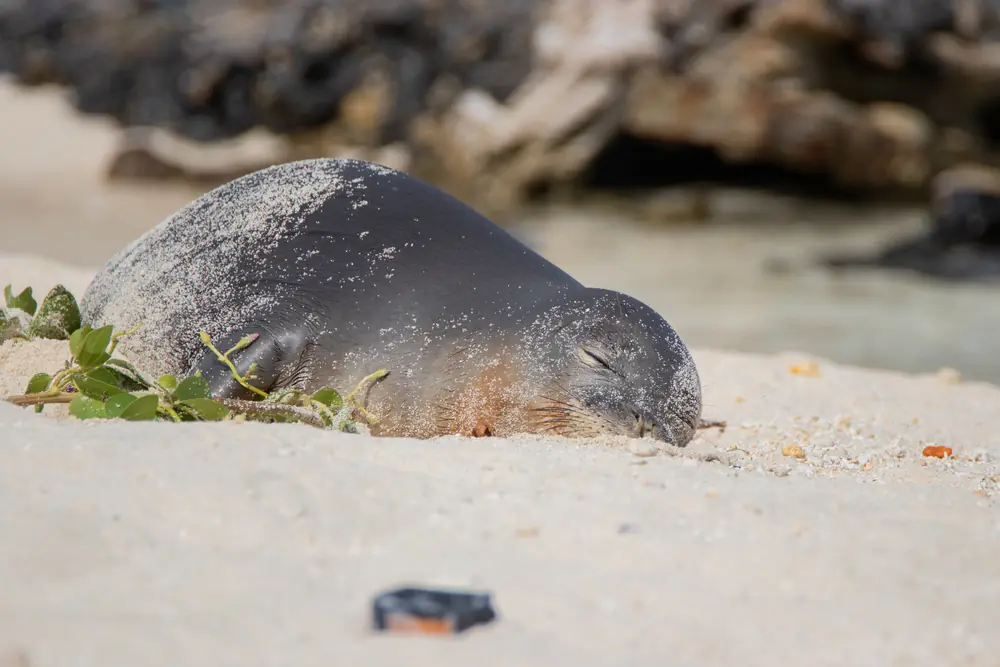
Pups are born in every month, but DLNR says March through August is when most of them arrive. In the main islands, 34 pups were born in 2024. NOAA Fisheries puts the main-island population at about 400 seals, out of roughly 1,600 in the whole species. A mother stays on the beach and nurses her pup for five to seven weeks, and she can be protective of it.
The state’s advice for pups is to give a mother and pup at least 150 feet on land and in the water. NOAA’s general rule of thumb for any resting seal is 50 feet. When you cannot tell if a seal has a pup, use the greater distance.
-
A beach with a rope
Any day, but especially on calm mornings · Quiet sandy beaches on every main island, including Kaimana Beach in Waikīkī
If a beach is roped off or signed for a seal, stay behind the line. A zoom lens beats a closer step.
-
Dogs on a leash
Always at the beach · Any shoreline
DLNR’s advice is to keep dogs leashed whenever you are on the beach, since you never know where a seal may be. NOAA lists dog attacks and disturbance of sleeping seals among the main threats to the main-island population.
Is March still the rainy season in Hawaii?
It is the back half of it. The Western Regional Climate Center reports that below 2,000 feet winter brings the most rain, and the totals fall off as summer approaches. Over the same stretch the trade winds are getting steadier: the center puts their frequency at 50 to 80 percent from October through April and at 80 to 95 percent from May to September. March therefore swings between two moods, a breezy trade-wind day with showers on the windward side and a wet, muggy spell when a low pushes in from the west.
The table gives an average March at eight stations. The gap between windward Hilo and leeward Keāhole is the whole story of Hawaii’s climate in two numbers. Hilo gets about 12.7 inches of rain on 14.9 days, while Keāhole, on the opposite Kona side of the island, gets less than an inch. For the weather as it happens, see how to read the forecast and the sky.
-
A Kona storm can still arrive
Any time through spring · All islands, especially leeward coasts
The climate center names a March 1958 storm that dropped 17.41 inches of rain in 24 hours in downtown Honolulu. The sanctuary’s 2026 count summary says Kona low storms in March 2026 reduced viewing. A well-timed low can drench the dry side of an island and cancel a field trip.
-
Snow can still fall on the summits
Mostly through May · Mauna Kea, Mauna Loa and Haleakalā
The center says big storms leave a foot or more on the high slopes a few times a year, nearly always between October and May. The Mauna Loa slope station, 11,000 feet up, averages seven freezing nights in March and about 3.6 in April.
-
The volcano is not predictable right now
Check each day · Kīlauea summit and Hawaiʻi Volcanoes National Park
On October 7, 2026, the U.S. Geological Survey listed Kīlauea at Watch, with an orange aviation color code. It reported a magma intrusion on September 30 and October 1 and said the volcano no longer shows patterns of forecastable eruptive behavior. The park warns of hazardous volcanic gases and a two-year construction project at the summit. By March, conditions could be very different, so read the observatory’s page before you go.
| Station | March rain | Days with 0.1 in or more | High / low | Nights at or below 32 °F |
|---|---|---|---|---|
| Līhuʻe airport, Kauaʻi | 5.61 in | 6.3 | 78.5 / 67.3 °F | 0 |
| Honolulu airport, Oʻahu | 2.36 in | 3.1 | 81.2 / 68.1 °F | 0 |
| Hoʻolehua airport, Molokaʻi | 3.02 in | 5.2 | 79.2 / 65.8 °F | 0 |
| Kahului airport, Maui | 2.64 in | 4.5 | 82.9 / 65.1 °F | 0 |
| Haleakalā ranger station, Maui (7,000 ft) | 5.70 in | 7.6 | 59.7 / 43.1 °F | 0.0 |
| Keāhole airport, Kona | 0.97 in | 1.9 | 82.2 / 69.7 °F | 0 |
| Hilo airport, Hawaiʻi Island | 12.68 in | 14.9 | 78.5 / 65.2 °F | 0 |
| Mauna Loa slope station (11,000 ft) | 1.94 in | 4.1 | 50.5 / 34.8 °F | 7.0 |
For the seasonal outlook, go to the Climate Prediction Center’s 90-day page, which is refreshed about the middle of every month. This guide does not forecast the season.
How much daylight does Hawaii gain in March?
About 37 minutes across the month in Honolulu. The March equinox arrives on Saturday, March 20, at 10:25 a.m. Hawaii time, when day and night are nearly equal across the world. The Naval Observatory’s Honolulu tables give sunrise at 6:52 a.m. and sunset at 6:36 p.m. on March 1, and 6:25 a.m. and 6:46 p.m. on March 31. For daylight at any other town, try our day-length page.
Hawaii does not change its clocks, so sunrise and sunset glide smoothly all month while most of the mainland loses an hour of sleep on Sunday, March 14, the second Sunday of the month. The only change here is in the time difference. From March 14 until the first Sunday of November, Honolulu is six hours behind New York and three behind California, instead of five and two. Check that before you watch any live event or phone a mainland office.
| City | Mar 1 | Mar 31 | Gained | Per day |
|---|---|---|---|---|
| Lihue | 11 h 43 m | 12 h 21 m | 38 min | 1.3 min |
| Honolulu | 11 h 44 m | 12 h 21 m | 37 min | 1.2 min |
| Kaunakakai | 11 h 45 m | 12 h 21 m | 36 min | 1.2 min |
| Lanai City | 11 h 44 m | 12 h 20 m | 36 min | 1.2 min |
| Kahului | 11 h 44 m | 12 h 20 m | 36 min | 1.2 min |
| Kailua-Kona | 11 h 45 m | 12 h 19 m | 34 min | 1.1 min |
| Hilo | 11 h 46 m | 12 h 19 m | 33 min | 1.1 min |
What is in Hawaii’s night sky this March?
All times are Hawaii Standard Time, which does not change. Moonless evenings, the best for faint objects, cluster from about March 3 to 12, around the new moon late on Sunday, March 7. Two bright planets, Jupiter and Mars, are high in the evening sky in or near the constellation Leo, Venus and Mercury sit in the east before dawn, and the Worm Moon rises full on March 21.
-
Mercury before dawn
Best from about March 8 to 25; farthest from the Sun on March 16 to 17 · Low in the east-southeast, roughly an hour before sunrise
Mercury puts on its best morning show of the spring in the middle of the month, reaching its widest gap from the Sun, 27.6 degrees to the west, on the evening of March 16 in Hawaii. Even so it is only a modest point near the horizon, so choose a spot with a clear eastern view, such as a leeward beach, and look for brilliant Venus high above it.
-
Venus and a thin crescent
Thursday, March 4 and the mornings around it · Eastern sky before sunrise
Venus is the unmissable morning star over the eastern horizon before sunrise. On Thursday, March 4, a slim old crescent moon stands a couple of degrees from it, closest in the late morning, so the best views come before dawn on the 4th and 5th.
-
Jupiter, Mars and the Moon
Around midnight on March 18 to 19, and the evening of March 30 · High in the east to south after dark, in or near Leo
Jupiter outshines every star, and Mars is a steady orange point. The nearly full moon glides to within a degree of Jupiter around midnight between March 18 and 19. Then on Tuesday evening, March 30, Mars stands 4.3 degrees from Jupiter, a pair you can see together without a telescope.
-
The Worm Moon
Full at 12:44 a.m. on Monday, March 22; best seen the evening before · Rising in the east just before sunset
On the evening of Sunday, March 21, the moon rises in Honolulu at 6:25 p.m., about 18 minutes before the sun sets at 6:43. In the almanacs the March full moon goes by Worm Moon, a name from the thawing soils of colder places rather than Hawaii.
| Phase | Date | Time |
|---|---|---|
| New moon | Sunday, Mar 7 | 11:29 p.m. |
| First quarter | Monday, Mar 15 | 6:25 a.m. |
| Full moon, the Worm Moon | Monday, Mar 22 | 12:44 a.m. (rises 6:25 p.m. on Sunday, Mar 21, in Honolulu) |
| Last quarter | Monday, Mar 29 | 2:54 p.m. |
For the phases of any month, see our moon page, and for what the clouds will do on a clear-sky night, our cloud guide.
What can families do outside in Hawaii this March?
- Count whales on Saturday, March 27. Four hours from 8 a.m. Register through the Pacific Whale Foundation for Maui or at oceancount.org for the other islands.
- Follow a kōlea. Choose one bird, photograph it each week, and report its last day to the Kōlea Count in April or May.
- Listen for shearwaters at dusk beside a coastal trail, and keep the dog on a leash.
- Walk the Keālia boardwalk on Maui and look for stilts at the pond’s edge. The visitor center is open on the first Saturday of the month, March 6.
- Look for monk seal pups, from 150 feet, and call the hotline at 888-256-9840 if you see a new one.
- Spot Jupiter and Mars high in Leo after dark, and find the Worm Moon rising on the evening of March 21.
Tallies, sketches and dates all fit in a Naturalist’s Field Journal, and our nature guides cover every state, month by month. For the month before this one, see Hawaii in February.
Safety notes for March in Hawaii
- Hunting and blaze orange. DLNR’s Lānaʻi axis deer announcement for 2027 schedules a youth hunt on March 5 to 7, a muzzleloader hunt on March 12 to 14, and a rifle hunt held over eleven consecutive weekends, Friday through Sunday, from March 19 to May 30, all in Hunting Units 1 and 2. Participation is by lottery, and DLNR says the hunts may be changed or cancelled at any time. Wherever firearms are allowed, the state’s game bird rules require a hunter, a guide or anyone accompanying one to wear an outer garment of solid blaze orange (or orange mesh with openings no larger than an eighth of an inch), visible from front and back even with a pack. Orange camouflage is not allowed. The same rule exempts spring turkey hunting and designated archery areas. If you hike on a weekend, wear something bright.
- A holiday weekend. Friday, March 26, 2027 is both Prince Jonah Kūhiō Kalanianaʻole Day and Good Friday, a state holiday. DLNR’s posted rules open many hunting units on Saturdays, Sundays and state holidays, so expect hunters on that Friday as well.
- Spring turkey and dove. The rule chart on DLNR’s site, which dates from 2013, lists a spring turkey hunt on Hawaiʻi Island from March 1 to 31 at Kīpuka ʻĀinahou (archery only) and from March 1 to April 15 in Units A, F and G and on private land, and a special dove season on private land that ends on the last Sunday in March. No 2027 announcement was posted in early October. Confirm all dates and permits with DLNR’s Hawaiʻi Island office at 808-974-4221.
- Closures. The hunting announcements page carried an April 2026 caution about closed roads and animal control in Kalalau Valley on Kauaʻi, and Kīlauea Point refuge was closed in October 2026. Check each before you go.
- Flash floods. Streams can swell in minutes from rain that fell miles uphill, so stay out of channels when it rains, and do not wade across fast water.
- Winter surf. The state’s ocean safety office lists November through April as the winter season, with extremely high surf at many north and west shores. Swim at guarded beaches and watch waves from high ground.
- Volcanic gases. Hawaiʻi Volcanoes National Park warns that hazardous gases can affect sensitive people; check the air-quality information before you go. Parking lots there tend to fill by 10 a.m.
Sources (50)
- Hawaiian Islands Humpback Whale National Marine Sanctuary: Sanctuary Ocean Count (2026 dates, hours, registration)
- Sanctuary Ocean Count: 2027 count dates (January 30, February 27, March 27)
- Pacific Whale Foundation: Great Whale Count (2027 dates, Maui sites, registration opens December 14, 2026)
- NOAA National Marine Sanctuaries: over 1,000 volunteers help count koholā, 30th anniversary (2026 monthly totals)
- NOAA National Marine Sanctuaries: 30 years and counting, how community science tracks humpbacks
- Hawaiian Islands Humpback Whale National Marine Sanctuary: boating guide (season, peak, distances, speeds, hotline)
- Maui Now: Sanctuary Ocean Count and Great Whale Count conclude for 2026 season (March 28 results)
- Sanctuary Ocean Count and Great Whale Count: community announcement, March 29, 2025 (final count of the 2025 season)
- Sanctuary Ocean Count and Great Whale Count: community announcement, March 30, 2024 (final count of the 2024 season)
- Sanctuary Ocean Count and Great Whale Count: community announcement, March 25, 2023 (final count of the 2023 season)
- Kauaʻi National Wildlife Refuges (friends group): wildlife spotlight, ʻuaʻu kani
- Kauaʻi National Wildlife Refuges (friends group): ʻuaʻu kani
- U.S. Fish and Wildlife Service: Kīlauea Point National Wildlife Refuge (closure and reopening notice)
- DLNR Division of Forestry and Wildlife: mōlī (Laysan albatross)
- DLNR Natural Area Reserves: Kaʻena Point
- Haleakalā National Park: ʻuaʻu, the Hawaiian petrel
- Haleakalā National Park: alerts and conditions (sunrise reservations, hours)
- Haleakalā National Park: stargazing
- U.S. Fish and Wildlife Service: species spotlight, Hawaiian hawk (ʻio)
- DLNR Division of Forestry and Wildlife: nēnē
- Hawaiʻi Volcanoes National Park: nēnē
- U.S. Fish and Wildlife Service: Hanalei National Wildlife Refuge
- DLNR Division of Forestry and Wildlife: aeʻo (Hawaiian stilt)
- U.S. Fish and Wildlife Service: Keālia Pond National Wildlife Refuge
- U.S. Fish and Wildlife Service: Keālia Pond, seasons of wildlife
- U.S. Fish and Wildlife Service: Keālia Pond, visit us (boardwalk and visitor center hours)
- U.S. Fish and Wildlife Service: James Campbell National Wildlife Refuge tours
- Hawaiʻi Audubon Society Kōlea Count: guidelines (arrival, winter count, departure periods)
- DLNR: Hawaiian monk seal peak pupping season underway (April 2, 2025 news release)
- NOAA Fisheries: Hawaiian monk seal
- Western Regional Climate Center: climate of Hawaii (rainfall seasons, trade winds, Kona storms, mountain snow)
- NOAA NCEI: 1991–2020 monthly normals for eight Hawaii stations (data API)
- Climate Prediction Center: 90-day outlooks
- Hawaii Department of Health, Ocean Safety: Hawaii’s surf seasons
- USGS Hawaiian Volcano Observatory: Kīlauea updates (October 7, 2026)
- Hawaiʻi Volcanoes National Park: alerts and conditions (gases, summit construction)
- U.S. Naval Observatory: Honolulu sun and moon times, March 1, 2027
- U.S. Naval Observatory: Honolulu sun and moon times, March 21, 2027
- U.S. Naval Observatory: Honolulu sun and moon times, March 31, 2027
- U.S. Naval Observatory: moon phases from March 1, 2027 (data API)
- U.S. Naval Observatory: 2027 equinoxes and solstices (data API)
- Fred Espenak: Sky Event Almanac 2027, March (planets, moon conjunctions, Mercury elongation)
- National Institute of Standards and Technology: daylight saving time (start date, Hawaii exempt)
- DLNR: 2027 Lānaʻi axis deer hunting season announcement (PDF)
- DLNR: hunting announcements
- DLNR: hunting in Hawaiʻi
- DLNR: Hawaii Administrative Rules chapter 13-122, game birds (seasons chart, blaze orange)
- DLNR: Hawaii Administrative Rules chapter 13-123, game mammals (units, seasons)
- Hawaiʻi Department of Human Resources Development: 2026 and 2027 state holidays (PDF)
- Photos via Wikimedia Commons; licenses and photographers are credited under each picture
