What to look for in nature in Hawaii this January
January is midwinter in Hawaii in every sense that matters to wildlife. Humpback mothers are nursing new calves in the channels, the first albatross chicks are hatching under their parents, and Oʻahu’s ʻelepaio are starting to build nests. Kona storms and cold fronts bring the wet season’s rain and, now and then, snow on the summits, while the north shores take the biggest surf of the year. This winter a very strong El Niño may tip the islands toward drought. Here is what to watch for, island by island.
Other months in Hawaii: October, November, December, February.
Start here

- Sign up to count whales. The statewide shore counts are on Saturday, January 30, 2027, from 8 a.m. to about noon, at sites on the main islands. Register ahead through the Pacific Whale Foundation for Maui and Lānaʻi, or through oceancount.org for Kauaʻi, Oʻahu, Molokaʻi and Hawaiʻi Island.
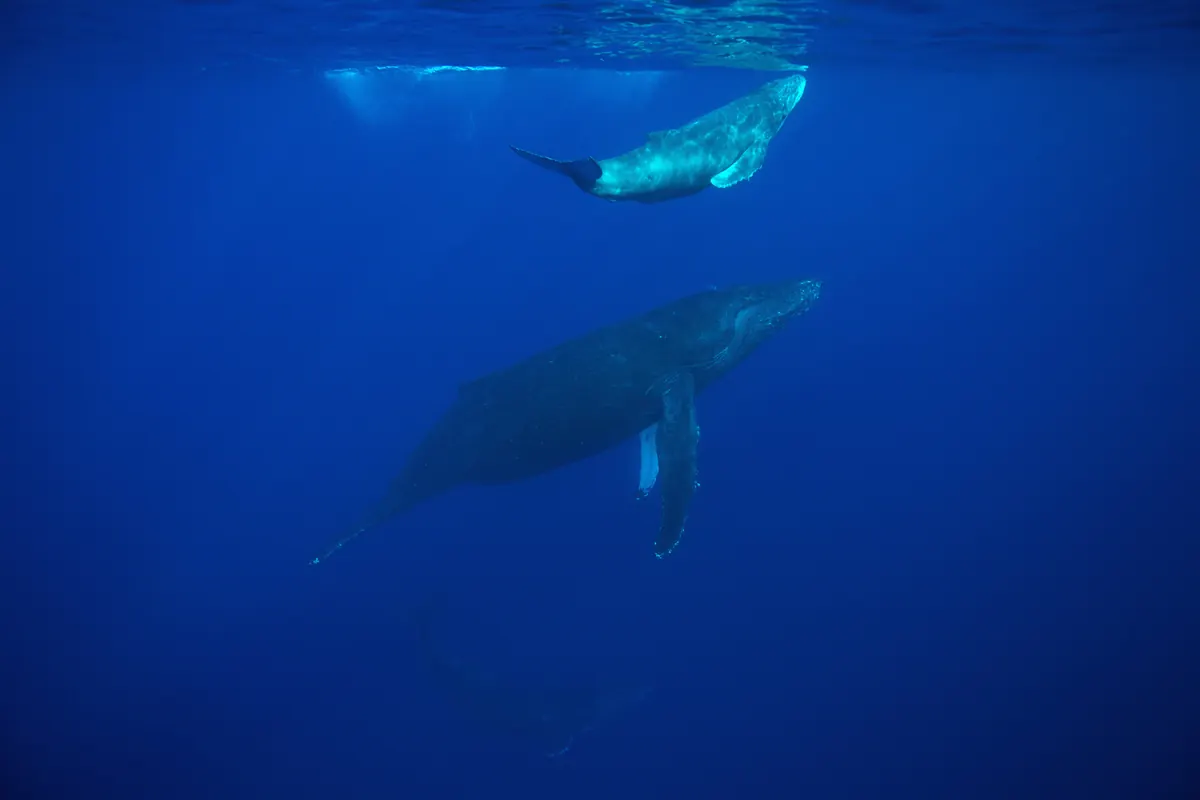
- Look for a calf. From a high lookout on a calm morning, watch for a small spout beside a big one. Mothers with calves often rest near the surface in shallow, sheltered water, and the calf surfaces more often than the adult.
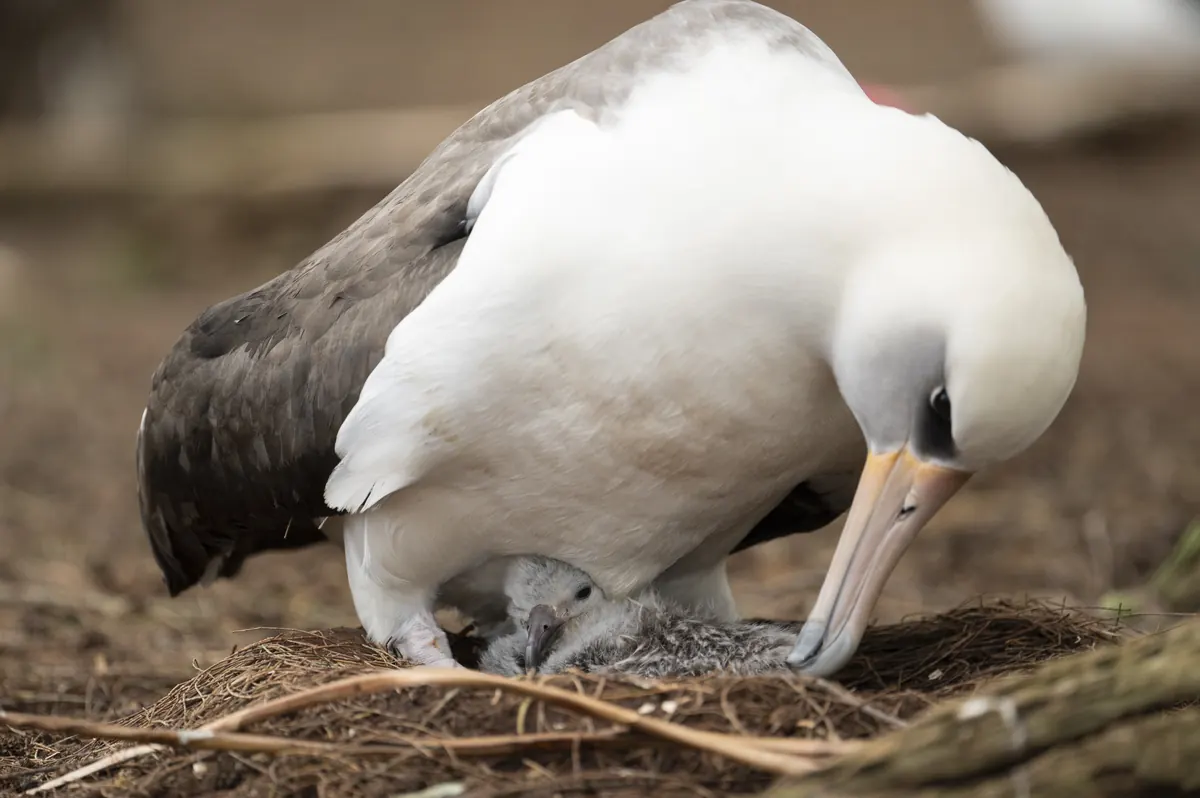
- Check on the albatross. From late January the first mōlī chicks hatch. At Kaʻena Point, look for an adult sitting a little high with a gray, fluffy head peeking out underneath, and keep to the trail.
Keep the season on paper: use the mammal watch plate of the Naturalist’s Field Journal for whale tallies and calves, nest observed for one mōlī family from hatching on, birds I have seen for ʻelepaio and nēnē, a daily field log for the rain and wind of a Kona storm, and the dusk and dawn watch for a Quadrantid morning or the Wolf Moon rising. Keeping one place twice a month, with the same place twice page, shows the wet season changing it.
Regions used below: Kauaʻi; Oʻahu; Maui, Molokaʻi and Lānaʻi; Hawaiʻi Island; The high summits: Maunakea, Mauna Loa and Haleakalā.
Is January a good month to see humpback whales in Hawaii?
One of the best. The sanctuary that protects the islands’ humpbacks says whales can be seen from shore and from boats between November and April, but the animals do not all arrive at once. By January the early singers of December have company: mothers with newborn calves, rowdy groups of males chasing a female, and lone adults resting near the surface. The sanctuary and the Pacific Whale Foundation both schedule their shore counts for the last Saturdays of January, February and March, the window they treat as the height of the season, and in 2026 the January tally was about as large as the February one.
NOAA Fisheries notes that some make the roughly 3,000-mile trip from Alaska in as little as 28 days, and the sanctuary says more than half of the North Pacific’s humpbacks winter in Hawaiian waters. They come to mate and calve, not to feed.
-
Calves at the surface
January through March · Shallow, sheltered water off west Maui, Lānaʻi and Molokaʻi, the Kona coast, and Oʻahu’s south and east shores
A humpback is born after an 11-month pregnancy and measures about 13 to 16 feet, according to NOAA Fisheries; it stays close to its mother for up to a year. Look for a small, low blow next to a large one, and for a little back that comes up more often than its mother’s. A resting mother may hang just under the surface for long minutes while the calf bobs around her.
-
Competitive groups
Through the peak of the season · Open channels between islands, especially the Maui Nui waters between Maui, Lānaʻi, Molokaʻi and Kahoʻolawe
A cluster of whales moving fast in one direction, throwing white water and trumpeting blows, is usually a group of males jostling for position near a female.
-
Keep your distance
All season · Anywhere at sea, on a board or in a kayak
The sanctuary asks people on or in the water to stay more than 100 yards from humpbacks, and its count partners remind ocean users that approaching closer is against the law. A calf that pops up near you is no exception; move away slowly.
Last month’s page, December in Hawaii, covers the song season and how to hear it underwater. In January that chorus keeps building toward its loudest weeks later in the winter.
When is the whale count in Hawaii, and can anyone volunteer?
Yes. On Saturday, January 30, 2027, hundreds of volunteers will spend the morning on headlands and beach parks across the islands, logging every humpback they see in 15-minute blocks. The Sanctuary Ocean Count, which NOAA’s humpback sanctuary marked as 30 years old in 2026, covers sites on Kauaʻi, Oʻahu, Molokaʻi and Hawaiʻi Island. On the same morning the Pacific Whale Foundation runs its Great Whale Count, running since 1995, from about a dozen sites on Maui. Both organizers list 2027 counts on January 30, February 27 and March 27, from 8 a.m. to about noon. The Pacific Whale Foundation opens Maui registration on December 14, 2026, and asks each volunteer to stay for the full four hours; the sanctuary expects to open its registration in early January.
The totals are not a census: a whale seen from two sites, or seen again later, is counted twice. Their value is the long run of years from the same headlands. Weather matters too; in January 2023 rain and wind ended many counts early, and Maui reported from only one of its twelve sites.
-
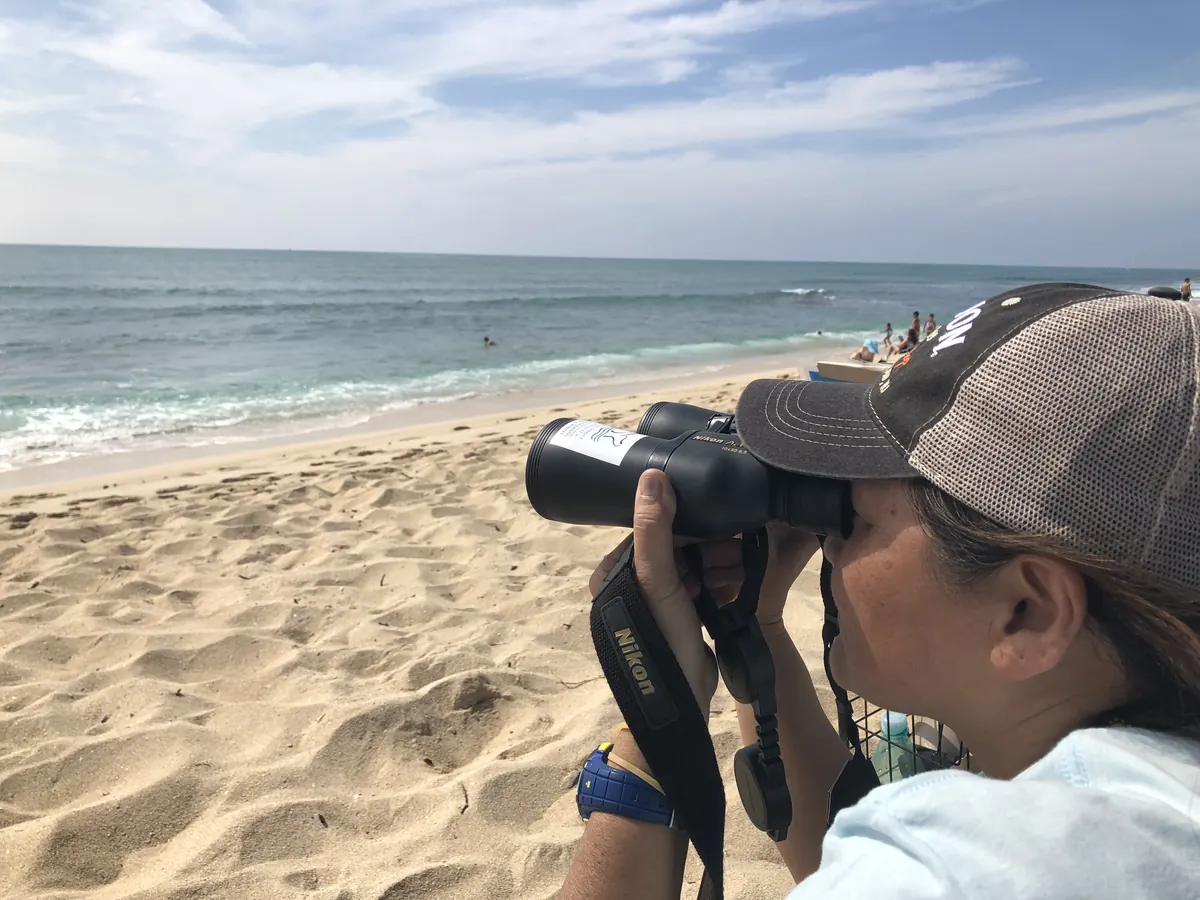
Sanctuary Ocean Count
Saturday, January 30, 2027, 8 a.m. to about noon; repeats February 27 and March 27 · Shore sites on Kauaʻi, Oʻahu, Molokaʻi and Hawaiʻi Island, such as Makahūʻena Point and Ninini Lighthouse on Kauaʻi, Lāʻie Point and Hālona Blowhole on Oʻahu, and Sandy’s on Molokaʻi
Register through oceancount.org once sign-up opens. Bring water, sun protection and binoculars if you have them; site leaders teach the method on the spot.
-
Great Whale Count
The same three Saturdays, 8 a.m. to noon · Maui sites including McGregor Point, Hoʻokipa, Māʻalaea Harbor and Polo Beach
Bring a chair, snacks and water. Counters scan an assigned patch of ocean and call sightings to a site leader; community service hours are available on request.
| Count date | Sites reporting | Counters | Whales in the busiest 15 minutes | Whales logged over the morning |
|---|---|---|---|---|
| Jan 30, 2021 | 43 | 68 site leaders, statewide | 177 (9:00 to 9:15) | not reported |
| Jan 29, 2022 | 45 | 87 site leaders, statewide | 278 (9:00 to 9:15) | not reported |
| Jan 28, 2023 | 30 (storms) | 264 volunteers (Kauaʻi, Oʻahu, Hawaiʻi Island) | 83 (9:00 to 9:15) | 587 |
| Jan 27, 2024 | 44 | 402 volunteers | 315 (9:00 to 9:15) | 2,124 |
| Jan 25, 2025 | 41 | 429 volunteers | 296 (10:00 to 10:15) | 2,121 |
| Jan 31, 2026 | 43 | 433 volunteers | 260 (9:00 to 9:15) | 1,954 |
In the January 2026 count, Kauaʻi volunteers logged 467 sightings, Maui 694, Hawaiʻi Island 355, Oʻahu 337, Molokaʻi 52 and Lānaʻi 49. The sanctuary’s own tally for the 2026 season shows how the count falls away by spring: 1,954 sightings in January, 1,935 in February and 436 in March, when Kona low storms also cut visibility.
When do albatross chicks hatch in Hawaii?
From the end of January through February. Hawaiʻi Audubon Society gives that window for mōlī, the Laysan albatross, and the dates people have recorded fit it closely. At Kīlauea Point on Kauaʻi, refuge staff filmed a parent standing over a brand-new hatchling on January 24, 2023. On Midway Atoll, the egg of Wisdom, the oldest known wild bird, began to pip on January 29, 2025, and the chick was fully out the next day, with her mate on duty when it hatched. A Princeville chick that the Friends of Kauaʻi Wildlife Refuges followed last season hatched on February 3, 2026.
Hatching is not quick. The chick first breaks a small hole in the shell, called pipping, and needs time to work free; Wisdom’s chick took about a day. Newly hatched chicks stay tucked under a parent, so what you usually see is an adult sitting a little higher than before, perhaps with a gray, downy head showing underneath. DLNR says the young fledge in July, and receive no care from their parents once they go.
-
Kaʻena Point, Oʻahu
Hatching from late January; chicks on the ground into July · Kaʻena Point Natural Area Reserve, reached on foot or by mountain bike from the road ends at Mokulēʻia and Keawaʻula
Hawaiʻi Audubon calls it the only protected place in the world where you can walk unescorted on a trail beside nesting albatross. Stay on the marked path, keep dogs at home, and report dogs or harassment to DLNR enforcement at 808-643-3567. Bring water and sun protection; there is no shade.
-
Kīlauea Point, Kauaʻi
Still closed as of early October 2026 · Kīlauea Point National Wildlife Refuge, north shore of Kauaʻi
The refuge remained shut for post-hurricane repairs, with no reopening date posted. If it reopens this winter, its albatross colony and the nēnē on its lawns are among the easiest to see on Kauaʻi; check the refuge page before going.
-
Princeville’s yard albatross
Hatching late January to early February · Lawns and golf course edges around Princeville and Kīlauea town on Kauaʻi
Many Kauaʻi albatross nest on private property. Watch from the road or a public path, never walk up to a nest, and keep pets indoors or leashed near nesting birds.
Which native birds start nesting in Hawaii in January?
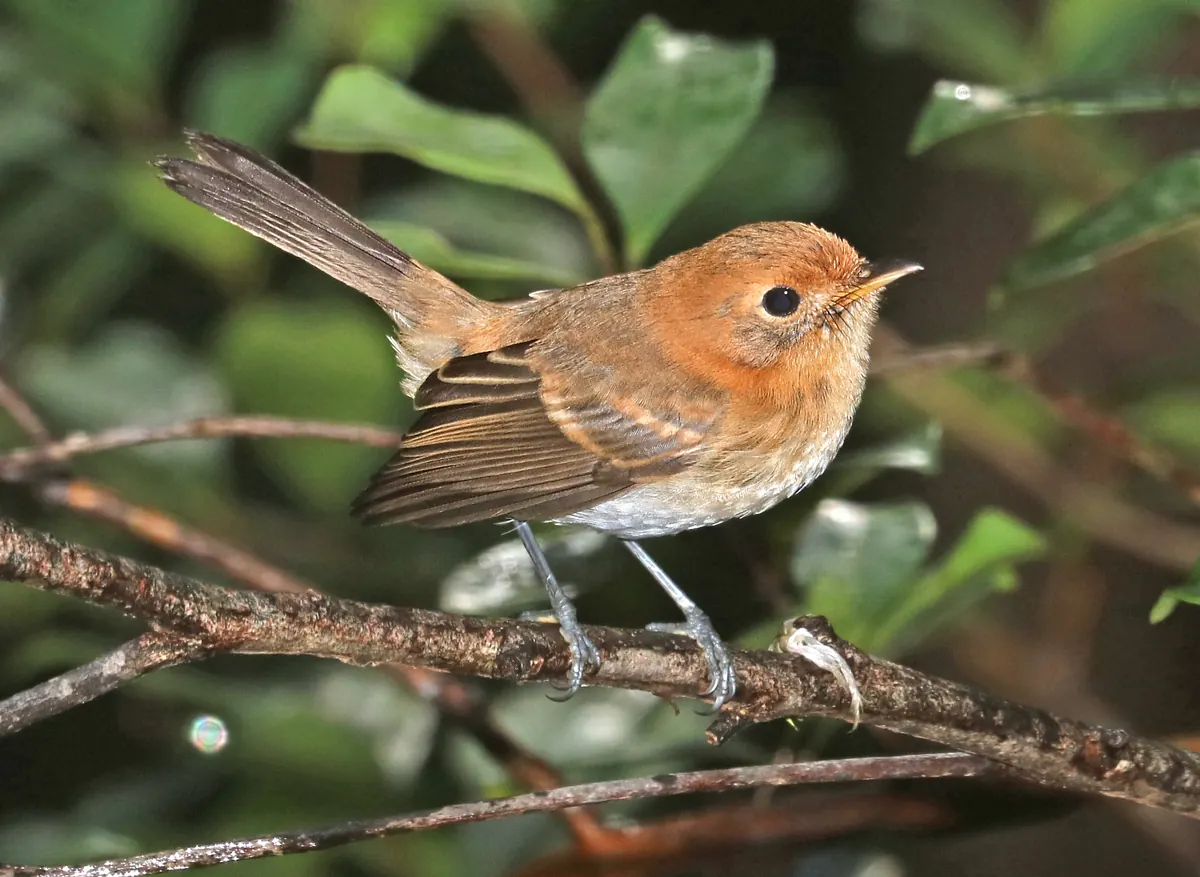
The Oʻahu ʻelepaio is the clearest case. DLNR says the breeding season on Oʻahu runs from January through July, with the occasional nest in fall. This small, cocky monarch flycatcher, brown above with a cocked tail and a loud, whistled call, lives in valleys of the Koʻolau and Waiʻanae ranges where tall streamside trees and a thick understory grow. Pairs hold territories all year and often stay together for many years, and both parents share the work of building a finely woven cup nest, incubating the usual two eggs, and feeding the young, which stay with them for a month or longer.
Only about 1,261 Oʻahu ʻelepaio were found in the last full census in 2012, which Pacific Rim Conservation describes as roughly 477 breeding pairs and 307 single males. DLNR names black rats as the main threat: they raid nests and kill females sitting on them. Pacific Rim Conservation, which has trapped rats around ʻelepaio nests for more than 20 years, says rat control has proven an effective way to raise nest success.
-
Oʻahu ʻelepaio
Nesting January through July · Forested valleys of the Koʻolau Range at about 325 to 1,800 feet and the Waiʻanae Range at about 1,600 to 2,800 feet
Listen for a clear, rising whistle and a harsh scolding chatter. ʻElepaio often come close to look over a quiet hiker, snapping up insects in short flights as they go. If a pair scolds you persistently, you may be near a nest; keep to the trail and move on.
-
Hawaiʻi and Kauaʻi ʻelepaio
Year-round residents of upland forest · Most forest above about 2,000 feet on Hawaiʻi Island; the Alakaʻi Plateau and Kōkeʻe on Kauaʻi
On Hawaiʻi Island, DLNR notes, pairs sometimes start a second nest while still feeding the first brood. Kōkeʻe and the Alakaʻi were still closed after the hurricane in early October.
-
Nēnē goslings growing up
Through the winter · Lawns and roadsides in Hawaiʻi Volcanoes and Haleakalā national parks; lowland refuges and golf courses on Kauaʻi and Maui
DLNR says most nēnē lay between October and December, and eggs hatch after about 30 days, so January brings families with goslings that keep close to their parents for many months. Hawaiʻi Volcanoes National Park says cars are the leading cause of adult nēnē deaths there, and that geese fed by visitors learn to walk up to moving cars. Drive slowly and never feed them.
Native forest walks carry a duty: clean the mud from your boots and gear at the start and finish, then spray them with rubbing alcohol, so you do not carry the fungus that causes Rapid ʻŌhiʻa Death from one forest to the next.
What is a Kona storm, and how rainy is January in Hawaii?
A Kona storm is the winter low that turns Hawaii’s weather around. Most of the year the trade winds blow from the northeast, so the windward sides get the showers and the leeward sides stay dry. When a deep low stalls west or northwest of the islands, the wind swings to the south and southwest, the “kona” or leeward direction, and the rain lands on coasts and slopes that normally see little. The Western Regional Climate Center notes that a well-developed Kona storm brings rain that is more widespread and lasts longer than a typical cold front; most winters have one or two, and some have none. Winter cold fronts also sweep down from the northwest, as many as six or eight in some seasons.
Averaged over 30 years, January sits in the middle of the wet season. The climate center says winter is the rainiest season almost everywhere below 2,000 feet, the Kona coast excepted, though at most of the stations in the table January averages less rain than December. Hilo averages just under 8 inches of rain in January, compared with about 12 in December. Molokaʻi and the Haleakalā ranger station run wetter than the lowland Maui and Kona airports, and Kona’s coast, which gets its rain in summer, stays near an inch. Nights are a little cooler than December’s at every one of these stations. At the Mauna Loa slope station, at 11,000 feet, the temperature falls to freezing or below on about six nights in an average January, and the climate center says big winter storms bring a foot or more of snow to the highest peaks a few times in a typical year.
-
Watch the wind flip
Ahead of a Kona low or a cold front · Any shoreline or ridge with a view of the clouds
Before a Kona storm, clouds stall or drift in from the south and the air turns muggy and still. After a cold front, the wind snaps to the north and the air feels cool and dry.
-
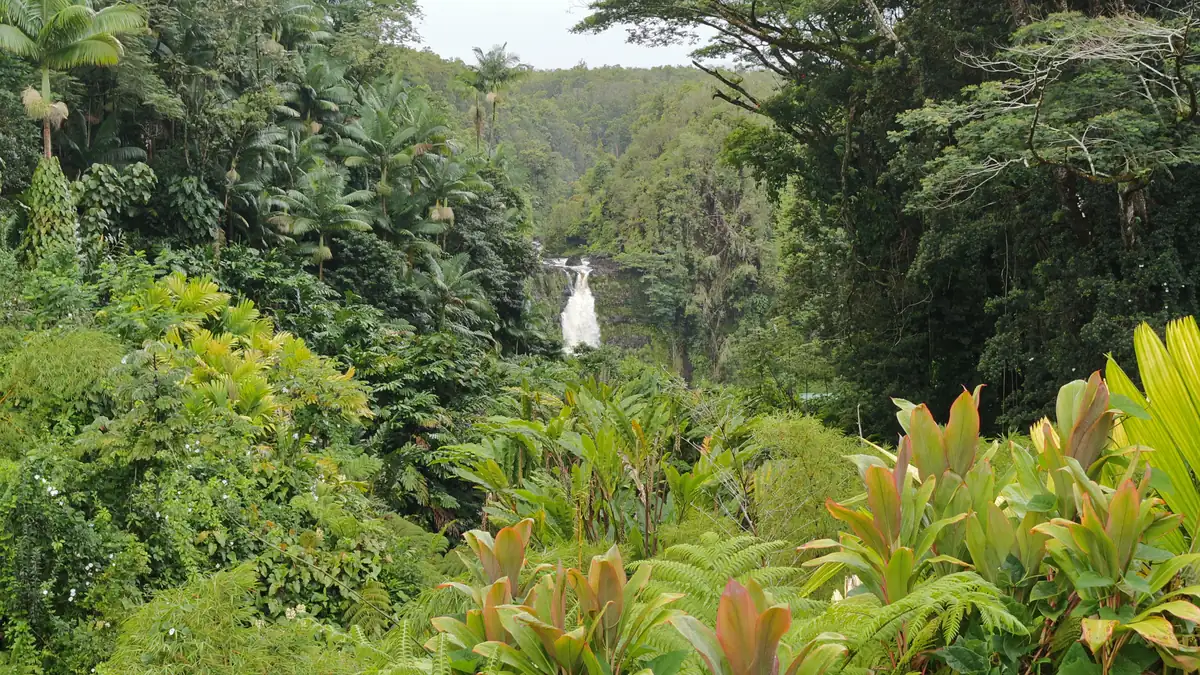
Waterfalls after the rain
A day or two after heavy rain · Windward valleys of Hawaiʻi Island’s Hāmākua coast, east Maui and Oʻahu’s Koʻolau
After a storm, ribbons of white appear on cliffs that are dry rock most of the year. Look from viewpoints, not from stream beds.
| Station | January rain | Days with 0.1 in or more | High / low | Nights at or below 32 °F |
|---|---|---|---|---|
| Līhuʻe airport, Kauaʻi | 2.78 in | 4.4 | 78.6 / 66.0 °F | 0 |
| Honolulu airport, Oʻahu | 1.84 in | 3.3 | 80.5 / 66.8 °F | 0 |
| Hoʻolehua airport, Molokaʻi | 3.56 in | 5.0 | 78.8 / 64.3 °F | 0 |
| Kahului airport, Maui | 2.42 in | 4.0 | 82.2 / 63.6 °F | 0 |
| Haleakalā ranger station, Maui (7,000 ft) | 5.14 in | 5.9 | 61.0 / 43.9 °F | 0 |
| Keāhole airport, Kona | 1.35 in | 1.8 | 81.4 / 68.6 °F | 0 |
| Hilo airport, Hawaiʻi Island | 7.86 in | 9.6 | 78.7 / 64.1 °F | 0 |
| Mauna Loa slope station (11,000 ft) | 1.10 in | 1.7 | 51.1 / 35.4 °F | 6.3 |
When a Kona low is on the way, the cloud and sky forecast shows the rain bands lining up from the south, and the weather page tracks the falling pressure and the turning wind hour by hour.
Will El Niño dry out Hawaii in January and February?
The odds lean that way, and these are the months when it usually shows. Federal forecasters gave the islands little room for doubt in September: the Climate Prediction Center’s update of the 10th called a very strong event over the cool season more than 90 percent likely. A NOAA analysis of Hawaii winters on the climate.gov blog explains why that matters here: during El Niño the Pacific jet stream reaches farther east, placing the islands under sinking air that discourages rain, and the effect is felt mainly in the wet season, especially January and February. Over the long record, it found, Honolulu’s rainfall has run about 3 inches below average in El Niño years, against roughly 20 inches in a normal year.
The Pacific ENSO Applications Climate Center adds the timing that matters most for this page. Rain tends to hold up through much of the El Niño year itself, then dry conditions set in near its end and are usually worst in the first half of the following year, which here means January through June 2027. By DLNR’s reckoning, roughly seven in ten El Niño events have been followed by drought during the next wet season. In the last very strong event, NWS Honolulu warned in its 2015–16 wet-season newsletter of significantly below-average rain through April and widespread moderate drought by spring, and its hydrologist urged people on catchment to start saving water early.
-
Signs of a dry winter
January to March · Leeward slopes and pastures, catchment tanks, the Kona and Kaʻū coasts, upcountry Maui
Watch for pasture going brown in what should be the green season, low water in windward streams, and catchment tanks dropping.
-
Bigger surf, maybe
Through the winter · North- and west-facing shores
The same climate.gov analysis notes that El Niño is sometimes linked to larger swells, because the extended jet stream drives storms that send energy toward the islands. Dry weather and high surf can arrive together.
A single storm can still bring a flash flood. NOAA issues its seasonal outlooks in the middle of each month, with Hawaii included on the Climate Prediction Center’s three-month outlook maps; check there for the newest rain and temperature odds before January.
When is the big-wave season on Hawaii’s north shores?
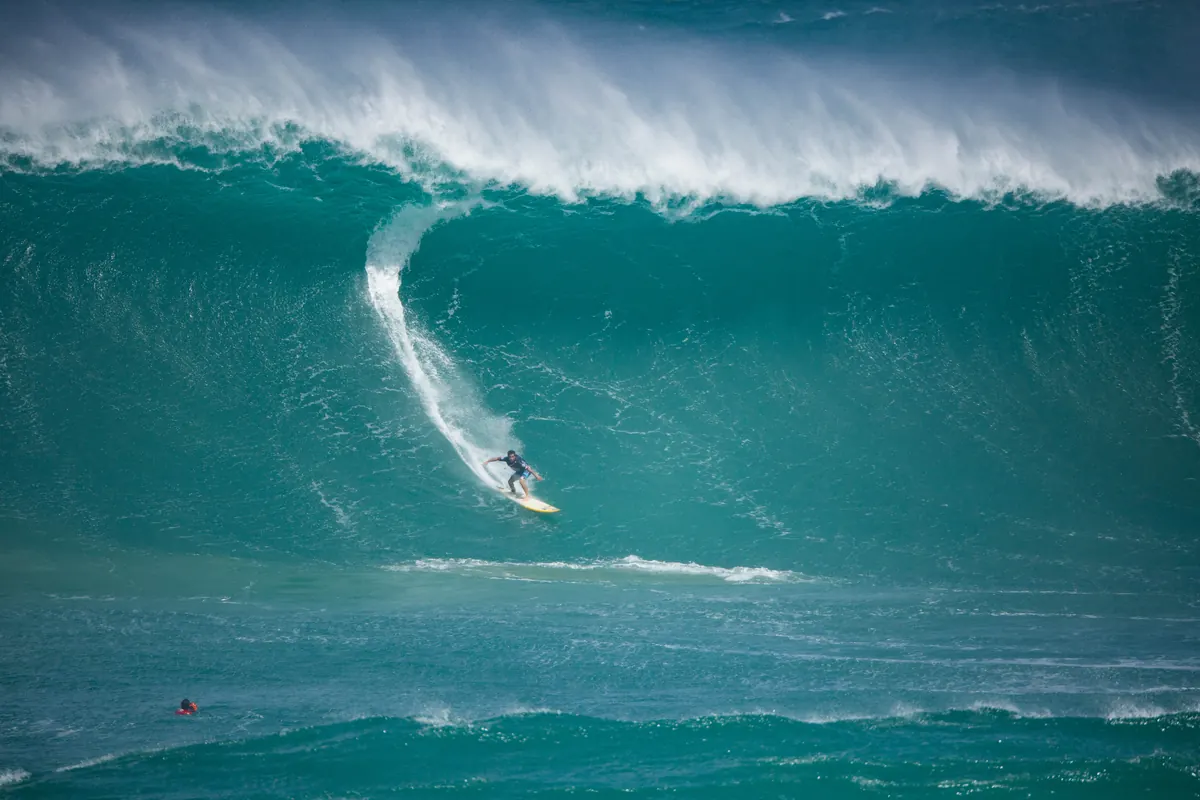
Right now. The state’s ocean safety program puts the season of huge, dangerous north and west swells from November through April, driven by powerful storms far to the north. January sits in the middle of it, and a big swell can send huge waves onto Oʻahu’s North Shore, the north coast of Kauaʻi and Maui’s Peʻahi while the south shores stay much calmer. Watching from a safe spot is one of the great winter sights in the islands.
-
Watching a big swell
The day a High Surf Warning is posted, from a distance · Waimea Bay and other North Shore parks on Oʻahu; lookouts above Kauaʻi’s north shore; Hoʻokipa on Maui
Stand well back, on high ground, and never turn your back on the ocean; one big set can surge far up a beach that looked dry for an hour. On high-surf days the state’s ocean safety officials want swimmers of every ability, and any surfer without real big-wave experience, out of the water at these beaches.
How much daylight does Hawaii gain in January?
Only about 20 minutes over the month, and almost all of it in the evening. Because the islands are so close to the tropics, the change in day length through the year is small, and it is lopsided in January. Honolulu’s sunset moves from 6:01 p.m. on New Year’s Day to 6:21 p.m. on January 31, while its sunrise barely moves: 7:09 a.m. on the 1st, reaching its latest at 7:12 around the middle of the month, and back to 7:09 by the end. The table shows each island’s numbers.
| City | Jan 1 | Jan 31 | Gained | Per day |
|---|---|---|---|---|
| Lihue | 10 h 49 m | 11 h 10 m | 21 min | 0.7 min |
| Honolulu | 10 h 52 m | 11 h 12 m | 20 min | 0.7 min |
| Kaunakakai | 10 h 53 m | 11 h 13 m | 20 min | 0.7 min |
| Lanai City | 10 h 54 m | 11 h 13 m | 19 min | 0.6 min |
| Kahului | 10 h 53 m | 11 h 13 m | 20 min | 0.7 min |
| Kailua-Kona | 10 h 59 m | 11 h 17 m | 18 min | 0.6 min |
| Hilo | 10 h 58 m | 11 h 16 m | 18 min | 0.6 min |
That later sunset adds a few minutes each week to a walk after work or school. Look up times for your own valley or beach with the daylight calculator.
What is in Hawaii’s night sky this January?
Times below are Hawaii Standard Time. January opens with Earth at its closest to the Sun, brings a meteor shower in its first week, and ends with the largest-looking full moon of 2027. The darkest evenings, with no moon, fall between roughly the 3rd and the 12th, bracketing the new moon of January 7.
-
Perihelion
Saturday, January 2, 4:33 p.m. · Everywhere, no telescope needed
Our planet passes nearest the Sun, roughly 91.4 million miles off, in the depths of northern winter. Winter here has nothing to do with distance; it is the tilt of the axis that sets the seasons, a good puzzle for a curious child.
-
The Quadrantids
Active December 28 to January 12; peak predicted for the evening of Sunday, January 3 · A dark site with a clear view to the north and northeast
Forecasts put the short, sharp peak at about 5:30 p.m. or about 7:47 p.m. on January 3 in Hawaii time, around or just after dusk, while the shower’s radiant in the northern sky is still low. The radiant climbs through the night, so plan to watch from about 3 a.m. until first light on Monday, January 4, when the thin waning crescent moon, less than a fifth lit, is not much trouble. The American Meteor Society expects about 25 an hour under dark skies.
-
Venus at its farthest from the Sun
Sunday, January 3, and all month · East-southeast before sunrise
Venus hits its greatest western elongation on the 3rd, 47 degrees from the Sun, and dominates the predawn sky all month. Through a small telescope the planet appears half lit.
-
The Wolf Moon, the closest full moon of 2027
Full at 2:17 a.m. on Friday, January 22; best the night of Thursday, January 21 · Rising in the east-northeast at dusk
This is a supermoon, about 222,229 miles away at full, the nearest full moon of the year. In Honolulu it rises at 5:47 p.m. on the 21st, about half an hour before sunset, and sits highest a little after midnight, just before it turns full. On Saturday the 23rd, after dark, the just-past-full moon sits beside Jupiter, and Regulus, Leo’s brightest star, is close by as well.
-
Jupiter, Saturn and Mercury
All month · Jupiter in the east after dark; Saturn in the southwest; Mercury low in the west-southwest after sunset late in the month
Jupiter, in Leo, rises earlier each night ahead of its opposition on February 10. Saturn sinks lower in the southwest through the evening. As January closes, Mercury shows very low in the west-southwest half an hour or so after sunset, on its way to its best evening showing of the winter in early February.
| Phase | Date | Time |
|---|---|---|
| New moon | Thursday, Jan 7 | 10:24 a.m. |
| First quarter | Friday, Jan 15 | 10:34 a.m. |
| Full moon, the Wolf Moon | Friday, Jan 22 | 2:17 a.m. (rises the evening before, Jan 21) |
| Last quarter | Friday, Jan 29 | 12:55 a.m. |
Trade-wind clouds and Kona storms can hide any of these, so look at the cloud outlook before a late night, and use the moon calendar to find moonrise for your island.
What can families do outside in Hawaii this January?
- Count whales together at the Sanctuary Ocean Count or the Great Whale Count on Saturday, January 30, 2027. Register ahead; Maui sign-up opens December 14, 2026, and the sanctuary’s in early January. Pack chairs, snacks and binoculars.
- Start the year outdoors. Hawaii State Parks has made a New Year’s Day sunrise walk at Makapuʻu Point on Oʻahu a tradition in recent years, with Hawaiian protocol at first light on the paved lighthouse trail. Details for January 1, 2027, had not been posted in early October; look for DLNR’s announcement in December.
- Join the last Christmas Bird Counts. The national count window closes on Tuesday, January 5, 2027, and some Hawaii circles may count in the first days of January. Hawaiʻi Audubon can put a family in touch with a team.
- Count your yard’s kōlea. The Kōlea Count’s winter survey runs to March 31. A family can pick one lawn or schoolyard, note how many golden plovers use it, and report changes through the season, until the birds leave for Alaska in spring.
- Walk to the albatross at Kaʻena Point from late January, when the first chicks hatch. There is no shade on the trail; go in the cool of the morning with a full bottle each.
- Get up for the Quadrantids before dawn on January 4, or watch the Wolf Moon rise at dusk on January 21.
A Naturalist’s Field Journal gives children a place to keep their whale tallies and nest notes, and the full set of monthly nature guides covers every state.
Safety notes for January in Hawaii
- Hunting seasons and blaze orange. DLNR’s game bird rules close the pheasant, francolin, quail and partridge seasons on the final Sunday of January, which falls on January 31, 2027. Hunting days are mainly weekends and state holidays, with some extra weekdays in certain units; DLNR’s unit-by-unit announcement for 2026–27 had not been posted by early October, and DLNR has proposed changes to its game bird rules, so check its current announcements. Feral pig and goat hunting stays open year-round in many units on every island, and under the game mammal rules Kauaʻi’s Kōkeʻe unit opens to archery and dog-and-knife pig hunting from January through May, though Kōkeʻe was still closed after the hurricane in early October. In any area where firearms are allowed, every hunter, and anyone helping or tagging along, must wear an outer layer of solid, store-bought blaze orange on the upper body, visible from the front and the back even with a pack on; orange camouflage does not count. Hikers sharing those forests on weekends should wear bright colors too.
- Kauaʻi closures. In its September 30 reopening notice after Hurricane Nolo, DLNR reopened only a handful of Kauaʻi forest reserve and hunting areas and left every other state forest, wildlife area and trail on Kauaʻi shut. Its state parks division, updating recovery from Hurricanes Nolo and Lowell on October 2, listed Kōkeʻe Road as closed until further notice and every Kauaʻi state park closed apart from limited river access at Wailua, with all Kauaʻi camping shut. Check DLNR’s park notices before any Kauaʻi trip.
- Flash floods. A Kona storm can send streams over their banks with rain that fell far upslope. Wading or driving through a running stream is how people die in these floods; wait it out, and keep clear of muddy plumes where streams meet the sea. Streams and mud can carry leptospirosis; cover cuts.
- High surf. Heed lifeguards and signs on north- and west-facing beaches, and stay off wet rocks and ledges.
- Cold and ice on the summits. At 11,000 feet on Mauna Loa an average January brings about six freezing nights, and the summits above are colder still. Snow and ice can close the Maunakea summit road above the Visitor Information Station for days; check the Maunakea Weather Center forecast before driving up, bring warm layers and gloves, and remember that altitude sickness and long distances from medical help are real dangers.
- Kīlauea. On October 2, the USGS volcano observatory still listed Kīlauea at WATCH, with glow at the summit vents and more fountaining episodes possible. Read the latest update before visiting the park, and if you have asthma or heart disease, avoid the park on heavy vog days.
- Early dark. The sun sets between about 5:50 and 6:30 p.m. in January, depending on island and date, and tropical dusk is short. On long hikes, start early and carry a headlamp.
Sources
- NOAA Office of National Marine Sanctuaries: over 1,000 volunteers count koholā during the 30th anniversary of Sanctuary Ocean Count (2026 results, 2027 dates)
- Sanctuary Ocean Count: 2027 count dates and registration
- Sanctuary Ocean Count: results by year
- Sanctuary Ocean Count and Great Whale Count: January 30, 2021 results (PDF)
- Sanctuary Ocean Count and Great Whale Count: January 29, 2022 results (PDF)
- Sanctuary Ocean Count and Great Whale Count: January 28, 2023 community announcement (PDF)
- Sanctuary Ocean Count and Great Whale Count: January 27, 2024 community announcement (PDF)
- Sanctuary Ocean Count and Great Whale Count: January 25, 2025 community announcement (PDF)
- Sanctuary Ocean Count and Great Whale Count: January 31, 2026 community announcement (PDF)
- Sanctuary Ocean Count: preliminary site data, January 31, 2026 (PDF)
- Pacific Whale Foundation: Great Whale Count (2027 dates, Maui sites, registration)
- Hawaiian Islands Humpback Whale National Marine Sanctuary
- Hawaiian Islands Humpback Whale National Marine Sanctuary: Sanctuary Ocean Count
- Hawaiian Islands Humpback Whale National Marine Sanctuary: responsible viewing distances
- Hawaiian Islands Humpback Whale National Marine Sanctuary: acoustic monitoring of humpback song
- NOAA Fisheries: humpback whale species profile (migration, gestation, calves)
- Hawaiʻi Audubon Society: Big birds, bigger joy, Hawaiʻi’s albatross
- DLNR Division of Forestry and Wildlife: mōlī (Laysan albatross)
- Friends of Kauaʻi Wildlife Refuges: mōlī on Kauaʻi
- U.S. Fish and Wildlife Service: Kīlauea Point National Wildlife Refuge (closed for repairs)
- Friends of Midway Atoll: Wisdom prevails (February 12, 2025)
- Wikimedia Commons: USFWS photo of a mōlī hatchling at Kīlauea Point, January 24, 2023
- DLNR Natural Area Reserves: Kaʻena Point
- DLNR Division of Forestry and Wildlife: Oʻahu ʻelepaio
- Pacific Rim Conservation: Oʻahu ʻelepaio
- DLNR Division of Forestry and Wildlife: Hawaiʻi ʻelepaio
- DLNR Division of Forestry and Wildlife: Kauaʻi ʻelepaio
- DLNR Division of Forestry and Wildlife: nēnē
- Hawaiʻi Volcanoes National Park: nēnē
- University of Hawaiʻi CTAHR: Rapid ʻŌhiʻa Death
- Western Regional Climate Center: climate of Hawaii (Kona storms, cold fronts, mountain snow)
- NOAA NCEI: 1991–2020 monthly normals for eight Hawaii stations (data API)
- Climate Prediction Center: ENSO diagnostic discussion, September 10, 2026
- Climate Prediction Center: 90-day outlooks
- NOAA Climate.gov ENSO blog: Surf’s up, how does ENSO impact Hawaii? (May 26, 2022)
- NOAA Pacific ENSO Applications Climate Center: El Niño and its impacts on Hawaiʻi (PDF)
- DLNR Commission on Water Resource Management: drought forecast and El Niño
- NWS Honolulu: Skywarn spotter newsletter, 2015–16 wet season (El Niño advisory, PDF)
- Hawaii Department of Health, Ocean Safety: Hawaii’s surf seasons
- U.S. Naval Observatory: moon phases, December 2026 to March 2027 (data API)
- U.S. Naval Observatory: Honolulu sun and moon times, January 21, 2027
- U.S. Naval Observatory: Honolulu sun and moon times, January 3, 2027
- U.S. Naval Observatory: 2027 perihelion, equinoxes and solstices (data API)
- Fred Espenak: Sky Event Almanac 2027 (planets, conjunctions, Quadrantids)
- American Meteor Society: meteor shower calendar
- EarthSky: the Quadrantid meteor shower
- EarthSky: what is a supermoon?
- Hawaiʻi Audubon Society: Audubon Christmas Bird Count in Hawaiʻi
- Hawaiʻi Audubon Society Kōlea Count: winter count guidelines
- Spectrum News Hawaii: Oʻahu’s First Day Hike returns with sunrise ceremony (December 30, 2025)
- DLNR Division of State Parks: Makapuʻu Point Lighthouse Trail
- DLNR: most state parks, forest lands and campgrounds reopening after Nolo, with Kauaʻi exceptions (September 30, 2026)
- DLNR Division of State Parks: Hurricane Nolo and Hurricane Lowell recovery updates (October 2, 2026)
- USGS Hawaiian Volcano Observatory: Kīlauea updates (October 2, 2026)
- University of Hawaiʻi at Hilo, Center for Maunakea Stewardship: Visitor Information Station
- Maunakea Weather Center: summit forecasts
- Hawaii Department of Health: leptospirosis
- DLNR: Hawaii Administrative Rules chapter 13-122, game birds (seasons, blaze orange)
- DLNR: Hawaii Administrative Rules chapter 13-123, game mammals (seasons, blaze orange)
- DLNR: hunting announcements (2026–27 game bird announcement not yet posted)
- Photos via Wikimedia Commons; licenses and photographers are credited under each picture
.jpg)
