What to look for in nature in Hawaii this November
November is when Hawaii’s winter visitors settle in. Laysan albatross glide back to the same nesting grounds on Kauaʻi and Oʻahu, young wedge-tailed shearwaters take their first flights to sea, humpbacks begin to show up in the channels, and the Pleiades climb into the evening sky to open the Makahiki season. The rains of Hoʻoilo arrive too, though this winter’s powerful El Niño may cut the wet season short. Here is what to look for, island by island, with dates.
Other months in Hawaii: October, December.
Start here
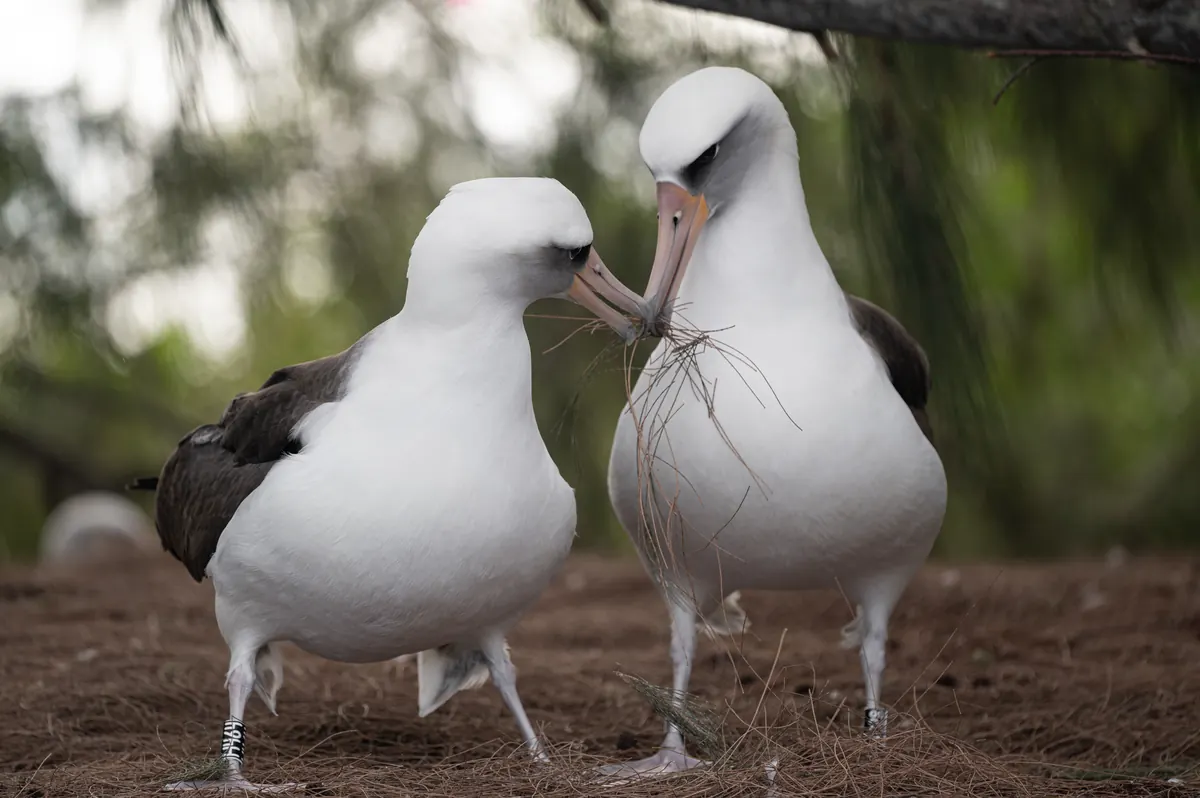
- Albatross on the headlands. Mōlī, the Laysan albatross, return from the North Pacific in early November and spend the rest of the month dancing, pairing up and building nests on bare ground. Kaʻena Point on Oʻahu is the place to watch from the trail; Kīlauea Point on Kauaʻi is closed for hurricane repairs.
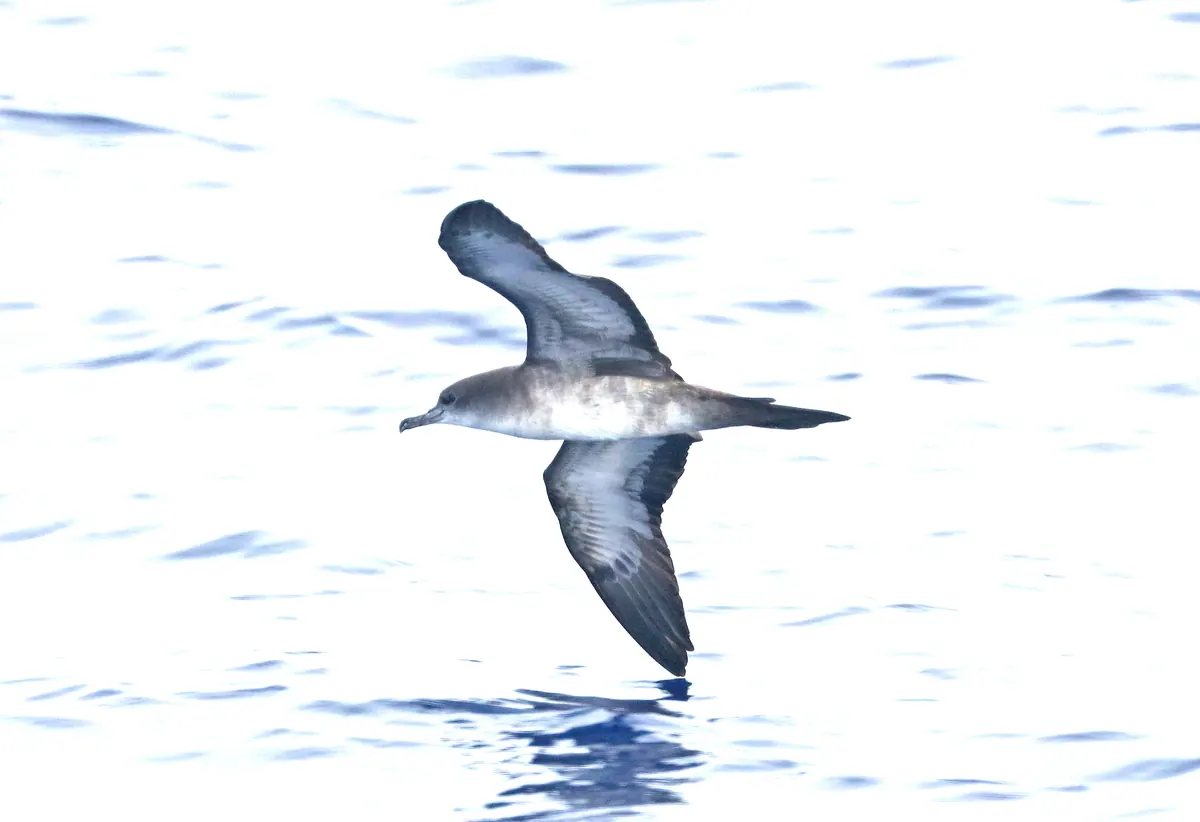
- A shearwater on the sidewalk. The ʻuaʻu kani fledge in November, and their fallout on Oʻahu peaks in the middle and second half of the month. If you find a seabird with webbed feet and tube nostrils stranded under a streetlight, cover it with a towel, box it, and call the island’s seabird line.
- The Leonids, then a full moon by the Pleiades. On the morning of Wednesday, November 18, the moon sets in Honolulu at 1:02 a.m., leaving four dark hours for the Leonids. The Beaver Moon is full at 4:53 a.m. on Tuesday, November 24, and spends that night sitting almost on top of Makaliʻi.
Keep track of it: the Naturalist’s Field Journal has a nest observed page for an albatross pair you can follow until the egg appears, a birds I have seen list for Keālia’s winter ducks and the season’s first whale blow, the dusk and dawn watch page for a pre-dawn Leonid vigil, and seeds, pods and cones for the tree you plant on Arbor Day. A few lines each week will do.
Regions used below: Kauaʻi; Oʻahu; Maui, Molokaʻi and Lānaʻi; Hawaiʻi Island; The high summits: Maunakea, Mauna Loa and Haleakalā.
When do the albatross come back to Hawaii?
In the first weeks of November. The mōlī, or Laysan albatross, spends its summers feeding far out in the North Pacific, as far as the waters off Alaska, and touches land only to breed. The Friends of Kauaʻi Wildlife Refuges give early November as arrival time and late July as the moment the last chick leaves. DLNR’s species account says eggs are laid in November and December and the chicks fledge in July; each pair raises a single chick, and a young bird stays at sea for about three years before it comes back to land. Most of the world’s mōlī nest in Hawaiian waters, the great majority on Midway and the other northwestern atolls, but colonies on Kauaʻi, Oʻahu and Lehua, off Niʻihau, let people in the main islands watch the whole cycle, and DLNR says the species is slowly moving back into places it had abandoned.
November is the month of the dance. Pairs bow to each other, rattle and clack their bills, and stretch their necks to point straight up while calling, a display that young birds practice for years before they choose a mate.
-
Kaʻena Point, Oʻahu
Albatross present November to July; courtship and nest-building in November and December · Kaʻena Point Natural Area Reserve, reached on foot or by bike from the end of the road at Keawaʻula (Waiʻanae side) or Mokulēʻia (North Shore)
The reserve is the main Oʻahu colony, and DLNR estimates that about 2,000 seabirds of three species, albatross, ʻuaʻu kani and white-tailed tropicbird, use the point to breed. The walk out along the old coastal road bed is long and has almost no shade, so start early and carry plenty of water. DLNR asks visitors to keep pets at home and stay on the marked trail, since the shearwater burrows in the sand cave in underfoot.
-
Kīlauea Point, Kauaʻi: closed this fall
Until repairs are finished · Kīlauea Point National Wildlife Refuge, north shore of Kauaʻi
This is normally the easiest albatross colony in the state to see, with birds nesting on the lawns around the lighthouse. For now the refuge is closed to the public while it repairs hurricane damage, and its Recreation.gov ticketing is suspended. Once it reopens, tickets go on sale up to two months ahead.
The worst threats are far from shore: longline hooks and floating plastic that parents feed to their chicks. At the colonies, keeping out predators matters most; in 2006, mongooses, cats and dogs killed 15 percent of the shearwater chicks at Kaʻena Point.
Why do young shearwaters crash-land on Oʻahu in November?
Because November is when the ʻuaʻu kani, the wedge-tailed shearwater, leaves home. DLNR’s species page says the colonies nest in step: most eggs go down in June and most young fly in November. They make that first flight at night, and on Oʻahu’s brightly lit east and south coasts many are pulled off course by streetlights, ballfields and buildings. They circle until exhausted, land, and cannot take off again from flat pavement. DLNR’s fallout season runs from about September 15 to December 15, but on Oʻahu the ʻuaʻu kani is the bird of its second half. The Hawaiʻi Wildlife Center expects their numbers to peak in the middle and late part of November, and says its Oʻahu program cared for 645 of them in 2024, releasing 95 percent.
A study of road-killed shearwaters on Kalanianaʻole Highway, along Oʻahu’s southeast shore, between 2012 and 2019 found that fallout ran from November into December and was worst on nights with little moonlight and strong winds. The moon is new on November 8 this year and sets in the early evening for several nights after, so the stretch from about November 8 to 15 is one to watch.
-
Is it a grounded seabird?
Mostly at night and early morning · Roads, parking lots, yards and beaches near lights
Look for tube-shaped nostrils on top of the bill, webbed feet, and perhaps a few wisps of down left on the body. A chick still covered in fluff and sitting near a burrow does not need help; one on asphalt or beside a building does.
-
How to rescue one
Right away · Any island
Drape a towel or T-shirt over the bird, lift it gently, and put it in a ventilated cardboard box. DLNR lists a contact for each island: Oʻahu (808) 884-5000, which reaches the Hawaiʻi Wildlife Center; Kauaʻi (808) 274-3433; Maui (808) 573-2473; Molokaʻi (808) 553-1745; Lānaʻi (808) 565-7916; and Hawaiʻi Island (808) 974-4221. On Oʻahu, DLNR lists Feather and Fur in Kailua and the Hawaiian Humane Society as drop-off points open around the clock.
-
Dim the lights through mid-December
Now to December 15 · Homes and businesses near the shore
DLNR asks people to switch off outdoor lights they do not need, point the rest downward, and choose warm, dim bulbs in the 1,800 to 2,200 kelvin range.
When does humpback whale season start in Hawaii?
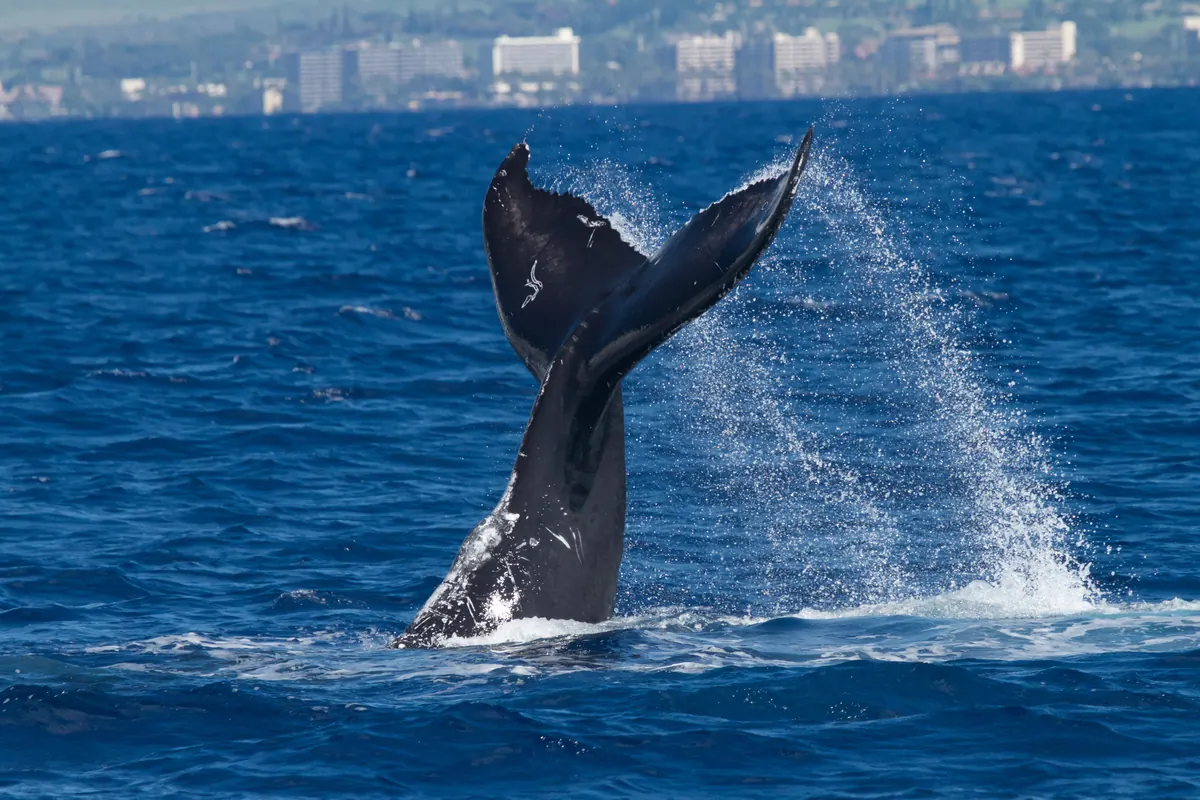
Officially, now. The Hawaiian Islands Humpback Whale National Marine Sanctuary gives the usual span of the season as November through April, with the most whales from January through March. A handful usually turns up earlier; in 2025 the Pacific Whale Foundation reported whales off Maui on September 21, and a Kauaʻi charter crew logged its first of the season on October 14. November whales are the vanguard. Numbers build through December, and calves born here are a feature of the peak months that follow.
About half of all North Pacific humpbacks spend the winter here, mating, giving birth and nursing in water shallower than about 600 feet, especially in the channels of Maui Nui and over Penguin Bank.
-
Your first blow of the winter
Any clear morning, when the sea is calm · High lookouts facing the channels: the west Maui coast, south Maui, Lānaʻi, Molokaʻi, the Kona and Kohala coasts, Makapuʻu on Oʻahu
Scan the water slowly with binoculars for a puff of white mist that hangs a moment and drifts. Then keep your eyes on the same patch of water, because another blow, a back or a tail often follows. Federal rules keep people at least 100 yards from humpbacks, and the sanctuary asks boaters to hold to 15 knots or less in whale waters.
-
Winter surf and a cooling sea
Through the winter · North- and west-facing shores
Winter surf builds on the north and west shores of every island as the season goes on, and the Honolulu forecast office issues high surf advisories and warnings when it does. The ocean is cooling slowly from its early-October high of about 80 °F; the Western Regional Climate Center says the open sea bottoms out around 73 or 74 °F between late February and early April.
Where can you see migrating ducks and shorebirds in Hawaii?
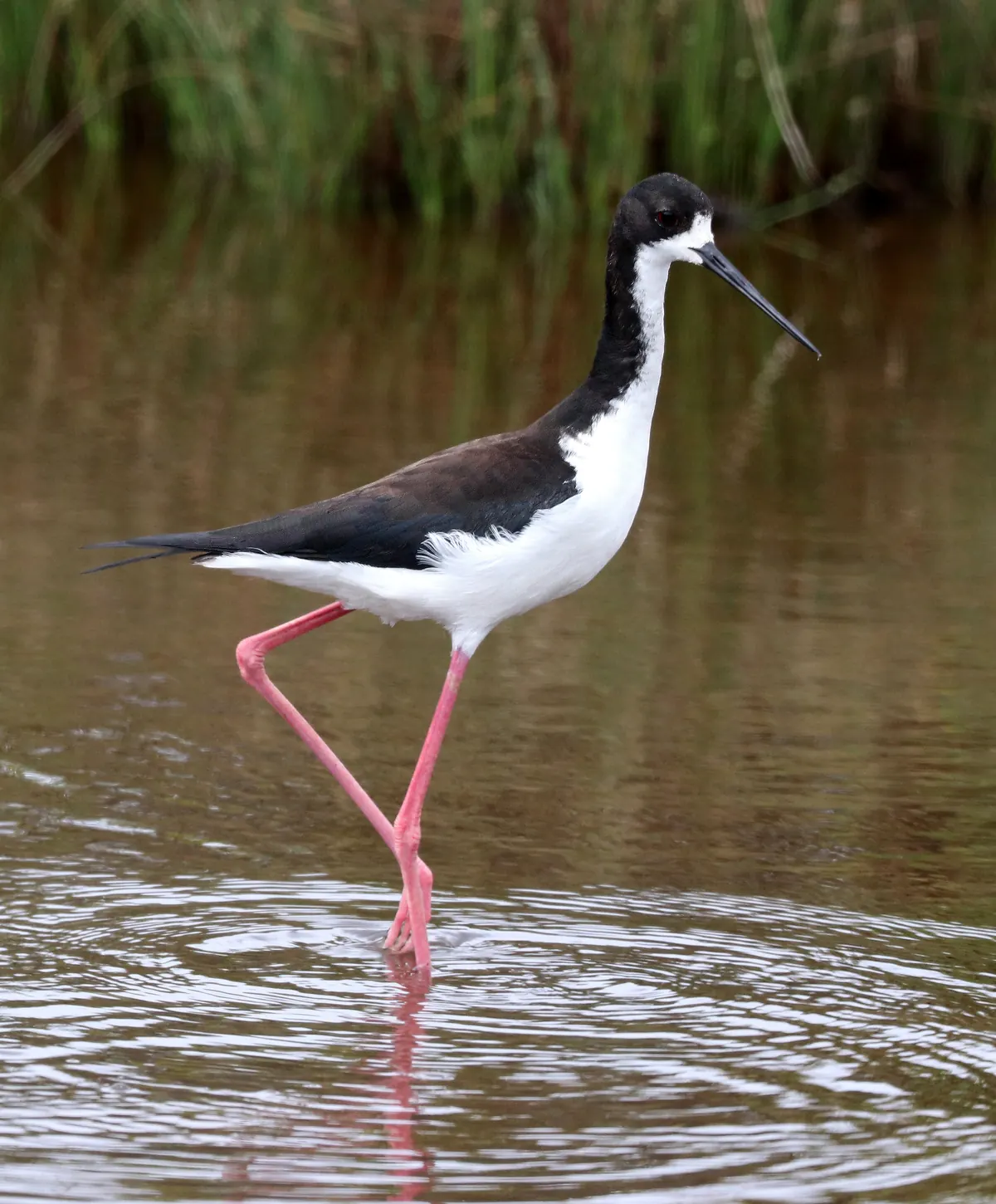
At the coastal wetlands, which fill with visitors from Alaska and beyond in November. Keālia Pond National Wildlife Refuge on Maui says shorebirds start arriving in August and waterfowl build through September and October, and that more than 30 species of waterfowl, shorebirds and migrant ducks show up in winter, a few of them from Asia. They share the ponds with four endangered native waterbirds: the aeʻo, or Hawaiian stilt; the ʻalae keʻokeʻo, or Hawaiian coot; the ʻalae ʻula, or Hawaiian gallinule; and the koloa maoli, the Hawaiian duck.
-
Keālia Pond, Maui
Boardwalk daily 6:30 a.m. to 7 p.m.; visitor center Monday to Friday 9 a.m. to 3 p.m. and the first Saturday of each month · Between Kīhei and Māʻalaea, on the Māʻalaea Bay shore
The coastal boardwalk is open every day, including federal holidays, and the visitor center’s first-Saturday opening falls on November 7. Migrant ducks gather on the open water while stilts and coots feed along the edges. Come early, with binoculars.
-
James Campbell refuge tours, Oʻahu
Guided tours only, October through February; 2026–27 dates not yet posted at the start of October · Near Kahuku, on Oʻahu’s north shore
The refuge is closed to drop-in visitors but opens for free guided bird tours in the non-breeding months, run by the Friends of Oʻahu National Wildlife Refuges, limited to small groups and to visitors aged 10 and older. Contact the Friends group to reserve.
-
Last call for kōlea arrivals
Arrival reports until November 30; winter counts begin December 1 · koleacount.org
Young kōlea are still dropping onto lawns this month, and the Hawaiʻi Audubon Society takes arrival dates until November 30. On December 1 the project moves to winter tallies that run to March 31: one yard or schoolyard for a Little Count, or three visits to a big park, cemetery or golf course for a Big Count.
Project FeederWatch, a winter tally organized by the Cornell Lab with Birds Canada, starts on November 1 and runs through April. You count from one spot, with or without a feeder, as often as you like; the U.S. fee is $18.
Where can you see nēnē and forest birds in November?
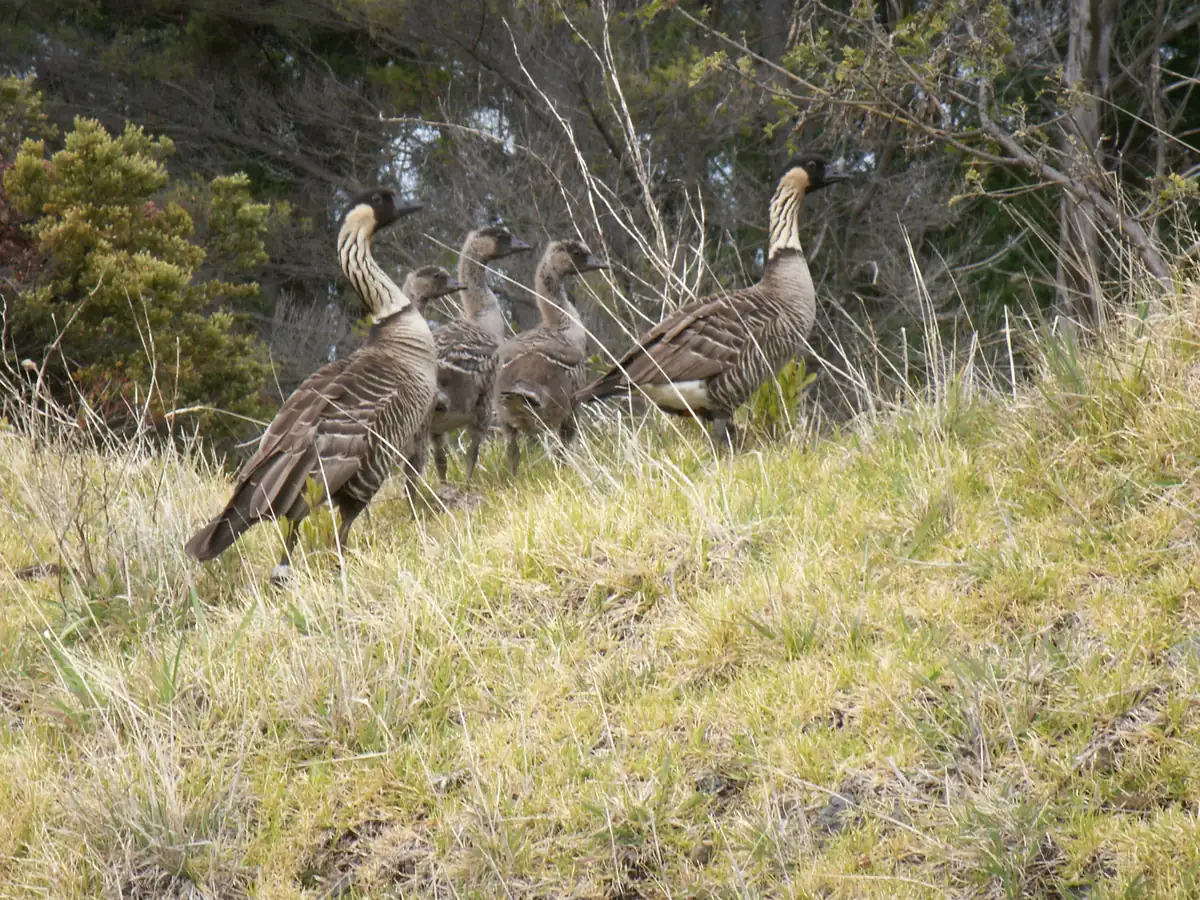
November is the height of the nēnē nesting season. DLNR says the state bird can nest in any month but May, June and July, that most pairs breed between October and March, and that the bulk of clutches go down between October and December. A female lays two to five eggs, which hatch in about 30 days, and the goslings can walk and feed themselves soon after hatching, though they stay with their parents for up to a year. So the first families with goslings can turn up from late in the year, on Hawaiʻi Island, Maui, Kauaʻi and Molokaʻi.
Hawaiʻi Volcanoes National Park says perhaps 25,000 nēnē lived in the islands in 1778 and only about 50 by the 1940s. The recovery since then is real but fragile, and cars remain the leading cause of death for adults in the park.
-
Forest Bird Hikes in Hosmer Grove
November 10, 17, 18, 24 and 25, 9 to 10 a.m. · Haleakalā National Park; meet at the Hosmer Grove picnic shelter
Each free hour-long outing with a park biologist goes looking and listening for ʻapapane, ʻiʻiwi and other honeycreepers, and explains how the park is trying to keep them alive. Bring water, layers and good shoes; mornings at nearly 7,000 feet are cool.
-
Nēnē on the roads
All day; goslings from late in the month · Crater Rim Drive and Chain of Craters Road on Hawaiʻi Island; the Haleakalā summit road on Maui
Drive slowly where the signs show a goose, and expect birds to stand in the road rather than move. Parks close sensitive brooding areas to protect families, so watch for trail signs. Do not feed them: a fed nēnē learns to walk up to cars.
When does the Makahiki season begin?
With the stars. The Makahiki, the Hawaiian new year, was a season of peace, harvest thanks, games and feasting. Kamehameha Schools explains that it began when Makaliʻi, the star cluster known elsewhere as the Pleiades, rose in the east just as the sun went down in the west, and that the season runs from mid-November to late January or February. Accounts differ on exactly which moon after that rising opened the season.
You can watch the sign for yourself. Makaliʻi is a small, tight dipper-shaped knot of six or seven stars, low in the east-northeast after dark. Early in the month it climbs into view a while after sunset; by mid-November it rises at about sunset, and in the last days of November it stands well clear of the horizon at dusk. On the night of November 23 to 24, the full moon passes almost on top of it.
-
Makahiki Festival at Waimea Valley
Wednesday, November 11, 8 a.m. to 3 p.m. · Waimea Valley, Oʻahu’s North Shore
A day of Te Moana Nui games, a traditional Polynesian sports competition, plus hula, music and hands-on cultural activities. Admission is $5 for kamaʻāina aged 4 and up and $10 for others, and military personnel get in free.
Is November the rainy season in Hawaii, and will El Niño dry it out?
November opens Hoʻoilo, the wet half of the Hawaiian year, and in the long-term averages it shows. Honolulu’s normal November rainfall is 2.25 inches, up from 1.51 in October. In Hilo, November is the wettest month of the whole year, with 14.39 inches on average and about 17 days bringing at least a tenth of an inch. The leeward Kona coast is the exception, and stays dry. The Western Regional Climate Center says a winter usually brings one or two Kona storms, bringing widespread heavy rain and often strong winds for hours or days, though some winters have none and others four or five. In some winters as many as six or eight cold fronts sweep over two or more islands, with downpours and gusty northerly winds. Major storms can drop a foot or more of snow on the upper slopes of Haleakalā, Maunakea and Mauna Loa several times a year, almost always between October and May.
This year the outlook leans the other way. Federal forecasters rated an El Niño of the very strongest class better than a nine-in-ten bet for this cool season on September 10, and of a historic one by October to December at three in four. Its September 17 outlook for the islands tilts all four main airports toward a dry winter: a 70 percent lean to below-normal rain from November to January, and 75 percent for December to February and January to March. NOAA’s Climate.gov notes that El Niño favors a dry rainy season in the islands, especially in January and February, with Honolulu running about three inches short, and weaker trade winds that sometimes turn westerly.
| Airport | Nov to Jan | Dec to Feb | Jan to Mar | Dec to Feb: driest third below / median |
|---|---|---|---|---|
| Hilo, Hawaiʻi Island | 70% below normal | 75% below normal | 75% below normal | 19.6 in / 30.2 in |
| Kahului, Maui | 70% below normal | 75% below normal | 75% below normal | 4.6 in / 6.9 in |
| Honolulu, Oʻahu | 70% below normal | 75% below normal | 75% below normal | 3.7 in / 5.6 in |
| Līhuʻe, Kauaʻi | 70% below normal | 75% below normal | 75% below normal | 7.5 in / 8.4 in |
CPC grounds that lean in its computer models and in the way past strong El Niño winters have tended to go dry in the islands, and it keeps the dry tilt going through March to May. The timing matters. The Weather Service’s Pacific ENSO Applications Climate Center notes that rain tends to run above average for most of an El Niño year, then turns dry toward its end, with the worst of it in the first half of the year after. That fits 2026 so far: CPC counted Honolulu’s airport at 230 percent of its average rain from January through August, and Kahului at 288 percent. A wet start, in other words, says little about February. The CPC adds that El Niño tends to bring cooler than average temperatures to the northwestern islands as the winter goes on.
The next set of NOAA outlooks, due October 15, goes up on the CPC’s 90-day outlook page. The central Pacific hurricane season ends on November 30. For the barometer and wind at your own place during a Kona low, open the live weather readout.
How much daylight does Hawaii lose in November?
Between 22 and 25 minutes, less than a minute a day. Sunsets stop getting earlier in late November. In Honolulu the earliest sunset of the whole year comes on November 26 at 5:48 p.m., and the clock time barely moves from about November 21 to December 1; from then on the evenings slowly lengthen again, while the mornings go on getting darker into January, so the day as a whole still shrinks until the solstice. On the mainland, clocks fall back on November 1, but Hawaii does not use daylight time, so the islands simply end up two hours behind the West Coast instead of three.
| City | Nov 1 | Nov 30 | Lost | Per day |
|---|---|---|---|---|
| Lihue | 11 h 19 m | 10 h 54 m | 25 min | 0.9 min |
| Honolulu | 11 h 20 m | 10 h 56 m | 24 min | 0.8 min |
| Kaunakakai | 11 h 21 m | 10 h 57 m | 24 min | 0.8 min |
| Lanai City | 11 h 22 m | 10 h 58 m | 24 min | 0.8 min |
| Kahului | 11 h 21 m | 10 h 58 m | 23 min | 0.8 min |
| Kailua-Kona | 11 h 25 m | 11 h 02 m | 23 min | 0.8 min |
| Hilo | 11 h 24 m | 11 h 02 m | 22 min | 0.8 min |
For first light and last light at your own beach or ridge, set a pin on the daylight calculator.
What is in Hawaii’s night sky this November?
All times are Hawaii Standard Time. The islands do not change their clocks, so nothing shifts here on November 1.
-
The Leonids
Active November 6 to 30; best before dawn on Wednesday, November 18 · Any dark spot with a view east and overhead
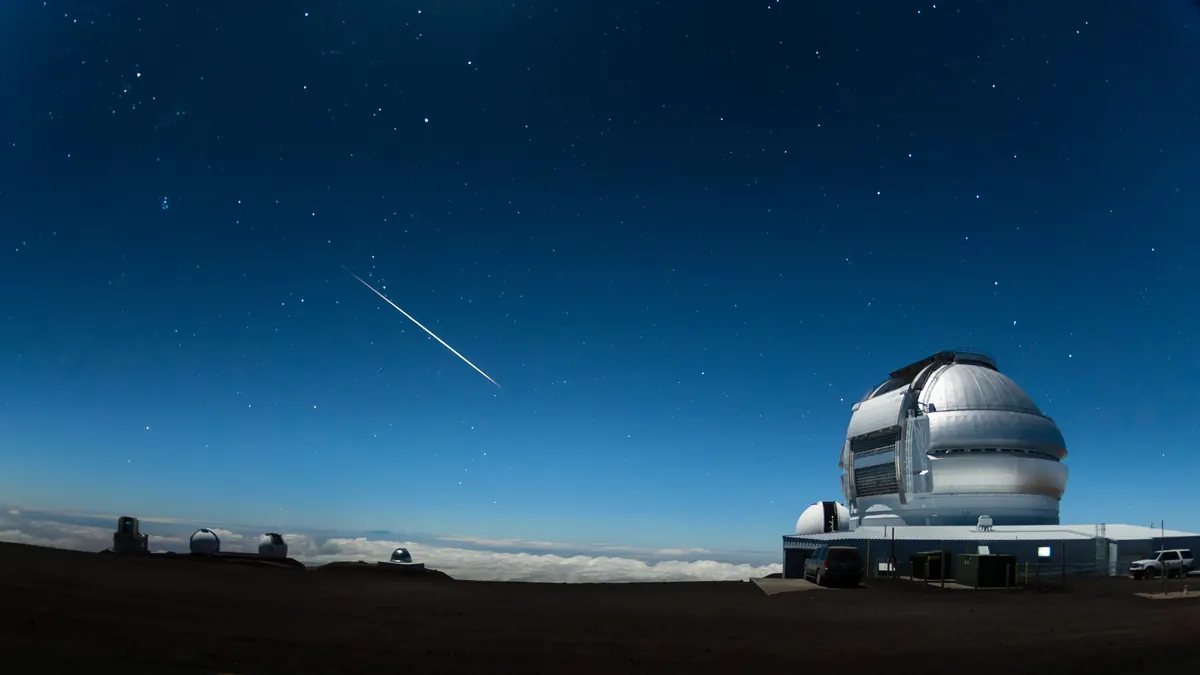
This is not an outburst year: the International Meteor Organization’s forecast is about 15 meteors an hour for an observer under a perfect sky, and fewer in practice. In Honolulu on the 18th the half-lit moon sets at 1:02 a.m. and twilight begins at 6:21 a.m., so watch from about 1 a.m. until the sky starts to brighten a little after 5. Leo climbs out of the east after midnight, and the meteors get more frequent the higher it gets. Hawaii’s mornings on the 17th and 19th are fallbacks if clouds roll in.
-
Taurid fireballs
Southern Taurids peak about November 5; Northern Taurids about November 12 · Anywhere; the shower is spread across the sky
Expect just a handful of Taurids each hour, five to ten, yet a few arrive as slow, bright fireballs. Both peaks fall in dark stretches of the lunar month, with the new moon on the 8th between them, and the radiant in Taurus is well up by late evening, which makes this the best family meteor shower of the month. The Taurids are debris from Comet Encke.
-
The Beaver Moon beside Makaliʻi
Evenings of Monday, November 23 and Tuesday, November 24 · East, at dusk
The moon is exactly full at 4:53 a.m. on the 24th, between those two evenings. In Honolulu it comes up at 5:05 p.m. on the 23rd, 43 minutes before the sun sets, and at 6:03 p.m. on the 24th. It is a modest supermoon, with the closest point of its orbit coming about 30 hours after full. That night it sweeps across or right beside the Pleiades, closest around 1:45 a.m. on the 24th; the moonlight drowns most of the cluster, but binoculars show the brightest stars.
-
Four planets before dawn
All month; Mars and Jupiter closest the mornings of November 15 and 16 · East and southeast before sunrise
Venus, back in the dawn sky after passing the sun in late October, gains height each morning and reaches its greatest brilliance around November 24 to 27. Look for it about a degree from Spica on the morning of the 9th. Higher up in Leo, rust-colored Mars and much brighter Jupiter close in on each other and sit just over a degree apart on the 15th and 16th. From mid-month Mercury rises low in the east too, best seen from about November 18 to 25. In the evening, Saturn hangs alone in the south, the only bright planet up after dusk.
-
Stargazing on Maunakea and Haleakalā
Weather permitting · Maunakea Visitor Information Station (9,200 ft); Haleakalā summit district
The Maunakea station offers free telescope stargazing in the evenings and is open 9 a.m. to 9 p.m.; above it, a four-wheel-drive vehicle in low range is required, and the summit closes half an hour after sunset. On Haleakalā the park reckons on roughly 30 °F less than the coast before wind chill, and the summit can drop below freezing.
| Phase | Date | Time |
|---|---|---|
| Last quarter | Sunday, Nov 1 | 10:28 a.m. |
| New moon | Sunday, Nov 8 | 9:02 p.m. |
| First quarter | Tuesday, Nov 17 | 1:48 a.m. |
| Full moon, the Beaver Moon | Tuesday, Nov 24 | 4:53 a.m. (looks full the evenings of Nov 23 and 24) |
| Last quarter | Monday, Nov 30 | 8:08 p.m. |
Planning a summit night? Our cloud forecast shows whether the trade-wind cloud deck will sit below the mountain, and the moon calendar gives moonrise for your island.
What should you plant in Hawaii in November?
A native tree, if you can. Hawaii observes Arbor Day on the first Friday of November, which in 2026 is November 6, and DLNR’s Kaulunani urban forestry program chose the date because the rainy season has just begun and young roots have months of wet weather ahead. Tree giveaways usually fall on the Saturday after; last year’s offered natives such as ʻōhiʻa lehua, wiliwili, ʻaʻaliʻi, pōhinahina and hōawa. Kaulunani had not yet listed the 2026 giveaways at the start of October.
-
Arbor Day tree giveaway at Waimea Valley
Saturday, November 7, 8 a.m. to noon · Waimea Valley (Cullen Lot), Oʻahu
Free trees while they last. Ask what the plant needs before you pick: ʻaʻaliʻi and pōhinahina take dry, sunny spots, while ʻōhiʻa wants rain and good drainage.
-
Coffee picking time in Kona
Festival November 6 to 15 · The coffee belt above Kailua-Kona, Hawaiʻi Island
The 55th Kona Coffee Cultural Festival opens with a lantern parade from Kailua Pier on the evening of November 6, 6 to 7 p.m., and runs farm tours through the week. From November 9 to 13 visitors can pick ripe red cherry themselves at a Holualoa estate. The awards for the cupping competition close the festival on November 15.
What can families do outside in Hawaii this November?
- Walk to the albatross. The Kaʻena Point trail is long and exposed, so go in the cool of early morning, bring lots of water and a hat, and leave the dog at home. Count how many birds are sitting and how many are dancing.
- Help the rainforest grow back. Volunteer mornings pulling invasive plants at Hawaiʻi Volcanoes National Park (Stewardship at the Summit) start at 8:45 a.m. on Saturday, November 7 and run about three hours (the park has also listed November 21 and 28; check its calendar); gloves and tools are provided, wear long pants and sturdy shoes, and anyone under 18 needs a parent or guardian.
- Look for honeycreepers. A free Forest Bird Hike leaves the Hosmer Grove picnic shelter in Haleakalā National Park at 9 a.m. on November 10, with more listed for November 17, 18, 24 and 25; confirm on the park’s calendar.
- Use the free day. Veterans Day, Wednesday, November 11, is a fee-free day at the national parks, now for U.S. citizens and residents only. The same day brings Waimea Valley’s Makahiki Festival.
- See a fishpond being mended. At Kaloko-Honokōhau National Historical Park on the Kona coast, a stone-setter demonstrates traditional Hawaiian wall building at Kaloko Fishpond on the third Wednesday of each month, November 18, 10 to 11 a.m.
- Plant a tree on Arbor Day weekend (Waimea Valley’s giveaway is Saturday, November 7), and take a photo of it on the first of every month.
- Join a count. Report a kōlea arrival before November 30, sign up for a Little Count of your yard from December 1, or start Project FeederWatch.
- Watch for Taurid fireballs around November 5 and 12, in the late evening.
The Naturalist’s Field Journal has room for all of this, and the full set of seasonal nature guides covers other months and states.
Safety notes for November in Hawaii
- Kauaʻi is still largely closed. After Hurricane Lowell and then Nolo, DLNR’s September 30 update kept nearly all forestry and wildlife lands and trails on the island closed, with a few exceptions such as Mana Plains, Keāhua Arboretum and the bottom of Waimea Canyon; Kōkeʻe Road was shut for cleanup and utility work in late September, and Kīlauea Point National Wildlife Refuge remains closed. Check DLNR’s and the refuge’s pages before any Kauaʻi outing.
- Kona storms and flash floods. Heavy rain on steep, small watersheds turns streams into torrents in minutes. Never cross a rising stream, and stay out of the water near stream mouths after heavy rain, when the state may post brown-water advisories. Avoid swimming in fresh water with cuts because of leptospirosis.
- Winter surf. North and west shores can go from flat to dangerous overnight. Swim at guarded beaches, ask the lifeguard about currents, and stay well back from the shorebreak and wet rocks when the surf is up. The Waikīkī Aquarium posts the expected box jellyfish days, which follow the moon’s monthly cycle.
- Summits in winter. Winter storms can coat the upper slopes of Maunakea, Mauna Loa and Haleakalā in snow, and the summits can be below freezing before dawn. Check the Maunakea Weather Center’s road report, take warm layers and gloves, and go slowly at altitude.
- Kīlauea. On October 1 the USGS Hawaiian Volcano Observatory kept the volcano at alert level WATCH, with glow and spatter at the summit vents, a fresh shallow intrusion, and another fountaining episode possible. Check the daily update before visiting, and stay out of vog if you have breathing or heart problems.
- Earlier dark. By late November the sun is down by about 5:40 p.m. in Hilo and 5:53 p.m. in Līhuʻe. Start long hikes early and carry a light.
- Hunting and blaze orange. The fall game bird season opens on the first Saturday in November and runs through the last Sunday in January under the state’s rules, which this year is November 7, 2026 to January 31, 2027, on weekends, state holidays and, in some units, extra weekdays. DLNR’s 2026–27 announcement with unit-by-unit details had not been posted at the start of October; last year’s came out in October. On Kauaʻi, DLNR’s 2026 deer announcement has archery hunting daily in Unit F and on weekends and holidays in Units J and K through December 31, where storm closures allow, and pigs and goats are open year-round in many units statewide. Wherever firearms are permitted, state rules put everyone in the party, hunters, guides, helpers and companions, in a factory-made blaze-orange outer garment (a solid shirt, vest, jacket or coat, or mesh with holes of one-eighth inch at most) that shows from the front and the back. Camouflage orange is not allowed. Hikers sharing hunting areas should wear something bright too.
Sources
- DLNR Division of Forestry and Wildlife: mōlī (Laysan albatross)
- Friends of Kauaʻi Wildlife Refuges: mōlī at Kīlauea Point
- U.S. Fish and Wildlife Service: Kīlauea Point National Wildlife Refuge (closed for post-hurricane repairs)
- DLNR Natural Area Reserves: Kaʻena Point
- DLNR Division of Forestry and Wildlife: ʻuaʻu kani (wedge-tailed shearwater)
- DLNR: seabird fallout season and island contacts
- DLNR Division of Forestry and Wildlife: Oʻahu FAQ (downed seabird drop-off sites)
- Maui Now: Hawaiʻi Wildlife Center mobilizes as seabird fallout season begins (September 15, 2025)
- Urmston, Hyrenbach and Swindle, PLoS ONE (2022): wedge-tailed shearwater fallout on southeast Oʻahu (PDF via DLNR)
- Hawaiian Islands Humpback Whale National Marine Sanctuary: about the sanctuary
- Hawaiian Islands Humpback Whale National Marine Sanctuary: responsible recreation
- Kauaʻi Now: Holo Holo Charters records first humpback of the 2025–26 season (October 14, 2025), with the Pacific Whale Foundation’s September 21 Maui sightings
- Western Regional Climate Center: climate of Hawaii
- U.S. Fish and Wildlife Service: Keālia Pond National Wildlife Refuge
- U.S. Fish and Wildlife Service: Keālia Pond, visit us (hours)
- U.S. Fish and Wildlife Service: James Campbell National Wildlife Refuge
- Friends of Oʻahu National Wildlife Refuges: James Campbell tours
- Hawaiʻi Audubon Society Kōlea Count: guidelines
- Cornell Lab of Ornithology: Project FeederWatch overview
- DLNR Division of Forestry and Wildlife: nēnē
- Hawaiʻi Volcanoes National Park: nēnē
- Haleakalā National Park: Forest Bird Hike, November 10 (also Nov 17, 18, 24, 25)
- DLNR: most lands reopen after Nolo, Kauaʻi exceptions (September 30, 2026)
- Hawaii News Now: DLNR begins reopening select Kauaʻi lands after Hurricane Lowell (September 20, 2026)
- Kamehameha Schools: the rise of Makaliʻi marks a Hawaiian new year
- Waimea Valley: Makahiki Festival, November 11
- Waimea Valley: events (Arbor Day November 7, King Kalākaua’s birthday November 15, Lā Kūʻokoʻa November 28)
- NOAA NCEI: 1991–2020 monthly normals for Honolulu, Hilo, Līhuʻe, Kahului, Kona and Molokaʻi (data API)
- Climate Prediction Center: ENSO diagnostic discussion, September 10, 2026
- Climate Prediction Center: Hawaii seasonal outlook, September 17, 2026
- Climate Prediction Center: 90-day outlooks (NOAA winter outlook due October 15, 2026)
- NOAA Climate.gov: Surf’s up, how does ENSO impact Hawaii?
- Central Pacific Hurricane Center
- U.S. Naval Observatory: 2026 moon phases (data API)
- U.S. Naval Observatory: Honolulu sun and moon times, November 18, 2026
- U.S. Naval Observatory: Honolulu sun and moon times, November 23, 2026 (also November 24 and 26)
- International Meteor Organization: 2026 meteor shower calendar (PDF, archived copy)
- EarthSky: what is a supermoon? (2026 full supermoons)
- RASC Observer’s Handbook 2026: lunar occultations (Pleiades, November 24)
- NASA JPL Horizons: planet and moon positions, November 2026
- EarthSky: Mercury’s greatest western elongation
- EarthSky: Uranus at opposition
- University of Hawaiʻi at Hilo, Center for Maunakea Stewardship: Visitor Information Station
- Haleakalā National Park: weather
- DLNR Kaulunani: Arbor Day in Hawaiʻi 2026
- Kona Coffee Cultural Festival 2026
- University of Hawaiʻi CTAHR: Rapid ʻŌhiʻa Death
- Hawaiʻi Volcanoes National Park: Stewardship at the Summit, November 7 (also Nov 21, 28)
- Kaloko-Honokōhau National Historical Park: Noʻeau Hoʻoniho stone-setting demonstration, November 18
- National Park Service: 2026 fee-free days
- USGS Hawaiian Volcano Observatory: Kīlauea updates (October 1, 2026)
- Waikīkī Aquarium: box jellyfish calendar
- Hawaii Department of Health: leptospirosis
- DLNR: Hawaii Administrative Rules chapter 13-122, game birds (season dates, blaze orange)
- DLNR: Hawaii Administrative Rules chapter 13-123, game mammals (blaze orange)
- DLNR: 2026 black-tailed deer season on Kauaʻi (PDF)
- DLNR: hunting announcements (2025–26 game bird announcement; 2026–27 not yet posted)
- Hawaii Department of Health, Ocean Safety: weather hazards and brown-water advisories
- NWS Pacific ENSO Applications Climate Center: El Niño and its impacts on Hawaiʻi (rainfall timing)
- Photos via Wikimedia Commons; licenses and photographers are credited under each picture
