What to look for in nature in Hawaii this May
May is the month the Sun passes straight over Hawaii. For a few days on each island the noon shadow of a pole shrinks to nothing, and the trade winds settle into their summer pattern, the rains thin out on most coasts, and the first sea turtles begin to dig their nests. It is also Lei Day, the peak of Hawaiian stilt nesting, a month of monk seal pups, a new moon with a meteor shower, and a full moon that is a seasonal Blue Moon. Read on from the beach to the mountain tops.
Other months in Hawaii: October, November, December, January, February, March, April.
Start here
- Measure a noon shadow. In the week your island gets the overhead Sun, stand a straight pole on level ground and mark its shadow every ten minutes around noon. A tiny shadow near 12:20 to 12:35 p.m., depending on the island, is the whole point.
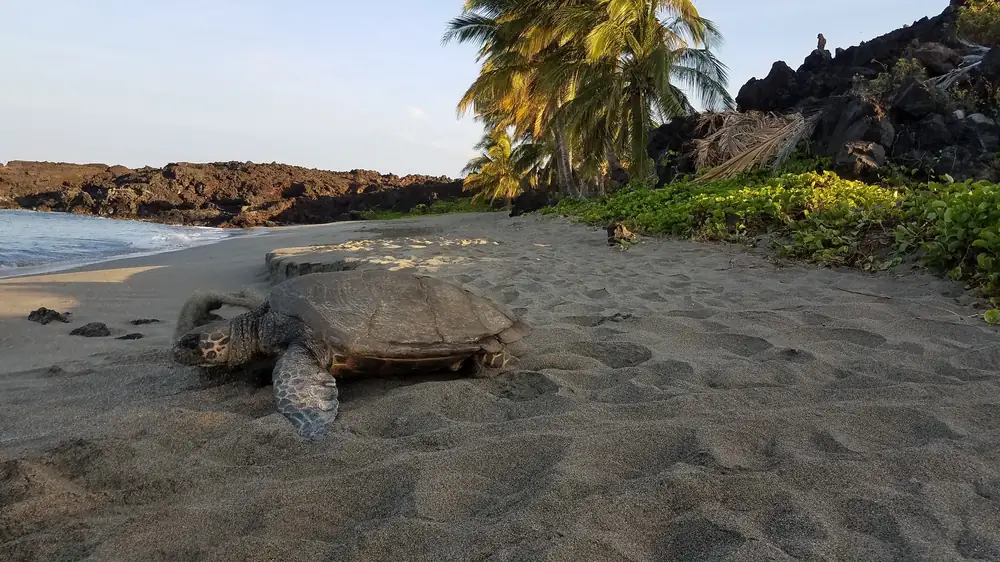
- Walk a beach at first light. Look for the wide, flipper-patterned track of a nesting turtle or the rope around a monk seal pup, and enjoy both from well back. Stay off the nest, and tell the hotline.
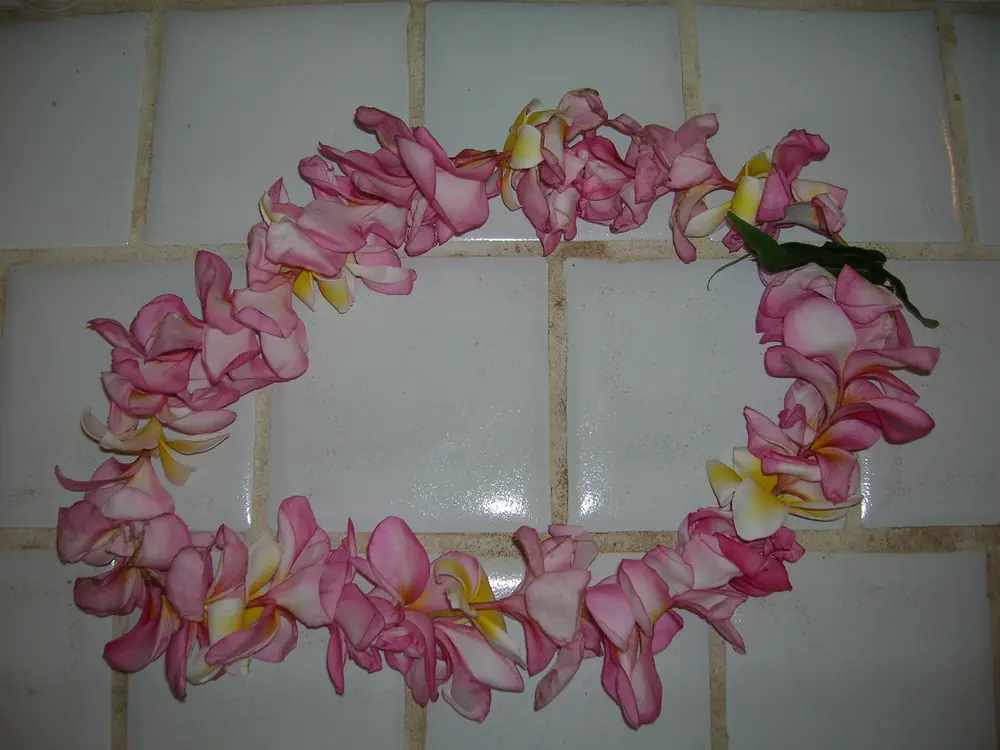
- Name the flowers in a lei. On Lei Day, May 1, ask a lei maker what each flower, leaf or seed is, and write it down with the island and the date.
Several Naturalist’s Field Journal plates suit May: a noon shadow measured at one spot on two visits, near Lāhainā Noon, on the same place twice plate, tracks to know for a turtle crawl or a bird print on a pond edge, nest observed for a stilt on its nest from a distance, birds I have seen for stilts and summering kōlea, mammal watch for a monk seal pup or an evening bat, a map of sounds for the dusk calls of shearwaters or petrels, reading the signs for the steady trade winds, and dusk and dawn watch for the Eta Aquariids, Mercury and the Flower Moon.
Regions used below: Kauaʻi; Oʻahu; Maui, Molokaʻi and Lānaʻi; Hawaiʻi Island; The high summits: Maunakea, Mauna Loa and Haleakalā.
When does the Sun stand straight overhead in Hawaii, and why do shadows vanish at noon?
Every spring the Sun climbs far enough north that, for a few days, it passes directly over each island in turn. The Bishop Museum calls the moment Lāhainā Noon and says it happens twice a year at any place in the tropics, once in May and once in July. At that moment an upright pole casts almost no shadow. The cause is plain geometry: the Sun is overhead at noon only when its latitude on the sky matches the latitude of the place you stand on, and the Sun reaches the latitudes of the islands (about 19 to 22 degrees north) on its way north in May and again on its way south in July. The Big Island, being farthest south, gets there first, and Kauaʻi, being farthest north, gets there last.
The museum’s published table covers 2026 only, and it lists Honolulu on May 26 at 12:28 p.m. Hawaii Standard Time. One independent 2027 compilation, by a Big Island travel site that updated its page on August 1, 2026, shows Honolulu on May 26 to 27 at 12:29 p.m. The Naval Observatory’s own Honolulu table agrees on the clock: the Sun crosses the meridian at 12:28 p.m. on May 19 and May 20, and at 12:29 on May 26, 27 and 28. The dates move by a day from one year to the next, so treat the list below as a guide to the week. Our own calculation of the Sun's position agrees with the 2027 compilation to within a day for every town named here, and you can confirm your own town in a solar calculator or on the museum page once it posts a 2027 table.
-
Hawaiʻi Island
About May 14 to 21 · South Point, Nāʻālehu, Volcano, Hilo, Kailua-Kona, Waimea
The museum’s 2026 table has South Point on May 14, Hilo and Kailua-Kona on May 18, and Waimea on May 19. The 2027 compilation shows Nāʻālehu on May 15, Volcano on May 17, Hilo and Kailua-Kona on May 18, Waimea on May 20 and Hāwī on May 21, all near 12:17 to 12:20 p.m. Hilo’s clouds may take the show away, since it rains there on about 14 days of the month.
-
Maui, Lānaʻi and Molokaʻi
About May 23 to 25 · Wailea, Kīhei, Kahului, Lahaina, Lānaʻi City, Kaunakakai
For 2026 the museum lists Hāna on May 23, Kahului, Lahaina and Lānaʻi City on May 24, and Kaunakakai on May 25. The 2027 compilation gives Wailea May 23, Kīhei May 23 to 24, Kahului, Lahaina and Lānaʻi City May 24, and Kaunakakai May 25, with the Sun due south at about 12:23 to 12:25 p.m.
-
Oʻahu
About May 26 to 29 · Honolulu, Kāneʻohe, Haleʻiwa
The museum has Honolulu on May 26, Kāneʻohe on May 27 and Haleʻiwa on May 28 for 2026. The 2027 compilation shows Honolulu on May 26 to 27, Kāneʻohe on May 27 and Haleʻiwa on May 28 to 29. Honolulu’s second passage comes in mid-July.
-
Kauaʻi
About May 30 to June 2 · Poʻipū, Līhuʻe, Princeville
The museum gives Līhuʻe as May 30 in 2026. The 2027 compilation lists Poʻipū on May 30, Līhuʻe on May 31 and Princeville on June 2, at about 12:35 to 12:36 p.m. Kauaʻi is the last island to see it and the first to get the July one, around July 9 to 12.
-
Make a shadow test
Any clear day in the week before and after · A flat patch of ground
Stand a straight stick or a tent pole on level ground, check it with a plumb line or a level, and mark the tip of its shadow every ten minutes from 11:30 a.m. to 1 p.m. Near your date the shadow shrinks to a small blob and then swings around to the other side. The Sun cannot be exactly overhead for long, so you are measuring minutes, not hours.
This is not a solar eclipse and it does not need eye protection to see the shadows, but looking at the Sun still hurts your eyes. The island-by-island daylight figures are in the table further down, and the day-length page covers other places.
What is Lei Day, and what happens on May 1?
May Day is Lei Day in Hawaiʻi. The idea came from the poet Don Blanding in the 1920s, and Honolulu Star-Bulletin columnist Grace Tower Warren suggested tying it to May 1 and coined the phrase “May Day is Lei Day.” The first official Lei Day was in 1928, with a lei contest and exhibition. It began at City Hall and later moved to Queen Kapiʻolani Park in Waikīkī, where the City and County of Honolulu still holds it every year on May 1, rain or shine.
The city’s program page describes a lei contest, a Lei Court, hula and music, lei-making workshops, and artisan booths, free to the public. In 2026 the day ran from 9 a.m. to 5 p.m., with a closing ceremony the next morning when contest lei were laid at Mauna ʻAla and Kawaiahaʻo Church. For 2027 the page names the 99th celebration’s theme, “Pae mai la ka waʻa i ka ʻāina,” and kou as the featured flora, but gives no hours, so check the city page. May 1, 2027 is a Saturday.
-
Know what a lei is made of
May 1, and any gift-giving day · Contest tables and vendors
The Hawaiʻi Magazine history says lei are made from flowers, shells, or feathers, and that each was often made for one person as a gift.
-
Giving a lei
Whenever you receive one · Anywhere
The same article notes that a lei was once tied around the wearer’s neck because the head and back were considered sacred, and that today the giver usually lifts it over the wearer’s head. The maker’s mana, or spirit, is said to pass to the person who wears it.
-
Plants to name
Through the day · Park and shop displays
Kou is the city’s featured flora for 2027, and plumeria, with its pink, white and yellow blossoms, is among the most familiar flowers strung into a lei. Ask the stall holder which parts are native, which are Polynesian introductions and which came later; a lei is a short botany lesson.
The Naturalist’s Field Journal has room to log the flowers in one lei, with a note of the island and date, on the field journal page.
When do sea turtles start nesting in Hawaii, and are any whales left?
The state’s Division of Aquatic Resources puts the Hawaiian green sea turtle’s nesting season at late May to early October. The great majority of nesting happens far from the main islands: the division says roughly 96 percent of Hawaiian green turtles lay their eggs on French Frigate Shoals, part of the Northwestern Hawaiian Islands, although some also nest in the main islands. May is therefore the month to expect a rare track on a quiet beach, not a crowd. Green turtles are also the only sea turtles that bask on beaches, so the more common sight in May is an adult resting on warm sand, which is a different thing from nesting.
The humpback whales are almost done. According to the sanctuary’s boating guidance, whale season lasts from November through May and the crowds come in January to March, and the season’s final shore count came in March. A May whale is the tail of the season, and the law still keeps vessels and swimmers at least 100 yards away.
-
Look for crawl tracks at first light
Late May onward · Quiet beaches of the main islands
A nesting green turtle leaves a wide, flipper-patterned track from the water to a hollow above the high-tide line. The state asks people near known nesting beaches to use red or amber light instead of white light. Report a nest or a stranded turtle to the Statewide Marine Animal Hotline, 833-4-DA-NETS, or to NOAA’s hotline, 888-256-9840, and leave any nest undisturbed.
-
Honuʻea, the hawksbill
Nesting on a few beaches, mostly after May · Southeast Hawaiʻi Island, parts of Maui and Molokaʻi
Hawaii Volcanoes National Park’s page on honuʻea says fewer than 20 females nest in a year, that a female buries an average of 180 eggs, and that they incubate for about two months. The park does not name the months on that page. It asks beach campers not to build fires and to cover flashlights with a red filter pointed away from the ocean during the season, so ask the park before any overnight beach trip in late spring. Hawksbills are critically rare, so a nest is a major event.
-
Humpbacks, if you are lucky
Through May, thinning out · Any island shoreline
Stay 100 yards away from any humpback, on a boat or in the water. Report collisions, injured or entangled whales to NOAA at 888-256-9840, or on VHF channel 16 if you cannot call; report a suspected close approach to the enforcement hotline at 800-853-1964.
For the whale counts earlier in the season, see the Hawaii March page, and for the turtle that basks on beaches, the Hawaii April page.
Are Hawaiian monk seals still having pups in May?
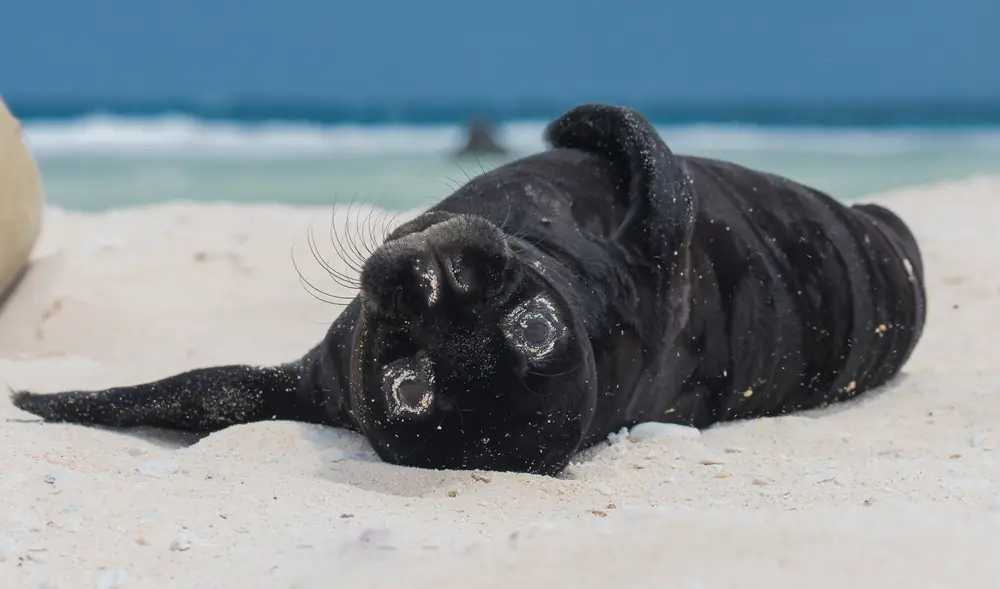
Yes. DLNR says monk seals are born year-round, with the heaviest stretch from March to August, and the nursing period runs five to seven weeks. NOAA Fisheries estimates about 1,600 seals in total, with about 400 in the main islands. A pup in May is likely to be on a public beach, which is why a May example is worth reading.
On the evening of May 3, 2026, a pup was born at sunset at Kaimana Beach, beside Waikīkī, to a 15-year-old female called Kaiwi. The state’s release described the response: protective fencing on the shoreline so the pair could rest, monitoring by NOAA Fisheries and the Hawaiʻi Marine Animal Response, and a 50-yard buffer in the water where enforcement staff could keep it. The release also recalled that a swimmer was injured by a mother seal at the same beach in 2022. A nursing mother can be dangerous, however calm she looks.
-
Keep your distance
While a pup is on the beach · Any beach
Keep 150 feet or more away from a mother that has a pup, and at least 50 feet from any other seal. Keep dogs leashed and far away, stay behind signs and cones, use binoculars or a zoom lens, and avoid swimming near a pair.
-
Report it
As soon as you find a new pup · Any shore
Call the NOAA Marine Wildlife Hotline at 888-256-9840 with the beach, the time, and whether a pup is with the seal. Responders then decide what fencing and signs the beach needs.
The April page describes the first weeks of the season; see Hawaii in April.
What are Hawaii’s land and wetland birds doing in May?
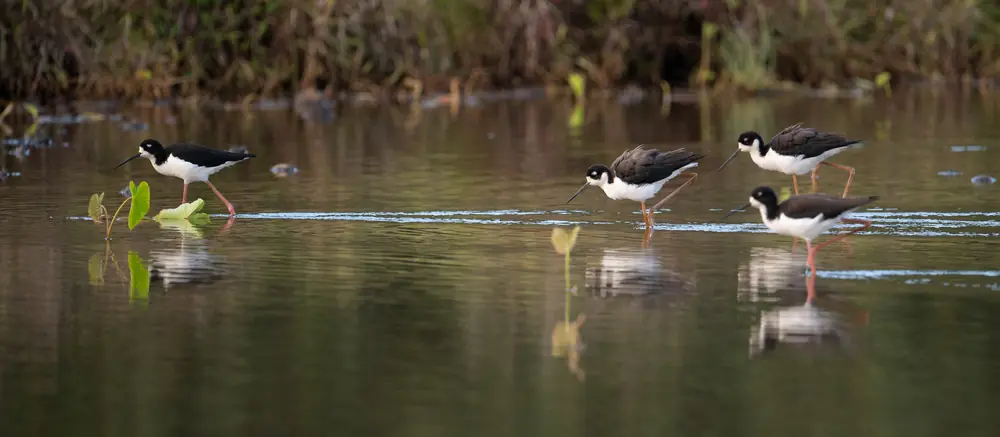
May is a quiet-looking month with a lot going on underneath. The Hawaiian stilt, or aeʻo, is at its busiest. DLNR says the species nests from March through August, peaking in May and June, with clutches of usually three to four eggs that hatch about 24 days after laying. The chicks are born able to run and feed, and stay with their parents for several months. The nēnē, by contrast, are between seasons. DLNR lists May, June and July as the only months with no nēnē nesting, and says most nest from October through March, so the goslings you see in May are the large ones from the winter. The winter plovers have gone, and a few remain for the summer.
-
A stilt on guard
Peak nesting, May and June · Keālia Pond on Maui, Hanalei on Kauaʻi, and other wetlands
DLNR notes that adults protect their nests fiercely, calling, swooping at intruders and faking a broken wing. An adult that shrieks at you is telling you that you are too close, so step back slowly and use a telephoto lens from a boardwalk or viewpoint.
-
Nēnē out of the nest
No new nesting in May · Roadsides, ranches and golf courses on Maui, Kauaʻi and Hawaiʻi Island
DLNR’s rules are the same all year: do not feed nēnē, do not leave cat food outdoors, slow down near roads, and keep dogs on a leash. A fed goose learns to wait by a road and gets hit.
-
Summering kōlea
Counted in June · Lawns and fields
The Kōlea Count asks for departure dates in April and May, and for the number of birds that stay for the summer in June only. Some kōlea do stay behind, so a lone black-and-gold plover in the heat of summer is still worth a note. Check the organizers’ guidelines for the report form.
-
A May dawn chorus
About sunrise, around 5:50 a.m. · Kīpuka Kī in Hawaiʻi Volcanoes National Park
The park’s dawn-chorus page uses a recording made in mid-May 2015. The sound begins abruptly at sunrise, builds as dozens of ʻapapane join in, peaks about 18 minutes in, and thins out by about 30 minutes, when the flocks fly off to feed. The Naval Observatory has Honolulu’s sun rising at 5:52 a.m. around May 19; the park, farther east on the Big Island, will see the Sun a few minutes sooner.
-
Night calls at Haleakalā
After dark · Haleakalā National Park
The park says the ʻuaʻu, the Hawaiian petrel, is in its Maui colony from February through November, with an estimated 3,000 to 4,000 breeding pairs, and that each female lays one egg and the two parents share roughly 56 days of incubation. Calls can be heard at night near the colony, so head out after dark with a red light, stay on trails and bring warm layers.
For the earlier chapter of each story, see the Hawaii April page.
What do the big seabird colonies look like in May?
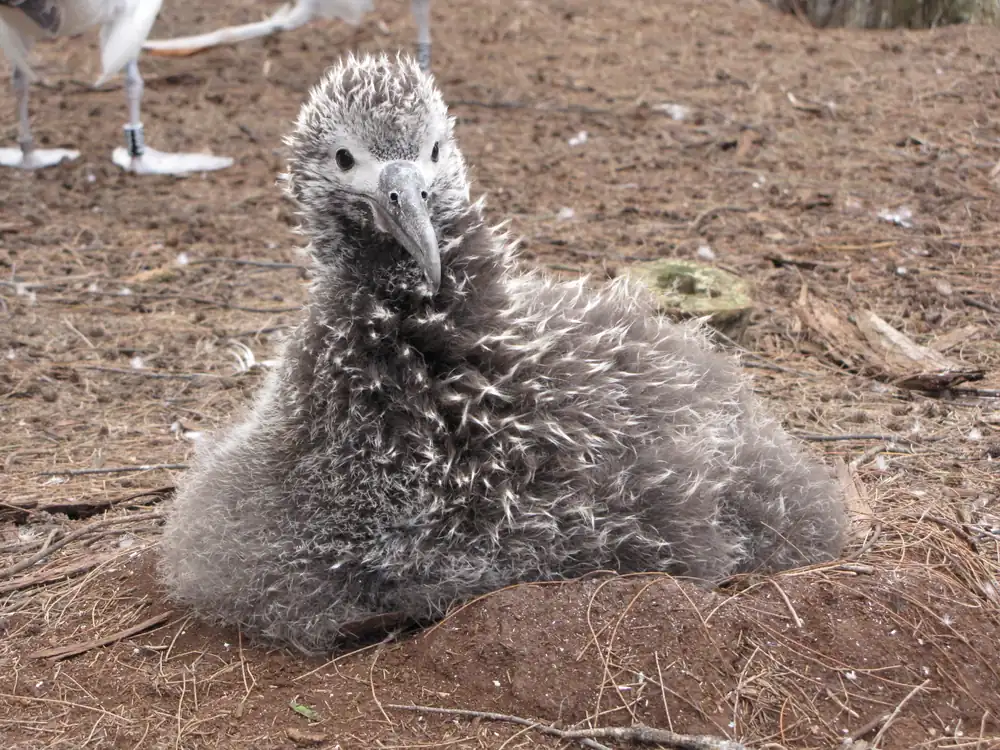
The mōlī, or Laysan albatross, is a bird of the other half of the year. DLNR dates egg-laying to November and December and fledging to July, so the May chick is a large, fluffy bird waiting for its parents’ meals. The two largest main-island colonies are at the Kīlauea Point refuge on Kauaʻi and at Kaʻena Point Natural Area Reserve on Oʻahu, where predators are controlled. The refuge’s page said in October 2026 that it was closed for post-hurricane repairs and that its reservation system was unavailable, so check it before planning a trip. The friends group notes that ʻuaʻu kani, the wedge-tailed shearwater, lays a single egg in June, incubates it for about 50 days and hatches it in August, so May is still the courtship and burrow-sharing month.
-
Albatross chick on a dune
Through June, before the July fledging · Kaʻena Point on Oʻahu, the Kauaʻi north shore
Keep a good distance and never approach a chick. People and pets that wander into a colony can crush burrows and eggs.
-
Shearwaters at dusk
At dusk, mid-spring · Coastal bluffs and dune slopes
The friends group says ground-nesting birds are highly vulnerable to loose cats and dogs, and asks people to leash dogs on coastal hikes and keep cats indoors. Stay on trails after dark.
Why does the state ask people not to trim trees starting June 1?
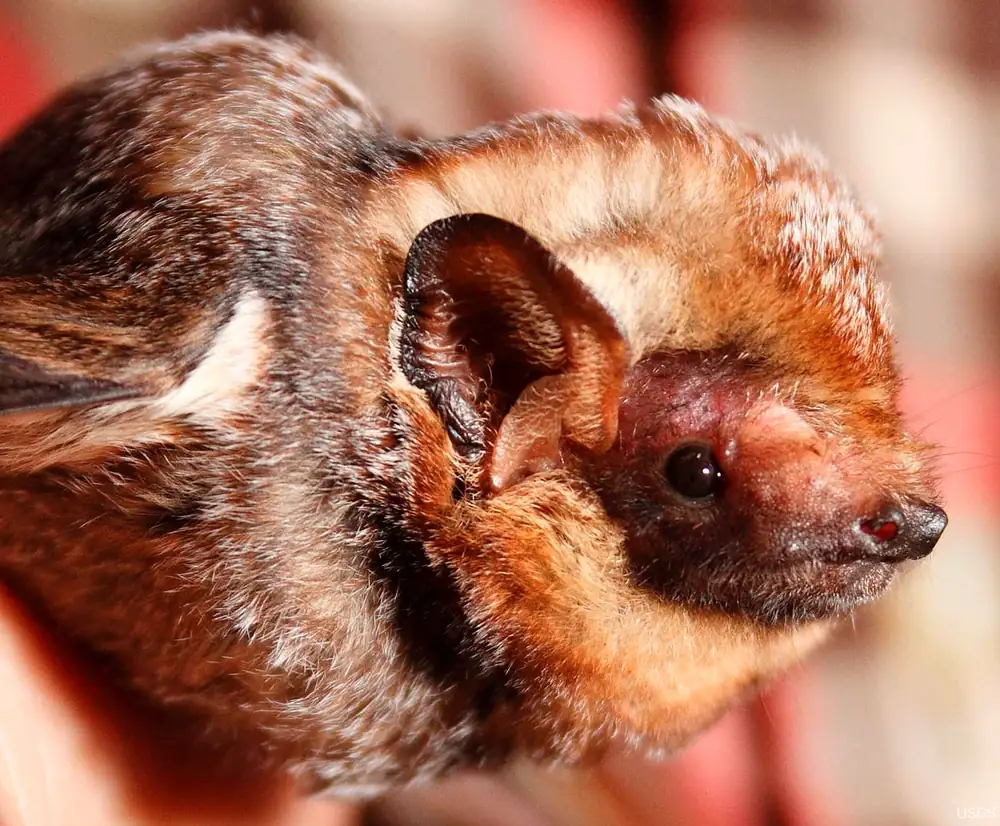
The ʻōpeʻapeʻa, or Hawaiian hoary bat, is the state’s only native land mammal and is endangered. A female often has twins, and she tucks them into a tree crook. DLNR asks the public not to trim trees between June 1 and September 15, when pups are most likely to be in nests and cannot fly. May is the month to finish tree work: after that, the new pups may be in the branches.
-
Finish tree work by May 31
Before June 1 · Yards and farms across the islands
If a job cannot wait, ask DLNR first. The sources do not say how the rule applies to a specific private property, so call before cutting a large tree.
-
Make a bat-friendly night
All season · Home and yard
DLNR also asks people to keep cats indoors, point outdoor lights downward at a low wattage, and keep in mind that lights can lead to collisions with large windows. Report sightings on iNaturalist with the tag “Hawaiian hoary bat”; DLNR says the most helpful sightings come in August through October, but reports are accepted all year.
Is May the start of Hawaii’s dry season?
For most lowlands, yes. The Western Regional Climate Center defines summer as May through September, says the lowlands are drier then except along the Kona Coast, and puts the trade winds at 80 to 95 percent of the time. Most of the summer rain is a trade-wind shower, and it mostly falls at night: the climate center says rain between 3 and 8 a.m. is about twice as frequent as rain between 11 a.m. and 4 p.m. Kona is the exception, where summer is wetter than winter, with Nāpoʻopoʻo averaging 3.70 inches a month in summer against 2.80 in winter.
NOAA’s 1991 to 2020 normals show the change from April. Hilo’s May normal is 6.99 inches on 14.2 days with at least a tenth of an inch, against 9.40 inches on 17.2 days in April. Mauna Loa’s slope station, at 11,000 feet, records a normal 0.9 nights at or below freezing this month, against 3.6 in April. Haleakalā’s ranger station at 7,000 feet has a normal low of 45.9 °F. The climate center says daytime temperatures near 8,000 feet are in the mid-60s in summer and nights are in the 40s. For how to read the sky, see the cloud guide and the weather guide.
NOAA’s Climate Prediction Center publishes three-month maps on this outlook page; we do not repeat what they show.
-
Hurricane season starts June 1
Season runs June 1 to November 30 · All islands
The Kauaʻi Emergency Management Agency gives those dates for the Central Pacific and advises keeping at least 14 days of non-perishable food and a daily gallon of water for each person, plus a radio, flashlight, medicines, cash and documents in a waterproof container, and a family plan with an evacuation route. The climate center calls hurricanes rare, with four affecting the islands in a 63-year span, and says they are most likely from July through December. The center adds that a tropical storm passes close enough to matter about once every year or two.
-
Trade-wind showers
Mostly overnight and before breakfast · Windward slopes and valleys
The center says windward areas tend to be cloudier in summer, when trade-wind clouds are most common, and that sea breezes are common on the Kona side. Above about 8,000 feet, skies are usually clear from late evening until morning and tend to cloud over at midday.
-
The volcano, always
Every day · Hawaiʻi Volcanoes National Park
The Hawaiian Volcano Observatory’s update of October 8, 2026 kept Kīlauea at the Watch alert level, with an orange aviation code, reporting minor spatter at the north vent and a highly pressurized summit. The conditions in May will differ. The national park’s page warned of hazardous volcanic gas for sensitive people, an air quality alert, a two-year summit construction project and parking lots that can fill by 10 a.m.
| Station | May rain | Days with 0.1 in or more | High / low | Nights at or below 32 °F |
|---|---|---|---|---|
| Līhuʻe airport, Kauaʻi | 2.18 in | 4.4 | 81.6 / 70.9 °F | 0 |
| Honolulu airport, Oʻahu | 0.82 in | 1.6 | 84.8 / 71.5 °F | 0 |
| Hoʻolehua airport, Molokaʻi | 1.15 in | 2.1 | 82.8 / 68.6 °F | 0 |
| Kahului airport, Maui | 0.71 in | 1.7 | 86.5 / 67.7 °F | 0 |
| Haleakalā ranger station, Maui (7,000 ft) | 2.44 in | 4.4 | 63.2 / 45.9 °F | 0.0 |
| Keāhole airport, Kona | 0.64 in | 1.8 | 83.9 / 72.7 °F | 0 |
| Hilo airport, Hawaiʻi Island | 6.99 in | 14.2 | 80.7 / 67.3 °F | 0 |
| Mauna Loa slope station (11,000 ft) | 0.60 in | 1.7 | 55.5 / 39.3 °F | 0.9 |
How much daylight does Hawaii gain in May?
About 24 minutes in Honolulu, where the Naval Observatory has sunrise at 6:01 a.m. and sunset at 6:57 p.m. on May 1, and sunrise at 5:49 a.m. and sunset at 7:09 p.m. on May 31. Day length passes 13 hours during the month, the first time since last summer. The daily gain shrinks as the month goes on. The sunrise is already near its earliest of the year, while the sunset keeps drifting later into July. Day lengths for any other town are on our day-length page.
Hawaii keeps one clock all year, so there is no clock change to subtract. The Hawaiʻi State Holidays list gives Memorial Day as Monday, May 31, 2027, so the last weekend of the month is a long one and the beaches will be busy.
| City | May 1 | May 31 | Gained | Per day |
|---|---|---|---|---|
| Lihue | 12 h 58 m | 13 h 23 m | 25 min | 0.8 min |
| Honolulu | 12 h 56 m | 13 h 20 m | 24 min | 0.8 min |
| Kaunakakai | 12 h 55 m | 13 h 20 m | 25 min | 0.8 min |
| Lanai City | 12 h 55 m | 13 h 19 m | 24 min | 0.8 min |
| Kahului | 12 h 55 m | 13 h 19 m | 24 min | 0.8 min |
| Kailua-Kona | 12 h 52 m | 13 h 14 m | 22 min | 0.7 min |
| Hilo | 12 h 52 m | 13 h 14 m | 22 min | 0.7 min |
What is in Hawaii’s night sky this May?
Every time below is Hawaii Standard Time, which never changes. The darkest nights come around the new moon in the early hours of Thursday, May 6, and again in the last days of the month. Jupiter and Mars shine in the early evening near the lion of Leo, Venus and Saturn are low in the morning twilight, and Mercury has its best evening of the year at the end of the month. Hawaii’s low latitude lifts the southern sky and the Milky Way higher than on the mainland.
-
Eta Aquariid meteors
Best mornings of Wednesday, May 5, Thursday, May 6 and Friday, May 7 · Southeast, in the last hours before dawn
This shower is at its best in a year when the Moon is new, as it is on May 6, and the Moon is only a one to two percent crescent. The American Meteor Society describes medium rates of roughly 10 to 30 meteors per hour in the final stretch before sunrise, while another almanac says up to 60. Aquarius, the constellation the meteors seem to fan out from, clears the eastern horizon only shortly before sunrise in the northern states, and Hawaii, farther south, gets it up higher. The Naval Observatory has sunrise at 5:57 a.m. on May 8, so plan to be out well before dawn with a reclining chair.
-
Venus and Saturn, very close
Mornings of May 6 to 8; closest on Friday, May 7 · Low in the east before sunrise
Venus and Saturn are 0.6 degrees apart at their closest, which falls in daylight in Hawaii, with about 1 degree between them on the mornings on either side. Venus is magnitude minus 3.9 and Saturn plus 0.7, both in Pisces and very low, and Venus is up only about an hour before sunrise. It needs a flat eastern horizon and binoculars. How high they stand above the horizon from Hawaii has not been confirmed, so treat the view as approximate.
-
The Moon and Jupiter
The evening of Wednesday, May 12 · High in the western sky after dark
The Moon passes Jupiter, 1.2 degrees apart at the closest, at about 11:52 a.m. in Hawaii, so by evening the first-quarter Moon (6:44 p.m.) will have moved a few degrees east of the planet. By our calculations, both Jupiter and Mars set around seven hours after sunset at the start of May, and by June 1 Jupiter sets only about four hours after sunset. On the following morning, around 7 a.m., the Moon passes within about three degrees of Mars, by the same calculation.
-
The Flower Moon and a seasonal Blue Moon
Full at 12:59 a.m. on Thursday, May 20; best evening is Wednesday, May 19 · Rising in the east around sunset
The Naval Observatory’s table shows moonrise over Honolulu at 6:51 p.m. on May 19, thirteen minutes before the 7:04 p.m. sunset, and at 7:48 p.m. on May 20. The Old Farmer’s Almanac name for May’s full moon is the Flower Moon. By the older seasonal definition, May 20 is also a Blue Moon: the spring season that opens at the March equinox and closes at the June solstice holds four full moons, and the third of the four is called blue. There is no Blue Moon by the calendar-month rule in 2027.
-
Mercury’s best evening
Evenings of Thursday, May 27 and Friday, May 28 · Low in the west-northwest after sunset
Mercury’s widest swing east of the Sun, 22.8 degrees, comes at 3:14 a.m. Hawaii time on Friday, May 28, which makes the evenings of the 27th and 28th nearly equal in quality. Sunset in Honolulu is 7:08 p.m. on May 27, and for the northern United States Mercury sets roughly 45 to 90 minutes later than the Sun between May 12 and June 5. Hawaii’s steeper evening ecliptic should help, but the exact minutes are unconfirmed. It is bright, low and fades fast in early June.
-
Milky Way weeks
The first two weeks of May, and the last week · Southern sky after midnight
The Milky Way’s bright core is a low object in the southern sky from May through August. For the central United States the dark, moonless windows run from the first through the fourteenth and again from the twenty-fifth through the thirty-first, with the core in the pre-dawn sky. Hawaii’s lower latitude lifts it higher, but those ranges come from our own calculation for 40 degrees north, so treat them as a rough guide. At Haleakalā, the park says to turn off white lights, use only red light, bring warm layers and sit on a pad, since the road has no lights or guardrails.
| Phase | Date | Time |
|---|---|---|
| New moon | Thursday, May 6 | 12:58 a.m. |
| First quarter | Wednesday, May 12 | 6:44 p.m. |
| Full moon, the Flower Moon | Thursday, May 20 | 12:59 a.m. (best evening Wednesday, May 19; rises 6:51 p.m. in Honolulu) |
| Last quarter | Friday, May 28 | 3:58 a.m. |
The moon phase guide lists every month’s phases and a full-year calendar.
What can families do outside in Hawaii this May?
- Celebrate Lei Day on Saturday, May 1. The city holds it at Queen Kapiʻolani Park every year, free, rain or shine. Check the city’s page for the hours.
- Join the City Nature Challenge from home. On the organizers’ page the photo-taking days are April 30 through May 3, 2027, the naming days are May 4 through 16, and results come out May 20. The page does not list Hawaii cities, so record observations on iNaturalist whether or not one is signed up.
- Look for the Eta Aquariids in the hour before dawn on May 5 to 7.
- Mark World Migratory Bird Day. Its U.S. observance falls in spring, but the organizers had not yet listed a 2027 date, theme or events when we looked, so check migratorybirdday.org. Hawaii’s own long-distance traveler is the kōlea.
- Do the noon shadow test in your island’s Lāhainā Noon week.
- Watch the Flower Moon rise on the evening of May 19.
- Finish tree trimming before June 1, and report any bat you see to iNaturalist.
- Check on a stilt pond from the viewing platform and count the chicks.
Keep your counts and drawings in a Naturalist’s Field Journal. The other states’ guides are linked from the nature guides page, and last month’s page is Hawaii in April.
Safety notes for May in Hawaii
- Lānaʻi axis deer hunt. DLNR’s 2027 announcement says the general rifle hunt is spread over eleven straight weekends, Fridays through Sundays, starting March 19 and finishing May 30. May’s weekends are May 7 to 9, 14 to 16, 21 to 23 and 28 to 30, in Hunting Units 1 and 2. Places are awarded by lottery, DLNR reserves the right to change or cancel the hunt at any point, and the announcement says youth hunters and the adults with them must wear blaze orange. Wear something bright on a Lānaʻi trail on those weekends.
- Spiny lobster, slipper lobster and Kona crab. The state’s fishing regulations close spiny and slipper lobster from May through August and Kona crab from May through September. Female spiny lobsters may not be taken, and slipper lobsters with eggs may not be taken or sold.
- Box jellyfish. A University of Hawaiʻi study says box jellyfish gather 8 to 10 days after a full moon on leeward Oʻahu shores. With the full moon at 12:59 a.m. on May 20, that points to about May 28 to 30, which is the Memorial Day weekend. Heed warning signs and ask a lifeguard.
- Summer surf. The state’s ocean safety office defines summer as May through October, and says large south swells can arrive frequently, trade winds can make east and north shores rough, and swells from the north can wrap around west-facing shores. Swim at lifeguarded beaches, check the flags and stay off wet rocks.
- Sea turtles and seals. Stay back from any resting turtle (the National Marine Fisheries Service suggests at least 10 feet), keep 150 feet from a mother seal and pup, and do not touch or feed either.
- Haleakalā. The summit is at 10,023 feet. Sunrise visits to the summit district between 3 and 7 a.m. need a $1-per-vehicle reservation through Recreation.gov, up to 60 days ahead, none are issued at the gate, and the park fee is separate. Bring warm layers.
- Volcanic gas. Check air quality before going to Hawaiʻi Volcanoes National Park, and arrive before 10 a.m. if you want parking.
- Flash floods. Streams can rise quickly from rain far upslope. Stay out of channels when it rains on the mountains.
- Bats and trees. Do not trim trees from June 1 through September 15.
Sources (44)
- Bishop Museum: Lāhainā Noon (2026 dates and times by town)
- Love Big Island: Lāhainā Noon in Hawaiʻi, when and where to see it (2027 compilation, updated August 1, 2026)
- City and County of Honolulu: Lei Day
- Hawaiʻi Magazine: how May Day became Lei Day in Hawaiʻi
- Hawaiʻi Division of Aquatic Resources: green sea turtle (honu)
- NOAA Fisheries: green turtle
- Hawaiʻi Volcanoes National Park: honuʻea, the Hawaiian hawksbill turtle
- Hawaiian Islands Humpback Whale National Marine Sanctuary: boating guide (season, 100-yard rule, hotlines)
- DLNR news release: monk seal pup born at Kaimana Beach, May 2026
- NOAA Fisheries: Hawaiian monk seal
- DLNR news release: peak monk seal pupping season is underway, April 17, 2026
- DLNR Division of Forestry and Wildlife: aeʻo (Hawaiian stilt)
- DLNR Division of Forestry and Wildlife: nēnē
- Hawaiʻi Audubon Society Kōlea Count: guidelines (departure, summering-over birds)
- Hawaiʻi Volcanoes National Park: dawn chorus at Kīpuka Kī (mid-May recording)
- Haleakalā National Park: ʻuaʻu, the Hawaiian petrel
- DLNR Division of Forestry and Wildlife: mōlī (Laysan albatross)
- Kauaʻi National Wildlife Refuges (friends group): ʻuaʻu kani
- U.S. Fish and Wildlife Service: Kīlauea Point National Wildlife Refuge
- DLNR news release: help map ʻōpeʻapeʻa sightings (Hawaiian hoary bat), July 29, 2025
- Western Regional Climate Center: climate of Hawaii (summer season, trade winds, rainfall, hurricanes)
- NOAA NCEI: 1991–2020 monthly normals for eight Hawaii stations (data API)
- Climate Prediction Center: 90-day outlooks
- Kauaʻi Emergency Management Agency: hurricane season starts June 1 (May 21, 2026 release)
- USGS Hawaiian Volcano Observatory: Kīlauea updates (October 8, 2026)
- Hawaiʻi Volcanoes National Park: alerts and conditions
- Haleakalā National Park: alerts and conditions (sunrise reservations, summit elevation)
- Haleakalā National Park: stargazing
- U.S. Naval Observatory: Honolulu sun and moon times, May 1, 2027
- U.S. Naval Observatory: Honolulu sun and moon times, May 8, 2027
- U.S. Naval Observatory: Honolulu sun and moon times, May 19, 2027
- U.S. Naval Observatory: Honolulu sun and moon times, May 20, 2027
- U.S. Naval Observatory: Honolulu sun and moon times, May 26, 2027
- U.S. Naval Observatory: Honolulu sun and moon times, May 27, 2027
- U.S. Naval Observatory: Honolulu sun and moon times, May 31, 2027
- City Nature Challenge: 2027 dates
- World Migratory Bird Day (organizers; 2027 date to be checked)
- DLNR: 2027 Lānaʻi axis deer hunting season announcement (PDF)
- DLNR: hunting announcements
- Hawaiʻi Division of Aquatic Resources: marine invertebrates regulations (lobster and Kona crab closed seasons)
- University of Hawaiʻi: lunar cycle triggers Hawaiian box jellyfish to spawn on Oʻahu shores (2022)
- Hawaiʻi Department of Health, Ocean Safety: Hawaii’s surf seasons
- Hawaiʻi Department of Human Resources Development: 2026 and 2027 state holidays (PDF)
- Photos via Wikimedia Commons; licenses and photographers are credited under each picture
