What to look for in nature in Hawaii this February
February is the last month of winter in Hawaii and, for many of its animals, the busiest. Humpbacks are at or near their peak in the channels, albatross parents begin leaving young chicks on their own while they fish far offshore, and the first Hawaiian petrels fly in from the open ocean to Haleakalā’s crater walls, calling in the dark. On the ground, Kona coffee trees sit dry and waiting for the rain that sets off their white bloom, and the high slopes of the volcanoes log their coldest nights of the year. With El Niño expected to be very strong this winter, February is also when the islands could start to run short of rain. Below, island by island and reef to summit, is where to look.
Other months in Hawaii: October, November, December, January.
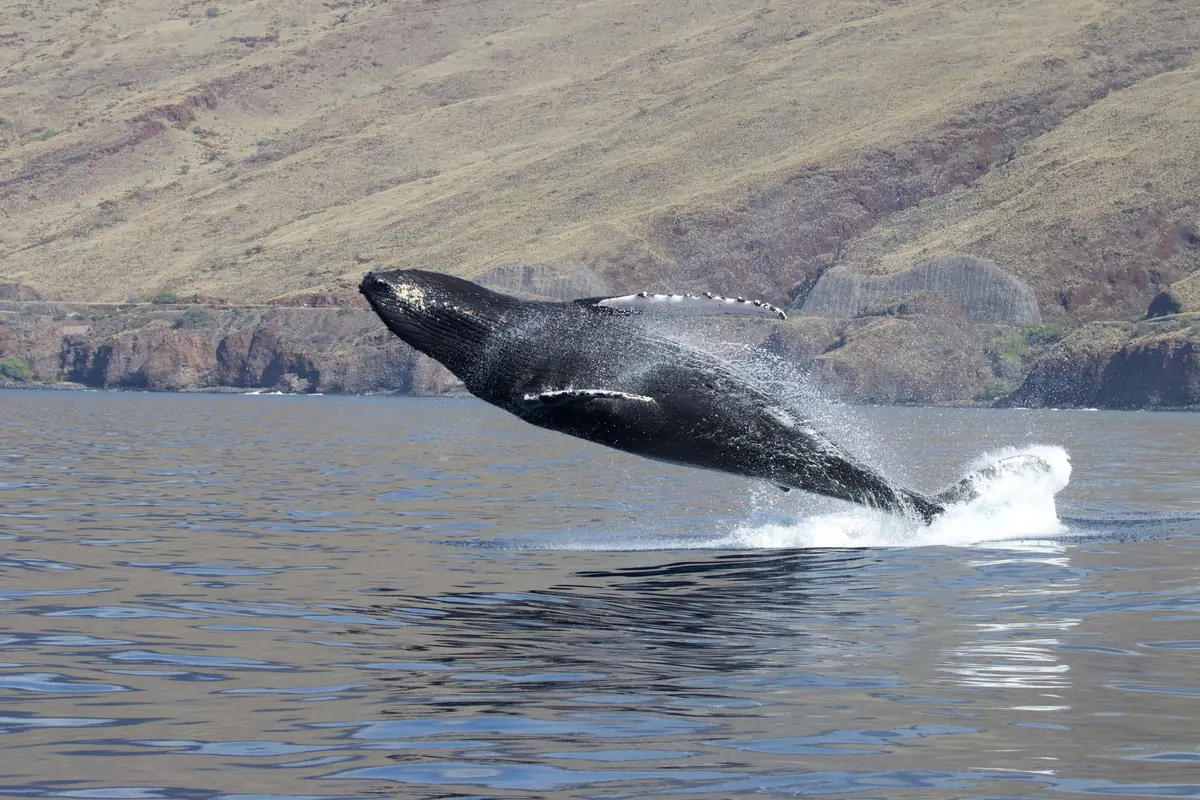
Start here
- Count whales on February 27. The second of the season’s three statewide shore counts is Saturday, February 27, 2027, 8 a.m. to noon. Sign up through the Pacific Whale Foundation for Maui sites or through oceancount.org for the other islands, and plan to stay all morning.
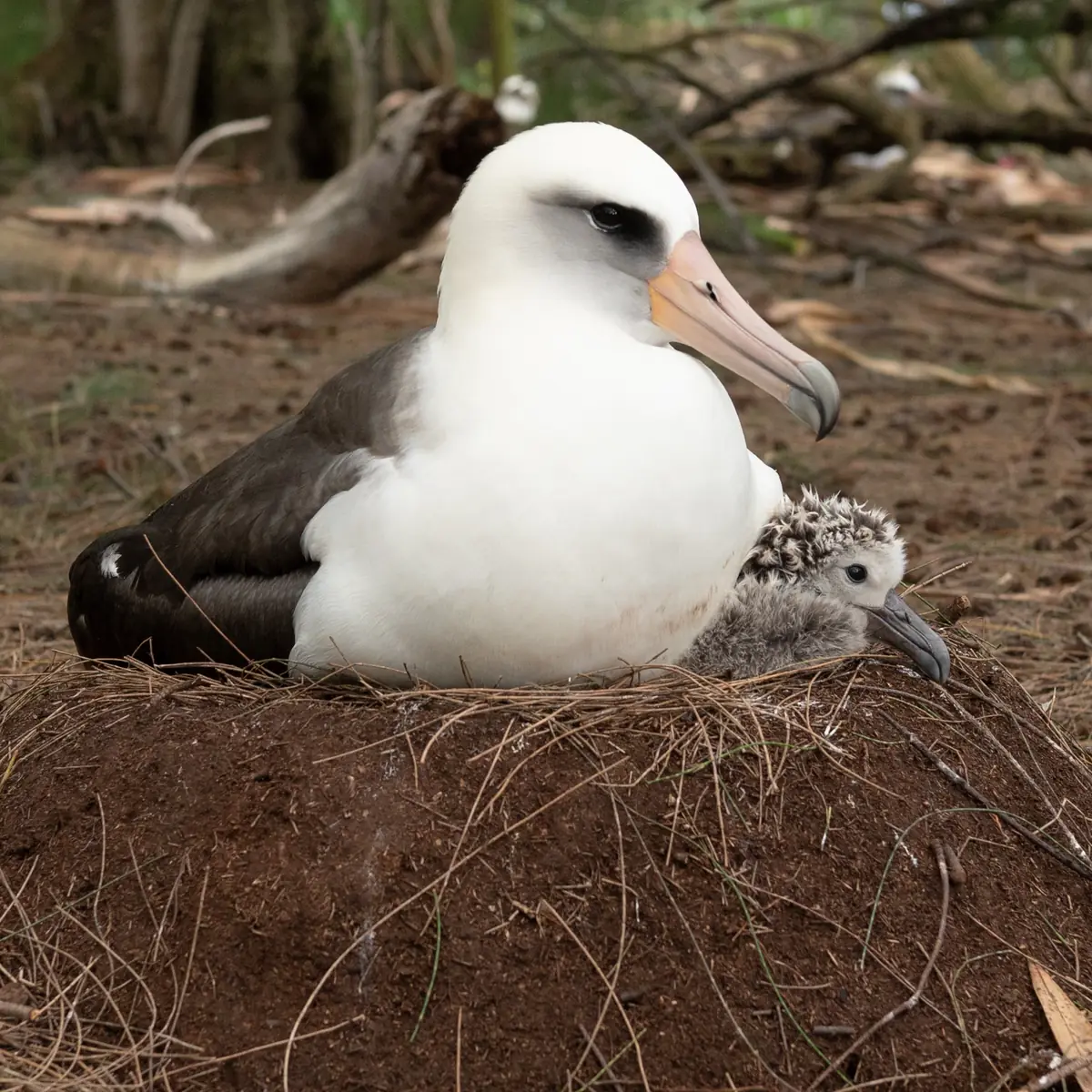
- Find a chick sitting alone. At an albatross colony, look for a gray, downy chick sitting by itself on the nest. As February goes on, more parents are both away at sea at once, and the chick simply waits for the next meal.
- Listen after dark on Haleakalā. In the last days of February, stand quietly at a crater overlook after nightfall and listen for a low, moaning “oo-ah-oo.” That is an ʻuaʻu, back from months at sea, flying in to its burrow.
Keep February on paper: in the Naturalist’s Field Journal, mammal watch holds a count-day tally, nest observed can follow one mōlī chick week by week, birds I have seen keeps the aeʻo and ducks at a refuge, a map of sounds suits a night of petrel calls, and colours of the day can catch a coffee field turning white. On a clear evening the dusk and dawn watch page is ready for Jupiter and the Snow Moon.
Regions used below: Kauaʻi; Oʻahu; Maui, Molokaʻi and Lānaʻi; Hawaiʻi Island; The high summits: Maunakea, Mauna Loa and Haleakalā.
Is February the peak of humpback whale season in Hawaii?
It sits right in the middle of it. The humpback sanctuary’s boating guide gives January through March as the usual peak in humpback numbers, and a 2022 sanctuary report put it the same way: sightings climb to a high between January and March and then taper off until the season closes in early May. On the water that means the full cast is present at once: mothers with calves that are now weeks or months old, escorts trailing them, and fast-moving packs of males pushing for a place beside a female.
The shore counts show how steady that high point can be. On February 28, 2026, volunteers logged 1,935 sightings, only 12 fewer than on February 22, 2025. In 2024, rain, high surf and wind cut visibility at many sites and ended some counts early, yet the February tally still reached 2,141. The table shows how each island’s count has run.
-
Calves practicing at the surface
February and March · Calm, shallow water off west Maui, Lānaʻi and Molokaʻi, Oʻahu’s south shore and the Kona coast
By February some calves are strong enough to try out their mothers’ moves. Site leaders at the February 2022 count reported a mother apparently teaching her calf to breach. Watch for a small splash repeated again and again beside a larger, slower back.
-
Entangled or injured whales
All season · Anywhere at sea
By February 2022 the sanctuary had logged dozens of reports of entangled humpbacks, with at least seven whales confirmed, and a calf found dead with injuries that pointed to a vessel strike. If you see a whale trailing line or buoys, or one that has been hit, do not try to free it yourself. Report it to NOAA’s statewide marine wildlife hotline, 888-256-9840, or radio the Coast Guard on channel 16.
-
Slow down on the water
Through the peak · Boats, jet skis and paddlers in the channels
The sanctuary asks boaters to keep to 15 knots or less while transiting, and to six knots or less within 400 yards of whales, because collisions happen every year in Hawaii. Going closer than 100 yards to a humpback is illegal, by boat, board or drone, and aircraft must keep at least 1,000 feet away.
| Count date | Kauaʻi | Oʻahu | Molokaʻi | Hawaiʻi Island | Maui | Lānaʻi | Statewide total |
|---|---|---|---|---|---|---|---|
| Feb 25, 2023 | 64 | 232 | no sites | 105 | 596 | no sites | 997 |
| Feb 24, 2024 | 239 | 363 | 86 | 466 | 948 | 39 | 2,141 |
| Feb 22, 2025 | 321 | 408 | 153 | 263 | 802 | not reported | 1,947 |
| Feb 28, 2026 | 337 | 288 | 166 | 244 | 847 | 53 | 1,935 |
Weather sets the numbers as much as the whales do. Strong winds and swells hampered the 2023 count, when 345 volunteers took part, while on February 28, 2026, 487 counters at 46 sites had sunny skies and calm seas for most of the morning. December’s song season and January’s newborn calves are on the earlier pages, December in Hawaii and January in Hawaii.
When is the February whale count in Hawaii, and how do you join?
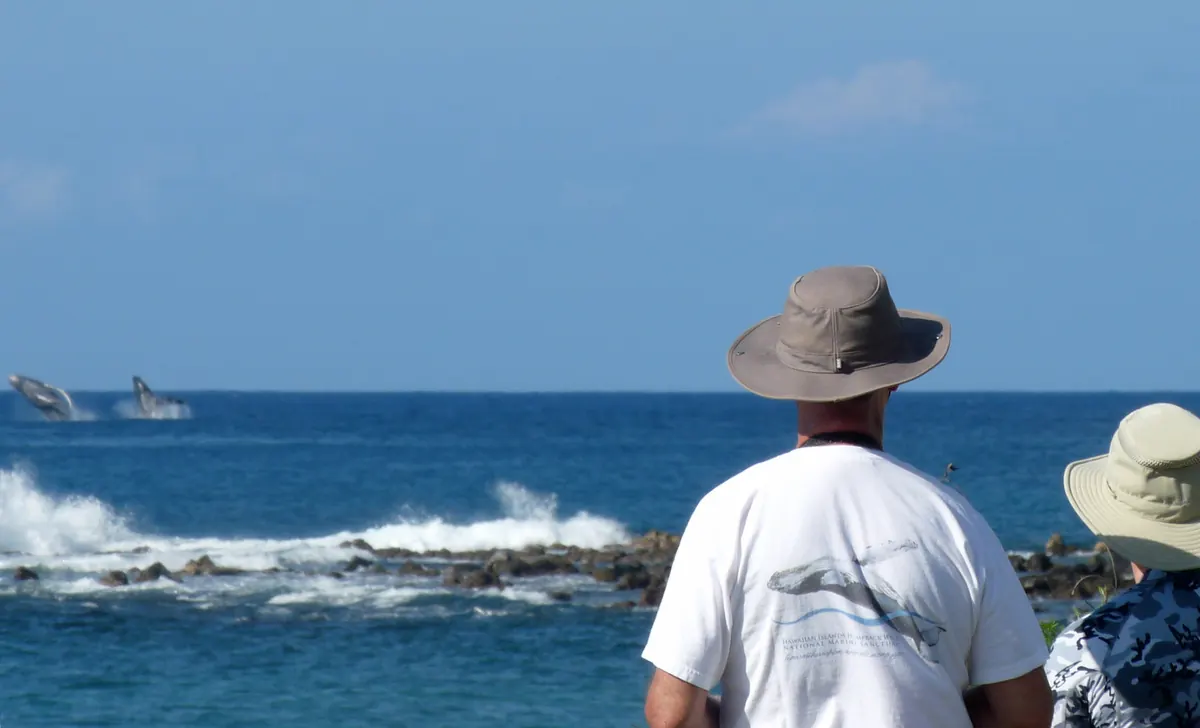
Saturday, February 27, 2027. The Sanctuary Ocean Count and the Great Whale Count both list it as the second of their three 2027 counts, after January 30 and before March 27, with counting from 8 a.m. to noon. The Pacific Whale Foundation runs the Maui sites and opens registration on December 14, 2026; for the sanctuary’s count on the other four islands, volunteers register at oceancount.org. Volunteers scan a set stretch of sea, tally every humpback in 15-minute blocks and note what the whales are doing, and site leaders show newcomers how on the morning itself.
-
Maui sites
Saturday, February 27, 2027, 8 a.m. to noon · Eleven Maui sites, among them Hoʻokipa, Launiupoko Beach Park, Māʻalaea Harbor, McGregor Point, the sanctuary visitor center in Kīhei, Polo Beach and Puʻu Ōlaʻi
Register with the Pacific Whale Foundation from December 14. Bring a chair, water and something to eat.
-
Kauaʻi, Oʻahu, Molokaʻi and Hawaiʻi Island
The same morning · Headlands and beach parks chosen by the sanctuary
Sign up at oceancount.org once registration is open. Many sites are exposed and hot by late morning, so wear a hat and sunscreen.
What are albatross chicks doing in February?
Growing fast, and spending more and more time alone. Mōlī chicks hatch from the end of January into February, and at first one parent stays on or beside the chick while the other is away at sea. U.S. Fish and Wildlife Service staff at Kīlauea Point describe that arrangement as lasting at least a few weeks; after that, as the chicks get stronger, they get more time on their own. Audubon, describing a Kauaʻi nest watched by a live camera, notes that each foraging trip can take several days.
The adults fish far out to sea for squid and other food at the ocean surface and carry it home to feed the chick. On Midway Atoll, far up the island chain, the Service described hundreds of thousands of Laysan and black-footed albatross chicks there taking deliveries from their parents in February 2026; one of them was the chick of Wisdom’s son, a bird banded N333, which made it a grandchild of the oldest known wild bird. On the main islands the colonies are far smaller, but the routine is the same, and the chicks will not fly until summer.
-
Chicks alone on the nest
Increasingly from mid-February onward · Kaʻena Point on Oʻahu; north shore yards and golf course edges around Kīlauea and Princeville on Kauaʻi
A chick sitting by itself is normal. Do not move it, feed it or try to shade it; its parents will come back to the spot where they left it.
-
Kaʻena Point on foot
Through the chick season · Kaʻena Point Natural Area Reserve, from the trailheads at the ends of the road on either side of Oʻahu
Visitors may walk past the nests on their own as long as they keep to the path. Leave dogs at home, take plenty of water, and report any harassment of the birds to DLNR enforcement at 808-643-3567.
Kīlauea Point National Wildlife Refuge on Kauaʻi was still closed for storm repairs in early October 2026; check its page before going.
When do ʻuaʻu, Hawaiian petrels, come back to Haleakalā?
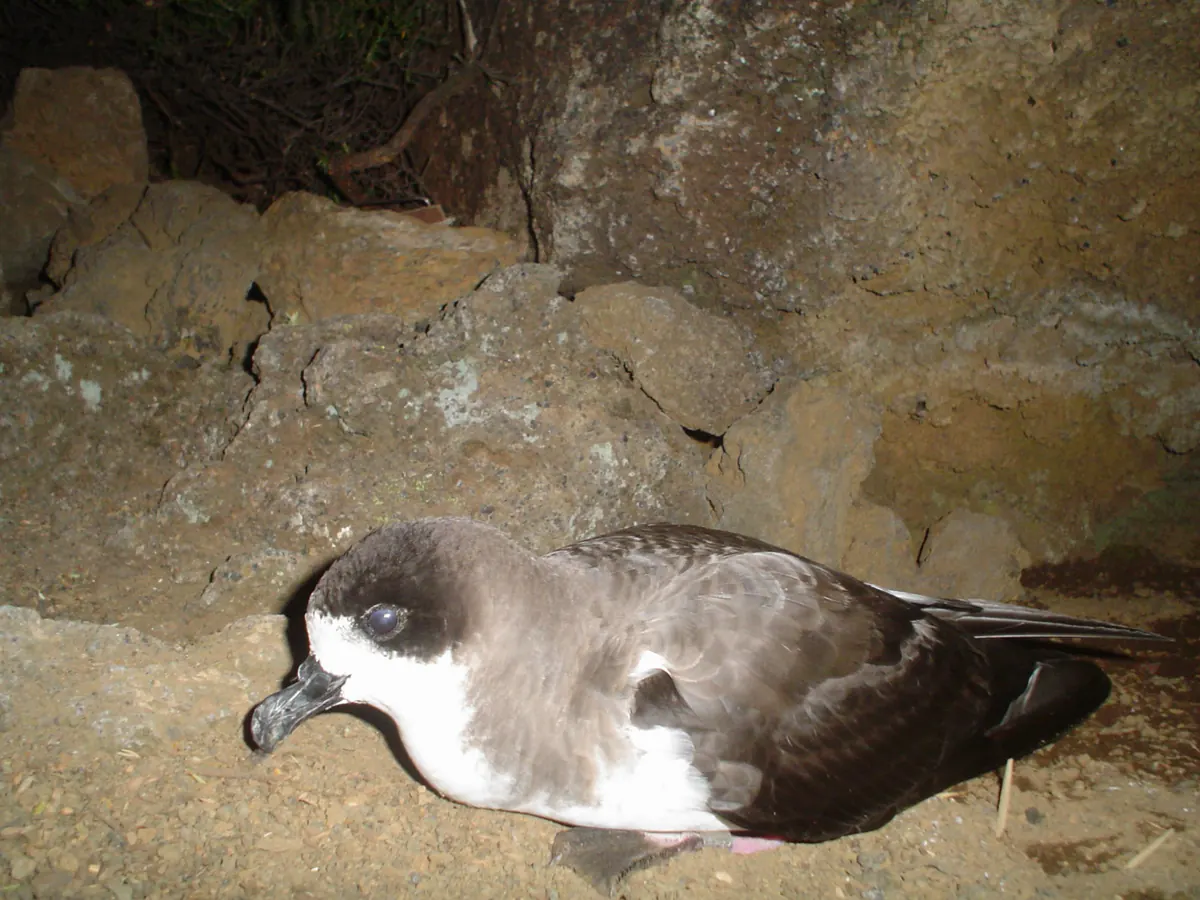
In late February. Haleakalā National Park says its ʻuaʻu are at the colony from February through November and spend December and January out at sea, and a Kauaʻi seabird recovery project run with state and federal partners narrows it down: Maui birds reach their colonies in late February, while those on Hawaiʻi Island, Kauaʻi and Lānaʻi come back as much as a month later. The park’s colony, high on the mountain between about 8,000 and 10,000 feet, is the largest in the state, with an estimated 8,000 to 10,000 birds; its fact sheets give widely differing counts of breeding pairs.
No eggs are laid yet. The first weeks are for clearing out burrows, which can run from 3 to 30 feet into the slope, and for pairs to find each other again; the birds mate for life. Then they leave again for about a month, the pre-laying exodus, and come back to lay a single egg that both parents incubate for close to two months. Because the adults fly in after dark and leave before first light, most people never see one, but you can hear them.
-
The night call
From the last week or two of February, after dark · Leleiwi and Kalahaku overlooks; around Hōlua Cabin and along the Halemauʻu Trail for permitted overnight campers
The park describes the call as a low “oooo ah ooo,” the sound that gave the bird its name, along with yapping notes like a small dog. Go on a calm night, switch off headlights and flashlights, and listen. Nights near the summit in February are cold, so dress for winter.
-
Lights and the birds
All season · Upcountry roads and homes
The park notes that ʻuaʻu often mistake lights on land for stars. Keep outdoor lights off or shielded, and drive slowly on the summit road at night, where nēnē also walk.
Mongooses, feral cats, rats and dogs prey on the birds and their chicks, and the park lists them as a leading threat alongside habitat loss. Stay on trails, and never let a dog loose on the mountain.
Where can you see Hawaiian stilts and wintering ducks before nesting starts?
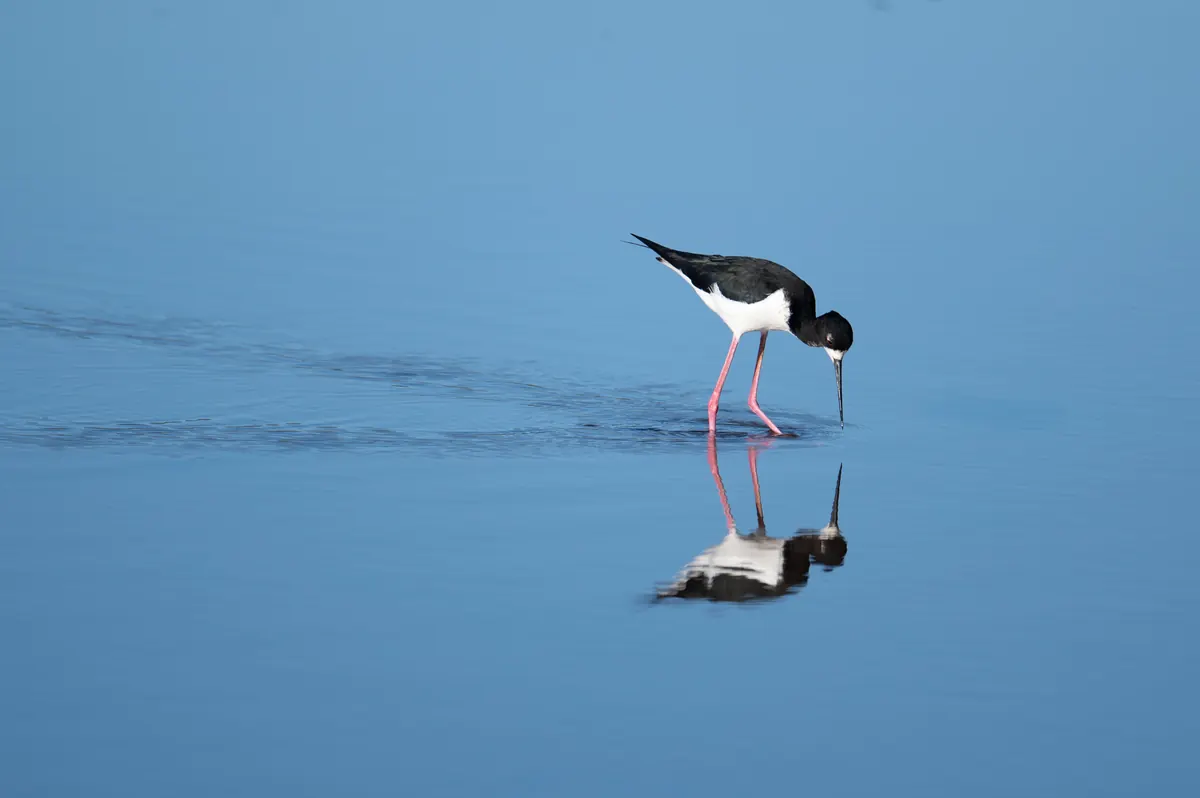
At the coastal wetlands, and February is the last full month for the most sheltered of them. Aeʻo, the endangered Hawaiian stilt, nest between March and August according to DLNR, with the peak in May and June, on freshly exposed mud and pond islands. In winter the same ponds hold migrants too: Maui’s Keālia Pond refuge counts upward of 30 kinds of waterfowl, shorebirds and migratory ducks there in the cool months, some from Alaska and Canada and the occasional bird from Asia.
On Oʻahu, James Campbell National Wildlife Refuge near Kahuku is closed to the public except for guided bird tours, which run only in the non-breeding season, from fall into late winter; the 2024–25 tours ran from late November to late February. A volunteer Friends group for the Oʻahu refuges leads them on selected Saturdays, for no more than 20 people at a time, ages 10 and up. In early October the 2026–27 tour dates had not yet been posted, so check the Friends’ tour page; places are limited.
-
Aeʻo
All year; nesting from March · Keālia Pond on Maui, Hanalei National Wildlife Refuge on Kauaʻi and James Campbell on Oʻahu, among other lowland wetlands
A slim black-and-white wader on very long pink legs. DLNR notes that nesting adults call and dive at intruders and put on a broken-wing act to lead predators off; if a stilt does that to you in spring, you are too close to its eggs.
-
Winter visitors
Through February, thinning out by spring · Keālia Pond’s boardwalk and ponds
Scan the open water for migratory ducks among the native ʻalae keʻokeʻo, the Hawaiian coot, and the mudflats for shorebirds that will soon head north.
Hawaiʻi Audubon’s Kōlea Count takes winter reports until March 31, and February is a good month to keep logging the plovers on a familiar lawn before they leave for Alaska in spring.
When does Kona coffee bloom, and what is “Kona snow”?
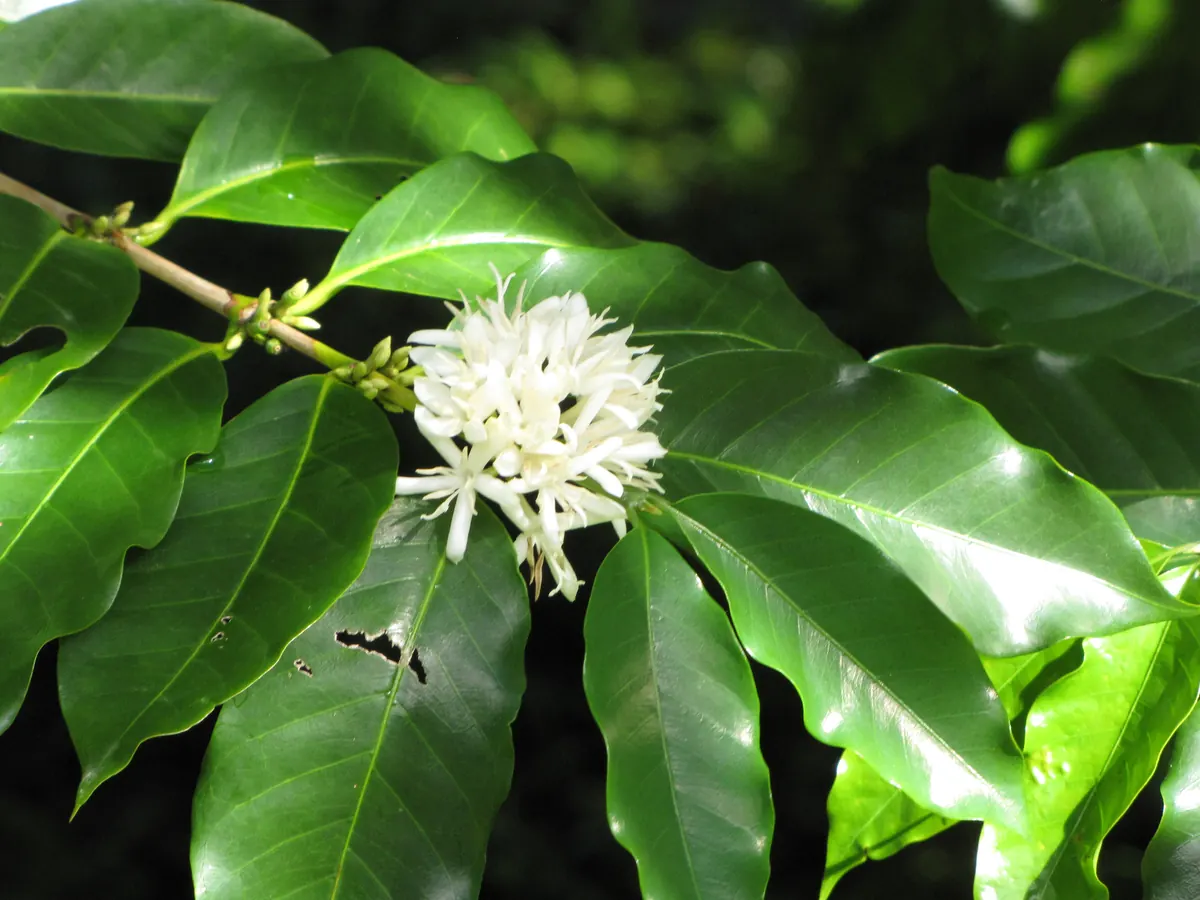
Usually from late February into April, and it hangs on rain. University of Hawaiʻi extension researchers explain that Kona’s cool, dry winter slows the coffee trees into a semi-dormant state while their flower buds form. On the lower slopes of the coffee belt, by late winter the trees can look close to dying of thirst. Then, a week or two after the first soaking rain, usually in late February or March according to the extension guide, the buds open together and whole hillsides turn white, a sight growers call “Kona snow.” Three or four blossoming flushes come in March and April, each after a heavy shower, and blooms that open on dry days set fruit best.
The coffee belt runs roughly parallel to the coast from Palani Junction south to Puʻuhonua Road, between about 700 and 2,000 feet. In a dry El Niño winter the first big bloom may have to wait for rain, so watch the forecast: a good soaking on the Kona slopes is the signal to drive up within a week or two.
-
Coffee in flower
A week or two after a soaking rain, most often late February through April · The Kona coffee belt above the Kona coast, around Hōlualoa, Kainaliu and Captain Cook
Most farms are private. Look from public roads such as Māmalahoa Highway, or visit a farm that welcomes visitors, and keep out of fields without permission.
-
Cherry blossoms in Waimea
Around the start of February · Church Row Park and the town of Waimea on Hawaiʻi Island
The blooming of the historic cherry trees at Church Row Park is marked each year by the Waimea Cherry Blossom Heritage Festival, produced by Hawaiʻi County Parks and Recreation. The 33rd festival was on Saturday, February 7, 2026. No 2027 date was up as of early October; check with the county parks department.
Is February the coldest month in Hawaii?
High on the volcanoes, yes; at sea level it is close to a tie with January. In the 1991–2020 normals, the 11,000-foot station on Mauna Loa’s slope has both its coolest afternoons and its most freezing nights in February, about nine of them, and the Haleakalā ranger station’s average high bottoms out at 59.7 °F, tied with March. Down at the airports, February nights run within a few tenths of a degree of January’s.
Rain shifts, too. On the windward side February is often wetter than January: Hilo’s normal climbs to about 10 inches, and Līhuʻe’s to more than 3.5. Leeward stations change little, and Kona’s coast stays near an inch. This is still Kona-low season, and February has brought some of the wildest weather on record. In early February 2019 a very strong Kona low brought measurable snow to Polipoli Spring on the slopes of Haleakalā, and a NOAA climate summary reported waves near 60 feet on Oʻahu’s north shore, with the Hanalei buoy off Kauaʻi measuring 38-foot significant wave heights.
-
Snow on the summits
After a strong cold front or Kona low · Maunakea, Mauna Loa and, rarely, Haleakalā
Look from Waimea or Hilo on a clear morning after a storm. Ice and snow can shut the Maunakea summit road for days; check the Maunakea Weather Center before going up.
-
Windward streams in spate
During and after heavy rain · Hāmākua and Hilo on Hawaiʻi Island, east Maui, and Kauaʻi’s windward valleys
Brown water and roaring waterfalls are worth seeing from a bridge or lookout, never from the streambed.
| Station | February rain | Days with 0.1 in or more | High / low | Nights at or below 32 °F |
|---|---|---|---|---|
| Līhuʻe airport, Kauaʻi | 3.63 in | 5.4 | 78.1 / 66.2 °F | 0 |
| Honolulu airport, Oʻahu | 1.94 in | 3.0 | 80.5 / 67.1 °F | 0 |
| Hoʻolehua airport, Molokaʻi | 2.31 in | 4.6 | 78.8 / 64.6 °F | 0 |
| Kahului airport, Maui | 2.00 in | 3.8 | 82.2 / 63.8 °F | 0 |
| Haleakalā ranger station, Maui (7,000 ft) | 4.08 in | 5.4 | 59.7 / 42.7 °F | 0.1 |
| Keāhole airport, Kona | 1.17 in | 1.5 | 81.5 / 68.4 °F | 0 |
| Hilo airport, Hawaiʻi Island | 10.22 in | 10.9 | 78.4 / 64.1 °F | 0 |
| Mauna Loa slope station (11,000 ft) | 1.04 in | 3.0 | 50.1 / 34.3 °F | 9.1 |
For the next front or Kona low, the hour-by-hour forecast shows the wind swinging and the rain arriving, and the cloud forecast helps pick a clear morning to look for summit snow.
Will El Niño mean drought and brush fires in Hawaii by February?
That is the usual pattern, and February is when it tends to bite. Odds are high that this event is a big one. The federal assessment of September 10 put the likelihood of an exceptionally powerful episode, holding into the islands’ wet months, at over 90 percent. A NOAA fact sheet on El Niño in Hawaii, from the Pacific region’s climate office, lays out the typical course: rain runs above normal while El Niño is building, especially August through October, then falls off quickly from November and is well below average by February of the following year, with widespread dryness common and normal rain not back until about July.
The same sheet warns of reduced cattle feed and a greater chance of wildfire, especially from January through March, as pastures and leeward grasslands dry out in what should be the green season. It also notes that exceptionally large winter swells from storms passing north of the islands are common in El Niño years, and that warmer ocean water raises the risk of coral bleaching. A dry season overall does not rule out a single flooding storm.
-
Watch the grass
February and March · Leeward Oʻahu, west and central Maui, Molokaʻi, and the Kohala and Kaʻū districts of Hawaiʻi Island
Pasture and roadside grass that stays brown through February is a warning sign. Report smoke early by calling 911.
-
Catchment and streams
Late winter · Upcountry and rural homes on catchment, windward streams
Low tank levels and streams running thin in what should be the wettest months are the clearest signs of a dry El Niño winter. DLNR’s drought pages track conditions statewide.
NOAA updates its seasonal outlooks every month, around mid-month; the newest rain and temperature odds for the islands are on the seasonal outlook maps from NOAA’s Climate Prediction Center.
How much daylight does Hawaii gain in February?
About half an hour, and now the mornings join in. In Honolulu the sun rises at 7:09 a.m. and sets at 6:22 p.m. on February 1; by February 28 it rises at 6:53 a.m. and sets at 6:35 p.m., so the day grows by 29 minutes, with the earlier sunrise doing a little more of the work than the later sunset. In January, by contrast, almost all of the gain came in the evening. The daily gain speeds up slightly through the month, from about a minute a day at the start to a little more by the end.
Groundhog Day falls on Tuesday, February 2, but the true halfway mark from the December solstice to the March equinox arrives on Wednesday, February 3, in Hawaii time.
| City | Feb 1 | Feb 28 | Gained | Per day |
|---|---|---|---|---|
| Lihue | 11 h 11 m | 11 h 42 m | 31 min | 1.1 min |
| Honolulu | 11 h 13 m | 11 h 42 m | 29 min | 1.1 min |
| Kaunakakai | 11 h 14 m | 11 h 43 m | 29 min | 1.1 min |
| Lanai City | 11 h 15 m | 11 h 43 m | 28 min | 1.0 min |
| Kahului | 11 h 14 m | 11 h 43 m | 29 min | 1.1 min |
| Kailua-Kona | 11 h 17 m | 11 h 45 m | 28 min | 1.0 min |
| Hilo | 11 h 18 m | 11 h 44 m | 26 min | 1.0 min |
Times for your own beach or ridge are one search away in the daylight calculator.
What is in Hawaii’s night sky this February?
Times are Hawaii Standard Time. Two bright planets reach opposition in Leo within nine days of each other, Mercury gives its best evening view of the season, and every main phase of the moon this month falls on a Saturday. The darkest evenings, free of moonlight, run from about February 2 to 11, on both sides of the February 6 new moon.
-
Mercury in the evening
Late January to about February 10; farthest from the Sun on the evening of Tuesday, February 2 · Low in the west-southwest, 30 to 45 minutes after sunset
The innermost planet swings out to about 18 degrees from the Sun at 8 p.m. on the 2nd. On Sunday, February 7, a very thin crescent moon, a day past new, sits close to it in the twilight; you need an open, unobstructed view low to the west, as from a leeward beach.
-
Jupiter at opposition
Wednesday, February 10 · Rising in the east at sunset, highest around midnight
Jupiter is opposite the Sun at 2:21 p.m., rising at sunset and staying above the horizon until dawn, shining at about magnitude −2.5, brighter than any star. Binoculars held steady show its larger moons as tiny points of light in a line.
-
Mars at opposition
Friday, February 19, about 5 a.m.; closest to Earth on the 20th · In Leo, near Jupiter and the star Regulus
This is a distant opposition: Mars comes no nearer than about 63 million miles and shines at magnitude −1.2, a steady orange point rather than a blazing one. The almost-full moon slides past Jupiter, very close, on the night of the 19th.
-
The Snow Moon
Full at 1:23 p.m. on Saturday, February 20 · Rising in the east at dusk
In Honolulu the moon rises at 6:42 p.m. on the 20th, ten minutes after sunset, and Jupiter, Mars and Regulus cluster close by in Leo. Some almanacs count it as a supermoon and others do not; it is a little closer than an average full moon. A faint penumbral lunar eclipse happens that day too, but it ends at 3:13 p.m. Hawaii time, hours before moonrise, so there is nothing to see from the islands. The ring-shaped solar eclipse on the 6th is a South American and African event, unseen from any U.S. state.
-
Venus and Saturn
All month · Venus in the east before dawn; Saturn low in the west after sunset
Before sunrise, Venus outshines everything else in the eastern sky. Saturn drops toward the sunset glow week by week and gets harder to pick out in the twilight.
| Phase | Date | Time |
|---|---|---|
| New moon | Saturday, Feb 6 | 5:56 a.m. |
| First quarter | Saturday, Feb 13 | 9:58 p.m. |
| Full moon, the Snow Moon | Saturday, Feb 20 | 1:23 p.m. (rises 6:42 p.m. in Honolulu) |
| Last quarter | Saturday, Feb 27 | 7:16 p.m. |
Check the moon phase calendar for each night’s moonrise, and a quick look at the cloud cover forecast tells you whether trade-wind clouds will hide Jupiter.
What can families do outside in Hawaii this February?
- Join the February 27 whale count. Saturday morning, 8 a.m. to noon, on the main islands. Maui registration opens December 14, 2026, through the Pacific Whale Foundation; the other islands sign up at oceancount.org.
- Count birds for the Great Backyard Bird Count, which runs four days this year, February 12 through 15. Fifteen minutes in a yard, park or beach is enough for a checklist, and common mynas and zebra doves count just as much as rarities. Details are at birdcount.org.
- Visit a mōlī chick at Kaʻena Point. Go early, before the heat, stay on the path, and count how many chicks are sitting alone.
- Book a refuge bird walk. The guided tours at James Campbell National Wildlife Refuge on Oʻahu run only in the winter non-breeding season, so February may be the last chance until fall; the Friends group asks that children be at least 10.
- Look for the cherry blossoms in Waimea on Hawaiʻi Island. The county’s annual festival is usually in early February; check the date with Hawaiʻi County Parks and Recreation.
- Mark World Whale Day. The Pacific Whale Foundation founded it, and it falls on the third Sunday of February, February 21 in 2027. Whether there will be a Maui celebration in 2027 had not been announced in early October; check with the foundation.
- Watch Jupiter rise at sunset on February 10, and find the Snow Moon with Mars nearby on the evening of the 20th.
A Naturalist’s Field Journal gives young counters a home for their tallies and sketches, and our nature guides for every state follow the year month by month.
Safety notes for February in Hawaii
- Hunting and blaze orange. The state’s main game bird season closed on the last Sunday of January, January 31, 2027, though the game bird rules open a special dove season on private lands only, from the first Saturday in February (February 6) through the last Sunday in March on most islands, on weekends and state holidays (DLNR is considering game bird rule changes, so confirm dates with the agency). Game mammal hunting goes on: pigs and goats are open all year in many units, and under DLNR’s game mammal rules several units open in February, among them Molokaʻi Units C, D and E and Maui Unit F, on weekends and state holidays, with Presidents’ Day (Monday, February 15) a holiday. On Lānaʻi, DLNR’s 2027 axis deer announcement schedules four five-day archery hunts, February 3 to 7, 10 to 14, 17 to 21 and 24 to 28. In units where guns may be used, every hunter, and anyone walking with one, has to put on an outer garment (a shirt, vest, jacket or coat) of solid, commercially made blaze orange (or orange mesh no coarser than an eighth of an inch) that shows from front and back, pack or no pack. Orange camouflage is not allowed. If you hike in a hunting area on a weekend, wear something bright.
- Kauaʻi closures. On September 30 DLNR said most forestry and wildlife lands and trails on Kauaʻi were still closed after Hurricanes Lowell and Nolo, with only a few areas, such as Hunting Unit C and parts of Unit F, reopened. Check DLNR’s current notices before any Kauaʻi hike or hunt.
- Brush fires. If El Niño dries the leeward grass, a spark from a car, a mower or a campfire can start a fast fire. Park off dry grass, and never toss cigarettes.
- Floods. Heavy rain is still possible from any passing front or Kona low. A stream can rise in minutes from rain falling far upslope, so stay out of streambeds in bad weather and never cross moving water. Fresh water and mud can carry leptospirosis, so keep cuts covered.
- Big surf and whales at sea. Winter swells keep hitting north- and west-facing shores. Swim only at guarded beaches, watch waves from high ground, and keep paddlecraft well clear of whales.
- Cold and altitude. February brings the most freezing nights of the year high on the volcanoes. Carry warm layers, gloves and a full tank on the Maunakea and Haleakalā roads, expect closures for ice, and come down if you feel the headache and nausea of altitude sickness.
- Kīlauea. The volcano observatory had Kīlauea at the orange WATCH level in early October 2026, with glow still visible at the summit vents. Check the newest update before you visit the national park, and skip heavy vog days if you have heart or lung trouble.
- Forest hygiene. Brush off soil and spray boots and gear with 70 percent rubbing alcohol before and after every native forest walk, to avoid moving the fungi behind Rapid ʻŌhiʻa Death.
Sources
- Hawaiian Islands Humpback Whale National Marine Sanctuary: boating guide (peak season, speeds, distances, hotline)
- NOAA Office of National Marine Sanctuaries: Season of sanctuary, unusual koholā abundance and incidents in Hawaiʻi (February 2022)
- Hawaiian Islands Humpback Whale National Marine Sanctuary
- Hawaiian Islands Humpback Whale National Marine Sanctuary: responsible viewing
- Sanctuary Ocean Count: 2027 count dates
- Sanctuary Ocean Count: results by year
- Sanctuary Ocean Count and Great Whale Count: February 26, 2022 results (PDF)
- Sanctuary Ocean Count and Great Whale Count: February 25, 2023 results (PDF)
- Sanctuary Ocean Count and Great Whale Count: February 24, 2024 community announcement (PDF)
- Sanctuary Ocean Count and Great Whale Count: February 22, 2025 community announcement (PDF)
- Sanctuary Ocean Count and Great Whale Count: February 28, 2026 community announcement (PDF)
- Pacific Whale Foundation: Great Whale Count (2027 dates, Maui sites, registration)
- Pacific Whale Foundation: World Whale Day
- Hawaiʻi Audubon Society: Big birds, bigger joy, Hawaiʻi’s albatross
- DLNR Division of Forestry and Wildlife: mōlī (Laysan albatross)
- USFWS Pacific: mōlī parent with a recently hatched chick at Kīlauea Point, February 11, 2023 (Wikimedia Commons)
- USFWS Pacific: Laysan albatross chick of N333, Wisdom’s son, on Midway Atoll, February 13, 2026 (Wikimedia Commons)
- National Audubon Society: Live from Hawaii, Laysan albatross bird cam
- DLNR Natural Area Reserves: Kaʻena Point
- U.S. Fish and Wildlife Service: Kīlauea Point National Wildlife Refuge
- Haleakalā National Park: ʻuaʻu, the Hawaiian petrel
- Haleakalā National Park: Rare winged wonders, birds of Haleakalā
- Haleakalā National Park: birds of the summit district (where to hear ʻuaʻu)
- National Park Service: Hawaiian petrel fact sheet
- Kauaʻi Endangered Seabird Recovery Project: Hawaiian petrel
- DLNR Division of Forestry and Wildlife: aeʻo (Hawaiian stilt)
- U.S. Fish and Wildlife Service: James Campbell National Wildlife Refuge
- U.S. Fish and Wildlife Service: James Campbell National Wildlife Refuge tours
- Friends of Oʻahu National Wildlife Refuges: James Campbell bird tours
- U.S. Fish and Wildlife Service: Keālia Pond National Wildlife Refuge
- Hawaiʻi Audubon Society Kōlea Count: winter count guidelines
- University of Hawaiʻi CTAHR: Growing coffee in Hawaii, revised edition (PDF)
- University of Hawaiʻi CTAHR: Factors affecting the growth and yield of coffee in Kona, Hawaii (PDF)
- Waimea Community Association: 33rd annual Waimea Cherry Blossom Heritage Festival (February 7, 2026)
- NOAA NCEI: 1991–2020 monthly normals for eight Hawaii stations (data API)
- NOAA Pacific region climate summary, winter 2019: Kona low, Polipoli snow, high surf (PDF, drought.gov)
- Maunakea Weather Center: summit forecasts
- Climate Prediction Center: ENSO diagnostic discussion, September 10, 2026
- Climate Prediction Center: 90-day outlooks
- NOAA Pacific Region Climate Office and PEAC Center: El Niño and its impacts on the Hawaiian Islands (PDF, drought.gov)
- DLNR Commission on Water Resource Management: drought forecast
- U.S. Naval Observatory: moon phases, December 2026 to March 2027 (data API)
- U.S. Naval Observatory: Honolulu sun and moon times, February 1, 2027
- U.S. Naval Observatory: Honolulu sun and moon times, February 20, 2027
- U.S. Naval Observatory: Honolulu sun and moon times, February 28, 2027
- U.S. Naval Observatory: 2027 equinoxes and solstices (data API)
- Fred Espenak: Sky Event Almanac 2027 (planets, oppositions, conjunctions)
- NASA eclipse website: lunar eclipses 2021–2030
- NASA eclipse website: solar eclipses 2021–2030
- National Audubon Society: Great Backyard Bird Count (February 12–15, 2027)
- Great Backyard Bird Count
- DLNR: Hawaii Administrative Rules chapter 13-122, game birds (season, blaze orange)
- DLNR: Hawaii Administrative Rules chapter 13-123, game mammals (units, seasons, blaze orange)
- DLNR Division of Forestry and Wildlife: 2027 Lānaʻi axis deer hunting season announcement (PDF)
- DLNR: hunting announcements
- DLNR: most state parks, forest lands and campgrounds reopening after Nolo, Kauaʻi exceptions (September 30, 2026)
- USGS Hawaiian Volcano Observatory: Kīlauea updates (October 2, 2026)
- Hawaii Department of Health: leptospirosis
- Hawaii Department of Health, Ocean Safety: Hawaii’s surf seasons
- University of Hawaiʻi CTAHR: Rapid ʻŌhiʻa Death
- Photos via Wikimedia Commons; licenses and photographers are credited under each picture
.jpg)
.jpg)
