What to look for in nature in Hawaii this October
October is the hinge of the Hawaiian year. The old season of Kau gives way to Hoʻoilo, trade winds start to falter, the north shores wake up, young kōlea finish the flight from Alaska, and fledgling shearwaters leave their mountain burrows for the sea. This year it follows a bruising hurricane season and comes ahead of what may be a very dry El Niño winter. Here is what to watch, island by island, with dates.
Start here

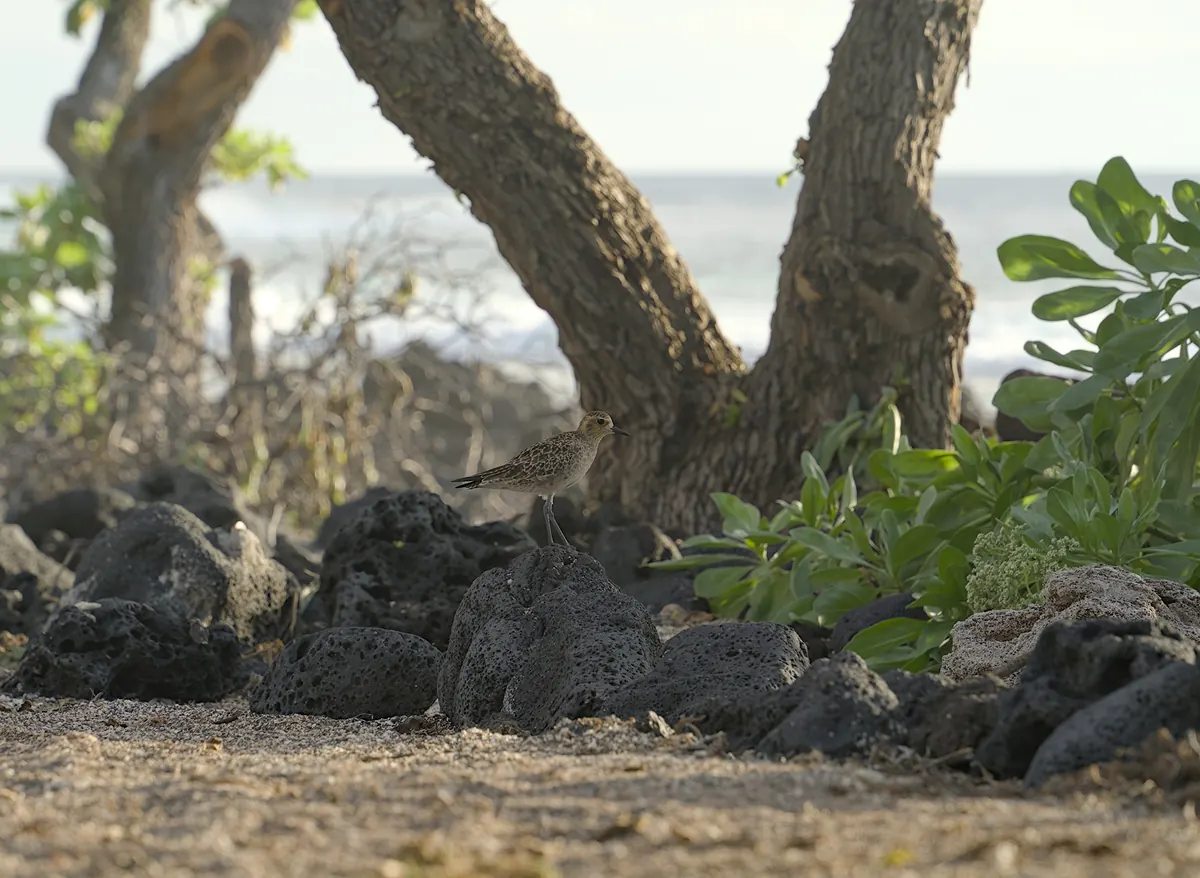
- Kōlea on every lawn. The adults came back from Alaska in July and August and have reclaimed the same patch of grass as last winter. October is when the year’s young birds, plain buff with no breeding black at all, finish their first nonstop crossing. Note the date you first see one in your yard.
- Lights out for the fledglings. Seabird fallout season runs September 15 to December 15, and October is the peak month for young Newell’s shearwaters leaving their burrows. Dark nights around the new moon of October 10 are the worst. A black-and-white bird sitting on a road or parking lot needs picking up, not shooing away.
- A full moon over dark summits. Saturn is at its brightest on October 4, the Draconids fall on a moonless evening October 8, and the Hunter’s Moon is full at 6:12 p.m. on Sunday, October 25, rising in Honolulu at 5:42 p.m. Waimea Valley holds its last Moonwalk of the season that night.
Write it down: the Naturalist’s Field Journal gives the kōlea and the first whale spout a place on its bird list, the dusk and dawn watch page for the shearwaters heading to sea and the glow over Halemaʻumaʻu, the colours of the day plate for a wet-season sunset, and a map of sounds for the first big north swell booming on the reef. A line a day is enough.
Regions used below: Kauaʻi; Oʻahu; Maui, Molokaʻi and Lānaʻi; Hawaiʻi Island; The high summits: Maunakea, Mauna Loa and Haleakalā.
When do the kōlea come back to Hawaii?
Most of them are already here. The kōlea, or Pacific golden-plover, nests on the tundra of Siberia and western Alaska and spends roughly nine months of every year in the islands. DLNR’s species account says most adults land in August and the juveniles in October, with the spring departure starting in late April. Hawaii is thought to hold a large share of the world’s wintering kōlea.
The Hawaiʻi Audubon Society’s Kōlea Count has sharpened those dates with reports from backyards and parks. In 2026 the first six birds turned up at Kealia Pond National Wildlife Refuge on Maui on July 1, still in partial breeding dress, and 64 were reported back before July was out. Their tracking figures put the one-way trip at about 3,000 miles, flown nonstop in three to four days. Females come first, males follow in mid-to-late August, and the summer’s young arrive in October and November, depending on Arctic weather, with no breeding color at all.
-
The same bird on the same lawn
All winter, from arrival to late April · Lawns, parks, school fields, cemeteries, golf courses on every main island
Kōlea are faithful to a territory and will chase other plovers off it. One bird the count follows, a plover its hosts call Jake, landed in his patch in August 2026 for the tenth year. If you have a bird, you probably have the same bird as last year; look for leg bands and note any.
-
How to tell a young one
October and November · Anywhere with short grass
Adults arrive with traces of summer’s black belly. A plain, evenly speckled gold-and-buff bird with no black anywhere is almost certainly this year’s chick.
-
Report your bird
Arrival reports July 1 to November 30; winter counts December 1 to March 31 · koleacount.org
The count takes arrival dates through November 30, then single-yard “Little Counts” and repeated “Big Counts” at parks and campuses in winter.
Why are young seabirds grounded in October, and what should you do?
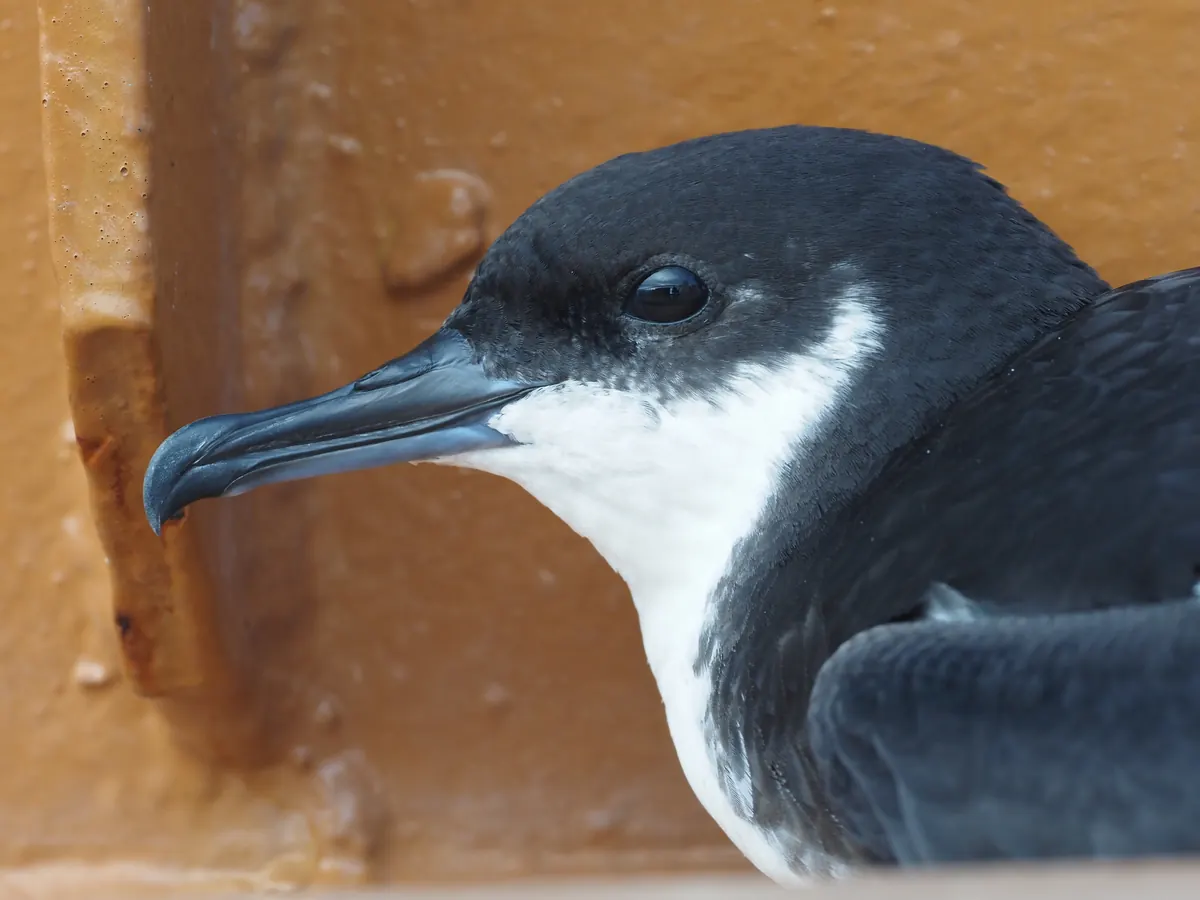
Hawaii’s native shearwaters and petrels nest in burrows high in the mountains and fly to sea at night. Their chicks make that first flight in fall, and bright artificial lights confuse them: they circle streetlights, stadium lights and hotel grounds until exhausted, then land and cannot easily take off again. Kauaʻi County gives the fledgling season as September 15 to December 15. DLNR calls October the peak month for young ʻaʻo, the Newell’s shearwater, to leave their burrows, and the Kauaʻi Endangered Seabird Recovery Project notes that groundings get worse on dark nights, near a new moon or under heavy cloud. This year the new moon falls on October 10.
The stakes are high. Surveys by that project found Kauaʻi’s ʻaʻo population fell 94 percent between 1993 and 2013, and the ʻuaʻu, or Hawaiian petrel, 78 percent.
-
What a grounded bird looks like
Dusk to dawn, mid-September to mid-December · Towns, roads and lit parking lots, especially on Kauaʻi
The ʻaʻo, the usual casualty, is black above and white below with a dark bill and pink legs with black toes; the band-rumped storm-petrel, ʻakeʻake, is blackish brown with a white band across the rump; the ʻuaʻu is grounded less often. Any of them sitting on pavement is in trouble.
-
On Kauaʻi: Save Our Shearwaters
24-hour hotline all season · Aid stations at fire stations from Hanalei to Waimea
Pick the bird up carefully and call Save Our Shearwaters at (808) 635-5117 or take it to an aid station; the county lists fire stations from Hanalei to Kōloa. A bird left on the ground will starve, be run over or be caught by a cat. On the other islands, call the nearest DLNR Division of Forestry and Wildlife office.
-
Shield your own lights
Mid-September to mid-December · Every home, school and business near the mountains
Turning off lights you do not need, using dimmer bulbs, and shielding outdoor fixtures so the light points down all help, and they lower the power bill too.
When do the big north swells and the humpback whales arrive?
The ocean around Hawaii changes sides in fall. The University of Hawaiʻi Sea Level Center’s surf climatology gives the North Shore of Oʻahu an active season from September to May, when face heights average about 12 feet with a spread of eight feet either way, and the south shore an active season from March to October, now winding down. The state’s ocean safety office describes the same flip: calm north and west shores in summer, then dangerous, consistent high surf there from late fall through winter while south shores flatten. The first long-period north-northwest swells of the year can arrive in October, and they reach beaches that looked like lakes a month earlier.
The sea itself is at its warmest of the year, about 79 to 80 °F around late September and early October, according to the Western Regional Climate Center.
-
First winter swell
Late September into October; bigger through winter · North- and west-facing shores of every island
Watch the first big sets from well above the waterline; shorebreak is far stronger than it looks. The Honolulu forecast office issues surf forecasts and high surf advisories for each island.
-
Humpback whales, a little early
Season November through April; peak January to March · Channels between Maui, Molokaʻi, Lānaʻi and Kahoʻolawe, and off every island
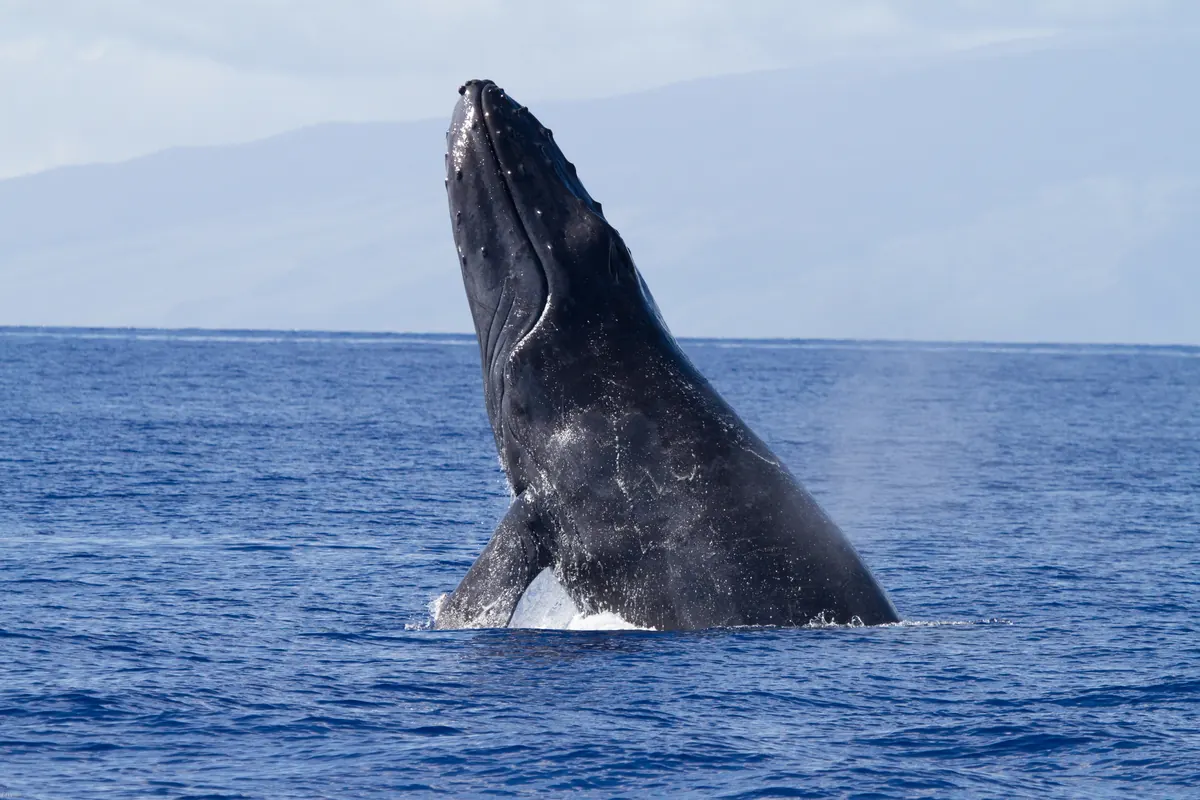
Roughly half the North Pacific’s humpbacks come to Hawaii each winter to mate, calve and nurse, and the sanctuary counts them as present from November through April. A few scouts sometimes turn up before then, so a spout seen from a lookout in late October is a real possibility, just not a promise. It is illegal to approach within 100 yards of a humpback, by boat, board or swimming.
-
Monk seals, turtles and spinner dolphins
Year-round · Beaches and nearshore waters
NOAA’s viewing guidance is 50 feet from a Hawaiian monk seal, 150 feet from a mother with a pup, 10 feet from a basking honu, and 50 yards from spinner dolphins, which federal law protects from being approached or swum with. For the seal, the thumb test works: hold your arm out and turn your thumb sideways; if it covers the whole seal, you are far enough back.
A note on box jellyfish: along Oʻahu’s leeward and south shores they arrive in a monthly cycle tied to the full moon. The Waikīkī Aquarium publishes estimated arrival dates; lifeguard signs on the day are the final word.
Where can you see native forest birds and nēnē this month?
Hawaii’s forest birds are the state’s quiet emergency. DLNR counts 84 forest bird species known from the islands, of which 28 vanished before written records and 30 more are extinct or presumed so, leaving 26 alive today; 24 of those carry an IUCN threat category. Most survive only in high forest above the reach of the mosquitoes that spread avian malaria. The Birds, Not Mosquitoes partnership is now releasing mosquitoes carrying a natural Wolbachia bacterium on Maui and Kauaʻi, which work as mosquito birth control, to buy the honeycreepers time.
-
Forest Bird Hikes at Hosmer Grove
October 13, 14, 27 and 28, 9–10 a.m. · Haleakalā National Park, Maui
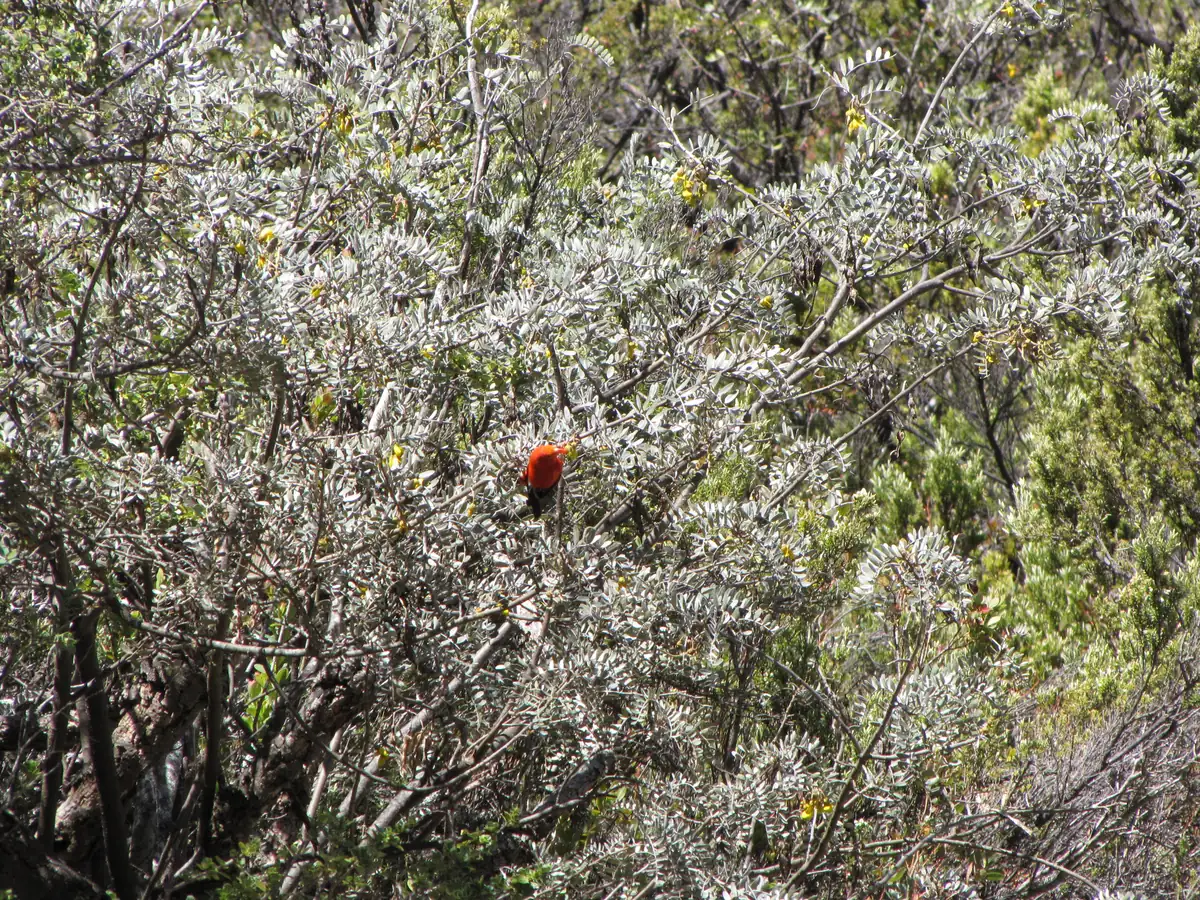
A park biologist leads a free one-hour walk to look and listen for Maui’s honeycreepers, honeycreepers such as the red ʻapapane and ʻiʻiwi and the yellow-green ʻamakihi, and to hear what is being done to save them. Meet at the Hosmer Grove picnic shelter with water and layers; the park’s own summit page names the grove as a popular place to see native birds.
-
Nēnē start nesting
Most nests October to March; most eggs laid October to December · Hawaiʻi Volcanoes and Haleakalā national parks, Kauaʻi, Maui and Molokaʻi lowlands
The state bird is breeding again. DLNR says nesting can happen in any month except May to July, but most pairs nest between October and March and lay between October and December, often returning to last year’s site. Cars kill nēnē on park and island roads, so slow down where the yellow nēnē crossing signs are, and never feed them; birds that learn to beg by roads get hit. Haleakalā hosts a Nēnē Awareness Day pop-up on Friday, October 2, 10 a.m. to 2 p.m., on the Headquarters Visitor Center lawn.
-
Hakalau and Kōkeʻe: closed for now
Until further notice · Hawaiʻi Island and Kauaʻi
Hakalau Forest National Wildlife Refuge, home of the ʻakiapōlāʻau and Hawaiʻi ʻākepa, is closed to self-guided visits because of Rapid ʻŌhiʻa Death, and is open only through authorized guides. On Kauaʻi, DLNR closed its lands after Hurricane Lowell, and Kōkeʻe Road, the way up to the island’s best remaining bird forest, was still shut after the first limited reopenings on September 21.
Wherever you walk in native forest, the University of Hawaiʻi’s Rapid ʻŌhiʻa Death guidance applies: brush the soil off boots and gear before and after, spray them with 70 percent rubbing alcohol, wash clothes in hot soapy water, and never move ʻōhiʻa wood.
Is Kīlauea erupting this October?
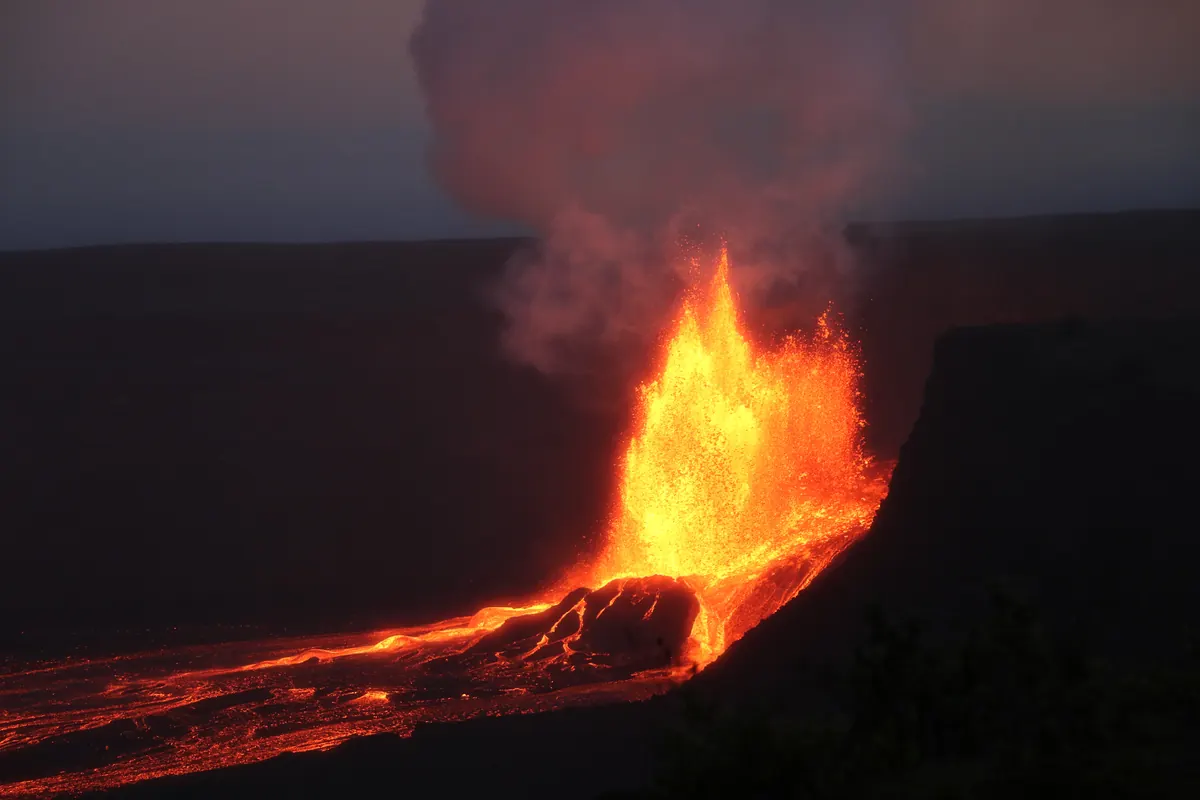
At the end of September, yes, in pulses. The summit eruption inside Halemaʻumaʻu crater that began in December 2024 has gone on as a long series of short fountaining episodes separated by quiet spells. On September 29 the USGS Hawaiian Volcano Observatory kept Kīlauea at alert level WATCH, aviation code ORANGE, and reported strong glow and spatter from the north and south vents, repeated overflows and drainback, and summit inflation, with episode 55 fountaining “a possibility.” No unusual activity was reported outside the summit.
-
Seeing the glow
After dark, when an episode is under way · Overlooks along Crater Rim Drive, Hawaiʻi Volcanoes National Park
Check the observatory’s daily update before driving up; episodes can start and stop within hours, and in 2025 some fountains reached about 500 feet, taller than the crater wall behind them. Pele’s hair and small tephra can fall downwind, and volcanic gas (vog) is a real hazard for children, anyone pregnant, and people with heart or breathing problems.
When does Hawaii’s wet season start?
This month. Hawaiians recognized two seasons, Kau from May through October and Hoʻoilo from November through April. The Western Regional Climate Center’s Hawaii narrative says modern records support a slightly different split: a seven-month winter from October through April and a five-month summer from May through September. In summer the trades blow 80 to 95 percent of the time; from October on that falls to 50 to 80 percent, and the gaps are filled by Kona lows, cold fronts and upper-level troughs that can rain on the leeward side too. Major storms are most frequent from October through March.
You can see the turn in the normals. Honolulu’s rain jumps from 0.88 inch in September to 1.51 in October, Kahului’s nearly doubles, and even arid Kona picks up. On the windward side the numbers are of another order: Hilo averages more than 10 inches in October, and 14 in November.
| Station | September rain | October rain | November rain | October high / low |
|---|---|---|---|---|
| Līhuʻe, Kauaʻi (airport) | 2.18 in | 3.27 in | 4.03 in | 83.9 / 73.6 °F |
| Honolulu, Oʻahu (airport) | 0.88 in | 1.51 in | 2.25 in | 86.9 / 73.9 °F |
| Molokaʻi (Hoʻolehua airport) | 0.99 in | 1.54 in | 2.67 in | 85.5 / 71.4 °F |
| Kahului, Maui (airport) | 0.45 in | 0.83 in | 1.81 in | 88.7 / 70.1 °F |
| Haleakalā ranger station, Maui (about 7,000 ft) | 2.53 in | 3.25 in | 4.59 in | 64.0 / 47.8 °F |
| Kailua-Kona, Hawaiʻi (Keāhole airport) | 0.54 in | 0.89 in | 0.83 in | 86.2 / 74.5 °F |
| Hilo, Hawaiʻi (airport) | 8.70 in | 10.24 in | 14.39 in | 82.4 / 69.0 °F |
| Mauna Loa slope, Hawaiʻi (about 11,200 ft) | 0.67 in | 1.47 in | 1.21 in | 55.8 / 39.6 °F |
The one Hawaii station with a freeze normal in the site’s NOAA data is that last one, Mauna Loa 5 NNE, at the Mauna Loa Observatory: its first fall freeze comes by November 9 one year in ten, by December 1 in a median year, and by January 7 nine years in ten. The summits of Maunakea and Haleakalā go below freezing on many winter nights and can see snow; sea level never has.
This year’s hurricane season has already been the story of the fall. Hurricane Lala brought flooding rain in mid-August, and the Honolulu forecast office wrote that many gauges got nearly their whole month’s total in a day or two. Hurricane Lowell battered Kauaʻi in the first week of September, and DLNR closed its lands on the island afterward. On September 30, Tropical Storm Nolo was still turning near French Frigate Shoals in Papahānaumokuākea. The central Pacific season runs through November 30, so keep an eye on the Central Pacific Hurricane Center.
What will a very strong El Niño mean for Hawaii’s winter?
Most likely, a dry one. Forecasters at the Climate Prediction Center wrote on September 10 that an exceptionally strong event is now better than a nine-in-ten bet for the coming cool season. In the islands the usual signature is the reverse of what many mainland readers expect: NOAA’s Pacific ENSO Applications Climate Center summarizes it as more rain early in the wet season, then rapidly less, with weaker trades, occasional westerly winds, tropical storms forming closer to the islands, and bigger surf from distant storms. NOAA’s Climate.gov puts the typical El Niño winter at about three inches below normal in Honolulu, whose yearly total is only around 16 inches at the airport.
The CPC’s own Hawaii outlook, issued September 17, already leans that way: a 60 percent chance of below-normal rain at Hilo, Kahului, Honolulu and Līhuʻe for October through December, rising to 70 percent for November through January and 75 percent for December through February, with warmer than normal odds this October. October itself is the part of the season least changed by El Niño, and may still bring a big rain or two. The drying tends to show from November, and a short wet season leaves dry grass and brush that can feed wildfires by the following spring. NOAA’s updated winter outlook is due in mid-October.
How much daylight does Hawaii lose in October?
Little more than half an hour, the smallest loss in the country. Hawaii sits between 19° and 22° north, so days here never stretch or shrink as far as they do on the mainland. Līhuʻe gives up 36 minutes over the month and Hilo and Kona 32, a little over a minute a day. In Honolulu the sun rises at 6:23 a.m. on October 1 and 6:34 on October 31, and sets at 6:19 p.m. and 5:56 p.m. Hawaii keeps Hawaii Standard Time all year, so when the mainland falls back on November 1, nothing changes here except the gap to the mainland, which shrinks by an hour.
| City | Oct 1 | Oct 31 | Lost | Per day |
|---|---|---|---|---|
| Lihue | 11 h 56 m | 11 h 20 m | 36 min | 1.2 min |
| Honolulu | 11 h 56 m | 11 h 22 m | 34 min | 1.1 min |
| Kaunakakai | 11 h 57 m | 11 h 23 m | 34 min | 1.1 min |
| Lanai City | 11 h 56 m | 11 h 23 m | 33 min | 1.1 min |
| Kahului | 11 h 56 m | 11 h 23 m | 33 min | 1.1 min |
| Kailua-Kona | 11 h 57 m | 11 h 25 m | 32 min | 1.1 min |
| Hilo | 11 h 57 m | 11 h 25 m | 32 min | 1.1 min |
Drop a pin on your own valley or beach in the Field almanac to get its first light, last light and day length.
What is in Hawaii’s night sky this October?
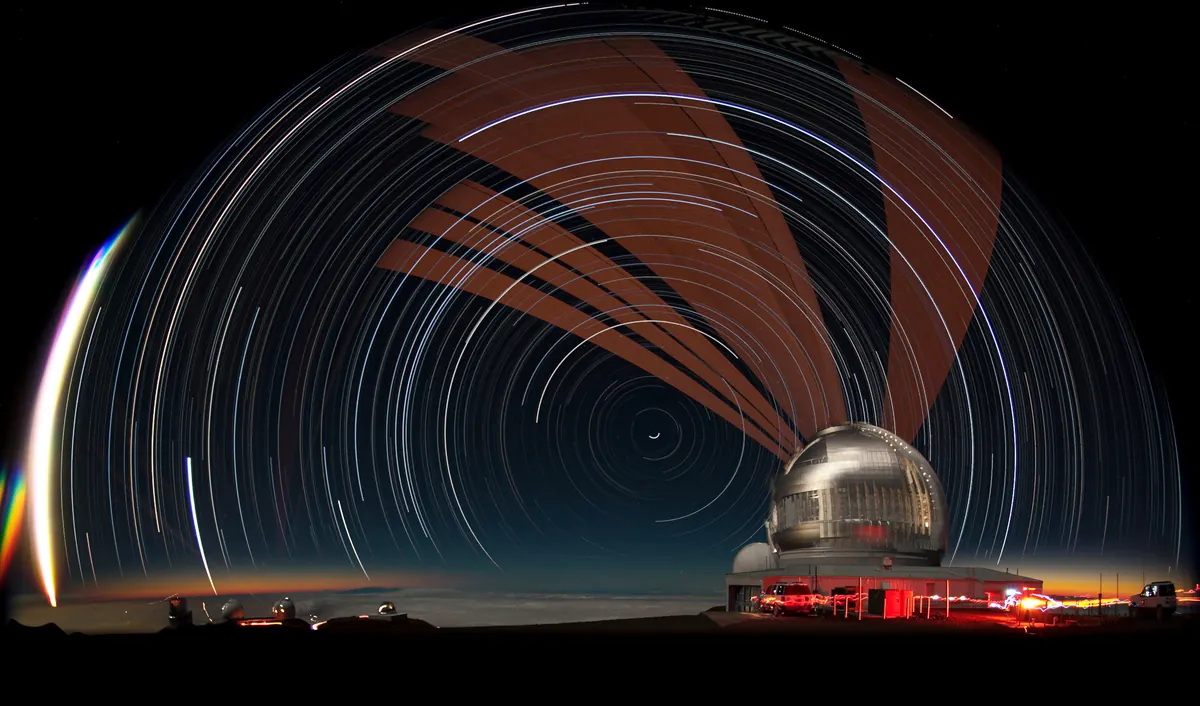
The islands have some of the best skies on Earth, and the summits of Maunakea and Haleakalā sit above most of the clouds. Times below are Hawaii Standard Time; Hawaii has no daylight time to end.
-
The Hunter’s Moon rises already full
Sunday, October 25, around sunset · Any open eastern horizon; over the ocean is best
In Honolulu the moon comes up at 5:42 p.m. on the 25th, seventeen minutes before sunset and half an hour before the exact moment of full, and at 6:28 p.m. on the 26th. Some calendars will call it a supermoon; measured against perigee, it isn’t one.
-
Saturn’s best night
Opposition Sunday, October 4; the moon beside it Oct 23–24 · East at dusk, high in the south around midnight
On the 4th Saturn and the sun sit on opposite sides of Earth, so the ringed planet comes up as the sun goes down, is visible the whole night through, and shines at its 2026 best, a steady cream-colored point in a faint region of sky. Any small telescope shows the rings. A fat waxing moon slides past it on October 23 and again the 24th.
-
Orionids before dawn
Active Oct 2 – Nov 7; best the mornings of Oct 21 and 22 · Somewhere dark; look east and overhead
The peak is broad, and a dark site might show a dozen or two meteors in an hour. In Honolulu the moon sets at 2:21 a.m. on the 21st and 3:14 a.m. on the 22nd, and civil twilight begins about 6:07, so the dark window runs from moonset until the sky begins to pale a little after 5 a.m. From the 23rd the moon stays up until after 4 a.m. and the window closes fast.
-
Draconids on a moonless evening
Thursday, October 8, after dusk · Low in the northwest
Expect only a few slow meteors in an hour, yet this shower is at its best soon after dark, and the moon stays below the horizon until 4:41 the next morning. A good first meteor watch for children who cannot stay up late.
-
Planets at dawn, and a near miss
Pre-dawn all month; Mars at the Beehive October 11 · East before sunrise
Before sunrise, look east for Jupiter, by far the brightest thing there, and dimmer, rust-colored Mars not far off. Point binoculars at Mars before dawn on Sunday, October 11, and you will find it drifting through the Beehive, a loose swarm of faint stars. The crescent moon hides Jupiter on October 6 for observers across much of North America, but in Hawaii that happens late on the evening of the 5th, before the moon has risen. When it comes up about 2:46 a.m. in Honolulu, Jupiter will already be out from behind it, sitting close beside the crescent. Venus hangs just above the western horizon at dusk for the opening few evenings of October, then drops from view. On the 23rd it slips past the sun’s near side, at inferior conjunction.
-
Stargazing on Maunakea
Visitor station open daily, 9 a.m. to 9 p.m. · Onizuka Center for International Astronomy Visitor Information Station, 9,200 ft
The station’s page describes free nightly stargazing with telescopes; confirm before you drive, since programs can be canceled for weather. The University of Hawaiʻi at Hilo advises that children under 13, anyone pregnant and people in poor health should not go above the station, a four-wheel-drive vehicle is required beyond it, and the summit closes 30 minutes after sunset. The Humuʻula Trail is closed after Hurricane Nolo. Bring a warm jacket.
-
Haleakalā after dark, and at dawn
Any clear night; sunrise by reservation · Haleakalā National Park summit district, Maui
The park encourages evening stargazing and asks visitors to switch to red lights, stay on paved paths and keep noise down. Watching sunrise requires a recreation.gov reservation for the 3 to 7 a.m. window, released 60 days ahead at 7 a.m. HST with more tickets two days before. The park warns that the summit is at least 20 degrees colder than the coast and often below freezing, with no food or gas for sale in the park.
| Phase | Date | Time |
|---|---|---|
| Last quarter | Saturday, Oct 3 | 3:25 a.m. |
| New moon | Saturday, Oct 10 | 5:50 a.m. |
| First quarter | Sunday, Oct 18 | 6:12 a.m. |
| Full moon, the Hunter’s Moon | Sunday, Oct 25 | 6:12 p.m. (looks full the evenings of Oct 25 and 26) |
| Last quarter | Sunday, Nov 1 | 10:28 a.m. |
Watch the Pleiades, Makaliʻi, rising a little earlier each evening; by mid-November they come up in the east at dusk, the traditional sign that the Makahiki season has arrived. Before a night drive up the mountain, see whether the trade-wind clouds will clear on our Today’s sky forecast, and look up tonight’s moonrise for your island with the moon phase calendar.
What is growing, flowering and ripening this month?
-
Wet-season green
From the first Kona low or trough on · Leeward slopes of every island
On the dry sides of the islands the first real rains of Hoʻoilo green up brown pasture and kiawe scrub. Much of that growth is non-native grass, tomorrow’s wildfire fuel.
-
ʻŌhiʻa lehua
Flowering in flushes through the year · Native forests and lava flows from sea level to treeline
The red pompom flowers of ʻōhiʻa feed ʻapapane and ʻiʻiwi, and trees can be in flower at almost any time of year. The tree is threatened by Rapid ʻŌhiʻa Death, a fungal disease, which is why the University of Hawaiʻi asks every hiker to clean boots and never move ʻōhiʻa wood.
-
Silverswords on Haleakalā
Rarely in flower now · Cinder slopes of the summit crater
The ʻāhinahina lives anywhere from three to 90 years or more, sends up one tall flowering stalk, and then dies, scattering its seed. A stalk in October is uncommon, but dry stalks from earlier blooms may still stand on the cinder. Stay on the trail; the plants survive because the park fences out grazing animals and visitors no longer pull them up.
-
Kona coffee cherry
Picking under way through fall · The Kona coffee belt, Hawaiʻi Island
Coffee cherry turns red on the upland farms above Kailua-Kona through the fall. The 55th Kona Coffee Cultural Festival runs November 6 to 15, 2026, with a lantern parade on opening night and farm tours where visitors can try picking ripe cherry.
What can families do outside in Hawaii this October?
- Log your kōlea. Report its arrival to the Kōlea Count by November 30, and sign up for a winter Little Count of your own yard or school field. Watch for the plain young birds that turn up this month.
- Go on a Forest Bird Hike at Hosmer Grove in Haleakalā National Park on October 13, 14, 27 or 28, 9–10 a.m., free, led by a park biologist. On Friday, October 2, the park’s Nēnē Awareness Day pop-up on the Headquarters Visitor Center lawn (10 a.m. to 2 p.m.) has games, crafts and the biologists who look after the geese.
- Pull weeds for the rainforest. Hawaiʻi Volcanoes National Park’s Stewardship at the Summit volunteer mornings are on the park calendar for October 3, 17, 24 and 31, meeting at 8:45 a.m. in the Kīlauea Visitor Center parking lot; gloves and tools are provided, and volunteers under 18 need a parent or guardian with written consent. Confirm first; the event text still shows summer dates. On Oʻahu, Waimea Valley’s Make a Difference Day on Saturday, October 24, 9 to 11:30 a.m., needs volunteers for weeding and invasive-plant removal.
- Walk under the full moon. Waimea Valley’s October Moonwalk, the last of the season, is Sunday, October 25, 8 to 10 p.m., by ticket, on the night of the Hunter’s Moon.
- Hunt for a happy-face spider. On Saturday, October 31, rangers lead a Spooky Scavenger Hunt near the Kīlauea summit from noon to 4 p.m., starting at the flagpole in front of the Kīlauea Military Camp Welcome Center, and the Kahuku Unit runs its Halloween Bingo Scavenger Hunt from 9 a.m. to 3 p.m. Costumes encouraged.
- Use the fee-free day. Tuesday, October 27, Theodore Roosevelt’s birthday, is free entry at all fee-charging national parks, including Haleakalā and Hawaiʻi Volcanoes.
- Keep a rain gauge. A straight-sided jar and a ruler will do. Record the first big wet-season rain, compare it with the normals in the table above, and when a Kona low is forecast, watch the barometer fall on our Weather now readout.
Coming next: Waimea Valley gives away trees for Arbor Day on Saturday, November 7, and holds its Makahiki Festival on Wednesday, November 11. The Naturalist’s Field Journal has plates for all of this, and the nature pages for other months and places are collected in one index.
Safety notes for October in Hawaii
- Kauaʻi after Hurricane Lowell. Most DLNR lands on the island were still closed in late September. The limited reopening on September 21 covered Wailua River kayaking to the landing zone (no hiking past the trailhead, Uluwehi Falls closed), access to Waimea Canyon from the canyon bottom only with state trails, campgrounds and shelters shut and many stream crossings destroyed, and Hunting Unit F below the Kōkeʻe Road junction. Kōkeʻe Road stayed closed. Check DLNR’s current list before any hike.
- Hurricane season to November 30, and flash floods at any time in the wet season. Never cross a flooded stream; water can rise from rain you cannot see falling upslope. Stay out of the ocean during brown-water advisories.
- Fresh water and leptospirosis. The Department of Health advises not swimming or wading in freshwater streams or ponds, especially with cuts or sores. Rat lungworm disease comes from slugs and snails: rinse all produce, and keep children from handling them.
- Surf and shorebreak. North and west shores turn dangerous without warning as the winter swells begin. Swim at lifeguarded beaches, and ask the lifeguard about currents and jellyfish.
- Altitude and cold. Maunakea and Haleakalā are at 9,000 to 14,000 feet: altitude sickness, freezing dawns, and steep unlit roads. Kīlauea’s vog and fountaining episodes can close parts of the park at short notice.
- Hunting and blaze orange. Seasons are set island by island and unit by unit, and pigs, goats and sheep are open year-round in many areas, including the Maunakea forest reserve. In October, dove seasons on private lands run from the first Saturday (October 3) through the last Sunday (October 25) on several islands. The fall game bird season opens the first Saturday in November (November 7, 2026) and runs to the last Sunday in January (January 31, 2027), mostly on weekends and state holidays. State rules require anyone hunting, guiding, assisting or accompanying a hunter in an area where firearms are allowed to wear an exterior shirt, vest, jacket or coat of commercially made solid blaze orange (or blaze-orange mesh no coarser than one-eighth inch), visible front and back; camouflage orange does not count. Hikers are not covered, but bright clothing in a public hunting area is sensible.
Sources
- DLNR Division of Forestry and Wildlife: kōlea (Pacific golden-plover)
- Hawaiʻi Audubon Society Kōlea Count: Welcome home kōlea (August 7, 2026)
- Kōlea Count: life in Hawaii (migration timing and distances)
- Kōlea Count: guidelines for arrival reports and winter counts
- County of Kauaʻi: seabird fledgling season and aid stations
- Kauaʻi Endangered Seabird Recovery Project: the solutions (lights, dark nights, SOS)
- DLNR: Kauaʻi schoolchildren release rescued ʻaʻo; October peak and population declines
- University of Hawaiʻi Sea Level Center: Oʻahu surf climatology
- Hawaii Department of Health, Ocean Safety: Hawaii’s surf seasons
- Hawaii Department of Health, Ocean Safety: weather hazards and brown-water advisories
- Hawaiian Islands Humpback Whale National Marine Sanctuary: about the sanctuary
- Hawaiian Islands Humpback Whale National Marine Sanctuary: responsible recreation
- NOAA Fisheries: viewing marine wildlife in Hawaiʻi
- Waikīkī Aquarium: box jellyfish calendar
- DLNR Division of Forestry and Wildlife: Hawaii’s forest birds
- Birds, Not Mosquitoes partnership
- DLNR Division of Forestry and Wildlife: nēnē
- Hawaiʻi Volcanoes National Park: nēnē
- Haleakalā National Park: Forest Bird Hike, October 13 (also Oct 14, 27, 28)
- Haleakalā National Park: Nēnē Awareness Day pop-up, October 2
- Haleakalā National Park: summit district
- U.S. Fish and Wildlife Service: Hakalau Forest National Wildlife Refuge
- University of Hawaiʻi CTAHR: Rapid ʻŌhiʻa Death
- USGS Hawaiian Volcano Observatory: Kīlauea daily update, September 29, 2026
- Hawaiʻi Volcanoes National Park: Spooky Scavenger Hunt, October 31
- Hawaiʻi Volcanoes National Park: Halloween Bingo Scavenger Hunt at Kahuku, October 31
- Hawaiʻi Volcanoes National Park: Stewardship at the Summit, October 3 (also Oct 17, 24, 31)
- National Park Service: fee-free day, October 27
- Western Regional Climate Center: climate of Hawaii
- NOAA NCEI: 1991–2020 monthly normals for the eight stations (data API)
- NOAA NCEI: 1991–2020 normals, Mauna Loa 5 NNE station (first-freeze dates as used on this site)
- NWS Honolulu: August 2026 monthly rainfall summary (Hurricane Lala)
- DLNR: limited reopening of select Kauaʻi lands after Hurricane Lowell (September 19, 2026)
- Central Pacific Hurricane Center: Tropical Storm Nolo advisories
- Climate Prediction Center: ENSO diagnostic discussion, September 10, 2026
- Climate Prediction Center: Hawaii seasonal outlook, September 17, 2026
- NOAA Pacific ENSO Applications Climate Center: El Niño and its impacts on Hawaiʻi (PDF)
- NOAA Climate.gov: Surf’s up, how does ENSO impact Hawaii?
- U.S. Naval Observatory: sun and moon data and 2026 moon phases (data API)
- EarthSky: meteor shower guide; Saturn at opposition; visible planets
- American Meteor Society: 2026 meteor shower calendar
- International Occultation Timing Association: lunar occultation of Jupiter, October 6, 2026
- Fred Espenak: full moons at perigee, 2001–2100
- NIST: daylight saving time (Hawaii does not observe it)
- University of Hawaiʻi at Hilo, Center for Maunakea Stewardship: Visitor Information Station
- Haleakalā National Park: stargazing
- Haleakalā National Park: sunrise reservations
- Haleakalā National Park: silverswords
- Kona Coffee Cultural Festival 2026
- Waimea Valley: October Moonwalk, October 25
- Waimea Valley: Make a Difference Day, October 24
- Waimea Valley: Makahiki Festival, November 11
- Waimea Valley: 2026 events (Arbor Day, November 7)
- Hawaii Department of Health: leptospirosis
- Hawaii Department of Health: rat lungworm disease
- DLNR: hunting in Hawaii, rule exhibits by island
- DLNR: Hawaii Administrative Rules chapter 13-122, game birds (seasons and blaze orange, PDF)
- DLNR: Hawaii Administrative Rules chapter 13-123, game mammals (blaze orange, PDF)
- DLNR: 2026 adaptive management notice, Hawaiʻi Island hunting exhibits (PDF)
- Photos via Wikimedia Commons; licenses and photographers are credited under each picture
