What to look for in nature in Idaho this April
April in Idaho is the month the two halves of the year change places. In the valleys, ospreys are back on their nest platforms, goslings are hatching at Deer Flat, and balsamroot starts to color the Boise foothills. Diving ducks pile onto Mud Lake as the thaw opens the water, and Swainson’s and ferruginous hawks return to the Snake River canyon. The Craters of the Moon loop road usually opens, though the high country can still hold snow into May. Frogs call from the shallows, and the first rufous hummingbirds may reach a feeder by month’s end. Here is what to look for in each part of the state, and what to give room.
Other months in Idaho: October, November, December, January, February, March.
Start here
- Adopt a nest pole. Find an osprey platform near you and visit it once a week. Write down the day the first bird sits on it, the day a second one joins, and the day they start carrying sticks. Stay far enough back that the birds ignore you.
- Walk the same foothill slope every week. Pick one south-facing slope and walk the same 20 minutes each week. Note which flower is open on each visit, from the first violets to the first balsamroot, and photograph the same spot.
- Listen at a pond edge before dark. Choose a marsh, reservoir cove or pond and stand quietly at its edge for ten minutes. Count the kinds of calls (frogs, ducks, snipe, owls) and note the date of your first frog chorus.
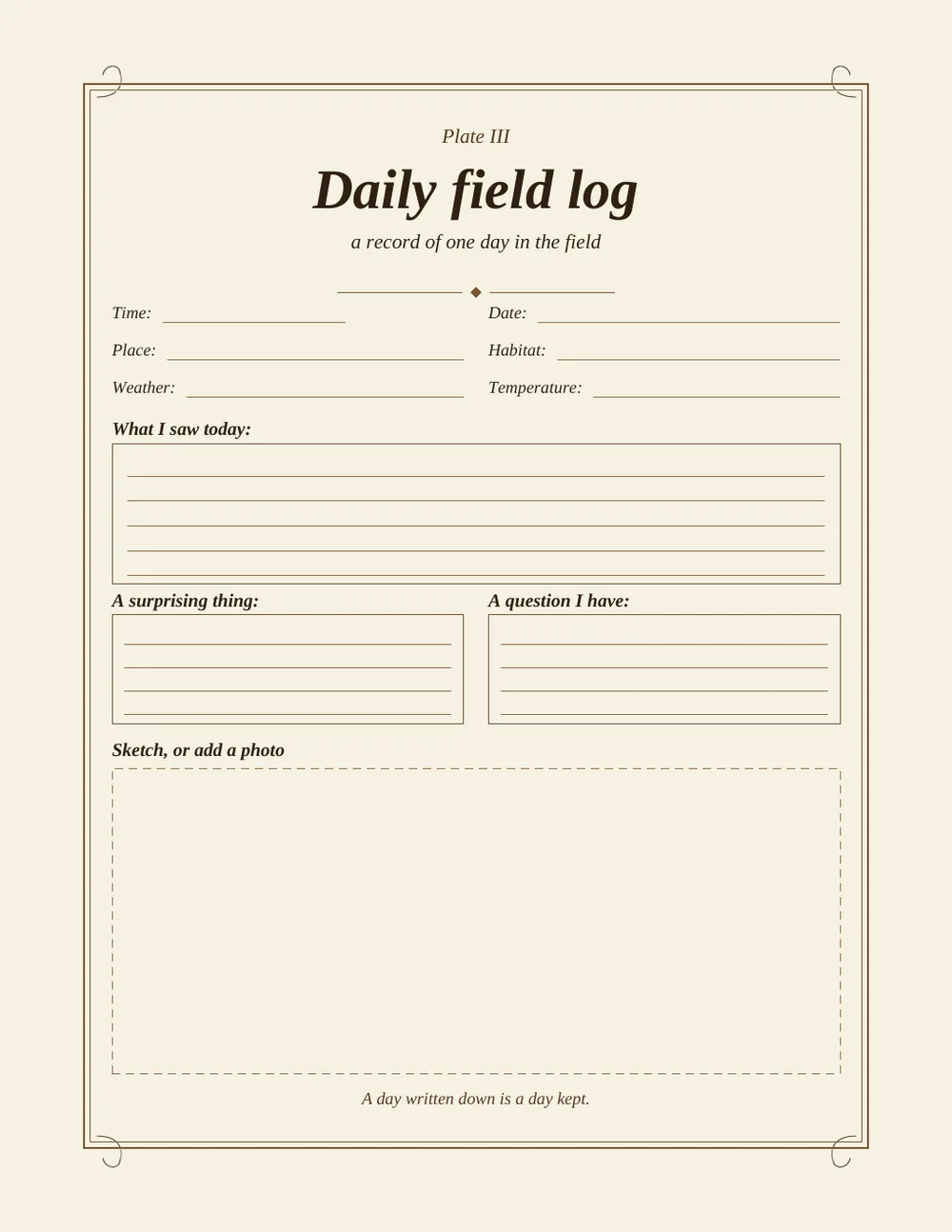
This month the Naturalist’s Field Journal can hold the following. Keep the “daily field log” for each first of the season: first osprey, first balsamroot, first hummingbird. Put hawks, curlews and warblers on “birds I have seen.” Give a nest pole its own “nest observed” page, and compare one foothill slope with “the same place twice.” Try “a map of sounds” at a pond when the frogs are calling, and a marsh evening belongs on “dusk and dawn watch.”
Regions used below: North Idaho and the Panhandle; Lewiston and the Clearwater country; Central Idaho mountains, McCall to the Sawtooths; Boise and the Treasure Valley; Magic Valley and the Snake River Plain; Eastern Idaho and the Upper Snake.
Which birds return to north Idaho’s lakes and refuges in April?
The Panhandle’s spring runs later than the Snake River Plain’s, so April is when its water and woods fill back up. The Kootenai National Wildlife Refuge at Bonners Ferry publishes a month-by-month list of what to expect, which works as a calendar for much of North Idaho. Roads there change with season and construction, so check its visit page before a drive. The Idaho March page covers the ice leaving the ponds.
-
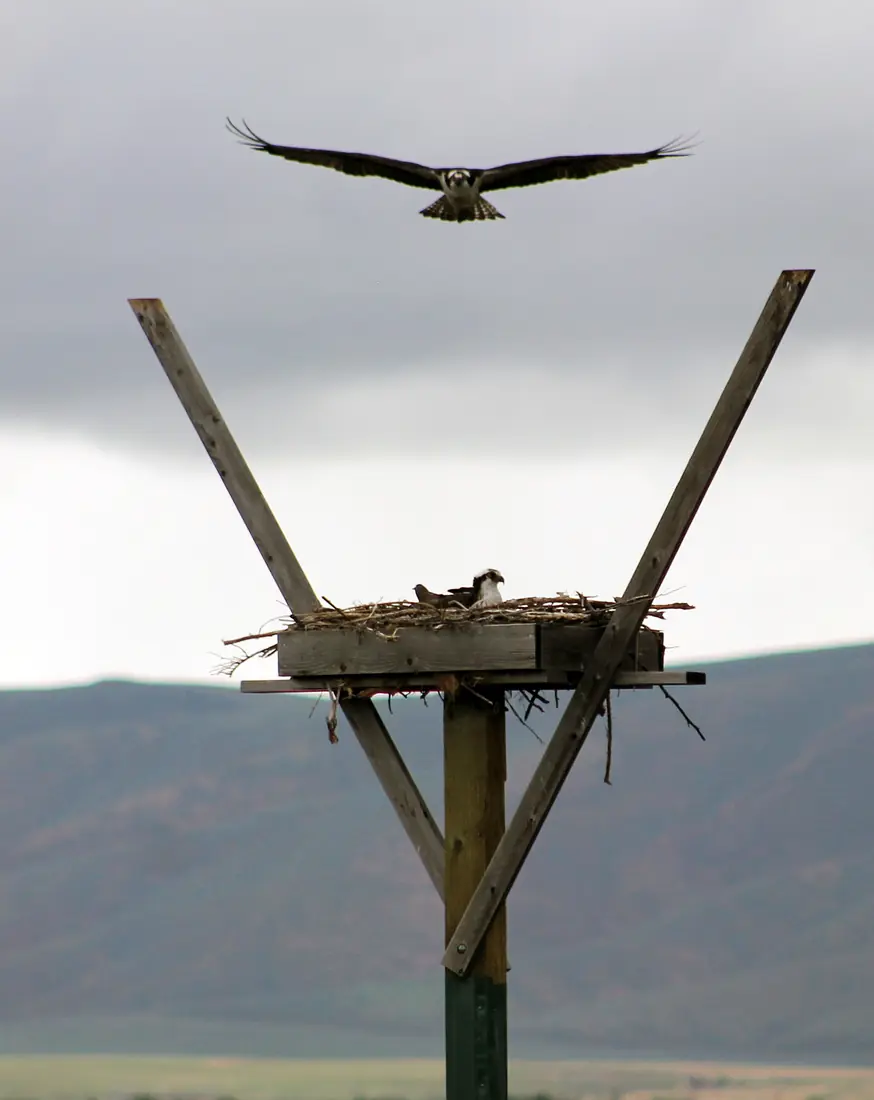
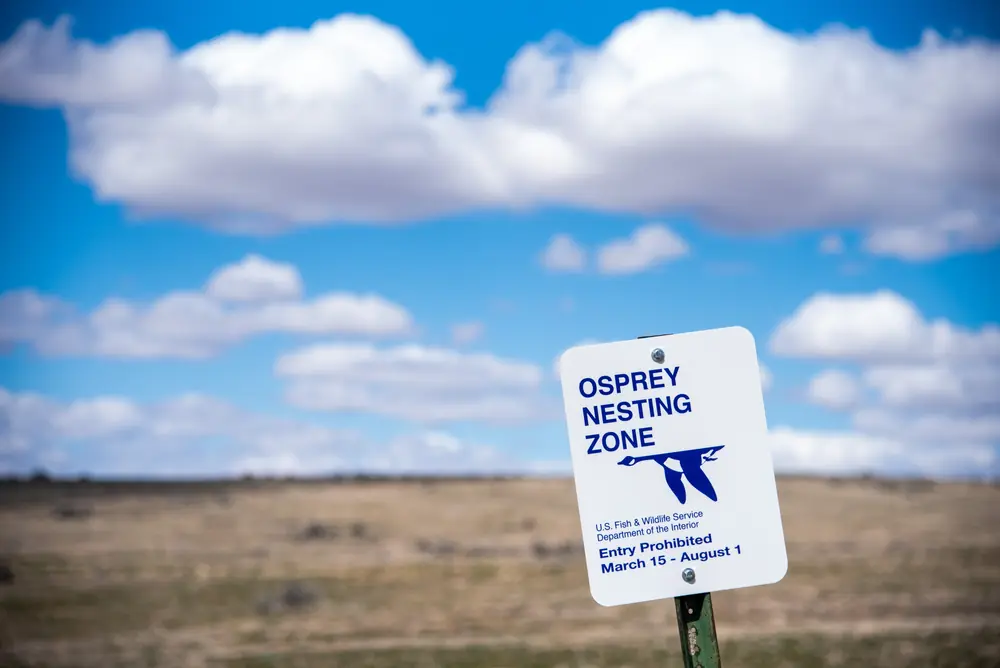
Ospreys reclaim their poles
Early to mid-April, according to Idaho Fish and Game · Nest platforms beside lakes and rivers around the state, including around Coeur d’Alene
Idaho Fish and Game says ospreys arrive in Idaho in early to mid-April and begin courting, bringing new sticks to the nest and defending it from intruders. They winter in Central America, and Fish and Game says eggs are laid in mid-May. Fish and Game also notes that Canada geese often take over platforms, pushing ospreys onto live power poles, so Idaho Power crews cleared old nests from platforms on April 1 in 2011 and the pairs rebuilt within five to seven days. Watch from a distance, and look for the male on the nest first. -
Eagles, grouse and geese on the Kootenai calendar
Early April for eagle nesting; mid-April for the drumming; late April for goslings and hummingbirds · Kootenai National Wildlife Refuge near Bonners Ferry
The refuge’s brochure lays out the sequence. Bald eagles start nesting in early April. By mid-April the woods carry the thump of a ruffed grouse drumming and the whirring of a snipe in its display flight. By late April, geese have hatched and hummingbirds have arrived.
-
Harlequin ducks on fast streams
Spring snowmelt; Fish and Game survey crews look in May · Cold, fast, forested streams in the Panhandle and Clearwater regions
One of Idaho’s most striking ducks returns inland each spring from the Pacific coast, with slate-blue feathers, white stripes and rust-orange flanks. It nests beside cold, rushing streams under dense shrubs and stays quiet in shady pools. Fish and Game and the Forest Service survey key streams in May. In 2024 the crews saw just five adults in spring and no broods in their summer follow-ups. Hope for one on a stream walk, and never push through streamside brush toward it.
What can you see at eastern Idaho’s marshes and refuges in April?
The marshes north of Idaho Falls fill with migrants as the thaw opens the water. Camas National Wildlife Refuge is run by the U.S. Fish and Wildlife Service, while Market Lake and Mud Lake belong to Idaho Fish and Game’s wildlife management area system. Call ahead, because snow and mud can close roads here. Sage-grouse leks are on the March page.
-
Diving ducks on Mud Lake
Through April, once the thaw opens the water · Mud Lake Wildlife Management Area
A Fish and Game nongame magazine quotes a local birder who recommends the deep water of Mud Lake in April, where large rafts of ruddy ducks and lesser scaup gather with grebes and mergansers. Snow geese feed in the surrounding fields in early spring, and the willows around the lake hold tanagers and grosbeaks later on.
-
Market Lake and Camas: the long waterbird window
Late March into mid-May at Market Lake; March through mid-May for waterbirds at Camas · Market Lake WMA and Camas National Wildlife Refuge
The same magazine calls Market Lake the best place in southeast Idaho to photograph migrating waterfowl, using a car as a blind, from late March until mid-May, after which most birds are nesting and hard to see. Camas lists its waterbird and shorebird peak as March through mid-May and its songbird peak as late May through mid-June, and says as many as 15,000 to 20,000 snow geese can use the refuge at once at the peak.
-
Short-eared owls and harriers display overhead
March and April · Almost any marsh in eastern Idaho
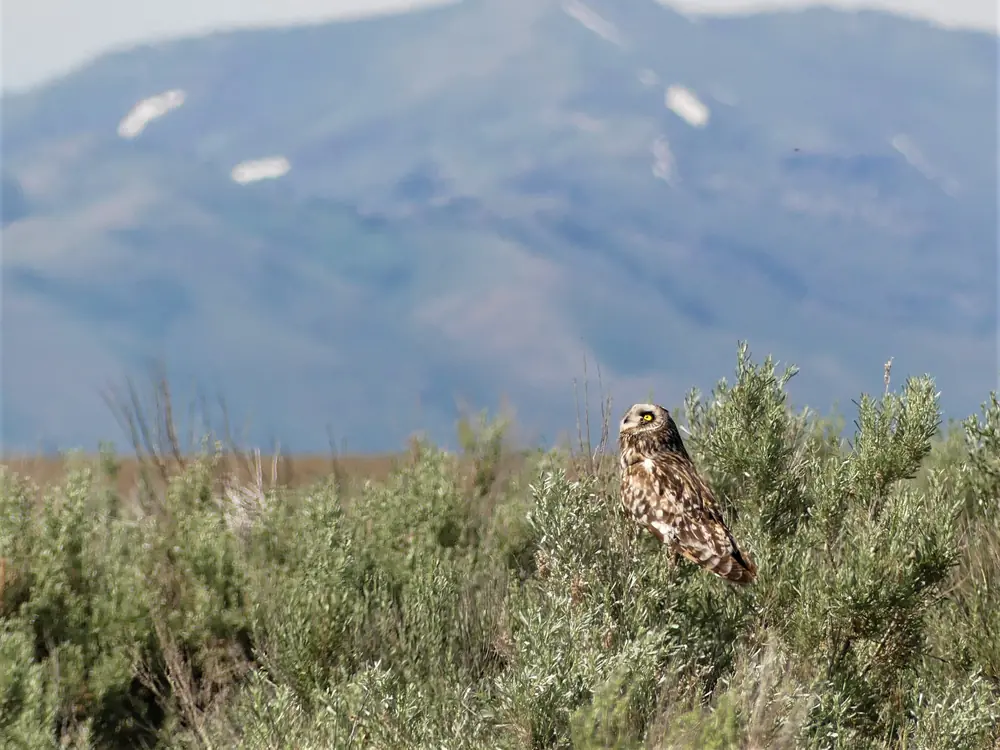
Short-eared owls and northern harriers perform courtship flights over the marshes at this season. The writer asks watchers to keep their distance from any raptor, since birds can abandon a nest even with eggs in it. Photographers crowding a windbreak at Market Lake have disturbed nesting owls, so stay on the trail and keep your voice down.
-
Sandhill cranes at Grays Lake
Spring, as the stopover flocks give way to nesting pairs · Grays Lake National Wildlife Refuge, at about 6,400 feet
The refuge is known for its sandhill cranes, which stop over, and part of the Rocky Mountain population nests and raises its colts along the marsh edges. At that elevation winter lingers, so phone first and expect snow on the roads.
Which hawks and owls are nesting at the Snake River Birds of Prey in April?
South of Kuna, the conservation area named for Morley Nelson spans about 484,000 acres of public land along 81 miles of the Snake River, under cliffs up to 700 feet high. The Bureau of Land Management describes it as North America’s densest gathering of nesting raptors, and perhaps the world’s. Ground squirrels and jackrabbits on the plateau feed them. The March page covers the first prairie falcons and burrowing owls. April adds the long-distance hawks.
-
Swainson’s and ferruginous hawks arrive
April; the BLM’s chart lists Swainson’s hawks from April through September and ferruginous hawks from April through July · Plateau and canyon rim of the Birds of Prey area
The BLM’s visitor guide describes Swainson’s hawk as a spring and summer bird that winters in Argentina and the most sociable of North American raptors. The ferruginous hawk is the continent’s largest hawk, soaring with uptilted wings. Turkey vultures are in the area from March through August. Rough-legged hawks, which come down from the north, are listed as present from November through April, so April is the last chance to see one. Golden eagles, great horned owls and the prairie falcons that arrived in February stay on their ledges.
-
Giving nesting birds room
February 15 through August 31 for the canyon firearm closure · Snake River Canyon between Grand View and the old Guffey Bridge
The guide advises backing off whenever a bird alters its behavior because of your presence. The canyon is closed to all firearms from February 15 through August 31 and to rifles and pistols all year. From Tuesday through Sunday the Peregrine Fund’s center in Boise offers a closer look at live raptors, with three live-raptor shows a day and last entry at 4:15 p.m. Hours can change, so check its visit page before you go.
Which songbirds, curlews and hummingbirds arrive in Idaho in April?
Most of Idaho’s long-distance songbirds arrive in May, but April brings the first wave: kinglets, sparrows, yellow-rumped warblers, shorebirds on the grasslands and the first hummingbirds. Dates swing with weather, so treat every window here as a range, not a promise.
-
Long-billed curlews on the nesting grasslands
Back in Idaho from March; nesting grounds checked from early April in 2020 · Pastures and mountain meadows, such as Meadows Valley northwest of McCall and Indian Valley
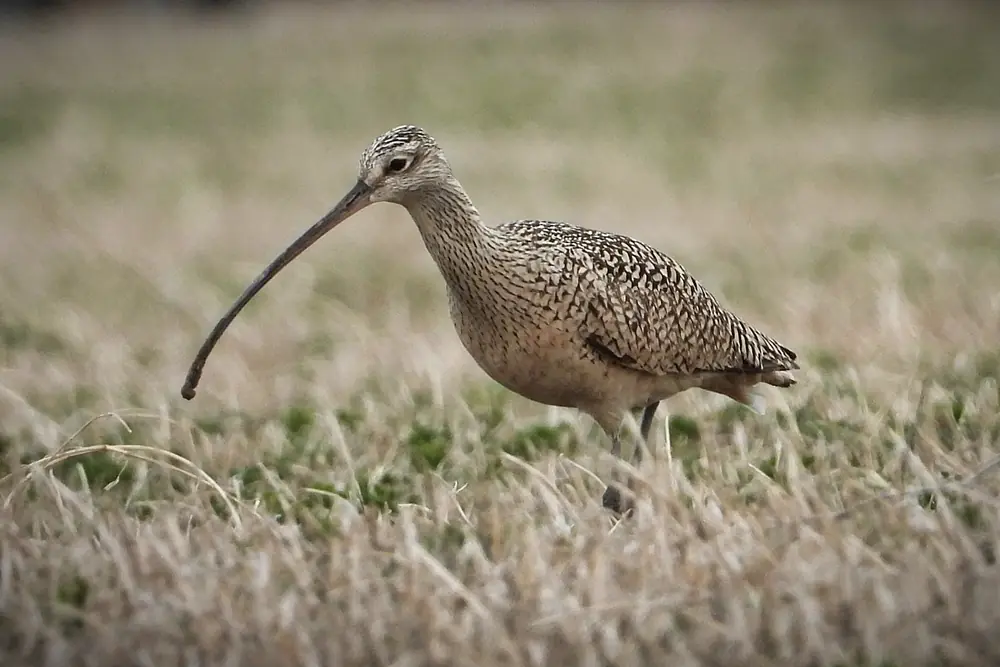
The long-billed curlew, North America’s largest shorebird, leaves coastal California in late February and reaches Idaho in March, according to Fish and Game’s Windows to Wildlife magazine. A Boise State bird observatory team began its 2020 field season in early April and found three breeding pairs in the West Central Mountains: two nests in Meadows Valley and one in Indian Valley. All three birds left in mid-June. Look for the very long, downcurved bill in short grass, and stay in your vehicle near a nest.
-
Spring banding at Camas
Late April to mid-June in recent seasons · Camas National Wildlife Refuge near Hamer
The Intermountain Bird Observatory at Boise State ran a banding crew at Camas from April 16 through June 15 in 2023. Early catches included ruby-crowned kinglets and a dusky flycatcher on April 17 that was earlier than expected. The crew banded 1,412 birds of 65 species, about a quarter fewer than in 2006 and 2007, and migration surged only in the last week of May and the first of June. Ask the observatory or refuge about a 2027 season.
-
A Boise yard in mid-April
Yellow-rumped warblers in mid-April, rufous hummingbirds late in the month, in one observer’s 2017 notes · Neighborhoods and parks along the Boise River
One Boise birder’s dated notes from 2017 logged a big push of yellow-rumped warblers in mid-April and a short run of rufous hummingbirds in late April, with grosbeaks and tanagers not arriving until mid-May. That is one person in one year, so take it as a rough order. Hummingbirds also reach the Kootenai refuge in late April.
-
Nesting colonies at Deer Flat
Goslings by mid-April; nestlings fed by the end of April · Deer Flat National Wildlife Refuge near Nampa
Resident Canada geese claim territory on the Snake River islands in early March, and goslings hatch by mid-April. Bald eagles, ospreys and great horned owls nest on both units, most feeding nestlings by the end of April. Herons, night-herons and cormorants set up island colonies in April and May.
When does arrowleaf balsamroot bloom in the Boise foothills, and where else is spring blooming?
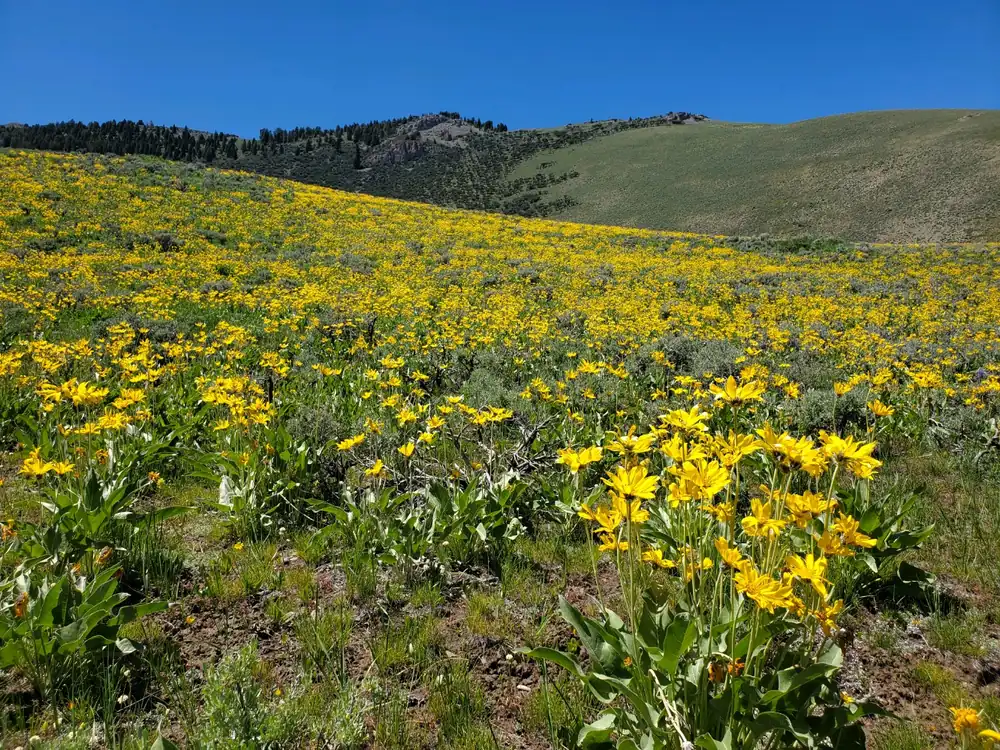
April is the month the Boise foothills turn gold and purple. Dates move with the year’s weather, and bloom comes later with elevation, so a trip a few weeks later reaches the next band of hills.
-
Balsamroot and lupine on the lower hills
April into June, earlier on the lower hills; the date moves with the weather each year · Boise foothills trails, including Camel’s Back, Hulls Gulch, Military Reserve and Lucky Peak
Ridge to Rivers, which manages the foothills trails, says lupine and arrowleaf balsamroot cover the lower hillsides in spring and stay visible well into the season as you climb to higher elevations. Cold or warm springs shift the bloom by a week or more, so look at recent trail reports before you go, and stay on trails, since the soils are fragile. -
A plant list for a mid-April walk
Mid-April to mid-May · Lydle Gulch near Lucky Peak Dam
The botanist-run Treasures of the Boise Front site describes a two-mile Lydle Gulch walk for mid-April to mid-May. Its list of what may be in bloom includes Beckwith’s violet, hotrock penstemon, longspur lupine, yellow bell, wild-hyacinth, prairiestars, sagebrush buttercup and balsamroot. It warns of very fragile soils and heavy clay: go when the ground is dry and stay on established trails.
-
Craters of the Moon wakes up late
The loop road usually opens in mid-April; the first wild onion in late April; the main bloom in June · Craters of the Moon National Monument and Preserve near Arco
The park service says snowpack may last into early May and the 7-mile Loop Road is not usually open to vehicles until mid-April. April and May can still bring snowstorms, and caves can close because of hazardous ice. Wildflowers begin with wild onion in late April, and the spring peak falls in June.
Which frogs, toads and fish are on the move in Idaho’s waters in April?
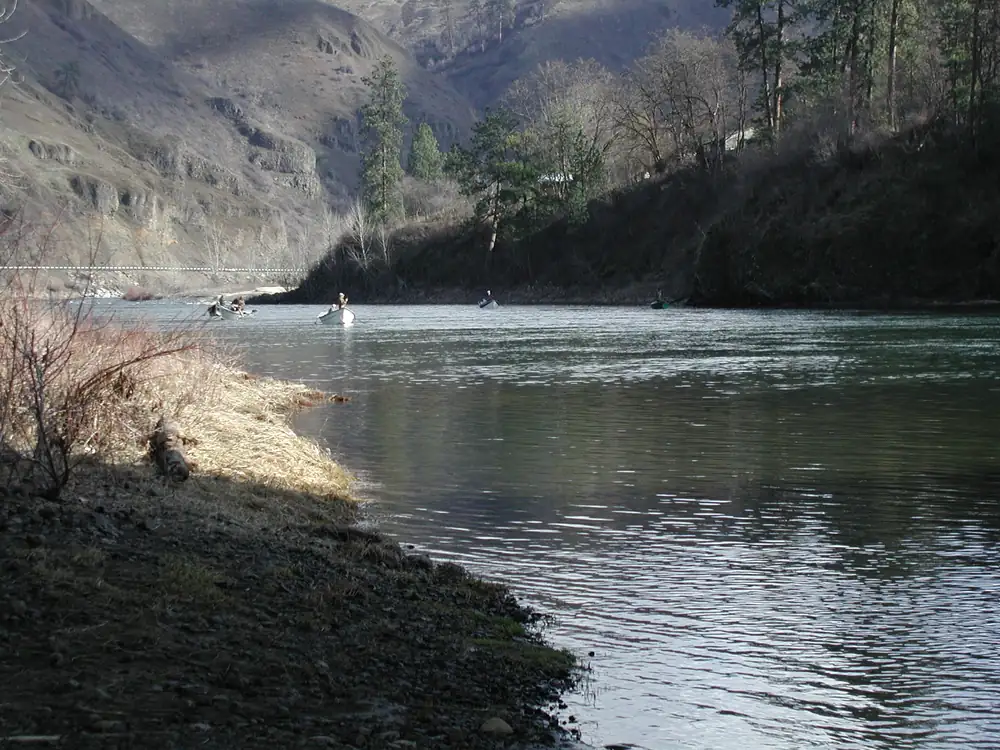
Snowmelt turns creeks brown and cold, and the animals that depend on them respond. Frogs call from the shallows, and salmon and steelhead anglers watch the river forecasts. Keep clear of fast spring water, and hold children and pets well back from the edge.
-
Frogs at full chorus
From snowmelt, once the shallows warm · Ponds and marshes in northern and central Idaho; spotted frogs avoid the Snake River Plain
Fish and Game devoted its April 2026 Wildlife Express to frogs and toads. It says Idaho has 14 amphibian species, nine of them frogs, including the nonnative bullfrog. Columbia spotted frogs, found across much of northern and central Idaho and in a separate population in the southwest, breed once the snow melts and the water warms. Males gather in the shallows and call during the day, a soft cluck or thump. A female lays a ball-shaped mass of up to 2,400 eggs, which hatch in three to 21 days depending on how warm the water is. The issue also pictures boreal chorus frogs and western toads. Look, listen and leave egg masses where they are.
-
Spring chinook on the lower Salmon and Little Salmon
Seasons are set each year once forecasts are in; the 2026 plan called for an April 25 opening · Rapid River run, lower Salmon River and Little Salmon River
Fish and Game’s 2026 proposal for the Rapid River run opened the season on Saturday, April 25, on the lower Salmon River from Rice Creek Bridge to Shorts Creek and on the Little Salmon River upstream to the Highway 95 bridge. It recommended a four-day Thursday through Sunday fishery with a daily limit of four salmon, no more than one of them an adult. The agency ties season length and limits to the size of the run, so plans can change. We found no 2027 season, and steelhead seasons are set separately by river, so check Fish and Game in April before fishing.
How much daylight does Idaho gain in April?
Daylight keeps growing in April, though more slowly than in March. Sandpoint climbs from 12 h 53 m to 14 h 30 m, a gain of 97 min or about 3.3 min a day. Boise goes from 12 h 45 m to 14 h 07 m, and Twin Falls gains the least, 79 min. These day lengths do not depend on the clock. Idaho has been on daylight time since March 14.
| City | Apr 1 | Apr 30 | Gained | Per day |
|---|---|---|---|---|
| Sandpoint | 12 h 53 m | 14 h 30 m | 97 min | 3.3 min |
| Coeur d'Alene | 12 h 51 m | 14 h 26 m | 95 min | 3.3 min |
| Lewiston | 12 h 49 m | 14 h 20 m | 91 min | 3.1 min |
| McCall | 12 h 47 m | 14 h 13 m | 86 min | 3.0 min |
| Boise | 12 h 45 m | 14 h 07 m | 82 min | 2.8 min |
| Twin Falls | 12 h 44 m | 14 h 03 m | 79 min | 2.7 min |
| Pocatello | 12 h 44 m | 14 h 04 m | 80 min | 2.8 min |
| Idaho Falls | 12 h 45 m | 14 h 07 m | 82 min | 2.8 min |
On the clock, the U.S. Naval Observatory has Boise’s sun rising at 7:27 a.m. and setting at 8:11 p.m. on April 1, and rising at 6:39 a.m. and setting at 8:46 p.m. on April 30 (Mountain daylight time). Pacific-time Coeur d’Alene sees 6:26 a.m. and 7:17 p.m. on April 1, and 5:32 a.m. and 7:58 p.m. at month’s end. Look up any address on the daylight page.
What is April weather like in Idaho?
April brings warm afternoons, cold nights and rain or snow showers that can arrive on the same day. By NOAA’s 1991–2020 normals, the average April high runs from 62.3 degrees at Boise and Lewiston to 50.8 at McCall, and the average low from 40.7 at Lewiston down to 26.9 at McCall. Precipitation ranges from 1.03 inches at Idaho Falls to 2.37 at Sandpoint. McCall still averages 4.2 inches of snow, and at least an inch lies on the ground there for about 12 days. Nights at or below freezing number about 5 at the Boise airport, 14 at Pocatello, nearly 17 at Idaho Falls and 24 at McCall. Rows carry the name NCEI gives each station.
| Station (NCEI name) | Average high | Average low | Precipitation | Snow | Nights at or below 32 °F |
|---|---|---|---|---|---|
| Boise Air Terminal | 62.3 °F | 39.6 °F | 1.23 in | 0.1 in | 5.2 |
| Lewiston Nez Perce Co Ap | 62.3 °F | 40.7 °F | 1.44 in | 0.0 in | 2.4 |
| Twin Falls 6 E | 59.1 °F | 34.8 °F | 1.16 in | 0.5 in | 12.7 |
| Pocatello Rgnl Ap | 58.6 °F | 32.8 °F | 1.20 in | 2.6 in | 14.4 |
| Idaho Falls Fanning Fld | 57.5 °F | 31.4 °F | 1.03 in | not reported | 16.6 |
| Coeur d'Alene | 56.2 °F | 36.7 °F | 1.91 in | not reported | 7.2 |
| Sandpoint Exp Stn | 55.6 °F | 34.5 °F | 2.37 in | 0.5 in | 12.3 |
| McCall | 50.8 °F | 26.9 °F | 2.15 in | 4.2 in | 24.0 |
The mountains hold much of the water that arrives in rivers later. The USDA Natural Resources Conservation Service says the median date of peak snowpack at Mores Creek Summit in the Boise basin is April 7, with 31.8 inches of water in the snow, and about April 10 in the Salmon basin. Those are medians, not promises: in 2026 the statewide snowpack peaked on March 17 at 68 percent of normal after a record warm spell. The National Weather Service in Boise says spring flooding usually needs persistent warmth or rain falling on snow, and that small creeks can overflow even when the big rivers do not, and even when snowpack is low. Its outlook comes out in early March, so look for the 2027 edition. NOAA’s Climate Prediction Center posts its seasonal outlooks monthly at the 90-day outlook page. For today’s conditions, see the local forecast, and NWS Boise for river and avalanche products.
When is the last spring freeze in Idaho?
A warm April day is not a safe date for tender plants. The table below gives the last 32-degree morning in an average spring at each city’s main station. The one-in-ten column is the early end of the range, and the nine-in-ten column is the late end. These stations differ from the monthly normals above: Boise’s is Boise 7 N, and Idaho Falls’s is Idaho Falls 46 W.
| Station | One year in ten | Median | Nine years in ten |
|---|---|---|---|
| Sandpoint | Apr 23 | May 8 | May 25 |
| Coeur d'Alene | Apr 4 | Apr 22 | May 6 |
| Lewiston | Mar 20 | Apr 6 | Apr 26 |
| McCall | Jun 3 | Jun 22 | Jul 10 |
| Boise | Apr 27 | May 17 | Jun 10 |
| Twin Falls | Apr 25 | May 9 | May 28 |
| Pocatello | May 6 | May 23 | Jun 13 |
| Idaho Falls | May 20 | Jun 11 | Jul 1 |
Lewiston is the earliest, with a median last freeze on April 6, followed by Coeur d’Alene on April 22. Sandpoint and Twin Falls follow on May 8 and May 9, Boise’s station on May 17 and Pocatello on May 23. Idaho Falls waits until June 11 and McCall until June 22. At the late end, the table shows nine springs in ten done by May 6 at Coeur d’Alene, June 10 at Boise’s station, July 1 at Idaho Falls and July 10 at McCall. Wait until after your town’s median, and keep covers handy for the late end. For your own town, use the Idaho frost page.
What can you see in Idaho’s night sky in April 2027?
April has no eclipse. It has a poor meteor shower, a full Pink Moon and some pairings of the Moon with bright planets. Times are Mountain daylight time, with Pacific daylight time in the Panhandle and around Lewiston. Idaho moved its clocks on March 14, so each April time here is daylight time.
-
Venus and a thin crescent Moon
Saturday, April 3 and Sunday, April 4, before sunrise · Low in the east-southeast
Venus shines as the morning star all month, up roughly 75 minutes ahead of sunrise on April 1 (a figure worked out for the central U.S., so give yourself a margin in Idaho). A thin waning crescent, roughly 9 percent illuminated, hangs a few degrees from it both mornings.
-
The Moon beside Jupiter and Mars
Wednesday, April 14 and Thursday, April 15, in the evening · High in the south after dark, in the Leo and Cancer region
Jupiter is past opposition but still bright in the evening sky. On April 15 a Moon about 68 percent illuminated slides to within a degree of it; the closest approach comes at 8:19 a.m. MDT, so April 14 and 15 are the evenings to watch. Mars sits about 3 degrees from the Moon that night, by our calculation. Saturn is lost in the Sun’s glare and does not reach the dawn sky until about May.
-
A poor year for the Lyrids
Predicted peak about 7:41 p.m. MDT (6:41 p.m. PDT) on Thursday, April 22; watch the evenings of April 21 to 23 · Dark sky away from town lights, looking northeast toward the constellation Lyra
In a perfectly dark sky the Lyrids can show about 20 an hour at their very best. This year the Moon will be about 95 percent illuminated, three days past full, and it rises at 10:36 p.m. in Coeur d’Alene, 10:57 p.m. in Idaho Falls and 11:15 p.m. in Boise on the 22nd. Only the early-evening hours between the end of twilight and moonrise are dark, with the radiant still low. Count on only a handful an hour, though the Lyrids occasionally throw a short surprise burst.
-
The Pink Moon
Tuesday, April 20; full at 4:27 p.m. MDT (3:27 p.m. PDT) · Rising in the east just after sunset
Almanacs call it the Pink Moon, though it is not pink. It rises about 20 minutes after sunset in Boise, at 8:54 p.m., and at 8:37 p.m. in Idaho Falls, 8:44 p.m. in Twin Falls and 8:08 p.m. in Coeur d’Alene (Pacific time).
| Phase | Date | Time |
|---|---|---|
| New moon | Tuesday, Apr 6 | 5:51 p.m. MDT / 4:51 p.m. PDT |
| First quarter | Tuesday, Apr 13 | 4:56 p.m. MDT / 3:56 p.m. PDT |
| Full moon, the Pink Moon | Tuesday, Apr 20 | 4:27 p.m. MDT / 3:27 p.m. PDT |
| Last quarter | Wednesday, Apr 28 | 2:18 p.m. MDT / 1:18 p.m. PDT |
For rise and set times at your address use the moon phases page, and check the cloud forecast for a clear night.
What can Idaho families do outside in April?
- Adopt a nest pole. Visit an osprey platform every week and note arrival, building and the first sitting bird. Binoculars let you stay well back.
- Earth Day, Thursday, April 22. Pick up trash along a trail, creek or park near home.
- Arbor Day, Friday, April 30. The Arbor Day Foundation lists Idaho’s observance as the last Friday of April, so Friday, April 30, 2027.
- Nature photo challenge. The City Nature Challenge’s organizers give April 30 through May 3, 2027 for photographing wild plants and animals, with identifying from May 4 to 16. Check whether a city region near you has signed up; you can upload to iNaturalist either way.
- A wildflower walk. Try the Lydle Gulch route on a dry morning from mid-April, staying on the trail.
- Counting. Project FeederWatch counts end April 30; the Golden Eagle Audubon Society in Boise leads guided birding trips.
Bring a Naturalist’s Field Journal on each trip. The Idaho March page covers the sage-grouse dawn and early cranes; for other states, start at the nature guides.
Safety notes for April in Idaho
- Spring turkey. The 2026 and 2027 rules list a youth-only turkey hunt from April 8 to 14 in most units, then general spring turkey season from April 15 through May 25. Farragut State Park and Wildlife Management Area is archery only, April 15 to 30. Some central and southwest units run youth hunts until May 25 or are controlled hunts only, so read the unit entry in the current booklet before heading out.
- Spring black bear. The 2026 big game rules list spring black bear seasons for 2027 that start April 15 in most northern and eastern units and April 1 in many central and southern ones, for example Units 10, 12, 20A, 21, 26, 27 and 32, and run into May, June or July depending on the unit. Females with young are protected, and the rules warn of possible grizzly bear encounters in several northern, central and eastern units. Expect bait sites and hunters on forest roads, and keep dogs close.
- Orange. Idaho requires orange only when hunting pheasants where the upland permit applies, and on hunts run by a sponsor, for example an organized youth hunt. Fish and Game encourages anyone walking in areas hunters use to wear some, and turkey hunters often wear camouflage, so wear bright colors on trails in turkey country.
- Coyotes. Fish and Game strongly recommends leashing dogs on all Boise Foothills trails from March through June, even where off-leash is allowed.
- Fast cold water. Spring runoff makes creeks and rivers cold and strong. Stay back from banks, never cross swollen creeks, and watch the river forecast on the National Weather Service site.
- Mud. Foothill clay trails turn slick and the soils are fragile, so turn back when a trail is sloppy.
- Snakes. Fish and Game’s species catalog lists the western rattlesnake as a native snake found across Idaho. Look before stepping or reaching on sunny rock slopes, and leash your dog.
- Nests and young. Stay back from any raptor, owl or goose on a nest, and leave fawns, calves and fledglings alone.
- High-country snow. Avalanche danger can last into spring in the mountains. Check the Sawtooth Avalanche Center, a U.S. Forest Service forecast center, or the other Idaho avalanche centers, and pack rescue gear.
- Ticks. The CDC recognizes 16 tickborne diseases nationwide, so inspect yourself and your dog after brushy walks.
Sources (55)
- U.S. Fish and Wildlife Service: Kootenai National Wildlife Refuge watchable wildlife brochure (Seasons on the Refuge; PDF)
- U.S. Fish and Wildlife Service: Kootenai National Wildlife Refuge, visit (road work, contact)
- U.S. Fish and Wildlife Service: Camas National Wildlife Refuge, species and seasons
- U.S. Fish and Wildlife Service: Grays Lake National Wildlife Refuge, species (sandhill cranes)
- U.S. Fish and Wildlife Service: Deer Flat National Wildlife Refuge, seasons of wildlife
- Idaho Fish and Game: Idaho Power prepares for osprey arrival (2011)
- Idaho Fish and Game: Salmon osprey camera (arrival and egg-laying timing)
- Idaho Fish and Game: Windows to Wildlife, Spring 2025 (harlequin ducks; PDF)
- Idaho Fish and Game: Windows to Wildlife, Spring 2019 (Southeast Idaho spring birding, curlews; PDF)
- Idaho Fish and Game: Wildlife Express, April 2026, Frogs and Toads (PDF)
- Intermountain Bird Observatory (Boise State): How has migration changed at Camas National Wildlife Refuge? (Nov. 1, 2023)
- Intermountain Bird Observatory (Boise State): A new old project for IBO (April 26, 2023)
- Intermountain Bird Observatory (Boise State): Migratory mysteries from the west central mountains (Nov. 25, 2020)
- Idaho Birds list: Spring migration continues, North Boise (May 2017; one observer’s dated notes)
- Bureau of Land Management: Morley Nelson Snake River Birds of Prey NCA visitor guide (PDF)
- The Peregrine Fund: visit the World Center for Birds of Prey (hours)
- Ridge to Rivers: Spring wildflowers
- Treasures of the Boise Front: Lydle Gulch wildflower walk (mid April to mid May)
- Treasures of the Boise Front: wildflower walks
- National Park Service: Craters of the Moon, basic information
- National Park Service: Craters of the Moon, wildflowers
- Idaho Fish and Game: Chinook salmon proposals for the 2026 Rapid River run
- Idaho Fish and Game: Spring steelhead seasons and rules
- Idaho Fish and Game: Upland Game, Turkey and Furbearer 2026 & 2027 Seasons and Rules (PDF)
- Idaho Fish and Game: Big Game 2026 Seasons and Rules, including spring 2027 black bear (PDF)
- Idaho Fish and Game: hunter orange
- Idaho Fish and Game: Be vigilant during coyote mating and denning seasons
- Arbor Day Foundation: Arbor Day dates across America
- Idaho Nursery and Landscape Association: 2025 Arbor Day grants (press release; PDF)
- City Nature Challenge: 2027 dates
- Project FeederWatch: how to participate
- Golden Eagle Audubon Society
- Sawtooth Avalanche Center (U.S. Forest Service)
- Centers for Disease Control and Prevention: about ticks and tickborne disease
- USDA Natural Resources Conservation Service: Idaho Water Supply Outlook Report, April 1, 2026 (PDF)
- National Weather Service Boise: Idaho Spring Flood and Water Resources Outlook, March 5, 2026 (PDF)
- National Weather Service Boise
- NOAA Climate Prediction Center: seasonal (90-day) outlooks
- NOAA NCEI: U.S. climate normals 1991–2020, monthly, April (eight Idaho stations)
- NOAA Global Monitoring Laboratory: solar calculator (sunrise and sunset method)
- U.S. Naval Observatory: moon phases from April 1, 2027
- U.S. Naval Observatory: sunrise, sunset and moonrise for Boise, April 1, 2027
- U.S. Naval Observatory: sunrise, sunset and moonrise for Boise, April 20, 2027
- U.S. Naval Observatory: sunrise, sunset and moonrise for Boise, April 22, 2027
- U.S. Naval Observatory: sunrise, sunset and moonrise for Boise, April 30, 2027
- U.S. Naval Observatory: sunrise, sunset and moonrise for Coeur d’Alene, April 1, 2027
- U.S. Naval Observatory: sunrise, sunset and moonrise for Coeur d’Alene, April 20, 2027
- U.S. Naval Observatory: sunrise, sunset and moonrise for Coeur d’Alene, April 22, 2027
- U.S. Naval Observatory: sunrise, sunset and moonrise for Coeur d’Alene, April 30, 2027
- U.S. Naval Observatory: sunrise, sunset and moonrise for Idaho Falls, April 20, 2027
- U.S. Naval Observatory: sunrise, sunset and moonrise for Idaho Falls, April 22, 2027
- U.S. Naval Observatory: sunrise, sunset and moonrise for Twin Falls, April 20, 2027
- Wikimedia Commons: photographs, with licenses checked through the Commons API
- Idaho Fish and Game: western rattlesnake species catalog
- Photos via Wikimedia Commons; licenses and photographers are credited under each picture
