What to look for in nature in Idaho this January
January is the deep middle of an Idaho winter, the month that set the state’s all-time cold record of 60 below at Island Park Dam. It is also when much of the wildlife is easiest to find, because snow and ice push it onto the few places that stay open. Bald eagles line the cottonwoods along the southern rivers, trumpeter swans feed in the spring water of the Henrys Fork, and elk and mule deer bunch up on the low winter ranges. Owls are pairing off in the dark, black bear cubs are born in their dens, and the days are already growing by a minute or two each afternoon. The guide below covers each corner of the state, with the timing and the best spots for each.
Other months in Idaho: October, November, December, February.
Start here
- Find the eagles on a southern river. Idaho Fish and Game says wintering bald eagle numbers peak in January and February. Drive a stretch of the Snake, the Boise or the Salmon early on a cold morning and check every big cottonwood that leans over open water.
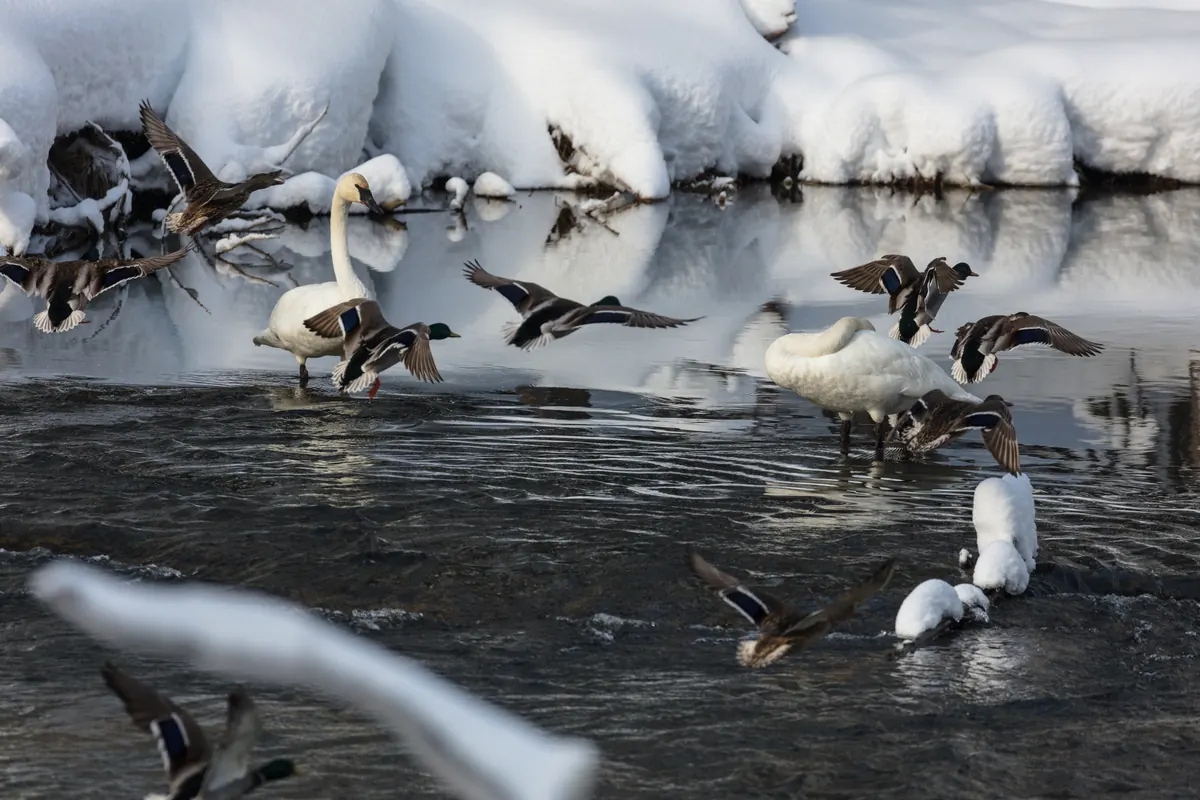
- Ski or snowshoe among the swans. At Harriman State Park in Island Park, the groomed River Trail follows the bank of the Henrys Fork, where trumpeter swans feed all winter on water that never freezes. It is short, flat and rated for beginners.
- The closest full moon of 2027. The Wolf Moon is exactly full at 5:17 a.m. MST (4:17 a.m. PST) on Friday, January 22, the nearest full moon of the year. Look for it on the night of Thursday, January 21, as it climbs over the eastern ridges at dusk.
For the Naturalist’s Field Journal this month: after a fresh snow, sketch one set of prints from start to finish on “tracks to know,” use “dusk and dawn watch” to log the evenings you hear owls hooting and how long after sunset they start, keep a running tally of hawks along one country road on “birds I have seen,” and on “mammal watch” note every deer, elk or moose you see from the car, with the snow depth that day. Add the temperature and wind to every page; in January they explain most of what you see.
Regions used below: North Idaho and the Panhandle; Lewiston and the Clearwater country; Central Idaho mountains, McCall to the Sawtooths; Boise and the Treasure Valley; Magic Valley and the Snake River Plain; Eastern Idaho and the Upper Snake.
Where can you see bald eagles in Idaho in January?
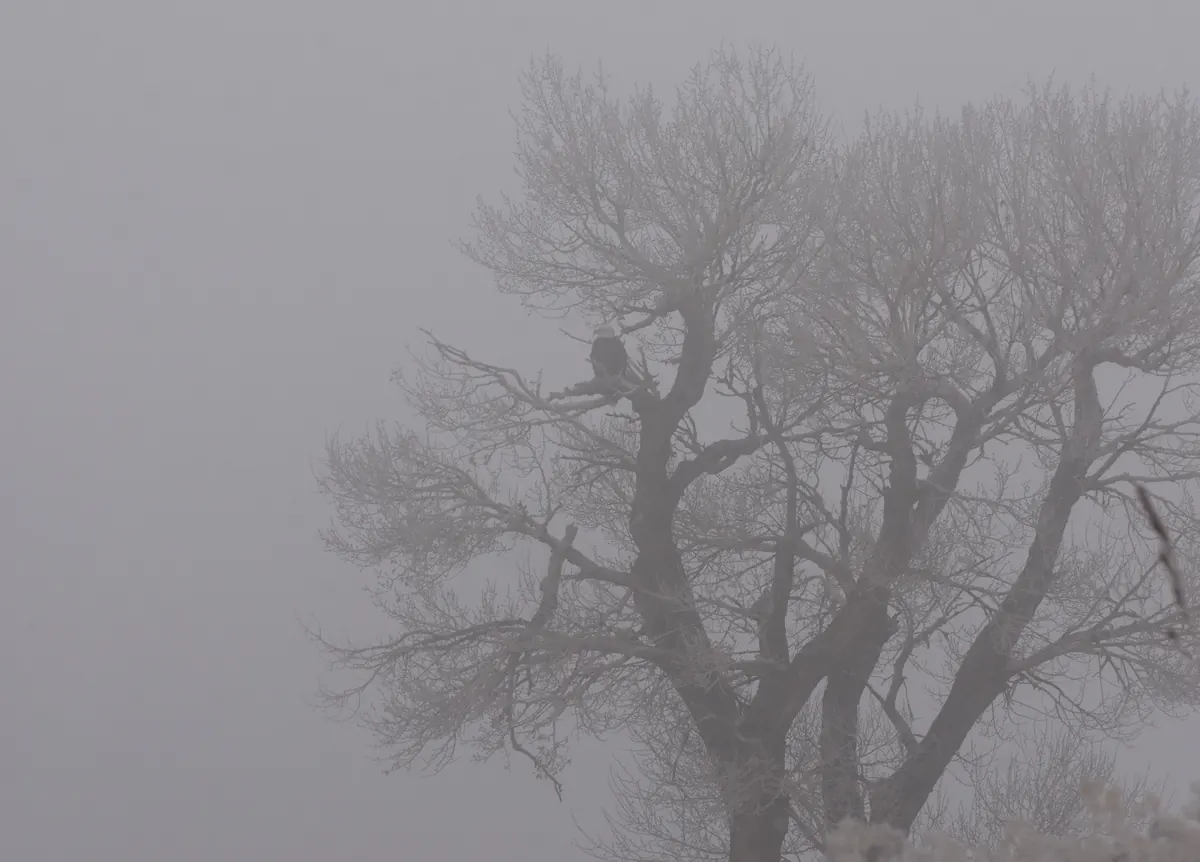
The eagle story moves south and inland this month. Fish and Game’s eagle leaflet traces the arc of the season: birds from the north start reaching their usual Idaho haunts in October, and the count of eagles in the state tops out in January and February. In winter the birds have two jobs, eating and saving energy, so they gather where food is easy: along rivers, around reservoirs and on lakeshores, perching for hours in the same favorite trees.
-
Cottonwoods on the southern rivers
All month; most birds of the winter in January and February · The Snake River at Box Canyon and the Vader Grade near Hagerman; Barber Dam on the Boise River in southeast Boise; the South Fork of the Snake below Palisades Dam
Fish and Game names stretches of the Snake, Salmon and Boise rivers among Idaho’s main eagle wintering areas. Visit Idaho points watchers to Box Canyon in Thousand Springs State Park, to the Vader Grade south of Hagerman for birds coming in at sunset, and to Barber Dam inside Boise itself. On the South Fork, the 60 miles of river from Palisades Dam to the Henrys Fork holds the state’s largest nesting population of bald eagles. At night, eagles crowd into communal roosts in mature trees with stout limbs and dense crowns, so a grove that looks empty at noon can hold a dozen birds at first light.
-
The midwinter count
January · Rivers and reservoirs statewide, including the Salmon, Lemhi and Pahsimeroi corridors around Salmon and Challis
Every January, volunteers and agency biologists drive set routes around Idaho for the statewide midwinter eagle survey. An Associated Press report in January 1992 put the statewide midwinter count at 830 bald eagles the year before, up from 404 in 1979, with 127 counted in eastern Idaho alone. Golden eagles, which hunt the open range and rimrock, turn up on the same counts and often share a carcass with bald eagles.
-
Below the dams
Cold spells, when other water freezes · The North Fork of the Clearwater below Dworshak Dam at Ahsahka, and the Clearwater down to Lewiston
Dams can be eagle magnets. In a 1991 count, Clearwater biologists found eagles waiting in the ponderosa pines and cottonwoods at the base of Dworshak Dam, where kokanee that had passed through the turbines came out stunned or injured and easy to catch. About 20 eagles wintered between Orofino and Lewiston in those years.
-
Coeur d’Alene’s eagles move on
The Wolf Lodge Bay gathering usually thins out by January · Lake Coeur d’Alene and Lake Pend Oreille
The BLM says migrating eagles use the Lake Coeur d’Alene area from November through February, but the big Wolf Lodge Bay crowds depend on spawned-out kokanee, and those run out. Last winter the weekly tally had fallen to 20 birds by December 19. A few birds stay on the northern lakes all winter, but many drift south.
Resident pairs are already fixing up their nests. The Fish and Game leaflet says Idaho females lay one to four eggs, usually one or two, from late February into early April. If you know a nest tree, watch it from a distance this month; disturbance near a nest early in the season can make a pair give up the site.
Where can you see trumpeter swans in Idaho in winter?
By January the swans that arrived in November have nowhere else to go. Ponds, marshes and most rivers are frozen, but the Henrys Fork rises from big springs and keeps flowing ice-free through Island Park, so the underwater plants the swans eat stay within reach. Fish and Game has called the Upper Snake the most important winter habitat for trumpeter swans anywhere in the Rocky Mountains.
-
The Henrys Fork at Harriman
All month · Harriman State Park, Island Park, about 28 miles south of West Yellowstone
Harriman sits inside an 11,700-acre wildlife refuge, and in winter its roads become more than 33 miles of groomed trails for classic and skate skiing, snowshoeing and fat biking. The park’s trail guide singles out the River Trail, an easy 1.3-mile beginner trail along the bank, for its views of trumpeter swans and other waterfowl, and says to watch for river otters near the Thurmon Creek bridge. Fish and Game adds common goldeneyes, pintails, wigeons and Canada geese to the winter list, with the odd Eurasian wigeon, plus bald eagles and moose. A winter access pass costs $6 per person per day on top of the $7 vehicle fee. Volunteers from the Idaho Falls Nordic Ski Patrol, in red coats, help on weekends from January through March.
-
Counting the Rocky Mountain swans
Formerly late January or early February · The Henrys Fork, South Fork, Teton and main Snake rivers
For decades the U.S. Fish and Wildlife Service flew a midwinter survey of the Rocky Mountain population of trumpeters. The Pacific Flyway Council’s management plan says the count was done in late January or early February until 2015, and that the last one found 6,933 birds, 5,587 white birds and 1,346 gray cygnets. If you count a group yourself, list the gray young separately, as the surveyors did.
-
Swans in the stubble
Mild spells · Farm fields near the Henrys Fork and South Fork
The same plan notes that in recent mild winters, large numbers of trumpeters wintering in Idaho have taken to feeding in fields rather than on the rivers. If the strong El Niño gives eastern Idaho a softer January, look for big white birds on snowless fields near the rivers of the Upper Snake, and report them to eBird with the date and place.
When do owls nest and call in Idaho in winter?
Fourteen kinds of owls live in Idaho or visit it, according to Fish and Game, and several of them start their breeding season in the coldest weeks of the year. A still, clear January night is the time to stand outside and listen.
-
Great horned owls pick a nest
Courtship November to January; eggs soon after · River cottonwoods, farm shelterbelts, canyon walls and city parks statewide
Fish and Game’s owl booklet places great horned owl courtship from November into January. The female then claims an old hawk or magpie nest, or a hollow in a tree, and lays two to four eggs that hatch after 33 to 35 days. Look for the birds by day high in a riverside cottonwood, and check the ground below likely roost trees for gray pellets up to 4 inches long, packed with fur and bone. An adult sitting low and flat in a big stick nest in late January may already be on eggs; keep well back.
-
Long-eared owls in their winter roosts
Roosting all winter; singing from January or February · Dense willow thickets along streams in otherwise open country
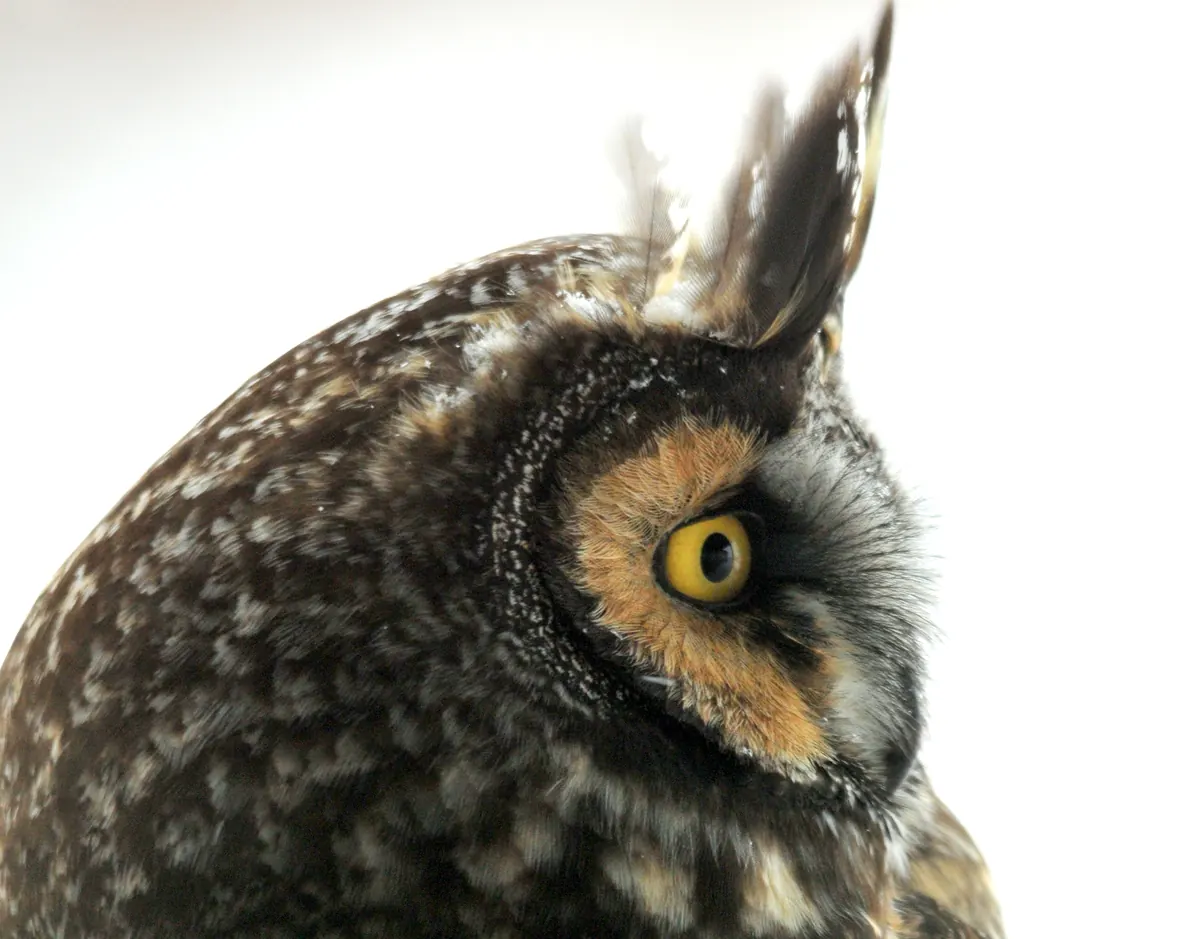
This slim owl with tall ear tufts spends the day hidden low in thick cover, and in winter several often share the same thicket. Its song, a slow series of low hoots a few seconds apart, can begin in January. A study in the Morley Nelson Snake River Birds of Prey National Conservation Area found that rodents made up 97 percent of its diet there. If you find a roost, watch from outside the thicket and leave quietly; flushed owls lose energy and sometimes the roost.
-
Boreal owls begin to sing
Males from late January; females from early February · Old spruce and fir forests in the high mountains, including the Frank Church–River of No Return Wilderness
Few people ever hear this small mountain owl, but January is when the chance begins. Fish and Game says Idaho males start singing in late January and females in early February: a quick run of about ten hoots that rolls across snowy valleys, sometimes for 20 minutes to an hour. The calling picks up through March, ahead of nesting in old woodpecker holes.
-
Snowy and northern hawk owls
Some winters only · Open farmland and prairie, mostly in north Idaho
Snowy owls come south from the Arctic only now and then, and the state’s owl booklet says most Idaho sightings have been in the north. The northern hawk owl, which hunts by day from treetops, is another irregular visitor to north Idaho in years when food runs short in Canada, and it has nested a few times in Boundary County. Either one is worth a report to eBird.
Which Arctic birds spend the winter on Idaho’s open plains?
Some of Idaho’s winter birds never come into town. They breed on the tundra or high peaks and spend the cold months on the sagebrush flats and farm country of southern Idaho, where wind keeps some ground bare. A slow drive on a back road is the way to find them.
-
Rough-legged hawks
All winter · The Snake River Plain, for example the roads toward Swan Falls and Grandview
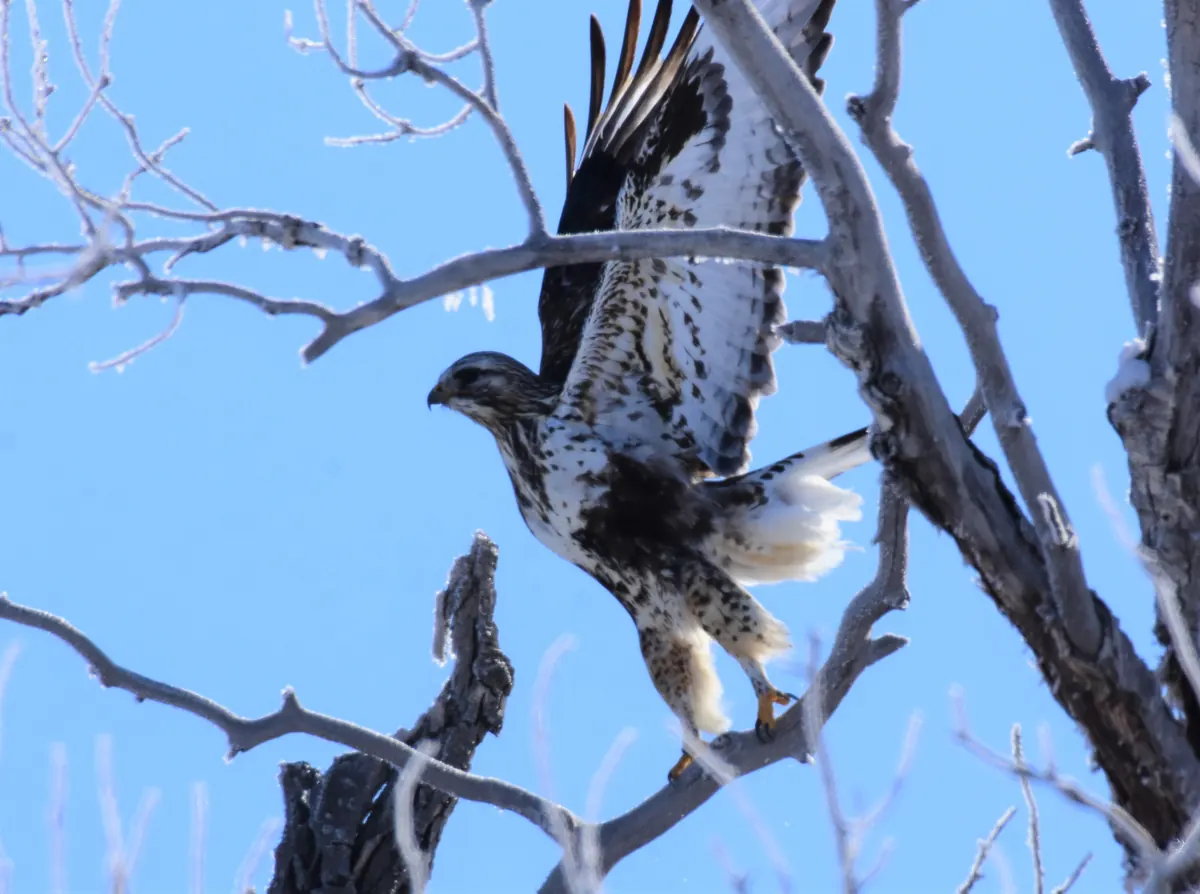
Rough-legs nest on the Arctic tundra and the stunted forest at its edge and come south every winter. A Boise birding columnist writes that on the Snake River Plain you will almost certainly see one or more, yet they seldom come into the Boise foothills, preferring wide sagebrush country. Their plumage varies a great deal, as does that of the resident red-tailed hawks they share the plain with, so take a good look before you decide.
-
Snow buntings
Most winters, in flocks · The Camas Prairie around Fairfield, where Highway 20 comes out onto the flats; occasionally Round Valley near Smiths Ferry
These white-winged Arctic songbirds winter across the northern half of the Lower 48, and the same columnist calls the Fairfield area the most reliable place to see them in southern Idaho, with flocks of a few birds to a hundred or more in most winters.
-
Rosy-finches
Mostly in heavy snow · Ski areas, foothill feeders and snow-free fields; a Boise birding columnist reported a flock of more than 600 gray-crowned rosy-finches at Bogus Basin in early November 2023
Gray-crowned and black rosy-finches nest among alpine cliffs and snowfields, and both flock together in winter, moving to wherever the ground is bare. Big snowstorms push them down to lower elevations, where they sometimes visit feeders on the edge of town. The Cornell Lab notes that they feed mostly on the ground, picking up seed spilled under a feeder.
Northern shrikes also come down from northern Canada in winter. They are songbirds with a hawk’s habits, watching from fence posts and wires for mice and small birds. Log every one of these birds in eBird; the winter maps for Idaho have big gaps.
How do Idaho’s elk, deer and moose get through January?
By midwinter, big game are living on stored fat and on dry, low-quality browse. Every unplanned sprint through deep snow costs them reserves they need for the end of winter, which is why Fish and Game puts so much effort into keeping people, dogs and handouts away from them.
-
Tex Creek Wildlife Management Area
Roads closed December 1 to April 15 · About 15 miles east of Idaho Falls
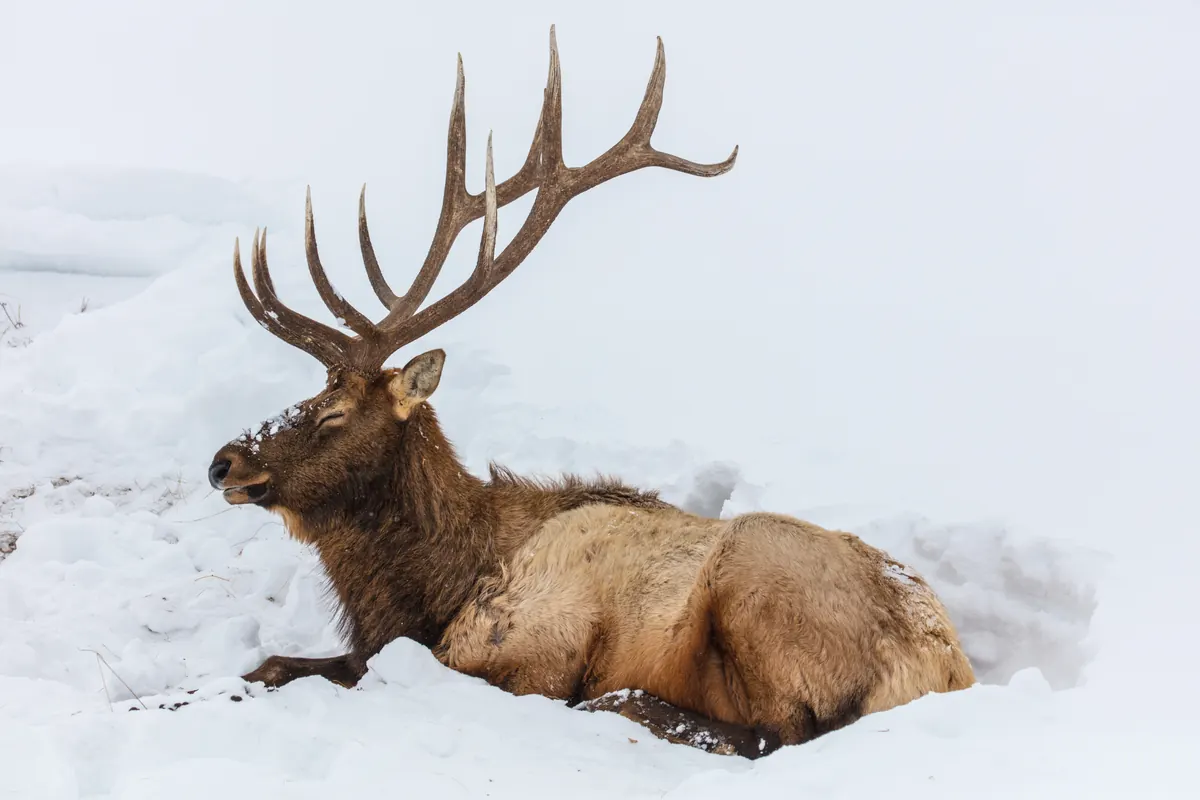
Once the snow starts, as many as 4,000 elk and 3,000 mule deer can move onto Tex Creek’s 35,218 acres, some of them from up to 70 miles away, and moose are common. The area was set aside as winter range after Ririe Reservoir and Teton Dam flooded older habitat in the 1970s, and Bonneville County closes about 18 miles of road to motor vehicles each winter so the animals can rest. Much of the range is still recovering from the 2016 Henry’s Creek fire, which burned almost two-thirds of it.
-
When winter turns severe
Deep snow and long cold spells, usually late in the winter · Portneuf, Georgetown, Montpelier, Tex Creek and Market Lake WMAs in southeast and eastern Idaho
In hard winters, Fish and Game closes some wildlife management areas to all entry. In one recent severe winter it shut five in the southeast and Upper Snake regions beginning February 3. A regional habitat manager explained that deer, elk and moose forced to wade through deep snow in the cold burn through their fat quickly. The department also reminds dog owners that letting a dog chase or harass big game is illegal, and that a loose dog of any size looks like a predator to a deer.
-
Please do not feed them
All winter · Towns from Hayden to McCall to Ketchum
Fish and Game always advises against feeding deer and elk, and in many Idaho towns it is against the law. A winter stomach is tuned to dry, coarse forage, so rich feed can cause bloat and death; crowds at a feeding spot spread disease and lure mountain lions and coyotes into neighborhoods. Feeding also pulls animals toward deadly landscape plants. In January 2022, five elk, two of them calves, died after eating toxic yew in Wood River Valley neighborhoods, and the same shrub killed at least 20 elk there in 2015–16. McCall adopted a no-feeding ordinance in September 2023 to deal with its town deer.
The Boise Foothills winter range, with its dog-leash season and burned-area closure, is described on the Idaho December page.
What are Idaho’s bears and other mammals doing in midwinter?
Some of Idaho’s mammals sleep through January, but sleeping is not the same as standing still. A few of the year’s most important events happen out of sight, inside dens and under logs and snow.
-
Black bear cubs are born
Around the end of January or early February · Dens under upturned root wads and fallen trees in forests across Idaho
Black bears seldom dig a den from scratch. Fish and Game’s Wildlife Express says they often use the hole left when a big tree blows over and its roots pull out of the ground, lined with a little grass. The cubs, usually two, arrive at the end of January or the first part of February while the mother is still in the den. They weigh about half a pound, with closed eyes and almost no fur, and they nurse through the rest of the winter. By the time the family leaves the den in April or May, each cub weighs 4 to 10 pounds.
-
Porcupines eating bark
All winter · Conifer and mixed forests, river bottoms and ranch buildings
Porcupines stay active all winter and live largely on the inner bark of trees. Fish and Game notes that they are solitary most of the year but will share a den in a rock pile, hollow tree or old building during bad weather, a gathering it calls a prickle. They are excellent climbers, so scan the crowns of pines and cottonwoods, and keep dogs well away from any you find.
-
Martens hunting voles
All winter, day and night · Mature conifer forests with plenty of fallen logs
The American marten is a slim, house-cat-sized member of the weasel family that lives mostly on voles. Fish and Game describes it running along the forest floor, poking its head into holes and under logs and rocks, or ambushing prey from a perch in a tree. In snow country, those holes lead down to the spaces where voles live under the snowpack all winter. On skis or snowshoes, look for paired prints that end at a log or a hole in the snow and pick up again a few yards on.
When is the ice thick enough to fish in Idaho in January?
Fish and Game says that in most of the state the ice is usually not ready for anglers until December or January, and that timing varies widely with elevation and weather. In a mild El Niño winter, many low-elevation waters may freeze late or not at all, so check recent reports before you drive.
-
Lake Cascade perch
Once the ice is safe; check current reports · Lake Cascade, Valley County; plowed parking and a launch off Lake Cascade Parkway just west of town
At 47 square miles, Lake Cascade has room for everyone, and it has a national reputation for trophy yellow perch, including a number of record fish. The department warns that fish can be scattered on such a big lake, and suggests looking for clusters of anglers on weekends as a clue. Horsethief Reservoir, east of Cascade off Warm Lake Road, is the area’s stocked-trout alternative, with a plowed road. A youth ice fishing day is held there in some winters; check with Idaho Youth Outdoors.
-
Southern reservoirs that wait for January
Usually mid-January onward · Magic Reservoir north of Shoshone; Oakley Reservoir; C.J. Strike Reservoir south of Mountain Home
Fish and Game says ice fishing at Magic Reservoir typically picks up in January, when thicker ice is more likely, with rainbow and brown trout and plenty of perch. Oakley, one of the few places to catch walleye through the ice, is best in mid-January. C.J. Strike is the wild card: in many years the middle stays open, and anglers fish only coves near shore after a long cold spell.
-
Small lakes in the north
Often the first to lock up · Avondale, Cocolalla, Dawson and the Twin Lakes in the Panhandle; Winchester Lake near Lewiston
Small, high or northern lakes freeze earliest. Winchester State Park rents heated yurts in winter beside a lake that Fish and Game stocks with rainbow trout for ice anglers, which makes an easy family overnight.
Fish and Game’s guidelines: drill test holes as you go, because thickness is never uniform; a lone person needs at least three to four inches of clear, solid ice and a group more; snowmobiles and ATVs need 10 inches; and auger holes may be no more than 10 inches across. Stay off ice near inlets, outlets, springs, docks and pilings, and remember that Carey Lake’s east inflow keeps a pocket of water open.
How much daylight does Idaho gain in January?
The mornings stay dark, but the afternoons stretch noticeably. Every city in the table gains at least 50 minutes of daylight between New Year’s Day and January 31. The far north gains the most: Sandpoint and Coeur d’Alene each pick up 62 minutes, about 2.1 minutes a day, while Twin Falls and Pocatello gain 50. Boise goes from 9 hours 1 minute on January 1 to 9 hours 53 minutes by the end of the month, and Sandpoint, which starts the year with the least daylight in the table, ends January with 9 hours 28 minutes. The daily gain keeps speeding up until the March equinox.
| City | Jan 1 | Jan 31 | Gained | Per day |
|---|---|---|---|---|
| Sandpoint | 8 h 26 m | 9 h 28 m | 62 min | 2.1 min |
| Coeur d'Alene | 8 h 30 m | 9 h 32 m | 62 min | 2.1 min |
| Lewiston | 8 h 40 m | 9 h 38 m | 58 min | 1.9 min |
| McCall | 8 h 52 m | 9 h 46 m | 54 min | 1.8 min |
| Boise | 9 h 01 m | 9 h 53 m | 52 min | 1.7 min |
| Twin Falls | 9 h 07 m | 9 h 57 m | 50 min | 1.7 min |
| Pocatello | 9 h 05 m | 9 h 55 m | 50 min | 1.7 min |
| Idaho Falls | 9 h 02 m | 9 h 53 m | 51 min | 1.7 min |
An odd fact for a cold month: Earth makes its closest pass to the sun of the whole year on the evening of Saturday, January 2 (perihelion, at 7:33 p.m. MST or 6:33 p.m. PST), about 91.4 million miles away. What makes Driggs and Stanley so cold is the low January sun skimming the horizon, not how far away the sun happens to be. To look up sunrise, sunset and twilight for any Idaho town, use the daylight calculator.
How cold and snowy is January in Idaho, and what will El Niño do?
January is the heart of Idaho’s winter, and the state’s extremes show it. NOAA’s State Climate Extremes Committee lists Idaho’s all-time low as 60 °F below zero, set at Island Park Dam on January 18, 1943. In the normals below, McCall averages 34.9 inches of January snow and keeps an inch or more on the ground all 31 days, while Idaho Falls has the coldest nights, with an average low of 12 °F and almost six mornings below zero. Lewiston, low in its canyon, stays the mildest.
| Station | Average high | Average low | Precipitation | Snowfall | Days with 1 in or more of snow on the ground | Nights below 0 °F |
|---|---|---|---|---|---|---|
| Sandpoint | 34 | 23 | 4.33 | 20.9 | 25.5 | 1.4 |
| Coeur d’Alene | 36 | 26 | 3.21 | not published | not published | 0.3 |
| Lewiston airport | 42 | 30 | 1.13 | 2.7 | 3.4 | 0.1 |
| McCall | 31 | 13 | 2.93 | 34.9 | 31.0 | 5.5 |
| Boise airport | 39 | 26 | 1.41 | 5.3 | 6.4 | 0.5 |
| Twin Falls | 37 | 22 | 1.20 | 7.8 | not published | 0.6 |
| Pocatello airport | 34 | 17 | 1.11 | 8.5 | 14.2 | 3.5 |
| Idaho Falls airport | 29 | 12 | 0.67 | not published | not published | 5.7 |
The tropical Pacific is running exceptionally hot this winter. Federal forecasters wrote on September 10 that Idaho’s winter will very probably (they put it above nine chances in ten) play out with a very strong El Niño under way, and gave three-in-four odds that by late fall this event will top the strength of every El Niño in the federal record, which starts in 1950. The center’s explainer on El Niño winters describes the mechanism: the Pacific jet stream and storm track shift south, more mild marine air flows into the West, and less Arctic air spills down from Canada, which tends to make the northern states milder than normal. For Idaho, a NOAA meteorologist who looked at the 1997, 2015 and 2023 El Niño winters told Boise State Public Radio that the signal is strongest in the north, with better odds of warmth and a thin snowpack there, while the south is closer to a toss-up; some southern ranges have even done well for snow. The USDA Northwest Climate Hub adds that a warmer, drier winter means more of the precipitation falls as rain at low elevations, which can mean less runoff next summer. The Climate Prediction Center updates its 90-day outlooks every month, so look there for the latest winter maps; check the current forecast before any mountain trip, and look up typical spring frost dates on the Idaho frost page when the seed catalogs arrive.
What can you see in Idaho’s night sky in January?
The dark skies of Craters of the Moon and the Central Idaho Dark Sky Reserve reward anyone willing to stand in the January cold. Times are standard time: Mountain for most of the state, Pacific north of the Salmon River.
-
The Quadrantid meteors
Night of Sunday, January 3, into Monday, January 4 · Anywhere dark; look north and northeast
This shower’s peak lasts only a few hours, and in 2027 moonlight is hardly a factor, since only a slim crescent climbs above the Idaho ridges, and not until a few hours before sunrise. Forecasters differ on the peak time: the American Meteor Society’s estimate works out to about 8:30 p.m. MST (7:30 p.m. PST) on the 3rd, and another prediction puts it near 10:47 p.m. MST (9:47 p.m. PST). Because the radiant starts out low in the northeast and gains height as the night goes on, Idaho watchers should start by mid-evening and stay out as long as they can stand the cold. From a dark site, expect dozens of meteors an hour at best.
-
The Wolf Moon, a supermoon
Night of Thursday, January 21, and the evening of Friday, January 22 · Rising in the east-northeast at dusk
The moon is exactly full at 5:17 a.m. MST (4:17 a.m. PST) on January 22, less than a day after its closest approach of the month. At that moment it will be roughly 222,229 miles from Earth, nearer than at any other full moon this year. The best show is the evening of the 21st, when it rises around sunset and shines all night on the snow; it still looks full when it rises on the 22nd. The next evening, Saturday the 23rd, the moon sits close to bright Jupiter.
-
Venus at dawn, Jupiter after dark
All month · Venus in the southeast before sunrise; Jupiter in the east in the evening; Saturn low in the southwest
Venus hits its greatest western elongation on January 3 and blazes in the southeast over the Idaho dawn for all of January. Jupiter rises earlier each evening ahead of its opposition on February 10, and Saturn sinks lower in the southwest after dark. Toward month’s end, sharp eyes may catch Mercury in the evening twilight just above the west-southwest horizon; it is better placed in early February.
-
Northern lights
Any clear, dark night after a strong solar storm · Look north from dark spots in the Panhandle, Island Park and the high valleys
Sunspot counts have dropped from their 2024 high point, yet Idaho skies could still light up red and green if a powerful storm arrives from the sun this winter. Moonless evenings, the best for faint glows, fall in the stretch around the January 7 new moon. Check the NOAA Space Weather Prediction Center’s aurora forecast before heading out.
| Phase | Date | Time |
|---|---|---|
| New moon | Thursday, Jan 7 | 1:24 p.m. MST / 12:24 p.m. PST |
| First quarter | Friday, Jan 15 | 1:34 p.m. MST / 12:34 p.m. PST |
| Full moon, the Wolf Moon | Friday, Jan 22 | 5:17 a.m. MST / 4:17 a.m. PST |
| Last quarter | Friday, Jan 29 | 3:55 a.m. MST / 2:55 a.m. PST |
Look up when the moon clears the ridge above your own town on the moon phase calendar, and look at the cloud cover forecast before you head for the lava fields or the mountains; valley inversions can leave towns fogged in while the mountains are clear.
What can Idaho families do outside in January?
- Friday, January 1, 2027: First Day Hikes. Idaho’s state parks have joined the national New Year’s Day hikes every year since 2012, with ranger-led walks and hot chocolate at several parks. The 2027 list was not out when this page was written; check the Idaho Parks and Recreation site after Christmas.
- Through Tuesday, January 5: the last Christmas Bird Count days. Audubon’s count window runs December 14 to January 5, so a few circles may still need volunteers in the first days of the year.
- Sunday night, January 3: the Quadrantids. Pick a dark spot away from town lights, bring sleeping bags, and count meteors together for half an hour.
- Any winter weekend: swans at Harriman. The flat River Trail is a good first ski or snowshoe for children, and the park runs educational programs on Saturdays in winter and lends Junior Ranger and Junior Snow Explorer backpacks every day.
- Weekends from late January: ranger snowshoe walks at Craters of the Moon. The park provides snowshoes for a two-hour, mile-long walk on the Snowshoe Trail; children must be at least 8, groups are capped at 25, and you sign up by calling the visitor center at 208-527-1335. Arrive by 10:30 a.m.
- Thursday, January 28, to Saturday, February 6: McCall Winter Carnival. The 2027 carnival brings snow sculptures around town and a vendor court above Payette Lake, ending with the Mardi Gras parade on February 6. It has run since 1924.
- Most days: the World Center for Birds of Prey south of Boise is open Tuesday through Sunday on its shorter winter schedule, 10 to 4, until the end of February, with live bird programs at 11, 1 and 3; it is closed on New Year’s Day.
- Citizen science. Keep your Project FeederWatch counts going, enter eagle, swan and hawk tallies in eBird, and get ready for the Great Backyard Bird Count, usually held over a long weekend in mid-February (check birdcount.org for the 2027 dates).
Pack a Naturalist’s Field Journal with the thermos, and see what other states are watching this month on the nature guides page.
Safety notes for January in Idaho
- Hunting seasons still open. Duck hunting closes January 15 in Area 2 (eastern Idaho and Valley County), January 22 in Area 3 (the Panhandle) and January 31 in Area 1 (the rest of the state). Canada goose follows a different map: it closes January 15 in the eastern counties and Valley County, January 31 in the southwest and north-central counties from Ada and Owyhee to Latah, plus Custer and Lemhi, and runs to February 15 across the rest of the state, including the Panhandle and the Magic Valley (the Bear Lake area closed December 31). Chukar, gray partridge and California quail are open to January 31 statewide, as are forest grouse in the northern counties. The fall either-sex turkey season continues to January 31 in Panhandle Units 1 through 7 and 9, except at Farragut State Park and WMA. Cottontail and red squirrel seasons run to March 31. Several extra antlerless elk controlled hunts open January 1, including on private land in Units 69 and 76 and around Mud Lake WMA and Idaho National Laboratory lands in Unit 63, and mountain lion and wolf hunting continue in many units. Check the 2026–2027 Fish and Game rules for your unit.
- Hunter orange. Fish and Game’s policy makes orange mandatory in just two cases: hunting pheasants on ground covered by the Upland Game Bird Permit (department lands and leases included), where 36 square inches or more must show above the waist, plus sponsored events such as youth hunts. Everyone else outdoors where hunters may be is urged to wear it too; the department says vivid red, yellow or pink also show up well. A blaze-orange hat for you and a vest for the dog are cheap insurance on public land in January.
- Traps. Trapping seasons are open across the state, including bobcat from December 14 to February 16 and marten to January 31. Wolf trapping is open in many units, but a federal court order has closed it in 19 counties for part of the year, starting in spring, so trappers must check Fish and Game’s website for what is open. Keep dogs leashed or close on public land, and learn how to release a dog from a foothold trap or snare.
- Cold and wind. Nights below zero are normal in the eastern valleys and the mountains, and wind across the Snake River Plain and the Camas Prairie can push wind chills far lower. Carry extra layers, a hat and dry gloves, and in the car a blanket, water and a shovel.
- Avalanches. Read the current forecast from the Sawtooth, Payette or Idaho Panhandle avalanche center before skiing, snowshoeing or snowmobiling on or below steep slopes, and travel with a partner, each of you carrying and practiced with an avalanche transceiver, probe and shovel.
- Ice. Never go out on ice you have not tested yourself, keep children within arm’s reach, and carry ice picks and a rope.
- Deer and elk on the road. Herds on winter range move most around sunrise and sunset; ease off the gas near winter ranges such as Tex Creek, the Boise Foothills and the Wood River Valley.
Sources
- Idaho Fish and Game: Bald Eagles in Idaho (wintering peak, roosts, nesting, midwinter survey; PDF)
- Visit Idaho: Idaho’s top eagle watching spots
- Lewiston Tribune (Associated Press): Count may reveal drought’s effect on bald eagles (January 8, 1992)
- Lewiston Tribune: Bald eagle count below Dworshak Dam and on the Clearwater (January 16, 1991)
- Bureau of Land Management: Lake Coeur d’Alene Eagle Watch (season and 2025–26 weekly counts)
- Idaho Fish and Game: Windows to Wildlife, Winter 2013 (swan viewing on the Henrys Fork; PDF)
- Idaho Parks and Recreation: Harriman State Park (winter trails, fees, programs)
- Idaho Parks and Recreation: Harriman State Park winter trail guide (PDF)
- Pacific Flyway Council: Management plan for the Rocky Mountain Population of trumpeter swans (midwinter surveys, field feeding; PDF)
- Idaho Fish and Game: Owls of Idaho (great horned, long-eared, boreal, snowy and northern hawk owls; PDF)
- Idaho Press: Prized winter birds (rough-legged hawks, snow buntings, rosy-finches; January 2024)
- Cornell Lab of Ornithology, All About Birds: Gray-crowned Rosy-Finch
- Cornell Lab of Ornithology: eBird
- Idaho Fish and Game: Tex Creek Wildlife Management Area
- Idaho Fish and Game: closing WMAs in the Southeast and Upper Snake regions to protect wintering wildlife
- Idaho Fish and Game: Feeding backyard deer and elk does more harm than good
- Idaho Fish and Game: Wildlife Express, Bears (March 2013, PDF)
- Idaho Fish and Game: Wildlife Express, Porcupines (January 2014, PDF)
- Idaho Fish and Game: Wildlife Express, American Marten (January 2011, PDF)
- Idaho Fish and Game: where to go ice fishing this winter
- Idaho Fish and Game: ice fishing safety
- NOAA Global Monitoring Laboratory: solar calculator (sunrise and sunset method)
- U.S. Naval Observatory: Earth’s seasons and apsides, 2027 (perihelion)
- NOAA NCEI: State Climate Extremes Committee records (Idaho all-time minimum)
- NOAA NCEI: U.S. climate normals 1991–2020, monthly (Boise, Pocatello, Idaho Falls, Lewiston, McCall, Coeur d’Alene, Sandpoint, Twin Falls)
- NOAA Climate Prediction Center: ENSO diagnostic discussion, September 10, 2026
- NOAA Climate Prediction Center: typical El Niño and La Niña winter patterns over North America
- NOAA Climate Prediction Center: seasonal (90-day) outlooks
- Boise State Public Radio: latest predictions point to a warmer fall and winter across Idaho (September 8, 2026)
- USDA Northwest Climate Hub: El Niño in the Northwest, what can we expect?
- U.S. Naval Observatory: moon phases from December 30, 2026
- American Meteor Society: meteor shower calendar (Quadrantids)
- EarthSky: what is a supermoon (2027 full supermoons)
- Fred Espenak: Sky Event Almanac 2027 (planets, Venus elongation, Jupiter opposition)
- NOAA Space Weather Prediction Center: aurora 30-minute forecast
- Idaho Parks and Recreation: First Day Hikes, January 1, 2026
- National Audubon Society: Christmas Bird Count
- National Park Service: Craters of the Moon in winter (groomed Loop Road, ranger snowshoe walks)
- Visit McCall: McCall Winter Carnival 2027
- The Peregrine Fund: visit the World Center for Birds of Prey (winter hours)
- Project FeederWatch: how to participate
- Great Backyard Bird Count
- Idaho Fish and Game: Migratory Game Bird 2026–2027 Seasons and Rules (PDF)
- Idaho Fish and Game: Upland Game, Furbearer and Turkey 2026–2027 Seasons and Rules (PDF)
- Idaho Fish and Game: Big Game 2026 Seasons and Rules, including 2027 extra antlerless elk hunts and 2026–27 wolf and lion seasons (PDF)
- Idaho Fish and Game: hunter orange
- Sawtooth Avalanche Center (U.S. Forest Service)
- Payette Avalanche Center
- Idaho Panhandle Avalanche Center (U.S. Forest Service and Friends of IPAC): avalanche forecasts
- Photos via Wikimedia Commons; licenses and photographers are credited under each picture
